The rules, roles and controls that define who may use which data and tools, and how that is monitored. For Copilot and agents, governance covers permissions, labelling, lifecycle of agents and auditability.
Governance is the set of rules, roles and controls that define who may use which data and tools in an organization, and how that use is monitored. In the Microsoft ecosystem the term covers Microsoft 365 collaboration workloads such as Teams and SharePoint, the Power Platform, and, more recently, Microsoft 365 Copilot and AI agents. It is less a single product than a discipline: decisions about ownership, access and oversight that are then supported by technical controls.
For Copilot and agents, governance is commonly described through a few recurring areas: permissions, labelling, the lifecycle of agents and auditability. Permissions determine which content a person, and therefore Copilot acting for that person, can reach. Labelling classifies information so that handling rules can follow the data. The lifecycle of an agent addresses how agents are created, owned, changed and eventually retired. Auditability makes it possible to review what happened, which supports both compliance and day-to-day administration.
Governance is closely related to Microsoft Purview, which provides many of the tools for classification, protection and compliance, and to Microsoft 365 Copilot, whose answers depend on the content and permissions that already exist in a tenant. This connection explains why governance is often raised before a Copilot rollout: the quality and safety of results reflect how well information in the tenant has been organized and secured. The episode "Microsoft 365 Copilot Without the Hype: Adoption, Governance & Getting Your Tenant Ready with Paul Keijzers [MVP]" discusses this dependency, noting that Copilot can help people find information and get work done faster, but that its answers rely on existing content and permissions, and it looks at the foundations that shape results beyond demos and licensing.
Growth is another typical trigger for governance work. The episode "From Garage Band to Symphony Orchestra- How Microsoft 365 Governance Creates Harmony at Scale — with Heiko Brenn" uses a musical metaphor: a small environment works informally, with Teams created when needed, SharePoint sites appearing naturally and external guests invited without complicated processes. As the organization grows, Teams multiply, SharePoint sites accumulate, naming conventions become inconsistent, ownership becomes unclear and manual administration can no longer keep pace. Governance in this setting means introducing structure that scales.
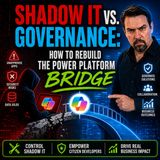
The Power Platform raises a different set of questions. The episode "Power Platform Governance Without Killing Innovation: Security, DLP, Environments & Citizen Development with Michael Roth [MVP]" notes that the platform lets people across an organization build applications and automate processes faster than traditional development, and that this accessibility creates enterprise questions: who can build what, where company data goes, how environments should be structured, and how to limit shadow IT without becoming the department that rejects every new idea. Data loss prevention policies, environments and support for citizen development are among the topics it covers.
Governance and tooling are not the same thing, a point made in "Microsoft Purview is a Trap: The Hard Truth About Data Governance". The episode argues that many organizations mistakenly treat Microsoft Purview as a complete data governance solution, and that relying on it without a clear strategy can result in chaotic data environments and confusion over permissions. It stresses recognizing the tool's limitations when implementing governance.
Agents add a further dimension. "Agent Governance Explained- How IT Can Enable the AI Agent Revolution with Thomas Zou [Microsoft]" addresses how IT can enable AI agents while keeping control, framing governance as something that supports adoption for administrators, architects and business stakeholders rather than only restricting it.
In practice, decisions around governance include who owns a Team, site or agent, which environments are used for building, what classification and labelling scheme applies, and how activity is audited. The episodes consistently present these as organizational choices first and technical configuration second.
Overview compiled with AI from M365.FM episodes and the facts on this page. You can improve it with the edit button below.
Most organizations think governance is documentation. It isn’t. Documentation records decisions after the platform has already decided what it will allow. Governance is control — enforced intent at scale. In this episode, we break down why enterprise…
This episode of the M365.fm podcast challenges a common misconception in cloud strategy: that managing features, tools, and configurations leads to control. Instead, it reveals that true cloud governance is an architectural discipline, not an operational…
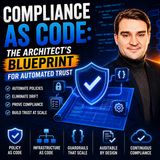
In this episode of m365.fm, we explore why a strong compliance strategy is no longer just a regulatory requirement—but a true competitive advantage. Learn how traditional governance approaches fail at scale and why embedding compliance directly into Microsoft…
In this episode, the hosts dismantle a common misconception in Microsoft 365 governance: that deploying the platform automatically delivers governance. Many organizations treat Microsoft 365 governance as a checklist—policies here, controls there, reports…
This episode of the M365.FM Podcast explores why Microsoft 365 governance failures are rarely caused by missing features or technical limitations. Instead, the root issue is structural and human: fragmented ownership, unclear accountability, and a…
This episode explains that cloud environments promise efficiency, elasticity, and control — but without governance engineered as architecture, they become financial drains and operational chaos. It recounts how idle resources, ungoverned permissions, and…
Most organizations believe efficiency improvements come from better tools or faster processes. But the biggest gains rarely come from new software. They come from architectural decisions. In this episode of the M365 FM Podcast, we explore how organizations…
This episode argues that the biggest governance mistake in Microsoft 365 isn’t misconfiguration—it’s timing. Most organizations treat governance as something to “add later,” but by doing that, they unintentionally design failure into the system from day one.…
Control doesn’t scale. And the more your organization relies on leadership for decisions, the slower and more fragile it becomes. In this episode, Mirko Peters explains why real scalability starts when leaders stop being the control layer. SHORT...
In this episode, we challenge a common misconception in Microsoft 365 governance: having policies in place does not mean your environment is truly governed. Many organizations rely on documented rules, guidelines, and compliance frameworks, assuming they will…
This episode explains that most Microsoft 365 governance approaches fail because they rely on static checklists, manual processes, and reporting instead of real enforcement. It argues that governance is not something you “set up” once, but an ongoing…
In this episode of the m365.fm podcast, Christian Buckley joins the conversation to unpack why traditional governance models are struggling to keep up with the pace of AI adoption inside Microsoft 365. The discussion explores how tools like Copilot and…
Questions marked with AI were written with AI from the facts on this page.
What does governance mean in Microsoft 365? (AI)
It refers to the rules, roles and controls that define who may use which data and tools and how that is monitored. For Copilot and agents it covers permissions, labelling, agent lifecycle and auditability.
Why does governance matter for Microsoft 365 Copilot? (AI)
According to the episode with Paul Keijzers, Copilot's answers depend on the content and permissions already present in the tenant, so the state of that content and those permissions shapes the results.
Is Microsoft Purview the same as governance? (AI)
No. The episode "Microsoft Purview is a Trap: The Hard Truth About Data Governance" argues that Purview should not be treated as a complete solution on its own, and that a clear strategy is needed alongside the tool.
Why is governance not the same as documentation?
Documentation records decisions after the platform has already decided what it will allow. The episode defines governance as control, enforced intent at scale, and says governance relying on memory or reasonable behavior is hope at scale. · From the episode: Fix Azure Governance Before Your Next Cloud Audit
Why does Azure governance fail even when controls exist?
Because controls drift. Reasonable exceptions accumulate, baselines erode and the platform learns to route around the rules leadership thought were in place. Exceptions are described as entropy generators that are rarely tracked or removed. · From the episode: Fix Azure Governance Before Your Next Cloud Audit
What does the governance operating system include?
If intent is not enforced by the control plane, it will decay. Governance should therefore be built into how the platform behaves, rather than recorded in policy decks, spreadsheets or compliance checklists. · From the episode: Fix Azure Governance Before Your Next Cloud Audit
Why is cloud governance an architectural discipline?
Managing features and configurations does not give control. Governance has to be designed into the foundation, otherwise cloud environments turn into uncontrolled cost drivers with idle resources, unused licenses and permission sprawl. · From the episode: Cloud Governance as Architecture, Not Feature Management
Relationship map of Governance: linked topics
Related topics in brief
Topics linked to Governance, each briefly explained:
Microsoft Purview – Identity and security tool by Microsoft· Related to Microsoft's family of data governance, protection and compliance tools. It covers sensitivity labels, data loss prevention, retention, eDiscovery, audit and insider-risk management across Microsoft 365 and other data sources.
Microsoft 365 Copilot – AI assistant by Microsoft· Related to An AI assistant built into Microsoft 365 apps such as Word, Excel, Outlook and Teams. It uses large language models together with the user's own work data from Microsoft Graph to draft, summarise and analyse content, always within the user's existing permissions.
Power Platform – Low-code tool by Microsoft· Related to Microsoft's low-code family consisting of Power Apps, Power Automate, Power BI, Power Pages and Copilot Studio. Together with Dataverse it lets business users build apps, automations, reports and agents.
AI governance – Concept· Related to Policies, roles and controls that keep the use of AI in an organisation safe, compliant and accountable.
Copilot adoption – Concept· Related to Rolling out Copilot to users and getting them to use it effectively, including training, change management and measuring ROI.
Copilot governance – Concept· Related to Controls for permissions, data access and oversight when using Copilot in a Microsoft 365 tenant.
Agent skill – Concept· Related to Reusable package of instructions, scripts and resources that an AI agent loads on demand to perform a specific task consistently.
Requirements management – Concept· Related to Discipline of capturing, structuring, validating and tracing the requirements of a system, increasingly supported by AI.
Fabric workspace – Concept· Related to Container in Microsoft Fabric that groups items such as lakehouses, notebooks and reports and defines access, capacity and deployment boundaries.
Tenant-to-tenant migration – Concept· Related to Moving users, mailboxes, files, Teams and settings from one Microsoft 365 tenant to another, for example after a merger or divestiture.
Identity lifecycle management – Concept· Related to Automating how identities are created, changed and removed as people join, move within and leave an organisation, via provisioning and lifecycle workflows.
Christopher Wagner – Person· People working on this topic Christopher Wagner is a speaker at M365Con 2026 and M365Con 2027 (Director at Baker Tilly) with 2 sessions.
All relationships of Governance, grouped by type of relationship:
Short info above, community knowledge below: add practical tips, examples or corrections. New contributions are reviewed first; trusted members publish directly.
Experts and companies for this topic
Community members with expertise in Governance:
Marcel L. · Microsoft MVP | Power Automate & Copilot Studio for SMBs in Switzerland | Founde
 EN
 Deutsch
 Español
 Français
 Italiano
 Português
 Nederlands
 Polski
 Bahasa Indonesia
 Русский
 Українська
 العربية
 עברית
 日本語
 한국어