Agentic SDLC, also described as the AI-driven software development lifecycle or agentic software development, is a model of the software development lifecycle in which AI agents take part in requirements, coding, testing, review and operations, while humans keep oversight. The classic phases of development stay recognizable. What changes is that some of the work inside each phase is done by agents that plan, write, check and report, and people decide where to intervene.
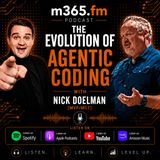
The term describes a shift in the developer's role. According to the M365.FM episode "Agentic Coding with Nick Doelman [MVP-MCT]", a developer in this paradigm no longer just writes code. Instead, the developer orchestrates intelligent agents that plan, generate, test, review and execute changes. The episode describes these agents as autonomous collaborators that understand high-level goals and manage complex processes such as requirements. In that framing, agentic AI is seen as a partner rather than only a tool, which is presented as a way to move faster and build better software.
The episode lists a set of capabilities that characterize this way of working: models for code, inline generation, conversation, codebase awareness, tool use, background execution, persistent memory, and review and validation. Taken together, these describe how an agent can understand the surrounding project, act through tools, keep working without constant prompting, retain context between tasks, and check its own output before a person looks at it.
Several related topics help place the concept. GitHub Copilot is a common entry point for AI help in development, and GitHub Actions automates build and test steps that agents can trigger or respond to. Agentic SDLC builds on the idea of an AI agent and on the agent harness, the layer that gives an agent tools and limits. Requirements management also belongs here, since clear requirements are the input an agent works from. Governance determines how much autonomy is acceptable in a given team or organization.
In practice, teams adopting this model face decisions about where agents act on their own and where a human must approve. Typical questions include which phases are suitable for delegation, how requirements are written so an agent can act on them, which tools and permissions an agent receives, and how generated changes are reviewed and validated before they reach production. The emphasis on oversight in the definition means that responsibility for the outcome stays with people, even when much of the intermediate work is performed by agents.
The M365.FM episode "Agentic Coding with Nick Doelman [MVP-MCT]" is the main reference on this site. Host Mirko Peters speaks with Nick Doelman about the rapid evolution of agentic coding and how AI is transforming software development. Nick describes his path from traditional development into low-code, Power Platform and AI-assisted application building, and the conversation explores how modern AI agents change the way developers create solutions. The discussion connects the concept to hands-on experience rather than treating it only as theory, and it frames agentic SDLC as a new phase of software development rather than a single product or feature.
Overview compiled with AI from M365.FM episodes and the facts on this page. You can improve it with the edit button below.
Type
Concept
Kind
Method
Also known as
AI-driven software development lifecycle, Agentic software development
The software development workflow is undergoing its biggest transformation since the rise of modern IDEs. In this episode, we explore how AI is turning the terminal from a simple command-line interface into the orchestration layer of modern software…
Questions marked with AI were written with AI from the facts on this page.
What is Agentic SDLC? (AI)
Agentic SDLC is a software development lifecycle in which AI agents take part in requirements, coding, testing, review and operations, with humans keeping oversight. The familiar phases remain, but agents handle part of the work inside them.
How does the developer's role change in an agentic SDLC? (AI)
The M365.FM episode "Agentic Coding with Nick Doelman [MVP-MCT]" says developers no longer just write code but orchestrate agents that plan, generate, test, review and execute changes. The agents are described as autonomous collaborators that work from high-level goals.
Which topics are related to Agentic SDLC? (AI)
Related topics include GitHub Copilot, GitHub Actions, AI agent, Agent harness and Requirements management. Governance also plays a role, since it determines how much autonomy agents are given.
Relationship map of Agentic SDLC: linked topics
Related topics in brief
Topics linked to Agentic SDLC, each briefly explained:
GitHub Copilot – AI assistant by GitHub· Related to An AI coding assistant that suggests code, explains it, writes tests and, in agent mode, carries out multi-step changes in a repository under the developer's review.
AI agent – Concept· Related to A software system that uses an AI model to pursue a goal on its own: it plans steps, calls tools or APIs, reads data and acts, often with a human approving critical steps. Agents go beyond chatbots because they take actions, not just answer questions.
Agent harness – Concept· Related to Software layer around a language model that provides tools, permissions, memory, evaluation and limits so an agent can act safely and reproducibly.
Requirements management – Concept· Related to Discipline of capturing, structuring, validating and tracing the requirements of a system, increasingly supported by AI.
GitHub Actions – Developer tool by GitHub· Related to GitHub Actions is a CI/CD and automation service built into GitHub that runs workflows defined with a project whenever events such as pushes or pull requests occur.
Mohamed Radwan – Person· People working on this topic Mohamed Radwan is a speaker at M365Con 2027 (Head of Advisory for Platform Engineering at NTT DATA UK) with 1 session.
All relationships of Agentic SDLC, grouped by type of relationship:
Short info above, community knowledge below: add practical tips, examples or corrections. New contributions are reviewed first; trusted members publish directly.
 EN
 Deutsch
 Español
 Français
 Italiano
 Português
 Nederlands
 Polski
 Bahasa Indonesia
 Русский
 Українська
 العربية
 עברית
 日本語
 한국어