An attack in which hidden or malicious instructions in a document, web page or email trick an AI system into ignoring its rules or leaking data. Defences include limiting permissions, filtering inputs and requiring human approval for sensitive actions.
Title graphic: Prompt injection (Concept)
Relationships
Prompt injection is closely related to AI agent and Prompt.
Description
Prompt injection is an attack in which hidden or malicious instructions placed in a document, web page or email trick an AI system into ignoring its rules or leaking data. It belongs to the broader field of generative AI security, because the attack targets how language models treat text. An injected instruction is, in the end, just text that the model processes like any other prompt, which is why the technique is difficult to separate cleanly from legitimate content.
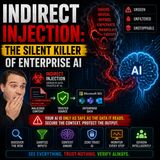
The attack is most discussed in its indirect form. Instead of a user typing a harmful request directly, the malicious instruction is embedded in content the AI system later retrieves, such as trusted documents, emails, SharePoint content, Teams conversations or knowledge bases. The episode "Indirect Prompt Injection Security for Enterprise AI" describes how every piece of retrieved content becomes part of the model's context, so hidden commands, poisoned documents, metadata and embedded instructions can influence AI behavior without the attacker ever interacting with the system directly. The episode argues that many organizations see hallucinations as the biggest enterprise AI risk, while this less visible threat is among the most dangerous.
The underlying problem is architectural. The episode "Stop Microsoft Copilot Prompt Injection with Azure Logic Apps" says the core issue is not weak prompts or missing filters but the way AI models process information. Systems such as Microsoft Copilot retrieve data from multiple sources, and the model cannot reliably separate data from instructions. For that reason the episode treats prompt injection as a design and workflow question rather than something a single filter can fully solve, and it discusses using Azure Logic Apps for security workflows, including advice to use prewarmed instances and monitor performance so these workflows stay responsive when data volumes are high.
The risk grows when the AI system can act, not only answer. This links prompt injection closely to the AI agent: an agent that reads content and takes actions can turn a manipulated instruction into a real consequence. The episode "Stop Prompt Injection in LangChain4j and Copilot Studio" warns that over-scoped connectors, over-permissioned agents and missing logs can create reportable incidents, and it recommends strict access controls to prevent data leaks and unauthorized actions, along with regular monitoring of AI systems and a governance framework aligned with organizational goals and legal requirements.
The episode "Secure Microsoft Copilot with Entra ID and Zero Trust" frames the exposure through what it calls the "Lethal Trifecta": Microsoft Copilot can access sensitive data, read untrusted content and communicate externally. It names EchoLeak as an example of a prompt injection attack that can exploit such conditions. Microsoft's recommendation, as presented there, is explicit verification and least-privilege access, together with auditing permissions and treating AI agents as privileged accounts.
Across the sources, the typical defences are consistent: limit the permissions of the AI system, filter inputs, and require human approval for sensitive actions. The episode "Secure MLOps in Microsoft Cloud with Martin Dimovski [MVP-MCT]" places prompt injection within a wider AI security picture that also covers infrastructure, models, training data, inference pipelines and generated outputs, and it describes prompt injection as becoming one of the biggest AI security concerns today, alongside risks such as open-source model supply chains, compromised dependencies, API key leakage and poisoned public models.
In practice, decisions around prompt injection concern which data an assistant or agent may read, which external channels it may use, which actions require a person to confirm, and how activity is logged for later review. Combining narrow permissions, input handling and approval steps reflects the point made across the episodes that no single control removes the risk.
Overview compiled with AI from M365.FM episodes and the facts on this page. You can improve it with the edit button below.
Type
Concept
Kind
Threat
Key points about Prompt injection
Key points about Prompt injection from the episodes, each with its source episode:
Most organizations believe hallucinations are the biggest risk in enterprise AI. In reality, one of the most dangerous threats is something far less visible: Indirect Prompt Injection. In this episode, we explore how trusted documents, emails, SharePoint…
In this episode of the M365.fm podcast, the discussion focuses on one of the biggest hidden risks in Microsoft Copilot environments: prompt injection attacks. The episode explains that the real security problem is not weak prompts or missing filters, but the…
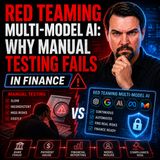
In this episode of the m365.fm podcast, Mirko Peters explores why traditional AI security testing is no longer enough in modern enterprise environments. The discussion focuses on “red teaming” for multi-model AI systems, especially in highly regulated…
"The Model Is the Vulnerability" explains that the biggest security risk in Microsoft Copilot is not the AI itself, but the data, identities, and permissions the model can access. Copilot amplifies existing security weaknesses by making enterprise information…
AI agents are shipping faster than your change control, and they’re carrying master keys to your data. This talk rips into how LangChain4J and Copilot Studio quietly turn “helpful copilots” into data-leaking, over-permissioned shadow admins with no audit…
In this episode of the m365.fm podcast, Mirko Peters speaks with Microsoft MVP and cloud security expert Martin Dimovski about securing AI workloads and MLOps environments in Microsoft Cloud. The conversation focuses on why AI security must be treated as a…
Ever trusted an AI answer that felt certain, then realised you couldn’t prove where it came from? This video is a forensic walkthrough of how single agents hallucinate, leak data, drift off stale indexes, and fail every audit that matters – and how to fix it…
AI has moved from autocomplete to agents that plan and write most of the code, and developers wonder what is left for them. Microsoft MVP Andre Baltieri shares how he builds with AI coding agents, Microsoft Agent Framework and .NET, and why context, RAG and…
Enterprise governance for Microsoft Copilot is no longer optional. As AI becomes deeply integrated into Microsoft 365, organizations must rethink how they manage security, compliance, permissions, and operational control. Traditional governance models were…
This episode explains why attempts to integrate AI into enterprise systems fail not because of model intelligence, but because of unbounded action and brittle integrations. The core claim is that the Model Context Protocol (MCP) is not a plugin system, API…
Learn will Copilot Studio replace low-code developers in plain English: practical use cases, architecture, governance, security, and key implementation decision
veryone is talking about Private RAG, sovereign AI, regional hosting, and keeping enterprise data inside controlled environments. But in this episode of M365 FM, Mirko Peters explores a critical security gap that many organizations overlook: data sovereignty…
Why Manual Security Testing is Failing Modern Financial AI · Mirko Peters When you look at the landscape of modern financial technology, the velocity of innovation is staggering. Financial institutions are no longer just managing database…
Securing Your .NET 10 AI Applications Against Modern Threats · Mirko Peters Welcome back to the podcast! Today, we are expanding on a topic that has been dominating our engineering discussions: enterprise security in the age of artificial i…
Frequently asked questions
Questions marked with AI were written with AI from the facts on this page.
What is the difference between direct and indirect prompt injection? (AI)
In the indirect form, the malicious instruction is hidden in content the AI system retrieves, such as documents, emails, SharePoint content or Teams conversations, rather than typed in by a user. The episode "Indirect Prompt Injection Security for Enterprise AI" focuses on this indirect route.
Why is prompt injection hard to prevent with filters alone? (AI)
According to the episode "Stop Microsoft Copilot Prompt Injection with Azure Logic Apps", the problem lies in the architecture: models cannot reliably separate data from instructions, so retrieved content becomes part of the model's context.
Which defences are commonly recommended? (AI)
The sources point to limiting permissions, filtering inputs and requiring human approval for sensitive actions. The episodes also recommend least-privilege access, permission audits, logging and treating AI agents as privileged accounts.
What is indirect prompt injection?
It is an attack where hidden instructions are embedded in content that an AI system processes, such as documents or emails, so the AI is manipulated without any compromise of the infrastructure. · From the episode: Indirect Prompt Injection Security for Enterprise AI
What is prompt injection in Copilot?
Prompt injection in Copilot is hidden instructions in content that Copilot treats as trusted. The risk comes from the architecture, since Copilot retrieves data from emails, SharePoint files and chats. · From the episode: Stop Microsoft Copilot Prompt Injection with Azure Logic Apps
Relationship map of Prompt injection: linked topics
Related topics in brief
Topics linked to Prompt injection, each briefly explained:
AI agent – Concept· Related to A software system that uses an AI model to pursue a goal on its own: it plans steps, calls tools or APIs, reads data and acts, often with a human approving critical steps. Agents go beyond chatbots because they take actions, not just answer questions.
Prompt – Concept· Related to The instruction or question given to an AI model. Clear prompts state the goal, the context, the desired format and any constraints; good prompting is the fastest way to better Copilot results.
All relationships of Prompt injection, grouped by type of relationship:
Short info above, community knowledge below: add practical tips, examples or corrections. New contributions are reviewed first; trusted members publish directly.
Experts and companies for this topic
Community members with expertise in Prompt injection:
 EN
 Deutsch
 Español
 Français
 Italiano
 Português
 Nederlands
 Polski
 Bahasa Indonesia
 Русский
 Українська
 العربية
 עברית
 日本語
 한국어