 TE
 English
 Deutsch
 Español
 Français
 Italiano
 Português
 Nederlands
 Polski
 Bahasa Indonesia
 Русский
 Українська
 العربية
 עברית
 日本語
 한국어
2026-09-17
డేటా ట్రాన్స్ఫర్మేషన్ యొక్క 5 స్తంభాలు - సరళంగా వివరించబడింది
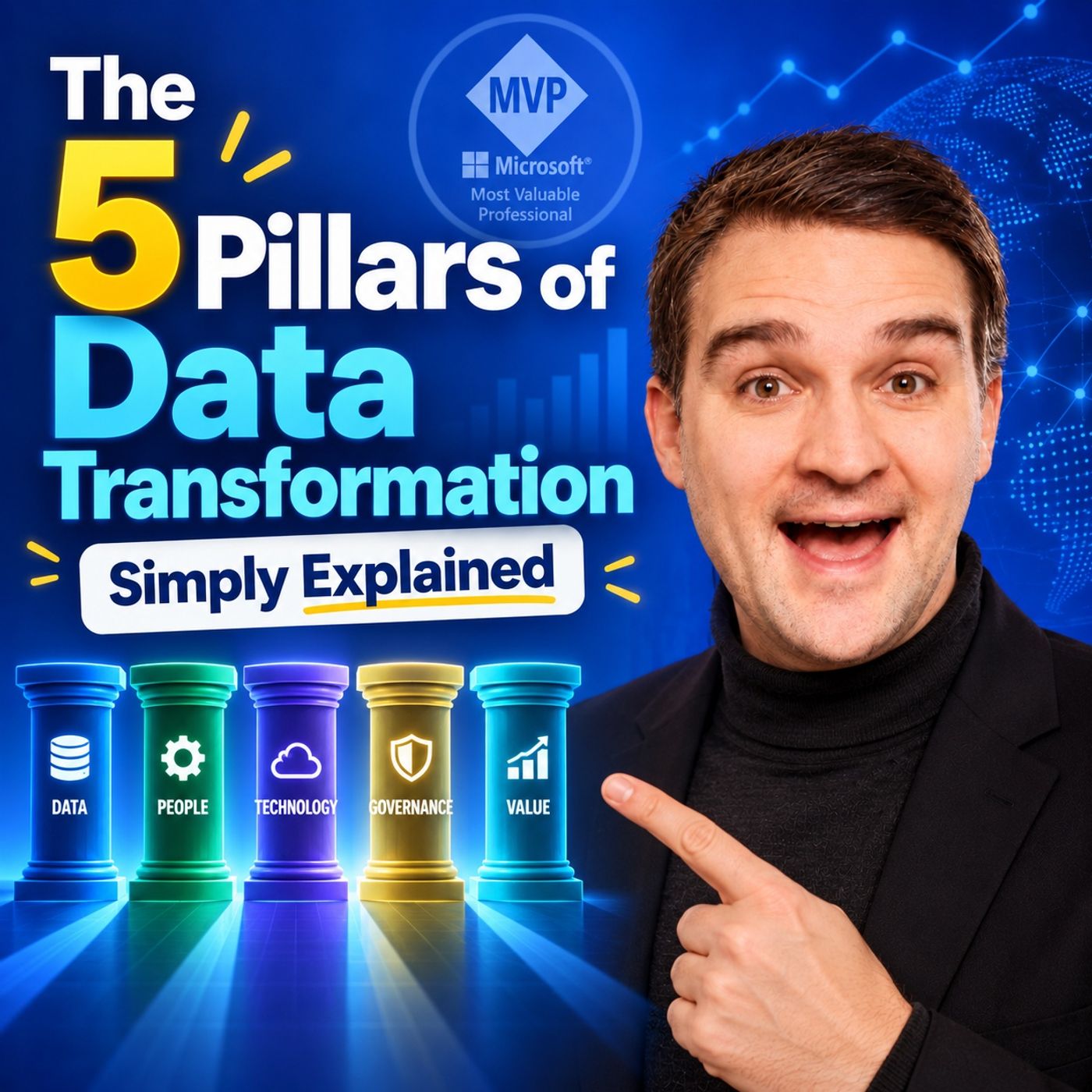
AI was supposed to clear the backlog, accelerate decisions, and give every team a smarter way to work. Instead, many organizations now have Microsoft Copilot, Power BI, Microsoft Fabric, AI agents, and more data than ever before—while important decisions still crawl through meetings because nobody fully trusts the numbers or knows who can act on them. The technology spend keeps rising. The action does not. The problem is often not a lack of AI. It is the absence of an operating model connecting data, meaning, governance, technology, people, and accountability. In this episode of M365 FM – Simply Explained, we break down the five pillars organizations need to build a reliable foundation for data transformation and AI.
WHAT YOU WILL LEARN
In this episode, we explore:
- AI ఖరాబైన డేటాను ఎందుకు సరిచేయలేదు
- ఆటోమేషన్ మొదలవకముందే డేటా గవర్నెన్స్ నమ్మకాన్ని ఎలా సృష్టిస్తుంది
- డేటా నాణ్యత తీసుకున్న నిర్ణయంపై ఎందుకు ఆధారపడాలి
- Microsoft Purview గవర్నెన్స్ మరియు డేటా డిస్కవరీకి ఎలా తోడ్పడగలదు
- Microsoft Fabric ఆధునిక విశ్లేషణలు మరియు డేటా ప్లాట్ఫారమ్లకు ఎలా మద్దతు ఇస్తుంది
- Power BI మరియు AI కోసం సెమాంటిక్ మోడల్స్ ఎందుకు ముఖ్యమైనవి
- విరుద్ధమైన నిర్వచనాలు విరుద్ధమైన డ్యాష్బోర్డులను ఎలా సృష్టిస్తాయి
- మనుషులు మరియు AI ఏజెంట్ల కోసం బిజినెస్ గ్లాసరీలు ఎందుకు ముఖ్యమైనవి
- డేటా యాజమాన్యం AI సంసిద్ధతను ఎలా ప్రభావితం చేస్తుంది
- AI విస్తరించక ముందే యాక్సెస్, భద్రత మరియు అనుమతులు ఎందుకు నిర్వచించబడాలి
- Copilot మరియు AI ఏజెంట్లు నమ్మదగిన వ్యాపార సందర్భంపై ఎలా ఆధారపడతాయి
- AI సమాధానం రూపొందించినప్పటికీ మానవ బాధ్యత ఎందుకు కీలకంగా ఉంటుంది
Data governance often sounds like policies, compliance meetings, documentation, and bureaucracy. In practice, governance answers a few very simple questions:
- ఈ డేటాకు యజమాని ఎవరు?
- దీన్ని యాక్సెస్ చేయడానికి ఎవరికి అనుమతి ఉంది?
- ఈ డేటా ఎక్కడ నుండి వచ్చింది?
- ఈ నిర్దిష్ట వినియోగానికి దీన్ని మనం విశ్వసించవచ్చా?
- ప్రజలు ఈ డేటాతో ఏమి చేయడానికి అనుమతించబడ్డారు?
- AI వ్యవస్థలు ఈ డేటాతో ఏమి చేయడానికి అనుమతించబడ్డాయి?
- CRMలో ఆదాయానికి ఒక వెర్షన్ ఉంది
- ఫైనాన్స్ వ్యవస్థలో మరో వెర్షన్ ఉంది
- మాన్యువల్ ఎగుమతులు అదనపు తేడాలను సృష్టిస్తాయి
- ఆదాయం యొక్క నిర్వచనానికి ఎవరూ యజమాని కాదు
- మూల డేటా నాణ్యతకు ఎవరూ యజమాని కాదు
- ఏ సంఖ్య ఫోర్కాస్ట్ను నడపాలో ఎవరూ స్పష్టంగా వివరించలేరు
WHAT HAPPENS WHEN AI ENTERS THE PICTURE?
Now imagine someone asks an AI agent: “Which sales region is falling behind?” The answer may arrive within seconds. But it could be based on:
- డూప్లికేట్ కస్టమర్ రికార్డులు
- పాత ఖాతా కేటాయింపులు
- తప్పిపోయిన అవకాశాలు
- తప్పు ఫోర్కాస్ట్ దశలు
- పాత డేటా
- తప్పు అనుమతులు
- వినియోగదారు యాక్సెస్ చేయకూడని సమాచారం
- పేరు పెట్టబడిన డేటా యజమానులు
- స్పష్టమైన బాధ్యతలు
- డేటా వర్గీకరణలు
- యాక్సెస్ నియమాలు
- సోర్స్-సిస్టమ్ డాక్యుమెంటేషన్
- డేటా నాణ్యత అంచనాలు
- ఆడిటబిలిటీ
- సున్నితమైన సమాచారానికి విధానాలు
- AI మరియు ఆటోమేషన్ కోసం నియమాలు
- కస్టమర్ డేటాకు ఎవరు యజమాని
- ఏ నిర్వచనాలు అధికారికమైనవి
- ఎంత డేటా నాణ్యత ఆమోదయోగ్యం
- ఎవరు యాక్సెస్ పొందాలి
- AI-రూపొందించిన సమాధానం ఎప్పుడు సురక్షితంగా వాడవచ్చు
- తుది నిర్ణయానికి ఎవరు బాధ్యులుగా ఉంటారు
Many organizations approach data quality as if every field in every system needs to be perfect. That is rarely realistic. Data quality should instead be evaluated against the business decision being made. For a sales forecast, the most important fields might include:
- అవకాశ దశ (Opportunity stage)
- అంచనా ముగింపు తేదీ
- ఫోర్కాస్ట్ మొత్తం
- ఖాతా యజమాని
- ప్రాంతం (Territory)
- సంభావ్యత
- కస్టమర్ స్థితి
Become a supporter of this podcast: https://www.spreaker.com/podcast/m365-fm-a-microsoft-mvp-podcast-by-mirko-peters--6704921/support.
Apple Podcasts · Spotify · YouTube · Deezer
The 5 Pillars of Data Transformation - Simply Explained (English)