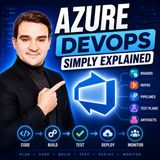
Microsoft's suite of developer services: Azure Boards, Repos, Pipelines, Test Plans and Artifacts for planning, versioning, building and delivering software.
Azure DevOps is a suite of developer services from Microsoft that supports the full software delivery lifecycle. It combines Azure Boards, Azure Repos, Azure Pipelines, Azure Test Plans and Azure Artifacts in one platform. The product is also referred to as Azure DevOps Services, and Azure Pipelines is the part most often associated with build and release automation. It is classed as a Microsoft tool and a developer tool, and it is related to both GitHub and Microsoft Azure.
The services each cover a separate stage of the work. Azure Boards handles planning and tracking and supports agile methods such as Scrum and Kanban. Azure Repos provides source control, Azure Pipelines builds and deploys code, Azure Test Plans supports testing, and Azure Artifacts stores packages and build output. Because these pieces sit together, a team can trace a pipeline run back to specific commits, pull requests or work items, which gives visibility into how a change moved from idea to release. Official product documentation is published on Microsoft Learn.
Typical decisions around Azure DevOps involve how to organize repositories, how to structure pipelines, and how to secure access and secrets. The M365.FM episode "Azure DevOps - Simply Explained" walks through the individual services, including the features of Azure Boards, and mentions that integration with Azure Cost Management gives better visibility and control over cloud spending in CI/CD pipelines. The episode presents these capabilities as a way to respond to market changes while maintaining quality.
A recurring theme in the episodes is governance. In "Azure DevOps in 2026: The Quiet Backbone of Enterprise AI", the framing is that Azure DevOps gives enterprise teams a governed way to plan, build, test and release both software and infrastructure. The episode argues that disciplined source control, pipelines, security and traceability remain essential even as GitHub, Copilot and AI-powered development speed up the pace of change. In that view, faster development increases the need for controlled release processes rather than reducing it.
Azure DevOps is also used as the delivery backbone for other Microsoft platforms. The episode "Implement Power Platform CI/CD with Azure DevOps" describes building a pipeline for Power Platform solutions and addresses trouble spots such as environment variables, connection references, service connections and secure secrets. It notes that a solution package does not carry everything: environment variables are placeholders and connection references must be bound after import, so per-environment settings need to be parameterized in the pipeline.
Version control for analytics content is another use. The episode "Power BI Version Control with GitHub and Azure DevOps" covers Git-based workflows for Power BI, which keep a clear list of changes and help teams work faster, and recommends integrating Git as a first step toward version control and CI/CD. The related episode "GitHub vs Azure DevOps for Microsoft Fabric CI/CD" compares the two platforms for Microsoft Fabric. It describes Azure DevOps as a unified platform that brings together code repositories, work tracking, testing tools and artifact storage, and lists regular audits of repository access, secrets and security settings among its recommendations.
The relationship to GitHub is therefore a practical choice rather than a replacement story in these episodes. Both platforms can host source code and drive CI/CD, and the comparison episode treats them as alternatives for the same delivery problems, with Azure DevOps offering its integrated set of planning, repository, pipeline, testing and artifact services under one ownership model. Its link to Microsoft Azure appears in the cost-visibility point above and in its use for deploying infrastructure.
Overview compiled with AI from M365.FM episodes and the facts on this page. You can improve it with the edit button below.
Key points about Azure DevOps from the episodes, each with its source episode:
Azure DevOps is one connected platform rather than five separate tools: Boards, Repos, Pipelines, Test Plans and Artifacts. · Azure DevOps - Simply Explained
First step: create a free account at the Azure DevOps site, start a project and track a small project in Boards for a week. · Azure DevOps - Simply Explained
Azure DevOps is Microsoft's all-in-one platform for planning, developing, testing, and delivering software. Instead of using separate tools for project management, source control, build automation, testing, and deployments, Azure DevOps brings everything…
The episode argues that Managed Environments in the Power Platform often fail to deliver on their promise because organizations misunderstand what they actually solve. They are introduced as a governance layer meant to bring control, visibility, and order to…
What does the future of Azure look like, and how are Infrastructure as Code and DevOps transforming the way organizations build and manage cloud solutions? In this episode of M365 FM, host Mirko Peters is joined by Microsoft Azure MVP Maik van der Gaag for an…
Many organizations have moved workloads to Azure but still run it like a traditional data center. In this interview, Microsoft MVP Jev Suchoi explains to cloud architects, platform teams and IT leaders how Azure landing zones, the Cloud Adoption Framework…
GitOps is a modern approach to deploying and managing infrastructure and applications using Git as the single source of truth. Instead of making manual changes to cloud environments, every configuration change is stored, reviewed, and version-controlled in a…
In this episode of the m365.fm podcast, the discussion focuses on using PowerShell to automate tasks across Azure and Microsoft 365 with guest Matthew Dowst MVP. Matthew explains how automation became essential as cloud environments grew more complex and…
Azure networking has evolved far beyond simply connecting virtual machines. In this episode, we explore how modern Azure networking enables organizations to build secure, scalable, and fully automated cloud environments using Azure Functions, Azure Virtual…
Everyone is talking about GitHub, Copilot, and AI-powered development, leading many to believe Azure DevOps is becoming obsolete. But inside Fortune 500 enterprises, a very different story is unfolding. While GitHub has become the preferred platform for…
Microsoft Fabric Git Integration is changing the game for anyone building modern data platforms, and in this episode we break down exactly how it works and why it matters. Discover how Microsoft Fabric seamlessly connects to Azure DevOps and GitHub, giving…
power bi keeps showing up in the background of every conversation about data because it does something most tools struggle with: it doesn’t just help you look at numbers, it helps people work together around them. the reports, the dashboards, the…
Tired of manual, brittle Power Platform deployments? This guide shows how to build a reliable CI/CD pipeline with Azure DevOps that handles the real trouble spots: environment variables, connection references, service connections, and secure secrets. Learn…
This episode turns fragile, manual Power Platform deployments into reliable, auditable CI/CD with Azure DevOps. We unpack the real failure points—misconfigured service connections, flaky agent pools, hidden Dataverse dependencies, missing connection…
Timeline of episodes about Azure DevOps
Articles about Azure DevOps (5)
Articles in which Azure DevOps is a topic:
Demystifying Azure DevOps: A Beginner's Guide · Mirko Peters Welcome to our comprehensive guide on breaking down the barriers of modern software development. If you have ever wondered how high-performing engineering teams man…
Why Azure DevOps Isn't Going Away in 2026 · Mirko Peters Welcome back to the companion blog for the podcast! If you spend any time browsing tech Twitter, LinkedIn, or developer forums, you would be forgiven for thinking t…
Questions marked with AI were written with AI from the facts on this page.
What services are part of Azure DevOps? (AI)
Azure DevOps includes Azure Boards, Azure Repos, Azure Pipelines, Azure Test Plans and Azure Artifacts. Together they cover planning, source control, build and release automation, testing and package storage.
How does Azure DevOps relate to GitHub? (AI)
Both are Microsoft platforms for source control and CI/CD, and the M365.FM episode "GitHub vs Azure DevOps for Microsoft Fabric CI/CD" compares them for Fabric delivery. Azure DevOps offers an integrated suite of work tracking, repositories, pipelines, testing and artifacts.
Can Azure DevOps be used for Power Platform and Power BI? (AI)
Yes, according to the episodes. "Implement Power Platform CI/CD with Azure DevOps" covers pipelines for Power Platform solutions, and "Power BI Version Control with GitHub and Azure DevOps" covers Git-based version control for Power BI.
What is Azure DevOps?
Azure DevOps is a platform that integrates project management, version control, CI/CD, testing and package management for software development. · From the episode: Azure DevOps - Simply Explained
What are the main parts of Azure DevOps?
Boards, repos, pipelines, test plans and artifacts. They are not five separate tools but one connected platform covering the whole software development lifecycle, from project management to package management. · From the episode: Azure DevOps - Simply Explained
What does Azure Pipelines do?
Azure Pipelines automates build and deployment processes to reduce errors and speed up delivery. The episode previews building a first CI/CD pipeline next. · From the episode: Azure DevOps - Simply Explained
How do I get started with Azure DevOps?
Create a free account, start a new project, create a user story in Boards and drag it across the Kanban board to see how it works. · From the episode: Azure DevOps - Simply Explained
Is Azure DevOps only a tool for developers?
The episode raises this question and answers that it is bigger: it brings planning, code, testing and deployment together for teams, including QA and operations. · From the episode: Azure DevOps - Simply Explained
Relationship map of Azure DevOps: linked topics
Related topics in brief
Topics linked to Azure DevOps, each briefly explained:
Microsoft – Organization· Developed by Microsoft Corporation is a technology company that develops software and cloud services such as Microsoft 365, Azure and Dynamics 365.
Microsoft tool – Category· Is a Microsoft tool is a broad category for software products and services developed by Microsoft, used to group offerings and to frame tool-selection decisions.
Developer tool – Category· Is a Developer tool is an M365.FM category for tools that help developers write, test and ship software, from editors and build pipelines to APIs and platforms.
GitHub – Part of Microsoft· Related to GitHub is a platform for hosting code and collaborating on software projects; it is part of Microsoft.
Microsoft Azure – Cloud platform by Microsoft· Related to Microsoft Azure is Microsoft's cloud platform with services for computing, storage, networking, databases, analytics and AI.
Azure DevTest Labs – Developer tool by Microsoft· Related to A service that lets developers and testers quickly create and manage Azure virtual machines with self-service, cost controls and automation.
Short info above, community knowledge below: add practical tips, examples or corrections. New contributions are reviewed first; trusted members publish directly.
 EN
 Deutsch
 Español
 Français
 Italiano
 Português
 Nederlands
 Polski
 Bahasa Indonesia
 Русский
 Українська
 العربية
 עברית
 日本語
 한국어