Bicep, also called Azure Bicep, is a domain-specific language from Microsoft for declaring Azure resources. Bicep files are compiled to ARM templates, but they use a cleaner and more readable syntax than ARM JSON. It is free and is used to describe the desired state of Azure resources so that deployments are repeatable.
Bicep is part of the Microsoft Azure ecosystem and was developed by Microsoft. It is a concrete way to practice Infrastructure as code, and it is used to build structures such as an Azure landing zone. Terraform is the best-known alternative: both describe infrastructure declaratively, and the choice between them depends on factors such as cloud strategy and team skills.
M365.FM covers it in three episodes. "Azure Bicep - Simply Explained" starts with the problem that an Azure setup clicked together in the portal lives only in memory and explains what Bicep is, why not just use ARM JSON or the portal, and how to read a Bicep file. "Bicep - Simply Explained" presents it as Microsoft's recommended replacement for traditional ARM templates. "Azure Bicep at Scale: Modular Infrastructure as Code" shows how modular, reusable code supports enterprise-scale management. The Terraform comparison appears in other episodes listed under Terraform.
Overview compiled with AI from M365.FM episodes and the facts on this page. You can improve it with the edit button below.
PowerShell has become the automation standard for Microsoft environments, but it reaches its limits when managing modern cloud infrastructure at scale. In this episode, we explore why Azure Bicep has become the preferred Infrastructure as Code (IaC) language…
Artificial Intelligence is only as secure as the foundation it is built on. In this episode of the M365 FM Podcast, Mirko Peters explains why an organization's AI Landing Zone is often its biggest hidden risk. While many companies focus on deploying Microsoft…
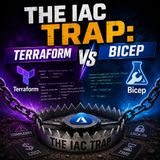
In this episode of the M365.fm podcast, we explore one of the most debated Infrastructure as Code (IaC) questions in the Azure ecosystem: should you choose Terraform or Azure Bicep? Rather than declaring a universal winner, the discussion explains why the…
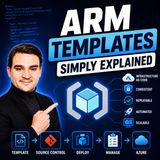
ARM templates were once the standard for deploying Azure infrastructure, but as cloud environments became more complex, their JSON-based approach revealed serious limitations. In this episode, we explore why many Azure professionals now see ARM templates as…
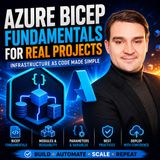
Azure Bicep is Microsoft’s modern Infrastructure as Code (IaC) language for deploying Azure resources using a clean, declarative syntax. This episode explains why Bicep has become the preferred choice over traditional ARM templates and how it helps teams…
Azure Bicep is Microsoft's modern Infrastructure as Code (IaC) language for deploying and managing Azure resources using a clean, readable, and declarative syntax. In this episode of Microsoft Knowledge Nuggets on M365 FM, Mirko Peters explains why Azure…
Azure Bicep is far more than a cleaner replacement for ARM templates—it's an architectural approach to managing cloud infrastructure at enterprise scale. In this episode, we explore how Bicep enables organizations to build modular, reusable, and maintainable…
What does the future of Azure look like, and how are Infrastructure as Code and DevOps transforming the way organizations build and manage cloud solutions? In this episode of M365 FM, host Mirko Peters is joined by Microsoft Azure MVP Maik van der Gaag for an…
Platform Engineering is changing how organizations build and operate Azure environments. Rather than treating cloud infrastructure as a collection of individual projects, Platform Engineering creates a shared internal platform that gives development teams…
ARM Templates are the original Infrastructure as Code (IaC) technology behind Azure Resource Manager, allowing organizations to define, deploy, and manage Azure infrastructure using declarative JSON files. In this episode of Microsoft Knowledge Nuggets on…
In this episode of M365 FM, Mirko Peters sits down with Microsoft MVP Jonathan Hope to explore why identity has become the most critical security boundary in modern cloud environments. As organizations move deeper into Microsoft 365, Azure, and cloud-native…
Azure networking has evolved far beyond simply connecting virtual machines. In this episode, we explore how modern Azure networking enables organizations to build secure, scalable, and fully automated cloud environments using Azure Functions, Azure Virtual…
Avoiding the IaC Trap: Matching Tools to Your Cloud Strategy · Mirko Peters Choosing the right infrastructure as code tool is critical to avoiding unnecessary complexity and technical debt. This post explores how to align your IaC selection…
Overcoming the PowerShell Ceiling in Azure Automation · Mirko Peters Welcome back to the blog! As cloud architects and systems administrators, we often find ourselves deeply entrenched in the daily routines of managing Microsoft Azur…
Why Azure Teams Are Finally Ditching ARM Templates for Bicep · Mirko Peters Welcome back, cloud architects and developers! If you have spent any significant amount of time managing infrastructure on Microsoft Azure, you have likely found yo…
Why Azure Teams Are Ditching ARM Templates for Bicep · Mirko Peters Welcome back to the podcast companion blog! In our latest podcast episode, we took a deep dive into the practical realities of modern cloud infrastructure deploymen…
Mastering Infrastructure as Code in Azure with Bicep · Mirko Peters Welcome back, cloud architects and developers! In today's fast-paced digital ecosystem, managing cloud environments efficiently is more critical than ever. As organ…
Why Azure Teams Are Finally Leaving ARM Templates Behind · Mirko Peters For years, cloud engineers and developers working with Microsoft Azure faced a bittersweet reality when adopting Infrastructure as Code (IaC). On one hand, Azure Re…
Why ARM Templates Are Slowing Down Your Azure Deployments · Mirko Peters When you start building infrastructure in the cloud, you quickly realize that clicking around the Azure Portal does not scale. You need automation, repeatability, a…
Frequently asked questions
What is the difference between PowerShell and Bicep for Azure?
PowerShell is imperative: you script commands step by step. Bicep is declarative: you describe the desired end state of your Azure infrastructure and let the platform work out how to reach it. · From the episode: PowerShell vs Bicep for Azure Infrastructure Automation
What is the PowerShell ceiling?
It is the point where script complexity hinders efficiency. As Azure resources grow, PowerShell scripts become convoluted and hard to maintain and scale, which is where Bicep offers a simpler alternative. · From the episode: PowerShell vs Bicep for Azure Infrastructure Automation
Why is Bicep preferred for Infrastructure as Code on Azure?
Bicep uses clear declarative syntax, supports modular reuse, provides strong type checking and integrates well with Azure services. These traits make deployments easier to read, maintain and govern. · From the episode: PowerShell vs Bicep for Azure Infrastructure Automation
Does Bicep replace PowerShell completely?
The episode argues that relying solely on PowerShell creates long-term operational challenges for infrastructure deployment. It positions Bicep as the better fit for defining Azure resources, rather than claiming PowerShell has no role. · From the episode: PowerShell vs Bicep for Azure Infrastructure Automation
Is Bicep hard to learn?
Bicep has a learning curve, but the episode says its benefits outweigh it. Readable code and easier team collaboration help offset the initial effort of moving away from PowerShell-based deployments. · From the episode: PowerShell vs Bicep for Azure Infrastructure Automation
Relationship map of Bicep: linked topics
Related topics in brief
Topics linked to Bicep, each briefly explained:
Microsoft – Organization· Developed by Microsoft Corporation is a technology company that develops software and cloud services such as Microsoft 365, Azure and Dynamics 365.
Microsoft tool – Category· Is a Microsoft tool is a broad category for software products and services developed by Microsoft, used to group offerings and to frame tool-selection decisions.
Developer tool – Category· Is a Developer tool is an M365.FM category for tools that help developers write, test and ship software, from editors and build pipelines to APIs and platforms.
Infrastructure as code – Concept· Related to Managing cloud infrastructure through versioned code and automated deployment instead of manual portal clicks.
Terraform – Developer tool· Related to Multi-cloud infrastructure-as-code tool from HashiCorp with a provider for Azure.
Short info above, community knowledge below: add practical tips, examples or corrections. New contributions are reviewed first; trusted members publish directly.
 EN
 Deutsch
 Español
 Français
 Italiano
 Português
 Nederlands
 Polski
 Bahasa Indonesia
 Русский
 Українська
 العربية
 עברית
 日本語
 한국어