Infrastructure as code is one of the topics of Florian Lenz.
Description
Infrastructure as code, often shortened to IaC and sometimes called Infrastruktur als Code, is the practice of managing and deploying cloud infrastructure through code instead of configuring resources by hand in a portal. The desired state of an environment is written down in files, which means it can be reviewed, stored in version control, repeated for other environments and rebuilt after a failure. It is generally treated as a part of DevOps, the broader practice it falls under.
The core idea is that infrastructure is handled the way application code is handled. Instead of a series of manual clicks that exist only in someone's memory, the configuration lives in a repository and changes to it follow the same review and automation steps as software changes. The M365.FM episode "Infrastructure as Code - Simply Explained" presents it as a foundational practice for Azure, DevOps and cloud engineering. According to the episode, it covers concepts such as declarative versus imperative deployments, idempotency, version control and automation, and it explains why treating infrastructure like application code improves reliability and reduces operational risk.
In the Azure ecosystem, IaC is closely tied to two tools for describing resources as code: Bicep and Terraform. Teams choosing between approaches typically weigh how a tool fits their platform, their existing skills and the way deployments are run. The topic also relates to the Azure landing zone, which is usually deployed through code, and to GitHub Actions, which can run such deployments automatically as part of a pipeline. Together these pieces make a deployment repeatable: code defines the environment, version control records every change, and an automated workflow applies it.
The episode "Azure Bicep at Scale: Modular Infrastructure as Code" looks at Bicep as more than a cleaner replacement for ARM templates. The episode describes it as an architectural approach to managing cloud infrastructure at enterprise scale, focused on modular, reusable and maintainable code that supports long-term growth instead of creating technical debt. It says this approach supports collaboration between teams, reduces deployment errors and improves consistency across environments, and that it integrates with Azure Policy, CI/CD pipelines and governance frameworks.
The human and organizational side appears in "Azure Infrastructure as Code and DevOps with Maik van der Gaag [MVP]", a conversation between host Mirko Peters and a Microsoft Azure MVP. It discusses the future of Azure and how Infrastructure as Code and DevOps are changing the way organizations build and manage cloud solutions, with a focus on modern cloud engineering and automation. The episode "Azure Local and Landing Zones: How to Build Hybrid Cloud the Right Way with Christoffer Klarskov Jakobsen [MVP]" places Infrastructure as Code alongside platform services, automated deployment pipelines and Azure Landing Zones, in a hybrid scenario where some workloads must stay close to factories, offices, regulated environments or latency-sensitive systems.
The practice also carries costs and trade-offs. The episode "The DevOps Tax: Why Your Platform is Failing" notes that developers have been expected to become experts in Kubernetes, cloud networking, Infrastructure as Code, observability, security, compliance, cost optimization and CI/CD while still building business features. In that framing, the breadth of tooling can leave teams spending more time managing infrastructure than delivering customer value, which is one reason the episode examines how the DevOps model struggles at enterprise scale.
For readers deciding where to start, the sources point to a sequence: understand the concepts such as declarative deployment and idempotency, choose a tool such as Bicep or Terraform, keep the code in version control, and run it through an automated pipeline such as GitHub Actions. Landing zones and policy guardrails then become code that is deployed and maintained in the same way.
Overview compiled with AI from M365.FM episodes and the facts on this page. You can improve it with the edit button below.
What does the future of Azure look like, and how are Infrastructure as Code and DevOps transforming the way organizations build and manage cloud solutions? In this episode of M365 FM, host Mirko Peters is joined by Microsoft Azure MVP Maik van der Gaag for an…
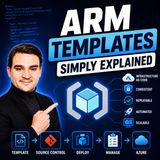
ARM templates were once the standard for deploying Azure infrastructure, but as cloud environments became more complex, their JSON-based approach revealed serious limitations. In this episode, we explore why many Azure professionals now see ARM templates as…
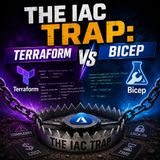
In this episode of the M365.fm podcast, we explore one of the most debated Infrastructure as Code (IaC) questions in the Azure ecosystem: should you choose Terraform or Azure Bicep? Rather than declaring a universal winner, the discussion explains why the…
PowerShell has become the automation standard for Microsoft environments, but it reaches its limits when managing modern cloud infrastructure at scale. In this episode, we explore why Azure Bicep has become the preferred Infrastructure as Code (IaC) language…
Azure networking has evolved far beyond simply connecting virtual machines. In this episode, we explore how modern Azure networking enables organizations to build secure, scalable, and fully automated cloud environments using Azure Functions, Azure Virtual…
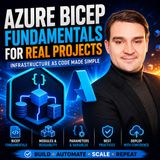
Azure Bicep is Microsoft's modern Infrastructure as Code (IaC) language for deploying and managing Azure resources using a clean, readable, and declarative syntax. In this episode of Microsoft Knowledge Nuggets on M365 FM, Mirko Peters explains why Azure…
This episode introduces a 7-level maturity model for Azure and Microsoft 365 administration, reframing the role of admins from operators to architects of a distributed decision system. It argues that most professionals remain stuck in low-level execution…
In this episode of M365 FM, Mirko Peters sits down with Microsoft MVP Jonathan Hope to explore why identity has become the most critical security boundary in modern cloud environments. As organizations move deeper into Microsoft 365, Azure, and cloud-native…
Azure Bicep is Microsoft’s modern Infrastructure as Code (IaC) language for deploying Azure resources using a clean, declarative syntax. This episode explains why Bicep has become the preferred choice over traditional ARM templates and how it helps teams…
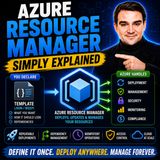
ARM Templates are the original Infrastructure as Code (IaC) technology behind Azure Resource Manager, allowing organizations to define, deploy, and manage Azure infrastructure using declarative JSON files. In this episode of Microsoft Knowledge Nuggets on…
Developers are drowning in Kubernetes, pipelines and compliance checklists instead of shipping features. This episode is for engineering leaders and platform teams who want to understand the DevOps tax and replace it with platform engineering, from golden…
Azure Bicep is far more than a cleaner replacement for ARM templates—it's an architectural approach to managing cloud infrastructure at enterprise scale. In this episode, we explore how Bicep enables organizations to build modular, reusable, and maintainable…
Timeline of episodes about Infrastructure as code
Articles about Infrastructure as code (4)
Articles in which Infrastructure as code is a topic:
Mastering Infrastructure as Code in Azure with Bicep · Mirko Peters Welcome back, cloud architects and developers! In today's fast-paced digital ecosystem, managing cloud environments efficiently is more critical than ever. As organ…
Choosing Your Azure IaC Tool: Bicep vs. Terraform · Mirko Peters Introduction to Azure IaC Tools When you embark on a cloud transformation journey, selecting the right Infrastructure as Code (IaC) tool is one of the most critica…
Questions marked with AI were written with AI from the facts on this page.
What is infrastructure as code? (AI)
Infrastructure as code (IaC) is the practice of managing and deploying cloud infrastructure through versioned code and automated deployment instead of manual configuration in a portal. Because the desired state is written in files, it can be reviewed, repeated and rebuilt.
Which tools are associated with infrastructure as code on Azure? (AI)
Bicep and Terraform are the two tools named in the topic's relations as common ways to describe resources as code. GitHub Actions can run such deployments automatically, and the Azure landing zone is usually deployed through code.
Which M365.FM episodes cover infrastructure as code? (AI)
Three episodes focus on it: "Infrastructure as Code - Simply Explained", "Azure Bicep at Scale: Modular Infrastructure as Code" and "Azure Infrastructure as Code and DevOps with Maik van der Gaag [MVP]". Other episodes, such as the one on Azure Local and landing zones, touch on it as part of a wider platform discussion.
Why is Infrastructure as Code important for Azure?
GitHub Actions – Developer tool by GitHub· Related to GitHub Actions is a CI/CD and automation service built into GitHub that runs workflows defined with a project whenever events such as pushes or pull requests occur.
Florian Lenz – Person· People working on this topic Florian Lenz is a speaker at M365Con 2027 (Principal Cloud Architect & Engineer at neocentric GmbH) with 1 session.
All relationships of Infrastructure as code, grouped by type of relationship:
Short info above, community knowledge below: add practical tips, examples or corrections. New contributions are reviewed first; trusted members publish directly.
Experts and companies for this topic
Community members with expertise in Infrastructure as code:
 EN
 Deutsch
 Español
 Français
 Italiano
 Português
 Nederlands
 Polski
 Bahasa Indonesia
 Русский
 Українська
 العربية
 עברית
 日本語
 한국어