 EN
 Deutsch
 Español
 Français
 Italiano
 Português
 Nederlands
 Polski
 Bahasa Indonesia
 Русский
 Українська
 العربية
 עברית
 हिन्दी
 日本語
 한국어
2026-04-24 · Season 2
How Microsoft Copilot Creates Digital Debt
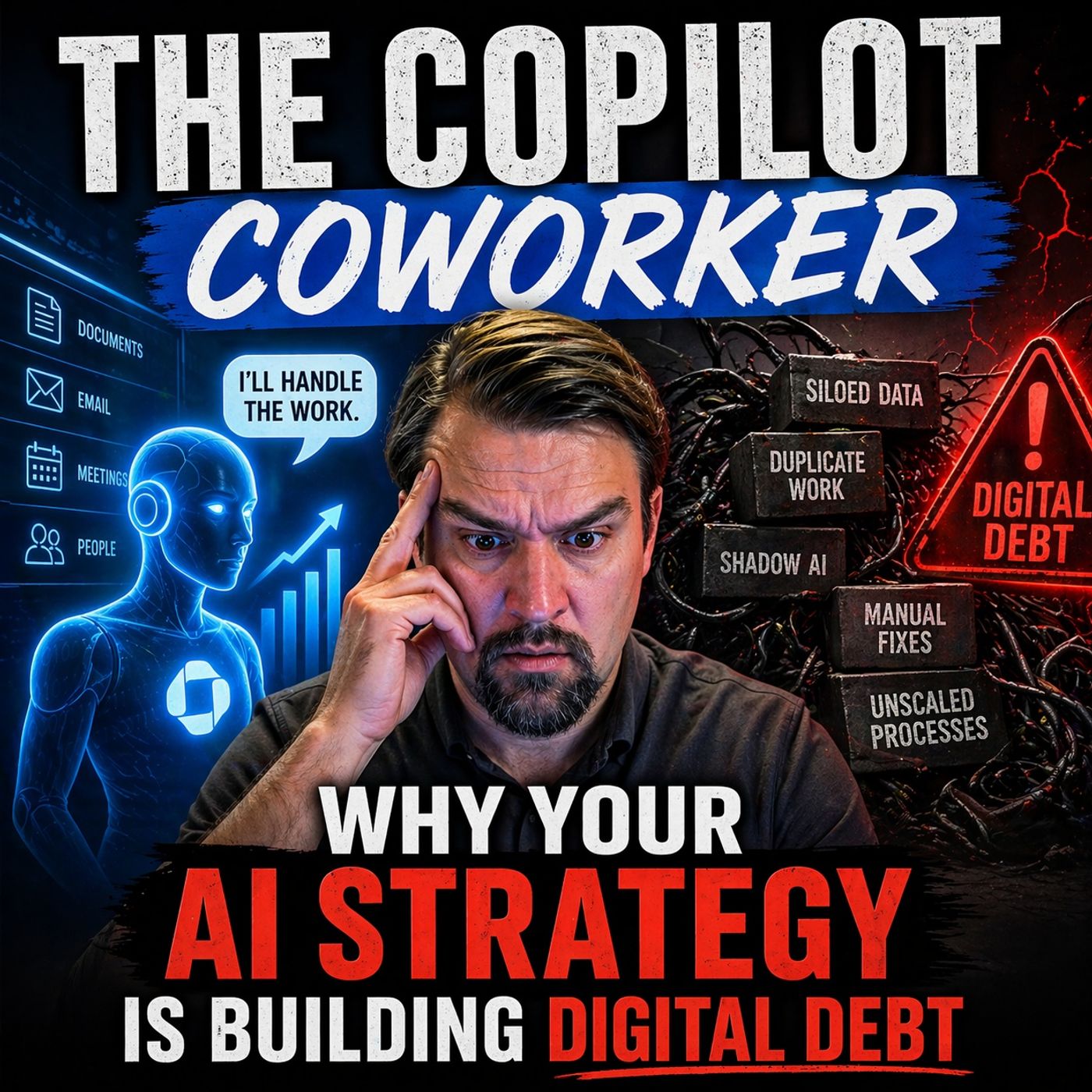
You might expect artificial intelligence to transform your work and boost productivity. Many office workers believe that ai enhances performance, and statistics show that ai chatbots can save up to 90% of time. Yet, only a small fraction of these improvements lead to higher earnings. Take a look at the numbers:
| Statistic Description | Value |
|---|---|
| Percentage of office workers believing AI enhances performance | 81% |
| Time saved by AI chatbots | 64%–90% |
| Average work hours saved through AI adoption | 2.8% |
| Percentage of productivity improvements translating to higher earnings | 3-7% |
Imagine a scenario where your team implements multiple ai tools. You see more output, but decision-making slows down. Digital debt grows as unverified content piles up. Most IT leaders report integration hurdles, and many organizations waste software spending on unused features. Consider these figures:
| Statistic | Description |
|---|---|
| 95% | IT leaders report integration hurdles impeding AI implementation. |
| 37% | Organizations waste an average of 37% of enterprise software expenditure on unused or underutilized features. |
| $250 billion | Represents the annual global waste in enterprise software spending due to underutilization. |
You need to ask yourself if your AI Strategy and tools like Copilot Coworker are driving real productivity or creating hidden inefficiencies. Active participation and governance are essential for making artificial intelligence work for you.
Key Takeaways
- AI tools can create the illusion of productivity but may not lead to real improvements in performance.
- Overreliance on AI can erode critical thinking and decision-making skills among employees.
- Establish clear governance and coworking norms to manage AI-related risks effectively.
- Focus on meaningful outcomes rather than just output volume to measure productivity accurately.
- Invest in workforce development to ensure employees adapt to new AI tools and maintain their skills.
- Use feedback loops to gather insights from employees and improve AI integration continuously.
- Balance automation with human involvement to preserve essential skills and decision-making capabilities.
- Regularly audit AI strategies to uncover inefficiencies and ensure alignment with organizational goals.
The AI Productivity Paradox

Illusion of Output Gains
You may notice more output after introducing ai tools into your workflow. This increase often creates the impression of greater efficiency. However, recent research from the MIT Media Lab shows that these gains can be misleading. Many organizations measure productivity by throughput, such as the number of documents or messages produced. These metrics do not always reflect real outcomes. For example, executive dashboards might show a 6% productivity gain, but win rates and cycle times stay the same or even decline. This gap reveals the ai productivity paradox: local efficiencies mask deeper inefficiencies.
Users often rely too much on ai suggestions, a behavior known as automation bias. This overreliance can erode your independent reasoning and judgment. You may see a superficial increase in output, but lose the critical thinking that drives meaningful work. When ai tools are absorbed into legacy processes without proper transformation, they reinforce old habits. This adaptation creates a facade of productivity, not genuine improvement.
The 3x Productivity Trap
The 3x Productivity Trap describes a situation where ai integration triples output but slows decision-making. You might find yourself overwhelmed by unverified content and digital artifacts. The paradox becomes clear when you realize that more information does not always lead to faster or better decisions. According to recent studies, organizations using ai-powered tools report faster communication cycles and improved meeting efficiency. Yet, over 40% of ai initiatives fail to deliver expected value due to unclear implementation strategies.
If you treat ai tools like chatbots instead of workflow partners, you risk missing their full potential. Lack of clarity on use cases and poor integration into daily processes can lead to productivity losses. McKinsey & Company reports that generative ai could add trillions to global productivity, but only if you implement it effectively.
Digital Debt in the Workplace
Digital debt builds up when you rely on ai without proper governance. This debt includes unverified content, functional rework, and loss of critical thinking skills. Studies show a negative correlation between ai usage and critical thinking abilities. Overreliance on ai tools leads to diminished problem-solving skills and expertise. High rates of functional debt arise from lack of training and excessive trust in ai outputs.
| Measurable Impact | Description |
|---|---|
| Erosion of Critical Thinking Skills | Studies show a negative correlation between AI usage and critical thinking abilities. |
| Increased Reliance on AI | Overreliance on AI tools leads to diminished problem-solving skills and expertise. |
| Functional Rework | High rates of functional debt arise from lack of training and over-reliance on AI outputs. |
You need to manage ai integration with clear governance and active participation. Tools like Copilot Coworker can enhance efficiency and output quality, but their effectiveness depends on how you integrate them into your workflow. The ai productivity paradox reminds you to focus on real outcomes, not just output volume.
AI Strategy: Hidden Symptoms
When you look beneath the surface of your organization's ai strategy, you may find several hidden symptoms that threaten long-term success. These issues often go unnoticed until they start to impact your team's productivity and morale. Understanding these symptoms helps you address them before they become major obstacles.
Context Loss
Knowledge Erosion
You rely on ai tools to help you manage information and complete tasks. However, when you use multiple systems without a clear strategy, you risk losing important context. Knowledge erosion happens when critical details get lost as workers switch between platforms or delegate tasks to ai. Over time, this weakens your team's ability to make informed decisions.
- 88% of organizations use ai, but nearly two-thirds have not scaled it across their business.
- Only 39% of organizations see any enterprise-level impact on earnings from ai use.
- Many companies run isolated ai experiments without a unified vision, which leads to fragmented knowledge.
Communication Gaps
Frequent context switching creates communication gaps among workers. You may find yourself toggling between apps and losing track of conversations or project updates. This constant switching drains your focus and makes it harder to collaborate.
| Evidence Type | Details |
|---|---|
| Time Lost to Context Switching | Employees lose about five working weeks a year due to context switching, according to Harvard Business Review. |
| Frequency of Application Toggling | The average digital worker toggles between applications nearly 1,200 times per day. |
| Time Spent Reorienting | Workers spend almost 4 hours per week reorienting themselves after switching apps. |
When you lose context, you spend more time reorienting and less time on meaningful work. This slows down decision-making and increases frustration among workers.
Technical Debt
Automation Overload
You might expect ai to simplify your workflow, but too much automation can create technical debt. When you add new tools without retiring old ones, your systems become more complex. This complexity makes it harder for workers to innovate and adapt.
- Microsoft reports 55% productivity gains from ai tools.
- Independent research shows developers lose significant time to inefficiencies, revealing a gap between expected and actual results.
- Technical debt complicates workflows and increases maintenance efforts.
- As technical debt grows, workers spend more time on upkeep and less on new ideas.
- 69% of developers lose over 8 hours each week to inefficiencies, which signals a major productivity loss.
Legacy Friction
Legacy systems often clash with new ai tools. When you try to integrate modern solutions with outdated platforms, you create friction. Workers must navigate both old and new processes, which slows progress and increases errors. This friction can discourage workers from fully adopting ai, leading to missed opportunities for improvement.
Employee Disengagement
Reduced Ownership
When you rely heavily on ai, workers may feel less responsible for their work. Reduced ownership happens when workers see ai as the main driver of results. This shift can lower motivation and make it harder to build a culture of accountability.
- Ai tools can flag unusual changes in employee feedback, making it easier to spot disengagement.
- They provide auto-generated recommendations to help managers re-engage at-risk workers.
Skill Atrophy
Skill atrophy occurs when workers stop using their expertise because they depend on ai for answers. Over time, this leads to disengagement and a loss of valuable skills. One in three employees reports that ai increases their workload instead of reducing it. This extra stress can cause disengagement and lower morale.
- Ai tools can perform sentiment analysis at scale, detecting emotional shifts and negative trends that may indicate disengagement.
- They can cluster themes from employee feedback, allowing leaders to quickly identify common drivers of disengagement.
- Predictive risk scoring helps identify individuals or teams at risk of disengagement based on historical data.
Note: Disengagement does not just affect individual workers. It can spread across teams, lowering overall engagement and making it harder to achieve your goals.
When you recognize these hidden symptoms, you can take steps to realign your ai strategy. Addressing context loss, technical debt, and disengagement ensures that your workers stay engaged and your organization achieves true productivity.
Root Causes of Productivity Loss
Flawed AI Strategy
You may believe that automating tasks with ai will boost productivity. Many leaders make this assumption, but it often leads to unexpected results. When you adopt an ai strategy without clear goals, you risk creating pseudo-work. Ai can generate tasks quickly, but these tasks may not align with your organizational needs. This misalignment wastes resources and creates inefficiencies.
Take a look at the most common flaws in ai strategy:
- Strategy Vacuum: You select ai tools for non-core issues instead of aligning them with strategic goals.
- Embracing Industry Hype: You trust tech industry claims about high ROI without assessing real value.
- KPI Blindness: You lack defined business metrics that ai tools should improve.
- AI-Solutionism: You believe any ai implementation is better than none, leading to unjustified spending.
Ai can perform many tasks, but not all tasks add value. When you focus on volume instead of utility, you create cognitive overload. This overload increases stress and reduces decision quality. You need to ensure your ai strategy targets meaningful outcomes and supports workplace transformation.
Tip: Align your ai strategy with clear business goals. Avoid automating tasks that do not contribute to your organization's success.
| Root Cause | Description |
|---|---|
| Misalignment of AI-generated tasks | AI tasks may not align with organizational needs, leading to inefficiencies. |
| Over-reliance on automation | Dependence on AI can result in cognitive erosion among employees. |
| Ineffective integration into workflows | Failure to incorporate AI into existing processes can disrupt productivity. |
Human Factors
You play a critical role in workplace transformation. Ai can simulate empathy, but it lacks the emotional impact of human responses. Emotional connection drives motivation and engagement. When you depend too much on ai, you lose this connection. This loss affects your ability to stay productive and motivated.
Unproductive tasks generated by ai often go unnoticed. These tasks drain your attention and cognitive bandwidth. You may not see these losses in traditional metrics, but they accumulate over time. Ai can create an environment filled with low-value work, which leads to cognitive erosion.
- Unit Gains Misunderstanding: You may think automating tasks leads to proportional productivity increases. This belief can degrade your analytical skills.
- Unproductive Pseudo-Work: Ai efficiency can result in tasks that lack real utility, increasing low-value work.
Note: Emotional connection and critical thinking are essential for successful workplace transformation. Ai cannot replace these human factors.
Organizational Gaps
Organizational gaps create major challenges for ai integration. Poor communication flows and data silos prevent information from moving freely. Misaligned priorities and workflow inefficiencies slow progress. Cultural disconnects make it hard to adopt new technologies. You need a profound transformation of organizational settings to overcome these barriers.
- Poor communication flows
- Data silos
- Misaligned priorities
- Workflow inefficiencies
- Cultural disconnects
- Need for profound transformation of organizational settings
Local performance improvements can create bottlenecks and desynchronization in workflows. Automating tasks does not always lead to linear gains. Overuse of ai can cause inefficiencies and disrupt workplace transformation.
Alert: Address organizational gaps before scaling your ai strategy. Build a culture that supports collaboration and continuous improvement.
Measuring Productivity in the AI Era
Output vs. Real Productivity
You might see a spike in output when you add ai to your workflow. More emails, reports, and messages fill your day. This does not always mean you have better performance. You need to look beyond the number of tasks completed. Real productivity means you achieve meaningful results, not just more activity. Many executives expect ai to boost performance, but employees often feel the opposite. Most workers report that ai increases their workload. Burnout rises as you try to keep up with new tasks. You may feel more pressure to deliver, but your performance does not always improve.
Key Metrics
You need to measure what matters in an ai-powered workday. Counting tasks or documents does not show true performance. You should focus on metrics that reveal the impact of ai on your work. Here are some key metrics to consider:
- Decision quality: Track how well you solve problems, not just how fast you finish tasks.
- Cycle time: Measure how quickly you move from idea to action.
- Employee engagement: Check if your team feels motivated and connected.
- Task relevance: Review if ai helps you complete important tasks or just adds more to your list.
- Data accuracy: Make sure ai uses reliable data for every task.
- Knowledge retention: See if you keep important information or lose it in the flow of data.
- Error rates: Watch for mistakes that ai might introduce into your tasks.
- Collaboration effectiveness: Assess how well ai supports teamwork and sharing data.
- Outcome alignment: Confirm that your tasks match your goals and improve performance.
You need to use these metrics to see if ai helps you reach your targets. Do not rely only on output numbers.
Feedback Loops
Feedback loops help you understand how ai affects your work. You can use ai to collect data on employee experiences and respond quickly. When you close the feedback loop, you encourage more people to share their thoughts. This leads to better engagement and improved workplace conditions. Sharing what you learn with your team builds trust. Ai can help you draft messages and share insights faster. You create a cycle where feedback leads to action, and action leads to more feedback. This process helps you adjust your tasks and improve performance over time.
Tip: Use feedback loops to keep your ai strategy on track. Listen to your team, act on their input, and share results. This will help you build a productive and engaged workplace.
Disengagement and Workforce Impact

Employee Disengagement Drivers
You may notice that rapid ai adoption can unsettle your workforce. When you introduce new technology, you often create uncertainty at work. This uncertainty can weaken the relationship between you and your employer. As a result, employee disengagement rises. Many workers feel disconnected when they do not understand how ai will affect their roles. Manager burnout also plays a big part. Only 27% of managers report feeling engaged at work. If you do not recognize your team’s efforts, you risk losing their motivation. In fact, 85% of employees worldwide do not feel engaged. You must also pay attention to work-life balance, career development, and company culture. When you neglect these areas, your workforce becomes more disengaged. A disengaged workforce can lower productivity and make it harder to achieve your goals.
Knowledge Transfer Breakdown
When you rely on ai, you may see invisible barriers form within your organization. These barriers can stop valuable insights from spreading across teams. For example, a senior developer might keep important system details to themselves. This creates a single point of failure. Fragmentation leads to wasted time. A customer service representative may spend hours searching for solutions that already exist. Sales teams might miss key client insights because information stays locked in one department. You need to ensure that your workforce can share knowledge easily. If you do not, your employee experience suffers. Workers become frustrated when they cannot access the information they need. This frustration can lead to more employee disengagement and a less effective workforce.
- AI can create invisible walls that block knowledge sharing.
- Fragmentation causes inefficiencies and wasted time.
- Important client insights may be lost if information is siloed.
Leadership Pipeline Risks
As you bring ai into your organization, you must rethink your leadership pipeline. Traditional leadership skills may not be enough in an ai-driven environment. You need leaders who can inspire trust and set clear goals. They must also ensure ethical decision-making, since ai cannot take responsibility for its outputs. Succession planning becomes more complex. You must align your plans with the new skills needed for future leaders. Cultural resistance can slow down your progress. Some people may struggle to adapt to ai, which can hurt leadership effectiveness.
| Risk Area | Description |
|---|---|
| Leadership Competence | AI integration requires new human-centered leadership skills, as traditional competencies may not suffice in the AI era. |
| Succession Planning | Existing succession plans may not align with the competencies needed for future leaders in an AI-driven environment. |
| Ethical Considerations | Leaders must ensure accountability and ethical decision-making, as AI cannot take responsibility for its outputs. |
| Cultural Resistance | Organizations may face challenges in shifting culture to embrace AI, which can hinder leadership effectiveness. |
You must help your leaders move from making decisions to auditing ai outputs. They need to make sure that ai-generated decisions match your values and ethical standards. This shift increases the complexity of leadership roles. If you do not address these risks, your employee experience and workforce development may suffer.
Solutions: Rethinking AI Strategy
Context Capture
You need to capture context in your ai-optimized workflows to prevent knowledge erosion and improve decision-making. Many organizations lose critical information when they switch between platforms or delegate tasks to ai. You can address this by auditing your current context loss points. Identify where important knowledge disappears in your workflow. Start with a minimal MDC ruleset that focuses on your most valuable knowledge areas. Integrate context capture into code reviews. Make context verification as important as functionality testing. Build a simple knowledge graph to connect requirements, decisions, and implementations. This approach helps you retain essential information and supports better human-ai collaboration.
- Audit your workflow for context loss points.
- Use a minimal MDC ruleset for critical knowledge.
- Add context capture to code reviews.
- Build a knowledge graph linking requirements, decisions, and implementations.
When you capture context, you create a foundation for learning and development. Your team can access relevant information quickly and avoid repeating mistakes. This process supports continuous learning and helps you adapt to new challenges.
Governance and Coworking Norms
You must establish governance frameworks and coworking norms to control ai-related productivity risks. Proper governance does not eliminate all risks, but it allows you to act quickly and minimize vulnerabilities. You need to map security controls to established frameworks. This step is crucial for organizations using ai tools. Governance frameworks set necessary controls and compliance requirements. They help you manage risks from ai's autonomous capabilities. You ensure that ai usage follows regulatory standards and operational security. Structured governance enhances productivity and reduces vulnerabilities. Coworking norms guide how you interact with ai tools. These norms encourage active participation and validation of ai-generated outputs. You build trust and accountability in your team. Clear governance and coworking norms support learning and development by creating a safe environment for experimentation and feedback.
Tip: Set up governance frameworks early. Define coworking norms that encourage validation and active participation. This approach helps you manage ai risks and improve productivity.
Human-in-the-Loop
You need to integrate human expertise throughout the ai lifecycle. Human-in-the-loop approaches make ai systems more powerful, ethical, and adaptable. You can identify and correct errors that automated systems might miss. This integration improves decision-making and supports learning. Studies show that task performance improves more after ai exposure than other methods. Most users find the ai assistant method helpful for transitioning to new tasks. The ai assistant provides a positive learning experience. Users apply insights to other tasks, even without direct guidance.
| Evidence Type | Description |
|---|---|
| Task Performance | Improvements following AI exposure were greater than those following other methods, indicating effective learning facilitated by AI. |
| User Feedback | 77.8% of participants found the AI assistant method helpful for transitioning to other methods, suggesting a strong foundational understanding provided by AI. |
| Learning Experience | The AI assistant generally provided a positive learning experience, with users applying insights to other tasks, enhancing performance even without direct guidance. |
- 77.8% of users reported the ai assistant method was more helpful for subsequent tasks.
- No participants found the ai assistant method less helpful.
You create a cycle of learning and development when you keep humans involved. Your team gains new skills and adapts to changing workflows. Human-in-the-loop strategies support ethical decision-making and help you build trust in ai systems. You ensure that ai complements your expertise, not replaces it. This approach leads to sustainable productivity and continuous improvement.
Note: Human-in-the-loop strategies empower your team. You combine ai capabilities with human judgment to achieve better results.
Strategic Learning
You face a workplace that changes quickly. New ai tools appear every month. Skills that helped you last year may not help you tomorrow. You need a plan that keeps you ready for these shifts. Strategic learning gives you the tools to adapt and thrive.
You start by creating a clear path for your growth. Personalized development strategies show you where you can improve. You see your strengths and weaknesses. This clarity helps you set goals and track progress. You do not feel lost when new ai systems arrive. You know what you need to learn.
Tailored learning approaches help you stay relevant. You do not waste time on skills that no longer matter. You focus on what will help you work with ai. You learn how to use new features and understand how they fit into your workflow. You build confidence as you master each tool.
Organizations that value learning move faster. You see teams respond quickly to changes. Leaders encourage you to try new ai solutions. You feel safe to experiment and share ideas. This culture of agility helps you solve problems and find better ways to work. You become part of a group that values innovation.
Tip: Ask your manager about training programs for ai tools. Join workshops and online courses. Share what you learn with your team. You help everyone grow together.
You need to practice strategic learning every day. You review your progress and adjust your goals. You ask questions when you do not understand something. You use feedback from ai systems to improve your skills. You do not wait for someone else to tell you what to learn. You take charge of your development.
Here are some ways strategic learning improves your adaptation to ai tools:
- Personalized development strategies give you clarity about your growth path.
- Tailored learning approaches keep your skills up-to-date and relevant.
- Organizations that prioritize learning help you respond swiftly to changes.
- You foster a culture of agility and innovation by sharing knowledge.
You see that strategic learning does more than help you use ai. It builds your confidence and prepares you for future challenges. You become a leader in your team. You help others learn and adapt. You drive productivity by making sure everyone understands how to use ai tools.
You must remember that learning is not a one-time event. You need to keep learning as ai evolves. You stay curious and open to new ideas. You build habits that help you grow. You use ai to support your learning, but you do not let it replace your judgment.
Note: Strategic learning helps you stay ahead. You build skills that last. You create value for yourself and your organization.
Realigning for Sustainable Productivity
Balancing Automation and Human Value
You need to find the right balance between automation and human value to shape the future of work. Not every task should be automated. Some workflows hold high intangible value, such as those that require empathy or deep judgment. You should use ai to support these tasks, not replace them. True progress comes from what you choose not to delegate. You protect your most important skills by keeping humans involved in critical decisions.
- Use ai to handle routine work, but keep humans in the loop for complex or uncertain situations.
- Build safeguards that require human review at key decision points.
- Track and reward skills like empathy and contextual judgment, not just speed or efficiency.
You should design performance metrics that measure both efficiency and the quality of human contributions. This approach helps you maintain trust and accountability. It also ensures that your team’s unique strengths remain central in the future of work.
Investing in Workforce Development
You drive long-term impact when you invest in your workforce. Most organizations that invest in ai see productivity gains. Many reinvest these gains into upskilling and reskilling employees. This strategy does not usually lead to job cuts. Instead, it prepares you for the future of work.
“While ai readily raises the floor by improving efficiency, the transformative potential comes from raising the ceiling,” says Dan Diasio, EY Global Consulting AI Leader.
You can look at companies like HCLTech. Nearly 80% of their employees have trained in core skills. Many have also built digital capabilities and learned about generative ai. This commitment to workforce development aligns with higher productivity and better outcomes.
You should focus on continuous skills development. Targeted training programs help you keep up with new ai tools. You also need to measure how well you retain human capacity, not just how fast you finish tasks. This approach supports sustainable impact and prepares you for changes in the future of work.
Leadership’s Role
You play a key role in realigning ai strategy for sustainable productivity if you are a leader. You must integrate ai to enhance your team’s capabilities and streamline processes. You should invest in training so everyone uses ai tools effectively. Monitoring the impact of ai helps you adjust your strategy for the best results.
- Foster a culture of continuous improvement.
- Encourage innovation and responsible use of ai.
- Set clear usage policies and educate your team on acceptable practices.
- Work with IT and compliance teams to monitor ai activity and respond to incidents.
Microsoft Copilot Coworker can help you automate routine tasks and generate compliance documentation faster. With proper governance, you reduce human error and protect sensitive data. You can use Microsoft Purview for real-time monitoring and compliance. Administrators can apply retention policies to Copilot-generated content, ensuring you meet standards without losing productivity.
You should always focus on decision quality, not just the amount of content produced. This mindset builds a future-proof workforce ready for the future of work. You create an environment where ai and human strengths work together for lasting impact.
Unchecked ai strategies can threaten your organization’s productivity. Recent studies highlight several risks:
| Risk Type | Description |
|---|---|
| AI Hallucinations | ai may generate convincing but incorrect information, causing trust issues. |
| Compliance Exposure | ai errors can lead to regulatory and compliance problems. |
| Financial Losses | ai misinformation may result in costly mistakes. |
| Data Governance | ai with poor data quality can harm decision-making. |
| Validation Processes | ai outputs without review can skew financial analysis. |
| Filtering Tools | ai without moderation can disrupt workflows. |
You should audit your ai tools and strategies to uncover hidden inefficiencies, digital debt, and disengagement. Take these steps:
- Establish ai coding guidelines and review ai-generated output.
- Implement automated testing for ai code.
- Conduct regular audits of ai systems and dependencies.
You can realign your ai strategy by focusing on governance, context, and workforce development. This approach will help you achieve sustainable productivity in an ai-driven world.
FAQ
What is the main risk of using ai without a clear strategy?
You risk creating more work instead of saving time. When you use ai without a plan, you may see more output but not better results. This can lower productivity and cause confusion.
How can ai increase digital debt in your workplace?
You add digital debt when you let ai create unverified content. If you do not review or organize this information, it piles up. This makes it harder for you to find what you need and slows down your work.
Why do some teams feel less engaged after adopting ai?
You may feel less engaged if you rely on ai for every task. When ai takes over important decisions, you lose ownership. This can make your work feel less meaningful and reduce your motivation.
How do you measure real gains from ai tools?
You should look at decision quality, not just how much you produce. Track how ai helps you solve problems, improve teamwork, and reach your goals. Do not focus only on the number of tasks completed.
What steps help you avoid skill loss when using ai?
You need to stay involved in your work. Use ai as a partner, not a replacement. Keep learning new skills and review ai outputs. This helps you keep your expertise and adapt to changes.
Can ai replace human judgment in important decisions?
No, you should not let ai replace your judgment. Ai can help you with data and suggestions, but you need to make the final call. Your experience and values matter in every decision.
How does governance improve ai use in your organization?
Governance gives you rules for using ai safely. It helps you check ai outputs and protect your data. With clear guidelines, you can trust ai more and avoid mistakes that hurt your team.
What is the best way to balance ai and human value?
You should let ai handle simple tasks. Keep humans in charge of complex work. This balance lets you use ai for speed and humans for insight. You build trust and keep productivity high.
🎧 Listen to this episode
Want a practical explanation of How Microsoft Copilot Creates Digital Debt? This episode breaks down the topic in clear language and shows why it matters for Microsoft 365, Azure, Power Platform, security, AI, and modern work.
Listen to this episode if you want to:
- Understand the key concepts behind How Microsoft Copilot Creates Digital Debt
- See how it fits into the wider Microsoft technology ecosystem
- Learn where it can create practical value for your organization
You may also enjoy these related M365 FM episodes:
- Microsoft 365 Copilot Agents: Real Business Value with Steve Corey [MVP]
- Copilot for Dynamics 365 Finance and Operations - Simply Explained
- Zero Trust AI Security with Microsoft Copilot and Azure – Mourtaza Fazlehoussen [MVP]
- Copilot in Microsoft Entra ID - Simply Explained
- Copilot for Microsoft Fabric - Simply Explained
Discover more practical Microsoft conversations on M365 FM.
Apple Podcasts · Spotify · YouTube · YouTube Music
Host: Mirko Peters