
Explore how AI innovations, including Microsoft Copilot, are reshaping productivity and collaboration across Microsoft 365. Discuss architectural concerns, security implications, and evolving automation strategies.

Aug. 15, 2026
Microsoft Entra Connect - Simply Explained
Microsoft Entra Connect is one of those Microsoft technologies almost everyone working with Microsoft 365 has heard about, but its actual job is often misunderstood. Why do organizations need it? What exactly gets synchronized between Active Directory and Microsoft Entra ID? Where are passwords checked? And what happens if synchronization stops working? In this episode of Microsoft Knowledge Nuggets on M365 FM, we break Microsoft Entra Connect down into its essential building blocks: synchroniza...
![Everyone Wants Copilot—but Is Your Data Ready: Microsoft Fabric Architecture with Walter Calcagno [MVP-MCT]](https://d3wo5wojvuv7l.cloudfront.net/t_rss_itunes_square_1400/images.spreaker.com/original/f90075aebd3fd5db4aa669d5a07c6cc7.jpg "Everyone Wants Copilot—but Is Your Data Ready: Microsoft Fabric Architecture with Walter Calcagno [MVP-MCT]")
Aug. 15, 2026
Everyone Wants Copilot—but Is Your Data Ready: Microsoft Fabric Architecture with Walter Calcagno [MVP-MCT]
Everyone wants Copilot. Everyone wants AI agents. Everyone wants employees to ask natural-language questions and immediately receive trustworthy answers from enterprise data. But what happens when the underlying data is fragmented, business definitions conflict, governance is weak, and semantic models were never designed for AI? In this episode of M365 FM, Mirko Peters sits down with Walter E. Calcagno, Microsoft MVP in Data Platform, Microsoft Certified Trainer, data architect, author, educator...
Guests: Mirko Peters , Walter Calcagno
![The Future of AI Software Factories- OpenCLAW, Agent Orchestration & The Intelligence Age with Mark Smith [MVP]](https://d3wo5wojvuv7l.cloudfront.net/t_rss_itunes_square_1400/images.spreaker.com/original/dd815e95c6188c4efdf6d971a54feb7e.jpg "The Future of AI Software Factories- OpenCLAW, Agent Orchestration & The Intelligence Age with Mark Smith [MVP]")
Aug. 14, 2026
The Future of AI Software Factories- OpenCLAW, Agent Orchestration & The Intelligence Age with Mark Smith [MVP]
What happens when AI stops being just a tool and becomes the team that designs, builds, tests, secures, documents, deploys, and even maintains your software?In this episode of the M365 FM Podcast, Mirko Peters speaks with Mark Smith [MVP], widely known as NZ365Guy, about the transition from traditional Microsoft development toward AI-first software engineering. Mark brings decades of experience across Microsoft technologies, Dynamics 365, Power Platform, Copilot, AI platforms, consulting, traini...
Guests: Mirko Peters , Mark Smith
![PowerPoint Like a Pro- Hidden Features, Corporate Templates & Copilot with Fiona Walsh [MVP]](https://d3wo5wojvuv7l.cloudfront.net/t_rss_itunes_square_1400/images.spreaker.com/original/db2a87256d9a831fec27781161e7867e.jpg "PowerPoint Like a Pro- Hidden Features, Corporate Templates & Copilot with Fiona Walsh [MVP]")
Aug. 13, 2026
PowerPoint Like a Pro- Hidden Features, Corporate Templates & Copilot with Fiona Walsh [MVP]
PowerPoint is one of the most widely used business applications in the world — but many professionals are only scratching the surface of what it can actually do. In this episode of the M365 FM Podcast, Mirko Peters talks with Microsoft PowerPoint MVP Fiona Walsh about the PowerPoint features that experienced users still overlook, how organizations can build better corporate templates, and where Microsoft Copilot genuinely helps — and where it still has work to do. Fiona brings more than 20 years...
Guests: Mirko Peters , Fiona Walsh
Aug. 11, 2026
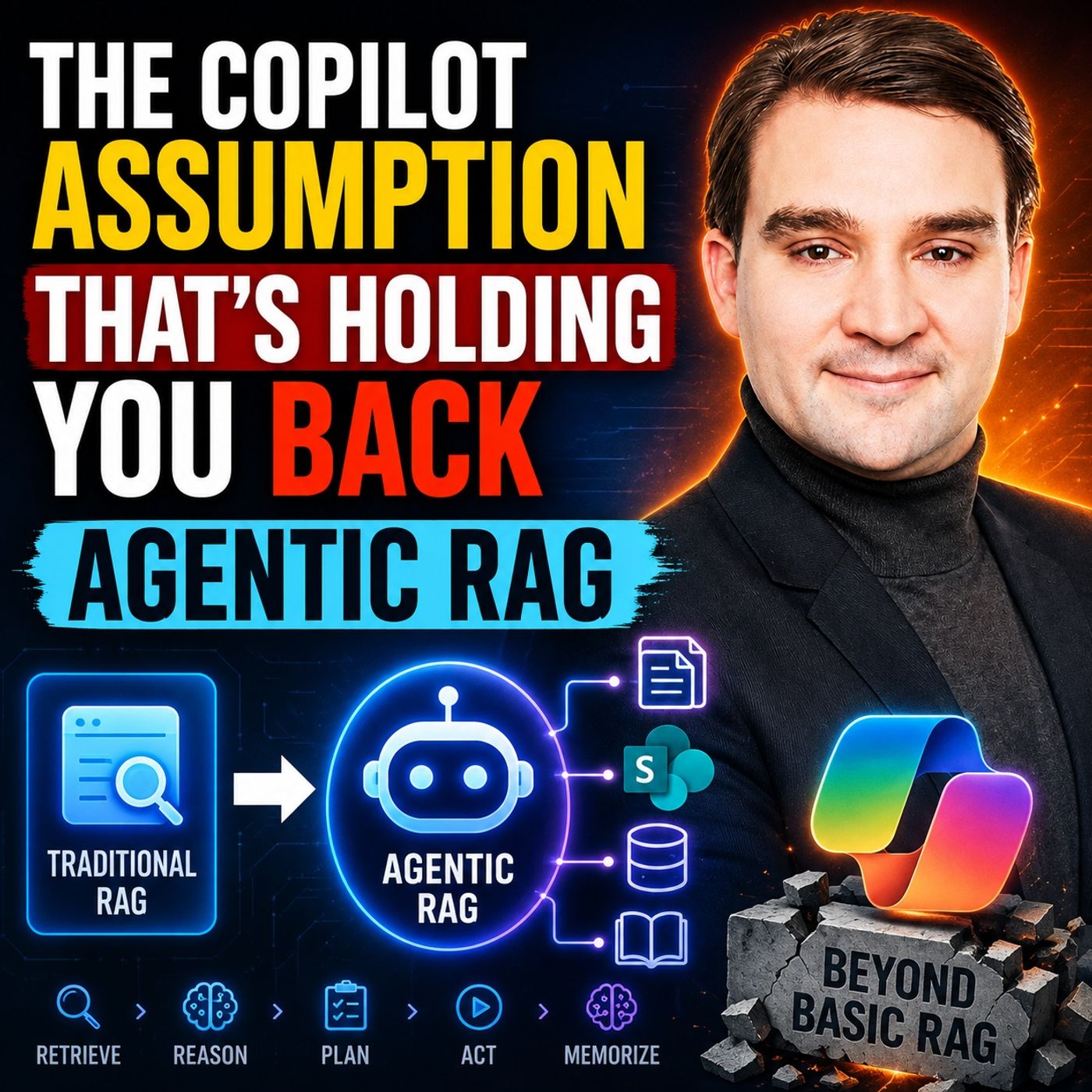
The Copilot Assumption That's Holding You Back — Agentic RAG
Most people still think Microsoft Copilot is fundamentally a question-and-answer system: you ask something, it searches for information, and an LLM generates an answer. But that mental model is becoming outdated. Copilot is evolving toward an orchestration system that can determine where to search, evaluate what it finds, decide whether additional information is required, and increasingly take action based on the result. In this deep dive, we break down Agentic RAG, how it differs from tradition...
![From Demo to Production- Building Enterprise AI Agents That Actually Work with Microsoft Copilot Studio with Elliot Margot [MVP]](https://d3wo5wojvuv7l.cloudfront.net/t_rss_itunes_square_1400/images.spreaker.com/original/d5d0023ba92fcb8daa6f22b59ec9920d.jpg "From Demo to Production- Building Enterprise AI Agents That Actually Work with Microsoft Copilot Studio with Elliot Margot [MVP]")
Aug. 11, 2026
From Demo to Production- Building Enterprise AI Agents That Actually Work with Microsoft Copilot Studio with Elliot Margot [MVP]
In this episode of the M365 Show, Mirko Peters speaks with Elliot Margot, Microsoft MVP for Microsoft 365 Copilot and Copilot Studio Team Lead at Witivio. Elliot shares a practical perspective on taking AI from an impressive demo to a secure, governed and genuinely useful enterprise solution. The conversation covers Microsoft Copilot Studio, multi-agent systems, enterprise RAG, MCP, Power Automate, governance, cost control and the human side of AI adoption. ㅤ ㅤ FROM CHATBOTS TO ENTERPRISE AI AGE...
Guests: Mirko Peters , Elliot Margot
![Beyond Copilot: Building AI That Works in the Real World with Azure AI Foundry and Agentic AI for Frontline Workers with Fergus Kidd [MVP]](https://d3wo5wojvuv7l.cloudfront.net/t_rss_itunes_square_1400/images.spreaker.com/original/fca20bc31b78065184375ce8c2b31ba8.jpg "Beyond Copilot: Building AI That Works in the Real World with Azure AI Foundry and Agentic AI for Frontline Workers with Fergus Kidd [MVP]")
Aug. 10, 2026
Beyond Copilot: Building AI That Works in the Real World with Azure AI Foundry and Agentic AI for Frontline Workers with Fergus Kidd [MVP]
In this episode of the M365 Show, Mirko Peters speaks with Fergus Kidd, Microsoft MVP, Co-Founder and CTO of FieldPal AI, about moving enterprise AI beyond the desk. While much of the conversation around Microsoft Copilot, generative AI and productivity focuses on knowledge workers, Fergus makes the case for the people maintaining infrastructure, repairing equipment, carrying out inspections and keeping essential services running. These frontline teams often work with limited connectivity, limit...
Guests: Mirko Peters , Fergus Kidd
![Beyond the Prompt: Mastering Microsoft Copilot for Real Productivity with Jess Stratton [MVP]](https://d3wo5wojvuv7l.cloudfront.net/t_rss_itunes_square_1400/images.spreaker.com/original/e12949e33ce1c9530191d5d54dbec1af.jpg "Beyond the Prompt: Mastering Microsoft Copilot for Real Productivity with Jess Stratton [MVP]")
July 30, 2026
Beyond the Prompt: Mastering Microsoft Copilot for Real Productivity with Jess Stratton [MVP]
You use AI tools. You want more than basic interactions. Microsoft Copilot is an advanced AI assistant. It integrates into Microsoft 365. It transforms enterprise productivity. This blog guides you in Mastering Microsoft Copilot. You gain significant productivity. Jess Stratton, an expert, shares insights. You will learn advanced prompt engineering. You will learn deep integration strategies across Microsoft 365 apps. You will conquer AI overwhelm. You will drive creative inspiration. Key Tak...
Guests: Mirko Peters , Jess Stratton
July 29, 2026
The Death of the Chatbot: Why Your Dataverse Strategy Is Broken
You pour significant resources into your enterprise data infrastructure, yet you often find your investment does not yield the promised value. This frustration is common, but the issue often resides not within the technology itself—your Dataverse Strategy Broken approach is failing to deliver the scalable governance and security your organization requires. This flawed methodology impacts your entire digital transformation journey, leading to governance debt and unmonitored shadow AI. Failures...
Guest: Mirko Peters
![Agentic AI for IT Operations: Windows 365, Intune & Microsoft's AI Vision with Christiaan Brinkhoff [Nerdio]](https://d3wo5wojvuv7l.cloudfront.net/t_rss_itunes_square_1400/images.spreaker.com/original/495a44625de6fe83597aa709b47a82f3.jpg "Agentic AI for IT Operations: Windows 365, Intune & Microsoft's AI Vision with Christiaan Brinkhoff [Nerdio]")
July 29, 2026
Agentic AI for IT Operations: Windows 365, Intune & Microsoft's AI Vision with Christiaan Brinkhoff [Nerdio]
Explore agentic AI for IT operations with Christiaan Brinkhoff: Windows 365, Intune, AI agents, governance, security, and Microsoft's agentic OS vision.
Guests: Mirko Peters , Christiaan Brinkhoff
July 29, 2026
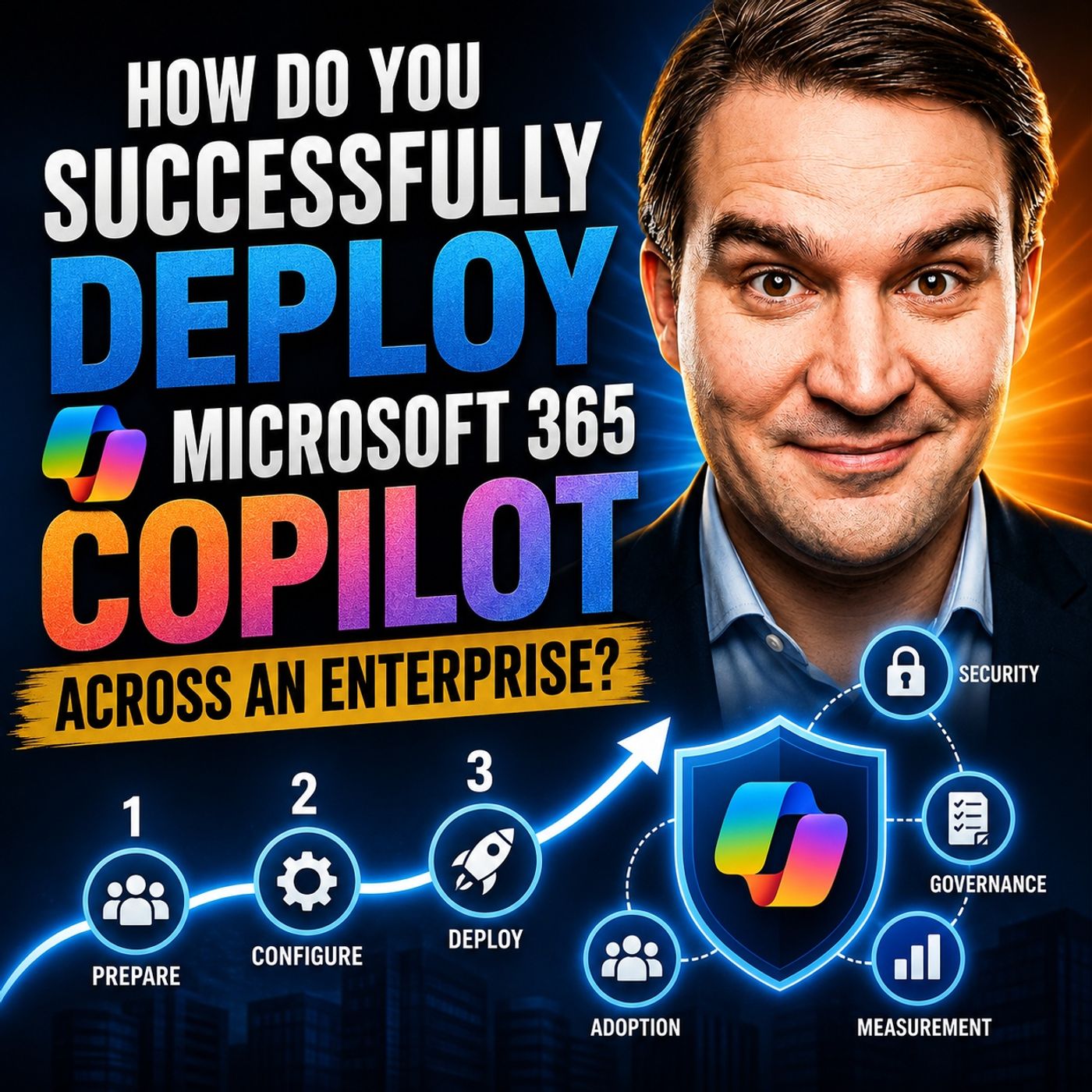
How Do You Successfully Deploy Microsoft 365 Copilot Across an Enterprise?
Artificial intelligence is rapidly transforming IT operations, with "agentic systems" leading the next wave of autonomous, intelligent innovation. Driven by this evolution, the global AIOps market is projected to expand at a compound annual growth rate (CAGR) of 15.2% from 2025 to 2030. Microsoft's AI Vision aligns perfectly with this paradigm shift, seamlessly connecting Windows 365 and Microsoft Intune to redefine IT management, elevate enterprise security, and deliver superior user experience...
Guest: Mirko Peters
July 24, 2026
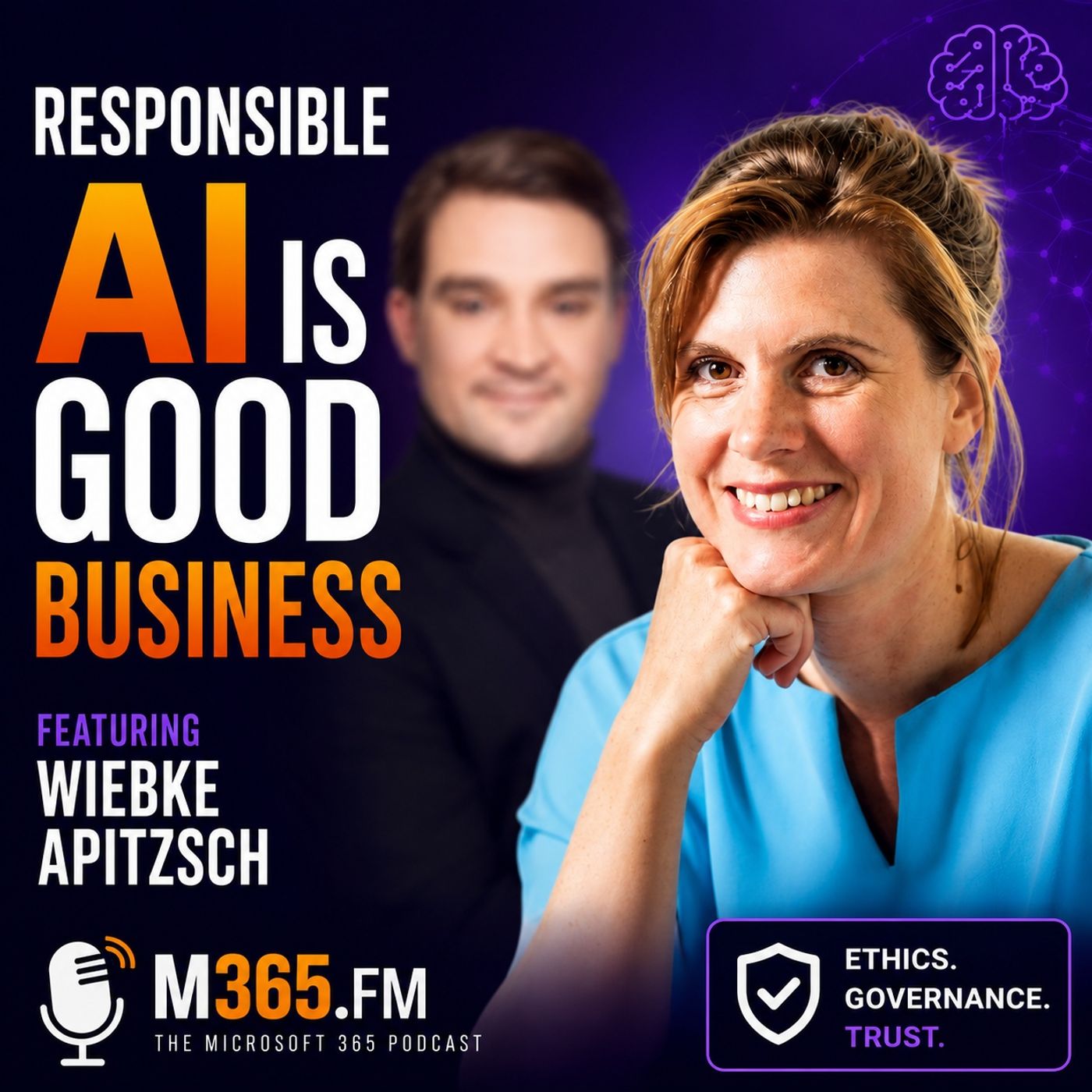
Responsible AI Is Good Business — Featuring Wiebke Apitzsch
Quick Answer: Responsible AI helps organizations use AI in ways that are safe, accountable, and useful. This episode explores how governance, adoption, and human judgment can turn responsible AI from a policy discussion into practical business value across Microsoft technology initiatives. governance frameworks recommend post-deployment monitoring to catch issues like bias or safety concerns early. Here are some challenges you may face and ways to overcome them: Regulatory Compliance: St...
Guests: Mirko Peters , Wiebke Apitzsch
![Agent Governance Explained- How IT Can Enable the AI Agent Revolution with Thomas Zou [Microsoft]](https://d3wo5wojvuv7l.cloudfront.net/t_rss_itunes_square_1400/images.spreaker.com/original/79744cb9c62ee93d478e17f017043dc2.jpg "Agent Governance Explained- How IT Can Enable the AI Agent Revolution with Thomas Zou [Microsoft]")
July 23, 2026
Agent Governance Explained- How IT Can Enable the AI Agent Revolution with Thomas Zou [Microsoft]
Quick Answer: Agent Governance Explained- How IT Can Enable the AI Agent Revolution with Thomas Zou is an important Microsoft topic for teams that need clearer technical decisions, safer implementation, and practical operational value. This episode explains what it does, where it fits in the Microsoft ecosystem, and the key considerations for administrators, architects, and business stakeholders. Agent governance explained refers to the framework that guides the behavior of AI agents within org...
Guests: Mirko Peters , Thomas Zou
July 23, 2026
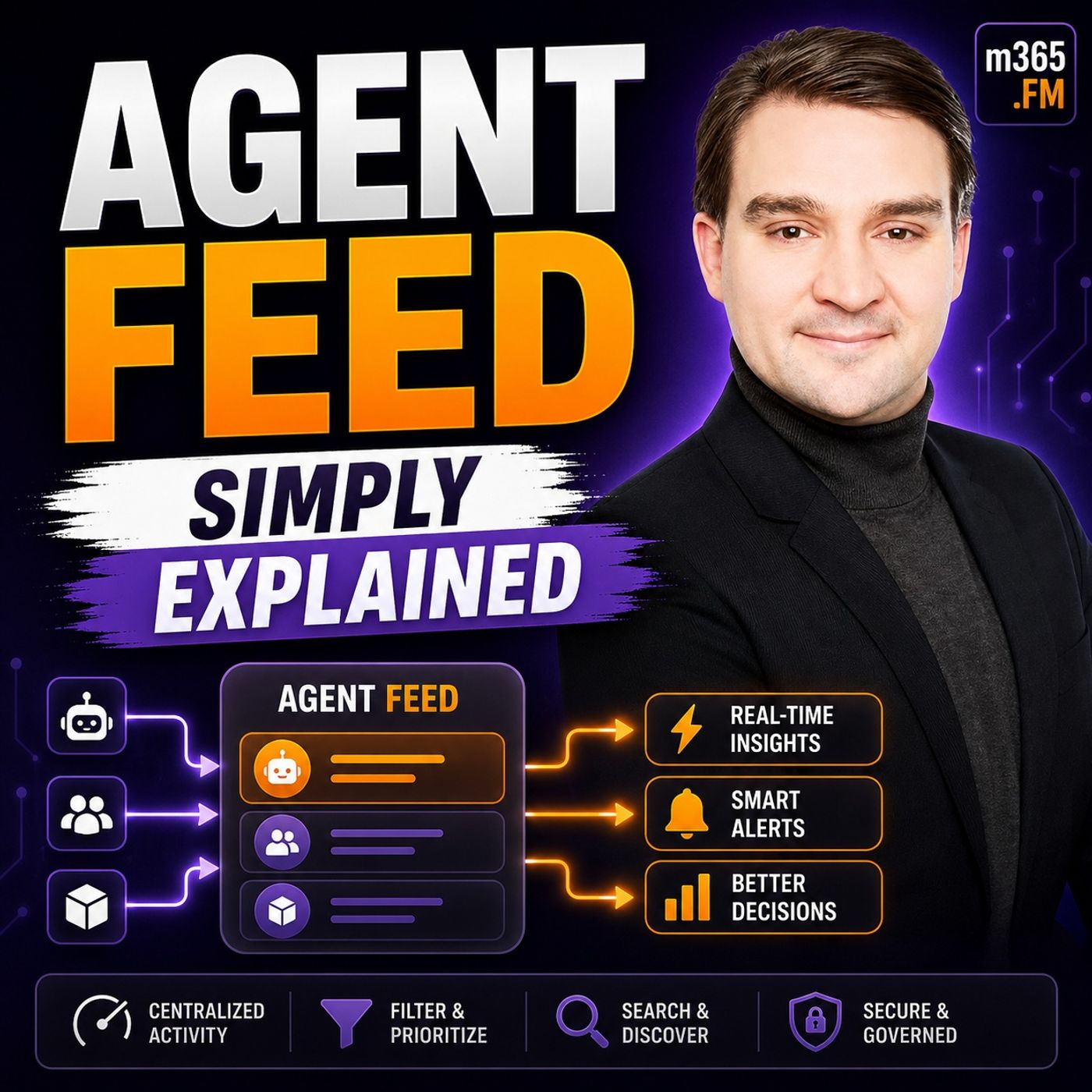
Agent Feed - Simply Explained
Quick Answer: Agent Feed is an important Microsoft topic for teams that need clearer technical decisions, safer implementation, and practical operational value. This episode explains what it does, where it fits in the Microsoft ecosystem, and the key considerations for administrators, architects, and business stakeholders. Agent Feed serves as a vital tool for managing AI agents within Power Apps. It enhances your ability to oversee AI tasks, ensuring effective collaboration between human users...
Guest: Mirko Peters
July 23, 2026
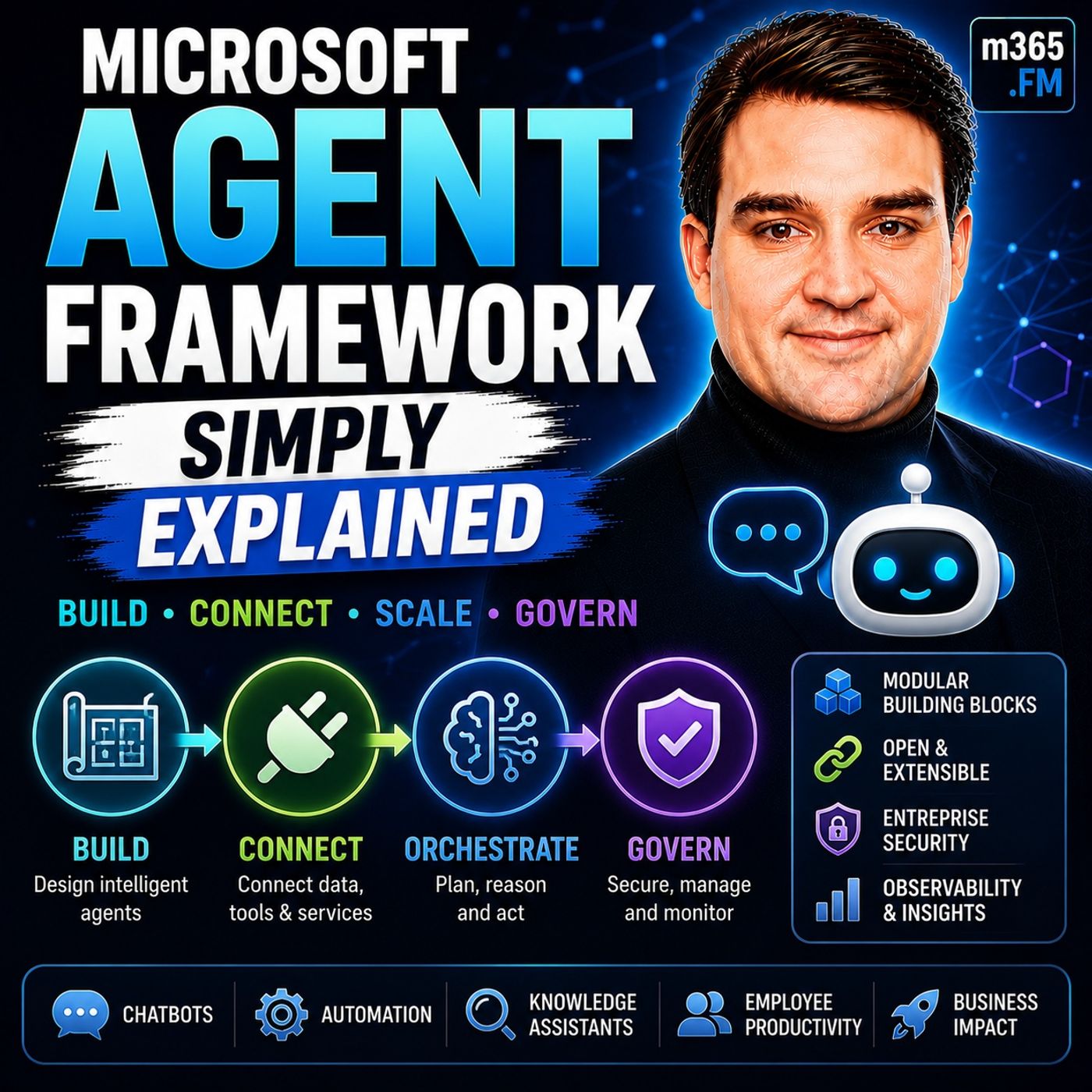
Microsoft Agent Framework - Simply Explained
Quick Answer: Microsoft Agent Framework is an important Microsoft topic for teams that need clearer technical decisions, safer implementation, and practical operational value. This episode explains what it does, where it fits in the Microsoft ecosystem, and the key considerations for administrators, architects, and business stakeholders. The Microsoft Agent Framework is an open, multi-language framework designed for creating production-grade AI agents and multi-agent workflows. This framework a...
Guest: Mirko Peters
![Beyond Copilot: How to Make AI Transformation Actually Stick with Femke Cornelissen [MVP]](https://d3wo5wojvuv7l.cloudfront.net/t_rss_itunes_square_1400/images.spreaker.com/original/334b8c7a89e0358a1a840802a1d64b01.jpg "Beyond Copilot: How to Make AI Transformation Actually Stick with Femke Cornelissen [MVP]")
July 22, 2026
Beyond Copilot: How to Make AI Transformation Actually Stick with Femke Cornelissen [MVP]
Quick answer: AI transformation succeeds when organisations change how people work, decide, learn, and govern—not when they simply turn on a Copilot licence. In this conversation, Femke Cornelissen explores how leaders can move beyond isolated pilots and build adoption practices that create sustained business value. In today's fast-paced business landscape, AI transformation isn't just a buzzword; it's a game-changer. Yet, many organizations struggle to implement AI initiatives effectively. Y...
Guests: Mirko Peters , Femke Cornelissen
July 21, 2026
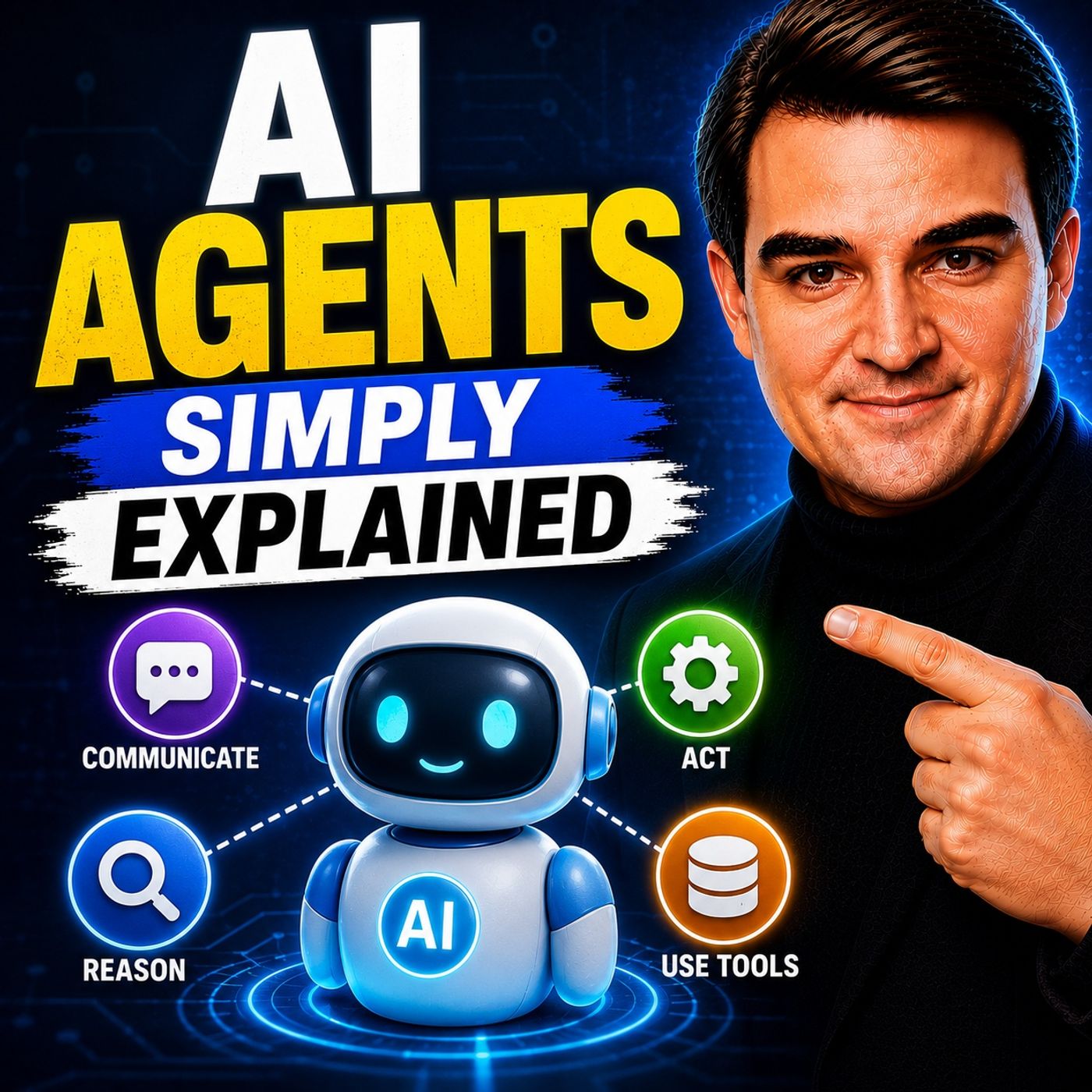
AI Agents - Simply Explained
AI Agents are one of the biggest shifts in artificial intelligence, moving beyond simple chatbots to software that can reason, plan, make decisions, and perform real work across multiple systems. In this episode of Microsoft Knowledge Nuggets, Mirko Peters explains AI Agents in simple terms, showing how they combine large language models, memory, tools, and automation to complete complex business tasks with minimal human intervention. The episode explores how AI agents differ from traditional AI assistants. Instead of only answering questions, agents can analyze goals, break them into smaller tasks, access enterprise data, call APIs, interact with Microsoft 365 applications, and adapt their actions based on new information. You'll learn the core building blocks of modern agentic AI, including reasoning, planning, tool usage, memory, orchestration, and autonomous execution, as well as where technologies like Microsoft Copilot, Copilot Studio, Azure AI Foundry, Microsoft Fabric, and …
Guest: Mirko Peters
![From AI Hype to AI Harness Engineering – Building AI That People Can Actually Trust with Alan Buscaglia [MVP] from Gentleman Programming](https://d3wo5wojvuv7l.cloudfront.net/t_rss_itunes_square_1400/images.spreaker.com/original/0eda4a00b36a48c82731ee915e839db6.jpg "From AI Hype to AI Harness Engineering – Building AI That People Can Actually Trust with Alan Buscaglia [MVP] from Gentleman Programming")
July 20, 2026
From AI Hype to AI Harness Engineering – Building AI That People Can Actually Trust with Alan Buscaglia [MVP] from Gentleman Programming
This episode features Alan Buscaglia [MVP], creator of the Gentleman Programming YouTube channel, discussing why enterprise AI success depends on far more than choosing the latest language model. Together, we explore the shift from AI hype to AI Harness Engineering—a practical approach to building AI systems that are secure, governed, observable, and trustworthy. Alan explains why prompt engineering alone is no longer enough. Organizations need an AI harness that manages context, validates outputs, enforces security, integrates with enterprise data, and provides continuous monitoring. These guardrails transform AI from an experimental chatbot into a dependable business capability that teams can confidently use in production. The conversation also covers the importance of trust in AI adoption. Users must know that AI produces reliable answers, protects sensitive information, follows organizational policies, and remains transparent in its decision-making. Alan shares practical gui…
Guests: Mirko Peters , Alan Buscaglia
July 19, 2026
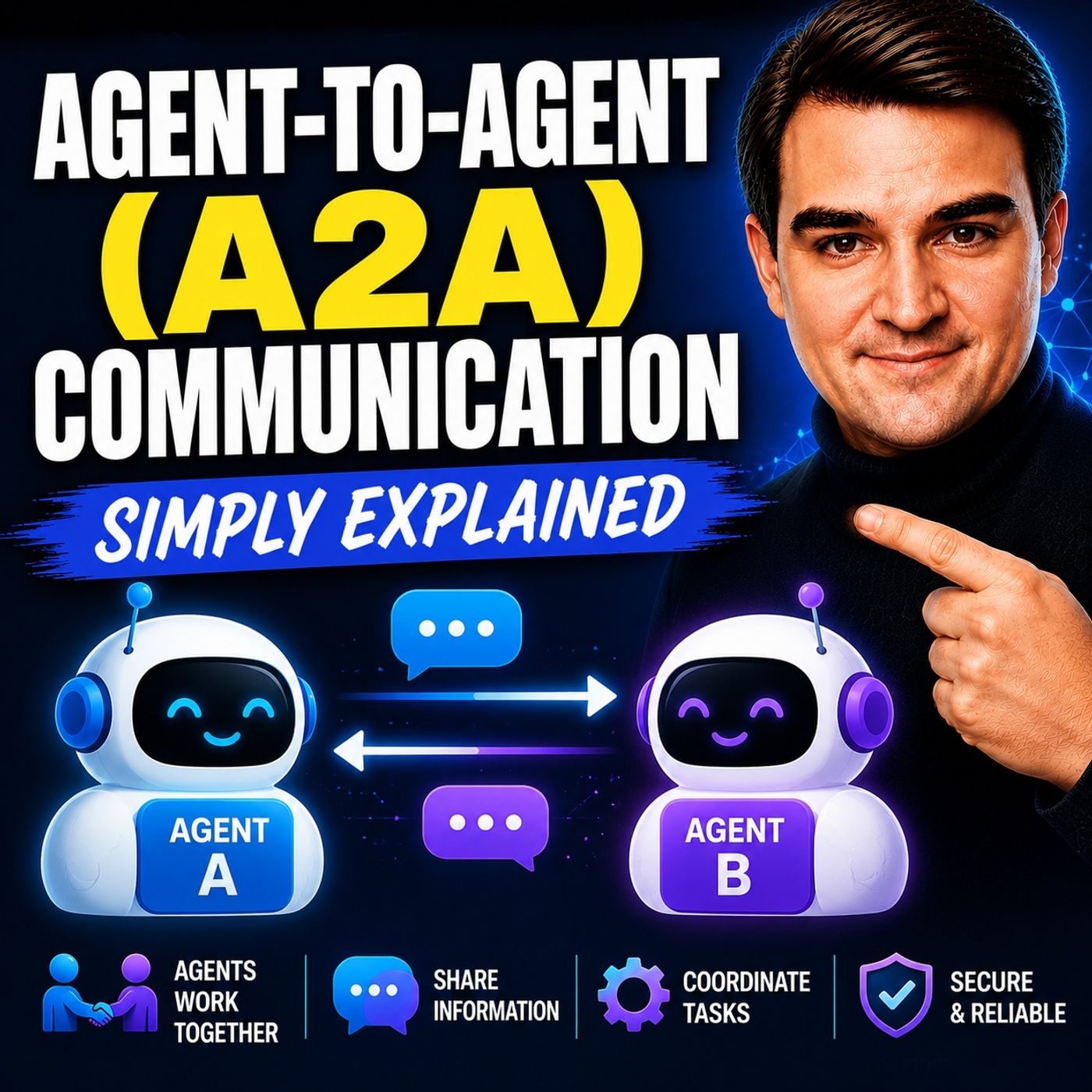
Agent-to-Agent (A2A) Communication - Simply Explained
Agent-to-Agent (A2A) Communication is an open protocol that enables AI agents to discover, communicate, and collaborate with one another—regardless of the framework, programming language, or platform they were built on. Instead of creating custom integrations between every agent, A2A defines a common standard for exchanging messages, delegating tasks, sharing capabilities, and coordinating complex workflows across distributed AI systems. In this episode of Microsoft Knowledge Nuggets, Mirko Peters explains Agent-to-Agent (A2A) Communication in simple terms and shows why it's becoming a key building block for enterprise AI. You'll learn how agents discover each other through Agent Cards, exchange structured requests and responses, manage long-running tasks, and collaborate securely across organizational and technology boundaries. The episode also explains how A2A differs from Model Context Protocol (MCP): MCP connects AI models to tools and data, while A2A enables independent AI age…
Guest: Mirko Peters
July 19, 2026
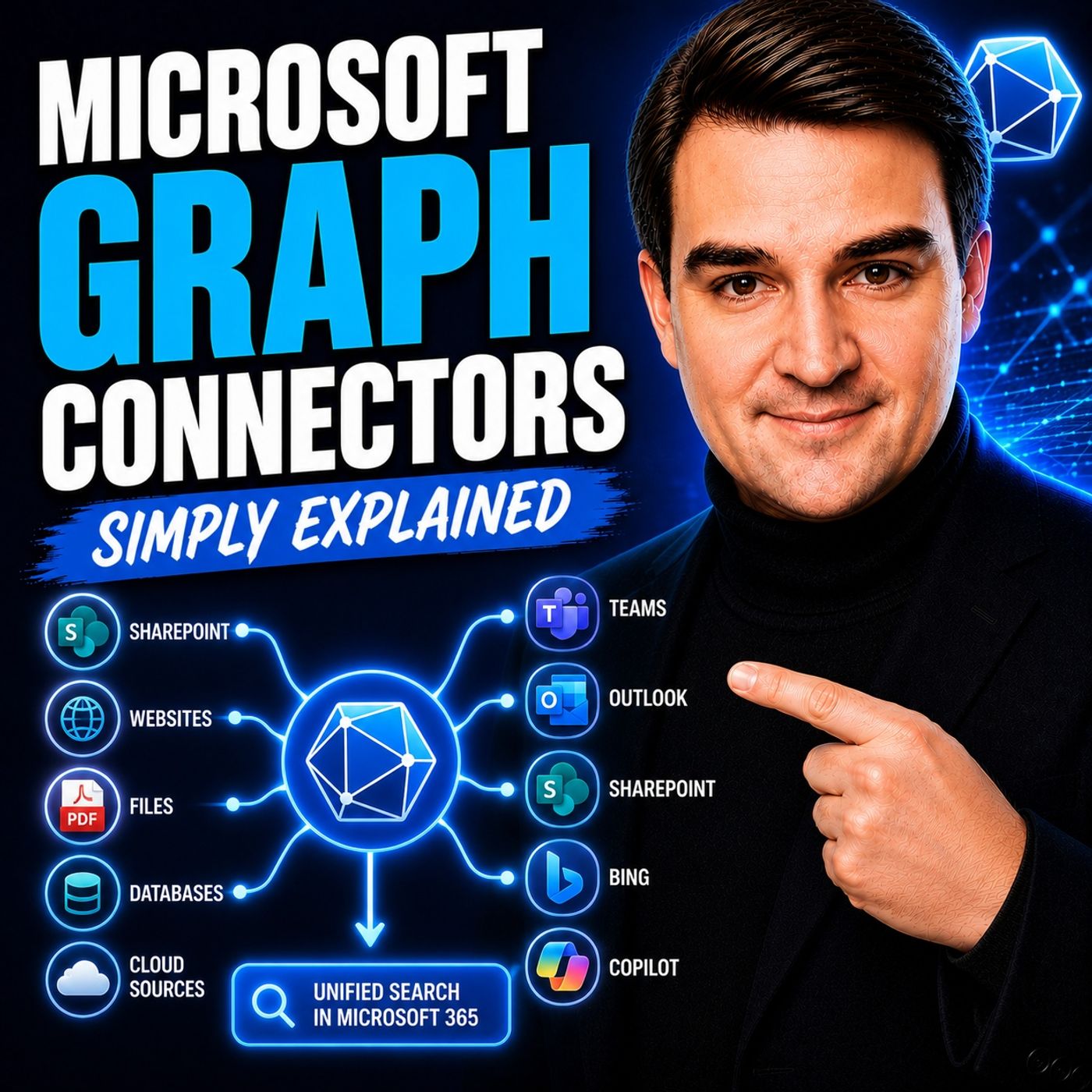
Microsoft Graph Connectors - Simply Explained
Microsoft Graph Connectors extend the Microsoft Graph by bringing data from external systems into Microsoft 365, making it searchable and accessible through Microsoft Search, Microsoft Copilot, and other Microsoft 365 experiences. Instead of limiting users to data stored in Microsoft 365, Graph Connectors allow organizations to securely index information from third-party platforms such as Salesforce, ServiceNow, Confluence, Jira, file shares, websites, databases, and custom business applications. In this episode of Microsoft Knowledge Nuggets, Mirko Peters explains Microsoft Graph Connectors in simple terms and shows how they help unify knowledge across your organization. You'll learn how Graph Connectors crawl external data sources, create searchable indexes, apply security trimming, and surface relevant content directly in Microsoft Search and Microsoft Copilot. The episode also explains the architecture behind connectors, indexing pipelines, permissions, and how external content…
Guest: Mirko Peters
July 17, 2026
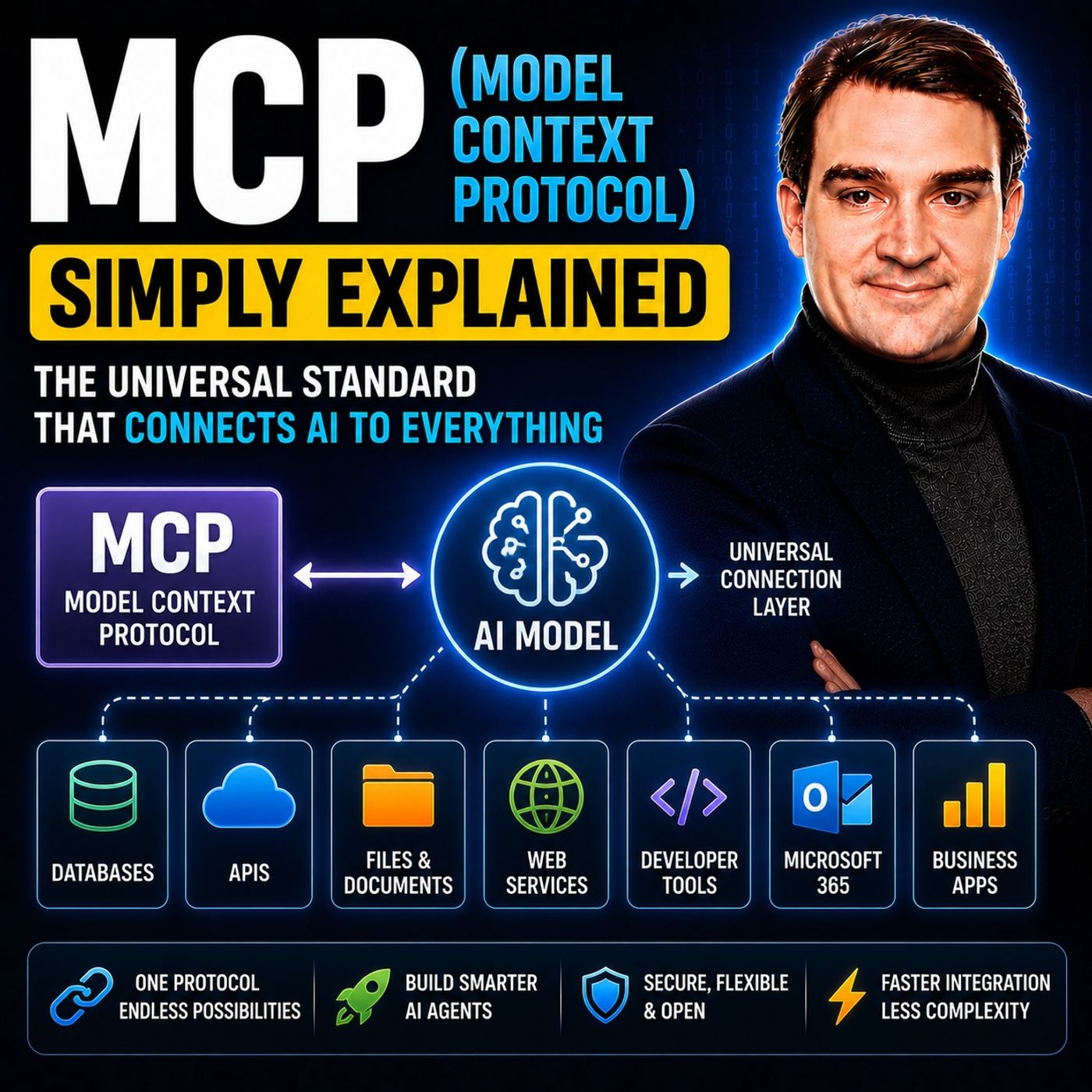
MCP (Model Context Protocol) - Simply Explained
The Model Context Protocol (MCP) is an open standard that allows AI applications to securely connect with external tools, APIs, databases, files, and business systems through a common interface. Instead of building custom integrations for every AI model and every application, MCP provides a universal way for AI assistants to discover tools, access data, and perform real-world actions, making it one of the key technologies behind modern AI agents. In this episode of Microsoft Knowledge Nuggets, Mirko Peters explains the Model Context Protocol (MCP) in simple terms and explores why it's becoming the "USB-C for AI." You'll learn how MCP enables AI assistants to move beyond answering questions by interacting with enterprise systems, development tools, cloud platforms, and business applications in a secure and standardized way. The episode covers key concepts including MCP clients, MCP servers, tools, resources, prompts, and the client-server architecture that powers the protocol. It…
Guest: Mirko Peters
July 17, 2026
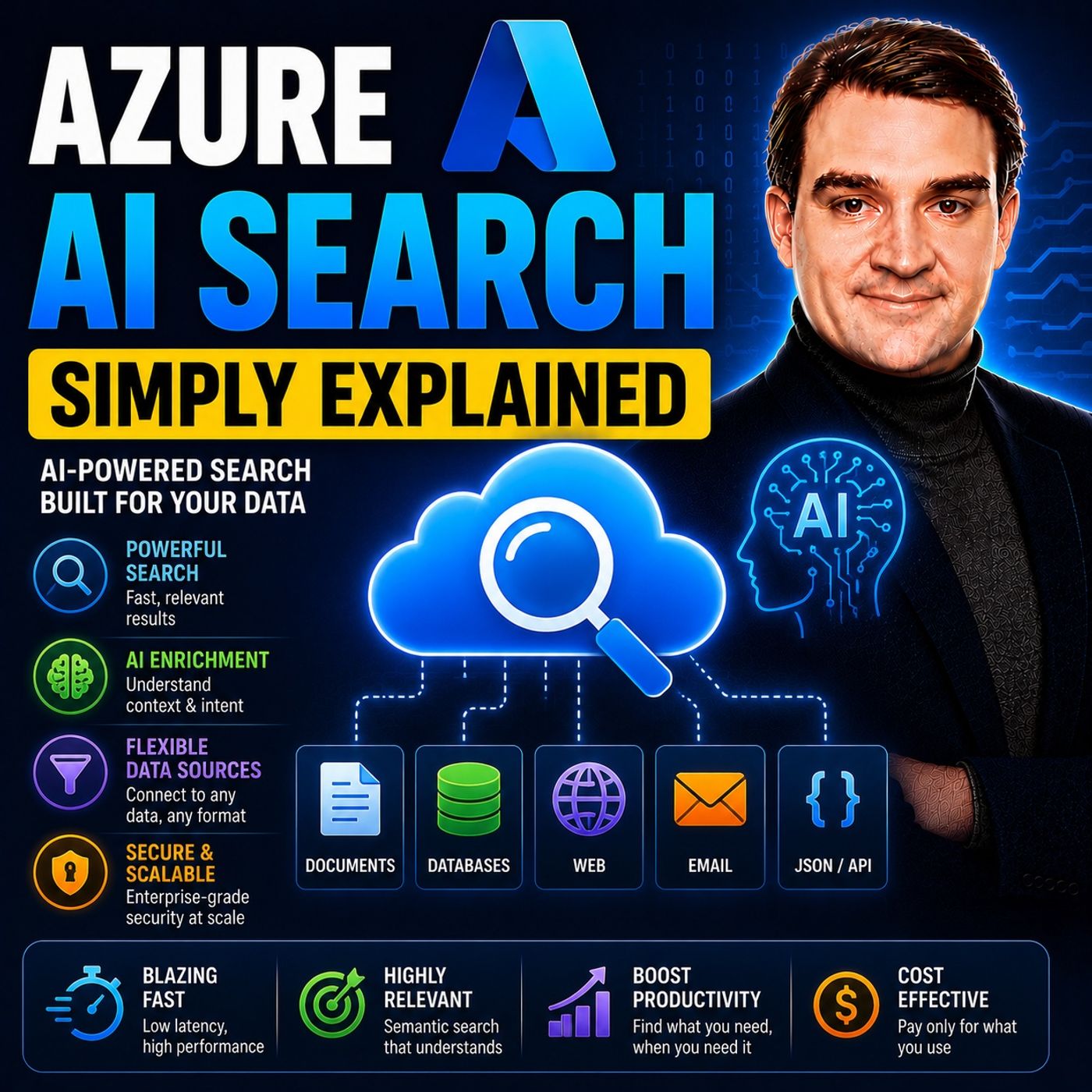
Azure AI Search – Simply Explained
Azure AI Search is Microsoft's intelligent search and information retrieval service for building modern search experiences and AI-powered applications. It combines traditional keyword search with vector search, semantic ranking, and AI enrichment, making it a core component for Retrieval-Augmented Generation (RAG), AI agents, and enterprise search solutions. In this episode of Microsoft Knowledge Nuggets, Mirko Peters explains Azure AI Search in simple terms and shows why it has become one of the most important services for generative AI applications. You'll learn how Azure AI Search helps AI models retrieve relevant information from your own documents, databases, and knowledge bases instead of relying only on their pre-trained knowledge. The episode covers key concepts including search indexes, indexers, full-text search, vector search, hybrid search, semantic search, AI enrichment, embeddings, and data connectors. It also explains how Azure AI Search integrates with Azure Open…
Guest: Mirko Peters
July 16, 2026
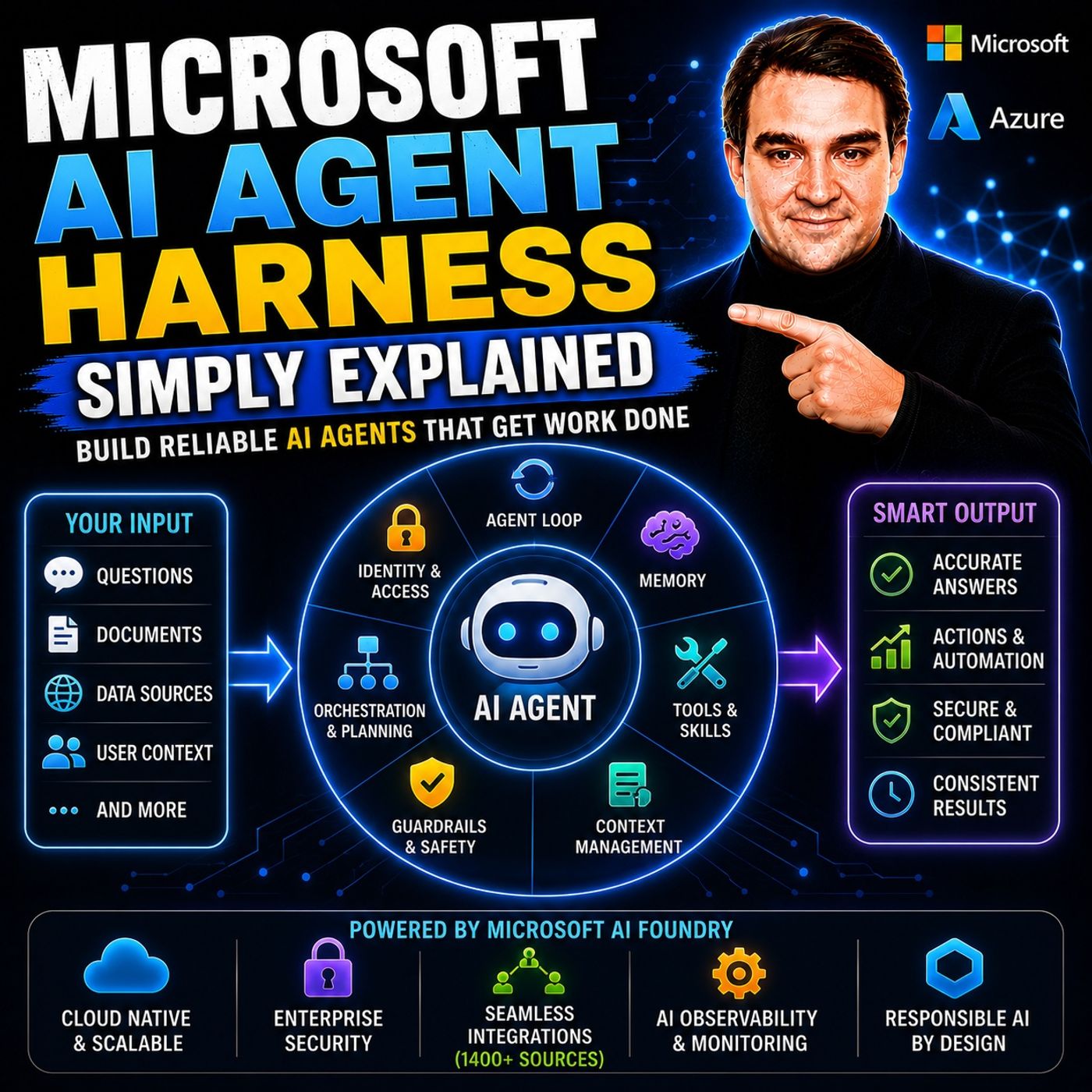
Microsoft AI Agent Harness - Simply Explained
Microsoft AI Agent Harness is the runtime layer that transforms a large language model into a capable AI agent. While an LLM can generate text, an agent harness provides everything needed to complete real work—planning tasks, calling tools, managing memory, handling approvals, and maintaining context across long-running workflows. In this episode of Microsoft Knowledge Nuggets, we explain Microsoft AI Agent Harness in plain English and show why it's becoming a core building block for enterprise AI applications. You'll learn what an agent harness actually is, how it differs from an AI model, and why modern AI agents need much more than prompts to operate reliably. We cover key concepts including planning, tool calling, context management, conversation history, memory, safety policies, approval workflows, and autonomous execution. You'll also discover how the Microsoft Agent Framework provides these capabilities out of the box, allowing developers to build robust AI agents without cr…
Guest: Mirko Peters
![Microsoft 365 Copilot Agents: Real Business Value with Steve Corey [MVP]](https://d3wo5wojvuv7l.cloudfront.net/t_rss_itunes_square_1400/images.spreaker.com/original/e0a2251092bb88f0a1285250caeb76b0.jpg "Microsoft 365 Copilot Agents: Real Business Value with Steve Corey [MVP]")
July 15, 2026
Microsoft 365 Copilot Agents: Real Business Value with Steve Corey [MVP]
Microsoft 365 Copilot Agents have the potential to transform the way organizations work—but only when they move beyond simple chat experiences and become deeply integrated into real business processes. In this episode of the M365 FM Podcast, Mirko Peters is joined by Microsoft MVP Steve Corey to explore how organizations can build AI agents that deliver measurable business value rather than simply generating impressive demonstrations. Together, they discuss why successful AI adoption depends on solving business problems, not just deploying new technology. You'll learn how Microsoft 365 Copilot Agents extend the capabilities of Microsoft Copilot by automating multi-step workflows, accessing enterprise knowledge, interacting with Microsoft 365 services, and supporting employees across their daily work. The conversation explains how organizations can combine Microsoft 365, Microsoft Graph, SharePoint, Teams, Power Platform, and Copilot Studio to build intelligent agents that understan…
Guests: Mirko Peters , Steve Corey