

Data Governance Power Platform Microsoft Security Cloud Architecture AI in Microsoft 365 Dynamics 365 Insights Developer Practices Microsoft 365 Podcast – Teams, SharePoint, Office Apps & Productivity Microsoft Strategy & Partner Marketing Guest Episodes Simply Explained Workshops on Microsoft Tech for free
Oct. 6, 2026
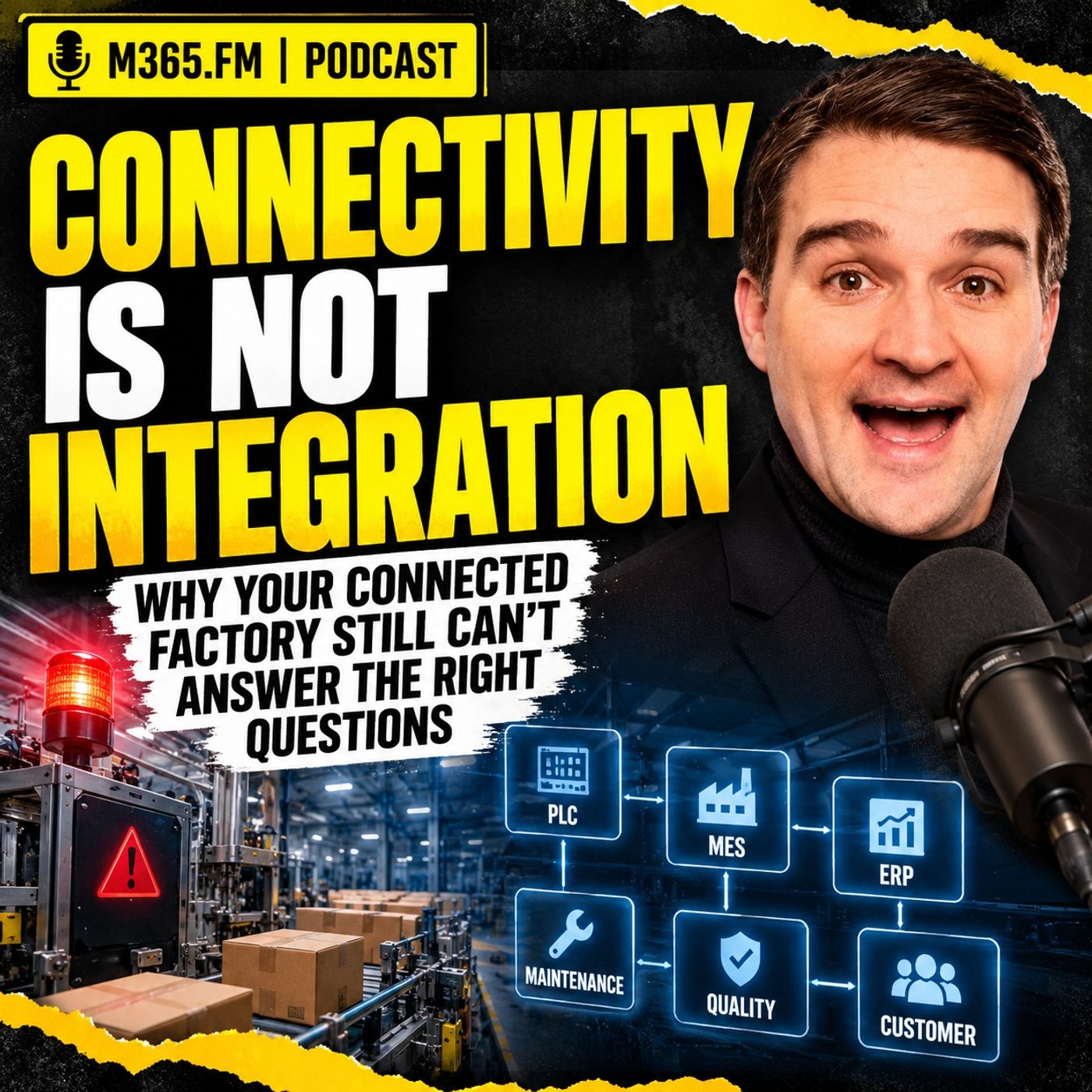
Connectivity Is Not Integration — Why Your Connected Factory Still Can't Answer the Right Questions
A connected factory can move machine signals in milliseconds and still fail to answer the operational questions that actually matter. A packaging machine stops, the PLC reports the fault, OPC UA exposes the event, MQTT distributes it, and the dashboard updates immediately. Maintenance receives an alert and everything appears connected. Then the planner asks which customer shipment is now at risk, and suddenly the answer requires MES data, ERP records, maintenance history, quality status, product...
Oct. 4, 2026
Why Continuous Improvement Needs Better Data
Continuous improvement is supposed to create learning that compounds over time. In many factories, however, improvement work still depends heavily on workshops, spreadsheets, isolated reports, and what people remember from the previous shift. A Kaizen event can create visible progress, but a few weeks later the same loss often appears again under slightly different production conditions. The issue is not always the quality of the improvement idea. The bigger problem is that teams often cannot pr...
Oct. 2, 2026
IoT Hub Message Routing vs Event Grid — Why Telemetry and Events Are Not the Same Problem
A temperature reading, a vibration sample, a machine cycle, and a device disconnect may all be described as events, but they do not represent the same architectural problem. In industrial IoT and manufacturing environments, confusing continuous telemetry with discrete events can create noisy workflows, incomplete production histories, unnecessary processing, and systems that react without enough context. In this episode, we break down the architectural difference between Azure IoT Hub Message R...
![Building Azure That Survives the Real World — with Mike Martin [MVP]](https://d3wo5wojvuv7l.cloudfront.net/t_rss_itunes_square_1400/images.spreaker.com/original/a907cccbe53d60b24bd2317acc40f151.jpg "Building Azure That Survives the Real World — with Mike Martin [MVP]")
Oct. 1, 2026
Building Azure That Survives the Real World — with Mike Martin [MVP]
Azure architecture looks easy when everything works.The real test starts when dependencies fail, regions become unavailable, traffic spikes, assumptions turn out to be wrong, requirements change, and someone eventually asks the uncomfortable question: why did we design it this way in the first place?In this episode of M365.FM, Mirko Peters talks with Mike Martin [MVP] about what Azure architecture looks like when it has to survive real production conditions rather than just look good on a diagra...
Guests: Mirko Peters , Mike Martin
Sept. 28, 2026
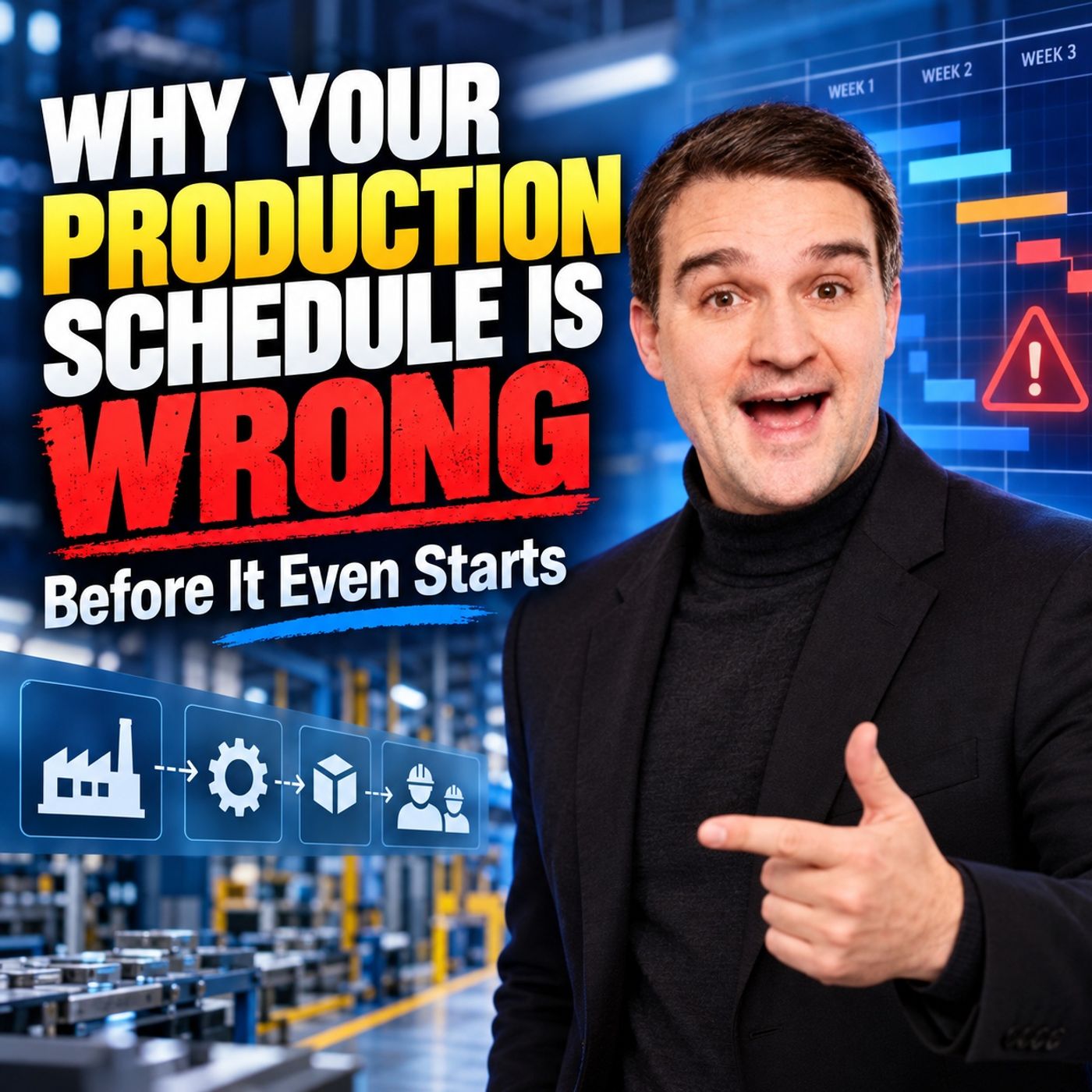
Why Your Production Schedule Is Wrong Before It Even Starts
Your production schedule can look perfectly reasonable when it leaves the ERP system. Order dates line up, routing times make sense, capacity appears available, and material status suggests that production is ready to go. The problem is that the schedule is still only an assumption about the future.The moment production begins, the factory starts generating new facts. Material arrives later than expected, a batch is still waiting for quality inspection, a fixture is unavailable, an operator with...
![Microsoft 365 Copilot Without the Hype: Adoption, Governance & Getting Your Tenant Ready with Paul Keijzers [MVP]](https://d3wo5wojvuv7l.cloudfront.net/t_rss_itunes_square_1400/images.spreaker.com/original/bad512e15ade8517b6452995db793a18.jpg "Microsoft 365 Copilot Without the Hype: Adoption, Governance & Getting Your Tenant Ready with Paul Keijzers [MVP]")
Sept. 24, 2026
Microsoft 365 Copilot Without the Hype: Adoption, Governance & Getting Your Tenant Ready with Paul Keijzers [MVP]
Microsoft 365 Copilot can help people find information and get work done faster, but its answers depend on the content and permissions already in an organization’s Microsoft 365 tenant. In this episode of the M365 FM podcast, Mirko Peters speaks with Microsoft MVP Paul Keijzers, founder of KB Works, about preparing Microsoft 365 for Copilot in a practical, responsible way. They look beyond demos and licensing to the foundations that shape Copilot results: SharePoint, Microsoft Teams, OneDrive, d...
Guests: Mirko Peters , Paul Keijzers
![When Microsoft Messaging Looks Secure but Isn’t — Exchange Server, Hybrid and Microsoft 365 Security with Thomas Stensitzki [MVP]](https://d3wo5wojvuv7l.cloudfront.net/t_rss_itunes_square_1400/images.spreaker.com/original/2a29ac445af48ceed5f3ee8d5166eee6.jpg "When Microsoft Messaging Looks Secure but Isn’t — Exchange Server, Hybrid and Microsoft 365 Security with Thomas Stensitzki [MVP]")
Sept. 24, 2026
When Microsoft Messaging Looks Secure but Isn’t — Exchange Server, Hybrid and Microsoft 365 Security with Thomas Stensitzki [MVP]
Microsoft Exchange and Microsoft 365 make it possible to run powerful messaging environments, but moving email to the cloud does not automatically make it secure. In this episode of the M365 Show, host Mirko Peters [MVP] talks with Thomas Stensitzki [MVP] about the security gaps that can hide in Exchange Server, Exchange Online, and hybrid deployments. Drawing on more than 25 years of messaging experience, Thomas explains how identity protection, careful configuration, secure mail flow, and oper...
Guests: Mirko Peters , Thomas Stensitzki
Sept. 18, 2026
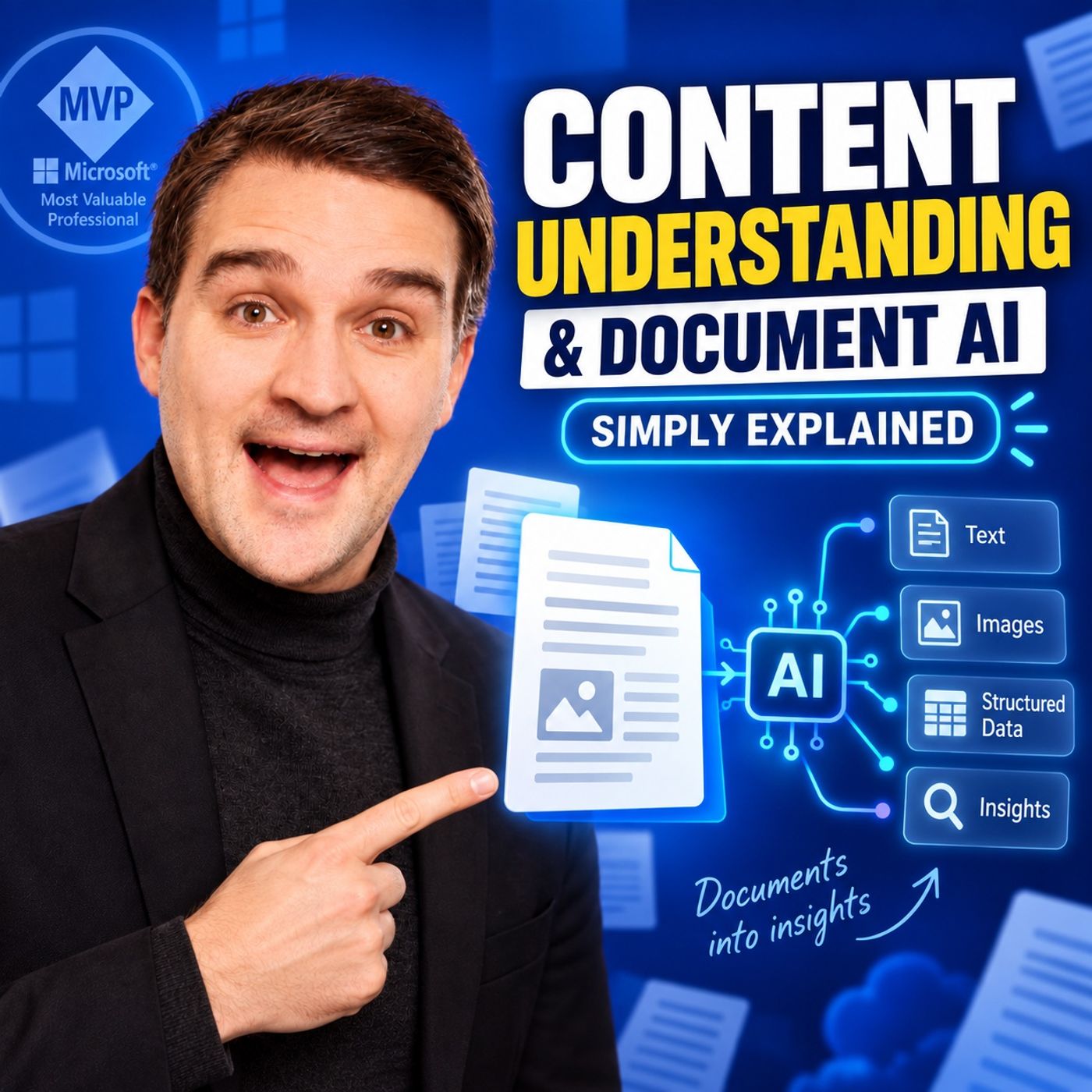
Content Understanding & Document AI - Simply Explained
Invoices, contracts, receipts, forms, scanned PDFs, and email attachments contain valuable business information — but most automation still struggles to turn those documents into reliable, structured data. In this episode of M365 FM – Simply Explained, we break down Microsoft Content Understanding, Document AI, OCR, AI Builder, Power Automate, Dataverse, and Power Apps and explain how they work together to transform documents into usable business data and automated processes. You’ll learn why ...
Sept. 18, 2026
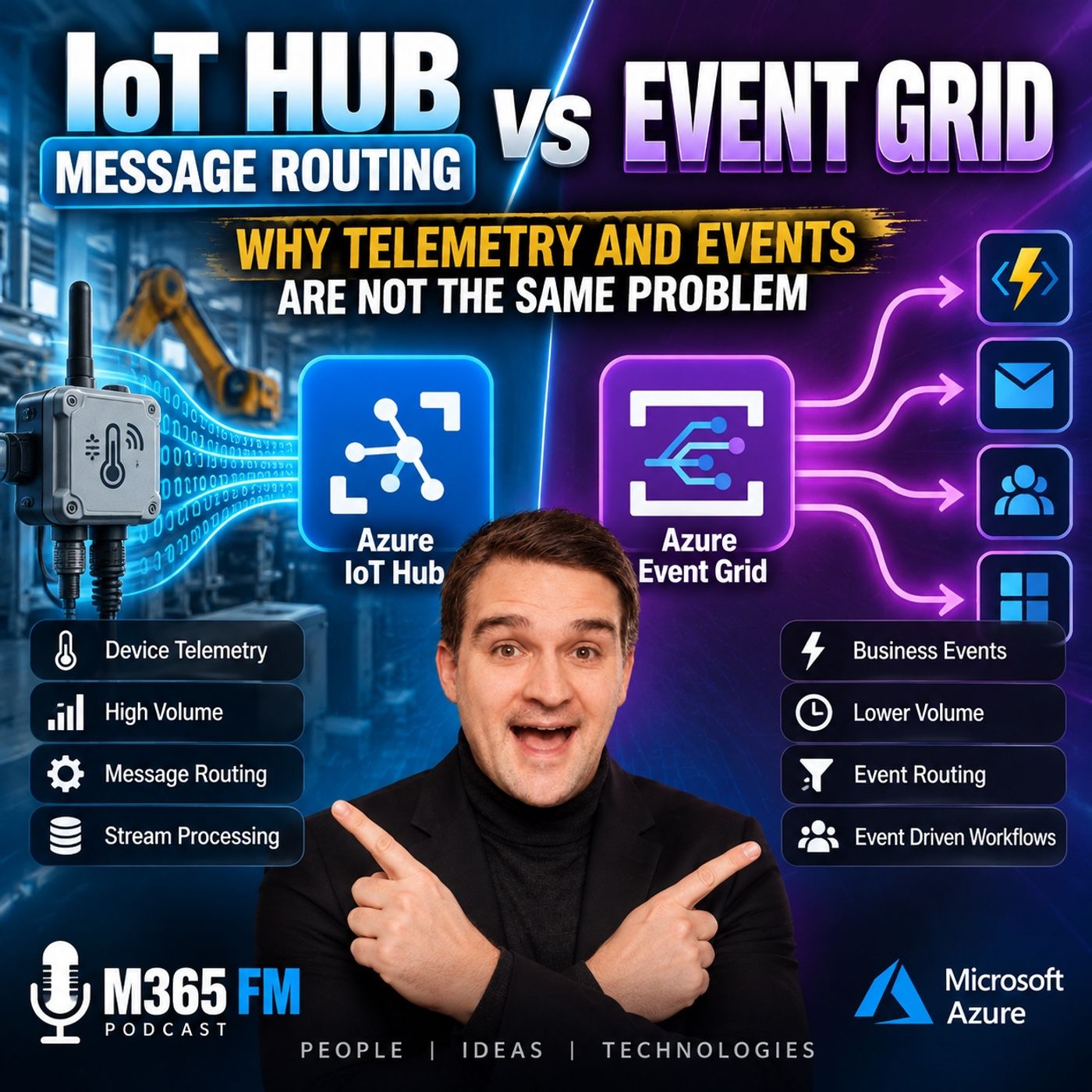
IoT Hub Message Routing vs Event Grid — Why Telemetry and Events Are Not the Same Problem
A machine sends temperature readings, vibration data, cycle counts, power consumption, and operating states every few seconds. Then the gateway suddenly disconnects. Are all of those messages simply “events”? Technically, you could describe them that way. Architecturally, that can create serious problems. Azure IoT Hub Message Routing and Azure Event Grid solve different problems. One path is designed around preserving and distributing operational data. The other is designed around notifying sys...
Sept. 17, 2026
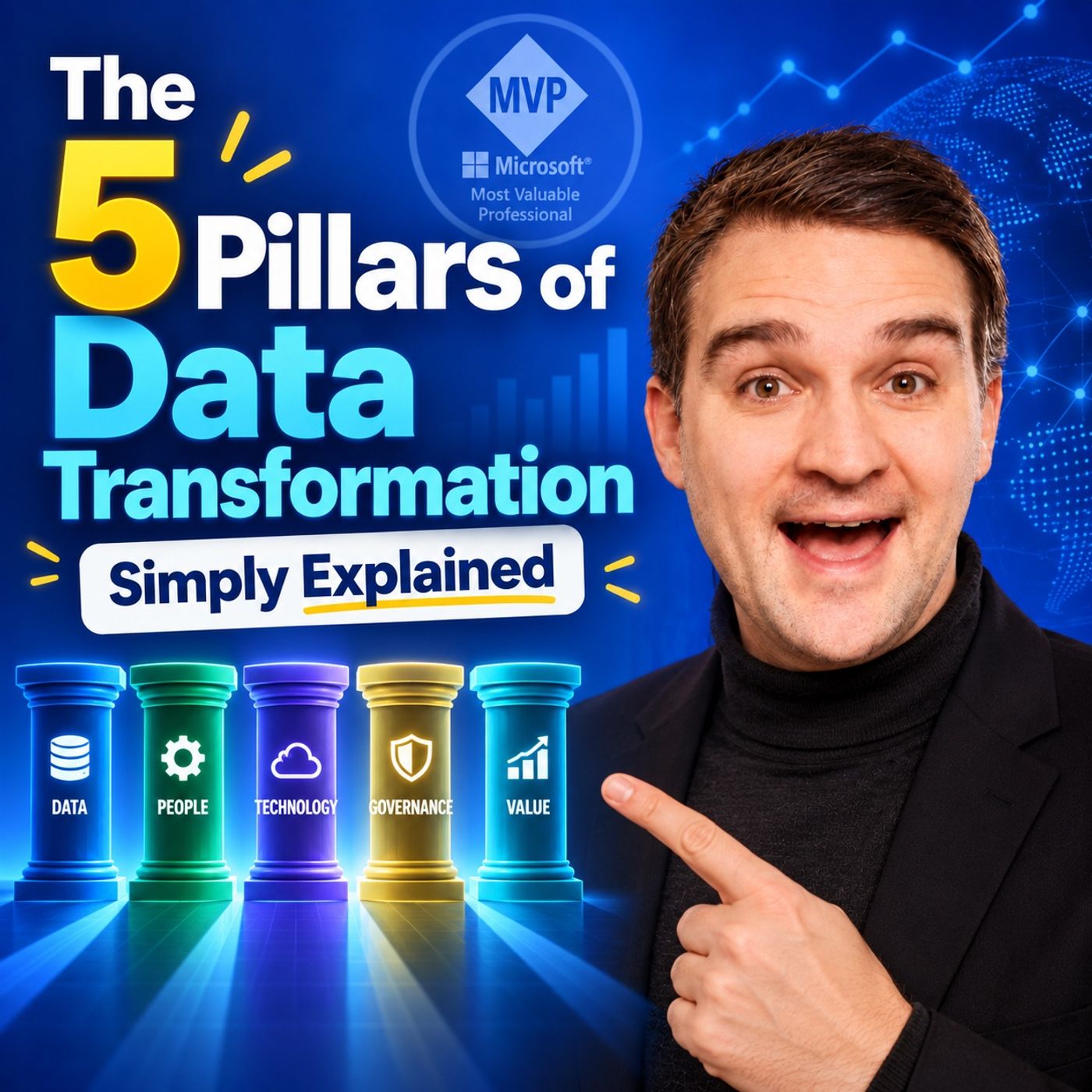
The 5 Pillars of Data Transformation - Simply Explained
AI was supposed to clear the backlog, accelerate decisions, and give every team a smarter way to work. Instead, many organizations now have Microsoft Copilot, Power BI, Microsoft Fabric, AI agents, and more data than ever before—while important decisions still crawl through meetings because nobody fully trusts the numbers or knows who can act on them. The technology spend keeps rising. The action does not. The problem is often not a lack of AI. It is the absence of an operating model connecting ...

Sept. 17, 2026
Your Factory Cloud Bill Is Much Higher Than You Think
Cloud storage may look cheap. Sending factory data to the cloud may look cheap. But the real cloud bill often starts when that data begins moving. In this episode, we break down the hidden costs behind modern Industrial IoT, manufacturing cloud, edge computing, and factory data architectures — from data egress and cross-region replication to NAT gateways, backups, dashboards, and high-frequency sensor data. A single MQTT stream from a factory can quickly become multiple data flows once telemetry...
![From Financial Data to AI-Ready Decisions: Power BI, Microsoft Fabric, Semantic Models & AI Agents with Rishi Sapra [MVP]](https://d3wo5wojvuv7l.cloudfront.net/t_rss_itunes_square_1400/images.spreaker.com/original/8aa4d01a181f070d9dcb236b70c41702.jpg "From Financial Data to AI-Ready Decisions: Power BI, Microsoft Fabric, Semantic Models & AI Agents with Rishi Sapra [MVP]")
Sept. 16, 2026
From Financial Data to AI-Ready Decisions: Power BI, Microsoft Fabric, Semantic Models & AI Agents with Rishi Sapra [MVP]
What happens when AI agents start making sense of financial and business data — not just displaying it?In this episode of M365.FM, Mirko Peters talks with Rishi Sapra Microsoft MVP about the architecture required to move beyond traditional dashboards and toward AI-powered, context-aware analytics with Microsoft Fabric, Power BI, Copilot Studio, semantic models, ontologies, and data agents.Organizations already have enormous amounts of information spread across ERP systems, Excel workbooks, Power...
Guests: Mirko Peters , Rishi Sapra
Sept. 16, 2026
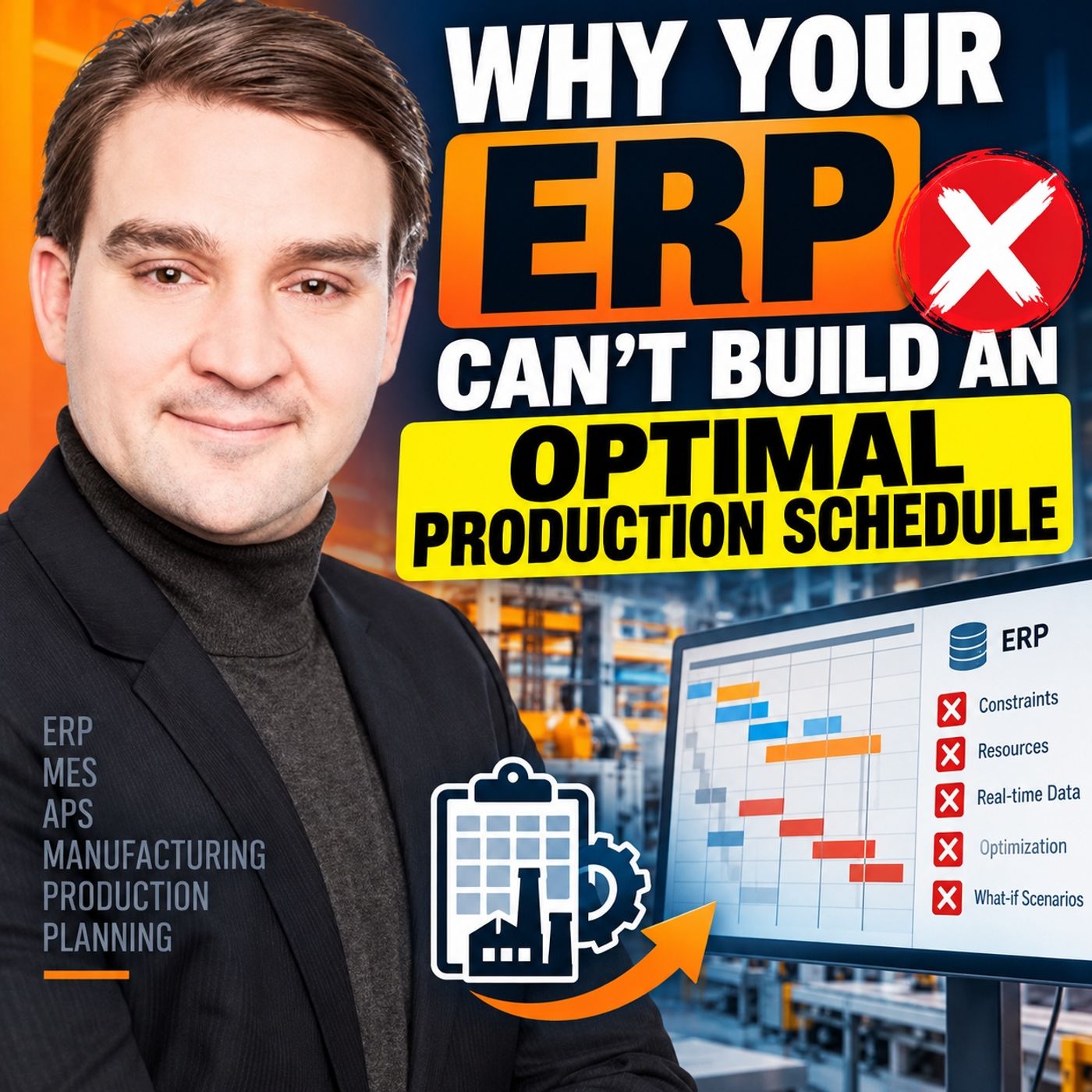
Why Your ERP Can't Build an Optimal Production Schedule
Your ERP can calculate production dates, explode demand through MRP, manage routings, inventory, purchase orders, and production orders. But that does not automatically mean it can create a production schedule that your factory can actually execute. In this episode, we break down the gap between ERP planning and finite production scheduling — and explain why a schedule can look perfectly reasonable in the ERP while multiple orders are competing for the same machine at the same time. THE INFINIT...
Sept. 16, 2026
Production Planning Software: When Does a Manufacturer Actually Need It?
When does a manufacturer actually need dedicated production planning software? It is not when the company reaches a certain size. It is not when Excel suddenly becomes “unprofessional.” And it is definitely not because a software vendor showed you a beautiful Gantt chart. The real threshold comes when production complexity, constraints, and constant change become too difficult for planners to reliably coordinate through ERP dates, spreadsheets, whiteboards, calls, emails, and experience alone. I...
Sept. 15, 2026
Can You Simulate Your Factory Before Changing It?
What happens when you change a factory before you know how the rest of the production system will react? Adding a shift, buying a new machine, reducing buffers, changing staffing, or accepting a different product mix can look like obvious solutions. But factories are interconnected systems. Improving capacity at one resource can simply move the bottleneck somewhere else. In this episode, we explore factory simulation, production planning, Digital Twins, finite capacity, bottleneck management, an...
Sept. 15, 2026
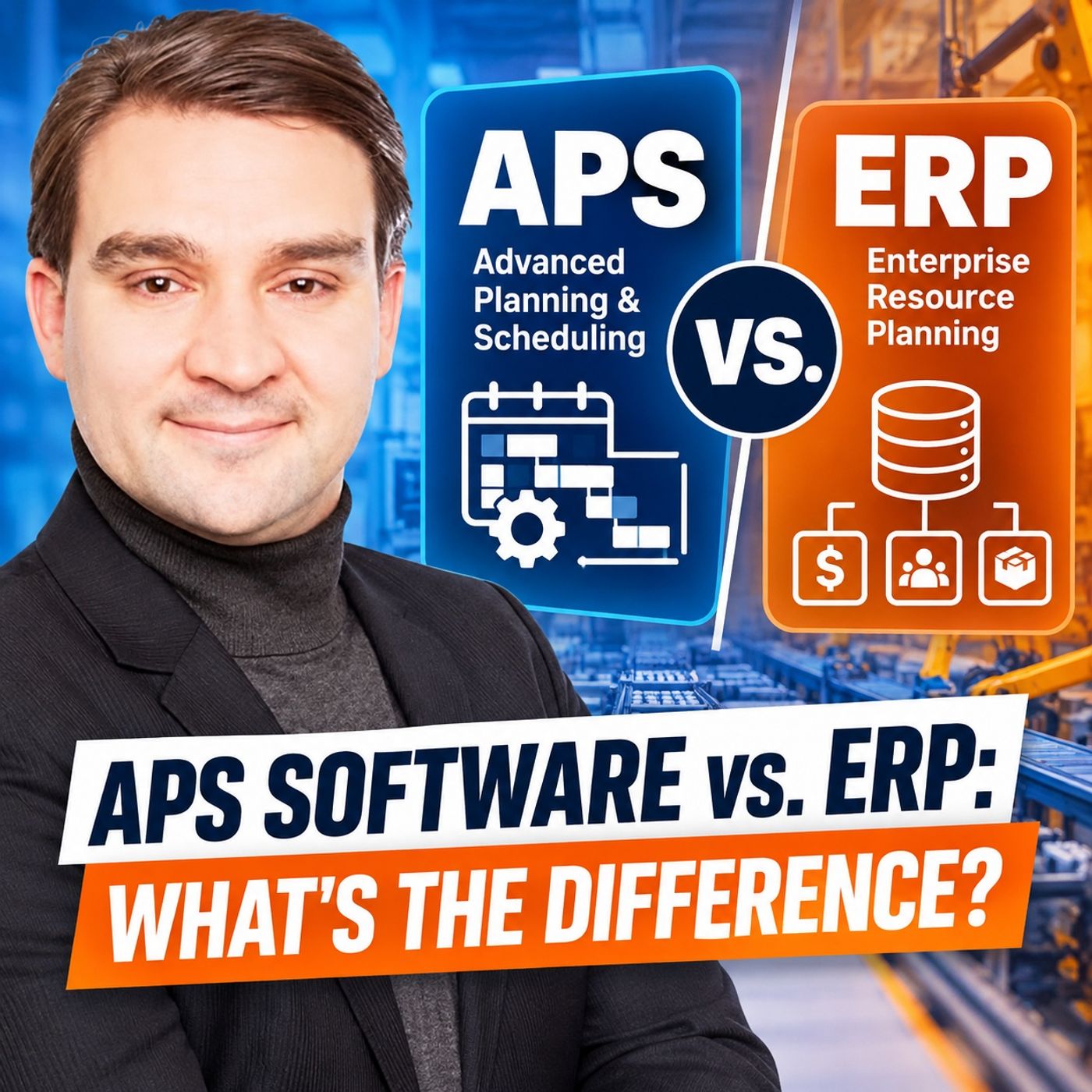
APS Software vs. ERP: What's the Difference?
Manufacturers often rely on ERP systems to manage orders, materials, inventory, purchasing, production orders, and financial transactions. But when a machine goes down, an urgent customer order arrives, or a critical operator is unavailable, a different question suddenly matters: Can the production plan actually run? That is where APS — Advanced Planning and Scheduling — differs fundamentally from ERP. ERP records and governs the business transaction. APS tests whether production can execute the...
Sept. 15, 2026
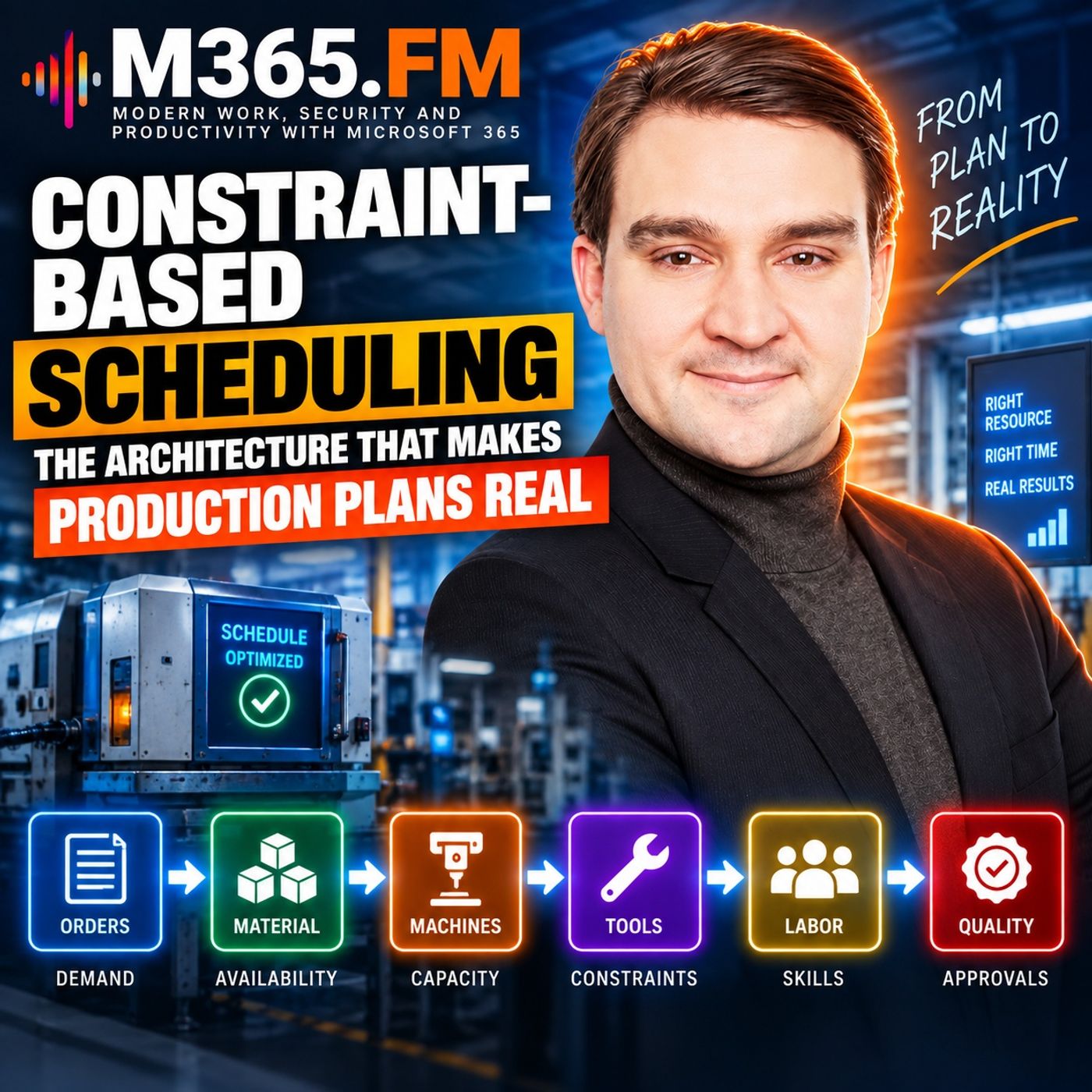
Constraint-Based Scheduling: The Architecture That Makes Production Plans Real
Your ERP says the customer order ships on Friday. The work order is released. The routing looks correct. Capacity appears available. Everything looks fine in the planning report. Then Monday morning arrives. A critical five-axis machining center goes down. One order is already in production. Another is waiting for material. A third could theoretically move to another machine — but only if the shared fixture is available, the correct program is approved, and a qualified operator is working that s...
Sept. 15, 2026
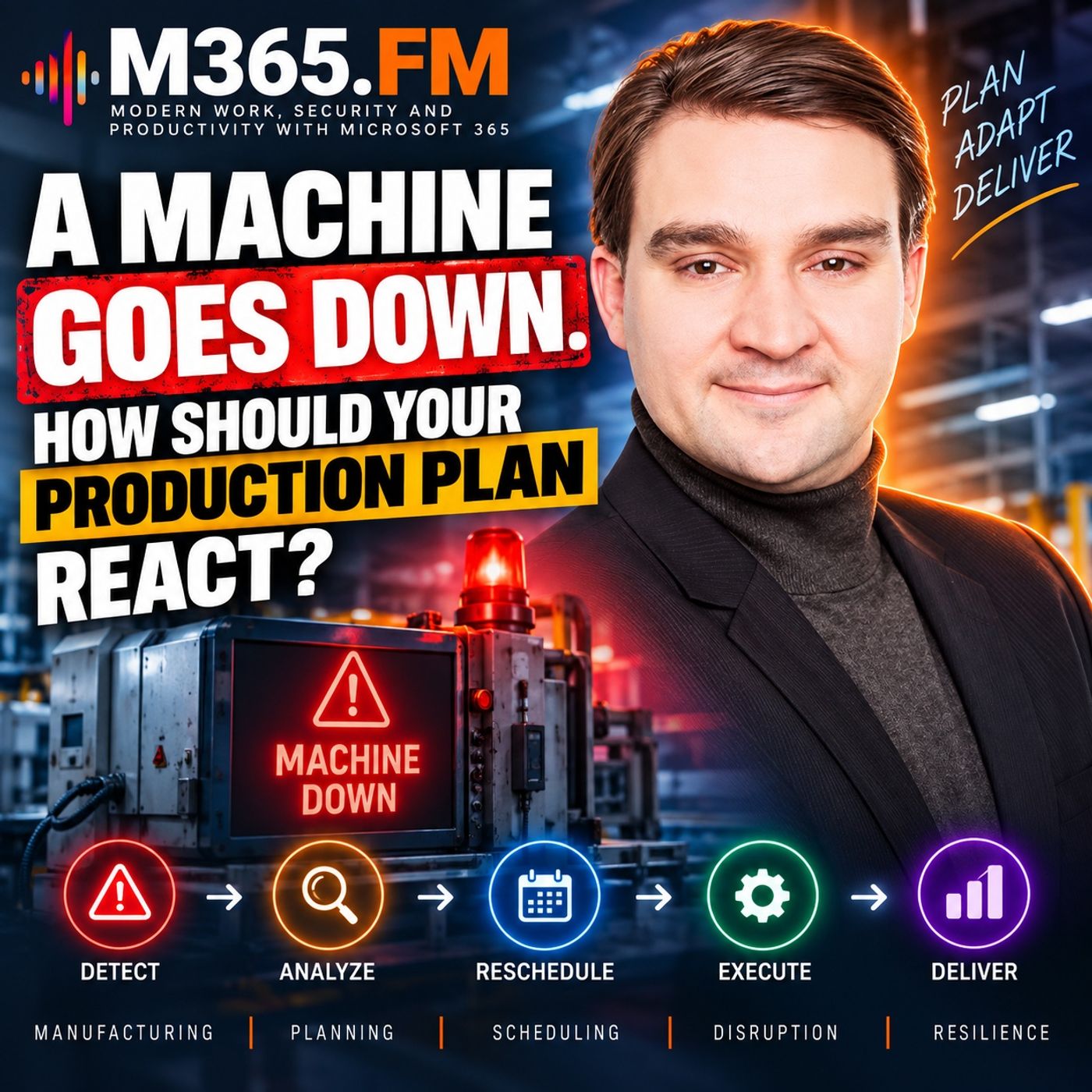
A Machine Goes Down. How Should Your Production Plan React?
A machine goes down. Maintenance receives the alarm. The operator stops production. The MES records an interrupted operation. But your ERP may still believe that the machine has capacity. And your production schedule may still promise that every order will be completed on time. That is where a machine breakdown stops being only a maintenance problem and becomes a production planning problem. In this episode, we explore what should actually happen to a production plan when a critical machine beco...
Guest: Mirko Peters
Sept. 15, 2026
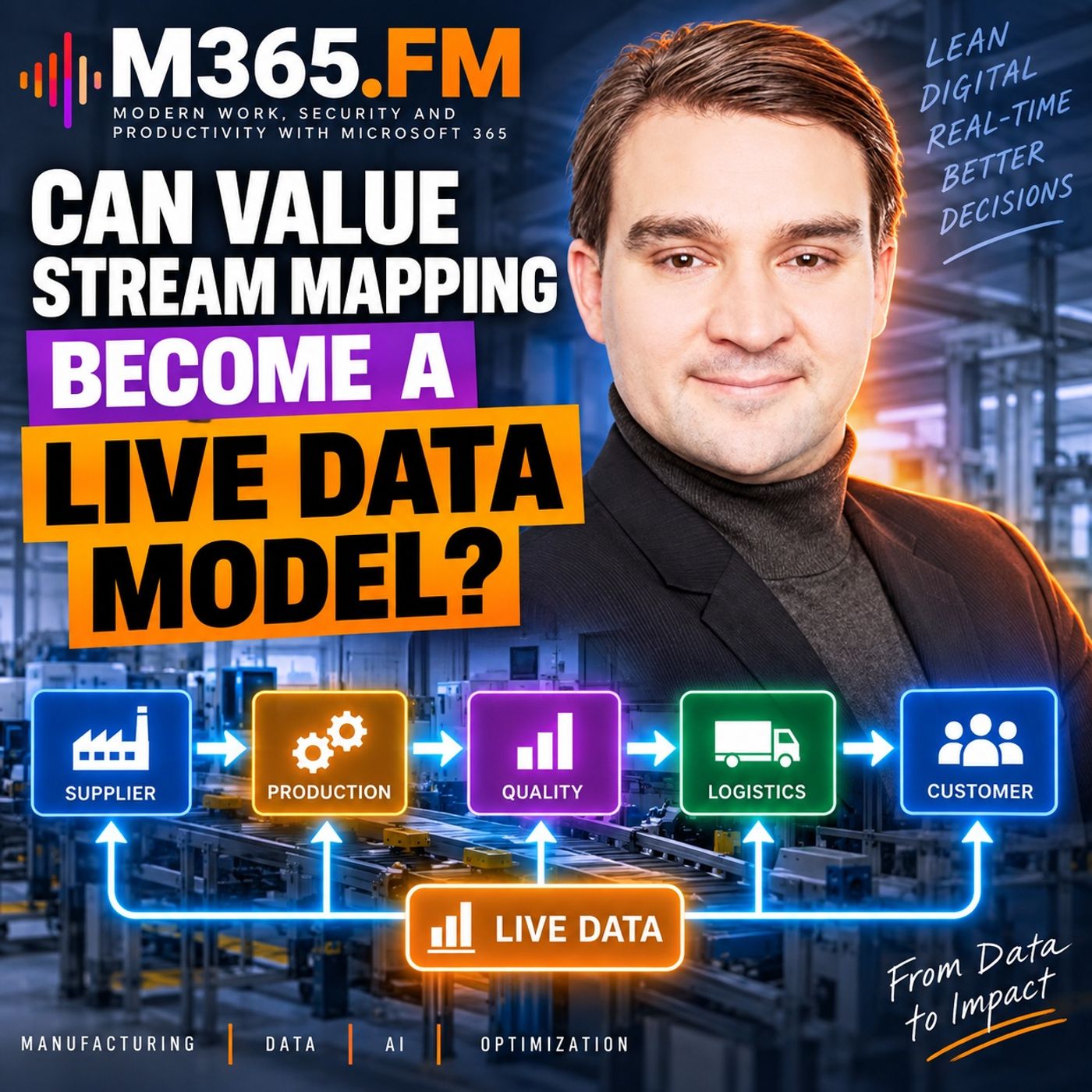
Can Value Stream Mapping Become a Live Data Model?
Value Stream Mapping has been one of the most useful tools in Lean Manufacturing for understanding how material, information, and decisions move through a production system.But traditional Value Stream Mapping has a fundamental limitation.The factory keeps changing. The map does not.You can bring production, planning, quality, maintenance, supply chain, and operations into the same workshop. You can map cycle times, queues, batch sizes, handoffs, waiting times, information flows, and bottlenecks...
Guest: Mirko Peters
Sept. 14, 2026
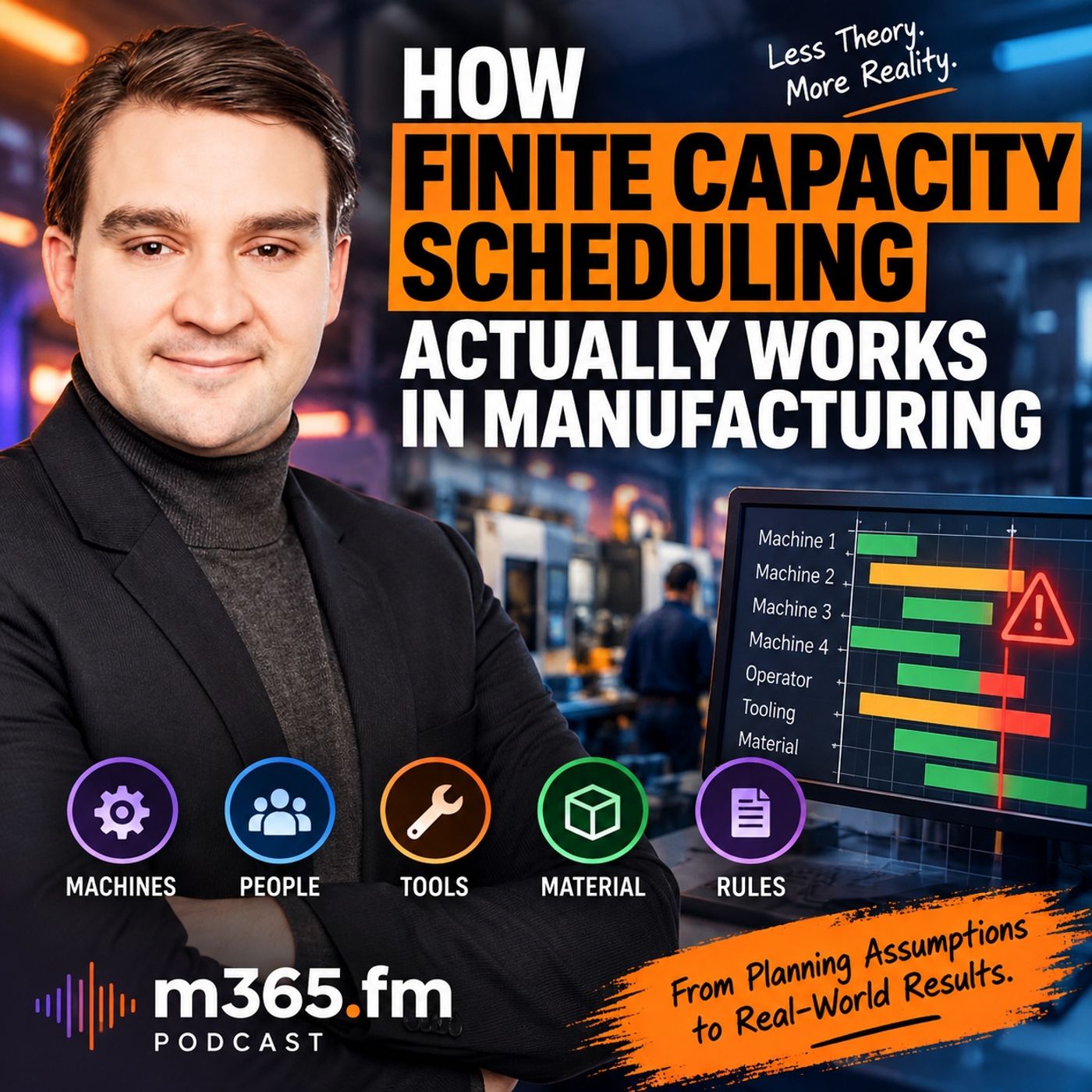
How Finite Capacity Scheduling Actually Works in Manufacturing
Your ERP says the production order should finish next Thursday. The routing looks correct. Material is planned. Everything appears under control. Then you walk onto the shop floor and discover the machine is already overloaded, the required operator is booked elsewhere, the fixture is in use, or the material exists in ERP but has not actually been inspected and released. That is the gap between planning demand and scheduling reality. In this deep dive, we break down how finite capacity schedulin...
Sept. 13, 2026
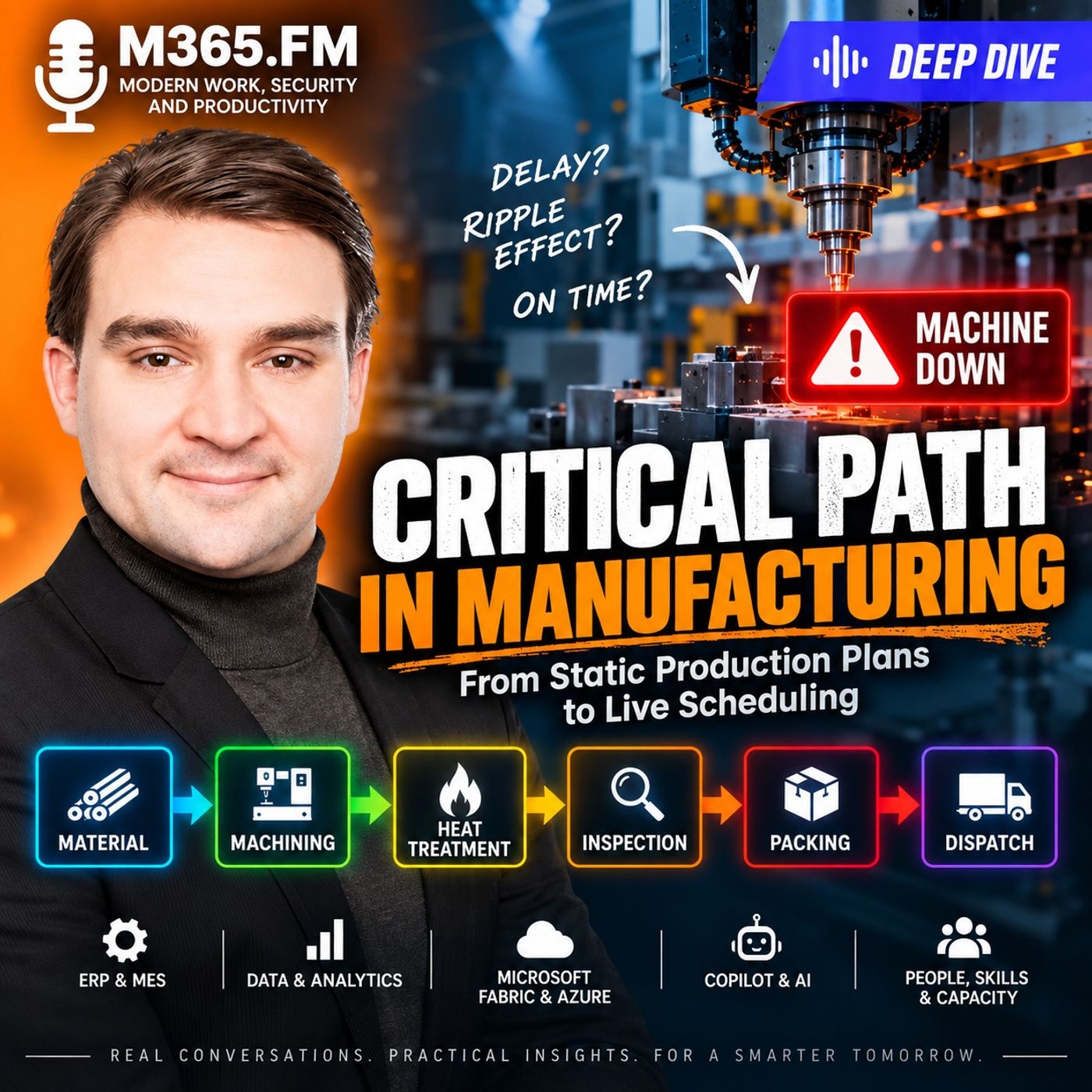
Why Your Critical Path Changes When Production Changes
A production plan can look perfectly reasonable — until production actually starts.One machine runs late. A material release slips. A qualified operator becomes unavailable. A quality inspection takes longer than expected. A batch misses its furnace window. Suddenly, a delay of only a few hours can put an entire customer delivery at risk.In this deep dive, we explore how the Critical Path Method (CPM) can be adapted from traditional project management to modern manufacturing and production plann...
Guest: Mirko Peters
![How AI Changed Software Development Forever — Building the Agentic Future with Andre Baltieri [MVP]](https://d3wo5wojvuv7l.cloudfront.net/t_rss_itunes_square_1400/images.spreaker.com/original/60f2b3cc2fa57ceb80e5234f6b0c736b.jpg "How AI Changed Software Development Forever — Building the Agentic Future with Andre Baltieri [MVP]")
Sept. 3, 2026
How AI Changed Software Development Forever — Building the Agentic Future with Andre Baltieri [MVP]
Artificial intelligence is changing software development at a speed we have rarely seen before.Developers have already moved from writing every line of code themselves to working with AI assistants that can generate code, explain unfamiliar systems, create tests, debug applications, and automate repetitive work.But according to Microsoft MVP Andre Baltieri, that is only the beginning.In this episode of M365.FM, Mirko Peters sits down with Andre for a deep dive into the transition from traditiona...
![Architecting Power Platform for Complex Enterprise Solutions with Ian Tweedie [MVP]](https://d3wo5wojvuv7l.cloudfront.net/t_rss_itunes_square_1400/images.spreaker.com/original/6204ecb0c4796f62f7eeea678de0af40.jpg "Architecting Power Platform for Complex Enterprise Solutions with Ian Tweedie [MVP]")
Sept. 2, 2026
Architecting Power Platform for Complex Enterprise Solutions with Ian Tweedie [MVP]
Microsoft Power Platform is often described as a low-code platform. But what happens when the applications you build become business-critical, highly integrated, and too complex for a simple maker-first approach?In this episode of M365 FM, Mirko Peters talks with Power Platform Solution Architect Ian Tweedie about what happens when Power Platform moves beyond simple low-code applications and becomes part of a serious enterprise architecture. LOW-CODE DOESN’T MEAN LOW ARCHITECTURE Power Platform...
![Copilot Inherits Your Mess: Modernizing Microsoft 365 for AI with Richard Harbridge [MVP]](https://d3wo5wojvuv7l.cloudfront.net/t_rss_itunes_square_1400/images.spreaker.com/original/9d5d5d3fdf655863f1b4034e5baf4923.jpg "Copilot Inherits Your Mess: Modernizing Microsoft 365 for AI with Richard Harbridge [MVP]")
Sept. 1, 2026
Copilot Inherits Your Mess: Modernizing Microsoft 365 for AI with Richard Harbridge [MVP]
Microsoft 365 Copilot doesn’t arrive in a clean Microsoft 365 tenant. It arrives in an environment that organizations have been building for years — full of SharePoint sites, Teams, OneDrive content, duplicate documents, historic migrations, guest accounts, inconsistent permissions, forgotten workspaces, broken ownership models, and content nobody has reviewed in years.For traditional Microsoft 365 management, much of this technical debt could remain relatively hidden. AI changes that.In this ep...
Guests: Mirko Peters , Richard Harbridge