Turn your real-world experience into part of the show.

Power Platform Episodes

Dive into the governance, security, and architecture of the Microsoft Power Platform, focusing on tools like Power Apps and Power Automate. Learn how to implement scalable solutions that are compliant and efficient.
March 3, 2026

Build an Autonomous Microsoft 365 Tenant with Zero-Touch Workflows

Modern digital transformation isn’t about adding more SaaS tools. It’s about designing systems that operate autonomously. In this episode of the M365 FM Podcast, we explore what happens when your Microsoft 365 tenant becomes a self-operating enterprise control plane—where workflows execute automatically, identities are provisioned without human intervention, and governance is enforced by architecture instead of manual processes. This is the concept of the Autonomous Tenant. Imagine a new employee joining your company. The moment HR approves the hire, the entire environment configures itself automatically: Identity created in Microsoft Entra ID Access policies applied Devices configured Teams and SharePoint resources provisioned Security baselines enforced Compliance logging enabled No IT tickets. No manual provisioning. No human middleware. Everything runs deterministically from a single source of truth. This episode breaks down how organizations can architec…
Guest: Mirko Peters
March 2, 2026

Power Platform Automation Arbitrage for Cost Savings

Most organizations think Microsoft Power Platform is about citizen developers building small convenience apps. That story is comforting—and mostly wrong. In this episode, we unpack the real economic reality behind low-code: Power Platform isn’t a toy, it’s an arbitrage layer sitting between expensive pro-code development and the massive hidden cost of manual work. If you’re still treating automation as “nice to have,” you’re likely ignoring one of the largest ROI opportunities inside Microsoft 365.
Guest: Mirko Peters
Feb. 28, 2026

5 Microsoft Certifications That Boost Salary—and 3 to Skip

This episode explains that most industry certifications validate task execution but not architectural authority, meaning many certified professionals never see the salary growth or career opportunities they expect. It argues that credential inflation has made certification a treadmill — professionals stack associate badges without gaining strategic value. Instead, the high-value credentials in 2026 are those that demonstrate architectural decision-making, governance authority, and cross-domain reasoning. The episode breaks down five certifications that actually pay by signaling higher-order skills that align with enterprise needs in security, cloud architecture, solution design, and governance.
Guest: Mirko Peters
Feb. 24, 2026

7-Step Microsoft 365 Sovereign Tenant Governance Framework

In this episode, the host explains that most organizations treat their Microsoft 365 tenant like a simple configuration container — but it’s actually the operating system of your enterprise. To avoid misconfigurations, security breaches, and uncontrolled sprawl, you need a deterministic sovereignty framework with intentional architectural controls. The episode introduces a 7-layer mandate that separates organizations that run Microsoft 365 from those that are run by it. This is a sovereignty mandate — not typical best-practice advice
Guest: Mirko Peters
Feb. 24, 2026

KPI Decision Architecture That Turns Metrics into Action

This episode argues that traditional KPI dashboards fail to drive real organizational action because they focus on visibility instead of decision architecture. Instead of putting all KPIs on one page, leaders need deterministic systems where KPIs encode obligations — clear triggers, ownership, actions, deadlines, and measurable outcomes. Metrics that don’t trigger enforced decisions are not true KPIs. The conversation introduces a decision stack (Data → Logic → State → Action → Interface) and explains how to move from dashboards that show “what happened” to engineered systems that show “what’s already in motion” and enforce execution.
Guest: Mirko Peters
Feb. 21, 2026

Power Platform Control Planes for Scalable Governance

In the podcast episode “Control Planes for Efficient Governance,” the hosts challenge the common belief that building more apps or relying on human-driven governance activities inherently improves enterprise control. Instead, the episode explains why governance-by-humans doesn’t scale and why control planes — identity policy, lifecycle enforcement, DLP, and environment strategy — are the fundamental drivers of scalable, auditable governance in Microsoft 365 and related ecosystems. The key thesis is that apps are merely user interfaces; true governance lives in the underlying control plane that decides what can exist, who can create it, and how it behaves over time. (Control planes scale trust, whereas app-centric governance frequently becomes probabilistic, fragmented, and costly).
Guest: Mirko Peters
Feb. 18, 2026

Use Python with Power Platform for Scalable Automation

In this episode of M365.FM – Modern work, security, and productivity with Microsoft 365, the host explains why most organizations misunderstand Microsoft Power Platform and how to engineer it for real, scalable, hybrid automation. Instead of treating Power Platform like a low-code productivity toy, the episode reframes it as a control plane for enterprise workflows and introduces a three-tier hybrid architecture: Power Platform as the orchestration tier Python as the execution tier Azure as the governance tier This separation enables deterministic compute, scalable workflows, and proper governance — avoiding the entropy and complexity that plague uncontrolled low-code solutions at scale
Guest: Mirko Peters
Feb. 17, 2026

Scale HR Operations with Copilot Studio AI Agents

The episode challenges the common misconception that “HR automation” is just a chatbot connected to a PDF repository. Instead, it presents a production-grade architectural approach for scaling HR operations using Microsoft Copilot Studio, Logic Apps, and structured evidence capture to create governed, deterministic HR agents — not just conversational bots.
Guest: Mirko Peters
Feb. 16, 2026

Architect Scalable SharePoint Automation for Enterprise Workflows

This episode of the M365.FM Podcast — “Architecting Scalable SharePoint Automation” — explains why automation in SharePoint often fails to scale from initial wins to widespread enterprise value. The core insight is that many organizations build SharePoint workflows and automations with a tactical mindset—focusing on isolated tasks—rather than a scalable architecture that governs how automation operates, persists, and interacts with people, data, and other systems over time. Without clearly defined identity boundaries, execution contracts, lifecycle governance, and persistent context, automation programs devolve into unmanaged sprawl, permission creep, and fragile outcomes that break easily and are difficult to support. The episode outlines architectural principles that make automation sustainable at scale, including treating automation as products with owners, enforcing execution constraints, grounding actions in authoritative data, and measuring outcomes instead of activity. The resu…
Guest: Mirko Peters
Feb. 15, 2026

High-Performance Automation Control Plane for Power Automate

This episode of the M365.FM Podcast — “The High-Performance Automation Control Plane” — explains why most enterprise automation initiatives stall or fail not because of tooling, but because they lack a control plane that governs automation at scale. Simply building workflows and connectors without governance, identity boundaries, execution constraints, and lifecycle policies leads to sprawl, drift, unpredictable outcomes, and hidden risk. A high-performance automation control plane is a live governance and execution fabric that ensures automation behaves predictably, aligns with business intent, is auditable, and can scale safely. The host outlines the architectural layers, design principles, and metrics that distinguish sustainable automation programs from chaotic ones.
Guest: Mirko Peters
Feb. 11, 2026

Protect Enterprise Architecture from Agentic Copilot Risk

This episode of the M365.FM Podcast titled “The Agentic Mirage: Why Your Enterprise Architecture is Eroding Under Copilot” explains why simply adopting Microsoft Copilot without a disciplined architectural strategy can quietly collapse your enterprise architecture. Most organizations treat Copilot as a feature or better search box — but once Copilot becomes agentic (able to take actions that change state), it multiplies executive authority across the environment without explicit approval or controls. This leads to identity drift, tool and connector sprawl, and obedient data leakage because agents execute within your permission graph and data sprawl rather than a governed system. The episode identifies three failure modes that shut down programs (none of which are about hallucinations) and introduces four safeguards — non-human identities, standardized tool contracts, authoritative data boundaries, and runtime drift detection — that can actually scale safely. It emphasizes that governa…
Guest: Mirko Peters
Feb. 10, 2026

Scale Autonomous Agents in Microsoft 365 Without Chaos

This episode of the M365.FM Podcast — “The Agentic Advantage: Scaling Intelligence Without Chaos” — explains why simply rolling out more AI agents does not automatically increase productivity, and why many enterprise agent programs collapse when they confront real-world issues like scale, audit pressure, cost management, and accountability. The foundational mistake most organizations make is treating agents like assistants — text-generating features — instead of recognizing that agents are actors that execute actions with authority and side effects. At scale, the real risks are not accuracy issues but uncontrolled authority, identity drift, data leakage, and cost sprawl. The episode introduces three failure modes that cripple agent ecosystems, and it proposes a four-layer control plane — focused on identity, tool contracts, data governance, and behavioral monitoring — as the core infrastructure that prevents drift and makes agent programs sustainable and auditable. It also highlights …
Guest: Mirko Peters
Feb. 9, 2026

Build an Agentic Workforce with Microsoft Copilot in 30 Days

This episode of the M365.FM Podcast (titled “How to Build a High-Performance Agentic Workforce in 30 Days”) explains why most enterprise AI agent programs fail quickly, and what it really takes to build an AI-driven workforce that delivers measurable business value — not just experimental demos. The episode identifies a core misconception: many organizations assume that simply deploying Microsoft Copilot or a set of AI tools automatically creates an agentic workforce. In reality, this assumption kills adoption within a few weeks because agents amplify existing operational chaos rather than correcting it. To succeed, enterprises must design a disciplined operating model with clear governance, grounded intelligence, and constrained execution that executives can defend and auditors can verify. The podcast lays out a 30-day blueprint built on three non-negotiable pillars — orchestration with Copilot Studio, grounding with Azure AI Search + MCP tools, and identity governance with Entra Age…
Guest: Mirko Peters
Feb. 7, 2026

Microsoft Fabric Governance to Prevent Cost and Metric Chaos

This episode of the M365.FM Podcast explains why Microsoft Fabric governance often fails in real life — even when organizations believe they’ve “solved” governance simply by adopting the platform. The host argues that treating Fabric as a single unified platform with one governance story is a dangerous illusion. Instead, Fabric operates as a composed decision engine with multiple execution paths, shared capacities, and many runtime behaviors that don’t align to org charts or PowerPoint strategies. Common governance efforts — such as naming conventions, Centers of Excellence, and approval workflows — focus on visibility and documentation rather than enforcing actual system constraints. As a result, cost, trust, and meaning quietly decay: costs drift due to shared compute and invisible coupling, workspaces generate entropy when mistaken for control boundaries, and uncontrolled artifacts like semantic models erode metrics and executive confidence. Effective governance in Microsoft Fabric…
Guest: Mirko Peters
Feb. 6, 2026

Microsoft 365 Governance Is a People and Ownership Problem

This episode of the M365.FM Podcast explores why Microsoft 365 governance failures are rarely caused by missing features or technical limitations. Instead, the root issue is structural and human: fragmented ownership, unclear accountability, and a misunderstanding of what governance actually means. The host argues that most organizations mistake configuration for governance. They deploy policies, labels, and controls, but fail to design an operating model that sustains intent over time. Microsoft 365 behaves as a highly interconnected system where identity, permissions, data movement, and automation continuously intersect. When teams govern in silos — optimizing SharePoint, Teams, Purview, or Power Platform independently — the aggregate result is drift, sprawl, and unmanaged risk. Effective governance requires clarity of intent, enforceable constraints, feedback loops, and named accountability across services. Without those elements, dashboards may look healthy while exposure quietly …
Guest: Mirko Peters
Feb. 4, 2026

AI Collaboration Framework for Human Judgment with Copilot

In this episode of the M365.FM Podcast, the host explains how AI, especially Copilot and work-assisting models, fundamentally alters collaboration dynamics in organizations. AI shifts collaboration from human dialogue to artifact-centric workflows where summaries, drafts, and recaps become the de facto narrative of work. This transformation hides accountability, flattens cognitive debate, and centralizes influence in the hands of those who can shape or curate AI-generated content. The show introduces a three-layer model of collaboration—structural, cognitive, and experiential—to illustrate how AI touches every aspect of how work gets done, and how most teams only optimize the structural layer. Instead, leaders must intentionally redesign collaboration by making AI contributions visible, helping humans maintain judgment and narrative ownership, and applying governance that preserves deep thinking, debate, and accountability. Practical norms and frameworks are offered—such as weekly lea…
Guest: Mirko Peters
Feb. 2, 2026

Showback vs Chargeback for Cloud and Microsoft 365 Costs

This episode challenges the common belief that showback and chargeback alone create accountability in enterprise IT cost management. Many organizations implement showback dashboards or reports expecting they will change behavior, only to find that business units ignore, dispute, or game the numbers. The core message is that transparency without consequence is not accountability. Showback must be paired with governed cost allocation, service ownership, meaningful incentives, and integrated enterprise processes in order to influence decisions and deliver sustainable cost optimization. The discussion starts by defining showback — reporting costs back to consumers — and contrasts it with chargeback — billing cost centers for usage. While showback can increase awareness, it often fails because it decouples information from decision authority. Without mechanisms that tie cost visibility to real organizational levers — budgeting, approvals, quotas, enforcement — users treat showback as a …
Guest: Mirko Peters
Feb. 1, 2026

Why Microsoft 365 Native Controls Are Not Real Governance

In this episode, the hosts dismantle a common misconception in Microsoft 365 governance: that deploying the platform automatically delivers governance. Many organizations treat Microsoft 365 governance as a checklist—policies here, controls there, reports somewhere else—only to discover that compliance gaps persist, teams circumvent guardrails, and risk quietly accumulates. The key insight is that governance isn’t a set of configurations or settings; it is an operating discipline rooted in deterministic systems, clear accountability, and enforced boundaries. The episode explains why Microsoft 365’s native controls (e.g., conditional access, DLP, retention, and eDiscovery) are necessary but not sufficient. These controls provide capabilities, but not governance on their own. True governance happens where people, processes, and technology intersect, and it requires common language around outcomes, shared definitions of risk, durable ownership models, and evidence trails that survive …
Guest: Mirko Peters
Jan. 27, 2026

Low-Code Scalability Risks: Why Explainability Matters

This episode explores why speed in low-code and no-code platforms does not equal scalability, and why explainability—not velocity—is the true bottleneck for modern organizations. While low-code tools dramatically reduce time to delivery, they often obscure logic, data lineage, ownership, and decision pathways. Over time, this lack of visibility compounds into operational risk, audit exposure, and fragile systems that cannot be safely changed. The discussion reframes digital transformation as a leadership and governance challenge rather than a tooling problem. It argues that organizations do not fail because they lack automation, but because they cannot explain how their automations work, why decisions were made, or who owns the outcomes. As systems scale across teams and time, undocumented exceptions, abstraction, and personnel changes erode control. The episode introduces explainability as a structural property enforced by architecture, not documentation. It highlights the dang…
Guest: Mirko Peters
Jan. 26, 2026

ServiceNow and Microsoft 365: From Intent to Business Action

Most organizations still think of ServiceNow as a ticketing system. That framing is not just wrong—it’s actively harmful. Ticketing was the entry point, not the destination. The real enterprise problem is not tool sprawl. It’s that work has no single authoritative state, no durable ownership, and no enforceable path from “someone asked” to “it’s done.” Enterprises are digitally rich—full of platforms, apps, and automation—but operationally fragmented because they lack a true operating layer. This episode lays out a clear architectural model that explains: Why Microsoft is where intent is created Why ServiceNow is where intent must become execution Why tickets track pain, but workflows control outcomes And why AI without workflow governance accelerates entropy instead of eliminating it The core insight is simple but uncomfortable: Enterprises don’t fail because they lack systems. They fail because execution lives in side channels.
Guest: Mirko Peters
Jan. 25, 2026

Logic Apps and Copilot Studio for Intent-Driven Automation

Most enterprises believe their automation problems are caused by poor integration, but the real issue is the loss of intent as work moves across systems, teams, and vendors. Organizations already have APIs, connectors, and integration platforms, yet still experience delays, rework, audit failures, and constant manual intervention. That happens because systems preserve transactions, not decisions, forcing humans to act as message buses and tickets to function as state machines. Adding AI on top of this broken handoff model does not fix the problem. In fact, treating AI as just a smarter form or chatbot makes things worse by introducing non-deterministic behavior into processes that require consistency, accountability, and proof. Enterprises are not building automations anymore; they are building distributed decision engines, which require strict constraints and full traceability to scale safely. The solution is a clear architectural separation between deciding and doing. Copilot …
Guest: Mirko Peters
Jan. 24, 2026

Design Scalable Dataverse Data Models for Business Apps

In this in-depth episode, we reframe how you think about Microsoft Dataverse and the data models that underpin modern business applications. Rather than treating Dataverse as just a database, this conversation argues that your data model is your strategy — and that smart modeling is what separates business solutions that fail quietly from those that scale and adapt sustainably. Inspired by a four-hour deep-dive workshop from Microsoft MVP Bülent Altinsoy, we go beyond low-code app features and instead explore why the underlying model matters more than screens, forms, or workflows. If your team builds solutions with Microsoft Power Platform, Power Apps, Power Automate, or automation agents — this episode will change how you think about modeling data, semantics, relationships, and governance.
Guest: Mirko Peters
Jan. 23, 2026

Microsoft Teams Governance with Entra ID as the Control Plane

In this episode, we dismantle a common Microsoft Teams governance myth: that the Teams Admin Center is the central command for controlling Teams behavior and enforcing governance. Most organizations treat the Admin Center like a control tower — but it’s actually a downstream service console, not the authority that decides who gets in, what gets blocked, or what policy is enforced. The real decisions come from upstream services such as identity and compliance tools.
Guest: Mirko Peters
Jan. 12, 2026

Why Executives Ignore Power BI Dashboards

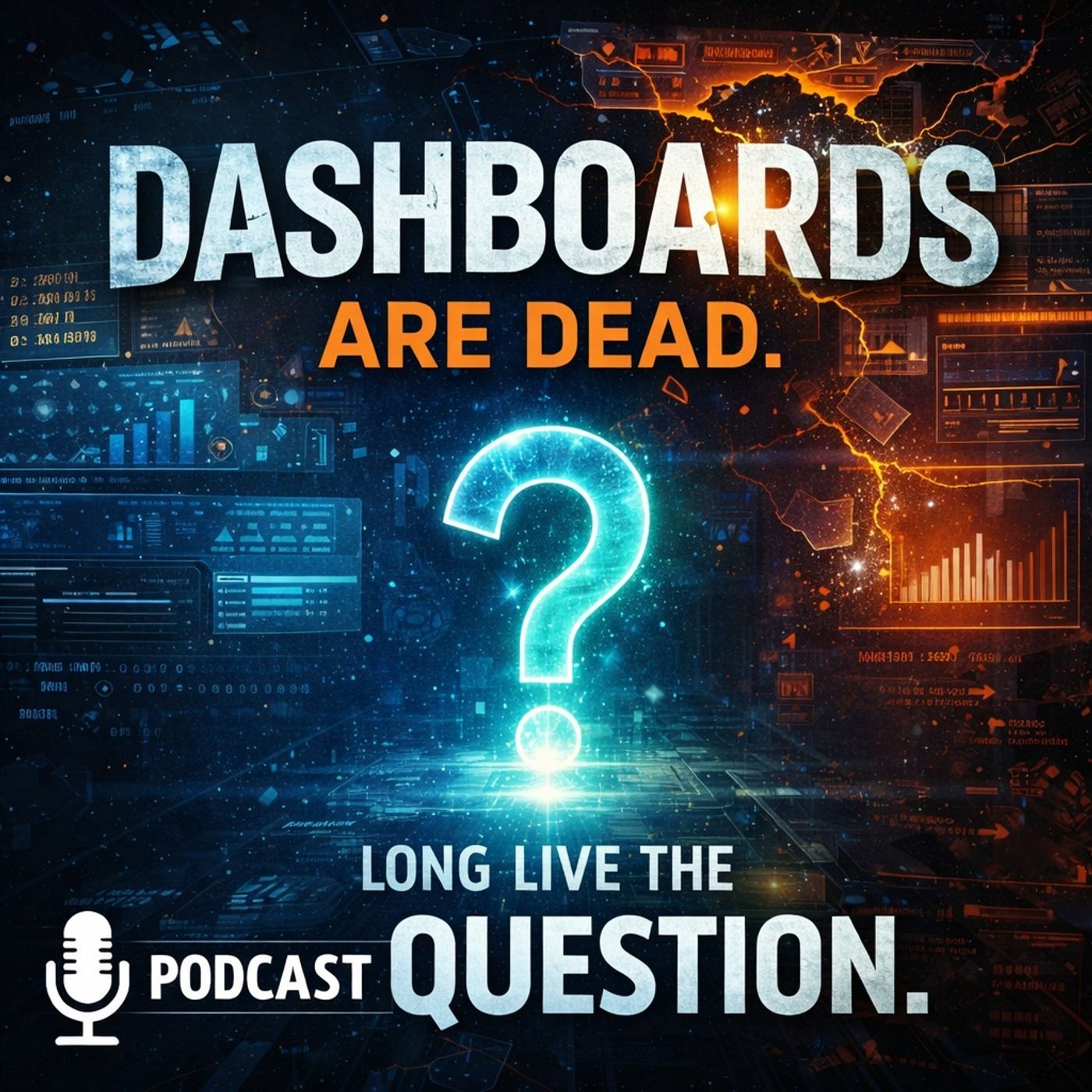
Dashboards didn’t fail — they expired. This episode explores why traditional BI reporting stopped being the primary interface for executive decision-making, even when the dashboards are “good.” The problem isn’t visualization quality or adoption. It’s that the business decision model changed, and dashboards didn’t. Executives aren’t asking for numbers anymore. They’re asking for answers: what changed, why it changed, who owns it, and what decisions it affects. Dashboards scale visibility, but they don’t scale judgment. So leadership routes around them—asking humans, or increasingly Copilot—because decision latency matters more than perfect charts. We unpack the hidden assumptions dashboards require (time, shared definitions, stable questions) and why those assumptions collapse in a world of interrupts, drift, and zero patience. Then we trace the interface shift from canvases to intent, where questions become the input and systems must assemble defensible answers with context,…
Guest: Mirko Peters