Turn your real-world experience into part of the show.

Power Platform Episodes

Dive into the governance, security, and architecture of the Microsoft Power Platform, focusing on tools like Power Apps and Power Automate. Learn how to implement scalable solutions that are compliant and efficient.
Jan. 10, 2026

Fix Bad Data Upstream with T-SQL Contracts

Everyone says SQL is obsolete. This episode argues the opposite: SQL has never mattered more—because modern data platforms removed the guardrails that used to hide its importance. In systems like lakehouses and Fabric, T-SQL didn’t disappear; it moved upstream and quietly became the place where cost, security, performance, and truth are either enforced or lost. The episode reframes SQL not as a reporting language, but as a contract language. Without enforced schema, constraints, and predictable execution plans, data systems drift into entropy. Bad data loads successfully, dashboards “fix” it differently, performance becomes unpredictable, and cloud costs spike for reasons no one can explain. These aren’t tooling problems—they’re contract failures. A central theme is execution plans. SQL reads like English but runs like a compiler, and most performance surprises come from misunderstanding how work actually happens. Execution plans aren’t just tuning tools; they’re governance arti…
Guest: Mirko Peters
Jan. 9, 2026

Fix Power Apps Data Problems with Better Schema and Governance

The conversation explains how Microsoft 365 environments often degrade through quiet, gradual failures rather than visible outages. Poor SharePoint design, unmanaged permissions, fragile Power Apps, and badly configured Power Automate flows create hidden instability over time. Organizations rely too much on individual heroics instead of consistent governance and discipline. The discussion emphasizes proper schema design, controlled permissions, deterministic app behavior, defensive automation, and strong monitoring. AI can worsen problems if governance is weak. The key message is that enforcing structure early prevents costly system breakdowns later.
Guest: Mirko Peters
Jan. 6, 2026

Build Safe Guardrails for Microsoft 365 Copilot

Most organizations think Copilot is just a helpful layer that writes drafts faster. That misunderstanding is exactly how silent data leaks, invented policies, and irreversible automation changes begin. This episode argues that Copilot is not a colleague or assistant at all, but a distributed decision engine built on Microsoft Graph that executes whatever boundaries you actually configure, not the intent you think you expressed. When leaders rely on casual prompts, implicit trust, or “user has access” as a boundary, Copilot faithfully compiles that ambiguity into behavior, pulling in overshared HR or legal data, inventing authoritative-sounding procedures, and triggering real system changes without consent. The core lesson is that probabilistic language models are safe only when confined to reasoning and drafting; the moment outputs drive decisions or actions, determinism, enforced scopes, refusal states, and citations become mandatory. The episode walks through real failure patterns, …
Guest: Mirko Peters
Jan. 5, 2026

Protect Dynamics 365 Copilot Finance Controls

Everyone thinks their controls still work because the dashboards are green — until the copilot makes a perfectly “authorized” decision no one can actually explain. This talk makes the case that tools like Dynamics 365 Copilot don’t just speed up work; they quietly change what control even means. Decisions are no longer made inside a single workflow or by a single identity. Instead, intent is compiled by an agent across prompts, models, connectors, and services. Traditional logs show what happened, but not why it happened, which data mattered, or which permissions actually combined to allow it. The risk isn’t obvious failure — it’s silent drift. Decision variance increases, small permissions add up to unexpected authority, side effects spread across systems, and accountability becomes blurry. Everything looks compliant until you’re asked to explain a real financial decision and discover the causal chain is gone. The fix is not policy, it’s engineering: treat the copilot layer …
Guest: Mirko Peters
Jan. 1, 2026

Stop Data Model Drift in Microsoft Fabric

This episode explains why data models in Microsoft Fabric naturally drift over time and why DAX cannot fix the problem. It argues that data models are not objective truth—they are human-made interpretations that embed assumptions, business logic, and trade-offs. Fabric accelerates this issue by making it easy to copy, modify, and publish semantic models quickly. As a result, definitions of key metrics (like revenue or churn) quietly diverge across teams, creating “semantic drift” without breaking reports or triggering errors. The data still looks correct, but its meaning changes. The core problem is not security or access—Fabric handles that well—but a lack of semantic governance. Organizations often focus on controlling data access, while failing to define ownership, consistency, and authoritative meaning. DAX can calculate results, but it cannot restore consistency once definitions have diverged. The solution is to treat semantics as a governed layer: define ownership, cont…
Guest: Mirko Peters
Dec. 29, 2025

Power Platform Tenant Governance and Security Risks

Is Power Platform actually dangerous for the enterprise—or is that fear hiding a more uncomfortable truth? In this episode, we dismantle the question executives keep asking: “Is Power Platform secure enough?” The answer is sharper than most teams expect. Yes—Microsoft’s Power Platform security is enterprise-grade. The real risk isn’t the platform. It’s what happens when governance quietly disappears inside your tenant. We explore why low-code suddenly feels out of control: explosive speed, invisible change, and citizen development without an operating model. Power Apps, Power Automate, Power BI, and Copilot didn’t create risk—they exposed it. When low-code plugs directly into your core identity, data, and collaboration stack, every missing decision in your control plane turns into architectural erosion. Through real-world audit and compliance scenarios, you’ll see how secure platforms still fail—via open default environments, unmanaged environments, weak DLP strategies, and m…
Guest: Mirko Peters
Dec. 28, 2025

Prevent Shadow IT in Microsoft Foundry AI Agent Programs

This episode opens with a blunt warning: Microsoft Foundry isn’t just another AI feature you can casually approve and forget. It’s an agent factory, and if execution comes before governance, you are almost guaranteed to create the next generation of shadow IT. Most future AI incidents won’t come from models hallucinating answers. They’ll come from autonomous agents quietly accessing data no one realized they could see, combining systems that were never meant to touch, and continuing to run long after human ownership has disappeared. In this episode, we reframe Foundry from a helpful chat surface into what it really is: a platform for manufacturing non-human workloads that act, decide, and execute at cloud scale. We unpack why traditional governance models fail the moment agents are allowed to run without enforced ownership, bounded identities, and pre-execution controls. Drawing on hard lessons from SharePoint, Power Apps, and Teams, the episode shows how familiar patterns of “inno…
Guest: Mirko Peters
Dec. 17, 2025

Connect Microsoft Copilot to Salesforce, ServiceNow, and APIs

You think Microsoft Copilot knows your business. It doesn’t—and that blind spot is costing you real decisions. In this episode, we expose the uncomfortable truth about Microsoft 365 Copilot: out of the box, it only sees surface-level data like emails, chats, and documents—not the systems that actually run your business. No Salesforce pipeline. No ServiceNow incidents. No proprietary APIs. Just a narrow slice of context that leads to confident but wrong answers. We break down why Copilot is blind by default, how grounding really works, and why AI without secure access paths will always hallucinate. Then we show you the fix: building enterprise-grade Copilot agents using Copilot Studio and Teams Toolkit, wired directly into your real systems with governed identity, least-privilege access, and full audit trails. You’ll learn: How Copilot “sees” data—and why most organizations misunderstand it The difference between AI theater and production-ready enterprise agents How to grou…
Guest: Mirko Peters
Dec. 16, 2025

Govern SPFx Adaptive Card Extensions in Teams and Viva

Stop building quick apps in Microsoft Teams before they quietly turn into a compliance nightmare and a SharePoint graveyard you’ll be cleaning up for years. In this episode, we break down why Teams apps built with SPFx Adaptive Card Extensions often rot faster than anyone expects. What starts as a simple announcement card or dashboard widget quickly becomes an orphaned solution with no owner, no lifecycle, and no governance. These cards spread across Teams and Viva Connections, multiply by department, and create data silos that don’t agree on dates, labels, or retention rules. The result is stale content, compliance gaps, and late-night incidents no one planned for. You’ll learn why Adaptive Card Extensions are not “just UI” but a powerful distribution channel that surfaces content on mobile, caches data offline, and increases risk when the underlying data isn’t governed. We explain the five failures that show up every time: app sprawl, orphaned owners, fragmented data, complian…
Guest: Mirko Peters
Dec. 15, 2025

Fix Power Apps After a Schema Change

Your Power Apps app works perfectly, until one day it fails with no error message and users can only say “it spins.” This podcast explains why low-code apps often break in silence: copy-pasted Power Fx formulas drift into conflicting versions, dev and prod blur without real environments, and hidden dependencies (globals, collections, shadow connectors, personal tokens) quietly decide whether the app runs. The transcript highlights common failure triggers like schema renames, delegation changes that drop records without alerts, throttling that causes duplicate submissions, and chaotic sharing that turns permissions into patches instead of roles. The solution is a practical refactor path for resilient Microsoft Power Apps development: map every screen, connector, table, and permission; extract and diff formulas to find duplicated logic; define health thresholds (red/yellow/green) for key user paths; add lightweight telemetry; and rehearse failures in test. The “stop the bleed” patter…
Guest: Mirko Peters
Dec. 14, 2025

Build Accessible Power BI Themes with WCAG Contrast

Your Power BI theme might be the reason your dashboard is silently lying to you. In this breakdown, you’ll learn why a Power BI theme isn’t “just branding” — it’s a containment field that keeps critical signals visible. The video exposes five hidden failures that make alerts fade, subtotals vanish inside matrices, tooltips turn unreadable on hover, card visuals lose hierarchy, and slicers disguise selected vs. unselected states. The fix is ruthless and repeatable: enforce WCAG-style contrast rules (4.5:1 for text, 3:1 for charts, 7:1 for high-risk KPIs), add redundancy (icons + labels, not color-only), and lock everything in a governed theme JSON. You’ll also get a pass/fail validation protocol, pixel-tested contrast checks, and a workflow for versioned organizational themes, pull-request gates, and CI-ready reporting so “pretty” never outranks data truth.
Guest: Mirko Peters
Dec. 13, 2025

Fix Silent Failures in Automated Customer Journeys

The cursor freezes. The event stream flatlines. Silence gets loud. That’s how customer journeys fail in the summer—quietly, invisibly, and at the worst possible moment. Summer traffic is deceptive. Intent spikes, teams run lean, and automation is supposed to carry the load. But when journeys rely on assumptions instead of evidence, silence replaces action. High-intent signals appear—pricing page views, repeated add-to-cart events, long dwell times—yet no email, SMS, or task ever fires. No alert triggers. No error appears. The journey simply dies between intent and action. The problem isn’t lack of data or channels. It’s missing structure. Over-automation without guardrails kills more journeys than under-automation. Consent conflicts, stale segments, misfired triggers, and absent evaluation records create a perfect summer storm. Dashboards glow green while revenue leaks quietly out the back door. To protect performance during peak summer months, every real-time journey needs p…
Guest: Mirko Peters
Dec. 12, 2025

Build an Auditable Multi-Agent Copilot in Microsoft 365

Ever trusted an AI answer that felt certain, then realised you couldn’t prove where it came from? This video is a forensic walkthrough of how single agents hallucinate, leak data, drift off stale indexes, and fail every audit that matters – and how to fix it with a multi-agent reference architecture in Microsoft 365. You’ll see exactly how SPFx + Azure OpenAI + LlamaIndex chains go wrong: weak RAG retrieval, no rerank, ornamental citations, prompt injection, over-privileged Graph connectors, and stale SharePoint indexes. Then we rebuild the system with dedicated agents for retrieval, rerank, verification, red-team and blue-team policy, maintenance, and compliance, all fronted by Azure API Management and permission-aware Microsoft Search or Copilot retrieval. You’ll learn how to enforce chain of custody, log prompts and tool calls, require line-level citations, and replay answers on demand for regulators and boards. If you care about AI you can defend, not just demo, this is your bluep…
Guest: Mirko Peters
Dec. 12, 2025

Build Reliable Power Automate Flows for Production

Ever had a Power Automate flow wake you at 3:07 a.m. with 6,000 ghost runs and no clear owner? This video is your blueprint for taming the orchestrator before it tames you. You’ll learn how to design resilient Power Automate architectures with clean triggers, Dataverse as a single source of truth, and idempotent patterns that stop infinite loops, duplicate messages, and runaway approvals. We walk through real tenant horror stories – loops that ate API quotas, dead-owner flows, and approvals that never expired – then show step-by-step remediation patterns that actually hold in production. Discover golden rules for try/catch/finally scaffolds, correlation IDs, poison queues, and governance with service principals, DLP, monitoring, and dashboards that point straight to the wound. If you run automation at scale in Microsoft 365, this guide will help you cut noise, reduce costs, and let your flows – and your tenants – finally sleep.
Guest: Mirko Peters
Dec. 10, 2025

Build Membership Management on Dynamics 365 and Dataverse

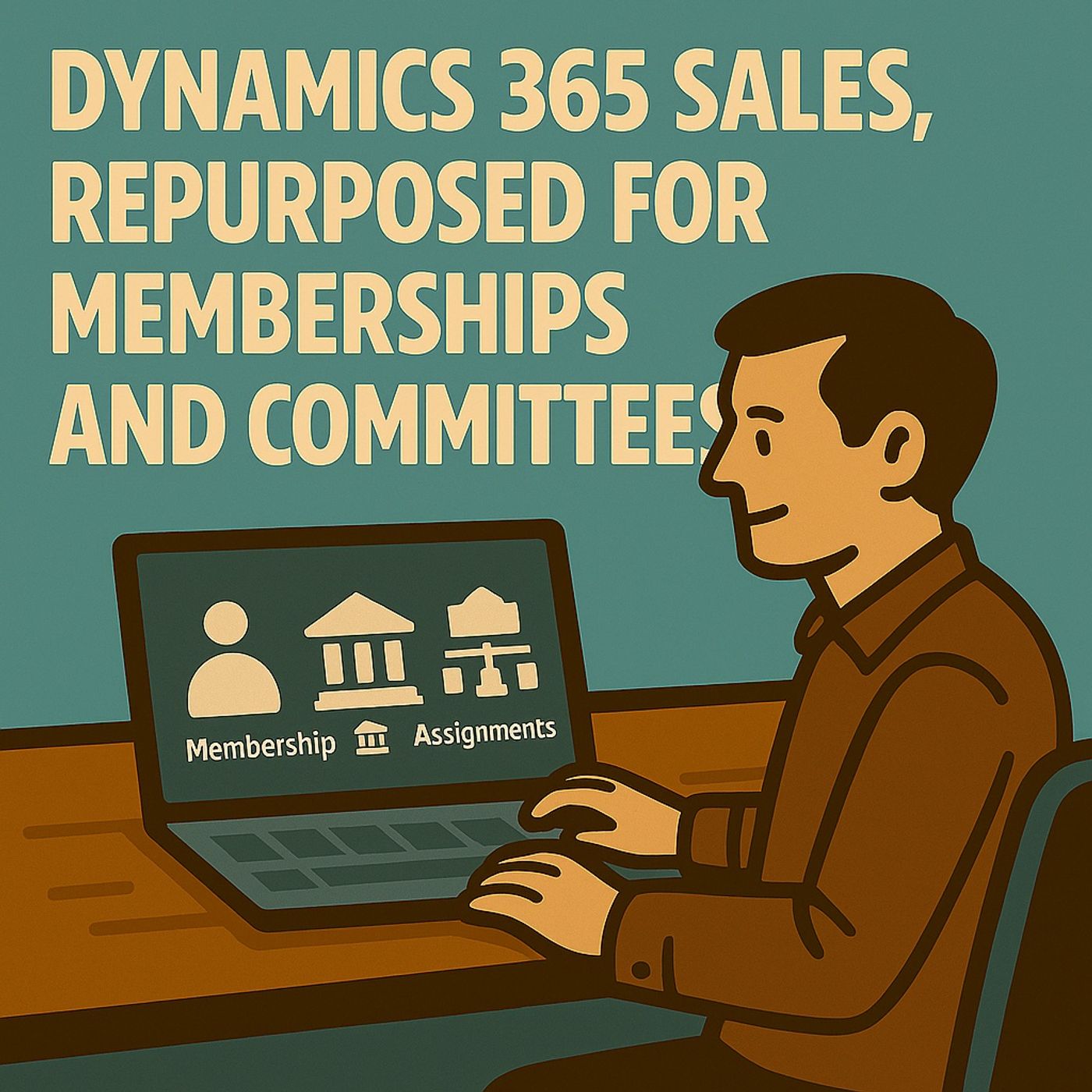
What if Dynamics 365 Sales was your membership engine, not just a sales CRM? In this episode, we show how to repurpose Dynamics 365 Sales and Dataverse to run memberships, committees, and partner programs without custom software. Instead of leads and pipeline, you model organizations, members, committees, positions, assignments, and partner programs using standard tables, relationships, and business process flows. We walk through a practical membership data model, where memberships bridge contacts and organizations, roles stay flexible, and lifecycle stages replace sales drama with clear registration, validation, active, renewal, and archive steps. You’ll learn how Outlook, Teams, SharePoint, Power Automate, and Power BI plug in automatically when you stay inside the Microsoft Power Platform guardrails. We also unpack common failure patterns like duplicate member tables, overusing JavaScript and plugins, and mixing sales and non-sales lifecycles. The result is a secure, scalable, audi…
Guest: Mirko Peters
Dec. 1, 2025

Stop OAuth Consent Attacks in Microsoft Entra ID

The podcast explains how attackers bypass MFA by abusing OAuth consent instead of stealing passwords. When a user or admin approves a malicious “productivity” app, it gets tokens with scopes like mail or files read and offline_access. That lets the attacker quietly read email, files and chats for months, even after password resets and new MFA devices. Normal identity events don’t revoke these grants; you must remove the OAuth grant or service principal itself. The host stresses three Entra controls: lock down user consent to low-risk scopes, only allow verified publishers, and route risky permissions through an admin consent workflow. Combined with rigorous logging, reviews and revocation, these steps eliminate most consent-based attacks in modern cloud identity environments today.
Guest: Mirko Peters
Dec. 1, 2025

Stop Stale Power BI Reports with Strong Governance

Are your dashboards secretly preaching lies? In this episode, we turn data governance into a full-on revival meeting. We name the heresy of ad-hoc share links, stale workspaces and broken RLS that quietly corrupt your “single source of truth”. Then we reveal the doctrine of distribution: org apps as the one canonical doorway, certified datasets as scripture, and deployment pipelines as your release liturgy. You’ll hear a concrete 30-day rite for dragging your analytics from chaos to canon, with clear roles, labels, audiences, tenant rules and capacity care that actually hold under pressure. If you suspect your reports are rumors in a robe, this is your wake-up sermon. Come prepared to repent of manual sharing and leave with a roadmap.
Guest: Mirko Peters
Nov. 30, 2025

Migrate Power Apps from Excel to Dataverse

Your “Simple” Excel App Is Quietly Wrecking Your Business (And You Won’t See It Until It’s Expensive) Stop wiring Power Apps into spreadsheets and calling it “production.” Every shared Excel file is a glass elevator: silent data loss, last-save-wins concurrency, and zero governance until an auditor, regulator or angry exec shows up. In this video I tear down the Excel-as-database myth, show why Dataverse is the backbone your apps actually need, and walk you through a 10-step migration plan that keeps the business running while you move. One decision prevents 80% of these failures: centralize your data model, rules, and security in Dataverse first – spreadsheets only get to be views, never the source of truth.
Guest: Mirko Peters
Nov. 27, 2025

Power Automate vs Azure Logic Apps for Enterprise Integration

Summary: In this episode I explain why “1,400+ connectors” is a vanity metric and compare Power Automate vs Azure Logic Apps for real enterprise integration. We dig into throttling, throughput, vNet and private endpoints, Azure Arc hybrid, AI agents with Azure Functions, and give you a simple decision rule: Power Automate for departmental M365 convenience, Logic Apps for high-volume, governed, hybrid workloads.
Guest: Mirko Peters
Nov. 26, 2025

Copilot Workflows Agent vs Power Automate: What to Migrate

n this episode, we put Microsoft 365 Copilot’s Workflows Agent head-to-head with Power Automate and ask the uncomfortable question: are your painstakingly hand-built cloud flows now the slow, expensive option? We break down where conversational, intent-driven automation beats traditional designer-driven flows for everyday work across Outlook, Teams, SharePoint, Planner and Microsoft Graph—and where Power Automate still absolutely owns the room. You’ll see real-world use cases—approvals, data sync, incident triage, CRM updates and IT onboarding—timed and dissected for build time, error surface, governance, and licensing cost. We unpack DLP, environments, auditability, SLAs, and why hybrid patterns (Agent front, Power Automate spine) are where the real ROI hides. By the end, you’ll know what to keep in Power Automate, what to move to Workflows Agent, and what to retire entirely—so you stop hoarding fragile flows and start shipping automations that match how your org actually works.
Guest: Mirko Peters
Nov. 26, 2025

When to Move Power Apps from SharePoint to Dataverse

In this episode, we break down the myth that “SharePoint lists are a database for Power Apps” and show why that belief quietly kills performance, scalability, and data integrity. You’ll learn exactly where SharePoint list–backed Power Apps fall apart: delegation limits (500/2,000 record caps), the 5,000-item list view threshold, non-delegable filters, item-level permissions at scale, and complex queries that push all the heavy lifting to the client. We contrast this with Dataverse as the native data engine for Power Apps: server-side query execution, rich relational modeling, row and field-level security, auditing, better offline behavior, and clean integration with Power BI, Data Lake, and AI workloads. Instead of workarounds, throttled flows, and blue delegation banners, you get reliable performance and honest record counts. The episode gives IT leaders and makers a decision framework: clear thresholds for when to move from SharePoint to Dataverse (record volumes, compound fil…
Guest: Mirko Peters
Nov. 25, 2025

Fix Power Apps Excel Data Limits with Dataverse

You clicked “Create app from Excel,” felt clever, and accidentally migrated your chaos at scale. In this episode, we break down why Excel is a calculator with delusions of grandeur and why Dataverse will punish spreadsheet habits with integrity errors. I tear down the five silent failure patterns that quietly destroy Power Apps built from Excel data: no primary keys, mixed data types, text lookups instead of real relationships, multipurpose “do everything” columns, and orphan rows that point to nowhere. You’ll hear why identity is a contract, not a column, how surrogate keys and alternate keys stop upserts from behaving like a blender, and how proper types (text, number, decimal, currency, date, choice, lookup, boolean) turn flaky formulas into reliable logic. We’ll walk through replacing VLOOKUP-style thinking with real relationships, splitting overloaded status fields, eliminating orphans with required lookups and cascade rules, and using Power Query to trim, normalize, dedupe, and …
Guest: Mirko Peters
Nov. 24, 2025

Move Canvas Apps from SharePoint to Dataverse

This episode rips the mask off Microsoft’s new “canvas app revival” story and shows what’s actually happening under the hood. It’s not a renaissance. It’s a fork. A split. A deliberate architectural divide between the fast personal Copilot lane and the governed enterprise Power Platform lane. Across twenty minutes, we expose why App Builder feels familiar on purpose, why that familiarity is a lure, and why defaulting to SharePoint lists is the fastest way to build something that collapses the moment the requirements grow teeth. You’ll hear how delegation limits silently lie to users, how lookup ceilings turn models into spaghetti, and how personal-context inheritance becomes a time bomb the day the creator leaves the company. We walk through the migration cliff, the re-platforming tax, the archaeology required to rebuild a “toy app” into a real system, and why Dataverse isn’t optional once you care about scale, security, or audit trails. From there, the episode pivots into the g…
Guest: Mirko Peters
Nov. 23, 2025

Service Accounts vs App Registrations for Power Automate Email

Your Power Automate email flows aren’t clever automations, they’re HR risk wrapped in HTML. You wire a flow to a “service account,” fight through MFA once, get it working, and decide it’s done. It’s not done. It’s brittle, over-privileged, impossible to audit cleanly, and the first time conditional access or a password policy changes, it dies loudly or, worse, half-silently. A service account is still a user. Delegated auth, MFA prompts, password expiry, CA tweaks – all the stuff meant for humans – now sits in front of a robot that can’t tap “Approve” at 2:14 a.m. Tokens expire, flows wake up, find nothing valid, and either fail or thrash until they send duplicates like a jammed label maker. To “fix” that, people hand it Send As, then another exception, then a shared mailbox that never gets revoked. Over time your “one sender” is an impersonation cannon that can send as almost anyone. Now mix in shared passwords and mailbox rights and your audit trail becomes vibes: was it the flow…
Guest: Mirko Peters