 EN
 Deutsch
 Español
 Français
 Italiano
 Português
 Nederlands
 Polski
 Bahasa Indonesia
 Русский
 Українська
 العربية
 עברית
 हिन्दी
 日本語
 한국어
2026-02-10
Scale Autonomous Agents in Microsoft 365 Without Chaos

In today's fast-paced digital landscape, organizations increasingly recognize the potential of agentic AI systems. A staggering 93% of IT leaders plan to introduce autonomous agents in their enterprises. This shift highlights the growing belief that treating AI agents as autonomous actors can significantly enhance productivity.
Nearly half of organizations cite integration with existing systems as a top challenge. The effectiveness of agentic AI systems hinges on their ability to integrate seamlessly and utilize high-quality data.
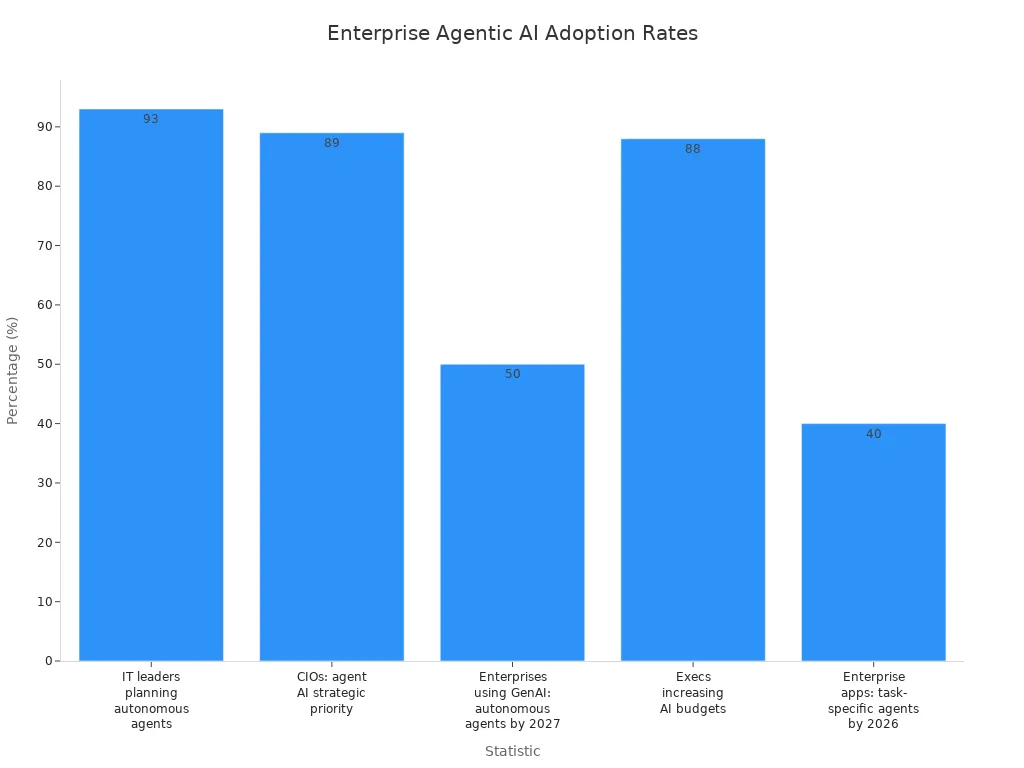
Embracing the Agentic Advantage can help you navigate these challenges and unlock new levels of efficiency and scalability.
Key Takeaways
- Embrace agentic AI systems to enhance productivity and efficiency in your organization.
- Focus on integrating AI with existing systems to overcome common implementation challenges.
- Establish clear objectives and accountability for AI agents to ensure effective governance.
- Invest in training and engaging employees to foster acceptance and collaboration with AI.
- Utilize robust tools and platforms for seamless coordination among multiple AI agents.
- Monitor performance continuously to ensure alignment with business goals and ethical standards.
- Encourage experimentation to discover impactful use cases and drive innovation.
- Measure success through key metrics like customer satisfaction and operational efficiency.
Agentic Systems Overview
Agentic systems represent a transformative approach in artificial intelligence, emphasizing the role of AI agents as autonomous actors. These systems possess several key characteristics that set them apart from traditional AI.
Key Characteristics
Autonomy in Decision-Making
Agentic AI systems operate with a high degree of autonomy. They can execute multi-step tasks with minimal human input, allowing for greater efficiency. These systems make independent decisions without needing constant human approval. This autonomy enables them to focus on achieving long-term objectives through complex workflows.
Adaptability to Change
Adaptability is another hallmark of agentic systems. They can adjust their operations based on changing inputs or unexpected failures. This flexibility allows them to manage operational processes effectively, enhancing uptime and resilience. By continuously learning from their environment, these systems can reassess and modify their actions in real-time, ensuring they remain aligned with organizational goals.
Benefits of Agentic AI Systems
Enhanced Efficiency
The agentic advantage lies in the ability of these systems to expand automation beyond simple task execution. They take ownership of decisions, which enhances operational flexibility. By executing workflows end-to-end without manual orchestration, agentic AI systems significantly reduce the need for human intervention. This leads to increased efficiency across various business functions.
Improved Coordination
Agentic AI systems excel in coordination. They break down high-level objectives into actionable tasks, ensuring that all parts of the enterprise work towards common goals. When conditions change, these systems can quickly reassess plans and adjust accordingly. This proactive behavior fosters better alignment and collaboration among teams, ultimately driving improved outcomes.
Designing for the Agentic Advantage

To successfully implement agentic AI systems, you need a structured framework. This framework should focus on identifying core objectives and aligning technology with your business processes. By doing so, you can maximize the agentic advantage and ensure effective enterprise coordination.
Implementation Framework
Identifying Core Objectives
Start by establishing clear objectives for your agentic AI systems. Consider the following steps:
- Establish a strategic AI council: Include C-level executives and ethics advisors to oversee AI initiatives.
- Define accountability: Clearly outline who is responsible for the actions of AI agents. This helps maintain control over autonomous systems.
- Adopt dynamic governance: Ensure your governance evolves with system capabilities. This approach lays a foundation for safely scaling autonomous capabilities.
Aligning Technology and Processes
Aligning your technology with business processes is crucial for success. Here are some critical success factors:
| Success Factor | Description |
|---|---|
| Bridging AI strategy and execution | Align business strategy with technology delivery to create scalable impact. |
| Human–technology partnership | Focus on user needs and empower decision-makers through AI. |
| Governance and order | Establish a coherent strategy to manage AI initiatives and reduce risks. |
| Modular AI platforms | Create flexible and scalable AI architectures. |
| Appropriate speed | Balance innovation with readiness to ensure controlled transformation. |
| Operationalizing AI with governance | Ensure responsible deployment and sustained investment through governance frameworks. |
Fostering digital literacy across all levels of your organization is essential. Encourage continuous learning and involve stakeholders early in the development process to ensure solutions meet real needs.
Tools for Coordination
Effective coordination among multiple agentic AI systems is vital for achieving scalability. You can leverage various tools and platforms to enhance this coordination:
- Hyperscaler cloud providers: Utilize platforms like Azure, AWS, and Google Cloud for robust infrastructure.
- Vendor-agnostic platforms: Consider tools such as ServiceNow, UiPath, MuleSoft, and Boomi for seamless integration.
- Orcaworks: This platform helps in building and scaling agentic systems effectively.
Data governance platforms also play a crucial role in supporting coordination and scalability. They provide essential capabilities:
| Capability | Description |
|---|---|
| Agent Orchestration | Coordinates multiple AI agents across workflows, managing dependencies and ensuring predictable outcomes. |
| Enterprise Data Integration | Connects agents to trusted enterprise systems, enabling context-aware and accurate execution. |
| Governance and Compliance | Enforces governance through identity, access controls, and policy-based execution with auditability. |
| Workflow Ownership | Allows agents to own defined business workflows, reducing manual handoffs and operational errors. |
| Scalable Infrastructure | Supports high-volume, concurrent workflows while maintaining control, reliability, and performance. |
Scaling agentic AI beyond pilot programs is essential for enterprises aiming for reliable and efficient workflows. By focusing on structured workflows, centralized orchestration, controlled autonomy, and robust governance, you can transition from experimental phases to fully operational systems that deliver consistent results.
Implementing Agentic AI Systems
Successfully implementing agentic AI systems requires a structured approach. You must focus on integration steps and address common challenges that may arise during the process.
Steps for Integration
Stakeholder Engagement
Engaging stakeholders is crucial for the successful integration of agentic AI systems. You should tailor your approach to meet the specific needs of different groups. Here are some recommended steps:
- Lay the Groundwork: Start by establishing a clear vision for your AI initiatives. Ensure that all stakeholders understand the goals and benefits of agentic AI systems.
- Define Agents and Choose Their Types: Identify the types of AI agents you need based on your organizational objectives. This helps in aligning technology with your business processes.
- Equip Agents with the Right Tools and Data: Ensure that your agents have access to high-quality data and the necessary tools to perform their tasks effectively.
- Choose the Right Orchestration Model: Select an orchestration model that fits your enterprise's needs. This model should facilitate coordination among multiple agents.
- Visualize & Capture Feedback: Create visual representations of workflows and capture feedback from users. This helps in refining processes and improving agent performance.
- Build, Test, Iterate: Implement a cycle of building, testing, and iterating on your agentic AI systems. This approach allows you to make continuous improvements.
Training and Development
Training your team is essential for operationalizing agentic AI. You should provide comprehensive training programs that demystify AI and enhance employee capabilities. Consider the following strategies:
- Engage Employees: Address both rational and emotional responses to AI. Emphasize how AI will evolve roles rather than replace them.
- Co-Designing with Employees: Involve employees in designing their work experiences. This helps identify challenges and areas for improvement.
- Communication Strategy: Use narratives that frame AI positively. Create emotional connections through storytelling to foster acceptance.
Overcoming Challenges
Resistance to Change
Resistance to change is a common challenge when implementing agentic AI systems. To overcome this, consider the following strategies:
| Strategy | Description |
|---|---|
| Stakeholder Engagement | Tailor approaches to different stakeholder groups to address their specific needs and concerns. |
| Engaging Employees | Address both rational and emotional responses to AI, emphasizing role evolution over replacement. |
| Training and Upskilling Programs | Provide comprehensive training to demystify AI and enhance employee capabilities. |
| Co-Designing with Employees | Involve employees in designing their work experiences to identify challenges and improvement areas. |
| Communication Strategy | Use narratives that frame AI positively and create emotional connections through storytelling. |
| Transparency and Feedback Loops | Regular updates and anonymous feedback channels build trust and allow for adjustments in strategies. |
Ensuring Data Security
Data security is critical when deploying agentic AI systems. You must implement best practices to protect sensitive information. Here are some key strategies:
- Conduct strategic risk assessments to identify potential failure modes.
- Design multi-layered architectures that include data, model, and system layers for comprehensive protection.
- Integrate human oversight to ensure AI operates within ethical and organizational guidelines.
- Implement robust data encryption to protect sensitive information.
- Continuously monitor for bias and ethical violations in AI models.
- Ensure transparency and explainability in AI decision-making processes.
- Conduct regular security audits and penetration testing to identify vulnerabilities.
- Comply with global legal standards to manage user consent and data privacy.
- Enforce role-based access control to limit access to sensitive AI functions.
By following these steps and addressing challenges proactively, you can effectively implement agentic AI systems that drive value for your enterprise.
Real-World Applications

Real-world applications of agentic AI systems showcase their transformative potential across various industries. By examining case studies, you can see how organizations leverage the agentic advantage to enhance operations and improve customer experience.
Industry Case Studies
Technology Sector
In the technology sector, companies are adopting agentic AI to streamline processes and improve service delivery. Here are some notable examples:
| Company | Application Description | Impact on Business Transformation |
|---|---|---|
| Vodafone | Uses agentic AI to manage LLM-based chatbots and AI agents for customer service. | Enhances customer service efficiency. |
| Avid Solutions | Implements agentic workflows for improved customer data management. | Reduces customer onboarding time by 25%. |
| ServiceMax | Converts vague queries into structured answers using agentic AI. | Improves response accuracy and efficiency. |
| Capital One | Employs agent-based AI for exploring financing options and plans for fraud detection. | Enhances user experience in financial services. |
Healthcare Sector
The healthcare sector also benefits from agentic AI systems. These systems help streamline operations and support clinical decision-making. For instance, Seattle Children's Hospital utilizes agentic AI to provide healthcare providers with quick access to critical information. This capability supports better clinical decisions and improves patient outcomes. Additionally, NVIDIA and GE HealthCare collaborate on agentic robotic systems for medical imaging technologies, advancing healthcare technology and patient care.
Key Takeaways
Metrics for Success
To evaluate the success of agentic AI deployments, organizations focus on several key metrics. These metrics help you assess the effectiveness of your systems:
| Metric Category | Description / Examples |
|---|---|
| Goal Fulfillment Rate | Measures task completion success |
| Average Response Time | Time taken to respond or complete tasks |
| Safety / Robustness Proxies | Frequency of escalation or human intervention |
| Customer Satisfaction | User feedback and satisfaction levels |
| Return on Investment (ROI) | Economic value generated by the AI deployment |
Success in agentic AI deployments involves assessing the system's ability to handle complex tasks independently. You should also consider improvements in operational efficiency and positive customer impact.
Future Trends in AI Coordination
Looking ahead, several trends will shape the future of AI coordination and agentic system development:
- In 2026, agentic automation will significantly change enterprise operations, emphasizing control over mere capability.
- Strategic thinkers who prioritize governance and trust in their automation strategies will gain a competitive advantage.
- The orchestration of multiple agents will be crucial for achieving impactful results.
As you explore these trends, remember that the design and implementation of AI systems will increasingly shift toward multi-agent architectures.
Best Practices for Governance
Effective governance is crucial for managing agentic AI systems. You must establish clear policies and practices that ensure compliance, ethical considerations, and continuous monitoring. These practices help maintain control while fostering innovation.
Establishing Policies
Compliance and Ethical Considerations
To govern agentic AI systems effectively, you should focus on several key policy areas:
| Policy Area | Description |
|---|---|
| Accountability Framework | Define who is responsible for agent actions, including ownership, approval of changes, monitoring performance, and addressing issues. |
| Compliance and Regulatory | Ensure adherence to industry-specific regulations, such as HIPAA for healthcare and data protection laws across jurisdictions. |
| Ethical Principles | Establish principles for fair and transparent operation of AI systems, including treatment of customers and handling of sensitive data. |
| Human Oversight Mechanisms | Implement mechanisms for human intervention in critical situations, ensuring agents can escalate issues beyond their capabilities. |
| Continuous Monitoring | Utilize real-time dashboards and KPIs to track agent performance and ensure alignment with business objectives. |
A significant number of IT security leaders express concerns about their current AI governance setups. About 55% lack confidence in their ability to enforce appropriate guardrails for deploying agentic AI solutions. This underscores the urgent need for stronger governance frameworks.
Continuous Monitoring
You must implement continuous monitoring to ensure compliance and improve performance in agentic AI systems. This involves tracking various metrics and allowing agents to learn from corrections. Here are effective methods for monitoring:
| Method | Description |
|---|---|
| Continuous multi-dimensional monitoring | Assesses runtime behavior against evaluation rules and reference datasets, enabling early detection of issues through metric-driven alerts and adaptive thresholds. |
| Enhanced observability | Captures full semantic traces across workflows, ensuring traceability and replicability. |
| Clear operating model | Defines roles, responsibilities, and intervention points to maintain human oversight and improve monitoring throughout the lifecycle. |
Fostering Innovation
Encouraging Experimentation
To foster innovation, you should encourage experimentation with agentic AI systems. Here are some effective practices:
- Run many small, fast experiments to quickly discover impactful use cases. Accept that most experiments will be killed early, which accelerates learning.
- Organize cross-functional squads with clear ownership spanning data, workflow, engineering, and product to ensure end-to-end responsibility.
- Build trust and transparency from day one by exposing rationale, sources, and providing auditability to maintain accountability.
Recognizing Success
Recognizing successful initiatives is vital for sustaining momentum. You can use the following criteria:
- Readiness Assessments: Evaluate organizational preparedness across cultural, technical, governance, and strategic dimensions.
- Strategic Alignment: Ensure AI initiatives align with broader organizational goals and objectives.
- Continuous Improvement Mechanisms: Focus on the system's ability to evolve and learn over time, enhancing value creation.
By implementing these best practices, you can achieve scalable consistency in your agentic AI systems while maintaining oversight and fostering innovation.
In conclusion, embracing the agentic advantage is essential for organizations aiming to scale intelligently. Here are some key takeaways for you to consider:
- Build leadership literacy before scale. Strategic fluency will help you deploy AI responsibly.
- Invest in workforce imagination. Train employees to interpret and co-create with intelligent systems.
- Treat culture as the collaboration protocol. Sustainable adoption relies on ethical discipline and shared norms.
By adopting agentic AI systems, you can enhance productivity, improve cost-efficiency, and increase resilience. These systems operate independently, allowing your team to focus on innovation and strategic initiatives. As you move forward, remember that the future of AI lies in deeper integration and real-time decision support.
FAQ
What are agentic AI systems?
Agentic AI systems are autonomous agents that can make decisions and execute tasks independently. They enhance efficiency by managing workflows without constant human oversight.
How can I implement agentic AI in my organization?
Start by defining clear objectives and aligning technology with your business processes. Engage stakeholders and provide training to ensure successful integration.
What industries benefit from agentic AI?
Industries like technology and healthcare benefit significantly. They use agentic AI to streamline operations, improve customer service, and support clinical decision-making.
How do I measure the success of agentic AI systems?
You can measure success using metrics like goal fulfillment rate, average response time, and customer satisfaction. These indicators help assess the effectiveness of your systems.
What challenges might I face when implementing agentic AI?
Common challenges include resistance to change and ensuring data security. Address these proactively through stakeholder engagement and robust security measures.
How does the Agentic Advantage improve productivity?
The Agentic Advantage allows AI agents to operate autonomously, reducing the need for human intervention. This leads to faster decision-making and increased operational efficiency.
What role does governance play in agentic AI?
Governance ensures compliance and ethical operation of agentic AI systems. It establishes accountability and continuous monitoring to maintain control over autonomous agents.
Can agentic AI systems adapt to changes in the environment?
Yes, agentic AI systems are designed to be adaptable. They can adjust their operations based on new inputs or unexpected failures, ensuring alignment with organizational goals.
🎧 Listen to this episode
Want a practical explanation of Scale Autonomous Agents in Microsoft 365 Without Chaos? This episode breaks down the topic in clear language and shows why it matters for Microsoft 365, Azure, Power Platform, security, AI, and modern work.
Listen to this episode if you want to:
- Understand the key concepts behind Scale Autonomous Agents in Microsoft 365 Without Chaos
- See how it fits into the wider Microsoft technology ecosystem
- Learn where it can create practical value for your organization
You may also enjoy these related M365 FM episodes:
- Scale HR Operations with Copilot Studio AI Agents
- How to Fix Azure at Scale Without Buying More Tools
- Control Autonomous AI Agents with Human Oversight
- Autonomous AI Agents: Use Cases, Risks, and Governance
- Scale Copilot Agents Safely in Microsoft 365
Discover more practical Microsoft conversations on M365 FM.
Apple Podcasts · Spotify · YouTube · YouTube Music
Host: Mirko Peters