 EN
 Deutsch
 Español
 Français
 Italiano
 Português
 Nederlands
 Polski
 Bahasa Indonesia
 Русский
 Українська
 العربية
 עברית
 हिन्दी
 日本語
 한국어
2026-05-11 · Season 2
Leadership, AI, and Imposter Syndrome with Daniel "Dan" Barber [MVP]

You might feel like you are the only one struggling with imposter syndrome, but you are not alone. Many leaders, especially in fast-moving fields, feel less qualified after seeing updates on platforms like LinkedIn. Social media can increase these feelings, making it harder to trust your own abilities. AI moves quickly, but it cannot understand emotions or culture. Your leadership matters because only humans can bridge the gap between what machines know and what people need. You can take steps today to build your confidence and resilience.
Key Takeaways
- Imposter syndrome is common among leaders, especially in fast-paced environments. Recognizing this can help you feel less isolated.
- Open conversations about imposter feelings create a supportive culture. Encourage your team to share their challenges.
- Celebrate both small and large achievements. Acknowledging progress boosts confidence and motivation.
- Embrace continuous learning. Focus on growth rather than perfection to build resilience against self-doubt.
- Use AI as a partner, not a competitor. Leverage AI tools to enhance productivity and decision-making.
- Build strong support networks. Mentors and peers can provide guidance and reassurance during tough times.
- Practice self-compassion. Accept your imperfections and view setbacks as opportunities for growth.
- Regularly reflect on your experiences. Journaling helps track progress and reinforces your leadership journey.
Understanding Imposter Syndrome in Leadership
Imposter syndrome affects leaders across industries. You may notice it during moments of change or when you step into new responsibilities. Research shows that over 70% of high achievers experience imposter syndrome at some point in their careers. Even leaders with years of experience can feel like outsiders when they face new challenges. The rise of AI and rapid information flow amplifies these feelings. You must manage both technology and people, which increases the pressure.
Common Triggers for Leaders
Rapid AI Change
AI evolves quickly. You may feel overwhelmed by the need to keep up with new tools and trends. The onboarding process often requires knowledge across many technical areas. Even if you have expertise, you face pressure to become competent in other domains. This can lead to anxiety and imposter syndrome.
"AI-driven impostor syndrome flips this concept so that people experience self-doubt because their success lacks the traditional struggle associated with intellectual effort."
Evolving Role Expectations
Your role as a leader changes as your organization grows. You may scale from founder to organizational leader or hire someone more experienced than yourself. Entering new markets or dealing with economic uncertainty can trigger imposter syndrome. The CEO role comes with high expectations. You may feel pressure to know all the answers.
- Scaling from founder to organizational leader
- Hiring someone 'more experienced' than yourself
- Entering markets where you feel like an outsider
- Economic and geopolitical uncertainty
Imposter syndrome often emerges during high-stakes moments: board presentations, mergers and acquisitions, major hires, or expansion into new markets. It is not a sign of incompetence; it’s not limited by gender or experience. And it does not disappear with success. In fact, success often amplifies it because the stakes increase.
Pressure to Perform
You must deliver results and meet targets. Social media and AI-driven information overload make you feel like you are always behind. You see others achieving more, which increases imposter syndrome. The pressure to perform can cause you to question your abilities.
Signs of Imposter Syndrome
Self-Doubt
You may doubt your skills, talents, or accomplishments. You attribute your success to luck or timing. Self-doubt becomes persistent and affects your confidence.
Fear of Exposure
You worry that others will discover you are not as competent as you appear. You avoid feedback because you fear criticism or being exposed as a fraud.
Overcompensation
You over-prepare or put in excessive effort. This can lead to burnout. You may sabotage your own success because you believe you do not deserve it.
- Persistent self-doubt about skills, talents, or accomplishments
- Attributing success to external factors such as luck or timing
- Fear of not meeting expectations and being exposed as a 'fraud'
- Over-preparation or excessive effort, often leading to burnout
- Sabotaging one’s own success due to a belief that they don’t deserve it
- Avoiding feedback due to fear of criticism or discovery of incompetence
Imposter syndrome does not disappear with experience or success. You must recognize the triggers and signs to manage it effectively. AI and information overload make imposter syndrome more common among leaders. You can take steps to address these feelings and build resilience.
The Impact of AI on Leadership and Imposter Syndrome

As a leader, you face a unique set of challenges in the AI era. AI can feel like both a source of stress and a powerful tool for growth. Understanding this dual impact helps you navigate your role with more confidence and clarity.
AI as a Stressor
Feeling Outpaced by Technology
You may feel like technology moves faster than you can keep up. New AI tools and updates appear almost daily. This constant change can make you question your expertise. Even experienced leaders like Dan Barber have shared how the rapid pace of AI can trigger self-doubt. You might worry that you will fall behind or miss important trends.
Information Overload
AI brings a flood of information. You receive more data, reports, and insights than ever before. Sorting through this information can feel overwhelming. The pressure to process and act on everything can increase your stress. Studies show that AI-enabled job characteristics can lead to both challenge and hindrance stress. When you see AI as a challenge, it can motivate you. When you see it as a barrier, it can drain your energy.
Social Media Pressures
Social media amplifies the pressure. You see others sharing their AI achievements and certifications. This can make you feel like you are not doing enough. The constant comparison can fuel imposter syndrome. You may start to doubt your own progress and skills.
AI as an Enabler
Learning and Productivity Tools
AI can also help you learn and work more efficiently. You can use AI to summarize articles, draft emails, or analyze data. These tools save you time and help you focus on higher-level tasks. Leaders who embrace AI as a partner often find new ways to grow and innovate.
Reducing Procrastination
AI can help you get started on difficult projects. For example, you can use AI to create a first draft or outline. This reduces the fear of the blank page and helps you overcome procrastination. Dan Barber notes that AI can break down big tasks into manageable steps, making it easier to take action.
Empowering Decision-Making
AI supports better decision-making. You can use AI to gather insights, predict trends, and test ideas. This empowers you to make informed choices. However, you must use AI responsibly and in context. Responsible use of AI can help reduce imposter syndrome:
- Encourage your team to recognize both their own contributions and the role of AI.
- Set clear guidelines for how to use AI in your organization.
- Use peer reviews to highlight the value of human judgment.
- Share your experiences with AI, including challenges, to build psychological safety.
AI can increase demands and complexity, but it also creates opportunities for growth when you approach it with the right mindset.
You can thrive as a leader by balancing the stress and benefits of AI. Responsible and contextual use of AI helps you and your team build confidence and resilience.
Actionable Strategies for Leaders

Normalize Imposter Syndrome
Open Conversations
You can create a culture where imposter feelings are discussed openly. Many leaders experience classic impostor feelings, especially in the digital age. When you talk about ai impostor syndrome, you help others realize they are not alone. Open communication builds trust and authenticity. You can encourage your team to share their challenges and doubts. This practice reduces stress and increases engagement.
| Strategy | Description |
|---|---|
| Foster Open Communication | Encourage dialogue about imposter syndrome to create a supportive environment. |
| Celebrate Achievements | Highlight both small and significant accomplishments to build self-assurance. |
| Seek Support | Establish trusted relationships to discuss feelings of imposter syndrome openly. |
| Reframe Internal Dialogue | Help individuals shift their mindset from doubt to confidence. |
Leaders who foster open conversations about vulnerability see positive results. High-trust companies report 74% less stress and 76% more engagement. You can build confidence alongside ai by creating a safe space for your team.
Destigmatize Vulnerability
You can show authenticity by sharing your own classic impostor feelings. When you admit your struggles, you help others feel safe to do the same. Vulnerability in leadership creates psychological safety. Your team will feel more energized and productive. Employees in high-trust environments report 106% more energy and 50% higher productivity.
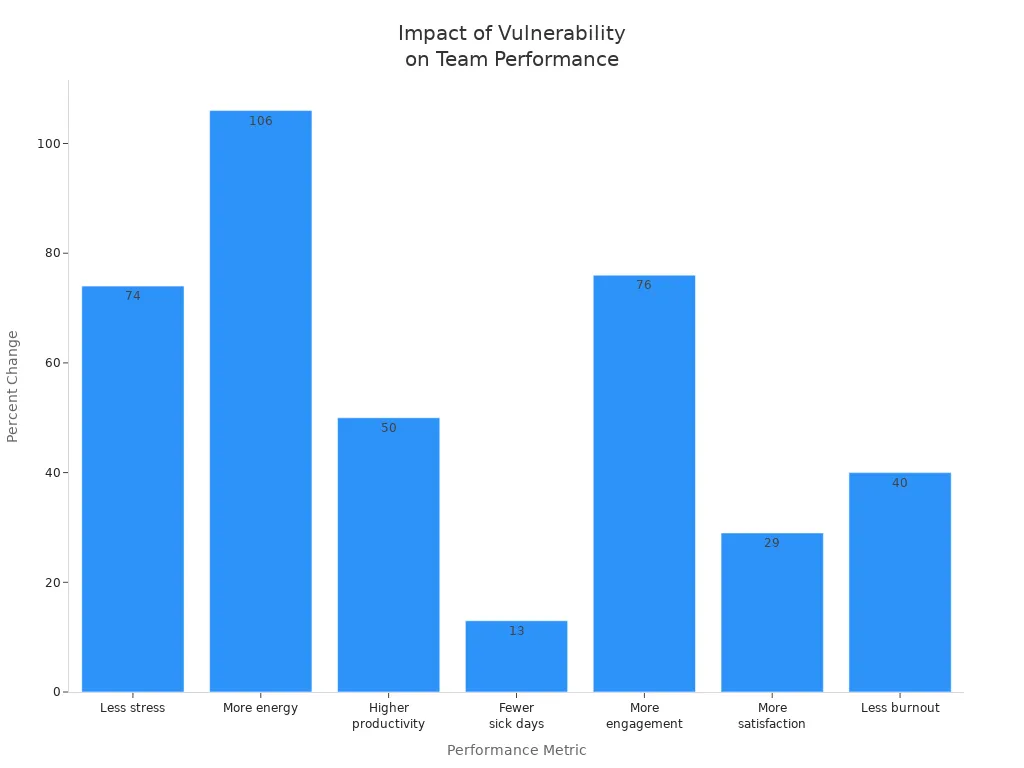
You can practice self-compassion by accepting your imperfections. This self-compassion practice helps you adapt to change and reduces burnout. When you destigmatize vulnerability, you promote an ai-positive team culture. Your team will feel more satisfied and take fewer sick days.
Leaders who show vulnerability build trust and authenticity. This trust fosters open communication and collaboration. A culture of psychological safety encourages team members to share ideas without fear.
Embrace Continuous Learning
Growth Mindset
You need a mindset that values growth and learning. The digital age demands that you adapt to change quickly. You can overcome classic impostor feelings by focusing on progress, not perfection. A growth mindset helps you see challenges as opportunities. You can encourage your team to reskill and upskill. This approach builds confidence and prepares you for innovation.
Certifications and Experience
Certifications validate your expertise in ai and digital skills. You can use certifications to demonstrate your ability to manage ai impostor syndrome. Ongoing education helps you stay current in the digital age. You can combine certifications with real-world experience to build confidence. Managers using ai benefit from continuous learning and ethical leadership. You can lead teams that include both humans and ai.
- Certifications provide validated expertise for informed decision-making.
- Ongoing education fosters continuous learning and adaptation.
- Leaders equipped with certifications manage blended workforces of humans and ai.
Information Filtering
You face information overload in the digital world. You can filter information to focus on what matters most. Dan Barber suggests using a mental matrix to decide what you need to know. You can avoid classic impostor feelings by prioritizing relevant data. This strategy helps you practice self-compassion and reduces anxiety. You can teach your team to filter information and focus on key skills.
- Continuous learning is crucial for leaders in the digital age.
- Upskilling in soft skills is necessary for effective leadership.
- Ethical ai deployment requires ongoing education.
Leverage AI as a Partner
AI for Collaboration
You can use ai tools to enhance collaboration and decision-making. AI provides personalized learning experiences and adapts to your progress. Software developers using ai can analyze language patterns to detect negative emotions. You can use real-time feedback from ai to improve communication and foster better relationships. AI helps you identify trends and make informed decisions quickly.
- AI tools enhance leadership development with adaptive learning.
- Emotional intelligence is amplified through ai sentiment analysis.
- Real-time feedback from ai improves decision-making.
Human Context and Oversight
You must provide human context and oversight when using ai. AI cannot replicate visionary thinking or authenticity. You can use your skills to validate ai outputs and ensure ethical decisions. Managers using ai must balance technology with human insight. You can build confidence by combining ai with your own judgment. This approach helps you overcome ai impostor syndrome and maintain authenticity.
Responsible AI Use
Responsible ai use supports ethical leadership and reduces imposter feelings. You can provide proper training and thoughtful integration of ai tools. This practice enhances employee confidence and skill development. However, frequent ai users may experience classic impostor feelings. You can mitigate negative impacts by promoting self-compassion and ethical standards.
- Responsible ai use enhances confidence and skill development.
- Proper training supports ethical leadership.
- Thoughtful integration of ai tools reduces imposter feelings.
You can leverage ai as a partner to build confidence and foster innovation. By combining digital skills, self-compassion, and authenticity, you can lead your team through the challenges of the digital age.
Build Support Networks
You do not have to face imposter feelings alone. Building strong support networks is a key part of effective leadership. When you connect with others, you gain new perspectives and practical advice. You also create a safety net that helps you and your team handle challenges with more confidence.
Mentoring and Coaching
Mentoring and coaching play a vital role in helping you overcome imposter syndrome. A mentor can guide you through difficult situations, share their own experiences, and offer reassurance when you doubt yourself. Coaching helps you develop new skills and set clear goals for your leadership journey.
- Mentorship gives you access to guidance and real-world stories.
- Coaching helps you build confidence and learn how to manage stress.
- Professional help, such as speaking with a counselor, can provide strategies for handling complex emotions.
When you seek out mentors or coaches, you show your team that asking for help is a strength, not a weakness. This approach builds trust and encourages others to do the same.
Community Engagement
Engaging with your professional community strengthens your leadership and resilience. When you join groups or attend events, you meet others who face similar challenges. Sharing experiences helps you realize that imposter feelings are common and manageable.
Adaptability and resilience are essential in the age of AI-driven change. By connecting with your community, you learn how to make informed decisions and maintain strong performance, even during disruption. Leaders who create a psychologically safe environment encourage curiosity and growth. This mindset transforms resistance into engagement and helps your team thrive.
AI can also enhance change management by making transitions feel purposeful. When your team sees that changes are tailored to their needs, they are more likely to engage and support each other. This collective support boosts your confidence as a leader.
Peer Support
Peer support is another powerful tool for overcoming imposter syndrome. When you share your struggles with colleagues, you discover that many people feel the same way. Peer networks allow you to exchange strategies, celebrate wins, and offer encouragement.
You can set up regular check-ins or informal meetings with your team. These moments create space for honest conversations and mutual support. When everyone feels heard, your team becomes stronger and more connected.
“You are not alone in your leadership journey. Building a network of mentors, peers, and community members gives you the support you need to face imposter feelings and lead with confidence.”
Celebrate Progress
Recognizing progress is essential for building motivation and reducing imposter syndrome. When you celebrate achievements—big or small—you remind yourself and your team that every step forward matters.
Recognize Small Wins
Celebrating small wins fuels motivation and builds momentum for future challenges. Each achievement, no matter how minor, shows that your efforts are making a difference. This practice helps you and your team see progress and stay positive.
- Small wins reinforce that your work is valuable.
- They help you develop self-compassion and reduce self-doubt.
- Recognizing achievements encourages you to keep moving forward.
When you highlight these moments, you create a culture where everyone feels valued and motivated.
Acknowledge Team Success
Acknowledging your team’s success is a cornerstone of supportive leadership. When you celebrate what your team accomplishes together, you boost confidence and resilience. Reflecting on past successes gives your team motivation during tough times.
- Celebrating team achievements increases self-assurance.
- It helps your team bounce back from setbacks.
- A positive culture grows when everyone feels recognized and appreciated.
You can use team meetings, emails, or even a quick shout-out to highlight these successes. This recognition strengthens your team and builds trust.
Reflect on Growth
Taking time to reflect on growth helps you and your team see how far you have come. Regular reflection allows you to identify strengths, learn from challenges, and set new goals. This habit supports ongoing development and reduces imposter feelings.
- Reflection highlights your journey and the skills you have gained.
- It encourages learning from both successes and failures.
- Looking back on progress builds confidence for future challenges.
You can keep a journal, hold reflection sessions, or encourage your team to share their growth stories. These practices help everyone stay focused on continuous improvement.
Tip: Make celebrating progress a regular part of your leadership routine. Recognize achievements, encourage reflection, and always support your team’s growth.
Integrating Strategies into Leadership Practice
You can turn strategies for tackling imposter syndrome into daily habits. When you embed these actions into your routine, you build resilience and set a positive example for your team. Simple practices help you stay focused, confident, and connected—even in a fast-changing AI world.
Daily Routines for Leaders
Reflection and Journaling
Reflection and journaling help you track your growth and understand your leadership style. Keeping a journal allows you to see both your successes and challenges over time. This practice boosts your confidence and self-awareness. You can use structured reflection activities or questionnaires to evaluate your decisions and behaviors. Try asking yourself:
- What new challenge is triggering this feeling?
- What capability is this asking me to build?
- What evidence contradicts my fear?
| Reflection Practice | Impact on Self-Awareness and Confidence |
|---|---|
| Structured reflection | Evaluate behaviors, decisions, and impacts |
| Journaling | Track progress and identify blind spots |
| Reflection questionnaires | Promote personal growth and leadership understanding |
Team Check-Ins
Regular check-ins with your team create space for open conversations. These meetings help you build rapport and trust. You can use this time to share updates, discuss challenges, and celebrate wins. Peer support grows when everyone feels heard. In remote or hybrid settings, video calls with cameras on help maintain human connection.
Scheduled Learning
Set aside time each week for learning. You can focus on new AI tools, leadership skills, or industry trends. Prioritize what matters most to avoid information overload. Building resilience through continuous learning helps you manage stress and adapt to change.
| Routine | Description |
|---|---|
| Prioritize | Focus on tasks that truly deserve attention |
| Build resilience | Create routines that enhance mental and emotional strength |
Fostering a Supportive Culture
Model Vulnerability
When you show vulnerability, you build trust and encourage open communication. Sharing your own challenges makes it safe for others to do the same. This practice creates psychological safety and supports innovation. Leaders who model vulnerability help teams express ideas and take risks.
Encourage Recognition
Recognize both individual and team achievements. Celebrating progress boosts morale and reinforces a growth mindset. Simple shout-outs or thank-you notes can make a big difference. Recognition helps everyone feel valued and motivated.
Promote Psychological Safety
Create an environment where team members feel safe to share ideas and ask questions. Psychological safety leads to stronger connections and a more adaptable organization. Empathy and active listening are key, especially in remote or hybrid work.
Leaders who embrace vulnerability and recognition foster a culture of trust, learning, and resilience.
Using AI for Leadership Development
Feedback Tools
AI-powered feedback tools, such as 360-degree feedback systems and digital coaching platforms, give you a well-rounded view of your leadership. These tools collect input from supervisors, peers, and direct reports. Personalized coaching platforms adapt to your needs and help you grow.
Tracking Growth
You can use AI to track your progress over time. Automated systems highlight strengths and areas for improvement. This data-driven approach replaces assumptions with facts, making your development more effective.
Identifying Skill Gaps
AI tools identify skill gaps and recommend learning opportunities. You receive a personalized roadmap for growth. These insights help you shift from just evaluating performance to actively coaching and supporting your team.
By integrating these strategies into your daily practice, you create a resilient, connected, and forward-thinking leadership style.
Measuring Progress and Adapting to AI Evolution
As a leader, you need to track your growth and adjust your strategies as technology and workplace demands shift. The rapid pace of ai means you must measure progress and stay flexible to lead effectively.
Assessing Growth
Confidence Metrics
You can measure your confidence by reflecting on how you handle new challenges. Track your comfort level with decision-making, communication, and team engagement. Regular self-assessment helps you notice patterns and see improvement over time.
Peer Feedback
Peer feedback gives you a clear picture of your leadership. It captures how others see your actions and decisions. This feedback can reveal strengths and blind spots that you might miss on your own. You gain a holistic view of your impact, which helps you grow as a leader.
| Aspect | Description |
|---|---|
| Comprehensive Perspective | Captures perceptions of leadership behaviors across various relationships and contexts. |
| Reveals Blind Spots | Highlights areas of improvement that may not be visible through self-assessment or manager feedback. |
| Holistic View | Provides insights that single-source feedback cannot deliver, enhancing the understanding of leadership effectiveness. |
You can use peer feedback to identify your potential, diagnose strengths and areas for growth, and create a personalized development plan.
Leadership Impact
Assess your leadership by looking at team performance, morale, and engagement. Ask for feedback from your team and review outcomes after major projects. This approach helps you see the real effects of your leadership style.
Adapting Strategies
Staying Informed on AI
You need to keep up with ai advancements to lead your team well. Assess your current technology, pilot new tools, and update your plans to include ai-driven goals. Build mentorship networks and training sessions to help your team adapt. Improving your data infrastructure also prepares you for future changes.
| Strategy | Description |
|---|---|
| Assess current technology capabilities | Evaluate existing vendor AI tools and review data infrastructure readiness. |
| Pilot AI technology | Select teams to pilot AI, ensuring alignment with strategic plans and analyzing feasibility. |
| Lead AI adoption | Appoint managers to establish mentorship networks and training sessions. |
| Integrate AI into strategic plans | Update divisional plans to include AI-driven goals. |
| Improve data infrastructure | Audit and upgrade data management practices for AI use. |
Updating Goals
Update your goals often to match the changing workplace. Plan for resistance and use feedback cycles to adapt. Trust and compassion help you turn fear into focus. When you clearly communicate the purpose of ai, your team feels more prepared for change.
Embracing Flexibility
Stay flexible as you lead through uncertainty. Balance data-driven insights with your own intuition. Emotional agility helps you respond to new challenges and guide your team through transitions.
Overcoming Setbacks
Reframing Failure
View setbacks as learning opportunities. Name the story you tell yourself about failure and ask what you learned. Remember, one failure does not define you. Celebrate your courage to try new things.
Seeking Support
Reach out to mentors, peers, or professionals when you face challenges. Support networks help you process setbacks and develop coping strategies.
| Support Type | Description |
|---|---|
| Mentorship | Engage with a mentor who can provide guidance, share experiences, and offer reassurance. |
| Peer Networks | Join groups or communities where experiences and strategies can be shared among individuals facing similar challenges. |
| Professional Help | Consider speaking with a counselor or therapist who can help navigate complex feelings and develop coping strategies. |
Building Resilience
Practice self-compassion and reflect on your experiences. Develop healthy coping skills to strengthen your resilience. Each challenge you face builds your ability to adapt and thrive in the evolving world of ai.
Tip: Ongoing learning and adaptation are key to leading with confidence as ai continues to shape the workplace.
You can tackle imposter syndrome in the AI era by using simple strategies. Normalize your feelings, embrace continuous learning, and build strong support networks. Celebrate progress and use AI as a partner for growth. Remember, imposter feelings are common and manageable. Start today by taking one small step. View AI as a tool that helps you grow. Support others and help build a resilient leadership community.
Tip: Reach out to a mentor or peer this week. You will find strength in connection.
FAQ
What is imposter syndrome?
Imposter syndrome means you feel like a fraud, even when you succeed. You may think you do not deserve your achievements. Many leaders experience these feelings, especially during change.
How does AI increase imposter syndrome for leaders?
AI changes fast. You may feel pressure to keep up with new tools and trends. This can make you doubt your skills. Social media also shows others’ achievements, which can add to your self-doubt.
Can AI help you overcome imposter syndrome?
Yes! You can use AI to learn new skills, organize tasks, and get feedback. AI can help you start projects and reduce procrastination. When you use AI as a partner, you build confidence.
What are some quick ways to manage imposter feelings?
- Talk about your feelings with a mentor or peer.
- Write down your achievements.
- Celebrate small wins.
- Take breaks and reflect on your progress.
Tip: Sharing your experience helps others feel less alone.
Why is building a support network important?
A strong support network gives you advice, encouragement, and new ideas. You can learn from others’ experiences. Support from mentors, peers, and community helps you handle challenges and grow as a leader.
How can you use AI responsibly as a leader?
You should set clear guidelines for AI use. Always check AI results with your own judgment. Teach your team about ethical AI practices. Responsible use builds trust and keeps your team safe.
How do you measure progress in overcoming imposter syndrome?
You can track your confidence, ask for feedback, and reflect on your growth. Use journals or AI tools to see your improvement. Celebrate each step forward.
🎧 Listen to this episode
Want a practical explanation of Leadership, AI, and Imposter Syndrome? This episode breaks down the topic in clear language and shows why it matters for Microsoft 365, Azure, Power Platform, security, AI, and modern work.
Listen to this episode if you want to:
- Understand the key concepts behind Leadership, AI, and Imposter Syndrome
- See how it fits into the wider Microsoft technology ecosystem
- Learn where it can create practical value for your organization
You may also enjoy these related M365 FM episodes:
- Sentiment Analysis for Executive Leadership Reporting
- Leadership and Microsoft 365 Governance Beyond Central Control
- Leadership in the AI Era Beyond Approvals and Control
- AI Exposes Broken Processes, Bad Data, and Weak Leadership
Discover more practical Microsoft conversations on M365 FM.
Official Microsoft MVP profile: Daniel Barber on Microsoft MVP
Apple Podcasts · Spotify · YouTube · YouTube Music
Host: Mirko Peters