


 Apple Podcasts
 Spotify
 Youtube Music
 Spreaker
 Podchaser
 Amazon Music
 Leadership in the AI Era Beyond Approvals and Control

AI is not just accelerating work. It’s exposing how your organization actually works. And right now, most leaders are responding the wrong way. They add: - More approvals - More reviews - More oversight But instead of creating safety… 👉 they create...
Leadership control is getting weaker in the AI era. AI helps people work faster and share information with more people. This change makes old ways of control not work as well. Recent surveys say 45% of groups using agentic AI think they will have fewer middle managers.
- 66% of people using AI think they will change how they work and what jobs people do.
- Only 42% of people not using AI think the same.
Now, leaders give teams more power and make better ways to decide things. Leadership in the AI Era means you have to change quickly.
Key Takeaways
- Let teams make choices where things happen for quicker results.
- Work on making systems that help people decide instead of controlling every step.
- Show care and ask questions to help people trust you and work better together.
- Change how you lead so you can handle new things and help everyone keep learning.
- Talk clearly about AI tools so people trust you and feel safe sharing worries.
7 Surprising Facts About Leadership in the AI Era
- Human skills gain currency: In leadership in the AI era, empathy, ethical judgment, and storytelling become more valuable than ever because AI handles routine analytics and pattern recognition.
- Decision speed doesn’t equal quality: Leaders in the AI era often slow down to interpret AI outputs and contextualize them for humans, making deliberate deliberation a competitive advantage.
- Technical fluency outranks coding: Effective leadership in the AI era requires comprehension of AI capabilities, limitations, and biases rather than hands-on programming ability.
- Power shifts from titles to data access: In the AI era, influence often follows control of clean, well-governed data and model pipelines, changing traditional organizational hierarchies.
- Psychological safety becomes strategic: Leadership in the AI era must prioritize safe spaces for employees to question AI decisions and report model failures without fear, because hidden errors compound quickly.
- Continuous learning is operational, not optional: Leaders in the AI era institutionalize rapid upskilling programs—microlearning, experiments, and feedback loops—to keep teams aligned with fast-evolving tools.
- Ethics and compliance are revenue drivers: In leadership in the AI era, proactively investing in transparent, fair AI practices builds customer trust, reduces legal risk, and becomes a measurable business differentiator.
Limits of Control in the AI Era

Why Control Fails with AI
Old leadership styles do not work well with AI. Rules that never change cannot keep up with fast AI work. When you use strict rules, problems can happen that no one planned for. These rules break often and need to be fixed a lot. They treat every problem the same, even when things are different. The biggest problem is that rules cannot get better on their own. People must fix them by hand.
Rules are weak. They break when something new happens. They need to be fixed all the time as things change. Rules treat every problem the same way, even if it is different. They cannot learn or get better unless someone changes them.
AI can make choices by itself. This makes it hard to know who is in charge. If AI makes a mistake, it is not clear who should fix it. This shows that old ways to control things do not work with AI.
AI makes it hard to know who is responsible. It makes choices without people watching. If AI makes a bad choice, it is hard to know who should fix it.
Bottlenecks and Decision Drag
Strict control slows things down. When many people must say yes, work gets stuck. In the AI era, you need to move fast. If you wait for approval, you lose chances to use AI ideas. As information moves up, it can get lost or changed. Leaders may decide using old or wrong facts. People with good skills cannot help if they cannot make choices.
- Decision Latency: Old ways slow down choices. This can hurt teams that need to move fast. For example, a team may want to change a product using AI ideas. But they wait weeks for approval because many bosses must agree.
- Information Distortion: When facts go up the chain, they can get mixed up. Leaders may use old or wrong facts to decide. This is bad when you need real-time data from AI.
- Talent Underutilization: Strict rules stop skilled people from making choices. This wastes talent and makes the group slow to change.
Micromanagement makes things worse. Many remote workers feel stress when watched too much. Workers may worry about getting in trouble instead of feeling helped. This hurts trust and makes people unhappy. Good workers may lose interest and leave.
- 56% of remote workers feel stress from being watched.
- Workers fear getting in trouble, so they feel anxious.
- Not knowing what is happening hurts trust and mood.
Micromanagement can make good workers unhappy. They may quit because they do not feel trusted.
The M365.fm podcast says more checks and reviews do not help. They slow things down and make work harder. In the AI era, you should give teams more power instead of more control.
Leadership Identity Gap
AI shows that leaders need more than tech skills. Being fair and taking care of others is now very important. AI changes how you lead, but people skills still matter most. Talking, caring, and working together are key.
Leaders must handle both people and AI. You need to know how people act and what your group is like. This helps you lead your team through AI changes. Leaders who change with the times build trust and keep teams happy.
Tip: In the AI era, make systems that let teams decide fast and well. This helps your group stay quick and ready for change.
Leadership in the AI Era: New Roles and Mindsets
From Authority to Empowerment
You do not have to make every choice yourself to be a good leader in the AI era. Now, leaders help teams make smart choices on their own. This change from being the boss to giving power lets people use their own skills and ideas. When you trust your team, they can work faster and fix problems better. Many companies use this way to get better results from their ai projects.
Here are some real examples of how companies changed from top-down control to team empowerment:
| Company | Initiative Description | Outcome |
|---|---|---|
| Costa Coffee | Used AI-powered coaching from Nadia to create development plans for managers. | Achieved a 38% increase in holiday sales. |
| Experian | Started an AI-first leadership program for mid-level managers. | Improved team engagement and leadership skills with personal coaching. |
| AGCO Corporation | Gave all employees access to Nadia after a good test run. | Got CEO support and showed help for front-line managers. |
| General Mills | Tried Nadia with a small group, then used it more. | Got an NPS of 97% during the test. |
| WPP | Used Nadia for career planning and team management for many workers. | Enjoyed the platform’s language support and private access. |
Spotify and Square also show how teams can have more power. Spotify uses squads that control parts of the user experience. These squads use ai dashboards to see real-time information. Square gives teams direct access to machine learning tools. Teams can check customer patterns and performance without waiting for a boss to say yes. This means decisions happen where the action is.
When you give teams more power, you help them learn and grow. You also make your group ready for fast changes. Leadership in the ai era means you build systems that let people act quickly and wisely.
System Design Over Oversight
You do not need to watch every move your team makes. Instead, you build strong systems that help people make good choices. As an ai-savvy leader, you care about how choices are made, not just who makes them. This helps your team use ai tools well and keeps everyone working together.
Here are some important rules for building decision-making systems in the ai era:
| Principle | Explanation |
|---|---|
| Redefining Value | You build decision systems instead of making every choice yourself. |
| Structured Framework | You use a clear plan so teams do not guess or try random things. |
| Continuous Support | You give help all the time to keep changes going. |
| Peer Validation | You ask others for feedback to make sure your changes work. |
| Emphasis on System Design | You build systems that use data and suggest actions, not just old ways of watching. |
When you use these rules, you help your team handle ai projects with confidence. You also make sure choices are fair and use good data. Leadership in the ai era means you make the right place for success.
Curiosity and Empathy
You need more than tech skills to lead in the ai era. Curiosity and empathy help you understand your team and the new tools you use. When you ask questions and listen, you find better ways to fix problems. You also help your team feel safe to share ideas and try new things.
Studies show that leaders who use empathy and curiosity get better results. Teams become stronger, make better guesses, and decide faster. Here is what research found:
| Evidence Type | Findings | Implications |
|---|---|---|
| Peer-reviewed studies | Teams were 214% more resilient | Leaders need to use emotional intelligence to help teams in ai projects. |
| Peer-reviewed studies | Accuracy went up by 89% | Curiosity and empathy help leaders make smarter choices. |
| Peer-reviewed studies | Decisions were 38% faster | Kind leadership leads to better results in ai-driven places. |
"Curiosity helps leaders ask better questions of themselves, their teams, and the technology they use. Empathy is a critical differentiator in a machine-mediated world, helping leaders connect meaningfully and champion others’ perspectives."
You can build these skills by asking open questions and listening to your team. When you lead with empathy, you help people feel important. This makes it easier to handle change and keep your team strong during big changes.
An ai-savvy leader knows that teams will not all move at the same speed. Some people will be excited about ai projects, while others may worry. You can help by making a culture that supports learning and growth. Adaptive leadership skills help you stay flexible and ready for new problems. When you work on your own growth and your team's skills, you help everyone do well.
Key Takeaways:
- Give teams power to make choices close to the action.
- Focus on system design, not just watching over people.
- Lead with empathy and curiosity to build trust and strength.
- Use adaptive skills to guide your team through big changes.
Building Trust and Transparency with AI

Open Communication
You build trust when you talk openly about how your company uses new tools. Employees want to know how these systems work and how they make choices. When you explain how the technology learns and makes decisions, people feel more comfortable. In fact, 75% of employees say they would accept new tools more if leaders shared more about how they use them.
"If the AI flags a potential problem, that just prompts a conversation with management, no decisions are made by AI alone."
You should always share how these tools help people, not just replace them. This helps everyone feel included and builds trust across your team.
Addressing Employee Concerns
Many workers worry about how new technology will change their jobs. You can help by giving training sessions that show how to use these tools. Invite your team to share their stories about using new systems. This helps everyone learn together.
- Hold regular meetings where people can ask questions.
- Let employees talk about their worries.
- Explain how these tools make jobs better, not just different.
When you listen and answer questions, you show respect. This makes your team feel safe and builds trust. People want to know that their voices matter.
Accountability in the AI Era
You need clear rules for who makes decisions. Good leaders set up systems that show when a person or a tool makes a choice. You should always keep humans in charge of important decisions. This keeps things fair and safe.
"You cannot go to production without observability and governance. It's essential."
Here are some ways to keep everyone accountable:
- Set clear roles for people and technology.
- Check your systems often to make sure they work right.
- Use groups from different parts of your company to watch over new tools.
- Train leaders to spot mistakes and fix them fast.
When you do these things, you build trust and keep your workplace strong. You show that you care about fairness and safety for everyone.
The Future of Leadership with AI
Lifelong Learning for Leaders
The future of leadership will change because of genai and ai transformation. Leaders must keep learning new things to stay ready. Learning all the time helps you handle fast changes in ai and automation. You need emotional intelligence to work well with your team and help everyone get along. You also have to be flexible and think of new ideas as technology gets better.
- Learning new things helps you use ai and automation tools.
- Emotional intelligence helps you support your team and build trust.
- Being flexible helps you deal with changes at work.
- Creativity and vision help your team try new ideas.
You can take classes to build emotional intelligence. You can keep learning new skills and use tools that help you stay strong. These steps will get you ready for the future with ai and genai.
Leading AI-Enabled Teams
You will lead teams that use genai, ai, and automation every day. Your job is to build a good team culture and help your team use ai. You need to help your team use both human judgment and ai ideas. You also have to talk about ethics and make sure everyone feels safe.
| Challenge | Description |
|---|---|
| Digital Literacy | You need to know how genai works and what it cannot do. |
| Balancing Human Judgment with AI | You must use data from genai but also think about your team's needs. |
| Ethical Considerations | You should talk about bias and fairness in ai and automation. |
| Managing Role Changes | You will help your team see ai and automation as tools to grow. |
| Fostering Creativity and Innovation | You can use genai to help your team share ideas and solve problems together. |
You will help your team work together by making a place where people share ideas and learn from each other. This will help your workplace stay strong during ai changes.
Practical Steps for Adaptation
You can take simple steps to lead your team into the future with genai and ai. Start by making a place where people want to learn and talk openly. Show your team how to use ai by trying new things yourself and showing it is safe to try.
- Get leaders to support ai transformation.
- Teach your team about ai and give training for genai and automation.
- Talk openly and answer questions about using ai.
- Help different groups work together to use ai at work.
- Give rewards for new ideas in ai and automation projects.
- Make rules for using ai and genai in a fair way.
You can check your progress by counting how many choices use genai, how much time and money you save, and how your workplace gets better. The future of leadership will focus on people, team culture, and working together. You will help your team through ai changes and help them do well in a new workplace.
You are now a leader in a world shaped by ai. Good leaders care about people and help teams do well. If you build strong systems and trust your team, your group can do great with ai at work.
- Emotional intelligence, empathy, and adaptability make you different from machines.
- Being honest and talking openly helps everyone feel safe and trust each other.
- Asking questions and always learning helps you and your team get ready for new things.
| Evidence Type | Description |
|---|---|
| Trust as Currency | Trust helps groups try new ideas and get more done. |
| Revenue Growth | CEOs who use new tech see 8.7% more money each year. |
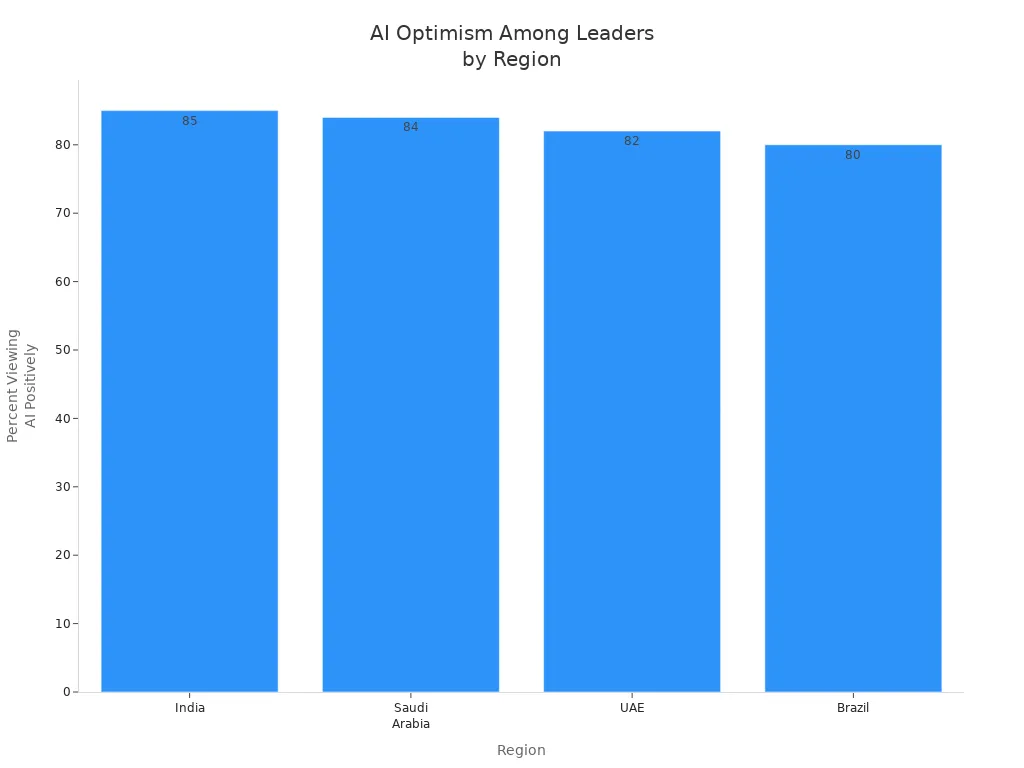
You help your team get ready for the future by using both technology and caring about people. Leadership will keep changing as you help your team face new problems.
Checklist: Leadership in the AI Era
Use this checklist to guide leaders navigating the opportunities and risks of AI.
Leadership in the Age of AI: embrace artificial intelligence and leverage ai capabilities
What does "leadership in the AI era" mean and why is it different from traditional leadership?
Leadership in the AI era refers to leadership at all levels that understands how artificial intelligence and ai technologies reshape the world of work, decision-making, and strategy. Unlike traditional leadership, it requires leaders to embrace ai innovation, integrate ai into workflows, and balance human leadership with effective ai systems so organizations can harness ai’s role without losing human-centric values.
What core leadership skills are essential to navigate the age of AI?
Core skills include a foundational ai knowledge, strong human skills (empathy, judgment, communication), and the ability to translate ai insights into action. Senior leaders and business leaders must cultivate adaptability, ethical reasoning for responsible ai, and strategic thinking to leverage ai, adopt gen ai responsibly, and drive digital transformation while ensuring humans and ai collaborate effectively.
How can business leaders integrate AI into their teams without disrupting workflows?
Start small with focused ai implementation pilots that demonstrate ai can enhance efficiency and provide measurable ai insights. Train teams in basic understanding of ai concepts and use generative ai where it adds clear value, then scale successful ai solutions. Leaders should involve employees early, incorporate ai into their workflows gradually, and ensure change management and human leadership remain at the core of effective ai adoption.
What are the most effective strategies for adopting generative AI (gen AI) safely?
Effective strategies include defining clear use cases, implementing guardrails and ethical ai practices, validating outputs, and setting governance for ai systems. Business leaders must ensure responsible ai by combining technical safeguards with human review, training people on using generative ai, and aligning gen AI deployment with organizational values and compliance requirements like the eu ai act where relevant.
How does ethical AI and the EU AI Act affect leadership decisions?
Ethical ai and regulations such as the EU AI Act require leaders to prioritize transparency, accountability, and risk management when deploying ai solutions. Leaders play a pivotal role in establishing governance, documenting ai implementation, and ensuring ai systems respect privacy and fairness. Navigating leadership in the ai era means building policies that make ai integration responsible and sustainable across the organization.
What role do human skills play when AI can automate many tasks?
Human skills remain central: creativity, empathy, critical thinking, and ethical judgment are hard to automate and form the core of effective leadership. While ai can enhance efficiency and provide decision support, leaders must focus on developing human-centric leadership, mentoring teams, and designing work where humans and ai complement each other to maximize value and employee engagement.
How should organizations measure the impact of AI initiatives?
Measure both quantitative and qualitative outcomes: productivity gains, cost savings, speed of delivery, accuracy improvements from ai systems, and business KPIs, plus employee adoption, satisfaction, and ethical compliance. Use iterative evaluation, leverage ai insights to refine models, and set milestones that reflect the potential of ai to transform processes while maintaining human oversight.
What practical steps can senior leaders take to build AI readiness across the company?
Senior leaders should invest in ai skills training, create interdisciplinary teams combining data scientists and domain experts, pilot ai use cases aligned with strategy, and establish governance for ai implementation. Encourage a culture that embraces experimentation, provides resources for digital transformation, and ensures leaders at all levels have a basic understanding of ai concepts to guide adoption responsibly.
How can leaders foster innovation with AI while managing its risks?
Create a dual approach: foster ai innovation through sandbox environments, partnerships, and incentives for experimentation, while implementing risk management frameworks, ethical reviews, and monitoring controls for ai systems. Leaders should leverage ai to unlock new products or services but also set clear policies to mitigate bias, security, and compliance risks so the organization can thrive in the ai era.
What should individuals aspiring to lead in the digital age focus on to thrive in the AI era?
Aspiring leaders should build a mix of ai capabilities and human-centric leadership: gain practical experience with ai tools, learn about generative artificial intelligence and ai integration, cultivate emotional intelligence and strategic thinking, and stay current with ai’s role in industry trends. By embracing continuous learning and understanding both the potential of ai and the complexities of the ai era, future leaders can harness ai to drive value while preserving human judgment and ethics.
🎧 Listen to this episode
Want a practical explanation of Leadership in the AI Era Beyond Approvals and Control? This episode breaks down the topic in clear language and shows why it matters for Microsoft 365, Azure, Power Platform, security, AI, and modern work.
Listen to this episode if you want to:
- Understand the key concepts behind Leadership in the AI Era Beyond Approvals and Control
- See how it fits into the wider Microsoft technology ecosystem
- Learn where it can create practical value for your organization
You may also enjoy these related M365 FM episodes:
- Leadership and Microsoft 365 Governance Beyond Central Control
- Microsoft Graph Automation Architecture: Beyond Scripts
- Microsoft AI Agent Runtimes: Beyond Enterprise Chatbots
- Enterprise AI Agent Fabric: Architecture Beyond Chatbots
- AI Agent Identity Security: Beyond Service Accounts
Discover more practical Microsoft conversations on M365 FM.
🚀 Want to be part of m365.fm?
Then stop just listening… and start showing up.
👉 Connect with me on LinkedIn and let’s make something happen:
- 🎙️ Be a podcast guest and share your story
- 🎧 Host your own episode (yes, seriously)
- 💡 Pitch topics the community actually wants to hear
- 🌍 Build your personal brand in the Microsoft 365 space
This isn’t just a podcast — it’s a platform for people who take action.
🔥 Most people wait. The best ones don’t.
👉 Connect with me on LinkedIn and send me a message:
"I want in"
Let’s build something awesome 👊
1
00:00:00,000 --> 00:00:05,560
Hello, my name is Mirko Peters and I translate how technology actually shapes business reality.
2
00:00:05,560 --> 00:00:09,280
Right now I see a lot of leaders making the same fundamental mistake with AI because
3
00:00:09,280 --> 00:00:11,440
they think the answer is tighter control.
4
00:00:11,440 --> 00:00:15,120
They are adding more approvals, more review layers and more oversight from the top, but
5
00:00:15,120 --> 00:00:19,240
in most organizations that doesn't actually create safety, it creates drag.
6
00:00:19,240 --> 00:00:23,720
I changes the basic economics of knowledge by shifting how fast information moves, how
7
00:00:23,720 --> 00:00:27,000
quickly options appear and where judgment can actually happen.
8
00:00:27,000 --> 00:00:31,440
If your leadership still runs on old control logic, the leader quickly becomes the bottleneck,
9
00:00:31,440 --> 00:00:35,800
which isn't a style issue or a question of leading softly versus strongly.
10
00:00:35,800 --> 00:00:36,800
It's a system outcome.
11
00:00:36,800 --> 00:00:41,160
This structural friction affects your decision speed, your AI ROI and how resilient your
12
00:00:41,160 --> 00:00:43,600
organization stays when the pressure is on.
13
00:00:43,600 --> 00:00:48,240
If you want more executive level clarity on Microsoft 365, co-pilot, Azure and AI leadership
14
00:00:48,240 --> 00:00:49,800
subscribe to the podcast.
15
00:00:49,800 --> 00:00:53,600
To understand why this is happening, let me take one step back and explain why control
16
00:00:53,600 --> 00:00:55,800
worked for such a long time.
17
00:00:55,800 --> 00:00:57,840
Why control worked before AI?
18
00:00:57,840 --> 00:01:01,960
Control worked because the traditional organization was built entirely around scarcity.
19
00:01:01,960 --> 00:01:05,520
Information was hard to find, context was even rarer and the ability to make sense of
20
00:01:05,520 --> 00:01:07,920
data at scale was the most expensive resource of all.
21
00:01:07,920 --> 00:01:11,640
If you look at how most companies were designed, leadership authority was tied very closely
22
00:01:11,640 --> 00:01:15,280
to access because the people at the top usually had the broadest view.
23
00:01:15,280 --> 00:01:19,560
They saw more of the business, they had access to more reports and they held the cross-functional
24
00:01:19,560 --> 00:01:24,040
context that everyone else lacked because information moved so slowly back then, concentrating
25
00:01:24,040 --> 00:01:26,200
power at the top actually made a lot of sense.
26
00:01:26,200 --> 00:01:30,560
Whether you were running an industrial company or a large services business 20 years ago,
27
00:01:30,560 --> 00:01:33,600
you couldn't just assume everyone had the same visibility.
28
00:01:33,600 --> 00:01:38,120
Reports took time to generate, analysis took weeks to finish and coordination required constant
29
00:01:38,120 --> 00:01:42,680
meetings, so escalation existed because someone had to compress that complexity and absorb
30
00:01:42,680 --> 00:01:43,680
the risk.
31
00:01:43,680 --> 00:01:45,600
This is the part most people miss.
32
00:01:45,600 --> 00:01:47,400
Hierarchy was never just about power.
33
00:01:47,400 --> 00:01:51,280
It was an information processing design where a manager functioned as a rooting layer,
34
00:01:51,280 --> 00:01:55,400
they acted as a review and translation layer, taking signals from one part of the business
35
00:01:55,400 --> 00:01:58,760
and interpreting them so the next layer could actually use the data.
36
00:01:58,760 --> 00:02:02,600
The organization itself had massive limits, human limits, communication limits and tooling
37
00:02:02,600 --> 00:02:05,040
limits, all dictated how we worked.
38
00:02:05,040 --> 00:02:09,800
The old tech stack was slow, data lived in disconnected systems and critical knowledge sat
39
00:02:09,800 --> 00:02:13,000
trapped in people's heads, inboxes and messy spreadsheets.
40
00:02:13,000 --> 00:02:16,440
If you wanted to make a decision with a real impact, you usually had to move through the
41
00:02:16,440 --> 00:02:21,040
specific people who had enough context to reduce the chance of an expensive mistake.
42
00:02:21,040 --> 00:02:24,120
In that environment, control was a valid response to uncertainty.
43
00:02:24,120 --> 00:02:28,560
It reduced variance, kept unmanaged risk low and made the final output much more predictable.
44
00:02:28,560 --> 00:02:32,200
That mattered a lot in worlds where the cost of an error was high and the pace of change
45
00:02:32,200 --> 00:02:34,400
was much lower than what we deal with today.
46
00:02:34,400 --> 00:02:40,400
This is exactly why review culture and longer-provelled chains became the standard way of doing business.
47
00:02:40,400 --> 00:02:44,920
Escalation became normal, not because leaders were bad or because managers loved bureaucracy
48
00:02:44,920 --> 00:02:49,160
for its own sake, but because the system rewarded those specific behaviors.
49
00:02:49,160 --> 00:02:53,480
When information is fragmented and coordination is expensive, gatekeeping can actually improve
50
00:02:53,480 --> 00:02:55,840
performance by trading speed for consistency.
51
00:02:55,840 --> 00:02:58,280
For a long time, consistency was the winning move.
52
00:02:58,280 --> 00:03:00,280
Now map that same logic to middle management.
53
00:03:00,280 --> 00:03:02,920
A lot of that work was never purely about supervision.
54
00:03:02,920 --> 00:03:06,760
It was about compression and taking many moving parts to turn them into something the next
55
00:03:06,760 --> 00:03:08,520
level could act on.
56
00:03:08,520 --> 00:03:13,560
Status reporting, coordination and risk signaling all made the machine run smoothly.
57
00:03:13,560 --> 00:03:15,600
In that world, control wasn't a personality trait.
58
00:03:15,600 --> 00:03:16,880
It was an operating principle.
59
00:03:16,880 --> 00:03:20,720
The leader reviewed work because the system lacked any other way to create confidence and
60
00:03:20,720 --> 00:03:24,440
the manager checked every detail because visibility was always incomplete.
61
00:03:24,440 --> 00:03:28,240
The executive had to insert themselves because the quality of a downstream decision depended
62
00:03:28,240 --> 00:03:31,280
entirely on the concentration of context at the top.
63
00:03:31,280 --> 00:03:35,480
When people talk about traditional leadership as if it was just ego or a bad command and control
64
00:03:35,480 --> 00:03:37,440
habit, I think they are missing the point.
65
00:03:37,440 --> 00:03:43,080
A lot of that behavior was structurally rational because it fit the environment, the constraints,
66
00:03:43,080 --> 00:03:47,600
and the business reality of slower organizations with limited information flow.
67
00:03:47,600 --> 00:03:51,840
If we don't understand why control worked, we will misdiagnose exactly what is failing
68
00:03:51,840 --> 00:03:52,840
right now.
69
00:03:52,840 --> 00:03:56,200
We'll end up blaming leaders for habits that were once highly adaptive or we'll call
70
00:03:56,200 --> 00:03:58,720
it resistance when it's really just architectural lag.
71
00:03:58,720 --> 00:04:01,000
The problem isn't just a mindset issue.
72
00:04:01,000 --> 00:04:04,400
It's that the old design assumptions are finally collapsing.
73
00:04:04,400 --> 00:04:08,520
If leadership authority was built on controlling scarce information, what happens when that
74
00:04:08,520 --> 00:04:10,760
information is no longer scarce?
75
00:04:10,760 --> 00:04:15,200
Controlling changes when summarization, analysis, and patent detection become cheap and accessible
76
00:04:15,200 --> 00:04:16,200
to everyone.
77
00:04:16,200 --> 00:04:19,880
When people much closer to the actual work can access the same insights that used to sit
78
00:04:19,880 --> 00:04:22,200
only at the top, the old model breaks.
79
00:04:22,200 --> 00:04:27,120
Once that break begins, control stops being protective and starts becoming pure latency.
80
00:04:27,120 --> 00:04:31,400
It turns into dependency and structural drag, which is exactly why AI fundamentally changes
81
00:04:31,400 --> 00:04:33,040
the leadership equation.
82
00:04:33,040 --> 00:04:35,520
What AI actually changes in leadership reality?
83
00:04:35,520 --> 00:04:39,080
AI changes leadership because it fundamentally drops the cost of thinking work that is the
84
00:04:39,080 --> 00:04:40,080
real shift.
85
00:04:40,080 --> 00:04:44,960
People still talk about AI as if it's just another productivity tool to help us write faster,
86
00:04:44,960 --> 00:04:47,320
summarize documents or search for data.
87
00:04:47,320 --> 00:04:51,200
While it certainly does those things, looking at it that way is far too small for anyone
88
00:04:51,200 --> 00:04:55,040
in a leadership role because the technology is doing something much more structural.
89
00:04:55,040 --> 00:04:59,560
The more important change is that AI lowers the cost of analysis, interpretation, and generating
90
00:04:59,560 --> 00:05:01,640
options across the entire organization.
91
00:05:01,640 --> 00:05:03,080
It doesn't just automate tasks.
92
00:05:03,080 --> 00:05:04,520
It amplifies decisions.
93
00:05:04,520 --> 00:05:06,040
And why does that matter?
94
00:05:06,040 --> 00:05:09,800
Traditional leadership held a hidden advantage for a long time because the people at the top
95
00:05:09,800 --> 00:05:13,560
usually knew more and could process more than the people below them.
96
00:05:13,560 --> 00:05:17,000
This wasn't always because they were smarter, but because the organizational structure gave
97
00:05:17,000 --> 00:05:21,720
them privileged access to information and synthesis that others simply couldn't reach.
98
00:05:21,720 --> 00:05:25,200
AI starts eroding that structural advantage very quickly.
99
00:05:25,200 --> 00:05:29,600
Now, a team lead can summarize a complex body of information in minutes, and a project manager
100
00:05:29,600 --> 00:05:32,520
can compare strategic options faster than ever before.
101
00:05:32,520 --> 00:05:37,240
A frontline expert can use AI to spot patterns or draft a business case without waiting for
102
00:05:37,240 --> 00:05:41,320
three layers of management to weigh in, which means the old logic where important judgment
103
00:05:41,320 --> 00:05:43,240
sits at the top is breaking down.
104
00:05:43,240 --> 00:05:46,160
It isn't disappearing completely, but it is breaking structurally.
105
00:05:46,160 --> 00:05:50,400
If you look closely, this is exactly where many leadership teams get confused.
106
00:05:50,400 --> 00:05:54,720
They assume AI is a tool the workforce uses while the role of leadership remains basically
107
00:05:54,720 --> 00:05:56,360
the same as it was 10 years ago.
108
00:05:56,360 --> 00:06:00,920
But here is the thing, if AI changes who can generate insight, it also changes where decisions
109
00:06:00,920 --> 00:06:02,880
can happen responsibly.
110
00:06:02,880 --> 00:06:07,040
Leadership is no longer defined by being the main process of information for the group.
111
00:06:07,040 --> 00:06:11,200
That leadership becomes the designer of the conditions under which good decisions happen,
112
00:06:11,200 --> 00:06:12,800
and that is a very different job.
113
00:06:12,800 --> 00:06:14,000
I want to be careful here.
114
00:06:14,000 --> 00:06:16,760
This does not mean hierarchy disappears overnight.
115
00:06:16,760 --> 00:06:20,400
More does it mean every decision should be decentralized to the edges?
116
00:06:20,400 --> 00:06:24,840
Most importantly, it definitely does not mean AI replaces human judgment, as the research
117
00:06:24,840 --> 00:06:27,000
simply doesn't support that conclusion.
118
00:06:27,000 --> 00:06:30,120
What the data does support is something much more precise.
119
00:06:30,120 --> 00:06:34,200
Organizations are adopting AI widely, but most are not getting any real value from it because
120
00:06:34,200 --> 00:06:36,160
their operating model stays exactly the same.
121
00:06:36,160 --> 00:06:41,000
In fact, 95% of organizations report zero ROI from generative AI investments, primarily
122
00:06:41,000 --> 00:06:44,320
because the human operating model never changed to match the technology.
123
00:06:44,320 --> 00:06:45,320
That is the entire point.
124
00:06:45,320 --> 00:06:47,520
The model is not failing because the AI is weak.
125
00:06:47,520 --> 00:06:51,320
The model is failing because the leadership structure is misaligned with what the technology
126
00:06:51,320 --> 00:06:52,560
now makes possible.
127
00:06:52,560 --> 00:06:56,560
If AI gives more people access to context and recommendations, but the organization still
128
00:06:56,560 --> 00:07:01,320
roots every judgment through a narrow approval chain, then nothing fundamentally improves.
129
00:07:01,320 --> 00:07:05,840
You just generate more output that waits longer in a queue, creating more analysis and
130
00:07:05,840 --> 00:07:08,920
more documents that eventually hit the same old decision path.
131
00:07:08,920 --> 00:07:11,880
When the decision path stays old, AI does not create leverage.
132
00:07:11,880 --> 00:07:13,520
It creates a backlog.
133
00:07:13,520 --> 00:07:17,240
This is why so many organizations mistake adoption for true transformation.
134
00:07:17,240 --> 00:07:22,160
They deploy, copilot, roll out assistance and celebrate high usage numbers, but if the
135
00:07:22,160 --> 00:07:25,160
authority model is unchanged, the system stays slow.
136
00:07:25,160 --> 00:07:27,640
The work looks more modern, but the flow does not.
137
00:07:27,640 --> 00:07:31,120
The people inside the system may even become more frustrated because they can see better
138
00:07:31,120 --> 00:07:34,760
options earlier, yet they still lack the authority to act on them.
139
00:07:34,760 --> 00:07:36,800
The friction becomes more visible.
140
00:07:36,800 --> 00:07:42,200
Once AI reduces the cost of generating inside delay is no longer caused by a lack of information.
141
00:07:42,200 --> 00:07:44,720
Delay moves to coordination, trust and unclear authority.
142
00:07:44,720 --> 00:07:48,240
Often caused by leaders who still feel they need to touch every single piece of work.
143
00:07:48,240 --> 00:07:49,680
That is the real leadership shift.
144
00:07:49,680 --> 00:07:51,000
The bottleneck is moving.
145
00:07:51,000 --> 00:07:55,200
It used to sit in information scarcity, but now it sits in decision design.
146
00:07:55,200 --> 00:07:59,320
This is where many strong leaders accidentally become a drag on the organization.
147
00:07:59,320 --> 00:08:03,880
It isn't because they lack vision or reject AI, but because they still operate as if
148
00:08:03,880 --> 00:08:08,480
the safest model is to personally absorb more judgment than one person can scale.
149
00:08:08,480 --> 00:08:12,840
From a system perspective that is not just unrealistic, it is fragile, it turns leadership
150
00:08:12,840 --> 00:08:14,560
into a single point of failure.
151
00:08:14,560 --> 00:08:18,040
Once you see that, the next break in the old model becomes obvious.
152
00:08:18,040 --> 00:08:19,320
Control stops scaling.
153
00:08:19,320 --> 00:08:21,000
Break one, control stops scaling.
154
00:08:21,000 --> 00:08:23,200
Here is the first real break in the old model.
155
00:08:23,200 --> 00:08:26,880
Control stops scaling because every extra approval creates a queue and those queues are
156
00:08:26,880 --> 00:08:27,880
never neutral.
157
00:08:27,880 --> 00:08:29,040
They change behavior.
158
00:08:29,040 --> 00:08:32,720
The moment the team learns that the safest path is to wait for a leadership review.
159
00:08:32,720 --> 00:08:34,640
You don't just slow one decision down.
160
00:08:34,640 --> 00:08:39,400
You train the whole system to escalate every issue, which causes initiative to drop and
161
00:08:39,400 --> 00:08:41,320
local judgment to weaken over time.
162
00:08:41,320 --> 00:08:42,840
That is the part many leaders miss.
163
00:08:42,840 --> 00:08:46,480
They think they are protecting quality, but what they are actually doing is concentrating
164
00:08:46,480 --> 00:08:47,480
motion.
165
00:08:47,480 --> 00:08:50,920
Everything starts flowing toward one person or one meeting and while that can feel responsible
166
00:08:50,920 --> 00:08:54,720
or look like strong leadership, it structurally creates a narrowing funnel.
167
00:08:54,720 --> 00:08:58,280
Once AI enters that funnel, the pressure gets much worse because the organization can
168
00:08:58,280 --> 00:09:01,680
now generate more analysis and more recommendations than ever before.
169
00:09:01,680 --> 00:09:03,960
The volume rises and the possible speed rises.
170
00:09:03,960 --> 00:09:07,920
If the approval structure stays fixed, all that additional capability just arrives faster
171
00:09:07,920 --> 00:09:09,120
at the same bottleneck.
172
00:09:09,120 --> 00:09:10,200
The leader feels overwhelmed.
173
00:09:10,200 --> 00:09:14,640
The team feels blocked and the business feels like AI somehow failed to deliver on its
174
00:09:14,640 --> 00:09:15,640
promise.
175
00:09:15,640 --> 00:09:16,640
It didn't fail.
176
00:09:16,640 --> 00:09:18,720
The system around it did exactly what it was designed to do.
177
00:09:18,720 --> 00:09:21,080
It routed too much judgment into two few places.
178
00:09:21,080 --> 00:09:22,480
Now map that today-to-day work.
179
00:09:22,480 --> 00:09:27,800
A team uses AI to prepare a proposal, comparing scenarios and summarizing customer signals
180
00:09:27,800 --> 00:09:29,680
faster than they ever could manually.
181
00:09:29,680 --> 00:09:33,680
And then they still wait for the same director or the same steering group to review the
182
00:09:33,680 --> 00:09:37,040
wording and validate the logic before anything moves.
183
00:09:37,040 --> 00:09:40,280
The technical output gets faster, but the operational flow does not.
184
00:09:40,280 --> 00:09:43,440
This is where control turns from oversight into latency.
185
00:09:43,440 --> 00:09:46,880
Latency has second order effects that go beyond just slowing down delivery.
186
00:09:46,880 --> 00:09:51,080
It changes what people choose to do because if a team knows every decision will be reopened
187
00:09:51,080 --> 00:09:54,600
at the top, they start optimizing for approval instead of outcomes.
188
00:09:54,600 --> 00:09:57,240
They write safer documents and avoid edge cases.
189
00:09:57,240 --> 00:10:01,720
They stop developing the muscle of making well-bounded decisions themselves, and over time, that
190
00:10:01,720 --> 00:10:03,480
becomes learned helplessness.
191
00:10:03,480 --> 00:10:06,520
This isn't because your people are weak, but because the environment trained them that
192
00:10:06,520 --> 00:10:10,120
independent judgment has low payoff and high risk, that is a system outcome.
193
00:10:10,120 --> 00:10:14,000
This is why highly capable leaders can accidentally create weak organizations.
194
00:10:14,000 --> 00:10:17,760
The stronger and smarter the leader is, the easier it becomes for everyone else to defer
195
00:10:17,760 --> 00:10:18,760
to them.
196
00:10:18,760 --> 00:10:23,280
If that leader has great judgment and high standards, the team often becomes even more
197
00:10:23,280 --> 00:10:27,760
dependent because they assume the best answer will eventually come from above anyway.
198
00:10:27,760 --> 00:10:31,720
The organization starts borrowing competence from one person instead of building it across
199
00:10:31,720 --> 00:10:32,720
the system.
200
00:10:32,720 --> 00:10:34,560
That works for a while, but it does not scale.
201
00:10:34,560 --> 00:10:37,360
It creates concentration risk and a single point of failure.
202
00:10:37,360 --> 00:10:40,920
Under AI conditions, the cost of that failure rises because the rest of the organization now
203
00:10:40,920 --> 00:10:43,800
has more capacity than the control structure can possibly absorb.
204
00:10:43,800 --> 00:10:47,920
This is also why control heavy environments often under use AI without even realizing
205
00:10:47,920 --> 00:10:48,920
it.
206
00:10:48,920 --> 00:10:52,720
Technically, the tools are deployed and available, but behavior stays cautious.
207
00:10:52,720 --> 00:10:56,920
People use AI for drafts and notes rather than judgment or workflow leverage.
208
00:10:56,920 --> 00:11:01,560
Because if authority is still centralized, AI becomes optional advice instead of operational
209
00:11:01,560 --> 00:11:02,560
infrastructure.
210
00:11:02,560 --> 00:11:06,080
It can suggest and it can summarize, but it cannot change outcomes unless the surrounding
211
00:11:06,080 --> 00:11:07,640
decision path changes too.
212
00:11:07,640 --> 00:11:10,200
That is the game changer nobody talks about enough.
213
00:11:10,200 --> 00:11:12,240
AI does not remove bottlenecks by itself.
214
00:11:12,240 --> 00:11:13,240
It exposes them.
215
00:11:13,240 --> 00:11:15,920
Once exposed, those bottlenecks are often leadership shaped.
216
00:11:15,920 --> 00:11:20,000
Again, this is not a character flaw or a reason to blame leaders for being too involved.
217
00:11:20,000 --> 00:11:24,440
In many cases, these are the exact behaviors that help the business succeed under earlier,
218
00:11:24,440 --> 00:11:25,800
slower conditions.
219
00:11:25,800 --> 00:11:30,040
But the same behavior that once protected quality can now suppress scale.
220
00:11:30,040 --> 00:11:33,880
If you remember, nothing else from this section, remember this.
221
00:11:33,880 --> 00:11:37,920
When decision quality depends on one leader touching too many things, the organization is
222
00:11:37,920 --> 00:11:39,040
not well controlled.
223
00:11:39,040 --> 00:11:40,760
It is fragile.
224
00:11:40,760 --> 00:11:45,400
Once AI increases the pace and volume of possible decisions, that fragility becomes impossible
225
00:11:45,400 --> 00:11:46,400
to hide.
226
00:11:46,400 --> 00:11:49,600
To make this concrete, let me show you what that looks like inside a real operating pattern
227
00:11:49,600 --> 00:11:52,400
because this next case is where the bottleneck becomes visible.
228
00:11:52,400 --> 00:11:55,440
And anchor case, the leader who became the bottleneck.
229
00:11:55,440 --> 00:11:58,560
I want to show you what this looks like in a very common pattern.
230
00:11:58,560 --> 00:12:01,640
And I want to be clear that this isn't a story about failure.
231
00:12:01,640 --> 00:12:06,080
This is a story about high level competence that simply stopped scaling because the environment
232
00:12:06,080 --> 00:12:07,080
changed.
233
00:12:07,080 --> 00:12:11,160
I was recently working with an organization running a serious AI initiative where they
234
00:12:11,160 --> 00:12:15,560
had good people, a smart team and strong leadership sponsorship.
235
00:12:15,560 --> 00:12:19,000
One senior leader in particular was deeply committed to getting it right.
236
00:12:19,000 --> 00:12:22,880
And because he was experienced, trusted and held high standards, he was exactly the kind
237
00:12:22,880 --> 00:12:27,160
of person most organizations want near a high risk transformation.
238
00:12:27,160 --> 00:12:30,640
At first, his involvement looked like a massive advantage for the project.
239
00:12:30,640 --> 00:12:35,120
This leader reviewed every output, scrutinized the recommendations and even checked the specific
240
00:12:35,120 --> 00:12:36,480
prompts the team was using.
241
00:12:36,480 --> 00:12:40,600
He checked the reasoning, he checked the framing, and he constantly verified whether the
242
00:12:40,600 --> 00:12:44,440
team was asking the model, the right questions in the first place.
243
00:12:44,440 --> 00:12:48,160
Nothing moved without that final layer of executive validation, which looked responsible
244
00:12:48,160 --> 00:12:49,160
from the outside.
245
00:12:49,160 --> 00:12:52,840
If you watched their meetings, you would probably say this person was doing a great job protecting
246
00:12:52,840 --> 00:12:56,880
quality and making sure weak logic didn't leak into the business while the organization
247
00:12:56,880 --> 00:12:57,880
was still learning.
248
00:12:57,880 --> 00:12:59,640
In the short term, that was actually true.
249
00:12:59,640 --> 00:13:03,300
The outputs were cleaner, the team was more careful and the language became more precise
250
00:13:03,300 --> 00:13:06,680
because everyone knew their work would be examined under a microscope.
251
00:13:06,680 --> 00:13:08,800
But here is what happened underneath the surface.
252
00:13:08,800 --> 00:13:13,120
The team adapted to the structure rather than the strategy and that is the part that actually
253
00:13:13,120 --> 00:13:15,000
matters for long term performance.
254
00:13:15,000 --> 00:13:18,360
They quickly people stopped making decisions and started preparing for reviews which shifted
255
00:13:18,360 --> 00:13:19,640
their focus entirely.
256
00:13:19,640 --> 00:13:24,000
They didn't ask what the best next move was within their boundary, but instead they asked
257
00:13:24,000 --> 00:13:26,280
what would survive the leader's inspection.
258
00:13:26,280 --> 00:13:27,760
That changed the nature of the work.
259
00:13:27,760 --> 00:13:31,440
Instead of using AI to improve the flow of decisions, they used it to improve the quality
260
00:13:31,440 --> 00:13:32,600
of their submissions.
261
00:13:32,600 --> 00:13:36,840
Instead of building local judgment, they built better escalation packets and instead of acting
262
00:13:36,840 --> 00:13:39,960
faster, they documented more carefully and waited.
263
00:13:39,960 --> 00:13:40,960
And why is that?
264
00:13:40,960 --> 00:13:46,800
Because the real system signal wasn't to use AI well and move, but rather to use AI carefully
265
00:13:46,800 --> 00:13:48,560
and then bring it upward.
266
00:13:48,560 --> 00:13:53,280
Initiatives started dropping in small, almost invisible ways as people delayed recommendations
267
00:13:53,280 --> 00:13:55,200
until they were perfectly polished.
268
00:13:55,200 --> 00:13:59,560
They avoided ambiguous but valuable ideas because those created more review friction and
269
00:13:59,560 --> 00:14:02,480
they ended up using AI more conservatively than they could have.
270
00:14:02,480 --> 00:14:06,240
The strongest people on the team became the most cautious because they understood best how
271
00:14:06,240 --> 00:14:09,000
much rework and executive override would create.
272
00:14:09,000 --> 00:14:12,400
This clicked for me when I saw the waiting patterns and you could actually feel the queue in
273
00:14:12,400 --> 00:14:13,400
the room.
274
00:14:13,400 --> 00:14:17,520
There were drafts waiting for comments, options waiting for judgment and meetings waiting
275
00:14:17,520 --> 00:14:18,840
for availability.
276
00:14:18,840 --> 00:14:22,120
Workstreams were waiting for one person to confirm what was already directionally clear
277
00:14:22,120 --> 00:14:23,640
but nobody called it a bottleneck.
278
00:14:23,640 --> 00:14:28,440
They called it alignment, they called it quality control and they called it executive oversight.
279
00:14:28,440 --> 00:14:32,400
But structurally it was a queue and queues tell you where the real operating model lives.
280
00:14:32,400 --> 00:14:34,480
Now map that to the pressure AI creates.
281
00:14:34,480 --> 00:14:38,240
The team could produce more than ever before, including more summaries, more comparisons
282
00:14:38,240 --> 00:14:39,640
and more scenario drafts.
283
00:14:39,640 --> 00:14:44,080
They were generating more structured outputs in less time but the final decision capacity
284
00:14:44,080 --> 00:14:46,040
of the system had not changed at all.
285
00:14:46,040 --> 00:14:51,320
It was still concentrated in one person so the more capable the AI supported team became
286
00:14:51,320 --> 00:14:54,120
the more pressure built around that one review point.
287
00:14:54,120 --> 00:14:55,640
That is the paradox of the situation.
288
00:14:55,640 --> 00:15:00,280
The organization looked more advanced on paper but it behaved less fluidly in reality.
289
00:15:00,280 --> 00:15:03,880
The emotional cost was easy to miss because the leader became overloaded while the team
290
00:15:03,880 --> 00:15:06,920
became hesitant because nobody wanted to say the leader was the issue.
291
00:15:06,920 --> 00:15:11,400
The friction was explained away as complexity or a maturity gap but if you look closely
292
00:15:11,400 --> 00:15:15,600
behavior was being driven by dependency and it created a single point of failure.
293
00:15:15,600 --> 00:15:18,600
The leader did not fail and that is an important distinction to make.
294
00:15:18,600 --> 00:15:22,800
He was doing exactly what the old model rewarded by staying close, protecting quality and absorbing
295
00:15:22,800 --> 00:15:24,200
uncertainty personally.
296
00:15:24,200 --> 00:15:27,760
The system was doing exactly what it was designed to do but it just wasn't designed for
297
00:15:27,760 --> 00:15:29,600
what the organization now needs.
298
00:15:29,600 --> 00:15:33,400
Under AI conditions, throughput and learning matter just as much as accuracy.
299
00:15:33,400 --> 00:15:37,600
If one person validates too much, the organization does not build decision strength.
300
00:15:37,600 --> 00:15:39,640
It simply rents judgment from the top.
301
00:15:39,640 --> 00:15:43,480
That rental model gets expensive fast because you lose speed, you lose confidence and you
302
00:15:43,480 --> 00:15:44,640
lose local ownership.
303
00:15:44,640 --> 00:15:48,800
Eventually you lose a big part of the value AI could have created in the first place.
304
00:15:48,800 --> 00:15:53,920
When people ask why AI adoption feels shallow in otherwise capable organizations, this is
305
00:15:53,920 --> 00:15:55,040
often the answer.
306
00:15:55,040 --> 00:15:58,760
The tools arrived but the leadership model didn't change and once you see that the alternative
307
00:15:58,760 --> 00:16:00,080
becomes much clearer.
308
00:16:00,080 --> 00:16:02,120
The opposite of this isn't leader absence.
309
00:16:02,120 --> 00:16:03,680
It's architectural leadership.
310
00:16:03,680 --> 00:16:06,000
It's a leader who builds boundaries instead of cues.
311
00:16:06,000 --> 00:16:08,240
It there is stasis contrast case.
312
00:16:08,240 --> 00:16:09,720
The system design a leader.
313
00:16:09,720 --> 00:16:13,000
Now compare that with a very different kind of leader who faced the same pressure and
314
00:16:13,000 --> 00:16:15,040
the same AI opportunity.
315
00:16:15,040 --> 00:16:19,120
The need for quality was identical but the design of the leadership approach was entirely
316
00:16:19,120 --> 00:16:20,120
different.
317
00:16:20,120 --> 00:16:24,200
Instead of touching every important action, this leader defined the system around the
318
00:16:24,200 --> 00:16:25,200
action.
319
00:16:25,200 --> 00:16:28,880
That sounds like a subtle shift but it isn't and it changes everything about how the team
320
00:16:28,880 --> 00:16:29,880
functions.
321
00:16:29,880 --> 00:16:34,200
In another environment where the leader made an early decision that they would not become
322
00:16:34,200 --> 00:16:37,160
the approval layer for every AI supported workflow.
323
00:16:37,160 --> 00:16:40,520
This wasn't because they cared less about the outcome but because they understood that
324
00:16:40,520 --> 00:16:44,840
if the organization needed their personal intervention every time, the initiative would
325
00:16:44,840 --> 00:16:45,840
never scale.
326
00:16:45,840 --> 00:16:47,200
So they started somewhere else.
327
00:16:47,200 --> 00:16:50,200
Instead of adding more review, they focused on clearer boundaries.
328
00:16:50,200 --> 00:16:53,720
They defined what kinds of decisions could be made locally, what kinds needed consultation
329
00:16:53,720 --> 00:16:55,880
and what kinds required escalation.
330
00:16:55,880 --> 00:16:59,760
Just as important they defined where AI could assist without pretending the AI was the
331
00:16:59,760 --> 00:17:01,120
owner of the task.
332
00:17:01,120 --> 00:17:05,160
That distinction mattered a lot because the team no longer had to guess where the line was.
333
00:17:05,160 --> 00:17:08,920
They knew which decisions were theirs, they knew which data they were expected to use and
334
00:17:08,920 --> 00:17:11,240
they knew which risks triggered a human checkpoint.
335
00:17:11,240 --> 00:17:14,760
They knew when the leader wanted to see the issue, not because everything was routed upward
336
00:17:14,760 --> 00:17:17,920
by habit but because specific thresholds had been crossed.
337
00:17:17,920 --> 00:17:21,400
That creates a very different operating environment where people stop preparing everything
338
00:17:21,400 --> 00:17:25,600
for executive inspection and start making decisions inside a designed frame.
339
00:17:25,600 --> 00:17:27,000
And why is that so powerful?
340
00:17:27,000 --> 00:17:31,200
It's powerful because confidence comes from clarity rather than managerial presence.
341
00:17:31,200 --> 00:17:34,480
High performing organizations are not winning because they have more AI capability in the
342
00:17:34,480 --> 00:17:39,360
abstract but because they redesign workflows with explicit validation and ownership logic.
343
00:17:39,360 --> 00:17:42,040
In other words, they build trust into the structure.
344
00:17:42,040 --> 00:17:46,560
In the second case, the leader spent less time reviewing outputs line by line and more time
345
00:17:46,560 --> 00:17:48,000
doing architectural work.
346
00:17:48,000 --> 00:17:52,240
They focused on clarifying intent, naming constraints and making trade-offs visible.
347
00:17:52,240 --> 00:17:56,120
They spent their energy checking whether the people expected to decide actually had the
348
00:17:56,120 --> 00:17:58,320
data, access and authority to do it.
349
00:17:58,320 --> 00:18:02,520
That last part is where many organizations still fail because they say a team owns an outcome
350
00:18:02,520 --> 00:18:07,000
but the team doesn't have the permissions or the process visibility to actually execute.
351
00:18:07,000 --> 00:18:10,680
From a system perspective, that's not empowerment, it's structural misalignment.
352
00:18:10,680 --> 00:18:14,560
This leader understood that so instead of telling people to be more proactive, they removed
353
00:18:14,560 --> 00:18:15,560
the contradictions.
354
00:18:15,560 --> 00:18:19,600
If a manager was accountable for a decision, they got the inputs needed to make it.
355
00:18:19,600 --> 00:18:24,800
If AI was expected to support a workflow, the team got clarity on what good looked like.
356
00:18:24,800 --> 00:18:29,400
If escalation was necessary, it had a defined purpose rather than a vague upward movement
357
00:18:29,400 --> 00:18:30,520
just to be safe.
358
00:18:30,520 --> 00:18:34,720
The result was visible very quickly as decisions speed improved because people stopped waiting
359
00:18:34,720 --> 00:18:37,720
for permission in situations where permission was no longer required.
360
00:18:37,720 --> 00:18:42,240
AI usage also changed because the tools were no longer treated as optional helpers used
361
00:18:42,240 --> 00:18:45,160
for drafting before the real decision happened somewhere else.
362
00:18:45,160 --> 00:18:48,600
They became part of the workflow and a source of structured input.
363
00:18:48,600 --> 00:18:53,000
They were used to test options and reduce friction in repeatable judgment but always inside
364
00:18:53,000 --> 00:18:54,000
clear ownership.
365
00:18:54,000 --> 00:18:55,400
That is the key to the whole thing.
366
00:18:55,400 --> 00:18:59,880
AI got stronger because accountability stayed visible and the leader's role became more
367
00:18:59,880 --> 00:19:00,880
valuable, not less.
368
00:19:00,880 --> 00:19:03,120
They were less of a controller and more of a designer.
369
00:19:03,120 --> 00:19:07,000
They stopped being a central processor and became a builder of the environment in which
370
00:19:07,000 --> 00:19:08,520
good processing happens.
371
00:19:08,520 --> 00:19:11,000
This is where the leadership shift becomes real for me.
372
00:19:11,000 --> 00:19:14,880
The leader is not competing with AI but is designing the conditions under which humans
373
00:19:14,880 --> 00:19:17,120
and AI can make better decisions together.
374
00:19:17,120 --> 00:19:21,240
That means defining boundaries before speed creates chaos and aligning ownership before
375
00:19:21,240 --> 00:19:22,640
inside creates a backlog.
376
00:19:22,640 --> 00:19:26,200
It means making sure responsibility and access point in the same direction.
377
00:19:26,200 --> 00:19:30,680
When that happens, local judgment gets stronger, dependency goes down and throughput goes up.
378
00:19:30,680 --> 00:19:35,320
The system becomes calmer, which is important because good design does not just make organizations
379
00:19:35,320 --> 00:19:36,320
faster.
380
00:19:36,320 --> 00:19:38,480
It makes them less emotionally expensive to operate.
381
00:19:38,480 --> 00:19:41,680
People know where they stand, they know when to act and they know when to ask.
382
00:19:41,680 --> 00:19:44,840
They do not have to perform uncertainty upward just to stay safe.
383
00:19:44,840 --> 00:19:46,640
The real contrast here is simple.
384
00:19:46,640 --> 00:19:51,160
One leader protects quality by becoming the path, while the other protects quality by designing
385
00:19:51,160 --> 00:19:52,240
the path.
386
00:19:52,240 --> 00:19:55,840
One centralizes judgment while the other distributes it inside guardrails.
387
00:19:55,840 --> 00:19:59,040
One creates dependency and the other creates structural resilience.
388
00:19:59,040 --> 00:20:01,760
Once you see that difference, the next shift becomes obvious.
389
00:20:01,760 --> 00:20:04,840
If control no longer scales, leadership has to move into context.
390
00:20:04,840 --> 00:20:07,000
Shift one, from control to context.
391
00:20:07,000 --> 00:20:10,800
If leadership is no longer about touching every single decision, we have to ask what actually
392
00:20:10,800 --> 00:20:12,240
replaces that function.
393
00:20:12,240 --> 00:20:13,240
The answer is context.
394
00:20:13,240 --> 00:20:18,480
I don't mean loose inspiration or those broad vision statements that live on a wall and
395
00:20:18,480 --> 00:20:19,480
die in practice.
396
00:20:19,480 --> 00:20:23,520
And I'm certainly not talking about a slide with five priorities that nobody knows how
397
00:20:23,520 --> 00:20:26,040
to apply on a Tuesday afternoon when things get messy.
398
00:20:26,040 --> 00:20:30,320
I mean usable context, which is the kind of structural clarity that helps your people
399
00:20:30,320 --> 00:20:33,600
make better choices without waiting for you to walk into the room.
400
00:20:33,600 --> 00:20:38,440
This specific executive function starts to matter most in the AI era because once information,
401
00:20:38,440 --> 00:20:41,560
analysis and recommendations become easy to generate.
402
00:20:41,560 --> 00:20:43,960
Raw insight is no longer the scarce resource.
403
00:20:43,960 --> 00:20:45,840
The scarce resource is shared orientation.
404
00:20:45,840 --> 00:20:48,600
We have to be able to answer the fundamental questions of the system.
405
00:20:48,600 --> 00:20:50,320
What are we optimizing for right now?
406
00:20:50,320 --> 00:20:52,400
What trade-offs are we actually willing to accept?
407
00:20:52,400 --> 00:20:55,400
What level of risk are we comfortable carrying?
408
00:20:55,400 --> 00:20:57,760
When priorities collide, what matters more?
409
00:20:57,760 --> 00:21:00,480
Speed, margin, customer trust, compliance or learning?
410
00:21:00,480 --> 00:21:03,840
If you don't make those boundaries clear, your people and your AI tools will still produce
411
00:21:03,840 --> 00:21:05,960
output and they'll produce a lot of it.
412
00:21:05,960 --> 00:21:09,120
But the quality will be inconsistent because the direction layer is weak, which is why
413
00:21:09,120 --> 00:21:11,240
context scales so much better than commands.
414
00:21:11,240 --> 00:21:16,080
A command is a single point of success that solves one moment but context improves a thousand
415
00:21:16,080 --> 00:21:17,080
moments.
416
00:21:17,080 --> 00:21:20,960
If you tell someone what to do once, while context helps them decide what to do repeatedly
417
00:21:20,960 --> 00:21:23,520
across situations you haven't personally reviewed yet.
418
00:21:23,520 --> 00:21:27,840
This is vital because AI expands the number of moments where a decision could happen and
419
00:21:27,840 --> 00:21:32,040
it gives your teams more possible actions and more ways to interpret the data.
420
00:21:32,040 --> 00:21:35,960
If leadership responds by issuing more detailed instructions, the system quickly becomes
421
00:21:35,960 --> 00:21:40,960
unmanageable since you simply cannot centrally script every judgment call in a fast-moving,
422
00:21:40,960 --> 00:21:42,280
human AI environment.
423
00:21:42,280 --> 00:21:43,840
But you can define the frame.
424
00:21:43,840 --> 00:21:48,280
You can set the intent, state the constraints and name the non-negotiables.
425
00:21:48,280 --> 00:21:52,720
When you explain the trade-offs that matter, you give local decisions coherence without
426
00:21:52,720 --> 00:21:54,240
forcing central control.
427
00:21:54,240 --> 00:21:58,760
Now people often mistake context for soft language but from a business perspective context is
428
00:21:58,760 --> 00:22:00,080
concrete infrastructure.
429
00:22:00,080 --> 00:22:04,400
It includes your risk tolerance in a specific workflow and what a successful customer outcome
430
00:22:04,400 --> 00:22:05,400
looks like.
431
00:22:05,400 --> 00:22:09,400
It defines which compliance boundaries must never be crossed and what level of confidence
432
00:22:09,400 --> 00:22:10,600
is enough to move forward.
433
00:22:10,600 --> 00:22:14,680
You have to decide where human review is required and what should be optimized locally versus
434
00:22:14,680 --> 00:22:16,520
what must stay globally aligned.
435
00:22:16,520 --> 00:22:18,920
That isn't vague, that is decision infrastructure.
436
00:22:18,920 --> 00:22:21,280
This is where many leaders still create hidden confusion.
437
00:22:21,280 --> 00:22:25,320
They believe they've provided context because they stated a goal like growing faster or using
438
00:22:25,320 --> 00:22:30,040
AI responsibly, but goals without trade-off logic don't help people decide anything under
439
00:22:30,040 --> 00:22:31,040
pressure.
440
00:22:31,040 --> 00:22:35,240
If your team hears two priorities at once and you haven't told them which one wins when
441
00:22:35,240 --> 00:22:37,800
they conflict, you haven't given them context.
442
00:22:37,800 --> 00:22:41,360
You've just given them ambition and ambition does not scale decisions.
443
00:22:41,360 --> 00:22:46,040
I saw this clearly years ago in technology programs where leaders kept asking for ownership
444
00:22:46,040 --> 00:22:48,280
but that ownership was sitting in a vacuum.
445
00:22:48,280 --> 00:22:52,260
The teams knew the target but they didn't know the boundary conditions so every difficult
446
00:22:52,260 --> 00:22:54,080
moment still became an escalation.
447
00:22:54,080 --> 00:22:57,440
Now map that same logic to Microsoft 365 and Copilot.
448
00:22:57,440 --> 00:23:01,920
A lot of organizations think Copilot value starts with the licenses but it actually starts
449
00:23:01,920 --> 00:23:03,880
with the context sitting behind the workflow.
450
00:23:03,880 --> 00:23:08,180
If your permissions are messy and your information is fragmented, AI will still generate output
451
00:23:08,180 --> 00:23:11,260
but that output enters an environment with weak orientation.
452
00:23:11,260 --> 00:23:15,080
People hesitate, validation cycles expand and trust eventually drops.
453
00:23:15,080 --> 00:23:18,920
The issue here is not just prompt quality, it is context quality, can the system tell your
454
00:23:18,920 --> 00:23:22,200
people and your tools what good actually means in this house?
455
00:23:22,200 --> 00:23:24,040
Can it make the intended path visible?
456
00:23:24,040 --> 00:23:27,760
Can it show where confidence is high and where a human needs to step in?
457
00:23:27,760 --> 00:23:31,680
That is the work of leadership now, it's not about owning every answer but owning the
458
00:23:31,680 --> 00:23:34,200
frame where better answers can emerge.
459
00:23:34,200 --> 00:23:37,680
When you do that, the system behavior changes, teams stop asking for permission because
460
00:23:37,680 --> 00:23:39,240
they can finally see the logic.
461
00:23:39,240 --> 00:23:43,760
They act inside a known structure and use AI as part of their judgment rather than a risky
462
00:23:43,760 --> 00:23:44,760
experiment.
463
00:23:44,760 --> 00:23:47,400
That is the shift from interruption to orientation.
464
00:23:47,400 --> 00:23:52,480
Once that context is clear, we have to look at how decisions actually move through the system.
465
00:23:52,480 --> 00:23:53,320
Shift 2.
466
00:23:53,320 --> 00:23:55,440
From decisions to decision systems.
467
00:23:55,440 --> 00:23:59,600
Once the context is set, your next job is to design how decisions move.
468
00:23:59,600 --> 00:24:03,280
First organization still think about this far too personally, they ask who the decision
469
00:24:03,280 --> 00:24:08,440
maker is and while that matters, it's too small of a question for an AI-enabled company.
470
00:24:08,440 --> 00:24:10,560
The better question is what is the decision system?
471
00:24:10,560 --> 00:24:15,240
If you only name a person but fail to define the input thresholds and escalation paths,
472
00:24:15,240 --> 00:24:16,640
you haven't built a scalable model.
473
00:24:16,640 --> 00:24:19,480
You've just named a person and a person is not a functioning system.
474
00:24:19,480 --> 00:24:23,400
This distinction is critical because AI increases decision volume by surfacing more anomalies
475
00:24:23,400 --> 00:24:25,680
and recommendations earlier than ever before.
476
00:24:25,680 --> 00:24:30,320
If leadership still acts like good execution means sending every one of those moments upward,
477
00:24:30,320 --> 00:24:32,800
the organization stays stuck in heroic mode.
478
00:24:32,800 --> 00:24:36,920
The leader becomes the interpreter and the fallback for everything, which might feel strong,
479
00:24:36,920 --> 00:24:38,960
but structurally, it's a single point of failure.
480
00:24:38,960 --> 00:24:42,560
It depends on exceptional humans instead of repeatable pathways.
481
00:24:42,560 --> 00:24:45,880
A real decision system has to answer a few practical questions.
482
00:24:45,880 --> 00:24:47,800
Who decides and what inputs do they use?
483
00:24:47,800 --> 00:24:51,720
At what confidence level do we move and what specific constraints are in place?
484
00:24:51,720 --> 00:24:55,640
What triggers an escalation and who validates the result after the fact?
485
00:24:55,640 --> 00:25:00,120
Most importantly, who corrects the system when the patterns start producing bad outcomes?
486
00:25:00,120 --> 00:25:01,520
That is the architecture.
487
00:25:01,520 --> 00:25:04,120
Without it, people confuse intelligence with readiness.
488
00:25:04,120 --> 00:25:08,360
They think because a dashboard looks good or a copilot summary sounds smart, the organization
489
00:25:08,360 --> 00:25:09,360
is ready to move.
490
00:25:09,360 --> 00:25:12,400
But information availability is not the same thing as decision readiness.
491
00:25:12,400 --> 00:25:15,760
A team can see everything and still not know who has the right to act.
492
00:25:15,760 --> 00:25:20,240
A manager can receive a strong recommendation and still wait because the consequences of acting
493
00:25:20,240 --> 00:25:21,400
are unclear.
494
00:25:21,400 --> 00:25:25,520
You can have a workflow that is rich in signals but completely poor in movement.
495
00:25:25,520 --> 00:25:28,320
Inquality doesn't scale by itself but decision design does.
496
00:25:28,320 --> 00:25:32,000
This is where leadership moves away from the heroic image we've been taught to reward.
497
00:25:32,000 --> 00:25:35,880
The heroic leader makes the hard call in the room, but the architectural leader makes it
498
00:25:35,880 --> 00:25:39,480
clear how hard calls are made by the right people without needing intervention.
499
00:25:39,480 --> 00:25:42,440
It's less dramatic but it's far more valuable for the business.
500
00:25:42,440 --> 00:25:46,400
You might wonder if this reduces your authority but it actually just changes the form of that
501
00:25:46,400 --> 00:25:47,400
authority.
502
00:25:47,400 --> 00:25:51,080
Your power stops living in personal intervention and starts living in the rules and pathways
503
00:25:51,080 --> 00:25:52,320
that shape execution.
504
00:25:52,320 --> 00:25:55,080
That is more durable and much more resilient under pressure.
505
00:25:55,080 --> 00:25:59,080
If every meaningful judgment has to root through one executive you don't have a decision
506
00:25:59,080 --> 00:26:03,080
system, you have a dependency structure and dependency structures always break when speed
507
00:26:03,080 --> 00:26:04,080
increases.
508
00:26:04,080 --> 00:26:08,640
This is why I believe many organizations over invest in reporting while they under invest
509
00:26:08,640 --> 00:26:10,080
in decision architecture.
510
00:26:10,080 --> 00:26:14,280
They produce beautiful weekly scorecards and AI generated summaries but they leave the core
511
00:26:14,280 --> 00:26:15,600
questions unresolved.
512
00:26:15,600 --> 00:26:18,640
They don't know who owns the call or what data is enough to move.
513
00:26:18,640 --> 00:26:21,800
They haven't decided what can be automated and what must stay human.
514
00:26:21,800 --> 00:26:26,200
If those things are fuzzy all the intelligence in the world just creates more weighting and
515
00:26:26,200 --> 00:26:30,160
weighting has a massive cost not just in speed but in confidence and trust people stop
516
00:26:30,160 --> 00:26:33,920
believing the system will support them so they either escalate everything or start
517
00:26:33,920 --> 00:26:35,520
routing around the official process.
518
00:26:35,520 --> 00:26:37,440
That's exactly how shadow systems are born.
519
00:26:37,440 --> 00:26:40,880
The spreadsheets and private chats aren't there because people are rebellious.
520
00:26:40,880 --> 00:26:45,520
They exist because the formal decision path is too vague or too slow to carry the load.
521
00:26:45,520 --> 00:26:49,200
If you want a practical way to think about this stop asking if your leaders are making
522
00:26:49,200 --> 00:26:50,520
good decisions.
523
00:26:50,520 --> 00:26:53,040
You can't ask if your organization has good decision pathways.
524
00:26:53,040 --> 00:26:55,040
One of those scales and the other doesn't.
525
00:26:55,040 --> 00:26:58,720
Once you look at leadership through this lens you see that visibility alone doesn't solve
526
00:26:58,720 --> 00:27:01,880
friction which brings us to the next failure point.
527
00:27:01,880 --> 00:27:02,880
Dashboards.
528
00:27:02,880 --> 00:27:05,120
Why dashboards don't fix decision friction?
529
00:27:05,120 --> 00:27:09,240
I've noticed a recurring pattern where organizations confuse the act of seeing with the act
530
00:27:09,240 --> 00:27:10,240
of moving.
531
00:27:10,240 --> 00:27:13,800
They spend months building complex dashboards and unifying their reporting and they hope
532
00:27:13,800 --> 00:27:17,960
that surfacing more metrics from more data sources will finally solve their problems.
533
00:27:17,960 --> 00:27:22,160
One of these same leaders wonder why the organization still feels slow even though everyone now has
534
00:27:22,160 --> 00:27:23,800
a front row seat to the data.
535
00:27:23,800 --> 00:27:27,440
But here's the thing a dashboard increases visibility but it does not automatically increase
536
00:27:27,440 --> 00:27:28,720
decision readiness.
537
00:27:28,720 --> 00:27:29,880
And those are not the same thing.
538
00:27:29,880 --> 00:27:34,320
You can make the whole organization more informed and still leave it structurally hesitant
539
00:27:34,320 --> 00:27:38,400
which is exactly what happens when teams see a problem but lack the clear authority to
540
00:27:38,400 --> 00:27:39,400
fix it.
541
00:27:39,400 --> 00:27:40,400
That is the failure point.
542
00:27:40,400 --> 00:27:44,400
Leaders often assume friction exists because information is missing so they solve for reporting
543
00:27:44,400 --> 00:27:46,920
by adding more real time AI dashboards.
544
00:27:46,920 --> 00:27:51,480
If the real issue is that nobody knows who can act or what kind of action is allowed without
545
00:27:51,480 --> 00:27:54,840
escalation then better visibility just makes the stall more obvious.
546
00:27:54,840 --> 00:27:56,120
It doesn't remove the friction.
547
00:27:56,120 --> 00:27:58,480
It actually makes the frustration worse.
548
00:27:58,480 --> 00:28:01,880
Because now everyone can see the same issue and still nobody moves it creates a very
549
00:28:01,880 --> 00:28:04,240
specific kind of organizational fatigue.
550
00:28:04,240 --> 00:28:07,920
People stop trusting the operating model because they realize that if the signal is visible
551
00:28:07,920 --> 00:28:10,600
and nothing happens the blockage is somewhere above them.
552
00:28:10,600 --> 00:28:15,280
This is why I'm skeptical when leaders say they need more transparency as the answer to
553
00:28:15,280 --> 00:28:17,840
AI era coordination problems.
554
00:28:17,840 --> 00:28:21,360
Transparency matters of course but transparency without decision design becomes observational
555
00:28:21,360 --> 00:28:25,480
theatre where the organization gets better at watching itself instead of getting better
556
00:28:25,480 --> 00:28:26,480
at acting.
557
00:28:26,480 --> 00:28:28,120
Now map that to enterprise reality.
558
00:28:28,120 --> 00:28:32,240
A team has a dashboard showing adoption trends and workflow delays while an AI assistant
559
00:28:32,240 --> 00:28:35,000
summarizes the patterns and suggests likely causes.
560
00:28:35,000 --> 00:28:39,000
That sounds mature but if no one owns the call or the response path is ambiguous the inside
561
00:28:39,000 --> 00:28:42,680
just sits there visible and accurate but completely unused.
562
00:28:42,680 --> 00:28:46,720
It's often become a substitute for leadership design because they give the feeling of control
563
00:28:46,720 --> 00:28:48,240
through oversight.
564
00:28:48,240 --> 00:28:51,760
Leaders can review the numbers and ask questions and meetings to feel informed but the people
565
00:28:51,760 --> 00:28:55,600
inside the system still don't know whether they are allowed to act on what they see.
566
00:28:55,600 --> 00:28:59,640
So the organization keeps escalating interpretation instead of distributing action.
567
00:28:59,640 --> 00:29:03,200
This is where AI can accidentally amplify the problem because it makes it easier to summarize
568
00:29:03,200 --> 00:29:05,520
what's happening and produce recommendations.
569
00:29:05,520 --> 00:29:10,160
The reporting layer becomes even stronger but if ownership is still weak AI just helps
570
00:29:10,160 --> 00:29:13,200
you generate higher quality unresolved insight.
571
00:29:13,200 --> 00:29:16,760
That's not transformation it's just faster observation and observation is not the same
572
00:29:16,760 --> 00:29:18,360
thing as execution.
573
00:29:18,360 --> 00:29:22,400
Visibility is upstream of action but it does not guarantee action because decision systems
574
00:29:22,400 --> 00:29:25,280
need role clarity and intervention rights to function.
575
00:29:25,280 --> 00:29:28,920
Without that teams may look data rich while behaving decision poor.
576
00:29:28,920 --> 00:29:33,120
This clicked for me in environments where reporting maturity was actually very high and the
577
00:29:33,120 --> 00:29:35,160
dashboards were clean.
578
00:29:35,160 --> 00:29:38,640
Everyone in the room could see the issue but the conversation drifted immediately toward
579
00:29:38,640 --> 00:29:43,160
who needed to align first and whether acting now would create political risk.
580
00:29:43,160 --> 00:29:46,640
The issue was never visibility it was ownership under uncertainty.
581
00:29:46,640 --> 00:29:49,080
So if you want a simple test here it is.
582
00:29:49,080 --> 00:29:52,920
When a dashboard shows a clear problem can the people closest to that problem act within
583
00:29:52,920 --> 00:29:58,080
a defined boundary without waiting for hierarchy to metabolize the information first.
584
00:29:58,080 --> 00:30:01,680
If the answer is no then the dashboard is not fixing friction it is documenting friction
585
00:30:01,680 --> 00:30:04,960
and once you see that clearly the next question becomes unavoidable.
586
00:30:04,960 --> 00:30:09,280
If authority can no longer sit only in hierarchy then what actually holds the organization together?
587
00:30:09,280 --> 00:30:12,040
That's where alignment starts to matter more than title.
588
00:30:12,040 --> 00:30:14,560
Shift 3 from authority to alignment.
589
00:30:14,560 --> 00:30:18,720
So if dashboards don't solve decision friction and authority alone no longer keeps execution
590
00:30:18,720 --> 00:30:22,680
coherent what does the answer is alignment and I mean alignment in the hard sense not
591
00:30:22,680 --> 00:30:26,040
just nodding in the steering committee or repeating the same strategy language.
592
00:30:26,040 --> 00:30:30,840
I'm talking about structural alignment where data, access, incentives and accountability
593
00:30:30,840 --> 00:30:32,960
actually point in the same direction.
594
00:30:32,960 --> 00:30:37,840
When older organizations hierarchy created alignment by force because the title carried
595
00:30:37,840 --> 00:30:40,720
the signal and the chain of command held the pieces together.
596
00:30:40,720 --> 00:30:44,800
It wasn't elegant but it worked because information moved slowly and authority was concentrated
597
00:30:44,800 --> 00:30:49,120
but once AI increases the speed and spread of inside title stops being enough you can have
598
00:30:49,120 --> 00:30:52,960
a very senior sponsor and still have a badly aligned system because execution does not
599
00:30:52,960 --> 00:30:54,840
happen where the org chart looks clean.
600
00:30:54,840 --> 00:30:58,080
It happens where responsibility information and action rights meet.
601
00:30:58,080 --> 00:31:00,960
If those three things are separated the system stalls.
602
00:31:00,960 --> 00:31:05,120
If a team is responsible for improving customer response quality but the relevant data and
603
00:31:05,120 --> 00:31:09,160
workflow permission sit somewhere else then that team does not really own the outcome.
604
00:31:09,160 --> 00:31:13,680
They carry the accountability but not the power and from a system perspective that is fragile.
605
00:31:13,680 --> 00:31:14,960
It's a single point of failure.
606
00:31:14,960 --> 00:31:18,600
On the other hand if access is distributed widely but nobody is clearly accountable for
607
00:31:18,600 --> 00:31:21,840
the effect of the decisions made the opposite problem appears.
608
00:31:21,840 --> 00:31:26,000
The system drifts because people can act but nobody owns the trade-offs or the consequence
609
00:31:26,000 --> 00:31:29,680
when local optimization creates enterprise damage.
610
00:31:29,680 --> 00:31:34,960
That is the work of matching responsibility, authority and access so they line up perfectly.
611
00:31:34,960 --> 00:31:38,760
This is where leadership becomes much more architectural than positional because the job
612
00:31:38,760 --> 00:31:41,160
is no longer mainly to say yes or no from above.
613
00:31:41,160 --> 00:31:44,680
The job is to make sure the people expected to move the business can actually move it without
614
00:31:44,680 --> 00:31:45,680
breaking the business.
615
00:31:45,680 --> 00:31:47,880
That means asking a very different set of questions.
616
00:31:47,880 --> 00:31:49,320
Who is accountable for this outcome?
617
00:31:49,320 --> 00:31:51,120
Do they have the data and permission they need?
618
00:31:51,120 --> 00:31:56,000
Do they know when they can act alone and when they must escalate if they make a bad call?
619
00:31:56,000 --> 00:31:57,760
Is there a visible correction path?
620
00:31:57,760 --> 00:32:01,640
That is alignment and the reason it matters more than authority now is simple.
621
00:32:01,640 --> 00:32:06,520
AI expands capability faster than most organizations expand coherence which creates a dangerous gap.
622
00:32:06,520 --> 00:32:10,880
The tools and recommendations get stronger but if the surrounding structure is misaligned
623
00:32:10,880 --> 00:32:13,080
those gains don't turn into better decisions.
624
00:32:13,080 --> 00:32:16,960
They turn into more friction and more arguments about who is allowed to do what.
625
00:32:16,960 --> 00:32:21,320
This is also why so many AI initiatives feel politically messy not because the technology
626
00:32:21,320 --> 00:32:26,240
is inherently chaotic but because AI exposes every place where power and responsibility
627
00:32:26,240 --> 00:32:28,000
were already misaligned.
628
00:32:28,000 --> 00:32:31,680
It shows you where people are blamed without being equipped and where approval still sit
629
00:32:31,680 --> 00:32:33,520
with roles that no longer add value.
630
00:32:33,520 --> 00:32:38,360
It shows you where the official owner is not the operational owner and once that becomes
631
00:32:38,360 --> 00:32:40,640
visible leadership has a choice.
632
00:32:40,640 --> 00:32:43,880
Defend the old shape or redesign the alignment layer.
633
00:32:43,880 --> 00:32:48,240
That might mean moving decision rights closer to the work or changing incentives so teams
634
00:32:48,240 --> 00:32:51,840
stop escalating for safety and start deciding within their guardrails.
635
00:32:51,840 --> 00:32:56,160
It might mean clarifying who can stop action and who owns remediation after the fact.
636
00:32:56,160 --> 00:32:57,560
But the principle stays the same.
637
00:32:57,560 --> 00:33:01,440
It's not title that creates coordinated execution, it's aligned design.
638
00:33:01,440 --> 00:33:05,520
And once authority shifts into alignment oversight has to evolve too because if leaders
639
00:33:05,520 --> 00:33:09,560
keep measuring presence and approvals they'll miss the actual health of the system.
640
00:33:09,560 --> 00:33:13,760
If you audited your structural resilience the same way you audit your systems what would
641
00:33:13,760 --> 00:33:14,760
you find?
642
00:33:14,760 --> 00:33:20,200
And more importantly is that system designed to sustain you or slowly drain you over time.
643
00:33:20,200 --> 00:33:21,200
Shift 4.
644
00:33:21,200 --> 00:33:23,080
From oversight to system feedback.
645
00:33:23,080 --> 00:33:27,240
Once authority moves into alignment the way we handle oversight has to change along with
646
00:33:27,240 --> 00:33:31,120
it because the old model was built entirely for visible labor.
647
00:33:31,120 --> 00:33:35,480
In that world you watched activity, tracked manual approvals and checked whether people
648
00:33:35,480 --> 00:33:38,600
stayed responsive inside the chain of command.
649
00:33:38,600 --> 00:33:42,600
That approach made sense when a manager's primary job was to monitor execution closely,
650
00:33:42,600 --> 00:33:45,800
mainly because execution was difficult to see any other way.
651
00:33:45,800 --> 00:33:50,800
But in an organization powered by AI that traditional model starts breaking down fast
652
00:33:50,800 --> 00:33:55,120
and the reason is that busyness is no longer a reliable proxy for actual contribution.
653
00:33:55,120 --> 00:33:59,320
Approval volume is no longer a reliable proxy for real control and managerial presence is
654
00:33:59,320 --> 00:34:02,200
definitely not a reliable proxy for system health.
655
00:34:02,200 --> 00:34:06,000
You can have leaders and meetings everywhere while the organization still performs poorly
656
00:34:06,000 --> 00:34:10,840
and in many cases a high density of oversight is actually a signal that the underlying design
657
00:34:10,840 --> 00:34:11,840
is weak.
658
00:34:11,840 --> 00:34:13,320
So here is the shift.
659
00:34:13,320 --> 00:34:16,920
Leaders have to stop treating oversight as a personal inspection and start treating it
660
00:34:16,920 --> 00:34:18,320
as feedback design.
661
00:34:18,320 --> 00:34:21,880
You are no longer asking if you personally reviewed enough work but instead you are asking
662
00:34:21,880 --> 00:34:25,600
what the system is telling you about how work is really flowing.
663
00:34:25,600 --> 00:34:29,720
You want to know where the process stalls, where trust drops and where people are constantly
664
00:34:29,720 --> 00:34:31,680
overriding or ignoring the AI.
665
00:34:31,680 --> 00:34:36,000
When you see rework, clustering or escalations piling up around the same few roles that
666
00:34:36,000 --> 00:34:37,600
is the system giving you feedback.
667
00:34:37,600 --> 00:34:42,040
A distributed human AI system does not stay healthy because leaders remain highly involved
668
00:34:42,040 --> 00:34:46,080
in every single moment but it stays healthy because the system produces signals early
669
00:34:46,080 --> 00:34:51,160
enough for leaders to adjust the design before a small failure compounds into a disaster.
670
00:34:51,160 --> 00:34:55,280
This requires a completely different leadership posture that is less about being a watchdog
671
00:34:55,280 --> 00:34:58,120
and more about building a sensor architecture.
672
00:34:58,120 --> 00:35:02,360
Instead of checking effort you are reading patterns which is exactly how mature technical systems
673
00:35:02,360 --> 00:35:03,360
already work today.
674
00:35:03,360 --> 00:35:07,720
We don't keep infrastructure stable by standing next to every server and hoping a person notices
675
00:35:07,720 --> 00:35:08,720
a problem.
676
00:35:08,720 --> 00:35:11,840
We build observability and track anomalies to find failure patterns.
677
00:35:11,840 --> 00:35:13,480
Now map that logic to leadership.
678
00:35:13,480 --> 00:35:16,640
If decisions are slowing down, don't just ask who is underperforming but ask where the
679
00:35:16,640 --> 00:35:18,360
flow is getting trapped in the pipes.
680
00:35:18,360 --> 00:35:20,320
If teams keep escalating things they should own.
681
00:35:20,320 --> 00:35:21,840
Don't just tell them to be bolder.
682
00:35:21,840 --> 00:35:26,080
Ask what in the system taught them that escalation is safer than taking action.
683
00:35:26,080 --> 00:35:29,800
This is where it becomes relevant for anyone responsible for systems because feedback is
684
00:35:29,800 --> 00:35:31,840
how you prevent hidden fragility.
685
00:35:31,840 --> 00:35:35,560
Without it you won't see the single points of failure until they finally break and you
686
00:35:35,560 --> 00:35:40,000
won't notice when one leader is approving everything or when a team is stuck waiting on
687
00:35:40,000 --> 00:35:41,000
permissions.
688
00:35:41,000 --> 00:35:45,040
One day the organization will demand more speed and ROI but you'll realize the system has
689
00:35:45,040 --> 00:35:47,200
been quietly draining all three for months.
690
00:35:47,200 --> 00:35:50,880
I keep coming back to structural resilience because feedback lets you correct the course
691
00:35:50,880 --> 00:35:53,000
before pressure becomes permanent damage.
692
00:35:53,000 --> 00:35:56,640
It shows you whether your operating model is actually learning or just repeating the same
693
00:35:56,640 --> 00:35:57,640
mistakes.
694
00:35:57,640 --> 00:36:01,400
It tells you if your AI rollout is changing how decisions are made or if it's just adding
695
00:36:01,400 --> 00:36:05,600
another layer of noise on top of an unchanged hierarchy.
696
00:36:05,600 --> 00:36:07,280
There is another reason this matters.
697
00:36:07,280 --> 00:36:08,680
Feedback reduces blame.
698
00:36:08,680 --> 00:36:13,120
When leaders only inspect people, every problem looks like a personal failing, leading them
699
00:36:13,120 --> 00:36:16,240
to believe a manager is weak or a team lacks urgency.
700
00:36:16,240 --> 00:36:20,240
But when you inspect patterns you see that many recurring people problems are actually
701
00:36:20,240 --> 00:36:22,320
design problems wearing a human face.
702
00:36:22,320 --> 00:36:26,160
It's a system outcome and once you see it that way your intervention quality improves
703
00:36:26,160 --> 00:36:27,160
significantly.
704
00:36:27,160 --> 00:36:30,920
You stop pushing for motivation where the real issue is ambiguity and you stop adding
705
00:36:30,920 --> 00:36:34,000
governance where the issue is actually a lack of ownership.
706
00:36:34,000 --> 00:36:36,280
Oversight in the AI era isn't disappearing.
707
00:36:36,280 --> 00:36:40,200
It's just getting sharper and focusing on the health of the decision environment.
708
00:36:40,200 --> 00:36:44,120
The real leadership questions now are whether the system can move without constant executive
709
00:36:44,120 --> 00:36:48,480
rescue and whether AI contributes in ways that actually change outcomes.
710
00:36:48,480 --> 00:36:52,560
Once you accept that your job is to manage the system rather than the people, the next step
711
00:36:52,560 --> 00:36:54,000
becomes very practical.
712
00:36:54,000 --> 00:36:57,520
You have to decide what to measure to ensure the system is healthy rather than just
713
00:36:57,520 --> 00:36:59,200
appearing to be under control.
714
00:36:59,200 --> 00:37:01,280
What leaders should measure instead?
715
00:37:01,280 --> 00:37:04,600
If you want to know whether your system can actually scale, you have to change what
716
00:37:04,600 --> 00:37:05,920
you are tracking.
717
00:37:05,920 --> 00:37:10,040
But with decision latency, which isn't about how long a meeting lasted or how fast someone
718
00:37:10,040 --> 00:37:14,640
replied on Slack but the full time from detecting an issue to taking meaningful action.
719
00:37:14,640 --> 00:37:18,600
When a problem becomes visible, the clock starts and how long it takes to resolve tells
720
00:37:18,600 --> 00:37:20,880
you more than any activity metric ever could.
721
00:37:20,880 --> 00:37:24,880
If latency stays high even after AI improves your analysis then the problem isn't a lack
722
00:37:24,880 --> 00:37:28,000
of intelligence, it's a broken pathway or a clogged queue.
723
00:37:28,000 --> 00:37:32,280
The second metric to watch is the dependency rate, which tracks how often workpourses
724
00:37:32,280 --> 00:37:36,960
because one specific person or approval path is required before anyone can move forward.
725
00:37:36,960 --> 00:37:41,240
Dependency is where fragility hides and a system with high dependency looks coordinated
726
00:37:41,240 --> 00:37:45,560
until the pressure rises and you realize too much motion is concentrated in two few places.
727
00:37:45,560 --> 00:37:49,880
This is a single point of failure and measuring it allows you to see concentration without
728
00:37:49,880 --> 00:37:52,600
turning it into a personal judgment against the manager.
729
00:37:52,600 --> 00:37:55,720
You aren't accusing a leader of being a control freak, you're simply measuring whether
730
00:37:55,720 --> 00:37:58,440
the operating model can function without them.
731
00:37:58,440 --> 00:38:03,160
The third metric is ownership clarity, which asks if people actually know who decides, who
732
00:38:03,160 --> 00:38:06,320
inputs and who owns the correction when things go wrong.
733
00:38:06,320 --> 00:38:10,320
This needs to be true in real workflows under pressure on an ordinary Tuesday afternoon,
734
00:38:10,320 --> 00:38:11,880
not just in a theoretical handbook.
735
00:38:11,880 --> 00:38:15,960
If ownership is fuzzy, decision quality will be inconsistent no matter how much AI support
736
00:38:15,960 --> 00:38:19,720
you add because people hesitate when the authority path is unclear.
737
00:38:19,720 --> 00:38:22,880
Then there is the matter of AI adoption in the actual workflow.
738
00:38:22,880 --> 00:38:26,240
We aren't talking about license activation or how many prompts were written last months
739
00:38:26,240 --> 00:38:30,640
but whether the AI actually changed how the work moves, did it reduce the cycle time,
740
00:38:30,640 --> 00:38:34,960
improve the quality of the first pass or help the decision happen closer to the front lines.
741
00:38:34,960 --> 00:38:39,200
If AI usage sits outside the primary workflow, you don't have a transformation, you just
742
00:38:39,200 --> 00:38:40,720
have assisted busyness.
743
00:38:40,720 --> 00:38:44,440
Leaders should also watch the override pattern to see how often AI recommendations are ignored
744
00:38:44,440 --> 00:38:45,880
or reversed by humans.
745
00:38:45,880 --> 00:38:50,080
And near zero override rate might mean trust is high or it might mean nobody is actually
746
00:38:50,080 --> 00:38:52,040
reviewing the work carefully.
747
00:38:52,040 --> 00:38:56,200
Conversely a high override rate could mean the model is weak or the team doesn't understand
748
00:38:56,200 --> 00:38:58,320
where the AI should be trusted.
749
00:38:58,320 --> 00:39:02,640
You should also measure rework specifically decision linked rework where a choice is reopened
750
00:39:02,640 --> 00:39:05,120
because boundaries or owners were unclear.
751
00:39:05,120 --> 00:39:09,880
Re-work is a clear sign that the system is wasting energy to compensate for poor design
752
00:39:09,880 --> 00:39:13,520
yet many organizations still mistake this for being thorough.
753
00:39:13,520 --> 00:39:17,800
Often it is just structural compensation for a system that didn't get it right the first
754
00:39:17,800 --> 00:39:18,800
time.
755
00:39:18,800 --> 00:39:20,960
Pay close attention to decision consistency as well.
756
00:39:20,960 --> 00:39:24,720
When similar situations appear in different teams do they produce similar choices within
757
00:39:24,720 --> 00:39:28,520
the same guardrails or does the answer depend on who is in the room.
758
00:39:28,520 --> 00:39:32,040
Consistency tells you if your context and decision design are strong enough to travel across
759
00:39:32,040 --> 00:39:35,040
the entire organization without constant hand holding.
760
00:39:35,040 --> 00:39:38,800
Finally you must track trust signals to see if people feel safe acting within their assigned
761
00:39:38,800 --> 00:39:39,800
boundaries.
762
00:39:39,800 --> 00:39:43,440
You need to know if they believe the system will support a good local decision or if they
763
00:39:43,440 --> 00:39:46,200
expect to be punished later through political correction.
764
00:39:46,200 --> 00:39:51,520
Low trust creates delay, delay creates escalation and escalation creates the kind of concentration
765
00:39:51,520 --> 00:39:53,440
that leads to systemic fragility.
766
00:39:53,440 --> 00:39:57,400
When you put all of this together you get a much clearer picture of leadership effectiveness
767
00:39:57,400 --> 00:39:58,880
in the AI era.
768
00:39:58,880 --> 00:40:03,120
It's not about how visible a leader is or how many approvals they signed off on but whether
769
00:40:03,120 --> 00:40:08,300
the organization can convert insight into action without needing executive heroics.
770
00:40:08,300 --> 00:40:13,180
We are moving from activity to flow, from presence to resilience and from managerial touch
771
00:40:13,180 --> 00:40:14,600
to true system health.
772
00:40:14,600 --> 00:40:18,400
Once you start measuring this way you'll find it impossible to ignore whether responsibility
773
00:40:18,400 --> 00:40:20,560
and access are actually aligned.
774
00:40:20,560 --> 00:40:23,160
Power alignment matching access with responsibility.
775
00:40:23,160 --> 00:40:25,640
This is where leadership design becomes very concrete.
776
00:40:25,640 --> 00:40:29,280
A system becomes fragile the moment we make someone responsible for an outcome without
777
00:40:29,280 --> 00:40:33,400
giving them the access, permissions or intervention rights required to influence it.
778
00:40:33,400 --> 00:40:37,640
That sounds obvious but it is one of the most common design flaws in enterprise environments
779
00:40:37,640 --> 00:40:38,640
today.
780
00:40:38,640 --> 00:40:42,760
We ask managers to improve adoption while the data sits in a different silo and we ask
781
00:40:42,760 --> 00:40:46,960
teams to own service quality even though every workflow change requires another department's
782
00:40:46,960 --> 00:40:47,960
approval.
783
00:40:47,960 --> 00:40:52,600
We ask business units to use AI responsibly but they often don't know which data is trusted
784
00:40:52,600 --> 00:40:56,320
or which automations are allowed or who has the authority to pause a process when things
785
00:40:56,320 --> 00:40:57,320
start drifting.
786
00:40:57,320 --> 00:41:01,160
The result is that responsibility moves down while power stays at the top.
787
00:41:01,160 --> 00:41:05,080
When that happens the organization starts performing alignment instead of actually living
788
00:41:05,080 --> 00:41:06,080
it.
789
00:41:06,080 --> 00:41:09,520
People attend the meetings and repeat the priorities while producing the reports but underneath
790
00:41:09,520 --> 00:41:13,440
it all the system is still waiting for power to travel from the center.
791
00:41:13,440 --> 00:41:17,160
That is not empowerment it is just delay with better language.
792
00:41:17,160 --> 00:41:21,320
And why does this matter even more in the Microsoft ecosystem tools like co-pilot, power
793
00:41:21,320 --> 00:41:23,560
platform and automation don't just support work.
794
00:41:23,560 --> 00:41:26,200
They actually amplify whatever structure already exists.
795
00:41:26,200 --> 00:41:30,400
If your governance is vague, automation scales that vagueness across the company.
796
00:41:30,400 --> 00:41:35,280
If your permissions are inconsistent, co-pilot scales that inconsistent context for every user.
797
00:41:35,280 --> 00:41:39,760
If your approval parts are concentrated in one office, power platform can make teams build
798
00:41:39,760 --> 00:41:42,960
faster right up to the point where they hit the same old bottleneck.
799
00:41:42,960 --> 00:41:46,880
The technology does not fix power misalignment it exposes it and sometimes it does so quite
800
00:41:46,880 --> 00:41:47,880
brutally.
801
00:41:47,880 --> 00:41:51,840
But I think leaders need to get much sharper about four specific kinds of rights.
802
00:41:51,840 --> 00:41:55,400
First are decision rights which define who can actually make the call.
803
00:41:55,400 --> 00:41:59,360
Second are data rights which determine who can access the information required to decide.
804
00:41:59,360 --> 00:42:03,760
Well, third are escalation rights which clarify who can trigger a higher review and underwater
805
00:42:03,760 --> 00:42:04,760
specific conditions.
806
00:42:04,760 --> 00:42:09,960
Finally there are intervention rights which dictate who can stop, correct or re-root a workflow
807
00:42:09,960 --> 00:42:11,000
when reality changes.
808
00:42:11,000 --> 00:42:14,960
If those rights are split across too many places without a clear logic the system becomes
809
00:42:14,960 --> 00:42:17,160
politically expensive to operate.
810
00:42:17,160 --> 00:42:20,960
People spend more time negotiating movement than they do creating it and then something entirely
811
00:42:20,960 --> 00:42:22,160
predictable happens.
812
00:42:22,160 --> 00:42:25,320
Shadow behavior appears as teams build around the official process.
813
00:42:25,320 --> 00:42:29,760
Someone exports data manually or a manager uses private chats to get a fast sign off.
814
00:42:29,760 --> 00:42:33,640
An analyst might keep a side spreadsheet because the formal dashboard is visible but not
815
00:42:33,640 --> 00:42:34,640
actionable.
816
00:42:34,640 --> 00:42:38,520
This is not usually an act of rebellion but rather a form of structural compensation.
817
00:42:38,520 --> 00:42:42,680
The official system is often too slow, too unclear or too disconnected from the actual
818
00:42:42,680 --> 00:42:46,440
responsibility carried by the people closest to the work so they root around it.
819
00:42:46,440 --> 00:42:50,880
Leaders often respond the wrong way by seeing, sprawl and tightening everything or locking
820
00:42:50,880 --> 00:42:53,120
the platform down when they see local tools.
821
00:42:53,120 --> 00:42:57,000
They see inconsistency and try to centralize more approvals but if the root problem is power
822
00:42:57,000 --> 00:42:59,640
misalignment more restriction does not create control.
823
00:42:59,640 --> 00:43:03,120
It creates pressure and that pressure will always find a workaround.
824
00:43:03,120 --> 00:43:05,000
That's why redundancy matters here too.
825
00:43:05,000 --> 00:43:09,560
If one leader, one inbox or one approval board becomes the only path through which meaningful
826
00:43:09,560 --> 00:43:13,040
action can happen you have created a single point of failure.
827
00:43:13,040 --> 00:43:17,560
It might be a very senior or intelligent point of failure but it is still a failure point.
828
00:43:17,560 --> 00:43:20,120
From a system perspective, concentration is risk.
829
00:43:20,120 --> 00:43:24,000
The answer is not decentralization for its own sake because we are not talking about creating
830
00:43:24,000 --> 00:43:25,000
chaos.
831
00:43:25,000 --> 00:43:29,520
We are talking about control distribution through clear guardrails, ownership and thresholds.
832
00:43:29,520 --> 00:43:33,120
You need enough local authority for the people carrying accountability to actually move
833
00:43:33,120 --> 00:43:34,120
the work.
834
00:43:34,120 --> 00:43:37,560
This means if a team owns a workflow outcome they should also have the minimum viable
835
00:43:37,560 --> 00:43:40,280
access to improve that workflow safely.
836
00:43:40,280 --> 00:43:44,760
If a manager is held accountable for adoption they need visibility into usage, permission,
837
00:43:44,760 --> 00:43:46,240
posture and process friction.
838
00:43:46,240 --> 00:43:50,680
If a platform owner is expected to govern safely they must have intervention rights that
839
00:43:50,680 --> 00:43:52,680
are real rather than symbolic.
840
00:43:52,680 --> 00:43:56,320
Power alignment is really about removing contradiction from the operating model.
841
00:43:56,320 --> 00:43:59,840
Don't tell people they own what they cannot influence and don't give people access without
842
00:43:59,840 --> 00:44:00,840
accountability.
843
00:44:00,840 --> 00:44:04,720
You should never deploy AI into workflows where no one can clearly say who decides, who
844
00:44:04,720 --> 00:44:06,200
validates and who corrects.
845
00:44:06,200 --> 00:44:10,200
If you do, the system will still produce outcomes but they will be fragile.
846
00:44:10,200 --> 00:44:13,840
The work will be slow in some places, chaotic in others, over-controlled at the top and
847
00:44:13,840 --> 00:44:15,200
under-supported at the edge.
848
00:44:15,200 --> 00:44:17,720
That's when leaders start mistaking symptoms for causes.
849
00:44:17,720 --> 00:44:22,680
They think the issue is adoption, discipline or resistance but often the reason is much simpler.
850
00:44:22,680 --> 00:44:24,880
The power model and the work model do not match.
851
00:44:24,880 --> 00:44:26,960
Once you see that the next step gets very practical.
852
00:44:26,960 --> 00:44:31,400
Now map that into the enterprise scenarios where this breaks most visibly.
853
00:44:31,400 --> 00:44:34,680
Enterprise scenario one, co-pilot rollout under control logic.
854
00:44:34,680 --> 00:44:38,720
Let's make this real with a scenario, a lot of Microsoft 365 leaders will recognize
855
00:44:38,720 --> 00:44:39,720
immediately.
856
00:44:39,720 --> 00:44:44,080
The co-pilot rollout begins with energy as licenses are purchased, use cases are collected
857
00:44:44,080 --> 00:44:45,720
and town halls happen.
858
00:44:45,720 --> 00:44:49,520
Leaders say the organization needs to move fast but then the old operating model quietly
859
00:44:49,520 --> 00:44:50,520
takes over.
860
00:44:50,520 --> 00:44:54,360
Every meaningful use case needs approval, every prompt pattern gets reviewed by central
861
00:44:54,360 --> 00:44:58,520
teams and managers ask for permission before teams even experiment.
862
00:44:58,520 --> 00:45:02,680
Business units are told to adopt a tool but nobody is fully sure where the acceptable boundary
863
00:45:02,680 --> 00:45:04,160
actually sits.
864
00:45:04,160 --> 00:45:08,560
Access becomes brought on paper while trust stays narrow in practice and that combination
865
00:45:08,560 --> 00:45:09,880
is usually fatal.
866
00:45:09,880 --> 00:45:14,480
Broad access without decision clarity does not create adoption, it creates hesitation.
867
00:45:14,480 --> 00:45:18,480
People open co-pilot and try a few low risk tasks like summaries, draft emails or meeting
868
00:45:18,480 --> 00:45:21,920
notes but they do not embed it into the workflows where real value lives.
869
00:45:21,920 --> 00:45:26,640
The moment the output starts touching customer communication or internal decisions, the organization
870
00:45:26,640 --> 00:45:28,840
falls back into control logic.
871
00:45:28,840 --> 00:45:32,840
People feel they must check with legal IT, compliance, the manager and the steering group
872
00:45:32,840 --> 00:45:33,840
all at once.
873
00:45:33,840 --> 00:45:37,720
Now co-pilot is not part of the operating model but rather a side car or a convenience
874
00:45:37,720 --> 00:45:38,720
layer.
875
00:45:38,720 --> 00:45:41,960
It is useful but it remains structurally disconnected from how work actually moves.
876
00:45:41,960 --> 00:45:44,000
This is where a lot of leaders misread the problem.
877
00:45:44,000 --> 00:45:48,040
They look at user reports and assume adoption is low because people need more training.
878
00:45:48,040 --> 00:45:52,440
While that might be true sometimes, the deeper issue is often that the organization has
879
00:45:52,440 --> 00:45:54,240
not made the workflow decision ready.
880
00:45:54,240 --> 00:45:58,480
The people inside the system do not know where co-pilot is trusted, what outputs are acceptable
881
00:45:58,480 --> 00:46:00,480
or when human validation is required.
882
00:46:00,480 --> 00:46:04,240
They don't know who owns the final judgment or what business outcome this tool is actually
883
00:46:04,240 --> 00:46:05,560
supposed to improve.
884
00:46:05,560 --> 00:46:09,840
The rollout becomes a technology deployment without an operating model redesign, which is why
885
00:46:09,840 --> 00:46:12,920
licenses can be high while embedded value stays low.
886
00:46:12,920 --> 00:46:17,040
The tool exists but the workflow does not change and once that happens reporting takes
887
00:46:17,040 --> 00:46:18,040
over.
888
00:46:18,040 --> 00:46:22,440
Leadership asks for dashboards on active users and prompt counts but those numbers can be misleading.
889
00:46:22,440 --> 00:46:26,440
A team can use co-pilot every day and still produce almost no structural business value
890
00:46:26,440 --> 00:46:29,160
if the output never changes a real decision.
891
00:46:29,160 --> 00:46:31,680
Activity gets measured because outcome design was skipped.
892
00:46:31,680 --> 00:46:33,920
A leader wants safe adoption.
893
00:46:33,920 --> 00:46:38,320
So they centralize guidance, which sounds reasonable until local experimentation slows down.
894
00:46:38,320 --> 00:46:43,040
If every department must wait for centrally approved scenarios, learning and value both
895
00:46:43,040 --> 00:46:44,160
slow to a crawl.
896
00:46:44,160 --> 00:46:47,720
The organization then concludes that co-pilot is interesting but immature.
897
00:46:47,720 --> 00:46:51,720
When often the tool is not the immature part, the leadership design is.
898
00:46:51,720 --> 00:46:54,760
Co-pilot scales where context is explicit and permissions are understood.
899
00:46:54,760 --> 00:46:58,780
It works where trusted data is visible and where a team knows which decisions they can
900
00:46:58,780 --> 00:47:02,120
support with AI versus which require escalation.
901
00:47:02,120 --> 00:47:06,480
You need to define target workflows first by clarifying where co-pilot supports summarization
902
00:47:06,480 --> 00:47:07,800
or recommendation.
903
00:47:07,800 --> 00:47:12,560
State the validation pattern and name the owner of the decision before the rollout begins.
904
00:47:12,560 --> 00:47:16,400
When you make the trusted data boundary visible and set thresholds for escalation, people
905
00:47:16,400 --> 00:47:19,880
finally know how to use the tool inside their actual business reality.
906
00:47:19,880 --> 00:47:23,600
That is when confidence rises and local initiative increases.
907
00:47:23,600 --> 00:47:27,120
Co-pilot stops being an expensive assistant sitting beside the workflow and starts becoming
908
00:47:27,120 --> 00:47:28,760
part of the workflow itself.
909
00:47:28,760 --> 00:47:32,480
In the end a rollout fails when leadership treats it like software distribution instead of
910
00:47:32,480 --> 00:47:34,840
a decision system redesign.
911
00:47:34,840 --> 00:47:38,520
Enterprise scenario 2, power platform sprawl and the wrong response.
912
00:47:38,520 --> 00:47:41,860
Now let's look at a second scenario because this one shows the same leadership failure
913
00:47:41,860 --> 00:47:42,960
from a different angle.
914
00:47:42,960 --> 00:47:46,840
We often see the power platform start spreading through an organization and usually this happens
915
00:47:46,840 --> 00:47:48,000
for a very good reason.
916
00:47:48,000 --> 00:47:51,200
The official systems are simply too slow to keep up with the business.
917
00:47:51,200 --> 00:47:54,000
So a team builds a quick app to solve a problem right now.
918
00:47:54,000 --> 00:47:58,080
Someone automates a manual approval that's been sitting in an inbox or a department creates
919
00:47:58,080 --> 00:48:00,720
a workflow to finally reduce the email chaos.
920
00:48:00,720 --> 00:48:04,160
For a while this feels like progress because it actually is progress.
921
00:48:04,160 --> 00:48:07,520
Local friction gets removed by the people closest to the work and the platform proves
922
00:48:07,520 --> 00:48:11,960
its value precisely because it lets the edge of the company respond faster than the center.
923
00:48:11,960 --> 00:48:13,280
But then scale arrives.
924
00:48:13,280 --> 00:48:17,200
You suddenly have more apps, more flows and more connectors than anyone can track.
925
00:48:17,200 --> 00:48:21,680
The logic starts to overlap, the owners are unknown and leadership starts to get nervous.
926
00:48:21,680 --> 00:48:26,120
This nervousness isn't irrational because the estate can look incredibly messy from the outside.
927
00:48:26,120 --> 00:48:30,560
Many questions appear alongside concerns about support and data quality, making the entire
928
00:48:30,560 --> 00:48:32,880
environment harder to see or manage.
929
00:48:32,880 --> 00:48:37,000
This is usually when the control reflex kicks in, leadership decides to lock it down, freeze
930
00:48:37,000 --> 00:48:41,120
new builds and restrict environments until every request can be rooted through a central
931
00:48:41,120 --> 00:48:42,120
review.
932
00:48:42,120 --> 00:48:43,640
In most cases this is the wrong response.
933
00:48:43,640 --> 00:48:47,440
It's not that governance is wrong, but panic centralization treats the symptom while
934
00:48:47,440 --> 00:48:51,280
killing the learning loop that revealed the demand in the first place.
935
00:48:51,280 --> 00:48:53,040
That is the part most leaders miss.
936
00:48:53,040 --> 00:48:55,720
Power platform sprawl is rarely just a governance problem.
937
00:48:55,720 --> 00:48:56,720
It is a signal.
938
00:48:56,720 --> 00:49:01,320
It shows you exactly where your official operating model is too slow, too rigid or too disconnected
939
00:49:01,320 --> 00:49:02,920
from business reality.
940
00:49:02,920 --> 00:49:05,760
People do not build shadow workflows because they enjoy complexity.
941
00:49:05,760 --> 00:49:10,040
They build them because the formal path cannot absorb the speed, nuance or volume of their
942
00:49:10,040 --> 00:49:11,040
local needs.
943
00:49:11,040 --> 00:49:14,560
When leadership responds by shutting the whole thing down, the organization does not become
944
00:49:14,560 --> 00:49:16,240
healthier, it just becomes quieter.
945
00:49:16,240 --> 00:49:18,680
The demand doesn't disappear, it just goes underground.
946
00:49:18,680 --> 00:49:20,080
That is structural compensation.
947
00:49:20,080 --> 00:49:22,280
The system is doing exactly what it was designed to do.
948
00:49:22,280 --> 00:49:24,840
It's just not designed for what the business actually needs.
949
00:49:24,840 --> 00:49:26,120
Now map that to leadership.
950
00:49:26,120 --> 00:49:30,560
A control-oriented leader sees sprawl and concludes the problem is too much autonomy, but
951
00:49:30,560 --> 00:49:34,440
a design-oriented leader sees that same sprawl and asks a better question.
952
00:49:34,440 --> 00:49:38,400
They want to know what unmet need this growth is pointing to and where the official platform
953
00:49:38,400 --> 00:49:40,280
model is failing to serve the work.
954
00:49:40,280 --> 00:49:44,640
They look for where people are solving real friction without a safe, visible path to do
955
00:49:44,640 --> 00:49:45,640
it well.
956
00:49:45,640 --> 00:49:48,960
That shift in perspective changes the intervention completely.
957
00:49:48,960 --> 00:49:52,880
The answer is not a blanket restriction, but rather a system of tiered autonomy.
958
00:49:52,880 --> 00:49:56,120
You need guardrails, shared patterns and visible ownership.
959
00:49:56,120 --> 00:50:01,160
You need a structure that says certain automations can be built locally inside clear limits,
960
00:50:01,160 --> 00:50:04,200
while others require review because the risk profile is higher.
961
00:50:04,200 --> 00:50:06,760
This is governance as enablement, not governance as fear.
962
00:50:06,760 --> 00:50:09,760
Why is this so important in the Microsoft ecosystem?
963
00:50:09,760 --> 00:50:12,680
Because the power platform is designed to amplify initiative.
964
00:50:12,680 --> 00:50:16,840
It lets business teams translate friction into action, but if governance only shows up as
965
00:50:16,840 --> 00:50:21,040
a blocking function, leadership teaches the organization a dangerous lesson.
966
00:50:21,040 --> 00:50:25,200
They teach people not to solve problems visibly, but to hide them until they are undeniable.
967
00:50:25,200 --> 00:50:28,200
That is how trust collapses between the center and the edge.
968
00:50:28,200 --> 00:50:32,280
Once that trust breaks, every future platform conversation gets harder.
969
00:50:32,280 --> 00:50:36,760
Business teams hear the word governance and think delay, while central teams hear innovation
970
00:50:36,760 --> 00:50:38,280
and think risk.
971
00:50:38,280 --> 00:50:42,040
Everyone becomes defensive, and the platform loses its strategic role.
972
00:50:42,040 --> 00:50:43,800
This is where power alignment matters.
973
00:50:43,800 --> 00:50:48,040
If local teams are expected to improve workflows, they need safe building lanes to do it.
974
00:50:48,040 --> 00:50:51,960
If central teams are expected to govern, they need visibility and standards that don't
975
00:50:51,960 --> 00:50:55,560
depend on discovering problems when it's already too late.
976
00:50:55,560 --> 00:51:00,160
Platform owners who want to scale value need a model that distributes capability without distributing
977
00:51:00,160 --> 00:51:01,160
chaos.
978
00:51:01,160 --> 00:51:04,400
That means moving from uncontrolled creation to designed participation.
979
00:51:04,400 --> 00:51:09,160
You build a community model with reusable components and clear environment strategies.
980
00:51:09,160 --> 00:51:11,800
The payoff for this approach is much bigger than simple control.
981
00:51:11,800 --> 00:51:15,840
You keep local initiative alive and surface real business demand, while reducing shadow
982
00:51:15,840 --> 00:51:19,000
IT by making the sanctioned path actually usable.
983
00:51:19,000 --> 00:51:22,880
Every app and every workaround is telling you something about the business reality your
984
00:51:22,880 --> 00:51:25,320
core systems are not handling well enough.
985
00:51:25,320 --> 00:51:28,120
Power alignment beats blanket restriction every time.
986
00:51:28,120 --> 00:51:31,800
If leaders miss that, they will spend their time suppressing symptoms instead of redesigning
987
00:51:31,800 --> 00:51:33,760
the system around the demand.
988
00:51:33,760 --> 00:51:35,160
Enterprise scenario 3.
989
00:51:35,160 --> 00:51:37,280
Decision bottlenecks in hybrid AI teams.
990
00:51:37,280 --> 00:51:40,120
Then there is the most common executive failure of all.
991
00:51:40,120 --> 00:51:43,000
The team gets faster, but the approvals don't.
992
00:51:43,000 --> 00:51:47,600
hybrid AI teams can now generate options, summaries and implementation plans far faster than most
993
00:51:47,600 --> 00:51:49,880
management structures were built to absorb.
994
00:51:49,880 --> 00:51:54,360
The visible output goes up and the number of possible next actions increases, but the
995
00:51:54,360 --> 00:51:58,440
coordination model often stays exactly where it was before, that mismatch creates a new
996
00:51:58,440 --> 00:51:59,440
kind of bottleneck.
997
00:51:59,440 --> 00:52:03,080
It's not that the team is slow, but that the organization cannot metabolize the speed
998
00:52:03,080 --> 00:52:04,400
of the team.
999
00:52:04,400 --> 00:52:08,840
Leaders often misdiagnose this by saying the team is moving too fast or that AI is flooding
1000
00:52:08,840 --> 00:52:10,280
the office with noise.
1001
00:52:10,280 --> 00:52:13,600
Well that might be partly true, the deeper issue is orchestration.
1002
00:52:13,600 --> 00:52:17,840
The system has increased generation capacity without redesigning decision capacity.
1003
00:52:17,840 --> 00:52:22,360
This matters a lot in hybrid work because the old informal correction paths are weaker.
1004
00:52:22,360 --> 00:52:25,760
People are not always in the same room to catch nuance through hallway conversations or
1005
00:52:25,760 --> 00:52:28,760
resolve ambiguity through quick visual cues.
1006
00:52:28,760 --> 00:52:32,820
When AI accelerates output in distributed environments, what used to feel manageable
1007
00:52:32,820 --> 00:52:35,480
through informal coordination starts breaking apart.
1008
00:52:35,480 --> 00:52:39,000
You see more recommendations and proposed actions, but less shared clarity about what
1009
00:52:39,000 --> 00:52:40,480
actually moves next.
1010
00:52:40,480 --> 00:52:42,280
This creates the visibility paradox.
1011
00:52:42,280 --> 00:52:46,840
The organization can see more than ever, but it feels less coordinated than before.
1012
00:52:46,840 --> 00:52:49,600
Speed without orchestration creates fragmentation.
1013
00:52:49,600 --> 00:52:54,120
One team might be on version three of a response, while another is still waiting for sign-off.
1014
00:52:54,120 --> 00:52:58,120
A manager might have a smart summary from Copilot, but no clear authority to act on it.
1015
00:52:58,120 --> 00:52:59,120
The issue is not paste.
1016
00:52:59,120 --> 00:53:03,920
The issue is that increased decision volume is still flowing through all the approval architecture.
1017
00:53:03,920 --> 00:53:08,960
In a hybrid AI team, if every meaningful action still needs to move upward for reassurance,
1018
00:53:08,960 --> 00:53:11,000
then AI doesn't reduce friction.
1019
00:53:11,000 --> 00:53:13,840
It just raises the volume of decisions waiting in line.
1020
00:53:13,840 --> 00:53:16,240
The queue gets smarter, but it does not get shorter.
1021
00:53:16,240 --> 00:53:20,720
Leaders start feeling overwhelmed because the structure around capability has not evolved.
1022
00:53:20,720 --> 00:53:24,680
This is why lightweight decision frameworks matter so much more than heavy approval chains.
1023
00:53:24,680 --> 00:53:28,680
A heavy chain assumes uncertainty should be solved by upward review, but a lightweight
1024
00:53:28,680 --> 00:53:32,000
framework assumes uncertainty should be sorted by category.
1025
00:53:32,000 --> 00:53:35,960
You have to define what can be decided locally and what truly needs escalation.
1026
00:53:35,960 --> 00:53:39,760
That kind of design performs much better under AI acceleration because it keeps movement
1027
00:53:39,760 --> 00:53:41,000
close to the work.
1028
00:53:41,000 --> 00:53:45,360
Carmo organizations start separating themselves from stressed ones by making movement legible.
1029
00:53:45,360 --> 00:53:48,640
People know what lane they are in, they know which threshold changes that lane, and they
1030
00:53:48,640 --> 00:53:50,040
know who owns the call.
1031
00:53:50,040 --> 00:53:53,080
This creates speed without chaos and calm without stagnation.
1032
00:53:53,080 --> 00:53:57,200
The best AI-enabled organizations are not frantic, they are decisive.
1033
00:53:57,200 --> 00:54:01,680
Frantic organizations confuse activity with adaptation, but decisive organizations reduce
1034
00:54:01,680 --> 00:54:04,840
ambiguity at the point where action needs to happen.
1035
00:54:04,840 --> 00:54:07,840
When I look at hybrid AI teams, I don't ask if they have enough tools.
1036
00:54:07,840 --> 00:54:12,160
I ask if their decision pathways were redesigned for a world where option generation is abundant
1037
00:54:12,160 --> 00:54:13,640
and coordination is distributed.
1038
00:54:13,640 --> 00:54:17,560
If that redesign does not happen, the whole organization starts blaming the wrong thing.
1039
00:54:17,560 --> 00:54:20,920
They blame AI for the pressure, but that pressure is a system outcome.
1040
00:54:20,920 --> 00:54:24,480
AI increased the pace of possible action, but the leadership model failed to increase
1041
00:54:24,480 --> 00:54:25,920
the pace of authorized action.
1042
00:54:25,920 --> 00:54:27,520
That is the bottleneck.
1043
00:54:27,520 --> 00:54:30,360
Organizations that solve it gain something bigger than speed.
1044
00:54:30,360 --> 00:54:32,480
They become easier to work inside.
1045
00:54:32,480 --> 00:54:37,520
You end up with fewer unnecessary escalations, less hidden waiting, and more confidence at
1046
00:54:37,520 --> 00:54:38,520
the edge.
1047
00:54:38,520 --> 00:54:42,560
There is more energy for real judgment instead of managerial choreography.
1048
00:54:42,560 --> 00:54:44,240
That is where the future advantage sits.
1049
00:54:44,240 --> 00:54:47,480
It's not in producing more options, but in deciding well among them without routing
1050
00:54:47,480 --> 00:54:51,080
every important moment through a structure built for a slower world.
1051
00:54:51,080 --> 00:54:54,080
After all these scenarios, the real question becomes obvious.
1052
00:54:54,080 --> 00:54:57,480
What capabilities does a leader actually need if control is no longer the thing that
1053
00:54:57,480 --> 00:55:00,000
scales at our capability one?
1054
00:55:00,000 --> 00:55:01,000
System thinking.
1055
00:55:01,000 --> 00:55:04,360
So what is the actual capability that sits underneath all of this?
1056
00:55:04,360 --> 00:55:05,600
It is system thinking.
1057
00:55:05,600 --> 00:55:09,240
I'm not talking about a nice-to-have skill or something we should leave to the architects,
1058
00:55:09,240 --> 00:55:11,640
operations specialist or transformation teams.
1059
00:55:11,640 --> 00:55:14,880
This is a fundamental leadership requirement for the world we live in now.
1060
00:55:14,880 --> 00:55:19,080
Because if traditional control is failing while AI increases our speed and decision volume,
1061
00:55:19,080 --> 00:55:21,840
leaders need a way to see far beyond individual events.
1062
00:55:21,840 --> 00:55:23,040
They need to see the flow.
1063
00:55:23,040 --> 00:55:26,640
They need to understand dependencies, incentives, and bottlenecks.
1064
00:55:26,640 --> 00:55:30,520
Instead of reading recurring friction as an isolated human weakness, leaders must
1065
00:55:30,520 --> 00:55:32,520
start seeing it as a structural pattern.
1066
00:55:32,520 --> 00:55:35,120
That is exactly what system thinking does for an organization.
1067
00:55:35,120 --> 00:55:37,280
It changes your entire unit of analysis.
1068
00:55:37,280 --> 00:55:40,800
Rather than asking who dropped the ball, you start asking where the work consistently slows
1069
00:55:40,800 --> 00:55:41,800
down.
1070
00:55:41,800 --> 00:55:44,960
Instead of wondering why people are resisting change, you ask, "What in the environment
1071
00:55:44,960 --> 00:55:47,680
makes caution the only rational behavior for them?"
1072
00:55:47,680 --> 00:55:51,040
When a team isn't taking ownership, you stop blaming their motivation and ask what
1073
00:55:51,040 --> 00:55:54,840
part of the design separates their responsibility from their actual authority.
1074
00:55:54,840 --> 00:55:58,080
This is a very different way of seeing the world and it has never been more important
1075
00:55:58,080 --> 00:55:59,200
than it is today.
1076
00:55:59,200 --> 00:56:03,520
The reason is that AI makes local symptoms appear much faster than they used to.
1077
00:56:03,520 --> 00:56:08,480
A delay that once stayed invisible for weeks now becomes obvious in days and a bad approval
1078
00:56:08,480 --> 00:56:12,680
structure that once felt manageable will collapse under a higher volume of decisions.
1079
00:56:12,680 --> 00:56:16,680
A week handoff that used to stay hidden inside endless emails and meetings is now exposed
1080
00:56:16,680 --> 00:56:20,040
the moment teams generate and process options faster than ever before.
1081
00:56:20,040 --> 00:56:24,520
If a leader cannot read systems, they will spend their entire career reacting to symptoms.
1082
00:56:24,520 --> 00:56:28,680
They will throw more training at a problem, add more governance or schedule a new meeting
1083
00:56:28,680 --> 00:56:30,000
and a new dashboard.
1084
00:56:30,000 --> 00:56:34,160
While those things might help a little bit, they are often just structural compensation layered
1085
00:56:34,160 --> 00:56:35,840
on top of structural confusion.
1086
00:56:35,840 --> 00:56:38,440
The real question is always deeper than the surface level.
1087
00:56:38,440 --> 00:56:42,240
You have to ask where the work is waiting, where the context is breaking and where the
1088
00:56:42,240 --> 00:56:43,680
approvals are clustering.
1089
00:56:43,680 --> 00:56:48,320
You need to identify where a single person, team or Q is becoming a single point of failure
1090
00:56:48,320 --> 00:56:49,600
for the entire operation.
1091
00:56:49,600 --> 00:56:51,120
That is the lens you need to adopt.
1092
00:56:51,120 --> 00:56:55,080
This is why system thinking is now business critical rather than just being technically
1093
00:56:55,080 --> 00:56:56,080
interesting.
1094
00:56:56,080 --> 00:57:00,240
Strategy does not fail only at the strategy layer, it fails in the operating flow.
1095
00:57:00,240 --> 00:57:04,880
A company can have a clear AI ambition, a massive budget and executive sponsorship, but they
1096
00:57:04,880 --> 00:57:10,080
will still see disappointing results if the movement of work remains badly designed.
1097
00:57:10,080 --> 00:57:11,480
That is not a technology problem.
1098
00:57:11,480 --> 00:57:12,800
It is a systems problem.
1099
00:57:12,800 --> 00:57:16,280
This really clicked for me while I was working on large technology programs where leaders
1100
00:57:16,280 --> 00:57:18,840
kept trying to solve delays with pure pressure.
1101
00:57:18,840 --> 00:57:22,120
They would tell people to push harder, review more often or escalate sooner.
1102
00:57:22,120 --> 00:57:26,480
But when we actually mapped the flow, the same patterns kept showing up regardless of how hard
1103
00:57:26,480 --> 00:57:27,480
people worked.
1104
00:57:27,480 --> 00:57:28,880
Decisions waited in the same place.
1105
00:57:28,880 --> 00:57:32,720
Clarification was needed in the same spots and ownership blurred in the same areas every
1106
00:57:32,720 --> 00:57:33,720
single time.
1107
00:57:33,720 --> 00:57:37,560
The issue was never about effort because the issue was actually the architecture of the
1108
00:57:37,560 --> 00:57:38,560
system itself.
1109
00:57:38,560 --> 00:57:41,520
Once you see that, your approach to leadership changes completely.
1110
00:57:41,520 --> 00:57:43,920
You stop trying to be the person who has all the answers.
1111
00:57:43,920 --> 00:57:47,240
Instead, you start becoming the person who can see the shape of the problem clearly enough
1112
00:57:47,240 --> 00:57:48,240
to redesign it.
1113
00:57:48,240 --> 00:57:52,080
That means looking across boundaries rather than just focusing on your specific function.
1114
00:57:52,080 --> 00:57:53,360
Or your reporting line.
1115
00:57:53,360 --> 00:57:58,320
You have to look at the interaction between tools, teams, permissions, habits and incentives.
1116
00:57:58,320 --> 00:58:01,280
Most business friction lives in the seams between departments.
1117
00:58:01,280 --> 00:58:04,800
You see marketing, waiting on legal operations, waiting on data or project teams, waiting
1118
00:58:04,800 --> 00:58:07,040
on a sponsor to give them reassurance.
1119
00:58:07,040 --> 00:58:11,120
Business units wait on IT and manages wait on leaders who are themselves waiting on another
1120
00:58:11,120 --> 00:58:12,600
committee to make a move.
1121
00:58:12,600 --> 00:58:15,800
That is how organizations burn through time without even noticing it.
1122
00:58:15,800 --> 00:58:19,800
System thinking lets you trace that hidden costs so you can actually do something about
1123
00:58:19,800 --> 00:58:20,800
it.
1124
00:58:20,800 --> 00:58:24,680
It protects you from one of the biggest mistakes of the AI era, which is over personalizing
1125
00:58:24,680 --> 00:58:25,720
structural outcomes.
1126
00:58:25,720 --> 00:58:29,720
When a team looks slow or a manager looks cautious, the easy move is to make it about their
1127
00:58:29,720 --> 00:58:30,720
mindset.
1128
00:58:30,720 --> 00:58:34,960
But if the same behavior keeps appearing across different people in the same environment,
1129
00:58:34,960 --> 00:58:38,240
the smarter assumption is that the environment is teaching that behavior.
1130
00:58:38,240 --> 00:58:39,520
It is a system outcome.
1131
00:58:39,520 --> 00:58:43,360
Once leaders internalize this truth, they become much more precise in how they work.
1132
00:58:43,360 --> 00:58:46,480
They intervene with design rather than just applying more pressure.
1133
00:58:46,480 --> 00:58:51,280
They change thresholds, clarify rights and remove unnecessary handoffs that don't add value.
1134
00:58:51,280 --> 00:58:54,960
They focus on creating better feedback loops and reducing concentration risk.
1135
00:58:54,960 --> 00:58:58,280
This is what makes system thinking so powerful for a modern business.
1136
00:58:58,280 --> 00:59:01,640
It helps you see that performance is rarely just about talent or motivation.
1137
00:59:01,640 --> 00:59:06,520
It is actually about the conditions under which that talent and motivation are asked to operate.
1138
00:59:06,520 --> 00:59:10,240
In the AI era, those conditions are changing faster than we can keep up with.
1139
00:59:10,240 --> 00:59:15,000
This is the first capability that separates old school leadership from what comes next.
1140
00:59:15,000 --> 00:59:19,080
When you see the organization as a living decision system, can you spot the hidden dependencies
1141
00:59:19,080 --> 00:59:21,440
before they turn into a total failure?
1142
00:59:21,440 --> 00:59:24,040
Can you read recurring friction as valuable design data?
1143
00:59:24,040 --> 00:59:27,000
Once you can do those things, the next capability becomes possible.
1144
00:59:27,000 --> 00:59:30,320
You can start designing the decision layer itself.
1145
00:59:30,320 --> 00:59:31,320
Capability 2.
1146
00:59:31,320 --> 00:59:32,320
Decision design.
1147
00:59:32,320 --> 00:59:36,520
Once you can see the system, the next leadership capability you need is decision design.
1148
00:59:36,520 --> 00:59:40,000
This is where systems thinking turns into an operating reality for the business.
1149
00:59:40,000 --> 00:59:44,920
Seeing a bottleneck is useful, but redesigning how decisions actually happen is what changes
1150
00:59:44,920 --> 00:59:45,920
your performance.
1151
00:59:45,920 --> 00:59:48,200
This is the part that many leaders still skip over.
1152
00:59:48,200 --> 00:59:51,760
They understand that too much work is moving upward and that teams are waiting too long for
1153
00:59:51,760 --> 00:59:52,760
answers.
1154
00:59:52,760 --> 00:59:56,400
They see that AI is producing more options than the organization can possibly absorb, but
1155
00:59:56,400 --> 00:59:59,480
then they respond with encouragement instead of architecture.
1156
00:59:59,480 --> 01:00:03,960
They tell people to be more proactive, use better judgment or escalate less often.
1157
01:00:03,960 --> 01:00:06,920
While that sounds reasonable on the surface, it is an incomplete solution.
1158
01:00:06,920 --> 01:00:10,800
If you want better decisions at scale, you have to design the categories, thresholds and
1159
01:00:10,800 --> 01:00:13,200
review parts that make good judgment repeatable.
1160
01:00:13,200 --> 01:00:14,680
Let me make this practical for you.
1161
01:00:14,680 --> 01:00:18,360
A useful decision model starts by defining specific decision classes.
1162
01:00:18,360 --> 01:00:22,400
Not every decision deserves the same treatment, which means some should stay local while others
1163
01:00:22,400 --> 01:00:23,920
are shared or escalated.
1164
01:00:23,920 --> 01:00:25,640
Some can even be automated entirely.
1165
01:00:25,640 --> 01:00:29,120
Some decisions should only trigger human attention when something unusual happens.
1166
01:00:29,120 --> 01:00:32,880
That classification matters because without it everything starts to feel equally risky to
1167
01:00:32,880 --> 01:00:34,160
the people doing the work.
1168
01:00:34,160 --> 01:00:38,840
When everything feels risky, escalation becomes the default behavior for everyone involved.
1169
01:00:38,840 --> 01:00:43,120
That is exactly how leadership overload gets recreated, even in organizations that claim
1170
01:00:43,120 --> 01:00:44,680
they want more autonomy.
1171
01:00:44,680 --> 01:00:48,440
A leader needs to ask a small set of design questions to fix this.
1172
01:00:48,440 --> 01:00:52,880
Which decisions belong closest to the work and which ones need cross-functional input before
1173
01:00:52,880 --> 01:00:54,200
anyone takes action?
1174
01:00:54,200 --> 01:00:58,320
You have to decide which ones genuinely require senior escalation because the trade-offs affect
1175
01:00:58,320 --> 01:00:59,560
the entire enterprise.
1176
01:00:59,560 --> 01:01:03,240
You also need to know which ones are repetitive enough to automate inside a safe boundary
1177
01:01:03,240 --> 01:01:06,200
and which ones should run normally until an exception occurs.
1178
01:01:06,200 --> 01:01:08,440
That is what decision design looks like in practice.
1179
01:01:08,440 --> 01:01:09,880
It is not an abstract concept.
1180
01:01:09,880 --> 01:01:11,920
It is a purely operational one.
1181
01:01:11,920 --> 01:01:15,720
Since those classes exist, the next layer of inputs becomes just as important.
1182
01:01:15,720 --> 01:01:19,760
You have to define what data is required before someone acts and what level of confidence
1183
01:01:19,760 --> 01:01:21,560
is actually enough to move forward.
1184
01:01:21,560 --> 01:01:24,880
You need to know what counts as sufficient evidence and what specifically triggers a second
1185
01:01:24,880 --> 01:01:26,440
review or an escalation.
1186
01:01:26,440 --> 01:01:30,160
If these things stay unwritten, people will fill the gap with office politics.
1187
01:01:30,160 --> 01:01:32,920
One manager will move fast while another waits for total certainty.
1188
01:01:32,920 --> 01:01:37,240
One team might treat AI as a strong first pass while another treats it as a draft that
1189
01:01:37,240 --> 01:01:40,320
still needs a full manual recreation from scratch.
1190
01:01:40,320 --> 01:01:44,000
The result of this is inconsistency and it doesn't happen because people are careless.
1191
01:01:44,000 --> 01:01:46,840
It happens because the decision environment is vague.
1192
01:01:46,840 --> 01:01:50,680
This is why I always say that predictability matters more than raw intelligence.
1193
01:01:50,680 --> 01:01:54,760
A highly intelligent organization with poorly defined decision pathways will still behave
1194
01:01:54,760 --> 01:01:55,760
erratically.
1195
01:01:55,760 --> 01:01:59,520
On the other hand, a moderately intelligent organization with strong decision design often
1196
01:01:59,520 --> 01:02:02,160
performs better because people actually know how to move.
1197
01:02:02,160 --> 01:02:03,840
Now map that logic to your governance.
1198
01:02:03,840 --> 01:02:07,400
A lot of leaders hear the term "decision design" and assume it means they have to give
1199
01:02:07,400 --> 01:02:08,400
up control.
1200
01:02:08,400 --> 01:02:09,400
Actually it is the opposite.
1201
01:02:09,400 --> 01:02:13,200
It is how you keep the quality of control without forcing a concentration of control at
1202
01:02:13,200 --> 01:02:14,200
the top.
1203
01:02:14,200 --> 01:02:15,440
You are not removing oversight.
1204
01:02:15,440 --> 01:02:18,440
You are moving it upstream into the design of the pathway itself.
1205
01:02:18,440 --> 01:02:21,640
You define where human review is required and where automation is allowed.
1206
01:02:21,640 --> 01:02:26,360
You define where local action is safe and what happens when the pattern finally breaks.
1207
01:02:26,360 --> 01:02:30,480
That creates consistency without needing executive hands in every single moment.
1208
01:02:30,480 --> 01:02:33,360
This is where the concept of escalation has to change as well.
1209
01:02:33,360 --> 01:02:36,920
Escalation should be the exception to the rule, not the standard operating model for
1210
01:02:36,920 --> 01:02:37,920
the company.
1211
01:02:37,920 --> 01:02:41,800
If every unclear moment gets pushed upward, the organization eventually trains itself to
1212
01:02:41,800 --> 01:02:43,400
avoid using judgment at all.
1213
01:02:43,400 --> 01:02:47,080
But if escalation is tied to explicit thresholds, people start learning where their decision
1214
01:02:47,080 --> 01:02:48,680
lane really begins and ends.
1215
01:02:48,680 --> 01:02:53,680
That builds the kind of confidence that turns distributed capability into real performance.
1216
01:02:53,680 --> 01:02:57,640
Without that confidence, teams have access to tools but no real agency to use them.
1217
01:02:57,640 --> 01:03:01,000
AI might be present in the workflow, but it won't be trusted.
1218
01:03:01,000 --> 01:03:04,560
Leaders will stay overloaded because the system keeps routing every bit of uncertainty
1219
01:03:04,560 --> 01:03:05,600
back to their desks.
1220
01:03:05,600 --> 01:03:07,960
If you want one shortcut for this, here it is.
1221
01:03:07,960 --> 01:03:11,000
Design the path before you demand better decisions from your people.
1222
01:03:11,000 --> 01:03:15,440
Define the classes, the thresholds, the review logic, and the exception flow.
1223
01:03:15,440 --> 01:03:19,160
Most importantly, define who owns the correction when the pattern fails.
1224
01:03:19,160 --> 01:03:23,180
That last part matters a lot because a decision system without correction ownership becomes
1225
01:03:23,180 --> 01:03:24,480
brittle very quickly.
1226
01:03:24,480 --> 01:03:27,800
People will act until something goes wrong and then everyone suddenly rediscoveres the
1227
01:03:27,800 --> 01:03:29,040
old hierarchy.
1228
01:03:29,040 --> 01:03:31,920
That isn't resilience, it is just borrowed speed that won't last.
1229
01:03:31,920 --> 01:03:34,200
Real decision design includes feedback on the back end.
1230
01:03:34,200 --> 01:03:38,600
You need to know who notices drift and who is responsible for updating the rules or changing
1231
01:03:38,600 --> 01:03:39,600
the thresholds.
1232
01:03:39,600 --> 01:03:43,400
Someone has to be in charge of retiring the automation if it stops serving the business
1233
01:03:43,400 --> 01:03:45,080
reality it was meant to support.
1234
01:03:45,080 --> 01:03:46,360
That is the real leadership move.
1235
01:03:46,360 --> 01:03:50,680
You are moving from heroic decision making to a repeatable decision architecture.
1236
01:03:50,680 --> 01:03:55,360
Once leaders start doing that well, the organization becomes noticeably lighter for everyone involved.
1237
01:03:55,360 --> 01:03:59,680
There is less waiting, less ambiguity, and much less executive drag on the system.
1238
01:03:59,680 --> 01:04:02,960
You get more local judgment backed by stronger guardrails.
1239
01:04:02,960 --> 01:04:04,840
That is what scales in the AI era.
1240
01:04:04,840 --> 01:04:07,380
It isn't about smarter leaders making more calls.
1241
01:04:07,380 --> 01:04:11,200
It is about better leaders designing how those calls get made.
1242
01:04:11,200 --> 01:04:12,200
Capability 3.
1243
01:04:12,200 --> 01:04:13,440
Power alignment.
1244
01:04:13,440 --> 01:04:16,520
Decision design falls apart if power remains unevenly distributed.
1245
01:04:16,520 --> 01:04:20,560
This is the next capability leaders have to build and to be honest it is exactly where most
1246
01:04:20,560 --> 01:04:22,520
AI initiatives quietly fail.
1247
01:04:22,520 --> 01:04:27,000
You can invest in better tools, more advanced models and optimised workflows, but you will
1248
01:04:27,000 --> 01:04:31,720
still get weak outcomes if the people expected to act, lack the authority or support to carry
1249
01:04:31,720 --> 01:04:32,720
their responsibility.
1250
01:04:32,720 --> 01:04:36,880
That is what I call power misalignment and once you know what to look for you see it everywhere.
1251
01:04:36,880 --> 01:04:41,120
A team is told to improve the customer experience yet they aren't allowed to change the underlying
1252
01:04:41,120 --> 01:04:43,080
workflow that causes the friction.
1253
01:04:43,080 --> 01:04:47,480
A manager is held accountable for AI adoption but they can't see the actual usage signals
1254
01:04:47,480 --> 01:04:49,440
clearly enough to know when to intervene.
1255
01:04:49,440 --> 01:04:54,480
We see business units expected to use AI responsibly while the rules for data and escalation
1256
01:04:54,480 --> 01:04:56,800
are scattered across four different departments.
1257
01:04:56,800 --> 01:05:00,520
The burden of the outcome sits in one place but the ability to influence that outcome
1258
01:05:00,520 --> 01:05:01,680
sits somewhere else.
1259
01:05:01,680 --> 01:05:05,880
From a system perspective that isn't just a management headache it is a structural fragility
1260
01:05:05,880 --> 01:05:08,800
that puts the whole operation at risk.
1261
01:05:08,800 --> 01:05:12,800
Accountability without authority creates hesitation while authority without accountability creates
1262
01:05:12,800 --> 01:05:16,160
drift and neither leads to the performance you need.
1263
01:05:16,160 --> 01:05:20,360
Power alignment is the leadership work of matching four specific things.
1264
01:05:20,360 --> 01:05:22,920
Authority, Access, Accountability and Support.
1265
01:05:22,920 --> 01:05:26,440
If any one of those pieces is missing the system will try to compensate in ways that look
1266
01:05:26,440 --> 01:05:27,640
like bad behaviour.
1267
01:05:27,640 --> 01:05:31,360
People will escalate every tiny detail just to stay safe or they'll start roting around
1268
01:05:31,360 --> 01:05:33,320
formal processes to get things done.
1269
01:05:33,320 --> 01:05:37,760
They create side channels and wait for unofficial blessings before moving which makes leadership
1270
01:05:37,760 --> 01:05:40,320
look at the team and call them resistant or immature.
1271
01:05:40,320 --> 01:05:43,520
Usually the reality is much simpler than a lack of maturity.
1272
01:05:43,520 --> 01:05:47,080
The structure is asking people to perform ownership without actually equipping them for
1273
01:05:47,080 --> 01:05:50,440
it and this gap becomes a massive problem in AI enabled environments.
1274
01:05:50,440 --> 01:05:54,520
AI increases reach by giving more people the ability to analyse, draft and automate
1275
01:05:54,520 --> 01:05:56,360
which sounds empowering on paper.
1276
01:05:56,360 --> 01:06:00,920
But if the authority model stays vague you get a dangerous mix of widened capability and
1277
01:06:00,920 --> 01:06:02,240
concentrated permission.
1278
01:06:02,240 --> 01:06:06,200
People can see more and suggest more but they still can't decide more and that gap creates
1279
01:06:06,200 --> 01:06:08,680
frustration faster than almost anything else.
1280
01:06:08,680 --> 01:06:12,000
This is why so many AI outputs end up influencing absolutely nothing.
1281
01:06:12,000 --> 01:06:16,200
The recommendation is there, the insight is accurate and the summary is good but the person
1282
01:06:16,200 --> 01:06:18,040
receiving it doesn't own the decision.
1283
01:06:18,040 --> 01:06:22,800
The output just hangs in the system like optional advice, interesting and visible but ultimately
1284
01:06:22,800 --> 01:06:23,800
non-binding.
1285
01:06:23,800 --> 01:06:28,840
When that becomes the pattern, adoption feels inconsistent because structurally it is inconsistent.
1286
01:06:28,840 --> 01:06:33,040
I believe leaders need to become much more explicit about where power is concentrated.
1287
01:06:33,040 --> 01:06:37,480
You have to ask who can act, who can stop action and who has the right to intervene when
1288
01:06:37,480 --> 01:06:39,040
the risk profile changes.
1289
01:06:39,040 --> 01:06:43,560
If too many of those rights sit in one person or one approval queue you've created a single
1290
01:06:43,560 --> 01:06:44,960
point of failure.
1291
01:06:44,960 --> 01:06:48,920
The issue here isn't a lack of competence, it's a problem of structural dependence.
1292
01:06:48,920 --> 01:06:53,360
Many organisations are still compensating for fragile power models through informal behaviour
1293
01:06:53,360 --> 01:06:55,760
like private chats and manual data exports.
1294
01:06:55,760 --> 01:06:59,040
People build these shadow routes because they need movement and the formal system can no
1295
01:06:59,040 --> 01:07:00,800
longer carry the speed of the work.
1296
01:07:00,800 --> 01:07:02,680
That is structural compensation in action.
1297
01:07:02,680 --> 01:07:06,720
The goal isn't blind decentralization or giving everyone equal power and hoping for the
1298
01:07:06,720 --> 01:07:07,720
best.
1299
01:07:07,720 --> 01:07:11,120
It is about control, distribution and clear decision rights that match local authority to
1300
01:07:11,120 --> 01:07:12,560
local accountability.
1301
01:07:12,560 --> 01:07:16,080
You need enough oversight to catch drift without suffocating the flow of the work.
1302
01:07:16,080 --> 01:07:20,040
If you remember nothing else, remember that people cannot sustainably own outcomes they
1303
01:07:20,040 --> 01:07:22,280
are not structurally allowed to influence.
1304
01:07:22,280 --> 01:07:26,960
Since leaders understand this they stop asking who is responsible and start asking if responsibility
1305
01:07:26,960 --> 01:07:29,640
and power are actually aligned in the same place.
1306
01:07:29,640 --> 01:07:32,360
That alignment is what makes AI useful at scale.
1307
01:07:32,360 --> 01:07:36,720
It isn't just about broader access or smarter outputs, but a model where the people closest
1308
01:07:36,720 --> 01:07:42,040
to the work can act inside clear guardrails without waiting for hierarchy to bless every move.
1309
01:07:42,040 --> 01:07:45,680
To keep that structure healthy leaders need one more capability.
1310
01:07:45,680 --> 01:07:46,880
Feedback loops.
1311
01:07:46,880 --> 01:07:47,880
Capability 4.
1312
01:07:47,880 --> 01:07:48,880
Feedback loops.
1313
01:07:48,880 --> 01:07:53,680
Feedback loops are the fourth capability because even the best design systems eventually drift.
1314
01:07:53,680 --> 01:07:58,640
A decision pathway that worked six months ago might not fit the business today and guardrails
1315
01:07:58,640 --> 01:08:02,240
that felt clear at rollout often become ambiguous under pressure.
1316
01:08:02,240 --> 01:08:06,800
AI outputs that were useful in one context get overused in another as priorities and risks
1317
01:08:06,800 --> 01:08:07,800
change.
1318
01:08:07,800 --> 01:08:11,280
The environment is always moving and if you don't build a way to sense that movement,
1319
01:08:11,280 --> 01:08:14,000
the organization becomes brittle without anyone noticing.
1320
01:08:14,000 --> 01:08:18,840
In the AI era, scale creates distance, which means there are more teams, more automations,
1321
01:08:18,840 --> 01:08:21,200
and more delegated decisions than ever before.
1322
01:08:21,200 --> 01:08:25,640
This creates more places where things can quietly go wrong while looking perfectly fine
1323
01:08:25,640 --> 01:08:26,800
on the surface.
1324
01:08:26,800 --> 01:08:30,560
Without a functional feedback loop, leaders only discover failure after the damage has become
1325
01:08:30,560 --> 01:08:31,960
expensive and visible.
1326
01:08:31,960 --> 01:08:37,120
You see it in customer escalations, compliance issues, or a burnt out manager who has been struggling
1327
01:08:37,120 --> 01:08:38,120
in silence.
1328
01:08:38,120 --> 01:08:41,880
By the time a platform locks up or a workflow loses the trust of the team, it's already too
1329
01:08:41,880 --> 01:08:42,880
late.
1330
01:08:42,880 --> 01:08:45,480
A real feedback loop is designed to catch that strain much earlier by telling you where
1331
01:08:45,480 --> 01:08:48,360
the design is no longer producing the intended outcome.
1332
01:08:48,360 --> 01:08:52,040
To make this work, you have to keep it small and avoid the trap of building giant review
1333
01:08:52,040 --> 01:08:55,000
rituals full of slides that nobody actually uses.
1334
01:08:55,000 --> 01:08:58,560
The point of a feedback loop isn't to generate more reporting but to create a short learning
1335
01:08:58,560 --> 01:09:00,480
cycle around the health of the system.
1336
01:09:00,480 --> 01:09:04,280
I suggest anchoring your feedback around a few specific signals.
1337
01:09:04,280 --> 01:09:09,320
Decision speed, ownership clarity, override frequency, rework, and trust.
1338
01:09:09,320 --> 01:09:13,560
If decision speed drops or ownership clarity fades, it's a sign that people are losing confidence
1339
01:09:13,560 --> 01:09:15,080
in where action belongs.
1340
01:09:15,080 --> 01:09:19,720
When you see overrides rise sharply, it usually means the AI output is weakening or the review
1341
01:09:19,720 --> 01:09:22,280
logic has become too vague for the current context.
1342
01:09:22,280 --> 01:09:27,080
If rework increases, the system is likely compensating for ambiguity somewhere upstream
1343
01:09:27,080 --> 01:09:30,760
and if trust drops, performance will almost always follow it down.
1344
01:09:30,760 --> 01:09:35,680
Leaders need recurring reviews that ask design questions rather than personality questions
1345
01:09:35,680 --> 01:09:37,200
to get to the root of these issues.
1346
01:09:37,200 --> 01:09:40,840
Instead of hunting for someone to blame, you should be reading signals from the operating
1347
01:09:40,840 --> 01:09:43,280
model to see where decisions are slowing down.
1348
01:09:43,280 --> 01:09:47,600
The system creates silence and causes people to hide problems until they become political
1349
01:09:47,600 --> 01:09:50,200
but feedback creates a culture of learning.
1350
01:09:50,200 --> 01:09:54,840
If anomalies are treated as design data, the organization becomes much more honest and
1351
01:09:54,840 --> 01:09:57,040
you can solve problems while they are still small.
1352
01:09:57,040 --> 01:10:01,160
This is exactly why mature engineering environments tend to outperform traditional management
1353
01:10:01,160 --> 01:10:02,160
cultures.
1354
01:10:02,160 --> 01:10:06,240
In engineering, a recurring failure is a signal to inspect the architecture, whereas many
1355
01:10:06,240 --> 01:10:10,680
managers still treat failure as evidence that someone needs to try harder.
1356
01:10:10,680 --> 01:10:14,640
Even harder doesn't scale, it just exhausts the people inside the system until they eventually
1357
01:10:14,640 --> 01:10:16,120
quit or check out.
1358
01:10:16,120 --> 01:10:20,120
Leaders need to normalize a posture where they inspect the design when a problem repeats
1359
01:10:20,120 --> 01:10:23,000
and inspect the context when trust drops.
1360
01:10:23,000 --> 01:10:26,360
That is the loop, signal interpretation, adjustment and retest.
1361
01:10:26,360 --> 01:10:28,920
The adjustment doesn't have to be a massive transformation.
1362
01:10:28,920 --> 01:10:33,320
Sometimes it's just a threshold change or removing one unnecessary approval that has been
1363
01:10:33,320 --> 01:10:35,880
distorting behavior for months.
1364
01:10:35,880 --> 01:10:40,040
Small design changes made consistently create a far more adaptive organization than occasional
1365
01:10:40,040 --> 01:10:41,520
transformation theatre.
1366
01:10:41,520 --> 01:10:46,040
This is also where the ROI of AI becomes realistic because value doesn't come from a one-time
1367
01:10:46,040 --> 01:10:47,040
tool launch.
1368
01:10:47,040 --> 01:10:51,320
It comes from continuously tuning the workflow around where AI helps and where human judgment
1369
01:10:51,320 --> 01:10:52,560
matters most.
1370
01:10:52,560 --> 01:10:56,800
Feedback loops turn AI from a project into an operating discipline and move leadership
1371
01:10:56,800 --> 01:10:59,680
from episodic intervention to continuous calibration.
1372
01:10:59,680 --> 01:11:04,240
Most importantly, they protect your structural resilience by stopping bad pathways from becoming
1373
01:11:04,240 --> 01:11:05,240
standard practice.
1374
01:11:05,240 --> 01:11:09,920
Leaders who embrace this stop trying to grip the system harder and instead start helping
1375
01:11:09,920 --> 01:11:12,400
the system learn how to succeed.
1376
01:11:12,400 --> 01:11:13,880
Seven-day leadership reset.
1377
01:11:13,880 --> 01:11:15,640
Let me make this practical for you.
1378
01:11:15,640 --> 01:11:19,680
This is the exact point where many leaders agree with everything conceptually but then
1379
01:11:19,680 --> 01:11:21,920
they change absolutely nothing operationally.
1380
01:11:21,920 --> 01:11:25,880
They will tell me that control is slowing them down and that AI is changing the flow of
1381
01:11:25,880 --> 01:11:29,000
decisions yet they never actually adjust their behavior.
1382
01:11:29,000 --> 01:11:32,560
Monday morning rolls around, the calendar fills up with the same old meetings and the
1383
01:11:32,560 --> 01:11:35,760
traditional model quietly resumes its hold on the organization.
1384
01:11:35,760 --> 01:11:39,440
That is why I believe you need a seven-day reset rather than a massive transformation
1385
01:11:39,440 --> 01:11:40,440
program.
1386
01:11:40,440 --> 01:11:44,280
You don't need a six-month operating model, redesign deck or a series of expensive workshops
1387
01:11:44,280 --> 01:11:45,560
to see a real difference.
1388
01:11:45,560 --> 01:11:49,400
What you need is one week, one decision loop and one visible change to prove the system
1389
01:11:49,400 --> 01:11:50,720
can work differently.
1390
01:11:50,720 --> 01:11:54,760
Start by picking one recurring decision that still waits on leadership much longer than
1391
01:11:54,760 --> 01:11:55,760
it should.
1392
01:11:55,760 --> 01:11:59,400
Don't go for the biggest strategic move in the company or the most politically sensitive
1393
01:11:59,400 --> 01:12:00,800
topic you can find.
1394
01:12:00,800 --> 01:12:04,280
Instead choose a decision that happens often enough to actually teach you something about
1395
01:12:04,280 --> 01:12:05,560
how your system functions.
1396
01:12:05,560 --> 01:12:09,400
You might look at customer exception approvals, internal policy interpretations or even
1397
01:12:09,400 --> 01:12:13,120
simple content sign-offs that currently get stuck in your inbox.
1398
01:12:13,120 --> 01:12:16,560
Pick something real that currently slows down because your people still believe leadership
1399
01:12:16,560 --> 01:12:19,040
needs to touch it before the work can move forward.
1400
01:12:19,040 --> 01:12:23,160
Once you have that decision in mind, map out the actual flow of how it happens today.
1401
01:12:23,160 --> 01:12:27,800
I am talking about the real-world path it takes, not the idealized version written in your
1402
01:12:27,800 --> 01:12:28,800
process documents.
1403
01:12:28,800 --> 01:12:32,160
You need to see who starts the request, who adds their input and who ultimately makes
1404
01:12:32,160 --> 01:12:33,160
the final call.
1405
01:12:33,160 --> 01:12:36,760
Look closely at what data gets used in which tools support the process but pay special
1406
01:12:36,760 --> 01:12:38,760
attention to where the work sits waiting.
1407
01:12:38,760 --> 01:12:42,300
You want to find where it bounces back for clarification and where the whole thing quietly
1408
01:12:42,300 --> 01:12:46,080
depends on one person saying yes before anyone feels safe moving.
1409
01:12:46,080 --> 01:12:50,880
That matters because most decision friction hides in unstated assumptions rather than
1410
01:12:50,880 --> 01:12:54,760
formal rules and people often think they know where the bottleneck is but usually they only
1411
01:12:54,760 --> 01:12:57,320
know where the frustration finally becomes visible.
1412
01:12:57,320 --> 01:13:00,120
They rarely see where the structural drag actually begins.
1413
01:13:00,120 --> 01:13:05,120
So once you see the real flow, your job is to remove exactly one unnecessary approval.
1414
01:13:05,120 --> 01:13:08,960
But one change is enough to start the process without breaking the system.
1415
01:13:08,960 --> 01:13:12,560
If you try to remove too much at once, people will get nervous and the system will start
1416
01:13:12,560 --> 01:13:14,960
reading the change as a sign of instability.
1417
01:13:14,960 --> 01:13:19,120
But if you remove one approval that exists out of habit rather than true risk, the positive
1418
01:13:19,120 --> 01:13:21,520
effect becomes visible almost immediately.
1419
01:13:21,520 --> 01:13:25,960
After you cut that approval, you must define one explicit decision owner for that specific
1420
01:13:25,960 --> 01:13:26,960
loop.
1421
01:13:26,960 --> 01:13:30,600
It cannot be a committee, it cannot be the leadership team and it definitely cannot be
1422
01:13:30,600 --> 01:13:33,040
a vague partnership between business and IT.
1423
01:13:33,040 --> 01:13:37,560
You need one owner who knows they have the authority to make the call inside agreed boundaries
1424
01:13:37,560 --> 01:13:40,800
and who understands exactly when an escalation is actually required.
1425
01:13:40,800 --> 01:13:44,600
Now you have to check the obvious question that most organizations skip entirely.
1426
01:13:44,600 --> 01:13:48,360
Does that new owner actually have the data, the context and the system access they need
1427
01:13:48,360 --> 01:13:49,360
to decide well?
1428
01:13:49,360 --> 01:13:52,440
If the answer is no, then you haven't actually redesigned the system at all.
1429
01:13:52,440 --> 01:13:55,440
You have just redistributed the pressure onto someone else.
1430
01:13:55,440 --> 01:13:58,080
Ownership without access isn't empowerment.
1431
01:13:58,080 --> 01:14:01,400
It is just structural theatre that sets people up for failure.
1432
01:14:01,400 --> 01:14:05,240
So you have to fix the access issues too and then you need to set one single metric to
1433
01:14:05,240 --> 01:14:06,320
track your progress.
1434
01:14:06,320 --> 01:14:10,920
For most of the teams I work with, I suggest choosing either decision latency or a reduction
1435
01:14:10,920 --> 01:14:11,920
in rework.
1436
01:14:11,920 --> 01:14:16,600
You want to know how long the decision takes from the moment an issue is detected until
1437
01:14:16,600 --> 01:14:18,000
action is taken.
1438
01:14:18,000 --> 01:14:21,640
You also want to see how often the decision comes back because the boundary or the quality
1439
01:14:21,640 --> 01:14:23,000
threshold was unclear.
1440
01:14:23,000 --> 01:14:26,800
This gives you a clean before and after signal that proves whether your design is actually
1441
01:14:26,800 --> 01:14:27,800
working.
1442
01:14:27,800 --> 01:14:31,360
One week later you need to review what changed, but don't do this with a giant steam
1443
01:14:31,360 --> 01:14:32,360
clearing committee.
1444
01:14:32,360 --> 01:14:36,200
Sit down with the people who are actually inside the flow and ask them if the decision felt
1445
01:14:36,200 --> 01:14:38,200
faster or if the quality held up.
1446
01:14:38,200 --> 01:14:41,960
Find out if they felt clearer about who owned the outcome or if new types of confusion
1447
01:14:41,960 --> 01:14:42,960
started to appear.
1448
01:14:42,960 --> 01:14:47,040
You should also ask if the AI support became more useful or if the new speed exposed
1449
01:14:47,040 --> 01:14:48,480
a different gap in your tools.
1450
01:14:48,480 --> 01:14:52,160
Most importantly, find out if anyone still behaved as if they needed unofficial permission
1451
01:14:52,160 --> 01:14:53,760
from above to move forward.
1452
01:14:53,760 --> 01:14:57,120
That last question matters more than mostly does realize because the social memory of
1453
01:14:57,120 --> 01:14:59,920
control often outlasts the formal design.
1454
01:14:59,920 --> 01:15:04,120
People will still escalate problems because the old system trained them to do so for years.
1455
01:15:04,120 --> 01:15:08,360
That isn't a sign of failure, but rather a form of feedback that tells you where your behavior
1456
01:15:08,360 --> 01:15:10,760
still needs to reinforce the new design.
1457
01:15:10,760 --> 01:15:14,720
If you want a deeper challenge, don't just review the workflow, you have to review yourself.
1458
01:15:14,720 --> 01:15:18,520
Ask yourself if you stepped back when the new owner could have acted or if you waited for
1459
01:15:18,520 --> 01:15:21,840
the metric instead of jumping in at the first sign of discomfort.
1460
01:15:21,840 --> 01:15:25,920
You have to know if you reinforced the boundary or if you quietly overrode it because staying
1461
01:15:25,920 --> 01:15:28,040
central still feels safer for your ego.
1462
01:15:28,040 --> 01:15:32,320
This is the real replacement for control and it isn't about caring less, but rather about
1463
01:15:32,320 --> 01:15:34,040
building a better architecture.
1464
01:15:34,040 --> 01:15:37,680
If you do this well, you will learn that most organizations don't need more leadership
1465
01:15:37,680 --> 01:15:39,360
attention in every workflow.
1466
01:15:39,360 --> 01:15:43,560
They actually need fewer points where leadership attention is structurally required to keep
1467
01:15:43,560 --> 01:15:44,560
things moving.
1468
01:15:44,560 --> 01:15:45,560
That is the reset.
1469
01:15:45,560 --> 01:15:48,960
Pick one loop, map it honestly, remove one approval and name one owner.
1470
01:15:48,960 --> 01:15:52,760
Check their access, measure one signal and review the results one week later.
1471
01:15:52,760 --> 01:15:56,480
If you audited one decision loop this way every week for the next quarter, you would know
1472
01:15:56,480 --> 01:16:01,680
more about your leadership model than any strategy offside could ever tell you.
1473
01:16:01,680 --> 01:16:05,640
Business payoff and future positioning, so what is the actual business payoff when leadership
1474
01:16:05,640 --> 01:16:09,280
finally moves from a mindset of control to one of design?
1475
01:16:09,280 --> 01:16:12,880
First your decision speed improves without the organization becoming reckless or losing
1476
01:16:12,880 --> 01:16:13,880
its way.
1477
01:16:13,880 --> 01:16:17,840
That matters more than most dashboards show because the cost of delay is a silent killer
1478
01:16:17,840 --> 01:16:19,400
in the modern enterprise.
1479
01:16:19,400 --> 01:16:23,320
In most companies, the cost of waiting isn't dramatic enough to trigger a crisis, but it
1480
01:16:23,320 --> 01:16:26,200
is constant enough to drain performance every single day.
1481
01:16:26,200 --> 01:16:29,680
Critic weights and queues, priorities become blurred and teams spend more time preparing
1482
01:16:29,680 --> 01:16:31,920
for decisions than they do actually making them.
1483
01:16:31,920 --> 01:16:35,880
AI might generate a great insight, but the value arrives too late to matter if the approval
1484
01:16:35,880 --> 01:16:37,040
process is broken.
1485
01:16:37,040 --> 01:16:40,960
When you redesign the decision pathway, that structural drag starts to leave the system
1486
01:16:40,960 --> 01:16:41,960
entirely.
1487
01:16:41,960 --> 01:16:46,000
The gain isn't just about raw speed, but rather a cleaner form of speed with less circular
1488
01:16:46,000 --> 01:16:48,320
review and less duplicated interpretation.
1489
01:16:48,320 --> 01:16:52,240
You end up with far less executive involvement in moments that never truly required executive
1490
01:16:52,240 --> 01:16:53,560
judgment in the first place.
1491
01:16:53,560 --> 01:16:58,640
The second payoff is a much lower dependency on leadership acting as invisible infrastructure.
1492
01:16:58,640 --> 01:17:01,480
This is one of the most important changes a company can make.
1493
01:17:01,480 --> 01:17:03,440
Yet it is rarely discussed in boardrooms.
1494
01:17:03,440 --> 01:17:07,200
In many organizations, leaders are still holding the entire system together through sheer
1495
01:17:07,200 --> 01:17:09,400
personal intervention and manual effort.
1496
01:17:09,400 --> 01:17:12,760
They know exactly who to call to unblock a stuck approval and they know how to resolve
1497
01:17:12,760 --> 01:17:15,800
ambiguity informally to keep a project alive.
1498
01:17:15,800 --> 01:17:20,360
Because they are so good at this, the organization starts mistaking that rescue pattern for strong
1499
01:17:20,360 --> 01:17:25,320
leadership, but from a system perspective, that is an incredibly fragile way to run a business.
1500
01:17:25,320 --> 01:17:29,920
It means your performance depends on constant structural compensation from a very small number
1501
01:17:29,920 --> 01:17:30,920
of people.
1502
01:17:30,920 --> 01:17:35,160
When leadership becomes architectural, that unhealthy dependent starts to fall away so
1503
01:17:35,160 --> 01:17:38,880
the organization can move without constant executive rescue.
1504
01:17:38,880 --> 01:17:42,320
That isn't a loss of leadership, it is a sign of leadership maturity.
1505
01:17:42,320 --> 01:17:46,280
The third payoff you will see is much higher AI adoption where it actually counts for the
1506
01:17:46,280 --> 01:17:47,280
bottom line.
1507
01:17:47,280 --> 01:17:51,720
I am not talking about cosmetic usage or a burst of experiments that never change your core
1508
01:17:51,720 --> 01:17:52,720
workflows.
1509
01:17:52,720 --> 01:17:57,440
Real adoption only happens when teams know where the AI fits, what boundaries apply, and who
1510
01:17:57,440 --> 01:17:58,760
owns the final call.
1511
01:17:58,760 --> 01:18:02,480
That is the moment when co-pilot becomes a standard part of preparation and follow through
1512
01:18:02,480 --> 01:18:04,320
for every employee.
1513
01:18:04,320 --> 01:18:07,720
Automation becomes a core part of your service delivery and internal operations because
1514
01:18:07,720 --> 01:18:09,680
the decision-routing is finally clear.
1515
01:18:09,680 --> 01:18:13,200
This is when AI stops being a side tool and becomes genuine operating leverage for the
1516
01:18:13,200 --> 01:18:14,200
business.
1517
01:18:14,200 --> 01:18:18,760
That leads directly to the fourth payoff, which is a much better return on your technology
1518
01:18:18,760 --> 01:18:19,760
investment.
1519
01:18:19,760 --> 01:18:20,760
The reason is simple.
1520
01:18:20,760 --> 01:18:25,720
AI creates business value when it changes a decision or reduces the effort inside a specific
1521
01:18:25,720 --> 01:18:26,720
workflow.
1522
01:18:26,720 --> 01:18:30,640
If none of those things change, then your costs and activity might go up, but your actual
1523
01:18:30,640 --> 01:18:31,880
value stays vague.
1524
01:18:31,880 --> 01:18:37,000
This is exactly why so many organizations struggle to show a return on their AI spend today.
1525
01:18:37,000 --> 01:18:41,000
They bought the intelligence, but they didn't bother to redesign the execution model that
1526
01:18:41,000 --> 01:18:42,240
uses it.
1527
01:18:42,240 --> 01:18:46,160
Once you start redesigning the operating model around decision flow and power alignment,
1528
01:18:46,160 --> 01:18:48,240
the economics of the business get much clearer.
1529
01:18:48,240 --> 01:18:52,160
You will see less latency, less rework, and a significant reduction in your concentration
1530
01:18:52,160 --> 01:18:53,160
risk.
1531
01:18:53,160 --> 01:18:56,760
You get more throughput and more consistency, which creates more usable capacity from
1532
01:18:56,760 --> 01:18:59,160
the same group of people you already have.
1533
01:18:59,160 --> 01:19:01,920
That is the business reality of a well-designed system.
1534
01:19:01,920 --> 01:19:05,880
There is also a longer term advantage here regarding your structural resilience.
1535
01:19:05,880 --> 01:19:10,160
The companies that will perform best in the AI era are not the ones with the most press
1536
01:19:10,160 --> 01:19:12,160
releases or the most expensive tools.
1537
01:19:12,160 --> 01:19:16,000
They are the ones that can absorb speed without becoming chaotic and distribute judgment
1538
01:19:16,000 --> 01:19:17,560
without losing accountability.
1539
01:19:17,560 --> 01:19:21,160
They are the organizations that can keep learning without creating new single points of
1540
01:19:21,160 --> 01:19:22,880
failure every single quarter.
1541
01:19:22,880 --> 01:19:26,040
That is the future positioning question you have to answer for yourself.
1542
01:19:26,040 --> 01:19:29,560
Are you building an organization that only gets faster when your best leaders are personally
1543
01:19:29,560 --> 01:19:30,560
involved in the details?
1544
01:19:30,560 --> 01:19:34,520
Or are you building one that gets stronger because the design itself helps your people
1545
01:19:34,520 --> 01:19:36,160
move well on their own?
1546
01:19:36,160 --> 01:19:39,480
That difference becomes a strategic advantage very quickly, especially in environments
1547
01:19:39,480 --> 01:19:43,360
where Microsoft tools are making it easier to generate insight at the edge.
1548
01:19:43,360 --> 01:19:47,560
If your leadership model stays trapped in the logic of control, those new tools will only
1549
01:19:47,560 --> 01:19:49,720
amplify the friction you already feel.
1550
01:19:49,720 --> 01:19:53,400
But if your leadership model evolves into system design, those same tools will amplify
1551
01:19:53,400 --> 01:19:56,480
your clarity, your speed, and your ability to scale.
1552
01:19:56,480 --> 01:20:01,280
When people ask me what leadership becomes in the AI era, my answer is always very direct.
1553
01:20:01,280 --> 01:20:04,880
It becomes less about controlling the work and more about shaping the conditions under
1554
01:20:04,880 --> 01:20:06,800
which good work can happen repeatedly.
1555
01:20:06,800 --> 01:20:10,000
You need less managerial presence and more structural precision.
1556
01:20:10,000 --> 01:20:14,240
You need fewer heroics and more resilience built into the fabric of the company.
1557
01:20:14,240 --> 01:20:17,040
From a business point of view, that is the real upgrade you are looking for.
1558
01:20:17,040 --> 01:20:20,880
It isn't a battle of leader versus AI, but rather the leader acting as the architect
1559
01:20:20,880 --> 01:20:23,360
of how intelligence becomes performance.
1560
01:20:23,360 --> 01:20:28,120
I want you to remember that in this AI era, leadership is no longer about staying in
1561
01:20:28,120 --> 01:20:32,960
every decision because that creates a single point of failure for your entire organization.
1562
01:20:32,960 --> 01:20:37,040
It has become the discipline of designing those decisions so the system can move without you,
1563
01:20:37,040 --> 01:20:40,480
which is why we have to treat leadership as architecture rather than just management.
1564
01:20:40,480 --> 01:20:44,120
If this perspective helped you today, please leave a review and connect with me on LinkedIn
1565
01:20:44,120 --> 01:20:47,240
to tell me where control is still slowing your organization down.
1566
01:20:47,240 --> 01:20:51,840
I also want to hear which Microsoft 365, Copilot, or Azure topics you want me to unpack
1567
01:20:51,840 --> 01:20:56,040
next because your system outcomes depend on the infrastructure we build today.
1568
01:20:56,040 --> 01:20:59,520
If you audited your leadership the same way you audited your systems, would you find a
1569
01:20:59,520 --> 01:21:02,820
structure designed to scale or a bottleneck waiting to happen.

Founder of m365.fm, m365.show and m365con.net
Mirko Peters is a Microsoft 365 expert, content creator, and founder of m365.fm, a platform dedicated to sharing practical insights on modern workplace technologies. His work focuses on Microsoft 365 governance, security, collaboration, and real-world implementation strategies.
Through his podcast and written content, Mirko provides hands-on guidance for IT professionals, architects, and business leaders navigating the complexities of Microsoft 365. He is known for translating complex topics into clear, actionable advice, often highlighting common mistakes and overlooked risks in real-world environments.
With a strong emphasis on community contribution and knowledge sharing, Mirko is actively building a platform that connects experts, shares experiences, and helps organizations get the most out of their Microsoft 365 investments.




