

 Apple Podcasts
 Spotify
 Youtube Music
 Spreaker
 Podchaser
 Amazon Music
 Design an Enterprise AI Factory for GPUs, Data, and MLOps

AI is not “just another app” you park on general-purpose servers. Enterprise AI behaves like an ecosystem — volatile workloads, bursty data, exotic compute, and constant model evolution. That’s why so many AI pilots glow in the lab then die in production. The five tells that you’re no longer dealing with a normal workload: (1) you need horizontal scale, (2) accelerators like GPUs/TPUs matter, (3) data pipelines must flood continuously not trickle, (4) models mutate across versions and require versioning, observability and drift monitoring, (5) integration with legacy systems becomes the real bottleneck.
The escape from “pilot / proof-of-concept death zone” is MLOps + orchestration — a Factory model — where DataOps, MLOps and GenAIOps operate from a unified command deck: templates, RBAC, private networking, GPU scheduling, AutoLake-style consistent data surfaces, and repeatability over artisanal hacking. The engine room is hardware + data + algorithms — and balance across those three is what creates thrust. You don’t scale AI by stacking GPUs — you scale by synchronizing governance, data, and compute. The organizations that get this right treat AI as a system — not a stunt.
Understanding the difference between an AI Factory vs. Chaos is crucial for your enterprise. This choice directly affects your efficiency and decision-making processes. An AI Factory provides a structured environment that transforms AI from promise into production. In contrast, chaos can lead to disorganization and missed opportunities. You need to recognize that achieving AI success depends on collaboration and effective enterprise networking. By choosing the right approach, you can streamline your operations and ensure that training and inference align with your business goals.
Key Takeaways
- An AI Factory streamlines operations with structured processes, ensuring every step from data collection to model monitoring is managed effectively.
- Data-driven decision-making in an AI Factory allows for real-time insights, reducing reliance on intuition and enhancing accuracy in strategies.
- Automation of repetitive tasks in an AI Factory frees up your team to focus on strategic initiatives, boosting overall productivity.
- Adopting an AI Factory model supports scalability, enabling your enterprise to adapt quickly to market changes and manage resources efficiently.
- Predictive risk assessment in an AI Factory helps identify potential issues before they escalate, enhancing your enterprise's security and stability.
- An AI Factory fosters innovation by treating AI development like a manufacturing process, leading to faster decision-making and reduced costs.
- Operating in chaos can lead to inefficiencies, increased operational costs, and missed opportunities, hindering your enterprise's growth.
- Choosing an AI Factory over chaos positions your enterprise for sustainable growth and a competitive edge in a rapidly changing market.
AI Factory vs. Chaos
Characteristics of AI Factory
Structured Processes
An AI Factory operates with structured processes that streamline operations. It covers the entire journey from data collection to model monitoring. This end-to-end approach ensures that every step is accounted for, leading to consistent outcomes. Here are some defining characteristics of an AI Factory:
- End-to-End: It manages the complete process, ensuring no step is overlooked.
- Industrialisation: Treats AI as a product line, which guarantees repeatability and auditability.
- Democratisation: Allows multiple teams to safely utilize AI resources, fostering collaboration.
- Continuous Learning: Implements feedback loops for ongoing model improvement, adapting to new data and insights.
| Characteristic | Description |
|---|---|
| Centralized agent oversight | Ensures all AI agents are monitored and managed from a single point. |
| Defined creation permissions | Specifies who can create AI agents, preventing unauthorized access. |
| Data boundary controls | Establishes limits on what data AI agents can access. |
| Lifecycle management | Manages the entire lifecycle of AI agents from creation to retirement. |
| Audit visibility | Provides transparency into the actions and decisions made by AI agents. |
| Clear ownership accountability | Assigns responsibility for AI agents to specific individuals or teams. |
Data-Driven Decision Making
In an AI Factory, data-driven decision-making is paramount. You can leverage real-time insights and predictive analytics to guide your strategies. This reliance on data helps you make informed choices, reducing the risk of errors that often arise from intuition alone.
Characteristics of Chaos
Unpredictable Operations
Chaos in enterprise operations leads to unpredictable outcomes. Without a structured approach, you may face erratic processes that hinder productivity. The lack of defined workflows can result in missed deadlines and inconsistent results.
Lack of Clear Strategy
When operating in chaos, you often encounter a lack of clear strategy. This absence can lead to several challenges:
- Risk of outages: Testing in production can cause data loss or service interruptions, necessitating careful planning.
- Resource limitations: Effective chaos management requires both tools and human resources, which may be constrained in some organizations.
- Requirement of robust monitoring systems: Successful operations depend on strong monitoring systems to track health and metrics.
Reason 1 - Efficiency in AI
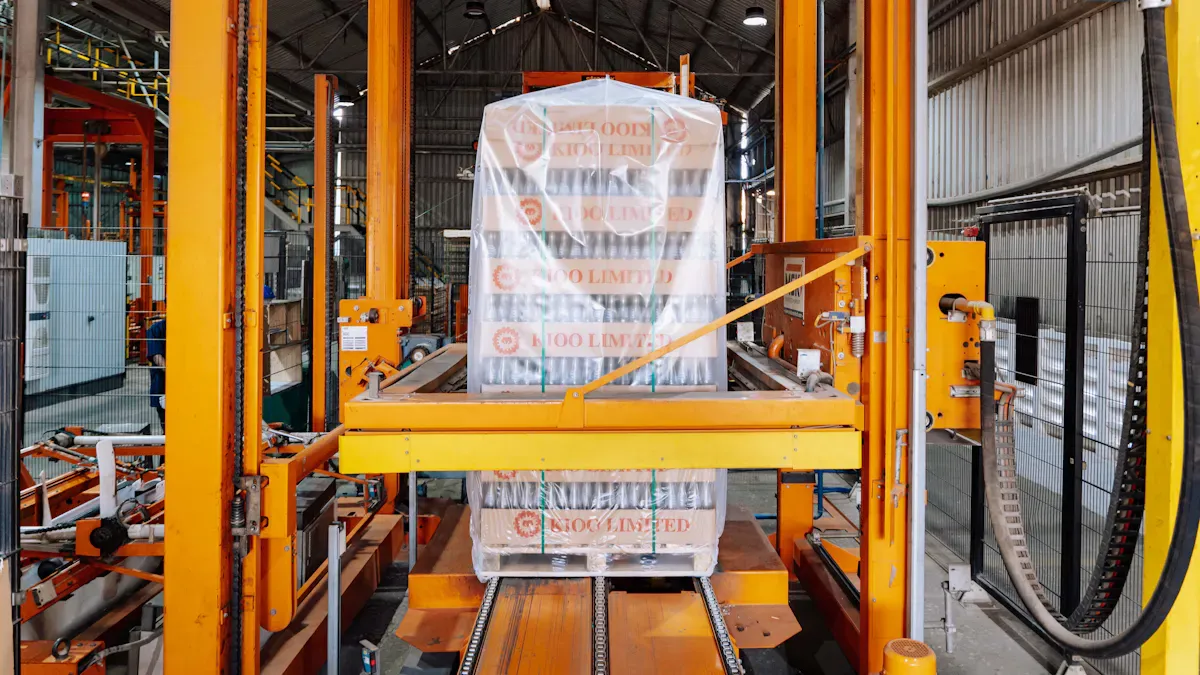
Streamlined Processes
Automation of Repetitive Tasks
An AI Factory excels in automating repetitive tasks. This automation frees your team from mundane activities, allowing them to focus on more strategic initiatives. By implementing AI, you can achieve the following benefits:
- Real-time insights: AI provides immediate feedback, enabling you to make quick adjustments that enhance productivity.
- Predictive capabilities: You can foresee potential issues and address them before they escalate, significantly reducing unplanned downtime.
- Process optimization: AI identifies inefficiencies and recommends improvements, leading to faster production cycles and higher output.
Improved Resource Allocation
In an AI Factory, resource allocation becomes more efficient. You can align your resources with business priorities, ensuring that the right people work on the right tasks. This approach maximizes productivity and minimizes waste.
| Key Aspect | Description |
|---|---|
| Ongoing Process | Resource allocation requires continuous adjustment and selection to meet changing demands. |
| Task Prioritization | Prioritizing critical tasks ensures optimal resource use and project execution. |
| Employee Assignment | Assigning the right people to the right tasks enhances overall efficiency. |
Inefficiencies in Chaos
Time Wasted on Redundant Efforts
Chaos leads to significant inefficiencies. Without a structured approach, your team may engage in redundant efforts, wasting valuable time. Common issues include:
- Staff burnout: Employees may feel overwhelmed by the chaotic environment, leading to decreased morale and productivity.
- High turnover: Top performers often leave organizations that lack structure, seeking better opportunities elsewhere.
- Operational inefficiencies: Varied methods for completing tasks create confusion, resulting in errors and delays.
Increased Operational Costs
Operating in chaos can inflate your operational costs. The lack of clear processes often leads to:
- Increased rework: Errors require corrections, consuming additional time and resources.
- Higher overtime costs: Employees may need to work extra hours to meet deadlines, further straining your budget.
- Lost customers: Inconsistent service can drive customers away, impacting your bottom line.
By recognizing these inefficiencies, you can appreciate the value of adopting an AI Factory model. This structured approach not only enhances efficiency but also reduces operational costs, ultimately driving your enterprise toward greater success.
Reason 2 - Decision-Making

Data Analysis in AI Factory
Real-Time Insights
In an AI Factory, you gain access to real-time insights that enhance your decision-making capabilities. The structured environment allows AI to analyze data without extensive preprocessing. This immediacy leads to quicker insights, enabling you to make informed choices rapidly. For instance, you can adjust strategies based on current trends rather than relying on outdated information.
Predictive Analytics
Predictive analytics further strengthens your decision-making process. AI identifies patterns and relationships within your data, leading to more accurate forecasts. The following table highlights the advantages of structured data analysis in an AI Factory:
| Advantage | Explanation |
|---|---|
| Immediate readability | AI can analyze the data without needing preprocessing, allowing for quicker insights. |
| Pattern recognition efficiency | Consistent data formatting helps algorithms to swiftly identify trends and anomalies. |
| Prediction accuracy | Clear relationships between variables lead to more precise forecasting models. |
| Lower computational requirements | Well-organized data demands less processing power, enhancing overall efficiency in analysis. |
With these capabilities, you can make AI-powered decisions that drive your enterprise forward.
Challenges in Chaos
Gut-Feeling Decisions
In chaotic environments, decision-making often relies on gut feelings rather than data. While intuition can sometimes guide you, it lacks the reliability of data-driven insights. For example, Sarah, a baker, faced a choice about introducing a new flavor. Despite market research suggesting exotic options, her intuition led her to choose classic vanilla bean. This decision resulted in overwhelming customer approval, showcasing how gut feelings can sometimes lead to success. However, relying solely on intuition can be risky, especially when data is available.
Missed Opportunities
Chaos creates an environment where missed opportunities are common. The lack of clarity and direction can lead to stalled decisions and confusion. Here are some prevalent challenges in chaotic organizations:
- Redundant headcount
- Stalled decisions
- Projects that outlive their purpose
- Gaps between reported and actual situations
Additionally, resistance to change and a lack of clarity can further complicate the decision-making process. In such environments, employees may feel directionless, making it difficult to act decisively.
By understanding the stark contrast between the structured decision-making in an AI Factory and the chaotic environment, you can appreciate the importance of adopting a data-driven approach. This shift not only enhances your decision-making accuracy but also positions your enterprise for long-term success.
Reason 3 - Scalability of AI Factories
Growth Support in AI Factory
Adaptable Infrastructure
An AI Factory provides an adaptable infrastructure that supports your enterprise's growth. This flexibility allows you to respond quickly to changing market demands. You can easily adjust your AI pipelines to accommodate new projects or shifts in strategy. The following benefits highlight how an AI Factory enhances scalability:
- Predictive and proactive decision-making: You can shift from reactive management to a more strategic approach.
- Reduced planning time: AI-driven optimization cuts planning from months to minutes.
- Enhanced efficiency: Automated tools minimize manual work, allowing your team to focus on high-value tasks.
- Improved compliance: AI monitoring speeds up permit approvals, enhancing operational speed.
- Standardized data management: Large-scale AI implementations facilitate easier scaling across projects.
Scalable AI Solutions
AI solutions in an AI Factory are designed to scale effectively. You can leverage these solutions to analyze patterns across decades of data. This capability leads to insights that would take humans years to uncover. The Genesis Mission emphasizes that AI can generate productivity breakthroughs necessary for economic growth. Organizations that effectively leverage AI can transform their industries rather than merely adapting to them.
Growth Barriers in Chaos
Difficulty in Scaling Operations
In chaotic environments, scaling operations becomes a significant challenge. Rapid expansion can lead to chaos if not managed strategically. This situation risks security gaps and system failures. Here are some common barriers you might face:
- Disruptions during scaling: Unmanaged growth can create operational chaos.
- Long deployment times: Inefficient processes drain resources and delay outcomes.
- Managing diverse manufacturing types: Juggling different processes can create complexity.
- Performance bottlenecks: Small inefficiencies can compound into significant delays.
Resource Constraints
As your organization grows, resource constraints can limit scalability. The lack of clarity in decision-making often leads to inefficiencies. When decision rights are unclear, friction arises, hindering growth. This ambiguity can drain energy and increase risks, ultimately slowing down execution. Rapidly growing companies often face challenges due to complexity. Without addressing this complexity, you may experience bottlenecks that directly impact your ability to scale effectively.
By adopting an AI Factory model, you can overcome these barriers. The structured approach not only supports growth but also ensures that your enterprise can scale efficiently and effectively.
Reason 4 - Risk Management
Risk Mitigation in AI Factory
Predictive Risk Assessment
In an AI Factory, predictive risk assessment plays a crucial role in enhancing your enterprise's security posture. This approach shifts your focus from reactive measures to proactive strategies. By utilizing advanced analytics and machine learning, you can forecast potential security incidents before they escalate. Here are some key benefits of predictive risk assessment:
- It enhances overall security by allowing you to strategically mitigate risks.
- You can optimize resource allocation, reducing vulnerabilities and improving incident response times.
- AI processes large volumes of data quickly, identifying hidden patterns and correlations that may indicate risks.
For example, predictive maintenance models in manufacturing have reduced equipment failure risk by 30% and unplanned downtime by 25%. This improvement not only preserves revenue but also builds customer trust.
Proactive Problem Solving
Proactive problem-solving is another significant advantage of an AI Factory. By anticipating issues before they arise, you can implement solutions that prevent disruptions. This proactive approach leads to:
- Faster identification of potential threats, allowing for timely interventions.
- Customizable risk models tailored to your organization's specific needs, moving beyond one-size-fits-all approaches.
- Enhanced decision-making capabilities, as you can rely on data-driven insights rather than guesswork.
Unpredictability of Chaos
Increased Vulnerability
In chaotic environments, unpredictability leads to increased vulnerability. Without structured processes, your enterprise faces several challenges:
- Diminished productivity and decreased quality due to erratic operations.
- A higher incidence of errors, which can result in financial losses and reputational damage.
- Rising operational costs stemming from inefficiencies and redundant work.
These factors can create a cycle of chaos that hinders your ability to innovate and respond to market changes effectively.
Reactive Crisis Management
Reactive crisis management in chaotic settings often results in long-term instability. Organizations that prioritize firefighting over strategic foresight face recurring issues. The following table illustrates the impact of this approach on long-term business stability:
| Evidence Description | Impact on Long-term Stability |
|---|---|
| Organizations that prioritize firefighting often experience recurring issues, resource strain, and employee burnout. | This hinders their ability to innovate and maintain stability. |
| IT teams focused on immediate results leave little room for planning or prevention. | This leads to postponed long-term initiatives and increased staff burnout. |
| Quick fixes over long-term solutions result in recurring issues and instability. | This makes it hard to build sustainable solutions. |
By understanding the differences between the structured risk management of an AI Factory and the unpredictability of chaos, you can appreciate the importance of governance and data ownership. A secure AI Factory not only mitigates risks but also empowers your enterprise to thrive in a competitive landscape.
Reason 5 - Competitive Advantage
Strategic Edge of AI Factory
Enhanced Innovation
Adopting an AI Factory model significantly enhances innovation within your enterprise. This structured approach treats AI development like a manufacturing process. It allows you to scale your AI initiatives efficiently. By industrializing AI, you transform isolated projects into a continuous production system. This transformation leads to faster decision-making and reduced costs. As a result, you gain a sustainable competitive advantage.
A flatter organizational structure promotes decentralized decision-making. This setup improves your responsiveness to market changes. Enhanced collaboration across departments fosters agility in addressing supply chain risks. The following table summarizes how the AI Factory model impacts innovation:
| Dimension | Impact on Innovation |
|---|---|
| Vertical Structure | Flatter hierarchies lead to decentralized decision-making, improving responsiveness to market changes. |
| Horizontal Structure | Enhanced interdepartmental collaboration fosters innovation and agility in responding to supply chain risks. |
Better Customer Insights
AI Factories also provide better customer insights. By collecting structured data, you can directly influence business outcomes. AI identifies patterns and trends that human analysts might miss. This capability allows you to create micro-segments based on real-time customer behaviors. Here are some benefits of improved customer insights:
- AI-driven insights enhance data management, leading to more reliable decision-making.
- Collaboration across departments ensures that insights are effectively utilized, maximizing their impact on business outcomes.
- Predictive analytics derived from AI help you understand customer behavior, improving marketing strategies and customer retention.
Disadvantages of Chaos
Falling Behind Competitors
In chaotic environments, organizations often fall behind competitors. The inability to adapt leads to rigidity, which hampers your response to new threats and opportunities. This rigidity can stifle innovation and diminish market relevance. More adaptable competitors can seize the lead, leaving you struggling to catch up.
Inability to Adapt
The inability to modify fixed business models in unstable environments creates vulnerabilities. Long-term predictability diminishes, and strategic plans become obsolete. When you rely on outdated practices, it becomes costly to change, even when necessary. This lack of adaptability can lock your enterprise into a cycle of stagnation, making it difficult to thrive in a competitive landscape.
By adopting an AI Factory model, you position your enterprise to leverage innovation and customer insights effectively. This structured approach not only enhances your competitive advantage but also ensures long-term success in a rapidly changing market.
Choosing between an AI Factory and Chaos significantly impacts your enterprise's success. An AI Factory streamlines processes, enhances decision-making, and supports scalability. You can expect long-term benefits, such as accelerated AI development and improved operational efficiency.
Consider how your current approach affects your business outcomes. Are you experiencing delays or missed opportunities? Reflect on the importance of structured workflows and automation. These elements can help you integrate AI effectively and drive meaningful change in your organization.
By embracing a structured approach, you position your enterprise for sustainable growth and a competitive edge in the market.
FAQ
What is an AI Factory?
An AI Factory is a structured model that integrates artificial intelligence into enterprise operations. It emphasizes automation, data-driven decision-making, and continuous learning to enhance efficiency and scalability.
How does an AI Factory improve decision-making?
An AI Factory provides real-time insights and predictive analytics. This data-driven approach allows you to make informed decisions quickly, reducing reliance on intuition.
What are the main benefits of adopting an AI Factory?
Adopting an AI Factory streamlines processes, enhances efficiency, supports scalability, mitigates risks, and provides a competitive advantage through better innovation and customer insights.
How does chaos affect operational costs?
Chaos leads to inefficiencies, redundant efforts, and increased rework. These factors inflate operational costs and can result in lost customers due to inconsistent service.
Can an AI Factory help with risk management?
Yes, an AI Factory enhances risk management through predictive risk assessment and proactive problem-solving. This approach helps you identify potential issues before they escalate.
What challenges arise from operating in chaos?
Operating in chaos often results in unpredictable operations, lack of clear strategy, and missed opportunities. These challenges can hinder your enterprise's growth and adaptability.
How does an AI Factory support scalability?
An AI Factory offers adaptable infrastructure and scalable AI solutions. This flexibility allows you to respond quickly to market changes and efficiently manage resources.
Why is customer insight important in an AI Factory?
Customer insights drive better decision-making and marketing strategies. An AI Factory uses structured data to identify trends, helping you tailor your offerings to meet customer needs effectively.
🚀 Want to be part of m365.fm?
Then stop just listening… and start showing up.
👉 Connect with me on LinkedIn and let’s make something happen:
- 🎙️ Be a podcast guest and share your story
- 🎧 Host your own episode (yes, seriously)
- 💡 Pitch topics the community actually wants to hear
- 🌍 Build your personal brand in the Microsoft 365 space
This isn’t just a podcast — it’s a platform for people who take action.
🔥 Most people wait. The best ones don’t.
👉 Connect with me on LinkedIn and send me a message:
"I want in"
Let’s build something awesome 👊
Ah, here’s the riddle your CIO hasn’t solved. Is AI just another workload to shove onto the server farm, or a fire-breathing creature that insists on its own habitat—GPUs, data lakes, and strict governance temples? Most teams gamble blind, and the result is budgets consumed faster than warp drive burns antimatter.
Here’s what you’ll take away today: the five checks that reveal whether an AI project truly needs enterprise scale, and the guardrails that get you there without chaos.
So, before we talk factories and starship crews, let’s ask: why isn’t AI just another workload?
Why AI Isn’t Just Another Workload
AI works differently from the neat workloads you’re used to. Traditional apps hum along with stable code, predictable storage needs, and logs that tick by like clockwork. AI, on the other hand, feels alive. It grows and shifts with every new dataset and architecture you feed it. Where ordinary software increments versions, AI mutates—learning, changing, even writhing depending on the resources at hand. So the shift in mindset is clear: treat AI not as a single app, but as an operating ecosystem constantly in flux.
Now, in many IT shops, workloads are measured by rack space and power draw. Safe, mechanical terms. But from an AI perspective, the scene transforms. You’re not just spinning up servers—you’re wrangling accelerators like GPUs or TPUs, often with their own programming models. You’re not handling tidy workflows but entire pipelines moving torrents of raw data. And you’re not executing static code so much as running dynamic computational graphs that can change shape mid-flight. Research backs this up: AI workloads often demand specialized accelerators and distinct data-access patterns that don’t resemble what your databases or CPUs were designed for. The lesson—plan for different physics than your usual IT playbook.
Think of payroll as the baseline: steady, repeatable, exact. Rows go in, checks come out. Now contrast that with a deep neural net carrying a hundred million parameters. Instead of marching in lockstep, it lurches. Progress surges one moment, stalls the next, and pushes you to redistribute compute like an engineer shuffling power to keep systems alive. Sometimes training converges; often it doesn’t. And until it stabilizes, you’re just pouring in cycles and hoping for coherent output. The takeaway: unlike payroll, AI training brings volatility, and you must resource it accordingly.
That volatility is fueled by hunger. AI algorithms react to data like black holes to matter. One day, your dataset fits on a laptop. The next, you’re streaming petabytes from multiple sources, and suddenly compute, storage, and networking all bend toward supporting that demand. Ordinary applications rarely consume in such bursts. Which means your infrastructure must be architected less like a filing cabinet and more like a refinery: continuous pipelines, high bandwidth, and the ability to absorb waves of incoming fuel.
And here’s where enterprises often misstep. Leadership assumes AI can live beside email and ERP, treated as another line item. So they deploy it on standard servers, expecting it to fit cleanly. What happens instead? GPU clusters sit idle, waiting for clumsy data pipelines. Deadlines slip. Integration work balloons. Teams find that half their environment needs rewriting just to get basic throughput. The scenario plays out like installing a galaxy-wide comms relay, only to discover your signals aren’t tuned to the right frequency. Credibility suffers. Costs spiral. The organization is left wondering what went wrong. The takeaway is simple: fit AI into legacy boxes, and you create bottlenecks instead of value.
Here’s a cleaner way to hold the metaphor: business IT is like running routine flights. Planes have clear schedules, steady fuel use, and tight routes. AI work behaves more like a warp engine trial. Output doesn’t scale linearly, requirements spike without warning, and exotic hardware is needed to survive the stress. Ignore that, and you’ll skid the whole project off the runway. Accept it, and you start to design systems for resilience from the start.
So the practical question every leader faces is this: how do you know when your AI project has crossed that threshold—when it isn’t simply another piece of software but a workload of a fundamentally different category? You want to catch that moment early, before doubling budgets or overcommitting infrastructure. The clues are there: demand patterns that burst beyond general-purpose servers, reliance on accelerators that speak CUDA instead of x86, datasets so massive old databases choke, algorithms that shift mid-execution, and integration barriers where legacy IT refuses to cooperate. Each one signals you’re dealing with something other than business-as-usual.
Together, these signs paint AI as more than fancy code—it’s a living digital ecosystem, one that grows, shifts, and demands resources unlike anything in your legacy stack. Once you learn to recognize those traits, you’re better equipped to allocate fuel, shielding, and crew before the journey begins.
And here’s where the hard choices start. Because even once you recognize AI as a different class of workload, the next step isn’t obvious. Do you push it through the same pipeline as everything else, or pause and ask the critical questions that decide if scaling makes sense? That decision point is where many execs stumble—and where a sharper checklist can save whole missions.
Five Questions That Separate Pilots From Production
When you’re staring at that shiny AI pilot and wondering if it can actually carry weight in production, there’s a simple tool. Five core questions—straightforward, practical, and the same ones experts use to decide whether a workload truly deserves enterprise-scale treatment. Think of them as your launch checklist. Skip them, and you risk building a model that looks good in the lab but falls apart the moment real users show up. We’ve laid them out in the show notes for you, but let’s run through them now.
First: Scalability. Can your current infrastructure actually stretch to meet unpredictable demand? Pilots show off nicely in small groups, but production brings thousands of requests in parallel. If the system can’t expand horizontally without major rework, you’re setting yourself up for emergency fixes instead of sustained value.
Second: Hardware. Do you need specialized accelerators like GPUs or TPUs? Most prototypes limp along on CPUs, but scaling neural networks at enterprise volumes will devour compute. The question isn’t just whether you can buy the gear—it’s whether your team and budget can handle operating it, keeping the engines humming instead of idling.
Third: Data intensity. Are you genuinely ready for the torrent? Early pilots often run on tidy, curated datasets. In live environments, data lands in multiple formats, floods in from different pipelines, and pushes storage and networking to their limits. AI workloads won’t wait for trickles—they need continuous flow or the entire system stalls.
Fourth: Algorithmic complexity. Can your team manage models that don’t behave like static apps? Algorithms evolve, adapt, and sometimes break the moment they see real-world input. A prototype looks fine with one frozen model, but production brings constant updates and shifting behavior. Without the right skills, you’ll see the dreaded cliff—models that run fine on a laptop yet collapse on a cluster.
Fifth: Integration. Will your AI actually connect smoothly with legacy systems? It may perform well alone, but in the enterprise it must pass data, respect compliance rules, and interface with long-standing protocols. If it resists blending in, you haven’t added a teammate—you’ve created a liability living in your racks.
That’s the full list: scalability, hardware, data intensity, algorithmic complexity, and integration. They may sound simple, but together they form the litmus test. Official frameworks from senior leaders mirror these very five areas, and for good reason—they separate pilots with promise from ones destined to fail. You’ll find more detail linked in today’s notes, but the important part is clear: if you answer “yes” across all five, you’re not dealing with just another workload. You’re looking at something that demands its own class of treatment, its own architecture, its own disciplines.
This is where many projects reveal their true form. What played as a slick demo proves, under questioning, to be a massive undertaking that consumes budget, talent, and infrastructure at a completely different scale. And recognizing that early is how you avoid burning months and millions.
Still, even with the checklist in hand, challenges remain. Pilots that should transition smoothly into production often falter. They stall not because the idea was flawed but because the environment they enter is harsher, thinner, and less forgiving than the demo ever suggested. That’s the space we need to talk about next.
The Pilot-to-Production Death Zone
Many AI pilots shine brightly in the lab, only to gasp for air the moment they’re pushed into enterprise conditions. A neat demo works fine when it’s fed one clean dataset, runs on a hand‑picked instance, and is nursed along by a few engineers. But the second you expose it to real traffic, messy data streams, and the scrutiny of governance, everything buckles. That gap has a name: the pilot‑to‑production death zone.
Here’s the core problem. Pilots succeed because they’re sheltered—controlled inputs, curated workflows, and environments designed to flatter the model. Production demands something harsher: scaling across teams, integrating with legacy systems, meeting regulatory obligations, and handling data arriving in unpredictable waves. That’s why so many projects stall between phases: the habits that made a pilot glow don’t prepare it for the winds of the real world.
The consequences stack quickly. Data silos cut supply lines, with entire departments guarding information in incompatible formats. Governance gaps leave access controls and permissions improvised—fine in a test, fatal under audit. Hardware shortfalls slow training and inference when CPUs can’t keep pace and accelerators aren’t built into the pipeline. And looming over it all, compliance frameworks appear like invisible tripwires, especially in industries facing strict privacy and fairness regulations. These trip hazards aren’t unique—they’re highlighted again and again in industry research as the obstacles that block AI from scaling. Ignore them, and your “success” ends as stranded prototypes gathering dust.
One vivid image says it all: running AI beyond the pilot stage is like climbing past the thin‑air altitudes on Everest. Below a line, progress flows. Above it, every step requires deliberate discipline, oxygen, and teamwork. In AI terms, that oxygen comes from infrastructure, governance, and automation. The metaphor works once—but the point is sharper when you leave the imagery and face the blunt truth: your team cannot muscle through the death zone by enthusiasm alone.
Technically, the fix has a name: MLOps. That means automating the test‑deploy‑monitor loop so models behave predictably when scaled. Instead of hand‑crafted notebooks pushed directly into production, you develop standard pipelines that test models, validate them, deploy them through reproducible steps, and monitor their drift in the wild. MLOps transforms AI from a one‑off experiment into a production system with the same reliability you expect from payroll software or transaction processing. Without it, every handoff is shaky, every update a gamble.
Concrete pain points prove the case. That perfectly tuned model that excelled in isolated testing? Once faced with live streams, latency targets in milliseconds, and hundreds of client requests at once, it stutters. A dashboard that looked fluid for one team runs like molasses when a thousand employees log in. Engineers race to patch performance gaps, but the reality is unavoidable: fixes after the fact cost more than proper orchestration from the beginning.
Governance adds another source of collapse. What slid by in a proof‑of‑concept—a quick admin override, a shortcut for permissions—becomes an immediate compliance headache once auditors step in. Regulations and audit requirements aren’t optional extras; they’re mandatory frameworks that shape production itself. Enterprises that wait until after pilots scale find themselves stuck rebuilding foundations that should have been there from day one.
Meanwhile, the shortage of skilled hands intensifies the strain. Pilots can survive on a few sharp engineers improvising clever workarounds. Enterprise scale requires specialists across data engineering, AI ops, and infrastructure. Without codified workflows, each step gets reinvented, and weeks vanish with no forward progress. Leadership watches the clock, finance tracks the cost, and patience drains. The promise of AI starts to resemble a stalled project rather than a transformative capability.
It’s tempting to think the solution lies in more talent or more machines, but piling on without orchestration is like adding climbers to a mountain team without ropes or oxygen—bodies moving, but with no chance of coordinated survival. What actually rescues projects here isn’t raw power, it’s orchestration: a unifying discipline that connects data flows, ensures compliance, and automates deployment. It’s not flashy, but it’s life support for AI crews trying to push beyond demos.
This is the unavoidable lesson: enterprise AI cannot be improvised. Success comes from factory‑grade repeatability—templates for pipelines, automated testing, governance baked into workflows, and resources dynamically managed. With that foundation, the death zone isn’t a graveyard; it’s a passage you can cross systematically. Without it, every step is fragile improvisation, destined to collapse under pressure.
And once you see the scale of coordination required, the next question emerges: how do you actually build that orchestration layer? Not as scattered patches or isolated teams, but as a central command deck where the chaos is disciplined, roles are defined, and systems move in sync.
Enter the AI Factory: Starfleet Command for Enterprise AI
Picture this: instead of every team improvising alone, you’ve got a unified bridge where DataOps, MLOps, and GenAIOps operate like officers at their stations. Engines, shields, navigation—each with their own duty, but coordinated through a single command chair. That’s the premise here. Not another tool tacked on, but the orchestration layer that keeps the ship together under stress.
Without a central layer, enterprise AI looks more like a brawl between decks. Data engineers spin out pipelines in one corner, ops write rules in another, researchers sling models over the rail—no shared map, no rhythm. What you get is overlapping scripts, redundant systems, and security holes big enough to fly a shuttle through. That chaos isn’t a rare accident. It’s what happens when scaling AI is left to scattershot effort.
The Factory flips that script. Think of it less as a new gadget and more as a conductor’s stand. The sections are your data lakes, training pipelines, cloud accelerators—and instead of crashing over each other, they play in time. In practice, this session’s demo includes features like an AutoLake approach that centralizes fragmented data stores into one consistent environment. Pipelines finally run against a steady source of truth, and governance has something real to enforce. Hungry AI models don’t get starved because the data stream went dry.
Templates are the next card on the table. Pilots routinely fail to scale because every project provisions infrastructure a little differently, scripts tasks in custom ways, and leaves half the system undocumented. Templates fix the drift. Build once, stamp again and again. The gain is factory-grade reliability where pressing “go” sets up a pipeline the same way every time. Instead of months wiring bespoke assembly, you’re looking at repeatable deployment in days.
Then comes control of access. Role-based access control sounds dull until you’ve lived without it. Without guardrails, junior staff stumble into GPU clusters, auditors have to sneak through side doors, and no one can say who changed what. RBAC restores order: data engineers see pipelines, scientists get their sandbox, auditors observe without fiddling. Clear lines, fewer risks, smoother collaboration.
Networking is the invisible artery. Scale without proper channels, and connections tangle as workloads sprawl across teams. The Factory answer is private networking paths. Endpoints are contained, throughput is tuned for heavy data demands, and risk of leakage drops. Think of it as ensuring the comms array carries only your signals—not stray broadcasts bleeding into the line.
Hardware orchestration is often the most expensive pain point. GPUs and TPUs are powerful, but unmanaged they sit idle and drain funds. In the Factory model, accelerators plug into a broader schedule: drivers provisioned automatically, tasks lined up, capacity balanced. Instead of wrestling with the warp core every morning, you command it through a repeatable sequence. Hardware behaves like part of the system, not a standalone diva.
Organizations experimenting with this model report that setups which once dragged across weeks of ticketing shrink drastically. That’s not magic; it’s the discipline of coordinated workflows, governed access, and unified orchestration. When the lifeboats are lashed into one vessel, the voyage becomes manageable.
What anchors the reliability isn’t just the tooling, but the frameworks behind it. The AI Factory approach leans on cloud best practices akin to Microsoft’s Cloud Adoption and Well-Architected guidance. That integration ensures workloads are developed with security, scalability, and compliance structured in from the start—not bolted on later under duress. It protects projects from the trap of fragile demos that collapse when exposed to enterprise realities.
Starfleet’s metaphor fits neatly here: officers don’t improvise core duties. Shields rise when ordered. Engines fire on cue. Comms sync to one channel. That choreography is what this model delivers. It takes scattered efforts, assigns them proper lanes, and binds them into a ship running on order rather than chaos.
At the heart, the Factory unites DataOps, MLOps, and GenAIOps into one orchestrated system. The outcome is scale that’s repeatable, not luck-based—AI that graduates safely from lab demonstration to enterprise demand. Teams gain confidence because they know the bridge exists, and discipline threads through each phase of work.
But a bridge only sets direction. What drives actual thrust are the engines below—the accelerators straining, the pipelines flooding with data, the models shifting mid-course. And it’s there, in the machinery beneath the deck, where the next set of challenges demands your attention.
The Engine Room: Hardware, Data, and Algorithm Complexity
Every starship has an engine room, and for enterprise AI that engine is powered by three volatile subsystems: hardware accelerators, the data streams that feed them, and the algorithms that refuse to stay still. Miss the balance, and the whole vessel stalls. Get them working in rhythm, and you have the thrust to scale.
Start with hardware. CPUs can handle routine applications, but AI workloads chew through parallel math at a pace only GPUs or TPUs can satisfy. These accelerators aren’t plug‑and‑play—they bring their own libraries, schedulers, and quirks, more like exotic reactors than office servers. The danger is idle racks glowing without contribution. The practical check: measure GPU scheduling and monitor idle rates. If accelerators sit silent while demand piles up, your resources are misaligned long before you consider scaling.
Then there’s the endless hunger of data. Every serious model demands a torrent, not a trickle. Business apps survive on modest queries and nightly batches. AI pipelines require fast, continuous throughput with negligible latency. Storage no longer just holds—it must push, handle concurrency, and deliver bandwidth or else your expensive accelerators do nothing but wait. Research underlines this with the “Chinchilla” insight: bigger models alone don’t yield gains without proportionately larger training datasets, and imbalance wastes compute. That means both size and quality matter—garbage in, garbage predictions out. Your check here is straightforward: stress test the pipeline under realistic, real‑time load. If throughput collapses or queues form, your engines will sputter in production.
Finally, the strangest part of the engine room—algorithmic complexity. Payroll software ticks step by step with boring predictability. AI models behave more like plasma clouds: they shift shape mid‑run, ballooning with new training cycles or collapsing under certain inputs. Computation graphs for modern neural nets change structure dynamically, and that instability hits resource allocation hard. Without profiling tools and dynamic schedulers, your infrastructure ends up blindsided. A practical safeguard: insist on strict model versioning and continuous profiling. That way you see when a graph balloons, and you can adjust compute before the system buckles.
Consider the cautionary tale of an enterprise that invested heavily in GPUs but fed them with weak pipelines. The accelerators lined up, humming like statues, while data trickled in too slowly to matter. Jobs queued up, but nothing escaped the bottleneck. The result: money burned, time lost, and credibility damaged. Their lesson became universal—scaling AI demands balance across hardware supply, data flow, and algorithmic behavior, never one in isolation.
The payoff of doing this right is simple: equilibrium. Hardware fires only when streams are ready. Data pipelines flow without starving accelerators. Algorithms shift within a monitored framework so resource allocation adapts instantly. It’s orchestration inside the engine room itself, not chaos disguised as progress. And the diagnostic checks are the compass: monitor accelerator idle times, run pipeline stress tests, version and profile your models. With those, you know when the balance holds and when repair is urgent.
Yet balance alone isn’t enough. Without rules and governance, the system burns itself out. Scaling is never just about raw horsepower—it’s about coordinated systems where every moving part respects limits and flows together. That’s the edge between a working starship engine and a lab experiment frozen mid‑flight.
And this points us back to the larger picture. AI isn’t sustained by a single upgraded machine or a flashy cluster. It’s an interconnected system where hardware, data, and algorithms must sync under governance and orchestration. Without that, even the strongest engine stalls out on the launch pad.
Conclusion
Scaling AI isn’t about piling on hardware; it’s about treating the whole system as an ecosystem. Orchestration, governance, and adaptive infrastructure aren’t extras—they’re the triad that keeps AI aligned with strategy and resilient under compliance. Ignore them, and projects drift. Embrace them, and you turn lab demos into dependable enterprise capability.
Executives see the shift already. Industry surveys—linked in the show notes—report over 90% planning to increase AI investment in the next three years. That money needs structure. Enterprise Scale AI Factory–style orchestration is the bridge. The choice is plain: chaos at the helm, or crew in command.
If this lore drop upgraded your power level, hit subscribe so future transmissions autopilot into your feed. Rate the show, drop your sharpest one‑liner in the comments, and check the show notes for sources and links. See you on the next frequency.
This is a public episode. If you'd like to discuss this with other subscribers or get access to bonus episodes, visit m365.show/subscribe

Founder of m365.fm, m365.show and m365con.net
Mirko Peters is a Microsoft 365 expert, content creator, and founder of m365.fm, a platform dedicated to sharing practical insights on modern workplace technologies. His work focuses on Microsoft 365 governance, security, collaboration, and real-world implementation strategies.
Through his podcast and written content, Mirko provides hands-on guidance for IT professionals, architects, and business leaders navigating the complexities of Microsoft 365. He is known for translating complex topics into clear, actionable advice, often highlighting common mistakes and overlooked risks in real-world environments.
With a strong emphasis on community contribution and knowledge sharing, Mirko is actively building a platform that connects experts, shares experiences, and helps organizations get the most out of their Microsoft 365 investments.




