

Examine cloud infrastructure design and operations in Microsoft Azure, emphasizing security, management, and integration with on-premises environments. Discover architectural choices that impact performance and cost.
Oct. 2, 2026
IoT Hub Message Routing vs Event Grid — Why Telemetry and Events Are Not the Same Problem
A temperature reading, a vibration sample, a machine cycle, and a device disconnect may all be described as events, but they do not represent the same architectural problem. In industrial IoT and manufacturing environments, confusing continuous telemetry with discrete events can create noisy workflows, incomplete production histories, unnecessary processing, and systems that react without enough context. In this episode, we break down the architectural difference between Azure IoT Hub Message R...
![Building Azure That Survives the Real World — with Mike Martin [MVP]](https://d3wo5wojvuv7l.cloudfront.net/t_rss_itunes_square_1400/images.spreaker.com/original/a907cccbe53d60b24bd2317acc40f151.jpg "Building Azure That Survives the Real World — with Mike Martin [MVP]")
Oct. 1, 2026
Building Azure That Survives the Real World — with Mike Martin [MVP]
Azure architecture looks easy when everything works.The real test starts when dependencies fail, regions become unavailable, traffic spikes, assumptions turn out to be wrong, requirements change, and someone eventually asks the uncomfortable question: why did we design it this way in the first place?In this episode of M365.FM, Mirko Peters talks with Mike Martin [MVP] about what Azure architecture looks like when it has to survive real production conditions rather than just look good on a diagra...
Guests: Mirko Peters , Mike Martin

Sept. 28, 2026
Why Your Production Schedule Is Wrong Before It Even Starts
Your production schedule can look perfectly reasonable when it leaves the ERP system. Order dates line up, routing times make sense, capacity appears available, and material status suggests that production is ready to go. The problem is that the schedule is still only an assumption about the future.The moment production begins, the factory starts generating new facts. Material arrives later than expected, a batch is still waiting for quality inspection, a fixture is unavailable, an operator with...
Sept. 18, 2026
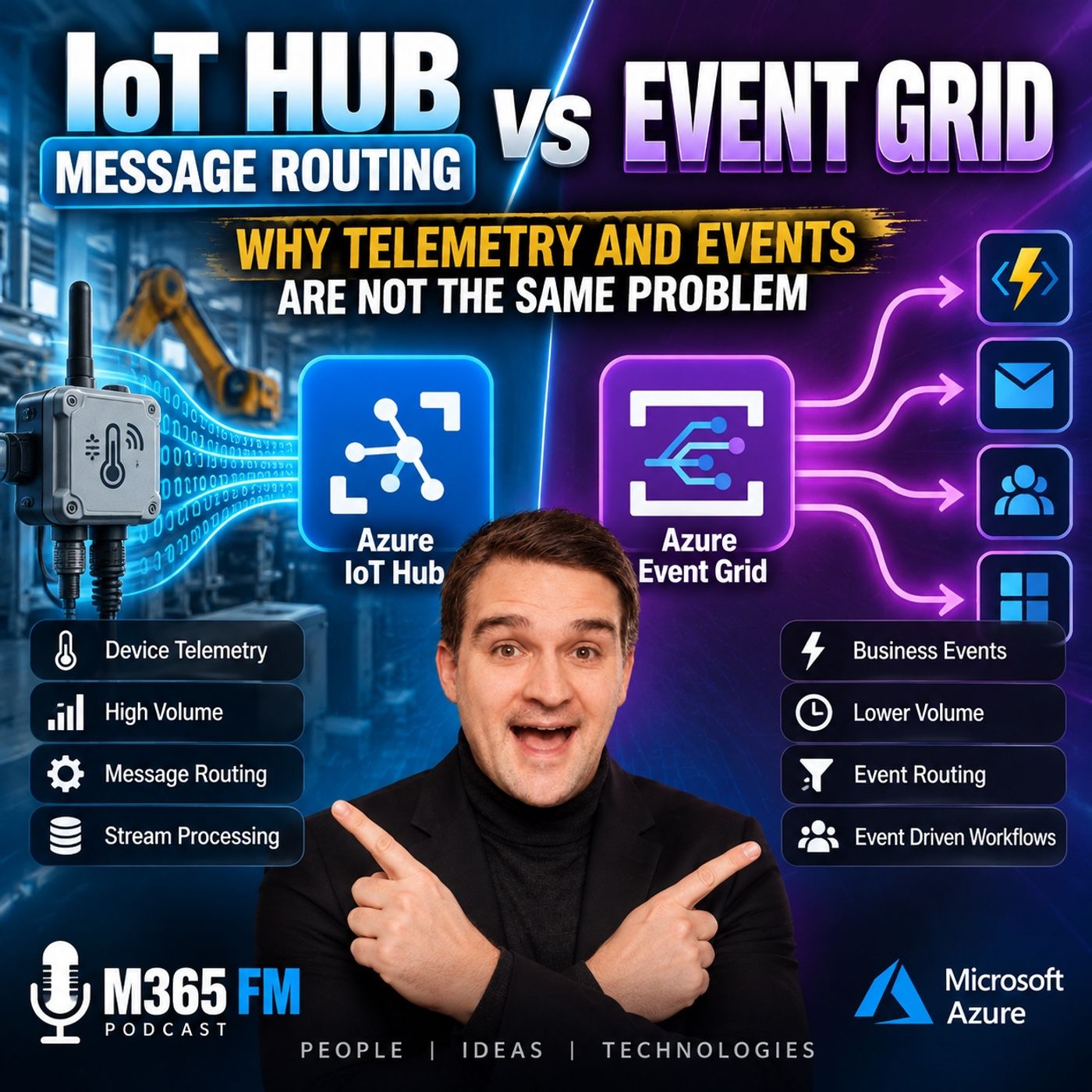
IoT Hub Message Routing vs Event Grid — Why Telemetry and Events Are Not the Same Problem
A machine sends temperature readings, vibration data, cycle counts, power consumption, and operating states every few seconds. Then the gateway suddenly disconnects. Are all of those messages simply “events”? Technically, you could describe them that way. Architecturally, that can create serious problems. Azure IoT Hub Message Routing and Azure Event Grid solve different problems. One path is designed around preserving and distributing operational data. The other is designed around notifying sys...

Sept. 17, 2026
Your Factory Cloud Bill Is Much Higher Than You Think
Cloud storage may look cheap. Sending factory data to the cloud may look cheap. But the real cloud bill often starts when that data begins moving. In this episode, we break down the hidden costs behind modern Industrial IoT, manufacturing cloud, edge computing, and factory data architectures — from data egress and cross-region replication to NAT gateways, backups, dashboards, and high-frequency sensor data. A single MQTT stream from a factory can quickly become multiple data flows once telemetry...

Sept. 16, 2026
Production Planning Software: When Does a Manufacturer Actually Need It?
When does a manufacturer actually need dedicated production planning software? It is not when the company reaches a certain size. It is not when Excel suddenly becomes “unprofessional.” And it is definitely not because a software vendor showed you a beautiful Gantt chart. The real threshold comes when production complexity, constraints, and constant change become too difficult for planners to reliably coordinate through ERP dates, spreadsheets, whiteboards, calls, emails, and experience alone. I...
![Architecting Power Platform for Complex Enterprise Solutions with Ian Tweedie [MVP]](https://d3wo5wojvuv7l.cloudfront.net/t_rss_itunes_square_1400/images.spreaker.com/original/6204ecb0c4796f62f7eeea678de0af40.jpg "Architecting Power Platform for Complex Enterprise Solutions with Ian Tweedie [MVP]")
Sept. 2, 2026
Architecting Power Platform for Complex Enterprise Solutions with Ian Tweedie [MVP]
Microsoft Power Platform is often described as a low-code platform. But what happens when the applications you build become business-critical, highly integrated, and too complex for a simple maker-first approach?In this episode of M365 FM, Mirko Peters talks with Power Platform Solution Architect Ian Tweedie about what happens when Power Platform moves beyond simple low-code applications and becomes part of a serious enterprise architecture. LOW-CODE DOESN’T MEAN LOW ARCHITECTURE Power Platform...
![Azure Local and Landing Zones: How to Build Hybrid Cloud the Right Way with Christoffer Klarskov Jakobsen [MVP]](https://d3wo5wojvuv7l.cloudfront.net/t_rss_itunes_square_1400/images.spreaker.com/original/fd14acff203bdb255365b5f6a98a6cdc.jpg "Azure Local and Landing Zones: How to Build Hybrid Cloud the Right Way with Christoffer Klarskov Jakobsen [MVP]")
Aug. 22, 2026
Azure Local and Landing Zones: How to Build Hybrid Cloud the Right Way with Christoffer Klarskov Jakobsen [MVP]
What happens when your cloud strategy cannot live entirely in the public cloud? Organizations are modernizing infrastructure with Azure, platform services, Infrastructure as Code, automated deployment pipelines, and Azure Landing Zones. At the same time, some workloads still need to remain close to factories, offices, regulated environments, existing infrastructure, or latency-sensitive systems. In this episode of M365 FM, Mirko Peters talks with Microsoft MVP Christoffer Klarskov Jakobsen about...
Guests: Mirko Peters , Christoffer Klarskov Jakobsen
![Extending Microsoft 365 Copilot: Agents, MCP & Production-Grade AI with Yves Habersaat [MVP]](https://d3wo5wojvuv7l.cloudfront.net/t_rss_itunes_square_1400/images.spreaker.com/original/4e3345ace7fa81620f09dec913c1dd18.jpg "Extending Microsoft 365 Copilot: Agents, MCP & Production-Grade AI with Yves Habersaat [MVP]")
Aug. 21, 2026
Extending Microsoft 365 Copilot: Agents, MCP & Production-Grade AI with Yves Habersaat [MVP]
Microsoft 365 Copilot is moving far beyond prompt engineering. As organizations adopt AI more seriously, the challenge becomes connecting Copilot and AI agents to business applications, Microsoft Graph, organizational knowledge, APIs, workflows, and enterprise data while maintaining security and governance. In this episode of the M365 FM Podcast, Mirko Peters talks with Microsoft MVP and AI Tech Lead Yves Habersaat about Microsoft 365 Copilot extensibility, Copilot Studio, Microsoft Foundry, Mod...
Guests: Mirko Peters , Yves HABERSAAT
![AI Turns Integration into an Organism as a Service — How Azure Logic Apps Are Changing Enterprise Integration with Sonny Gillissen [MVP]](https://d3wo5wojvuv7l.cloudfront.net/t_rss_itunes_square_1400/images.spreaker.com/original/5f8bf3b9f498b5fd7cd584f1423cee09.jpg "AI Turns Integration into an Organism as a Service — How Azure Logic Apps Are Changing Enterprise Integration with Sonny Gillissen [MVP]")
Aug. 18, 2026
AI Turns Integration into an Organism as a Service — How Azure Logic Apps Are Changing Enterprise Integration with Sonny Gillissen [MVP]
Enterprise integration is everywhere, yet most people only notice it when something stops working. Applications need to communicate, APIs need to exchange information, ERP systems need to connect with business processes, and data needs to move reliably across organizational boundaries. For decades, integration has largely followed a deterministic model: when this happens, do that. Developers and architects define triggers, conditions, transformations, retries, exceptions, and destinations in adv...
Guests: Mirko Peters , Sonny Gillissen
Aug. 17, 2026
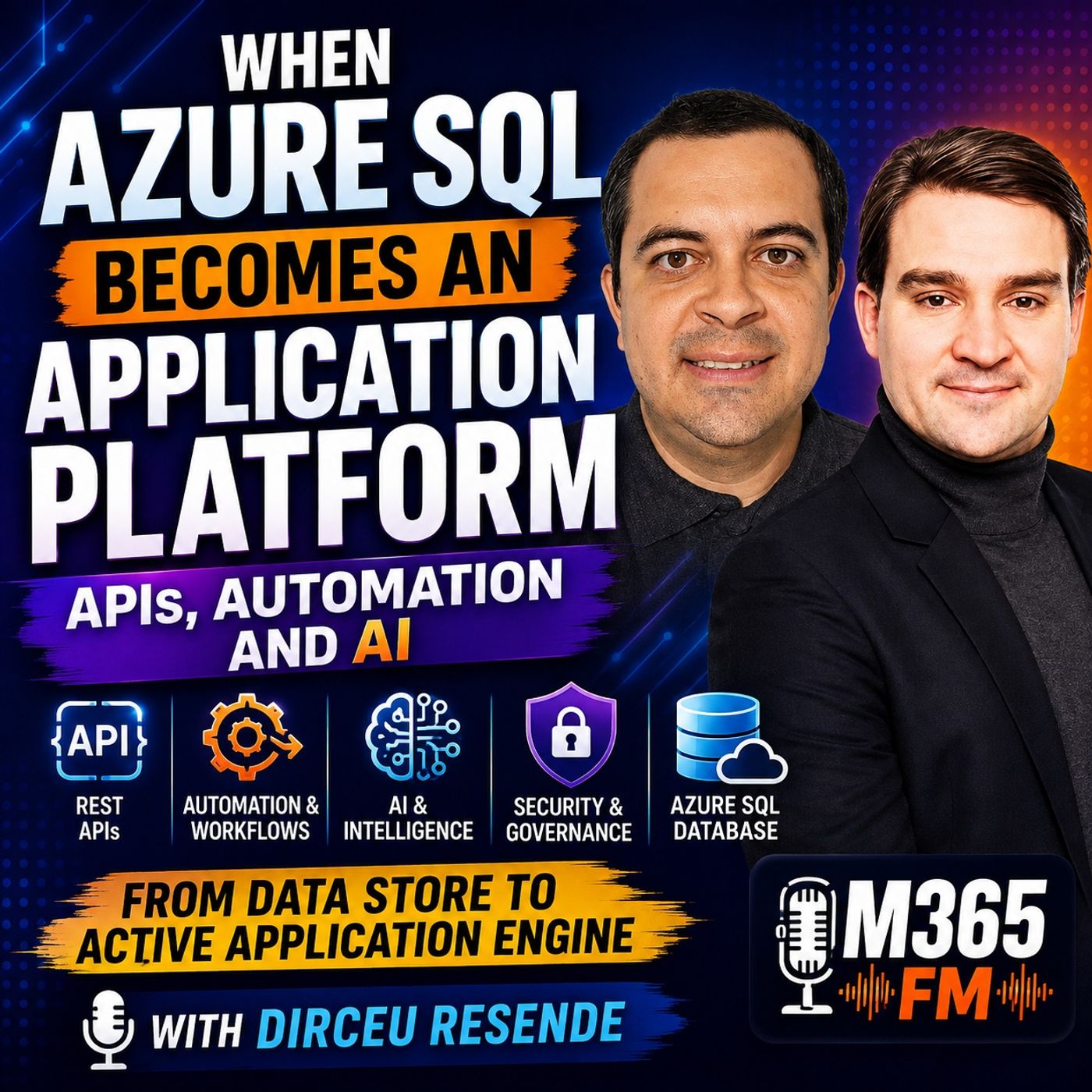
When Azure SQL Becomes an Application Platform- APIs, Automation and AI with Dirceu Resende
Most developers think of a database as the place where an application stores information. Tables, transactions, indexes, stored procedures, reporting, backups, and reliable data storage are the traditional responsibilities we associate with SQL. But what happens when the database itself becomes an active participant in the application architecture? In this episode of M365 FM, Mirko Peters talks with Dirceu Resende about how Azure SQL Database is evolving beyond traditional data storage. The conv...
Aug. 16, 2026
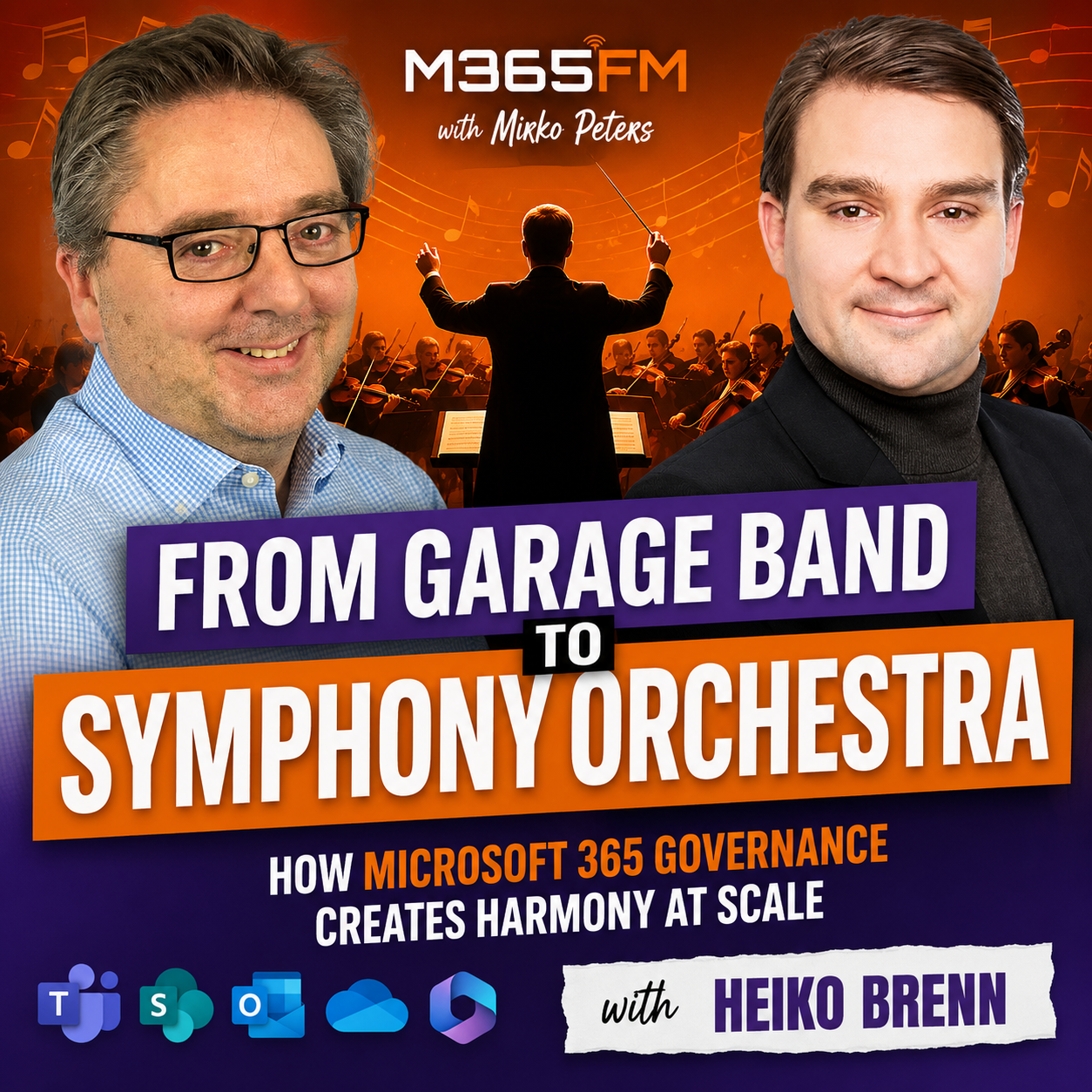
From Garage Band to Symphony Orchestra- How Microsoft 365 Governance Creates Harmony at Scale — with Heiko Brenn
Microsoft 365 can begin like a garage band. A few people collaborate, everybody knows what the others are doing, Teams are created when needed, SharePoint sites appear naturally, and external guests are invited without requiring complicated processes. But as the organization grows, more musicians join the band. Teams multiply, SharePoint sites accumulate, guests remain after projects end, naming conventions become inconsistent, ownership becomes unclear, and manual administration can no longer k...
Guests: Mirko Peters , Heiko Brenn
Aug. 15, 2026
Microsoft Entra Cloud Sync - Simply Explained
Microsoft Entra Cloud Sync provides organizations with a cloud-managed way to synchronize identities from on-premises Active Directory into Microsoft Entra ID. But how is it different from Microsoft Entra Connect, why would an organization choose it, and what has changed in 2026? In this episode of Microsoft Knowledge Nuggets on M365 FM, we break down Entra Cloud Sync from the basic identity problem through architecture, high availability, scoping, security, hybrid environments, and the decision...
Aug. 14, 2026
Microsoft Entra Domain Services - Simply Explained
Microsoft Entra ID is built for modern cloud identity—but what happens when an older application moves to Azure and still expects a traditional Windows domain?In this episode of Microsoft Knowledge Nuggets, Mirko Peters explains Microsoft Entra Domain Services and the specific problem it solves. We look at why moving a legacy application into Azure doesn't automatically remove its dependency on LDAP, Kerberos, NTLM, domain join, DNS, and Group Policy—and how Microsoft provides these capabilities...
Aug. 13, 2026
Microsoft Cloud PKI - Simply Explained
Microsoft Cloud PKI brings certificate-based authentication into the cloud—but what exactly does that mean, why would you need certificates, and can it really replace traditional on-premises PKI infrastructure?In this episode of Microsoft Knowledge Nuggets, Mirko Peters explains Microsoft Cloud PKI in plain English. We explore certificates, certificate authorities, Intune, SCEP, device authentication, secure Wi-Fi, VPN access, certificate renewal and revocation, and where Cloud PKI fits into a m...
Aug. 11, 2026
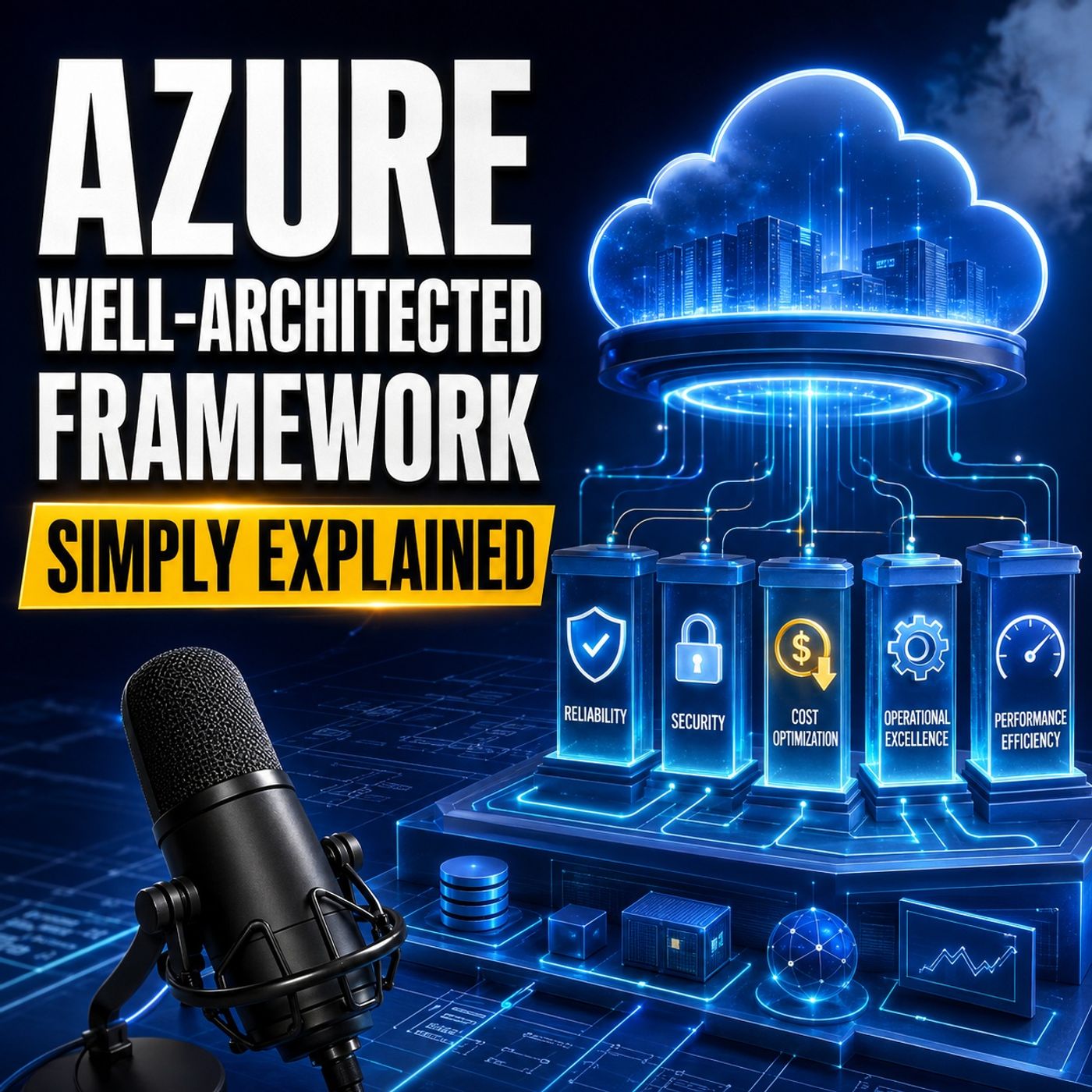
Azure Well-Architected Framework - Simply Explained
Building a successful Azure workload involves much more than selecting the right cloud services. Reliability problems, security gaps, unexpected costs, weak operational processes, and poor performance often come from the architectural decisions surrounding those services.In this episode of M365 FM, we explain the Azure Well-Architected Framework in clear, practical language. You will learn how its five pillars help teams design, operate, and continuously improve Azure workloads while balancing b...
July 24, 2026
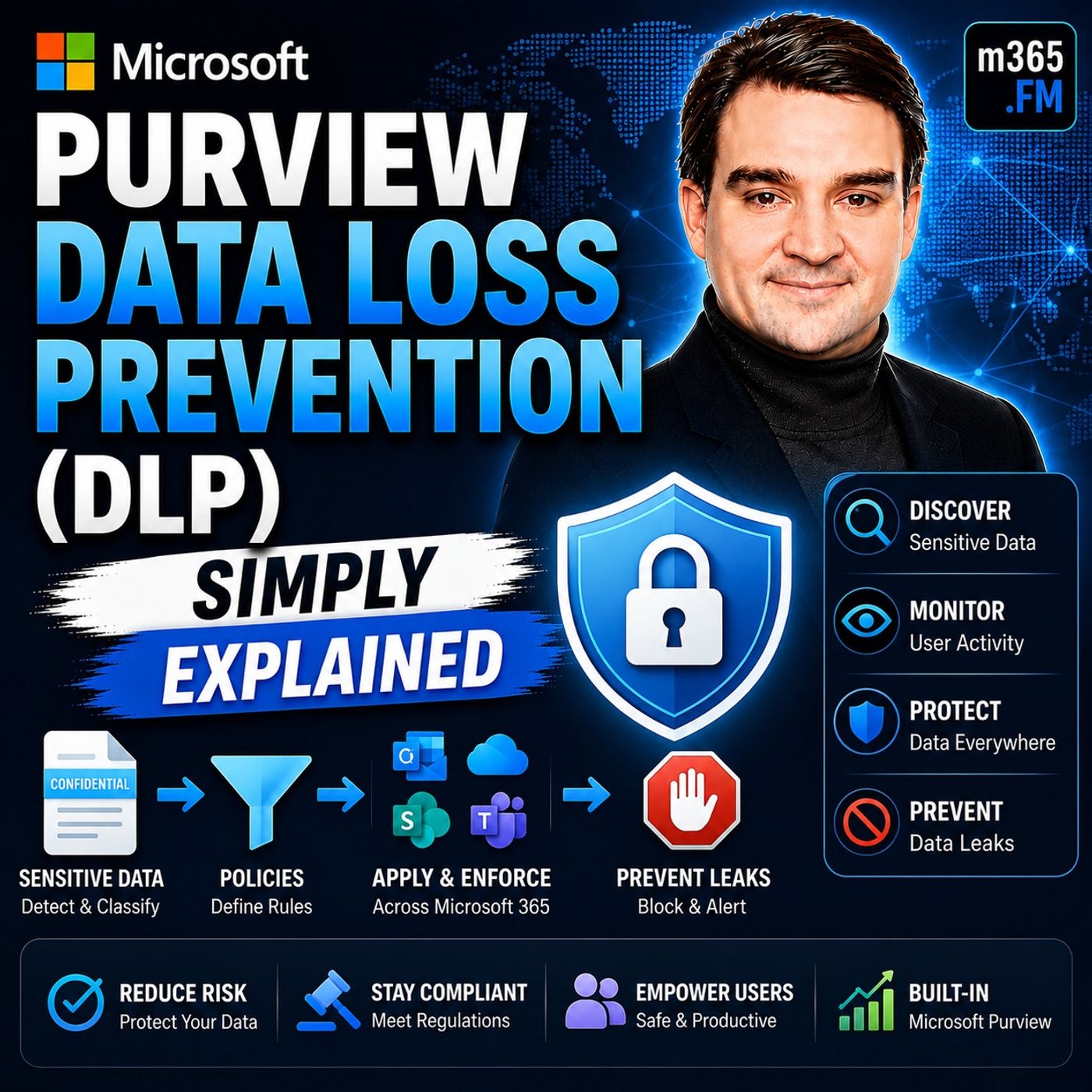
Microsoft Purview Data Loss Prevention (DLP) - Simply Explained
Quick Answer: Microsoft Purview Data Loss Prevention helps organizations detect sensitive information and apply policy-based controls across Microsoft 365. It can warn users, block risky sharing, and provide visibility for security and compliance teams, helping protect data while allowing approved business work to continue. In today's digital landscape, protecting sensitive information is crucial. Data breaches can have devastating financial impacts, with the average cost of a breach reaching $...
Guest: Mirko Peters
July 24, 2026
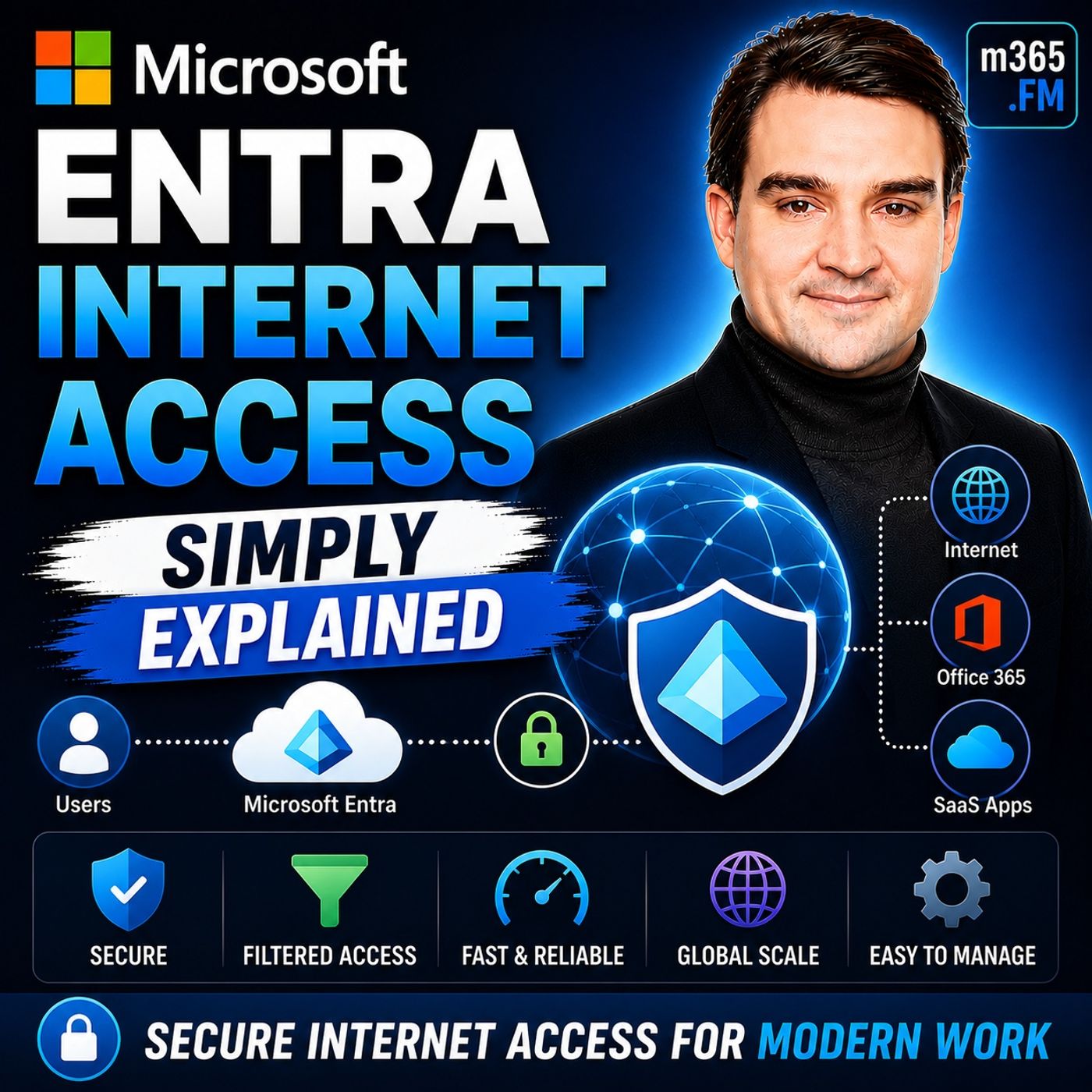
Microsoft Entra Private Access - Simply Explained
Quick Answer: Microsoft Entra Private Access is an important Microsoft topic for teams that need clearer technical decisions, safer implementation, and practical operational value. This episode explains what it does, where it fits in the Microsoft ecosystem, and the key considerations for administrators, architects, and business stakeholders. In today’s digital landscape, securing access to private applications is crucial. Microsoft Entra Private Access offers a modern solution that enhances se...
Guest: Mirko Peters
July 24, 2026
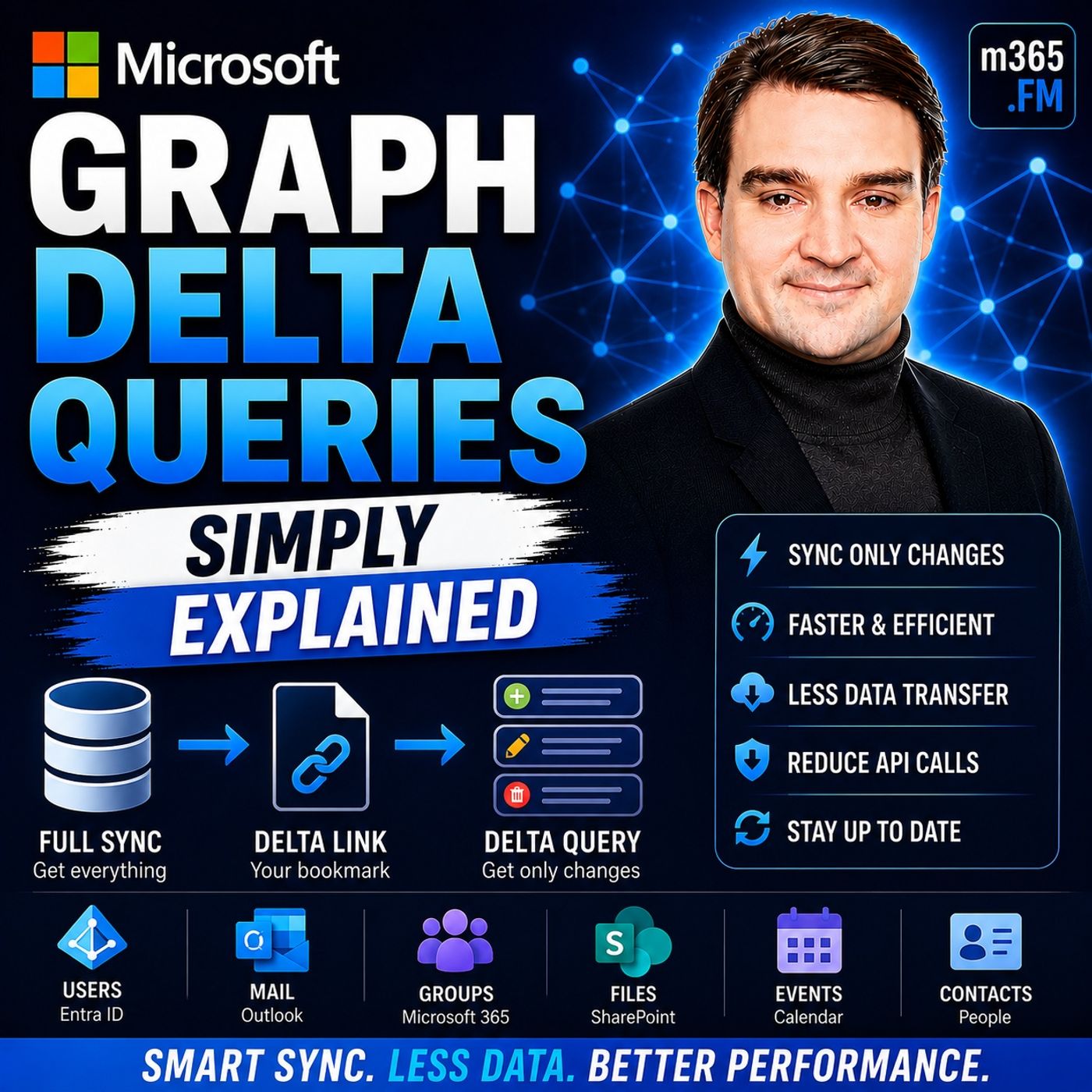
Microsoft Graph Delta Queries - Simply Explained
Quick Answer: Microsoft Graph Delta Queries is an important Microsoft topic for teams that need clearer technical decisions, safer implementation, and practical operational value. This episode explains what it does, where it fits in the Microsoft ecosystem, and the key considerations for administrators, architects, and business stakeholders. Microsoft Graph Delta Queries revolutionize how you synchronize data within Microsoft 365 applications. Instead of downloading entire datasets, you can eff...
Guest: Mirko Peters
July 24, 2026
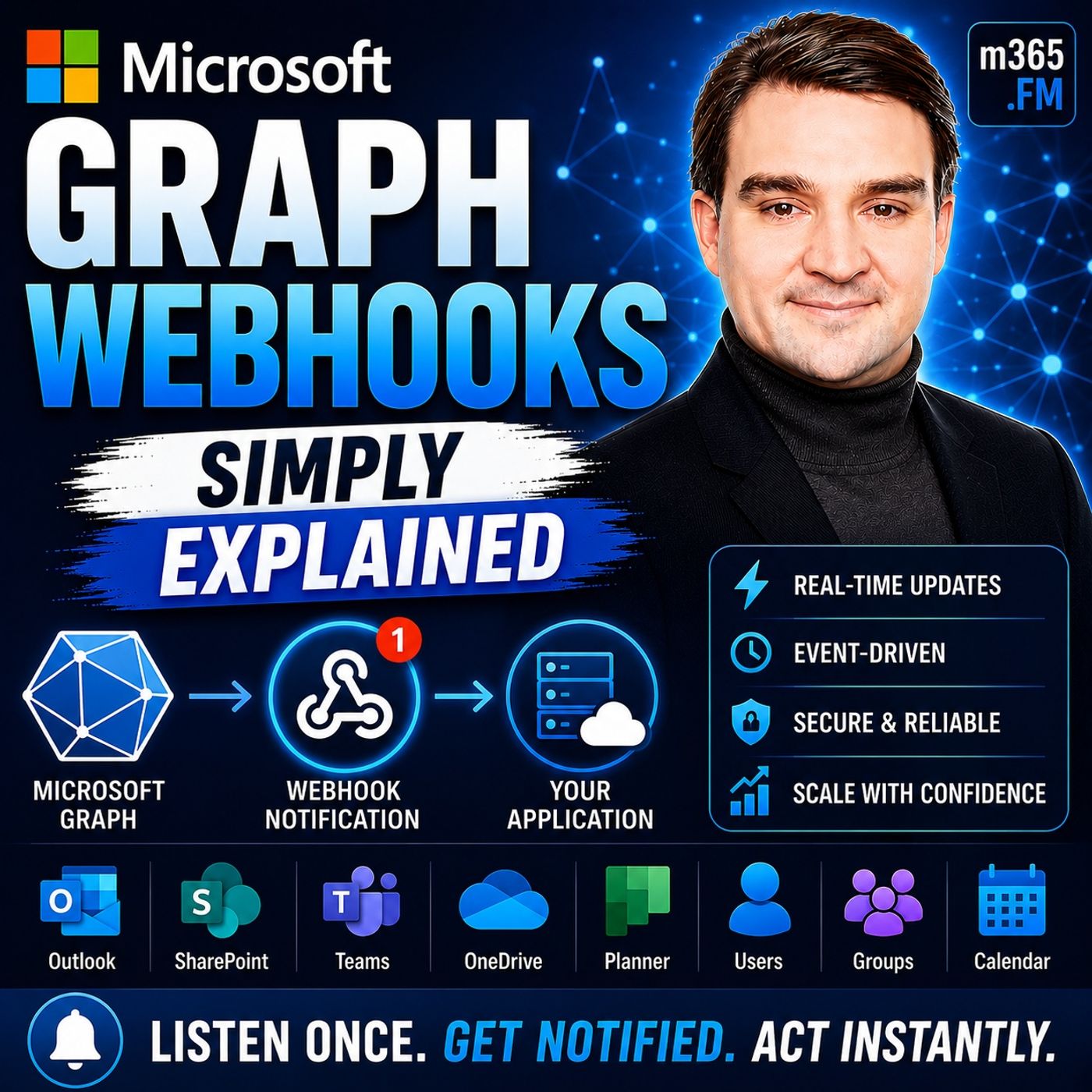
Microsoft Graph Webhooks - Simply Explained
Quick Answer: Microsoft Graph Webhooks is an important Microsoft topic for teams that need clearer technical decisions, safer implementation, and practical operational value. This episode explains what it does, where it fits in the Microsoft ecosystem, and the key considerations for administrators, architects, and business stakeholders. Microsoft Graph Webhooks serve as a powerful tool for developers. They enable you to receive notifications in real-time about changes in Microsoft Graph resourc...
Guest: Mirko Peters
July 24, 2026
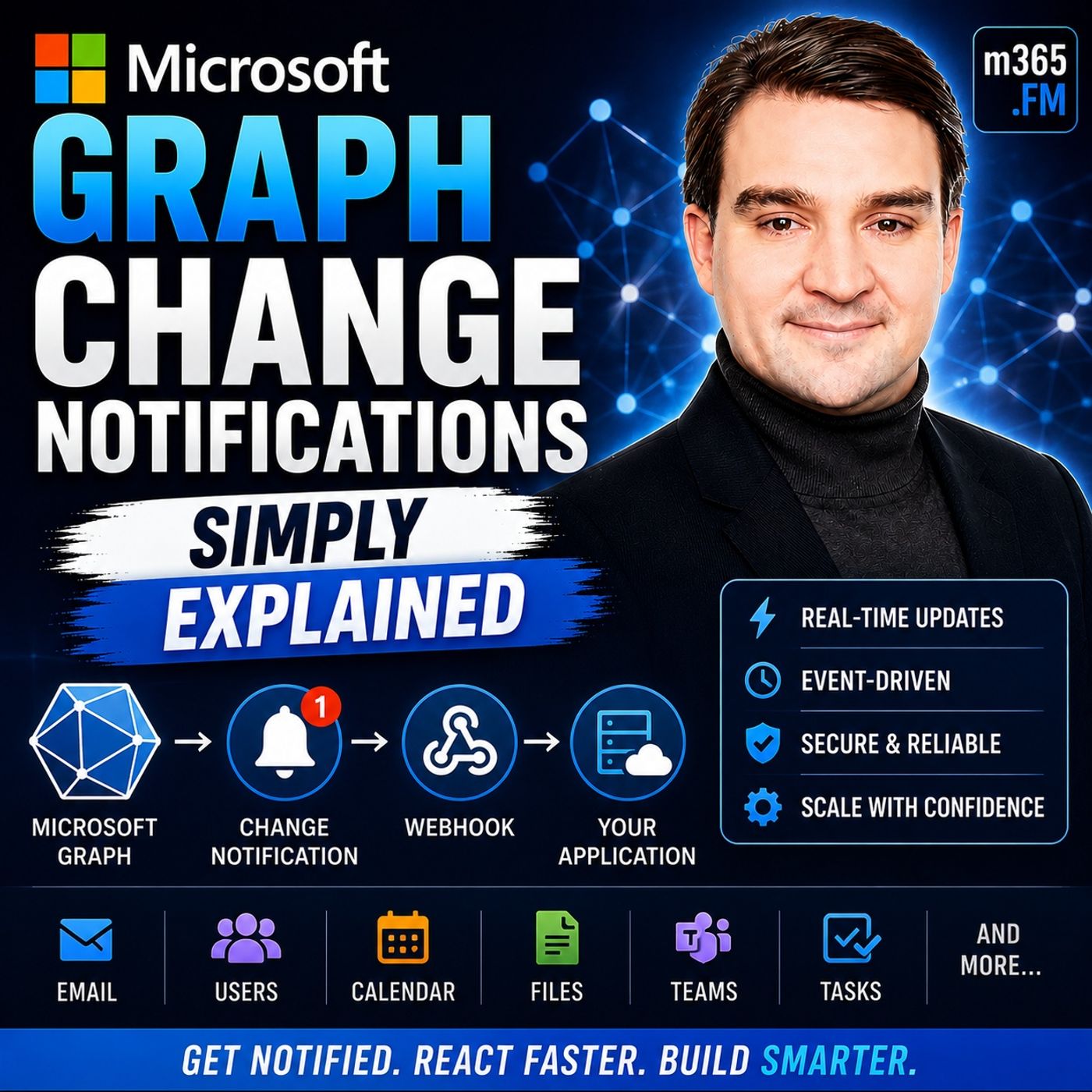
Microsoft Graph Change Notifications - Simply Explained
Quick Answer: Microsoft Graph Change Notifications is an important Microsoft topic for teams that need clearer technical decisions, safer implementation, and practical operational value. This episode explains what it does, where it fits in the Microsoft ecosystem, and the key considerations for administrators, architects, and business stakeholders. Microsoft Graph Change Notifications play a crucial role in real-time data management. They allow your applications to respond instantly to changes ...
Guest: Mirko Peters
July 19, 2026
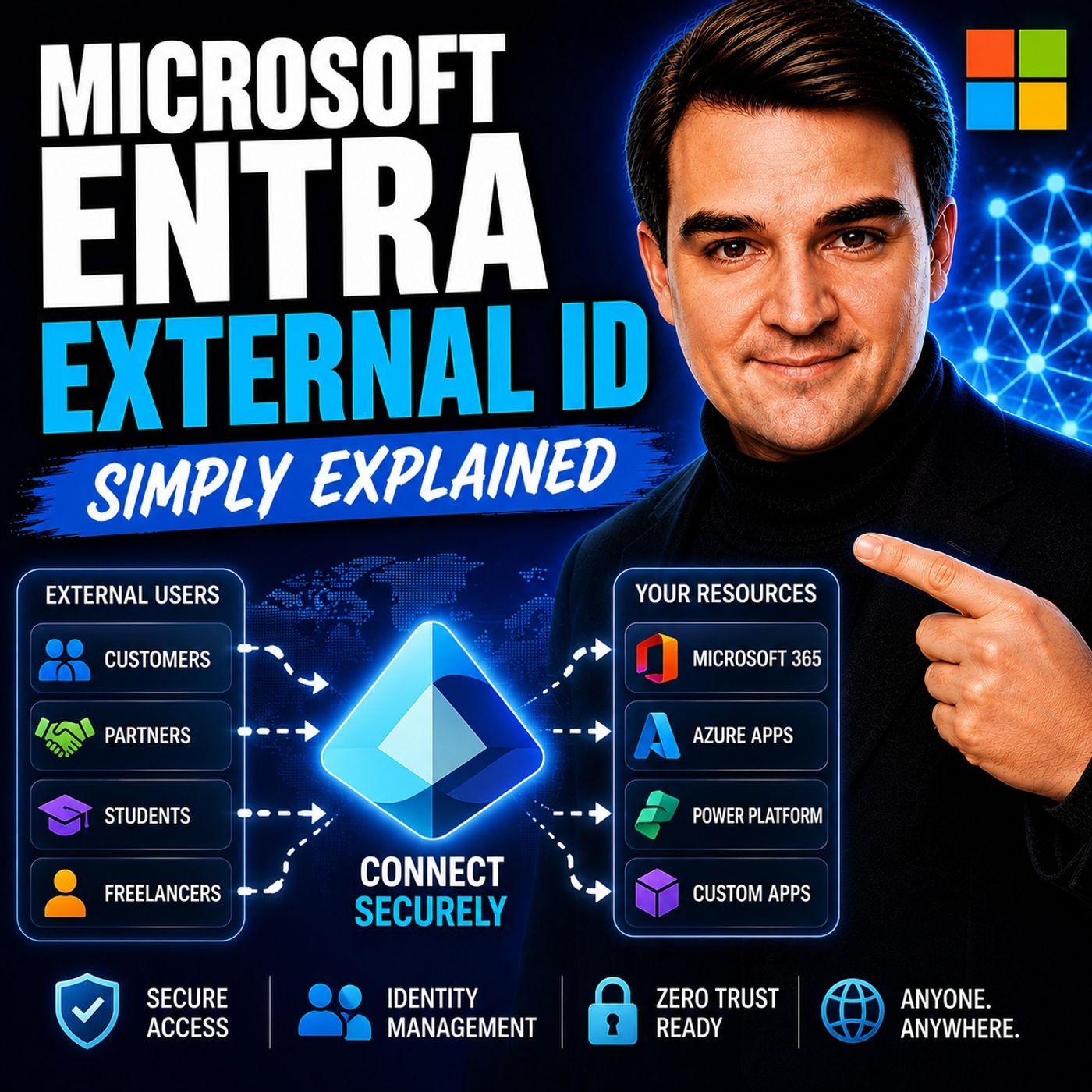
Microsoft Entra External ID - Simply Explained
Microsoft Entra External ID is Microsoft's identity and access management solution for people outside your organization. It enables secure authentication and authorization for business partners, guest users, customers, and consumer applications while supporting modern identity experiences, strong security, and seamless collaboration. Whether you're building customer-facing applications or enabling secure B2B collaboration, External ID provides a scalable platform for managing external identities. In this episode of Microsoft Knowledge Nuggets, Mirko Peters explains Microsoft Entra External ID in simple terms and shows how it helps organizations securely manage external users. You'll learn the difference between B2B collaboration and Customer Identity and Access Management (CIAM), how external tenants work, and how users can sign in using Microsoft accounts, social identities like Google or Facebook, email one-time passcodes, or other supported identity providers. The episode als…
Guest: Mirko Peters
July 19, 2026
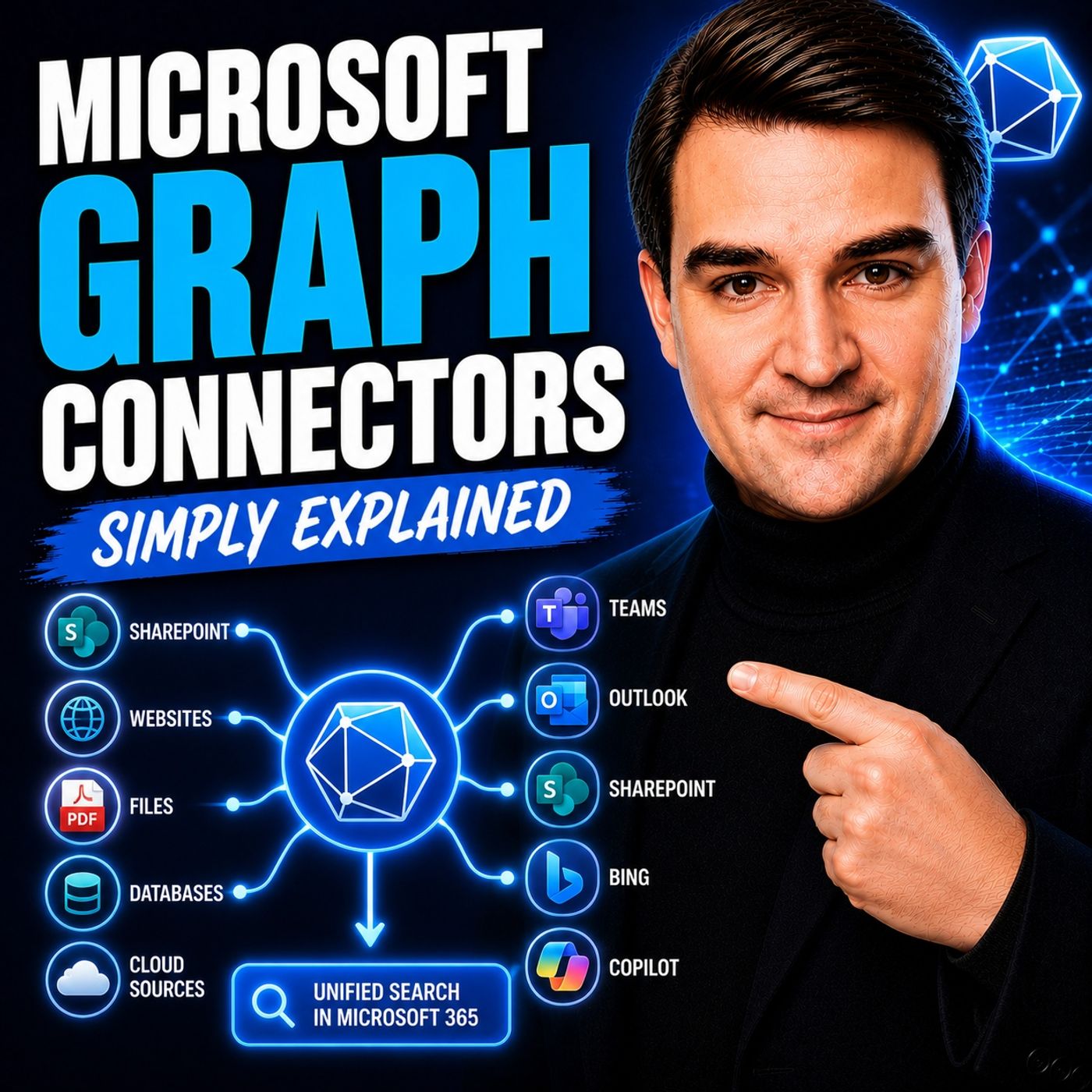
Microsoft Graph Connectors - Simply Explained
Microsoft Graph Connectors extend the Microsoft Graph by bringing data from external systems into Microsoft 365, making it searchable and accessible through Microsoft Search, Microsoft Copilot, and other Microsoft 365 experiences. Instead of limiting users to data stored in Microsoft 365, Graph Connectors allow organizations to securely index information from third-party platforms such as Salesforce, ServiceNow, Confluence, Jira, file shares, websites, databases, and custom business applications. In this episode of Microsoft Knowledge Nuggets, Mirko Peters explains Microsoft Graph Connectors in simple terms and shows how they help unify knowledge across your organization. You'll learn how Graph Connectors crawl external data sources, create searchable indexes, apply security trimming, and surface relevant content directly in Microsoft Search and Microsoft Copilot. The episode also explains the architecture behind connectors, indexing pipelines, permissions, and how external content…
Guest: Mirko Peters
July 19, 2026
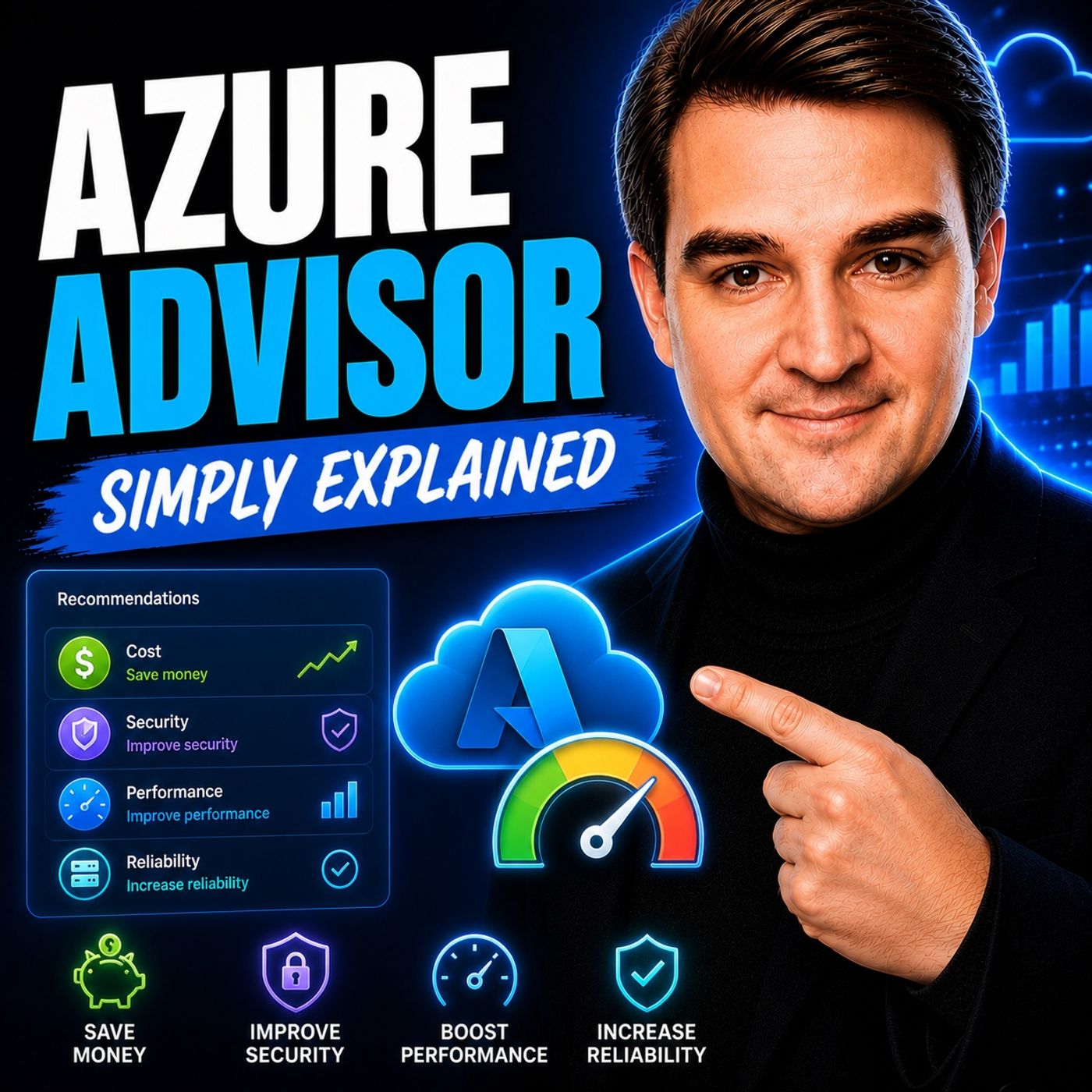
Azure Advisor - Simply Explained
Azure Advisor is Microsoft's personalized cloud optimization service that continuously analyzes your Azure environment and provides actionable recommendations to improve reliability, security, performance, operational excellence, and cost efficiency. By identifying best practice improvements, Azure Advisor helps organizations optimize workloads, reduce unnecessary spending, and strengthen their cloud infrastructure with minimal effort. In this episode of Microsoft Knowledge Nuggets, Mirko Peters explains Azure Advisor in simple terms and shows how it helps administrators make smarter decisions across their Azure subscriptions. You'll learn how Azure Advisor evaluates your resources, prioritizes recommendations, and categorizes them into key areas such as cost optimization, security, reliability, operational excellence, and performance. You'll also discover how to review recommendations, implement suggested changes, and measure the impact on your environment. The episode covers c…
Guest: Mirko Peters