
Focus on development strategies for Microsoft platforms, including API design, automation, and identity management. Learn best practices for building secure and maintainable solutions in a cloud-centric environment.
Sept. 13, 2026
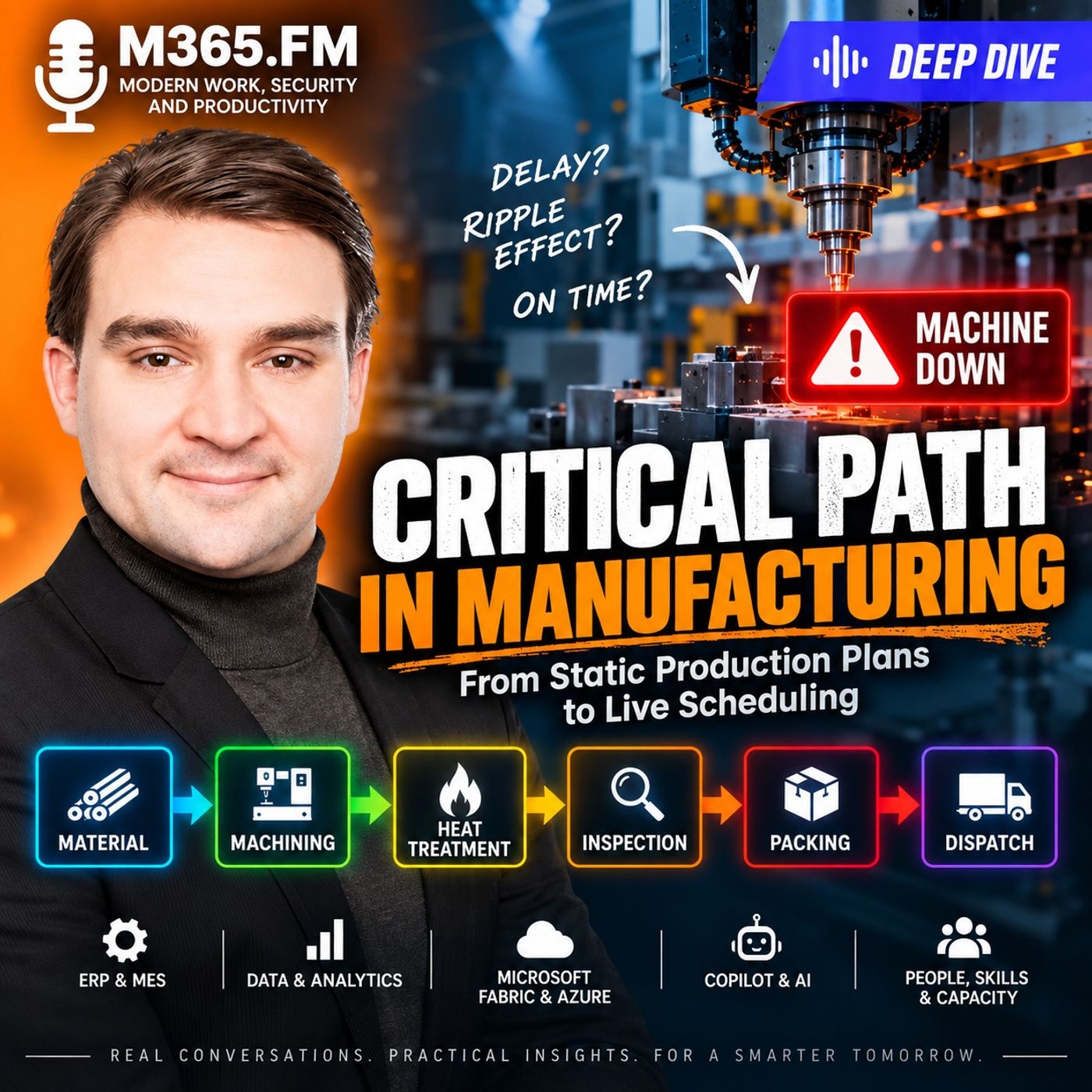
Why Your Critical Path Changes When Production Changes
A production plan can look perfectly reasonable — until production actually starts.One machine runs late. A material release slips. A qualified operator becomes unavailable. A quality inspection takes longer than expected. A batch misses its furnace window. Suddenly, a delay of only a few hours can put an entire customer delivery at risk.In this deep dive, we explore how the Critical Path Method (CPM) can be adapted from traditional project management to modern manufacturing and production plann...
Guest: Mirko Peters
![How AI Changed Software Development Forever — Building the Agentic Future with Andre Baltieri [MVP]](https://d3wo5wojvuv7l.cloudfront.net/t_rss_itunes_square_1400/images.spreaker.com/original/60f2b3cc2fa57ceb80e5234f6b0c736b.jpg "How AI Changed Software Development Forever — Building the Agentic Future with Andre Baltieri [MVP]")
Sept. 3, 2026
How AI Changed Software Development Forever — Building the Agentic Future with Andre Baltieri [MVP]
Artificial intelligence is changing software development at a speed we have rarely seen before.Developers have already moved from writing every line of code themselves to working with AI assistants that can generate code, explain unfamiliar systems, create tests, debug applications, and automate repetitive work.But according to Microsoft MVP Andre Baltieri, that is only the beginning.In this episode of M365.FM, Mirko Peters sits down with Andre for a deep dive into the transition from traditiona...
![Stop Reinventing SPFx- Building Better SharePoint Solutions with PnP React Controls with Siddharth Vaghasia [MVP]](https://d3wo5wojvuv7l.cloudfront.net/t_rss_itunes_square_1400/images.spreaker.com/original/39e91285397053de371efe06eda2fa15.jpg "Stop Reinventing SPFx- Building Better SharePoint Solutions with PnP React Controls with Siddharth Vaghasia [MVP]")
Aug. 27, 2026
Stop Reinventing SPFx- Building Better SharePoint Solutions with PnP React Controls with Siddharth Vaghasia [MVP]
Modern SharePoint development does not mean building every component from scratch. In this episode of the M365 FM Podcast, Mirko Peters talks with Microsoft MVP Siddharth Vaghasia about building production-ready SharePoint Framework (SPFx) solutions by combining the right Microsoft 365 technologies with reusable community components.Siddharth brings nearly 18 years of experience across the Microsoft technology stack, from .NET and the early days of SharePoint Server to SharePoint Online, Microso...
Guests: Mirko Peters , Siddharth Vaghasia
Aug. 22, 2026
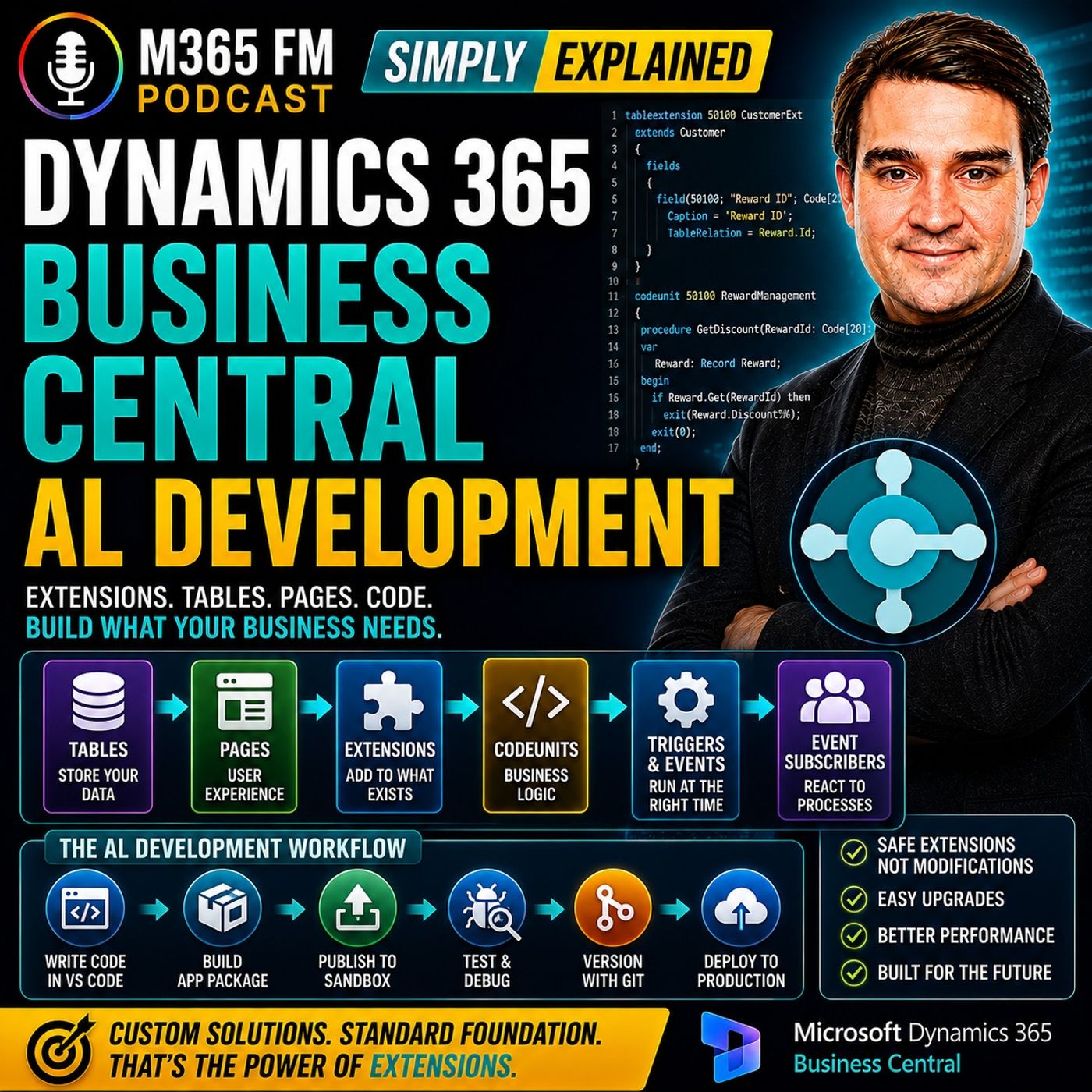
Dynamics 365 Business Central AL Development
Business Central handles finance, customers, sales orders, inventory, and invoices out of the box. But what happens when your company needs one additional field, a custom approval step, a new business rule, or functionality that doesn't exist in the standard application? In this episode of M365 FM, Mirko Peters explains Dynamics 365 Business Central AL Development—how developers use Microsoft's AL language and extensions to customize Business Central without directly modifying the standard appli...
![GitHub Copilot, Clean Context, Automated Testing & AI Coding Agents with Lars Gyrup Brink Nielsen [MVP]](https://d3wo5wojvuv7l.cloudfront.net/t_rss_itunes_square_1400/images.spreaker.com/original/61cf8287d873bf4210956022d170b467.jpg "GitHub Copilot, Clean Context, Automated Testing & AI Coding Agents with Lars Gyrup Brink Nielsen [MVP]")
Aug. 20, 2026
GitHub Copilot, Clean Context, Automated Testing & AI Coding Agents with Lars Gyrup Brink Nielsen [MVP]
AI-assisted development is moving beyond autocomplete and chat. Modern AI coding agents can inspect repositories, modify files, run tests, analyze failures, create pull requests, and execute increasingly complex development tasks. In this episode of the M365 FM Podcast, Mirko Peters talks with Microsoft MVP Lars Gyrup Brink Nielsen about GitHub Copilot, AI coding agents, developer experience, automated testing, TypeScript, JavaScript, Nx, monorepos, Polygraph, GitHub Actions, Playwright, and the...
Guests: Mirko Peters , Lars Gyrup Brink Nielsen
Aug. 12, 2026
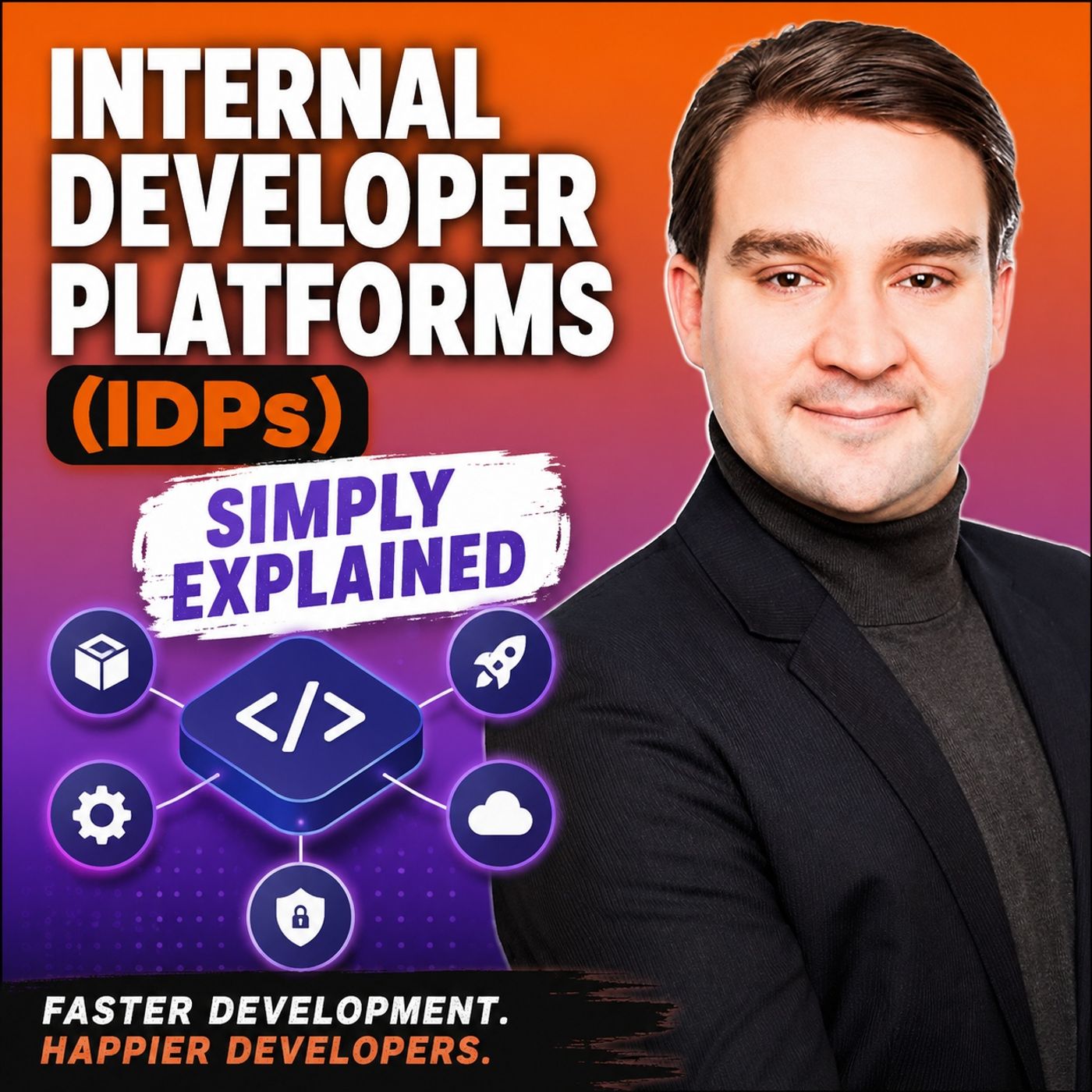
Internal Developer Platforms (IDPs) - Simply Explained
Internal Developer Platforms promise faster development, less friction, and happier developers—but what exactly is an IDP, and how does it work behind the scenes?In this episode of Microsoft Knowledge Nuggets, Mirko Peters explains Internal Developer Platforms in plain English. We explore how platform engineering turns cloud infrastructure, security rules, automation, and developer tooling into reusable self-service experiences that help development teams build, deploy, and operate applications ...
Aug. 12, 2026
Git - Simply Explained
Git — Simply ExplainedHave you ever broken something that worked yesterday and then searched through folders named “final,” “final-final,” and “use-this-version”? Git replaces that confusion with a clear, traceable history of your project.In this episode of M365 FM, Mirko Peters explains Git in plain English. You will learn how commits create meaningful checkpoints, how the working directory and staging area fit together, why developers use branches, how merges and conflicts work, and where GitH...
![AI, Power Platform & Developer Experience: The Next Frontier with Reza Niroomand [MVP]](https://d3wo5wojvuv7l.cloudfront.net/t_rss_itunes_square_1400/images.spreaker.com/original/6a20c03c056e6bb4d7490488d0ed2a51.jpg "AI, Power Platform & Developer Experience: The Next Frontier with Reza Niroomand [MVP]")
July 17, 2026
AI, Power Platform & Developer Experience: The Next Frontier with Reza Niroomand [MVP]
Artificial intelligence is fundamentally changing how developers build solutions on Microsoft Power Platform. In this episode of M365.FM, Mirko Peters is joined by Reza Niroomand to explore how AI-powered development is transforming the developer experience and why the next generation of Power Platform builders will work very differently from today. The conversation explores how tools such as Microsoft Copilot, AI-assisted coding, intelligent automation, and modern development practices are reducing repetitive work while enabling developers to focus on solving business problems. Reza shares practical insights into how professional developers and citizen developers can collaborate more effectively as AI becomes a core part of the software development lifecycle. You'll learn how the Power Platform ecosystem is evolving beyond traditional low-code development, with stronger integration into professional development workflows, source control, testing, governance, and enterprise arch…
Guests: Mirko Peters , Reza Niroomand
![.NET Extensibility and Clean Architecture with Miguel Castro [MVP]](https://d3wo5wojvuv7l.cloudfront.net/t_rss_itunes_square_1400/images.spreaker.com/original/41186cf8c53882e1111ddcf93e810d04.jpg ".NET Extensibility and Clean Architecture with Miguel Castro [MVP]")
July 1, 2026
.NET Extensibility and Clean Architecture with Miguel Castro [MVP]
Software doesn't become difficult to maintain because developers write bad code—it becomes difficult because it wasn't designed to evolve. In this episode of the M365 FM Podcast, Mirko Peters is joined by Microsoft MVP and veteran software architect Miguel Castro to explore why extensibility should be at the heart of every modern .NET application. Drawing on decades of experience building enterprise platforms, cloud SDKs, AI-powered transcription systems, and automation solutions, Miguel explains how designing for change helps applications survive new business requirements, emerging technologies, and growing complexity. The discussion covers the principles behind clean architecture, modular design, dependency injection, abstractions, strategy patterns, plugin architectures, and event-driven development, with practical examples from real-world enterprise projects. Miguel also shares where developers should invest time in architecture, how to avoid overengineering, and why extensi…
Guests: Mirko Peters , Miguel Castro
June 30, 2026
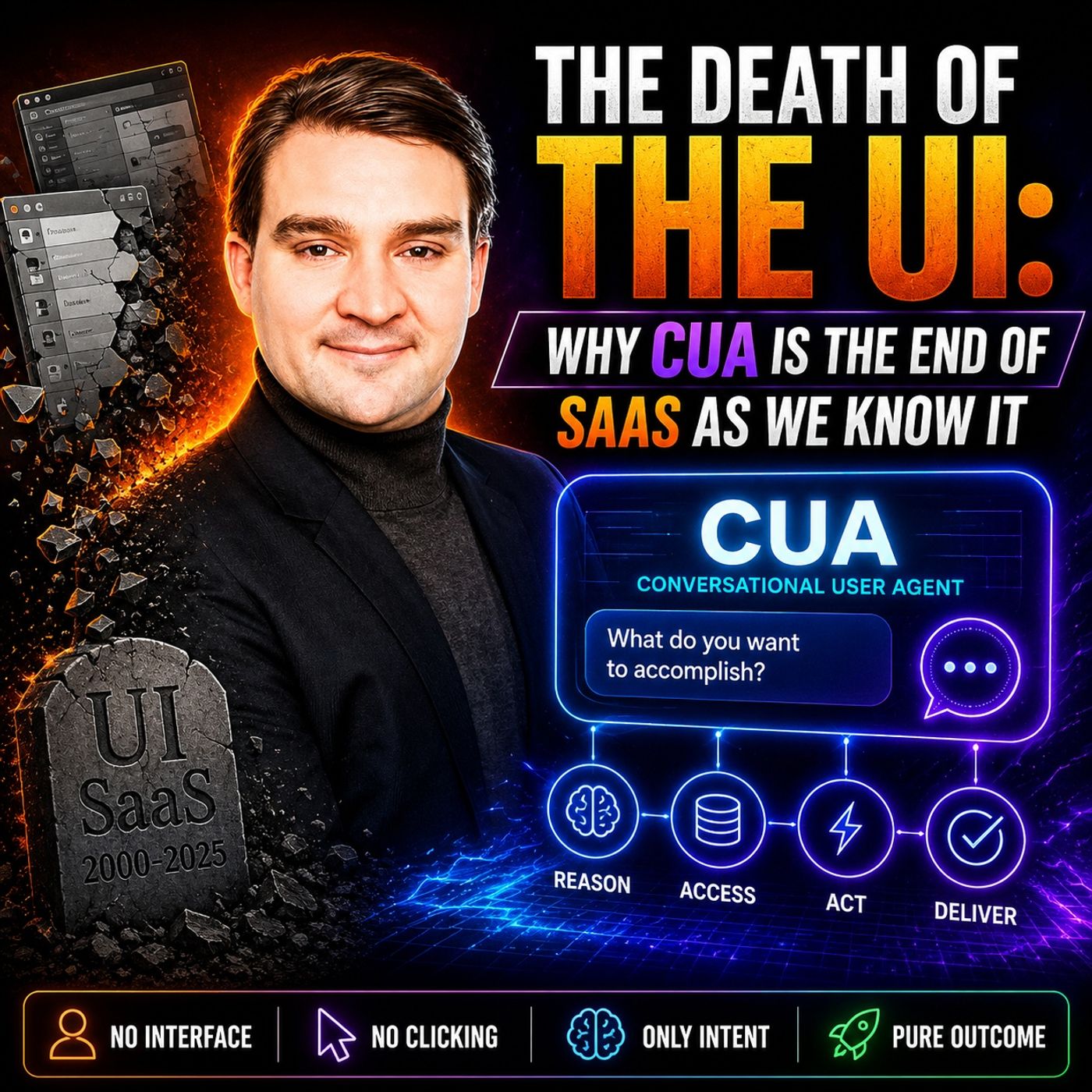
Computer-Using Agents: How CUA Could Transform SaaS
This episode explores why Computer-Using Agents (CUA) could fundamentally change the future of enterprise software. Instead of humans navigating dashboards, menus, and forms, AI agents will increasingly interact with applications on our behalf. The user interface becomes optional, while AI focuses on achieving business outcomes rather than simply responding to clicks. The discussion explains how traditional SaaS applications were designed around human interaction, but agentic AI shifts the focus toward APIs, automation, and orchestration. Rather than opening multiple business applications, users will simply describe what they want, and AI agents will coordinate the required systems, execute workflows, and return the final result. The episode also examines why this transformation challenges existing SaaS vendors. Products will compete less on beautiful interfaces and more on the quality of their data, business logic, integrations, governance, and security. Companies that expose t…
Guest: Mirko Peters
June 28, 2026
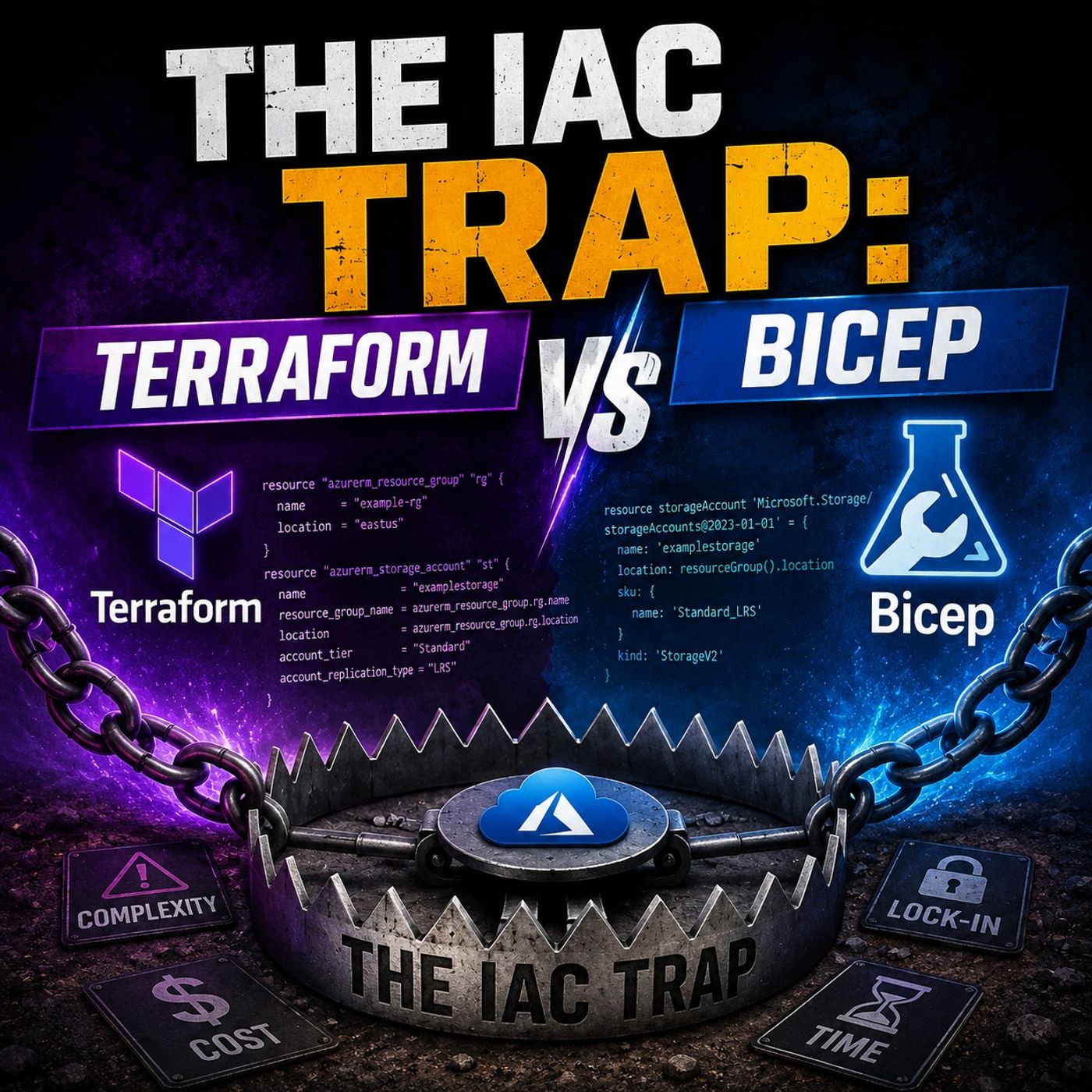
Terraform vs Azure Bicep: Which IaC Tool Should You Choose?
In this episode of the M365.fm podcast, we explore one of the most debated Infrastructure as Code (IaC) questions in the Azure ecosystem: should you choose Terraform or Azure Bicep? Rather than declaring a universal winner, the discussion explains why the right choice depends on your organization's architecture, cloud strategy, and operational requirements. The episode compares both technologies across key areas including multi-cloud support, Azure-native integration, state management, modularity, developer experience, governance, and long-term maintainability. You'll learn why Bicep is often the preferred choice for Azure-only environments thanks to its native ARM integration, simpler syntax, and immediate support for new Azure services. In contrast, Terraform excels in multi-cloud and hybrid scenarios where a single tool is needed to manage infrastructure across Azure, AWS, Google Cloud, and other platforms. The conversation also covers migration considerations, team skills, d…
Guest: Mirko Peters
June 24, 2026
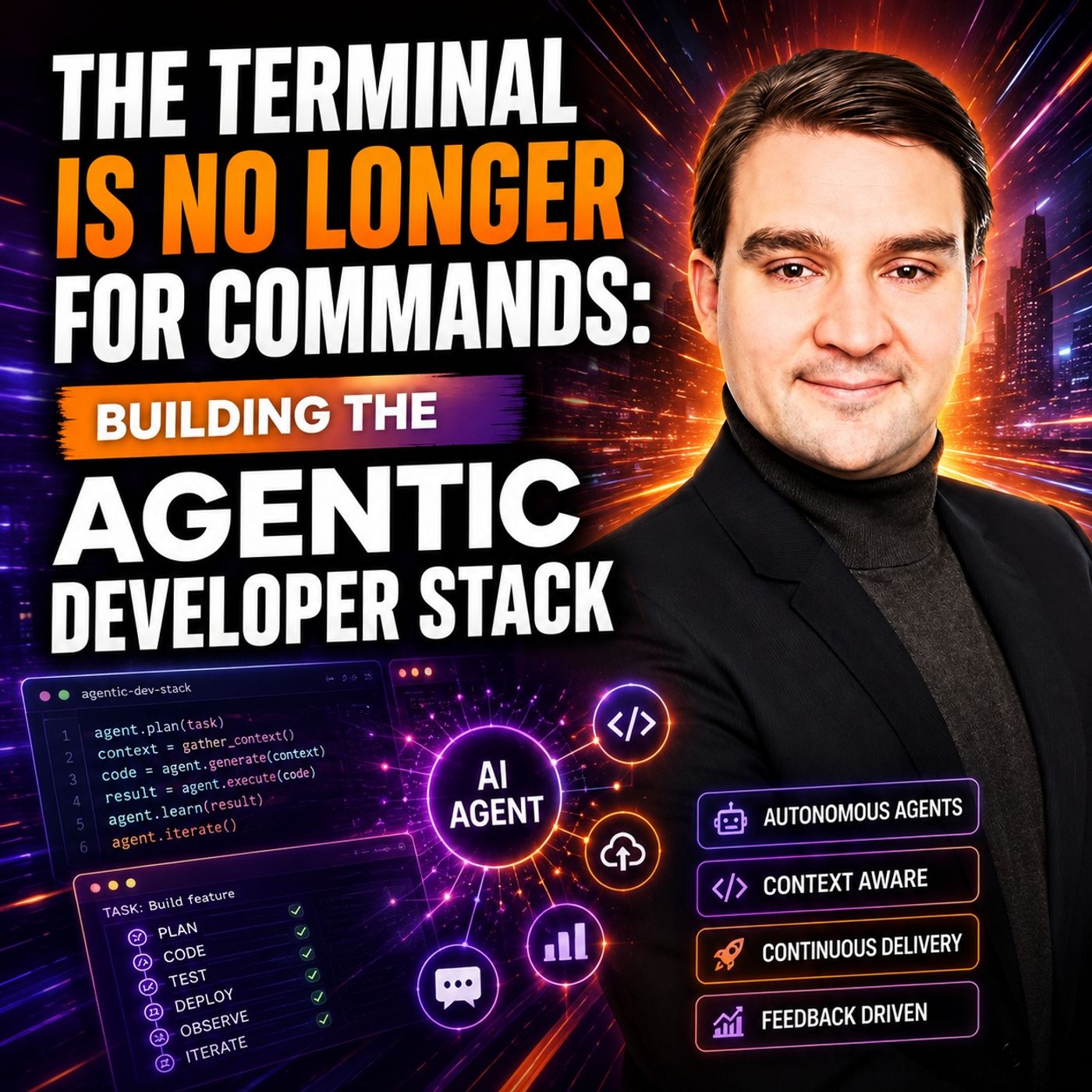
Agentic Developer Stack: AI Agents in the Terminal
The software development workflow is undergoing its biggest transformation since the rise of modern IDEs. In this episode, we explore how AI is turning the terminal from a simple command-line interface into the orchestration layer of modern software engineering. Rather than manually executing commands, developers increasingly define goals while intelligent agents plan, execute, validate, and refine the work. We explain why AI-assisted coding alone isn't enough to solve today's productivity challenges and examine the hidden bottlenecks in code reviews, CI/CD pipelines, modernization projects, and deployment workflows. The discussion highlights the shift from traditional tools that respond to commands to autonomous agents that understand intent, make decisions, and operate within defined policies. A central focus is the Agentic Developer Stack, built on four key layers: orchestration, transformation, validation, and execution. Together, these layers enable AI agents to modernize l…
Guest: Mirko Peters
June 22, 2026
Microsoft Refine (Rayfin) as Backend as a Service
In this episode of the M365.fm Podcast, Mirko Peters explores whether custom APIs are becoming obsolete and how Microsoft’s new Rayfin platform could fundamentally change the way enterprise applications are built. Traditionally, developers have spent countless hours creating backend services, authentication layers, databases, APIs, and infrastructure before delivering actual business value. Rayfin introduces a different approach by offering a Backend-as-a-Service (BaaS) model that automates much of this complexity. The episode examines how Rayfin enables developers to define data models, business logic, security policies, and APIs directly in code while Microsoft Fabric automatically provisions and manages the backend infrastructure. Instead of building and maintaining custom APIs from scratch, organizations can focus on application functionality while inheriting enterprise-grade governance, security, compliance, and scalability from the Fabric platform. Mirko discusses the broa…
Guest: Mirko Peters
![From SharePoint Developer to Power Platform Architect with Michel Mendes [MVP]](https://d3wo5wojvuv7l.cloudfront.net/t_rss_itunes_square_1400/images.spreaker.com/original/aa5dfe6fe28b65b7edf5c1a4ef5d9d74.jpg "From SharePoint Developer to Power Platform Architect with Michel Mendes [MVP]")
June 16, 2026
From SharePoint Developer to Power Platform Architect with Michel Mendes [MVP]
Most organizations believe they are building AI agents. In reality, many are still deploying advanced chatbots that operate within isolated applications. These systems can answer questions and generate content, but they lack persistence, long-term memory, and the ability to coordinate work across enterprise systems. In this episode, we explore one of the most important shifts happening in enterprise AI: the evolution from standalone conversational experiences to connected agent ecosystems. Instead of treating AI as a feature inside Microsoft Teams, Slack, or individual business applications, organizations are beginning to build persistent agent fabrics that can collaborate, share context, and execute tasks across multiple platforms. We discuss why memory, orchestration, identity, and governance are becoming critical components of modern AI architectures. The conversation examines how enterprises are moving beyond simple prompt-response interactions toward systems where AI agents…
Guests: Mirko Peters , Michel Mendes
June 15, 2026
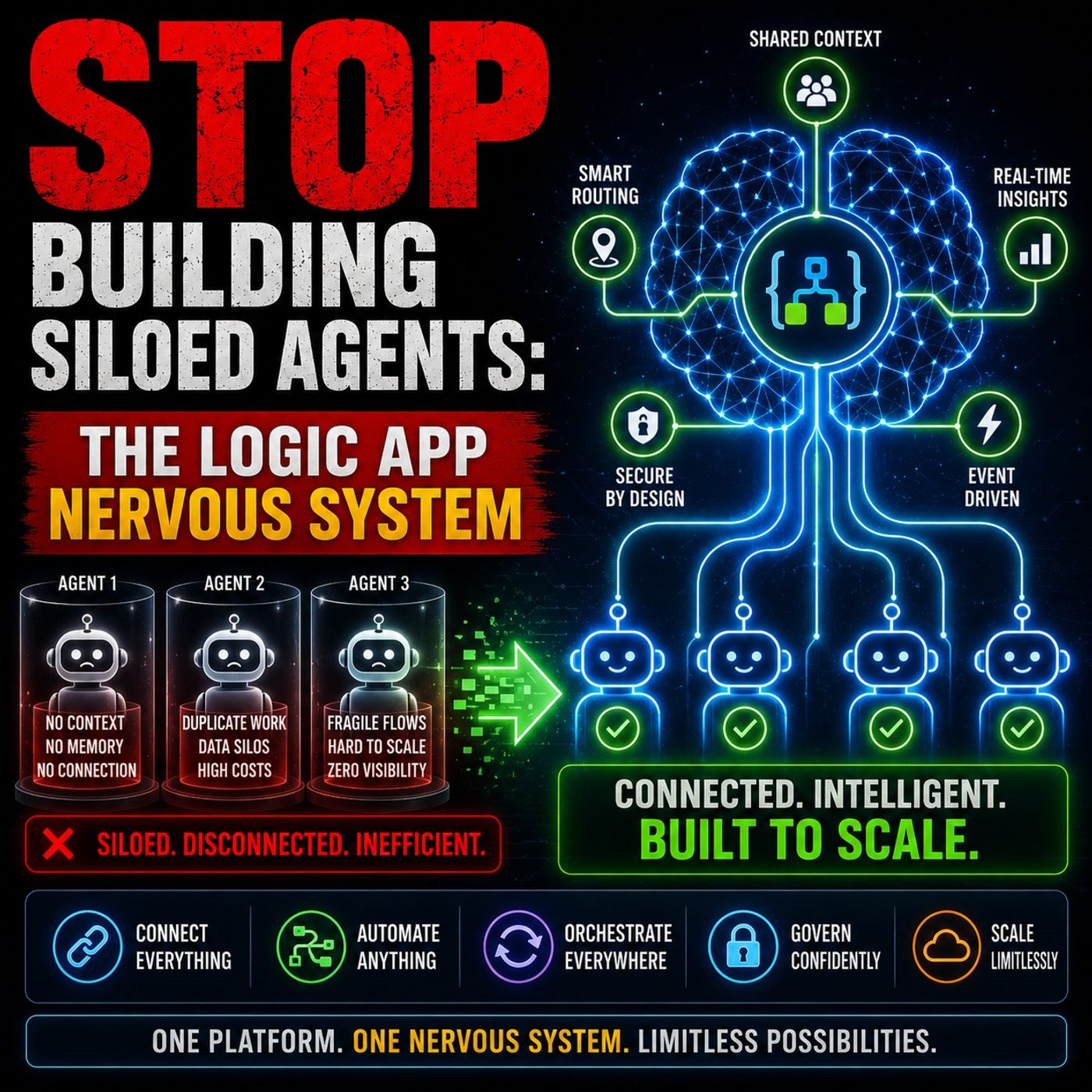
Azure Logic Apps for Multi-Agent AI Orchestration
In this episode, we explore why many organizations are making a critical mistake when building AI solutions: creating agents that operate in isolation. While individual agents can be powerful, they often become disconnected silos that lack the ability to coordinate across systems, processes, and business functions. The conversation focuses on Azure Logic Apps as the “nervous system” for enterprise AI, providing the orchestration layer that connects agents, applications, and workflows. Rather than viewing agents as standalone tools, organizations should design them as part of a larger ecosystem where events, messages, and automated processes enable collaboration and intelligent decision-making. We discuss the principles of event-driven architecture, the role of integration in modern AI systems, and how Logic Apps can connect Microsoft 365, Azure services, business applications, and external platforms. The episode also covers governance, scalability, and operational visibility, sh…
Guest: Mirko Peters
![Azure Infrastructure as Code and DevOps with Maik van der Gaag [MVP]](https://d3wo5wojvuv7l.cloudfront.net/t_rss_itunes_square_1400/images.spreaker.com/original/e588d62438658e41497c6b5b793bf1ea.jpg "Azure Infrastructure as Code and DevOps with Maik van der Gaag [MVP]")
June 11, 2026
Azure Infrastructure as Code and DevOps with Maik van der Gaag [MVP]
What does the future of Azure look like, and how are Infrastructure as Code and DevOps transforming the way organizations build and manage cloud solutions? In this episode of M365 FM, host Mirko Peters is joined by Microsoft Azure MVP Maik van der Gaag for an in-depth discussion about modern cloud engineering, automation, and the evolving Azure ecosystem. Maik shares insights from his extensive experience helping organizations adopt cloud technologies and modern development practices. The conversation explores why Infrastructure as Code (IaC) has become a critical foundation for scalable and reliable cloud environments. Maik explains how tools such as Terraform and Bicep enable teams to automate deployments, improve consistency, reduce configuration drift, and accelerate delivery across Azure environments. Beyond the technology, the episode highlights the cultural side of DevOps. Successful cloud transformation is not only about tools and automation but also about collaborati…
Guests: Mirko Peters , Maik van der Gaag
![Microsoft 365 Copilot Extensibility with Gautam Sheth [MVP]](https://d3wo5wojvuv7l.cloudfront.net/t_rss_itunes_square_1400/images.spreaker.com/original/0d09e6adda79b6f41944f0d02b5987e9.jpg "Microsoft 365 Copilot Extensibility with Gautam Sheth [MVP]")
June 5, 2026
Microsoft 365 Copilot Extensibility with Gautam Sheth [MVP]
In this episode of M365.fm, host David Warner speaks with MVP Gautam Sheth about Microsoft 365 Copilot extensibility and how organizations can go beyond the out-of-the-box Copilot experience. Gautam explains the different extensibility options available, including declarative agents, custom engine agents, Copilot connectors, and plugins, helping listeners understand when and why each approach should be used. The discussion focuses on practical steps for extending Copilot with organizational knowledge, business processes, and external systems to deliver more relevant and actionable AI experiences. Gautam highlights the importance of grounding Copilot in enterprise data, leveraging Microsoft Graph, and designing solutions that align with real business scenarios rather than simply adding AI for its own sake. The episode also covers governance, security, and adoption considerations, emphasizing that successful Copilot implementations require a balance between technical capabilities …
Guests: Mirko Peters , Gautam Sheth
May 31, 2026
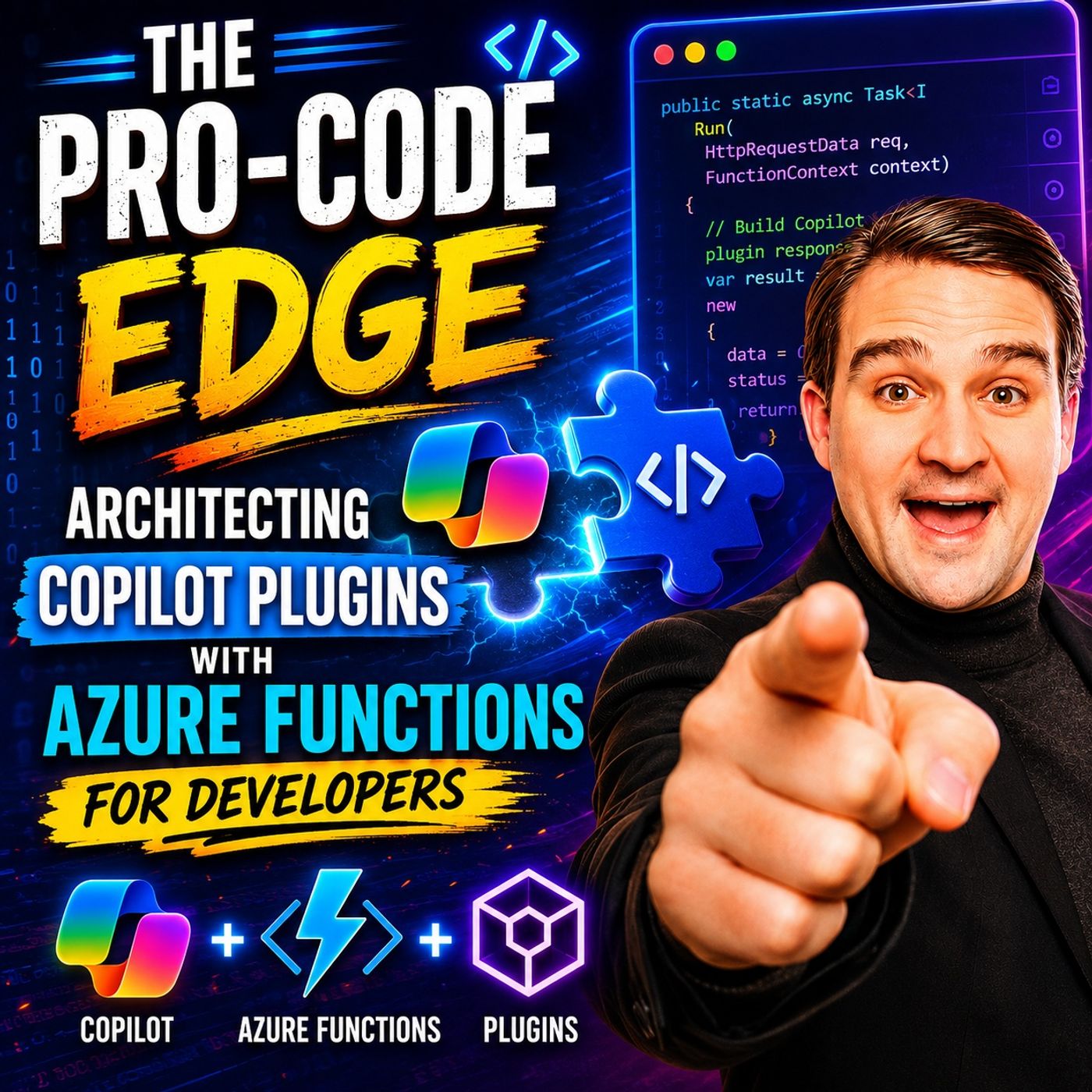
Build Microsoft Copilot Plugins with Azure Functions
This episode of The Pro Code Edge explores how developers can extend Microsoft 365 Copilot with custom plugins powered by Azure Functions. The discussion focuses on moving beyond out-of-the-box capabilities to create tailored enterprise solutions that connect Copilot with business systems, APIs, and proprietary data. Azure Functions are presented as an ideal platform for Copilot extensibility due to their serverless nature, scalability, and cost efficiency. By exposing business logic through secure APIs, developers can enable Copilot to retrieve information, execute processes, and interact with external applications using natural language. The hosts emphasize that successful Copilot plugins require strong architectural foundations. Key considerations include authentication with Microsoft Entra ID, authorization, security, monitoring, error handling, and governance. Enterprise-grade solutions must be designed with reliability, maintainability, and compliance in mind from the begi…
Guest: Mirko Peters

May 28, 2026
Microsoft Graph API Discovery for Enterprise Semantic Search
Enterprise search is no longer limited by storage capacity or indexing speed. The real challenge is the growing gap between when information is created and when it becomes discoverable. This article explores how Microsoft Graph API Discovery is changing enterprise search by shifting from traditional crawl-and-index models to a relationship-driven, real-time discovery architecture. Traditional enterprise search relies on scheduled indexing, which often creates delays, stale results, and fragmented knowledge across systems. As organizations generate data across Teams, SharePoint, Outlook, OneDrive, and other Microsoft 365 services, keeping search indexes current becomes increasingly difficult. Microsoft Graph approaches the problem differently. Instead of focusing solely on where information is stored, it understands how content, people, conversations, meetings, permissions, and business processes are connected. This graph-based model enables search experiences that are contextual…
Guest: Mirko Peters

May 27, 2026
Modern Microsoft 365 Automation Beyond PowerShell Scripts
For years, PowerShell scripts were the foundation of Microsoft 365 automation. IT admins built massive script libraries to onboard users, assign licenses, provision devices, configure Exchange, manage permissions, and automate repetitive operational work across cloud and hybrid environments. But enterprise IT is changing fast. In this episode, we explore why traditional PowerShell-driven automation is becoming increasingly obsolete in modern Microsoft 365 environments. Static scripts struggle to keep up with rapidly changing APIs, evolving security models, Zero Trust architectures, AI-driven workflows, and the growing complexity of cloud-native services. We break down how Microsoft Graph, event-driven architectures, low-code automation, Copilot, AI agents, and modern orchestration platforms are reshaping enterprise automation. Instead of maintaining fragile scripts that constantly require updates, organizations are moving toward adaptive, API-first, and AI-assisted automation…
Guest: Mirko Peters
May 27, 2026
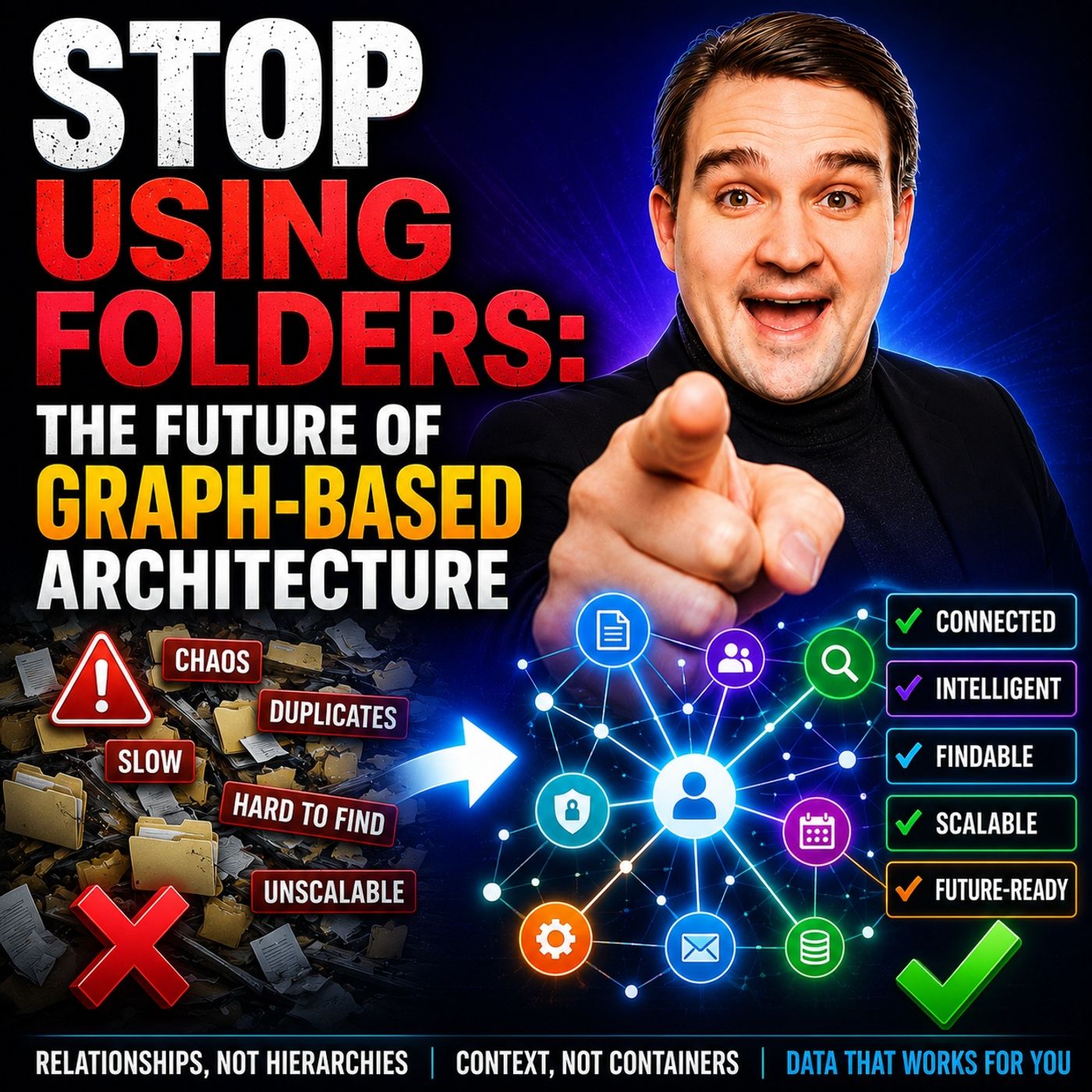
Microsoft Graph Architecture Beyond Folders and Hierarchies
For decades, organizations structured information using folders, hierarchies, and deeply nested file systems. But in the modern Microsoft 365 world, that model is rapidly becoming outdated. In this episode of the m365.fm podcast, Mirko Peters explores why graph-based architecture is replacing traditional folder structures and how Microsoft Graph is fundamentally changing the way organizations manage, discover, and interact with information. The episode explains how modern work no longer revolves around static locations for files, but around relationships, context, permissions, people, meetings, conversations, and connected data. Instead of asking “Where is the file stored?”, graph-based systems focus on “How is this information connected?” Microsoft Graph enables this by linking content across Teams, SharePoint, Outlook, OneDrive, Copilot, and the wider Microsoft 365 ecosystem. The discussion highlights why traditional folders create major challenges for collaboration, governanc…
Guest: Mirko Peters
![Enterprise AI Agent Engineering with Karthikeyan VK [MVP]](https://d3wo5wojvuv7l.cloudfront.net/t_rss_itunes_square_1400/images.spreaker.com/original/2f57511552c865613a91e0c61100a12b.jpg "Enterprise AI Agent Engineering with Karthikeyan VK [MVP]")
May 20, 2026
Enterprise AI Agent Engineering with Karthikeyan VK [MVP]
In this episode of the M365 FM Podcast, host Mirko Peters speaks with Microsoft AI MVP and CTO Karthikeyan VK about the biggest problem in today’s AI landscape: organizations are relying too heavily on Large Language Models (LLMs) while ignoring the engineering foundations needed for reliable enterprise AI systems. Karthikeyan explains that many companies try to make AI agents handle everything directly through prompts and LLMs, instead of combining them with deterministic engineering practices such as orchestration, validation, governance, retries, observability, and state management. He argues that LLMs should act as reasoning engines, while structured workflows and business logic remain controlled through traditional engineering systems. The discussion highlights the difference between probabilistic AI systems and deterministic enterprise processes like finance, compliance, ERP integrations, and security workflows. According to Karthikeyan, enterprise trust breaks down when A…
Guests: Mirko Peters , Karthikeyan
![Migrate Exchange Web Services to Microsoft Graph with Glen Scales [MVP]](https://d3wo5wojvuv7l.cloudfront.net/t_rss_itunes_square_1400/images.spreaker.com/original/aa0c11947976681a8d18c70b629fa584.jpg "Migrate Exchange Web Services to Microsoft Graph with Glen Scales [MVP]")
May 20, 2026
Migrate Exchange Web Services to Microsoft Graph with Glen Scales [MVP]
Microsoft is ending support for Exchange Web Services (EWS) in Exchange Online, with full retirement starting October 2026. The article explains why this matters for Microsoft 365 administrators, developers, ISVs, backup vendors, and enterprises still relying on legacy integrations. EWS has been a core API for mailbox access, calendar synchronization, migrations, archiving, and third-party tools for years, but Microsoft is now pushing organizations toward Microsoft Graph as the modern replacement. The article highlights that this is not just a technical API change. Many existing applications, scripts, automation processes, monitoring tools, and enterprise workflows still depend heavily on EWS. Organizations that fail to identify these dependencies early may face outages, broken integrations, compliance risks, or unsupported applications once Microsoft disables the service. A major focus is the migration challenge. While Microsoft Graph offers a modern, secure, and unified API mo…
Guests: Mirko Peters , Glen Scales
![Agentic Coding with Nick Doelman [MVP-MCT]](https://d3wo5wojvuv7l.cloudfront.net/t_rss_itunes_square_1400/images.spreaker.com/original/4ae34efbce3198b2e401c2a38659c887.jpg "Agentic Coding with Nick Doelman [MVP-MCT]")
May 17, 2026
Agentic Coding with Nick Doelman [MVP-MCT]
In this episode of the M365.fm podcast, Mirko Peters speaks with Microsoft MVP and MCT Nick Doelman about the rapid evolution of agentic coding and how AI is transforming software development. Nick shares his journey from traditional development into the world of low-code, Power Platform, and AI-assisted application building. The discussion explores how modern AI agents are changing the way developers create solutions by automating repetitive tasks, generating code, and assisting with business logic. Nick explains that agentic coding is not about replacing developers, but about enabling them to work faster, focus on architecture and problem-solving, and deliver value more efficiently. The episode also highlights the growing importance of Microsoft Copilot, Power Platform, and AI orchestration within enterprise environments. Nick discusses how developers and organizations must adapt their skills, rethink governance, and understand the balance between automation and human oversigh…
Guests: Mirko Peters , Nick Doelman