
Explore the intersection of analytics, data management, and governance in the Microsoft ecosystem. Gain insights into data platforms like Microsoft Fabric and best practices for security and compliance.
Oct. 4, 2026
Why Continuous Improvement Needs Better Data
Continuous improvement is supposed to create learning that compounds over time. In many factories, however, improvement work still depends heavily on workshops, spreadsheets, isolated reports, and what people remember from the previous shift. A Kaizen event can create visible progress, but a few weeks later the same loss often appears again under slightly different production conditions. The issue is not always the quality of the improvement idea. The bigger problem is that teams often cannot pr...
Sept. 17, 2026
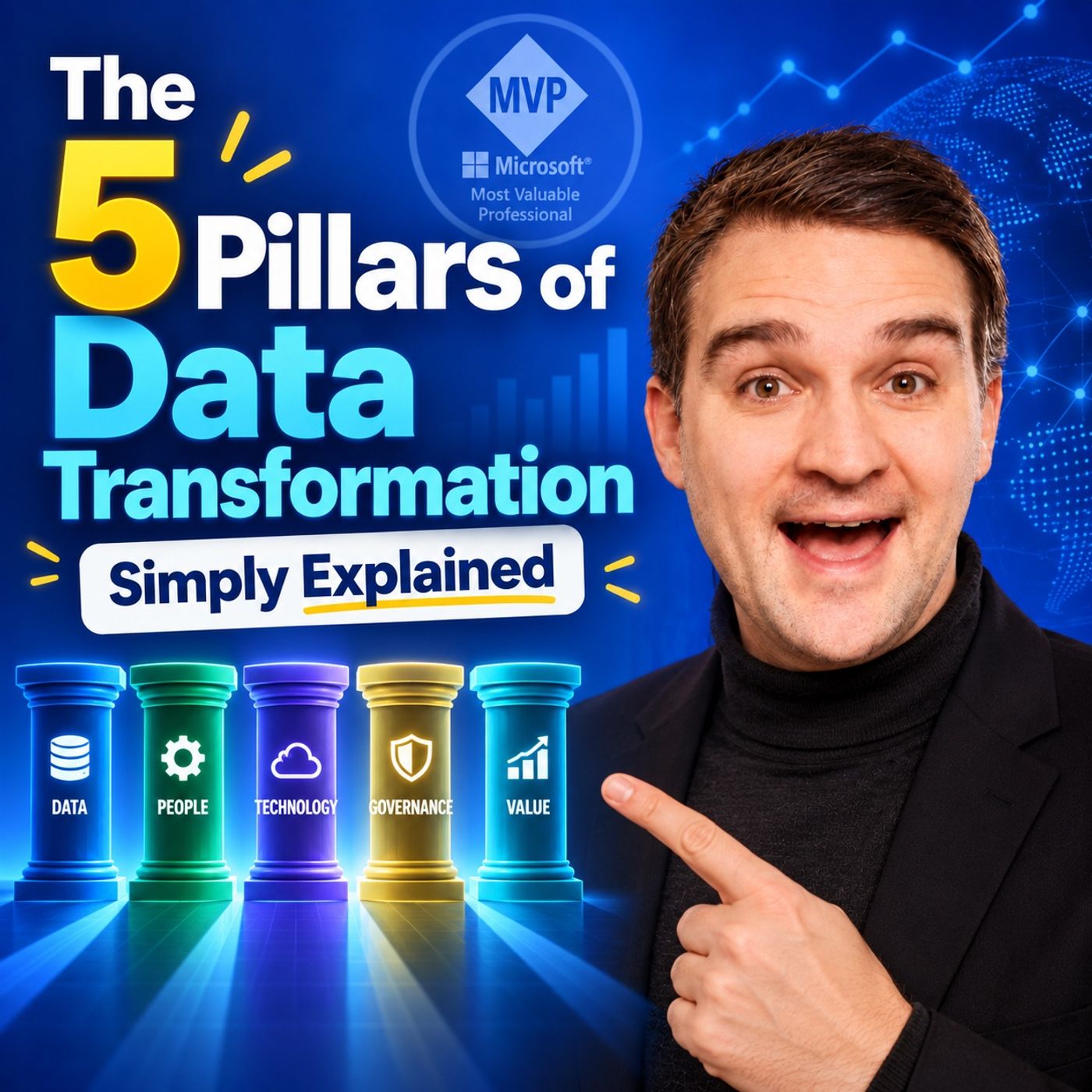
The 5 Pillars of Data Transformation - Simply Explained
AI was supposed to clear the backlog, accelerate decisions, and give every team a smarter way to work. Instead, many organizations now have Microsoft Copilot, Power BI, Microsoft Fabric, AI agents, and more data than ever before—while important decisions still crawl through meetings because nobody fully trusts the numbers or knows who can act on them. The technology spend keeps rising. The action does not. The problem is often not a lack of AI. It is the absence of an operating model connecting ...

Sept. 17, 2026
Your Factory Cloud Bill Is Much Higher Than You Think
Cloud storage may look cheap. Sending factory data to the cloud may look cheap. But the real cloud bill often starts when that data begins moving. In this episode, we break down the hidden costs behind modern Industrial IoT, manufacturing cloud, edge computing, and factory data architectures — from data egress and cross-region replication to NAT gateways, backups, dashboards, and high-frequency sensor data. A single MQTT stream from a factory can quickly become multiple data flows once telemetry...
![From Financial Data to AI-Ready Decisions: Power BI, Microsoft Fabric, Semantic Models & AI Agents with Rishi Sapra [MVP]](https://d3wo5wojvuv7l.cloudfront.net/t_rss_itunes_square_1400/images.spreaker.com/original/8aa4d01a181f070d9dcb236b70c41702.jpg "From Financial Data to AI-Ready Decisions: Power BI, Microsoft Fabric, Semantic Models & AI Agents with Rishi Sapra [MVP]")
Sept. 16, 2026
From Financial Data to AI-Ready Decisions: Power BI, Microsoft Fabric, Semantic Models & AI Agents with Rishi Sapra [MVP]
What happens when AI agents start making sense of financial and business data — not just displaying it?In this episode of M365.FM, Mirko Peters talks with Rishi Sapra Microsoft MVP about the architecture required to move beyond traditional dashboards and toward AI-powered, context-aware analytics with Microsoft Fabric, Power BI, Copilot Studio, semantic models, ontologies, and data agents.Organizations already have enormous amounts of information spread across ERP systems, Excel workbooks, Power...
Guests: Mirko Peters , Rishi Sapra
Sept. 15, 2026
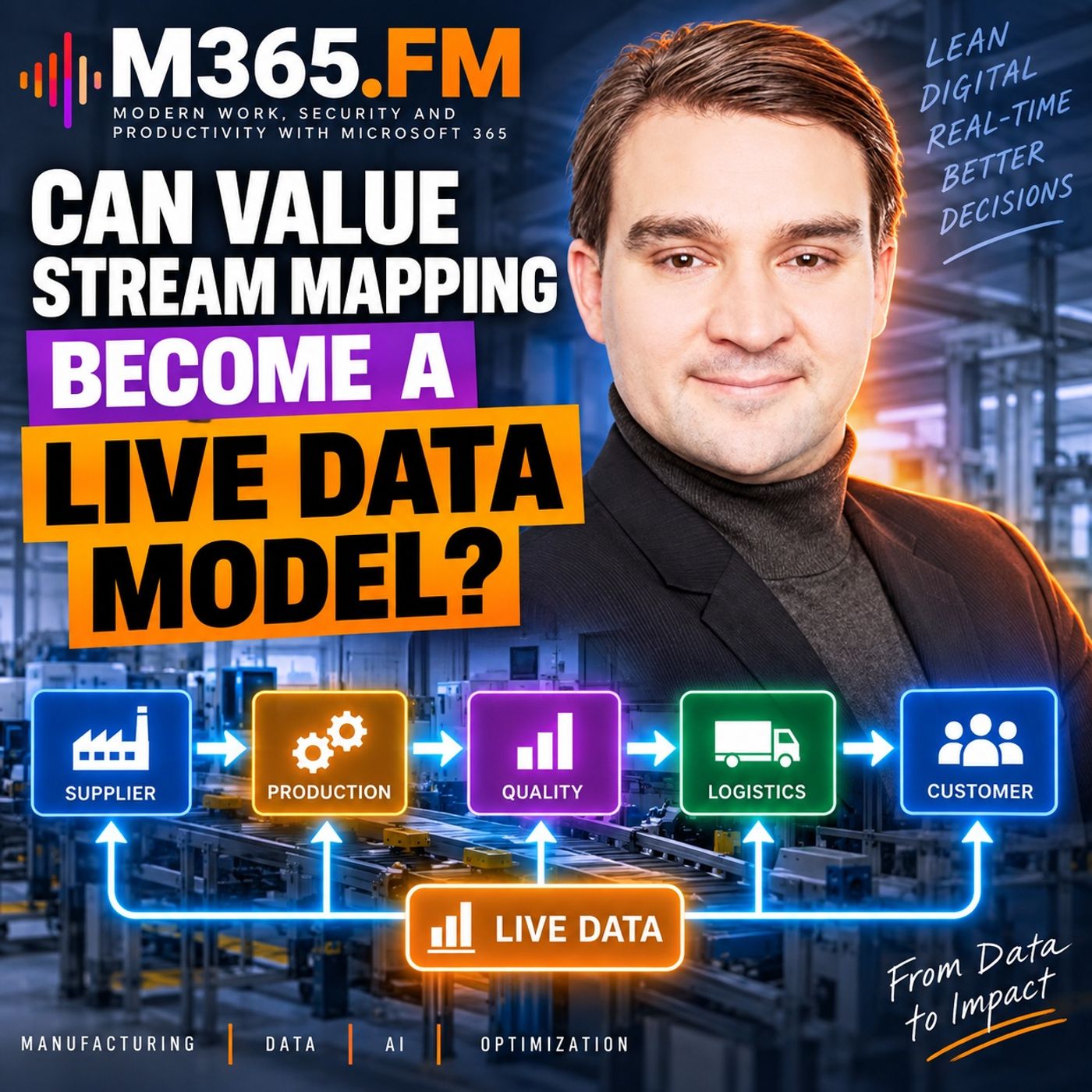
Can Value Stream Mapping Become a Live Data Model?
Value Stream Mapping has been one of the most useful tools in Lean Manufacturing for understanding how material, information, and decisions move through a production system.But traditional Value Stream Mapping has a fundamental limitation.The factory keeps changing. The map does not.You can bring production, planning, quality, maintenance, supply chain, and operations into the same workshop. You can map cycle times, queues, batch sizes, handoffs, waiting times, information flows, and bottlenecks...
Guest: Mirko Peters
Sept. 13, 2026
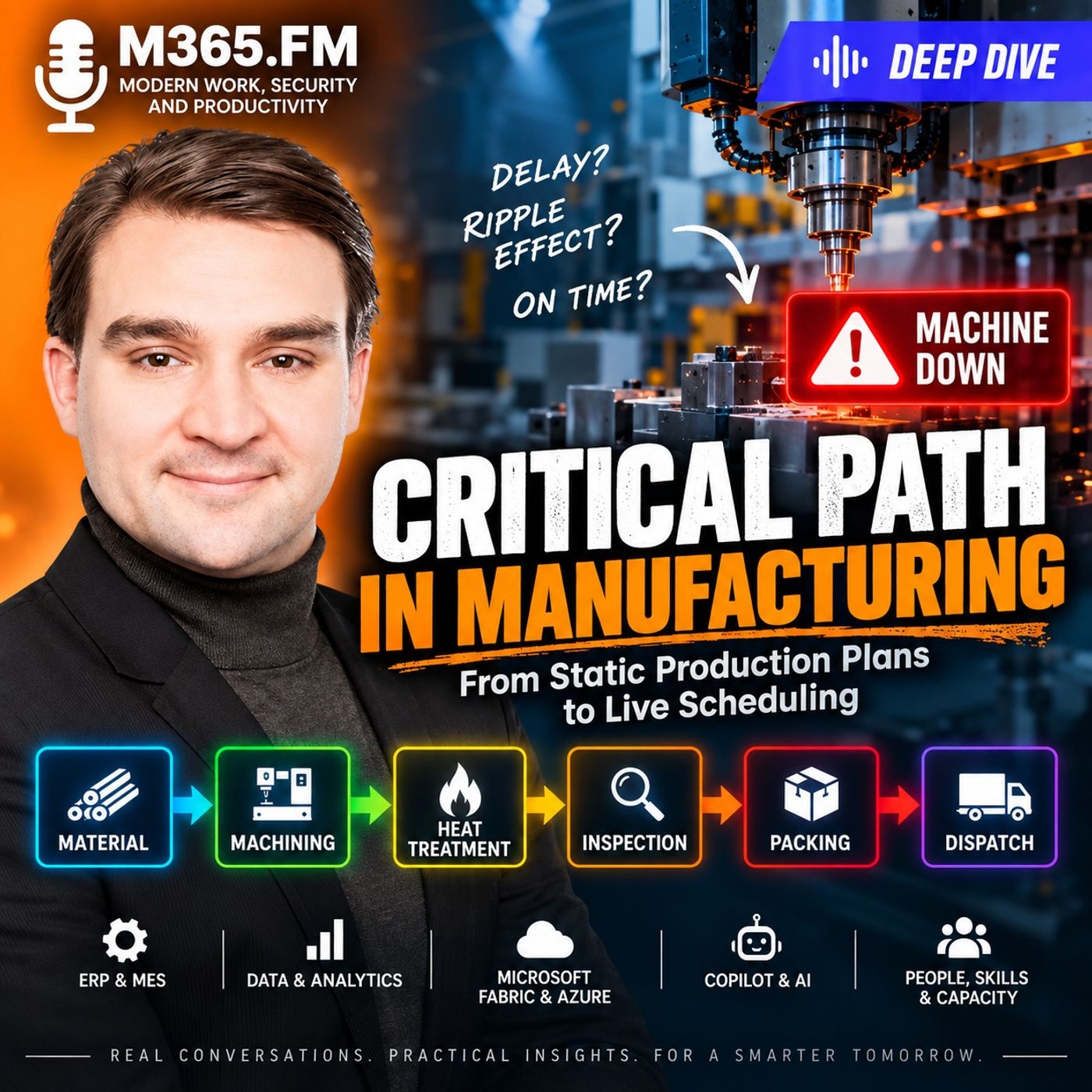
Why Your Critical Path Changes When Production Changes
A production plan can look perfectly reasonable — until production actually starts.One machine runs late. A material release slips. A qualified operator becomes unavailable. A quality inspection takes longer than expected. A batch misses its furnace window. Suddenly, a delay of only a few hours can put an entire customer delivery at risk.In this deep dive, we explore how the Critical Path Method (CPM) can be adapted from traditional project management to modern manufacturing and production plann...
Guest: Mirko Peters
![Microsoft Fabric End-to-End: From Raw Data to Business Decisions with Amit Chandak [MVP]](https://d3wo5wojvuv7l.cloudfront.net/t_rss_itunes_square_1400/images.spreaker.com/original/bfbd20ad8a411469d5aad58275f070a5.jpg "Microsoft Fabric End-to-End: From Raw Data to Business Decisions with Amit Chandak [MVP]")
Aug. 25, 2026
Microsoft Fabric End-to-End: From Raw Data to Business Decisions with Amit Chandak [MVP]
Microsoft Fabric brings data engineering, analytics, business intelligence, governance and increasingly AI together in one platform. But what does an end-to-end Fabric architecture actually look like when you move beyond individual features and start connecting everything?In this episode of the M365 FM Podcast, Mirko Peters is joined by Amit Chandak [Microsoft Data Platform MVP] for a practical journey through Microsoft Fabric — starting with raw organizational data and ending with trusted infor...
Guests: Mirko Peters , Amit Chandak
Aug. 15, 2026
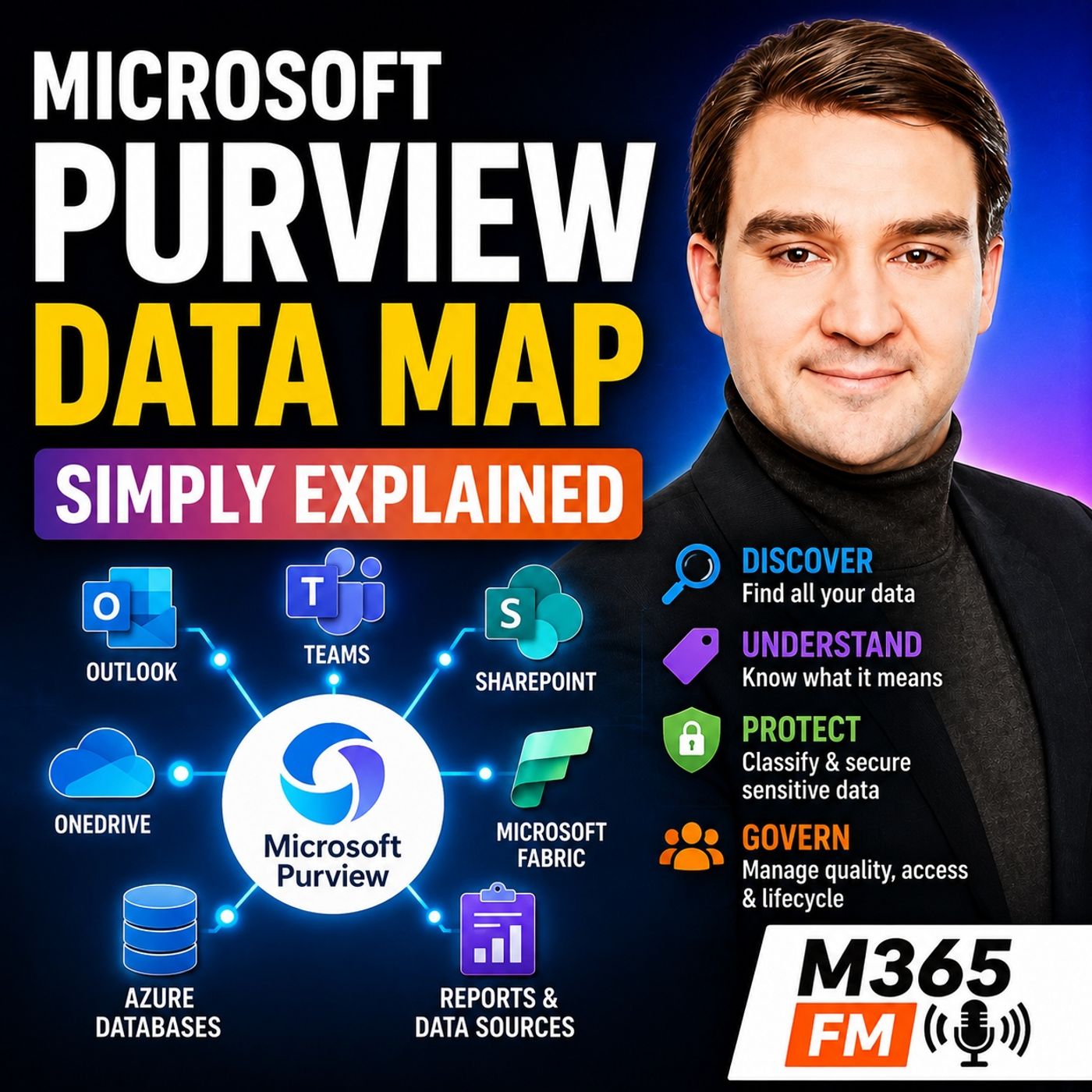
Microsoft Purview Data Map - Simply Explained
Microsoft 365 data rarely stays in one place. An employee might answer email in Outlook, collaborate in Teams, save documents in SharePoint and OneDrive, analyze information in Microsoft Fabric, export a report, change a few numbers in Excel, and send the spreadsheet to several colleagues. Each individual application may be secure, but the information continues moving, being copied, renamed, shared, and sometimes forgotten. In this episode of Microsoft Knowledge Nuggets on M365 FM, we explain ho...
![Everyone Wants Copilot—but Is Your Data Ready: Microsoft Fabric Architecture with Walter Calcagno [MVP-MCT]](https://d3wo5wojvuv7l.cloudfront.net/t_rss_itunes_square_1400/images.spreaker.com/original/f90075aebd3fd5db4aa669d5a07c6cc7.jpg "Everyone Wants Copilot—but Is Your Data Ready: Microsoft Fabric Architecture with Walter Calcagno [MVP-MCT]")
Aug. 15, 2026
Everyone Wants Copilot—but Is Your Data Ready: Microsoft Fabric Architecture with Walter Calcagno [MVP-MCT]
Everyone wants Copilot. Everyone wants AI agents. Everyone wants employees to ask natural-language questions and immediately receive trustworthy answers from enterprise data. But what happens when the underlying data is fragmented, business definitions conflict, governance is weak, and semantic models were never designed for AI? In this episode of M365 FM, Mirko Peters sits down with Walter E. Calcagno, Microsoft MVP in Data Platform, Microsoft Certified Trainer, data architect, author, educator...
Guests: Mirko Peters , Walter Calcagno
![From Pilot to Production: Building Enterprise AI That Actually Delivers with Leon Gordon [MVP]](https://d3wo5wojvuv7l.cloudfront.net/t_rss_itunes_square_1400/images.spreaker.com/original/f04ab30e9c69ef98ed717f9b70e97215.jpg "From Pilot to Production: Building Enterprise AI That Actually Delivers with Leon Gordon [MVP]")
July 28, 2026
From Pilot to Production: Building Enterprise AI That Actually Delivers with Leon Gordon [MVP]
Building Enterprise AI plays a vital role in driving business value. However, many organizations struggle to transition from pilot projects to full-scale implementations. Common challenges include inadequate infrastructure, data issues, and a lack of change management. You need to establish clear success metrics to measure progress effectively. Research shows that 72% of enterprises are measuring the ROI of Generative AI, highlighting the importance of focusing on measurable outcomes. Additional...
Guests: Mirko Peters , Leon Gordon
July 23, 2026
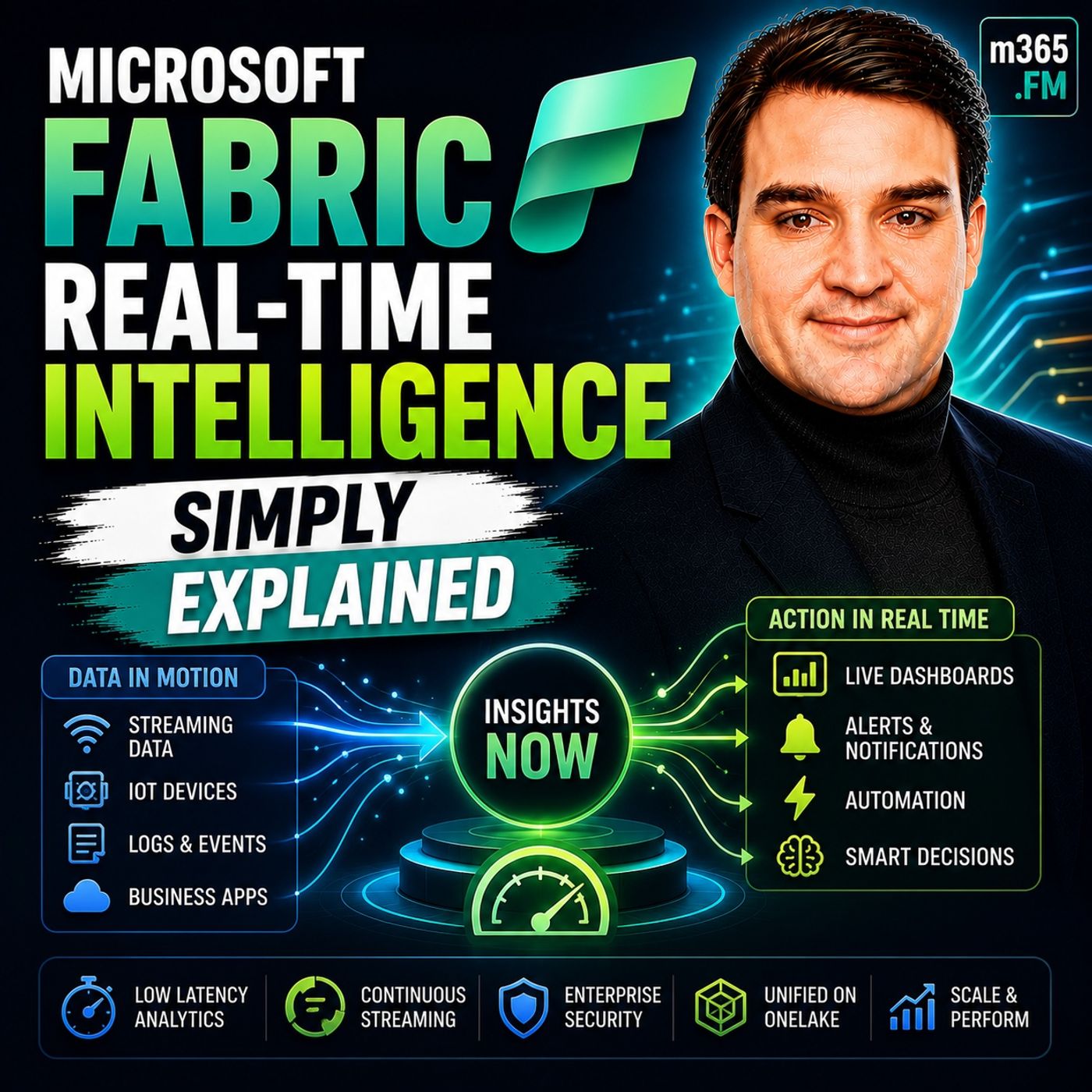
Microsoft Fabric Real-Time Intelligence - Simply Explained
Quick Answer: Microsoft Fabric Real-Time Intelligence is an important Microsoft topic for teams that need clearer technical decisions, safer implementation, and practical operational value. This episode explains what it does, where it fits in the Microsoft ecosystem, and the key considerations for administrators, architects, and business stakeholders. Real-time intelligence, particularly through Microsoft Fabric Real-Time Intelligence - Simply Explained, revolutionizes project management by pro...
Guest: Mirko Peters
July 23, 2026
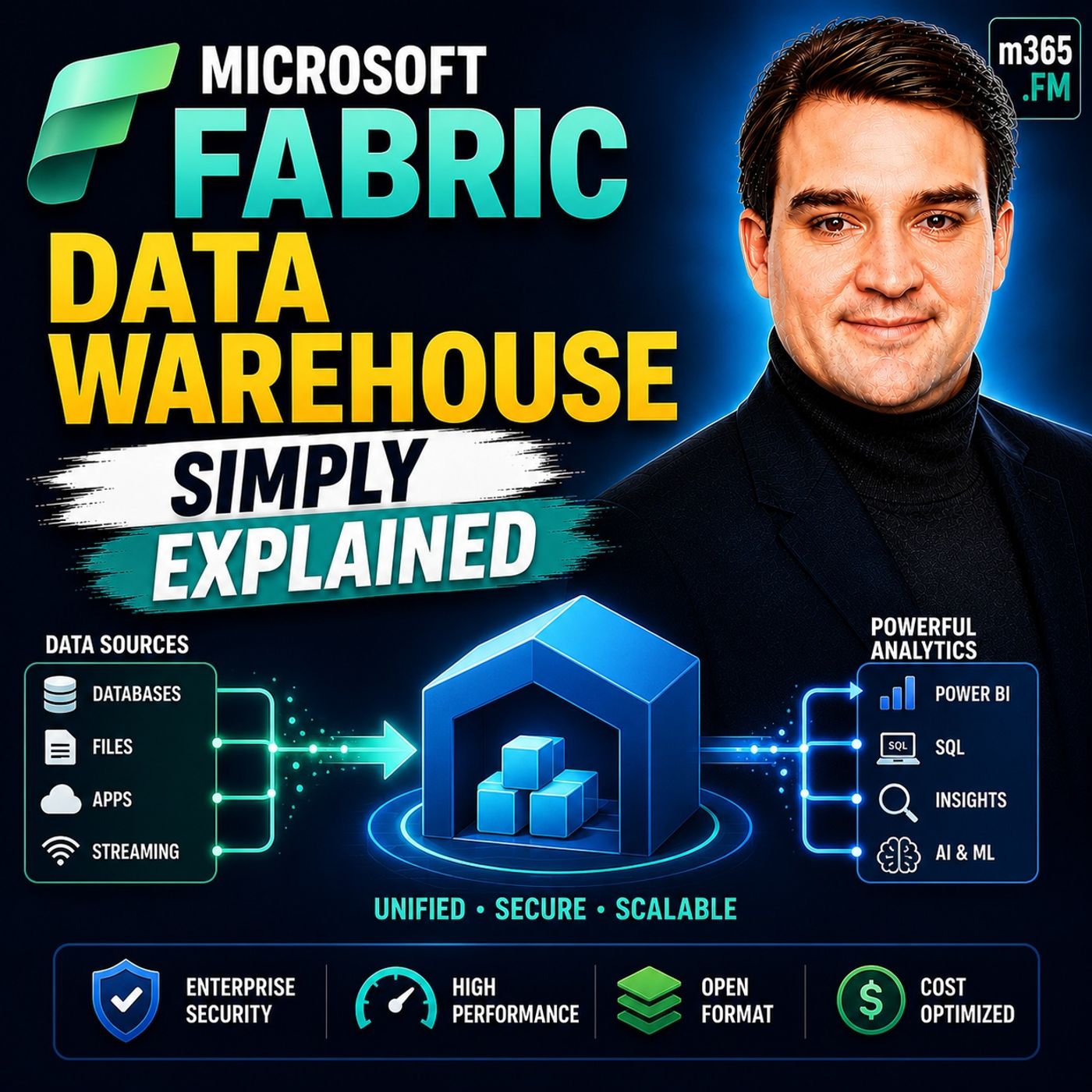
Microsoft Fabric Data Warehouse - Simply Explained
Quick Answer: Microsoft Fabric Data Warehouse is an important Microsoft topic for teams that need clearer technical decisions, safer implementation, and practical operational value. This episode explains what it does, where it fits in the Microsoft ecosystem, and the key considerations for administrators, architects, and business stakeholders. In today’s data-driven world, effective data warehousing plays a crucial role in helping organizations make informed decisions. With a growing adoption r...
Guest: Mirko Peters
July 22, 2026
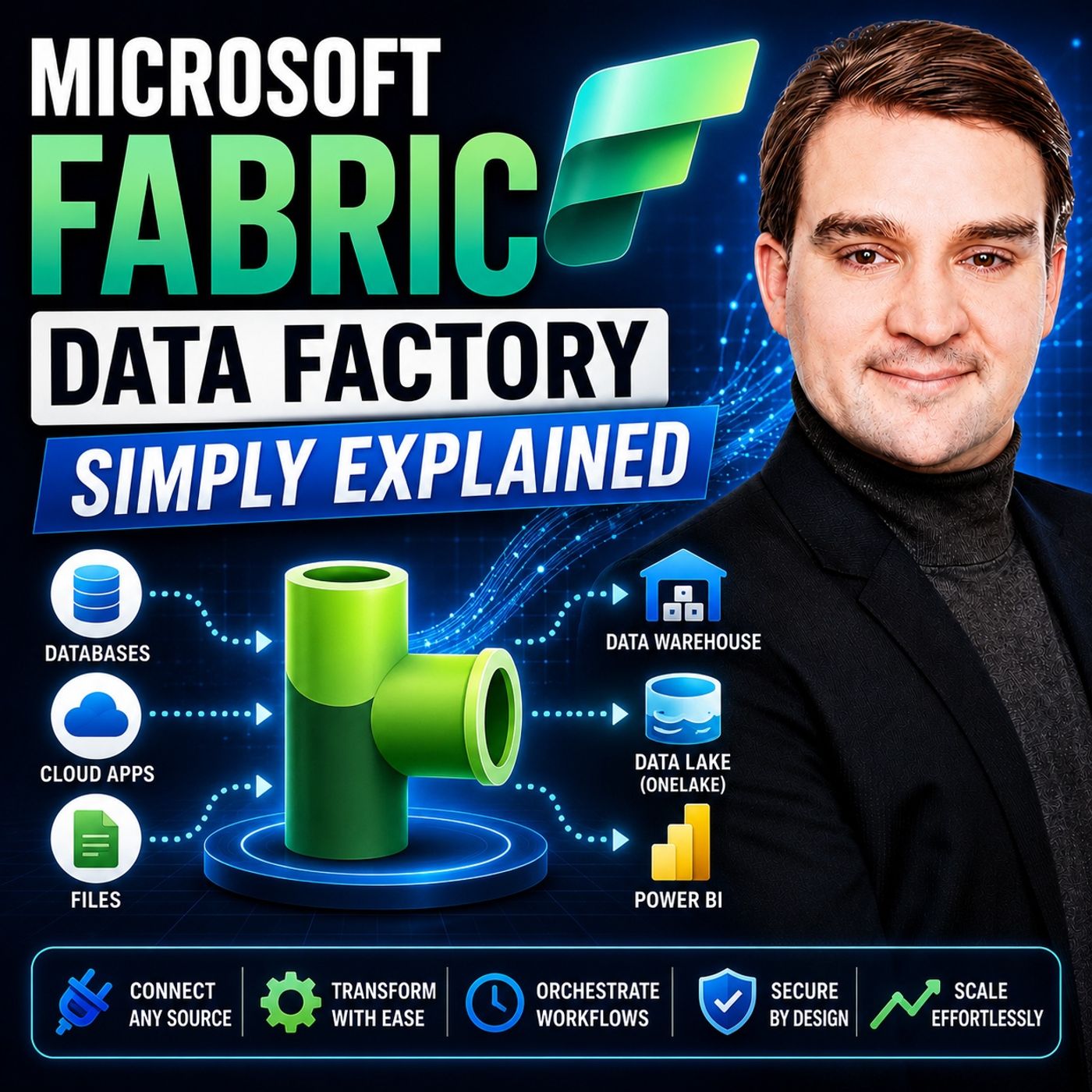
Microsoft Fabric Data Factory - Simply Explained
Quick answer: Microsoft Fabric Data Factory provides data-integration capabilities for moving, transforming, and orchestrating data within Microsoft Fabric. This episode explains the core concepts, where pipelines fit, and which design, governance, and operational questions teams should answer before putting data workflows into production. In today's data-driven world, organizations face the challenge of integrating and managing vast amounts of data. Microsoft Fabric Data Factory emerges as a s...
Guest: Mirko Peters
July 22, 2026
Microsoft Fabric - Simply Explained
Quick answer: Microsoft Fabric brings data engineering, data integration, warehousing, real-time analytics, business intelligence, and governance into one SaaS analytics platform. This episode explains the major workloads, how they connect, and the practical architecture questions teams need to answer before adopting Fabric. Microsoft Fabric - Simply Explained serves as a comprehensive analytics solution designed to streamline your data processes. In today's fast-paced business world, effective...
Guest: Mirko Peters
![From Data to Intelligent Agents: Building Trusted Enterprise AI with Microsoft AI Foundry with Shubhangi Goyal [MVP]](https://d3wo5wojvuv7l.cloudfront.net/t_rss_itunes_square_1400/images.spreaker.com/original/5b6aef5e8487cd930b64817629a26289.jpg "From Data to Intelligent Agents: Building Trusted Enterprise AI with Microsoft AI Foundry with Shubhangi Goyal [MVP]")
July 21, 2026
From Data to Intelligent Agents: Building Trusted Enterprise AI with Microsoft AI Foundry with Shubhangi Goyal [MVP]
Enterprise AI is rapidly evolving from simple chatbots to intelligent agents that can automate business processes, reason over enterprise data, and deliver measurable business value. In this episode of M365.fm, Microsoft MVP Shubhangi Goyal joins Mirko Peters to explore how Microsoft AI Foundry helps organizations build secure, scalable, and trustworthy AI solutions that are ready for real-world production—not just impressive demos. The conversation explains why successful AI projects begin with a strong data foundation. Clean, governed, and well-connected enterprise data is essential for creating reliable AI agents that employees and customers can trust. Shubhangi discusses how Microsoft AI Foundry enables organizations to experiment with models, orchestrate intelligent workflows, integrate enterprise knowledge, and manage the full lifecycle of AI applications while maintaining security and compliance. A major focus is the shift from prompt engineering to building complete AI s…
Guests: Mirko Peters , Shubhangi Goyal
July 17, 2026
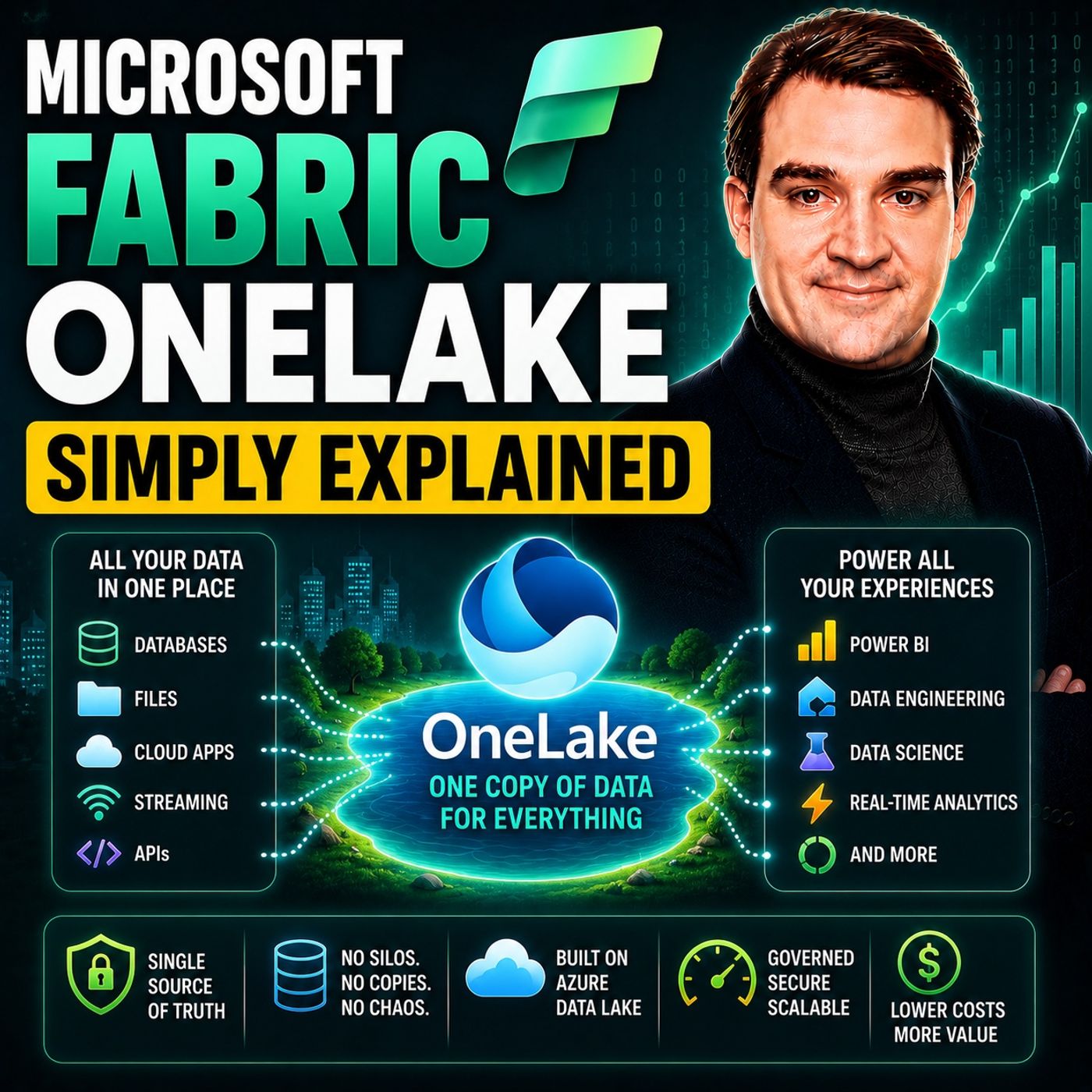
Microsoft Fabric OneLake - Simply Explained
Microsoft Fabric OneLake is the unified data lake at the heart of Microsoft Fabric, providing a single, centralized location for all your organization's analytics data. Instead of storing copies of data across multiple systems, OneLake enables every Fabric workload—from Power BI and Data Engineering to Data Science and Data Warehouse—to access the same data, reducing duplication and breaking down data silos. In this episode of Microsoft Knowledge Nuggets, Mirko Peters explains Microsoft Fabric OneLake in simple terms and shows why it's often described as the "OneDrive for data." You'll learn how OneLake simplifies data management by providing a single source of truth for analytics, AI, and business intelligence across your organization. The episode covers key concepts including lakehouses, Delta tables, shortcuts, zero-copy data access, governance, security, and workspace organization. It also explains how OneLake integrates with Power BI, Data Factory, Data Engineering, Data Sc…
Guest: Mirko Peters
July 16, 2026
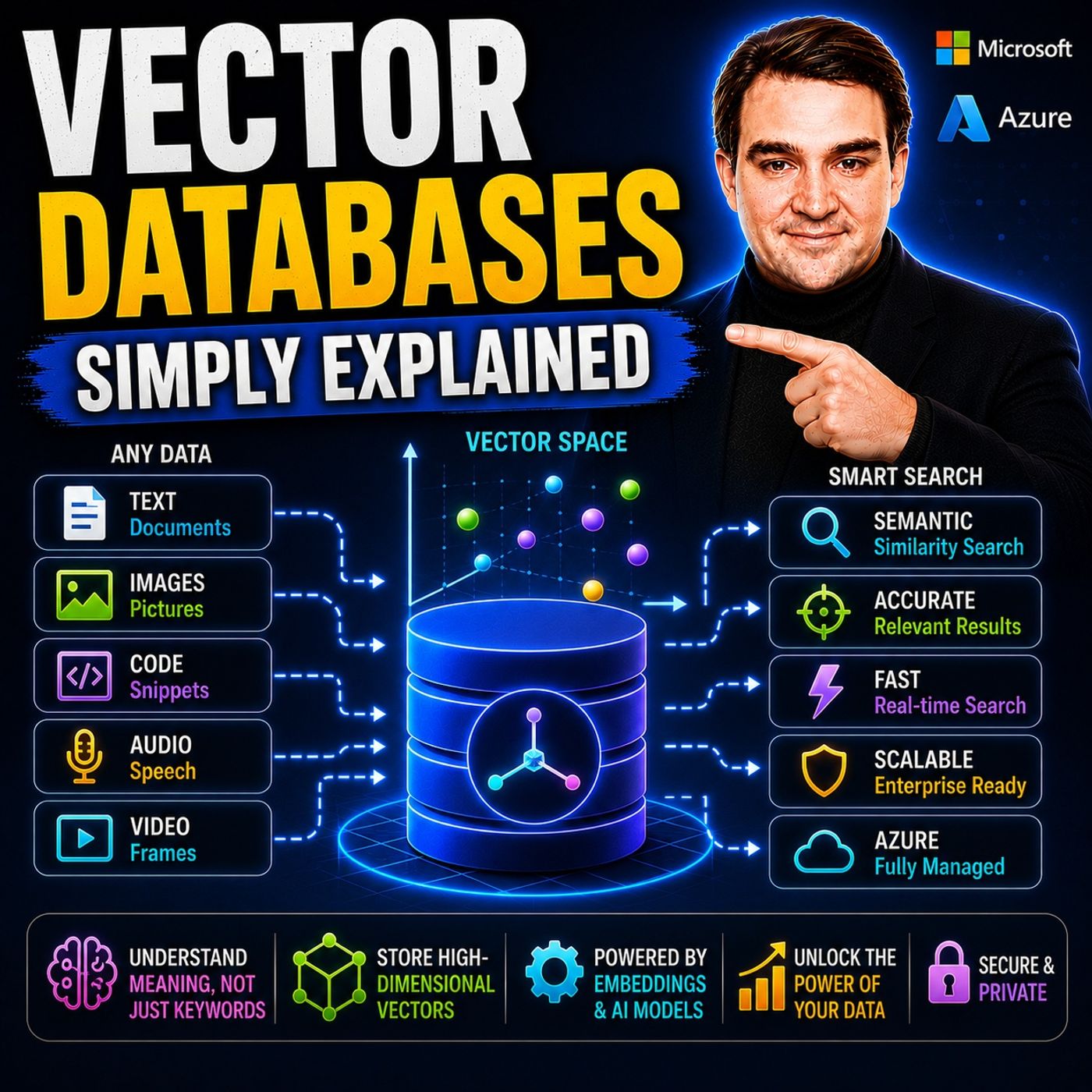
Vector Databases - Simply Explained
Vector databases are one of the key technologies powering modern AI applications, yet most people never interact with them directly. Unlike traditional databases that search for exact words or values, vector databases search by meaning, enabling AI to understand context instead of just matching keywords. In this episode of Microsoft Knowledge Nuggets, we explain vector databases in plain English and show why they're essential for enterprise AI, Microsoft Copilot, and Retrieval-Augmented Generation (RAG). You'll learn what vectors and embeddings are, how AI converts text, images, and other content into numerical representations, and why similar concepts are stored close together in vector space. We explain key concepts such as embeddings, semantic search, similarity search, vector indexes, chunking, and hybrid search, making it easy to understand how AI retrieves the right information even when users don't use the exact same words. The episode also explores real-world use cases i…
Guest: Mirko Peters
July 16, 2026
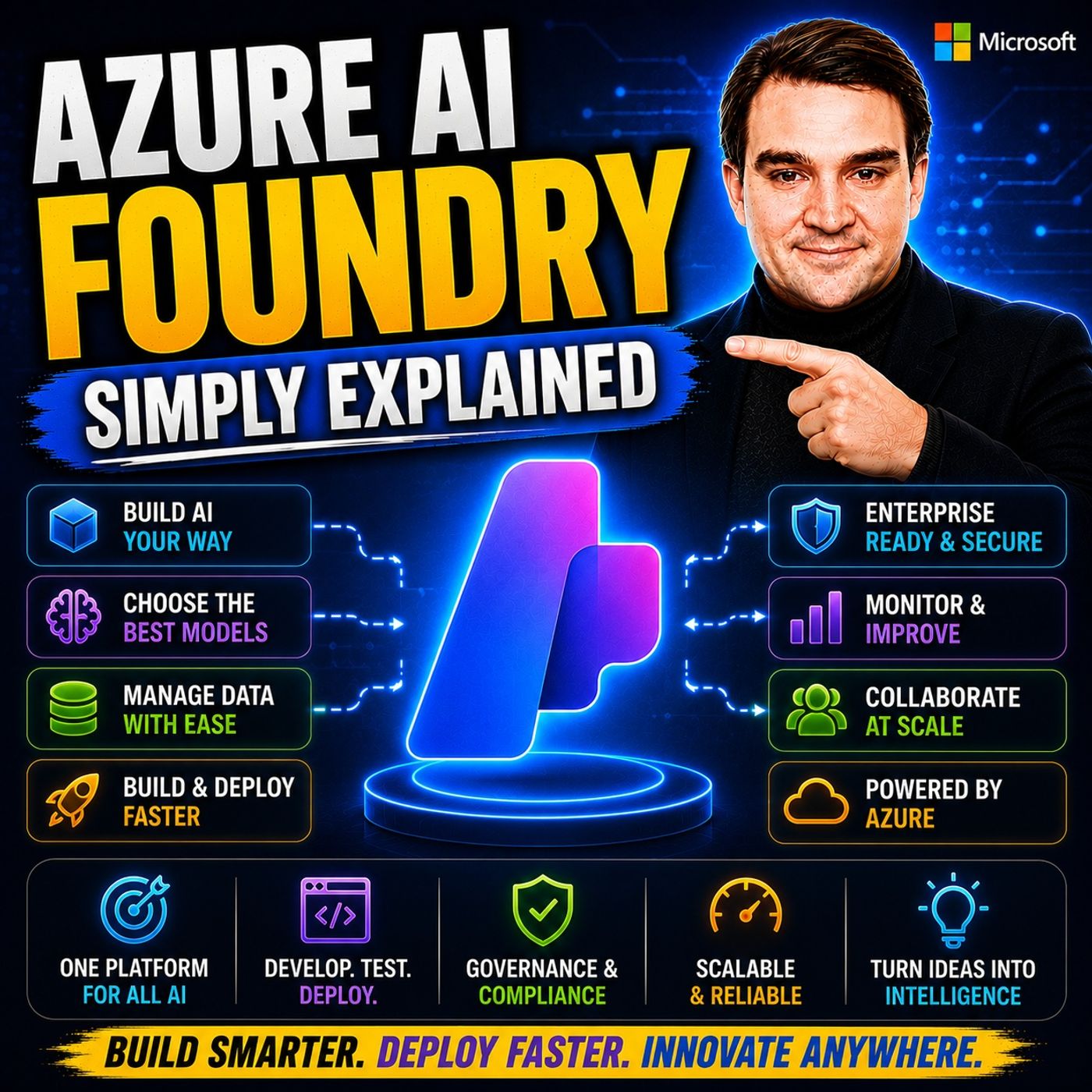
Azure AI Foundry - Simply Explained
Azure AI Foundry is Microsoft's enterprise platform for building, deploying, and managing AI applications and intelligent agents at scale. Instead of stitching together multiple AI services, developers get a unified environment for working with foundation models, prompt engineering, agent orchestration, evaluation, monitoring, and security. In this episode of Microsoft Knowledge Nuggets, we explain Azure AI Foundry in plain English and show why it's becoming the central platform for enterprise AI development. You'll learn how Azure AI Foundry simplifies the entire AI development lifecycle—from choosing and comparing models to deploying production-ready AI applications. We cover core concepts including the model catalog, AI agents, prompt flows, Retrieval-Augmented Generation (RAG), fine-tuning, evaluations, observability, and responsible AI. You'll also discover how developers can work with models from OpenAI, Meta, Anthropic, Mistral, and many others within a single platform. T…
Guest: Mirko Peters
July 14, 2026
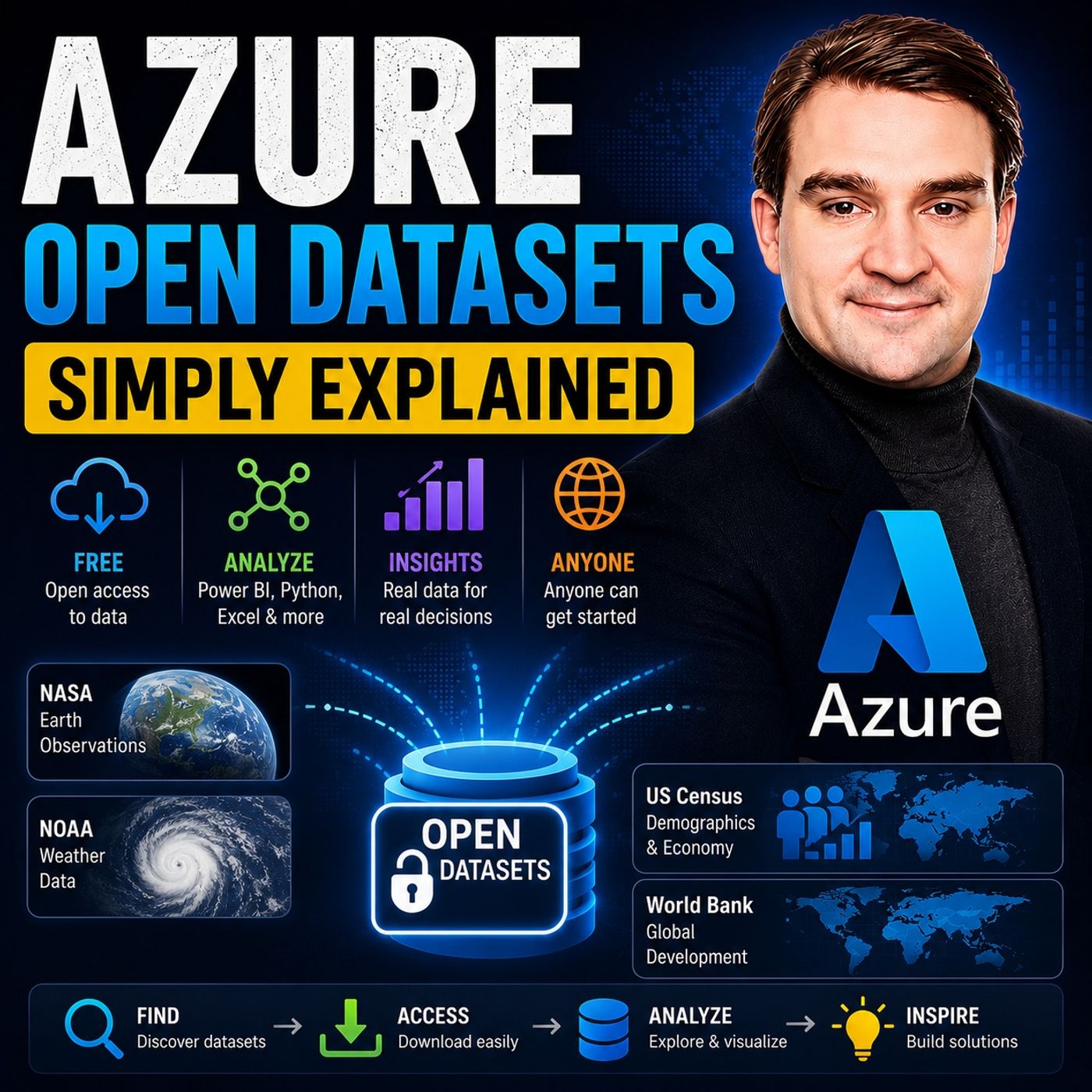
Azure Open Datasets - Simply Explained
Azure Open Datasets gives you instant access to curated public datasets hosted by Microsoft in Azure, so you can spend less time searching for and cleaning data and more time building AI, analytics, and machine learning solutions. Instead of downloading files from dozens of websites, Azure Open Datasets provides trusted, regularly updated data that is ready to use with Azure Machine Learning, Azure Databricks, Power BI, Azure Data Factory, and other Azure services. Think of Azure Open Datasets as a public library where all the books are already organized, indexed, and sitting next to your workspace. You don't waste hours finding information or converting file formats—you simply choose the data you need and start working. Microsoft keeps many of these datasets synchronized with their original sources, helping ensure you always have current information without maintaining your own copies. The platform includes datasets covering weather, transportation, public holidays, demographic…
Guest: Mirko Peters
July 13, 2026
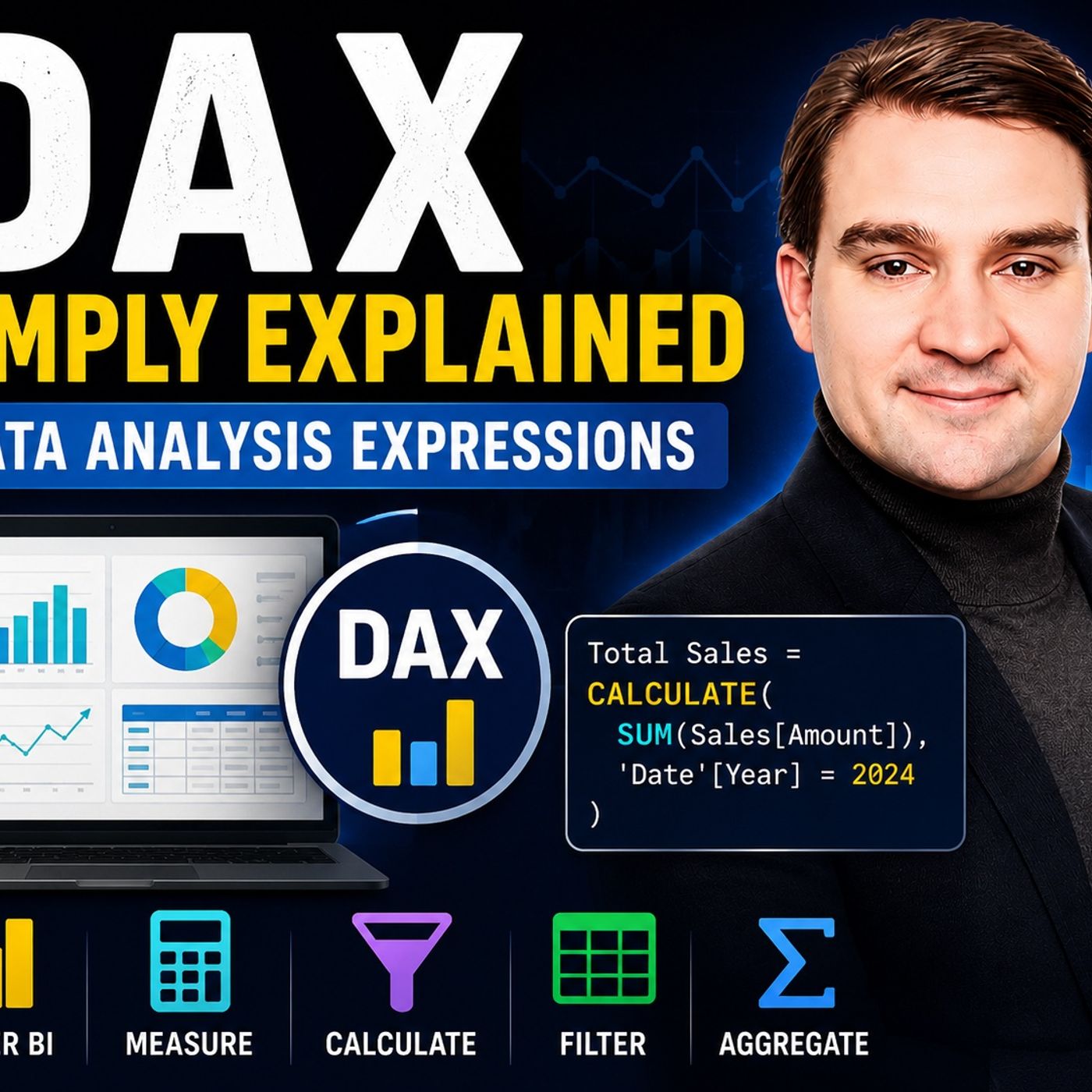
Data Analysis Expressions (DAX) - Simply Explained
Data Analysis Expressions, better known as DAX, is the calculation language that powers Microsoft Power BI, Excel Power Pivot, and SQL Server Analysis Services. In this episode of the M365 FM Podcast, Mirko Peters explains DAX in plain English and shows why it is much more than simply using Excel formulas inside Power BI. The episode explores how DAX works across complete tables and data models rather than individual spreadsheet cells. You’ll learn the important difference between calculated columns and measures: calculated columns are created during data refresh and remain static, while measures recalculate dynamically whenever users apply filters, select slicers, or interact with a report. Another central topic is filter context, which determines which data is included in every calculation. The episode explains how one DAX measure can automatically display the correct result across different regions, products, dates, and report visuals. It also introduces essential concepts an…
Guest: Mirko Peters
July 12, 2026
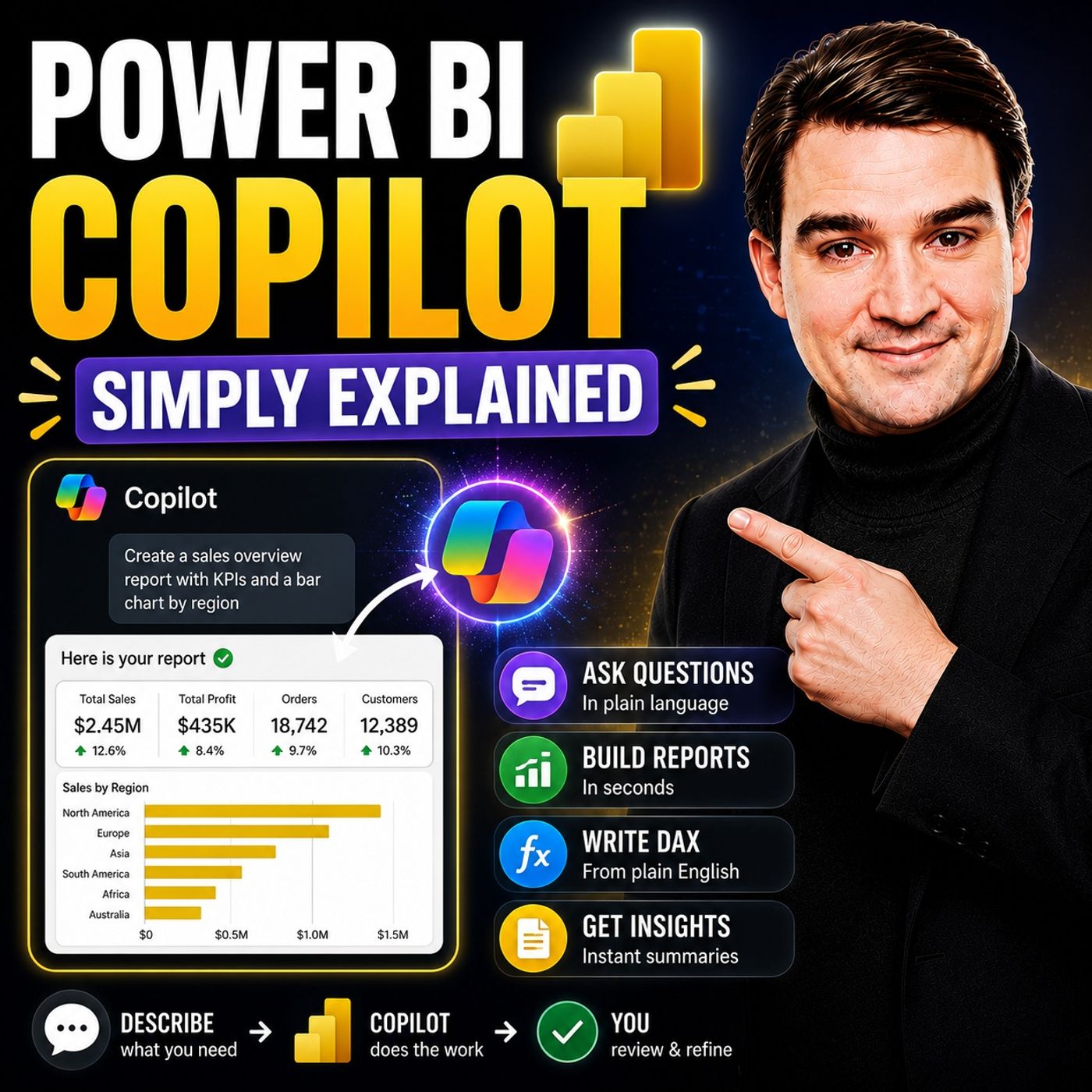
Power BI Copilot - Simply Explained
Power BI Copilot brings generative AI directly into Microsoft's business intelligence platform, making it easier for users to analyze data, build reports, and uncover insights using natural language. Instead of manually creating complex visualizations or writing DAX queries from scratch, users can ask questions in plain English and let Copilot generate charts, summaries, measures, and report suggestions. This episode explains how Power BI Copilot works, where it delivers the most value, and why successful AI-powered analytics depend on far more than simply enabling a feature. You'll learn how clean data, well-designed semantic models, governance, and Microsoft Fabric create the foundation that allows Copilot to deliver accurate and trustworthy business insights. The discussion also explores the current limitations of Power BI Copilot, including its reliance on high-quality data, the need for human validation, and scenarios where traditional BI expertise remains essential. Whethe…
Guest: Mirko Peters

July 5, 2026
Microsoft Graph Security Automation for Microsoft 365
Microsoft Graph is often seen as a reporting and management API—but what if it could become one of your most powerful security tools? In this episode, we explore how Microsoft Graph can be leveraged to uncover hidden risks, automate governance, and continuously improve the security posture of an entire Microsoft 365 tenant. Rather than relying solely on traditional security dashboards, Graph provides direct access to identities, permissions, groups, applications, devices, and collaboration data, enabling organizations to detect problems before they become incidents. You'll learn how to use Microsoft Graph to identify excessive permissions, orphaned resources, inactive accounts, risky application consents, external sharing, and configuration drift across Microsoft 365. The episode explains why security is ultimately a data problem and how Graph serves as the unified interface that makes tenant-wide visibility and automation possible. We also discuss practical automation scenarios…
Guest: Mirko Peters
July 5, 2026
Microsoft Graph: The Enterprise Nervous System
Microsoft Graph is far more than a REST API—it acts as the enterprise nervous system that connects people, identities, files, conversations, meetings, permissions, and business processes across Microsoft 365. In this episode, we explore why understanding these relationships is the key to building truly intelligent applications, automations, and AI experiences rather than isolated point solutions. You'll learn how Microsoft Graph creates a unified layer across services like Teams, SharePoint, Outlook, OneDrive, and Entra ID, allowing developers and architects to retrieve context instead of disconnected data. The episode explains why modern AI solutions such as Microsoft Copilot depend on Graph to understand not just where information is stored, but how users, content, and business activities are connected in real time. We also examine the shift from traditional, static data models toward relationship-driven architectures that enable smarter search, automation, security, and enter…
Guest: Mirko Peters
July 4, 2026
Microsoft Graph Automation Architecture: Beyond Scripts
Automation is essential for digital transformation, but many organizations unintentionally create fragile, difficult-to-manage environments by relying on hundreds of disconnected PowerShell scripts and individual Power Automate flows. While each script may solve a specific problem, together they introduce technical debt, undocumented dependencies, and operational risk that become increasingly difficult to maintain as the business grows. This episode explains why modern enterprises are moving away from script-centric automation toward platform-based architectures built on Microsoft Graph, Azure Logic Apps, Azure Functions, Managed Identities, and governance-first design. Microsoft Graph serves as the central orchestration layer, providing a consistent interface across Microsoft 365 services such as Teams, SharePoint, Exchange, OneDrive, and Entra ID. Event-driven technologies like Graph Subscriptions and Delta Queries enable scalable, resilient automation that reacts in real time wh…
Guest: Mirko Peters