Microsoft Azure Podcast – Cloud Architecture, Security & Operations Episodes
Microsoft Azure is more than a collection of cloud services — it is an operating environment where identity, networking, security, and automation converge. The Azure Talk category explores how Azure behaves in real production scenarios, where architectural choices determine reliability, security posture, and long-term cost.
These episodes cover Azure fundamentals such as resource organization, subscriptions, management groups, networking design, identity integration, automation, monitoring, and cost governance. Special attention is given to how Azure services interact with Entra ID, Microsoft 365, and on-premises environments, as well as how security boundaries are enforced — or accidentally bypassed.
Azure Talk is not focused on quick-start tutorials or certification-style walkthroughs. Instead, we analyze architectural intent, failure modes, and operational consequences of design decisions made early in cloud adoption. Topics often include misconfigured identity flows, insecure automation, insufficient network segmentation, and the hidden risks of over-delegation to cloud-native services.
This category is designed for cloud architects, engineers, and IT leaders who need to understand Azure as a long-term platform rather than a collection of isolated services. If you are responsible for designing, operating, or securing Azure workloads in an enterprise environment, Azure Talk provides practical, experience-driven insight into how Microsoft Azure works in the real world.
This episode of the M365.fm podcast challenges a common misconception in cloud strategy: that managing features, tools, and configurations leads to control. Instead, it reveals that true cloud governance is an architectural discipline, not an operational afterthought. The discussion explains how cl…
In this episode, we explore why Microsoft 365 environments are often less secure than they appear. While most organizations focus on security tools and settings, the real risk lies in what we call the “invisible tenant” — a hidden layer of misconfigurations, excessive permissions, and missing gover…
Most organizations think they understand their infrastructure. They see tools, licenses, configurations… dashboards that suggest control. But none of that tells you what’s actually happening. In reality, your Microsoft 365 environment isn’t just infrastructure—it’s a living system of decisions, beh…
Most organizations believe they understand how their business operates. They point to org charts, policies, and compliance frameworks as proof. They are wrong. In this episode, Mirko Peters reframes Microsoft Purview from a compliance tool into...
You didn’t fail as an admin. The system failed because it needed you. After years of manual governance—access reviews, approvals, lifecycle policies—this episode exposes the uncomfortable truth: human-driven administration was never scalable in a...
This episode argues that most Microsoft 365 problems are not technical, but organizational. Technical experts often design tenants that are logically perfect but fail in real-world use. They focus too much on configuration and not enough on how people actually work. As a result, systems become diff…
This episode introduces a 7-level maturity model for Azure and Microsoft 365 administration, reframing the role of admins from operators to architects of a distributed decision system. It argues that most professionals remain stuck in low-level execution, focusing on tools and configurations, while…
In reality, it is an economic and operational system that governs identity, collaboration, security, automation, and enterprise data flows. When this system is not architected intentionally, it begins to leak value silently through inefficiencies, security gaps, and governance failures.In this …
Most organizations believe efficiency improvements come from better tools or faster processes.But the biggest gains rarely come from new software.They come from architectural decisions.In this episode of the M365 FM Podcast, we explore how organizations can architect efficiency at scale…
Modern digital transformation isn’t about adding more SaaS tools. It’s about designing systems that operate autonomously.In this episode of the M365 FM Podcast, we explore what happens when your Microsoft 365 tenant becomes a self-operating enterprise control plane—where workflows execute autom…
This episode explains that simply knowing how to provision Azure services is no longer enough — the real value in 2026 is governance architecture: designing systems that prevent erosion between intended policy and actual state. Most Azure professionals optimize for services and certifications inste…
This episode explains that cloud environments promise efficiency, elasticity, and control — but without governance engineered as architecture, they become financial drains and operational chaos. It recounts how idle resources, ungoverned permissions, and unmanaged sprawl can drive huge waste, and w…
This episode argues that although Amazon Web Services (AWS) dominates infrastructure, the real “cloud war” has shifted to the enterprise control plane — the system that enforces identity, policy, and governance across hybrid environments. Most enterprises are hybrid by default, and the winner is th…
This episode argues that the real AI war isn’t being decided by benchmarks, headlines, or consumer adoption. Instead, the strategic competition for enterprise AI dominance is happening deep inside enterprise architecture — identity systems, data infrastructure, cloud compute, and workflow engines. …
In this episode, we break down a critical misconception in modern cloud strategy: sovereign cloud is not a product, a geographic region, or a compliance checkbox. It is an architectural control model. True sovereignty is determined by who has enforceable authority over identity systems, encryption …
In “The Context Advantage: Architecting the High-Performance Autonomous Enterprise,” the M365.FM podcast reframes where enterprise AI and autonomy succeed — not at the model or interface layer — but in the architected context substrate that underlies them. Rather than viewing AI failures as “bad mo…
This episode of the M365.FM Podcast — “The High-Performance Automation Control Plane” — explains why most enterprise automation initiatives stall or fail not because of tooling, but because they lack a control plane that governs automation at scale. Simply building workflows and connectors without …
The episode explains that adopting AI is not just adding a feature to existing SaaS systems, but a fundamental shift toward dynamic, agent-driven architectures where AI orchestrates decisions and workflows. While this promises simplification, it actually increases complexity and unpredictability, l…
How Altera Unlocks the Autonomous Microsoft Enterprise” explores why most “AI agent” initiatives in Microsoft environments stall or fail — and what it actually takes to build true autonomy at enterprise scale. The host argues that the difference between Copilot as a work-assisting tool and autonomo…
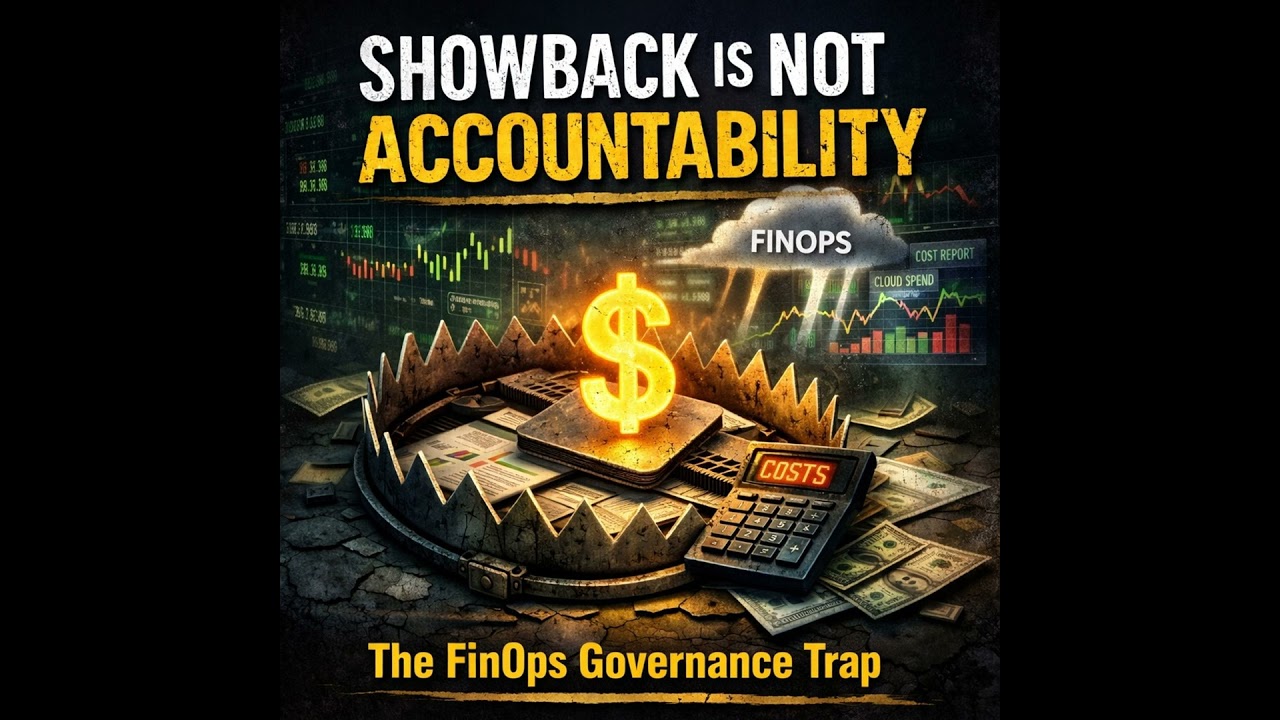
This episode challenges the common belief that showback and chargeback alone create accountability in enterprise IT cost management. Many organizations implement showback dashboards or reports expecting they will change behavior, only to find that business units ignore, dispute, or game the numbers…
Most organizations still think of ServiceNow as a ticketing system.That framing is not just wrong—it’s actively harmful.Ticketing was the entry point, not the destination.The real enterprise problem is not tool sprawl. It’s that work has no single authoritative state, no durable ownership…
In this episode of the M365.FM Podcast we dive into Azure AI infrastructure architecture — not as another workload, but as a fundamentally different architectural reality that every CIO, CTO, CISO, and enterprise leader must understand.Most organizations assume “AI is just another workload.” In…
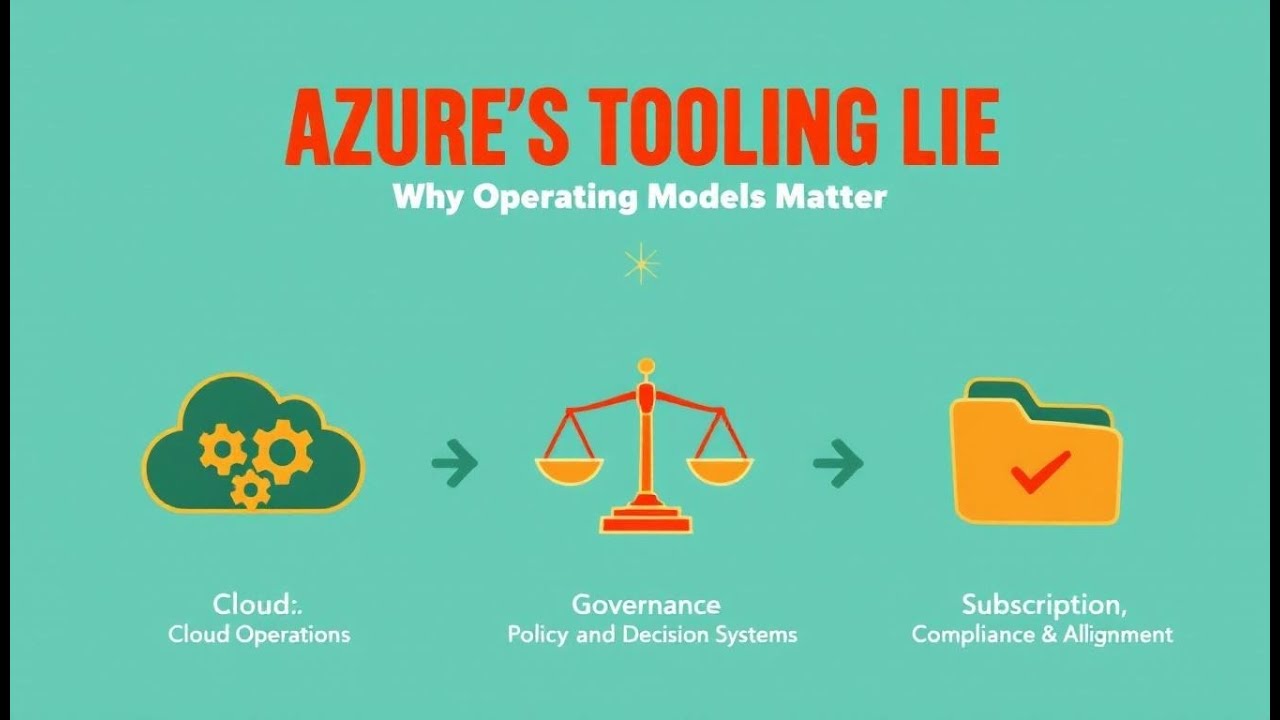
Most enterprises believe Azure scale is a tooling problem. If they pick the right CI/CD stack, the right IaC framework, or the right monitoring tools, the chaos will stop. It won’t. Tooling doesn’t prevent entropy — it accelerates it when intent isn’t enforceable.This episode dismantles the too…
Azure doesn’t get expensive because engineers waste money. It gets expensive because the platform is allowed to spend without ownership, limits, or consequences. That isn’t a savings problem — it’s cost entropy.In this episode, we reframe cloud cost as an authorization outcome, not a finance ar…