

Examine cloud infrastructure design and operations in Microsoft Azure, emphasizing security, management, and integration with on-premises environments. Discover architectural choices that impact performance and cost.
April 29, 2026
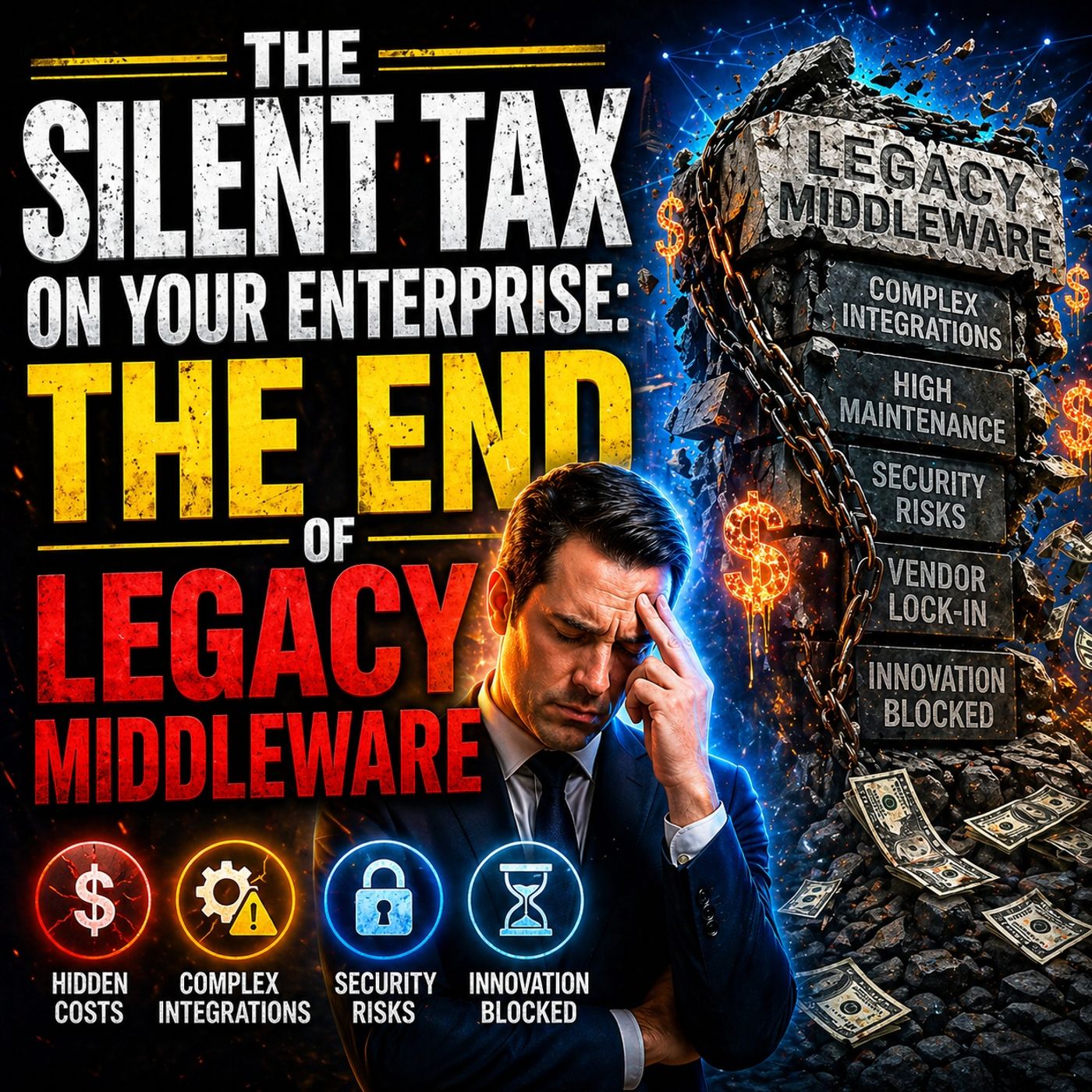
Replace Legacy Middleware with Policy-Driven Architecture
The episode argues that legacy middleware creates a “silent tax” on enterprises by adding unnecessary complexity, cost, and dependency between systems. Instead of enabling integration, middleware often becomes a bottleneck that slows down decision-making and increases maintenance overhead. The core message is that modern platforms like Microsoft 365 shift the focus from connecting systems to controlling behavior through governance and integrated architectures. Organizations should move away from fragmented, best-of-breed stacks and toward unified ecosystems with strong control planes. Ultimately, the episode highlights a transition from integration-heavy architectures to simplified, policy-driven systems where automation and governance replace layers of middleware—reducing cost, improving speed, and enabling better business outcomes.
Guest: Mirko Peters
April 28, 2026
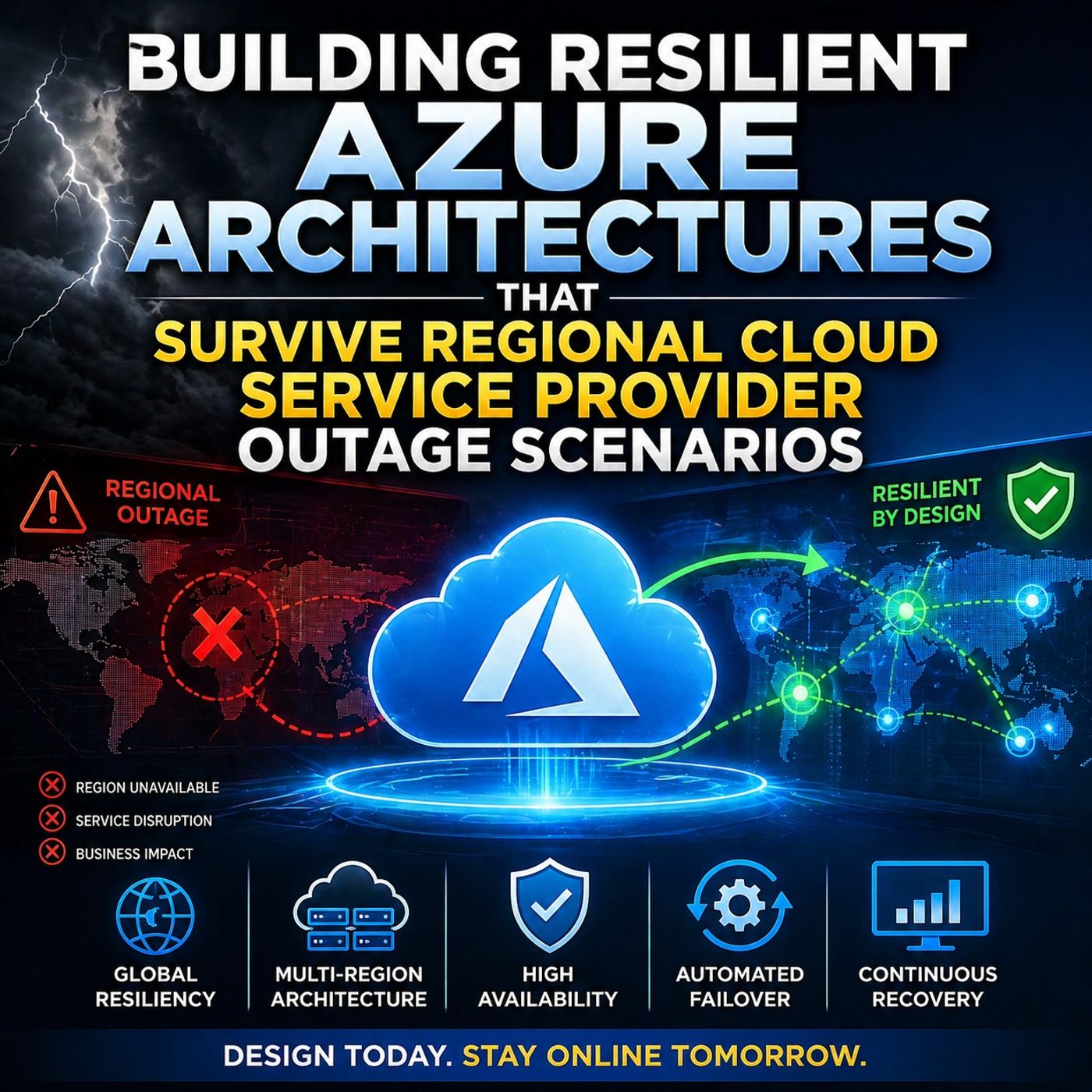
Build Resilient Azure Architecture for Regional Outages
This episode of the M365.FM challenges a common myth in cloud architecture: simply deploying workloads across multiple Azure regions does not guarantee resilience. Instead, many organizations unknowingly create “distributed single points of failure,” where systems still collapse during real outages. The discussion walks through a simulated regional cloud provider outage and reveals how modern architectures fail under pressure—especially when failover depends on manual decisions, meetings, or a functioning control plane. True resilience isn’t about passive redundancy; it’s about systems that continue to operate predictably during failure. A key insight is the hidden risk of global entry services like Azure Front Door—when these fail, even healthy backend systems become unreachable, exposing critical edge dependencies. The episode ultimately argues for a shift toward state-synchronized resilience, where systems are actively designed to maintain behavior, not just availability, …
Guest: Mirko Peters
April 26, 2026
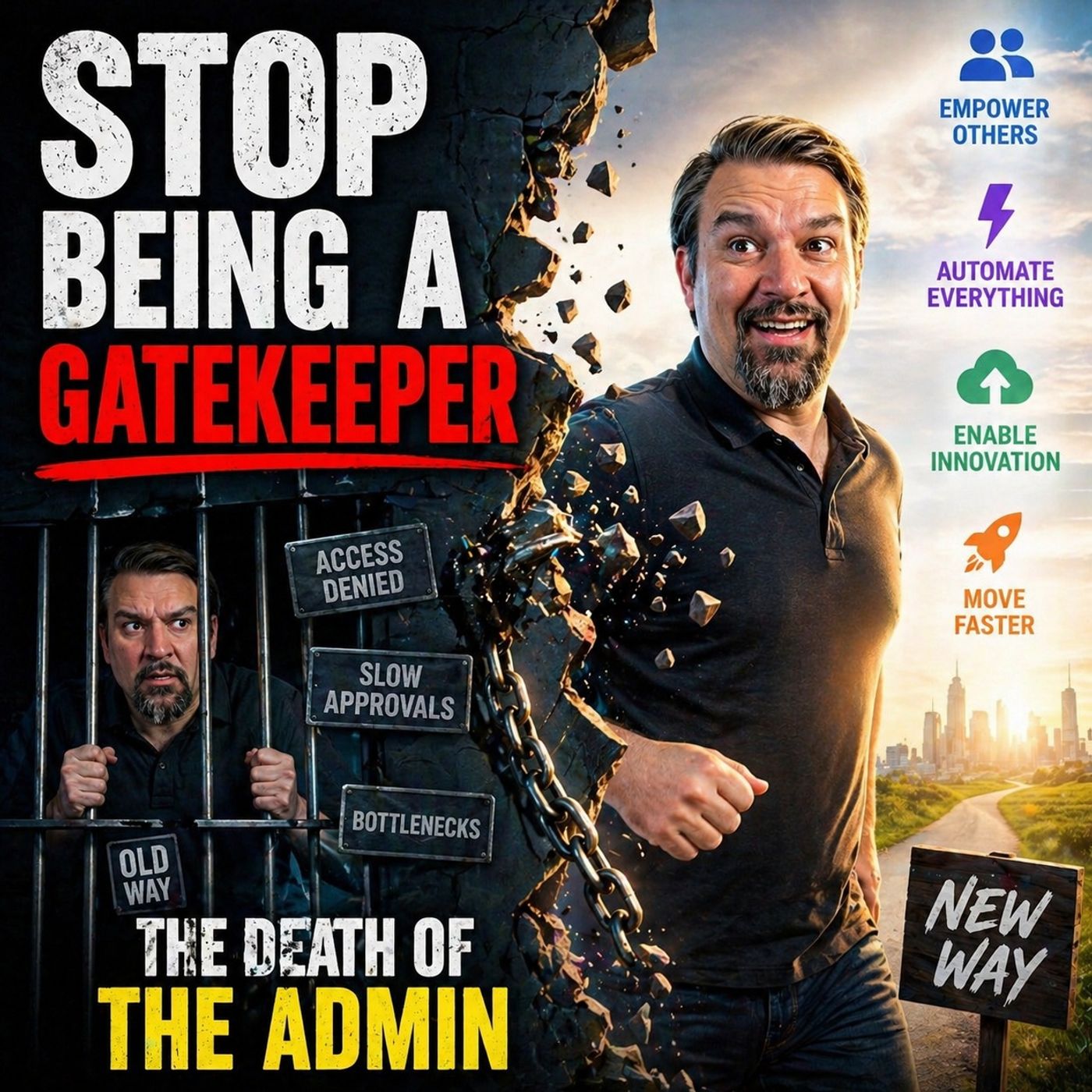
Microsoft 365 Admins: From Gatekeepers to Cloud Architects
In this episode of the M365 FM Podcast, the traditional role of the Microsoft 365 admin is challenged. Instead of acting as gatekeepers who manually approve, control, and fix everything, admins must shift toward designing automated systems that govern access, lifecycle, and security at scale. The episode argues that manual control does not scale in modern cloud environments and often creates bottlenecks, risk, and hidden dependencies. The “death of the admin” isn’t about losing relevance—it’s about evolving into an architect of policies, automation, and guardrails that enable the business to move faster without constant intervention.
Guest: Mirko Peters
April 23, 2026
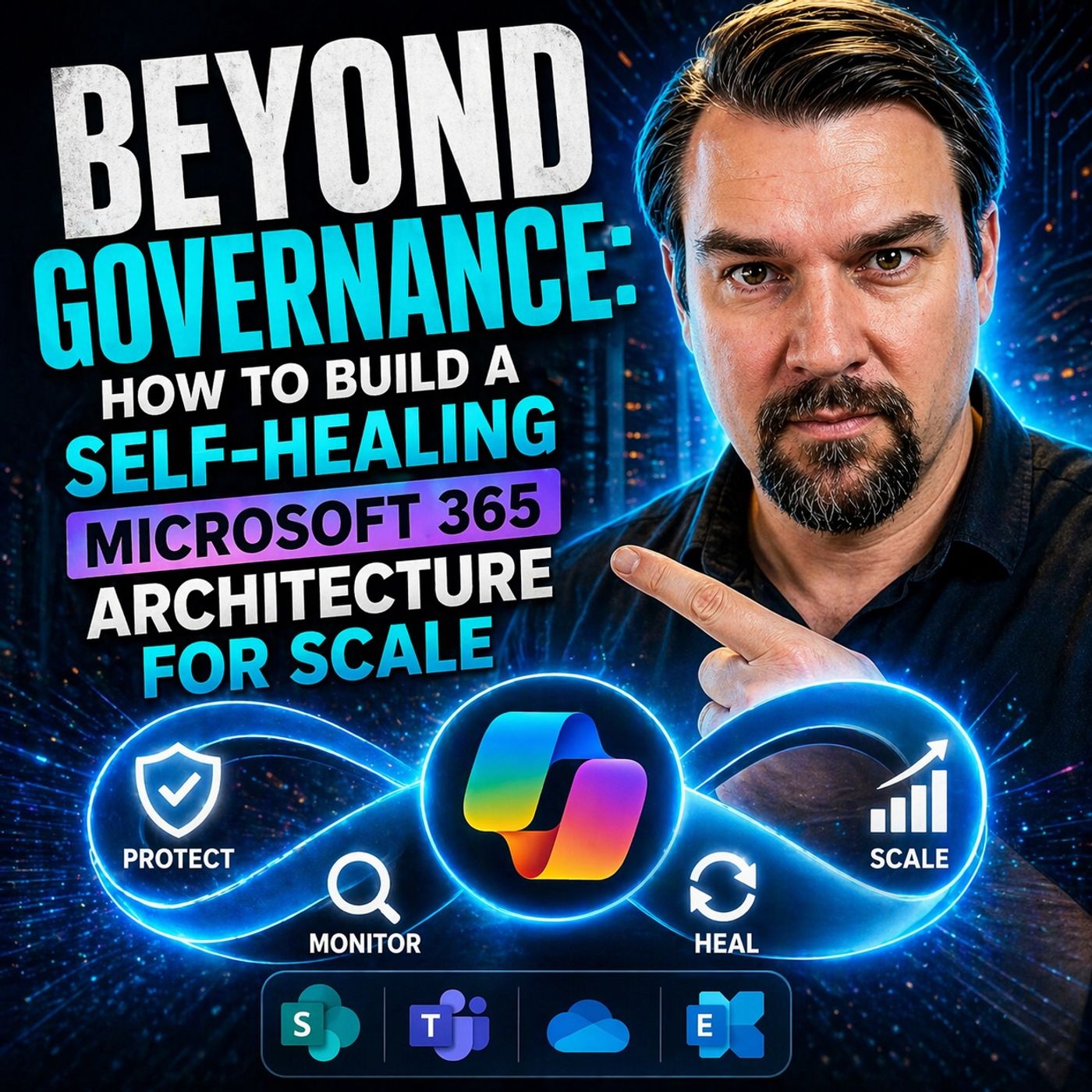
Build a Self-Healing Microsoft 365 Governance Architecture
This episode argues that traditional Microsoft 365 governance—based on policies, documentation, and manual processes—does not scale in modern cloud environments. Instead, organizations need to shift toward a self-healing architecture where governance is built into the system itself through automation, lifecycle management, and continuous monitoring. The key idea is that governance should not rely on people enforcing rules after the fact, but on programmable controls that automatically enforce intent, detect drift, and remediate issues in real time. This includes designing identity, access, and resource lifecycles so that everything has ownership, expiration, and accountability by default. The episode emphasizes that scalable governance comes from architecture (control planes, automation, telemetry), not from more processes or approvals. By embedding governance into the platform, organizations can reduce risk, eliminate manual bottlenecks, and create an environment that continuously …
Guest: Mirko Peters
April 13, 2026
Microsoft 365 Maturity Model Based on 500 Tenant Audits
This episode explores the Microsoft 365 maturity model through real-world insights gathered from auditing over 500 tenants. Instead of relying on theoretical frameworks, it uncovers how most organizations struggle with Microsoft 365 governance maturity, hidden misconfigurations, and the growing gap between perceived and actual security. You’ll learn why traditional approaches to M365 tenant audits often fail, and what patterns consistently separate mature environments from those at risk. By breaking down a practical, experience-driven maturity formula, this episode shows how to improve Microsoft 365 governance, strengthen compliance, and scale operations effectively. It highlights the role of automation, operational discipline, and continuous assessment in achieving true Microsoft 365 maturity, making it essential listening for IT leaders, administrators, and consultants aiming to elevate their tenant security and governance strategy.
Guest: Mirko Peters
April 11, 2026
Automate Microsoft 365 Governance Beyond Static Checklists
This episode explains that most Microsoft 365 governance approaches fail because they rely on static checklists, manual processes, and reporting instead of real enforcement. It argues that governance is not something you “set up” once, but an ongoing operating model that must be built into how the platform actually works. The key message is that if governance is not automated and embedded into identity, provisioning, and lifecycle processes, it will eventually be ignored by users and drift out of control. The episode emphasizes shifting from reactive governance (fixing issues after they happen) to engineered, automated governance that prevents problems by design, with clear ownership, accountability, and continuous enforcement.
Guest: Mirko Peters
April 10, 2026
Microsoft 365 Audit Readiness and Governance Debt
Most Microsoft 365 environments don’t fail audits because of missing controls—they fail because of governance debt. Over time, quick fixes, unclear ownership, and poorly aligned operating models create hidden structural issues. These problems stay invisible until an audit exposes them, triggering last-minute panic. This episode explains why governance is not the same as configuration, how compliance gaps emerge despite having policies in place, and why many organizations rely on a false sense of control. It highlights the difference between being technically configured and truly audit-ready, and shows how governance debt builds up silently. The key takeaway: audit readiness isn’t achieved through more tools or controls, but through a clear governance model, defined accountability, and sustainable operational practices.
Guest: Mirko Peters
April 6, 2026
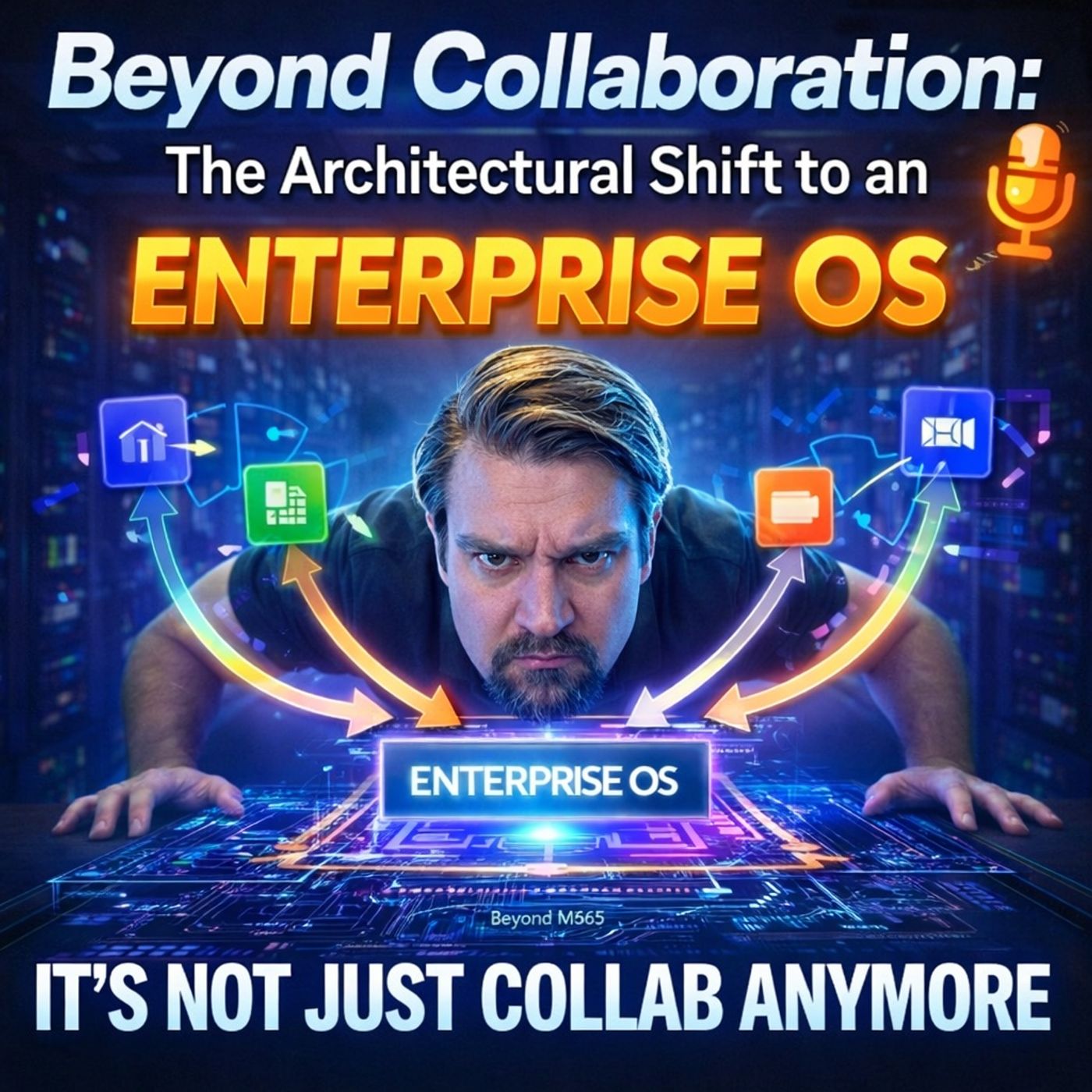
Microsoft 365 as an Enterprise Operating System
This episode explores the shift from traditional collaboration tools to the concept of an enterprise operating system, where platforms like Microsoft 365 unify apps, data, identity, and security into a single architecture. It explains how modern organizations are moving beyond disconnected tools toward integrated digital workplace platforms that define how work happens. You’ll learn what an enterprise operating system is, why this architectural shift matters, and how it impacts enterprise architecture, productivity, and the future of work.
Guest: Mirko Peters
April 5, 2026
Cloud Governance as Architecture, Not Feature Management
This episode of the M365.fm podcast challenges a common misconception in cloud strategy: that managing features, tools, and configurations leads to control. Instead, it reveals that true cloud governance is an architectural discipline, not an operational afterthought. The discussion explains how cloud environments promise efficiency and scalability, but without engineered governance they quickly turn into uncontrolled cost drivers filled with idle resources, unused licenses, and permission sprawl. The episode highlights that leading organizations shift their mindset from reactive optimization to proactive governance design. Rather than fixing costs later, they build governance into the foundation through enforced policies, structured environments, and continuous oversight. This includes practices like mandatory tagging, automated policy enforcement, FinOps routines, and platform consolidation to eliminate waste before it occurs. A practical governance roadmap is outlined, showin…
Guest: Mirko Peters

April 4, 2026
Hidden Microsoft 365 Tenant Security Risks
In this episode, we explore why Microsoft 365 environments are often less secure than they appear. While most organizations focus on security tools and settings, the real risk lies in what we call the “invisible tenant” — a hidden layer of misconfigurations, excessive permissions, and missing governance. We break down how collaboration tools like Teams and SharePoint create uncontrolled sprawl, why ownership is often unclear, and how external sharing and access accumulate unnoticed over time. The result is a structure that looks secure on the surface but contains significant hidden risks. The key takeaway: most Microsoft 365 security issues are not caused by attackers or platform weaknesses, but by a lack of visibility, governance, and control within the tenant itself.
Guest: Mirko Peters
March 24, 2026
Map Real User Behavior in Microsoft 365 Governance
Most organizations think they understand their infrastructure. They see tools, licenses, configurations… dashboards that suggest control. But none of that tells you what’s actually happening. In reality, your Microsoft 365 environment isn’t just infrastructure—it’s a living system of decisions, behaviors, and actions happening every second across your organization. In this episode, we break down the infrastructure illusion—the gap between what you think your systems are doing and what your people are actually doing inside them. Because turning on controls doesn’t mean those controls are shaping behavior. And if you’re not mapping real activity, you’re not governing anything—you’re just assuming you are. This is about shifting from static infrastructure thinking to understanding your environment as a dynamic decision engine—and why visibility into real human and system behavior is the only thing that actually matters.
Guest: Mirko Peters

March 23, 2026
Microsoft Purview as a Business Intelligence Layer
Most organizations believe they understand how their business operates. They point to org charts, policies, and compliance frameworks as proof. They are wrong. In this episode, Mirko Peters reframes Microsoft Purview from a compliance tool into...
Guest: Mirko Peters
March 21, 2026
Automate Microsoft 365 Administration and Governance
You didn’t fail as an admin. The system failed because it needed you. After years of manual governance—access reviews, approvals, lifecycle policies—this episode exposes the uncomfortable truth: human-driven administration was never scalable in a...
Guest: Mirko Peters
March 20, 2026
Fix Poor Microsoft 365 Tenant Design with Practical Governance
This episode argues that most Microsoft 365 problems are not technical, but organizational. Technical experts often design tenants that are logically perfect but fail in real-world use. They focus too much on configuration and not enough on how people actually work. As a result, systems become difficult to manage and quickly lose structure. The speaker highlights that Microsoft 365 should be treated as an operating system for the business, not just a collection of tools. Many issues like oversharing and sprawl come from missing governance, not bad technology. Technical teams often fall into the trap of building complex, elegant solutions without clear ownership. Over time, these systems break down because no one is responsible for maintaining them. Governance is often treated as a one-time project instead of an ongoing process. This leads to long-term risks, especially around security and scalability. The episode emphasizes the importance of intent-based governance rather than just te…
Guest: Mirko Peters
March 18, 2026
7 Levels of Azure Administration: Beginner to Cloud Architect
This episode introduces a 7-level maturity model for Azure and Microsoft 365 administration, reframing the role of admins from operators to architects of a distributed decision system. It argues that most professionals remain stuck in low-level execution, focusing on tools and configurations, while the real value lies in controlling system behavior, governance, and identity-driven architecture. Each level represents a shift in mindset, moving from basic task execution to understanding Azure as a control plane that governs identity, access, automation, and AI-driven decisions. The episode emphasizes that modern cloud environments are not infrastructure but dynamic systems making continuous authorization and policy decisions, and the highest level of mastery is designing and curating those systems intentionally rather than reacting to them.
Guest: Mirko Peters
March 9, 2026
7 Microsoft 365 Architecture Mistakes That Cost Millions
In reality, it is an economic and operational system that governs identity, collaboration, security, automation, and enterprise data flows. When this system is not architected intentionally, it begins to leak value silently through inefficiencies, security gaps, and governance failures. In this episode of the M365 FM Podcast, we explore the seven architectural mistakes that quietly cost organizations millions in invisible inefficiency—and how enterprise architects can prevent them. The core message is simple: Microsoft 365 success is not determined by licenses or features, but by how the tenant is architected as a control plane for the enterprise.
Guest: Mirko Peters

March 8, 2026
Architect $1M in Efficiency with Power Platform Governance
Most organizations believe efficiency improvements come from better tools or faster processes. But the biggest gains rarely come from new software. They come from architectural decisions. In this episode of the M365 FM Podcast, we explore how organizations can architect efficiency at scale using Microsoft’s automation ecosystem. The conversation reframes platforms like Power Platform not as simple app-building tools, but as distributed decision engines that execute governance and workflow decisions across the enterprise every day. When designed properly, these systems can generate enormous operational efficiency—sometimes saving hundreds of thousands or even millions of dollars annually.
Guest: Mirko Peters
March 6, 2026
Unlock Microsoft 365 ROI Through Better Tenant Architecture
Omission Most organizations believe they have a Microsoft 365 cost problem. In reality, they have an architecture problem. Companies often overpay for their Microsoft 365 environments—not because the licenses are expensive, but because the platform is architected like a simple productivity tool instead of enterprise infrastructure. In this episode of the M365 FM Podcast, we explore a hidden economic truth inside the Microsoft cloud: most organizations already own powerful governance, security, and automation capabilities within their tenant—but fail to design systems that use them effectively. The result? Organizations pay twice: Once for the capabilities included in Microsoft 365 And again for third-party tools that replicate the same functionality This is what we call the SaaS Paradox.
Guest: Mirko Peters
March 3, 2026
Build an Autonomous Microsoft 365 Tenant with Zero-Touch Workflows
Modern digital transformation isn’t about adding more SaaS tools. It’s about designing systems that operate autonomously. In this episode of the M365 FM Podcast, we explore what happens when your Microsoft 365 tenant becomes a self-operating enterprise control plane—where workflows execute automatically, identities are provisioned without human intervention, and governance is enforced by architecture instead of manual processes. This is the concept of the Autonomous Tenant. Imagine a new employee joining your company. The moment HR approves the hire, the entire environment configures itself automatically: Identity created in Microsoft Entra ID Access policies applied Devices configured Teams and SharePoint resources provisioned Security baselines enforced Compliance logging enabled No IT tickets. No manual provisioning. No human middleware. Everything runs deterministically from a single source of truth. This episode breaks down how organizations can architec…
Guest: Mirko Peters

March 1, 2026
Azure Governance Architecture to Control Cost, Security, and Compliance
This episode explains that simply knowing how to provision Azure services is no longer enough — the real value in 2026 is governance architecture: designing systems that prevent erosion between intended policy and actual state. Most Azure professionals optimize for services and certifications instead of building enforcement systems that keep environments secure, compliant, and cost-efficient as they scale. The episode outlines core governance patterns — such as identity control, policy-as-code, landing zones, drift detection, and continuous compliance — that differentiate high-leverage engineers from average practitioners.
Guest: Mirko Peters

Feb. 27, 2026
High-Performance Azure Cloud Governance to Reduce Waste
This episode explains that cloud environments promise efficiency, elasticity, and control — but without governance engineered as architecture, they become financial drains and operational chaos. It recounts how idle resources, ungoverned permissions, and unmanaged sprawl can drive huge waste, and why governance first — not optimization after-the-fact — unlocks structural efficiency and sustained cost reduction. Listeners learn a practical 12-month cloud governance playbook that turns governance from reactive cost-cutting into proactive architectural discipline.
Guest: Mirko Peters
Feb. 26, 2026
AWS vs Microsoft Entra for Enterprise Cloud Identity
This episode argues that although Amazon Web Services (AWS) dominates infrastructure, the real “cloud war” has shifted to the enterprise control plane — the system that enforces identity, policy, and governance across hybrid environments. Most enterprises are hybrid by default, and the winner is the provider that controls who can access what, under which conditions, and with auditable compliance. According to the discussion, AWS leads in compute but lacks a unified control plane across people, devices, policies, and data — an area where Microsoft’s identity and governance stack holds structural advantage.
Guest: Mirko Peters
Feb. 25, 2026
How Microsoft Built an Enterprise AI Architecture Advantage
This episode argues that the real AI war isn’t being decided by benchmarks, headlines, or consumer adoption. Instead, the strategic competition for enterprise AI dominance is happening deep inside enterprise architecture — identity systems, data infrastructure, cloud compute, and workflow engines. While competitors emphasize flashy interfaces and viral demos, Microsoft is quietly building and integrating the foundational layers that most organizations already run on, setting an architectural moat that’s difficult to displace.
Guest: Mirko Peters

Feb. 22, 2026
How to Design Sovereign Cloud Architecture for Microsoft Azure
In this episode, we break down a critical misconception in modern cloud strategy: sovereign cloud is not a product, a geographic region, or a compliance checkbox. It is an architectural control model. True sovereignty is determined by who has enforceable authority over identity systems, encryption keys, administrative access, and the cloud control plane. We explore the five-layer sovereignty stack and explain why organizations must design for verifiable control rather than rely on residency alone.
Guest: Mirko Peters