Apple Podcasts
 Spotify
 Youtube Music
 Spreaker
 Podchaser
 Amazon Music
 No-Code vs Low-Code vs Pro-Code: Which Should You Choose?

Choosing between low-code, no-code, and pro-code can feel overwhelming, and in this episode we break down exactly what each approach means, how they differ, and when each one is the right fit. You’ll learn how pro-code gives developers full control and unlimited customization, why low-code strikes a powerful balance between speed and flexibility, and how no-code enables business users to build apps without writing a single line of code. We explore real-world use cases, the strengths and limitations of each method, and how organizations are blending these approaches to accelerate development while maintaining quality and scalability. Whether you're trying to empower citizen developers, speed up delivery, or build complex enterprise systems, this episode gives you the clarity you need to choose the right development strategy for your team and your goals.
You want your apps to stay safe in a digital world that changes fast. Pro-code development usually gives you stronger security because you control every detail. No-code security makes app building easy for everyone, but you may rely on what the platform offers. Each method has strengths and weaknesses. No-code now plays a big role in how you create and manage apps, just like pro-code.
Key Takeaways
- No-code platforms simplify app creation with built-in security features, making it accessible for non-technical users.
- Pro-code development offers full control over security, allowing for custom features and compliance with industry standards.
- Both no-code and pro-code approaches have strengths and weaknesses; choose based on your app's complexity and data sensitivity.
- User responsibilities remain crucial in no-code environments; strong passwords and proper data sharing practices are essential.
- Regular updates and maintenance are vital in pro-code development to protect against vulnerabilities and ensure compliance.
- Low-code development provides a balance, allowing for quick app creation while still enabling some customization.
- Evaluate your team's skills and resources when deciding between no-code and pro-code to ensure effective app security.
-
Consider blending no-code and pro-code strategies to leverage the strengths of both approaches for optimal app safety.
No-Code vs Low-Code vs Pro-Code: 8 Surprising Facts
- No-code platforms can hide critical security controls: many users assume built-in platform protections are sufficient, but tenant-level defaults or insecure third-party plug-ins can expose data if administrators don’t configure controls correctly.
- Low-code often increases attack surface despite governance features: by enabling rapid app creation, low-code can proliferate integrations and APIs that expand the organization’s exposure unless API management and monitoring are enforced.
- Pro-code projects accumulate hidden risks through legacy debt: custom code offers flexibility but often accumulates unreviewed libraries, outdated dependencies, and bespoke crypto patterns that introduce long-term vulnerabilities.
- No-code lowers developer mistakes but amplifies configuration errors: removing hand-coding reduces SQL/XS S bugs, yet misconfigured access roles, environment segregation, or insecure default templates become the primary failure modes.
- Supply-chain risks differ by approach: no-code/low-code shift supply-chain trust to platform vendors and templates, while pro-code shifts it to open-source dependencies and CI/CD pipelines—both require distinct vendor and dependency-risk management strategies.
- Security testing practices must change: traditional static code analysis is less useful for no-code; security teams should focus on runtime scanning, permission audits, configuration reviews, and automated behavior testing instead.
- Compliance posture can be deceptively harder with no-code: simple apps built quickly may bypass formal change control and audit trails, creating compliance blind spots even when the underlying platform is certified.
- Hybrid models often give the best security ROI: using pro-code for core, sensitive functionality and no/low-code for peripheral workflows lets organizations enforce strong controls where needed while gaining productivity—provided there’s centralized governance, least-privilege, and continuous monitoring.
No-code security vs pro-code development
Defining no-code security
No-code security gives you a way to build apps without writing code. You use drag-and-drop interfaces to create workflows and connect data. No-code platforms handle most of the security for you. This makes app creation fast and simple, even if you do not have a technical background. You join the world of citizen development, where anyone can build solutions.
Platform security features
No-code platforms come with built-in security features. These include user authentication, data encryption, and access controls. You do not need to set up these features yourself. The platform provider updates and maintains these protections. You benefit from real-time monitoring and fast responses to threats. This helps you keep your apps safe, even if you do not know secure coding practices.
User responsibilities
You still have responsibilities when using no-code security. You must choose strong passwords and manage user roles. You need to follow best practices for sharing data. You should review permissions and make sure only the right people can access sensitive information. Even with no-code, you play a key role in keeping your apps secure.
What is pro-code development
Pro-code development means you write code to build your apps. You use professional coding skills to design, test, and deploy solutions. Pro-code gives you full control over every part of your app. You can create custom features and advanced security controls. This approach suits complex projects and teams with strong technical skills.
Custom security controls
With pro-code development, you can design your own security protocols. You can add custom authentication, encryption, and access rules. You can follow industry standards like HIPAA or GDPR. This level of control is important for mission-critical systems. You can also run penetration testing to find and fix weaknesses before attackers do.
- Pro-code development environments allow for the implementation of custom security protocols.
- They enable meticulous adherence to industry-specific regulatory compliance, such as HIPAA and GDPR.
- This level of customization is critical for mission-critical systems.
Developer expertise
Professional coding requires skilled developers. You need to understand secure coding practices and how to protect data. You must keep up with new threats and update your code often. Pro-code platforms give you the tools to build strong defenses, but you must use them wisely. Your expertise shapes the safety of your apps.
App safety basics
No matter which approach you choose, some safety rules always apply. The Single Responsibility Principle (SRP) helps you design apps that are easy to manage and less likely to have errors. SRP means each part of your app should do one thing well. This makes your app safer and easier to update. Both no-code and pro-code solutions benefit from this principle.
Tip: Modular design and clear roles make your apps safer and easier to maintain.
Low-code as a middle ground
Low-code development sits between no-code and pro-code development. You use drag-and-drop interfaces, but you can also add custom code when needed. Low-code lets you build apps faster than pro-code, but with more flexibility than no-code. Many businesses use low-code to empower citizen development while keeping control over key features. If you want to learn more, the Microsoft Power Platform Podcast explores how low-code development blends speed, security, and customization for modern teams.
Security comparison: control and customization
No-code platforms: limitations
No-code platforms make app creation easy, but you face some limits when it comes to security. You depend on the platform’s built-in protections, which means you cannot always change or add custom security features. This can affect how well you protect sensitive data or meet strict compliance rules.
Predefined security options
You get a set of security options that the platform provider chooses. These options cover basics like authentication and encryption, but you cannot always adjust them for your unique needs. For example, if your app handles medical or financial data, you may not have enough control to meet industry standards.
Here is a table showing common limitations you might face with no-code platforms:
| Limitation Type | Description |
|---|---|
| Security Risks | You trust a third-party provider with your app’s security, which reduces your control. |
| Data Privacy | The platform manages your data, raising privacy concerns for sensitive information. |
| Poor Session Management | Weak session controls can allow unauthorized access. |
| Authorization Misuse | Users may get more permissions than needed, risking data exposure. |
| Data Leakage | Misconfigured settings can expose sensitive information. |
| Authentication Failures | Weak authentication can make it easier for attackers to gain access. |
| Security Misconfiguration | Default settings may not be secure, creating vulnerabilities. |
| Injection Handling Failures | Lack of input validation can lead to injection attacks. |
| Vulnerable Components | Pre-built parts may have security flaws that need regular testing. |
| Data Handling Failures | Poor management of sensitive data can cause breaches. |
| Asset Management Failures | Outdated components may stay exposed without proper tracking. |
| Logging and Monitoring Failures | Without good logging, you may not spot suspicious activity. |
Vendor lock-in
When you use a no-code platform, you rely on one provider for updates, security patches, and new features. If you want to switch platforms, you may find it hard to move your app or data. This lock-in can limit your ability to respond quickly to new security threats or compliance needs.
Pro-code: full control
Pro-code development gives you the highest level of control over your app’s security. You decide how to build every part of your app, from the user interface to the way data moves and gets stored. This approach lets you create custom solutions that match your exact requirements.
Custom security features
With pro-code development, you can design security features that fit your app’s needs. You can add advanced encryption, multi-factor authentication, and detailed logging. You can also test your app for vulnerabilities and fix them before launch. This level of customization helps you meet strict industry standards and protect sensitive data.
Advanced access controls
You can set up complex access controls with pro-code development. You decide who can see, edit, or delete data. You can create roles and permissions that match your business rules. This helps you follow the principle of least privilege, which means users only get the access they need.
Flexibility and updates
No-code platforms offer fast updates because the provider manages security patches and new features. You benefit from quick fixes, but you cannot always control when or how updates happen. If a new security threat appears, you must wait for the provider to respond.
Pro-code development gives you the flexibility to update your app whenever you need. You can respond to new threats right away. You can also add new security features as your business grows. However, you must manage updates yourself, which takes time and skill.
Here is a table comparing how no-code and pro-code development adapt to new security threats:
| Approach | Security Features | Vulnerability Risks |
|---|---|---|
| No-code | Fewer manual coding errors; platform handles most security updates. | Lower risk of introducing new vulnerabilities. |
| Pro-code | Full control over security; custom features possible. | Higher risk if you do not follow best practices. |
Note: Pro-code development gives you more power to protect your app, but you must stay alert and keep your skills up to date. No-code platforms make security easier, but you trade some control for convenience.
You should weigh these differences when choosing the best approach for your app’s safety and compliance needs.
Risks and advantages of no-code and pro-code
No-code security risks
Platform vulnerabilities
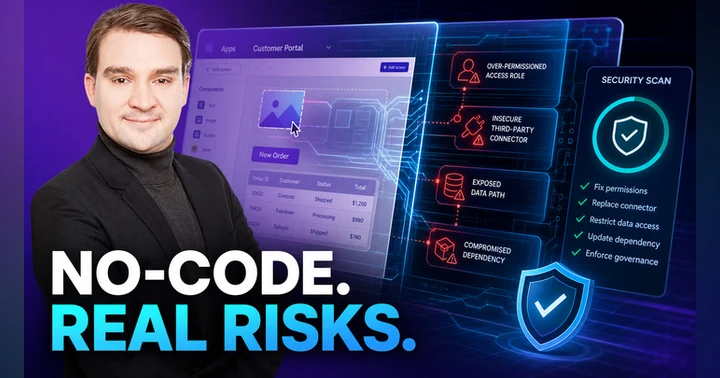
You may find that no-code platforms make app building easy, but they also introduce unique risks. Many platforms use open access, which means your credentials can give others more control than you expect. If you migrate apps or connect third-party services, you might face data leaks. Authentication issues can happen if the platform does not use secure protocols. Dependency injections can let attackers change how your app works. Configurational issues may allow unauthorized users to access your app if you do not set up features correctly.
Here is a table showing common security risks in no-code platforms:
| Security Risk | Description |
|---|---|
| Open access | Credentials used as service identity can lead to unauthorized access. |
| Vulnerable migration | Weak security during migration can cause data leaks, especially with third-party integrations. |
| Authentication issues | Use of HTTP instead of HTTPS can expose data to attackers. |
| Dependency injections | External components may allow malicious code to enter your app. |
| Configurational issues | Poor setup can let unauthorized users exploit app credentials and source code. |
Limited visibility
You may not see everything that happens inside your app when you use no-code. The platform handles most of the background work. This can make it hard to spot security threats or track changes. If a problem happens, you might not know where it started. Limited visibility can slow down your response to attacks or data leaks.
No-code advantages
Built-in protections
No-code platforms give you several built-in protections. You get SSL encryption, which keeps data safe as it moves between users and servers. Many platforms offer DDoS mitigation, so your app stays online during attacks. Infrastructure-level security protects the servers and networks that run your app. These features help you avoid many common threats without extra work.
- SSL encryption keeps your data private.
- DDoS mitigation stops attackers from taking your app offline.
- Infrastructure-level security protects your app’s foundation.
Fast updates
You benefit from fast updates when you use no-code. The platform provider handles patches and new features. You do not need to worry about fixing vulnerabilities yourself. This means your app stays protected against new threats. Fast updates help you keep up with changing security needs.
Pro-code security risks
Human error
Pro-code development gives you control, but it also brings risks. Human error causes many security problems. You might click on phishing links, use weak passwords, or send sensitive data to the wrong person. Misconfigured access controls can let users see more than they should. Poor patch management can leave your app open to attacks. Social engineering scams can trick you into giving away information.
- 68% of breaches involve mistakes by users, not hackers.
- Simple errors can open the door to cyber criminals.
Maintenance challenges
You must keep your pro-code apps up to date. This means patching software, fixing bugs, and updating security features. If you fall behind, your app becomes vulnerable. Maintenance takes time and skill. Large enterprise-grade applications need regular checks to stay safe. You must plan for ongoing support to protect your app and meet compliance needs.
Tip: Regular training and clear processes help you avoid common mistakes in pro-code development. The Microsoft Power Platform Podcast shares stories where teams blend low-code and pro-code to reduce risks and speed up updates for enterprise-grade applications.
Pro-code advantages
Custom solutions
You gain unmatched flexibility with pro-code development. When you build apps with code, you can design every feature to fit your exact needs. You do not have to settle for generic templates or limited options. Instead, you can create unique workflows, custom user interfaces, and advanced integrations. This approach works well for businesses that need to solve complex problems or handle sensitive data.
Custom solutions help you stand out in your industry. For example, a multinational pharmaceutical company must follow strict regulations in every country where it operates. Off-the-shelf software often cannot meet these requirements. By building custom apps, you can address specific rules, automate compliance checks, and adapt quickly when laws change.
You also benefit from seamless integration. If your business uses several systems, custom code lets you connect them. You can automate data transfers, reduce manual work, and lower the risk of errors. This is especially important for global tax compliance, where mistakes can lead to fines.
Here are some ways custom solutions make a difference:
- Tailor features to your business processes.
- Integrate with existing systems for smooth operations.
- Scale your app as your business grows.
- Adapt quickly to new regulations or market changes.
Tip: Custom solutions give you the power to innovate and respond to challenges faster than competitors who rely on standard tools.
Compliance options
Pro-code development gives you strong control over compliance. You can build security features that match industry standards, such as HIPAA for healthcare or GDPR for data privacy. This control helps you protect sensitive information and avoid legal trouble.
Financial institutions often use custom compliance management systems. These systems can scale as regulations change. You can update rules, add new checks, and generate reports for audits. Fintech companies also rely on custom solutions to build compliance infrastructures that keep up with new markets and laws.
The table below shows how custom solutions support compliance in different industries:
| Industry | Compliance Needs | Pro-code Advantage |
|---|---|---|
| Pharmaceuticals | Complex, country-specific regulations | Custom workflows and automated checks |
| Finance | Evolving global regulations | Scalable compliance management systems |
| Tax & Accounting | Integration with global tax systems | Automated data transfer and error reduction |
| Fintech | Rapid market expansion | Adaptable compliance infrastructure |
You can update your app whenever new rules appear. This keeps your business safe and ready for audits. Pro-code development puts you in control of both your app and your compliance strategy.
Choosing the safer option
Assessing app type and data
You should start by looking at the type of app you want to build and the kind of data it will handle. Some apps manage simple workflows, while others process large amounts of sensitive data. The way you build your app affects how you protect it.
Here is a table that shows important factors to consider when you assess your app’s security needs:
| Factor | Description |
|---|---|
| Authorship | Who writes the code? This affects how you test and secure your app. |
| Source-Code Availability | Can you see and test the code? This changes your security testing approach. |
| Third-Party Components | Do you use outside libraries? You need to check these for risks, especially in critical areas. |
| Development Model | How do you build and update your app? Agile methods need different tools than traditional models. |
| Target Platform | Where will your app run? The environment changes what security tools you need. |
If your app handles sensitive data, you must pay extra attention. Developers write billions of lines of code every year, and sensitive data appears often. Even a small mistake can lead to a data breach. You need to choose the right tools and methods to keep your information safe.
User expertise and resources
Your team’s skills and resources play a big role in choosing the safest approach. No-code platforms work well if you have strong business technologists but not many developers. These tools let non-technical users build apps directly. You can move fast and solve problems without waiting for IT.
If you use pro-code development, you need skilled engineers. These experts know how to build strong defenses and follow best practices. With the right team, you can get better security results. However, users with limited technical skills may create risks. They might set up weak access controls or connect third-party services in unsafe ways. Insecure configurations can lead to data leaks or breaches.
Low-code platforms offer a middle ground. You can empower business users while letting developers handle complex security tasks. This approach helps you balance speed, safety, and flexibility.
Tip: Train your team on security basics, no matter which platform you choose. Good habits help prevent mistakes.
Business needs and compliance
You must also think about your business goals and compliance requirements. If you need to scale your app to millions of users or connect many systems, pro-code development gives you the power to do that. You can build complex integrations and handle growth without losing control over security.
Here is a table that compares how no-code and pro-code development meet business needs:
| Aspect | No-Code Limitations | Pro-Code Strengths |
|---|---|---|
| Scalability | Apps may not support millions of users. | Can handle complex integrations and scale easily. |
| Security | Security and compliance threats are common. | Ensures compliance and strong security measures. |
If your business must follow strict rules, such as HIPAA or GDPR, you need a platform that supports compliance. Pro-code development lets you build custom solutions that meet these standards. Low-code platforms can also help, especially if you need to move fast but still follow the rules.
No-code security works best for simple apps with basic needs. For complex projects or strict compliance, pro-code or low-code may be the safer choice.
When to use no-code platforms
You should consider no-code platforms when you want to build simple apps quickly. These tools work best for projects that do not require complex features or deep customization. You can use them to automate routine tasks, manage basic workflows, or collect and share data inside your team.
No-code platforms help you move fast. You do not need to write code or hire developers. You can use drag-and-drop tools to create forms, dashboards, or approval processes. This approach works well if you have limited technical skills or need to solve a business problem right away.
Here are some situations where no-code platforms make sense:
- You need to build a prototype or minimum viable product (MVP) to test an idea.
- Your app handles non-sensitive data and does not require strict compliance.
- You want to empower business users to create their own solutions.
- You need to automate simple tasks, such as sending reminders or tracking inventory.
- Your team values speed and ease of use over advanced customization.
Tip: No-code platforms often include built-in security features like user authentication and data encryption. You still need to manage user access and follow best practices for sharing information.
You can also use no-code platforms as part of a larger strategy. For example, you might build simple tools with no-code and connect them to more advanced systems. This lets you get the best of both worlds—speed for simple tasks and power for complex needs.
You should match your app’s security approach to your needs. Pro-code gives you more control and flexibility for complex projects. No-code works best for simple apps with basic requirements.
Low-code can speed up compliance reporting and reduce integration friction when it fits your vendor ecosystem. Pro-code offers more adaptability but takes more time and resources.
When you evaluate your requirements, focus on these priorities:
- Protect sensitive data from unauthorized access.
- Address vulnerabilities early to reduce cyber risks.
- Align security controls with regulations.
- Preserve trust and reputation.
- Minimize costs from breaches.
- Support innovation and growth.
Blended strategies help you catch vulnerabilities early and keep your apps secure as they evolve.
No-Code vs Low-Code vs Pro-Code — Checklist
This checklist helps compare and evaluate no-code, low-code, and pro-code approaches with emphasis on security, compliance, and operational considerations including no-code vs pro-code security differences.
FAQ
What is the main security difference between no-code and pro-code apps?
You get more control with pro-code apps because you write and manage the code. No-code apps rely on platform security features. You trade flexibility for convenience when you choose no-code.
Can no-code platforms handle sensitive data securely?
No-code platforms offer built-in protections like encryption and access controls. You should check if these meet your industry’s standards before using them for sensitive data.
How do I know which approach fits my business needs?
You should look at your app’s complexity, data sensitivity, and compliance requirements. Simple apps with basic needs work well on no-code platforms. Complex or regulated apps need pro-code or low-code solutions.
Are no-code apps easier to update for security?
Yes, platform providers handle most security updates for you. You get fast patches and new features without extra work. You still need to manage user access and data sharing.
What risks should I watch for with pro-code development?
You must watch for human errors, outdated code, and misconfigured access controls. Regular training and code reviews help you avoid these risks.
Can I combine no-code and pro-code in one project?
You can blend both approaches. Use no-code for simple tasks and pro-code for custom features or integrations. This hybrid strategy gives you speed and flexibility.
Where can I learn more about low-code, no-code, and pro-code security?
You can listen to the Microsoft Power Platform Podcast. It shares real-world stories and tips for choosing the right development approach for your team.
What are the main security differences between no-code and pro-code approaches?
No-code development and pro-code (traditional development) differ in control and visibility: no-code platforms abstract infrastructure and many security controls, so no-code platforms allow faster app development with built-in protections but can limit deep customization of security. Pro-code offers granular control over programming language choices, libraries, and architecture, enabling tailored security solutions but requiring development teams to implement and maintain them. The difference between low-code and no-code often sits in flexibility—low-code platforms may let developers extend functionality through code, blending pro-code capabilities with no-code speed.
How does using a low-code or no-code platform affect compliance and data governance?
No-code and low-code platforms often include compliance-ready features (audit logs, role-based access, encryption) that help meet standards like SOC 2 or GDPR out of the box. However, compliance responsibility is shared: vendors secure the platform, while your development team must configure permissions, data residency, and retention policies. For highly regulated systems, pro-code or a low-code development platform that supports custom controls may be preferable to satisfy strict regulatory requirements.
Can no-code applications be secure against advanced threats, or is pro-code required?
No-code applications can be secure against many threats when built on reputable no-code development platforms that provide secure runtimes, input validation, and patch management. For advanced or highly specialized security requirements—custom encryption, specialized authentication flows, or unique threat models—pro-code or low-code platforms that permit writing custom code (code from scratch) give the necessary control. The choice depends on threat complexity and whether the no-code tools support extension or integration with security services.
How do authentication and authorization differ between no-code tools and traditional development?
No-code platforms usually offer built-in authentication connectors (SSO, OAuth, SAML) and role-based access controls that simplify secure user management. Traditional development (pro-code) requires teams to select libraries, implement authentication flows, and manage session security manually, which increases flexibility but also the risk of misconfiguration. Low-code tools may combine both approaches: use standard connectors and allow developers to write custom authorization logic when needed.
What risks come from third-party integrations in no-code and low-code applications?
Integrations increase the attack surface for any development platform. No-code and low-code platforms often provide vetted connectors, reducing risk from third parties, but a single insecure integration can expose data. In pro-code development, teams choose and implement integrations themselves, which can be more secure if done correctly, but also more error-prone. Vet third-party services, enforce least privilege, and monitor integration activity regardless of whether you use no-code app builders or write custom integrations in traditional code.
How can development teams balance speed (no-code) with security best practices?
Use a layered approach: adopt no-code solutions or low-code app development for rapid prototyping and low-risk applications while applying secure defaults, role-based access, encryption, and logging. For critical features, use low-code platforms that allow you to extend functionality through code or move specific components to pro-code to implement tighter controls. Create a governance policy that requires security reviews before deploying no-code applications into production and train non-developer users on secure configuration.
Are vulnerabilities in no-code development platforms patched by the vendor, and what is still my responsibility?
No-code and no-code and low-code platforms typically manage platform-level vulnerabilities and provide regular updates, reducing the need for customers to patch infrastructure. Your responsibilities include secure configuration, managing user access, securing integrations, and ensuring data protection within the application. For low-code development platforms that permit custom code, you must also maintain and patch any custom components or libraries you add.
How do code generation and automation in low-code vs no-code affect security testing?
Code generation and no-code automation speed up app development but can obscure generated logic, making conventional code reviews harder. Use platform-provided security testing tools, runtime monitoring, and automated scanners that understand generated artifacts. For low-code app development where custom code is injected, include standard code security practices—static analysis, dependency scanning, and penetration testing—to cover both generated and hand-written code.
When should an organization choose pro-code over no-code or low-code for security reasons?
Choose pro-code when you need full control over architecture, strict isolation, specialized cryptography, or to meet highly specific compliance requirements that no-code platforms cannot satisfy. Pro-code is also better when you must build thousands of lines of code or integrate deeply with legacy systems. If security demands can be met by a low-code development platform with extendable code, that hybrid approach can provide a balance between speed and pro-code capabilities.
What governance and lifecycle practices should be applied to no-code and low-code applications?
Apply the same development lifecycle controls used in traditional development: change management, version control (where supported), access reviews, testing, and incident response. Maintain an inventory of no-code applications, enforce approval processes before production deployment, and require security assessments for apps handling sensitive data. Use centralized monitoring and enforce policies on no-code platforms to reduce shadow IT risks.
How do programming skills and developer roles change when adopting no-code and low-code platforms?
No-code and low-code platforms democratize app development, enabling citizen developers to build applications without deep programming language knowledge. This shifts developers toward governance, integration, and security oversight roles while allowing business users to deliver features faster. Pro-code developers remain essential for building complex, secure systems, writing custom code, and ensuring the overall architecture meets security and performance requirements.
Can no-code applications be extended with custom code to meet security requirements?
Many low-code platforms support extension points where developers can write custom modules or embed code to meet specialized security needs—such as custom encryption, logging, or authentication adapters. Pure no-code tools may be more limited, so evaluate whether the no-code platform allows you to extend functionality through code or integrate external security services before committing to it for sensitive applications.
What are practical steps to secure no-code and low-code application development?
Start by selecting reputable low-code and no-code development platforms with strong security practices. Enforce least privilege, enable encryption in transit and at rest, regularly back up data, monitor application logs, and perform periodic penetration tests. Train users of no-code tools on secure design, maintain an application inventory, and adopt a policy to escalate critical components to pro-code when the security or compliance needs exceed platform capabilities.
🚀 Want to be part of m365.fm?
Then stop just listening… and start showing up.
👉 Connect with me on LinkedIn and let’s make something happen:
- 🎙️ Be a podcast guest and share your story
- 🎧 Host your own episode (yes, seriously)
- 💡 Pitch topics the community actually wants to hear
- 🌍 Build your personal brand in the Microsoft 365 space
This isn’t just a podcast — it’s a platform for people who take action.
🔥 Most people wait. The best ones don’t.
👉 Connect with me on LinkedIn and send me a message:
"I want in"
Let’s build something awesome 👊
If your Power App suddenly exposed sensitive data tomorrow, would you know why it happened—or how to shut it down? No-code feels faster, but hidden governance gaps can quietly stack risks. Pro-code offers more control, but with heavier responsibility. We’ll compare how each model handles security, governance, and operational risk so you can decide which approach makes the most sense for your next project. Here’s the path we’ll follow: first, the tradeoff between speed and risk. Then, the different security models and governance overhead. Finally, how each choice fits different project types. Before we jump in, drop one word in the comments—“security,” “speed,” or “integration.” That’s your top concern, and I’ll be watching to see what comes up most. So, let’s start with the area everyone notices first: the speed of delivery—and what that speed might really cost you. The Hidden Tradeoff: Speed vs. Security Everyone in IT has heard the promise of shipping an app fast. No long requirements workshops, no drawn-out coding cycles. Just drag, drop, publish, and suddenly a spreadsheet-based process turns into a working app. On the surface, no-code tools like Power Apps make that dream look effortless. A marketing team can stand up a lightweight lead tracker during lunch. An operations manager can create an approval flow before heading home. Those wins feel great, but here’s the hidden tradeoff: the faster things move, the easier it is to miss what’s happening underneath. Speed comes from skipping the natural pauses that force you to slow down. Traditional development usually requires some form of documentation, testing environments, and release planning. With no-code, many of those checkpoints disappear. That freedom feels efficient—until you realize those steps weren’t just administrative overhead. They acted as guardrails. For instance, many organizations lack a formal review gate for maker-built apps, which means risky connectors can go live without anyone questioning the security impact. One overlooked configuration can quietly open a path to sensitive data. Here’s a common scenario we see in organizations. A regional sales team needs something more dynamic than their weekly Excel reports. Within days, a manager builds a polished dashboard in Power Apps tied to SharePoint and a third-party CRM. The rollout is instant. Adoption spikes. Everyone celebrates. But just a few weeks later, compliance discovers the app replicates European customer data into a U.S. tenant. What looked like agility now raises GDPR concerns. No one planned for a violation. It happened because speed outpaced the checks a slower release cycle would have enforced. Compare that to the rhythm of a pro-code project. Azure-based builds tend to move slower because everything requires configuration. Networking rules, managed identities, layered access controls—all of it has to be lined up before anyone presses “go live.” It can take weeks to progress from dev to staging. On paper, that feels like grinding delays. But the very slowness enforces discipline. Gatekeepers appear automatically: firewall rules must be met, access has to remain least-privileged, and data residency policies are validated. The process itself blocks you from cutting corners. Frustrating sometimes, but it saves you from bigger cleanup later. That’s the real bargain. No-code buys agility, but the cost is accumulated risk. Think about an app that can connect SharePoint data to an external API in minutes. That’s productivity on demand, but it’s also a high-speed path for sensitive data to leave controlled environments without oversight. In custom code, the same connection isn’t automatic. You’d have to configure authentication flows, validate tokens, and enable logging before data moves. Slower, yes, but those steps act as security layers. Speed lowers technical friction—and lowers friction on risky decisions at the same time. The problem is visibility. Most teams don’t notice the risks when their new app works flawlessly. Red flags only surface during audits, or worse, when a regulator asks questions. Every shortcut taken to launch a form, automate a workflow, or display a dashboard has a security equivalent. Skipped steps might not look like trouble today, but they can dictate whether you’re responding to an incident tomorrow. We’ll cover an example policy later that shows how organizations can stop unauthorized data movement before it even starts. That preview matters, because too often people assume this risk is theoretical until they see how easily sensitive information can slip between environments. Mini takeaway: speed can hide skipped checkpoints—know which checkpoints you’re willing to trade for agility. And as we move forward, this leads us to ask an even harder question: when your app does go live, who’s really responsible for keeping it secure? Security Models: Guardrails vs. Full Control Security models define how much protection you inherit by default and how much you’re expected to design yourself. In low-code platforms, that usually means working within a shared responsibility model. The vendor manages many of the underlying services that keep the platform operational, while your team is accountable for how apps are built, what data they touch, and which connectors they rely on. It’s a partnership, but one that draws boundaries for you. The upside is peace of mind when you don’t want to manage every technical layer. The downside is running into limits when you need controls the platform didn’t anticipate. Pro-code environments, like traditional Azure builds, sit on the other end of the spectrum. You get full control to implement whatever security architecture your project demands—whether that’s a custom identity system, a tailored logging pipeline, or your own encryption framework. But freedom also means ownership of every choice. There’s no baseline rule stepping in to stop a misconfigured endpoint or a weak password policy. The system is only as strong as the security decisions you actively design and maintain. Think of it like driving. Low-code is similar to leasing a modern car with airbags, lane assist, and stability control already in place. You benefit from safety features even when you don’t think about them. Pro-code development is like building your own car in a workshop. You decide what protection goes in, but you’re also responsible for each bolt, weld, and safety feature. Done well, it could be outstanding. But if you overlook a detail, nothing kicks in automatically to save you. This difference shows up clearly in how platforms prevent risky data connections. Many low-code tools give administrators DLP-style controls. These act as guardrails that block certain connectors from talking to others—for example, stopping customer records from flowing into an unknown storage location. The benefit is that once defined, these global policies apply everywhere. Makers barely notice anything; the blocked action just doesn’t go through. But because the setting is broad, it often lacks nuance. Useful cases can be unintentionally blocked, and the only way around it is to alter the global rule, which can introduce new risks. With custom-coded solutions, none of that enforcement is automatic. If you want to restrict data flows, you need to design the logic yourself. That could include implementing your own egress rules, configuring Azure Firewall, or explicitly coding the conditions under which data can move. You gain fine-grained control, and you can address unique edge cases the platform could never cover. But every safeguard you want has to be built, tested, and maintained. That means more work at the front end and ongoing responsibility to ensure it continues functioning as intended. It’s tempting to argue that pre-baked guardrails are always safer, but things become murky once your needs go beyond common scenarios. A global block that prevents one bad integration might also prevent the one legitimate integration your business critically relies on. At that point, the efficiency of inherited policies starts to feel like a constraint. On the other side, the open flexibility of pro-code environments can feel empowering—until you realize how much sustained discipline is required to keep every safeguard intact as your system evolves. The result is that neither option is a clear winner. Low-code platforms give you protections you didn’t design, consistent across the environment but hard to customize. Pro-code platforms give you control for every layer, but they demand constant attention and upkeep. Each comes with tradeoffs: consistency versus flexibility, inherited safety versus engineered control. Here’s the question worth asking your own team: does your platform give you global guardrails you can’t easily override, or are you expected to craft and maintain every control yourself? That answer tells you not just how your security model works today, but also what kind of operational workload it creates tomorrow. And that naturally sets up the next issue—when something does break, who in your organization actually shoulders the responsibility of managing it? Governance Burden: Who Owns the Risk? When people talk about governance, what they’re really pointing to is the question of ownership: who takes on the risk when things inevitably go wrong? That’s where the contrast between managed low-code platforms and full custom builds becomes obvious. In a low-code environment, much of the platform-level maintenance is handled by the vendor. Security patches, infrastructure upkeep, service availability—all of that tends to be managed outside your direct view. For your team, the day-to-day work usually revolves around policy decisions, like which connectors are permissible or how environments are separated. Makers—the business users who build apps—focus almost entirely on functionality. From their perspective, governance feels invisible unless a policy blocks an action. They aren’t staying up late to patch servers, and they aren’t fielding outage escalations. The operational burden is reduced at the app builder’s level because the platform absorbs much of the background complexity. That setup is a safety net, but it comes with tradeoffs. Governance, even in low-code, isn’t automatic. Somebody inside the organization still has to define the rules, monitor usage, and adjust controls as business needs change. The vendor may carry platform maintenance, but your compliance team still owns questions around data handling, retention, and auditability. What shifts is the ratio of responsibility. Low-code tilts it toward lighter oversight, while pro-code leaves nearly everything in your lap. On the other hand, when you move into a pro-code setup, governance is a different world. Every layer—from the operating system versions to dependency libraries—is your responsibility. If a vendor releases a security update for an OS or framework, your team has to evaluate, apply, and test it before anything breaks in production. It’s not a distant process happening out of view. It’s your calendar, your escalation channels, and sometimes your 2AM call. Even a small change, like a networking configuration update, requires deliberate planning. The operational cost rises not only because incidents land on your desk, but also because staying compliant requires constant evidence gathering. Consider how that plays out when external oversight bodies enter the picture. Full-code builds often demand governance boards, more extensive compliance checks, and recurring IT audits to ensure every release meets regulatory expectations. You’re not just judged on whether a feature works—you’re asked to show how the whole supporting system meets required standards. Every expansion of the stack widens the scope of what you must prove. That can translate into significant resource drain, because entire teams may be dedicated to compiling security and compliance documentation. In a low-code scenario, the equation shifts. Because the bulk of certifications—ISO, SOC, regulatory frameworks—are already attached to the platform, organizations can leverage inherited assurances for many baseline requirements. Instead of rebuilding evidence frameworks from scratch, IT may only need to show how policies were enforced at the app level. This shortens the compliance workload, but it’s never a blank check. The vendor’s certifications don’t cover usage that falls outside the platform’s guardrails. If your app processes data in a non-standard way, or connects to a third-party system, your team still has to validate and document those decisions independently. Here’s where budget conversations often miss the mark. Licensing fees and development costs are straightforward to calculate, but the ongoing effort tied to governance is much harder to pin down. Producing audit artifacts on demand, reconciling exceptions against controls, and explaining risk tradeoffs all absorb time and expertise. With managed platforms, you inherit enough structure to offload much of that work. With pro-code, none of it goes away—you design the controls and then substantiate their effectiveness for every auditor or regulator who asks. If you’re trying to get clarity on your own situation, here are three quick questions worth asking: Who handles platform updates? Who owns incident response and escalation? And who produces the evidence when auditors arrive? Your answers to those three will usually reveal whether risk sits mainly with the vendor or almost entirely with you. So governance becomes another tradeoff: low-code provides lighter overhead but less room to bend policies toward niche needs, while pro-code allows full tailoring at the cost of owning every operational, compliance, and documentation requirement. Neither is effortless, and neither is free of risk. Both need to be judged not just by what’s convenient today, but by how well they stand up when outside scrutiny comes into play. And that leads to the next perspective. Governance is an internal lens, but compliance is what the outside world measures you against. When the auditor shows up, the way you distribute responsibility is no longer theory—it’s the story you’ll have to defend. Compliance Reality Check Compliance tends to expose whether your governance model actually holds up under scrutiny. The business value of an app might be obvious—it saves time, it automates a process, it delights a department. But none of that matters when the conversation shifts to controls, documentation, and audit readiness. The core issue becomes simple: can you prove the system meets required practices like encryption, logging, or data residency? And this is where low-code and pro-code approaches separate in very noticeable ways. With a managed low-code platform, many compliance assurances come pre-packaged. Vendors often publish compliance artifacts and attestations for their services, which customers can reference during audits. Think of it as an inherited baseline—you don’t need to build core encryption engines or generate platform-level documentation from scratch. Vendors often document controls like encryption in transit and at rest for the services they manage; still, you must verify how your app uses those services to ensure the whole solution aligns with audit demands. Action: map every component of your app—UI, storage, integration points—and mark whether responsibility for controls or evidence is vendor-managed or rests with your team. This mapping is the kind of thing auditors will eventually ask for. By contrast, in pro-code environments you don’t automatically inherit compliance proof. Instead, you gain the flexibility to use frameworks and services, but you also carry the responsibility to configure, document, and verify them. If a log is required to show key rotation, alerts, or encryption in practice, you can’t simply reference a service-level statement. You need to produce real evidence from your systems. That can include archived logs, monitoring alerts, and lifecycle records showing how expired keys were handled. Collecting and maintaining this proof quickly becomes a dedicated responsibility in its own right. A real-world example helps here. Imagine a financial services firm. They might use a low-code app for client onboarding—something lightweight that ties into Teams for communication, SharePoint for document upload, and Dataverse for structured records. With that setup, much of the compliance story is simplified, because the hosting platform already provides published attestations about how those services meet baseline requirements. Reporting focuses mainly on documenting configurations and demonstrating use of approved policies. But for the firm’s core trading algorithms that run in a custom-coded Azure environment, the story looks different. Every requirement—encryption practices, transaction logging, evidence trails—has to be designed, implemented, and documented from scratch. The firm essentially operates dual strategies: leveraging vendor artifacts for user-facing workflows while building and defending custom compliance for regulated workloads. This distinction reveals the time factor most teams overlook. A low-code solution may allow you to satisfy evidence requests quickly by pointing to vendor documentation paired with light tenant-level proof. A custom-coded deployment may take far longer, since auditors could ask to see how specific controls worked at points in time. Pulling that together may involve searching through system logs, exporting archived data, and demonstrating that monitoring alerts really fired as expected. In other words, the effort gap isn’t hypothetical—it can stretch a standard check from hours into days of investigation. Inherited compliance can save time on standard checks, but anything custom still needs your own controls and evidence. That makes low-code appealing for broadly standard workloads, while pro-code remains essential where the requirements extend beyond what vendors anticipate. The critical takeaway: one approach helps you accelerate compliance reporting by leaning on external attestations, while the other forces you to validate every element but gives you total flexibility. Both bring cost implications—not just in licenses and development hours, but in the long-term governance and compliance staffing required to sustain them. Framed this way, the risk isn’t just about passing or failing audits; it’s about allocating resources. Spending days compiling system evidence means pulling skilled staff away from other priorities. Depending too heavily on inherited assurances risks leaving gaps if the platform stops short of covering your specific use case. Neither approach frees you from accountability; they just distribute it differently. So while governance shapes who owns risk inside your organization, compliance sets the standard for how you must prove it to the outside world. The next challenge is operational rather than regulatory: once you’ve chosen a development path, how smoothly can your apps connect to the IT systems you already depend on every day? IT Integration: Fitting Into the Bigger Picture Integration is where technology choices stop being theoretical and start colliding with reality. Every app eventually has to connect to other systems, and how smoothly that goes often determines whether a project feels like a quick success or a long-term maintenance problem. Low-code platforms usually integrate most easily when your organization already uses the same vendor’s identity and collaboration stack. In those cases, new apps can ride on top of existing authentication frameworks and security policies with very little extra setup. For example, embedding low-code apps into the vendor’s collaboration tools can feel seamless when the organization is already standardized on those services. Access rules, policy checks, and user identities tend to work as expected without heavy intervention from IT. That simplicity helps business users publish solutions quickly without worrying about additional configuration. The catch is that this smoothness has boundaries. The easy experience works best when all the systems in play are modern and part of the same family. The moment you need to interact with an older or custom-built platform, the story changes. If a connector or pre-built integration doesn’t exist, you move from drag-and-drop simplicity into developer territory. At that point, connecting to a legacy ERP or a proprietary warehouse database often requires building or commissioning a custom API layer. The original promise of business users building apps independently gives way to waiting on developers, which removes the main advantage low-code was supposed to provide. Pro-code environments turn that equation around. Out of the box, they rarely provide instant integrations, but because you’re building directly at the API level, almost any system can be made to connect if you’re willing to put in the effort. Old platforms, obscure protocols, or proprietary applications—if you can reach them, you can usually integrate them. Flexibility is the strength, but the cost is in time and expertise. Setting up a new connection means configuring identity flows, writing handling logic, and documenting updates as dependencies evolve. Nothing comes automatically. You gain maximum compatibility, but also maximum responsibility for making it all work. A common point of friction here is identity management. With low-code, app sign-ins often come together more quickly because they align with the vendor’s existing identity provider. End user login feels consistent across the ecosystem without added work. In custom-coded environments, however, single sign-on and federation typically need to be wired by hand. That could involve setting up claims mapping, testing token lifetimes, and adjusting permission roles during rollout. The difference is stark: managed identity setups lower friction, while manual federation slows projects down and opens more room for error. And this isn’t just an engineering detail—it affects strategic planning. If integration is too painful, shadow IT emerges. Departments patch together unsupported apps, creating hidden risk for the broader organization. Smooth integrations reduce that temptation. They encourage users to build inside the governed platform instead of improvising outside it. But again, smoothness depends on how closely the toolset matches your existing portfolio. Here’s a practical step before you commit in either direction: inventory your top three critical non-standard systems and check whether there are maintained connectors or published APIs available. If you find good coverage, you can plan for low-code to handle a majority of use cases. If not, you should assume developer effort will be required no matter which path you choose. That single exercise can save months of frustration later. Zooming out, IT leaders often face a bigger strategic tension: the more you take advantage of frictionless vendor integrations, the more deeply you anchor yourself into that ecosystem. A low-code app that runs best only because it ties tightly to one vendor’s toolset may quietly increase dependency on that environment. That’s not inherently negative, especially if the organization is already fully standardized. But it does narrow flexibility in the future, especially if your application landscape evolves and new non-standard systems become necessary. Pro-code development avoids that lock-in risk by keeping integrations under your control, but that independence demands budget, staffing, and ongoing discipline. So the pattern is clear. Low-code reduces friction in the short term but limits adaptability when dealing with non-standard systems. Pro-code expands reach but front-loads the cost onto your IT team. Both require tradeoffs, and neither path is universally better. The decision rests on which risks your organization is ready to live with and which workloads justify deeper investment. And that brings us to the bigger reflection. Looking across governance, compliance, and integration, the point isn’t to crown a winner between low-code and pro-code. The real question is how each model fits the level of risk your projects can reasonably carry—and whether you’re selecting the approach that ensures your apps will stand up not just in production, but under scrutiny. Conclusion Security and governance tradeoffs aren’t about finding one perfect approach. They’re about choosing the model that matches the specific risks of your project. A lightweight internal tracker doesn’t need the same controls as an external app processing sensitive data, yet teams often default to judging platforms on speed or available features instead of risk ownership. Here’s a quick lens you can use: What level of data does this app handle? Who will answer when something breaks or an incident occurs? Do we need integrations that go beyond our standard stack? Drop in the comments which of those three is hardest for your team to answer, and subscribe if you want more straightforward frameworks to evaluate your next project. The strongest app isn’t the flashiest—it’s the one built to work safely, consistently, and responsibly over time. This is a public episode. If you'd like to discuss this with other subscribers or get access to bonus episodes, visit m365.show/subscribe

Founder of m365.fm, m365.show and m365con.net
Mirko Peters is a Microsoft 365 expert, content creator, and founder of m365.fm, a platform dedicated to sharing practical insights on modern workplace technologies. His work focuses on Microsoft 365 governance, security, collaboration, and real-world implementation strategies.
Through his podcast and written content, Mirko provides hands-on guidance for IT professionals, architects, and business leaders navigating the complexities of Microsoft 365. He is known for translating complex topics into clear, actionable advice, often highlighting common mistakes and overlooked risks in real-world environments.
With a strong emphasis on community contribution and knowledge sharing, Mirko is actively building a platform that connects experts, shares experiences, and helps organizations get the most out of their Microsoft 365 investments.