
 Apple Podcasts
 Spotify
 Youtube Music
 Spreaker
 Podchaser
 Amazon Music
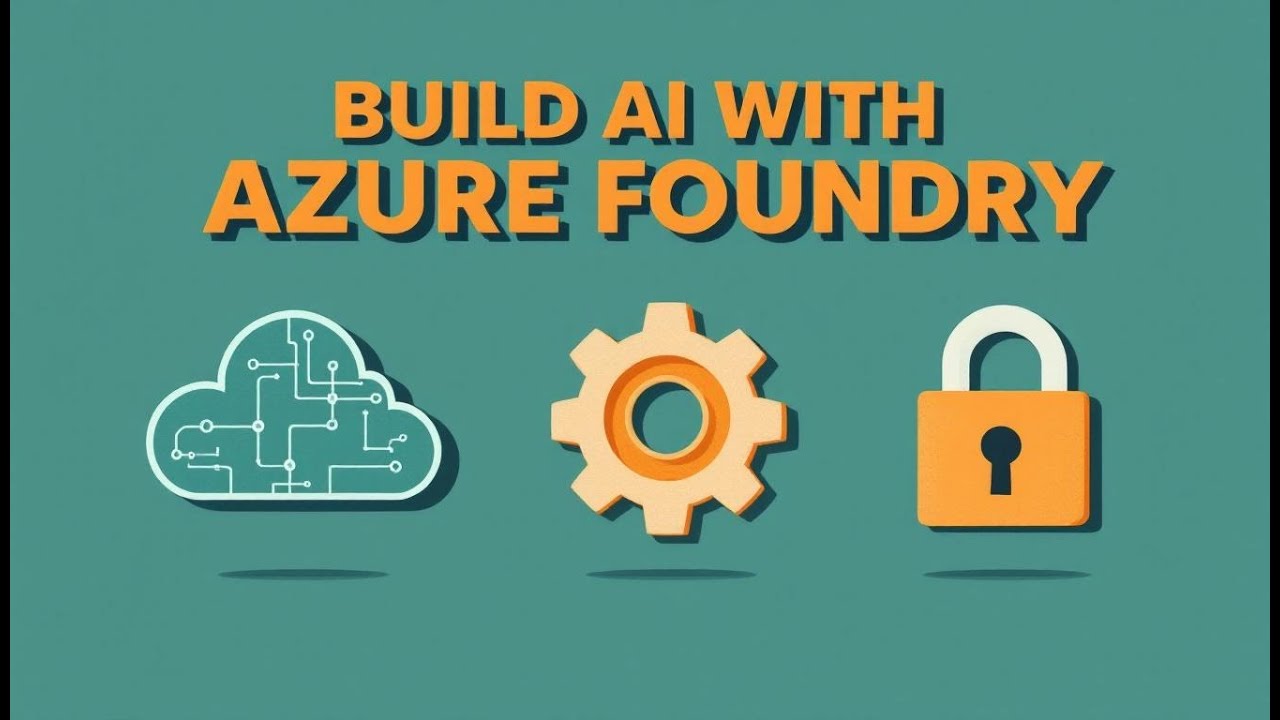
Azure AI Foundry isn’t “just a big model.” It’s a governed runtime where every interaction is logged and traceable. Agents are built as disciplined “squad leaders” from three gears—Model (brain), Instructions (orders), Tools (capabilities)—and their work leaves receipts via Threads (conversation history), Runs (executions), and Run Steps (step-by-step actions). This structure turns AI from ad-hoc chat into reproducible, auditable systems you can operate at enterprise scale: models are swappable, tools are permissioned and observable, and governance (identity, audit, approvals) is built in. Bottom line: agents ≠ scripts; with Foundry’s OPA mindset and lifecycle logs, you get autonomy with accountability.






In today's fast-paced AI landscape, the Azure AI Foundry's Agent Army offers distinct advantages that set it apart from competitors. These agents enhance productivity by autonomously executing tasks and identifying errors, allowing you to focus on strategic initiatives. They also foster innovation through rapid development of tools using low- and no-code solutions. With Microsoft Fabric, you gain streamlined access to various large language models, which simplifies data analysis and reduces resource expenditure. This powerful combination makes Azure a top choice for organizations looking to leverage AI effectively.
Key Takeaways
- Azure AI Foundry agents boost productivity by automating tasks and spotting errors, letting you focus on important strategies.
- The platform supports flexible, secure multi-agent workflows that remember user preferences for personalized and consistent AI interactions.
- You can easily connect agents to over 1,400 systems using built-in tools and connectors, saving time and effort in integration.
- Continuous evaluation and model leaderboards help you choose and improve AI models for better quality, cost, and performance.
- Azure AI Foundry offers a wide range of AI models, including industry-specific options, with simple integration and fast deployment.
- Strong security measures like encryption, compliance certifications, and proactive monitoring protect your data and ensure trust.
- The platform is cost-effective with flexible pricing and strong Microsoft integration, making it suitable for many industries.
- Upcoming features and strategic partnerships will expand Azure AI Foundry’s capabilities, helping your AI solutions grow with your business.
Agent Army Power
Scalability and Flexibility
Adapting to Business Needs
You can rely on Azure AI Foundry agents to scale securely and flexibly, especially if your business operates in regulated industries like healthcare or finance. Unlike some platforms that prioritize open experimentation, Azure AI Foundry focuses on governance and compliance. This approach ensures your AI agents meet strict security standards while adapting to your unique business environment.
The platform supports multi-agent workflows, allowing you to coordinate several specialized agents to complete complex, multi-step processes. This orchestration lets you tailor AI solutions to fit diverse operational needs. Agents also come with built-in memory, so they remember user preferences and past interactions. This feature helps your AI agents behave more personally and consistently over time.
| Feature | Description |
|---|---|
| Multi-agent Workflows | Enables coordination of multiple specialized agents to perform complex, multi-step processes, enhancing adaptability. |
| Built-in Memory | Provides agents with the ability to remember user preferences and past interactions, allowing for personalized behavior. |
| Integration with Enterprise MCP | Enhances security and compliance when integrating with Microsoft Foundry, allowing for tailored solutions across industries. |
You will find that the orchestration of multi-agent workflows and the long-term memory feature allow your agents to act coherently across sessions. They can store chat summaries and user preferences, which improves personalization and helps you build smarter with AI. This flexibility supports your strategy to meet evolving business demands without sacrificing control.
Resource Management
Managing resources efficiently becomes easier with Azure AI Foundry. The platform offers enterprise-grade management tools that help you govern your AI agents securely and reliably. You can integrate custom tools and connectors that link your agents to over 1,400 systems. This reduces the need to build custom integrations from scratch, saving time and effort.
| Feature | Benefit |
|---|---|
| Extensibility through open standards | Standardizes tool integration, reducing duplication of effort and brittle integrations. |
| Built-in tools | Enables rapid deployment of functional agents, reducing setup time from weeks to days. |
| Custom tools | Allows organizations to leverage proprietary systems, enhancing adaptability and reusability. |
| Connectors | Facilitates integration with over 1,400 systems, minimizing the need for custom connectors. |
| Enterprise-grade management | Ensures secure and efficient governance of tools, enhancing reliability and compliance. |
This resource management framework helps you ship faster and maintain control over your AI ecosystem. It supports your developer teams by providing modern developer tools that simplify the process of starting and scaling AI agent deployments.
Enhanced Performance
Speed and Efficiency
Azure AI Foundry agents deliver high performance by combining speed with operational efficiency. You can benchmark your agents using continuous evaluation tools like Arize AX, which provide visibility into production defects and help you improve your models systematically. The platform also offers model leaderboards, so you can select the best foundation models based on quality, cost, and performance.
| Benchmarking Aspect | Description |
|---|---|
| Evaluation Metrics | Continuous evaluation and experimentation through Arize AX allows systematic benchmarking of agent performance. |
| Model Leaderboards | Selection of the best models based on quality, cost, and performance, serving as a benchmark for agent effectiveness. |
To optimize your AI agent’s outcome, follow these steps:
- Decide on the foundational model based on safety, quality, and cost.
- Evaluate the model on your own data or use Azure AI Foundry’s model leaderboards.
- Compare foundation models out-of-the-box by quality, cost, and performance.
This process ensures you build smarter with AI and maintain a competitive edge by continuously improving your AI agents.
Continuous Learning
Your AI agents do not remain static. They learn continuously from new data and interactions. This ongoing learning helps them adapt to changing business conditions and user needs. The Microsoft agent framework supports multi agent orchestration, which means agents can collaborate and share insights to improve overall performance.
Multi agent orchestration also enables you to implement multi agent designs that break down complex tasks into manageable parts. This approach increases efficiency and accuracy. By leveraging the partner ecosystem and modern developer tools, you can start building AI solutions that evolve with your business strategy.
Tip: Use multi agent orchestration to create a flexible AI framework that grows with your organization. This strategy helps you achieve better business outcomes by aligning AI capabilities with your goals.
Azure AI Foundry Components

Azure AI Foundry comprises essential components that empower you to harness the full potential of AI. Two of the most significant elements are the Model Catalog and AI Agent Services. These components work together to provide a robust framework for developing and deploying AI solutions.
Model Catalog
Diverse AI Models
The Model Catalog in Azure AI Foundry features a curated collection of AI models. You can access over 27 models, with the ability to tap into more than 11,000 additional models. This extensive selection includes both general-purpose models, like GPT-3.5 and GPT-4.0, and industry-specific models, such as TamGen and E.L.Y. Crop. This diversity allows you to choose the right model for your specific needs.
| Feature | Azure AI Foundry | Competitors |
|---|---|---|
| Number of Models | 27+ (with access to 11,000+ models) | Varies, often fewer models |
| Industry-Specific Models | Yes (e.g., TamGen, E.L.Y. Crop) | Limited availability |
| General-Purpose Models | Yes (e.g., GPT-3.5, GPT-4.0) | Varies |
| Filtering Capabilities | Advanced (by task, type, etc.) | Often basic |
| Integration with Azure Ecosystem | Strong integration | Varies |
The advanced filtering options in the catalog allow you to find models tailored to specific tasks. This capability enhances your ability to select the most effective model for your projects.
Easy Integration
Integrating models from the Azure AI Foundry is straightforward. The collaboration between Microsoft and NVIDIA optimizes model performance, leading to significant gains in throughput and reduced latency. This means you can deploy AI applications faster and with greater reliability.
| Model | Throughput Increase | Latency Reduction |
|---|---|---|
| Llama 3.3 70B | 45% | Significant |
| Llama 3.1 70B | 45% | Significant |
| Llama 3.1 8B | 34% | Significant |
With these enhancements, you can build efficient AI applications that meet your business demands swiftly.
AI Agent Services
Customization Options
Azure AI Foundry's AI Agent Services offer extensive customization options. You can select from a rich ecosystem of models available in the Model Catalog. This flexibility allows you to tailor agents to fit various industry needs.
| Customization Option | Description |
|---|---|
| Integration with Models | Developers can select from a rich ecosystem of models from the Foundry model catalog. |
| Knowledge Sources | Options to ground agents with knowledge from Bing, SharePoint, Microsoft Fabric, and Azure AI Search. |
| Action Connectors | Over 1,400 action connectors available through Azure Logic Apps for enhanced functionality. |
| Data Upload Options | Ability to upload files, use existing search indexes, or add web knowledge. |
| API and Function Calls | Define actions for agents to perform, including calling APIs or executing Python code. |
| Workflow Automation | Automate complex workflows with prebuilt tools for advanced data analysis. |
| Secure Memory Management | Benefit from scalable and secure memory management for enterprise-grade agents. |
| Interoperability | Connect agents to custom APIs and tools using Model Context Protocol (MCP). |
These options enable you to create agents that align with your specific operational requirements.
User-Friendly Interfaces
The user-friendly interfaces of Azure AI Foundry make it easy for you to interact with your agents. You can manage and monitor agent activities seamlessly. This accessibility ensures that you can focus on strategic initiatives rather than getting bogged down in technical details.
Tip: Leverage the intuitive interfaces to streamline your AI development process. This approach allows you to maximize the benefits of your AI agents without extensive technical knowledge.
Security and Compliance in Azure
In today's digital landscape, security and compliance are paramount. Azure AI Foundry prioritizes these aspects to protect your data and ensure regulatory adherence.
Data Protection
Encryption Standards
Azure AI Foundry employs robust encryption standards to safeguard your data. The platform uses various encryption types to protect information at different stages:
| Encryption Type | Description | Example Use Case |
|---|---|---|
| Data at Rest | Protects stored data using encryption. | BitLocker for disk storage encryption. |
| Data in Transit | Secures data being transferred over networks. | TLS for secure packet transmission. |
| Data in Use | Protects data actively processed in memory. | Confidential computing for processing. |
These encryption methods align with industry best practices, ensuring that your sensitive information remains secure. Additionally, Azure AI Foundry utilizes Microsoft Purview to manage data security and compliance effectively. You benefit from features like sensitivity labels, which provide an extra layer of protection by displaying data sensitivity in Office apps. These labels enforce encryption and usage rights, helping you maintain control over your data.
- Data Loss Prevention (DLP) policies identify and protect sensitive items across Microsoft 365 services.
- Endpoint DLP can prevent sensitive data sharing on Windows devices, blocking actions like pasting credit card numbers into generative AI sites.
- Audit solutions capture logs of user and admin activities, supporting compliance and forensic investigations.
Compliance Certifications
Azure AI Foundry meets various compliance certifications, ensuring that your organization adheres to industry regulations. This commitment to compliance builds trust and confidence in your AI operations.
Risk Management
Proactive Monitoring
Effective risk management is crucial for maintaining security. Azure AI Foundry employs proactive monitoring strategies to detect and mitigate threats. The platform utilizes Microsoft Defender for Cloud AI threat protection to identify various attacks. Continuous AI red teaming with tools like PyRIT ensures ongoing adversarial testing.
- Human-in-the-loop workflows guarantee that critical actions receive human review before execution.
- Microsoft Purview Insider Risk Management helps you monitor risky AI usage patterns, allowing for timely intervention.
Incident Response
In the event of a security incident, Azure AI Foundry has robust incident response protocols. The platform centralizes logging and incident response with Azure Log Analytics, enabling real-time detection of threats. For example, a global logistics company successfully deployed Microsoft Defender for Cloud to enhance operational reliability. They utilized Azure AI Anomaly Detector for behavioral anomaly detection, achieving effective threat protection.
Tip: Regularly review your incident response protocols to ensure they align with evolving security threats. This practice helps you stay ahead of potential risks.
With these comprehensive security and compliance measures, Azure AI Foundry empowers you to leverage AI confidently while safeguarding your data.
Comparing AI Solutions
Unique Features
Cost-Effectiveness
Azure AI Foundry stands out for its cost-effectiveness compared to other AI platforms. Its flexible pricing model allows you to choose between pay-as-you-go and reserved instances. This flexibility helps you manage your budget effectively. Additionally, Azure AI Foundry integrates seamlessly with Microsoft services, which reduces deployment costs. In contrast, platforms like Amazon Bedrock charge per API call and data storage, leading to higher expenses for large-scale deployments.
| Feature | Azure AI Foundry | Amazon Bedrock |
|---|---|---|
| Pricing Model | Flexible pricing with pay-as-you-go and reserved instances | Charges per API call, data storage, and inference time |
| Integration Cost Savings | Natively integrated with Microsoft services, reducing deployment costs | No bundled enterprise licensing, higher costs for large-scale deployments |
| Cost Efficiency for Businesses | More budget-friendly for Microsoft ecosystem users | Higher costs for AWS-native workloads |
Community Support
Community support for Azure AI Foundry is robust. Microsoft provides direct support for models sold through Azure. Partners offer varying levels of support, ensuring you have access to help when needed. Community models receive support from their respective providers, which can vary in quality. This diverse support network enhances your experience and helps you troubleshoot issues effectively.
| Source | Support Type | Description |
|---|---|---|
| Microsoft | Direct Support | Robust support and maintenance provided by Microsoft for models sold directly by Azure. |
| Partners | Varying Support | Support provided by partners with different levels of SLA and support structures. |
| Community | Varying Support | Community models are supported by their respective providers, with varying levels of support. |
Market Position
Industry Adoption
Azure AI Foundry has gained significant traction across various industries. Organizations in healthcare use it for predictive analytics and patient monitoring. In finance, companies leverage it for fraud prevention and risk evaluation. Retailers employ Azure AI Foundry for inventory optimization, while manufacturers utilize it for machine maintenance. This widespread adoption highlights its versatility and effectiveness.
| Industry | How They Use Azure AI Foundry | Key Benefits |
|---|---|---|
| Healthcare | Used for predictive analytics, patient monitoring, and administrative task automation. | Better patient results and easier work processes. |
| Finance | Utilized for fraud prevention, risk evaluation, and automated customer analytics. | Better adherence and easier decisions. |
| Retail | Employed for inventory optimization and demand prediction. | Increased business efficiency and better customer interaction. |
| Manufacturing | Applied for machine maintenance and product quality testing. | Less downtime and better production. |
| IT Services | Used for AI app deployment and oversight. | Easier development processes and quicker rollouts. |
| Government & Public Sector | Leveraged for citizen support and internal system security. | Safe AI utilization and improved public administration. |
| Education | Integrated with ERP systems for process optimization. | Improved learning achievements and superior academic results. |
Case Studies
Several case studies demonstrate the successful implementation of Azure AI Foundry. For instance, Air India created an AI-infused virtual assistant for customer service, enhancing interaction and efficiency. ASOS developed an AI-powered virtual stylist, providing personalized recommendations through natural language processing. DocuSign leveraged Azure AI to automate tasks and process agreements, showcasing the platform's capabilities across sectors.
| Sector | Company | Implementation Description |
|---|---|---|
| Airlines | Air India | Utilized Azure AI Foundry to create an AI-infused virtual assistant for customer service, enhancing interaction and efficiency. |
| Retail | ASOS | Developed an AI-powered virtual stylist using Azure AI Foundry, enabling personalized recommendations through natural language processing and computer vision. |
| Document Management | DocuSign | Leveraged Azure AI to automate tasks and process agreements with its Intelligent Agreement Management platform. |
Future of Azure AI Foundry
Upcoming Features
Innovations in AI
Azure AI Foundry is set to introduce several exciting features that will enhance your experience. Here are some key innovations:
- Microsoft Agent Framework: This new open-source orchestration engine will unify Semantic Kernel durability and AutoGen orchestration. It will enable features like agent-to-agent messaging and declarative agent specifications, making agent development smoother.
- Evaluation & Safety Enhancements: Expect new experiment tags for metadata tracking and tools to evaluate model outputs. These improvements will help reduce hallucinations and ensure safer AI interactions.
- Retrieval Improvements: The integration of multiple knowledge sources will allow for more accurate responses. You will benefit from inline citations and better relevance through enhanced metadata.
- Translator API Integration: This feature will enable you to embed neural machine translation into your workflows, making it easier to handle foreign-language content.
- SDK & Language Updates: New Python SDK features will support browser automation and improve the overall developer experience.
These innovations will collectively enhance the deployment and performance of AI within Azure AI Foundry.
Expanding Capabilities
Azure AI Foundry is also expanding its capabilities to meet emerging business needs. Key developments include:
- Managed Compute Deployments: This feature will allow automatic scaling and maintenance-free operation of AI model hosting, reducing your operational overhead.
- Improved File Handling: You will be able to upload files directly and link existing Azure AI Search indices, simplifying the integration of enterprise-specific knowledge bases.
- New Enterprise Roles: The introduction of roles like Enterprise Network Connection Approver will enhance governance and security.
These enhancements will transform Azure AI Foundry into a production-grade platform suitable for secure and scalable AI deployments.
Long-Term Vision
Strategic Partnerships
The long-term vision for Azure AI Foundry emphasizes collaboration. Strategic partnerships with companies like Weights & Biases and Scale AI will enhance model customization. These collaborations will improve data preparation, training, and evaluation processes, ensuring that you have the best tools at your disposal.
Global Impact
The projected global impact of Azure AI Foundry is significant. Over 80,000 enterprise customers have already adopted the platform. Microsoft plans to invest $120 billion in capital expenditures by 2026 to expand its AI capabilities. IDC estimates that the global economic impact of AI will reach $22.3 trillion by 2030. This growth indicates that Azure AI Foundry will play a crucial role in shaping the future of AI across various industries.
Tip: Stay updated on these developments to leverage the full potential of Azure AI Foundry in your organization.
The Azure AI Foundry's Agent Army offers significant advantages for organizations looking to enhance their AI capabilities. You can expect faster deployment, allowing you to implement AI solutions quickly without extensive setup. Each action taken during deployment is logged, ensuring a comprehensive audit trail for enterprise readiness.
Consider these key benefits:
- Speed to Market: Quickly launch AI-powered applications.
- Empowerment of Users: Non-technical staff can engage in AI development.
- Integration with Existing Tools: Seamlessly work with tools like GitHub and Visual Studio.
To maximize your AI investments, implement a governance framework and develop a strategic roadmap that aligns with your business priorities. Embrace the future of AI with Azure AI Foundry and unlock the potential of your organization.
FAQ
What is Azure AI Foundry?
Azure AI Foundry is a platform that helps organizations leverage artificial intelligence. It provides a governed environment for deploying AI agents, ensuring accountability and reproducibility in AI operations.
How do Azure AI Foundry agents improve efficiency?
Azure AI Foundry agents automate tasks and identify errors. This automation allows you to focus on strategic initiatives, enhancing overall productivity within your organization.
Can I customize AI agents in Azure AI Foundry?
Yes, you can customize AI agents using various models from the Model Catalog. This flexibility allows you to tailor agents to meet specific industry needs and operational requirements.
What security measures does Azure AI Foundry implement?
Azure AI Foundry employs robust encryption standards and compliance certifications. These measures protect your data and ensure adherence to industry regulations, maintaining trust in your AI operations.
How does Azure AI Foundry support multi-agent workflows?
Azure AI Foundry supports multi-agent workflows by allowing coordination among specialized agents. This orchestration enables complex, multi-step processes to be completed efficiently and effectively.
What industries benefit from Azure AI Foundry?
Various industries benefit from Azure AI Foundry, including healthcare, finance, retail, and manufacturing. Organizations use it for predictive analytics, fraud prevention, inventory optimization, and more.
How can I get started with Azure AI Foundry?
To get started, sign up for an Azure account and explore the Azure AI Foundry documentation. You can access tutorials and resources to help you deploy AI solutions effectively.
🚀 Want to be part of m365.fm?
Then stop just listening… and start showing up.
👉 Connect with me on LinkedIn and let’s make something happen:
- 🎙️ Be a podcast guest and share your story
- 🎧 Host your own episode (yes, seriously)
- 💡 Pitch topics the community actually wants to hear
- 🌍 Build your personal brand in the Microsoft 365 space
This isn’t just a podcast — it’s a platform for people who take action.
🔥 Most people wait. The best ones don’t.
👉 Connect with me on LinkedIn and send me a message:
"I want in"
Let’s build something awesome 👊
Here’s the shocking part nobody tells you: when you deploy an AI in Azure Foundry, you’re not just spinning up one oversized model. You’re dropping it into a managed runtime where every relevant action—messages, tool calls, and run steps—gets logged and traced. You’ll see how Threads, Runs, and Run Steps form the paper trail that makes experiments auditable and enterprise-ready.
This flips AI from a loose cannon into a disciplined system you can govern. And once that structure is in place, the real question is—who’s leading this digital squad?
Meet the Squad Leader
When you set one up in Foundry, you’re not simply launching a chat window—you’re appointing a squad leader. This isn’t an intern tapping away at autocomplete. It’s a field captain built for missions, running on a clear design. And that design boils down to three core gears: the Model, the Instructions, and the Tools.
The Model is the brain. It handles reasoning and language—the part that can parse human words, plan steps, and draft responses. The Instructions are the mission orders. They keep the brain from drifting into free play by grounding it in the outcomes you actually need. And the Tools are the gear strapped across its chest: code execution, search connectors, reporting APIs, or any third‑party system you wire in. An Azure AI agent is explicitly built from this triad. Without it, you don’t get reproducibility or auditability. You just get text generation with no receipts.
Let’s translate that into a battlefield example. The Model is your captain’s combat training—it knows how to swing a sword or parse a sentence. The Instructions are the mission briefing. Protect the convoy. Pull data from a contract set. Report results back in a specific format. That keeps the captain aligned and predictable. Then the Tools add specialization. A grappling hook for scaling walls is like a code interpreter for running analytics. A secure radio is like a SharePoint or custom MCP connector feeding live data into the plan. When these three come together, the agent isn’t riffing—it’s executing a mission with logs and checkpoints.
Foundry makes this machinery practical. In most chat APIs, you only get the model and a prompt, and once it starts talking, there’s no formal sense of orders or tool orchestration. That’s like tossing your captain into the field without a plan or equipment. In contrast, the Foundry Agent Service guarantees that all three layers are present. Even better, you’re not welded to one brain. You can switch between models in the Foundry catalog—GPT‑4o for complex strategy, maybe a leaner model for lightweight tasks, or even bring in Mistral or DeepSeek. You pick what fits the mission. That flexibility is the difference between a one‑size‑fits‑all intern and a commander who can adapt.
Now, consider the stakes if those layers are missing. Outputs become inconsistent. One contract summary reads this way, the next subtly contradicts it. You lose traceability because no structured log captures how the answer came together. Debugging turns into guesswork since developers can’t retrace the chain of reasoning. In an enterprise, that isn’t a minor annoyance—it’s a real risk that blocks trust and adoption.
Foundry solves this in a straightforward way: guardrails are built into the agent. The Instructions act as a fixed rulebook that must be followed. The Toolset can be scoped tightly or expanded based on the use case. The Model can be swapped freely, but always within the structure that enforces accountability. Together, the triad delivers a disciplined squad leader—predictable outputs, visible steps, and the ability to extend responsibly with enterprise connectors and custom APIs.
This isn’t about pitching AI as magic conversation. It’s about showing that your organization gets a hardened officer who runs logs, follows orders, and carries the right gear. And like any good captain, it keeps a careful record of what happened on every mission—because when systems are audited, or a run misfires, you need the diary. In Foundry, that diary has a name. It’s called the Thread.
Threads: The Battlefront Log
Threads are where the mission log starts to take shape. In Azure Foundry, a Thread isn’t a casual chat window that evaporates when you close it—it’s a persistent conversation session. Every exchange between you and the agent gets stored here, whether it comes from you, the agent, or even another agent in a multi‑agent setup. This is the battlefront log, keeping a durable history of interactions that can be reviewed long after the chat is over.
The real strength is that Threads are not just static transcripts. They are structured containers that automatically handle truncation, keeping active context within the model’s limits while still preserving a complete audit trail. That means the agent continues to understand the conversation in progress, while enterprises maintain a permanent, reviewable record. Unlike most chat apps, nothing vanishes into thin air—you get continuity for the agent and governance for the business.
The entries in that log are built from Messages. A Message isn’t limited to plain text. It can carry an image, a spreadsheet file, or a block of generated code. Each one is timestamped and labeled with a role—either user or assistant—so when you inspect a Thread, you see not just what was said but also who said it, when it was said, and what content type was involved. Picture a compliance officer opening a record and seeing the exact text request submitted yesterday, the chart image the agent produced in response, and the time both events occurred. That’s more than memory—it’s a for‑real ledger.
To put this in gaming terms, a Thread is like the notebook in a Dungeons & Dragons campaign. The dungeon master writes down which towns you visited, which rolls succeeded, and what loot was taken. Without that log, players end up bickering over forgotten details. With it, arguments dissolve because the events are documented. Threads do the same for enterprise AI: they prevent disputes about what the agent actually did, because everything is captured in order.
Now, here’s why that record matters. For auditing and compliance, Threads are pure gold. Regulators—or internal audit teams—can open one and immediately view the full sequence: the user’s request, the agent’s response, which tools were invoked, and when it all happened. For developers, those same records function like debug mode. If an agent produced a wrong snippet of code, you can rewind the Thread to the point it was asked and see exactly how it arrived there. Both groups get visibility, and both avoid wasting time guessing.
Contrast this with systems that don’t persist conversations. Without Threads, you’re trying to track behavior with screenshots or hazy memory. That doesn’t stand up when compliance asks for evidence or when support needs to reproduce a bug. It’s like being told to replay a boss fight in a game only to realize you never saved. No record means no proof, and no trace means no fix. On a natural 1, you’re left reassuring stakeholders with nothing but verbal promises.
With Threads in Foundry, you escape that trap. Each conversation becomes structured evidence. If a workflow pulls legal language, the record will show the original request, the specific answer generated, and whether supporting tools were called. If multiple agents talk to each other to divide up tasks, their back‑and‑forth is logged, too. Enterprises can prove compliance, developers can pinpoint bugs, and managers can trust that what comes out of the system is accountable.
That’s the point where Threads transform chaotic chats into something production‑ready. Instead of ephemeral back‑and‑forth, they produce a stable history of missions and decisions—a foundation you can rely on. But remember, the log is still just the diary. The real action begins when the agent takes what’s written in the Thread and actually executes. That next stage is where missions stop being notes on paper and start being lived out in real time.
Runs and Run Steps: Rolling the Dice
Runs are where the mission finally kicks off. In Foundry terms, a Thread holds the backlog of conversation—the orders, the context, the scrawled maps. A Run is the trigger that activates the agent to take that context and actually execute on it. Threads remember. Runs act.
Think of a Run as the launch button. Your Thread may say, “analyze this CSV” or “draw a line graph,” but the Run is the moment the agent processes that request through its model, instructions, and tools. It can reach out for extra data, crunch numbers, or call the code interpreter to generate an artifact. In tabletop RPG terms, a Thread is your party planning moves around the table; the Run is the initiative roll that begins combat. Without it, nothing moves forward.
Here’s what Foundry makes explicit: Runs aren’t a black box. They are monitored, status‑tracked executions. You’ll typically see statuses like queued, in‑progress, requires‑action, completed, or failed. SDK samples often poll these states in a loop, the same way a game master checks turn order. This gives you visibility into not just what gets done, but when it’s happening.
But here’s the bigger worry—how do you know what *actually happened* inside that execution? Maybe the answer looks fine, but without detail you can’t tell if the agent hit an external API, wrote code, or just improvised text. That opacity is dangerous in enterprise settings. It’s the equivalent of walking into a chess match, seeing a board mid‑game, and being told “trust us, the right moves were made.” You can’t replay it. You don’t know if the play was legal.
Run Steps are what remove that guesswork. Every Run is recorded step by step: which model outputs were generated, which tools were invoked, which calculations were run, and which messages were produced. It’s chess notation for AI. Pawn to E4, knight to F6—except here it’s Fetch file at 10:02, execute code block at 10:03, return graph artifact at 10:04. Each action is written down in order so you can replay it later.
That structure is a huge relief for developers. Without Run Steps, you’re staring at a final answer with no idea how it came to life. Was the search query wrong? Did a math error slip in? You’re left guessing. With Run Steps, you can scroll through the timeline, identify the exact misfire, and patch it. Debugging stops being guesswork and becomes forensics. It’s the difference between a foggy boss fight where you can’t tell who attacked, and a combat log that shows every sword swing and spell cast.
Compliance teams get their win too. When auditors ask, “How was this summary generated?” you don’t need to describe model “reasoning” in abstract terms. You have receipts: the tool call, the interpreter step, the assembled answer, all timestamped. That transforms explanations into governance. You show evidence instead of spinning stories. Enterprises love this because it shifts risk into accountability—proof instead of promises.
And for day‑to‑day operations, Run Steps create reproducible patterns you can rely on. If a workflow needs to be re‑run, you can follow the same sequence. If a result is challenged, you can replay it. On a natural 20, Runs with full Run Steps give you auditable, replayable evidence of how outputs were built. On a natural 1 in other systems, all you’d get is a wandering output with no trail.
That’s why this piece of the agent lifecycle matters. You’ve got the diary in Threads, the activation in Runs, and the move‑by‑move log in Run Steps. Together, they turn improvisational AI into an accountable teammate whose actions you can trace, test, and defend.
Of course, knowing that all this detail exists is only part of the puzzle. You’ll need a way to interact with it—something structured enough to launch agents, trigger Runs, and read back Run Steps without drowning in raw API calls. And the surprising part? You don’t need a gleaming command deck to do it. The console most folks use is something familiar, sturdy, and a bit less glamorous: .NET.
Arsenal and Alliances
Arsenal and alliances are what turn an agent from a chatterbox into a worker. In Azure Foundry, that arsenal comes in the form of tools—practical extensions that let the agent move from words to actions. Instead of just describing how to check a document or run a calculation, the agent can actually do it and return the output. That distinction is what makes the platform valuable in a real enterprise rather than just impressive in a demo.
Foundry gives you three clear categories of capability. First are the built‑in tools. These include the Code Interpreter, Bing search, SharePoint and Microsoft Fabric connectors, and Azure AI Search. With these in play, the agent can analyze data, pull files, search enterprise content, and even spin up charts or reports without custom glue. Each one expands the scope from chatty responses to tangible work products you can inspect and reuse.
Second, you’re not locked into only what Microsoft ships. Foundry lets you register custom tools through OpenAPI specs or the Model Context Protocol (MCP). MCP in particular matters because it’s treated like “USB‑C for AI tools.” Instead of hand‑writing wrappers every time, you connect agents to remote MCP servers, and the system automatically handles tool discovery, versioning, and invocation. That lightens integration overhead in a big way, especially when your environment has dozens of systems to wire together.
Third, every tool call in Foundry is observable. Calls are logged at step level with identity, inputs, outputs, and timestamps. That means the ops view of these agents isn’t trust‑me magic. It’s a ledger. You can watch exactly what was invoked, confirm that it followed proper permissions, and keep permanent records for compliance.
To anchor these categories, picture the quickstart demo. You upload a CSV file as a message to a thread. The agent calls the Code Interpreter tool inside its run steps, processes the file, and generates a chart. That artifact comes back as an attached image, visible directly in the thread log. You didn’t write a parser or visualization yourself. You gave an instruction. The agent selected the tool, executed, and returned a file you could drop into a report. That’s not theory—it’s documented behavior in the SDK samples.
Where this really opens up is enterprise integration. Tools can link into Logic Apps, which means the agent can access over 1,400 existing SaaS and on‑premises connectors. Rather than re‑coding adapters for CRM, ERP, or ITSM platforms, you configure against connectors the business already runs. It’s a scale play: one agent can securely operate across a broad landscape without you writing brittle API bridges.
The question everyone asks next is security. Foundry addresses it at the core. When tools connect into enterprise systems like SharePoint or Fabric, they do so using on‑behalf‑of authentication mediated by Microsoft Entra. If you weren’t cleared to read a file yesterday, the agent won’t magically bypass that wall today. Identity and permissions remain intact, which is the only way compliance teams give their blessing. Every call is also traceable—who invoked it, what was sent, what was received—so teams always hold the receipts.
On a natural 20, this entire toolkit makes your agent squad more than a novelty. You get units that can query actual data, process it, and act within guardrails already familiar to IT. On a natural 1, without these options, you’re left with a chat session that talks a big game but never does the work.
That’s why the arsenal matters as much as the squad leader. The model and instructions may anchor how the agent thinks, but without tools connected responsibly and logged reliably, it remains a half‑measure. With Foundry’s built‑in set, MCP and OpenAPI extensibility, and enterprise‑grade security, you have the makings of a disciplined force, not a collection of guesswork prompts.
And this brings us to the bigger picture. The agents in Foundry aren’t built to be random sidekicks or toys. They’re designed as governed operators, with structure, with loads accounted for, and with gear that makes them useful in production.
Conclusion
So here’s where the campaign wraps. Conclusion time: Foundry isn’t just throwing prompts at a model, it’s giving you a repeatable way to build agents with a brain, a rulebook, and a toolkit—and every action they take gets logged in Threads, Runs, and Run Steps. For dev leads and compliance folks alike, the headline is simple: reproducible, auditable execution with SDKs like .NET giving you full lifecycle control and visibility.
Your next step? Spin up a test project, create a basic agent, run a Thread, and then inspect the Run Steps either in the SDK or the portal. That’s how you confirm the logs match the story.
If this helped you roll a natural 20 on deploys, subscribe and toggle alerts.
Or: We tamed another cluster—subscribe to keep your fleet in formation.
This is a public episode. If you'd like to discuss this with other subscribers or get access to bonus episodes, visit m365.show/subscribe

Founder of m365.fm, m365.show and m365con.net
Mirko Peters is a Microsoft 365 expert, content creator, and founder of m365.fm, a platform dedicated to sharing practical insights on modern workplace technologies. His work focuses on Microsoft 365 governance, security, collaboration, and real-world implementation strategies.
Through his podcast and written content, Mirko provides hands-on guidance for IT professionals, architects, and business leaders navigating the complexities of Microsoft 365. He is known for translating complex topics into clear, actionable advice, often highlighting common mistakes and overlooked risks in real-world environments.
With a strong emphasis on community contribution and knowledge sharing, Mirko is actively building a platform that connects experts, shares experiences, and helps organizations get the most out of their Microsoft 365 investments.
