Simply Explained Episodes
Aug. 22, 2026
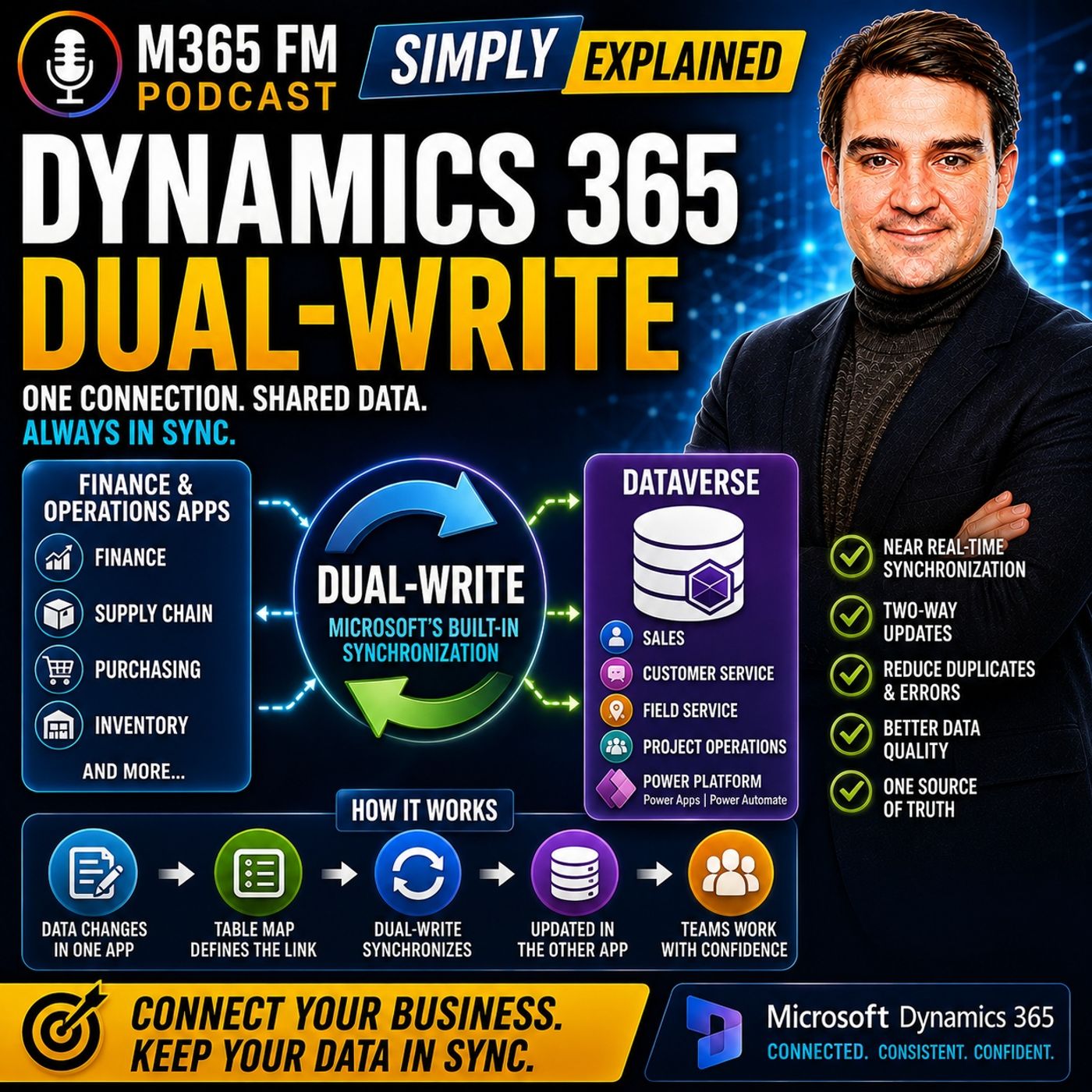
Dynamics 365 Dual-write - Simply Explained
A salesperson updates a customer address in Dynamics 365 Sales. Later, someone in finance opens the same customer and still sees the old address. Which one is correct? When sales, service, finance, and operations work in different applications, shared business data can quickly become duplicated or inconsistent. In this episode of M365 FM, Mirko Peters explains how Dynamics 365 Dual-write connects Finance and Operations apps with Microsoft Dataverse so supported records such as customers, address...
Aug. 21, 2026
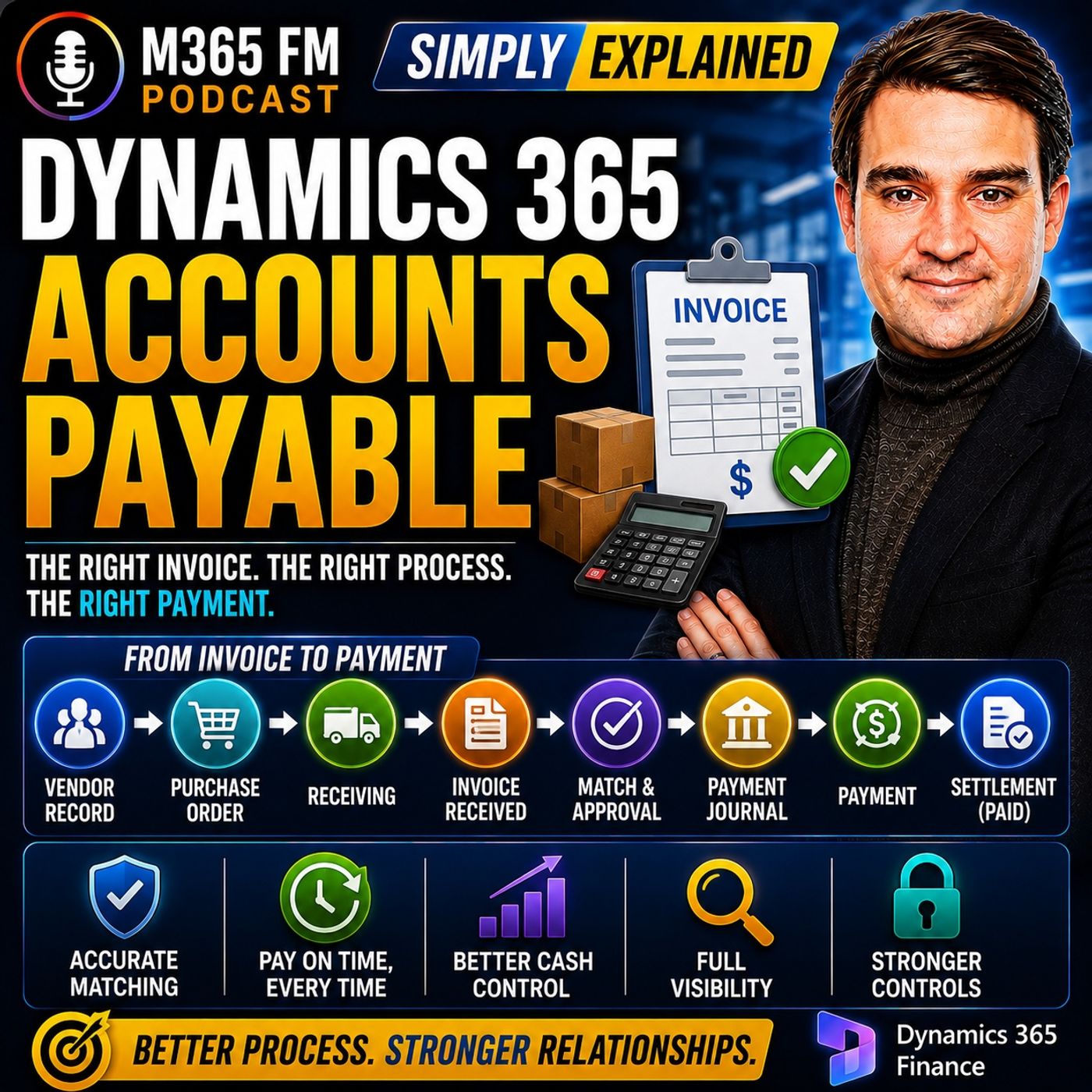
Dynamics 365 Accounts Payable - Simply Explained
A supplier invoice arrives. The goods may already be sitting in your warehouse or the service may already be complete—but what actually needs to happen before money leaves the company? Dynamics 365 Accounts Payable connects vendor records, invoices, purchase orders, receiving, invoice matching, approvals, payment runs, bank accounts, and settlement into one controlled financial process. In this episode of M365 FM, Mirko Peters explains how Dynamics 365 Finance manages the complete journey from r...
Aug. 21, 2026
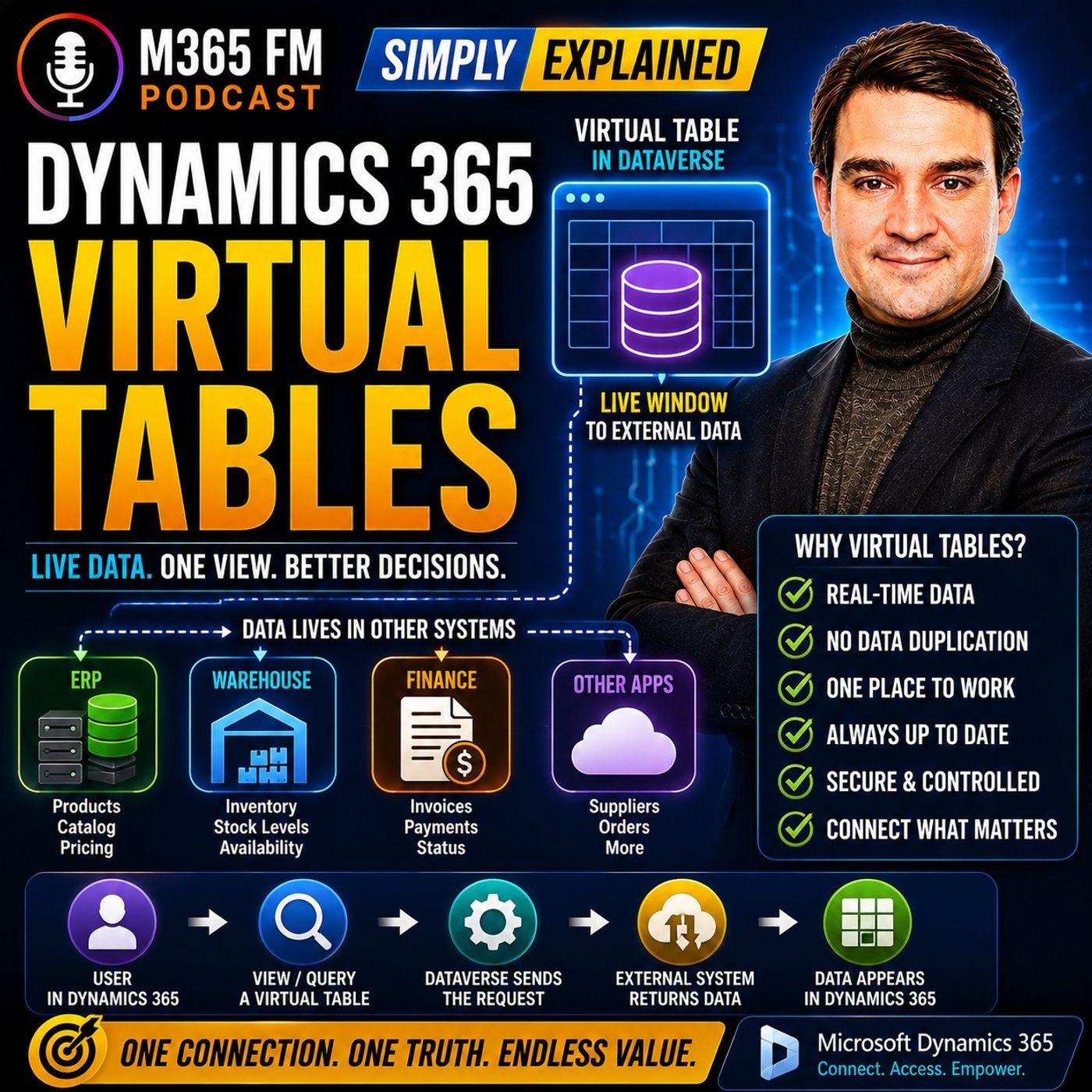
Dynamics 365 Virtual Entities - Simply Explained
What happens when your sales team works in Dynamics 365, but inventory lives in a warehouse system, invoices live in finance, and product information lives in an ERP? You could copy all that information into Dataverse, but then you create duplicate records, synchronization jobs, delays, and another place where information can become outdated. In this episode of M365 FM, Mirko Peters explains how Dynamics 365 Virtual Tables, formerly known as Virtual Entities, provide live access to external busi...
Aug. 21, 2026
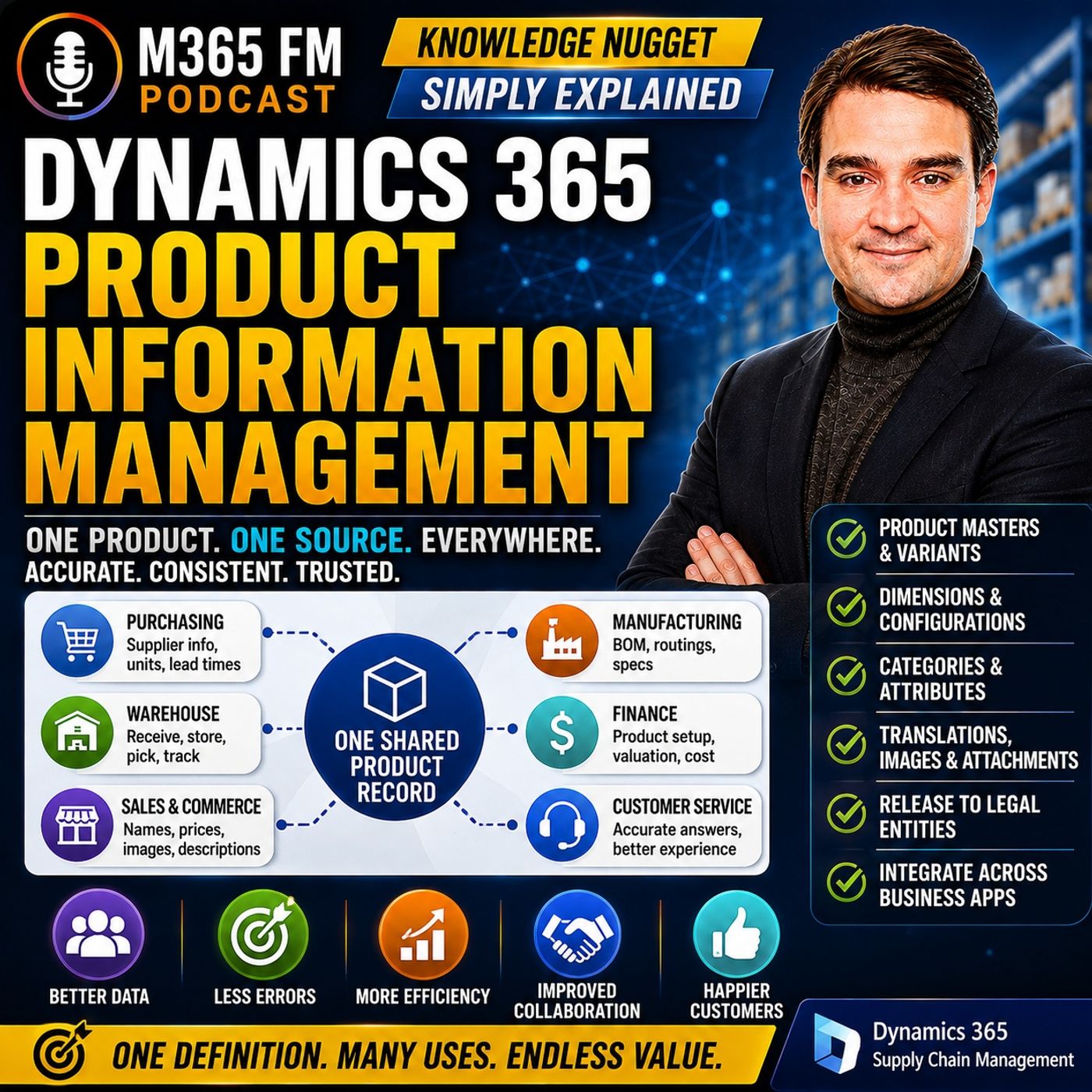
Dynamics 365 Product Information Management - Simply Explained
What happens when sales, purchasing, warehouse teams, and your online store all have different information about the same product? A supplier changes a specification, one spreadsheet gets updated, another system doesn't, and suddenly customers receive outdated information or employees order the wrong item. In this episode of M365 FM, Mirko Peters explains how Dynamics 365 Product Information Management (PIM) creates a shared product definition across the business and manages products, product ma...
Aug. 21, 2026
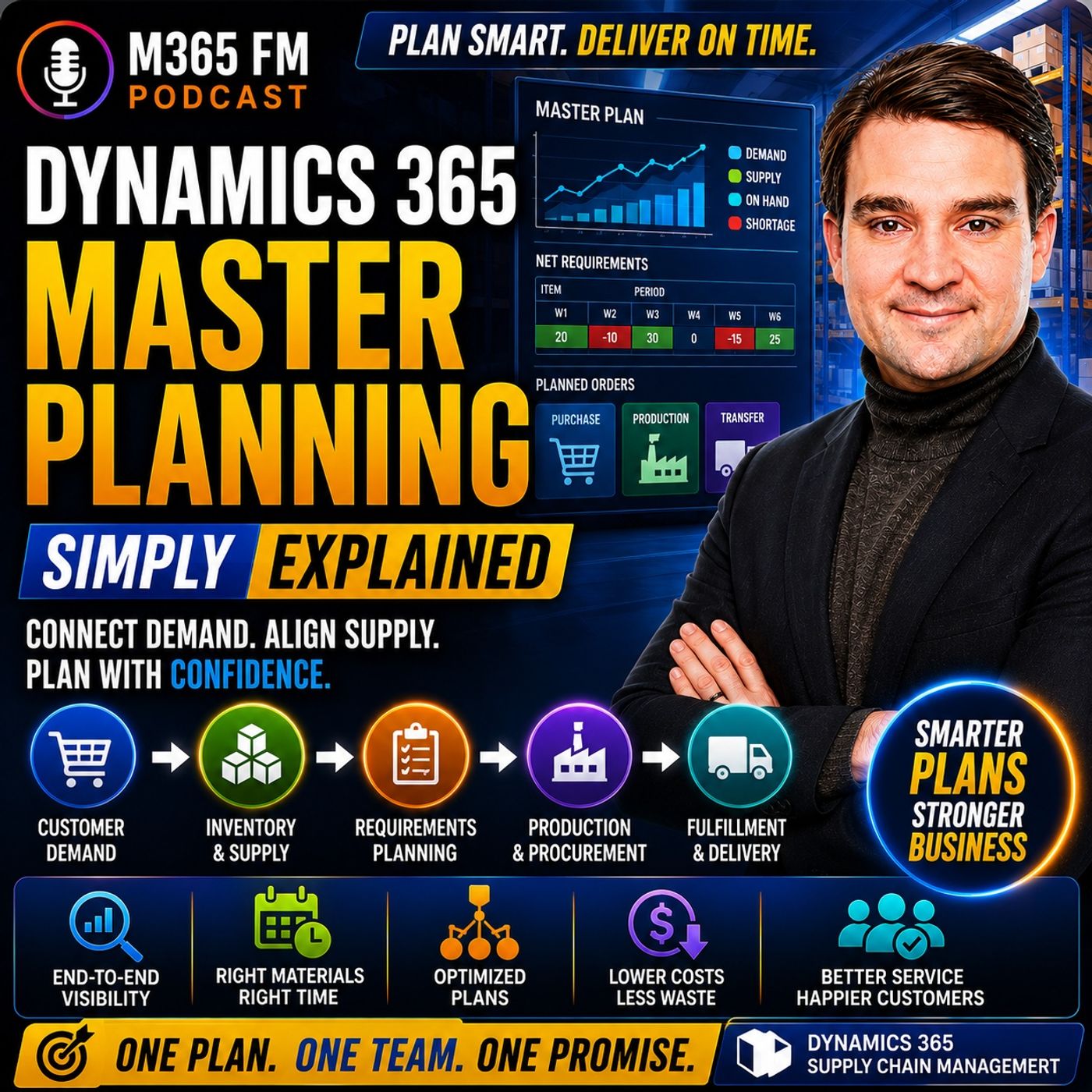
Dynamics 365 Master Planning - Simply Explained
A customer wants 100 bicycles next month. You already have some finished bicycles in stock, wheels are arriving from a supplier, frames are stored somewhere else, and your production line is booked for the next two weeks. What should you buy, what should you build, what should you move—and when does each action need to happen? In this episode of M365 FM, Mirko Peters explains how Dynamics 365 Master Planning connects customer demand, inventory, purchasing, production, bills of materials, lead ti...
Aug. 21, 2026
Dynamics 365 Intelligent Order Management - Simply Explained
A customer clicks Buy, but the product could be sitting in a central warehouse, a nearby store, another legal entity, or with a fulfillment partner. The customer doesn't care about that complexity. They expect a clear delivery promise and their package to arrive. Dynamics 365 Intelligent Order Management coordinates that journey across sales channels, inventory locations, fulfillment systems, warehouses, carriers, and billing platforms. In this episode of M365 FM, Mirko Peters explains how Intel...
Aug. 21, 2026
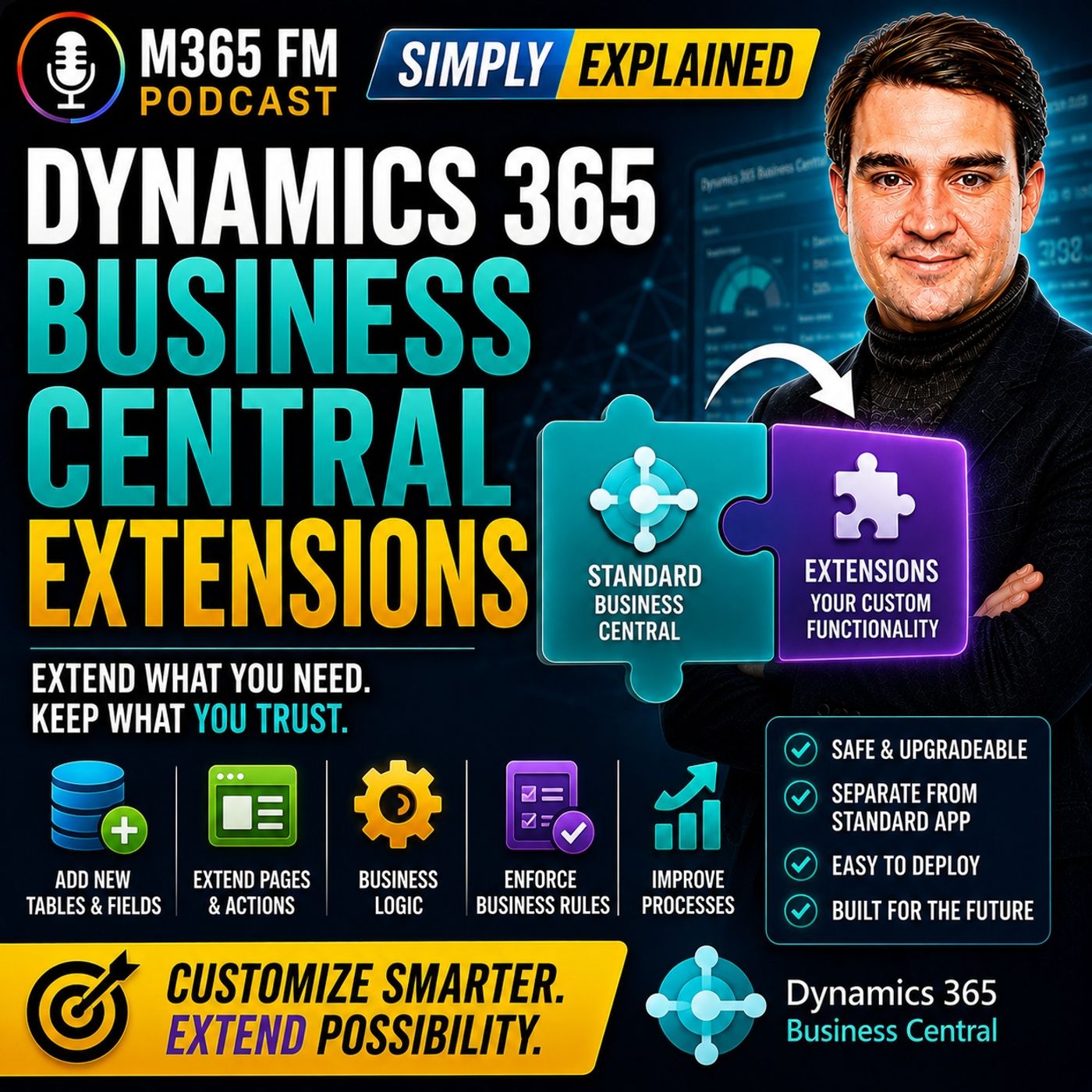
Dynamics 365 Business Central Extensions - Simply Explained
Dynamics 365 Business Central already provides capabilities for finance, sales, purchasing, inventory, projects, and other core business processes. But no two organizations operate exactly the same way. A company might need specialized shipping, local financial reports, additional approval rules, bank integrations, electronic invoicing, or a connection to another business system. In this episode of M365 FM, Mirko Peters explains how Business Central extensions add these capabilities without dire...
Aug. 21, 2026
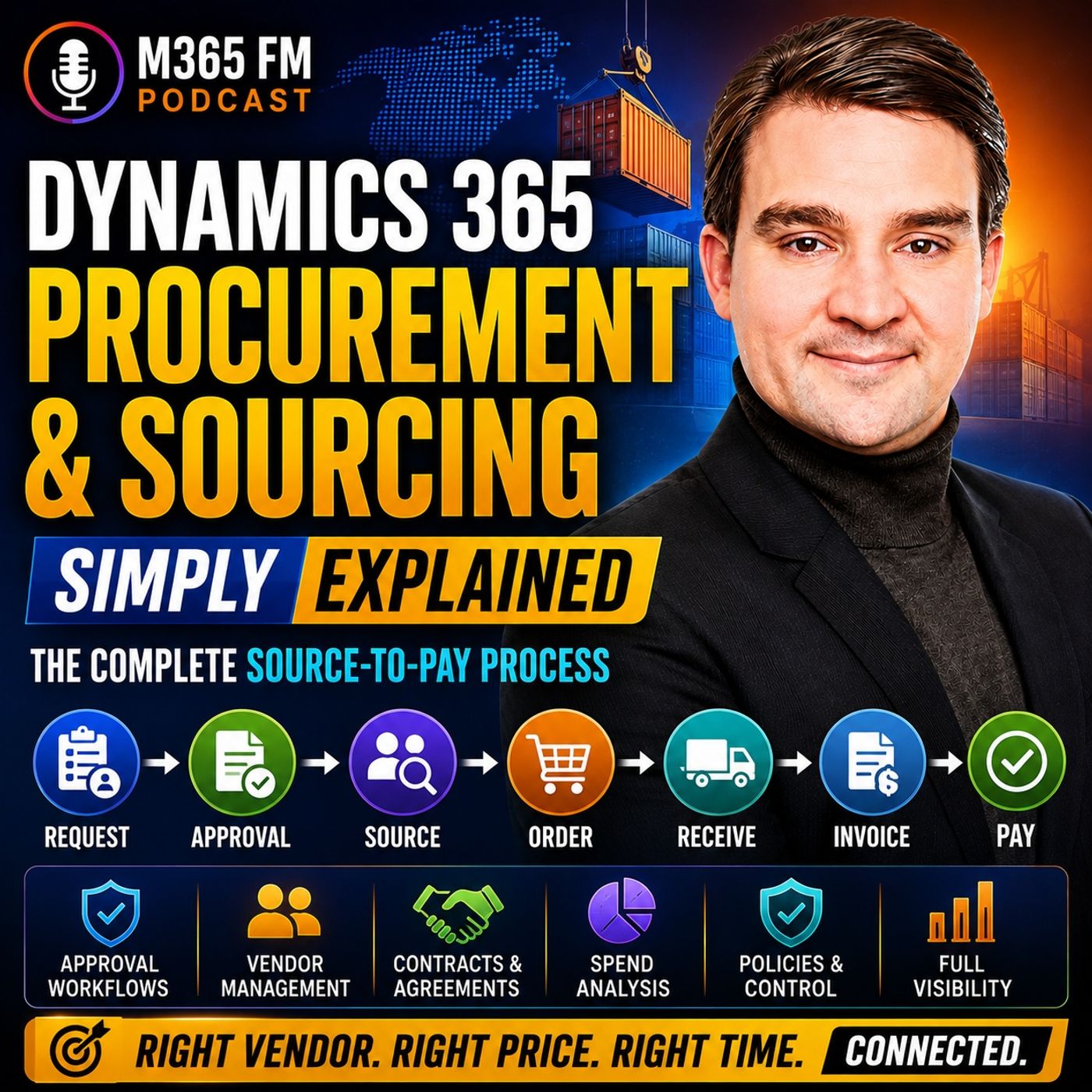
Dynamics 365 Procurement and Sourcing - Simply Explained
What happens when someone at work needs a new laptop, raw materials for production, safety equipment, consulting services, or even a cleaning contract? In many organizations, purchasing still involves emails, spreadsheets, approval messages, vendor quotes, delivery notes, and invoices spread across different systems. Dynamics 365 Procurement and Sourcing connects these activities into one controlled source-to-pay process. In this episode of M365 FM, Mirko Peters explains how Dynamics 365 Supply ...
Aug. 21, 2026
Dynamics 365 Accounts Receivable - Simply Explained
You made the sale and sent the invoice—but when does the money actually reach your account, and what happens when it doesn't? Dynamics 365 Accounts Receivable connects customer accounts, invoices, payment terms, incoming payments, settlement, credit management, collections, disputes, and overdue balances inside Dynamics 365 Finance. In this episode of M365 FM, Mirko Peters follows one customer balance from the original sale through invoicing and payment—and shows what happens when payment arrive...
Aug. 21, 2026
Dynamics 365 Warehouse Management - Simply Explained
Dynamics 365 Warehouse Management turns inventory records into guided physical work on the warehouse floor. Knowing that 200 units exist is only the beginning. Warehouse teams need to know exactly where those units are stored, whether they are available, which customer orders they belong to, and what workers should do with them next. In this episode of M365 FM, Mirko Peters explains how Dynamics 365 Warehouse Management connects receiving, put-away, storage, replenishment, picking, packing, ship...
Aug. 21, 2026
Dynamics 365 Transportation Management - Simply Explained
Dynamics 365 Transportation Management connects the movement of physical goods with sales orders, purchase orders, warehouse operations, carriers, routes, rates, loads, and freight costs. Instead of managing transportation through separate spreadsheets, emails, carrier rate sheets, and phone calls, organizations can create a connected transportation plan directly inside Dynamics 365 Supply Chain Management. In this episode of M365 FM, Mirko Peters explains how Transportation Management works fro...

Aug. 20, 2026
Dynamics 365 Asset Management - Simply Explained
A conveyor stops in the middle of a shift, a forklift won't start, or a pump suddenly begins leaking. Before anyone can repair the equipment, the business needs answers: Who is responsible? When was it last serviced? Which parts are required? What happened during the previous repair? Dynamics 365 Asset Management provides one central place for this information. In this episode of M365 FM, Mirko Peters explains how Dynamics 365 Asset Management helps organizations track physical equipment, preven...
Aug. 20, 2026
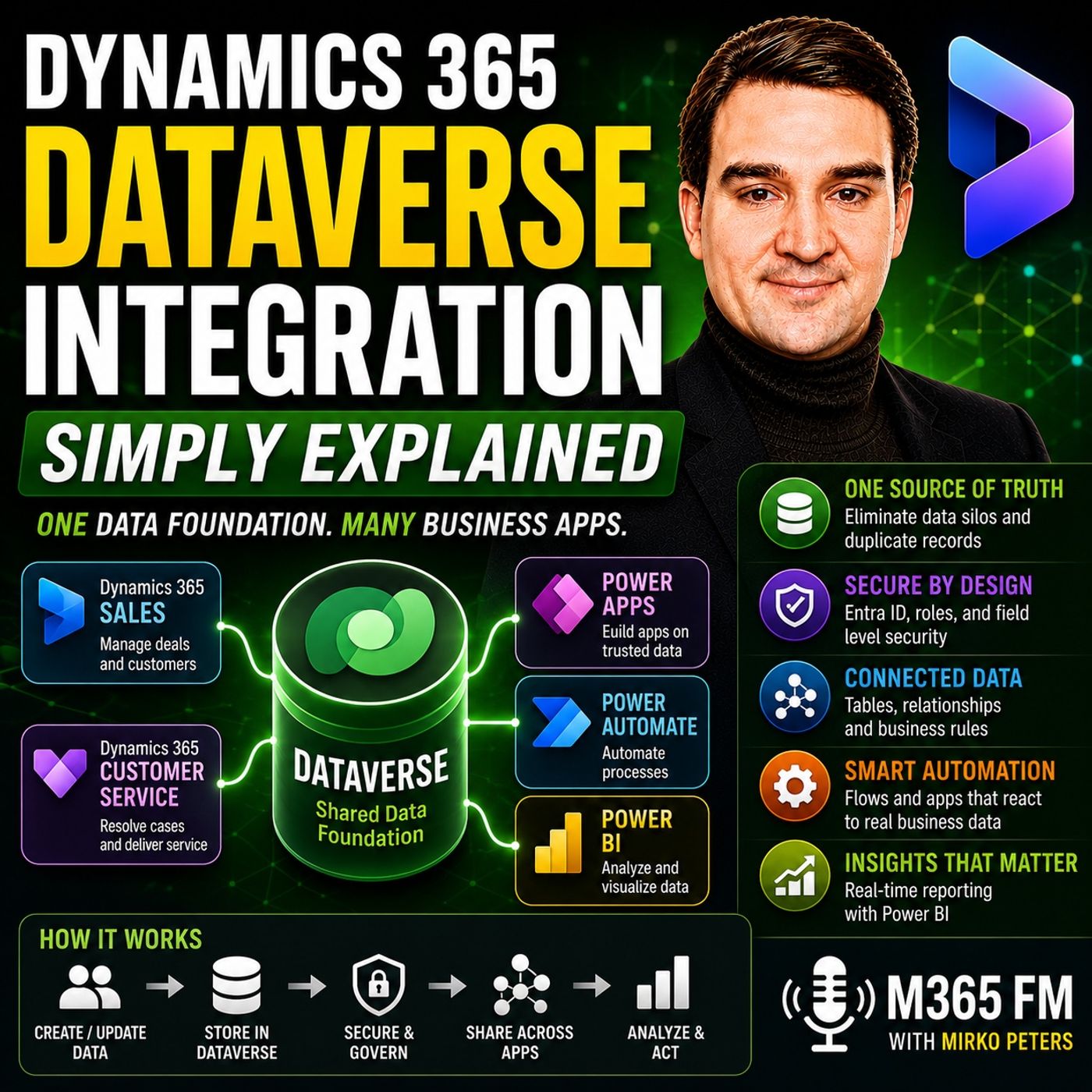
Dynamics 365 Dataverse Integration - Simply Explained
Dynamics 365 Dataverse Integration is easier to understand once you stop thinking about Dynamics 365 and Dataverse as two completely separate systems that constantly need to synchronize customer data. For Dynamics 365 applications such as Sales and Customer Service, Dataverse provides the shared data foundation underneath the applications. Accounts, contacts, leads, opportunities, cases, activities, relationships, permissions, and business rules can all live within this structured environment. I...
Aug. 19, 2026
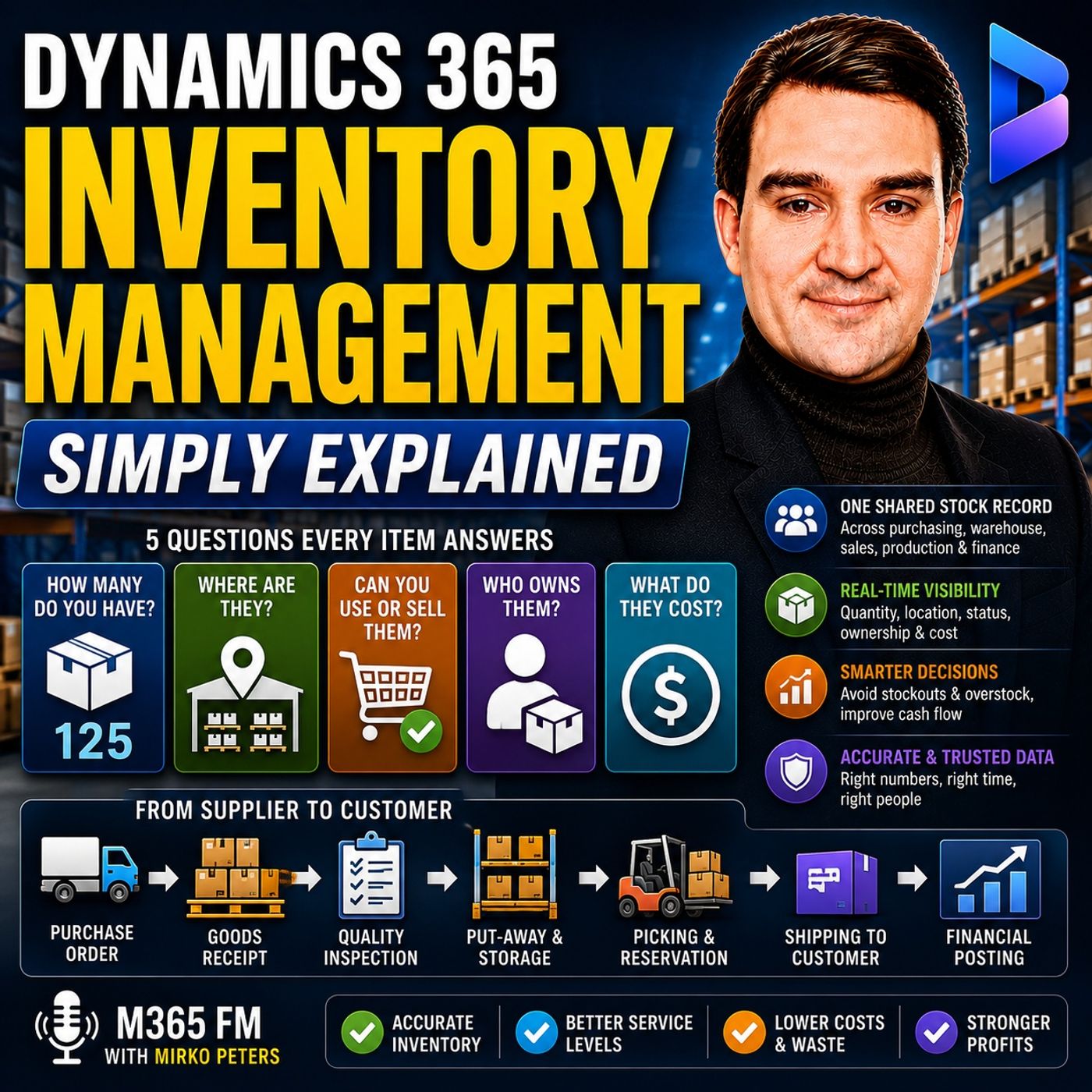
Dynamics 365 Inventory Management - Simply Explained
Dynamics 365 Inventory Management gives businesses one shared record for the products, materials, parts, and other stock moving through their organization. Instead of purchasing, warehouse, sales, production, and finance maintaining separate versions of inventory information, Dynamics 365 connects quantities, locations, availability, ownership, movements, and financial value. In this episode of M365 FM, Mirko Peters explains how Dynamics 365 Inventory Management works from supplier receipt to cu...
Aug. 19, 2026
Dynamics 365 Financial Reporting - Simply Explained
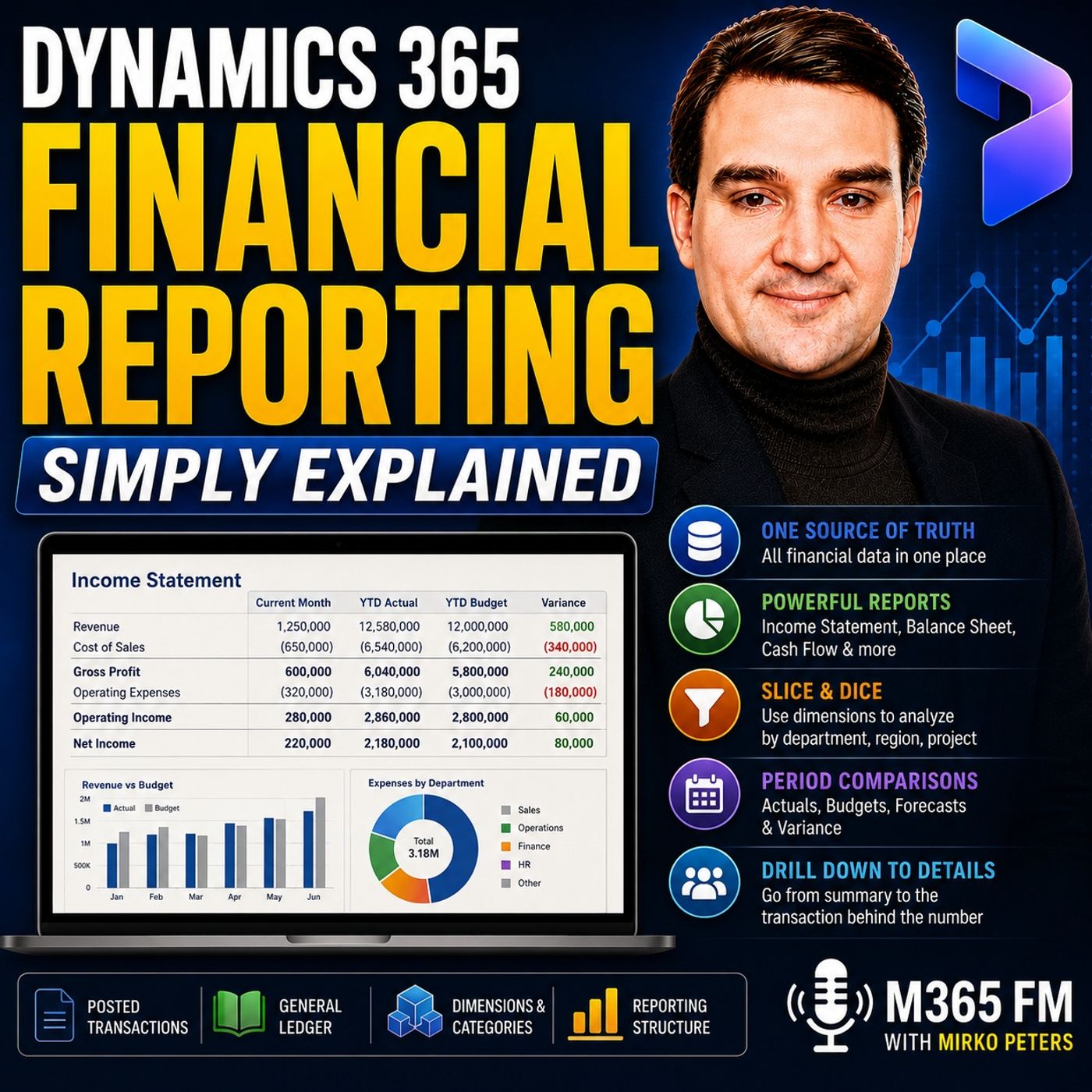
Dynamics 365 Financial Reporting turns the financial data already posted in Dynamics 365 Finance into structured reports that finance teams, managers, auditors, and executives can actually use. Instead of rebuilding financial statements in multiple spreadsheets every month, organizations can use the general ledger, main accounts, financial dimensions, reporting categories, and predefined report structures to create consistent income statements, balance sheets, cash flow reports, trial balances, ...
Aug. 19, 2026
Dynamics 365 General Ledger - Simply Explained
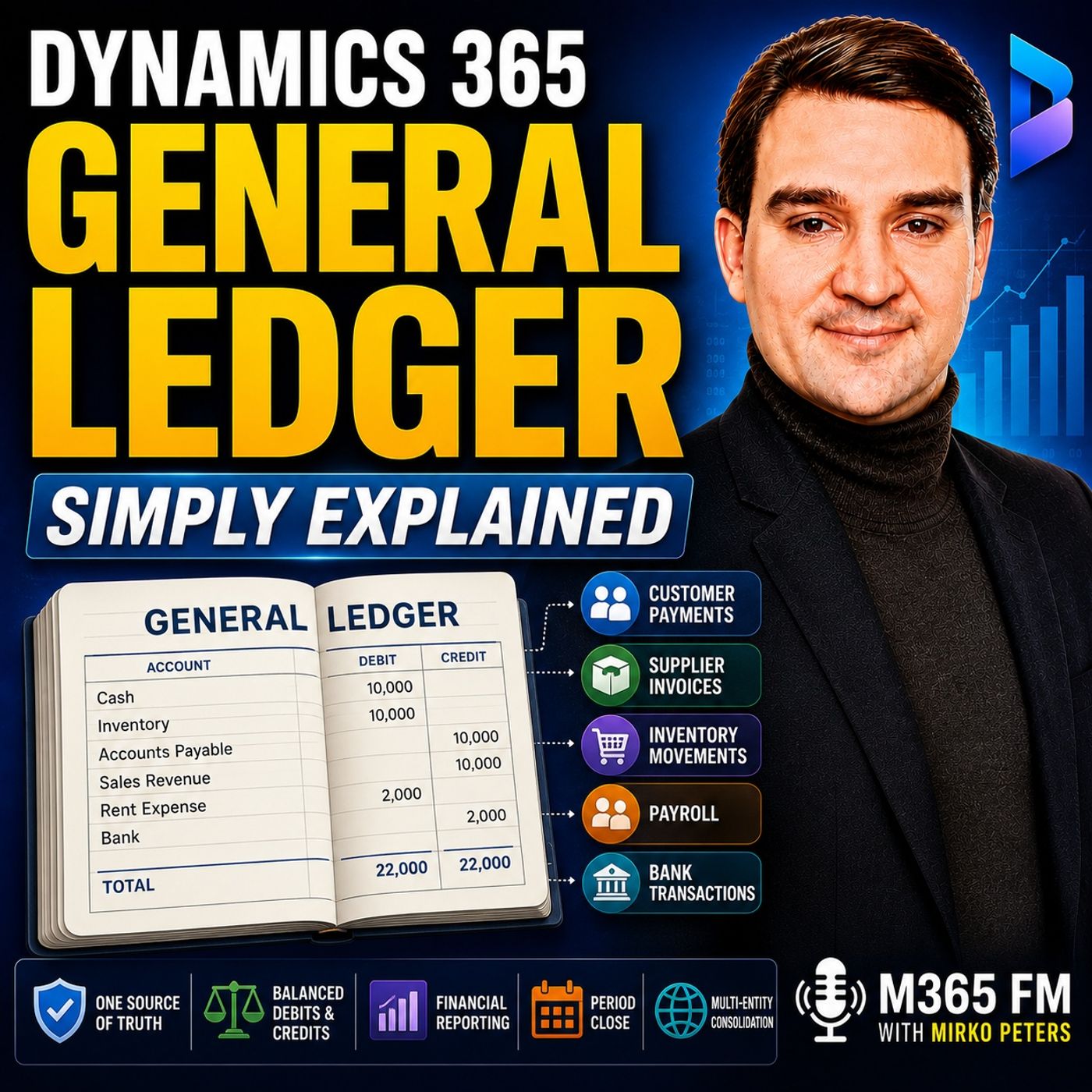
Dynamics 365 General Ledger provides the central financial record behind Dynamics 365 Finance. Customer payments, supplier invoices, inventory movements, payroll, bank transactions, taxes, accruals, and other financial events ultimately affect the company's financial position, and the general ledger brings those accounting entries together in a structured and traceable way. In this episode of M365 FM, Mirko Peters explains the Dynamics 365 General Ledger in plain English, including the chart of ...
Aug. 19, 2026
Dynamics 365 Autonomous Agents - Simply Explained
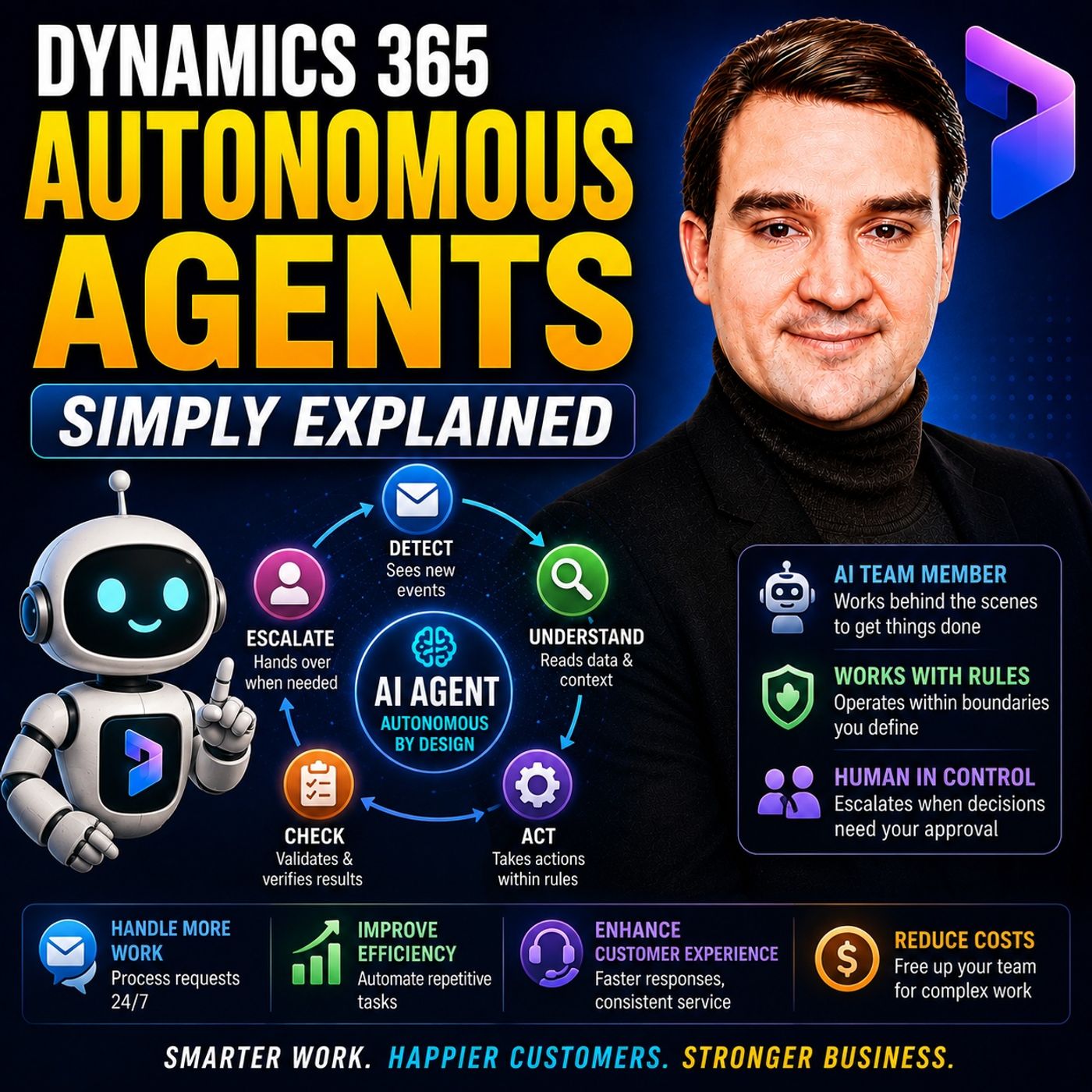
Dynamics 365 Autonomous Agents move AI beyond answering questions and generating content. Instead of waiting for someone to prompt them, autonomous agents can watch for specific business events, understand the context stored in Dynamics 365, choose between permitted actions, and continue a defined process within rules established by the organization. In this episode of M365 FM, Mirko Peters explains how autonomous agents differ from Copilot and traditional automation, where Microsoft is applying...
Aug. 19, 2026
Dynamics 365 Case Management - Simply Explained
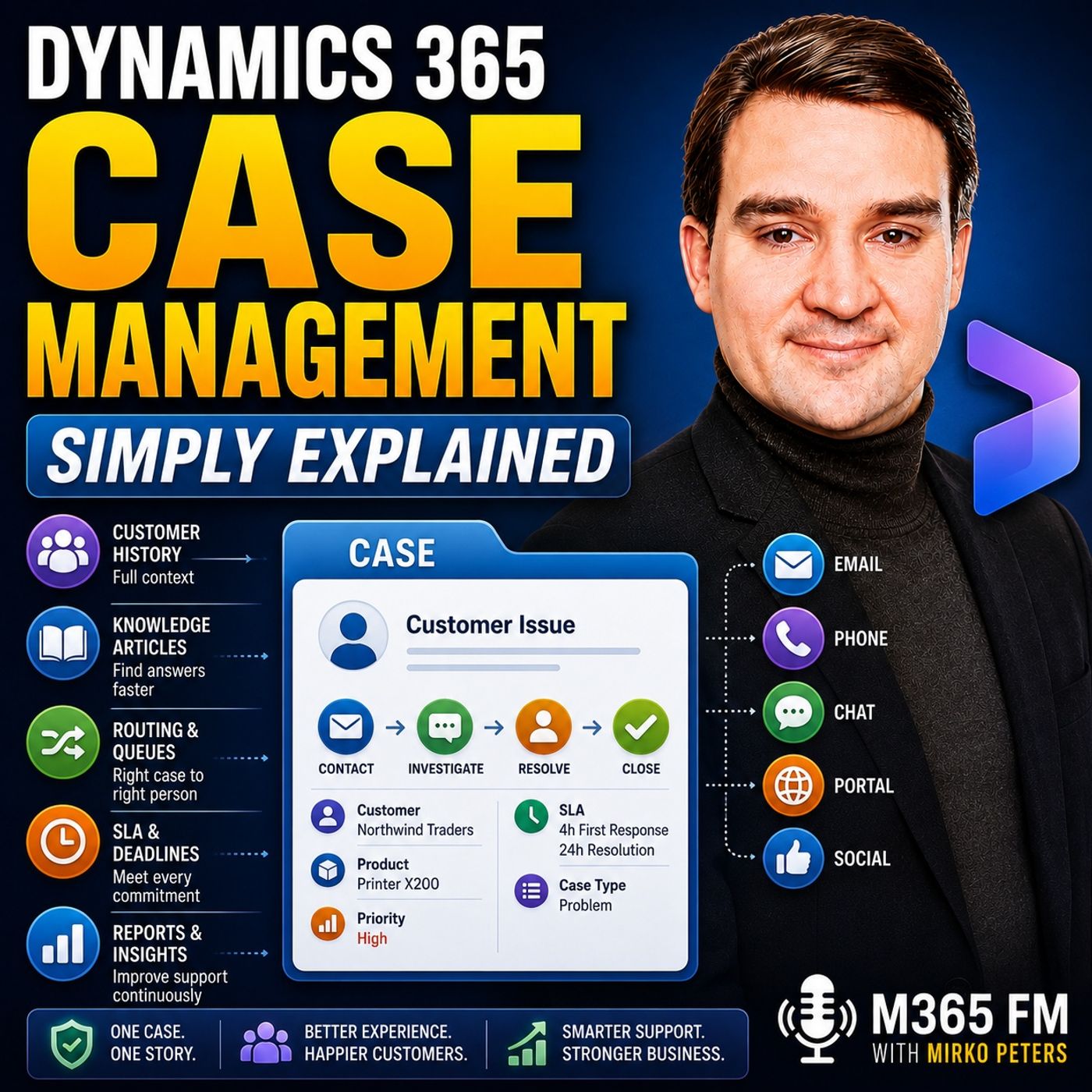
Dynamics 365 Case Management gives customer service teams one central place to manage customer issues from the first contact through resolution. Instead of information being scattered across emails, calls, chats, notes, and separate systems, each customer problem becomes a structured case containing the issue, customer context, activities, ownership, priority, service commitments, and final resolution. In this episode of M365 FM, Mirko Peters explains how Dynamics 365 Customer Service uses cases...
Aug. 19, 2026
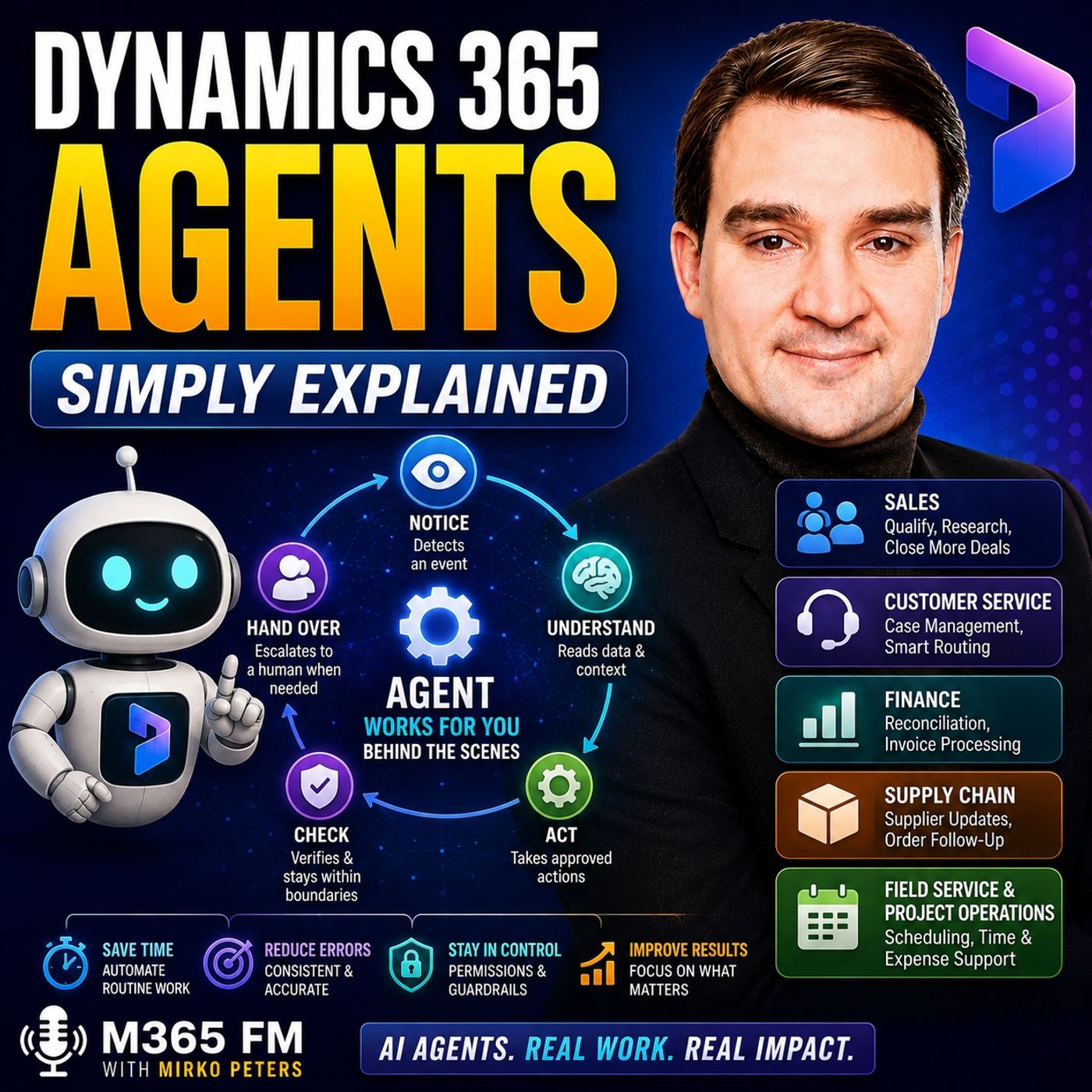
Dynamics 365 Agents - Simply Explained
Dynamics 365 Agents take AI beyond answering questions and generating drafts. Instead of waiting for someone to ask Copilot for help, agents can respond to defined business events, work with approved Dynamics 365 data, follow predefined rules, take permitted actions, and hand work to people when human judgment is required. In this episode of M365 FM, Mirko Peters explains how Dynamics 365 Agents work across sales, customer service, finance, supply chain, Business Central, Field Service, and Proj...
Aug. 19, 2026
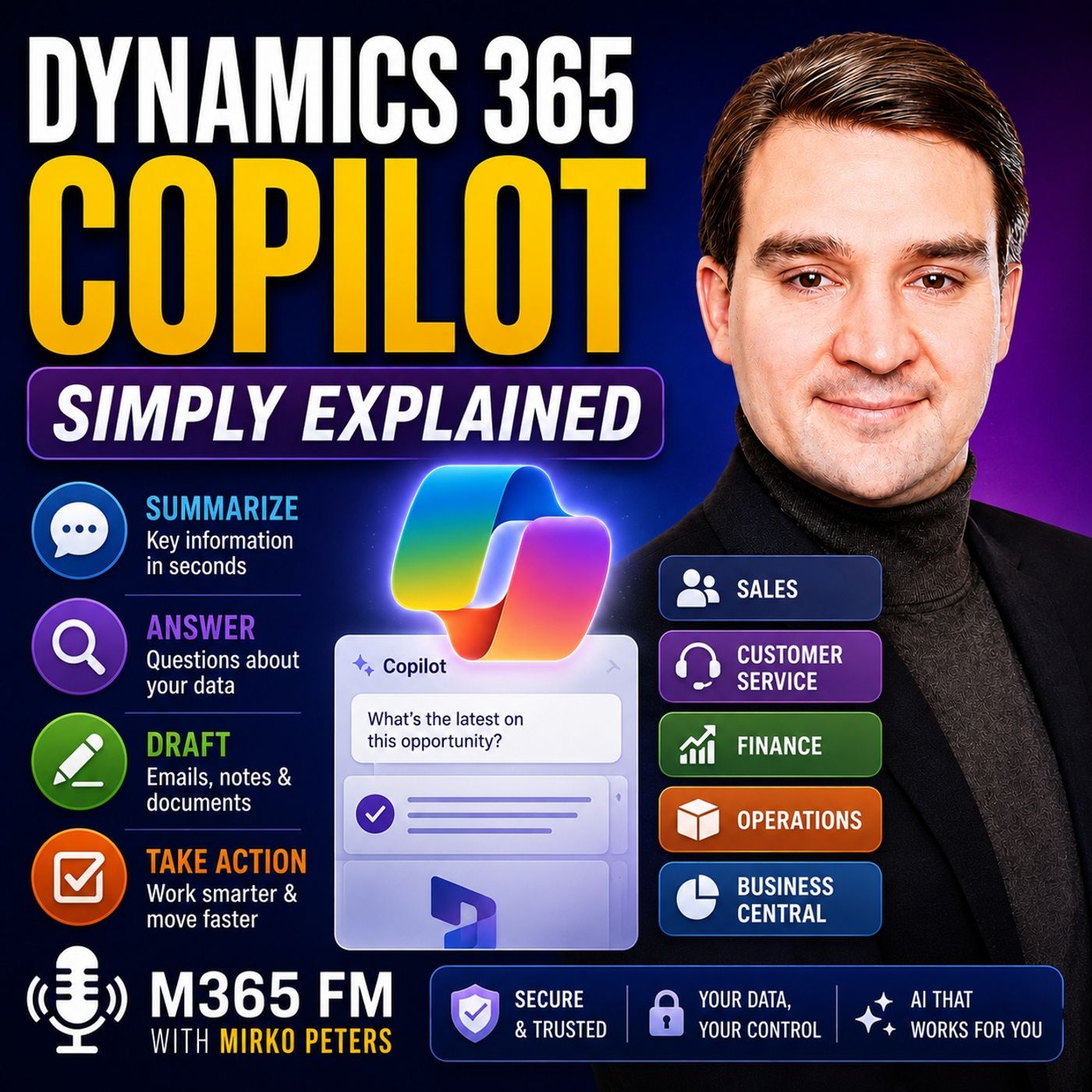
Dynamics 365 Copilot - Simply Explained
Dynamics 365 Copilot brings AI directly into the business processes and records people already use across Dynamics 365. Instead of spending time searching through customer histories, sales opportunities, support cases, invoices, orders, emails, and reports, Copilot can summarize information, answer questions, prepare drafts, and help users determine what to do next. In this episode of M365 FM, Mirko Peters explains how Dynamics 365 Copilot works across sales, customer service, finance, operation...
Aug. 19, 2026
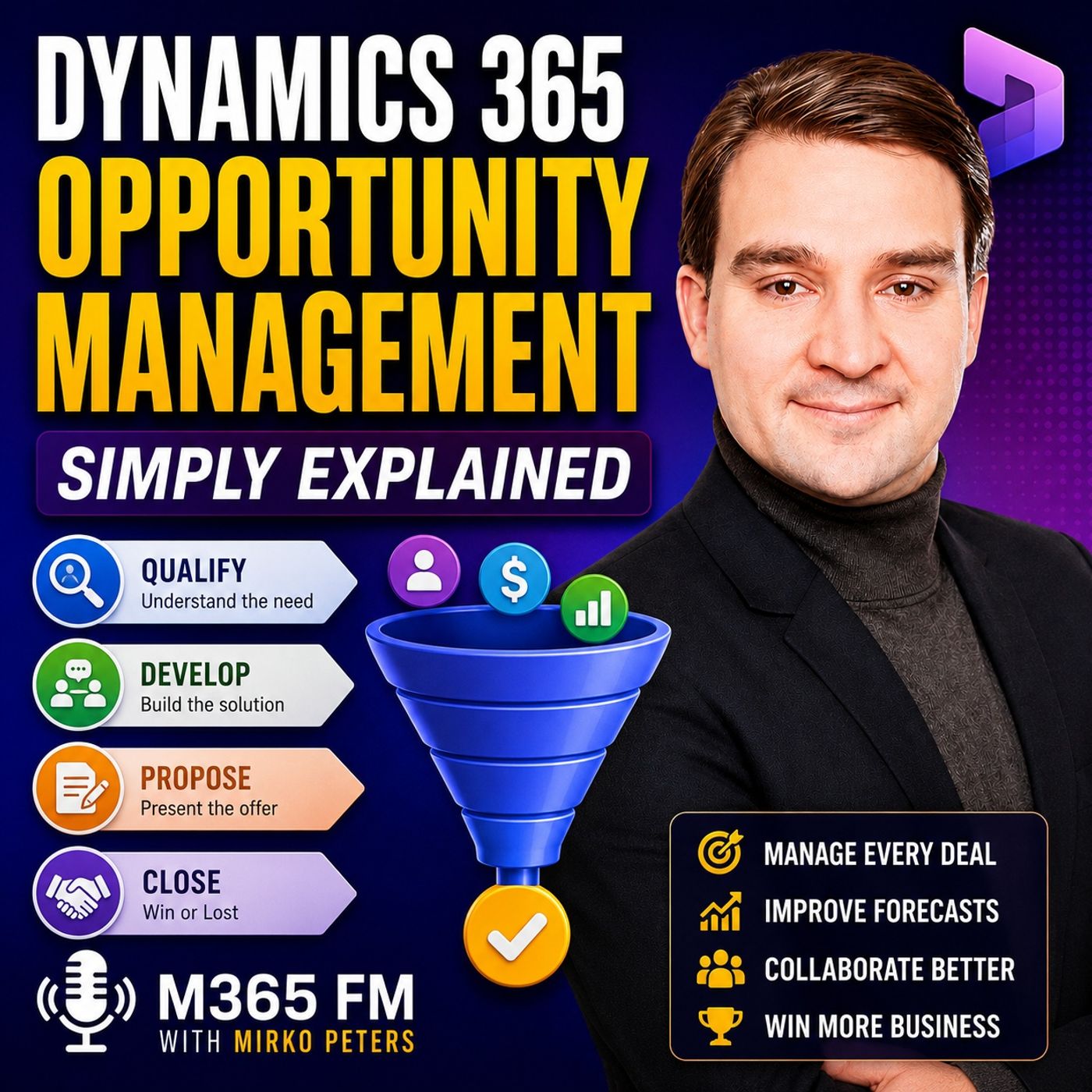
Dynamics 365 Opportunity Management - Simply Explained
Dynamics 365 Opportunity Management gives sales teams a structured way to manage serious sales conversations from the first qualified interest through to a clear outcome: won or lost. Instead of keeping deal information across spreadsheets, emails, personal notes, and individual inboxes, Dynamics 365 Sales creates a shared opportunity record containing the customer, expected revenue, products, activities, probability, expected close date, ownership, and sales history. In this episode of M365 FM,...
Aug. 18, 2026
Dynamics 365 Knowledge Management - Simply Explained
Dynamics 365 Knowledge Management helps customer service teams create a single, trusted source of knowledge that agents can use while supporting customers. Instead of searching through old emails, shared folders, spreadsheets, or relying on individual experience, teams can create approved knowledge articles that provide consistent answers across customer service channels. In this episode of M365 FM, Mirko Peters explains how Dynamics 365 Knowledge Management works and why a structured knowledge ...
Aug. 18, 2026
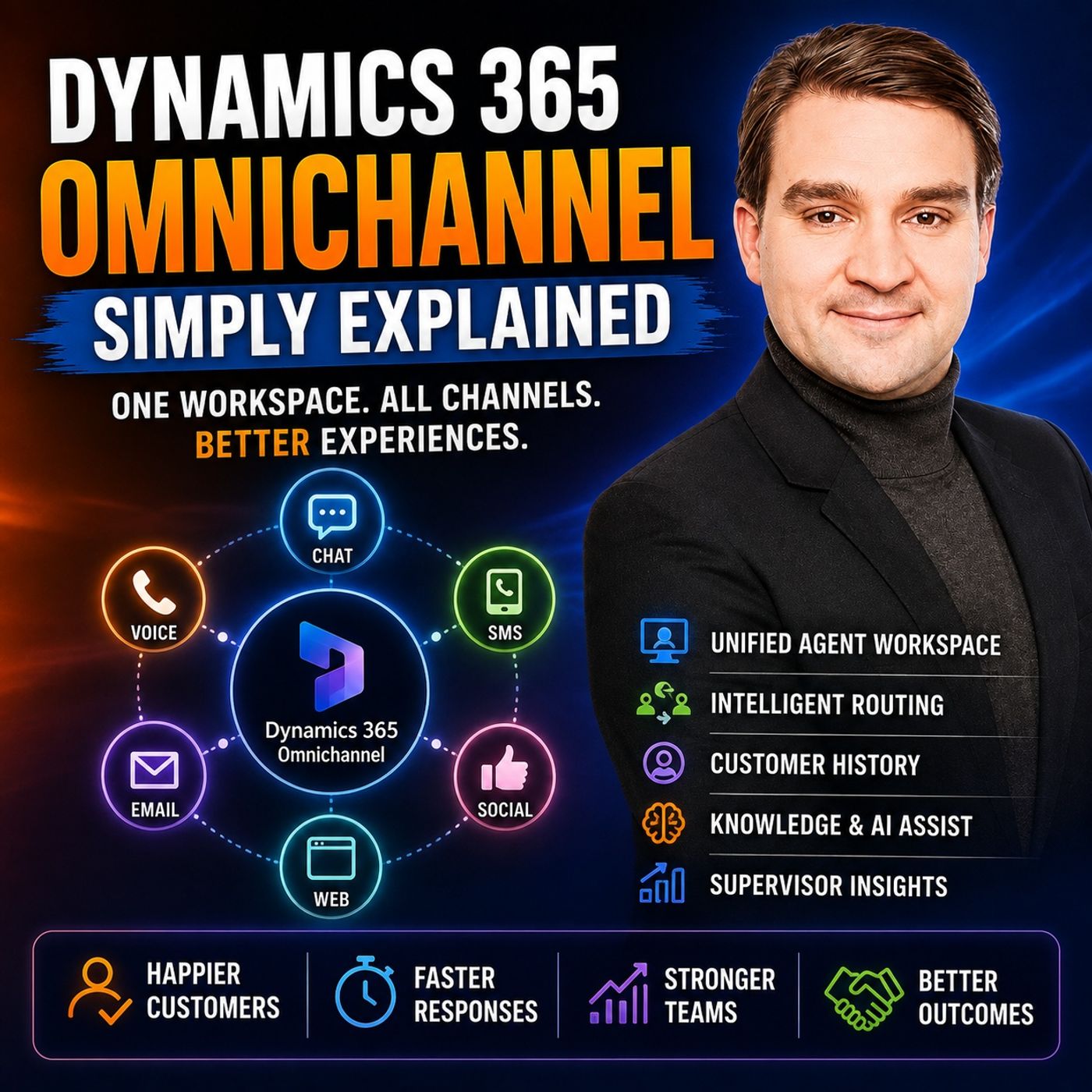
Dynamics 365 Omnichannel - Simply Explained
A customer starts a website chat because an order has not arrived. They explain the problem, provide the order number, and answer several questions. Later, they call the company—and the person on the phone asks them to explain everything again. For the customer, this makes little sense. They did not start a new problem. They simply changed the way they contacted the company. In this episode of Microsoft Knowledge Nuggets on M365 FM, Mirko Peters explains Microsoft Dynamics 365 Omnichannel in pla...
Aug. 18, 2026
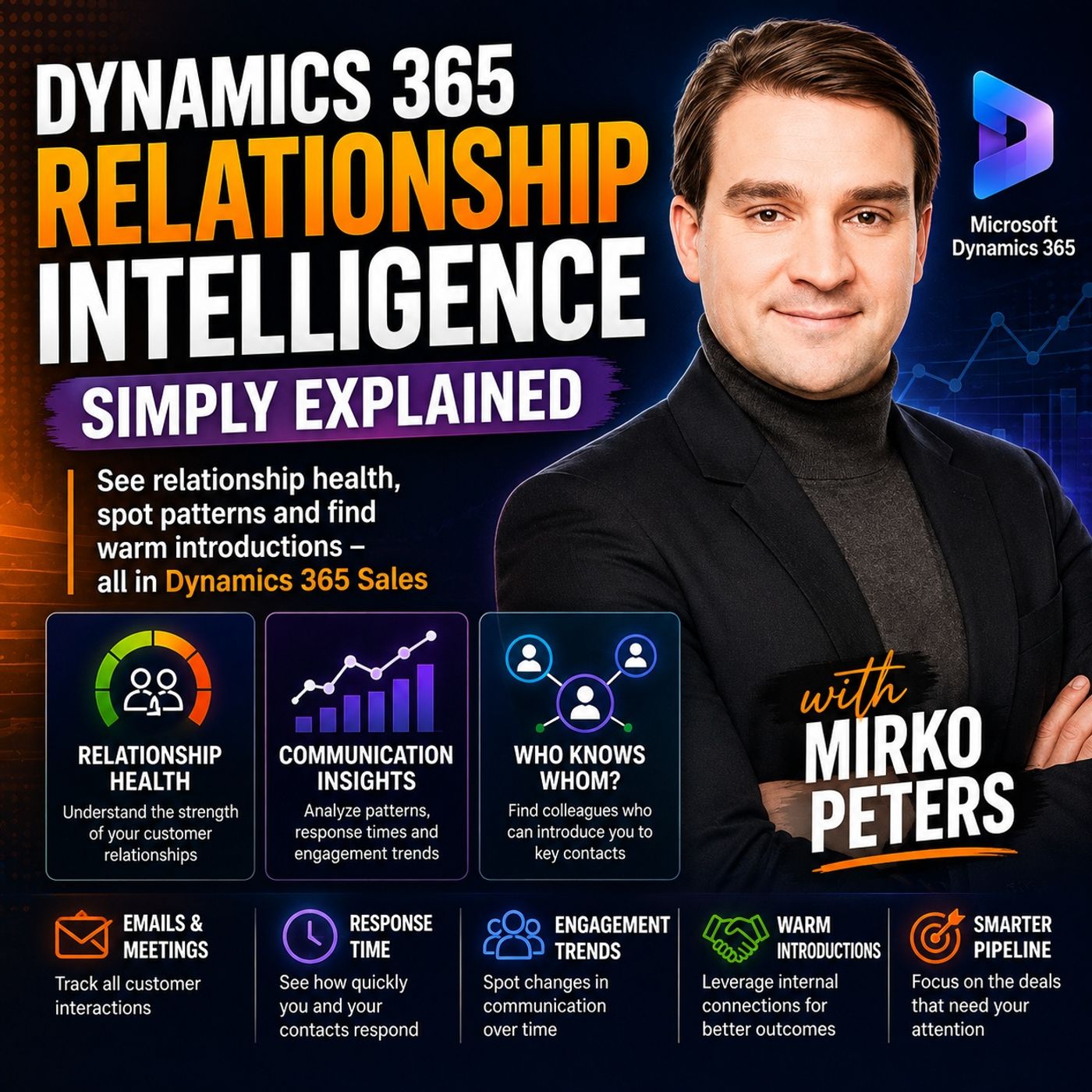
Dynamics 365 Relationship Intelligence - Simply Explained
A Dynamics 365 Sales opportunity can look healthy on paper. The deal is still open, the estimated close date is in the future, and the timeline contains emails, meetings, calls, and tasks. But there is a much more important question: Is the customer still talking to you? A salesperson may have sent several emails without receiving a response. The last customer meeting may have happened weeks ago. Another employee inside the company may already know an important decision-maker, but the salesperso...