
Simply Explained Episodes
Understand Microsoft 365, Azure, Copilot, Power Platform, and Dynamics 365 with Simply Explained podcast episodes: clear concepts and practical examples.
July 19, 2026
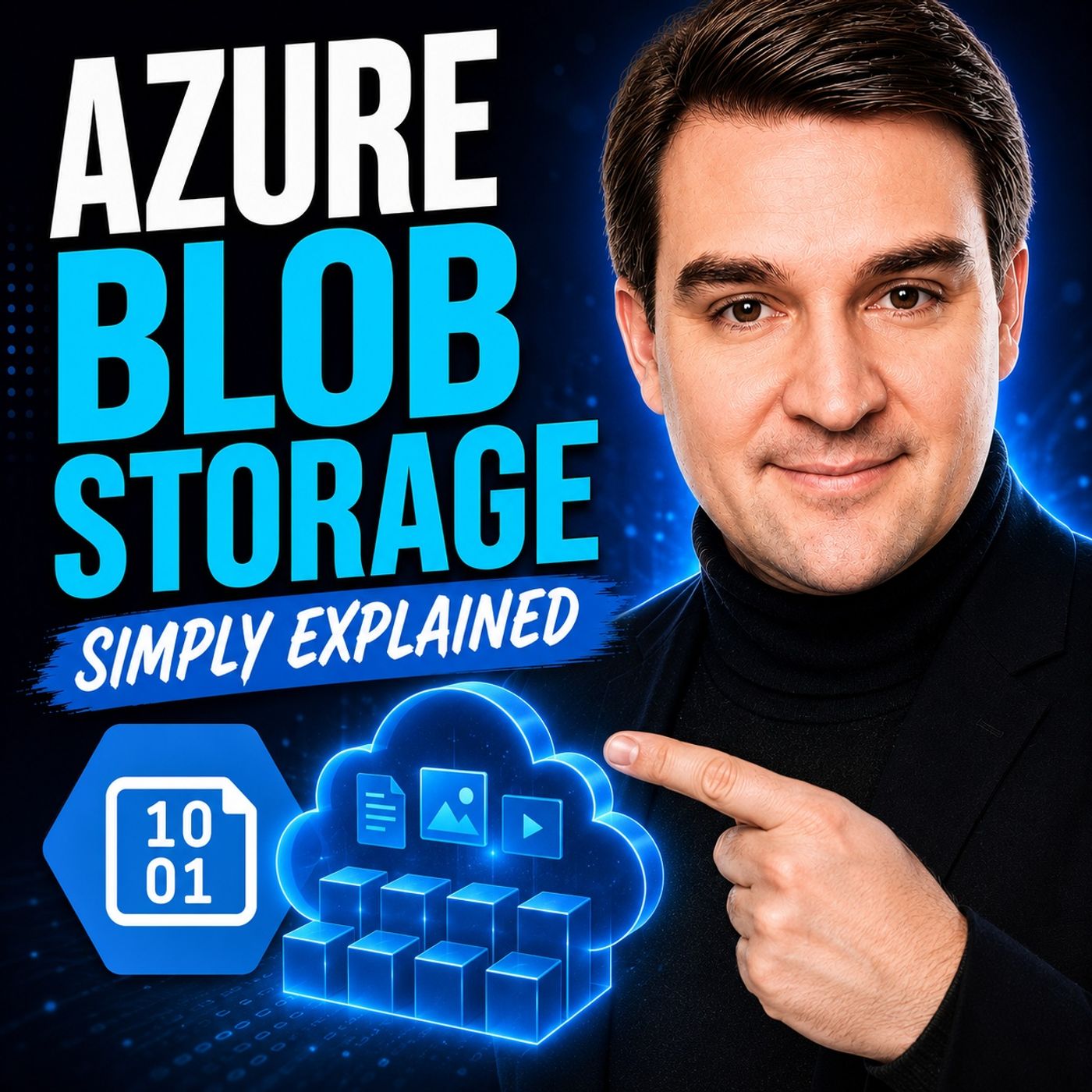
Azure Blob Storage - Simply Explained
Azure Blob Storage is Microsoft's scalable object storage service designed to store massive amounts of unstructured data such as images, videos, documents, backups, logs, and application files. Instead of using a traditional file system, data is stored as objects called blobs inside containers, making it highly durable, cost-effective, and accessible from anywhere via REST APIs or Azure SDKs. In this episode of Microsoft Knowledge Nuggets, Mirko Peters explains Azure Blob Storage in simple terms and shows why it is one of the most fundamental services in Azure. You'll learn how storage accounts, containers, and blobs work together, the differences between Hot, Cool, Cold, and Archive access tiers, and how redundancy options protect your data against failures. The episode also covers security features such as Microsoft Entra ID integration, Shared Access Signatures (SAS), encryption, private endpoints, and lifecycle management to automatically optimize storage costs. You'll also …
Guest: Mirko Peters
July 18, 2026
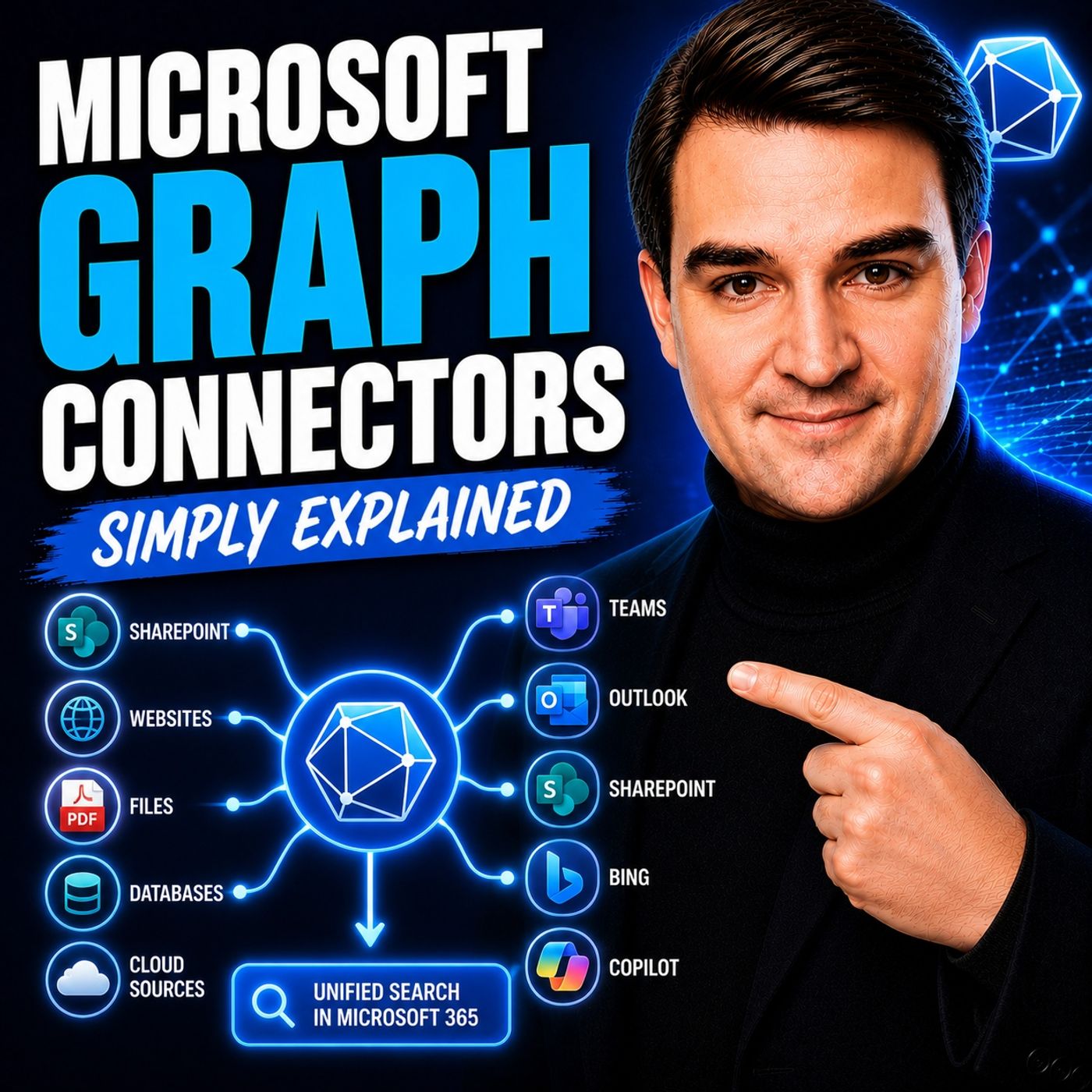
Microsoft Graph Data Connect - Simply Explained
Microsoft Graph Data Connect is Microsoft's enterprise-scale data export solution for Microsoft 365. Instead of querying Microsoft Graph API one request at a time, Data Connect allows organizations to securely extract large volumes of Microsoft 365 data into analytics platforms such as Microsoft Fabric, Azure Synapse Analytics, or Azure Data Factory for reporting, business intelligence, AI, and machine learning workloads. In this episode, you'll learn why Graph Data Connect exists, how it differs from the Microsoft Graph API, and when each approach should be used. While the Graph API is optimized for real-time applications, automation, and user interactions, Graph Data Connect is designed for batch processing and enterprise analytics, making it possible to analyze millions of emails, Teams messages, calendar events, SharePoint files, or collaboration patterns without running into API throttling limits. The episode explains the architecture in simple terms, showing how data is ex…
Guest: Mirko Peters
July 17, 2026
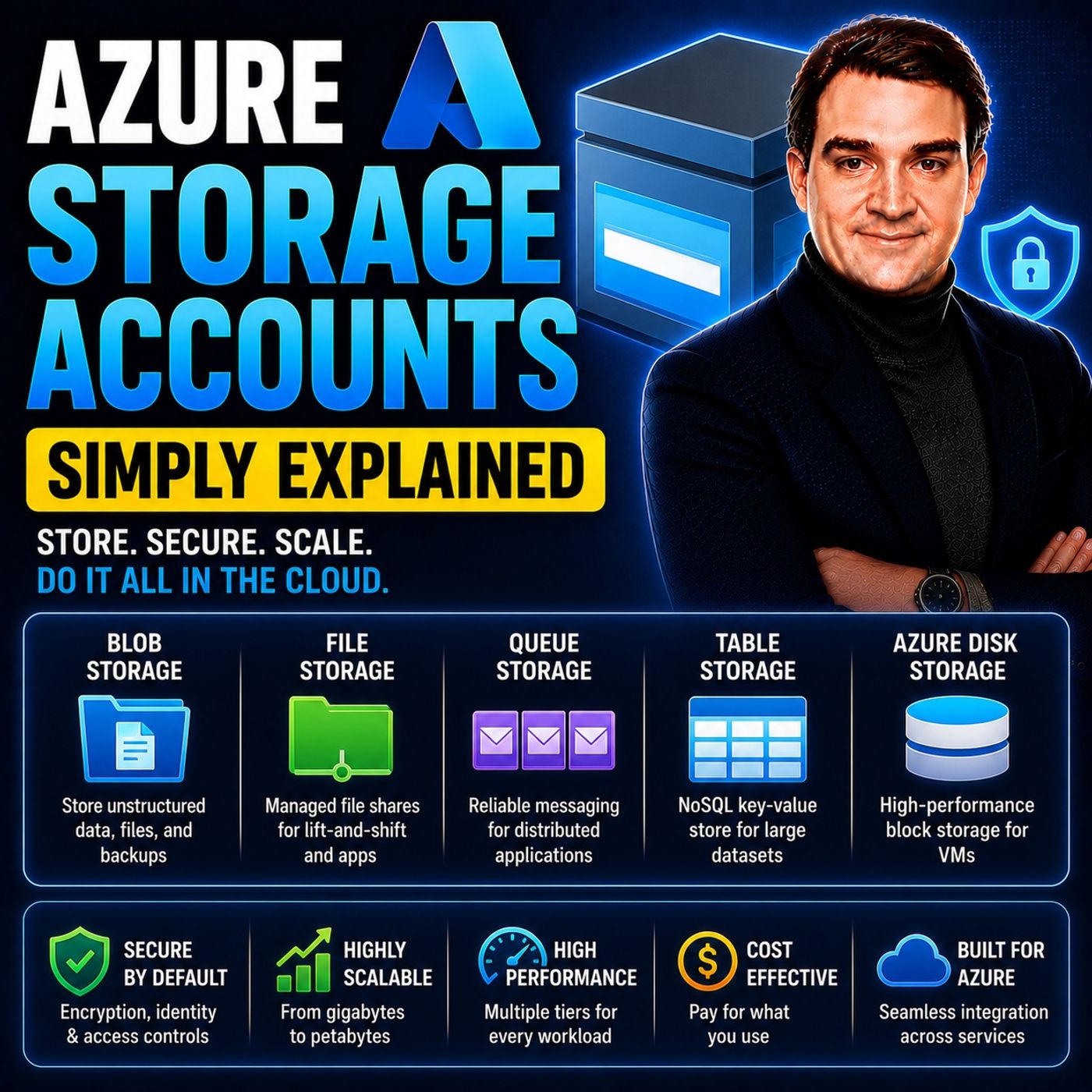
Azure Storage Accounts - Simply Explained
Azure Storage Accounts are the foundation of data storage in Microsoft Azure, providing a secure, scalable, and highly available platform for storing virtually any type of data. Whether you need object storage, file shares, queues, tables, or disks for virtual machines, every Azure storage service starts with a storage account, making it one of the most fundamental building blocks of the Azure platform. In this episode of Microsoft Knowledge Nuggets, Mirko Peters explains Azure Storage Accounts in simple terms and shows why understanding them is essential for anyone working with Azure. You'll learn how storage accounts organize and manage data, the different storage services they provide, and how they support everything from cloud-native applications to enterprise workloads. The episode covers key concepts including Blob Storage, Azure Files, Queue Storage, Table Storage, managed disks, redundancy options, performance tiers, access tiers, encryption, networking, and lifecycle ma…
Guest: Mirko Peters
July 17, 2026
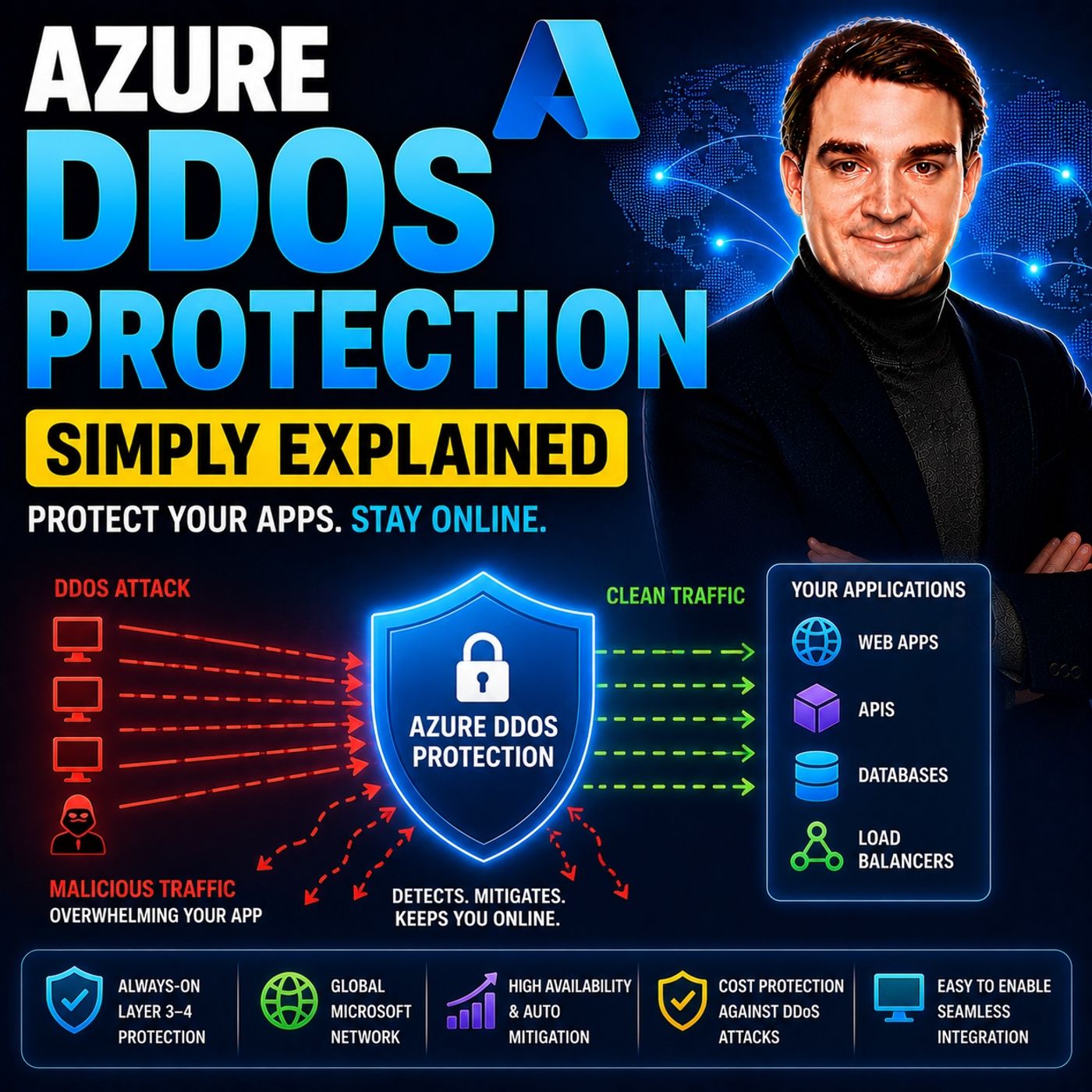
Azure DDoS Protection - Simply Explained
Azure DDoS Protection is Microsoft's managed service for defending applications and services against Distributed Denial of Service (DDoS) attacks. It automatically detects and mitigates malicious traffic designed to overwhelm your infrastructure, helping keep applications available even during large-scale attacks. Built directly into Azure's global network, it provides enterprise-grade protection without requiring complex security appliances. In this episode of Microsoft Knowledge Nuggets, Mirko Peters explains Azure DDoS Protection in simple terms and shows why it's an essential part of securing internet-facing workloads. You'll learn what DDoS attacks are, how they impact applications, and how Azure automatically identifies and blocks malicious traffic while allowing legitimate users to access your services. The episode covers key concepts including volumetric attacks, protocol attacks, application-layer threats, automatic detection, traffic mitigation, telemetry, alerting, an…
Guest: Mirko Peters
July 17, 2026
Azure Network Security Groups - Simply Explained
Azure Network Security Groups (NSGs) are one of the most important security features in Microsoft Azure, allowing you to control inbound and outbound network traffic for virtual machines, subnets, and other Azure resources. By defining security rules based on IP addresses, ports, and protocols, NSGs help protect workloads from unauthorized access while ensuring legitimate traffic can flow where it's needed. In this episode of Microsoft Knowledge Nuggets, Mirko Peters explains Azure Network Security Groups in simple terms and shows why NSGs are a fundamental building block of every secure Azure environment. You'll learn how NSGs work, how traffic is evaluated, and how they help enforce network security without requiring additional infrastructure. The episode covers key concepts including inbound and outbound rules, priorities, service tags, application security groups (ASGs), default security rules, stateful filtering, and subnet versus network interface associations. It also exp…
Guest: Mirko Peters
July 17, 2026
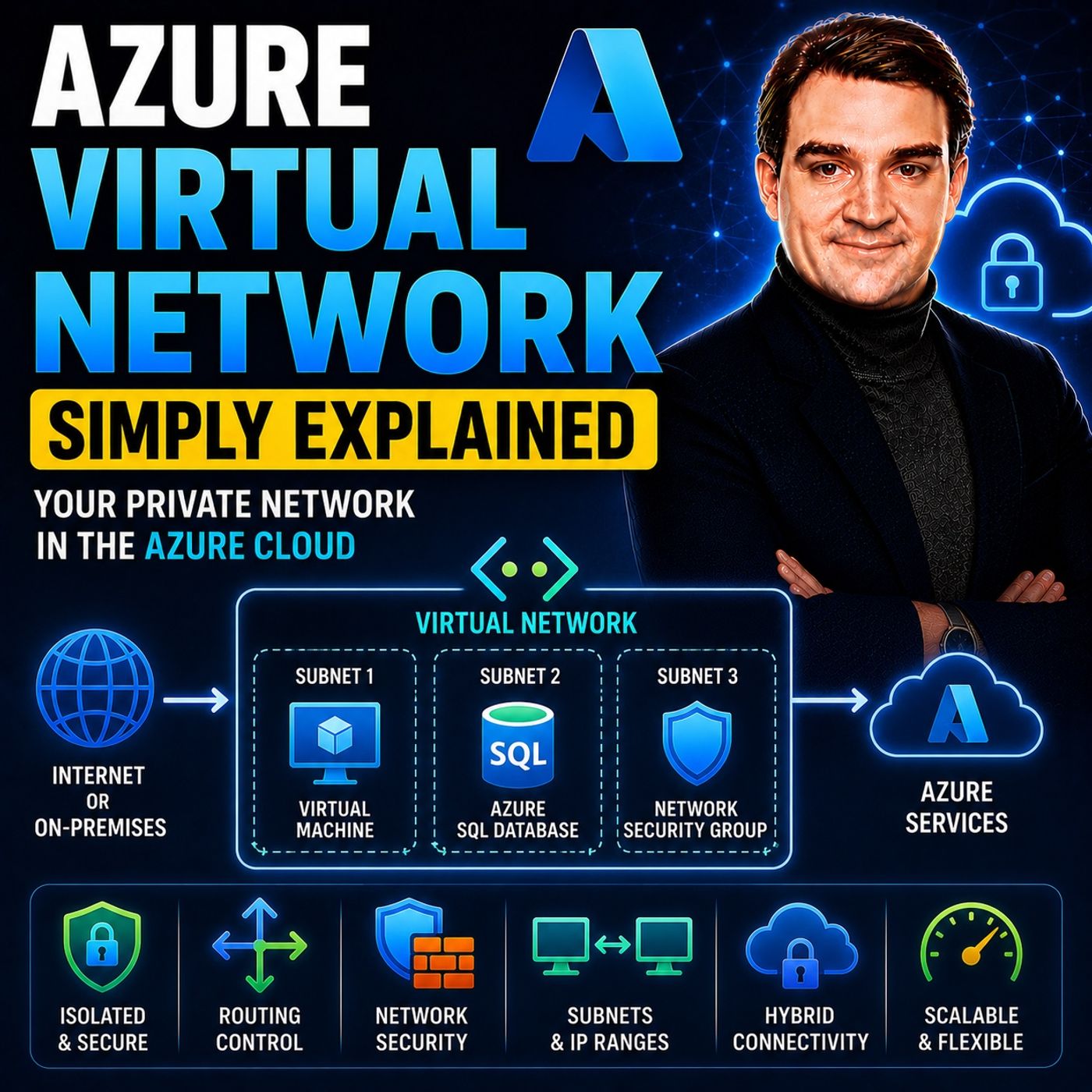
Azure Virtual Network - Simply Explained
Azure Virtual Network (VNet) is the foundation of networking in Microsoft Azure, allowing organizations to create secure, isolated private networks for their cloud resources. Just like a traditional network in a datacenter, a VNet enables virtual machines, applications, databases, and other Azure services to communicate securely while giving you full control over IP addressing, routing, and network security. In this episode of Microsoft Knowledge Nuggets, Mirko Peters explains Azure Virtual Network in simple terms and shows why every Azure professional should understand this core networking service. You'll learn how VNets provide the foundation for nearly every Azure deployment and how they enable secure communication between cloud resources, on-premises environments, and users. The episode covers key concepts including subnets, IP address spaces, network interfaces, route tables, network security groups (NSGs), VNet peering, DNS, and hybrid connectivity. It also explains how Az…
Guest: Mirko Peters
July 17, 2026
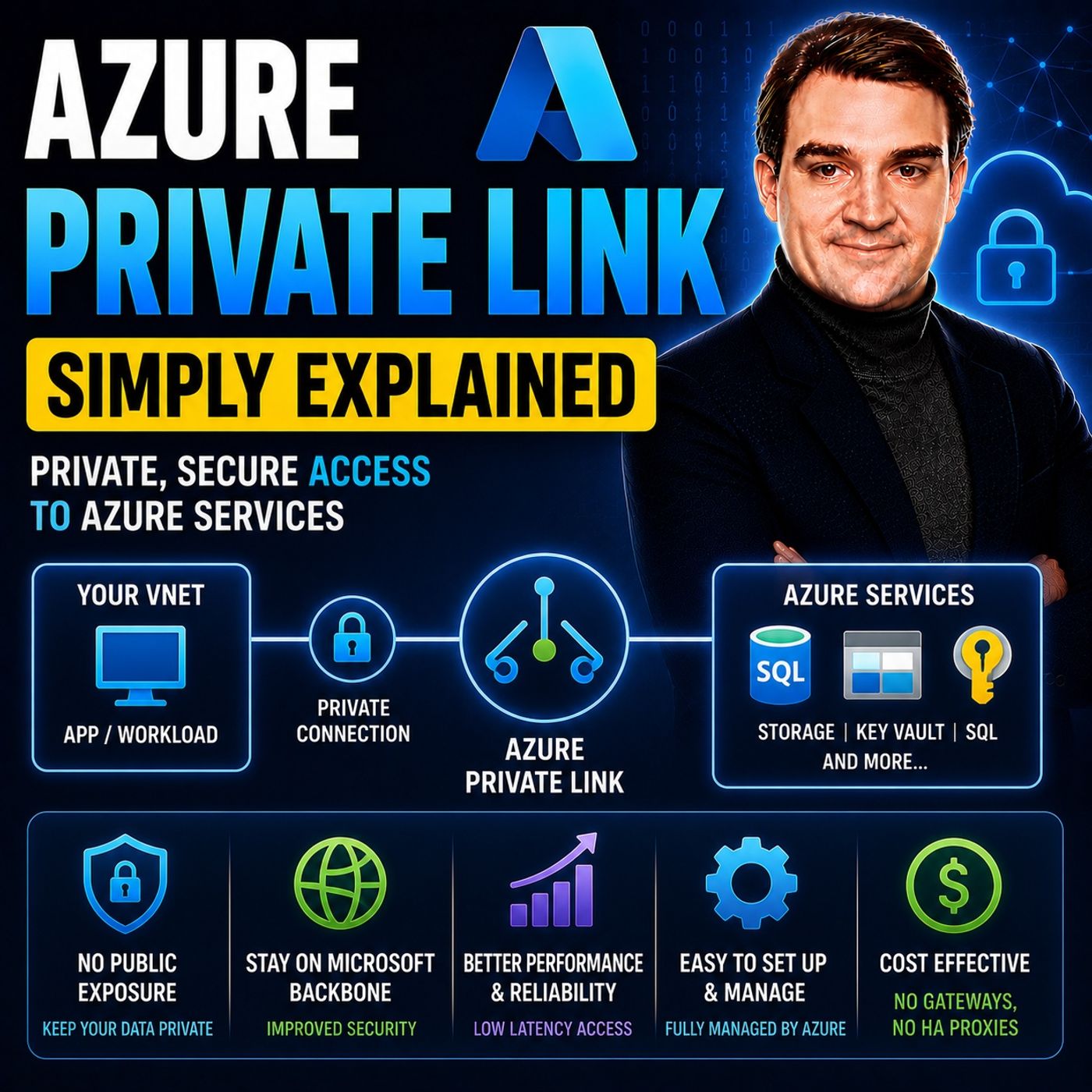
Azure Private Link - Simply Explained
Azure Private Link is Microsoft's networking service for securely accessing Azure services over a private connection instead of the public internet. By using private endpoints, organizations can connect services such as Azure Storage, SQL Database, Key Vault, and many others directly to their virtual network, keeping all traffic on Microsoft's private backbone network and significantly improving security. In this episode of Microsoft Knowledge Nuggets, Mirko Peters explains Azure Private Link in simple terms and shows why it has become a key building block for secure cloud architectures. You'll learn how Private Link works, what private endpoints are, and why many organizations use it to eliminate public exposure for critical Azure services. The episode covers key concepts including Private Endpoints, Private Link Services, private IP addresses, DNS integration, virtual networks, and secure access to Azure PaaS services. It also explains how Azure Private Link integrates with se…
Guest: Mirko Peters
July 17, 2026
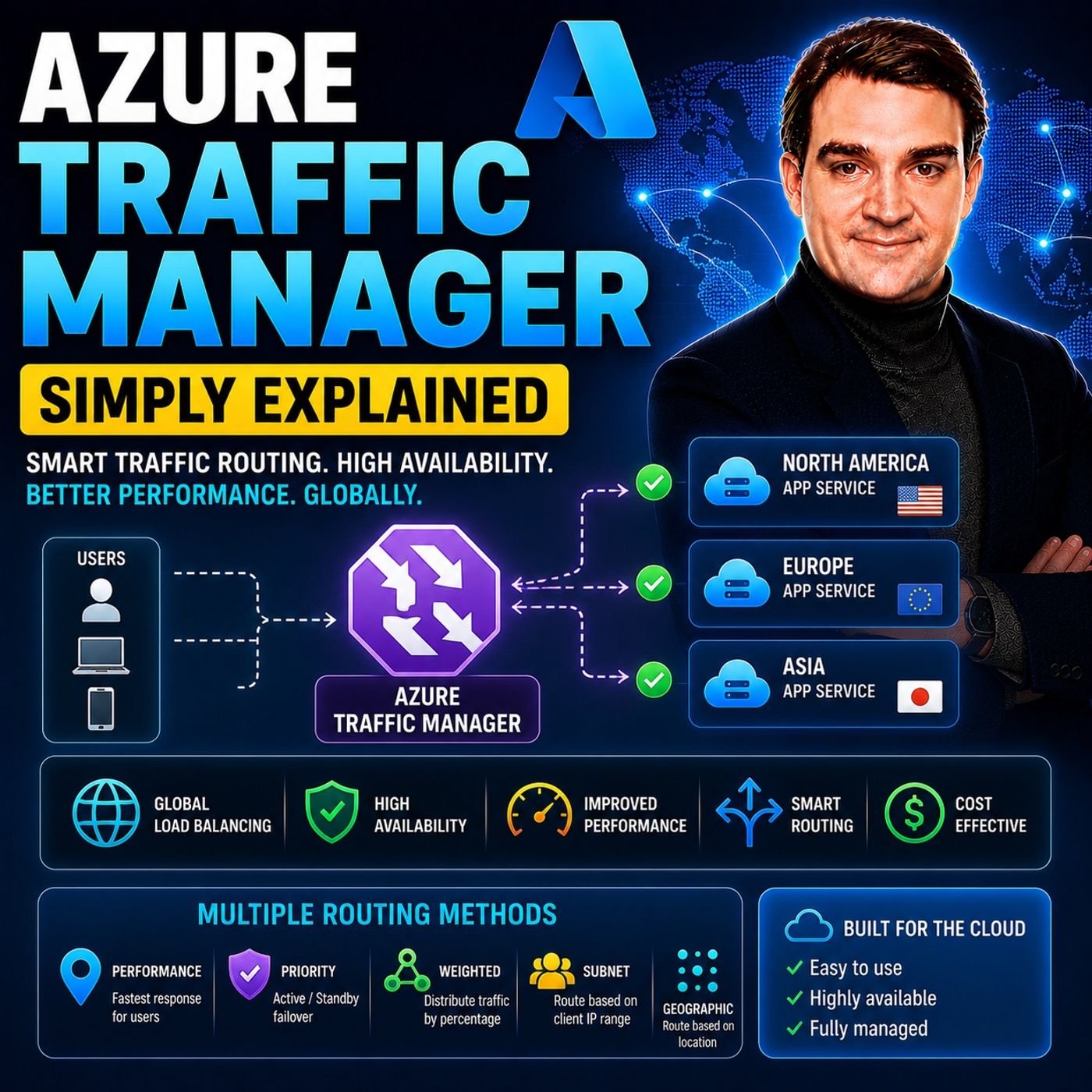
Azure Traffic Manager - Simply Explained
Azure Traffic Manager is Microsoft's DNS-based global traffic routing service that directs users to the best available application endpoint based on performance, geography, priority, or other routing rules. Instead of routing traffic itself, Traffic Manager uses intelligent DNS responses to improve application availability, reduce latency, and automatically fail over to healthy endpoints when outages occur. In this episode of Microsoft Knowledge Nuggets, Mirko Peters explains Azure Traffic Manager in simple terms and shows how it helps organizations build highly available, globally distributed applications. You'll learn how DNS-based routing works, why Traffic Manager is different from traditional load balancers, and when it's the right solution for multi-region deployments. The episode covers key concepts including Traffic Manager profiles, endpoints, health checks, DNS routing, failover, and the different routing methods such as Priority, Performance, Geographic, Weighted, Sub…
Guest: Mirko Peters
July 17, 2026
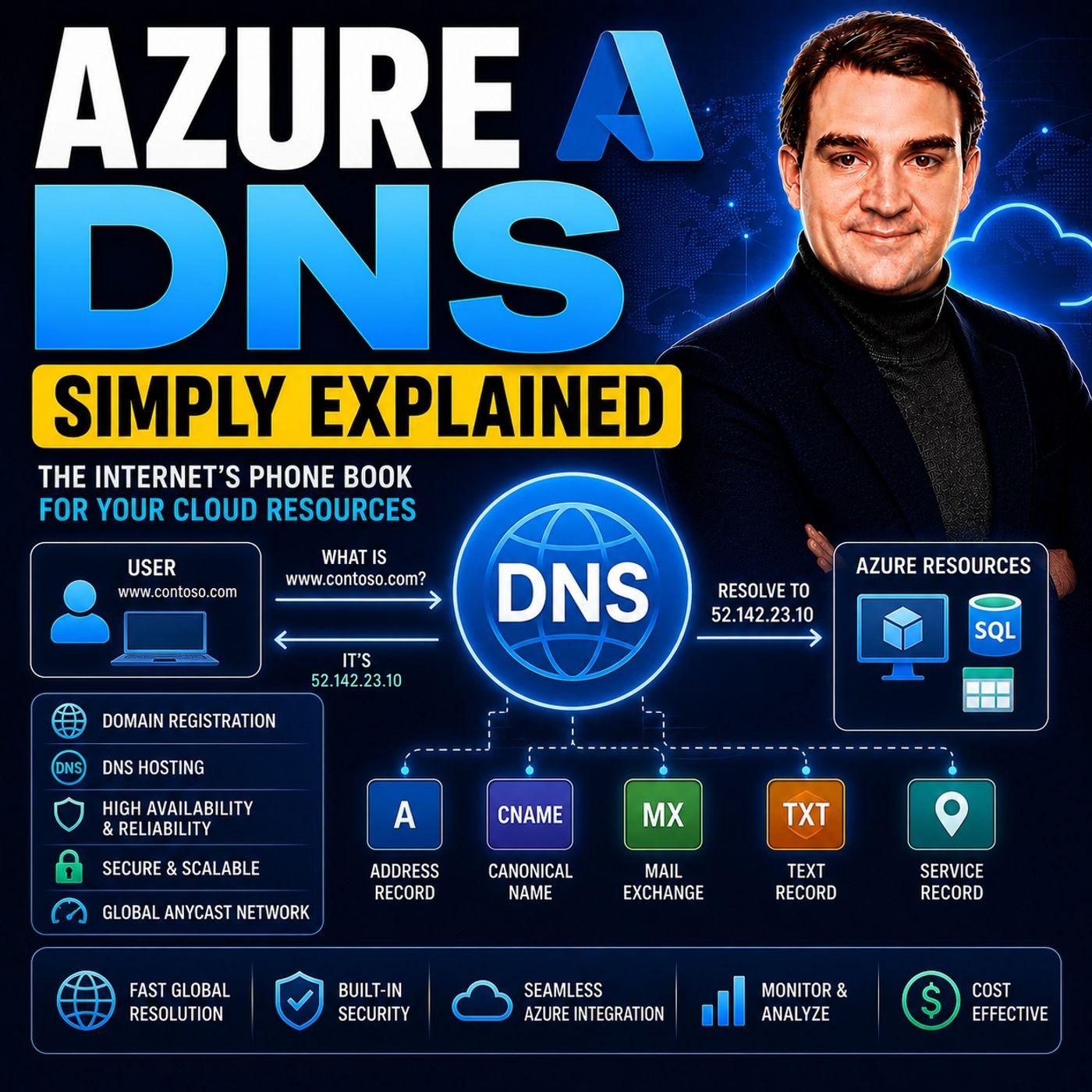
Azure DNS - Simply Explained
Azure DNS is Microsoft's managed Domain Name System (DNS) service that hosts and resolves domain names using Azure's global infrastructure. It allows organizations to manage public and private DNS zones, automate DNS management, and provide fast, reliable name resolution for cloud and hybrid environments—all without maintaining their own DNS servers. In this episode of Microsoft Knowledge Nuggets, Mirko Peters explains Azure DNS in simple terms and shows why DNS is one of the most fundamental services in every IT environment. You'll learn how Azure DNS translates human-friendly domain names into IP addresses, why reliable name resolution is critical, and how Azure simplifies DNS management for modern applications and cloud workloads. The episode covers key concepts including DNS zones, DNS records, public and private DNS, Azure DNS Private Resolver, alias records, and domain delegation. It also explains how Azure DNS integrates with Azure Virtual Networks, Private Link, Traffic …
Guest: Mirko Peters
July 17, 2026
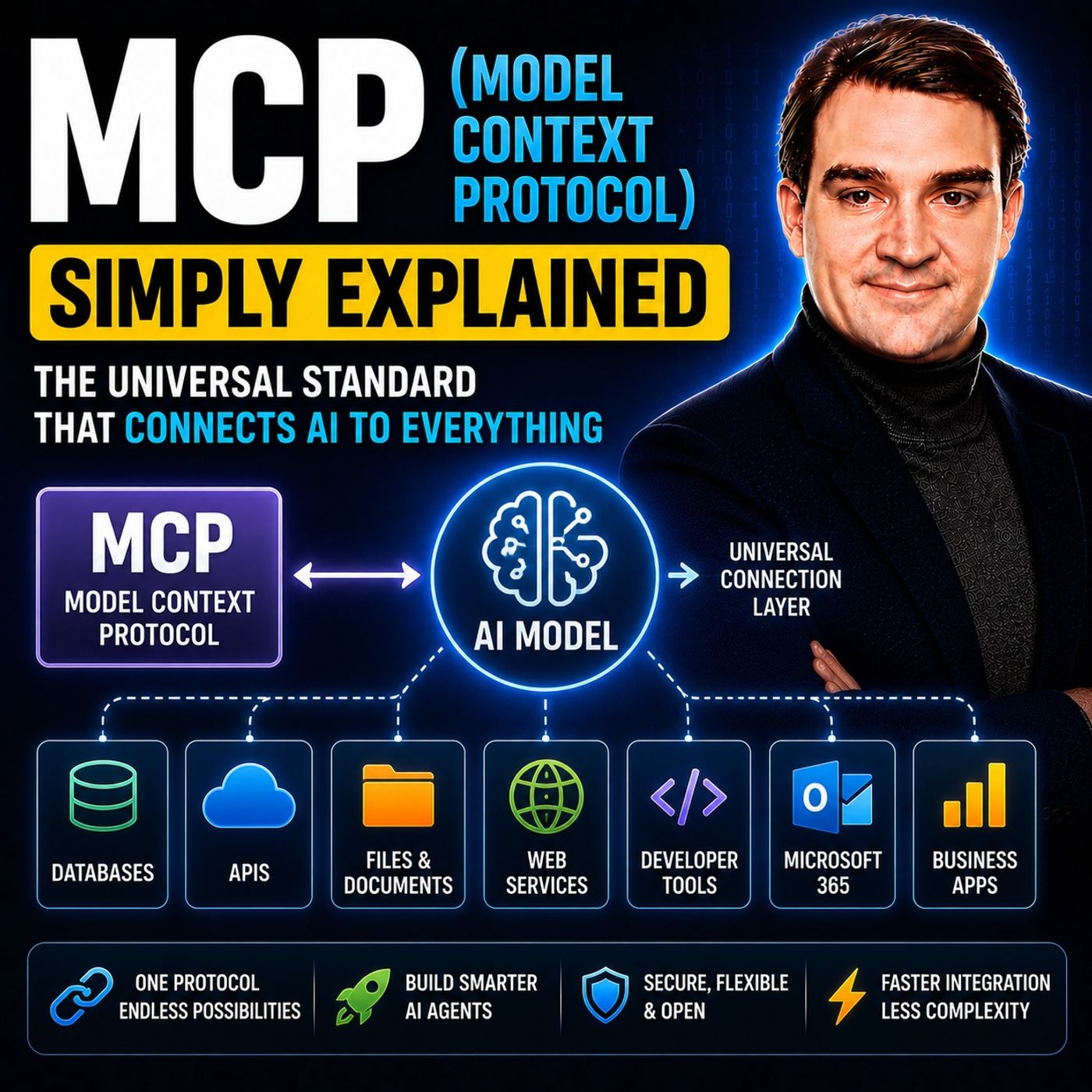
MCP (Model Context Protocol) - Simply Explained
The Model Context Protocol (MCP) is an open standard that allows AI applications to securely connect with external tools, APIs, databases, files, and business systems through a common interface. Instead of building custom integrations for every AI model and every application, MCP provides a universal way for AI assistants to discover tools, access data, and perform real-world actions, making it one of the key technologies behind modern AI agents. In this episode of Microsoft Knowledge Nuggets, Mirko Peters explains the Model Context Protocol (MCP) in simple terms and explores why it's becoming the "USB-C for AI." You'll learn how MCP enables AI assistants to move beyond answering questions by interacting with enterprise systems, development tools, cloud platforms, and business applications in a secure and standardized way. The episode covers key concepts including MCP clients, MCP servers, tools, resources, prompts, and the client-server architecture that powers the protocol. It…
Guest: Mirko Peters
July 17, 2026
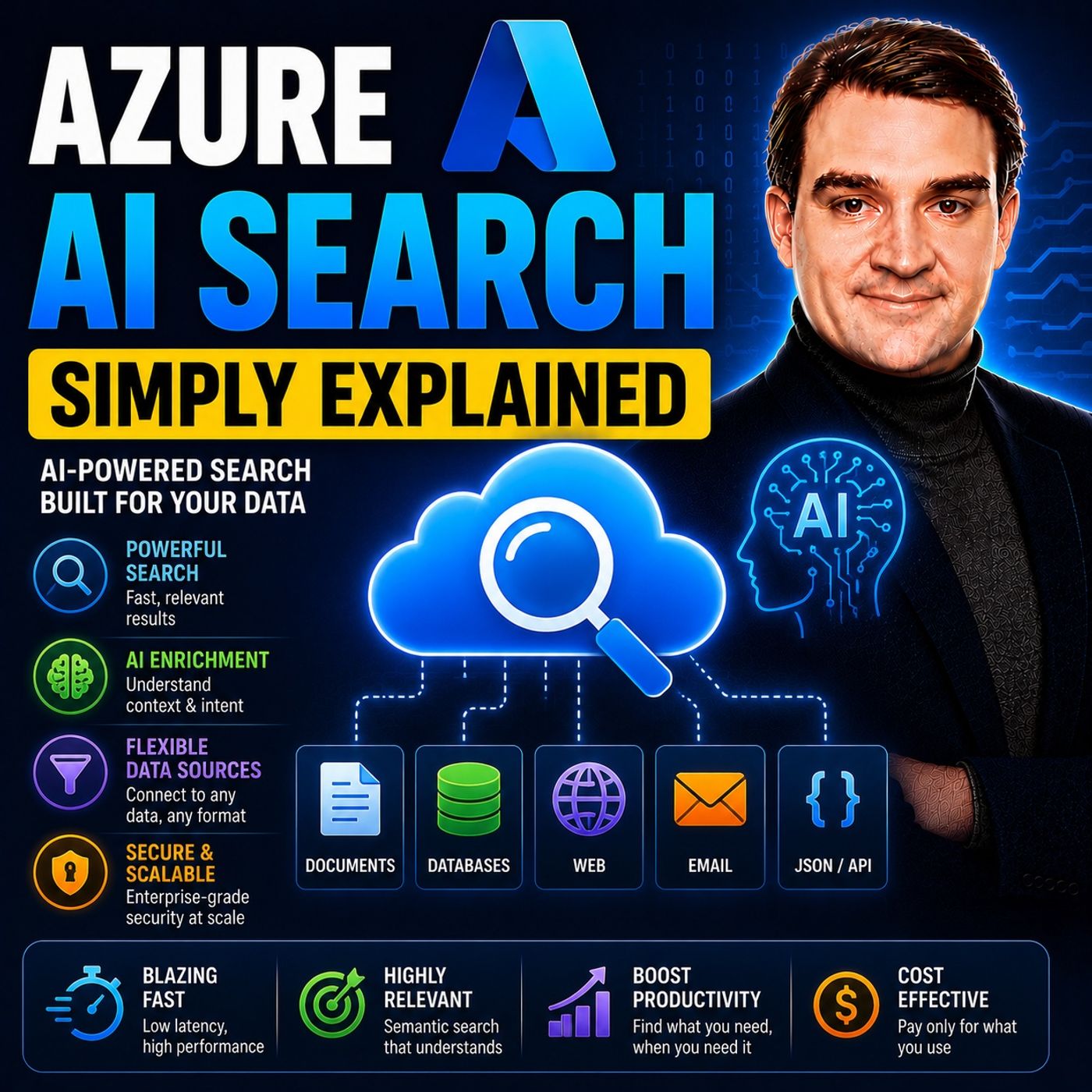
Azure AI Search – Simply Explained
Azure AI Search is Microsoft's intelligent search and information retrieval service for building modern search experiences and AI-powered applications. It combines traditional keyword search with vector search, semantic ranking, and AI enrichment, making it a core component for Retrieval-Augmented Generation (RAG), AI agents, and enterprise search solutions. In this episode of Microsoft Knowledge Nuggets, Mirko Peters explains Azure AI Search in simple terms and shows why it has become one of the most important services for generative AI applications. You'll learn how Azure AI Search helps AI models retrieve relevant information from your own documents, databases, and knowledge bases instead of relying only on their pre-trained knowledge. The episode covers key concepts including search indexes, indexers, full-text search, vector search, hybrid search, semantic search, AI enrichment, embeddings, and data connectors. It also explains how Azure AI Search integrates with Azure Open…
Guest: Mirko Peters
July 17, 2026
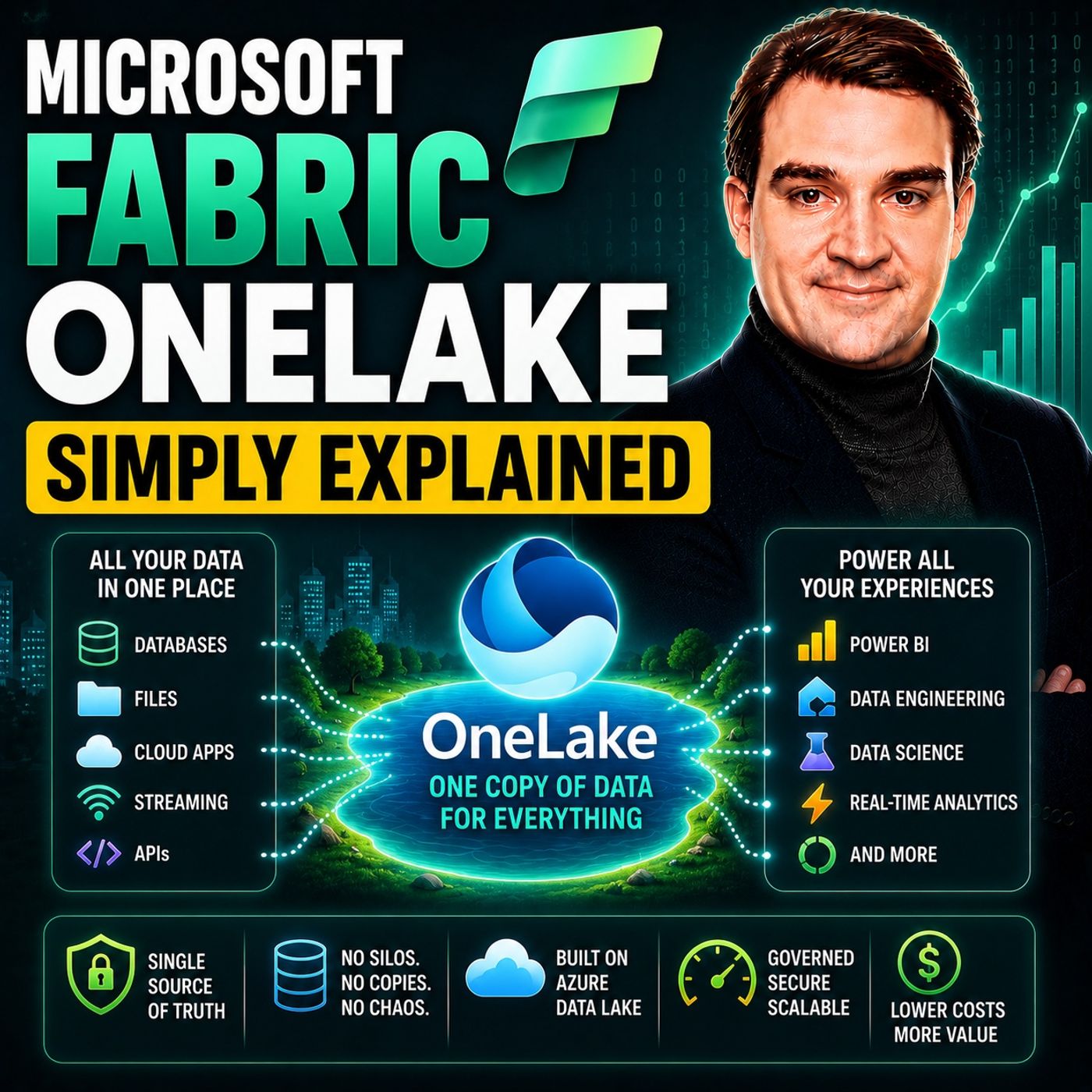
Microsoft Fabric OneLake - Simply Explained
Microsoft Fabric OneLake is the unified data lake at the heart of Microsoft Fabric, providing a single, centralized location for all your organization's analytics data. Instead of storing copies of data across multiple systems, OneLake enables every Fabric workload—from Power BI and Data Engineering to Data Science and Data Warehouse—to access the same data, reducing duplication and breaking down data silos. In this episode of Microsoft Knowledge Nuggets, Mirko Peters explains Microsoft Fabric OneLake in simple terms and shows why it's often described as the "OneDrive for data." You'll learn how OneLake simplifies data management by providing a single source of truth for analytics, AI, and business intelligence across your organization. The episode covers key concepts including lakehouses, Delta tables, shortcuts, zero-copy data access, governance, security, and workspace organization. It also explains how OneLake integrates with Power BI, Data Factory, Data Engineering, Data Sc…
Guest: Mirko Peters
July 17, 2026
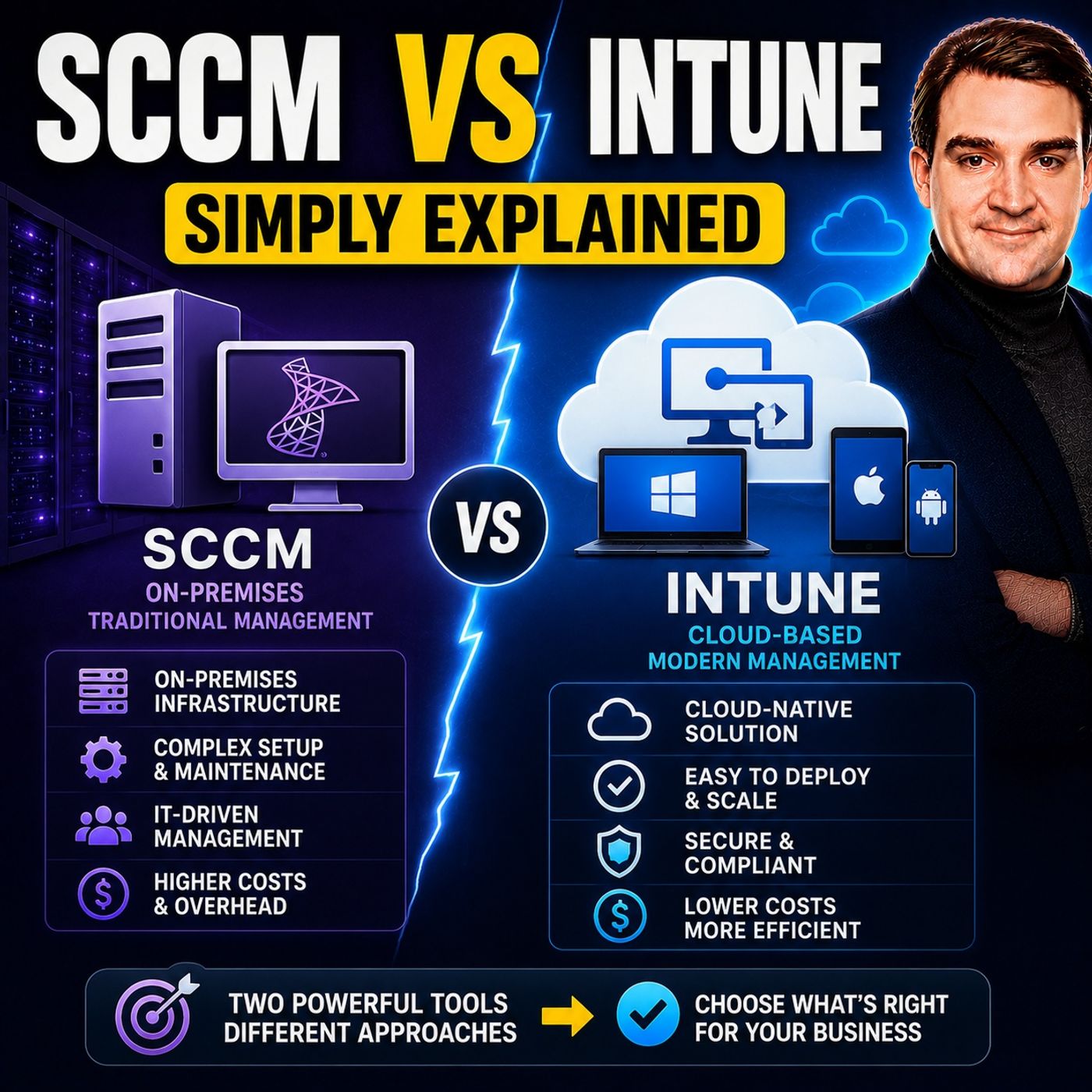
SCCM vs Intune: Key Differences | Simply Explained
Should you choose SCCM or Microsoft Intune for endpoint management? The answer isn't as simple as picking one over the other. While SCCM has been the enterprise standard for years, Intune represents Microsoft's cloud-first approach to managing modern devices. In reality, many organizations use both together during their transition to the cloud. In this episode of Microsoft Knowledge Nuggets, Mirko Peters explains the differences between SCCM and Intune in plain English. You'll learn where each solution excels, how they complement each other, and which platform is the better fit depending on your organization's infrastructure, workforce, and cloud strategy. The episode covers key topics including software deployment, operating system management, patching, compliance, device provisioning, remote management, Windows Autopilot, co-management, and cloud versus on-premises administration. It also explains why Microsoft continues to invest in Intune while Configuration Manager remains …
Guest: Mirko Peters
July 17, 2026
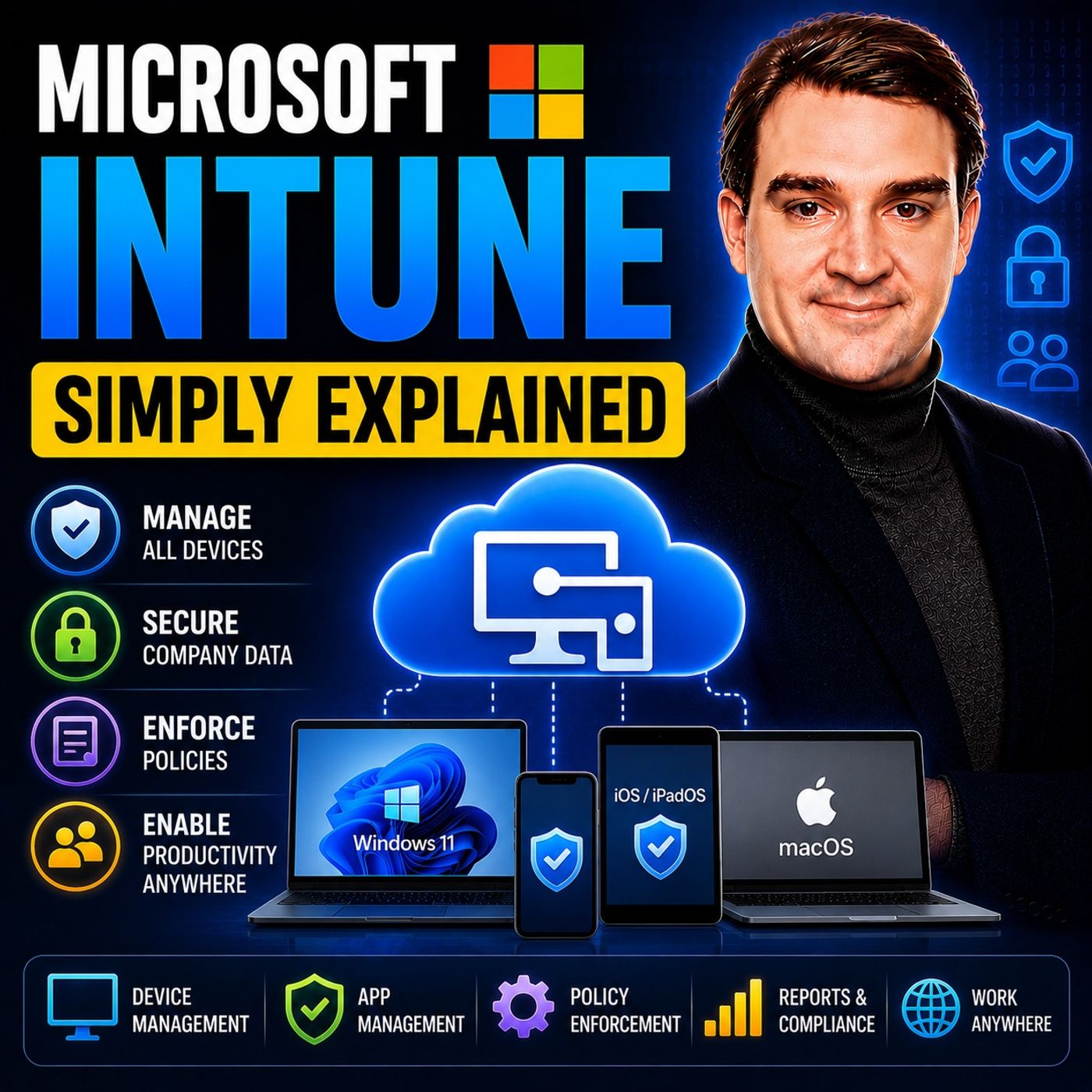
Microsoft Intune - Simply Explained
Microsoft Intune is Microsoft's cloud-based endpoint management solution that helps organizations securely manage devices, applications, and users across Windows, macOS, iOS, Android, and Linux. It enables IT teams to deploy applications, enforce security policies, protect company data, and manage endpoints from a single cloud platform, making it a cornerstone of modern workplace management. In this episode of Microsoft Knowledge Nuggets, Mirko Peters explains Microsoft Intune in simple terms and shows why it has become one of the most important services for managing today's diverse device landscape. You'll learn how Intune supports cloud-first and hybrid environments while replacing many traditional on-premises management solutions with a modern, scalable approach. The episode covers key concepts including device enrollment, configuration profiles, compliance policies, application deployment, Windows Autopilot, mobile device management (MDM), mobile application management (MAM)…
Guest: Mirko Peters
July 17, 2026
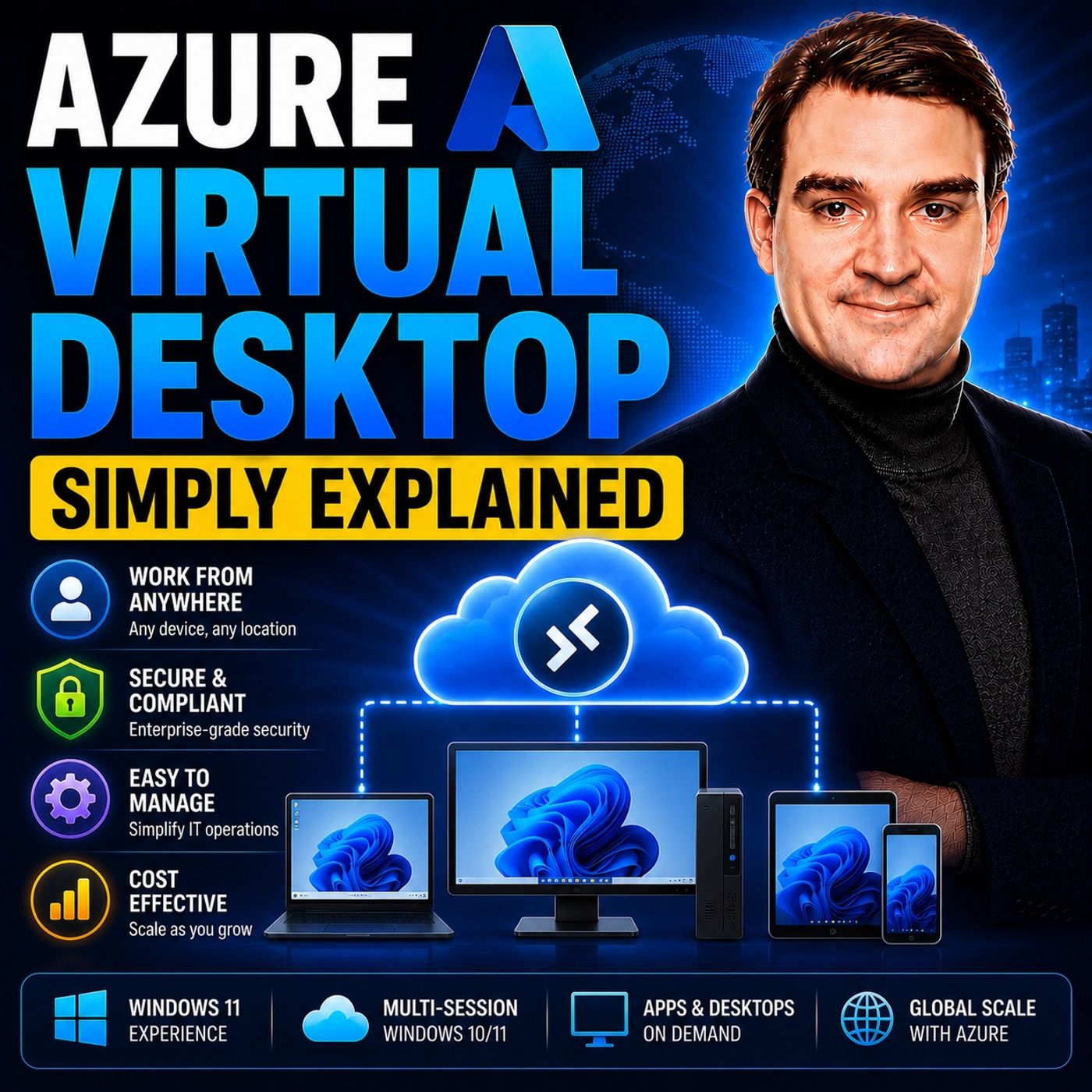
Azure Virtual Desktop - Simply Explained
Azure Virtual Desktop (AVD) is Microsoft's cloud-based desktop and application virtualization service that enables users to securely access Windows desktops and applications from virtually any device, anywhere in the world. By moving desktop infrastructure into Azure, organizations can simplify management, support remote and hybrid work, and deliver a consistent user experience without maintaining traditional on-premises VDI infrastructure. In this episode of Microsoft Knowledge Nuggets, Mirko Peters explains Azure Virtual Desktop in simple terms and shows how organizations can modernize end-user computing with Microsoft's fully managed virtual desktop platform. You'll learn how AVD works, why it's become a popular choice for hybrid work, and how it differs from traditional Remote Desktop Services and other virtual desktop solutions. The episode covers key concepts including host pools, session hosts, personal and pooled desktops, RemoteApp, FSLogix user profiles, autoscaling, i…
Guest: Mirko Peters
July 17, 2026
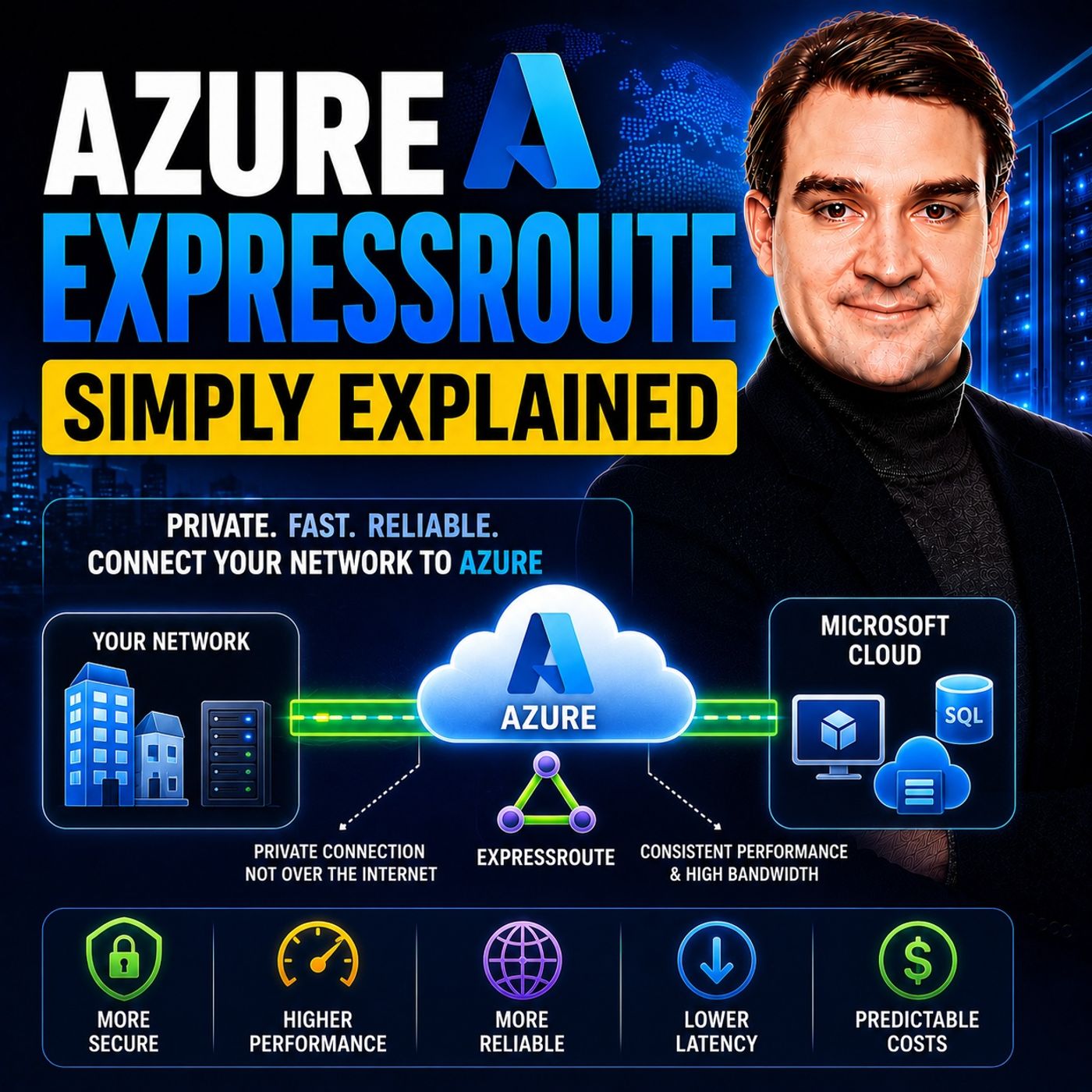
Azure ExpressRoute - Simply Explained
Azure ExpressRoute is Microsoft's dedicated private network connection for securely connecting on-premises infrastructure to Azure without sending traffic over the public internet. Designed for enterprise and mission-critical workloads, ExpressRoute delivers predictable performance, low latency, higher reliability, and enhanced security, making it the preferred connectivity option for organizations with demanding networking requirements. In this episode of Microsoft Knowledge Nuggets, Mirko Peters explains Azure ExpressRoute in simple terms and shows how it differs from traditional VPN connections. You'll learn how ExpressRoute establishes a private connection through a connectivity provider, why businesses choose it for hybrid cloud architectures, and when its additional performance and reliability justify the investment. The episode covers key concepts including ExpressRoute circuits, private and Microsoft peering, BGP routing, redundancy, ExpressRoute Gateways, FastPath, Glob…
Guest: Mirko Peters
July 17, 2026
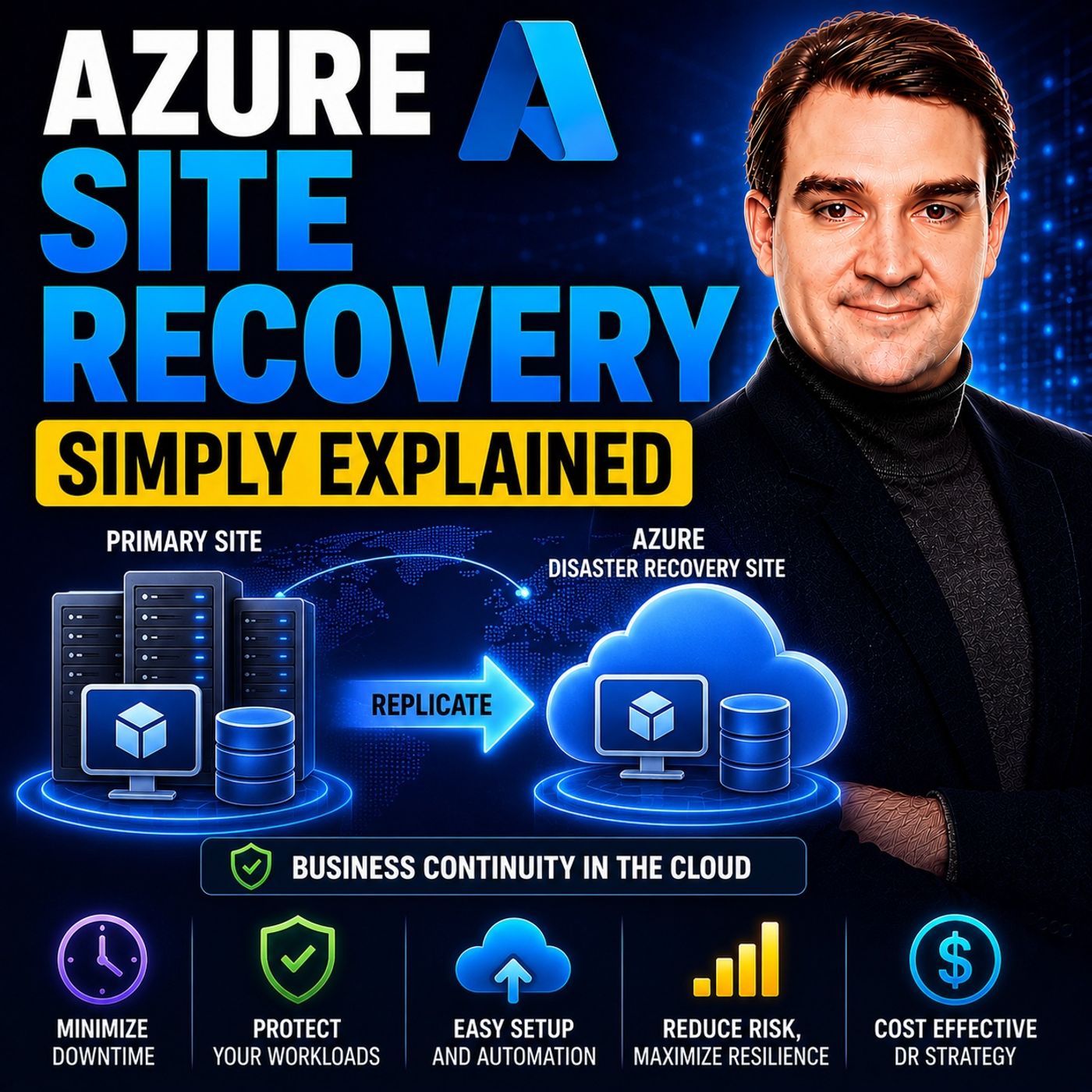
Azure Site Recovery - Simply Explained
Azure Site Recovery (ASR) is Microsoft's disaster recovery service that helps keep business applications and workloads running during planned and unplanned outages. By continuously replicating virtual machines and physical servers to a secondary Azure region or recovery site, ASR enables organizations to recover quickly from failures while minimizing downtime and data loss. In this episode of Microsoft Knowledge Nuggets, Mirko Peters explains Azure Site Recovery in simple terms and shows how it fits into a modern business continuity and disaster recovery (BCDR) strategy. You'll learn how continuous replication, failover, failback, and recovery plans work together to keep critical services available when unexpected outages occur. The episode covers key concepts including Recovery Services Vaults, replication policies, recovery points, planned versus unplanned failovers, test failovers, and automated recovery plans. It also explains how Azure Site Recovery protects Azure Virtual M…
Guest: Mirko Peters
July 17, 2026
Azure Backup - Simply Explained
Azure Backup is Microsoft's native backup service for protecting Azure and hybrid workloads against accidental deletion, hardware failures, ransomware, and disasters. Instead of managing backup infrastructure yourself, Azure Backup provides automated, secure, and scalable protection for virtual machines, databases, Azure Files, and many other workloads—all managed directly from Azure. In this episode of Microsoft Knowledge Nuggets, Mirko Peters explains Azure Backup in simple terms and shows how organizations can build reliable backup and recovery strategies without the complexity of traditional backup solutions. You'll learn how Azure Backup works, what Recovery Services Vaults and Backup Vaults are, and why backup remains one of the most critical components of every cloud architecture. The episode covers key concepts including backup policies, recovery points, retention, snapshots, incremental backups, encryption, and restore options. It also explains how Azure Backup protects…
Guest: Mirko Peters
July 17, 2026
Azure NetApp Files - Simply Explained
Azure NetApp Files is Microsoft's enterprise-grade, high-performance file storage service built for demanding workloads that require extremely low latency, massive throughput, and advanced data management capabilities. Powered by NetApp technology and fully integrated into Azure, it enables organizations to migrate business-critical applications to the cloud without redesigning their storage architecture. In this episode of Microsoft Knowledge Nuggets, Mirko Peters explains Azure NetApp Files in simple terms and shows why it is much more than just another cloud file share. You'll learn how Azure NetApp Files delivers enterprise NAS capabilities for Linux and Windows workloads using familiar SMB and NFS protocols, making it ideal for applications that demand exceptional performance and reliability. The episode covers key concepts including NetApp accounts, capacity pools, volumes, performance tiers, snapshots, replication, backups, security, and high availability. It also explain…
Guest: Mirko Peters
July 17, 2026
Azure Files - Simply Explained
Azure Files is Microsoft's fully managed cloud file sharing service that allows organizations to create secure, scalable, and highly available file shares without maintaining traditional file servers. Using familiar SMB and NFS protocols, Azure Files enables Windows, Linux, and macOS systems to access shared storage from anywhere, making it an ideal solution for both cloud-native and hybrid environments. In this episode of Microsoft Knowledge Nuggets, Mirko Peters explains Azure Files in simple terms and explores how it helps organizations modernize file storage while preserving the familiar experience of traditional network drives. You'll learn how Azure Files fits into Azure Storage, how file shares work, and why businesses increasingly replace or extend on-premises file servers with this managed service. The episode covers key concepts including SMB and NFS shares, Azure File Sync, redundancy options, authentication, security, snapshots, backups, and performance tiers. It als…
Guest: Mirko Peters
July 17, 2026
Azure Kubernetes Service (AKS) - Simply Explained
Azure Kubernetes Service (AKS) is Microsoft's managed Kubernetes platform that makes it much easier to deploy, operate, and scale containerized applications in Azure. Instead of spending countless hours managing Kubernetes infrastructure, Microsoft takes care of the control plane, updates, monitoring, and much of the operational complexity, allowing developers and IT teams to focus on building applications rather than maintaining clusters. In this episode of Microsoft Knowledge Nuggets, Mirko Peters explains Azure Kubernetes Service (AKS) in plain English and shows how it combines the power of Kubernetes with Azure's managed cloud services. You'll learn why organizations choose AKS for cloud-native applications, microservices, APIs, and AI workloads that need high availability, scalability, and resilience. The episode covers the fundamental building blocks of AKS, including clusters, node pools, pods, deployments, services, ingress, and autoscaling. It also explains how AKS inte…
Guest: Mirko Peters

July 17, 2026
Azure Container Apps - Simply Explained
Azure Container Apps is Microsoft's serverless platform for running containerized applications without managing Kubernetes clusters or virtual machines. Instead of worrying about infrastructure, scaling, and orchestration, developers can focus on building applications while Azure automatically handles deployment, networking, scaling, and operations. In this episode of Microsoft Knowledge Nuggets, we explain Azure Container Apps in plain English and show why it's one of the easiest ways to run modern cloud-native applications. You'll learn how Azure Container Apps works, when to choose it over Azure Kubernetes Service (AKS), App Service, or Azure Container Instances, and why it's ideal for microservices, APIs, background jobs, and AI workloads. We cover key concepts including containers, revisions, ingress, environments, autoscaling, scale-to-zero, KEDA, Dapr, and event-driven applications. You'll also discover how Azure Container Apps supports Docker images from any container regis…
Guest: Mirko Peters
July 16, 2026
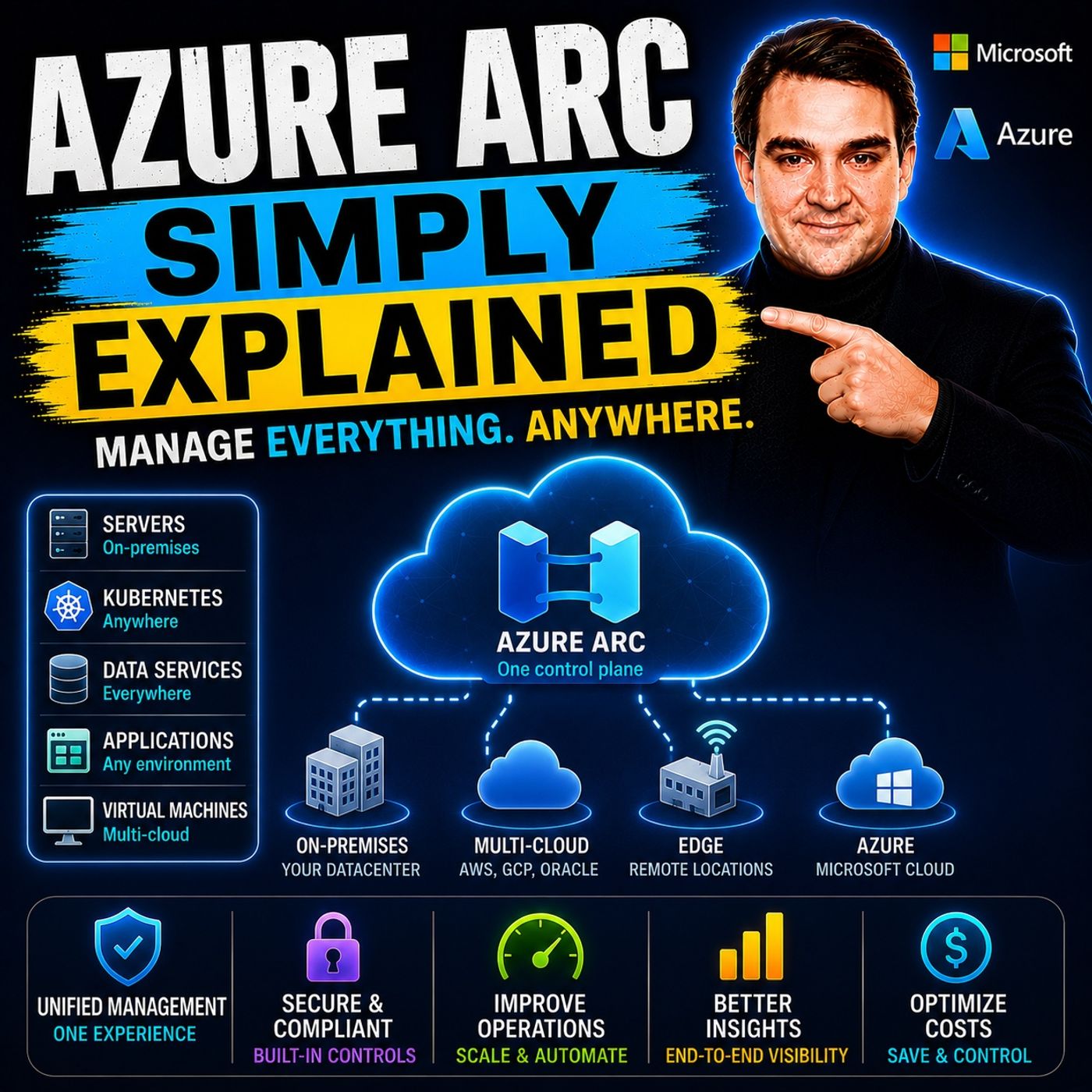
Azure Arc - Simply Explained
Azure Arc extends Azure's management, security, and governance capabilities beyond the Azure cloud, allowing you to manage servers, Kubernetes clusters, databases, and other resources running on-premises, at the edge, or in other cloud providers from a single control plane. Instead of moving workloads into Azure, Azure Arc brings Azure services to wherever your infrastructure already exists. In this episode of Microsoft Knowledge Nuggets, we explain Azure Arc in plain English and show why it's a key technology for hybrid and multicloud environments. You'll learn how Azure Arc works, what it can manage, and why organizations use it to create a consistent operational model across Azure, AWS, Google Cloud, and on-premises datacenters. We cover key concepts including Arc-enabled servers, Kubernetes, Azure Policy, Azure Monitor, Microsoft Defender for Cloud, GitOps, and Infrastructure as Code. You'll also discover how Azure Arc projects non-Azure resources into Azure Resource Manager, e…
Guest: Mirko Peters
July 16, 2026
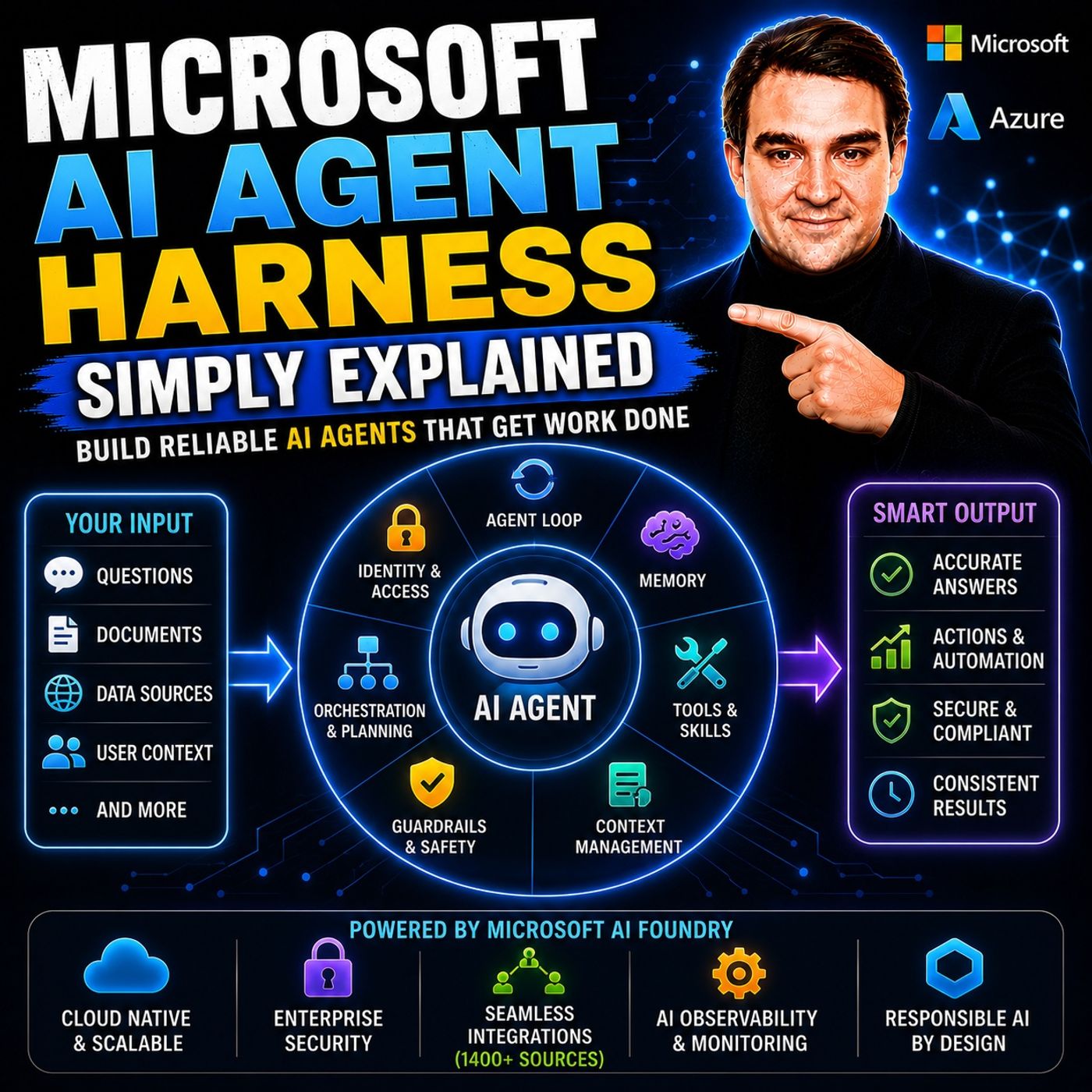
Microsoft AI Agent Harness - Simply Explained
Microsoft AI Agent Harness is the runtime layer that transforms a large language model into a capable AI agent. While an LLM can generate text, an agent harness provides everything needed to complete real work—planning tasks, calling tools, managing memory, handling approvals, and maintaining context across long-running workflows. In this episode of Microsoft Knowledge Nuggets, we explain Microsoft AI Agent Harness in plain English and show why it's becoming a core building block for enterprise AI applications. You'll learn what an agent harness actually is, how it differs from an AI model, and why modern AI agents need much more than prompts to operate reliably. We cover key concepts including planning, tool calling, context management, conversation history, memory, safety policies, approval workflows, and autonomous execution. You'll also discover how the Microsoft Agent Framework provides these capabilities out of the box, allowing developers to build robust AI agents without cr…
Guest: Mirko Peters