Simply Explained Episodes
Understand Microsoft 365, Azure, Copilot, Power Platform, and Dynamics 365 with Simply Explained podcast episodes: clear concepts and practical examples.
July 22, 2026
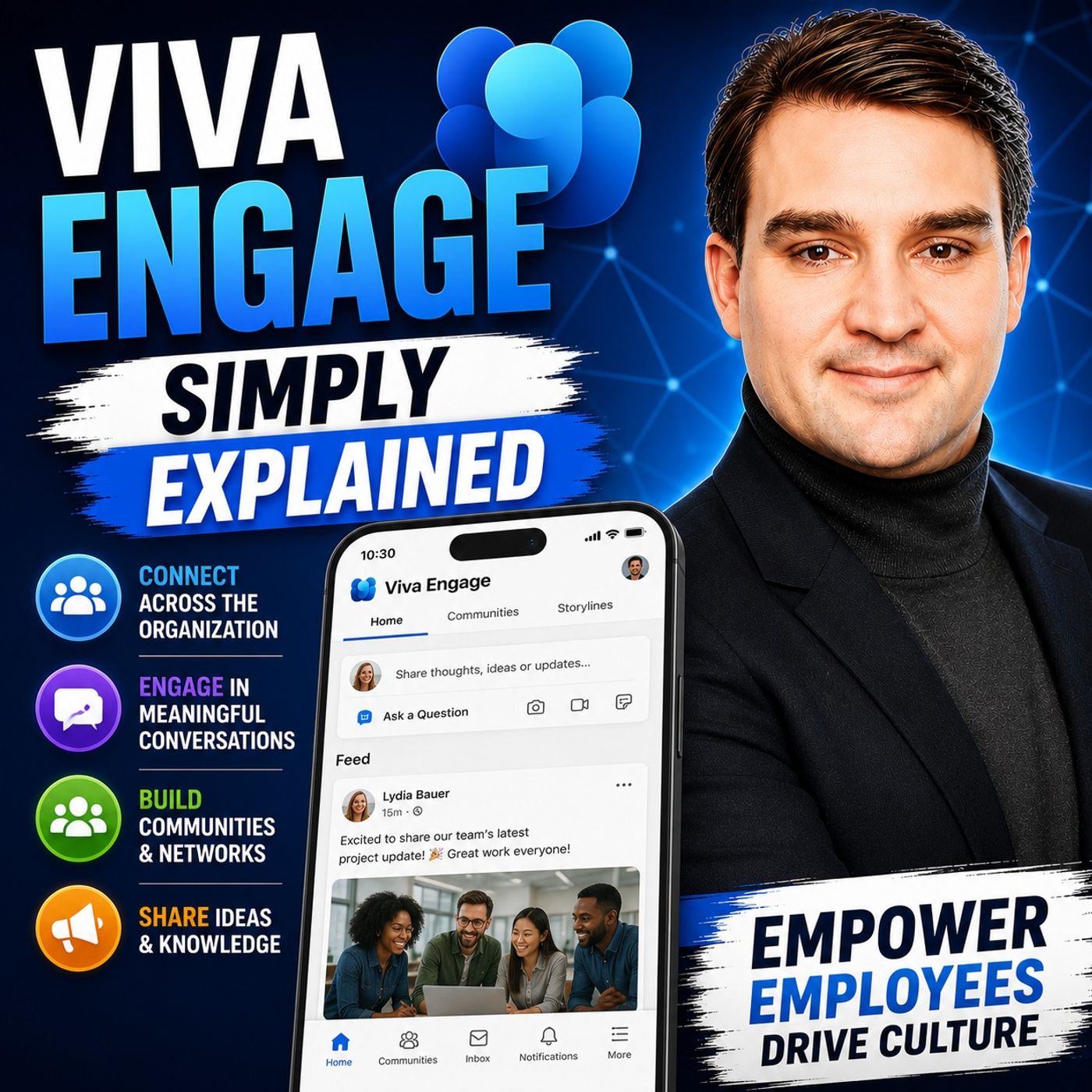
Viva Engage - Simply Explained
Quick answer: Viva Engage is Microsoft’s community experience for conversations, leadership communication, and knowledge sharing across an organisation. This episode explains how it fits into Microsoft 365, how communities create value, and why governance and clear participation habits matter for sustainable engagement. Viva Engage is Microsoft's innovative platform designed to enhance employee engagement and foster a vibrant workplace culture. Launched in 2023, it evolved from Yammer, retainin...
Guest: Mirko Peters
July 22, 2026
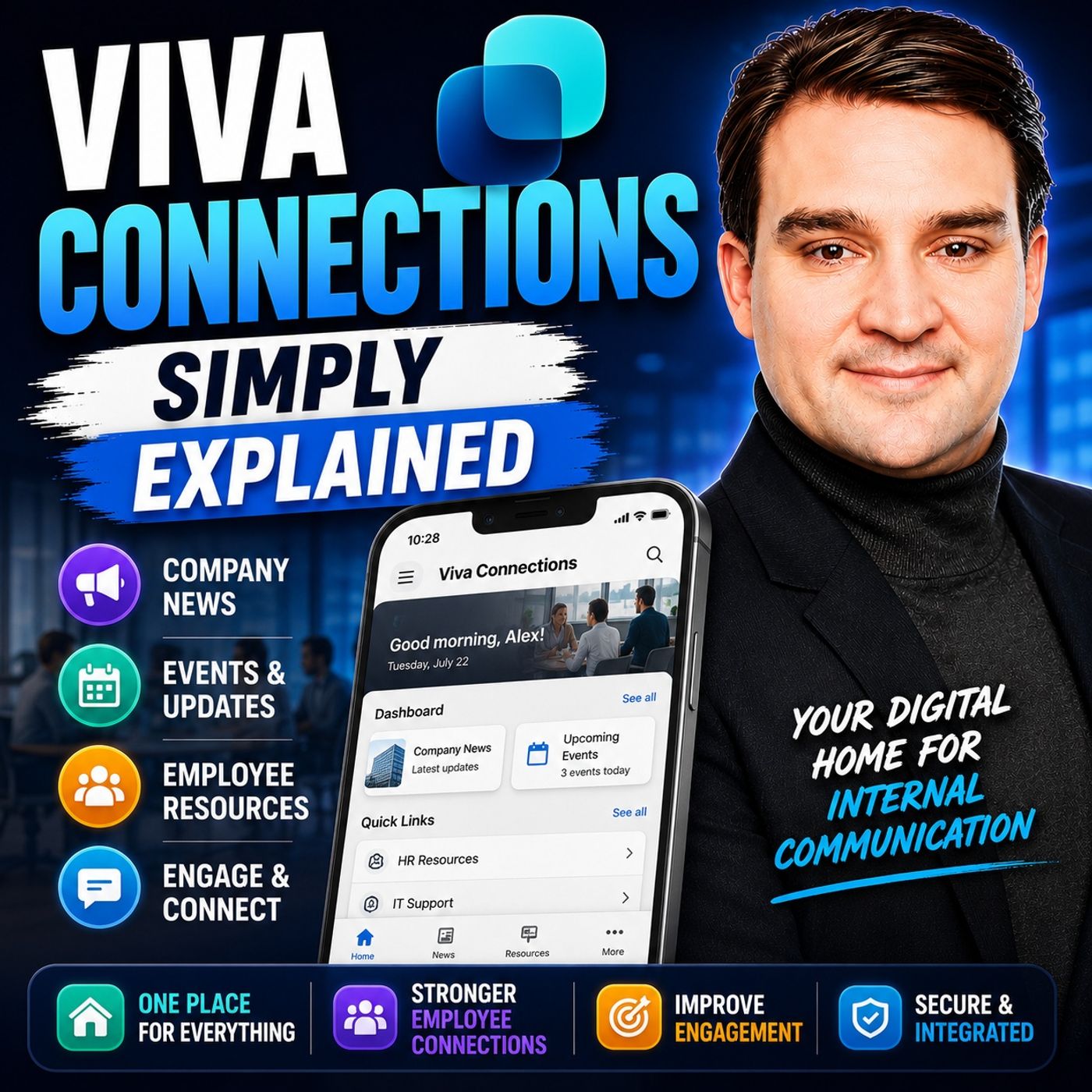
Viva Connections - Simply Explained
Quick answer: Viva Connections creates a branded employee experience in Microsoft Teams that brings together news, resources, navigation, and dashboard cards. This episode explains how it works, which employee needs it can address, and the governance decisions needed to make the experience useful over time. Viva Connections serves as a powerful employee experience platform designed to enhance engagement and communication within your organization. This innovative tool integrates seamlessly with ...
Guest: Mirko Peters
July 22, 2026
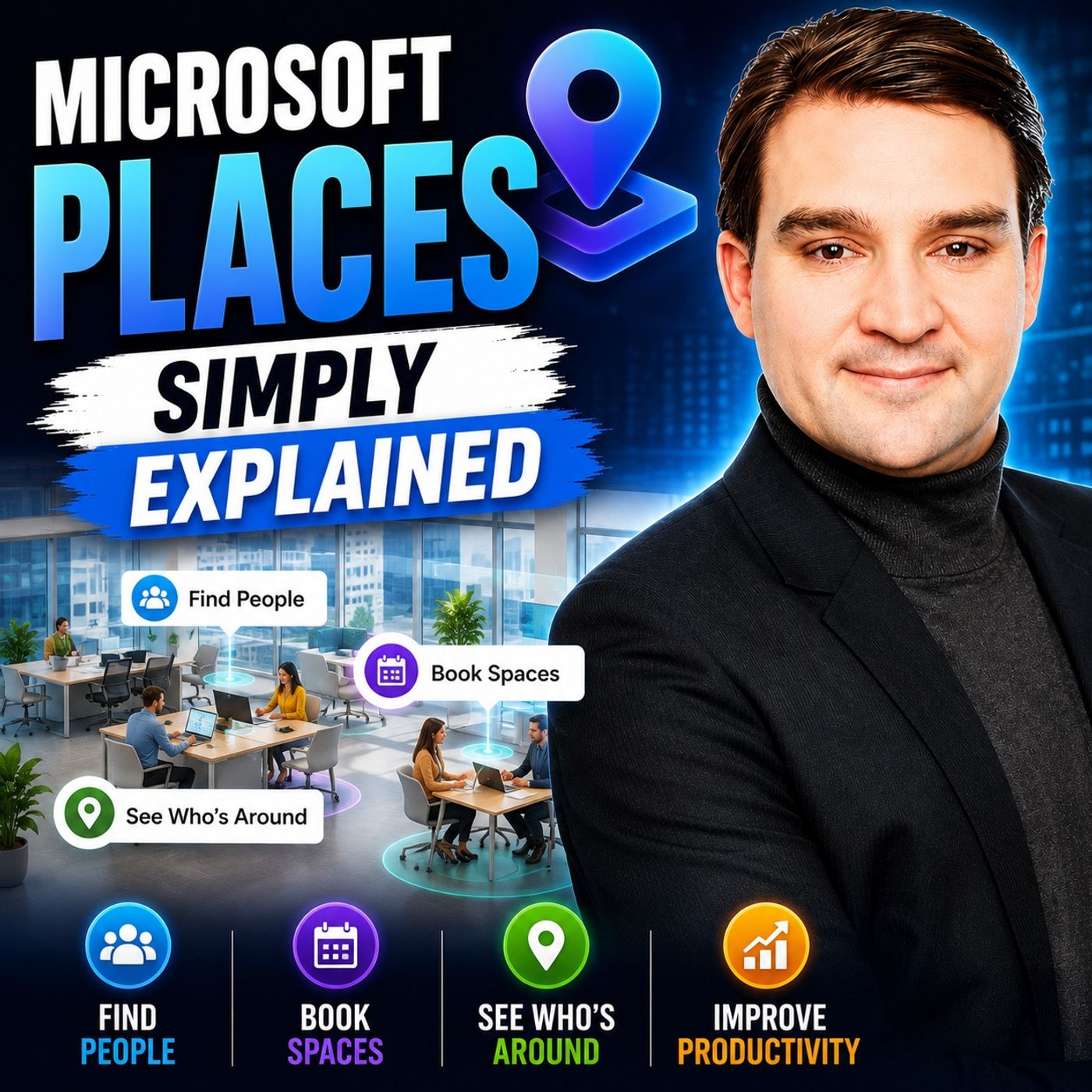
Microsoft Places - Simply Explained
Quick answer: Microsoft Places is covered in this M365 FM episode with a practical focus on what it is, how it works, and the decisions that matter for architecture, adoption, security, governance, or day-to-day operations. Microsoft Places is an innovative solution designed to enhance your experience in a hybrid work environment. It simplifies workspace management and fosters collaboration among teams. In fact, with 51% of hybrid employees likely to go fully remote in the next year, tools like...
Guest: Mirko Peters
July 22, 2026
Microsoft Mesh - Simply Explained
Quick answer: Microsoft Mesh is covered in this M365 FM episode with a practical focus on what it is, how it works, and the decisions that matter for architecture, adoption, security, governance, or day-to-day operations. Welcome to another episode of Knowledge Nuggets with Mirko Peters. Today we're exploring Microsoft Mesh, one of the most talked-about—but also one of the most misunderstood—technologies in the Microsoft ecosystem. When Microsoft first announced Mesh, headlines were filled with...
Guest: Mirko Peters
July 22, 2026
Microsoft Loop Workspaces - Simply Explained
Quick answer: Microsoft Loop Workspaces is covered in this M365 FM episode with a practical focus on what it is, how it works, and the decisions that matter for architecture, adoption, security, governance, or day-to-day operations. Imagine a space where your team can collaborate effortlessly. That’s what Microsoft Loop Workspaces offers. This tool helps you gather all project-related information in one place, making teamwork smoother and more efficient. You can easily access everything you nee...
July 22, 2026
Microsoft Cloud Solution Provider (CSP) - Simply Explained
Quick answer: Microsoft Cloud Solution Provider is covered in this M365 FM episode with a practical focus on what it is, how it works, and the decisions that matter for architecture, adoption, security, governance, or day-to-day operations. The Microsoft Cloud Solution Provider (CSP) program simplifies how businesses acquire and manage microsoft cloud solutions. As the demand for cloud services skyrockets, CSPs play a vital role in connecting organizations with essential resources. The global c...
Guest: Mirko Peters
July 22, 2026
Microsoft Marketplace - Simply Explained
Quick answer: Microsoft Marketplace is covered in this M365 FM episode with a practical focus on what it is, how it works, and the decisions that matter for architecture, adoption, security, governance, or day-to-day operations. Welcome to another episode of Knowledge Nuggets with Mirko Peters. Today we're exploring Microsoft Marketplace, one of the most important platforms in the Microsoft ecosystem—and one that's often misunderstood. When most people hear the word Marketplace, they imagine so...
Guest: Mirko Peters
July 22, 2026
Microsoft Secure Score - Simply Explained
Quick answer: Microsoft Secure Score is covered in this M365 FM episode with a practical focus on what it is, how it works, and the decisions that matter for architecture, adoption, security, governance, or day-to-day operations. Welcome to another episode of Knowledge Nuggets with Mirko Peters. In this episode, we're exploring Microsoft Secure Score—one of the simplest yet most misunderstood security features in Microsoft 365. Many administrators log into the Microsoft Defender portal, see a p...
Guest: Mirko Peters
July 21, 2026
Microsoft Defender for Cloud Apps - Simply Explained
Microsoft Defender for Cloud Apps is Microsoft's Cloud Access Security Broker (CASB) that helps organizations discover, monitor, and protect the cloud applications employees use every day. In this episode of Microsoft Knowledge Nuggets, Mirko Peters explains Defender for Cloud Apps in simple terms, showing how organizations can gain visibility into cloud usage, detect risky behavior, and protect sensitive business data across Microsoft 365 and thousands of third-party SaaS applications. You'll learn how Defender for Cloud Apps discovers Shadow IT, assesses the security of cloud services, and continuously monitors user activity for suspicious behavior. The episode explains core capabilities including Cloud Discovery, app governance, SaaS Security Posture Management (SSPM), threat detection, OAuth app protection, adaptive access controls, and data loss prevention (DLP). It also covers how the platform integrates with Microsoft Defender XDR, Microsoft Entra ID, Microsoft Purview, Micr…
Guest: Mirko Peters
July 21, 2026
Dynamics 365 Customer Service - Simply Explained
Dynamics 365 Customer Service is Microsoft's intelligent customer support platform that helps organizations deliver fast, personalized, and consistent service across every customer interaction. In this episode of Microsoft Knowledge Nuggets, Mirko Peters explains Dynamics 365 Customer Service in simple terms, showing how businesses can manage support requests, automate service processes, and improve customer satisfaction using AI and Microsoft's cloud platform. You'll learn how Dynamics 365 Customer Service centralizes customer cases, knowledge articles, service history, and communications into a single workspace for support agents. The episode explains core concepts including case management, queues, service-level agreements (SLAs), knowledge management, omnichannel support, and customer timelines. You'll also discover how the platform integrates with Microsoft Teams, Outlook, Microsoft 365, Power Platform, Copilot, and Azure to provide agents with the information they need to res…
Guest: Mirko Peters
July 21, 2026
Power Platform - Simply Explained
Microsoft Power Platform is Microsoft's integrated low-code platform for building business applications, automating processes, analyzing data, creating websites, and embedding AI into everyday work. In this episode of Microsoft Knowledge Nuggets, Mirko Peters explains the Power Platform in simple terms, showing how its individual services work together to help organizations solve business problems faster without relying solely on traditional software development. You'll learn the role of each core component: Power Apps for building business applications, Power Automate for workflow automation, Power BI for analytics and reporting, Power Pages for secure external websites, Dataverse for enterprise data management, and Copilot for AI-powered assistance. Rather than viewing these as separate products, the episode explains how they form a complete business platform where each service has a specific purpose and integrates seamlessly with Microsoft 365, Dynamics 365, Azure, and hundreds …
Guest: Mirko Peters
July 21, 2026
Dataverse Security - Simply Explained
Dataverse Security is the foundation that protects business data across the Microsoft Power Platform. In this episode of Microsoft Knowledge Nuggets, Mirko Peters explains Dataverse Security in simple terms, showing how Microsoft enables organizations to control exactly who can view, edit, create, or delete data while maintaining enterprise-grade governance, compliance, and scalability. Unlike traditional databases, security is built directly into the platform rather than added afterwards. You'll learn how Dataverse uses a layered security model based on Microsoft Entra ID authentication, business units, security roles, teams, ownership, and role-based access control (RBAC). The episode explains record-level security, row-level permissions, column-level security, field security profiles, hierarchy security, and how permissions are inherited across Power Apps, Power Automate, Dynamics 365, and other Microsoft business applications. This security model allows organizations to protect…
Guest: Mirko Peters
July 21, 2026
Power Pages - Simply Explained
Microsoft Power Pages is Microsoft's low-code platform for building secure, external-facing business websites that connect directly to enterprise data. In this episode of Microsoft Knowledge Nuggets, Mirko Peters explains Power Pages in simple terms, showing how organizations can rapidly create customer portals, partner portals, self-service websites, and public-facing business applications without building everything from scratch. You'll learn how Power Pages fits into the Microsoft Power Platform alongside Power Apps, Power Automate, Power BI, and Dataverse, and why it is designed specifically for external users rather than internal employees. The episode explains how Power Pages combines low-code development with enterprise-grade security, authentication, role-based access control, and responsive web design, allowing organizations to securely expose business data and processes to customers, partners, suppliers, and citizens. The episode also explores practical use cases such …
Guest: Mirko Peters
July 21, 2026
Power Apps - Simply Explained
Power Apps is Microsoft's low-code application platform that enables organizations to build custom business applications quickly without the complexity of traditional software development. In this episode of Microsoft Knowledge Nuggets, Mirko Peters explains Power Apps in simple terms, showing how businesses can transform manual, paper-based, or spreadsheet-driven processes into modern, secure, and scalable applications. You'll learn how Power Apps fits into the Microsoft Power Platform alongside Power Automate, Power BI, Dataverse, and Power Pages, and why it's become one of the fastest ways to deliver business solutions. The episode explains the different types of Power Apps, including Canvas Apps and Model-Driven Apps, when to use each approach, and how they integrate with Microsoft 365 services such as SharePoint, Teams, Excel, Outlook, Dynamics 365, and Azure. The episode also explores practical business scenarios such as employee onboarding, asset management, inspections, …
Guest: Mirko Peters
July 21, 2026
Power Automate - Simply Explained
Power Automate is Microsoft's cloud-based automation platform that helps individuals and organizations eliminate repetitive tasks by connecting apps, services, and data into automated workflows. In this episode of Microsoft Knowledge Nuggets, Mirko Peters explains Power Automate in simple terms, showing how businesses can save time, reduce manual effort, and improve productivity without writing complex code. You'll learn how Power Automate works through triggers, actions, connectors, and workflows that automate processes across Microsoft 365, SharePoint, Teams, Outlook, Excel, Dynamics 365, Azure, and hundreds of third-party services. The episode explains the different types of flows—including cloud flows, desktop flows, scheduled automations, business process flows, and approval workflows—and when each should be used. The episode also covers practical business scenarios such as automating email notifications, document approvals, employee onboarding, data synchronization, report…
Guest: Mirko Peters

July 21, 2026
AI Agents - Simply Explained
AI Agents are one of the biggest shifts in artificial intelligence, moving beyond simple chatbots to software that can reason, plan, make decisions, and perform real work across multiple systems. In this episode of Microsoft Knowledge Nuggets, Mirko Peters explains AI Agents in simple terms, showing how they combine large language models, memory, tools, and automation to complete complex business tasks with minimal human intervention. The episode explores how AI agents differ from traditional AI assistants. Instead of only answering questions, agents can analyze goals, break them into smaller tasks, access enterprise data, call APIs, interact with Microsoft 365 applications, and adapt their actions based on new information. You'll learn the core building blocks of modern agentic AI, including reasoning, planning, tool usage, memory, orchestration, and autonomous execution, as well as where technologies like Microsoft Copilot, Copilot Studio, Azure AI Foundry, Microsoft Fabric, and …
Guest: Mirko Peters
July 19, 2026
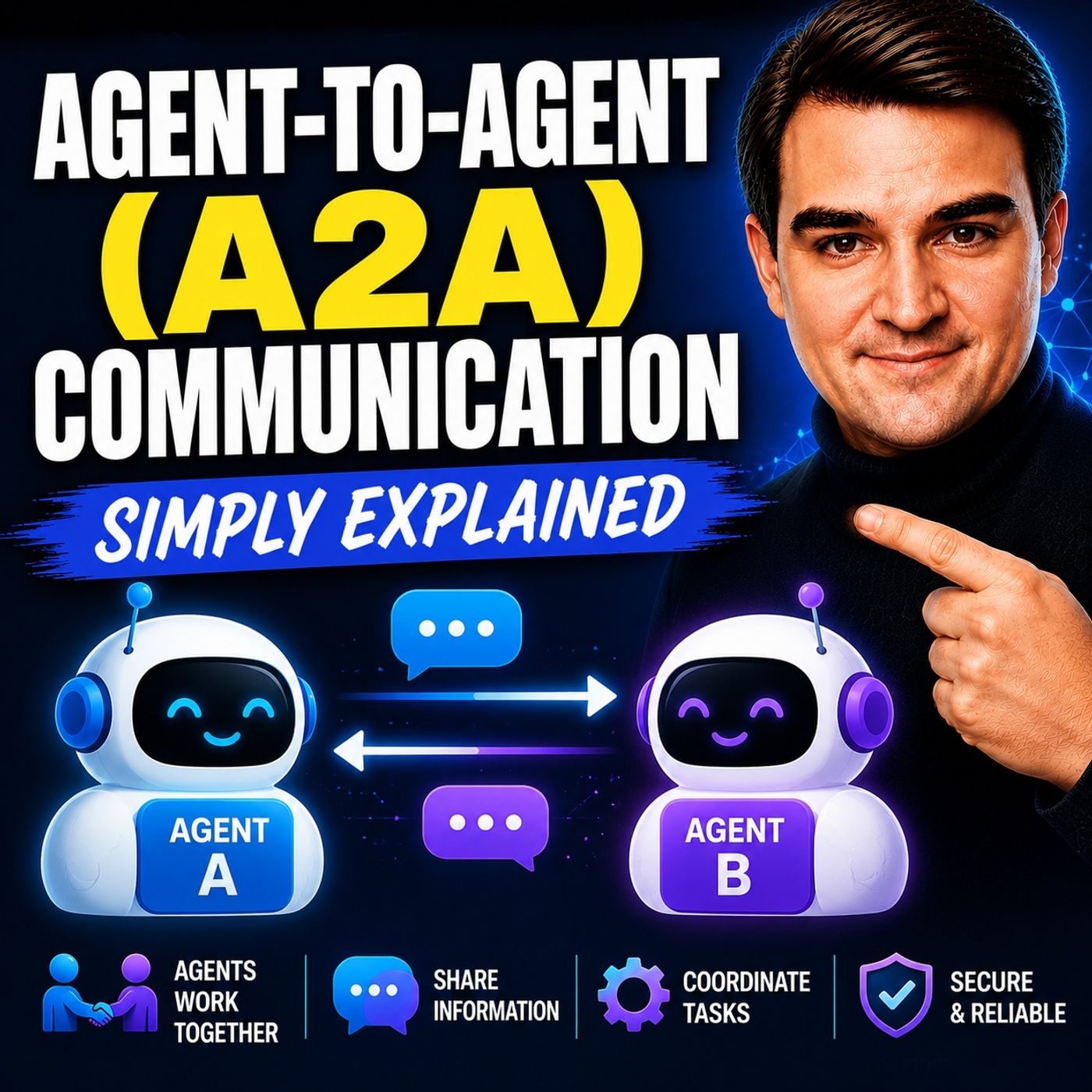
Agent-to-Agent (A2A) Communication - Simply Explained
Agent-to-Agent (A2A) Communication is an open protocol that enables AI agents to discover, communicate, and collaborate with one another—regardless of the framework, programming language, or platform they were built on. Instead of creating custom integrations between every agent, A2A defines a common standard for exchanging messages, delegating tasks, sharing capabilities, and coordinating complex workflows across distributed AI systems. In this episode of Microsoft Knowledge Nuggets, Mirko Peters explains Agent-to-Agent (A2A) Communication in simple terms and shows why it's becoming a key building block for enterprise AI. You'll learn how agents discover each other through Agent Cards, exchange structured requests and responses, manage long-running tasks, and collaborate securely across organizational and technology boundaries. The episode also explains how A2A differs from Model Context Protocol (MCP): MCP connects AI models to tools and data, while A2A enables independent AI age…
Guest: Mirko Peters
July 19, 2026
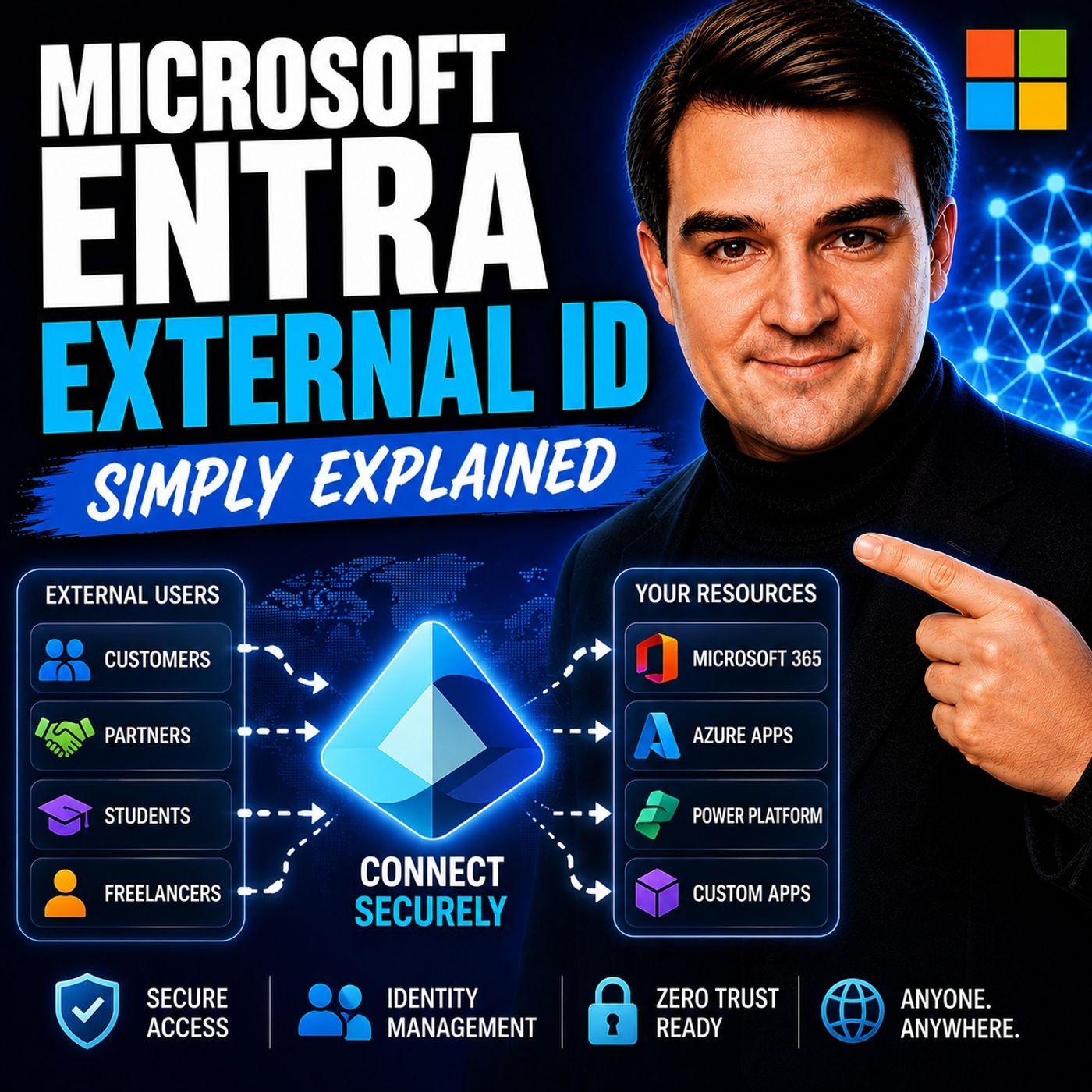
Microsoft Entra External ID - Simply Explained
Microsoft Entra External ID is Microsoft's identity and access management solution for people outside your organization. It enables secure authentication and authorization for business partners, guest users, customers, and consumer applications while supporting modern identity experiences, strong security, and seamless collaboration. Whether you're building customer-facing applications or enabling secure B2B collaboration, External ID provides a scalable platform for managing external identities. In this episode of Microsoft Knowledge Nuggets, Mirko Peters explains Microsoft Entra External ID in simple terms and shows how it helps organizations securely manage external users. You'll learn the difference between B2B collaboration and Customer Identity and Access Management (CIAM), how external tenants work, and how users can sign in using Microsoft accounts, social identities like Google or Facebook, email one-time passcodes, or other supported identity providers. The episode als…
Guest: Mirko Peters
July 19, 2026
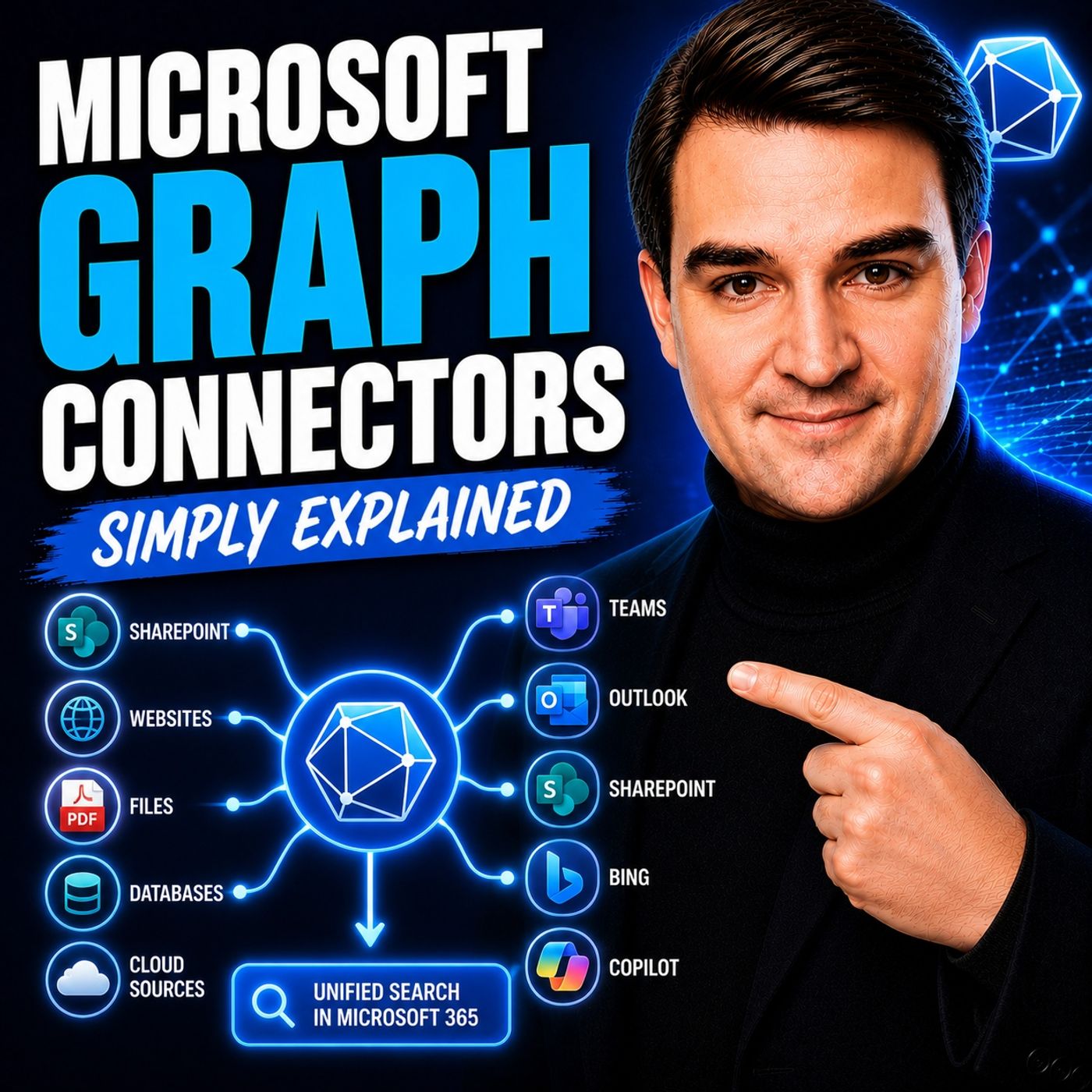
Microsoft Graph Connectors - Simply Explained
Microsoft Graph Connectors extend the Microsoft Graph by bringing data from external systems into Microsoft 365, making it searchable and accessible through Microsoft Search, Microsoft Copilot, and other Microsoft 365 experiences. Instead of limiting users to data stored in Microsoft 365, Graph Connectors allow organizations to securely index information from third-party platforms such as Salesforce, ServiceNow, Confluence, Jira, file shares, websites, databases, and custom business applications. In this episode of Microsoft Knowledge Nuggets, Mirko Peters explains Microsoft Graph Connectors in simple terms and shows how they help unify knowledge across your organization. You'll learn how Graph Connectors crawl external data sources, create searchable indexes, apply security trimming, and surface relevant content directly in Microsoft Search and Microsoft Copilot. The episode also explains the architecture behind connectors, indexing pipelines, permissions, and how external content…
Guest: Mirko Peters
July 19, 2026
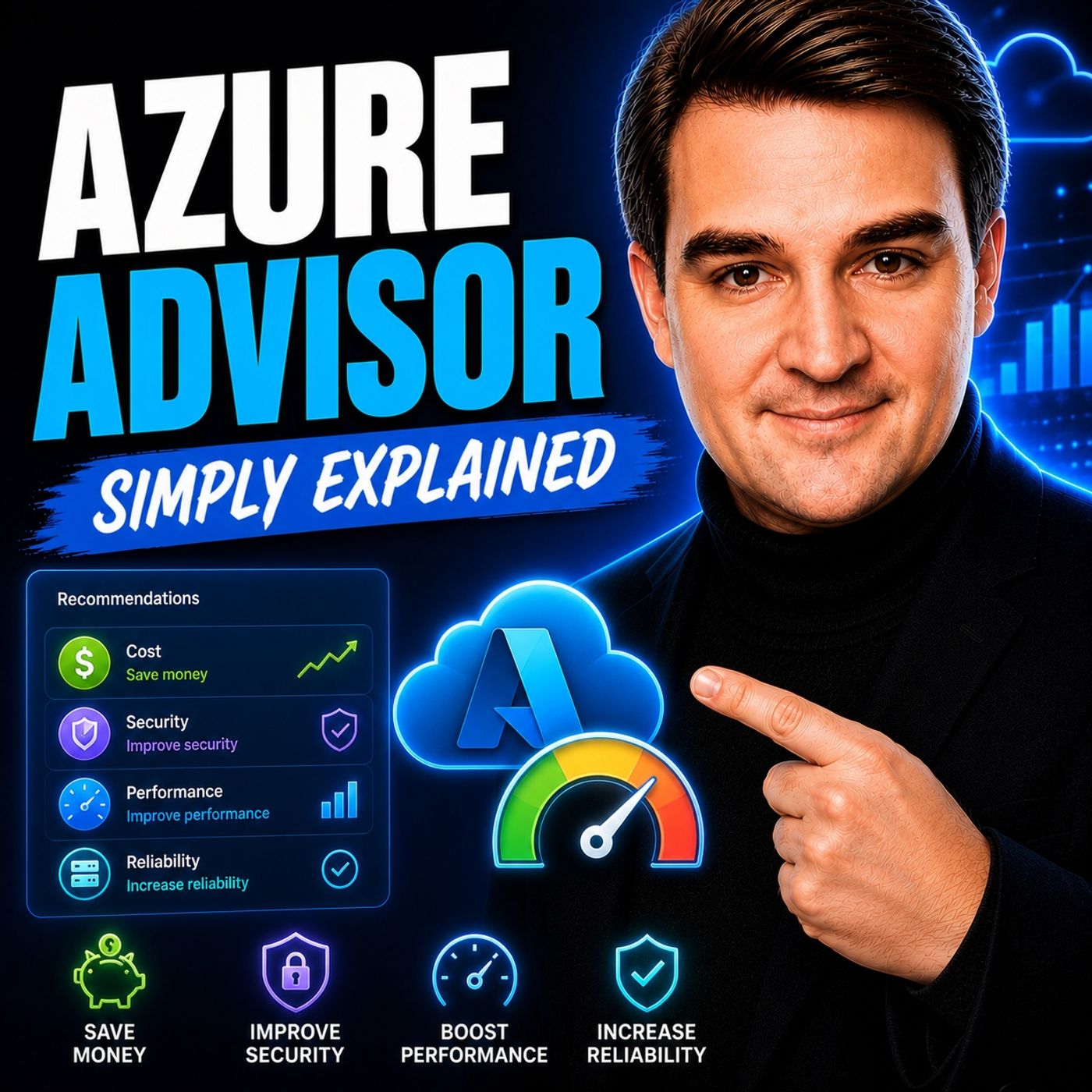
Azure Advisor - Simply Explained
Azure Advisor is Microsoft's personalized cloud optimization service that continuously analyzes your Azure environment and provides actionable recommendations to improve reliability, security, performance, operational excellence, and cost efficiency. By identifying best practice improvements, Azure Advisor helps organizations optimize workloads, reduce unnecessary spending, and strengthen their cloud infrastructure with minimal effort. In this episode of Microsoft Knowledge Nuggets, Mirko Peters explains Azure Advisor in simple terms and shows how it helps administrators make smarter decisions across their Azure subscriptions. You'll learn how Azure Advisor evaluates your resources, prioritizes recommendations, and categorizes them into key areas such as cost optimization, security, reliability, operational excellence, and performance. You'll also discover how to review recommendations, implement suggested changes, and measure the impact on your environment. The episode covers c…
Guest: Mirko Peters
July 19, 2026
Azure Cost Management - Simply Explained
Azure Cost Management is Microsoft's built-in FinOps solution for monitoring, analyzing, and optimizing cloud spending across Azure and other Microsoft cloud services. It provides visibility into where your money is being spent, helps identify cost-saving opportunities, and enables organizations to control budgets before unexpected expenses occur. In this episode of Microsoft Knowledge Nuggets, Mirko Peters explains Azure Cost Management in simple terms and shows how to take control of your Azure costs. You'll learn how Cost Analysis helps you break down spending by subscription, resource group, service, or tag, how budgets and alerts notify you before costs exceed expectations, and how forecasting predicts future cloud expenses based on current usage trends. The episode also explores practical cost optimization strategies, including Azure Advisor recommendations, Reserved Instances, Savings Plans, Azure Hybrid Benefit, rightsizing resources, tagging for cost allocation, and ide…
Guest: Mirko Peters

July 19, 2026
Azure Automation - Simply Explained
Azure Automation is a cloud-based service that helps organizations automate repetitive, time-consuming, and error-prone operational tasks across Azure, on-premises environments, and even other cloud platforms. Instead of performing manual administration, IT teams can create automated workflows that improve consistency, reduce operational costs, and free up time for more valuable work. In this episode of Microsoft Knowledge Nuggets, Mirko Peters explains Azure Automation in simple terms and demonstrates how it can simplify day-to-day cloud management. You'll learn how Automation Accounts provide a central place for managing automation, how PowerShell, Python, and graphical runbooks execute administrative tasks, and how schedules and webhooks enable fully automated or event-driven workflows. The episode also explores Hybrid Runbook Workers, allowing automations to run on on-premises servers or machines outside Azure. It covers common real-world scenarios such as starting and stopp…
Guest: Mirko Peters
July 19, 2026
Azure Managed Disks - Simply Explained
Azure Managed Disks are Microsoft's fully managed block storage solution for Azure Virtual Machines, removing the complexity of managing storage infrastructure while delivering reliable, scalable, and high-performance storage. Instead of manually creating and maintaining storage accounts, Azure automatically handles provisioning, availability, redundancy, and lifecycle management, allowing administrators to focus on their workloads rather than storage operations. In this episode of Microsoft Knowledge Nuggets, Mirko Peters explains Azure Managed Disks in simple terms and shows how they simplify virtual machine storage in Azure. You'll learn the difference between OS disks and data disks, discover the available disk types—including Standard HDD, Standard SSD, Premium SSD, Premium SSD v2, and Ultra Disks—and understand how to choose the right option based on performance, latency, and cost. The episode also covers snapshots, backups, encryption, availability zones, redundancy optio…
Guest: Mirko Peters
July 19, 2026
Azure Disk Storage - Simply Explained
Azure Disk Storage provides the persistent block storage used by Azure Virtual Machines. Unlike Azure Blob Storage, which stores files and objects, Azure Disks act like the physical hard drives in a traditional server. Every Azure VM relies on managed disks for its operating system, applications, and data, while Microsoft handles availability, durability, redundancy, and infrastructure management behind the scenes. Azure offers multiple disk types—including Standard HDD, Standard SSD, Premium SSD, Premium SSD v2, and Ultra Disks—so you can balance cost and performance based on your workload. In this episode of Microsoft Knowledge Nuggets, Mirko Peters explains Azure Disk Storage in simple terms and shows how managed disks power Azure Virtual Machines. You'll learn the difference between OS disks, data disks, and temporary disks, when to use each disk type, and how disk performance is measured through IOPS and throughput. The episode also covers snapshots, backups, encryption, redun…
Guest: Mirko Peters