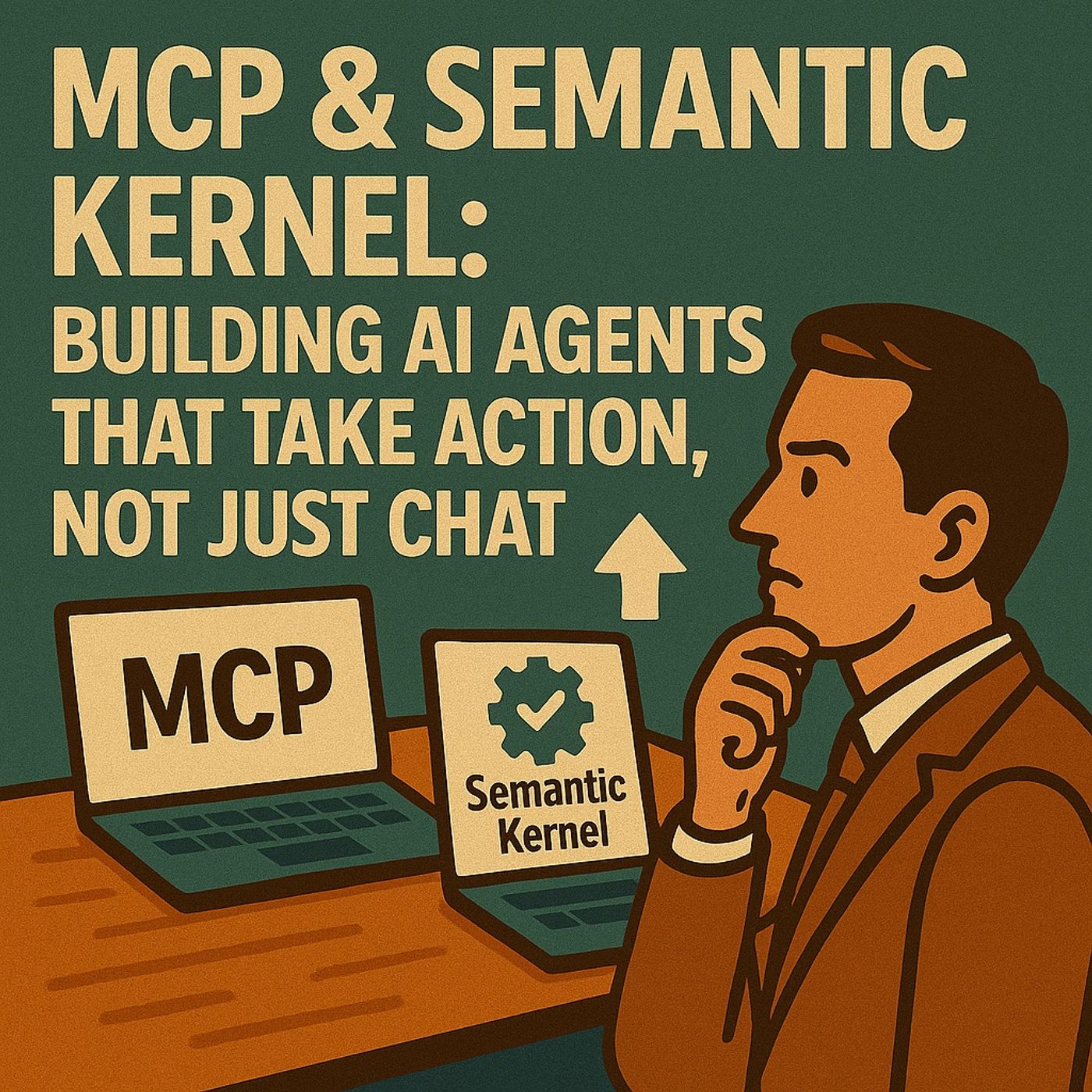
Transitioning from Chatbots to Autonomous Task-Oriented AI Agents
Welcome back to our ongoing exploration of modern enterprise technology! If you have been keeping an eye on the rapid evolution of artificial intelligence in the workplace, you have likely noticed a profound structural shift. We are moving rapidly past the era of passive, conversational chatbots that simply wait for a user prompt and respond based on rigid scripts. Today, we are entering the age of proactive, autonomous task-oriented AI agents. Organizations are no longer just looking for clever text generators; they need systems that can reason, plan, execute complex multi-step workflows, and integrate seamlessly into enterprise operations. In this deep dive, we will break down what this transition means, how these systems are structured, and why building secure, proactive agents is the next major frontier for IT and business operations.
Key Takeaways
- AI agents automate tasks and enhance productivity, marking a shift from traditional chatbots to proactive systems.
- Define clear goals and measurable outcomes for your AI agent to ensure effective performance and reliability.
- Utilize high-quality, diverse data to train your AI agent, improving its learning and decision-making capabilities.
- Implement modular design to break down tasks, making your AI agent easier to manage and debug.
- Continuous testing and user feedback are essential for refining your AI agent's performance and ensuring reliability.
- Choose the right deployment environment, whether cloud-based or self-hosted, to meet your operational needs.
- Establish governance practices to monitor your AI agent's performance and ensure ethical operation.
- Start small with your AI projects, gradually expanding as you build confidence and expertise in the technology.
AI Agents Overview
Core Components
AI agents represent a significant advancement in modern software applications. These intelligent systems operate autonomously, reacting to their environment and taking proactive actions. Their importance lies in their ability to enhance efficiency and automate complex tasks across various industries.
To understand AI agents better, consider their core characteristics:
| Characteristic | Description |
|---|---|
| Autonomy | Ability to operate independently without continuous oversight. |
| Reactivity | Responds to changes in the environment dynamically. |
| Proactiveness | Takes initiative in decision-making rather than just reacting to stimuli. |
| Social Ability | Capable of interacting and collaborating with other agents or humans. |
The transition from traditional chatbots to proactive AI agents marks a pivotal shift in how businesses leverage technology. Traditional chatbots often rely on predefined scripts and respond only when prompted by users. In contrast, agentic AI can understand context, learn from interactions, and act independently. This capability allows them to handle complex tasks without requiring constant human input.
Here is a comparison of the two:
| Aspect | Traditional Chatbots | Agentic AI |
|---|---|---|
| Initiative | Wait for user prompts | Take initiative without prompts |
| Learning | Require manual updates | Learn and adapt automatically |
| Context Understanding | Depend on keyword matches | Grasp full context and intent |
The core components of an effective AI agent include:
- Planning Capabilities: The agent's core function, powered by large language models, includes task decomposition, self-reflection, adaptive learning, and critical analysis, enabling effective task completion.
- Tool Utilization: The agent must access and appropriately use external tools such as code interpreters, web search utilities, calculators, and image generators to execute planned actions.
- Memory Management: Comprising short-term memory for immediate context and long-term memory for historical information retrieval, memory systems allow the agent to retain and utilize information for iterative improvement and continuity.
These components work together to create a system that not only reacts but also anticipates needs and resolves issues proactively. This capability significantly enhances operational efficiency and reduces the burden on human operators.
Building AI Agents
Planning and Goals
When you start building AI agents, you must focus on solid foundations. Clear planning and well-defined goals guide your agent to perform reliably and effectively. Begin by aligning your agent’s purpose with measurable outcomes. This means you decide what success looks like and how to track it. For example, if you are building an IT Service Management (ITSM) agent, your goal might be to reduce incident resolution time by a certain percentage.
You should treat every capability of your agent as a tool with clear contracts. This approach helps you manage complexity and ensures each part works as expected. Writing prompts for your agent is like creating product specifications. You want to be precise and clear so the agent understands what to do. Also, configure the context correctly to maintain reliable execution. Context includes the information your agent uses to make decisions and act.
Distributing accountability across business domains helps you scale your agent’s impact. When different teams own parts of the agent’s functions, you can manage updates and improvements more easily. You also need to scale access to both structured and unstructured data. Your agent learns best when it can draw from diverse and rich data sources.
Tip: Modular design improves clarity and reusability. Break down your agent’s tasks into smaller parts that can run in parallel. This speeds up execution and makes debugging easier.
Data plays a crucial role in building AI agents. High-quality training data ensures your agent learns accurate patterns and avoids biases. Diverse data sources allow your agent to understand subtle differences and generalize well to new situations. Balanced datasets improve fairness by representing all categories equally. Consistent data formatting helps your agent focus on learning relationships instead of correcting errors. Including rare and edge cases prepares your agent to handle unexpected scenarios confidently.
You will face challenges during planning and reasoning. The table below highlights common obstacles and key details to keep in mind:
| Challenge | Key Details |
|---|---|
| Data Quality and Access | Fragmented data landscapes make it hard to gather clean, complete data. |
| Integration Complexity | Connecting your agent with legacy systems can require complex technical solutions. |
| Memory and Context Management | Keeping track of context over time is difficult but essential for coherent interactions. |
| Reliability and Performance | AI agents may produce unpredictable outputs, complicating testing and validation. |
| Cost and Resource Management | Running AI agents at scale can lead to high and variable costs. |
| Security and Control | New vulnerabilities require updated security measures to prevent misuse. |
| Testing and Validation | Traditional testing methods often fall short for dynamic AI agents, requiring new approaches. |
To build an agent that works, you need the right tools for action. Adding tools for action lets your agent interact with external systems, execute tasks, and automate workflows. Popular frameworks and toolkits include Semantic Kernel, LangChain, and AutoGen. These tools help you orchestrate complex workflows, manage memory, and integrate large language models effectively.
Here is a step-by-step process to guide your journey in building AI agents:
- Define the purpose and scope of your agent clearly.
- Choose the type of AI agent that fits your needs, such as conversational or task-oriented.
- Design the architecture with modular components for planning, memory, and execution.
- Set up memory and context systems to maintain state and history.
- Select the right machine learning and large language models.
- Build or integrate a retrieval system for accessing data.
- Implement natural language understanding and dialogue management.
- Develop the reasoning and decision-making layers.
- Craft the action and execution layers to perform tasks.
- Deploy your AI agent using best practices in infrastructure and MLOps.
- Secure and scale your custom AI agent to meet growing demands.
By following these steps and focusing on planning and reasoning, you create a strong foundation for your agentic AI. This foundation helps your agent act autonomously and reliably, turning it into an agent that works in real-world environments. Whether you are building an ITSM agent or another type, careful planning and the right tools will set you up for success.
Implementing Actionable AI
Task Automation
To implement actionable AI effectively, you must focus on task automation. This process allows your AI agents to perform complex tasks autonomously, enhancing efficiency and reducing the need for human intervention. The integration of frameworks like the Model Context Protocol (MCP) and Semantic Kernel plays a crucial role in this automation.
The MCP serves as a foundational framework that enables seamless communication between various tools and services. When you design APIs with a large-language-model-first mindset, you ensure that your tools are easy for language models to understand. Here are some key considerations for integrating MCP into your AI agent development:
- Design APIs that prioritize clarity and usability for language models.
- Find a balance between over- and under-specifying tools to avoid confusion.
- Limit tool exposure per agent to improve robustness and reduce cognitive load.
- Match the model to the task to optimize performance and cost.
- Be mindful of the token budget to avoid unnecessary costs.
- Ensure observability for debugging and optimization purposes.
On the other hand, the Semantic Kernel enhances your AI agent's capabilities by providing orchestration, memory, and plugin frameworks. This integration allows for reliable task execution and data connectivity. Here are some benefits of using Semantic Kernel in your automation efforts:
- It enables chaining of multiple functions for complex workflows.
- It allows AI output to feed into business logic and aggregate results from various sources.
- It provides contextual understanding for more natural conversations.
- It facilitates skill orchestration for integrating APIs and custom skills.
By leveraging these technologies, you can automate business operations effectively. For instance, your AI agents can auto-resolve incidents, manage service health, and even roll back faulty deployments. This proactive incident management significantly reduces Mean Time to Recovery (MTTR) and enhances operational efficiency.
The measurable benefits of using MCP and Semantic Kernel in proactive incident management are substantial. Consider the following targets:
| Benefit Description | Measurable Target |
|---|---|
| Reduce MTTR by 30% in one year | 30% reduction |
| Auto-resolve 20% of incidents at Level 2 autonomy | 20% auto-resolution |
| Company X reduced P1 incident MTTR by 40% after 6 months | 40% reduction |
With these tools, you can let your AI agents learn and act autonomously. This capability transforms them from passive assistants into active participants in your operations. By implementing real automation, you not only streamline processes but also empower your agents to handle tasks independently.
Testing and Iteration

Testing your AI agent thoroughly ensures it performs reliably and meets your goals. You want to check if the agent makes good decisions, uses tools correctly, and completes tasks efficiently. Here are some effective strategies to test your agent:
- Semantic Distance: Measure how closely the agent’s responses match the expected meaning. This helps verify if the agent understands the task.
- Groundedness: Confirm the agent uses the correct context when making decisions. This prevents errors caused by misunderstanding.
- Tool Usage: Check if the agent selects and uses the right tools during execution. Proper tool use is key to automation success.
- Automated Re-evaluations: Run tests multiple times to catch random failures and improve reliability.
- Explanations for Failures: Require your agent or an LLM judge to explain why it failed a test. This helps you debug and trust the results.
- Testing the Tests: Regularly review your test methods to ensure they remain effective.
- Localized Tests: Run tests only when necessary to save time and resources.
- Continuous Testing and Validation: Use automated regression tests to monitor your agent’s performance over time and avoid regressions.
You can also evaluate your agent using important metrics. These help you understand how well your AI agent performs in real situations:
| Metric | What It Measures |
|---|---|
| Task Completion Rate | Percentage of tasks done without human help |
| Accuracy and Precision | Correctness and consistency of agent responses |
| Reasoning Quality | How well the agent makes logical decisions |
| Tool Execution Metrics | Success and efficiency in using tools |
| Response Time and Latency | Speed of agent’s replies |
| Error Rates and Recovery | Frequency of failures and ability to fix them |
| User Satisfaction Scores | Feedback from users about their experience |
| Compliance Adherence | How well the agent follows rules and standards |
Tip: Testing your AI agent is not a one-time job. Continuous testing helps you catch new issues early and maintain high efficiency.
User feedback plays a vital role in improving your agent. When users interact with your agent, they provide insights that help you refine its decision-making and execution. For example, if a recommendation agent suggests an artist but the user prefers another, the agent can learn from this feedback and improve future suggestions. This iterative process leads to better performance and user satisfaction.
The table below shows how repeated feedback loops improve agent performance over time:
| Feedback Loop Iterations | Recommendation Performance | User Simulation Performance |
|---|---|---|
| 1 | Initial performance | Initial performance |
| 2 | Improved | Improved |
| 3 | Further improved | Further improved |
| 4 | Diminishing returns | Diminishing returns |
By embracing testing and iteration, you empower your AI agent to learn continuously and make smarter decisions. This approach increases your agent’s reliability and efficiency, helping you achieve true automation in your workflows.
Deployment and Governance
Deploying AI agents requires careful planning and execution. You must choose the right environment for your deployment, whether cloud-based or self-hosted. Each option has its advantages and challenges. For instance, cloud environments offer scalability, while self-hosted solutions provide more control over data.
Here are some best practices for deploying AI agents effectively:
- Choose the right environment: Decide between cloud and self-hosted solutions based on your needs.
- Architect for scalability: Use queue modes and workers to handle increased loads.
- Implement environment-based workflow versions: This allows you to test changes without affecting the live environment.
- Conduct rigorous testing: Include load and staging environment testing to identify potential issues before going live.
- Manage security and secrets effectively: Protect sensitive information to prevent unauthorized access.
- Implement error handling and fallbacks: Prepare for unexpected failures to maintain service continuity.
- Ensure continuous monitoring: Set up systems to track performance and respond to incidents quickly.
- Plan for graceful retirement of workflows: Decommission outdated agents securely to avoid operational risks.
Governance is crucial when deploying AI agents at scale. You need oversight to ensure that your agents operate ethically and effectively. Here are some key aspects to consider:
| Aspect | Description |
|---|---|
| Task success rates | Measure how well the AI agent completes its assigned tasks. |
| Tool-use reliability | Assess the dependability of the tools utilized by the agent. |
| Performance | Evaluate the overall effectiveness of the agent in real-world scenarios. |
| Behaviour over time | Monitor how the agent's actions and decisions evolve during its operational lifespan. |
| User trust and interaction | Analyze patterns of user engagement and trust in the AI agent's decisions. |
| Operational robustness | Ensure the agent performs reliably across various workflows and environments. |
To maintain governance, implement strategies such as development oversight, testing, and version control. Regular audits can help identify biases and security issues. You should also establish protocols for authentication and authorization to protect your systems.
Tip: Use logging and auditing to record every decision and output. This practice helps you analyze performance and detect unexpected behavior.
By orchestrating AI across departments, you can enhance collaboration and improve overall efficiency. Consider using no-code AI agent platforms to empower non-technical users to create and manage agents. This approach fosters multi-agent collaboration, allowing different agents to work together seamlessly.
Building actionable AI agents involves several key steps. First, assess your AI readiness across data, systems, and workflows. Next, clarify data ownership and governance. Then, select the right AI approach for your needs. Continuous learning is vital for long-term success. It helps maintain accuracy, mitigates drift, and improves decision-making.
As you embark on your AI development journey, remember to embrace adaptation. The landscape of AI is ever-evolving. Stay curious, keep learning, and leverage resources to enhance your skills. Your proactive approach will lead to more effective and reliable AI agents.
Tip: Start small and gradually expand your projects. This strategy allows you to build confidence and expertise over time.
FAQ
What is an AI agent?
An AI agent is a software program that can perform tasks autonomously. It reacts to its environment, learns from interactions, and takes proactive actions to achieve specific goals.
How do I start building an AI agent?
Begin by defining your agent's purpose and goals. Choose the right tools and frameworks, such as Semantic Kernel, to facilitate development and integration.
What role does data play in AI agents?
Data is crucial for training AI agents. High-quality, diverse datasets help agents learn accurate patterns and make informed decisions, improving their overall performance.
How can I ensure my AI agent is secure?
Implement security measures like managed identities and access controls. Regular audits and logging can help you monitor actions and prevent unauthorized access.
What are the benefits of using MCP and Semantic Kernel?
These technologies enable seamless communication between tools, automate incident management, and enhance operational efficiency. They allow agents to act autonomously, reducing response times.
How do I test my AI agent effectively?
Use metrics like task completion rates and accuracy. Conduct continuous testing and gather user feedback to refine your agent's performance and decision-making.
What is the importance of governance in AI deployment?
Governance ensures ethical and effective operation of AI agents. It involves monitoring performance, managing security, and maintaining compliance with regulations.
Can non-technical users build AI agents?
Yes! No-code platforms allow non-technical users to create and manage AI agents. This fosters collaboration and empowers more people to leverage AI technology.
🎧 Listen to this episode
Want a practical explanation of Build Secure IT Ops Agents with MCP and Semantic Kernel? This episode breaks down the topic in clear language and shows why it matters for Microsoft 365, Azure, Power Platform, security, AI, and modern work.
Listen to this episode if you want to:
- Understand the key concepts behind Build Secure IT Ops Agents with MCP and Semantic Kernel
- See how it fits into the wider Microsoft technology ecosystem
- Learn where it can create practical value for your organization
You may also enjoy these related M365 FM episodes:
- Microsoft Entra Agent ID: Secure Identity for AI Agents
- MCP Architecture for Microsoft Copilot and AI Agents
- How to Build Low-Cost AI Agents in Microsoft Cloud
- Build a Trusted Semantic Layer in Microsoft Fabric
- Secure AI Agents and Shadow IT in Microsoft 365
Discover more practical Microsoft conversations on M365 FM.

Microsoft MVP | Host of M365.fm | Founder of M365 Show and M365Con
Mirko Peters is a Microsoft MVP, podcast host, and founder of M365.fm, M365 Show, and M365Con. His work connects Microsoft practitioners through podcast interviews, livestreams, and community events.
At M365.fm, Mirko hosts conversations with Microsoft MVPs, product experts, architects, and community contributors. Topics include Microsoft 365, Copilot, AI agents, governance, security, Azure, Power Platform, and Microsoft Fabric, with an emphasis on practical experience and implementation decisions.
M365.fm is the podcast and learning platform. M365 Show brings experts together for livestreams, while M365Con provides an online conference setting for community learning.
Official website: Mirko Peters (https://www.mirkopeters.com/). Recognition: Mirko Peters — Microsoft MVP profile (https://mvp.microsoft.com/de-DE/mvp/profile/9b0ca797-db5a-493a-a845-8b9158046cf5). Connect on LinkedIn (https://www.linkedin.com/in/m365showpodcast/).