Why Routing Sequences Fail: Understanding Dynamic Manufacturing Dependencies
Standard production routings dictate the theoretical path a part takes through a factory, but they rarely reflect live operational constraints. By examining how shared machines, material readiness, and downstream bottlenecks alter production schedules, manufacturers can adapt traditional project management dependency models to maintain reliable delivery dates and prevent hidden bottlenecks.
Key Takeaways
- Production routings provide a recipe for processing parts, but they fail to account for live queue times, shared equipment, and material constraints.
- The critical path in manufacturing changes constantly throughout the production day as operations complete, stall, or miss designated batch windows.
- Theoretical capacity on paper differs significantly from usable capacity constrained by tooling, fixtures, operator availability, and quality approvals.
- Expediting an isolated late operation accomplishes nothing if the order has already missed downstream handoff windows like heat-treatment slots or carrier cutoffs.
- Integrating shop-floor events with dynamic dependency models allows IT and operations teams to align on accurate, real-time completion dates.
Why Standard Routings Do Not Equal a Critical Path
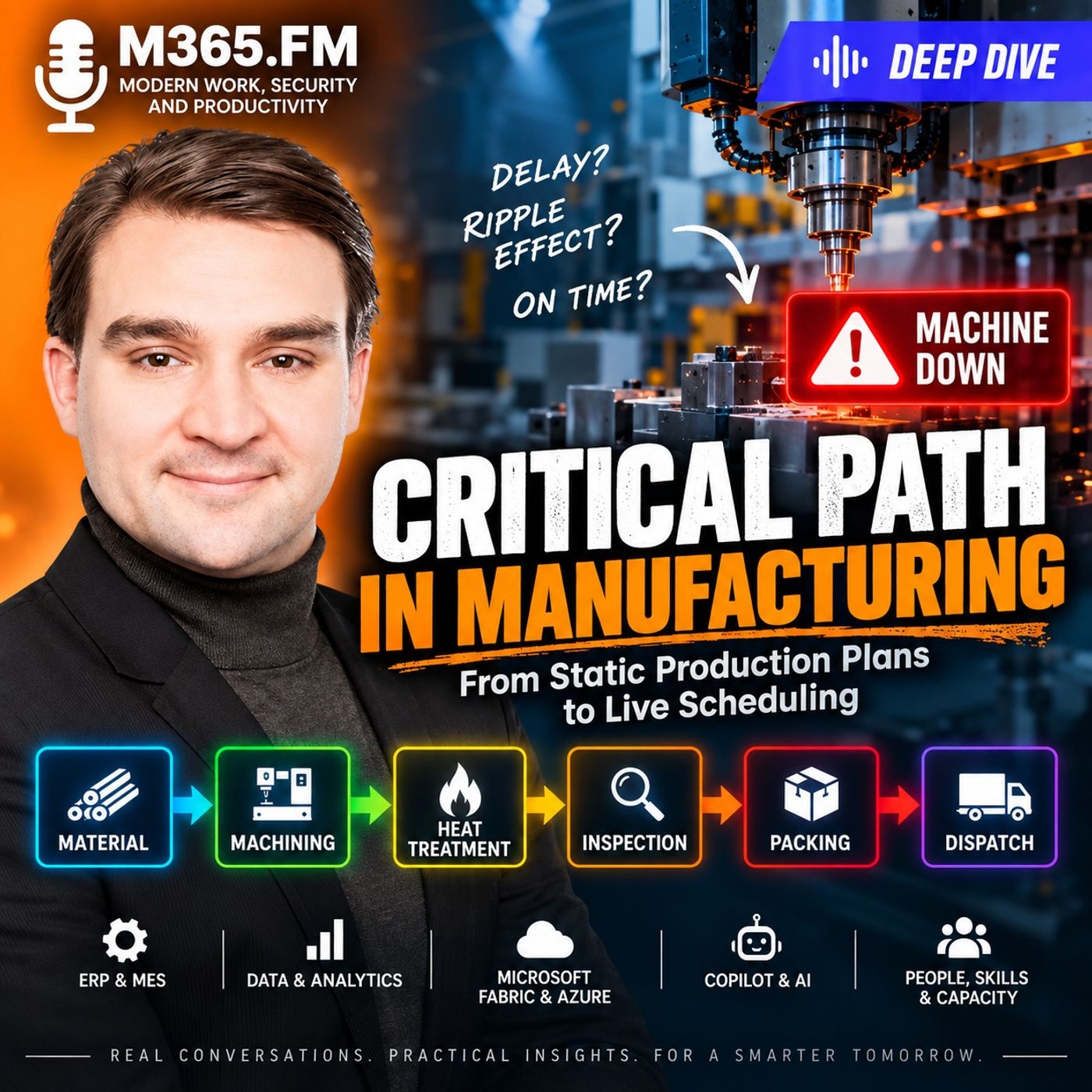
When an enterprise resource planning (ERP) or manufacturing execution system (MES) releases a work order, it relies on a routing. This routing acts as the official recipe: turning feeds into milling, which feeds heat treatment, followed by final inspection and packing. Planners treat this sequence as a fixed timeline, assuming that if every department finishes its allotted task within the standard time, the order will ship on schedule.
However, a routing is merely a process map, not a live schedule. It shows where a part should go, but it cannot predict when the part can actually get there. When multiple production orders compete for the same five-axis machining center or heat-treatment furnace, the static sequence breaks down. The routing may place machining before heat treatment, but if the machine finishes early and the next furnace load is two days away, machining is no longer controlling the delivery date. The furnace queue is.
The Gap Between Theoretical and Usable Capacity
Another major reason routings fail to predict delivery outcomes is the distinction between theoretical capacity and usable capacity. A work center may appear fully available in the planning system, but an operation cannot begin unless several preconditions are met simultaneously. These include:
- Specific fixtures, cutting tools, and approved CNC programs.
- Qualified machine configurations matching the current product revision.
- Certified operators available for setup and first-piece inspection.
- Released material lots that have passed incoming quality verification.
If even one of these elements is missing, the machine is unusable for that specific order. Treating generic labor pools or available machine hours as universally interchangeable leads to missed deadlines and hidden queue delays.
How a Single Disruption Shifts the Operational Constraint
Manufacturing environments are tightly coupled networks. When a disruption occurs, its impact cascades through downstream handoffs in ways that static reports fail to capture. Consider a machine assembly scheduled to ship by the end of the week. Its routing includes machining, heat treatment, surface finishing, final inspection, and packing.
If a spindle alarm triggers at the machining center, halting production for three hours, the immediate reaction is to look at the next department. Heat treatment might show open capacity later that day, and inspection might have idle staff. This creates a false sense of security. Downstream open capacity cannot pull material through an unfinished operation. Parts cannot be heat-treated if they have not been machined.
The Danger of Missing Batch Windows
The problem deepens when batch processing rules apply. If the furnace only loads at set intervals (such as noon every day) and the machining delay causes the batch to miss that window, the order must wait for the next furnace cycle. That single delay pushes finishing into a different shift, backs up inspection, and ultimately causes the order to miss the carrier dispatch cutoff. A three-hour machine stoppage has transformed into a full day of delivery risk.
This is why asking which operation is late is insufficient. The critical question for planners is: Which remaining dependency now controls whether this order ships on time? Before the disruption, machining controlled the pace. After machining recovers, the furnace window becomes critical. Finally, inspection may carry the pressure as the deadline approaches. The constraint has moved.
Adapting Project Management Discipline for Modern Manufacturing
While traditional Critical Path Method (CPM) is typically associated with construction projects or software development, its core discipline—identifying the chain of dependent tasks with zero float—is vital for modern manufacturing environments. Unlike a software deployment or a building site, however, a factory cannot be paused and restarted.
Parts are perpetually in process, operators are juggling multiple setups, and materials are staged across physical departments. To maintain control over delivery dates, operations teams must connect production orders, MES data, IoT shop-floor events, and quality states into a dynamic dependency network. This ensures that expedited efforts target the actual constraint rather than wasting resources on operations with plenty of slack.
Conclusion
Navigating production changes requires looking beyond static routings and urgent status flags to understand the live dependency chain controlling your delivery dates. By bridging the gap between ERP planning and shop-floor reality, manufacturers can eliminate false assumptions and protect customer commitments. To explore this topic in greater depth, Listen to the full episode and discover how modern cloud tools and data architectures can transform your manufacturing analytics and operational planning.
Frequently Asked Questions
Why isn't a standard production routing considered a critical path?
A routing acts as a recipe or process map, showing the physical sequence of operations and standard run times. However, it does not account for live queue times, shared machine competition, material availability, or shifting downstream batch windows that truly dictate completion dates.
What is the difference between theoretical capacity and usable capacity?
Theoretical capacity assumes a machine or work center is available based on schedule calendars. Usable capacity reflects the actual operational readiness of that resource, accounting for required fixtures, specialized tooling, calibrated test systems, quality approvals, and qualified operators.
Why can expediting a late machine operation fail to recover a customer delivery date?
If an order has already missed a rigid downstream constraint—such as a scheduled heat-treatment furnace load or a daily material release window—pushing the upstream machine harder will not improve the shipping date unless the downstream schedule is also adjusted.
How does float apply to manufacturing production orders?
Float (or slack) refers to the amount of spare time an operation can slip without delaying the final completion date. Operations with zero float sit directly on the critical path, meaning any minor disruption immediately threatens the customer delivery date.