

Examine cloud infrastructure design and operations in Microsoft Azure, emphasizing security, management, and integration with on-premises environments. Discover architectural choices that impact performance and cost.

July 15, 2026
Event Grid - Simply Explained
Azure Event Grid is the backbone of event-driven applications in Microsoft Azure, enabling services to react instantly when something happens. In this episode, we explain what Azure Event Grid is, how it works, and why it's a key building block for modern cloud-native, serverless, and microservices architectures. Instead of constantly polling for changes, Event Grid delivers notifications in real time, making applications faster, more efficient, and easier to scale. You'll learn how publishers, topics, subscriptions, and event handlers work together to create loosely coupled systems. We also cover push versus pull delivery, event filtering, retries, and integrations with services like Azure Functions, Logic Apps, Event Hubs, Service Bus, Storage Accounts, and custom webhooks. Along the way, we compare Event Grid with Azure Service Bus and Event Hubs so you'll know when each messaging service is the right choice. Whether you're a developer, cloud architect, IT professional, or pr…
Guest: Mirko Peters
July 15, 2026
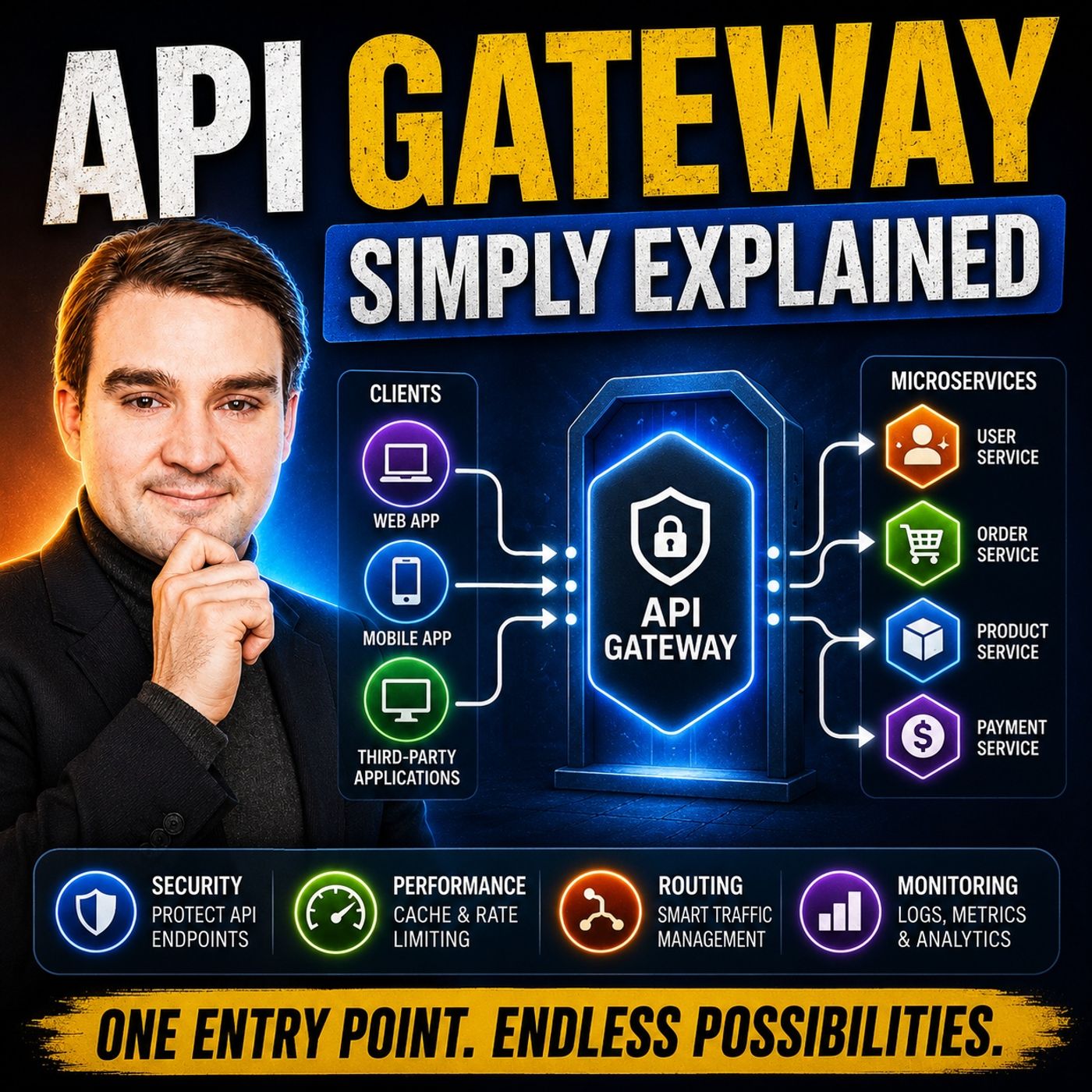
API Gateway - Simply Explained
An API Gateway is the front door to modern applications, acting as a single entry point for all API requests before they reach backend services. In this episode, we explain what an API Gateway is, why it's essential in cloud-native and microservices architectures, and how it improves security, scalability, and performance. Whether you're building APIs, integrating applications, or managing enterprise workloads, understanding the role of an API Gateway is a fundamental skill. You'll learn how API Gateways handle authentication, authorization, rate limiting, request routing, caching, logging, and monitoring while simplifying access to multiple backend services. We also compare API Gateways with reverse proxies and load balancers, explore common deployment patterns, and discuss how platforms like Azure API Management, Amazon API Gateway, and other enterprise solutions implement these capabilities. Whether you're an IT professional, developer, cloud architect, or simply curious abou…
Guest: Mirko Peters
July 15, 2026
Azure DevOps in 2026: The Quiet Backbone of Enterprise AI
Quick answer: Azure DevOps gives enterprise teams a governed way to plan, build, test, and release software and infrastructure. This episode examines why disciplined source control, pipelines, security, and traceability remain essential when AI accelerates development and increases the speed of change. Everyone is talking about GitHub, Copilot, and AI-powered development, leading many to believe Azure DevOps is becoming obsolete. But inside Fortune 500 enterprises, a very different story is unf...
July 15, 2026
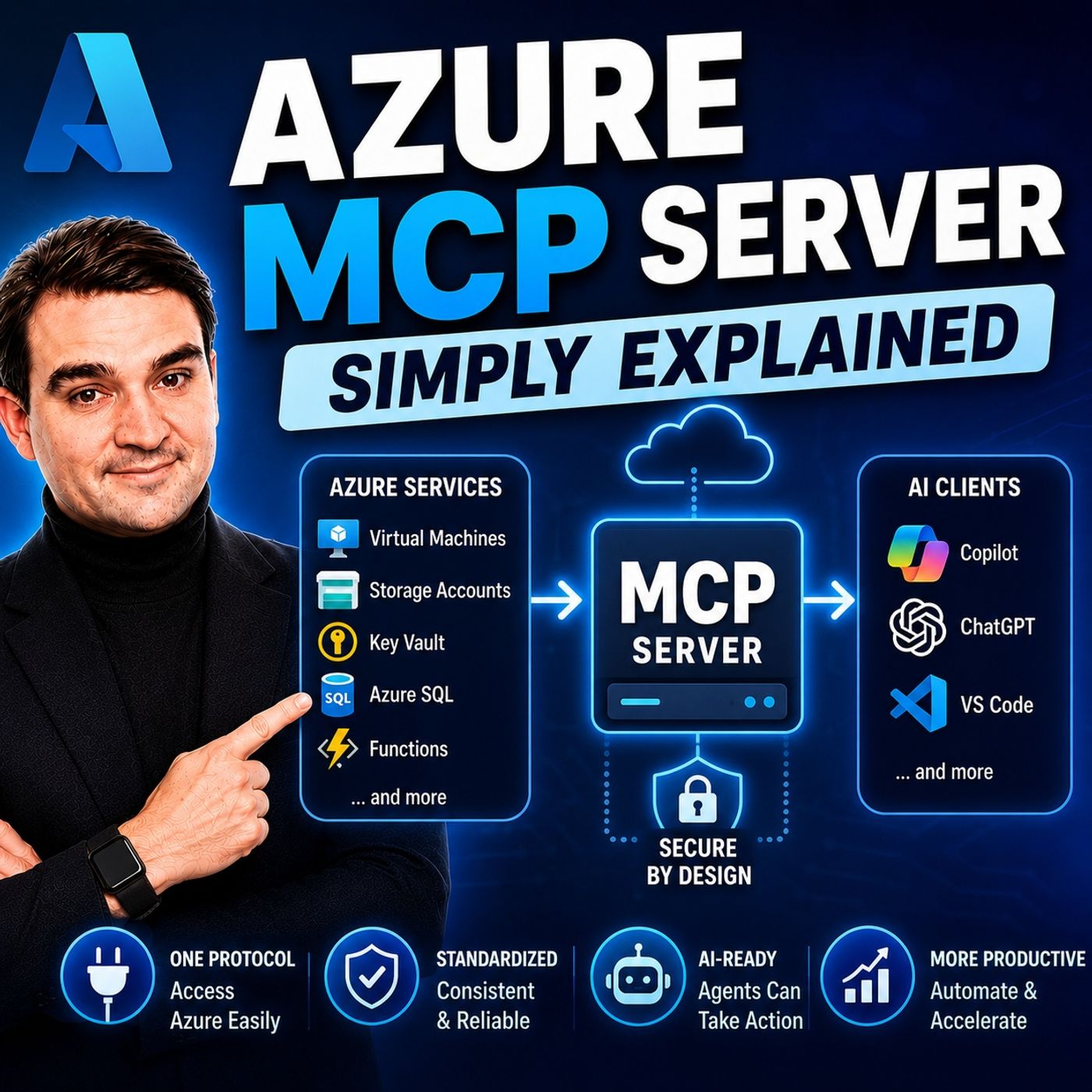
Azure MCP Server - Simply Explained
Azure MCP Server extends the power of artificial intelligence beyond chat by allowing AI assistants and agents to securely interact with Azure resources through the open Model Context Protocol (MCP). In this episode of Microsoft Knowledge Nuggets on M365 FM, Mirko Peters explains what the Azure MCP Server is, how it works, and why it represents a major step toward AI-driven cloud management and automation. You'll learn how Azure MCP Server acts as a bridge between AI models such as Microsoft Copilot, GitHub Copilot, and other MCP-compatible assistants and your Azure environment. Instead of manually navigating the Azure portal or writing complex Azure CLI and PowerShell commands, administrators can use natural language to query resources, deploy infrastructure, troubleshoot issues, review configurations, and automate cloud operations. The episode explains how MCP standardizes communication between AI agents and Azure services while maintaining enterprise-grade security, authenticati…
Guest: Mirko Peters
July 14, 2026
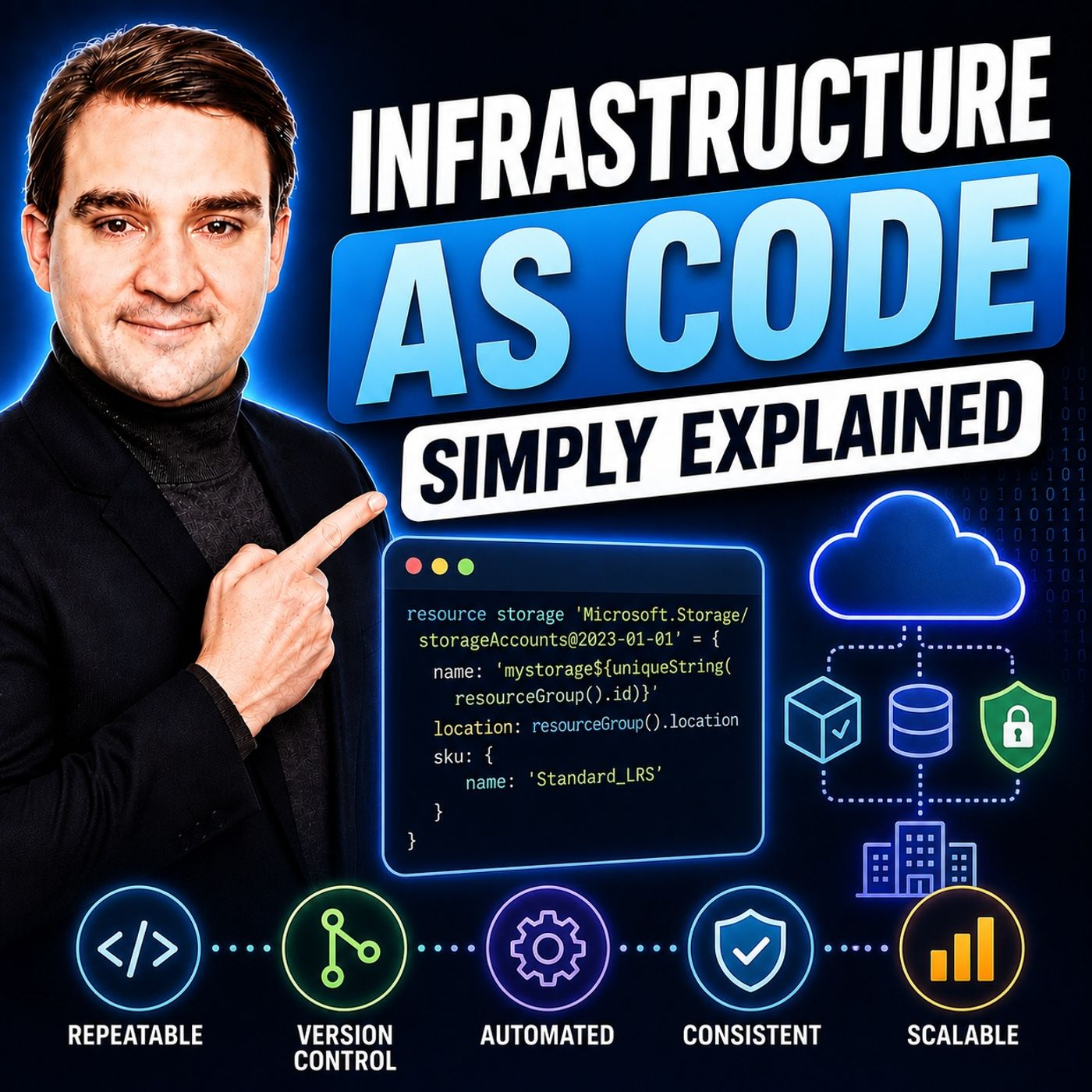
Infrastructure as Code - Simply Explained
Infrastructure as Code (IaC) is the practice of managing and deploying cloud infrastructure through code instead of manually configuring resources in a portal. In this episode of Microsoft Knowledge Nuggets on M365 FM, Mirko Peters explains Infrastructure as Code in plain English and shows why it has become a foundational practice for Azure, DevOps, cloud engineering, and modern IT operations. You'll learn how IaC enables organizations to define virtual machines, networks, storage accounts, databases, security settings, and entire cloud environments in reusable code. Rather than relying on manual "click operations," infrastructure can be deployed automatically, consistently, and repeatedly across development, testing, and production environments. The episode explores core concepts such as declarative versus imperative deployments, idempotency, version control, automation, and why treating infrastructure like application code improves reliability and reduces operational risk. The…
Guest: Mirko Peters
July 14, 2026
Bicep - Simply Explained
Azure Bicep is Microsoft's modern Infrastructure as Code (IaC) language for deploying and managing Azure resources using a clean, readable, and declarative syntax. In this episode of Microsoft Knowledge Nuggets on M365 FM, Mirko Peters explains why Azure Bicep has become Microsoft's recommended replacement for traditional ARM Templates and how it helps organizations build secure, scalable, and repeatable cloud environments with less complexity. You'll learn the core building blocks of every Azure Bicep project, including resources, parameters, variables, outputs, modules, conditions, loops, and symbolic names. The episode demonstrates how Bicep automatically handles resource dependencies, simplifies infrastructure deployments, and enables reusable modules that dramatically reduce duplicate code across Azure projects. Whether you're deploying virtual machines, networking, storage, databases, or complete enterprise landing zones, Bicep makes Azure automation easier to understand and …
Guests: Mirko Peters , Mirko
July 14, 2026
ARM Templates - Simply Explained
ARM Templates are the original Infrastructure as Code (IaC) technology behind Azure Resource Manager, allowing organizations to define, deploy, and manage Azure infrastructure using declarative JSON files. In this episode of Microsoft Knowledge Nuggets on M365 FM, Mirko Peters explains what ARM Templates are, why they became the foundation of Azure automation, and why many Azure professionals are now moving toward Azure Bicep for modern cloud deployments. You'll discover how ARM Templates make Azure deployments repeatable, predictable, and version-controlled by defining resources such as virtual machines, storage accounts, virtual networks, and databases as code. The episode explains key concepts including parameters, variables, resources, outputs, dependencies, and nested templates while demonstrating how Infrastructure as Code eliminates manual portal configuration and reduces deployment errors. The episode also explores the challenges of working with large ARM Templates. As A…
Guest: Mirko Peters
July 14, 2026
Azure DevOps - Simply Explained
Azure DevOps is Microsoft's all-in-one platform for planning, developing, testing, and delivering software. Instead of using separate tools for project management, source control, build automation, testing, and deployments, Azure DevOps brings everything together into a single platform. It helps development and operations teams collaborate more effectively while automating repetitive tasks throughout the software development lifecycle. In this episode of Microsoft Knowledge Nuggets, Mirko Peters explains Azure DevOps in plain English, making complex DevOps concepts easy to understand for both technical and business audiences. You'll learn how Azure Boards, Repos, Pipelines, Test Plans, and Artifacts work together to support modern software development. The episode breaks down concepts like Continuous Integration (CI), Continuous Deployment (CD), Git repositories, YAML pipelines, and automated testing using practical, real-world examples instead of technical jargon. The discussio…
Guest: Mirko Peters
July 14, 2026
PowerShell - Simply Explained
PowerShell is Microsoft's powerful command-line shell and scripting language that allows IT professionals, administrators, and developers to automate repetitive tasks, manage systems at scale, and control nearly every aspect of Windows, Azure, and Microsoft 365. While many people think of it as a tool only for programmers, PowerShell is really about saving time by replacing repetitive clicks with repeatable, reliable automation. In this episode of Microsoft Knowledge Nuggets, Mirko Peters explains PowerShell in plain English and demonstrates why it remains one of the most valuable skills for anyone working with Microsoft technologies. You'll learn how PowerShell differs from the traditional Command Prompt, why it works with objects instead of plain text, and how simple commands can automate tasks that would otherwise take hours to complete manually. The episode introduces essential concepts such as cmdlets, pipelines, variables, modules, scripts, and remoting, making them easy to u…
Guest: Mirko Peters
July 14, 2026
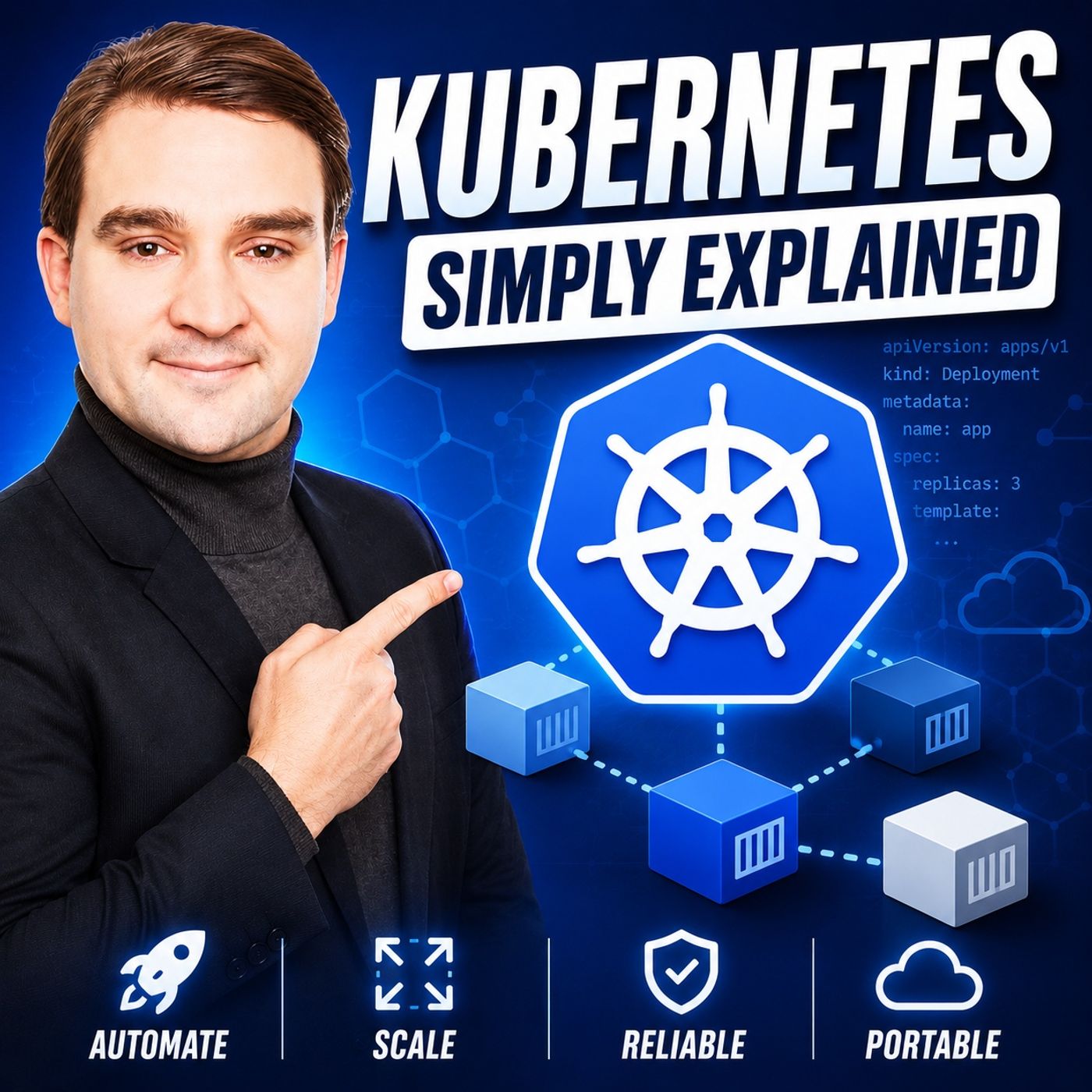
Kubernetes - Simply Explained
Kubernetes is the world's most popular container orchestration platform, designed to automate the deployment, scaling, management, and recovery of containerized applications. Instead of manually managing hundreds or thousands of containers across multiple servers, Kubernetes continuously ensures that your applications are running, healthy, and available. Think of it as an intelligent operations manager that automatically places workloads, replaces failed containers, balances traffic, and scales applications based on demand. In this episode of Microsoft Knowledge Nuggets, Mirko Peters explains Kubernetes in plain English without assuming prior DevOps knowledge. You'll learn why containers alone aren't enough for modern cloud applications and how Kubernetes solves the challenges of running distributed systems at scale. The episode introduces core concepts including clusters, nodes, pods, deployments, services, and ingress, showing how they work together to create resilient, self-heal…
Guest: Mirko Peters
![Azure Virtual Desktop vs Windows 365 with Dieter Kempeneers [MVP] & Dominiek Verham [MVP]](https://d3wo5wojvuv7l.cloudfront.net/t_rss_itunes_square_1400/images.spreaker.com/original/776000c7985daea400c0db8ad677ebc4.jpg "Azure Virtual Desktop vs Windows 365 with Dieter Kempeneers [MVP] & Dominiek Verham [MVP]")
July 14, 2026
Azure Virtual Desktop vs Windows 365 with Dieter Kempeneers [MVP] & Dominiek Verham [MVP]
In this episode of the M365.fm Podcast, Mirko Peters is joined by Microsoft MVPs Dieter Kempeneers and Dominiek Verham for an in-depth discussion about Azure Virtual Desktop (AVD), Windows 365, and the future of cloud-delivered desktops. While these technologies often appear similar, they solve different business challenges, and choosing the right platform requires understanding architecture, licensing, management, security, and long-term operational goals. Together, they explain the fundamental differences between Azure Virtual Desktop and Windows 365, when each solution makes sense, and how organizations can avoid common mistakes during planning and deployment. The conversation explores real-world customer scenarios, from small businesses looking for simplicity to large enterprises requiring maximum flexibility, scalability, and cost optimization. The episode also covers Microsoft Intune integration, identity management with Microsoft Entra ID, security best practices, disaste…
July 14, 2026
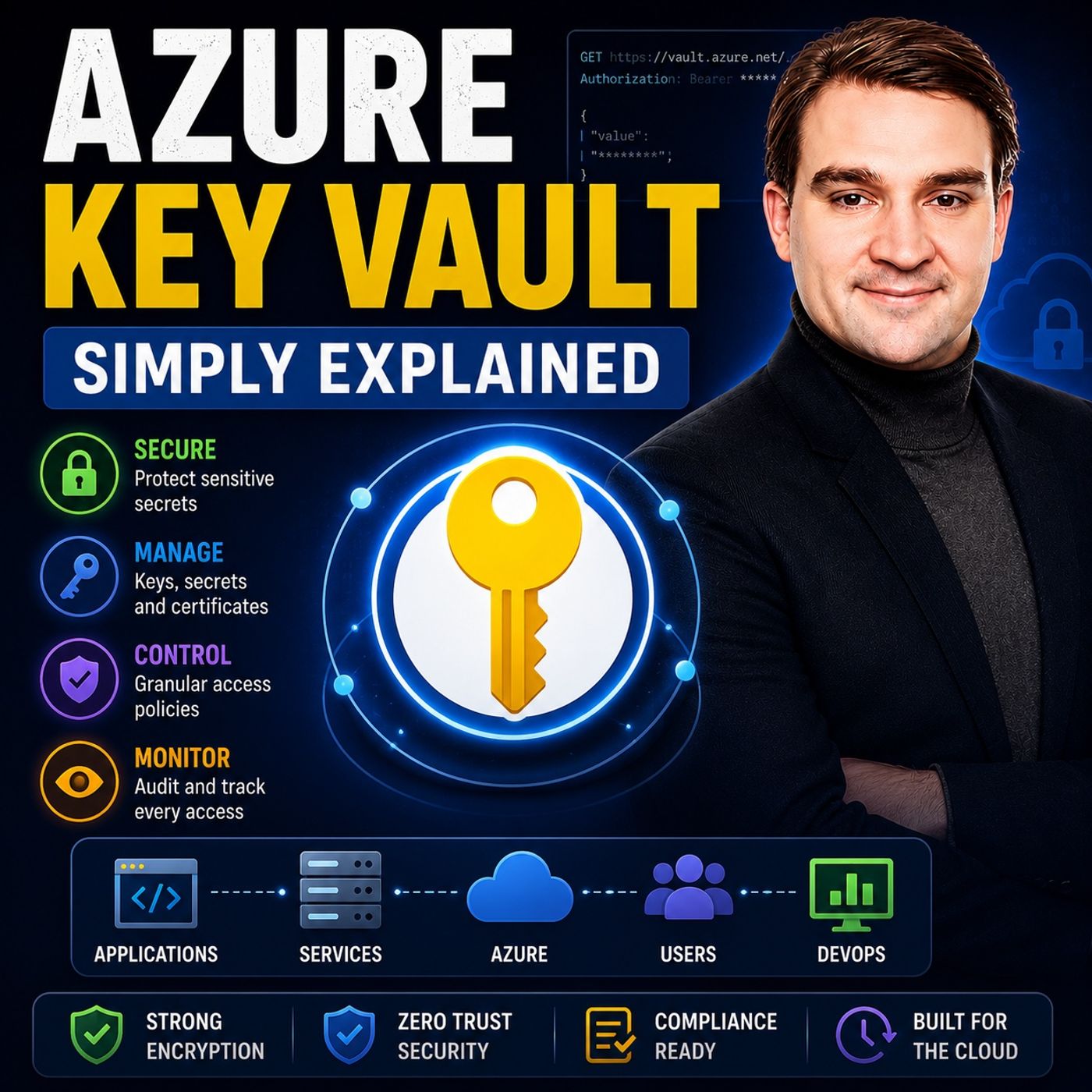
Azure Key Vault - Simply Explained
Azure Key Vault is Microsoft's secure cloud service for storing and managing sensitive information such as passwords, API keys, certificates, encryption keys, and connection strings. Instead of embedding secrets directly into your applications or configuration files, you store them in a protected vault where access is tightly controlled through Microsoft Entra ID and Azure RBAC. Think of Azure Key Vault as a highly secure digital safe for your applications. Rather than leaving important keys on your desk, everything is locked away in one central location, and only authorized users or services receive access. This dramatically reduces the risk of accidental exposure or security breaches. In this episode, you'll learn why storing secrets in source code, configuration files, or scripts is considered a major security risk. Azure Key Vault centralizes secret management, simplifies rotation of credentials, and helps organizations meet security and compliance requirements. It also supp…
Guest: Mirko Peters
July 14, 2026
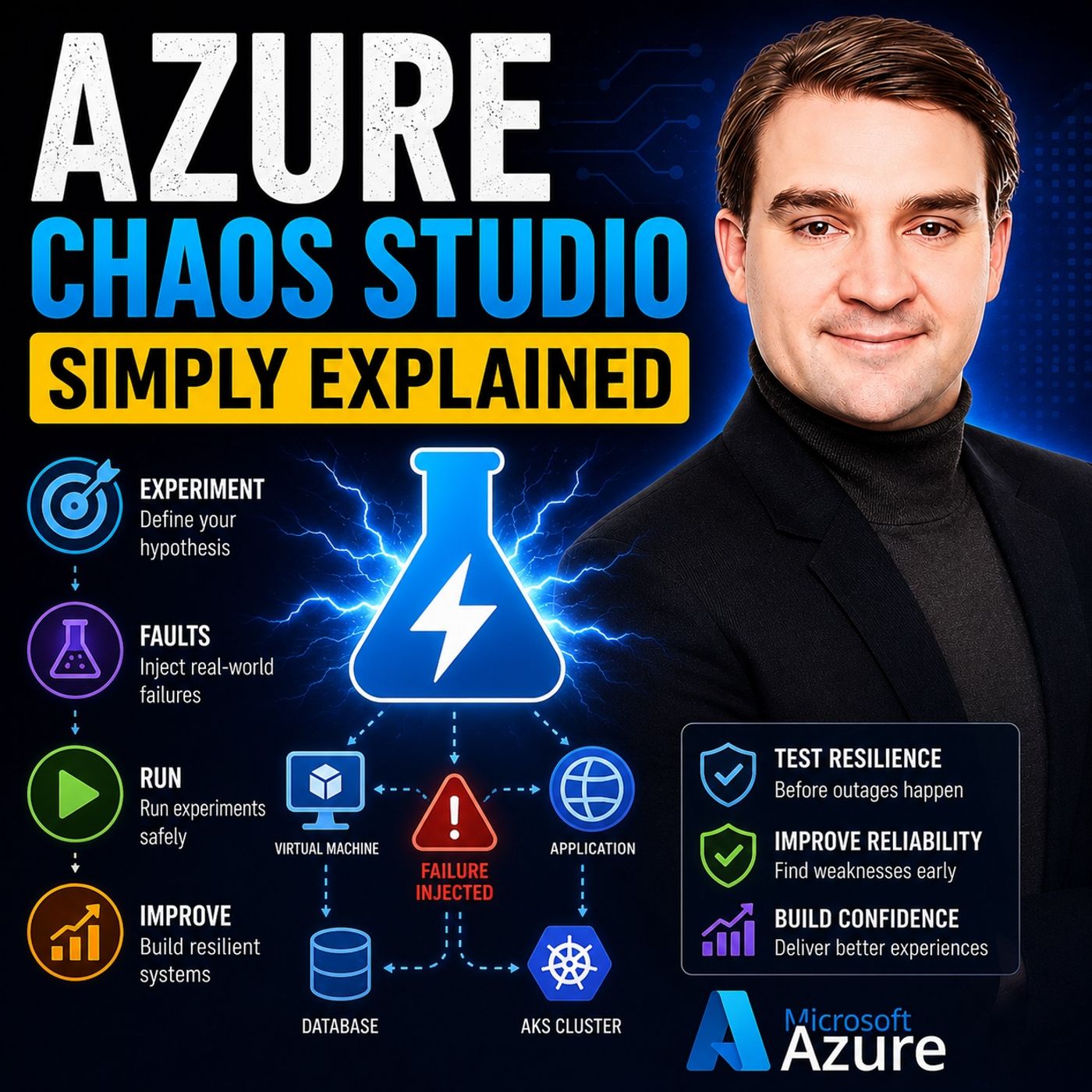
Azure Chaos Studio - Simply Explained
Azure Chaos Studio is Microsoft's chaos engineering service that helps organizations build more resilient cloud applications by safely simulating failures before they happen in the real world. Instead of waiting for an outage to expose weaknesses, you intentionally create controlled disruptions to test how your systems respond and recover. Think of it like a fire drill for your Azure environment. You practice failures in a safe, controlled way so your applications, monitoring, and recovery processes are ready when an actual incident occurs. Azure Chaos Studio can simulate virtual machine failures, network latency, CPU stress, service outages, and many other real-world scenarios. In this episode, you'll learn why modern cloud systems need more than high availability and backups—they need proven resilience. Chaos engineering helps validate your architecture, uncover hidden dependencies, and identify weaknesses that traditional testing often misses. You'll also discover how chao…
Guest: Mirko Peters

July 13, 2026
How to Secure an AI Landing Zone in Microsoft Azure
Artificial Intelligence is only as secure as the foundation it is built on. In this episode of the M365 FM Podcast, Mirko Peters explains why an organization's AI Landing Zone is often its biggest hidden risk. While many companies focus on deploying Microsoft Copilot, Azure AI, and custom AI agents as quickly as possible, they frequently overlook the governance, identity, networking, security, and operational controls that make enterprise AI safe and scalable. The result is an AI environment that introduces unnecessary risk instead of accelerating innovation. The episode explores what an AI Landing Zone really is and why it should be treated as the architectural foundation for every AI workload. You'll learn how identity management, role-based access control, data governance, network isolation, monitoring, compliance, and policy enforcement work together to protect AI services from misconfiguration and unauthorized access. The discussion also explains why simply deploying AI servic…
Guest: Mirko Peters
July 13, 2026
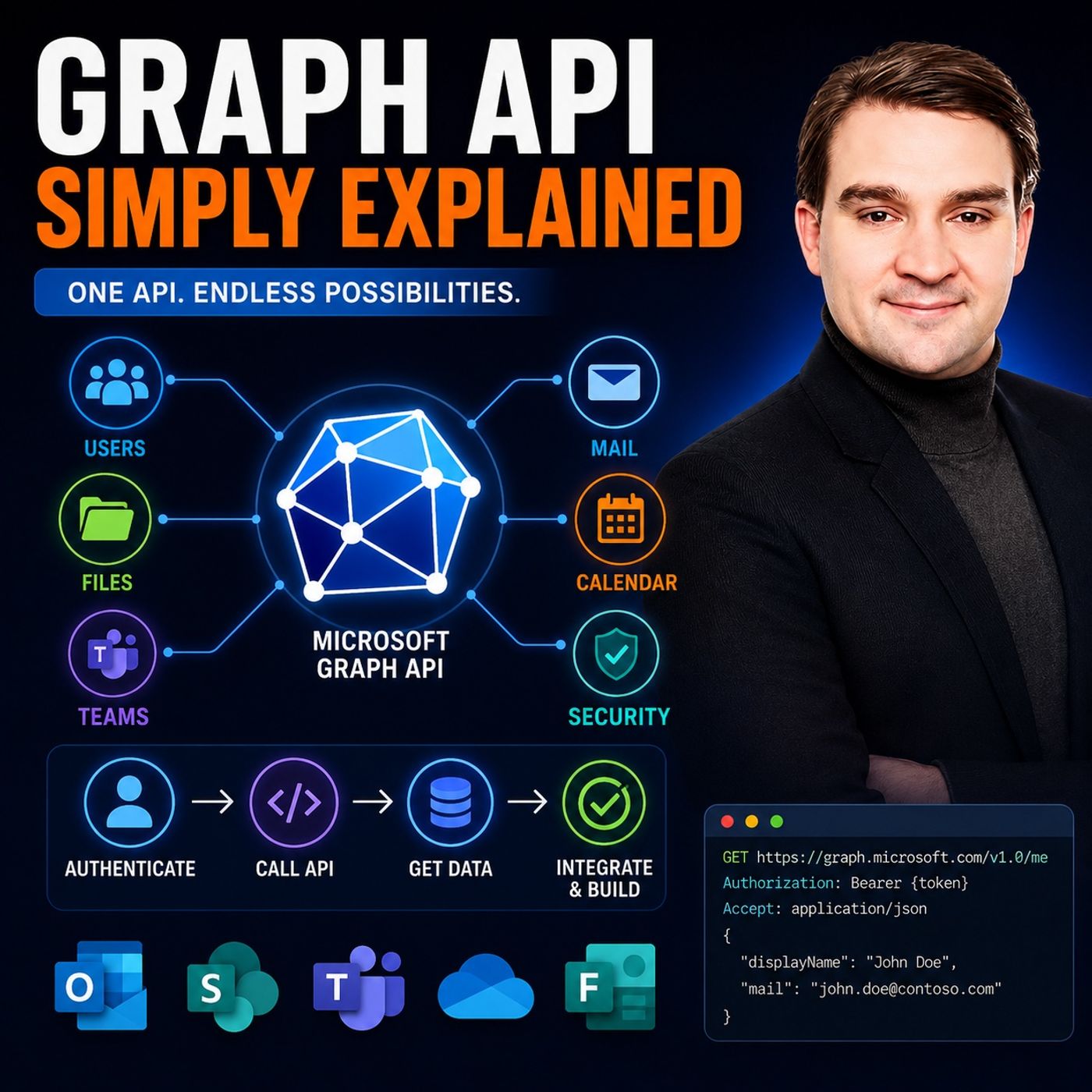
Graph API - Simply Explained
Microsoft Graph is the single API that connects nearly every Microsoft 365 service, making it the foundation for automation, integrations, and modern AI experiences. In this episode of the M365 FM Podcast, Mirko Peters explains Microsoft Graph in simple terms, showing how one unified API provides secure access to users, groups, Teams, SharePoint, OneDrive, Outlook, Entra ID, calendars, files, and much more. Instead of learning separate APIs for every Microsoft product, developers and IT professionals can use Microsoft Graph as one consistent gateway into the entire Microsoft cloud. The episode breaks down key concepts including REST APIs, authentication with Microsoft Entra ID, OAuth permissions, delegated versus application permissions, and how Microsoft Graph enables organizations to automate repetitive tasks, integrate business applications, and build intelligent workflows. You'll also learn why Microsoft Graph powers Microsoft Copilot, enterprise search, and many AI-driven expe…
Guest: Mirko Peters
July 13, 2026
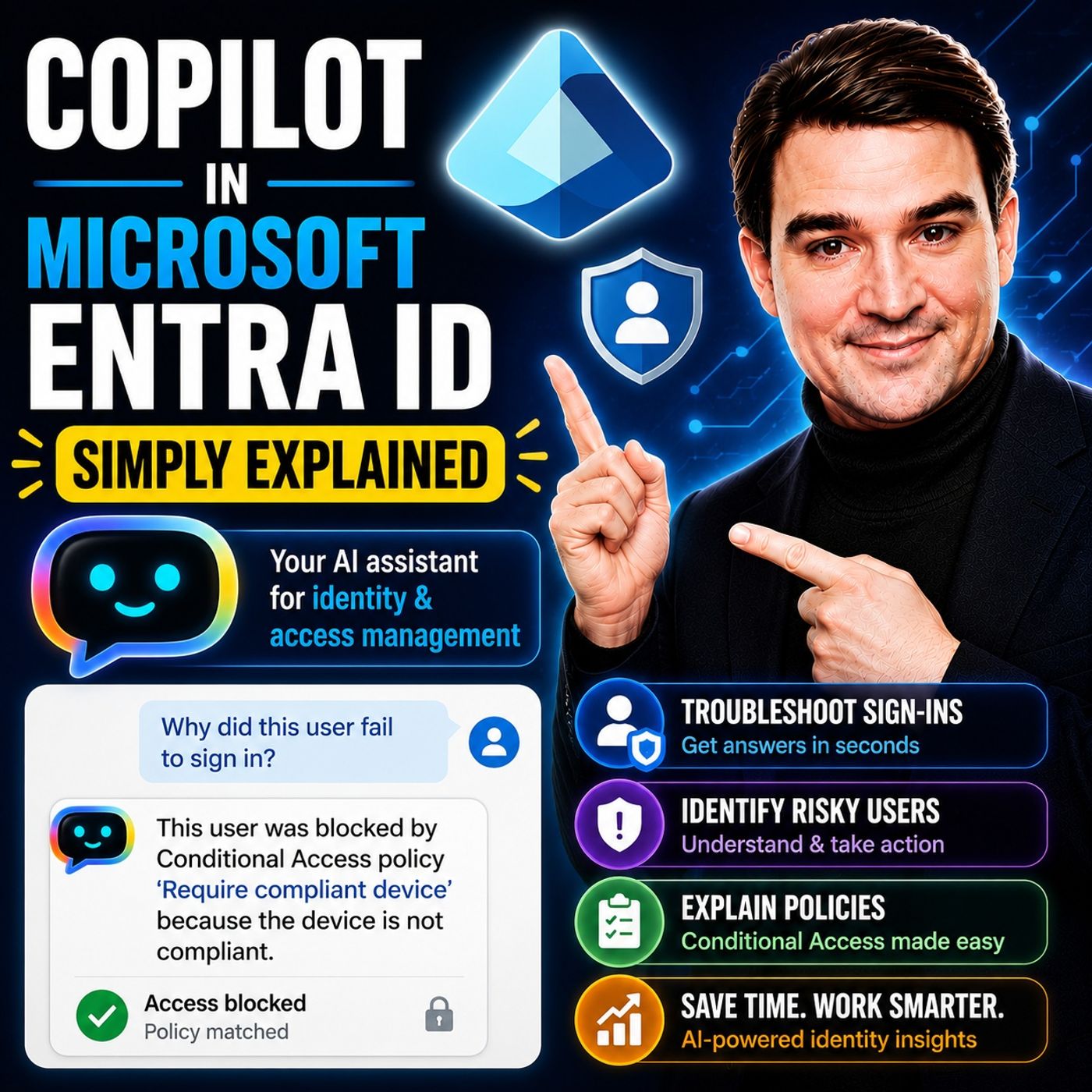
Copilot in Microsoft Entra ID - Simply Explained
Microsoft Copilot in Microsoft Entra ID brings AI directly into identity and access management, helping administrators work faster while improving security. Instead of manually navigating through users, groups, roles, permissions, Conditional Access policies, or sign-in logs, admins can simply ask questions in natural language and receive clear, contextual answers. In this episode, you'll learn how Copilot assists with everyday Entra ID administration, from investigating risky sign-ins and troubleshooting access issues to explaining complex configurations and recommending best practices. Rather than replacing administrators, Copilot acts as an intelligent assistant that accelerates routine tasks, reduces manual effort, and helps teams make informed security decisions. The episode also explains why Microsoft Entra ID plays such a critical role in modern AI deployments. Since Microsoft 365 Copilot relies on existing identities and permissions, strong identity governance becomes th…
Guest: Mirko Peters
July 12, 2026
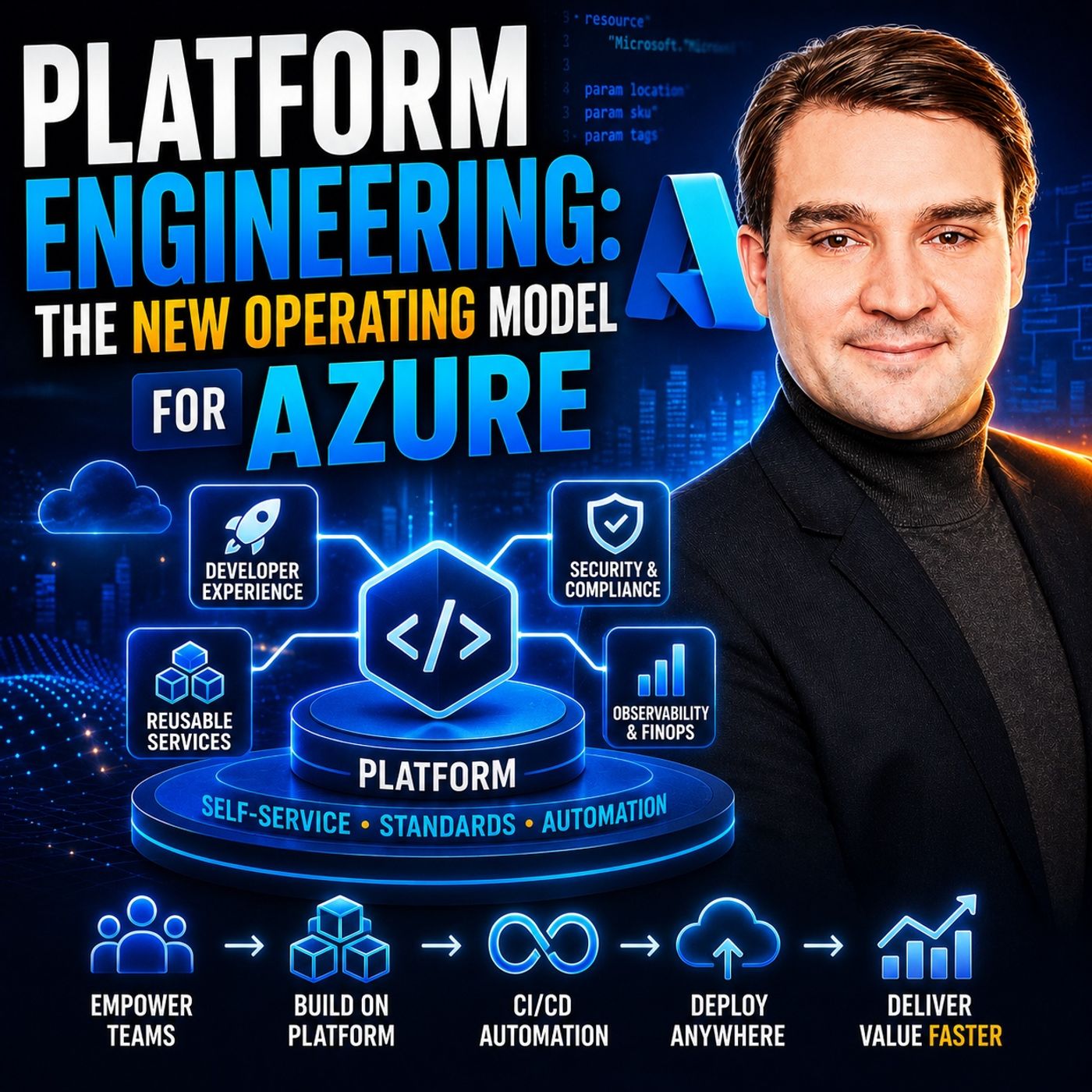
Platform Engineering: The New Operating Model for Azure
Platform Engineering is changing how organizations build and operate Azure environments. Rather than treating cloud infrastructure as a collection of individual projects, Platform Engineering creates a shared internal platform that gives development teams secure, self-service access to standardized infrastructure, deployment pipelines, monitoring, and governance. The result is faster delivery, greater consistency, and reduced operational complexity. In this episode, you'll learn why traditional cloud operating models often struggle as organizations grow and how Azure platform teams can enable developers without sacrificing security or compliance. The discussion covers concepts such as Infrastructure as Code, reusable templates, platform APIs, self-service provisioning, developer experience, and the importance of treating the platform itself as a product that continuously evolves to meet customer needs. The episode also explains how Platform Engineering differs from traditional D…
Guest: Mirko Peters

July 11, 2026
Microsoft Entra Agent ID: Secure Identity for AI Agents
AI agents are rapidly becoming autonomous digital workers, but most organizations still manage them like traditional applications or shared service accounts. In this episode, we explore why that approach no longer works and why the future of enterprise AI depends on giving every agent its own governed identity through Microsoft Entra Agent ID. You'll learn why AI agents require far more than authentication. They need ownership, lifecycle management, least-privilege access, auditability, and clear governance boundaries. The discussion explains how Agent IDs fundamentally change enterprise architecture by allowing organizations to assign permissions, monitor activity, enforce security policies, and retire agents just like human employees—without relying on insecure shared credentials. The episode also examines the structural shift from chat-based AI to autonomous execution systems. As agents begin interacting with Microsoft Graph, SharePoint, Power Platform, and business applicati…
Guest: Mirko Peters
July 10, 2026
Azure Bicep at Scale: Modular Infrastructure as Code
Azure Bicep is far more than a cleaner replacement for ARM templates—it's an architectural approach to managing cloud infrastructure at enterprise scale. In this episode, we explore how Bicep enables organizations to build modular, reusable, and maintainable Infrastructure as Code that supports long-term growth instead of creating technical debt. You'll learn why successful Azure environments rely on standardized modules, clear separation of responsibilities, and platform engineering principles rather than large, monolithic deployment templates. The discussion covers how Bicep simplifies collaboration between teams, reduces deployment errors, improves consistency across environments, and integrates seamlessly with Azure Policy, CI/CD pipelines, and governance frameworks. We also examine common mistakes organizations make when adopting Infrastructure as Code, including overcomplicated templates, poor module design, and treating Bicep as just another scripting language instead of …
Guest: Mirko Peters
July 9, 2026
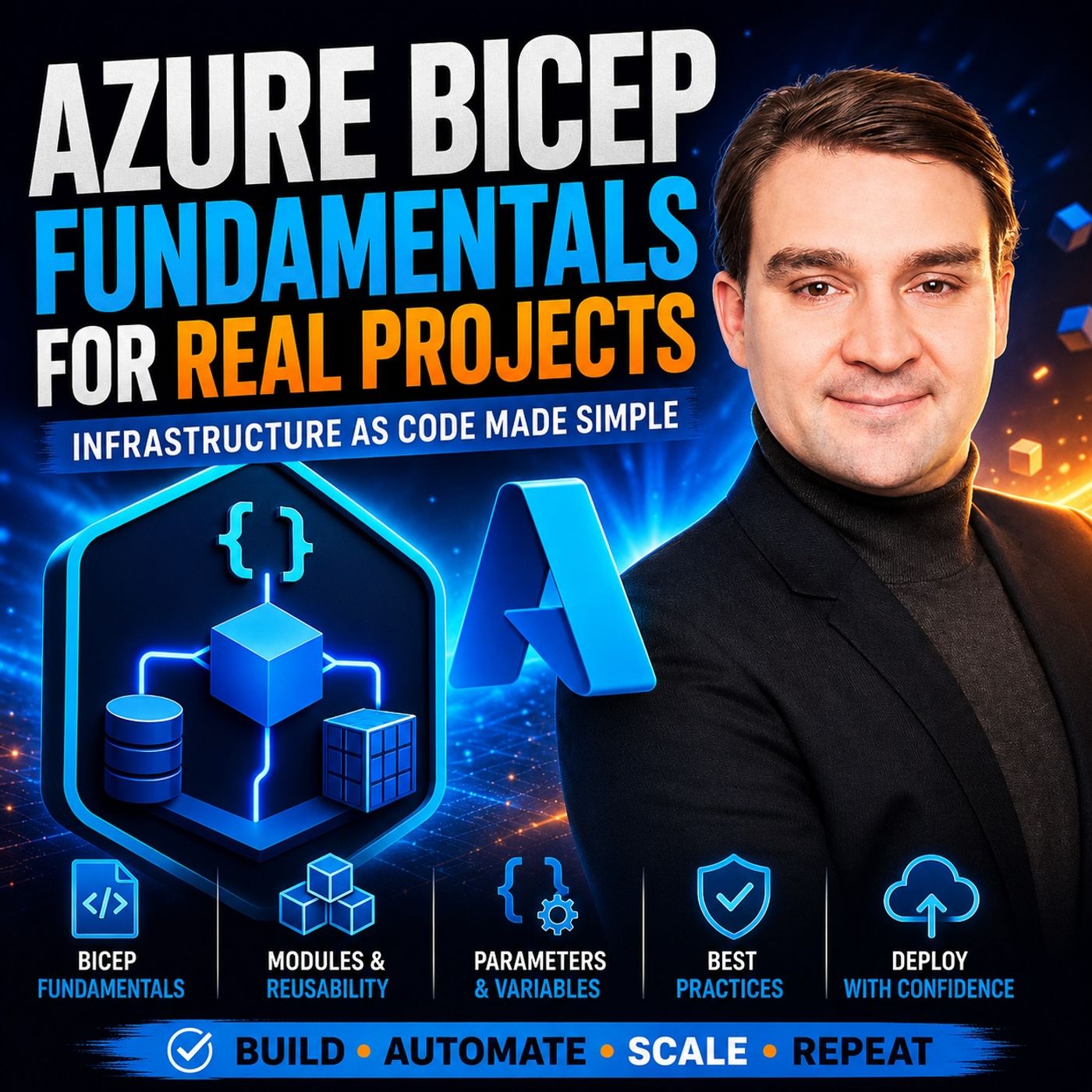
Azure Bicep Fundamentals for Production Projects
Azure Bicep is Microsoft’s modern Infrastructure as Code (IaC) language for deploying Azure resources using a clean, declarative syntax. This episode explains why Bicep has become the preferred choice over traditional ARM templates and how it helps teams build repeatable, reliable, and maintainable cloud environments. You'll learn the core building blocks of every Bicep project, including resources, parameters, variables, outputs, modules, conditions, and loops. The discussion also covers symbolic names, automatic dependency management, and how reusable modules simplify even large-scale Azure deployments. Beyond the syntax, the episode focuses on practical implementation. It explains how to organize Bicep projects for real-world environments, separate configuration from infrastructure, and build templates that work consistently across development, test, and production. You'll also hear why version control, code reviews, parameter files, and modular design are essential for succe…
Guest: Mirko Peters
July 8, 2026
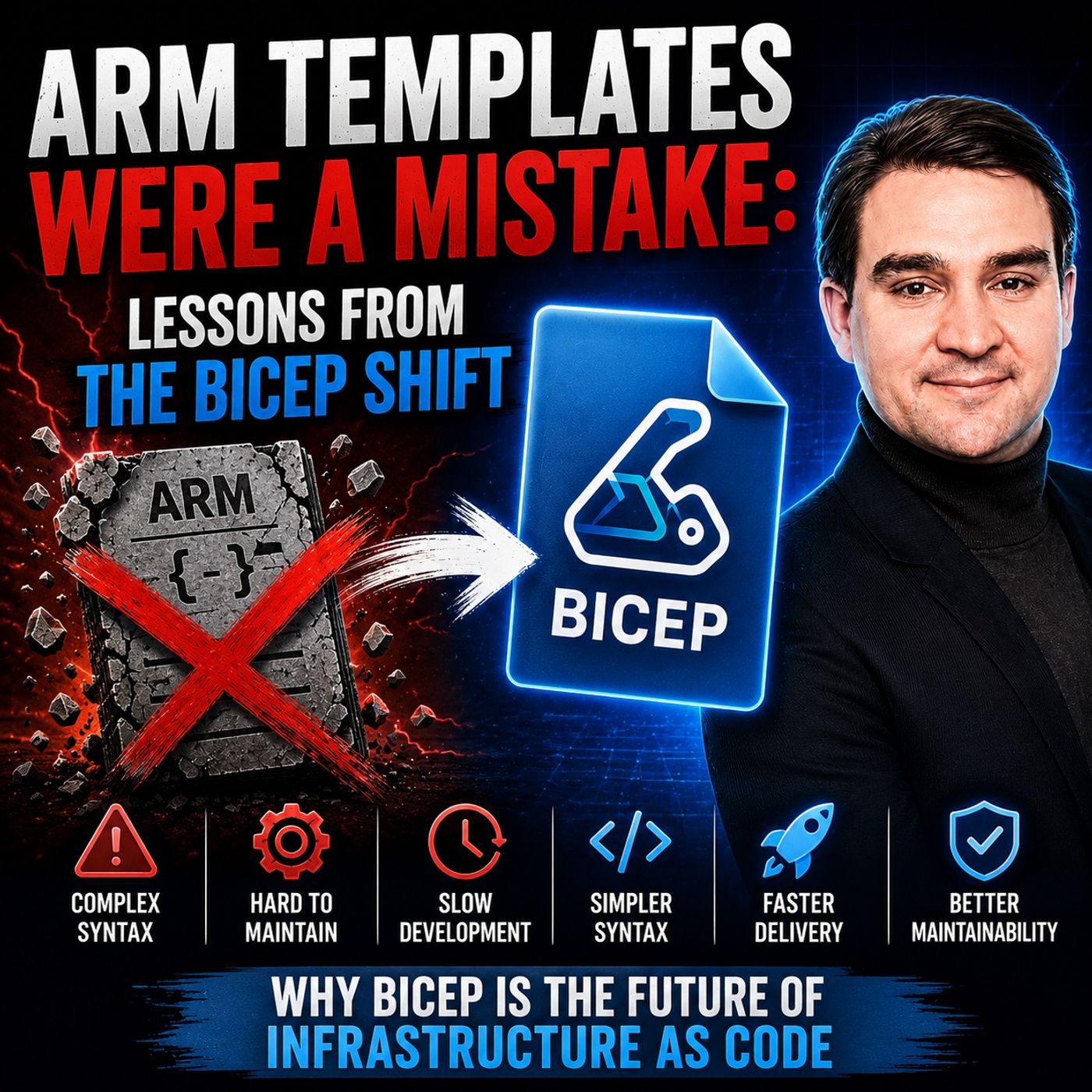
ARM Templates vs Bicep: Why Azure Teams Are Switching
ARM templates were once the standard for deploying Azure infrastructure, but as cloud environments became more complex, their JSON-based approach revealed serious limitations. In this episode, we explore why many Azure professionals now see ARM templates as difficult to maintain, error-prone, and hard to scale—and why Microsoft introduced Bicep as the modern alternative. You'll learn how Bicep simplifies infrastructure as code with cleaner syntax, reusable modules, stronger tooling, and better readability while still compiling to the same ARM deployment engine. We also discuss the real-world challenges teams face with large ARM templates, including configuration drift, copy-and-paste development, difficult debugging, and poor maintainability. Whether you're managing a handful of Azure resources or enterprise-scale deployments, this episode explains why moving to Bicep isn't just about writing less code—it's about creating infrastructure that's easier to understand, review, autom…
Guest: Mirko Peters
![Secure Azure Networking with Rex de Koning [MVP-MCT]](https://d3wo5wojvuv7l.cloudfront.net/t_rss_itunes_square_1400/images.spreaker.com/original/0b54d0649403b8337666f7fda4a6f969.jpg "Secure Azure Networking with Rex de Koning [MVP-MCT]")
July 7, 2026
Secure Azure Networking with Rex de Koning [MVP-MCT]
Azure networking has evolved far beyond simply connecting virtual machines. In this episode, we explore how modern Azure networking enables organizations to build secure, scalable, and fully automated cloud environments using Azure Functions, Azure Virtual Network Manager, and Infrastructure as Code. We begin by discussing how Azure Functions can securely access private resources without exposing services to the public internet. You'll learn how Virtual Network integration, private endpoints, and network isolation help organizations protect sensitive workloads while maintaining the flexibility of serverless computing. These capabilities are becoming essential for building secure cloud-native applications. We also cover the networking options available for Azure Functions across different hosting plans and the architectural decisions behind them. Next, we dive into Azure Virtual Network Manager and how it simplifies enterprise-scale networking. Instead of manually configuring hun…
Guests: Mirko Peters , Rex de Koning

July 6, 2026
PowerShell vs Bicep for Azure Infrastructure Automation
PowerShell has become the automation standard for Microsoft environments, but it reaches its limits when managing modern cloud infrastructure at scale. In this episode, we explore why Azure Bicep has become the preferred Infrastructure as Code (IaC) language for deploying and maintaining Azure resources, and why relying solely on PowerShell can create long-term operational challenges. The discussion explains the fundamental differences between imperative and declarative automation. While PowerShell focuses on executing commands step by step, Bicep describes the desired end state of your infrastructure, allowing Azure Resource Manager to handle deployments consistently, repeatably, and idempotently. You'll learn why Bicep simplifies infrastructure management through reusable modules, parameterized deployments, and native Azure integration. The episode also covers how Bicep improves collaboration between architects, developers, and operations teams by making infrastructure easier …
Guest: Mirko Peters

July 5, 2026
Microsoft Graph Security Automation for Microsoft 365
Microsoft Graph is often seen as a reporting and management API—but what if it could become one of your most powerful security tools? In this episode, we explore how Microsoft Graph can be leveraged to uncover hidden risks, automate governance, and continuously improve the security posture of an entire Microsoft 365 tenant. Rather than relying solely on traditional security dashboards, Graph provides direct access to identities, permissions, groups, applications, devices, and collaboration data, enabling organizations to detect problems before they become incidents. You'll learn how to use Microsoft Graph to identify excessive permissions, orphaned resources, inactive accounts, risky application consents, external sharing, and configuration drift across Microsoft 365. The episode explains why security is ultimately a data problem and how Graph serves as the unified interface that makes tenant-wide visibility and automation possible. We also discuss practical automation scenarios…
Guest: Mirko Peters