

Data Governance Power Platform Microsoft Security Cloud Architecture AI in Microsoft 365 Dynamics 365 Insights Developer Practices Microsoft 365 Podcast – Teams, SharePoint, Office Apps & Productivity Microsoft Strategy & Partner Marketing Guest Episodes Simply Explained Workshops on Microsoft Tech for free
Aug. 19, 2026
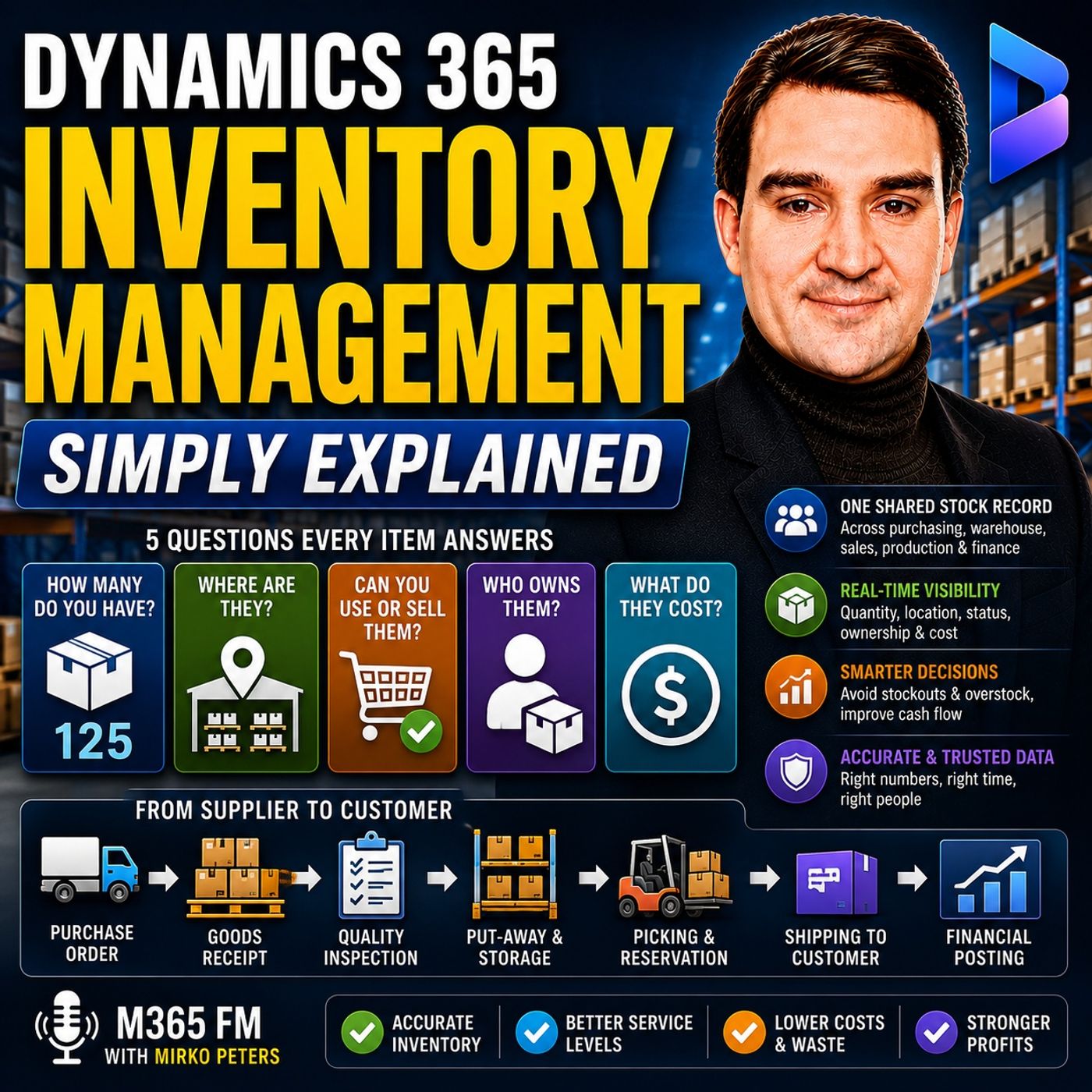
Dynamics 365 Inventory Management - Simply Explained
Dynamics 365 Inventory Management gives businesses one shared record for the products, materials, parts, and other stock moving through their organization. Instead of purchasing, warehouse, sales, production, and finance maintaining separate versions of inventory information, Dynamics 365 connects quantities, locations, availability, ownership, movements, and financial value. In this episode of M365 FM, Mirko Peters explains how Dynamics 365 Inventory Management works from supplier receipt to cu...
Aug. 19, 2026
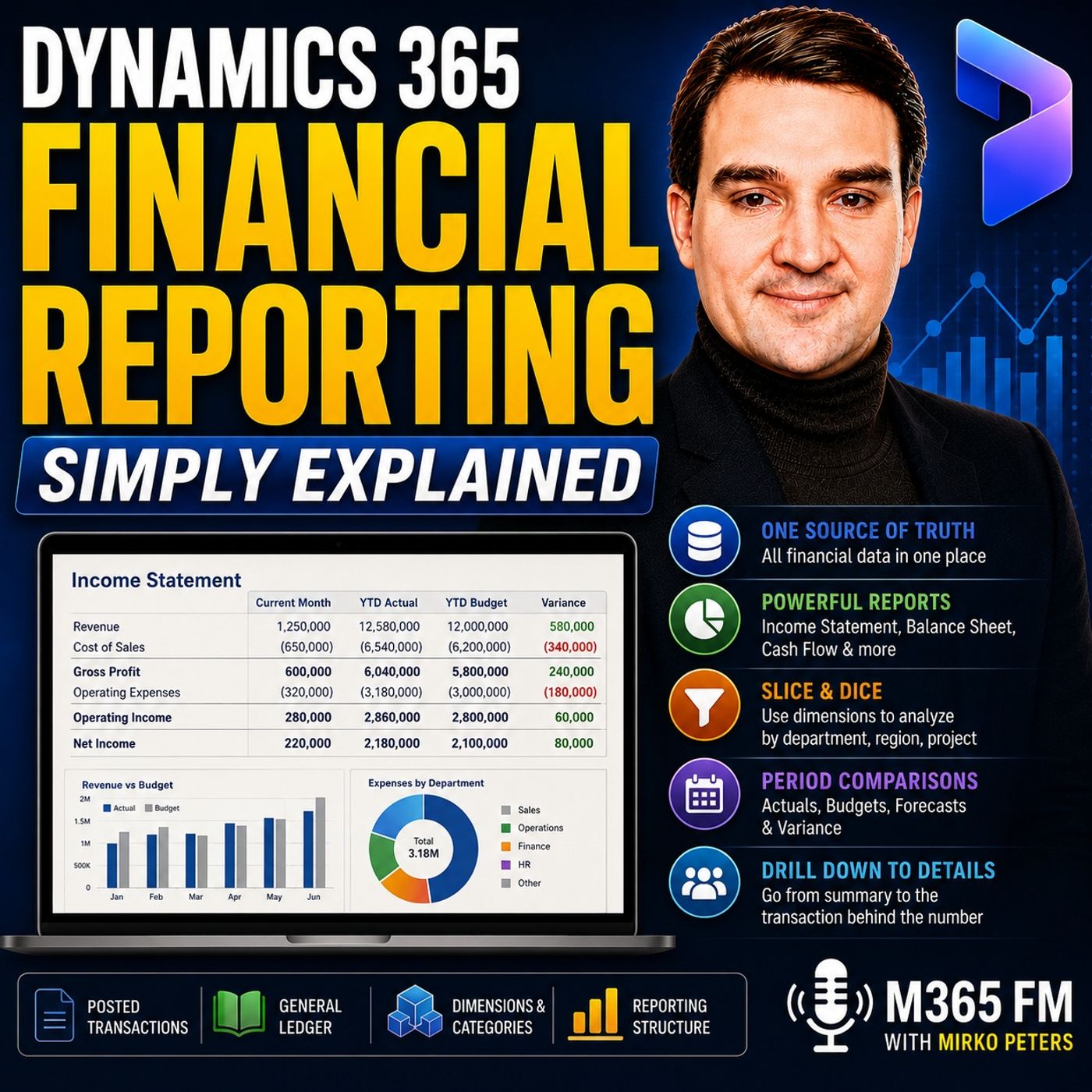
Dynamics 365 Financial Reporting - Simply Explained
Dynamics 365 Financial Reporting turns the financial data already posted in Dynamics 365 Finance into structured reports that finance teams, managers, auditors, and executives can actually use. Instead of rebuilding financial statements in multiple spreadsheets every month, organizations can use the general ledger, main accounts, financial dimensions, reporting categories, and predefined report structures to create consistent income statements, balance sheets, cash flow reports, trial balances, ...
Aug. 19, 2026
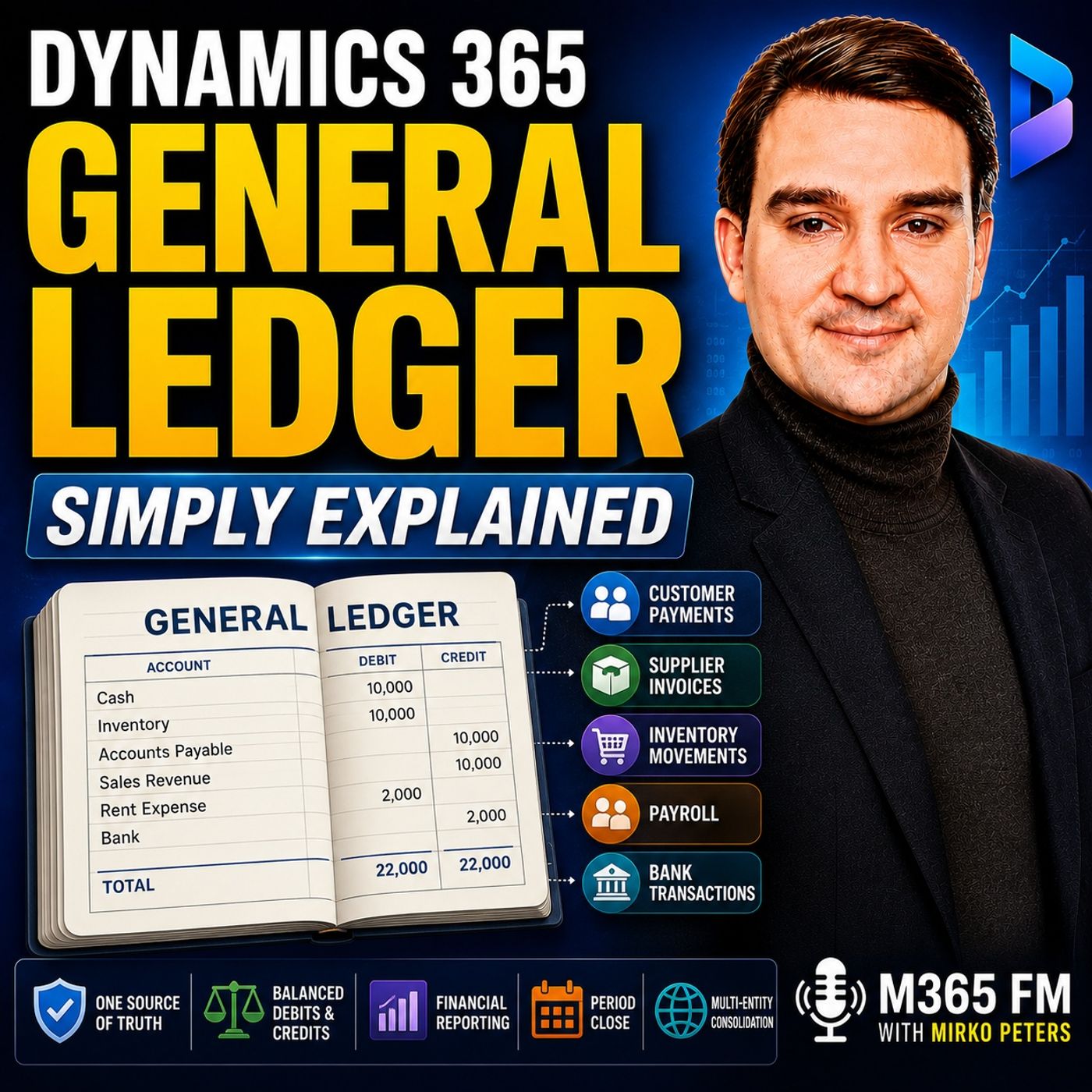
Dynamics 365 General Ledger - Simply Explained
Dynamics 365 General Ledger provides the central financial record behind Dynamics 365 Finance. Customer payments, supplier invoices, inventory movements, payroll, bank transactions, taxes, accruals, and other financial events ultimately affect the company's financial position, and the general ledger brings those accounting entries together in a structured and traceable way. In this episode of M365 FM, Mirko Peters explains the Dynamics 365 General Ledger in plain English, including the chart of ...
Aug. 19, 2026
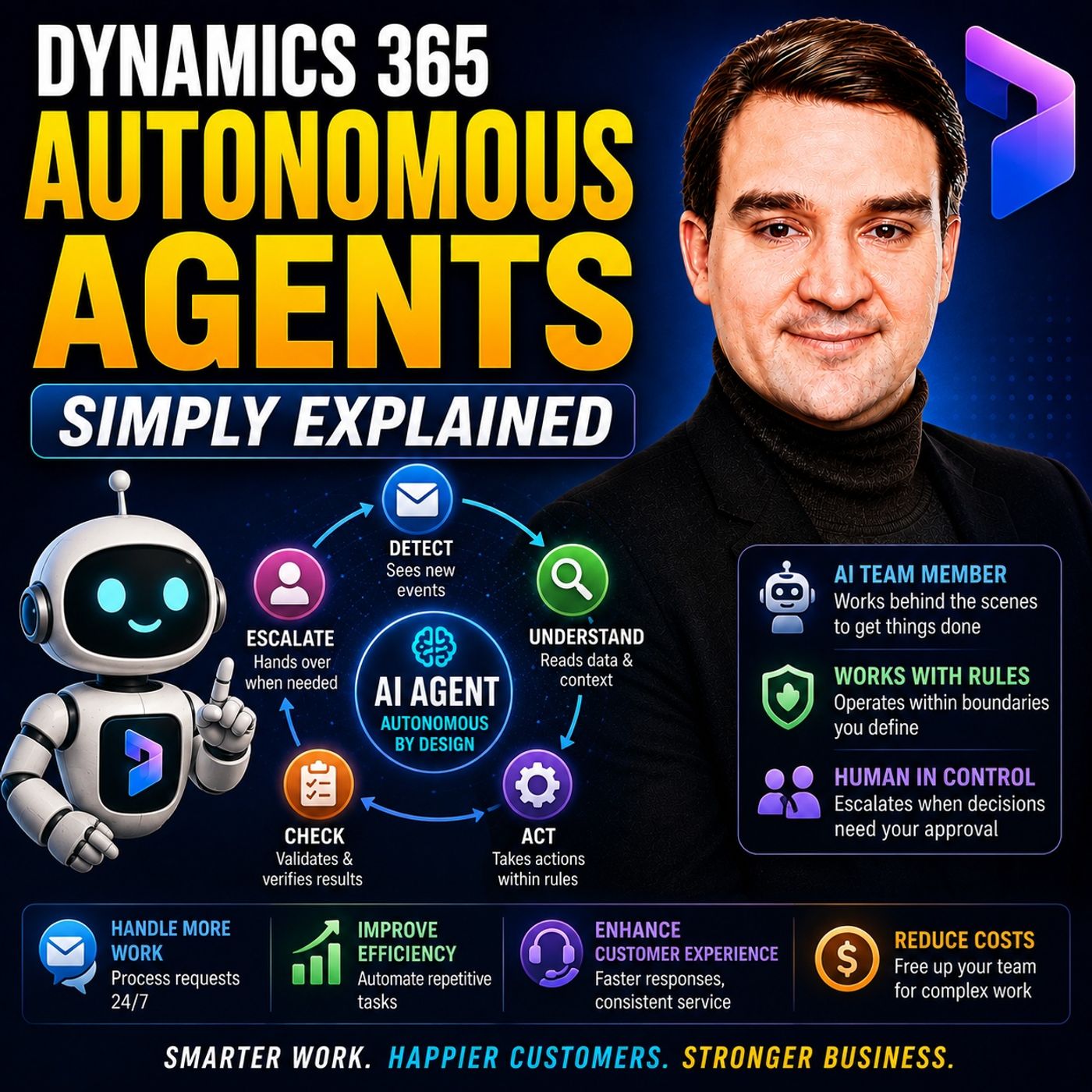
Dynamics 365 Autonomous Agents - Simply Explained
Dynamics 365 Autonomous Agents move AI beyond answering questions and generating content. Instead of waiting for someone to prompt them, autonomous agents can watch for specific business events, understand the context stored in Dynamics 365, choose between permitted actions, and continue a defined process within rules established by the organization. In this episode of M365 FM, Mirko Peters explains how autonomous agents differ from Copilot and traditional automation, where Microsoft is applying...
Aug. 19, 2026
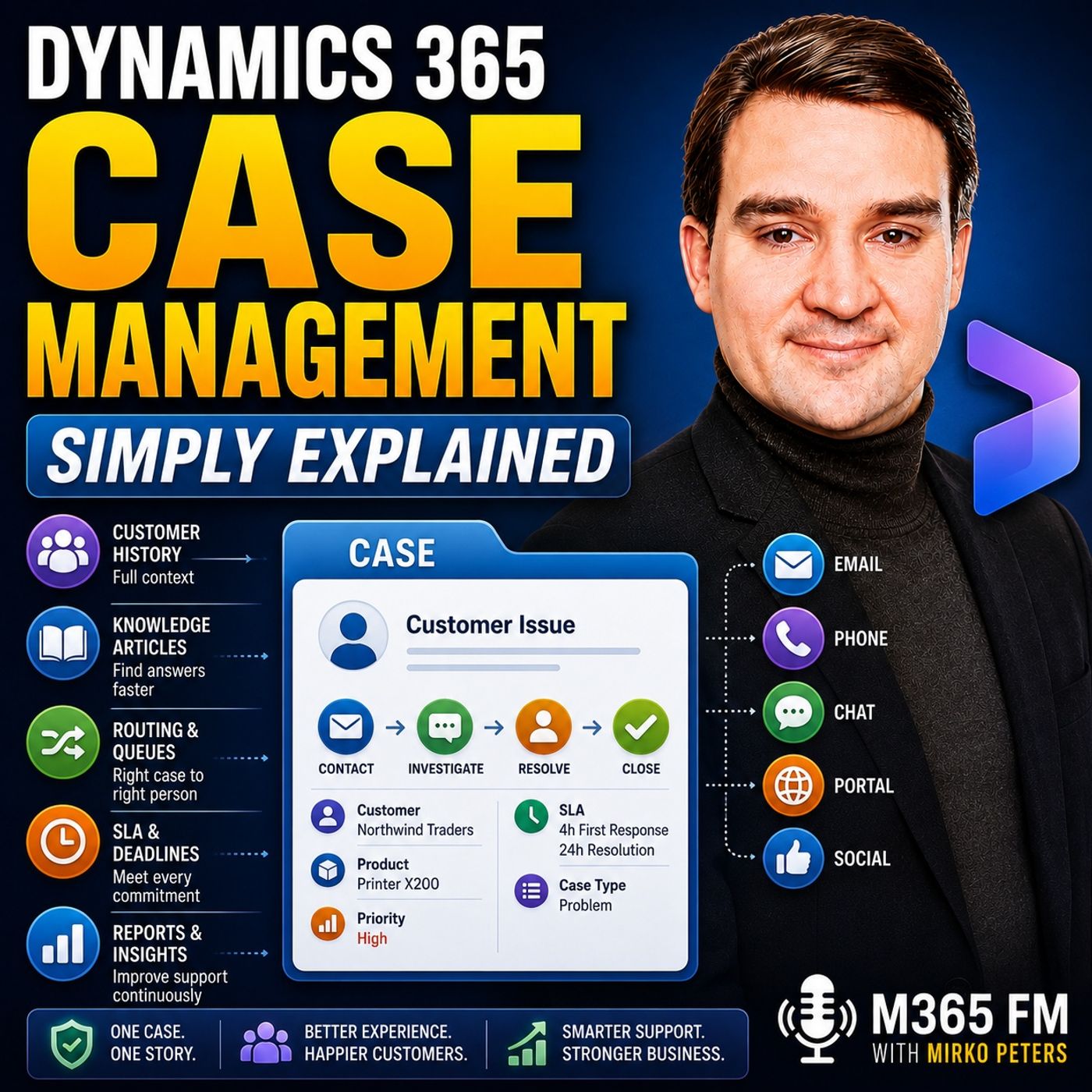
Dynamics 365 Case Management - Simply Explained
Dynamics 365 Case Management gives customer service teams one central place to manage customer issues from the first contact through resolution. Instead of information being scattered across emails, calls, chats, notes, and separate systems, each customer problem becomes a structured case containing the issue, customer context, activities, ownership, priority, service commitments, and final resolution. In this episode of M365 FM, Mirko Peters explains how Dynamics 365 Customer Service uses cases...

Aug. 19, 2026
Licensing, Security & Management: Making Microsoft 365 Defender and Intune Work Together with Videsh Chavan
Microsoft 365 licensing is often treated as a procurement problem: choose E3, E5, E7 or a collection of add-ons, assign the licenses, and move on. But licensing decisions directly influence security architecture, endpoint management, identity protection, and operational costs. In this episode of M365 FM, Mirko Peters talks with Videsh Chavan about building a unified Microsoft 365 strategy where licensing, Microsoft Intune, Microsoft Defender, identity, and endpoint security work together instead...
Guests: Mirko Peters , Videsh Chavan
Aug. 19, 2026
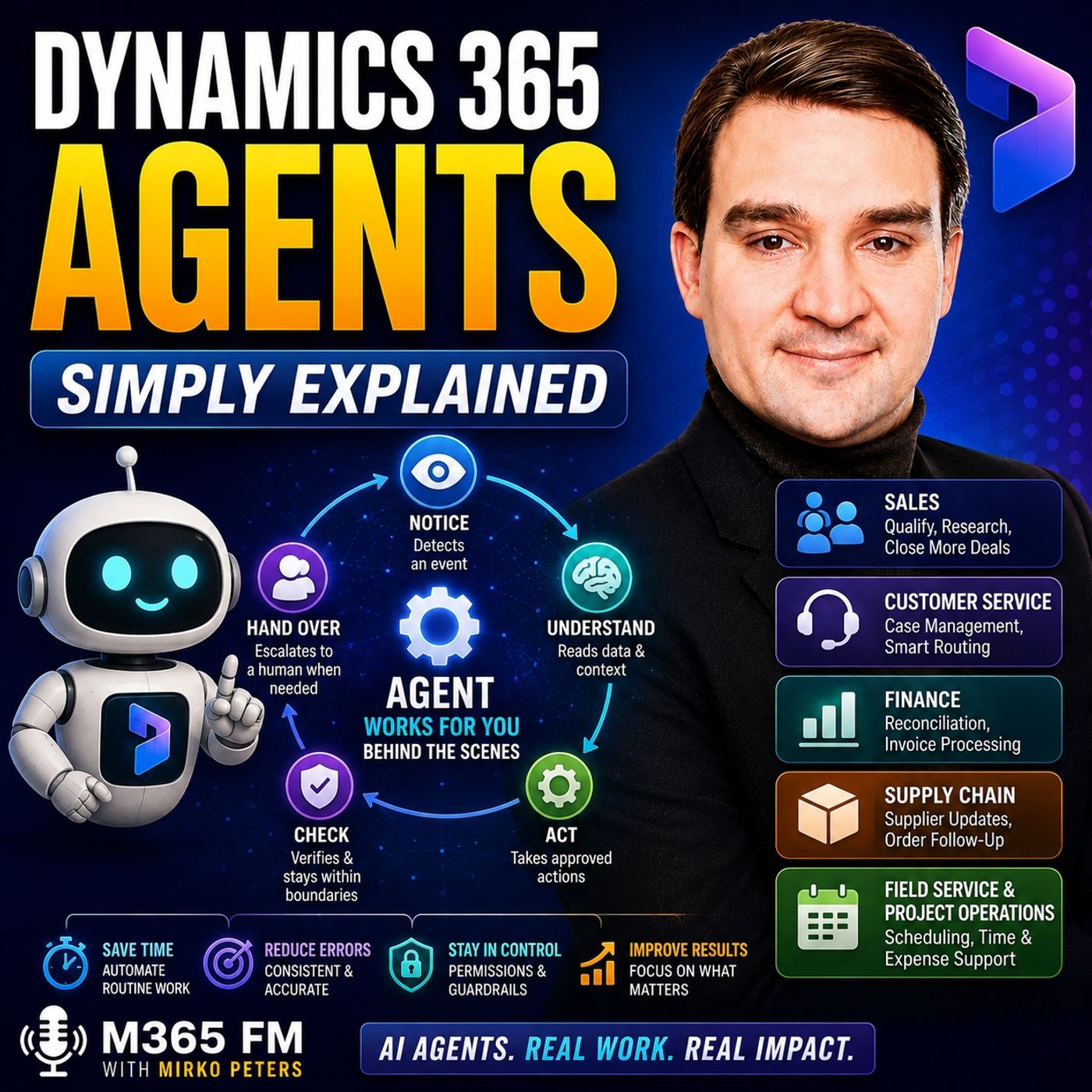
Dynamics 365 Agents - Simply Explained
Dynamics 365 Agents take AI beyond answering questions and generating drafts. Instead of waiting for someone to ask Copilot for help, agents can respond to defined business events, work with approved Dynamics 365 data, follow predefined rules, take permitted actions, and hand work to people when human judgment is required. In this episode of M365 FM, Mirko Peters explains how Dynamics 365 Agents work across sales, customer service, finance, supply chain, Business Central, Field Service, and Proj...
Aug. 19, 2026
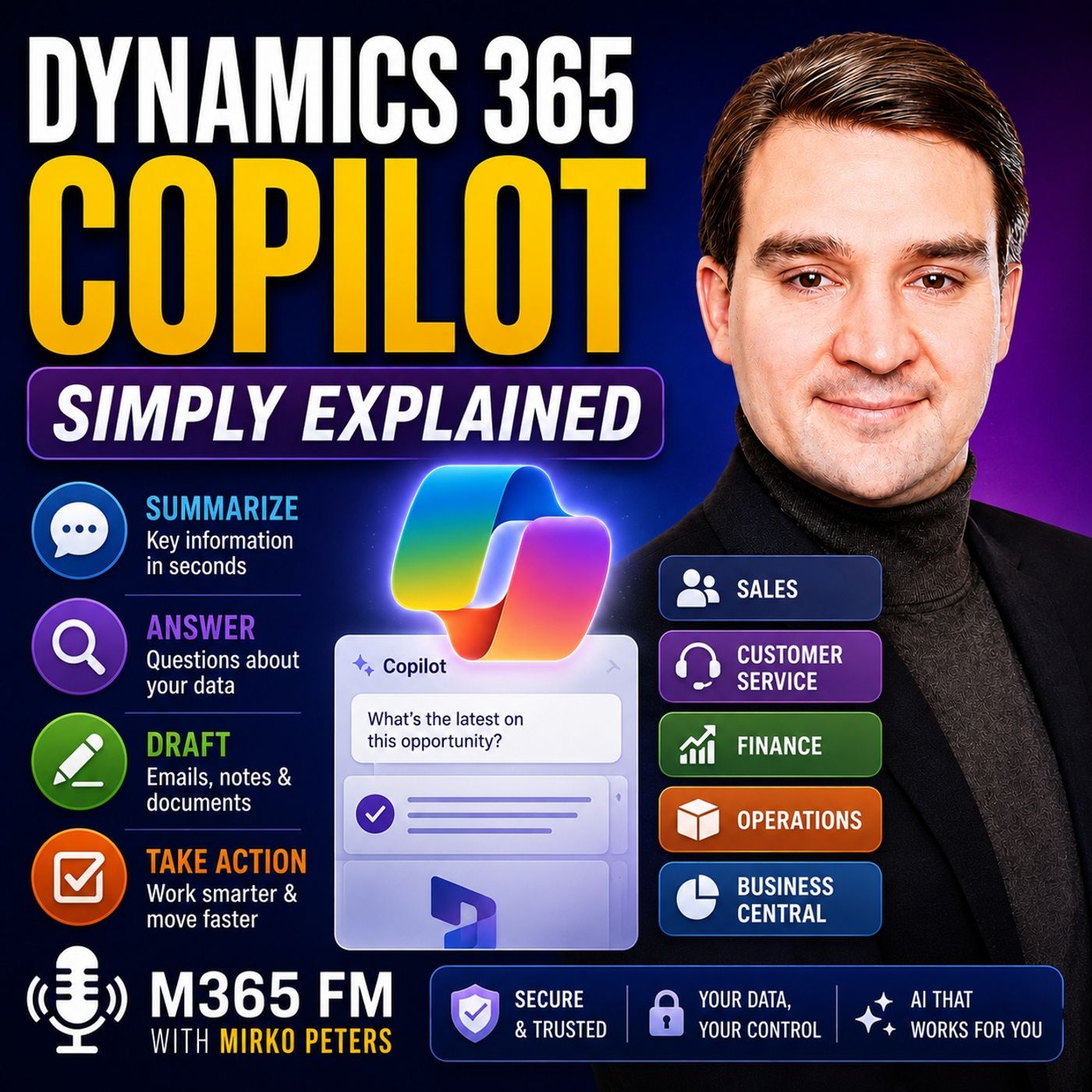
Dynamics 365 Copilot - Simply Explained
Dynamics 365 Copilot brings AI directly into the business processes and records people already use across Dynamics 365. Instead of spending time searching through customer histories, sales opportunities, support cases, invoices, orders, emails, and reports, Copilot can summarize information, answer questions, prepare drafts, and help users determine what to do next. In this episode of M365 FM, Mirko Peters explains how Dynamics 365 Copilot works across sales, customer service, finance, operation...
Aug. 19, 2026
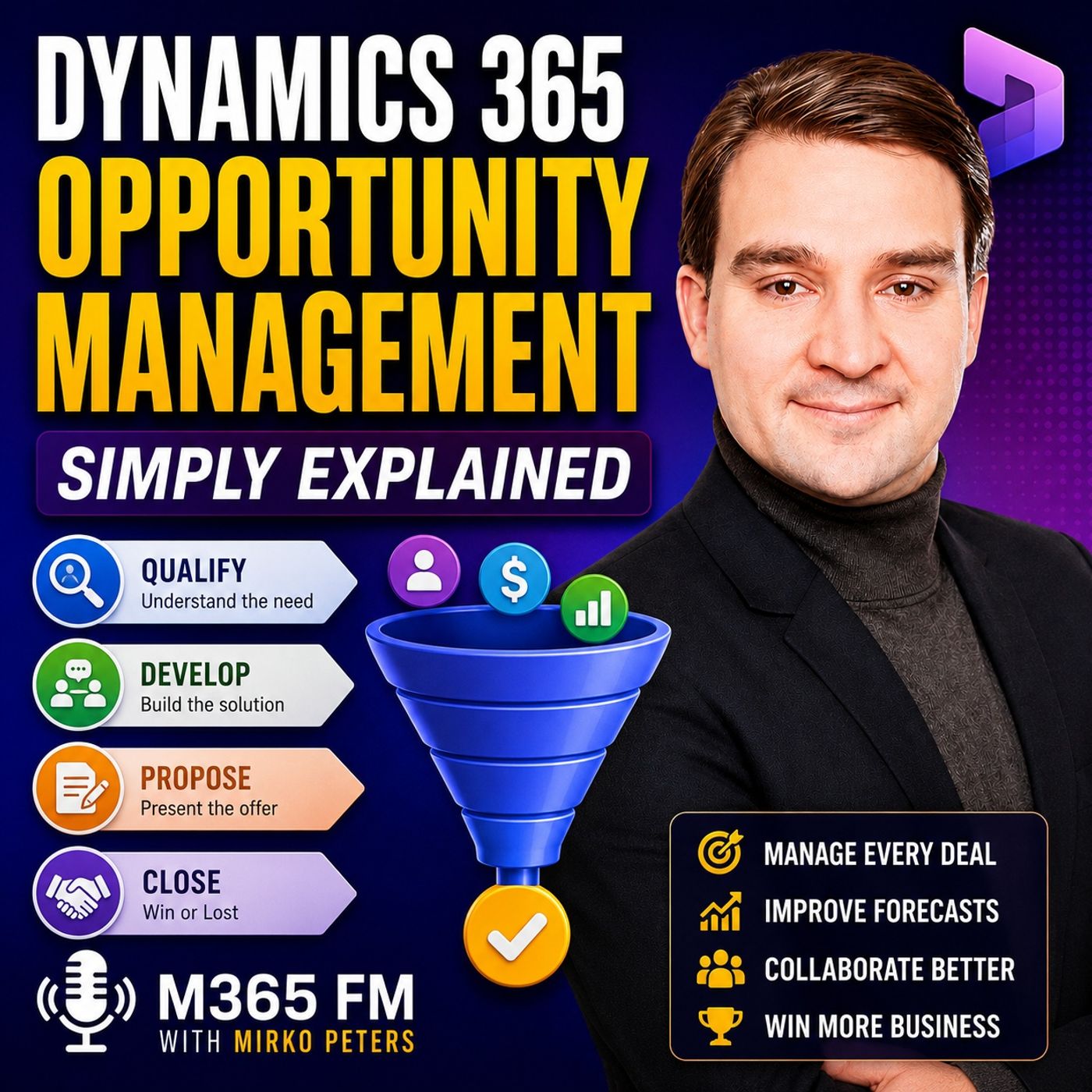
Dynamics 365 Opportunity Management - Simply Explained
Dynamics 365 Opportunity Management gives sales teams a structured way to manage serious sales conversations from the first qualified interest through to a clear outcome: won or lost. Instead of keeping deal information across spreadsheets, emails, personal notes, and individual inboxes, Dynamics 365 Sales creates a shared opportunity record containing the customer, expected revenue, products, activities, probability, expected close date, ownership, and sales history. In this episode of M365 FM,...
Aug. 18, 2026
Dynamics 365 Knowledge Management - Simply Explained
Dynamics 365 Knowledge Management helps customer service teams create a single, trusted source of knowledge that agents can use while supporting customers. Instead of searching through old emails, shared folders, spreadsheets, or relying on individual experience, teams can create approved knowledge articles that provide consistent answers across customer service channels. In this episode of M365 FM, Mirko Peters explains how Dynamics 365 Knowledge Management works and why a structured knowledge ...
Aug. 18, 2026
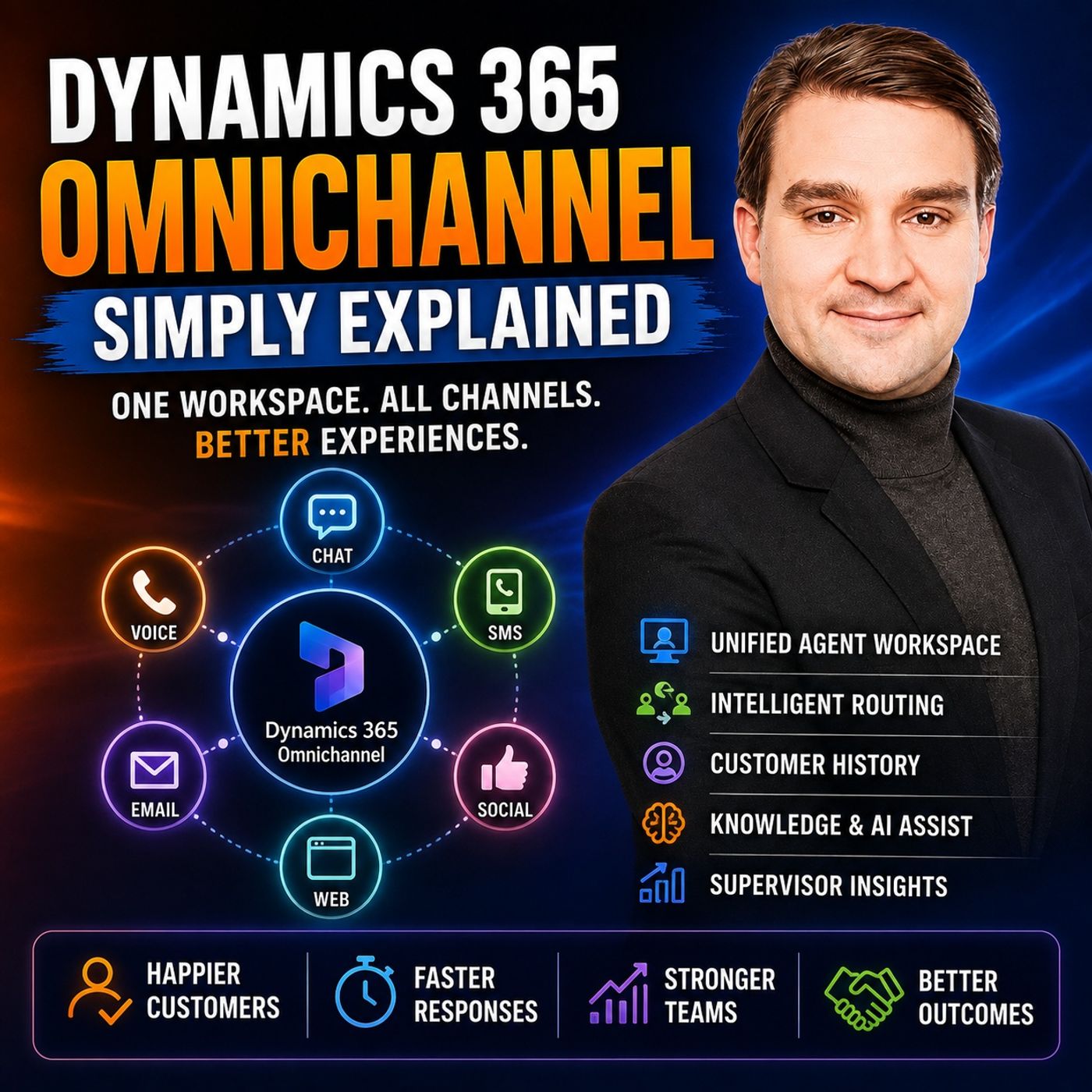
Dynamics 365 Omnichannel - Simply Explained
A customer starts a website chat because an order has not arrived. They explain the problem, provide the order number, and answer several questions. Later, they call the company—and the person on the phone asks them to explain everything again. For the customer, this makes little sense. They did not start a new problem. They simply changed the way they contacted the company. In this episode of Microsoft Knowledge Nuggets on M365 FM, Mirko Peters explains Microsoft Dynamics 365 Omnichannel in pla...
Aug. 18, 2026
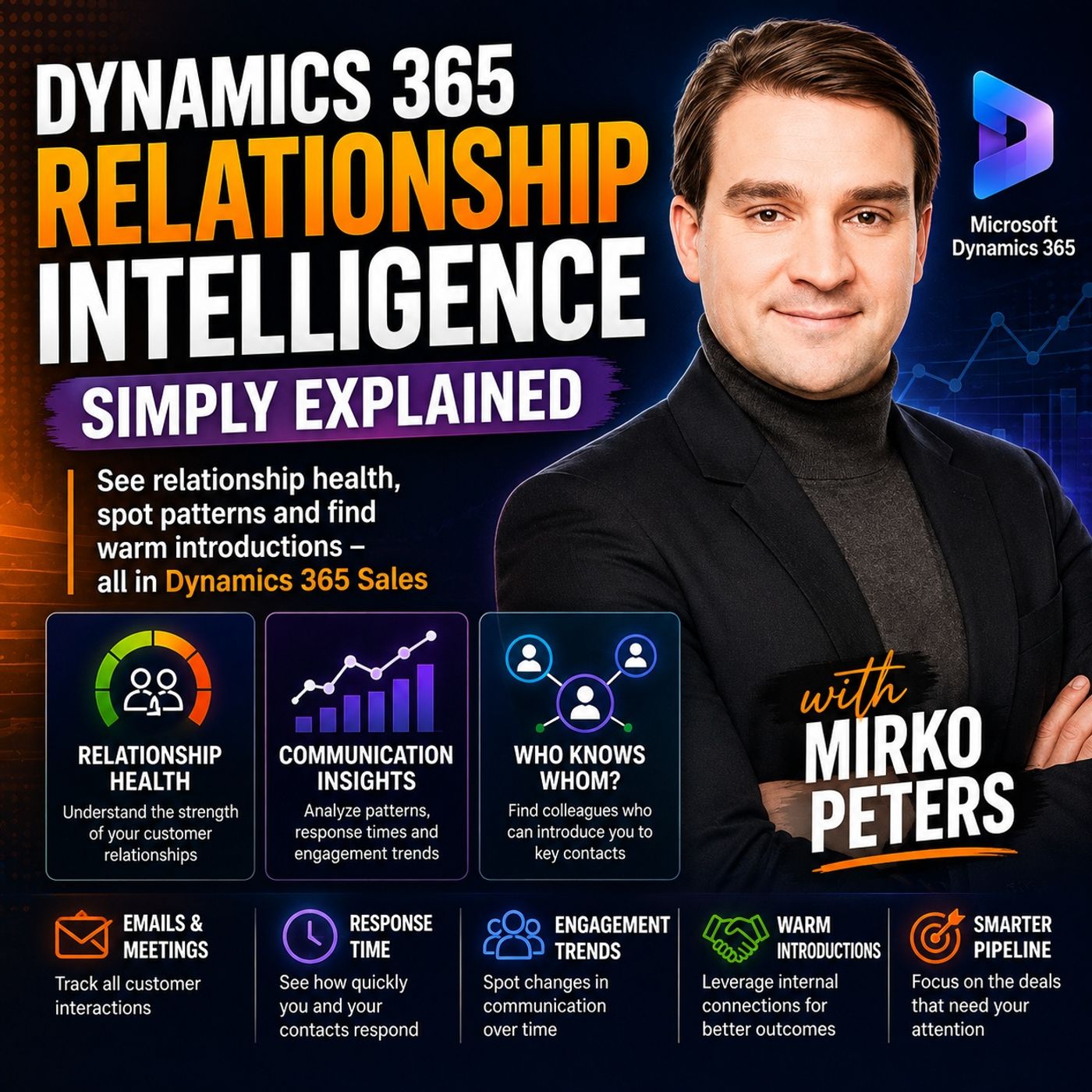
Dynamics 365 Relationship Intelligence - Simply Explained
A Dynamics 365 Sales opportunity can look healthy on paper. The deal is still open, the estimated close date is in the future, and the timeline contains emails, meetings, calls, and tasks. But there is a much more important question: Is the customer still talking to you? A salesperson may have sent several emails without receiving a response. The last customer meeting may have happened weeks ago. Another employee inside the company may already know an important decision-maker, but the salesperso...
Aug. 18, 2026
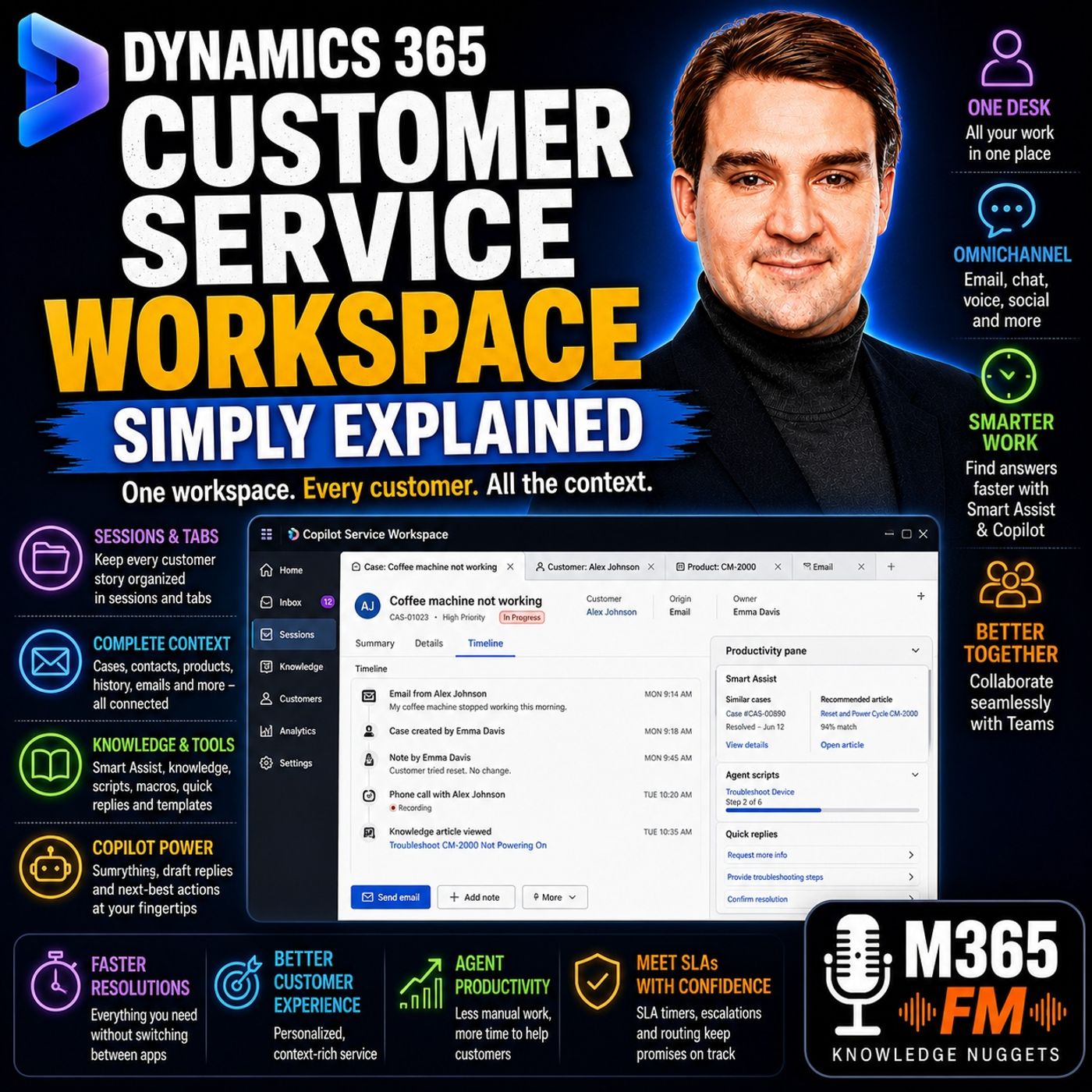
Dynamics 365 Customer Service Workspace - Simply Explained
A customer sends an email, starts a chat, calls support, or contacts a company through another service channel. When an agent picks up that request, they need the complete customer story quickly. What did the customer already tell us? Which product do they own? Has somebody else worked on this problem? Is there an existing case? What was promised previously? Is there a service deadline approaching? Without a unified workspace, answering those questions can mean jumping between browser tabs, inbo...

Aug. 18, 2026
Dynamics 365 Forecasting - Simply Explained
Dynamics 365 Forecasting helps sales teams answer one of the most important questions in business: are we going to hit our sales target? Instead of collecting numbers from spreadsheets, emails, and individual sales reports, Dynamics 365 Sales brings opportunities, expected revenue, close dates, forecast categories, quotas, and sales performance into one shared forecasting view. In this episode of M365 FM, Mirko Peters explains how Dynamics 365 Forecasting works, how forecast categories represent...
![AI Turns Integration into an Organism as a Service — How Azure Logic Apps Are Changing Enterprise Integration with Sonny Gillissen [MVP]](https://d3wo5wojvuv7l.cloudfront.net/t_rss_itunes_square_1400/images.spreaker.com/original/5f8bf3b9f498b5fd7cd584f1423cee09.jpg "AI Turns Integration into an Organism as a Service — How Azure Logic Apps Are Changing Enterprise Integration with Sonny Gillissen [MVP]")
Aug. 18, 2026
AI Turns Integration into an Organism as a Service — How Azure Logic Apps Are Changing Enterprise Integration with Sonny Gillissen [MVP]
Enterprise integration is everywhere, yet most people only notice it when something stops working. Applications need to communicate, APIs need to exchange information, ERP systems need to connect with business processes, and data needs to move reliably across organizational boundaries. For decades, integration has largely followed a deterministic model: when this happens, do that. Developers and architects define triggers, conditions, transformations, retries, exceptions, and destinations in adv...
Guests: Mirko Peters , Sonny Gillissen

Aug. 18, 2026
Dynamics 365 Remote Assist - Simply Explained
A machine stops in the middle of a shift. The technician standing beside it can see the problem, but the person with the deepest knowledge of that machine may be hundreds or thousands of kilometers away. Traditionally, solving that problem could involve telephone calls, photographs, emails, unclear descriptions, repeated questions, or eventually sending a specialist to the site. The challenge is not necessarily that expertise does not exist. The challenge is getting that expertise to the place w...
Aug. 18, 2026
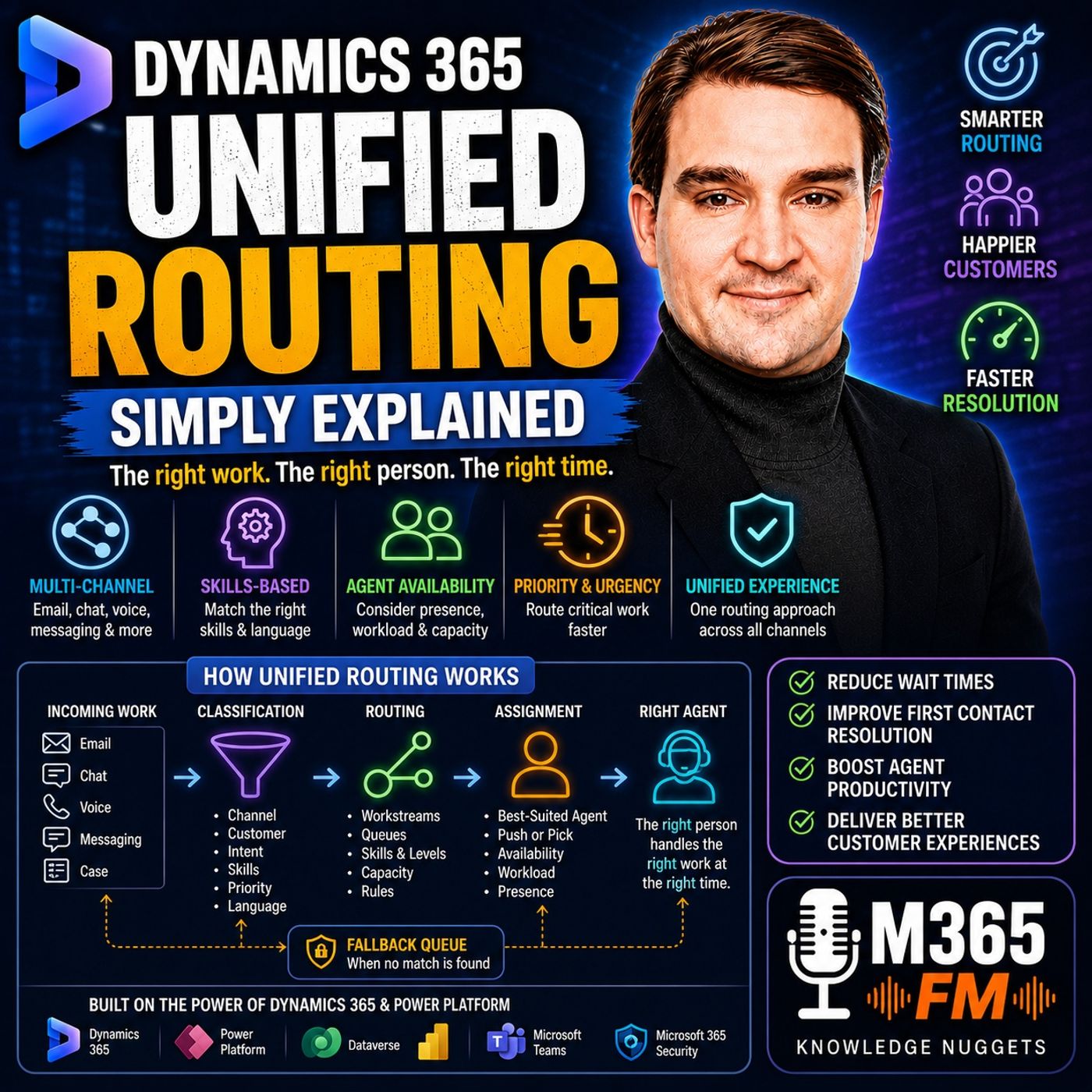
Dynamics 365 Unified Routing - Simply Explained
When a customer sends a chat message, email, phone request, or support case, they usually expect one thing: the right person should help them as quickly as possible. But customer service becomes complicated as organizations grow. A shared inbox that worked perfectly for five agents can quickly turn into a bottleneck when hundreds of requests arrive through multiple channels, in different languages, with different priorities, and requiring different technical skills. In this episode of Microsoft ...

Aug. 17, 2026
Dynamics 365 Guides - Simply Explained
Imagine standing beside a large industrial machine and seeing the next repair instruction appear directly beside the panel you need to open. Instead of putting down your tools, walking back to a laptop, searching through a PDF, or trying to remember what an experienced technician told you during training, the information appears directly inside your field of view. That was the central idea behind Microsoft Dynamics 365 Guides. In this episode of Microsoft Knowledge Nuggets on M365 FM, Mirko Pete...
Aug. 17, 2026
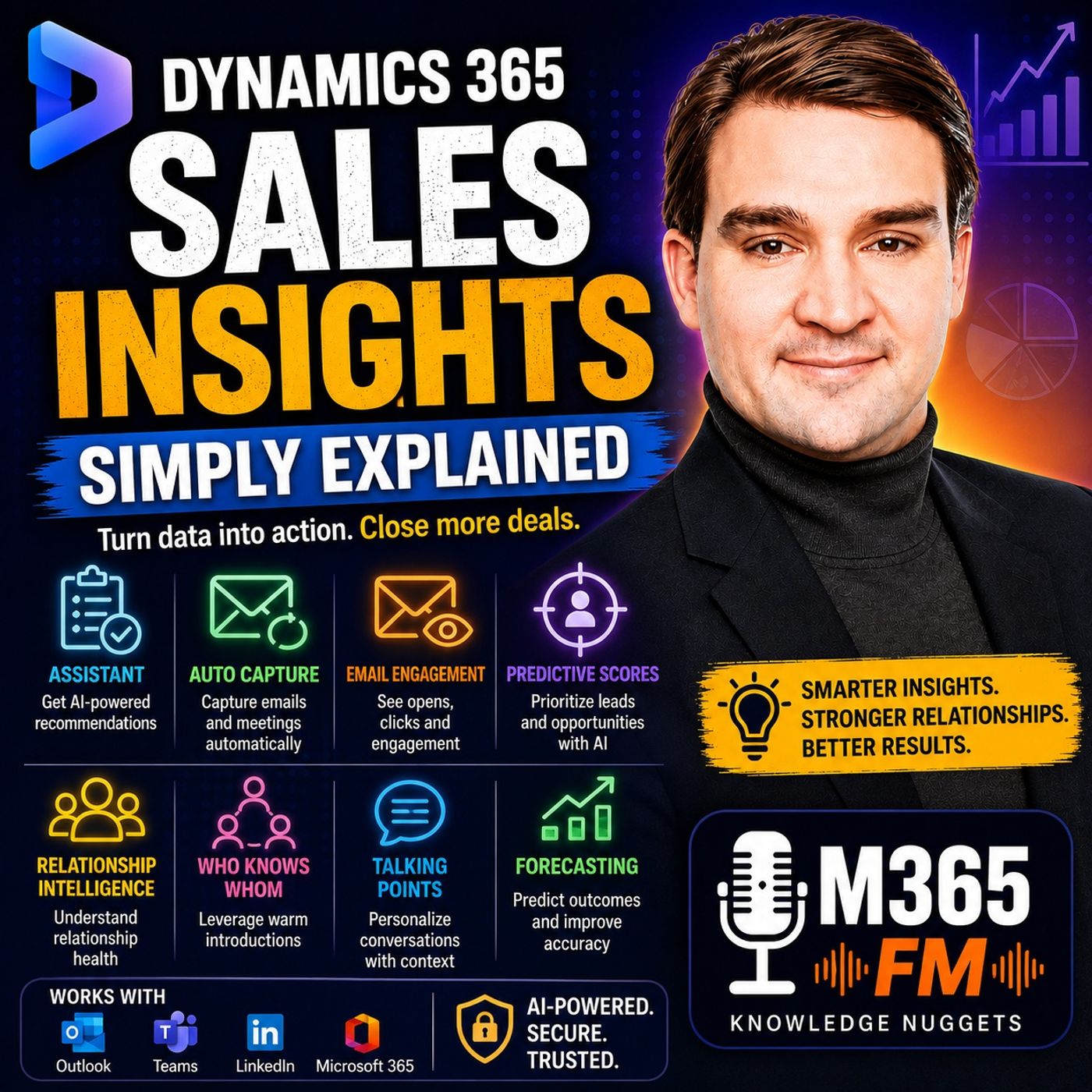
Dynamics 365 Sales Insights - Simply Explained
How many sales opportunities disappear because somebody intended to follow up but lost the email, missed the task, or simply forgot? Modern sales teams rarely suffer from a lack of customer data. They have CRM records, emails, meetings, notes, opportunities, tasks, forecasts, and relationship information. The bigger problem is understanding which information matters right now and what the seller should do next. In this episode of Microsoft Knowledge Nuggets on M365 FM, Mirko Peters explains Micr...

Aug. 17, 2026
Dynamics 365 Sales Accelerator - Simply Explained
Salespeople rarely struggle because they do not have enough tasks. The real challenge is deciding which customer deserves attention next, what action should happen, and what context is needed before reaching out. Emails arrive in Outlook. Meetings fill the calendar. Customer information lives inside CRM records. Leads respond to marketing activities. Colleagues leave notes. Opportunities change. Follow-up reminders compete with urgent customer requests. The result can be a busy sales day that st...
Aug. 17, 2026
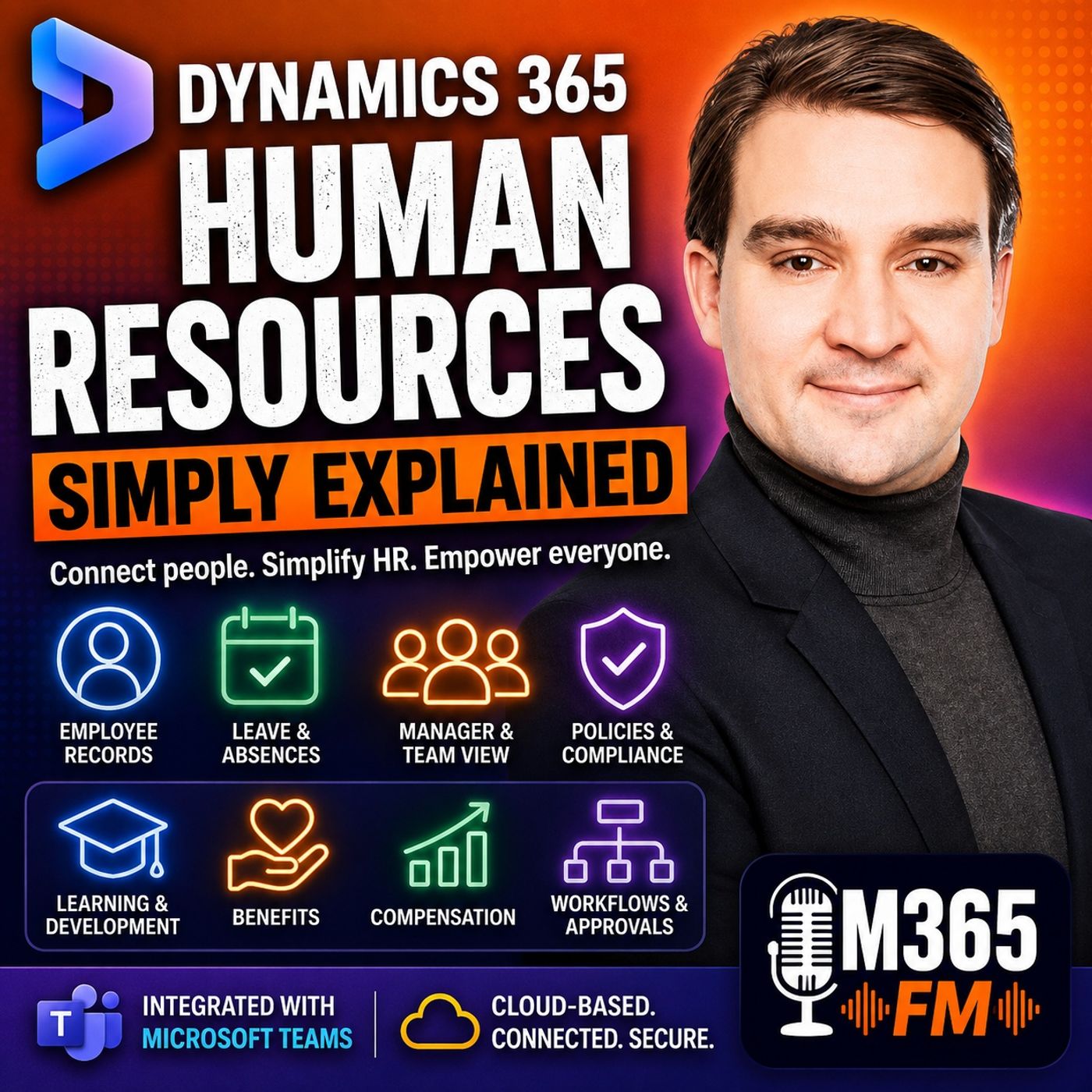
Dynamics 365 Human Resources - Simply Explained
HR teams manage some of the most important and sensitive information inside an organization. Employee records, organizational structures, leave requests, benefits, compensation information, skills, certifications, training, performance, approvals, and onboarding tasks all need to remain accurate and accessible to the right people. The problem begins when that information is spread across spreadsheets, email conversations, shared folders, HR applications, manager-maintained lists, and disconnecte...
Aug. 17, 2026
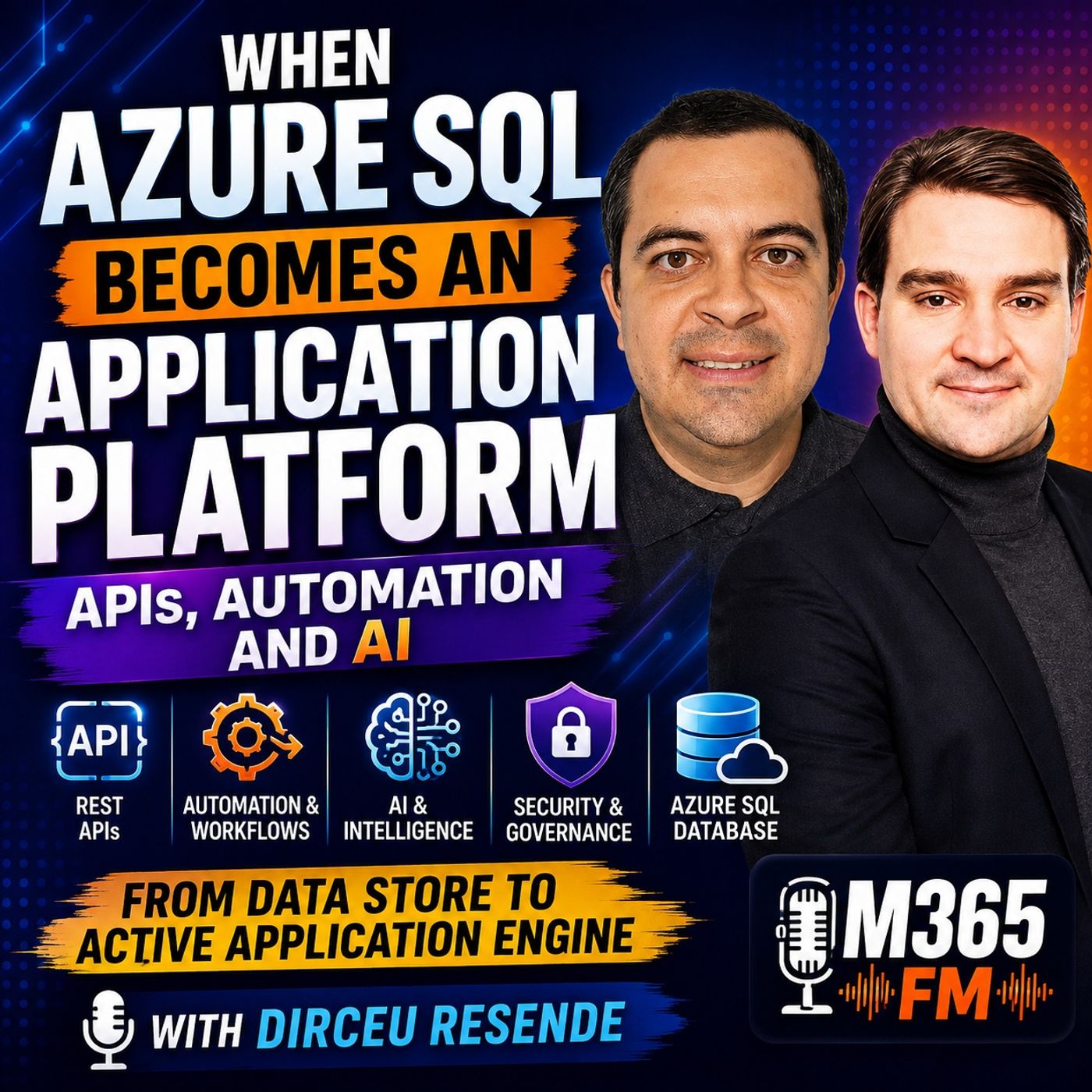
When Azure SQL Becomes an Application Platform- APIs, Automation and AI with Dirceu Resende
Most developers think of a database as the place where an application stores information. Tables, transactions, indexes, stored procedures, reporting, backups, and reliable data storage are the traditional responsibilities we associate with SQL. But what happens when the database itself becomes an active participant in the application architecture? In this episode of M365 FM, Mirko Peters talks with Dirceu Resende about how Azure SQL Database is evolving beyond traditional data storage. The conv...
Aug. 17, 2026
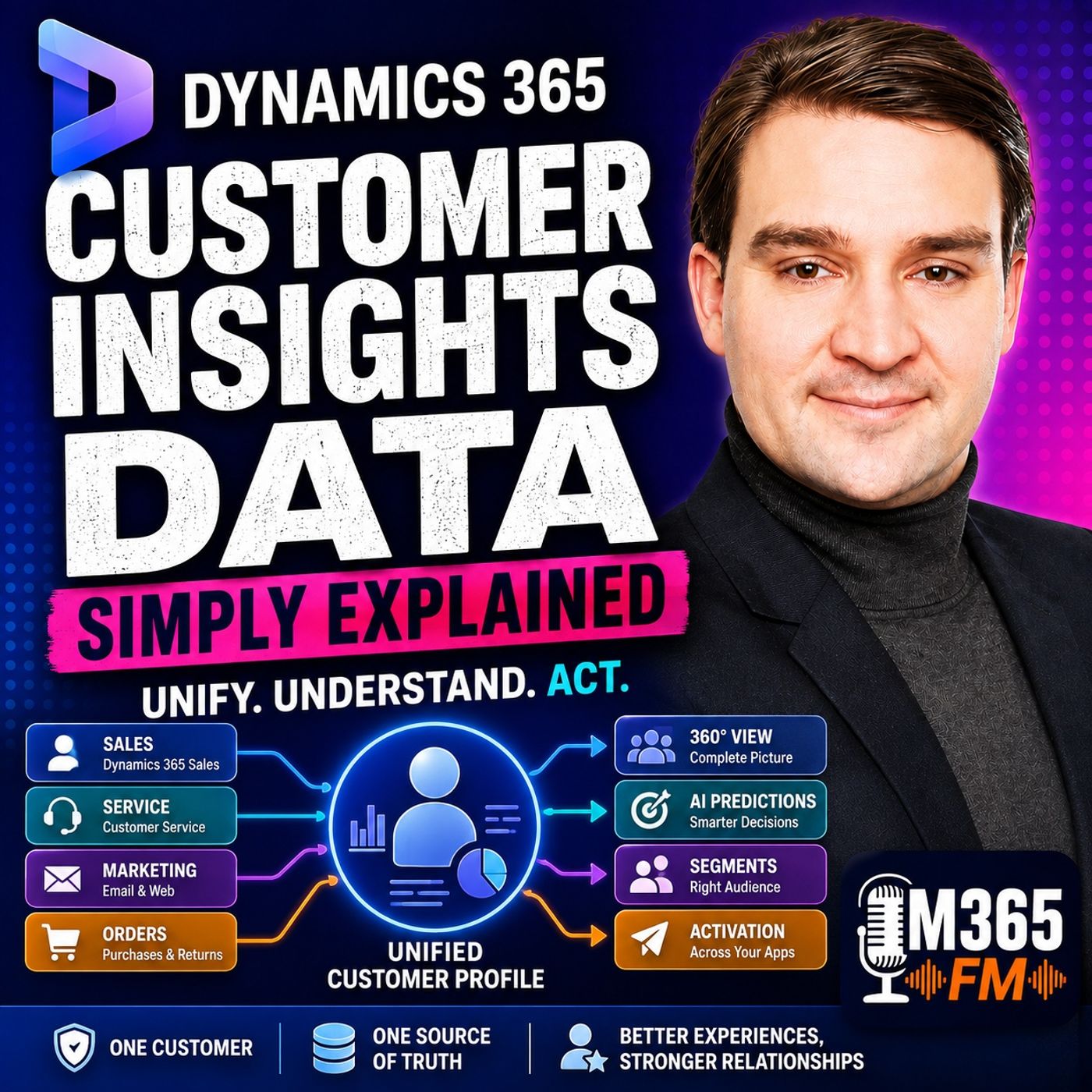
Dynamics 365 Customer Insights Data - Simply Explained
What happens when the same customer appears in three different systems—and every system tells a different story?Sales sees an open opportunity. Customer service sees recent complaints. Marketing sees email clicks and website activity. An order system knows the customer has already purchased twice. Each department has useful information, but nobody has the complete picture.In this episode of Microsoft Knowledge Nuggets on M365 FM, Mirko Peters explains Microsoft Dynamics 365 Customer Insights - D...
Aug. 17, 2026
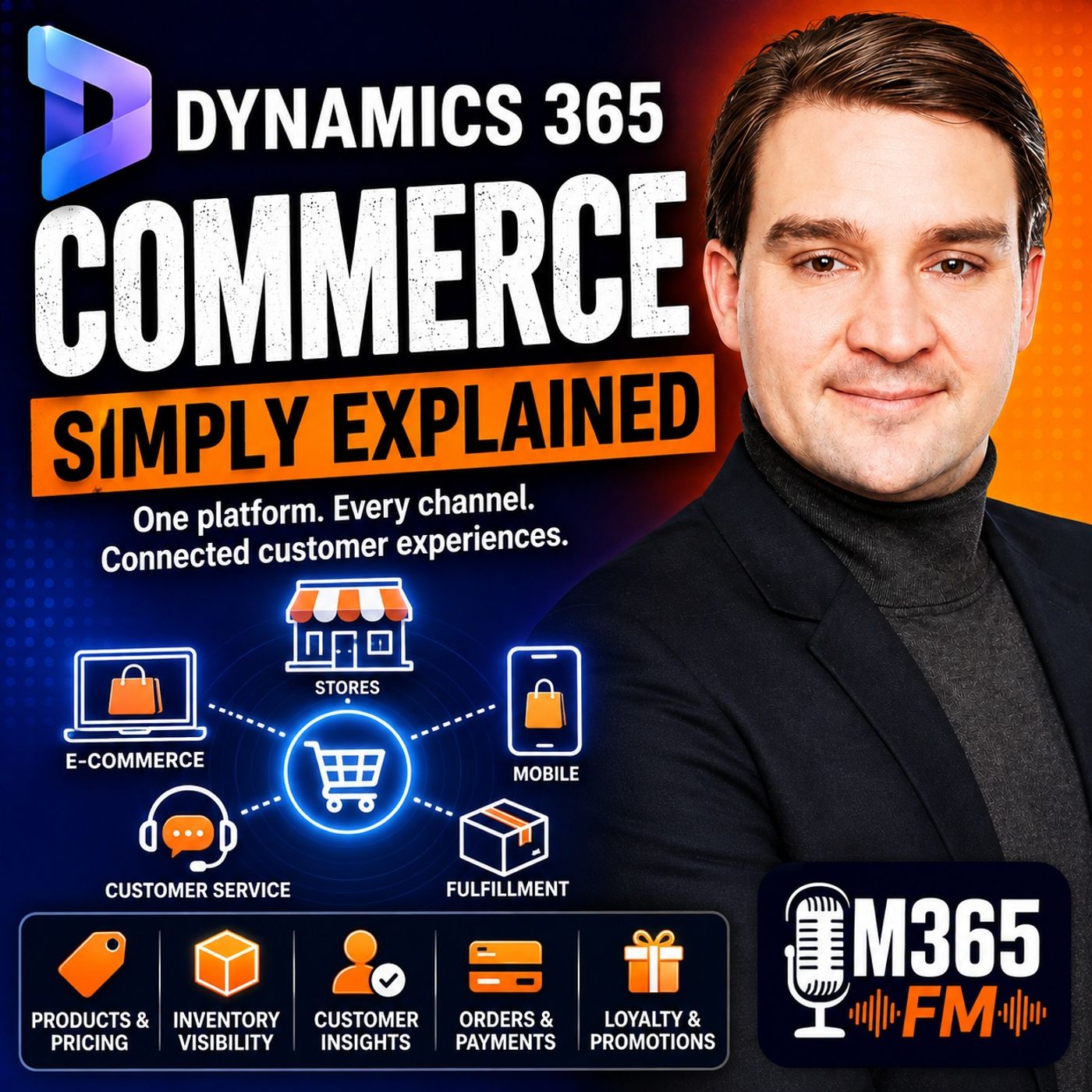
Dynamics 365 Commerce - Simply Explained
A customer discovers a jacket online, checks whether it is available in a nearby store, orders it for pickup, and later returns it at another location. From the customer's perspective, this should be one simple shopping journey. Behind the scenes, however, that transaction can involve e-commerce, point of sale, inventory, customer information, pricing, fulfillment, payments, and returns.In this episode of Microsoft Knowledge Nuggets on M365 FM, Mirko Peters explains Microsoft Dynamics 365 Commer...