

Data Governance Power Platform Microsoft Security Cloud Architecture AI in Microsoft 365 Dynamics 365 Insights Developer Practices Microsoft 365 Podcast – Teams, SharePoint, Office Apps & Productivity Microsoft Strategy & Partner Marketing Guest Episodes Simply Explained Workshops on Microsoft Tech for free
Aug. 16, 2026
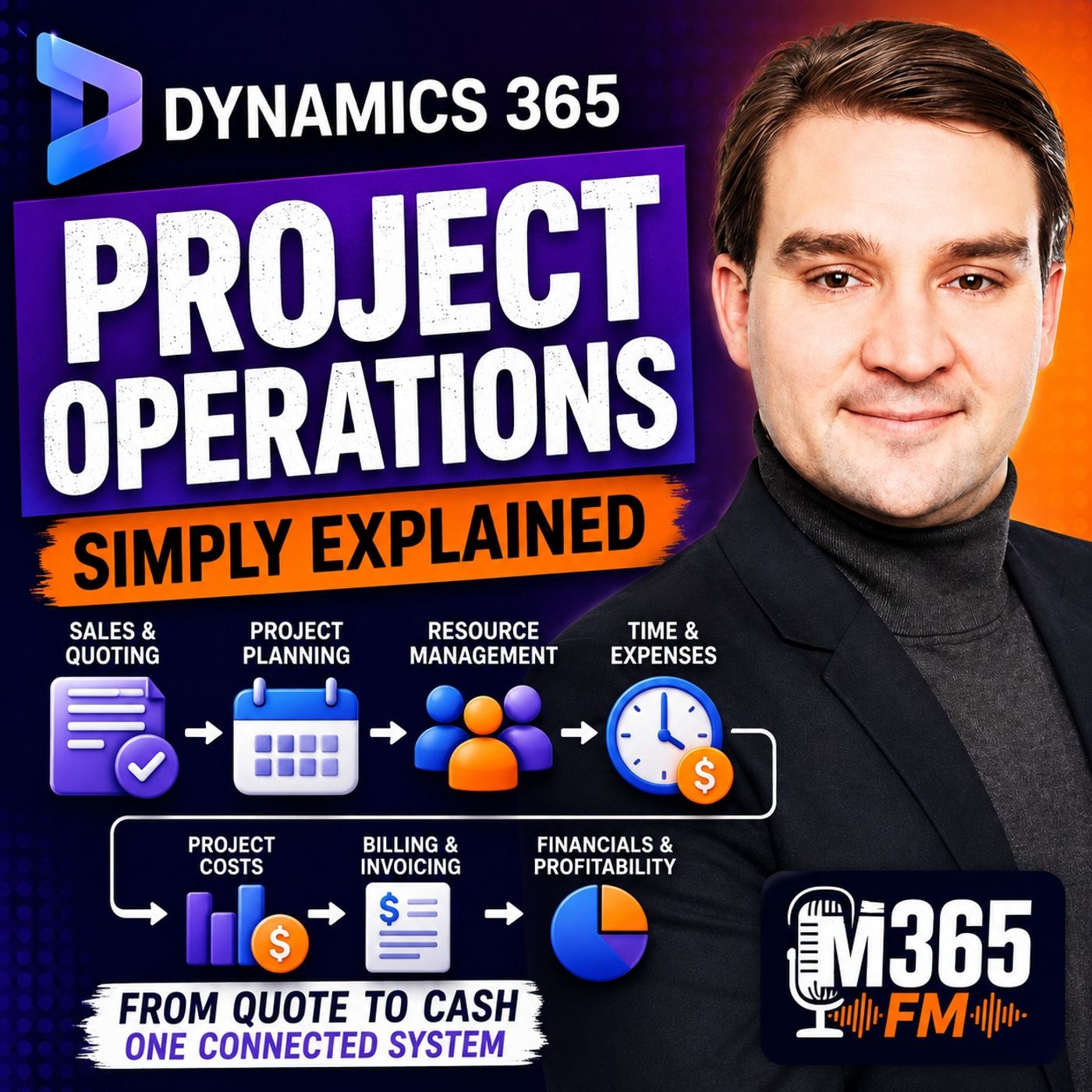
Dynamics 365 Project Operations - Simply Explained
Customer projects can become complicated quickly. Sales has the customer relationship and quote. Project managers have schedules and tasks. Resource managers need to know who is available. Consultants record hours and expenses. Finance needs to understand costs, revenue, and what can actually be invoiced.In this episode of Microsoft Knowledge Nuggets on M365 FM, Mirko Peters explains Microsoft Dynamics 365 Project Operations and how Microsoft connects project sales, project management, resource ...
Aug. 16, 2026
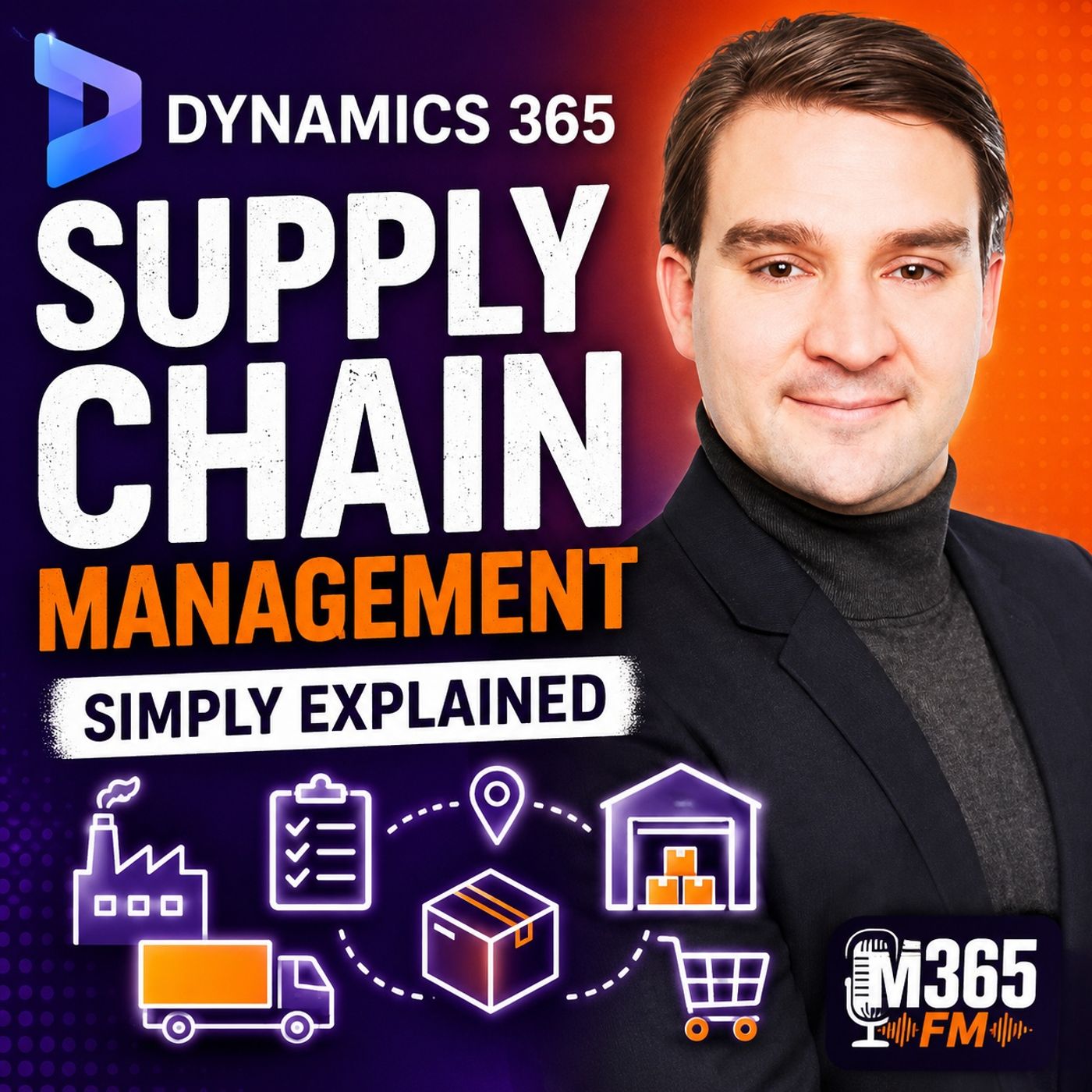
Dynamics 365 Supply Chain Management - Simply Explained
Modern supply chains are complex. Materials move between suppliers, warehouses, factories, distribution centers, carriers, and customers, while purchasing teams, production planners, warehouse workers, logistics teams, and customer service all depend on accurate information.In this episode of Microsoft Knowledge Nuggets on M365 FM, Mirko Peters explains Microsoft Dynamics 365 Supply Chain Management in practical terms. We follow the complete supply chain journey—from creating a product record an...
Aug. 16, 2026
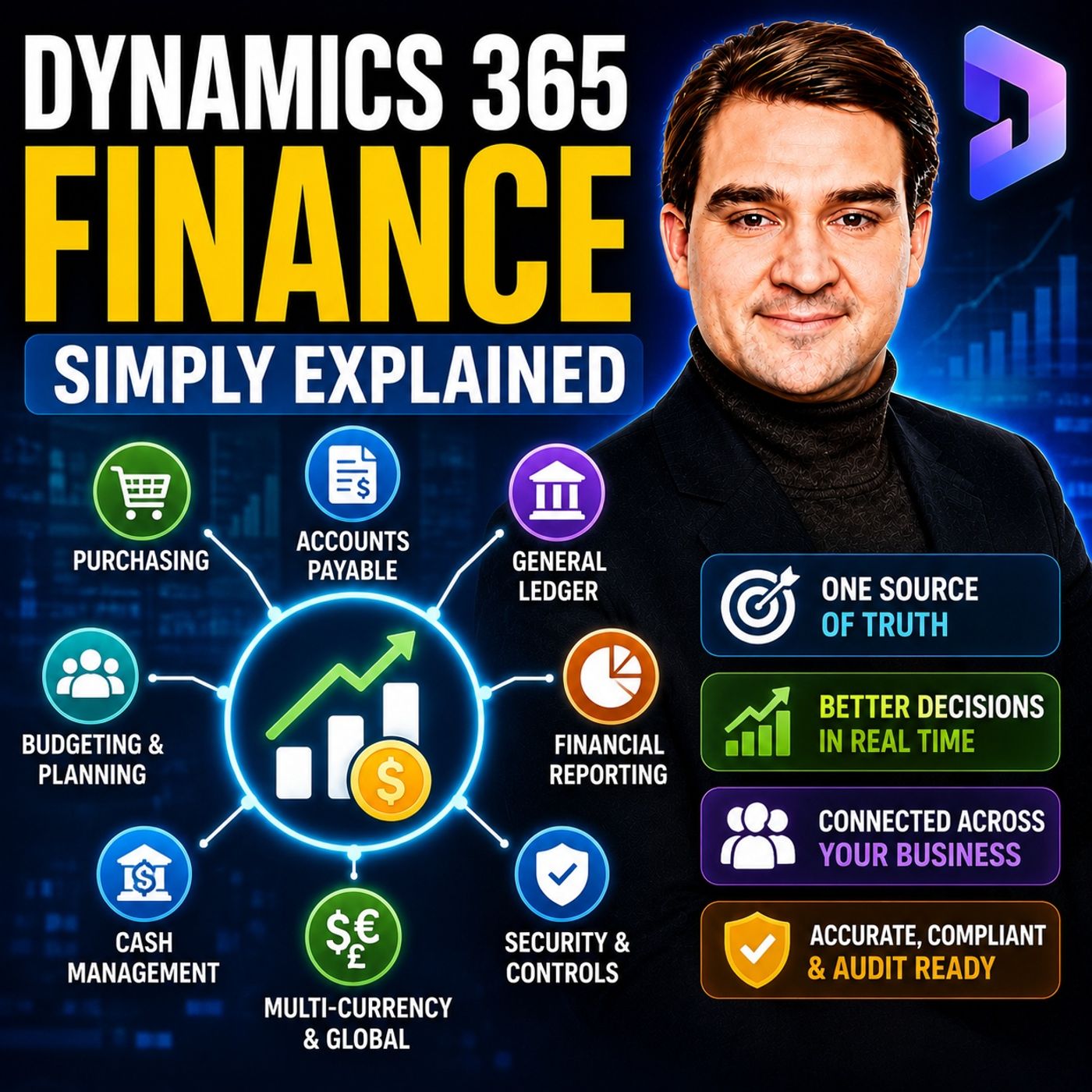
Dynamics 365 Finance - Simply Explained
Imagine a finance team trying to answer what sounds like a simple question: How much money can we spend this month? One employee opens a spreadsheet. Somebody else checks the bank balance. A manager maintains approved purchases in another system, while sales numbers arrive two days later from another department. By the time Finance combines everything, the business may already need to make the decision. Dynamics 365 Finance is designed to replace this fragmented view with one connected financial...
Aug. 16, 2026
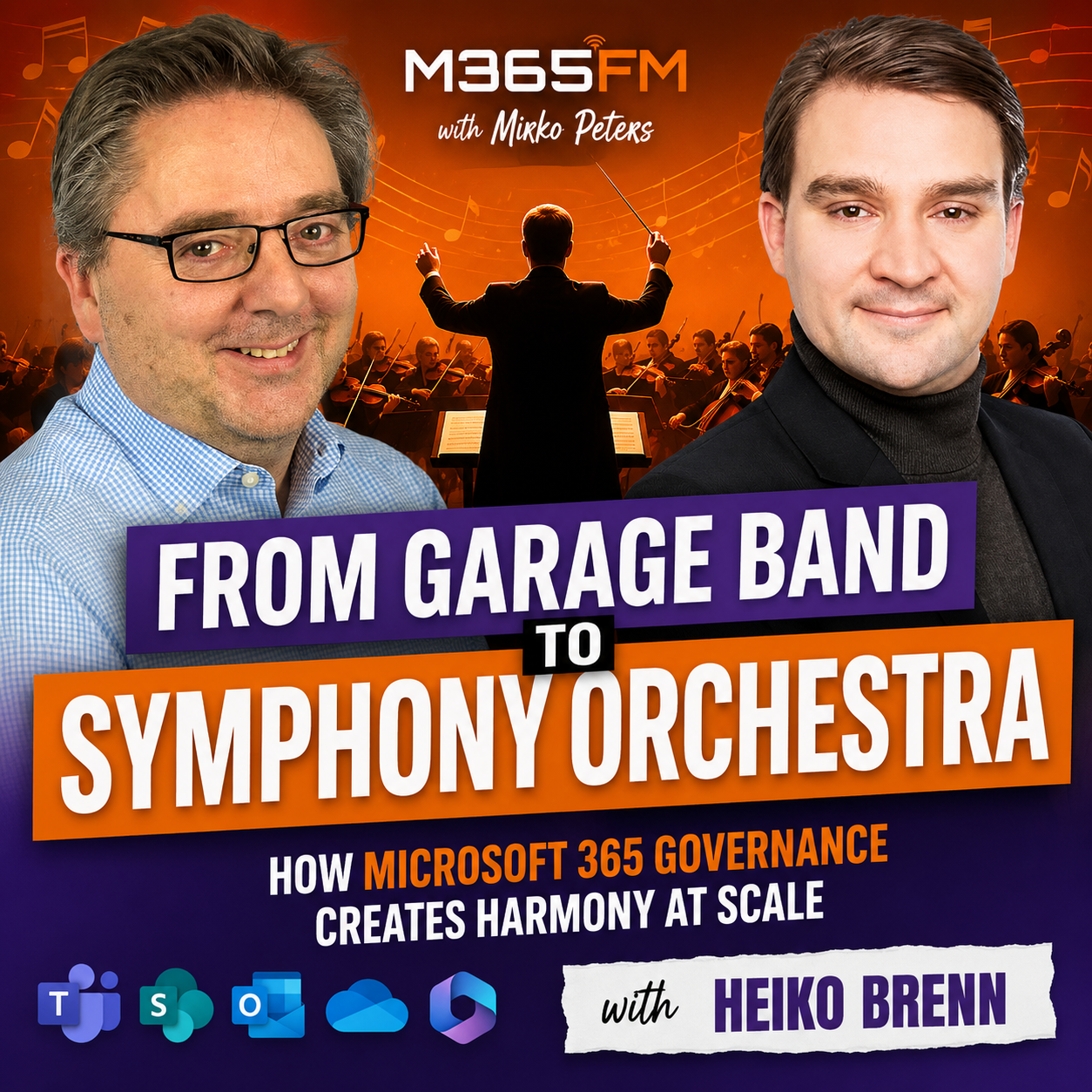
From Garage Band to Symphony Orchestra- How Microsoft 365 Governance Creates Harmony at Scale — with Heiko Brenn
Microsoft 365 can begin like a garage band. A few people collaborate, everybody knows what the others are doing, Teams are created when needed, SharePoint sites appear naturally, and external guests are invited without requiring complicated processes. But as the organization grows, more musicians join the band. Teams multiply, SharePoint sites accumulate, guests remain after projects end, naming conventions become inconsistent, ownership becomes unclear, and manual administration can no longer k...
Guests: Mirko Peters , Heiko Brenn
Aug. 16, 2026
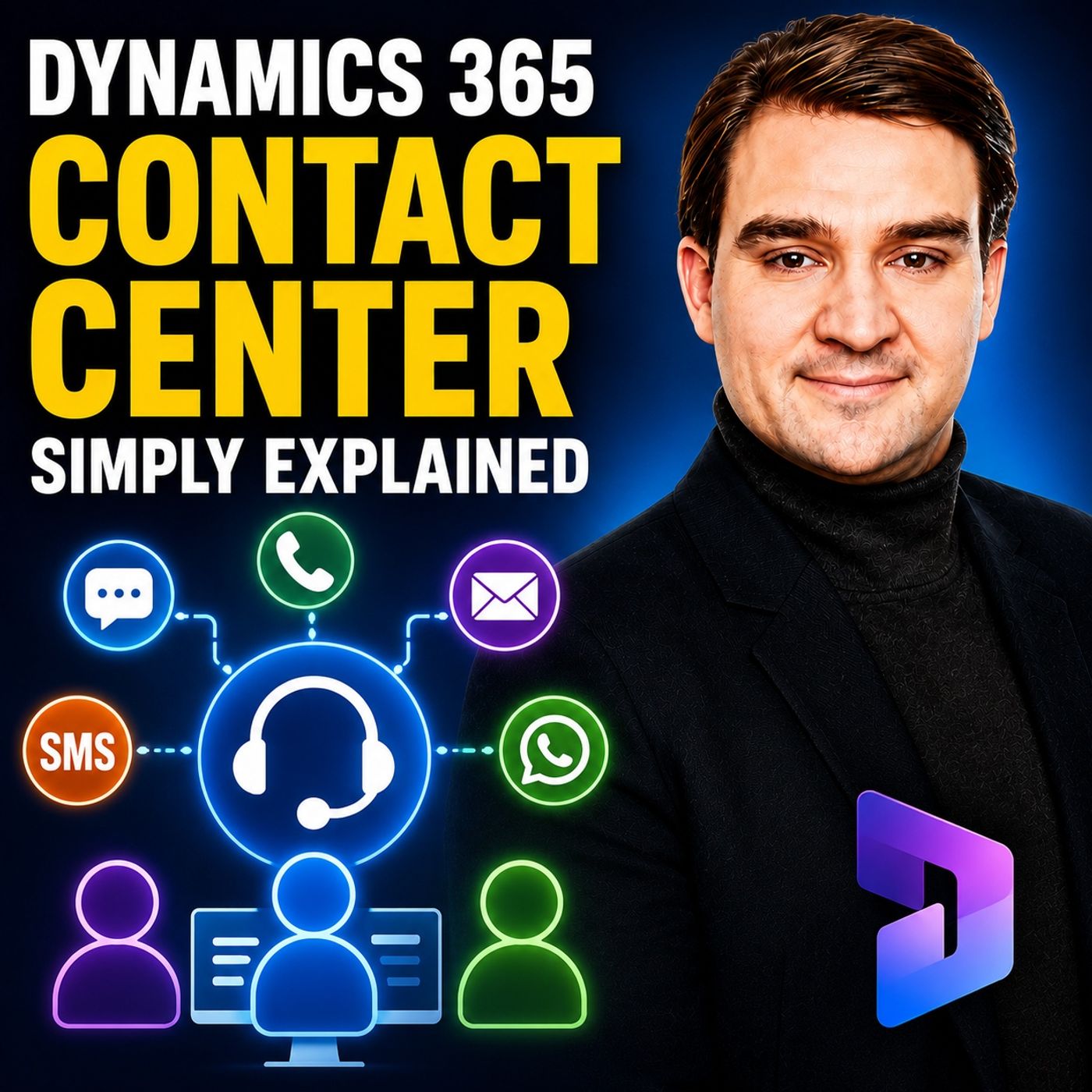
Dynamics 365 Contact Center - Simply Explained
Imagine contacting a company about a missing order through web chat. The automated assistant cannot solve the problem, so you call instead. The phone agent asks for your order number, your address, and the entire story again. Then you are transferred and explain everything for a third time. That is not really a customer problem—it is a systems problem. In this episode of Microsoft Knowledge Nuggets on M365 FM, we explain Dynamics 365 Contact Center in plain English and look at how Microsoft brin...
Aug. 16, 2026
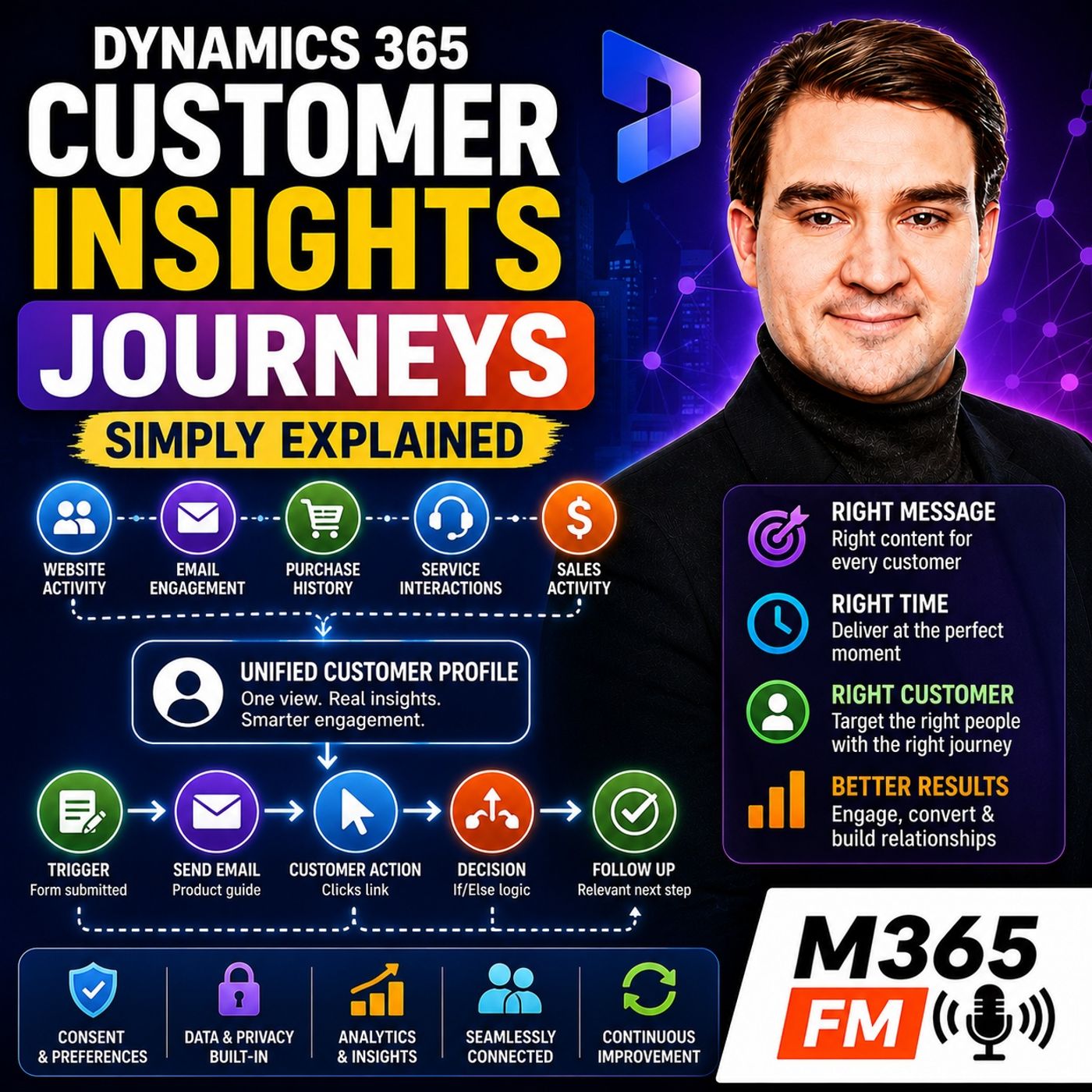
Dynamics 365 Customer Insights Journeys - Simply Explained
What exactly is Dynamics 365 Customer Insights - Journeys? Is it simply Microsoft's tool for sending marketing emails, or is it something much larger? In many organizations, Marketing sends emails from one system, Sales manages opportunities somewhere else, website forms create another collection of customer information, and Customer Service maintains its own history. The result is a fragmented customer conversation where messages arrive too late, customers receive irrelevant information, and em...
Aug. 15, 2026
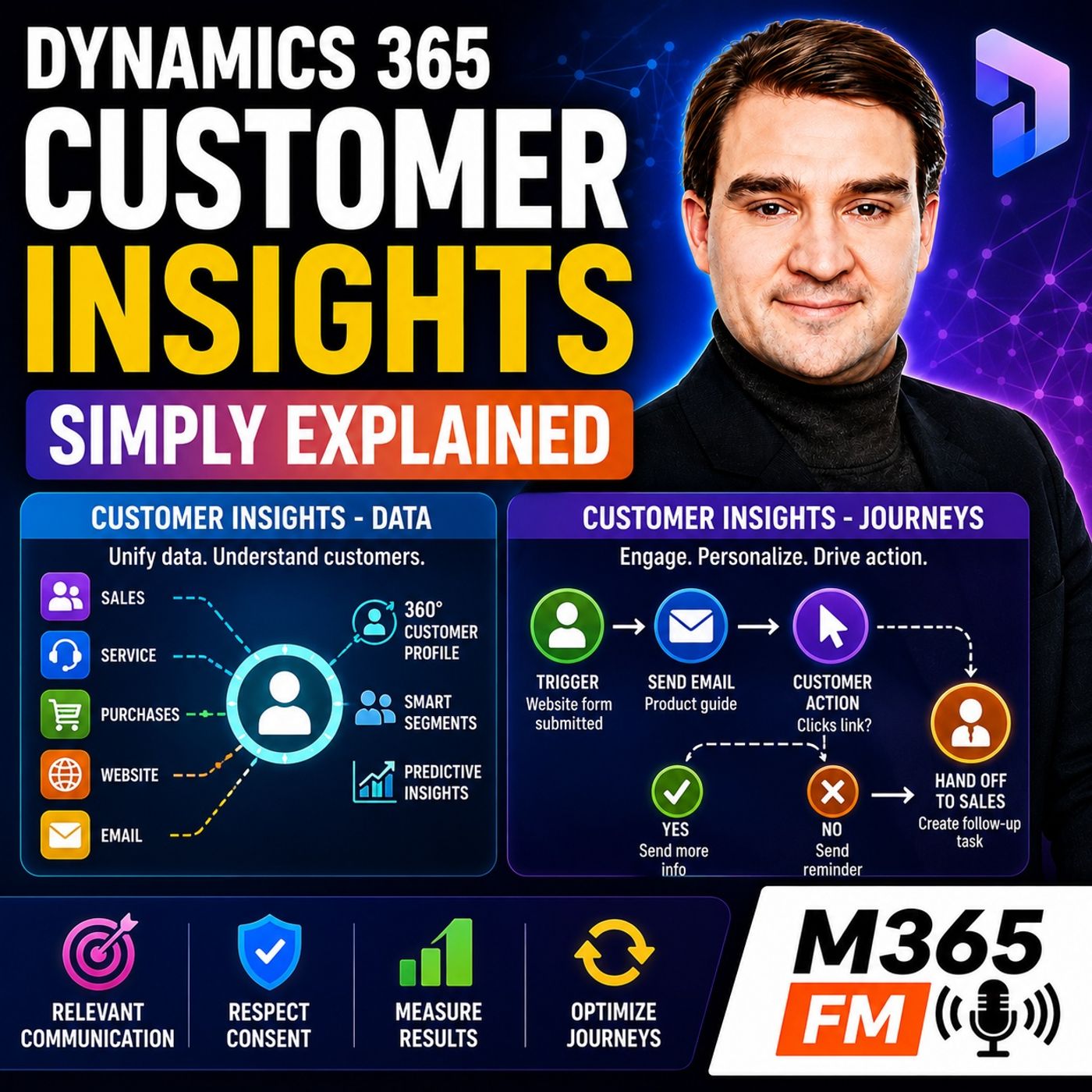
Dynamics 365 Customer Insights - Simply Explained
A customer buys from your company, signs up for emails, downloads a guide, visits your website, and later contacts support. How much of that history can the employee speaking with them actually see? In many organizations, Sales sees one piece of the relationship, Customer Service sees another, Marketing owns engagement information, and website behavior sits somewhere else entirely. Dynamics 365 Customer Insights is designed to bring those pieces closer together so organizations can understand th...
Aug. 15, 2026
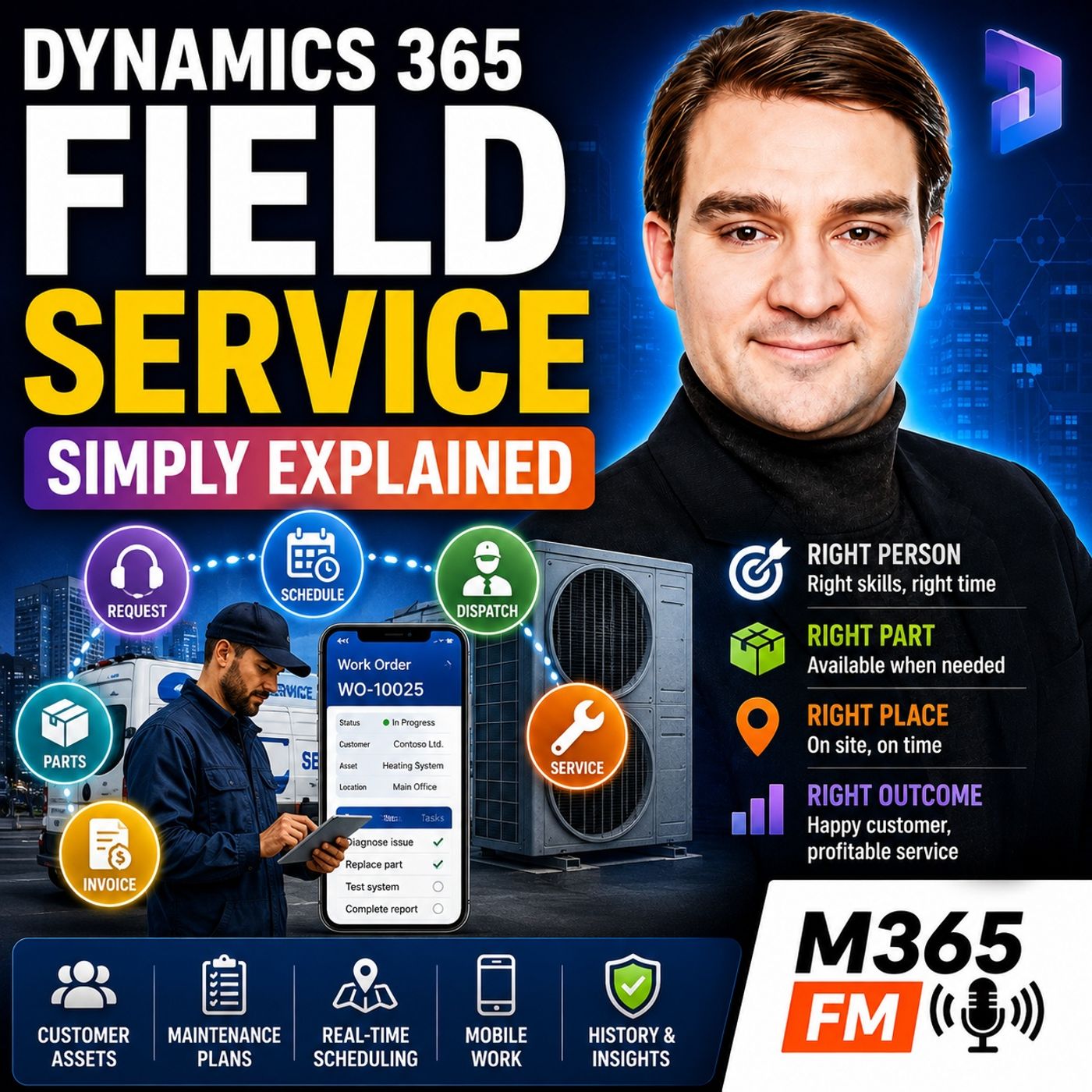
Dynamics 365 Field Service - Simply Explained
A heating system stops working, and the customer wants it repaired today. But getting somebody to the customer is only part of the problem. The dispatcher needs to find a technician who is nearby, available, qualified to work on that specific equipment, and ideally already carrying the replacement part. The technician needs the complete service history and clear instructions, while the office needs to know what happened and eventually turn the completed work into an accurate invoice. Dynamics 36...
Aug. 15, 2026
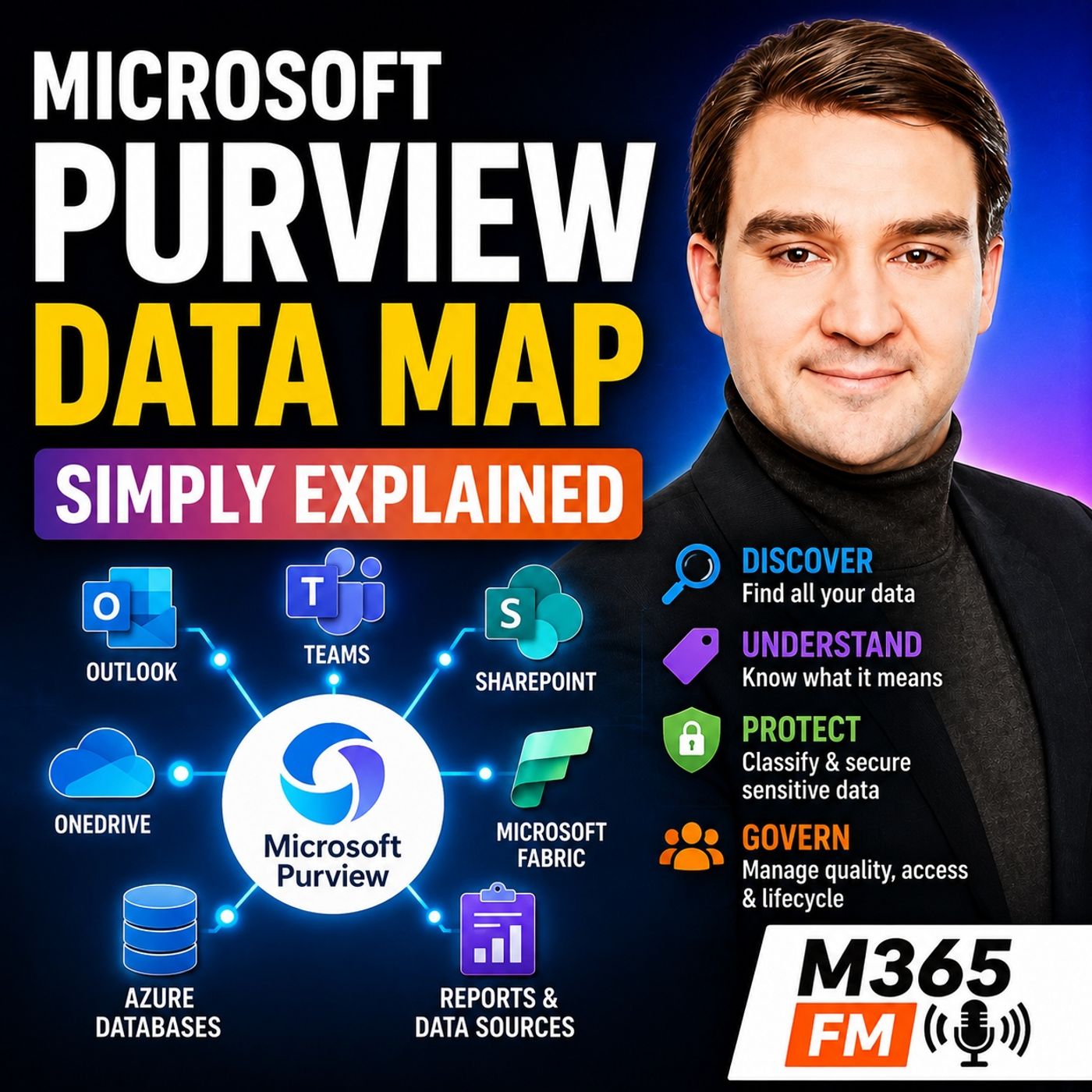
Microsoft Purview Data Map - Simply Explained
Microsoft 365 data rarely stays in one place. An employee might answer email in Outlook, collaborate in Teams, save documents in SharePoint and OneDrive, analyze information in Microsoft Fabric, export a report, change a few numbers in Excel, and send the spreadsheet to several colleagues. Each individual application may be secure, but the information continues moving, being copied, renamed, shared, and sometimes forgotten. In this episode of Microsoft Knowledge Nuggets on M365 FM, we explain ho...

Aug. 15, 2026
Microsoft Entra Connect - Simply Explained
Microsoft Entra Connect is one of those Microsoft technologies almost everyone working with Microsoft 365 has heard about, but its actual job is often misunderstood. Why do organizations need it? What exactly gets synchronized between Active Directory and Microsoft Entra ID? Where are passwords checked? And what happens if synchronization stops working? In this episode of Microsoft Knowledge Nuggets on M365 FM, we break Microsoft Entra Connect down into its essential building blocks: synchroniza...
Aug. 15, 2026
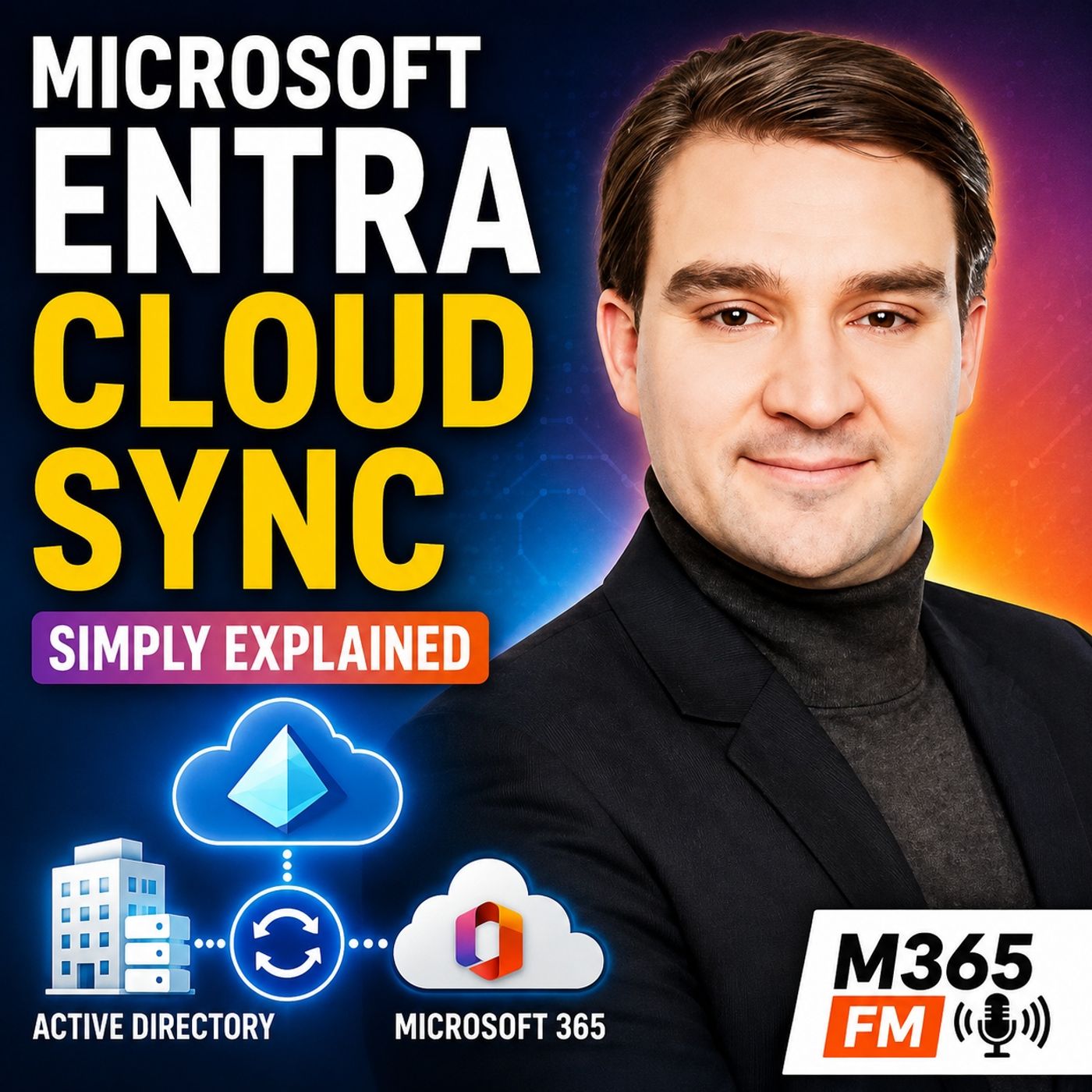
Microsoft Entra Cloud Sync - Simply Explained
Microsoft Entra Cloud Sync provides organizations with a cloud-managed way to synchronize identities from on-premises Active Directory into Microsoft Entra ID. But how is it different from Microsoft Entra Connect, why would an organization choose it, and what has changed in 2026? In this episode of Microsoft Knowledge Nuggets on M365 FM, we break down Entra Cloud Sync from the basic identity problem through architecture, high availability, scoping, security, hybrid environments, and the decision...
![Everyone Wants Copilot—but Is Your Data Ready: Microsoft Fabric Architecture with Walter Calcagno [MVP-MCT]](https://d3wo5wojvuv7l.cloudfront.net/t_rss_itunes_square_1400/images.spreaker.com/original/f90075aebd3fd5db4aa669d5a07c6cc7.jpg "Everyone Wants Copilot—but Is Your Data Ready: Microsoft Fabric Architecture with Walter Calcagno [MVP-MCT]")
Aug. 15, 2026
Everyone Wants Copilot—but Is Your Data Ready: Microsoft Fabric Architecture with Walter Calcagno [MVP-MCT]
Everyone wants Copilot. Everyone wants AI agents. Everyone wants employees to ask natural-language questions and immediately receive trustworthy answers from enterprise data. But what happens when the underlying data is fragmented, business definitions conflict, governance is weak, and semantic models were never designed for AI? In this episode of M365 FM, Mirko Peters sits down with Walter E. Calcagno, Microsoft MVP in Data Platform, Microsoft Certified Trainer, data architect, author, educator...
Guests: Mirko Peters , Walter Calcagno
Aug. 14, 2026
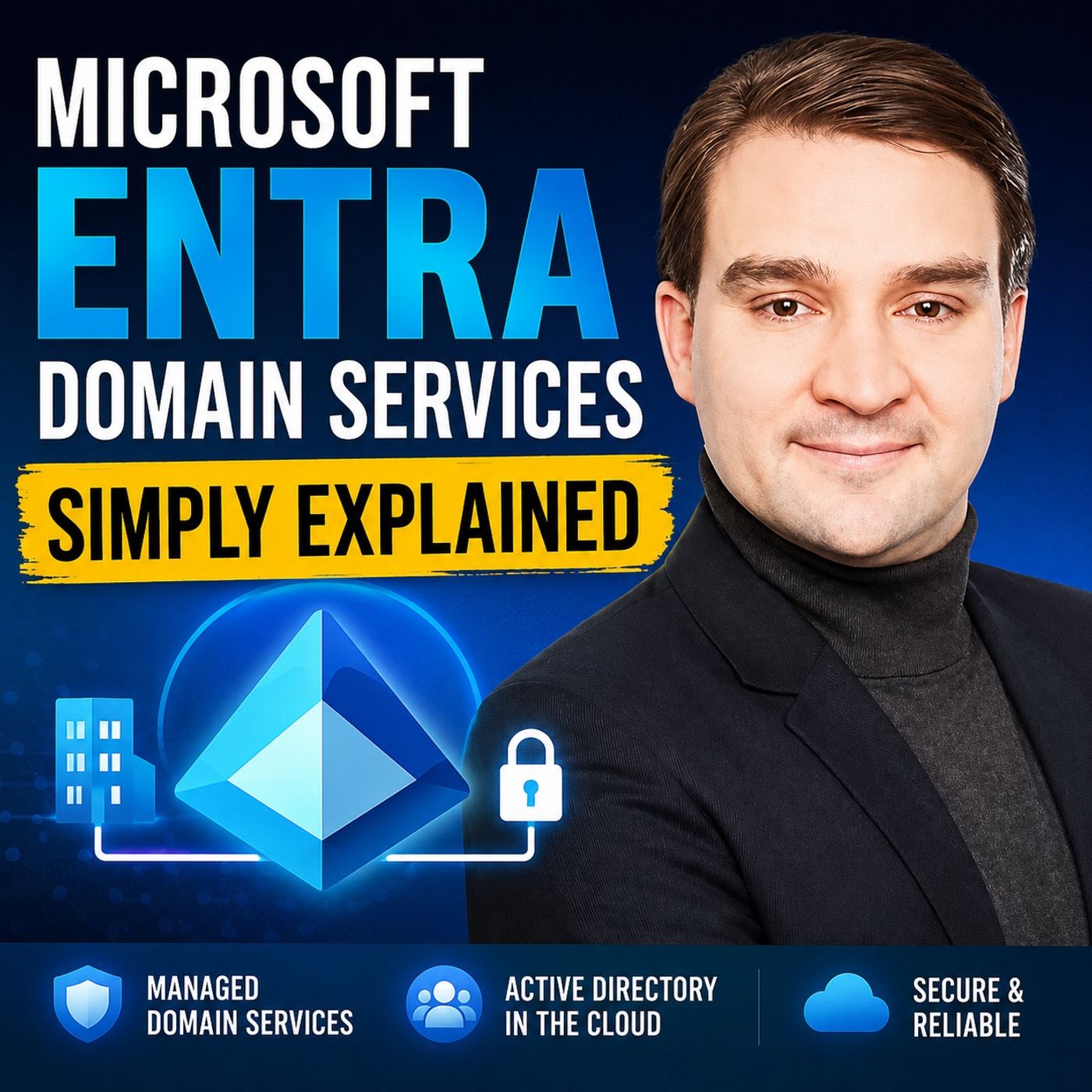
Microsoft Entra Domain Services - Simply Explained
Microsoft Entra ID is built for modern cloud identity—but what happens when an older application moves to Azure and still expects a traditional Windows domain?In this episode of Microsoft Knowledge Nuggets, Mirko Peters explains Microsoft Entra Domain Services and the specific problem it solves. We look at why moving a legacy application into Azure doesn't automatically remove its dependency on LDAP, Kerberos, NTLM, domain join, DNS, and Group Policy—and how Microsoft provides these capabilities...
![The Future of AI Software Factories- OpenCLAW, Agent Orchestration & The Intelligence Age with Mark Smith [MVP]](https://d3wo5wojvuv7l.cloudfront.net/t_rss_itunes_square_1400/images.spreaker.com/original/dd815e95c6188c4efdf6d971a54feb7e.jpg "The Future of AI Software Factories- OpenCLAW, Agent Orchestration & The Intelligence Age with Mark Smith [MVP]")
Aug. 14, 2026
The Future of AI Software Factories- OpenCLAW, Agent Orchestration & The Intelligence Age with Mark Smith [MVP]
What happens when AI stops being just a tool and becomes the team that designs, builds, tests, secures, documents, deploys, and even maintains your software?In this episode of the M365 FM Podcast, Mirko Peters speaks with Mark Smith [MVP], widely known as NZ365Guy, about the transition from traditional Microsoft development toward AI-first software engineering. Mark brings decades of experience across Microsoft technologies, Dynamics 365, Power Platform, Copilot, AI platforms, consulting, traini...
Guests: Mirko Peters , Mark Smith
Aug. 13, 2026
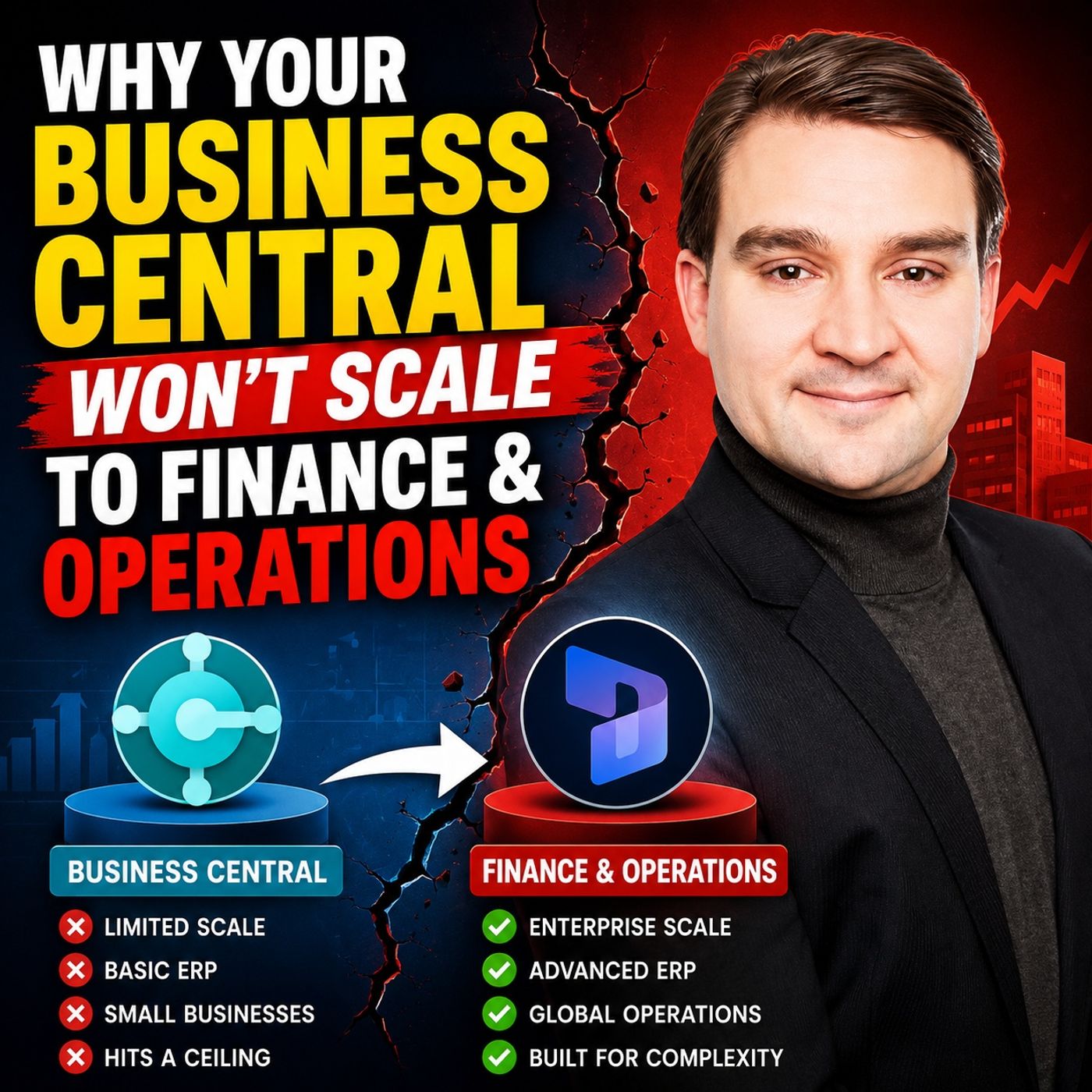
Why Your Business Central Won't Scale to Finance & Operations
Business Central works. Your finance team trusts the numbers. The company grows. Then someone says: “We’ll just move to Finance & Operations later.”There’s one problem: Business Central and Dynamics 365 Finance & Operations are not two steps on the same ERP ladder.In this episode of M365 FM, Mirko Peters breaks down why moving from Business Central to Finance & Operations is not a traditional upgrade or migration. We explore the architectural differences, data models, consolidation challenges, D...
![PowerPoint Like a Pro- Hidden Features, Corporate Templates & Copilot with Fiona Walsh [MVP]](https://d3wo5wojvuv7l.cloudfront.net/t_rss_itunes_square_1400/images.spreaker.com/original/db2a87256d9a831fec27781161e7867e.jpg "PowerPoint Like a Pro- Hidden Features, Corporate Templates & Copilot with Fiona Walsh [MVP]")
Aug. 13, 2026
PowerPoint Like a Pro- Hidden Features, Corporate Templates & Copilot with Fiona Walsh [MVP]
PowerPoint is one of the most widely used business applications in the world — but many professionals are only scratching the surface of what it can actually do. In this episode of the M365 FM Podcast, Mirko Peters talks with Microsoft PowerPoint MVP Fiona Walsh about the PowerPoint features that experienced users still overlook, how organizations can build better corporate templates, and where Microsoft Copilot genuinely helps — and where it still has work to do. Fiona brings more than 20 years...
Guests: Mirko Peters , Fiona Walsh
Aug. 13, 2026
Microsoft Cloud PKI - Simply Explained
Microsoft Cloud PKI brings certificate-based authentication into the cloud—but what exactly does that mean, why would you need certificates, and can it really replace traditional on-premises PKI infrastructure?In this episode of Microsoft Knowledge Nuggets, Mirko Peters explains Microsoft Cloud PKI in plain English. We explore certificates, certificate authorities, Intune, SCEP, device authentication, secure Wi-Fi, VPN access, certificate renewal and revocation, and where Cloud PKI fits into a m...
Aug. 12, 2026
Internal Developer Platforms (IDPs) - Simply Explained
Internal Developer Platforms promise faster development, less friction, and happier developers—but what exactly is an IDP, and how does it work behind the scenes?In this episode of Microsoft Knowledge Nuggets, Mirko Peters explains Internal Developer Platforms in plain English. We explore how platform engineering turns cloud infrastructure, security rules, automation, and developer tooling into reusable self-service experiences that help development teams build, deploy, and operate applications ...
Aug. 12, 2026
Why Power Platform Is Your Real Automation Layer — Not Custom Code
Why Power Platform Is Your Real Automation Layer — Not Custom Code Every new automation request in Microsoft Dynamics 365 seems to become a development ticket. A new approval path, Teams notification, reminder, document-generation process, or...
Guests: Mirko Peters , Michael Roth
![Power Platform Governance Without Killing Innovation: Security, DLP, Environments & Citizen Development with Michael Roth [MVP]](https://d3wo5wojvuv7l.cloudfront.net/t_rss_itunes_square_1400/images.spreaker.com/original/01f7a6ab4406f63862e643512e38cac3.jpg "Power Platform Governance Without Killing Innovation: Security, DLP, Environments & Citizen Development with Michael Roth [MVP]")
Aug. 12, 2026
Power Platform Governance Without Killing Innovation: Security, DLP, Environments & Citizen Development with Michael Roth [MVP]
Power Platform makes it possible for people across an organization to solve problems, automate processes, and build business applications faster than traditional development approaches. But that accessibility also creates difficult enterprise questions: Who can build what? Where does company data go? How should environments be structured? And how can organizations prevent shadow IT without becoming the department that says no to every new idea? In this episode of M365 FM, Mirko Peters talks with...
Guests: Mirko Peters , Michael Roth
Aug. 12, 2026
Git - Simply Explained
Git — Simply ExplainedHave you ever broken something that worked yesterday and then searched through folders named “final,” “final-final,” and “use-this-version”? Git replaces that confusion with a clear, traceable history of your project.In this episode of M365 FM, Mirko Peters explains Git in plain English. You will learn how commits create meaningful checkpoints, how the working directory and staging area fit together, why developers use branches, how merges and conflicts work, and where GitH...
Aug. 11, 2026
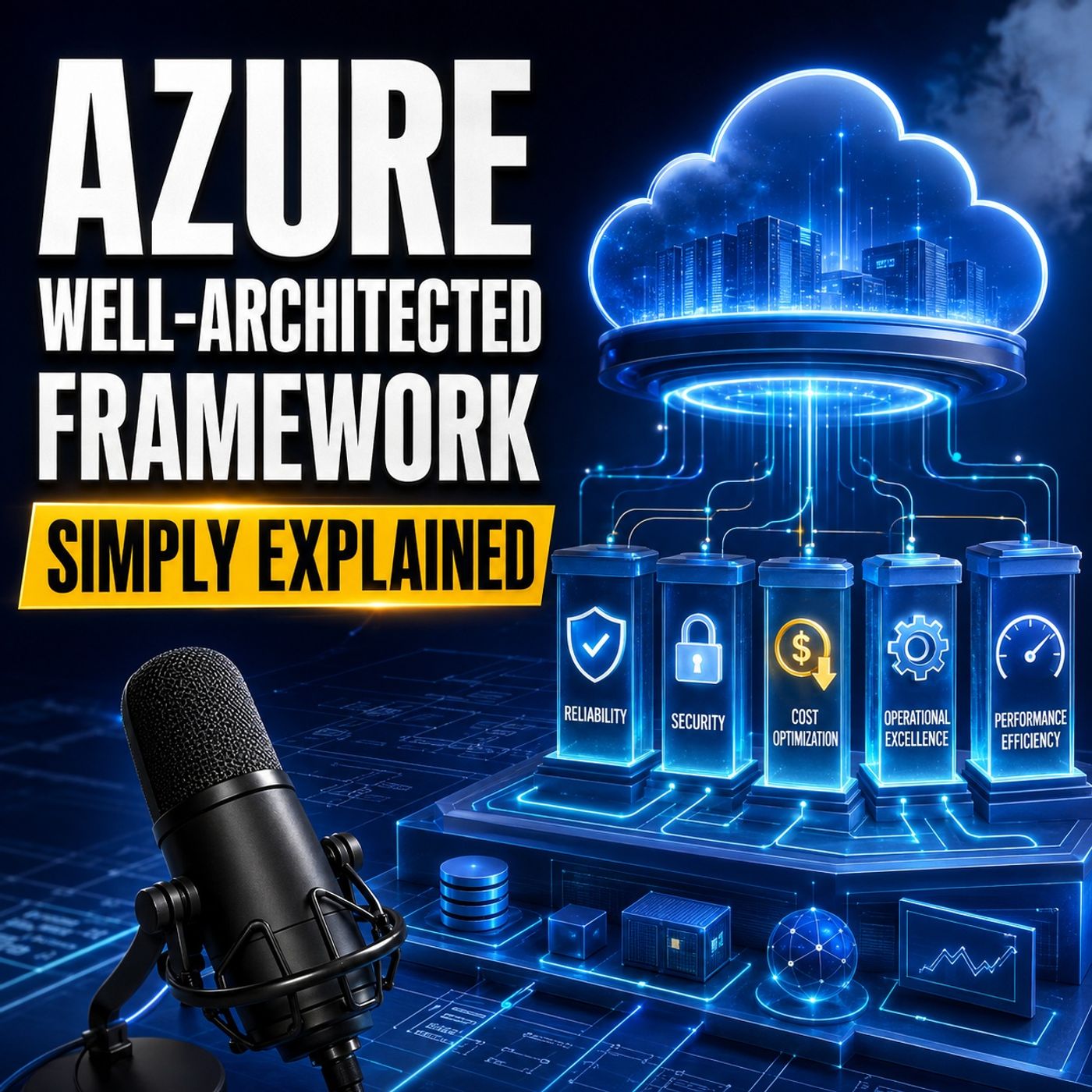
Azure Well-Architected Framework - Simply Explained
Building a successful Azure workload involves much more than selecting the right cloud services. Reliability problems, security gaps, unexpected costs, weak operational processes, and poor performance often come from the architectural decisions surrounding those services.In this episode of M365 FM, we explain the Azure Well-Architected Framework in clear, practical language. You will learn how its five pillars help teams design, operate, and continuously improve Azure workloads while balancing b...
Aug. 11, 2026
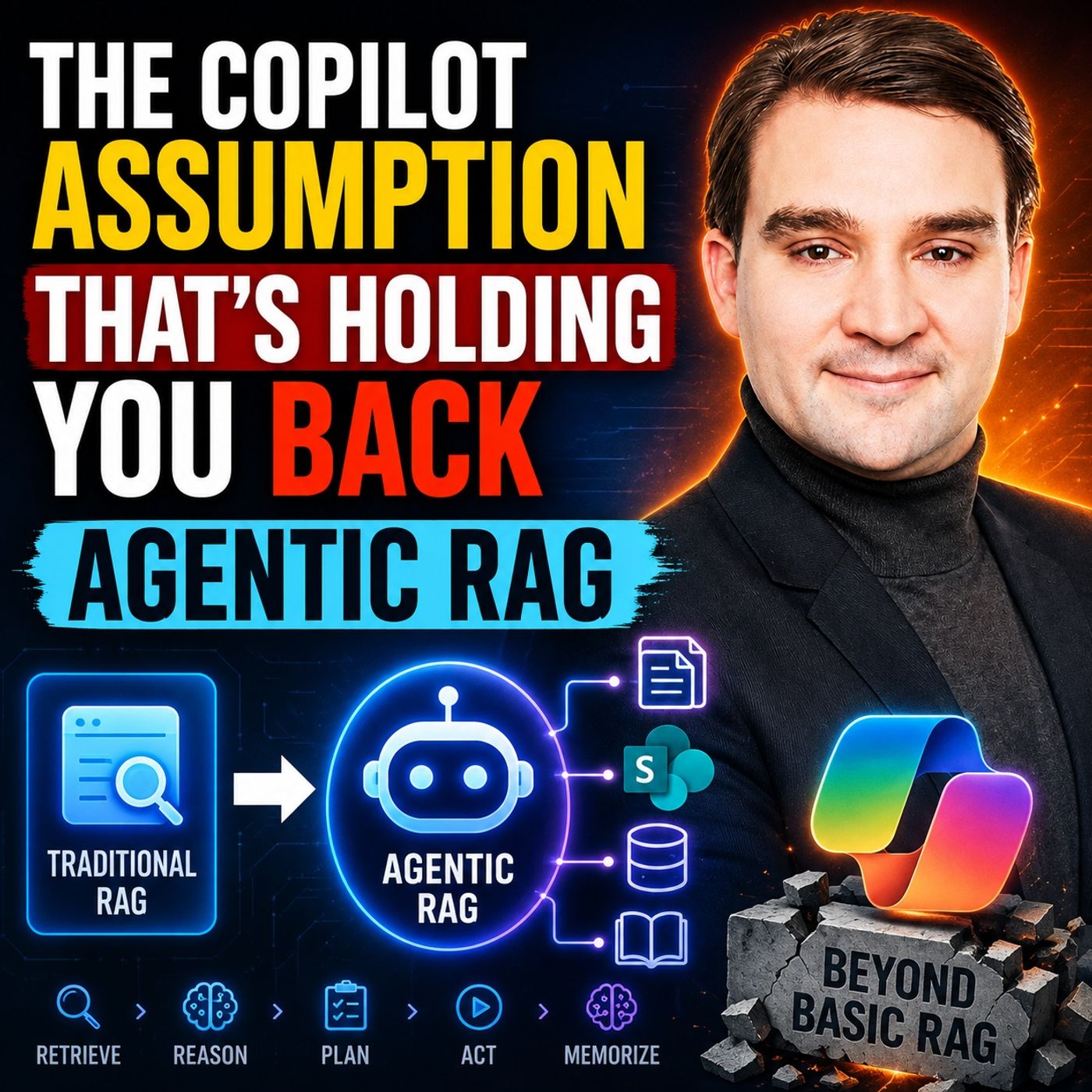
The Copilot Assumption That's Holding You Back — Agentic RAG
Most people still think Microsoft Copilot is fundamentally a question-and-answer system: you ask something, it searches for information, and an LLM generates an answer. But that mental model is becoming outdated. Copilot is evolving toward an orchestration system that can determine where to search, evaluate what it finds, decide whether additional information is required, and increasingly take action based on the result. In this deep dive, we break down Agentic RAG, how it differs from tradition...
![From Demo to Production- Building Enterprise AI Agents That Actually Work with Microsoft Copilot Studio with Elliot Margot [MVP]](https://d3wo5wojvuv7l.cloudfront.net/t_rss_itunes_square_1400/images.spreaker.com/original/d5d0023ba92fcb8daa6f22b59ec9920d.jpg "From Demo to Production- Building Enterprise AI Agents That Actually Work with Microsoft Copilot Studio with Elliot Margot [MVP]")
Aug. 11, 2026
From Demo to Production- Building Enterprise AI Agents That Actually Work with Microsoft Copilot Studio with Elliot Margot [MVP]
In this episode of the M365 Show, Mirko Peters speaks with Elliot Margot, Microsoft MVP for Microsoft 365 Copilot and Copilot Studio Team Lead at Witivio. Elliot shares a practical perspective on taking AI from an impressive demo to a secure, governed and genuinely useful enterprise solution. The conversation covers Microsoft Copilot Studio, multi-agent systems, enterprise RAG, MCP, Power Automate, governance, cost control and the human side of AI adoption. ㅤ ㅤ FROM CHATBOTS TO ENTERPRISE AI AGE...
Guests: Mirko Peters , Elliot Margot