 EN
 Deutsch
 Español
 Français
 Italiano
 Português
 Nederlands
 Polski
 Bahasa Indonesia
 Русский
 Українська
 العربية
 עברית
 हिन्दी
 日本語
 한국어
2026-06-18 · Season 2
How to Futureproof Your Career in the AI Era with Sarah Jones

Quick answer: futureproof your career in the AI era is covered in this M365 FM episode with a practical focus on how it works, where it fits, and the architecture, security, governance, or operational choices that matter in real Microsoft environments.
Have you ever wondered if your job will survive the age of ai? You’re not alone. Many people worry about what comes next. On the M365 FM Podcast, Sarah Jones shares advice from her years as a recruiter. She suggests practical steps for Futureproofing Your Career:
- Embrace lifelong learning.
- Build soft skills like creativity and emotional intelligence.
- Grow your network.
You can add value by learning how to use AI, focusing on roles that need human touch, and making your personal brand stand out.
Key Takeaways
- Embrace lifelong learning to stay relevant in a fast-changing job market.
- Develop strong human-centered skills like communication, leadership, and relationship-building.
- Learn how to use AI tools to enhance your productivity and problem-solving abilities.
- Focus on building a strong personal brand to stand out to potential employers.
- Stay adaptable and open to new opportunities as AI reshapes various industries.
- Set clear career goals to guide your learning and professional growth.
- Network actively to create connections that can support your career advancement.
- Regularly assess your skills and identify gaps to target your learning effectively.
AI’s Impact on Careers

AI is changing the way you look at jobs. You might notice more talk about automation, new job titles, and even some worry about job security. Let’s break down what’s really happening in the job market and how you can stay ahead.
Job Market Shifts
Automation Trends
AI now handles many repetitive tasks. This shift frees you up to focus on creative and high-value work. For example, instead of spending hours on data entry, you might use that time to solve problems or connect with clients. Companies see this as a chance to boost productivity and let people do what machines can’t.
Younger workers, especially those aged 22-25, feel these changes the most. In 2024, fewer young people find jobs in roles exposed to ai. The job finding rate in these positions dropped by about 0.5%. Entry-level jobs face the biggest shake-up, with 77% of executives saying these roles will change a lot.
New Career Paths
While some jobs disappear, new ones pop up. You see fresh opportunities in healthcare, finance, and logistics. Roles like AI trainers, data analysts, and prompt engineers are now in demand. If you learn new skills, you can move into these growing fields. Many experts believe ai and machine learning will create more jobs than they replace, as long as you keep learning.
Industries Most Affected
High-Risk Sectors
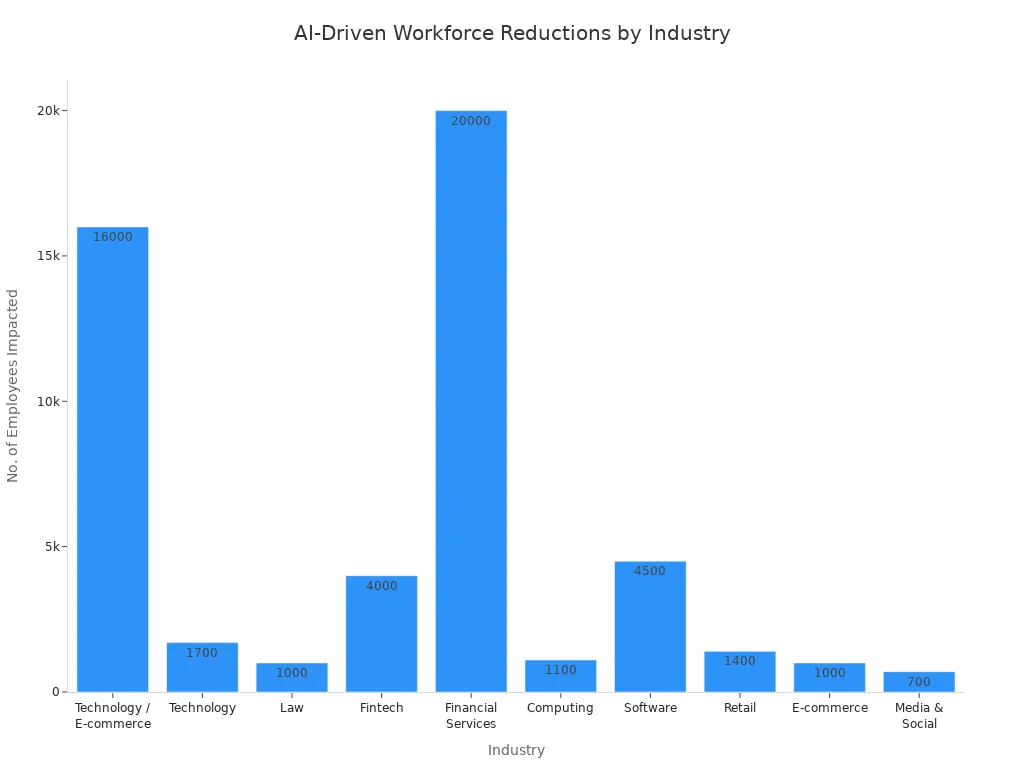
Some industries feel the impact of ai more than others. Technology, finance, and professional services see the biggest changes. Jobs like writers, computer programmers, and web designers face higher risks from automation. Here’s a quick look at recent workforce changes:
| Industry | Company | No. of Employees Impacted | Date |
|---|---|---|---|
| Technology / E-commerce | Amazon | ~16,000 | January 2026 |
| Technology | ASML | ~1,700 | January 2026 |
| Software | Oracle | ~30,000 | April 2026 |
| Financial Services | Citigroup | ~20,000 (target) | Planned for 2026 |
Growth Areas
Not all news is bad. Some sectors grow because of ai. Healthcare, education, and energy need more people who understand technology. In jobs with lots of computer use, ai actually helps create more positions. If you have good digital skills, you can benefit from these changes.
Myths About AI and Jobs
You might hear that ai will take all the jobs. That’s not true. While ai does automate some tasks, it rarely wipes out entire occupations. Instead, it changes what you do at work. You spend less time on routine work and more on creative, social, or problem-solving tasks. The real winners are those who adapt and learn new skills. Remember, ai is a tool. It can help you build a stronger career if you use it wisely.
Futureproofing Your Career: Essential Skills

You want to stay ahead in a world shaped by artificial intelligence. The best way to do that is by focusing on skills that AI cannot easily copy. Sarah Jones, featured on the M365 FM Podcast, says that futureproofing your career starts with building strong human-centered skills, technical know-how, and a mindset ready for change.
Human-Centered Skills
AI can handle many tasks, but it struggles with the things that make you human. These skills help you connect, lead, and solve problems in ways machines cannot.
Communication
You need to express ideas clearly. Good communication helps you share your vision, explain complex topics, and build trust. Sarah Jones points out that speaking and writing well are the bedrock of workplace success. Machines may process data, but you bring stories to life and help others understand. Public speaking, storytelling, and conflict mitigation are all part of this skill set.
Tip: Practice explaining your work to someone outside your field. This builds confidence and sharpens your communication.
Leadership
Strong leadership guides teams through change. You inspire others, set goals, and help people adapt. AI cannot replace your ability to motivate, make ethical decisions, or build trust. Sarah highlights that leadership and collaboration are becoming more valuable as technology takes over routine tasks. You show empathy, make tough choices, and help your team grow.
- Empathy
- Ethical judgment
- Trust building
- Creativity
Relationship-Building
You build relationships by connecting with others. Machines cannot form bonds or understand emotions. Relationship-building means listening, showing respect, and working together. Sarah says that human-to-human interactions are still the foundation of success. You create networks, solve conflicts, and support your colleagues.
- Dexterity
- Improvisation
- Collaboration
Technical and AI Literacy
You need to understand how AI works and how to use it. This does not mean you must become a programmer. You should know what AI can do, how it learns, and where it falls short. Futureproofing your career means using AI tools to solve real problems.
Data Skills
Data is everywhere. You must know how to read, analyze, and use data to make decisions. Employers want people who can spot trends, ask smart questions, and find insights. Try small projects, like building a simple chatbot or analyzing sales numbers. This helps you learn by doing.
- Data analysis
- Critical thinking
- Ethical reasoning
AI Tools Basics
You should get comfortable with AI tools. Start by using them in your daily work. Ask clear questions, refine prompts, and build simple workflows. Learn to check AI outputs for accuracy and bias. Sarah recommends integrating AI tools into your routine to reinforce learning and improve results.
- Machine learning basics
- Prompt engineering
- Natural language processing
- AI ethics and governance
Note: Focus your training on real business projects. This makes your learning practical and helps you future-proof your career.
Adaptability and Problem-Solving
Change happens fast. You must adapt and solve new problems every day. The World Economic Forum says half of all employees will need new skills soon. Employers look for people who can think critically, stay creative, and handle challenges. Futureproofing your career means staying flexible and ready to learn.
- Adaptability
- Creativity
- Critical thinking
- Problem-solving
You can future-proof your career by combining human-centered skills with technical knowledge. Keep learning, stay curious, and use AI as a tool to boost your strengths. The future belongs to those who can lead, connect, and solve problems in ways machines cannot.
Lifelong Learning Mindset
You can’t predict every twist in your career, but you can prepare for change. That’s where a lifelong learning mindset comes in. This mindset means you stay curious, keep growing, and never stop picking up new skills. In the age of AI, this approach helps you stay relevant and ready for anything.
Why does lifelong learning matter so much now? Technology moves fast. The skills you use today might look different next year. If you want to future-proof your career, you need to keep learning. Sarah Jones from the M365 FM Podcast says that continuous learning is the secret to staying ahead, especially when AI changes the rules.
You might wonder how to build this mindset. Here are some simple ways to get started:
- Sign up for online courses or attend workshops. You can learn about AI, digital tools, or anything that sparks your interest.
- Join conferences or webinars. These events help you meet experts and hear about the latest trends.
- Read articles, listen to podcasts, or watch videos about your industry. Staying informed keeps you sharp.
- Try new projects at work. When you step outside your comfort zone, you grow faster.
- Ask for feedback from your manager or peers. Honest advice helps you improve.
You don’t have to do everything at once. Pick one or two actions and build from there. The goal is to make learning a habit, not a chore.
A lifelong learning mindset also means you stay flexible. You adapt when things change. You look for new ways to solve problems. You ask questions and stay open to new ideas. This attitude helps you handle challenges and spot new opportunities.
Here’s a quick checklist to help you focus your efforts:
- Develop AI and digital literacy
- Enhance critical thinking and problem-solving skills
- Improve communication and storytelling abilities
- Foster leadership and collaboration
- Commit to continuous learning
You can also boost your career by earning certifications or joining professional education programs. These steps show employers that you care about growth and can handle new challenges.
Remember, future proofing your career isn’t about knowing everything. It’s about staying curious and willing to learn. When you make learning a lifelong habit, you build resilience and confidence. You become someone who thrives in any job market—even one shaped by AI.
Tip: Set a small learning goal each month. Maybe you read a new book, complete a course, or try a new tool. Small steps add up over time!
Personal Branding and Visibility
Building your personal brand helps you stand out in a crowded job market. When you show your skills and adaptability, you attract more opportunities. Let’s look at how you can boost your visibility and make a strong impression online.
LinkedIn Optimization
Your LinkedIn profile is often the first thing employers see. You want it to show your strengths and your ability to adapt in the age of AI.
Profile Tips
- Use AI tools to organize your experiences and highlight your skills.
- Update your profile often with new projects and achievements.
- Write about your successes using active language and clear results.
- Ask peers and industry leaders for endorsements to validate your skills.
- Share your thoughts and experiences by posting helpful content.
According to Donnie Maclary, a principal recruitment consultant, you should list your own projects, even small ones like GitHub contributions. Startups look for people who show initiative and can pivot quickly.
Showcasing Adaptability
Show that you can handle change. Add examples of how you learned new tools or took on different roles. Mention times when you solved problems or led a team through a challenge. These stories prove you can thrive in a fast-changing world.
CV and Online Presence
Your CV and online profiles need to reflect your skills, especially those related to AI. Recruiters use AI tools to screen resumes, so you want yours to stand out.
Highlighting AI Skills
- List any AI tools or platforms you use.
- Include projects where you applied AI or data analysis.
- Use keywords that match the jobs you want.
Studies show that AI tools can screen resumes 25% faster than humans. For example, L’Oreal used an AI tool that cut resume review time from 40 minutes to just 4 minutes. A strong online presence and clear AI skills help you get noticed.
Demonstrating Value
Show the impact you made in past roles. Use numbers or short stories to explain your results. Employers want to see how you solve problems and add value.
Building a Professional Network
A strong network supports your growth. Start by connecting with people and companies in your field. Use AI tools to find groups or individuals with similar goals. Write posts or comments to share your ideas and boost your visibility. Look for ways to help others and build genuine relationships. When you focus on your network, you open doors for your career.
Freelancing and New Work Models
The world of work is changing fast. You might notice more people choosing freelancing or flexible jobs instead of traditional office roles. AI plays a big part in this shift, opening new doors and changing how you approach your career.
Rise of Freelancing
Freelancing has become a popular choice for many. You get to pick your projects, set your schedule, and decide where you work. AI makes it easier to find clients and manage tasks, but it also brings new challenges.
Benefits and Challenges
Here’s what you need to know about the rise of freelancing in an AI-driven world:
- AI automates some roles, which means you can focus on creative or complex work.
- You face more competition, as people from all over the world can now offer their skills online.
- Learning AI tools helps you stay ahead, especially in fields like content creation, coding, and design.
- Clients want a mix of technology and human insight, so your unique skills matter more than ever.
“A year ago, I thought AI would simply make me faster. What I didn’t expect was that it would make my role heavier, more visible, and more accountable. Speed became common. Judgment became rare.”
Many freelancers feel anxious about AI. You might worry about job security or keeping up with new tech. Companies now support freelancers with new policies, like mental health resources and flexible workspaces. The biggest shift is that companies value your judgment and decision-making, not just your ability to get things done.
Leveraging AI for Freelancers
You can use AI to boost your productivity and even create new ways to earn money. The right tools help you work smarter, not harder.
Productivity Tools
Check out some of the most popular AI tools for freelancers:
- Perplexity helps you research and gather information quickly.
- Notion AI organizes your notes and creates action items for your projects.
- ElevenLabs lets you turn written work into high-quality audio, perfect for voiceovers.
- Descript makes editing video and audio as easy as editing text.
- Otter.ai transcribes meetings and interviews in real time, so you never miss important details.
- Copy.ai and Jasper help you write marketing content fast and efficiently.
These tools save you time and let you focus on the parts of your work that need your creativity and judgment.
Monetizing Knowledge
AI also helps you turn your expertise into income. You can create online courses, write e-books, or offer consulting services. Tools like ElevenLabs and Descript let you repurpose your written work into podcasts or videos, reaching more clients and growing your business.
Building a Sustainable Freelance Career
To build a lasting freelance career, you need to adapt and keep learning. Human-centered roles are growing fast. For example, annotation and labeling work grew by 220% last year, and jobs like career coaching increased by 74%, according to Upwork.
| Role Type | Year-over-Year Growth |
|---|---|
| Annotation and labeling work | 220% |
| Human-centric roles (e.g., career coaching) | 74% |
Stay curious, keep updating your skills, and use AI as a partner in your work. When you combine technology with your unique talents, you set yourself up for long-term success in the freelance world.
Strategies to Future-Proof Your Career
Assessing Skills and Gaps
You want to stay ahead in a changing job market. Start by figuring out where you stand. Most jobs now require digital skills, but almost one-third of workers don’t have them. Employers look for more than just technical know-how. They want critical thinking, teamwork, and problem-solving. If you want to find new opportunities, you need to know your strengths and weaknesses.
Here’s a simple way to assess your skills and gaps:
- Make a list of your current skills, including both technical and soft skills.
- Compare your list to the requirements for the roles you want.
- Ask yourself: Which skills do I use every day? Which ones do I need to improve?
- Try authentic assessments. These help you see your skills in action and encourage deeper learning.
- Reflect on your past projects. Did you solve problems or work well with others?
You can use this strategy to guide your career planning. When you know your gaps, you can focus your learning and find new opportunities.
Continuous Learning
You need to keep learning to stay competitive. Technology changes fast, and so do the skills needed for different roles. Online learning helps you pick up new knowledge without losing what you already know. Regular retraining keeps your skills sharp and relevant. Adaptive algorithms let you learn from new data and apply it to new situations.
Here are some ways to build your learning routine:
- Sign up for online courses or workshops.
- Read articles or watch videos about your industry.
- Join webinars or conferences to hear from experts.
- Practice new skills in real projects.
Tip: Set a monthly learning goal. Try a new tool or complete a course. Small steps help you grow over time.
Continuous learning opens doors to new opportunities and helps you stay ready for change. It’s a key part of career planning.
Experimenting with AI Tools
You can boost your productivity by trying out AI tools in your daily work. Start by learning the basics and stay updated with new developments. Ask your peers how they use AI tools. Schedule demos to see platforms in action. Enroll in introductory courses to learn fundamental concepts.
Get hands-on experience by experimenting with AI tools in non-critical settings. Use tools like ChatGPT for drafting emails or Ocoya for managing social media. Analysts can try Tableau for data analysis, while software developers might use GitHub Copilot for coding help. Explore different applications and be critical of the results.
Note: Real-world practice, like apprenticeships, helps you understand how AI can automate workflows and create new opportunities.
When you experiment with AI tools, you discover new ways to work smarter. You also prepare for future roles that need both human and technical skills. This approach supports your strategy for career planning and helps you find new opportunities in the age of AI.
Setting Career Goals
You want to stay ahead in your career, especially as AI changes the way people work. Setting clear career goals gives you direction and helps you focus your energy. When you know what you want, you can make better choices about learning new skills, trying new roles, or even switching industries.
Think about your career as a journey. You need a map to reach your destination. Career goals are that map. They help you see where you are now and where you want to go next. Without goals, you might feel lost or stuck.
Why do clear goals matter so much in the age of AI? Here’s what experts and research show:
- People who see a clear path for their career are more likely to stay with their company and work on their skills. This means you feel more motivated and confident.
- AI lets companies create personalized career paths. You can match your own dreams with what your company needs. This makes your work feel more meaningful.
- Many graduates know AI skills are important for getting hired. But not everyone knows where to start. Setting goals helps you plan your learning and build the right skills.
Tip: Write down your goals. People who write their goals are more likely to achieve them.
How can you set strong career goals? Start with these steps:
- Reflect on your interests and strengths. What do you enjoy? What are you good at?
- Research the job market. Look for roles that need both human and AI skills.
- Set short-term and long-term goals. Short-term goals might include learning a new AI tool or improving your public speaking. Long-term goals could be moving into a leadership role or starting your own business.
- Break big goals into small steps. For example, if you want to become a data analyst, start by taking an online course, then work on a small project.
- Review your progress often. Check in every few months. Are you moving forward? Do you need to adjust your plan?
You don’t have to figure everything out at once. Your goals can change as you learn and grow. The key is to stay curious and open to new ideas.
“A goal without a plan is just a wish.” — Antoine de Saint-Exupéry
When you set clear career goals, you give yourself a reason to keep learning and adapting. You build confidence and show employers that you’re ready for the future. In the age of AI, that’s a powerful advantage.
You can futureproof your career by focusing on value. Adapt to new changes and show your value in every project. Build your value through strong personal branding and keep learning to increase your value over time. Sarah Jones from the M365 FM Podcast reminds you that value comes from working well with people and using technology to your advantage. Show your value on LinkedIn and in your network. Stay curious and invest in your value by learning new skills. Remember, value grows when you connect with others and share your value openly. Take action now to boost your value and stay ahead. Here are some ways to add value right away:
- Communicate your value and vision about AI at work.
- Join training programs to build value and adaptability.
- Talk with your team about value and how AI can help everyone.
You have the power to shape your value and future. Start today and let your value shine!
FAQ
What skills should I focus on to stay relevant in the age of AI?
You should build strong communication, leadership, and problem-solving skills. Learn how to use AI tools. Stay curious and keep learning new things. These skills help you stand out and adapt to change.
How can I show my adaptability to employers?
Share examples on your LinkedIn or resume where you learned new tools or took on new roles. Tell stories about how you solved problems or led a team through change. Employers love real-life proof.
Do I need to learn coding to work with AI?
No, you do not need to become a coder. You can start by understanding how AI works and using basic AI tools. Many jobs need people who can use AI, not just build it.
Will AI take over all jobs?
AI will change many jobs, but it will not replace all of them. You will see new roles appear as technology grows. If you keep learning and adapt, you can find new opportunities.
How can I use AI to boost my productivity?
Try tools like Notion AI, Otter.ai, or Copy.ai. These help you organize notes, transcribe meetings, and write content faster. Use AI to handle routine tasks so you can focus on creative work.
What is the best way to keep learning new skills?
Set small learning goals each month. Take online courses, join webinars, or read articles. Practice new skills at work. Ask for feedback from your peers. Make learning a habit.
Is freelancing a good option in an AI-driven world?
Freelancing gives you flexibility and lets you pick projects that match your skills. AI tools help you find clients and manage work. If you stay adaptable and keep learning, freelancing can be a great choice.
How do I build a strong personal brand online?
Update your LinkedIn profile often. Share your achievements and new skills. Post helpful content and join conversations in your field. Connect with others and show your willingness to learn and adapt.
🎧 Listen to this episode
Want a practical explanation of How to Futureproof Your Career in the AI Era? This episode breaks down the topic in clear language and shows why it matters for Microsoft 365, Azure, Power Platform, security, AI, and modern work.
Listen to this episode if you want to:
- Understand the key concepts behind How to Futureproof Your Career in the AI Era
- See how it fits into the wider Microsoft technology ecosystem
- Learn where it can create practical value for your organization
You may also enjoy these related M365 FM episodes:
- Build a Power Platform Career with Nathalie Leenders [MVP-MCT]
- Leadership in the AI Era Beyond Approvals and Control
Discover more practical Microsoft conversations on M365 FM.
Last reviewed: July 2026.
Who Should Listen
This episode is for Microsoft administrators, architects, developers, security professionals, and business leaders who need a practical foundation before making implementation, operations, or governance decisions.
🎧 You Should Also Listen To
- AI Agents — A strongly related next step for extending this topic.
- Power Platform — A strongly related next step for extending this topic.
- Microsoft Graph Data Connect — A strongly related next step for extending this topic.
Apple Podcasts · Spotify · YouTube · YouTube Music
Host: Mirko Peters