 EN
 Deutsch
 Español
 Français
 Italiano
 Português
 Nederlands
 Polski
 Bahasa Indonesia
 Русский
 Українська
 العربية
 עברית
 हिन्दी
 日本語
 한국어
2026-07-13 · Season 2
How to Secure an AI Landing Zone in Microsoft Azure
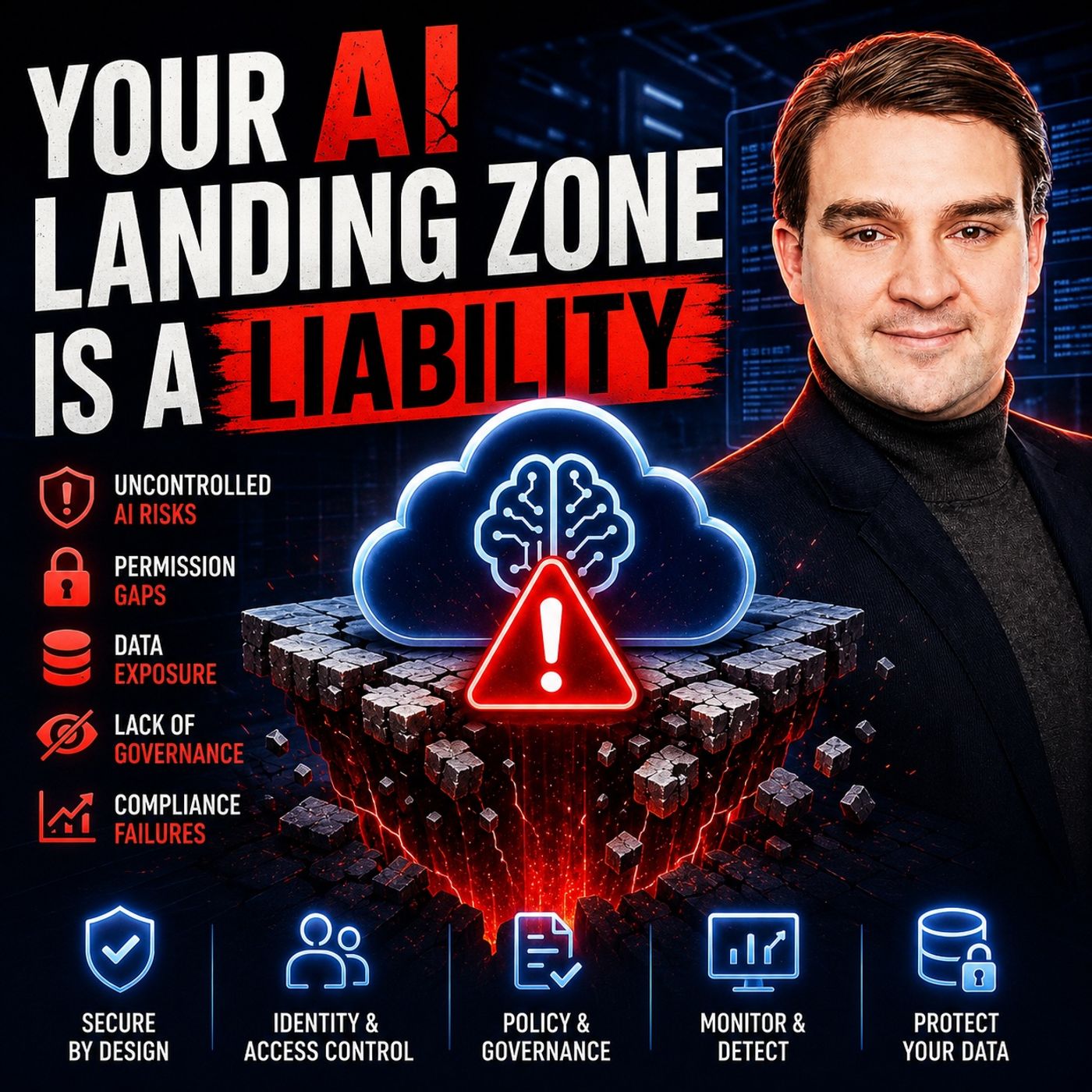
Quick answer: an Azure AI landing zone is the focus of this M365 FM episode, which explains what it does, where it fits in the Microsoft ecosystem, and the architecture, security, governance, or operational choices that matter before teams adopt or manage it.
A well-structured AI landing zone is crucial for your organization. Neglecting its design can lead to serious consequences. You may face data management issues, such as shadow AI, which can create security vulnerabilities and compliance violations. Unmanaged AI adoption introduces financial risks that hinder operational efficiency. Effective governance and collaboration across departments are essential to mitigate these risks and ensure responsible AI usage. Prioritizing a solid foundation for your AI initiatives will help you avoid these pitfalls and set the stage for success.
Key Takeaways
- A well-structured AI landing zone is essential for your organization's success. It helps mitigate risks and ensures effective AI deployment.
- Neglecting your AI landing zone can lead to serious issues like data management problems, security vulnerabilities, and compliance violations.
- Establish clear governance policies to manage risks and maintain data integrity. This creates accountability and supports successful AI initiatives.
- Monitor resource usage closely to avoid financial risks. Implement budget caps and adjust resources based on actual demand to optimize costs.
- Integrate AI solutions gradually with existing systems. Use API adapters and feedback loops to ensure seamless communication and functionality.
- Utilize advanced monitoring tools to enhance security and compliance. Tools like Microsoft Defender for Cloud can help protect your AI systems.
- Understand data sovereignty and compliance requirements. Different regions have varying regulations that can impact your AI deployment.
- Embrace the Azure AI Landing Zone Framework to streamline your AI deployments and maximize value while minimizing risks.
Design Risks in AI Landing Zones

Designing an effective AI landing zone involves navigating various risks. These risks can significantly impact your organization's ability to deploy AI solutions successfully.
Data Sovereignty Challenges
Data sovereignty refers to the legal and regulatory requirements governing data based on its location. When deploying AI in multi-cloud environments, you may encounter several challenges:
- Regulatory compliance issues arise when data is transmitted across different cloud platforms. This can lead to potential violations of privacy regulations.
- Data governance complexities include tracking assets and costs, monitoring data flows, and ensuring security across cloud boundaries.
- Security risks associated with data movement across clouds can lead to data leaks or breaches, especially when integrating multiple security systems.
- Data processed by AI models may leave your organization's security perimeter, exposing it to global cybersecurity threats. Additionally, data laws of the hyperscaler's country may conflict with your organization's data sovereignty requirements.
Compliance Issues
Compliance with regulations is crucial for maintaining trust and avoiding penalties. Different regions have varying requirements, which can complicate your AI deployment. For example, the European Union enforces strict regulations like GDPR, while the United States has evolving data transfer controls. Understanding these differences is essential for successful AI integration.
Cross-Border Data Concerns
Cross-border data transfers can introduce significant risks. You must ensure that data remains compliant with local laws while also meeting the requirements of the countries where your data is processed. This balancing act can be challenging, especially when dealing with multiple jurisdictions.
Security Risks
Security is a paramount concern in any AI deployment. You must address various security risks to protect your data and systems.
Data Integrity Threats
Data integrity threats can arise from unauthorized access or manipulation of data. Ensuring that your AI systems maintain accurate and reliable data is essential for effective decision-making. Implementing robust security measures can help mitigate these risks.
Access Control Vulnerabilities
Access control vulnerabilities can expose your AI systems to unauthorized users. You must establish clear access controls and permissions to safeguard sensitive data. Governance layers are essential as they address critical aspects such as access controls, permissions, and compliance issues. These layers ensure that AI systems function within the parameters set by both organizational and regulatory standards, thereby mitigating risks associated with deployment.
Cost Implications of AI Deployments

When deploying AI solutions, you must consider the cost implications carefully. Poor management can lead to significant financial risks. Understanding these costs helps you make informed decisions and optimize your AI landing zone.
Resource Over-Provisioning
Resource over-provisioning occurs when you allocate more computing power than necessary. This can inflate your operational costs without providing any real benefit.
Budgeting for AI Workloads
Effective budgeting for AI workloads requires a clear understanding of your resource needs. You should analyze your usage patterns and adjust your resources accordingly. For example, consider the following hidden costs associated with manual AI deployments:
| Reserved Resource | Risk of Waste | Optimization Strategy |
|---|---|---|
| GPU Block Reservation | Idle during non-peak hours | Scale down at night; use Spot for burst loads |
| PTU Subscription | Overprovisioned for current demand | Rightsize after 90-day trend analysis |
By implementing these strategies, you can reduce waste and ensure that your resources align with your actual needs.
Managing Operational Costs
Operational costs can spiral out of control if you do not monitor your AI deployments closely. You should track key metrics to manage these costs effectively:
| Cost Dimension | Why It Matters | Key Metrics to Track |
|---|---|---|
| Token Consumption | API calls are billed per token; inefficient prompts inflate costs | Input/output tokens per call, per feature |
| GPU/TPU Utilization | Expensive accelerators often sit idle without workload alignment | Instance hours, saturation %, power draw |
| Provisioned Throughput | Unused reserved capacity is sunk cost | Utilization ratio, hourly effective rates |
By keeping an eye on these metrics, you can identify areas for improvement and avoid unnecessary expenses.
Governance Gaps
Governance gaps can lead to unpredictable costs and inefficiencies in your AI deployments. Without clear policies, you may face challenges that hinder your ability to scale effectively.
Lack of Clear Policies
The absence of clear policies can create invisible risks. Unregulated usage and lack of oversight expose your organization to security vulnerabilities and financial unpredictability. You should integrate cost control measures into your AI program from the outset. This includes setting budget caps, rate limits, and usage alerts.
Over 90% of CIOs report that cost constraints limit the value derived from AI. Without clear guidelines, you may encounter cost calculation errors that can reach as high as 500–1000% when scaling is poorly understood.
Accountability Issues
Establishing a governance framework for AI workloads is crucial. It addresses accountability issues related to security, compliance, and resource management. You must ensure that AI systems only access approved information and operate within secure environments.
Key accountability concerns include:
- Sensitive data (PII, models)
- Model accountability, logging, audit trails
- Cost & performance from heavy compute usage
- Preview features and frequent updates
By addressing these issues, you can mitigate risks and enhance the overall effectiveness of your AI initiatives.
Integrating AI into Existing Systems
Integrating AI into your existing systems is essential for maximizing its potential. You must ensure that your AI solutions work seamlessly with mission-critical applications. This integration often requires architectural shifts to accommodate new technologies while maintaining operational continuity.
Azure AI Landing Zone Framework
The Azure AI Landing Zone Framework provides a structured approach to deploying AI solutions. It helps you address common integration challenges effectively.
Closing the Infrastructure Gap
To close the infrastructure gap, focus on several key strategies:
- Identify Value Points: Determine specific business processes where AI can add immediate value.
- Create AI Access Layers: Develop lightweight API adapters to facilitate communication between legacy systems and AI services.
- Implement Gradual Integration Points: Introduce AI capabilities as parallel processes to existing logic.
- Establish Feedback Loops: Include mechanisms for monitoring and improving AI performance.
For example, HSBC successfully integrated an AI-powered fraud detection system into their legacy infrastructure. They enhanced fraud detection rates by 2–4 times while reducing false positives by 60% through phased deployment. This approach illustrates how gradual integration can yield significant benefits.
Tools for Effective Deployment
Utilizing the right tools is crucial for managing AI workloads in enterprise environments. Consider the following:
- Hybrid cloud environments for flexibility in workload placement.
- Specialized compute resources like GPUs and TPUs for model training.
- Microservices architecture for easier development and scaling of AI applications.
- Containerization and Kubernetes for managing workloads across hybrid environments.
These tools help you create a production-ready AI foundation that aligns with your organizational needs.
Observability and Monitoring
Effective observability and monitoring are vital for ensuring compliance and enhancing security posture in your AI landing zone.
Ensuring Compliance
You must implement robust monitoring tools to maintain compliance with regulatory standards. The Azure AI Landing Zone Framework includes built-in governance and compliance features. These ensure that your AI deployments start with pre-applied security controls and policies.
Enhancing Security Posture
Advanced monitoring tools can significantly enhance your security posture. For instance, Microsoft Defender for Cloud provides cloud security posture management and workload protection. Additionally, Microsoft Sentinel offers security information and event management along with automated response capabilities.
| Tool/Feature | Description |
|---|---|
| Microsoft Defender for Cloud | Provides cloud security posture management and workload protection. |
| Microsoft Sentinel | Offers security information and event management along with automated response capabilities. |
| Secure Score | Continuous assessment of security posture across all subscriptions. |
By leveraging these tools, you can ensure that your AI systems remain secure and compliant, ultimately supporting your organization's goals.
A well-structured AI landing zone is essential for mitigating risks and liabilities in your organization. By prioritizing design and management, you can create a solid foundation for your AI initiatives. Consider the benefits of a centralized governance model, which enforces consistent security standards and reduces operational risk.
Neglecting your AI landing zone can lead to significant long-term impacts, such as reduced operational risk and improved recovery readiness. Remember, "Strong governance isn’t about slowing progress; it’s about creating a safe foundation that allows innovation to thrive."
Embrace the Azure Landing Zones framework to maximize value and streamline your enterprise AI deployments.
FAQ
What is an AI landing zone?
An AI landing zone is a structured environment designed for deploying AI solutions. It ensures proper governance, security, and compliance while integrating AI with existing systems.
Why is governance important in AI deployments?
Governance helps you manage risks, ensure compliance, and maintain data integrity. It establishes clear policies and accountability, which are essential for successful AI initiatives.
How can I optimize costs in my AI landing zone?
You can optimize costs by monitoring resource usage, implementing budget caps, and adjusting resource allocation based on demand. Regularly review your spending to identify areas for improvement.
What tools can enhance my AI landing zone?
Tools like Azure Bicep, Azure AI Foundry, and Microsoft Defender for Cloud can enhance your AI landing zone. They help with deployment, security, and compliance management.
How do I ensure data compliance in my AI systems?
To ensure data compliance, implement robust monitoring tools and establish clear data governance policies. Regular audits and assessments can help you maintain compliance with regulations.
What are the risks of neglecting my AI landing zone?
Neglecting your AI landing zone can lead to data management issues, security vulnerabilities, and increased operational costs. It may also result in compliance violations and hinder your AI initiatives.
How can I integrate AI with legacy systems?
You can integrate AI with legacy systems by creating API adapters, implementing gradual integration points, and establishing feedback loops. This approach allows for seamless communication and functionality.
What is the role of observability in AI deployments?
Observability allows you to monitor AI systems effectively, ensuring compliance and enhancing security. It helps you track performance, identify issues, and maintain a secure environment.
🎧 Listen to this episode
Want a practical explanation of How to Secure an AI Landing Zone in Microsoft Azure? This episode breaks down the topic in clear language and shows why it matters for Microsoft 365, Azure, Power Platform, security, AI, and modern work.
Listen to this episode if you want to:
- Understand the key concepts behind How to Secure an AI Landing Zone in Microsoft Azure
- See how it fits into the wider Microsoft technology ecosystem
- Learn where it can create practical value for your organization
You may also enjoy these related M365 FM episodes:
- Microsoft Secure Score - Simply Explained
- Building a Secure Microsoft-First MSP: Intune, Defender & Entra ID at Scale with Albin Klinaku [MVP]
- Azure Landing Zones - Simply Explained
- Microsoft Entra Agent ID: Secure Identity for AI Agents
- Secure Azure Networking with Rex de Koning [MVP-MCT]
Discover more practical Microsoft conversations on M365 FM.
Last reviewed: July 2026.
Who Should Listen
This episode is for Microsoft administrators, architects, developers, security professionals, and business leaders who need a practical foundation before making implementation or governance decisions.
🎧 You Should Also Listen To
- Infrastructure as Code — A closely related next step that adds useful context and practical depth.
- Azure Resource Manager — A closely related next step that adds useful context and practical depth.
- Azure DevOps — A closely related next step that adds useful context and practical depth.
Apple Podcasts · Spotify · YouTube · YouTube Music
Host: Mirko Peters