Microsoft 365 Copilot Search
This comprehensive guide tackles how Microsoft 365 Copilot Search finds and delivers the information you need, right when you need it. Instead of just poking around files or emails, Copilot taps into an entire network of enterprise data using advanced search magic and deep ties to the broader Microsoft 365 ecosystem. You'll get the lowdown on everything—how Copilot plugs into your apps, how it interprets your questions, and the ways it keeps your organization’s info both lock-tight and lightning-fast to find. Whether you’re an admin looking to set things up right or a power user chasing efficiency, these pages break down not just the “what,” but the “why,” “how,” and “what’s next” for AI-driven enterprise search.
Here, you'll see both old-school search ideas and the latest AI tricks that power smarter, sharper results across your content. Administrators, strategists, and even the most cautious users can get comfortable with how Copilot works behind the scenes to make search smarter—and safer—for everyone in your organization.
Understanding Microsoft 365 Copilot Search and Its Core Architecture
At the heart of Microsoft 365’s big push for smarter work lies Copilot Search—a whole new engine for finding information across emails, documents, chats, and cloud spaces. Unlike your typical search box, Copilot Search is built to break down barriers between apps, making silos a thing of the past. Whenever you ask it a question, it looks way beyond surface keywords, diving into the meaning and context tucked inside your digital workspace.
One of Copilot’s standout features is just how deeply it integrates with the Microsoft 365 world. All your favorite apps—Outlook, Teams, OneDrive, SharePoint, and more—feed into a unified search experience, so you don’t waste time bouncing around looking for that lost file or forgotten conversation. Instead, Copilot runs on a layered architecture, combining tried-and-true keyword searching with smart AI models that actually understand what you're after, not just the words you use.
Plus, Copilot Search doesn’t just serve up information blindly. Organizational relationships, roles, permissions, and even collaboration history all play into what shows up when you search. By weaving these elements together, Copilot promises a new level of relevance, precision, and insight for enterprise users. As you move through the next sections, you’ll get a closer look at what Copilot is, how it fits into the Microsoft 365 ecosystem, and the game-changing role of Microsoft Graph in tying it all together.
What Is Microsoft 365 Copilot and How Does It Work
Microsoft 365 Copilot is the AI assistant built to live inside your Microsoft 365 apps, bringing the power of generative AI directly to familiar tools like Word, Excel, Outlook, and Teams. When you use Copilot, you’re not just searching—you’re tapping into an engine that understands both the content and the context of your work.
Here’s how it works: Copilot connects to your organizational data using Microsoft’s secure cloud. It listens to your queries, whether you’re typing a question in natural language or using specific keywords, and then it sifts through all accessible files, emails, chats, and more to surface the most relevant information. Every search draws from real-time data, so it’s always up-to-date and tailored for your needs.
The real magic behind Copilot is its knack for piecing together information from multiple sources at once. If you’re working on a project timeline and ask, “Show me all the Q4 reports discussed in last Friday’s meeting,” Copilot can pull notes from Teams, documents from SharePoint, and emails from Outlook—instantly. And since Copilot factors in your role, permissions, and even your typical collaboration patterns, it keeps sensitive information protected and only shows you what you’re allowed to see.
Ultimately, Microsoft 365 Copilot is about boosting productivity, reducing information overload, and helping busy professionals get the right answers fast—without having to dig for them.
Enhancing Microsoft Graph Integration for Copilot Search
Microsoft Graph sits at the center of the Copilot Search experience, acting as the unified API and data backbone for all your Microsoft 365 content. What makes Copilot special is how it enhances Graph to create truly relevant and responsive search results within your enterprise environment.
When you enter a search, Copilot leverages Microsoft Graph to fetch relationships between documents, emails, meetings, and people across your organization. These relationships—who worked with whom, which files got shared, and recent communication trails—are all parsed in real time to add context to search results. This means Copilot isn’t just hunting for key phrases; it’s analyzing who authored a document, when it was last updated, and whether it connects to projects you’re working on.
Permissions and compliance settings from Microsoft 365 flow directly through Graph, so Copilot always respects access controls. Secure metadata, sensitivity labels, and organizational hierarchies are enforced at every layer, keeping data safe while enabling smarter search. It’s this interplay—between Microsoft Graph’s rich data map and Copilot’s AI understanding—that lets enterprises surface answers tailored to specific users without risking privacy or crossing confidentiality lines.
Through the power of Graph, Copilot Search can move beyond basic keyword matching to deliver search results that are richer, more contextual, and far more intelligent than traditional enterprise search solutions.
How Copilot Retrieves Results: Lexical, Semantic, and Vector Search
Under the hood, Copilot Search isn’t working with just one tool—it has a whole toolbox. When you enter a query, Copilot fires up lexical search for classic keyword matching, taps into semantic search to grasp the true meaning behind your words, and relies on vector-based methods to measure context and similarity far beyond exact phrases.
This layered approach means Copilot doesn’t just fetch results based on words alone or surface the usual obvious suggestions—it’s looking for broader patterns, relevant context, and meaning. The combination allows Copilot to handle everything from a simple keyword like “budget spreadsheet” to a more complex request like “last quarter’s sales performance broken down by channel that I can share with my team.”
As Copilot moves through lexical, semantic, and vector-based retrieval, it gets smarter with every step. This ensures you’re not drowning in irrelevant links or missing the hidden gems stashed away in your cloud. Next, we’ll break down how each of these search layers actually works, and why their interplay is what makes Copilot such a leap ahead of old-school enterprise search.
Lexical Search Foundations in Copilot Search
Lexical search is the solid foundation of Copilot Search’s query engine. It operates by matching the keywords you type with exact terms found in your documents, emails, or chat logs. This method is all about speed and efficiency—Copilot quickly narrows down the potential universe of results by checking for literal matches.
The benefit here is obvious. By sifting out clearly irrelevant files, lexical search ensures that deeper AI-driven analysis only happens on content that’s actually related to your query. This classic approach allows Copilot to quickly filter and rank items before moving into more advanced, contextual evaluations.
Deep Dive Into Semantic Search and Sitecore Capabilities
Where lexical search knows the words, semantic search knows the meaning. Copilot’s semantic layer uses advanced AI models and a semantic index—ideas inspired by platforms like Sitecore—to dig into context, related concepts, and business terms that go beyond just the letters you type.
For example, say you’re looking for “sales strategies”—but the actual documents are labeled “revenue generation plans” or “market approaches.” Classic search would miss these, but Copilot’s semantic model understands these as closely related and brings them into view. The semantic index acts as a brain, mapping enterprise vocabulary and interpreting different ways users express the same idea.
AI language models in Copilot enable not only synonym expansion but also handle ambiguity in queries. If you ask for something broad—like “quarterly report”—Copilot identifies whether you mean finance, sales, or operations based on your usual search behavior and team. Its semantic retrieval augmented generation (RAG) approach helps Copilot avoid “hallucinated” answers, raising accuracy by strictly sticking to actual enterprise data and the learned relevance of content.
This combination of modeling, indexing, and validation is what lets Copilot decipher the meaning behind user intent, surface richer answers, and bridge the gap between human language and enterprise content, making search feel natural—even when your queries are anything but simple.
In-Memory Vector Search and Creating Intelligent Vectors
- What is Vector Search?Vector search moves past basic keywords to analyze huge arrays of data points—known as vectors—which represent the meaning, context, and similarities between files and queries. In Copilot, every document or chat is converted into a high-dimensional vector, letting the search engine find close “matches” by meaning, not just wording.
- Benefits of In-Memory Processing for SpeedCopilot leverages in-memory vector search, which keeps these vectors in fast-access memory. That means retrieval happens almost instantly, crucial for enterprise scenarios where quick, context-rich results are necessary. Users aren’t stuck waiting for batch-processed answers—in-memory vectors enable real-time response.
- Role of Vector DatabasesVector databases are specially crafted to store and search these mathematical representations efficiently. By tapping into Azure-powered vector stores, Copilot can scale to millions of files or messages, handling massive enterprise workloads without breaking a sweat. This backbone supports both current queries and ongoing learning from usage patterns.
- How Intelligent Vectors Are CreatedEach file or conversation is run through advanced embedding models—turning natural language into vectors that capture corporate concepts, relationships, and historical context. These are then used to compare new search queries against your data, picking up subtle connections and hidden insights that simple search would never see.
- Unlocking Power with AzureBy leveraging Azure AI services, Copilot ensures vector-based search works at enterprise scale, with elastic resources and fortified security. Azure enables sophisticated clustering, ranking, and constant vector updates, keeping results fresh and relevant for every user across your organization.
Data Sources, Connectors, and Content Accessibility in Copilot
The true power of Copilot Search lies in how many places it’s allowed to look. To deliver useful, up-to-date answers, it has to connect not just to Microsoft 365 content, but across your whole enterprise—pulling from databases, shared drives, cloud apps, and even legacy systems.
This section sets out how built-in and third-party connectors let Copilot bridge all those data silos, making the search as broad or as tight as your business needs demand. You’ll see how pre-configured connectors simplify setup, while custom connectors give you the flex to reach into unique platforms or legacy sources that Microsoft 365 doesn’t cover out of the box.
And because every company’s data environment is different, Copilot also manages practical details: which file formats are supported, the biggest files it can handle, and how those limits shape your search experience. This part of the guide helps organizations get the most out of Copilot while making sure data stays both accessible and under control.
Exploring Built-In and Copilot-Offered Connectors
- Microsoft 365 Data ConnectorsNatively supports SharePoint, OneDrive, Outlook, Teams, and other core 365 apps, making enterprise content instantly available for search without extra setup.
- Third-Party Cloud StorageOffers connectors for platforms like Box, Dropbox, Google Drive, and Salesforce, integrating non-Microsoft data into unified search results with minimal effort.
- Collaboration & Messaging ToolsConnectors for Slack, ServiceNow, and Jira (and more) let Copilot index messages, tickets, and records from daily workflows beyond the Microsoft ecosystem.
- Industry-Specific SystemsIncludes tailored connectors for popular vertical applications—like Workday (HR), SAP (ERP), or Dynamics CRM—so enterprise knowledge isn’t locked in silos.
Building and Managing Custom Connectors in Azure Copilot
- Copilot Studio for No-Code/Low-Code IntegrationUse Copilot Studio—part of the Power Platform—to rapidly build connectors to legacy databases or line-of-business apps, often without writing code. This helps organizations bridge the gap with older systems or unique workflows.
- Azure AI Search APIsWhen more complex or custom requirements come up, Azure AI Search allows development teams to build connectors suited for proprietary or heavily customized environments, giving you total control over what data Copilot can access.
- Best Practices for CustomizationDefine clear source authentication, permission checks, and content filtering within the connector logic. This prevents unauthorized data exposure or indexing sensitive content by mistake.
- Ongoing Management & MonitoringSchedule regular connector updates, health checks, and logs to keep integrations current and secure. Azure's monitoring tools help you detect failures or changes in data structure before they interrupt your search capabilities.
- Seamless Enterprise IntegrationWhen properly implemented, custom connectors enable Copilot Search to bridge on-premises systems, migrate data smoothly, and maintain compliance, strengthening your organization’s ability to find and leverage its information assets.
Supporting Content Types and Source Limits in Copilot Search
- Supported File TypesIndexes common formats like Word (.docx), Excel (.xlsx), PowerPoint (.pptx), PDF, text files, and select image and HTML types for search.
- Maximum File SizeIndividual files up to 512 MB can be indexed, balancing searchability with system performance.
- Broad Source CoverageSearches across Microsoft 365 apps, third-party connected services, and any custom data sources integrated via connectors.
- Content FreshnessSupports real-time or near-real-time indexing for new and updated content, reducing delays between content creation and searchability.
Query Methods and Search Techniques Used by Copilot
Getting the most out of Copilot Search is all about how you ask. Whether you’re having a full conversation with Copilot or using precise keywords, your approach shapes the quality and depth of results you receive. Copilot shines by understanding both friendly, natural language and classic search terms, letting you work however feels most comfortable.
This section lays out the various ways you can interact with Copilot Search, focusing on how intent is interpreted, the scenarios where each method works best, and the advanced tricks for filtering through complex data. With the right techniques, users can command both broad explorations and fine-tuned queries.
We’ll also highlight how context-aware features let Copilot “learn” from your patterns, refine results on the fly, and even notify you proactively about content you care about. If you’re ready to become a power searcher, the next few topics will give you a leg up.
Natural Language Queries Versus Keyword-Based Search
- Natural Language QueriesCopilot supports conversational phrasing, like “Find last month’s marketing budget.” This approach lets you ask for information in your own words—great for complex or unclear needs.
- Keyword-Based SearchTraditional search still works. Use keywords like “budget spreadsheet Q2” for quick, direct results when you know exactly what you’re looking for.
- When to Use EachUse natural language for broader topics or contextual queries. Rely on keywords for precision, filters, or well-defined targets. Copilot’s AI helps bridge both styles, often clarifying intent based on query structure.
Advanced Operators and Syntax Examples for Refined Search
- Quotation Marks for Exact PhrasesUse quotes around phrases (e.g., “annual sales report”) to force Copilot to include exact matches, minimizing irrelevant hits.
- Boolean OperatorsUse AND, OR, and NOT to combine or exclude criteria (e.g., “budget AND forecast NOT draft”). This sharpens focus and cuts through noise.
- Source and Date FiltersNarrow results to specific locations or time frames, like “from:OneDrive after:2024-01-01.” These filters streamline result sets for actionable data.
Context-Aware Refinement and Smart Alerts in Copilot
Copilot’s AI doesn’t stop when it delivers your first result. It pays attention to your ongoing behavior—what you click, which documents you revisit, and your organizational context—to refine future searches for greater relevance. This advanced refinement means the search becomes smarter over time, learning what truly matters to you.
Smart alerts are another layer of utility. Copilot can proactively notify you of new or updated content relevant to your projects or responsibilities, ensuring you never miss critical information. This makes Copilot not just a passive search tool, but a proactive teammate in your daily workflow.
Setup, Security, and Governance for Copilot Search
For all its power, Copilot Search must be set up and governed thoughtfully—especially when it comes to enterprise security and compliance. IT administrators have a crucial role in configuring access, assigning licenses, and enforcing organizational policies so Copilot empowers users without risking sensitive data.
Beyond licensing and daily setup, Copilot thrives under robust permission controls, privacy measures, and clear governance policies. Granular settings allow you to control who gets access to what, and technical enforcement ensures data is handled properly. For those seeking practical governance strategies, check out this M365.fm guide for contract, role, and license tips, or dive into this security compliance resource for enforcing least-privilege permissions and audit controls.
Understanding tenant graph grounding (making sure Copilot's answers are always anchored in real enterprise data) is just as vital—a strong safeguard against misinformation or compliance slips. The following sections break down the step-by-step setup, security best practices, and how Microsoft 365 Copilot stays trustworthy when everything’s at scale.
Initial Setup Process and Licensing Access Requirements
- Acquire a Microsoft 365 Copilot LicenseOrganizations must obtain appropriate Copilot licenses for each intended user, ensuring seamless integration and full feature access.
- Meet Prerequisite Platform RequirementsEnsure your Microsoft 365 tenant, domains, and services (including Entra ID, formerly Azure AD) meet Microsoft’s baseline requirements before activating Copilot.
- Enable Copilot in the Admin CenterUse the Microsoft 365 Admin Center to activate Copilot features, assign licenses, and configure access for users or security groups.
- Set Up Data Connectors and PermissionsIntegrate essential data sources by configuring built-in and custom connectors, applying relevant access controls from the start.
- Conduct User Onboarding and TrainingProvide users with clear guidance and training on how to use Copilot Search safely and effectively.
Permission Configuration, Security Compliance, and Data Handling Policies
- Role-Based Access Control (RBAC)Assign permissions based on job roles to ensure users only access data necessary for their duties. RBAC reduces data exposure and supports least-privilege enforcement.
- Source Authentication and Content ModerationAuthenticate each data source before indexing, using conditional access and identity verification. Regularly review indexed content to moderate sensitive or outdated files.
- Data Privacy and Compliance PoliciesExtend Microsoft Purview DLP and sensitivity labels to cover all Copilot-accessible content. Enforce audit trails and reporting via Microsoft Sentinel and Purview Audit for regulatory compliance, as detailed in these governance best practices.
- AI Governance and OversightForm a Governance Board to assess risks, approve AI use-cases, and ensure Responsible AI guardrails in line with the EU AI Act. See this M365.fm episode for practical tips.
- Monitoring and Addressing Shadow ITUse runtime monitoring and Entra Agent IDs to identify unauthorized AI agent activities. Implement Purview and solution-aware Power Automate policies to prevent accidental or shadow data exposure, as discussed here.
Tenant Graph Grounding and Preventing Ungrounded Responses
Tenant graph grounding is Copilot’s way of ensuring every answer traces back to verified organizational data, rather than “hallucinating” or inventing unverified information. When a query is made, Copilot leverages retrieval-augmented generation (RAG)—it only answers with content it can anchor to real files, emails, or records in your tenant graph.
This approach not only builds trust in Copilot’s responses but also protects your organization from compliance risks, as accidental generation of ungoverned data or content is minimized. For a deeper exploration of handling AI-generated content and derivative data compliance, see the guide on managing Copilot's outputs and shadow data risks here.
How Copilot Handles Ambiguity and Disambiguates User Queries
Anyone who’s ever searched for “share” and gotten both financial documents and Microsoft Teams groups knows enterprise search isn’t always cut-and-dried. Ambiguous terms can mean wildly different things to different people and departments. Copilot tackles these head-scratchers with a little help from your organization’s context, powering through uncertainty and ensuring accurate, role-specific answers.
In this section, you’ll discover how Copilot uses not just the words you type, but other signals—your job function, department, recent searches, and collaboration circles—to figure out your true intent. If a sales manager and a finance analyst both look for “Q4 report,” Copilot pulls up totally different, but precisely targeted, content for each.
On top of that, Copilot’s semantic layer constantly learns enterprise-specific language, addressing synonyms and polysemous words that cloud traditional search. You’ll see how it dynamically interprets these challenges so you get the right answer, first time, every time—even inside the noisy environments of large organizations.
Query Disambiguation Using Organizational Context
Copilot isn’t guessing when you ask for “pipeline” or “quarterly review”—it’s checking your role, the department you’re in, and your recent conversations and projects. If a marketing manager searches for “Q4 report,” Copilot pulls relevant dashboards and campaign analytics; meanwhile, an accountant might get finance statements instead.
Communication history and ongoing collaboration patterns also play a part. If you often work with the product development team, Copilot will prioritize design specs and engineering notes when ambiguous terms come up. This context-aware approach transforms vague queries into precise, department-specific answers that feel personalized and spot-on.
Handling Polysemy and Synonym Expansion in Enterprise Search
Enterprise language is full of polysemous words—think “Teams,” which might mean the app, a working group, or even a sports department. Copilot’s semantic models spot these multi-meaning terms and prompt you for clarification or automatically tailor results based on your activity patterns.
Copilot also goes beyond surface-level synonyms. If your company calls “presentations” “decks,” or refers to “commission” as “bonus,” Copilot learns and applies this knowledge. Its enterprise-specific synonym expansion ensures you aren’t missing hidden gems just because terminology varies across projects, locations, or teams. Accuracy is maintained, context is respected, and users find the information they actually mean to find.
Conclusion and Resources for Mastering Copilot Search
By now, it’s clear that the power of Copilot Search comes from how seamlessly it combines traditional search, cutting-edge AI, and the unique context of your organization. Enterprise search isn’t just a matter of keywords anymore—the tools at your disposal allow you to use natural language, advanced filters, and even proactive alerts, all grounded in real business data and protected by rigorous security.
As you take these insights back to your organization, remember: effective Copilot Search relies on both smart configuration and ongoing governance. You can revisit the key steps, best practices, and policy guidance highlighted in this guide anytime.
For those aiming to go beyond the basics, plenty of official resources and learning hubs are waiting for you. For an advanced learning experience—including training, governance, and real-world architecture models—explore the Copilot Learning Center. With the right tools and understanding, you’ll be able to unlock the full AI-powered potential of Microsoft 365 Copilot Search.
Summary of Copilot Search Result Retrieval
Microsoft 365 Copilot translates your queries into precise, business-ready results through a smart, layered process. It starts with lexical filtering, advances to semantic understanding to capture meaning, and then applies vector-based matching for full contextual accuracy. Combined with strict security, permissions, and real-time data mapping, Copilot delivers not just answers, but the right answers—every time.
Official Sources and Further Learning for Copilot Search
- Microsoft Copilot DocumentationComprehensive technical guides, deployment blueprints, and supported features straight from Microsoft.
- Copilot Learning CenterDeep-dive training and governance strategies for advanced users and admins—available at the M365.fm Copilot Learning Center.
- Community Forums and Practitioner TipsGet real-world advice and troubleshooting from peers and Microsoft MVPs in user groups and community forums.
- Application-Specific How-To GuidesTailored search techniques and integration steps for Outlook, Teams, SharePoint, and beyond—all regularly updated.
You Should Also Listen To
If you are exploring Microsoft 365 Copilot Search, these episodes add practical context for Microsoft 365 governance, secure AI adoption, and operational decision-making.
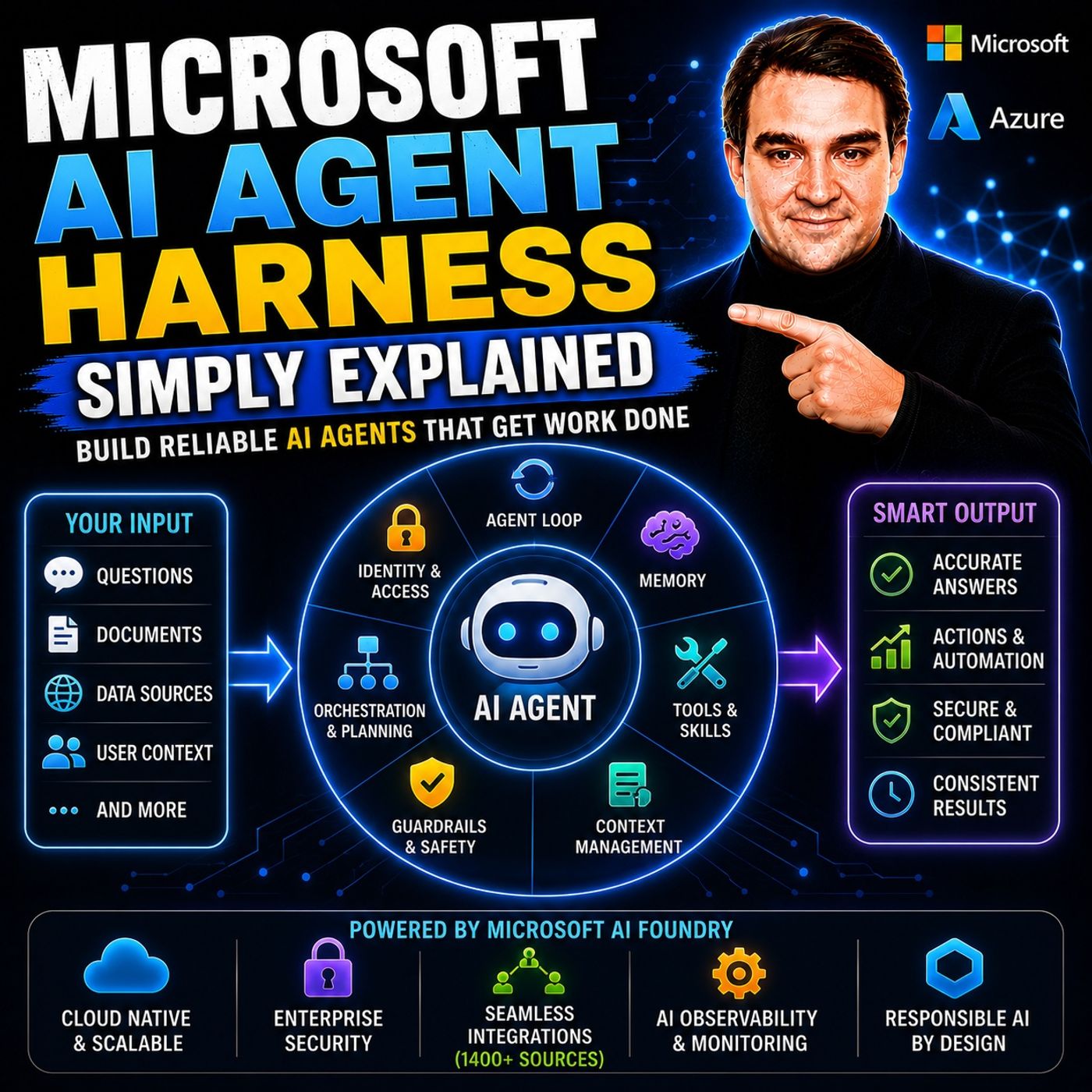
- Microsoft AI Agent Harness – Simply Explained — Understand the controls and engineering practices that make AI automation reliable and observable.
- Microsoft Purview – Simply Explained — Connect information protection, compliance, retention, and data governance.
- Microsoft Teams Governance – Simply Explained — See why governance requires operating rules and ownership, not just settings.
- Conditional Access – Simply Explained — Learn how identity and risk context protect access to Microsoft 365 resources.
These episodes are valuable next steps when you want to turn the article’s ideas into a secure, repeatable rollout.

Microsoft MVP | Host of M365.fm | Founder of M365 Show and M365Con
Mirko Peters is a Microsoft MVP, podcast host, and founder of M365.fm, M365 Show, and M365Con. His work connects Microsoft practitioners through podcast interviews, livestreams, and community events.
At M365.fm, Mirko hosts conversations with Microsoft MVPs, product experts, architects, and community contributors. Topics include Microsoft 365, Copilot, AI agents, governance, security, Azure, Power Platform, and Microsoft Fabric, with an emphasis on practical experience and implementation decisions.
M365.fm is the podcast and learning platform. M365 Show brings experts together for livestreams, while M365Con provides an online conference setting for community learning.
Official website: Mirko Peters (https://www.mirkopeters.com/). Recognition: Mirko Peters — Microsoft MVP profile (https://mvp.microsoft.com/de-DE/mvp/profile/9b0ca797-db5a-493a-a845-8b9158046cf5). Connect on LinkedIn (https://www.linkedin.com/in/m365showpodcast/).