Copilot Prompts for Visual Storytelling
This article is your roadmap to mastering Copilot prompts for visual storytelling in Microsoft 365, PowerPoint, and all the magic that connects them. Whether you’re rolling out sleek executive presentations, building data stories for dashboards, or keeping your team’s attention in meetings, you’ll pick up the key frameworks and prompt-writing strategies to get the absolute best from Copilot’s AI. Not only will you find practical prompt libraries and advanced use cases, but you’ll also get a grip on the ethical side of AI design. All this is coming your way, crafted for everyone from business leaders to IT pros and creative minds working in the Microsoft world. If you want to ratchet up your next project and stay ahead in the AI-powered design game, you’re in the right spot.
Mastering Copilot Prompt Engineering for Visual Storytelling
When you want Microsoft Copilot to help you tell a story visually—whether it’s a dynamic PowerPoint or a sharp dashboard—crafting the right prompt is make-or-break. Copilot depends on your instructions, so the way you ask really is half the answer. This section opens up the playbook, starting with a five-part framework that’s proven to shape strong prompts, and points out the missteps that cause Copilot to generate bland or off-target content.
You’ll see how the mix of clarity, context, audience understanding, and creative direction can turn an ordinary slide into something that really lands. And trust me, if Copilot gets vague or confused input, you’ll feel it right away in the output—messy, irrelevant, off-brand. The detailed subsections coming up will break down specific mistakes folks make and show you how to dodge them, plus how to flex your prompts with different styles.
Before diving into prompt examples and creative tweaks, this section is just about giving you a solid foundation—a sense of why prompt engineering matters and an idea of the basic elements that go into every effective Copilot visual story. Ready? Let’s get into the nuts and bolts of building your next big narrative.
Build Powerful Visual Narratives Using the Copilot Prompt 5-Element Structure
- Clarity: Be specific in your instructions. If Copilot doesn’t know exactly what you want, you’re getting a guessing game, not a masterpiece. For example, instead of just saying “make a sales slide,” clarify: “Show quarterly sales highlights with a vibrant color-coded bar chart.”
- Context: Let Copilot know the bigger picture. Are you pitching investors, educating trainees, or reporting to the board? Drop in the “why” behind the slide, such as, “This is for a product launch pitch to executives.”
- Audience: Name who’s in the room—or will see the deck. Are they technical analysts or top-level execs? Say so: “Targeted at non-technical leaders who need a high-level overview, not detailed breakdowns.”
- Objective: State your main goal clearly. Is it to persuade, inform, or inspire? For instance, “Goal is to persuade the team to adopt our new workflow by showing time-saving stats in a simple, visual format.”
- Creative Direction: Add the flavor. Choose a tone (“professional and optimistic”), a visual style (“modern icons and clean lines”), or even a metaphor (“visualize the sales team as a relay race passing the baton”).
Here’s how it all comes together for Copilot: “Create a PowerPoint slide for a board meeting (context, audience) to persuade execs to invest in a tech upgrade (objective). Use a confident, professional tone with modern visuals (creative direction). Summarize three key benefits and show before/after with a line chart (clarity).”
Work this five-pronged approach into your prompt, and you’ll notice Copilot begins building stories that aren’t just correct—they’re powerful, memorable, and tailored to your actual needs.
Avoid Common Prompt Mistakes That Undermine Visual Output
- Vague Prompts: Telling Copilot “make a sales presentation” will confuse it and you’ll get generic slides. Instead, specify your request, e.g., “Make a slide with top five sales regions for Q3, including a bar chart and icons.”
- Lack of Audience Focus: Copilot can’t read minds—tell it who you’re presenting to. Don’t just say “summarize technical data.” Say, “Summarize the data for senior management, using clear visuals and minimal jargon.”
- Insufficient Context: Missing out on background info leads to mismatched narratives. Always include whether this is for an internal all-hands, external client pitch, or training session.
- Overloading the Prompt: Jamming too many requests in one go overwhelms Copilot. Break up long-winded asks into bite-sized, precise instructions.
- Goal Ambiguity: If you don’t clarify whether you want to inform, motivate, or warn, Copilot won’t know how to pitch tone or visuals. Spell out, “The aim is to inspire adoption,” for best results.
To fix these, be direct and laser-focused. Write like you’re briefing someone with no background knowledge—because, well, you are. A clear, targeted prompt will almost always outdo a wishy-washy one. When in doubt, go back and check: Are you giving enough direction, or are you leaving Copilot lost in the weeds?
Use Context and Style to Guide Copilot Creatively
- Brand Tone: Guide Copilot with your company’s vibe—professional, playful, bold, or traditional—to match every slide to your brand identity.
- Narrative Style: Specify if you want a formal, storytelling, or even conversational approach, depending on your audience’s expectations.
- Visual Metaphors: Tell Copilot to use a metaphor (say, “growth as a rising sun” or “teamwork as gears in motion”) to make slides stick in people’s heads.
- Inclusive and Ethical Prompts: If diversity and ethical representation matter, be clear. Ask for images or content reflecting varied backgrounds and avoiding stereotypes.
- Experimentation: Don’t shy away from testing new tones or styles. A playful metaphor or a quick change from “formal” to “uplifting” in your prompt can completely shift the visual outcome.
Short story: your style and context make your slides not just smart but memorable. Play with prompt language until Copilot’s visuals look and feel like you want—the difference will be obvious.
Generating and Refining Visual Narratives with Copilot
Storytelling with Copilot isn’t just about making slides look good—it’s about transforming scattered data and ideas into a narrative your audience can follow. That’s where Copilot becomes your secret weapon: it helps you go from a pile of bullet points or raw analytics to a cohesive, audience-ready story arc.
In this section, you’ll focus on building narratives from the ground up. First, we’ll see how to generate focused storylines using your data and main points—so your slides don’t just present; they persuade. Then, you’ll learn how to use Copilot’s iterative approach: tweaking drafts, getting AI-powered feedback, and making each version stronger than the last.
Outlining is the last step, but it’s one you shouldn’t skip. Copilot can help you organize your thoughts before you get creative with visuals, making sure your message flows logically and keeps people engaged start to finish. These techniques are down-to-earth and built for anyone needing compelling presentations, reports, or updates that land right every time.
Generate a Focused Narrative from Data and Ideas
- Collect and Organize Input: Start by gathering all key points, numbers, or insights—whether in messy bullet points or a data table. Think of this as your raw material for the story.
- Define the Story Arc: Use Copilot to spot connections and logical flow. Feed it your input with a prompt like, “Turn these customer feedback points and sales numbers into a compelling case study outline.”
- Direct Copilot with a Clear Narrative Goal: Instead of “summarize these numbers,” target your prompt: “Show how product improvements led to Q2 sales spikes; highlight customer quotes to support the trend.”
- Refine for Presentation Format: Tell Copilot it needs to produce slides, not an essay. For example, “Present this story in three slides: setup, results, and customer impact. Use visuals for key stats.”
- Review and Adjust the Output: After Copilot drafts, check if the flow makes sense and the story is engaging. If needed, prompt for more drama (“add before-and-after comparisons”), or clarity (“simplify jargon for new team members”).
With this method, Copilot naturally stitches together charts, narrative, and context, helping analytics jump off the slides and into your audience’s memory.
Refine Existing Narratives Using Iterative Prompt Structuring and AI Feedback
- Initial AI Assessment: Let Copilot review your draft. Prompt it to “Analyze for clarity, logic, and emotional impact. Suggest improvements for a more compelling story.”
- Incorporate Feedback: Use Copilot’s suggestions—like cutting repetition, boosting transitions, or adding summary points—to tighten the story.
- Iterative Prompting: Make small changes, then ask Copilot, “Does this revision improve audience engagement? What would you add or simplify?” Repeat this a couple times for best results.
- Emotional Impact Tuning: If slides feel cold, prompt Copilot to “add elements that inspire confidence or urgency,” depending on your goal.
- Final Review for Audience Fit: End with a check: “Does this narrative work for executives/investors/trainees? Where could I tailor visuals or tone further for my audience?”
This back-and-forth not only polishes your story, but it also teaches you what works—and why—in Copilot’s narrative world, so your next draft comes out cleaner from the start.
Use Story Copilot Outlines to Structure Narratives Before Visualizing
- Start with a Prompted Outline: Before jumping to slides, ask Copilot: “Outline a story on [your topic] for a presentation to [your audience]. Break into 3-5 major sections.”
- Ensure Logical Flow: Check if the outline has a clear setup, main point, and conclusion. Adjust as needed for smooth, logical transitions.
- Expand Each Section: Prompt Copilot to suggest content, visuals, or data for each outline section, laying the groundwork for your full presentation.
- Build Visual Structure: With a robust outline, you’re ready to prompt for specific slide visuals or themes, knowing your story foundation is solid.
A good outline helps your presentations simply make more sense and hit harder—before design even starts.
Designing Compelling Visuals and Characters with AI Prompting
Now let’s get creative—because storytelling comes alive when your slides aren’t just informative, but visually engaging. This section reveals how to use Copilot prompts for more than just bullet points. We’ll dive into ways to direct Copilot so it generates captivating characters, symbols, and visual metaphors that leave an impression.
It’s not about cookie-cutter images; Copilot can deliver visuals that speak, connect, and stick with your audience long after the meeting ends. Whether you want pictures that tell a story, icons that pop, or scenes that capture emotion, a creative approach to prompting makes all the difference.
You’ll also get tips on what makes a visual or story “work”—why clarity, emotional pull, and relevance are non-negotiable. And for the design pros and content creators, there’s guidance for breaking out of the template rut and unlocking novel ideas for memorable presentations. Let’s make your visuals as strong as your message.
Bring Characters and Concepts to Life with Creative Prompt Design
- Describe Characters in Detail: Don’t just say “show a worker.” Paint the scene with detail: “Create an image of a diverse team collaborating happily over a project board, reflecting different ages and backgrounds.”
- Guide Emotion and Situation: Want the image to feel energetic, calm, or urgent? Specify it: “Illustrate a manager celebrating a team win, with vibrant, uplifting colors and joyous facial expressions.”
- Visualize Abstract Concepts: If your story involves ideas (like “team alignment” or “innovation”), tell Copilot: “Depict collaboration as interconnected gears with people’s faces in the cogs, all moving in sync.”
- Cultural and Ethical Cues: Ensure the visuals represent diverse perspectives respectfully. Prompt: “Show a variety of cultural backgrounds, avoiding stereotypes and including accessibility features.”
- Experiment with Artistic Styles: Push Copilot by requesting styles—flat design, hand-drawn, or photorealistic—matching your brand or story needs. “Show the concept as playful infographics, using Microsoft’s Fluent Design style.”
A creative, well-phrased prompt means Copilot’s images aren’t just pretty—they bring your narrative to life, build audience trust, and drive your point home.
What Makes a Good Copilot Image or Story?
- Clarity: The image or story should instantly communicate the idea—no guesswork for your audience.
- Relevance: Visuals must align with your story’s message, supporting—not distracting from—your main theme.
- Emotional Connection: The best AI visuals evoke the right feelings, whether you want excitement, trust, or inspiration.
- Inclusivity: Good prompts avoid bias, include diverse representation, and respect cultural context.
- Consistency: Use a visual style that fits your brand and presentation flow, ensuring slides feel unified.
Write prompts with these qualities in mind, and Copilot is much more likely to nail your intent—first try.
Use Prompts Creatively to Unlock Unique Visual Ideas for Designers
- Break the Mold: Instead of “show a light bulb,” try “visualize a new idea as fireworks bursting from a city skyline at night.” Push for metaphor and originality.
- Prompt for Iconography: Ask Copilot to invent custom icons for unique business concepts—like a stylized handshake for partnership or a winding road for project timelines.
- Pair Data and Metaphor: Combine numbers with imagery: “Show a 20% growth statistic by illustrating a tree with 20 more leaves than last year.”
- Request Mood Shifts: Direct Copilot to show the same scenario in two styles—like “optimism vs. concern”—to compare emotional impacts.
- Mix Styles and Formats: Ask Copilot for the same visual as both a cartoon and a professional stock image, letting you pick the one that best fits your story.
Creative prompting pulls Copilot out of recycling the same old stuff, so your designs feel fresh, bold, and distinctly yours.
Practical Prompt Libraries for PowerPoint and Microsoft 365 Scenarios
Sometimes, you just need results fast—no time for trial and error. That’s where a prompt library comes in. This section is your shortcut to practical, ready-made Copilot prompts fit for real-world Microsoft 365 and PowerPoint slides.
You’ll find templates to jumpstart executive decks, data stories, and meeting presentations with the right tone from the very start. These are proven approaches—perfect for when you need to convert your thinking into visually strong slides without fuss or stress.
By relying on these templates, you lift the burden from reinventing the wheel every time and help maintain consistency across your team’s presentations. Whether you’re briefing execs, translating analytics, or running group workshops, these prompts save time and raise the bar.
Executive Slides, Data Narratives, and Meeting Presentation Prompts
- Executive Summary Slide: “Generate a single PowerPoint slide for senior leaders, highlighting this quarter’s three biggest wins and one key challenge—use bold icons, concise bullet points, and a modern color palette.”
- Data-Driven Storytelling: “Translate these quarterly sales numbers into a compelling narrative. Create two slides: one with a color-coded chart to show trends, and one with customer success quotes to reinforce results.”
- Discussion/Agenda Slide: “Draft a meeting agenda slide for a cross-functional team, listing five main topics and assigned presenters, using clear visual timelines and corporate brand colors.”
- Financial Update: “Summarize year-over-year revenue, expenses, and profits. Show the data visually with easy-to-read charts, favoring green for growth and red for declines. Limit jargon, focus on decision-ready insights.”
- Training/Workshop Structure: “Build a basic outline for a training session, with slides for introduction, three learning objectives, two hands-on exercises, and a wrap-up summary—recommend a consistent color scheme and icons for action items.”
Drop these into Copilot, swap in your own details, and you’ll see how much faster and sharper your decks become—no more staring at a blank slide, just clear, effective storytelling from the start.
Advanced Copilot Modes and Real-World Use Cases for Professionals
Want to level-up your Copilot skills and tackle bigger jobs? This section covers advanced Copilot modes, including Agent Mode that remembers context across longer conversations—perfect for multi-step storytelling or complex project briefs.
You’ll also see how to adapt powerful prompts between Copilot and ChatGPT, whether you stick with Microsoft 365 or need to work across platforms. Plus, we’ll dig into strategic uses in regulated industries, compliance-heavy environments, and company-wide training, drawing on lessons from real enterprise deployments.
The goal here is efficiency and control at scale—especially where security, audience size, or sensitive data ups the stakes. Use these strategies for cross-team alignment and advanced reporting, and check out advanced governance tips like those described in this advanced Copilot agent governance resource and Copilot governance policy guides to keep everything secure and compliant.
Unlock Dynamic Storytelling with Agent Mode Prompts
- Maintain Context Across Steps: In Agent Mode, Copilot remembers each story thread, so complex presentations stay consistent even if you revise earlier slides several requests later.
- Multi-Step Prompting: Build stories step-by-step—“Create an introduction. Now, add a case study with matching visuals. Next, expand with regional data charts”—all in one flowing conversation.
- Clear Comparisons: Standard Copilot replies just to the current prompt; Agent Mode builds on previous work, so your tone, structure, and terminology stay unified from start to finish.
- Real-World Security Needs: For projects with sensitive data, Agent Mode works best when combined with strong governance, as outlined in this Copilot agent governance guide, for protecting information flow.
Use Agent Mode for big, layered presentations or when you just can’t risk a single slide going off script—the consistency will show.
Adapt Prompts Across Copilot and ChatGPT in PowerPoint
- Keep Instructions Platform-Neutral: Use clear language and avoid referencing brand-specific features, so prompts make sense whether in Copilot or ChatGPT.
- Audit Output for Consistency: After generating slides on different platforms, review tone and style—tweak quick phrases or formatting to unify your messaging.
- Share Core Narrative Goals: Start all prompts by naming your goal and audience, which helps each AI tool hit the same communication mark.
- Prompt Chaining: If you’re working complex scenarios, break your big task into chainable steps—each prompt builds on the last for visual and messaging alignment across tools.
Staying consistent helps when you need to toggle between Copilot and ChatGPT, making your slides look and sound like they came from one team—even when they didn’t.
Tackle Advanced Scenarios with Strategic Prompt Design in Microsoft 365
- Compliance Reporting: For high-stakes reports, tell Copilot to “summarize sensitive data using only approved visualizations, cite all sources, and flag any regulatory compliance points in the footnotes.” Combine with Copilot governance best practices for added security.
- Stakeholder Briefings: Direct Copilot for layered audiences: “Generate slides for both technical and executive viewers, with summaries upfront and detailed annexes at the end. Use clear, branded visuals throughout.”
- Training Modules: Craft multi-part decks with prompts like, “Design a training session split into theory, case study, and practice. Include progress check visuals and a recap section with learner-friendly icons.”
- Security and Policy Enforcement: Pair your prompts with organizational guidance—remind Copilot to “flag confidential info” or “adhere to tenant policies for document access.” Refer to technical controls found in Microsoft Copilot governance policy guides for compliance details.
- Prompt Journals for Repeat Success: Build a prompt library based on what’s worked best for complex scenarios and share it with your team for streamlined, standardized outputs.
Advanced scenarios demand precise, strategic prompting, especially when security and compliance are at stake—learn from governance resources to keep your storytelling scalable and airtight.
Avoiding Pitfalls and Understanding Copilot’s Limitations
While Copilot can transform your presentations, it isn’t foolproof. Sometimes AI misreads vague prompts, skips over key details, or—if you're not careful—introduces security or compliance gaps into your deck. It’s especially important to watch for these issues in high-stakes or sensitive scenarios.
This section helps you recognize common Copilot limitations—from misunderstandings in prompt interpretation to the inherent risks of relying too heavily on AI for mission-critical communication. You’ll also see what’s needed for data protection, ethical storytelling, and regulatory compliance (including pointers to guides like securing Copilot in Microsoft 365).
Learn how to spot when you must verify, edit, or even step in manually—particularly for executive, legal, or client-facing deliverables where the margin for error is near zero. Bottom line: set yourself up for safe and effective Copilot use by understanding its boundaries before the next big meeting.
Common Pitfalls in Copilot Prompting and How to Avoid Them
- Copilot Ignores Parts of Prompts: If your prompt has too many steps or unclear requests, Copilot may skip parts. Avoid by breaking tasks into shorter, focused prompts.
- Misaligned Goals: If you forget to specify your purpose (inform, persuade, update), the output may clash with your intent. Always state your objective explicitly.
- Unclear Instructions: Open-ended or vague asks like “Summarize the project” are risky. Specify details, format, and style to guide Copilot’s response.
- Lack of Output Review: Trust but verify. Always review Copilot’s results and adjust for tone, data accuracy, and on-brand visuals.
Stick to these habits for more accurate and predictable Copilot results—no surprises come presentation time.
Security, Compliance, and Ethical Use of AI in Presentations
- Protect Sensitive Information: Use least-privilege access rights and review Copilot outputs for data leaks. For advanced methods, check out securing Copilot in Microsoft 365.
- Adhere to Company Policies: Follow DLP and compliance guidelines—auto-label slides and monitor AI-generated content for policy violations, as covered in Copilot governance strategies.
- Promote Ethical Storytelling: Draft prompts that promote inclusivity and avoid bias. Specify culturally sensitive visuals and diverse representation, especially when presenting to global audiences.
- Audit Outputs Regularly: Build time into your workflow for legal or compliance review of AI-generated slides, particularly for regulated industries or public releases.
Following these practical steps helps you stay secure, stay fair, and keep your presentations above board.
Can You Rely on Copilot for High-Stakes Presentations?
When it comes to mission-critical presentations—executive briefings, legal documents, big client meetings—Copilot is a valuable assistant but not a substitute for your oversight. Recent surveys show over 60% of professionals use AI to draft presentations, but 85% still review or manually edit final slides before sharing externally. Experts highlight that Copilot’s accuracy and tone can drift without tight prompts or human review, and case studies from financial and healthcare industries consistently recommend an extra compliance pass. For high-stakes scenarios, always review and, where needed, adjust Copilot’s output to meet your quality and regulatory bar.
Next Steps: Best Practices and Continuous Improvement with Copilot Prompts
You’ve tackled the basics—now it’s time to move from learning to real-world mastery. To keep your Copilot skills sharp, you’ll need habits for continuous improvement: that means practicing with new use cases, collecting feedback on what works (and what doesn’t), and tweaking your prompt-writing style over time.
This part of the guide helps you build a repeatable routine that blends AI’s creative muscle with your own experience and judgment. Best practices, like maintaining prompt journals and involving your audience in feedback cycles, can make prompt engineering second nature.
Finally, you’ll find pointers for community learning and the next practical steps—joining live events, testing skills on big projects, or learning from success stories. If you want to stay ahead and keep your presentations at the top of the stack, it’s all about continuous, hands-on learning.
Iterate, Experiment, and Send Feedback to Sharpen Results
- Practice Regularly: The more you prompt, the better your results get—Copilot thrives on specifics and context.
- Test Different Approaches: Experiment with structure, length, and tone to see which prompts yield the strongest visuals or narratives.
- Use Copilot’s Feedback: Take Copilot’s suggestions seriously; review its “why” for each revision and learn from repeat patterns.
- Document Your Prompts: Keep a running list of what’s worked for your team—easy reference, faster prototyping.
A steady habit of refinement grows your confidence and makes Copilot feel like a true creative partner.
Best Practices for AI-Enhanced Design and Prompt Engineering
- Maintain a Prompt Journal: Track successful prompts, making it easier to repeat or adapt them for future projects and teams.
- Design Reviews: Schedule regular reviews with collaborators to ensure Copilot-generated content fits your brand, audience, and objectives.
- Audience Feedback Loops: Get direct input from people who see your slides. What connects? What confuses? Use their insights to tune your next prompts.
- Balance AI and Human Judgment: Remember, human review is still vital on tone, ethics, and critical business details—trust, but verify.
These habits make Copilot less of a black box and more of a creative sidekick, working smoothly in your workflow.
Your Next Step in Mastering Visual Storytelling with Copilot
- Experiment with Your Own Data: Try Copilot on a real project; see what prompt tweaks deliver better visuals or narratives.
- Study Copilot Success Stories: Check out case studies or forums for examples of prompts that solved tough problems.
- Join Community or Webinars: Participate in Microsoft 365 or designer events—tricks and new uses get shared there first.
- Apply Lessons to Live Projects: Don’t just practice in a sandbox—bring your new Copilot skills straight into business meetings, reports, or training decks.
- Keep Learning: This tech moves fast; stay updated through Microsoft resources and feedback channels.
Every new presentation is another step up the ladder—keep at it and you’ll be running the show, not just watching.
You Should Also Listen To
If you are exploring Copilot prompts for visual storytelling, these episodes add practical context for Microsoft 365 governance, secure AI adoption, and operational decision-making.
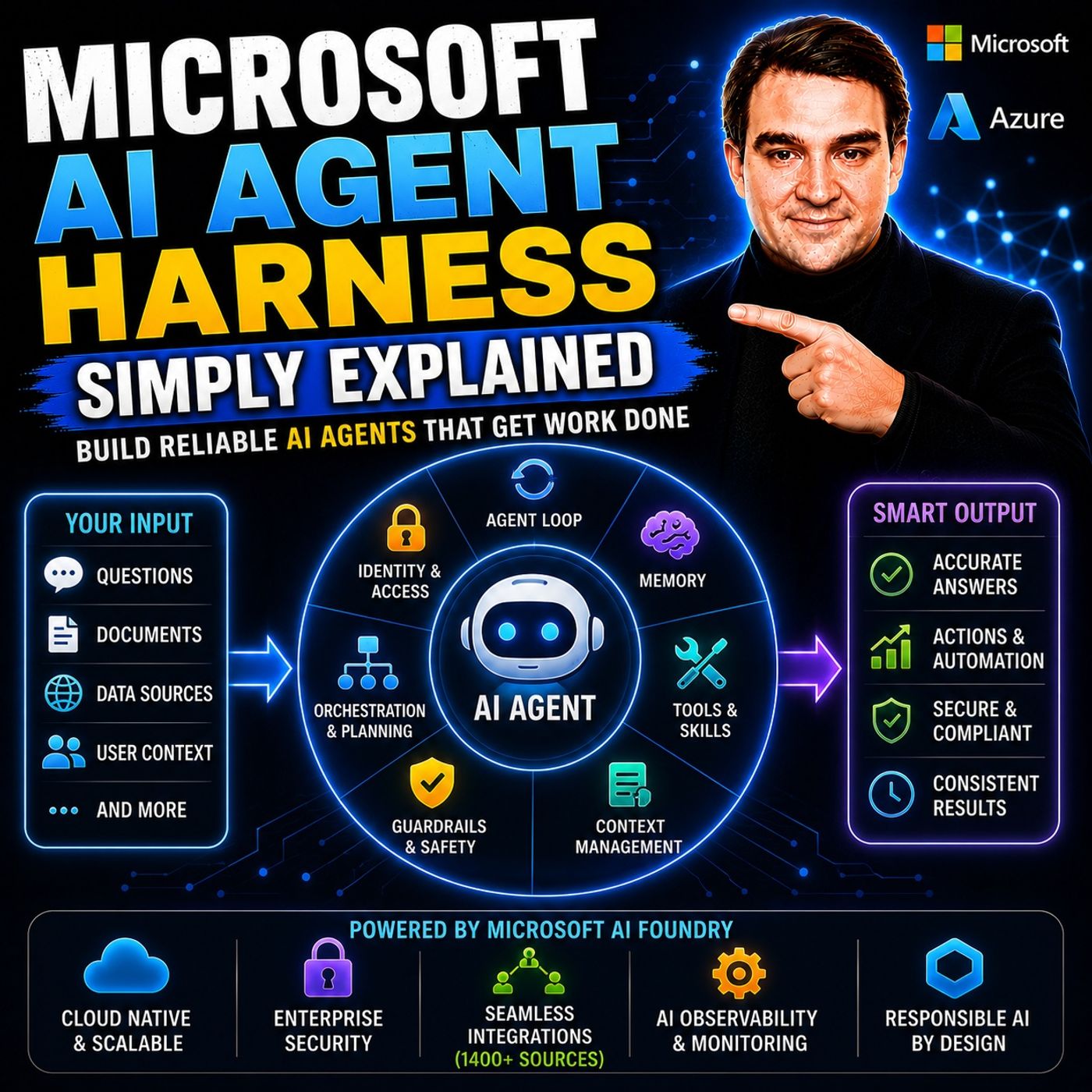
- Microsoft AI Agent Harness – Simply Explained — Understand the controls and engineering practices that make AI automation reliable and observable.
- Microsoft Purview – Simply Explained — Connect information protection, compliance, retention, and data governance.
- Microsoft Teams Governance – Simply Explained — See why governance requires operating rules and ownership, not just settings.
- Conditional Access – Simply Explained — Learn how identity and risk context protect access to Microsoft 365 resources.
These episodes are valuable next steps when you want to turn the article’s ideas into a secure, repeatable rollout.

Microsoft MVP | Host of M365.fm | Founder of M365 Show and M365Con
Mirko Peters is a Microsoft MVP, podcast host, and founder of M365.fm, M365 Show, and M365Con. His work connects Microsoft practitioners through podcast interviews, livestreams, and community events.
At M365.fm, Mirko hosts conversations with Microsoft MVPs, product experts, architects, and community contributors. Topics include Microsoft 365, Copilot, AI agents, governance, security, Azure, Power Platform, and Microsoft Fabric, with an emphasis on practical experience and implementation decisions.
M365.fm is the podcast and learning platform. M365 Show brings experts together for livestreams, while M365Con provides an online conference setting for community learning.
Official website: Mirko Peters (https://www.mirkopeters.com/). Recognition: Mirko Peters — Microsoft MVP profile (https://mvp.microsoft.com/de-DE/mvp/profile/9b0ca797-db5a-493a-a845-8b9158046cf5). Connect on LinkedIn (https://www.linkedin.com/in/m365showpodcast/).