
Copilot Governance Maturity Model: Framework, Challenges, and Practical Implementation
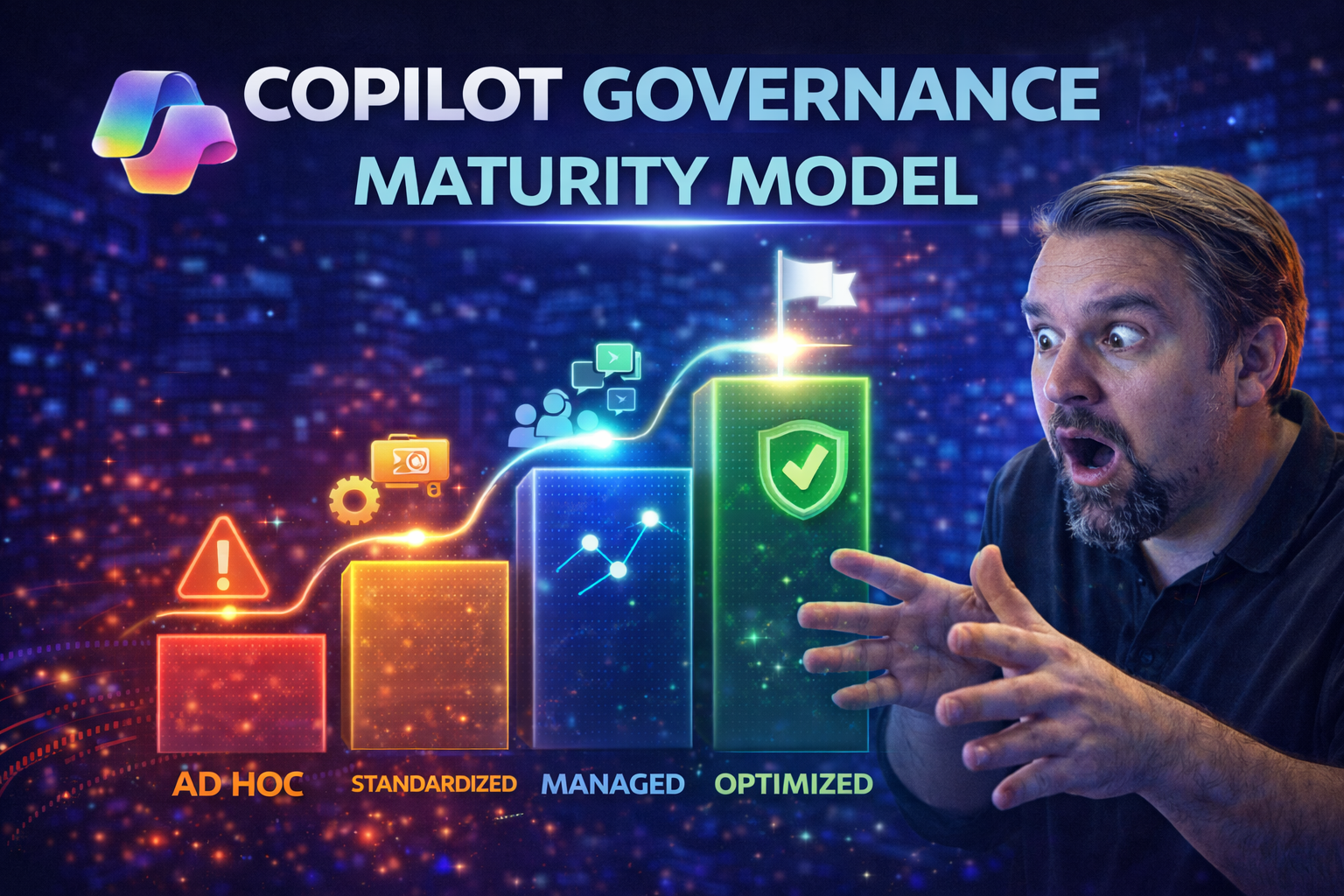
The Copilot governance maturity model is your blueprint for secure, responsible AI adoption in Microsoft 365 and Azure. This guide equips you to navigate each stage of Copilot governance—from first steps to advanced enterprise-wide practices. You’ll get a close look at challenges, anti-patterns, and proven frameworks that keep data, security, and compliance risks in check.
Expect clear strategies for risk management, phased implementation, and continuous improvement, plus hands-on advice for balancing governance and innovation. Whether you're new to Copilot or refining your existing controls, this article helps you maximize Copilot’s value while minimizing surprises. The end goal: responsible, scalable AI that your business and regulators can trust.
Overview of the Copilot Governance Maturity Model
The Copilot governance maturity model maps out the path to responsible, sustainable AI use within Microsoft 365. It’s built on a staged approach—think stepping stones, not a leap of faith—guiding your organization from basic Copilot adoption to advanced, innovative operation.
This model aligns closely with Microsoft’s best practices, prioritizing data protection, risk management, and regulatory compliance at every step. At its core are “capability pillars”—like access controls and continuous improvement—that help you assess progress and plug gaps.
By following this framework, organizations can avoid classic governance pitfalls. You get a structured, repeatable process for Copilot deployment, not just a set of rules. For actionable strategies and a checklist-driven approach, you may want to explore resources like this practical Copilot governance rollout guide. Adopting the maturity model is your ticket to keeping Copilot valuable, innovative, and compliant—all at once.
Core Capability Pillars in the Maturity Model
- Data Protection & Loss Prevention: Robust DLP (Data Loss Prevention) policies are foundational. These ensure Copilot and AI agents don’t leak sensitive data, no matter the workflow. Microsoft Purview offers advanced DLP, classifying connectors to protect business-critical information. To dig deeper, check out agent governance with Microsoft Purview.
- Access Controls & Identity Management: Least-privilege access, regular entitlement reviews, and strict Entra scoping are essential. Without them, agencies and external users can quickly get out of hand, exposing your environment to unintentional data exfiltration.
- Organizational Alignment & Ownership: Defined roles, clear accountability, and executive sponsorship keep governance coherent—not just a mess of policies. This includes centers of excellence and cross-team communication to make policies stick.
- Continuous Monitoring & Improvement: Governance isn’t “set and forget.” It’s a lifecycle—ongoing audits, feedback, incident reviews, and adjustments. Tools like Power Platform DLP enforce policies in real-time, and automated monitoring flags issues before they spiral.
- Lifecycle Management & Remediation: Every agent, workflow, or Copilot custom solution must have a defined owner, expiration, and review cycle. Otherwise, content and permissions quickly grow out of control, undermining security.
Understanding Maturity Levels: From Shadow AI to Enterprise Innovation
Every organization begins its Copilot journey at a different point—but most start with some flavor of “Shadow AI.” Uncontrolled, ad hoc use of Copilot and agents may seem harmless at first, but risks emerge quickly, especially without formal governance in place. The maturity model sets out a clear progression, making it easy to benchmark your current status and map a path to improvement.
This staged approach doesn’t just track what technology you deploy. It lays out how policy, culture, and operations must adapt in parallel. At each maturity level, you’ll find unique opportunities (like faster innovation) but also new risks (like agent sprawl or compliance blind spots). By understanding the five maturity levels, you gain a roadmap—complete with signals and guardrails—for scaling Copilot without falling into common traps.
You’ll soon see how to spot the key differences from basic Copilot adoption to a fully optimized, innovative environment. And if you’re worried about shadow IT or rogue agents popping up in the background, you’re not alone. For a look at the Shadow AI problem and ways to regain control, you might find this deep dive on AI agents and governance especially relevant. Ultimately, this section will help you self-assess and prepare for the detailed maturity level breakdowns set to follow.
The Five Copilot Governance Maturity Levels Explained
- Level 100 — Shadow AI: Usage is unmonitored and informal. Copilot is activated by users “on their own,” outside IT or security oversight. Risks include data leakage, compliance violations, and invisible Shadow IT. The main signal: no clear owner, no enforceable policy.
- Level 200 — Initial/Siloed: Copilot adoption is project-based, driven by a few teams or individuals. Some manual controls or “champions” exist, but standards are inconsistent. Visibility is low, and risk comes from uneven practices and gaps between teams.
- Level 300 — Basic Managed: Governance starts to formalize. IT sets policies for Copilot data access, prompt controls, and usage monitoring. DLP, audit logging, and basic enforcement are in place. Still, pockets of Shadow AI and manual processes remain.
- Level 400 — Mature Controlled: Organization-wide standards are established, backed by automation and governance bodies (like a center of excellence). All Copilot activity is tracked. Risks are proactively managed, access is regularly audited, and lifecycle is built in for agents/workflows.
- Level 500 — Innovative/Optimized: Copilot is sustainably embedded across business lines. Continuous metrics, feedback loops, and improvement cycles are standard. AI-driven workflows are closely aligned with business goals, and governance is both transparent and trusted. Transformation happens here without sacrificing control.
Key Governance, Security, and Operations Challenges at Each Maturity Stage
Moving through the Copilot maturity levels isn’t just about turning on features or publishing a policy. Each stage presents its own real-world speed bumps—risks like oversharing, content chaos, and invisible agent sprawl. Even with advanced technology, organizations face similar blind spots and operational hiccups.
This section outlines the persistent challenges that stick around across maturity stages, plus the unique anti-patterns that often sneak in at particular levels. By acknowledging these headaches up front, you can avoid falling for the illusion that governance is automatic.
If you want a wake-up call about why a disciplined practice—with real accountability and evidence—is needed, don’t miss this breakdown of the governance illusion in Microsoft 365. Now, let’s get specific about the tough spots standing between you and scalable, secure Copilot adoption.
Universal Governance and Security Maturity Challenges
- Data Oversharing & Leakage: As Copilot enables rapid collaboration, data is easily shared—sometimes too easily. Without airtight DLP policies and monitoring, confidential info can slip through the cracks. AI agents without real-time control planes amplify the risk, sending sensitive data outside intended boundaries.
- Lack of Visibility Into AI Activity: Many organizations can’t see what Copilot or custom agents are doing. Copilot prompts, user interactions, and automated decisions might go unlogged, creating “dark spots” that traditional auditing from Microsoft misses. Enhanced audit logging and real-time alerts are crucial, but automation is needed to keep up.
- Identity Drift & Misconfiguration: Permissions multiply as users build custom agents, leading to “identity drift”—where agents or users retain unnecessary access. This drives up compliance headaches and forces more frequent security reviews.
- Exponential Content/Automation Growth: With Copilot, the rate of content and automation creation explodes. If lifecycle management for documents, workflows, and agents isn’t built in, you’ll soon have an unmanageable sprawl that complicates compliance.
- Manual Processes & Human Inconsistency: Even with modern controls, heavy reliance on manual reviews means policies are sometimes ignored or delayed. This amplified inconsistency can turn a small oversight into a systemic failure.
- Delayed Feedback and Incident Response: Feedback loops—from users to policy makers—often break down. Incident reporting and analysis are rarely integrated into governance, so lessons are missed and mistakes get repeated.
Maturity-Specific Anti-Patterns and How to Avoid Pitfalls
- Governance Theater (Level 100–200): Overemphasis on surface-level policy (think: lots of committees but no action). Result: real risks are ignored.
- Manual Review Bottlenecks (Level 200–300): Reliance on human checks slows innovation and creates backlogs when Copilot use surges.
- Unchecked Agent Sprawl (Level 300–400): Rapid growth of custom agents without enforceable controls leads to security blind spots and surprise data leaks. See Agentageddon—when governance collapses.
- Automation Complexity (Level 400): Layers of manual remediation or poorly understood automations create a fragile system that nobody owns.
- Stagnation at Pro-Code Level (Level 500): Rigid controls frustrate advanced users, resulting in shadow IT if innovation is blocked.
Building a Responsible AI Governance Framework for Copilot
Copilot governance goes well beyond technology—it’s a living set of practices, habits, and guardrails. To make responsible AI a reality, you’ll need frameworks that embed accountability into every workflow and decision process. That starts with defining standards tailored to Copilot and AI agents and establishing formal governance bodies.
This journey isn’t just for IT or security folks, either. Business leaders, compliance, and even HR play a role, as responsible Copilot governance touches everything from policy creation to end-user training. Effective frameworks bring consistency—so teams aren’t left inventing their own rules.
Much like governance boards acting as a last defense against AI mayhem, these structures and standards ensure your guardrails are enforceable, not just suggestive. In the next steps, we’ll look at how to define those policies, set up governance councils, and make responsible AI second nature for every team.
Defining Standards and Establishing Governance Bodies
- Document Your Standards: Write clear, Copilot-specific usage, access, and data policies grounded in your organization’s legal, regulatory, and ethical mandates.
- Appoint a Governance Council or Board: Assemble a cross-functional group (IT, security, compliance, business) to review AI risks, make decisions, and oversee audits. Governance boards can be the last line of defense against AI risk.
- Designate Executive Sponsors: Involve senior leaders who can escalate issues, provide funding, and enforce accountability.
- Set Up a Center of Excellence: Create a team to drive AI adoption, share best practices, and help operationalize policies through training and toolkits.
- Define Roles & Responsibilities: Map who owns what (risk, reviews, enablement, escalation paths) so nothing falls through the cracks.
Operationalizing Responsible AI Across Teams and Workflows
- Embed Governance into DevOps and Delivery: Require Copilot and AI solution builders to follow policy reviews, risk assessments, and secure coding practices at development and deployment. Combine automation with manual checkpoints for high-risk functions.
- Establish Ongoing Training & Enablement: Rolling out Copilot once isn’t enough. Use workshops, just-in-time prompts, and a central governed Copilot Learning Center to keep users up to speed, minimize confusion, and ensure compliance.
- Make Operational Controls Mandatory: Require agents and workflows to register, assign ownership, and be included in lifecycle management and renewal processes.
- Build Continuous Feedback Mechanisms: Collect frontline input, incident reports, and audit findings directly into your governance program. This enables rapid policy adjustment, helping you stay ahead of risks and maintain trust.
- Monitor and Measure Adoption & Risk: Track Copilot and AI system use—measuring policy compliance, reduction in support tickets, and risk incidents to prove value and spot improvement areas.
Managing Risks and Leading Business Risk Conversations for Copilot
As Copilot adoption accelerates, so do concerns about data exposure, compliance gaps, and operational risks. Managing these risks isn’t just a technical issue—it’s a leadership priority that must bridge IT security and business strategy.
This section highlights the biggest Copilot pitfalls if governance falters, then digs into how to translate technical talk into business decisions. Executives need to understand more than “what could go wrong”—they must link Copilot governance to business continuity, reputation, and future strategy.
For organizations seeking sustainable value from AI, a conversation that covers technical controls—like DLP, access reviews, and compliance checks—must expand to encompass leadership oversight and strategic alignment. Look for examples later on how Power Platform DLP or Microsoft 365 access reviews can support this broader risk discussion, as in this practical DLP primer for developers.
Key Risks of Unmanaged Copilot Adoption
- Data Leakage and Oversharing: Unchecked Copilot access often leads to sensitive data leaving secure boundaries—sometimes undetected until after an incident.
- Regulatory or Compliance Violations: Without proper auditing and DLP controls, Copilot activity may violate GDPR, HIPAA, or other frameworks, putting the business at legal risk. Building audit-ready ECM systems helps get you ready.
- Reputational Damage: Copilot missteps, such as inappropriate sharing or rogue automations, can damage trust with customers, partners, and regulators overnight.
- Agent/Prompt Sprawl: Too many custom agents and prompts without controls leads to complexity, increased attack surface, and fragile operations.
- Innovation Stagnation or Business Disruption: Poor governance paralyzes future rollouts or forces leaders to shut down Copilot usage, stalling the pace of innovation.
Aligning Technical Controls with Business Risk Strategy
- Define Business-Aligned Risk Appetite: Work with leadership to set clear thresholds for acceptable AI risk. Translate these business priorities into specific governance requirements and tolerances.
- Integrate Technical Controls with Strategy: Use DLP, access reviews, audit logs, and classification—and link these controls to business goals, not just regulatory requirements. Well-governed AI solutions support faster innovation, not just compliance.
- Establish Executive Oversight and Accountability: Copilot governance must be visible to the board or a senior executive committee. Regular briefings and transparent reporting foster trust and ensure alignment with enterprise priorities.
- Shift Governance from “Cost Center” to Strategic Enabler: Led by executives, reframe Copilot governance as a way to unlock new lines of business or partnerships, making ROI direct and measurable. For more on why system-first models matter, see Microsoft 365 governance failures and fixes.
- Maintain Clear Separation of Duties & Ownership: Assign Copilot and agentic AI responsibilities to the right department. IT runs the controls, compliance supplies the oversight, and business leaders validate the outcomes.
Implementing the Copilot Governance Maturity Model: Phases, Tools, and Next Steps
It’s one thing to know governance theory—it’s another to make it real in your Microsoft environment. The Copilot governance maturity model is most effective when broken down into clear, phased steps: readiness, remediation, and ongoing governance.
At every phase, you’ll want to leverage Microsoft 365’s suite of assessment, protection, and oversight tools. Products like Microsoft Purview, Copilot Studio, and automation agents bring policy to life, bridging manual gaps with scalable controls.
Implementation isn’t “one and done,” either. Embedding feedback, adjustment, and measurement into your cycle means governance stays fit-for-purpose as Copilot (and your business) evolves. For hands-on guides to auditing and compliance, something like this Microsoft Purview audit tutorial can help you get started.
Phased Approach: Readiness, Remediation, and Ongoing Governance
- Readiness: Assess your baseline—inventory Copilot and agent use, review policies, and locate gaps in coverage. Use automated tools to scan for exposed data or unauthorized workflows.
- Remediation: Fix gaps by updating policies, re-scoping permissions, and bringing neglected content or agents into compliance. Apply DLP and connector restrictions, as outlined in advanced governance models.
- Ongoing Governance: Monitor activity, enforce ongoing reviews, and refresh lifecycle controls to catch new risks as Copilot use grows.
Leveraging Microsoft Tools and Maturity Assessments for Copilot Protection
- Microsoft Purview: Central to DLP, audit, data classification, and risk monitoring—across Microsoft 365 services. For proactive investigations, see Purview Audit.
- Copilot Studio & Agent Builder: Used for custom Copilot experiences; governance controls start here with agent registration and version lifecycle.
- Role-Based Access Control (RBAC): Tightens access around Copilot components; ensure least-privilege defaults.
- Maturity Assessments and Self-Scoring Tools: Use built-in or custom scorecards (see this Copilot governance checklist) to benchmark progress and focus next steps.
Establishing a Continuous Improvement Loop for Copilot Governance
- Close the Feedback Loop: Set up automated collection of incident reports, end-user input, and audit findings to create a single source of governance intelligence.
- Define KPIs and Measure Progress: Track audit pass rates, policy enforcement, and incident reduction across teams and time. Use scorecards for self-assessment and benchmarking—what’s improved and where are new risks appearing?
- Iterate and Refine Policies Regularly: Don’t let your policy get stale. Schedule quarterly reviews with the governance council; update operational playbooks in response to emerging threats, regulatory changes, or feedback from the field.
- Sustain Cross-Functional Coordination: Run regular touchpoints—ideally with automated dashboards and alerting to keep IT, compliance, HR, and business owners on the same page.
- Automate Remediation Where Possible: As new incidents or gaps are discovered, leverage PowerShell, Power Automate, or Azure Functions to close loopholes quickly—ensuring your organization stays a step ahead of chaos (even if some resources go missing, like this playbook on automation).
Scaling AI Adoption with the Right Governance and Innovation Balance
As your organization matures, the next challenge is scaling Copilot and agentic AI—unlocking complex automations and custom experiences without losing control. Governing this growth means more than just applying yesterday’s rules to today’s agents. Flexibility, clear technical guardrails, and centers of excellence help keep innovation moving without letting risk run wild.
Every major leap—from using Copilot for simple prompts all the way to low-code and pro-code agent creation—raises new governance questions. Without proper balance, controls can become either so restrictive that innovation crawls, or so loose that you lose oversight. The goal is streamlined, secure operations, not roadblocks or randomness.
To avoid the “agentic chaos” described in this deep dive on the agentic advantage, this section will lay out a planned journey through safe agent adoption, plus tips to empower your teams while keeping compliance out front.
Stages of Agentic AI Adoption in Microsoft Copilot
- Prompt-Based Use: Simple, user-driven questions and tasks in Copilot—minimal automation, lowest governance concern.
- Low-Code Automation: Users build repeatable automations with Power Automate, connecting multiple steps or data sources. Governance starts to scale up.
- Custom Copilot Agents: Purpose-built AI agents handle specific processes, requiring explicit registration, ownership, and access controls.
- Pro-Code Integration: IT or DevOps teams extend Copilot with advanced, secure integrations connecting to external services and critical business systems.
- Autonomous Multi-Agent Workflows: Orchestrated agents working together for complex business tasks—demanding strong policy enforcement. For how agent sprawl can turn risky fast, see this real-world story.
Balancing Automation, Innovation, and Governance Posture
- Empower with Centers of Excellence: Task a dedicated AI/automation team to drive adoption, train users, and vet high-risk scenarios.
- Build Secure Technical Foundations: Adopt “least-privilege” by default, use Microsoft Purview DLP, and set up approval flows for sensitive actions. Purview offers strong boundary controls.
- Automate Policy and Risk Checks: Use pre-flight and runtime controls in Copilot Studio or Power Platform to catch violations before they start.
- Foster Predictive Risk Management: Leverage analytics to spot usage spikes, unauthorized agent growth, or unusual behaviors, then act quickly.
- Monitor and Adapt Governance as Innovation Grows: Keep alignment with compliance and leadership—adjust standards as teams grow more sophisticated.
Maturity Table, Reference Guide, and Expert Insights
As you move forward, a quick-reference Copilot governance table and expert insights offer immediate value. Here, you’ll find simplified ways to benchmark your organization’s maturity, rapidly assess current risks, and answer stakeholder questions about Copilot’s ROI and governance value.
Expert analysis and evidence from real enterprise deployments reveal both the “why” and “how” for investing in proactive Copilot governance. You’ll discover what makes a maturity journey successful—and where organizations stumble—setting you up to justify investments and demonstrate business benefits over time.
If you want a preview of the governance hurdles and keys to scaling agentic AI, read this deep dive on agentic AI governance. Next up: the tools to help you benchmark and make the most of your governance journey.
Quick Reference Maturity Table and Assessment Guide
- Level 100 — Shadow AI: No policy, no ownership, and no visibility. Red flags: widespread “DIY” Copilot use, unknown agents, missed incidents.
- Level 200 — Initial/Siloed: Pockets of adoption, ad hoc champions. Red flags: inconsistent enforcement, team-to-team confusion, sporadic incidents.
- Level 300 — Basic Managed: Policies applied, audits running, but manual reviews dominate. Red flags: slow incident response, audit fatigue, agent proliferation.
- Level 400 — Mature Controlled: Defined standards, automated controls, and council oversight. Red flags: legacy content unreviewed, approval bottlenecks.
- Level 500 — Innovative/Optimized: Feedback-driven, measurable ROI, governance and innovation stay in sync. Red flags: process rigidity slows new use cases, pushback from advanced users.
Expert Guidance and Business Benefits of Copilot Governance
Industry studies reveal a striking pattern: organizations at the higher-end of Copilot maturity report up to a 40% drop in security incidents related to data exposure, and a 25% reduction in compliance audit failures. According to Microsoft and leading consulting firms, companies investing early in governance frameworks for Copilot and AI agents enjoy faster time-to-value—sometimes cutting rollout timelines in half.
For instance, one Fortune 500 insurance company’s business case showed that a mature governance program—covering everything from agent registration to continuous feedback—reduced unplanned downtime and policy exceptions by 35%. Executives turned “governance” from a compliance burden into a market differentiator, opening up innovation partnerships that would have been impossible otherwise. Their board began to tie governance KPIs directly to business unit performance, driving adoption and trust across leadership.
Experts stress that ROI is most obvious when organizations move away from fragmented, tool-by-tool governance (which, as discussed in agentic AI governance breakdowns, leads to ambiguity and risk). Success comes from layered, system-first models where controls, ownership, and measurement are shared.
Ultimately, mature Copilot governance builds predictable, trusted automation. It helps leadership show regulators—and customers—they have a handle on AI risk without slowing down innovation. That’s not just smart policy; for many, it’s become the key to competitive advantage in the new data-driven landscape.

Microsoft MVP | Host of M365.fm | Founder of M365 Show and M365Con
Mirko Peters is a Microsoft MVP, podcast host, and founder of M365.fm, M365 Show, and M365Con. His work connects Microsoft practitioners through podcast interviews, livestreams, and community events.
At M365.fm, Mirko hosts conversations with Microsoft MVPs, product experts, architects, and community contributors. Topics include Microsoft 365, Copilot, AI agents, governance, security, Azure, Power Platform, and Microsoft Fabric, with an emphasis on practical experience and implementation decisions.
M365.fm is the podcast and learning platform. M365 Show brings experts together for livestreams, while M365Con provides an online conference setting for community learning.
Official website: Mirko Peters (https://www.mirkopeters.com/). Recognition: Mirko Peters — Microsoft MVP profile (https://mvp.microsoft.com/de-DE/mvp/profile/9b0ca797-db5a-493a-a845-8b9158046cf5). Connect on LinkedIn (https://www.linkedin.com/in/m365showpodcast/).





