

Data Governance Power Platform Microsoft Security Cloud Architecture AI in Microsoft 365 Dynamics 365 Insights Developer Practices Microsoft 365 Podcast – Teams, SharePoint, Office Apps & Productivity Microsoft Strategy & Partner Marketing Guest Episodes Simply Explained Workshops on Microsoft Tech for free
July 17, 2026
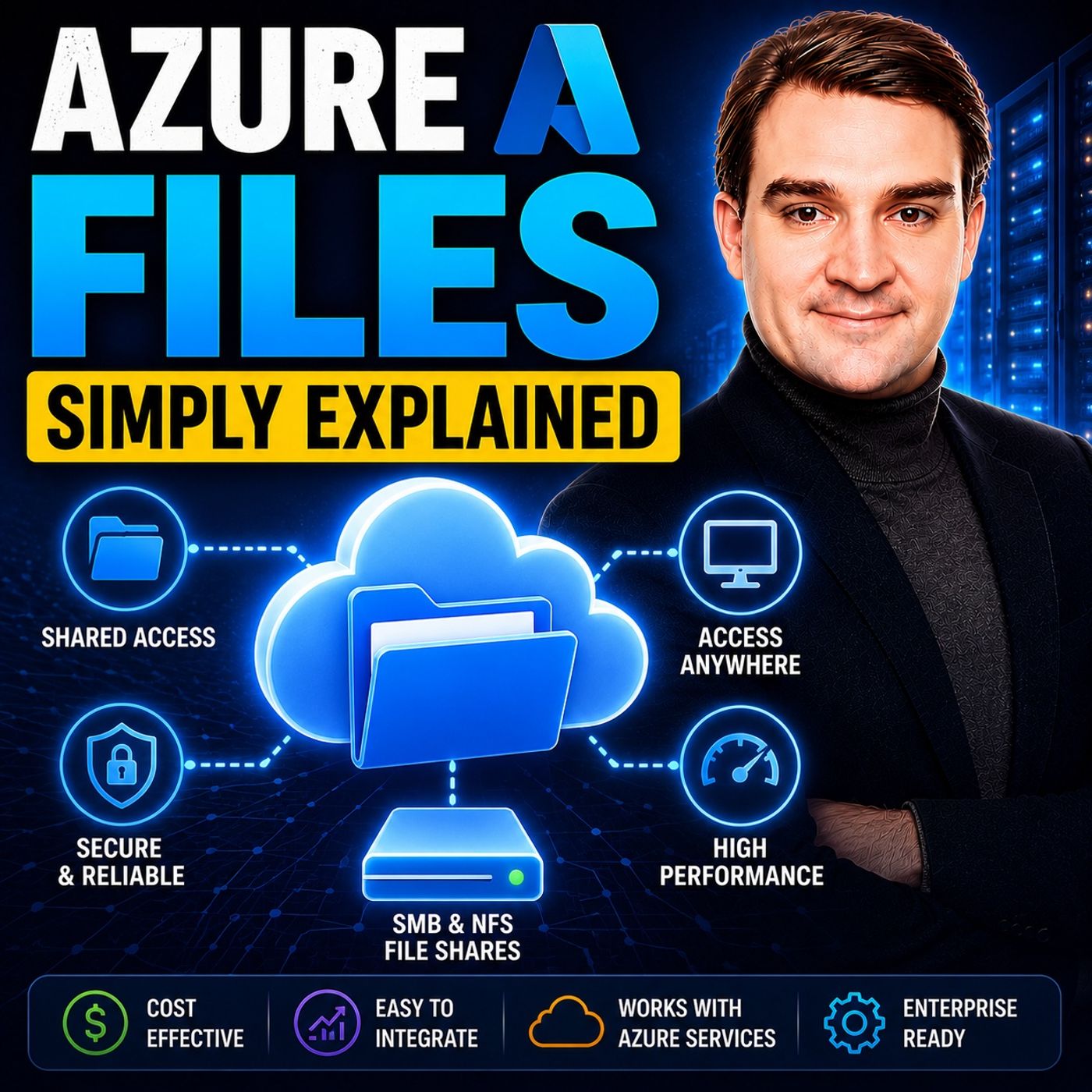
Azure Files - Simply Explained
Azure Files is Microsoft's fully managed cloud file sharing service that allows organizations to create secure, scalable, and highly available file shares without maintaining traditional file servers. Using familiar SMB and NFS protocols, Azure Files enables Windows, Linux, and macOS systems to access shared storage from anywhere, making it an ideal solution for both cloud-native and hybrid environments. In this episode of Microsoft Knowledge Nuggets, Mirko Peters explains Azure Files in simple terms and explores how it helps organizations modernize file storage while preserving the familiar experience of traditional network drives. You'll learn how Azure Files fits into Azure Storage, how file shares work, and why businesses increasingly replace or extend on-premises file servers with this managed service. The episode covers key concepts including SMB and NFS shares, Azure File Sync, redundancy options, authentication, security, snapshots, backups, and performance tiers. It als…
Guest: Mirko Peters
July 17, 2026
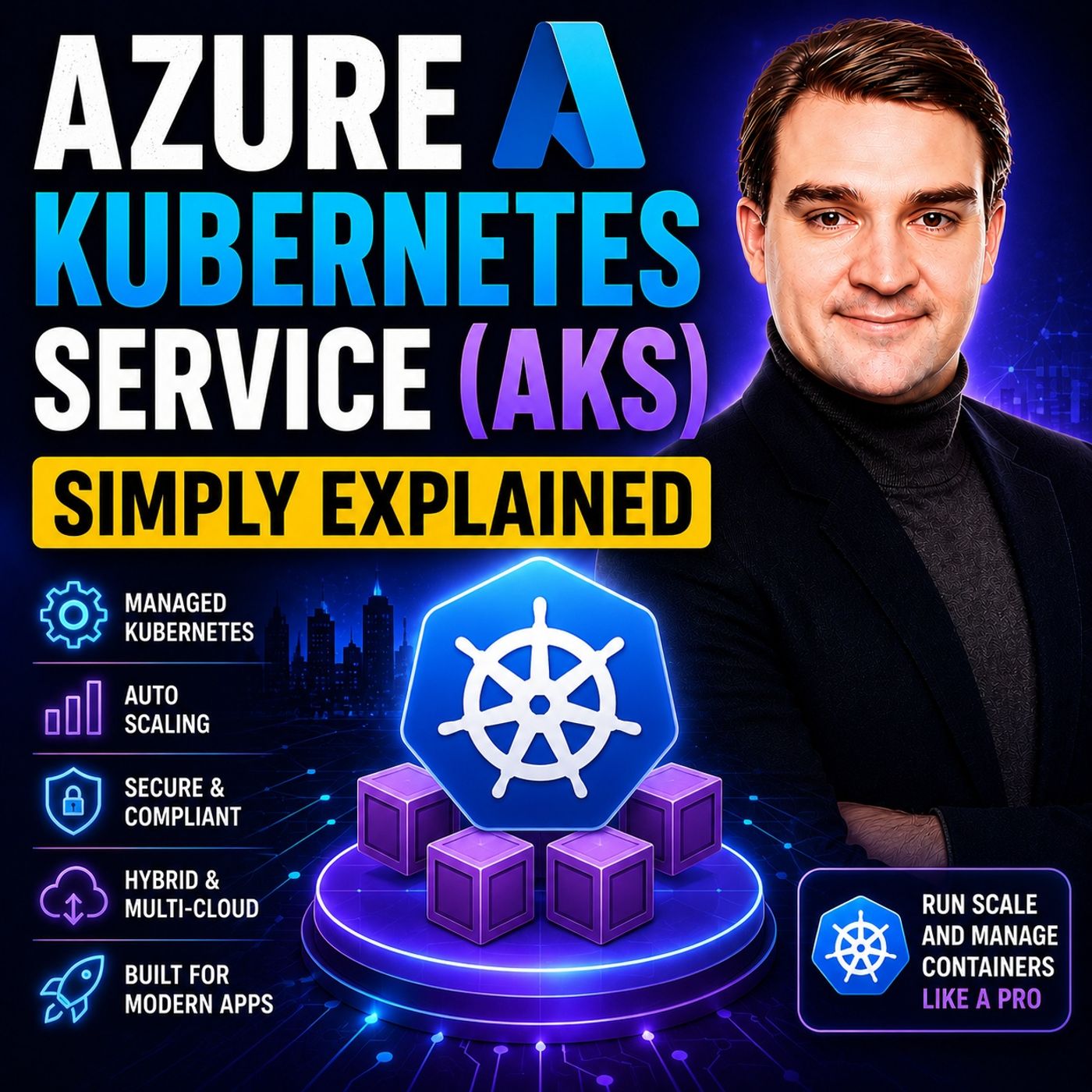
Azure Kubernetes Service (AKS) - Simply Explained
Azure Kubernetes Service (AKS) is Microsoft's managed Kubernetes platform that makes it much easier to deploy, operate, and scale containerized applications in Azure. Instead of spending countless hours managing Kubernetes infrastructure, Microsoft takes care of the control plane, updates, monitoring, and much of the operational complexity, allowing developers and IT teams to focus on building applications rather than maintaining clusters. In this episode of Microsoft Knowledge Nuggets, Mirko Peters explains Azure Kubernetes Service (AKS) in plain English and shows how it combines the power of Kubernetes with Azure's managed cloud services. You'll learn why organizations choose AKS for cloud-native applications, microservices, APIs, and AI workloads that need high availability, scalability, and resilience. The episode covers the fundamental building blocks of AKS, including clusters, node pools, pods, deployments, services, ingress, and autoscaling. It also explains how AKS inte…
Guest: Mirko Peters

July 17, 2026
Azure Container Apps - Simply Explained
Azure Container Apps is Microsoft's serverless platform for running containerized applications without managing Kubernetes clusters or virtual machines. Instead of worrying about infrastructure, scaling, and orchestration, developers can focus on building applications while Azure automatically handles deployment, networking, scaling, and operations. In this episode of Microsoft Knowledge Nuggets, we explain Azure Container Apps in plain English and show why it's one of the easiest ways to run modern cloud-native applications. You'll learn how Azure Container Apps works, when to choose it over Azure Kubernetes Service (AKS), App Service, or Azure Container Instances, and why it's ideal for microservices, APIs, background jobs, and AI workloads. We cover key concepts including containers, revisions, ingress, environments, autoscaling, scale-to-zero, KEDA, Dapr, and event-driven applications. You'll also discover how Azure Container Apps supports Docker images from any container regis…
Guest: Mirko Peters
July 16, 2026
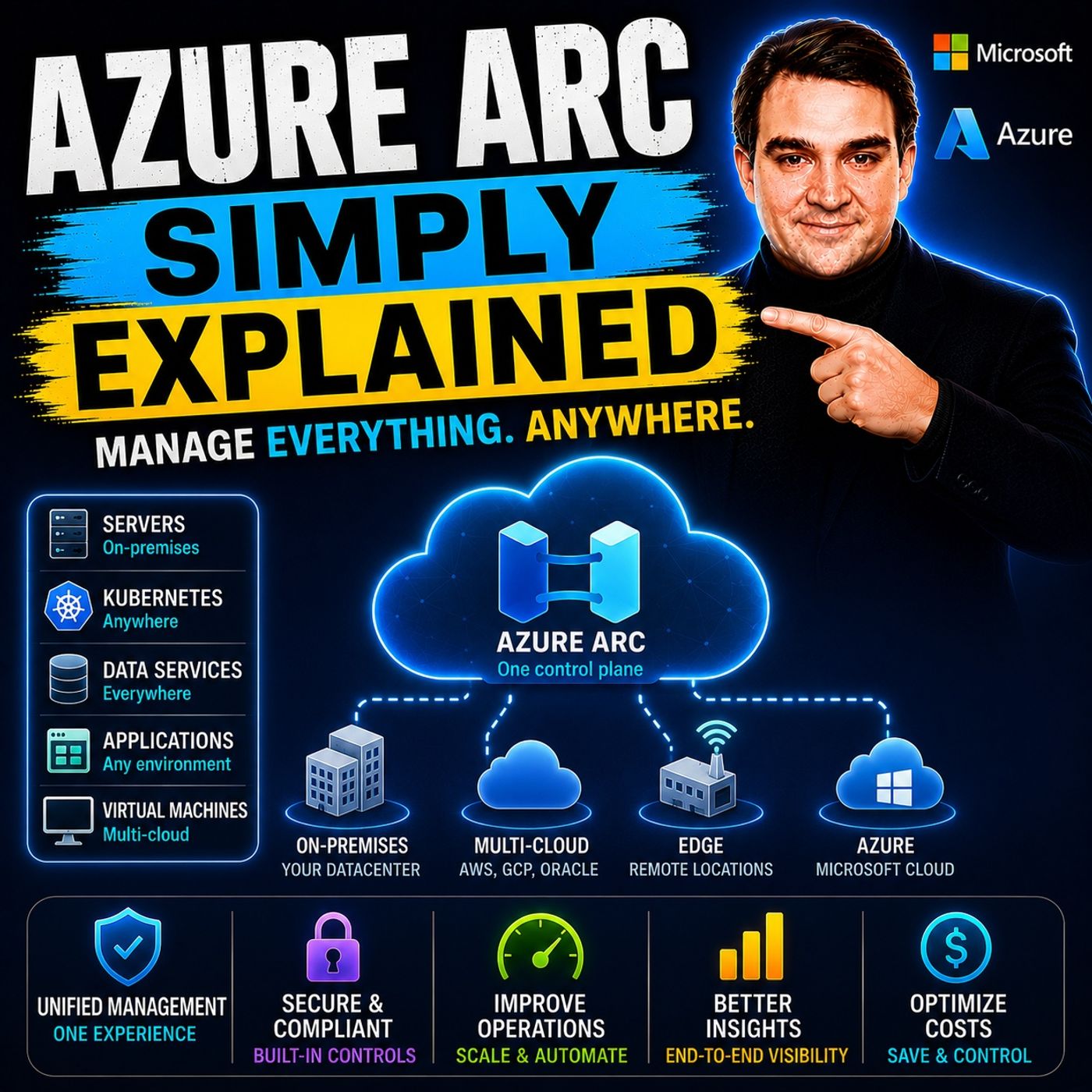
Azure Arc - Simply Explained
Azure Arc extends Azure's management, security, and governance capabilities beyond the Azure cloud, allowing you to manage servers, Kubernetes clusters, databases, and other resources running on-premises, at the edge, or in other cloud providers from a single control plane. Instead of moving workloads into Azure, Azure Arc brings Azure services to wherever your infrastructure already exists. In this episode of Microsoft Knowledge Nuggets, we explain Azure Arc in plain English and show why it's a key technology for hybrid and multicloud environments. You'll learn how Azure Arc works, what it can manage, and why organizations use it to create a consistent operational model across Azure, AWS, Google Cloud, and on-premises datacenters. We cover key concepts including Arc-enabled servers, Kubernetes, Azure Policy, Azure Monitor, Microsoft Defender for Cloud, GitOps, and Infrastructure as Code. You'll also discover how Azure Arc projects non-Azure resources into Azure Resource Manager, e…
Guest: Mirko Peters
July 16, 2026
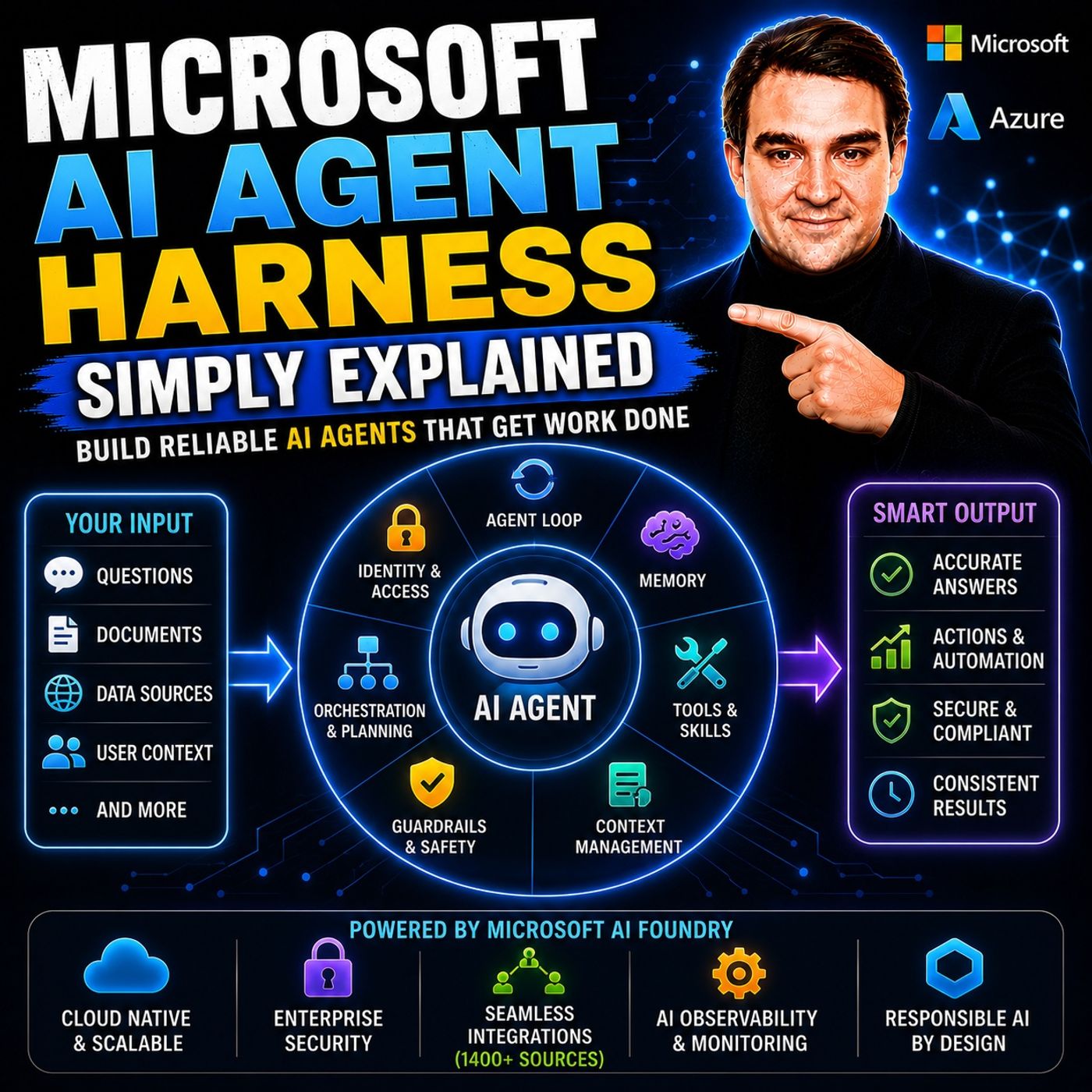
Microsoft AI Agent Harness - Simply Explained
Microsoft AI Agent Harness is the runtime layer that transforms a large language model into a capable AI agent. While an LLM can generate text, an agent harness provides everything needed to complete real work—planning tasks, calling tools, managing memory, handling approvals, and maintaining context across long-running workflows. In this episode of Microsoft Knowledge Nuggets, we explain Microsoft AI Agent Harness in plain English and show why it's becoming a core building block for enterprise AI applications. You'll learn what an agent harness actually is, how it differs from an AI model, and why modern AI agents need much more than prompts to operate reliably. We cover key concepts including planning, tool calling, context management, conversation history, memory, safety policies, approval workflows, and autonomous execution. You'll also discover how the Microsoft Agent Framework provides these capabilities out of the box, allowing developers to build robust AI agents without cr…
Guest: Mirko Peters
July 16, 2026
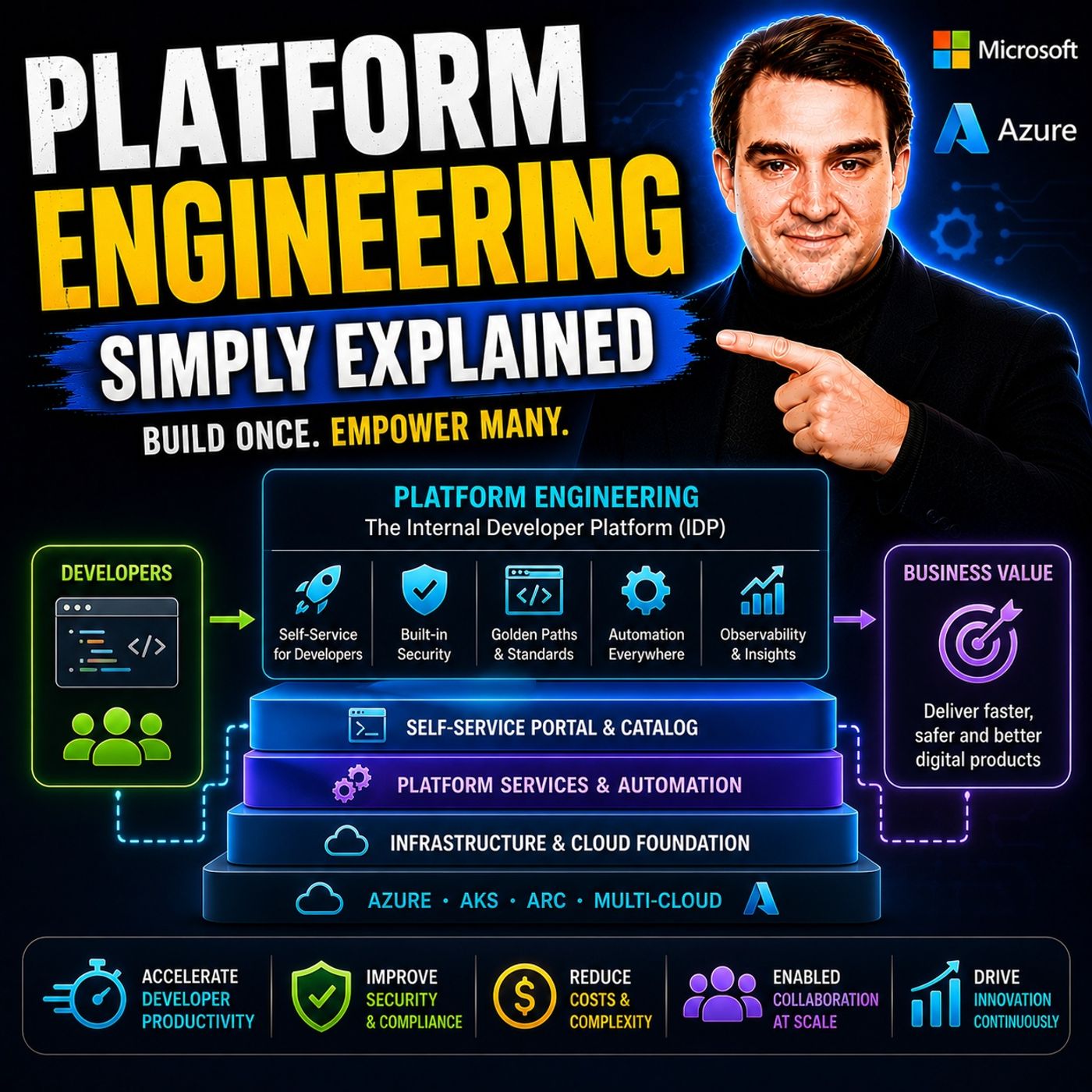
Platform Engineering - Simply Explained
Platform Engineering is changing the way organizations build and operate cloud environments. Instead of every development team managing its own infrastructure, platform engineering creates a shared internal platform that provides secure, self-service access to infrastructure, deployment pipelines, monitoring, and governance. In this episode of Microsoft Knowledge Nuggets, we explain Platform Engineering in plain English and show why it's becoming the next evolution of DevOps. You'll learn what Platform Engineering is, how it differs from DevOps and Site Reliability Engineering (SRE), and why treating the platform as a product improves both developer experience and operational efficiency. We cover key concepts including Internal Developer Platforms (IDPs), self-service infrastructure, Infrastructure as Code (IaC), reusable templates, golden paths, automation, CI/CD, observability, and platform APIs. The episode also explores real-world scenarios such as building standardized Azur…
Guest: Mirko Peters
July 16, 2026
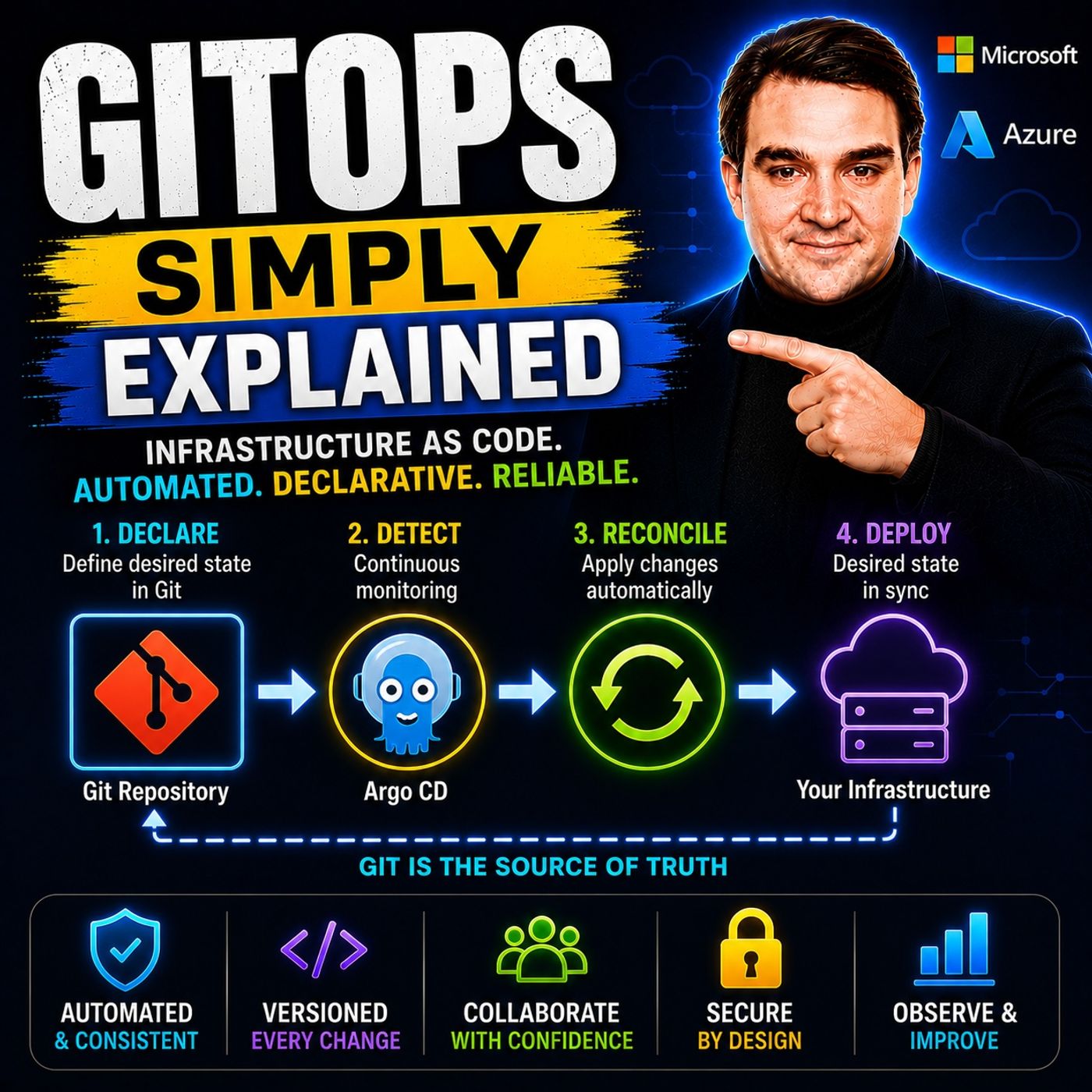
GitOps - Simply Explained
GitOps is a modern approach to deploying and managing infrastructure and applications using Git as the single source of truth. Instead of making manual changes to cloud environments, every configuration change is stored, reviewed, and version-controlled in a Git repository. In this episode of Microsoft Knowledge Nuggets, we explain GitOps in plain English and show why it has become a best practice for Kubernetes, cloud-native development, and DevOps teams. You'll learn how GitOps works, why declarative infrastructure is important, and how automated deployment tools continuously compare your desired state in Git with what's actually running in your environment. We explain key concepts including Git repositories, pull requests, continuous reconciliation, Infrastructure as Code (IaC), Kubernetes manifests, Helm charts, and popular GitOps tools like Flux and Argo CD. The episode also explores real-world scenarios such as deploying applications to Kubernetes, managing Azure Kubernete…
Guest: Mirko Peters
July 16, 2026
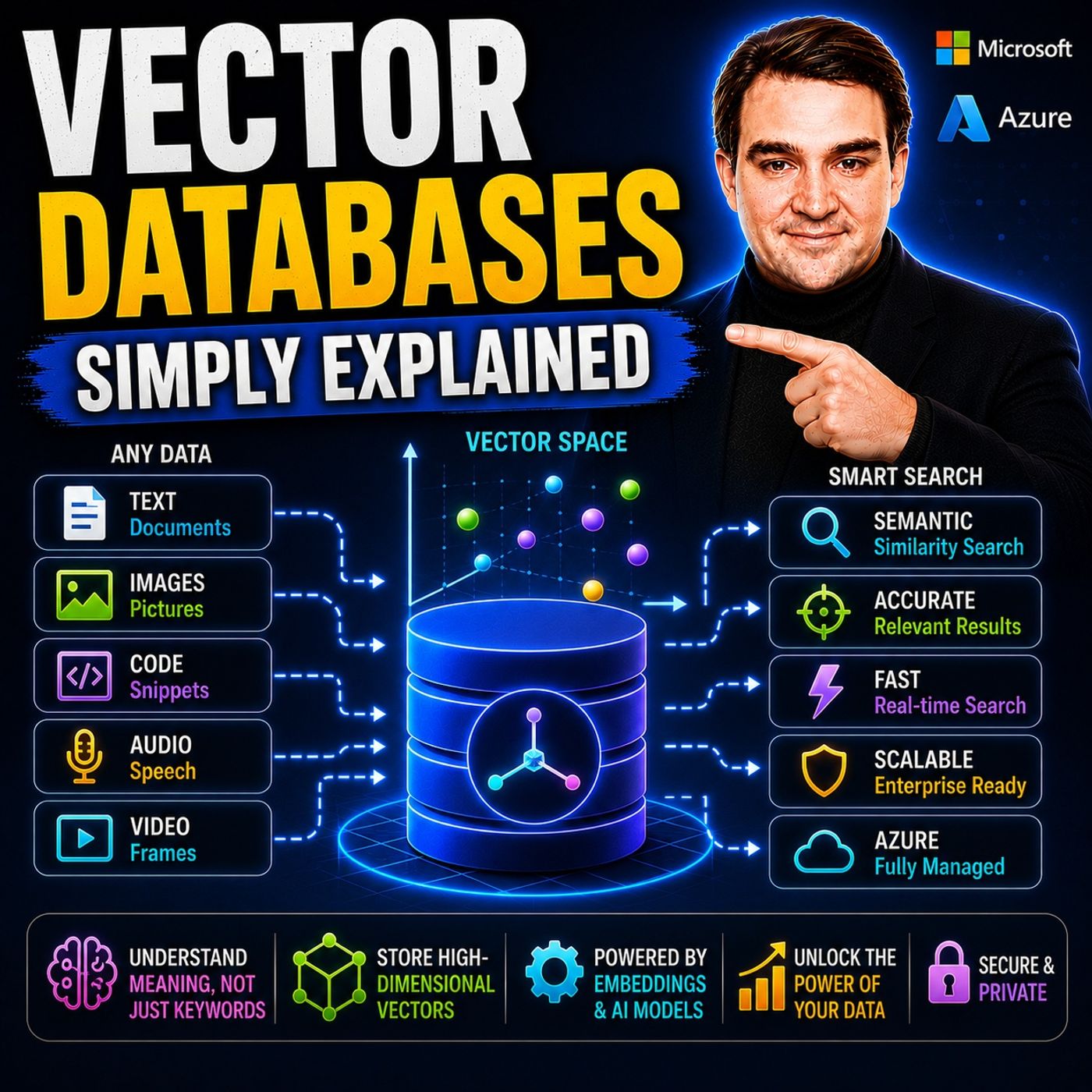
Vector Databases - Simply Explained
Vector databases are one of the key technologies powering modern AI applications, yet most people never interact with them directly. Unlike traditional databases that search for exact words or values, vector databases search by meaning, enabling AI to understand context instead of just matching keywords. In this episode of Microsoft Knowledge Nuggets, we explain vector databases in plain English and show why they're essential for enterprise AI, Microsoft Copilot, and Retrieval-Augmented Generation (RAG). You'll learn what vectors and embeddings are, how AI converts text, images, and other content into numerical representations, and why similar concepts are stored close together in vector space. We explain key concepts such as embeddings, semantic search, similarity search, vector indexes, chunking, and hybrid search, making it easy to understand how AI retrieves the right information even when users don't use the exact same words. The episode also explores real-world use cases i…
Guest: Mirko Peters
July 16, 2026
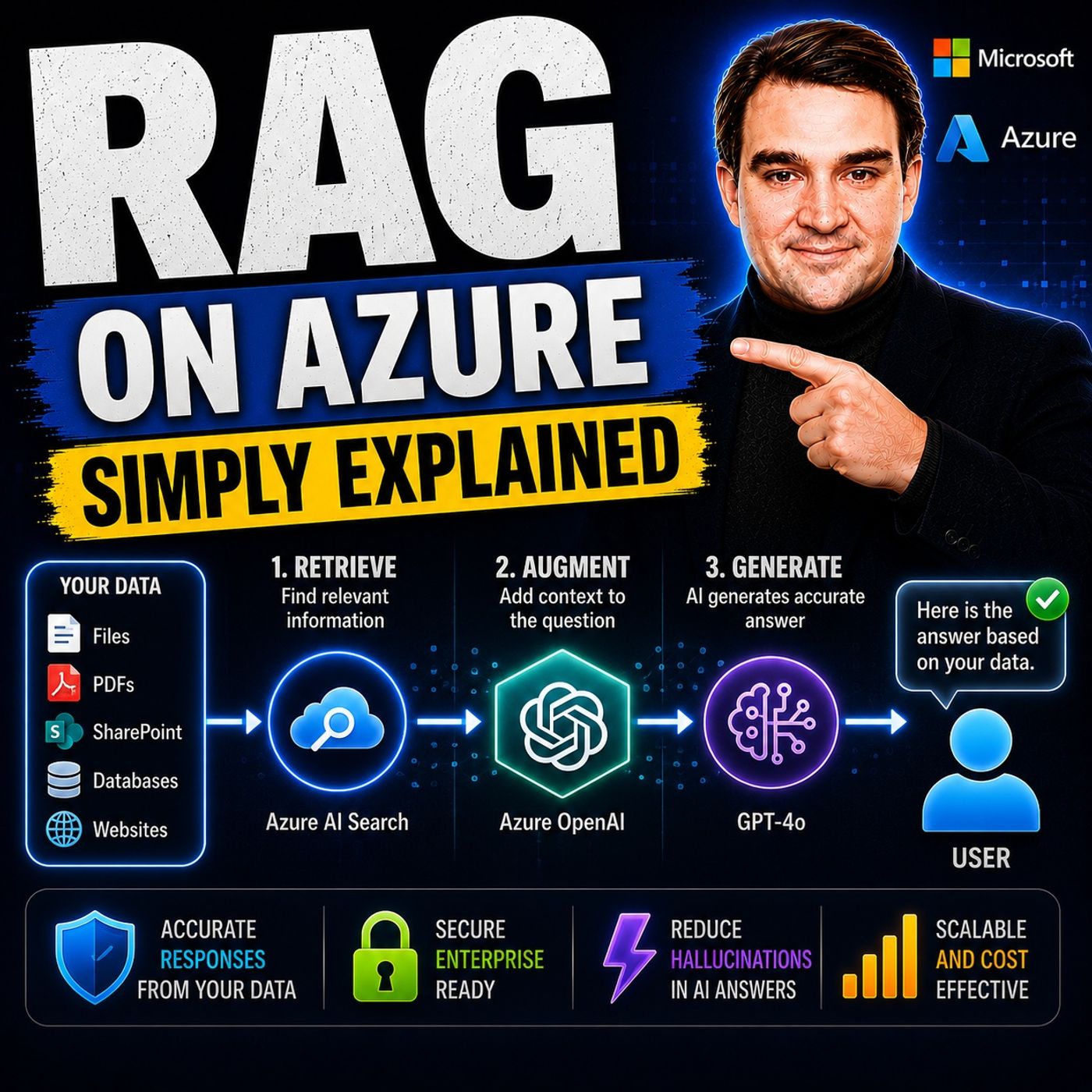
RAG on Azure — Simply Explained
Retrieval-Augmented Generation (RAG) is one of the most important techniques behind modern AI applications, enabling large language models to answer questions using your own business data instead of relying only on their training knowledge. In this episode of Microsoft Knowledge Nuggets, we explain RAG on Azure in plain English and show how organizations build secure, accurate, and trustworthy AI solutions with Microsoft Azure. You'll learn how the RAG process works—from ingesting documents and creating vector embeddings to storing them in a vector database and retrieving the most relevant information for every user query. We explain key concepts including vector search, embeddings, chunking, semantic search, Azure AI Search, Azure OpenAI, and grounding AI responses with your organization's private knowledge. You'll also discover why RAG dramatically reduces hallucinations while providing more accurate, up-to-date, and source-aware answers. The episode also explores real-world u…
Guest: Mirko Peters
July 16, 2026
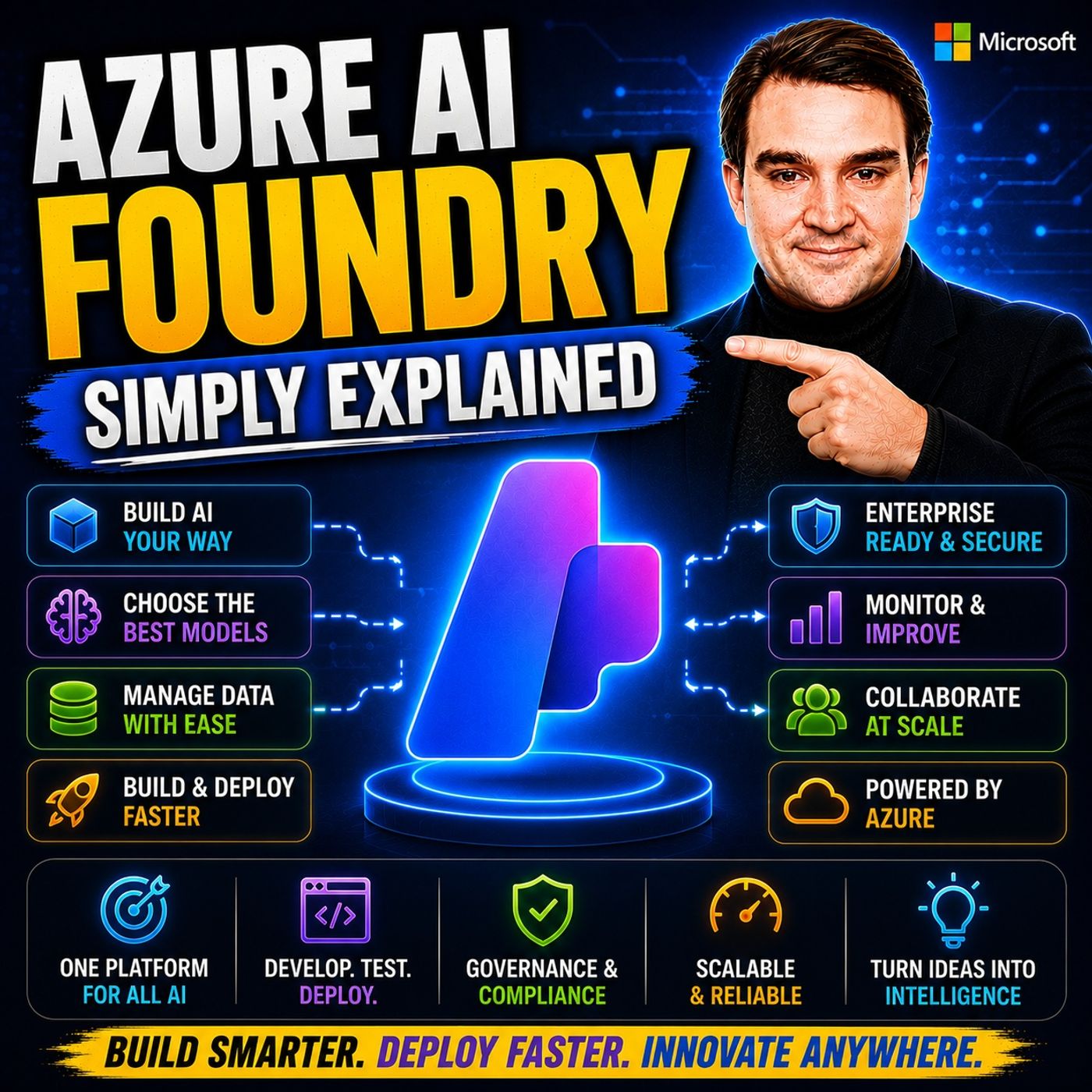
Azure AI Foundry - Simply Explained
Azure AI Foundry is Microsoft's enterprise platform for building, deploying, and managing AI applications and intelligent agents at scale. Instead of stitching together multiple AI services, developers get a unified environment for working with foundation models, prompt engineering, agent orchestration, evaluation, monitoring, and security. In this episode of Microsoft Knowledge Nuggets, we explain Azure AI Foundry in plain English and show why it's becoming the central platform for enterprise AI development. You'll learn how Azure AI Foundry simplifies the entire AI development lifecycle—from choosing and comparing models to deploying production-ready AI applications. We cover core concepts including the model catalog, AI agents, prompt flows, Retrieval-Augmented Generation (RAG), fine-tuning, evaluations, observability, and responsible AI. You'll also discover how developers can work with models from OpenAI, Meta, Anthropic, Mistral, and many others within a single platform. T…
Guest: Mirko Peters
July 16, 2026
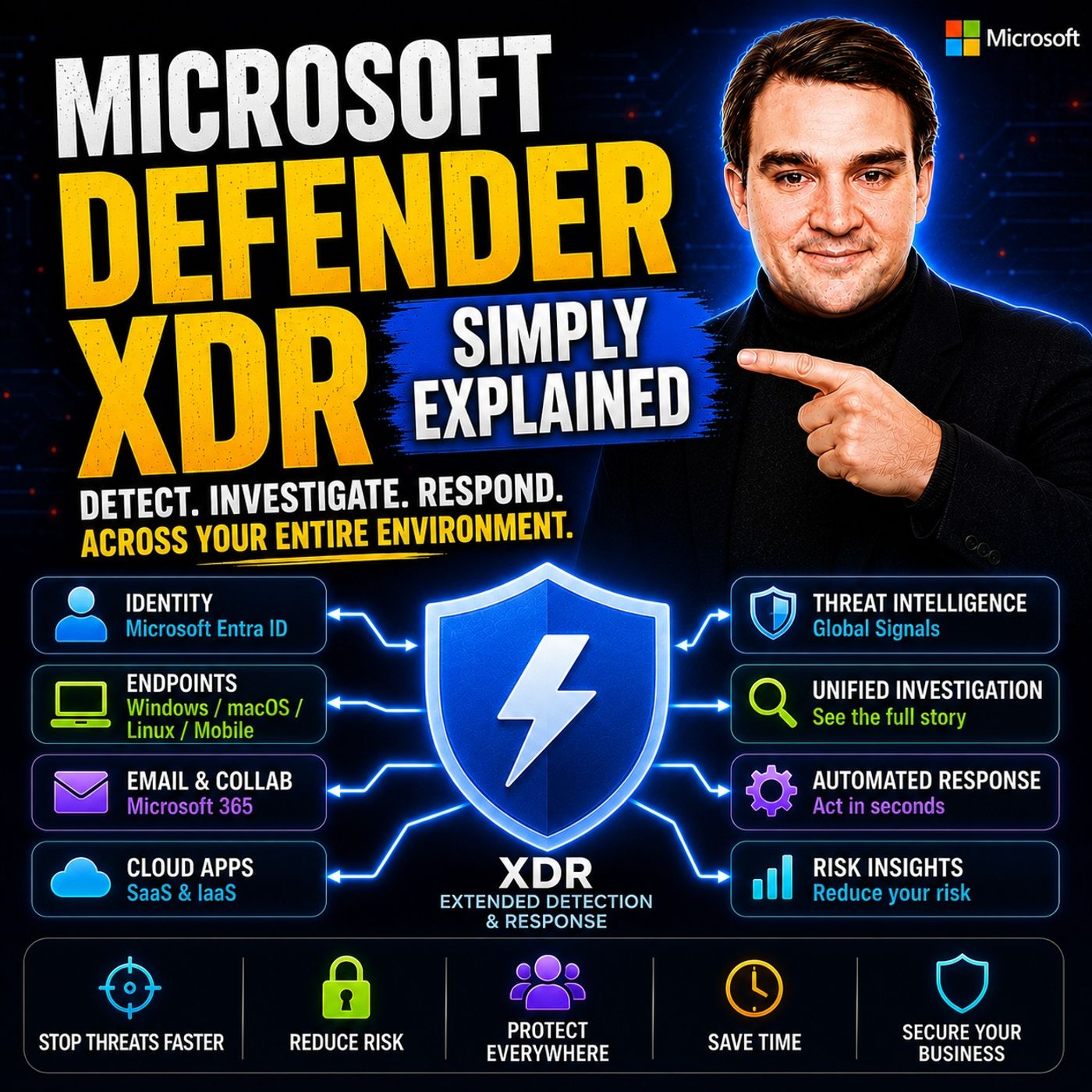
Microsoft Defender XDR - Simply Explained
Microsoft Defender XDR is Microsoft's unified Extended Detection and Response (XDR) platform, bringing together security signals from endpoints, identities, email, cloud applications, and collaboration tools into a single, AI-powered security experience. Instead of investigating isolated alerts from multiple products, security teams can see the full attack chain in one place, helping them detect, investigate, and respond to cyber threats faster. In this episode of Microsoft Knowledge Nuggets, you'll learn what XDR actually means and how Microsoft Defender XDR connects Microsoft Defender for Endpoint, Defender for Office 365, Defender for Identity, Defender for Cloud Apps, and Microsoft Entra ID to identify sophisticated attacks that individual security tools might miss. We explain key concepts including incidents, alerts, automated investigation and remediation, threat intelligence, advanced hunting, and AI-powered attack disruption. The episode also explores real-world scenario…
Guest: Mirko Peters
July 16, 2026
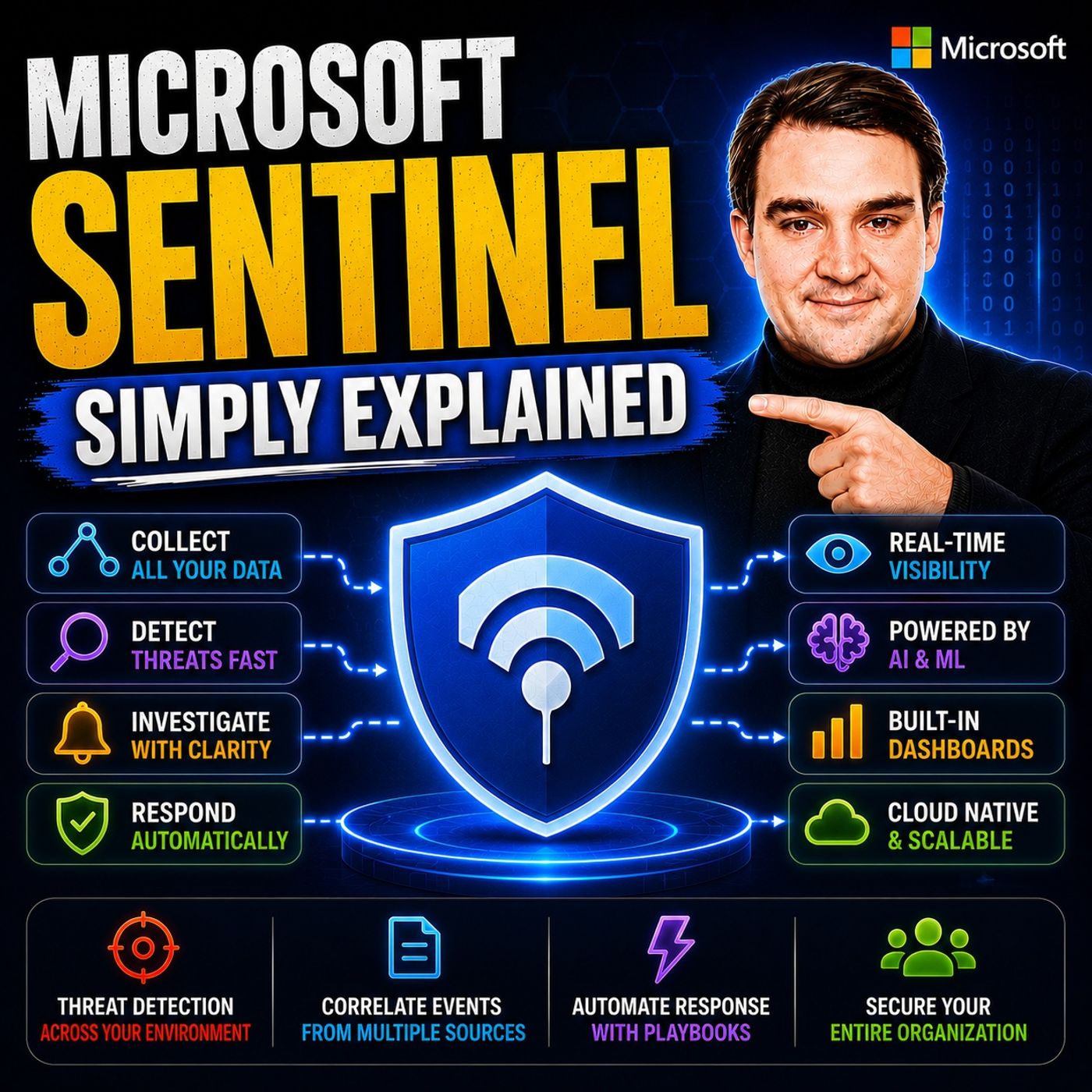
Microsoft Sentinel - Simply Explained
Microsoft Sentinel is Microsoft's cloud-native Security Information and Event Management (SIEM) and Security Orchestration, Automation, and Response (SOAR) platform, designed to help organizations detect, investigate, and respond to cyber threats across their entire IT environment. Instead of monitoring individual systems in isolation, Microsoft Sentinel collects security data from users, devices, applications, cloud services, and on-premises infrastructure, giving security teams a single, intelligent view of potential attacks. In this episode of Microsoft Knowledge Nuggets, we explain Microsoft Sentinel in plain English and show why it has become one of the most important security platforms in the Microsoft ecosystem. You'll learn what a SIEM and SOAR platform actually does and how Microsoft Sentinel helps security teams identify suspicious behavior before it becomes a major incident. We explain core concepts including data connectors, analytics rules, incidents, workbooks, threat…
Guest: Mirko Peters
July 16, 2026
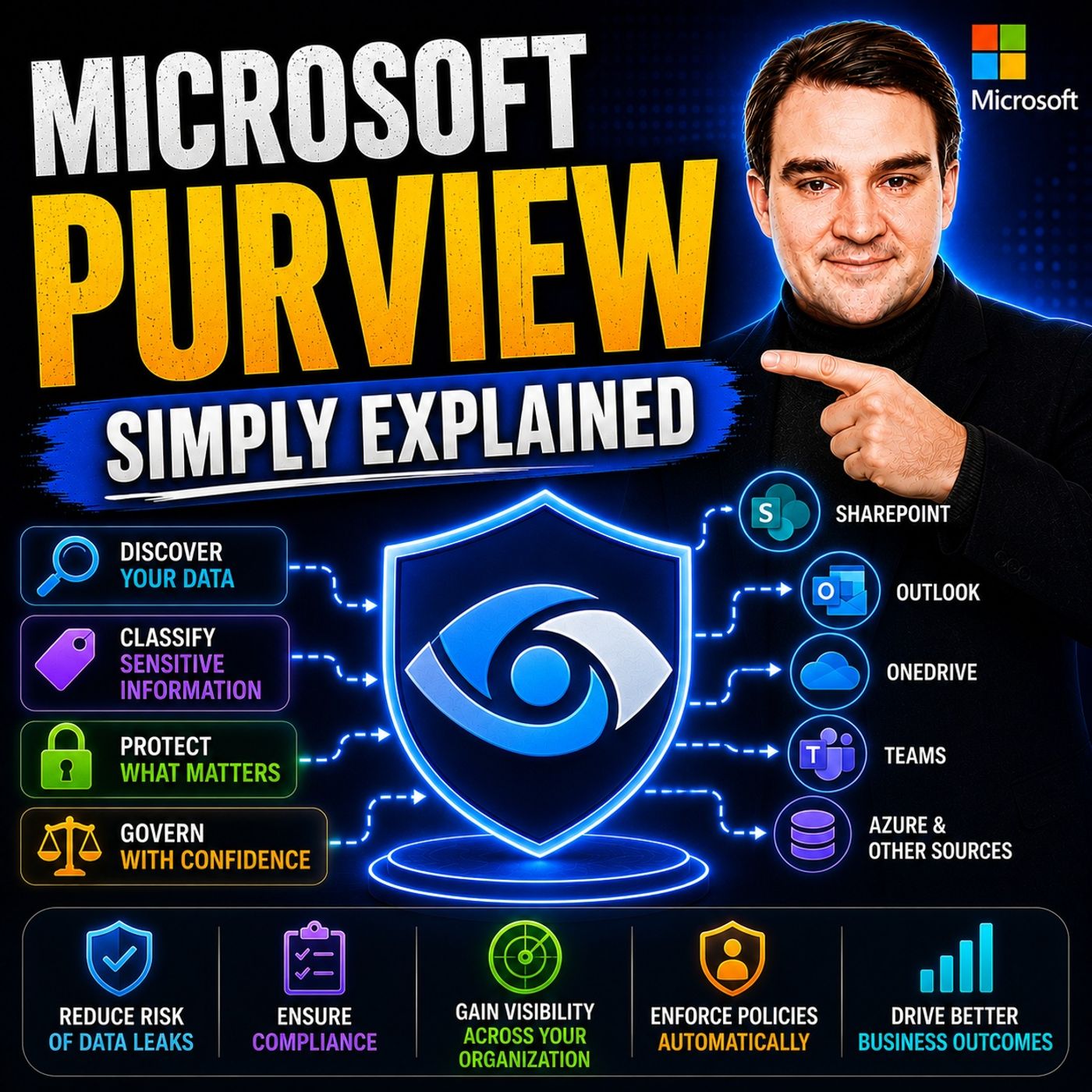
Microsoft Purview - Simply Explained
Microsoft Purview is Microsoft's unified platform for data security, compliance, and governance, helping organizations understand, protect, and manage their data wherever it lives. As businesses embrace Microsoft 365, Azure, SaaS applications, and AI, keeping sensitive information secure while meeting regulatory requirements has become more challenging than ever. In this episode of Microsoft Knowledge Nuggets, we explain Microsoft Purview in plain English and show how it helps organizations take control of their data throughout its entire lifecycle. You'll learn what Microsoft Purview is, why it has become a critical part of Microsoft's security portfolio, and how it combines multiple capabilities into a single platform. We cover core features including Data Loss Prevention (DLP), Sensitivity Labels, Information Protection, Data Lifecycle Management, eDiscovery, Audit, Insider Risk Management, Communication Compliance, Compliance Manager, and Data Governance. You'll also discover h…
Guest: Mirko Peters

July 16, 2026
Conditional Access - Simply Explained
Conditional Access is one of the most powerful security features in Microsoft Entra, acting as Microsoft's Zero Trust policy engine for controlling who can access your applications, from which devices, under what conditions, and with which level of verification. Instead of simply checking a username and password, Conditional Access evaluates multiple signals in real time to make intelligent access decisions. In this episode of Microsoft Knowledge Nuggets, we explain Conditional Access in plain English and show why it's the foundation of modern identity security. You'll learn how Conditional Access works using simple if-then policies—for example, if a user signs in from an unmanaged device or an unfamiliar location, then require Multi-Factor Authentication, block access, or enforce additional security controls. We cover the core building blocks including users and groups, applications, device compliance, trusted locations, sign-in risk, user risk, authentication strength, session co…
Guest: Mirko Peters
July 16, 2026
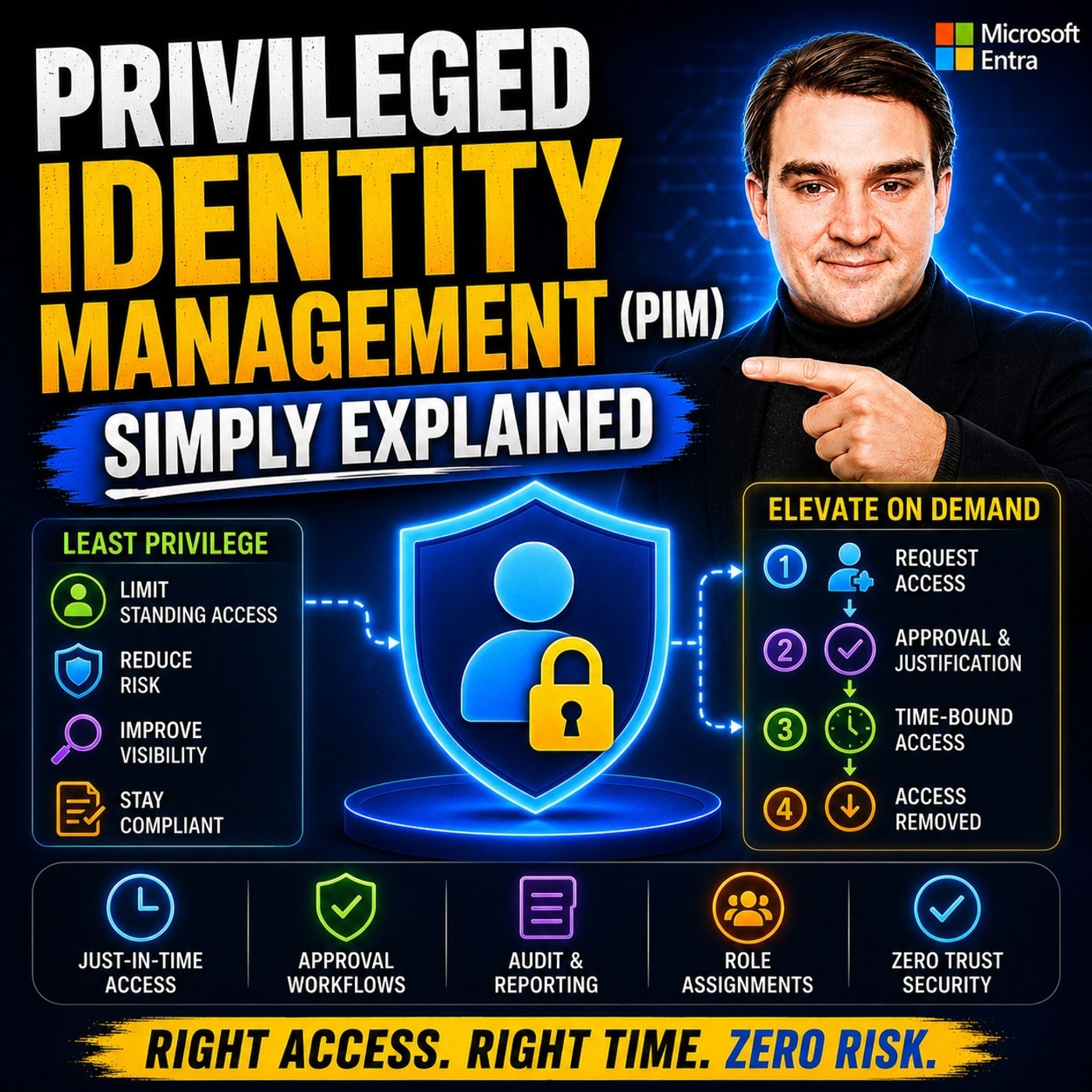
Privileged Identity Management (PIM) - Simply Explained
Privileged Identity Management (PIM) is one of the most important security capabilities in Microsoft Entra, helping organizations eliminate permanent administrator access and replace it with just-in-time privileged access. Instead of giving users standing administrative permissions, PIM allows them to activate elevated roles only when they're needed, significantly reducing the risk of compromised accounts and privilege abuse. In this episode of Microsoft Knowledge Nuggets, we explain Privileged Identity Management in plain English and show why it's a cornerstone of Zero Trust security. You'll learn how PIM works, the difference between eligible and active role assignments, and why temporary access is far more secure than permanent administrator privileges. We cover essential features including role activation, approval workflows, Multi-Factor Authentication (MFA), business justification, time-limited access, notifications, audit logs, and access reviews. You'll also discover how PI…
Guest: Mirko Peters
![Building a Secure Microsoft-First MSP: Intune, Defender & Entra ID at Scale with Albin Klinaku [MVP]](https://d3wo5wojvuv7l.cloudfront.net/t_rss_itunes_square_1400/images.spreaker.com/original/ef56dacecdba5efb10fb7d140cf0cf4f.jpg "Building a Secure Microsoft-First MSP: Intune, Defender & Entra ID at Scale with Albin Klinaku [MVP]")
July 16, 2026
Building a Secure Microsoft-First MSP: Intune, Defender & Entra ID at Scale with Albin Klinaku [MVP]
Building a successful Managed Service Provider today requires far more than device management and helpdesk support. Customers expect proactive security, cloud expertise, and modern identity protection from day one. In this episode of the M365 Show, Mirko Peters is joined by Microsoft Intune MVP Albin Klinaku, founder and CEO of AdVision Swiss AG, to explore how MSPs can build a scalable, Microsoft-first security practice using Microsoft Intune, Microsoft Defender, and Microsoft Entra ID. Together, they discuss what separates a modern security-focused MSP from a traditional service provider and why identity has become the new security perimeter. You'll learn how Intune simplifies endpoint management, how Microsoft Defender provides advanced threat detection and response, and how Microsoft Entra ID strengthens authentication through Conditional Access, Multi-Factor Authentication, and Zero Trust principles. The conversation also covers cloud-native device management, Windows Autopilo…
Guests: Mirko Peters , Albin Klinaku
July 16, 2026
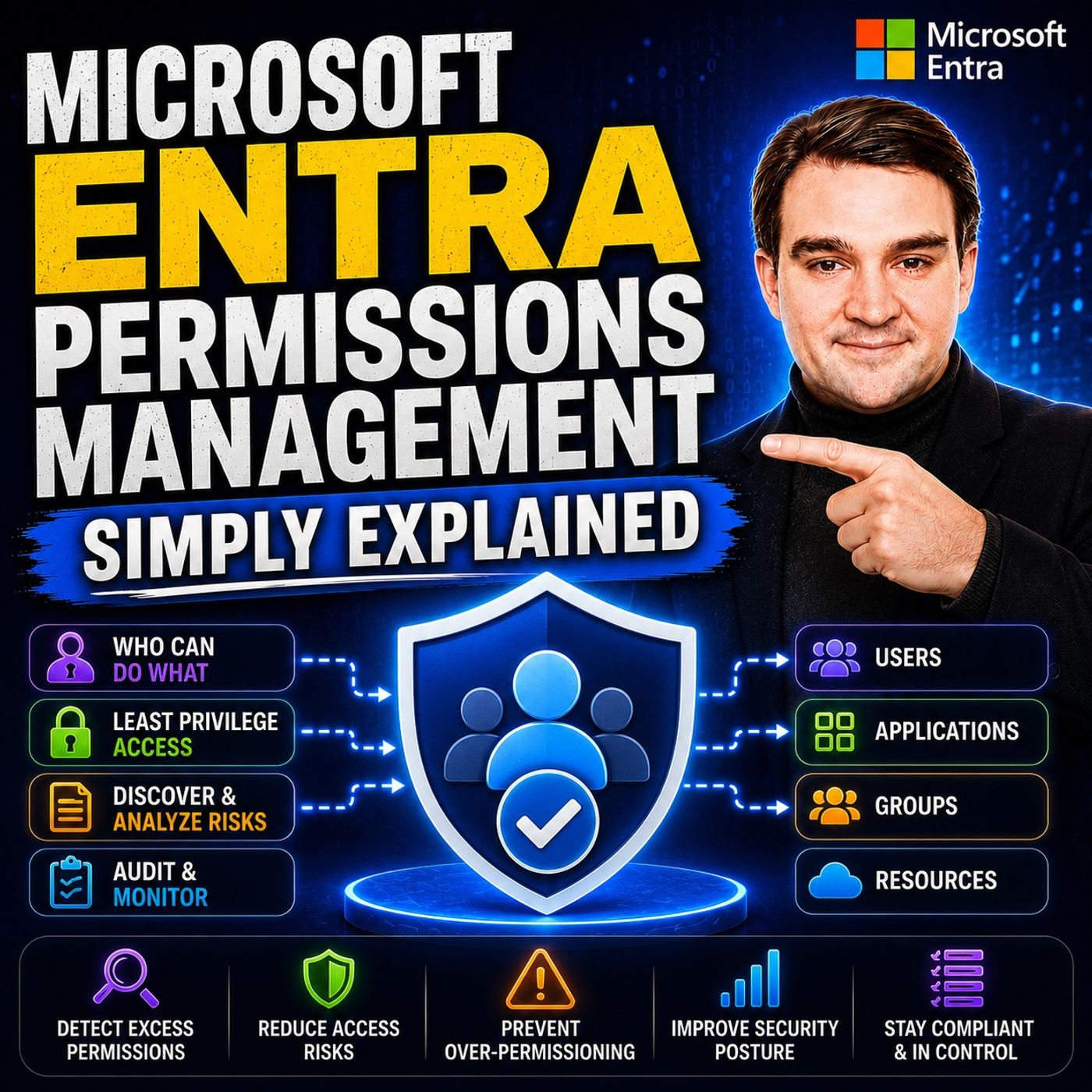
Microsoft Entra Permissions Management - Simply Explained
Microsoft Entra Permissions Management helps organizations answer one of the biggest security questions in the cloud: Who has access to what, and do they really need it? As businesses adopt Azure, AWS, and Google Cloud, permissions quickly become difficult to manage, creating unnecessary risk through excessive or unused access rights. In this episode of Microsoft Knowledge Nuggets, we explain Microsoft Entra Permissions Management in plain English and show how it helps organizations implement the principle of least privilege across multicloud environments. You'll learn what Cloud Infrastructure Entitlement Management (CIEM) is and why it's becoming an essential part of modern cloud security. We explain how Microsoft Entra Permissions Management continuously discovers identities, analyzes permissions, detects excessive privileges, and identifies permission creep before attackers can exploit it. You'll also discover how the platform provides visibility across Azure, Amazon Web Servic…
Guest: Mirko Peters
July 16, 2026
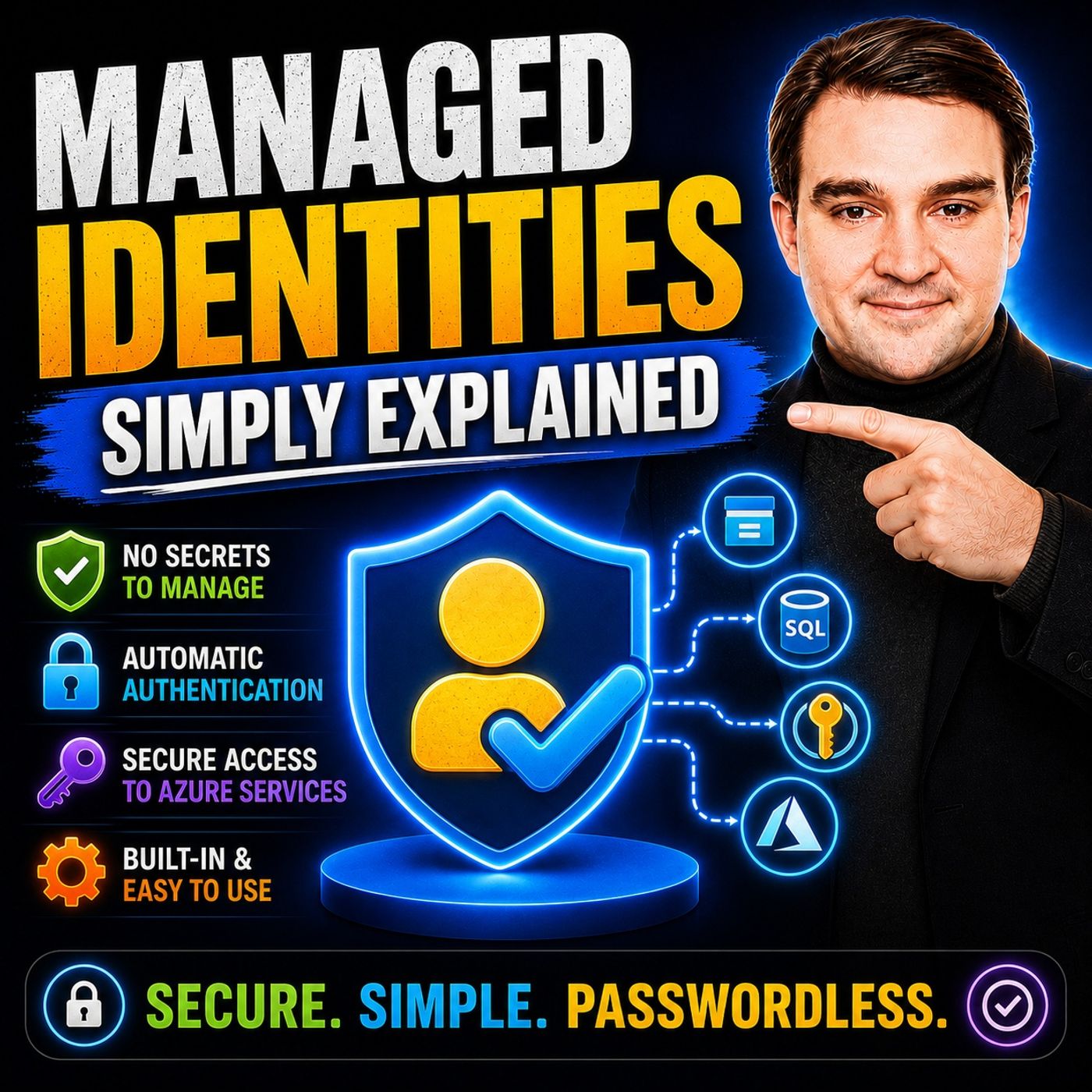
Managed Identities - Simply Explained
Managed Identities are one of Azure's most powerful security features, yet they're often overlooked. Instead of storing usernames, passwords, client secrets, or certificates inside your applications, Azure can automatically create and manage an identity for your resources. In this episode of Microsoft Knowledge Nuggets, we explain Managed Identities in plain English and show why they're considered a security best practice for modern cloud applications. You'll learn what Managed Identities are, why they exist, and how they eliminate the need to manage credentials in your code. We cover the two types of Managed Identities—System-Assigned and User-Assigned—and explain when to use each. You'll also discover how Azure automatically handles credential creation, rotation, and lifecycle management, allowing your applications to securely authenticate to services like Azure Key Vault, Storage Accounts, Azure SQL Database, Microsoft Graph, and many other Microsoft Entra-protected resources wi…
Guest: Mirko Peters
July 16, 2026
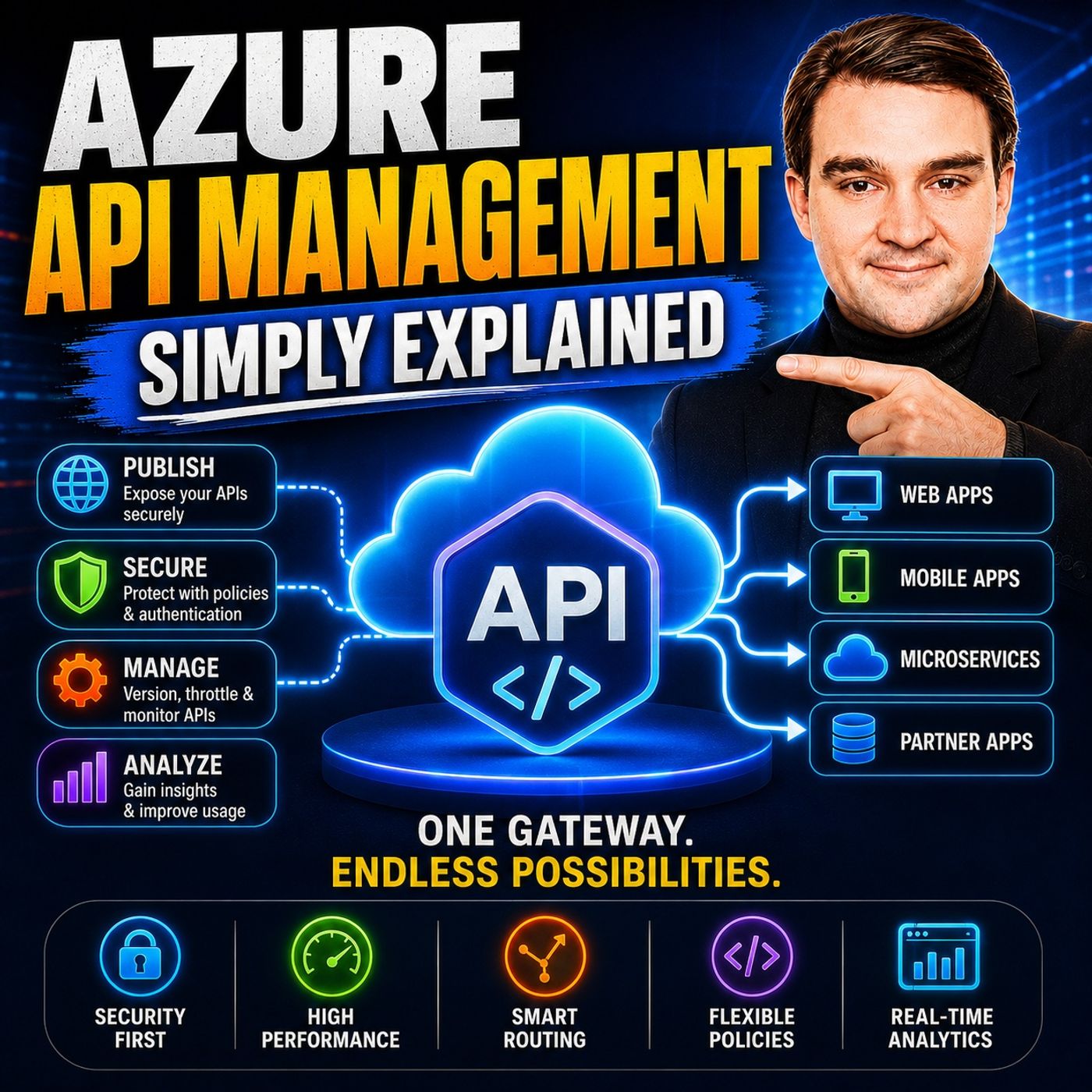
Azure API Management - Simply Explained
Azure API Management (APIM) is one of the most important services in Microsoft Azure for organizations building modern cloud applications, microservices, and enterprise integrations. As the number of APIs grows, managing security, authentication, monitoring, versioning, and developer access quickly becomes complex. In this episode of Microsoft Knowledge Nuggets, we explain Azure API Management in plain English and show how it simplifies the entire API lifecycle. You'll learn why APIs are the foundation of modern applications and how Azure API Management acts as a secure gateway between your applications and backend services. We cover essential concepts including API gateways, products, subscriptions, policies, rate limiting, authentication, caching, transformations, versioning, revisions, and the built-in developer portal. You'll also discover how APIM helps protect backend services while giving developers a consistent and secure way to consume APIs. The episode explores common …
Guest: Mirko Peters
July 16, 2026
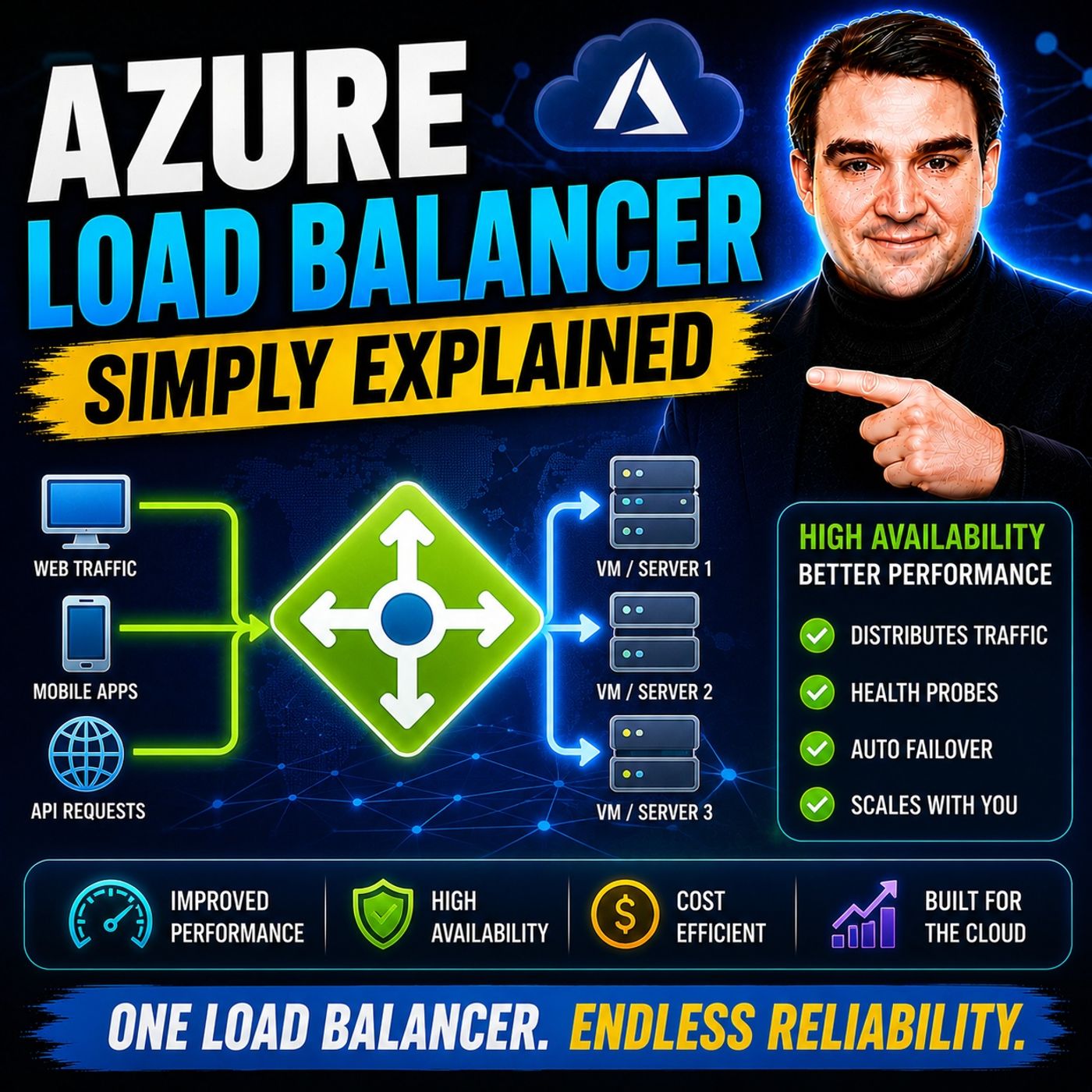
Azure Load Balancer — Simply Explained
Azure Load Balancer is one of the core networking services in Microsoft Azure, but many people don't fully understand what it actually does. In this episode of Microsoft Knowledge Nuggets, we explain Azure Load Balancer in plain English and show how it keeps applications available, scalable, and resilient as traffic grows. You'll learn why relying on a single virtual machine creates a single point of failure, and how Azure Load Balancer automatically distributes incoming TCP and UDP traffic across multiple backend servers. We break down essential concepts such as frontend IPs, backend pools, health probes, load-balancing rules, inbound NAT rules, and session persistence, explaining how they work together to ensure users are always connected to healthy resources. The episode also explores the differences between public and internal load balancers, when to choose Azure Load Balancer over Azure Application Gateway or Azure Front Door, and why understanding Layer 4 networking is cri…
Guest: Mirko Peters
July 16, 2026
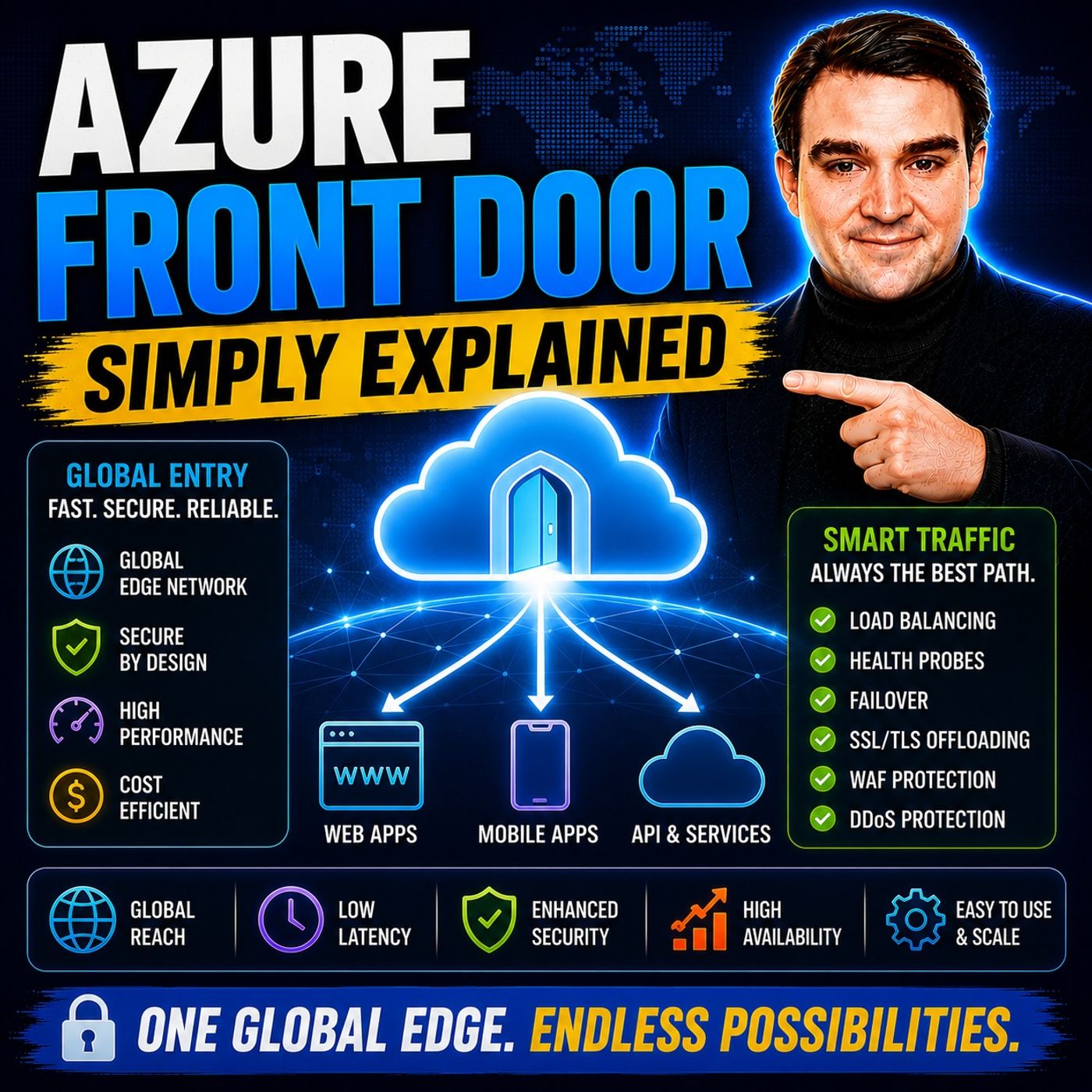
Azure Front Door - Simply Explained
Azure Front Door is Microsoft's global application delivery network that improves the performance, availability, and security of web applications. By routing user traffic through Microsoft's worldwide edge network, Azure Front Door delivers faster response times, intelligent load balancing, SSL offloading, and built-in protection against web attacks—all from a single managed service. In this episode, you'll learn what Azure Front Door is, how it works, and why it's an essential service for modern internet-facing applications. The discussion explains core concepts such as global load balancing, health probes, URL routing, caching, Web Application Firewall (WAF), and SSL/TLS termination. You'll also discover how Azure Front Door differs from Azure Load Balancer, Azure Traffic Manager, and Azure Application Gateway. The episode explores practical scenarios such as hosting global websites, delivering APIs, improving application resilience, protecting against DDoS and web attacks, an…
Guest: Mirko Peters
July 16, 2026
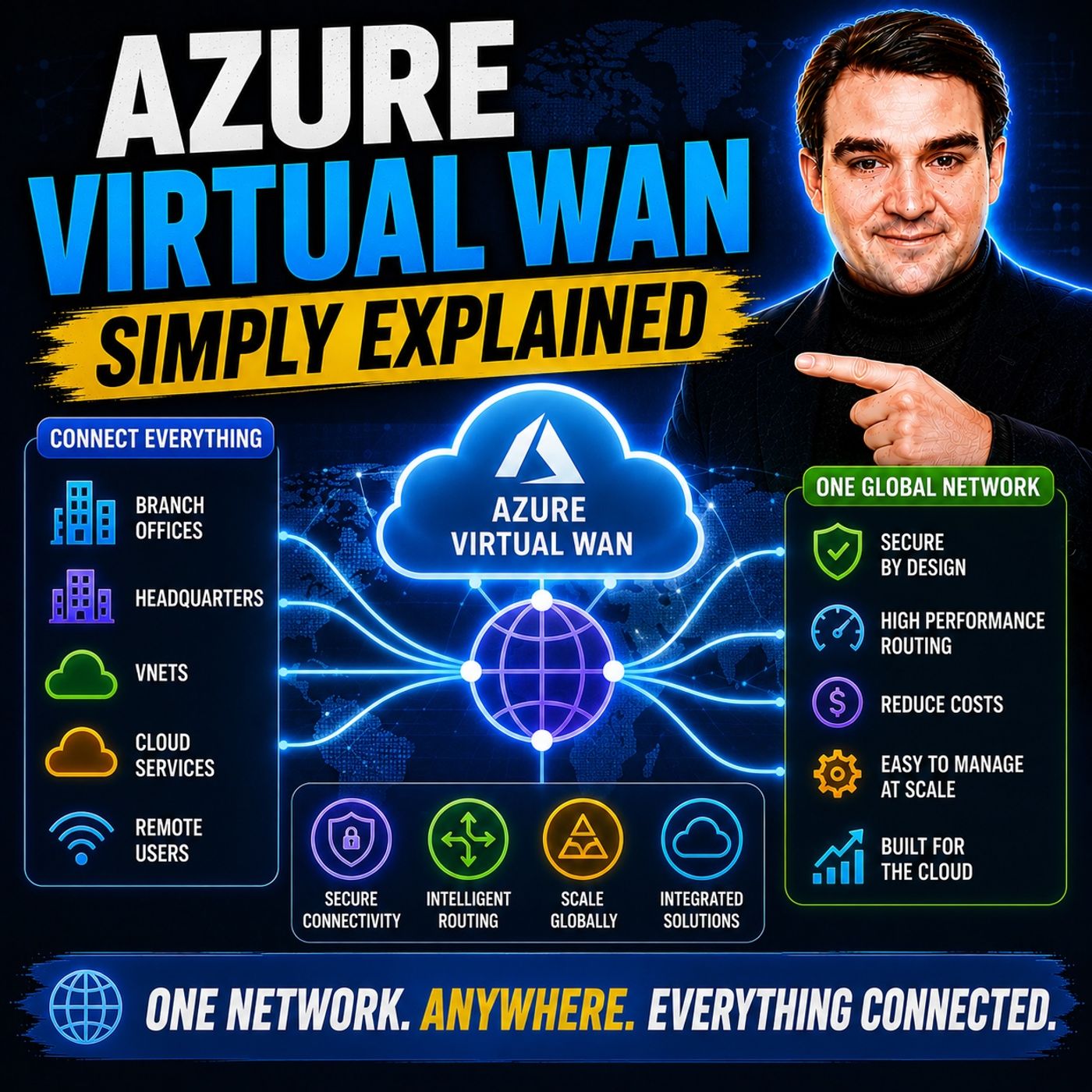
Azure Virtual WAN - Simply Explained
Azure Virtual WAN is Microsoft's global networking service that simplifies connecting branch offices, remote users, virtual networks, and on-premises datacenters through the Microsoft global backbone. Instead of managing multiple VPN gateways, ExpressRoute connections, and complex routing configurations individually, Azure Virtual WAN provides a centralized platform for building secure, scalable, and high-performance enterprise networks. In this episode, you'll learn what Azure Virtual WAN is, how it works, and why it's designed for organizations with distributed or hybrid infrastructures. The discussion explains key concepts including Virtual Hubs, hub-and-spoke networking, site-to-site VPN, point-to-site VPN, ExpressRoute, and transitive routing. You'll also discover how Azure Virtual WAN simplifies global connectivity while reducing operational complexity. The episode explores practical scenarios such as connecting multiple offices, supporting remote workers, integrating hybr…
Guest: Mirko Peters
July 15, 2026
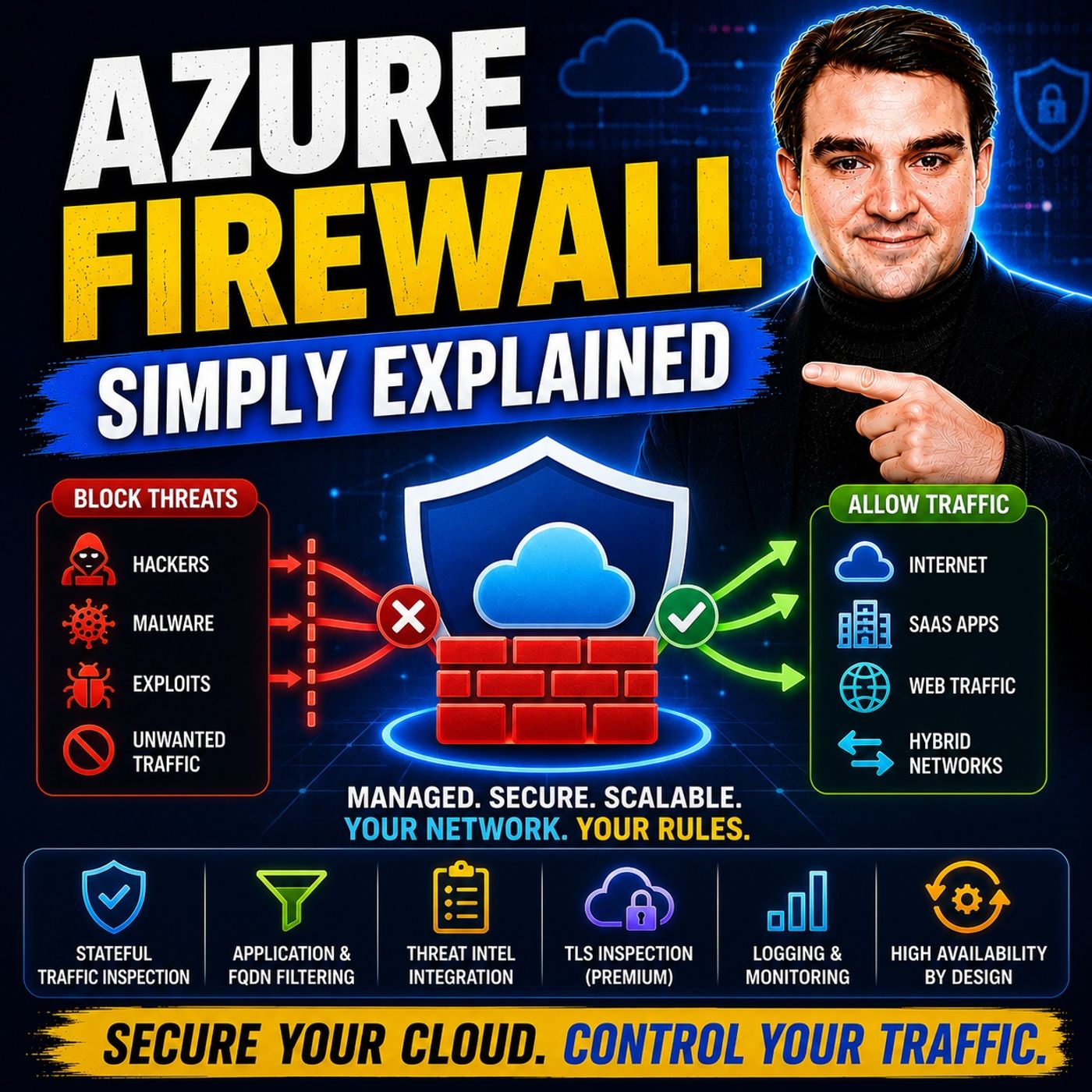
Azure Firewall - Simply Explained
Azure Firewall is Microsoft's cloud-native, fully managed network security service that protects Azure workloads from both internal and external threats. Instead of deploying and maintaining traditional firewall appliances, Azure Firewall provides centralized traffic filtering, threat intelligence, and application-aware security that automatically scales with your environment. In this episode, you'll learn what Azure Firewall is, how it works, and why it's a critical component of a secure Azure architecture. The discussion explains key concepts including network rules, application rules, NAT rules, threat intelligence, and the differences between the Basic, Standard, and Premium SKUs. You'll also discover how Azure Firewall fits into hub-and-spoke network designs and complements services like Network Security Groups (NSGs). The episode explores practical scenarios such as securing virtual machines, controlling outbound internet access, protecting hybrid cloud environments, filte…
Guest: Mirko Peters
July 15, 2026
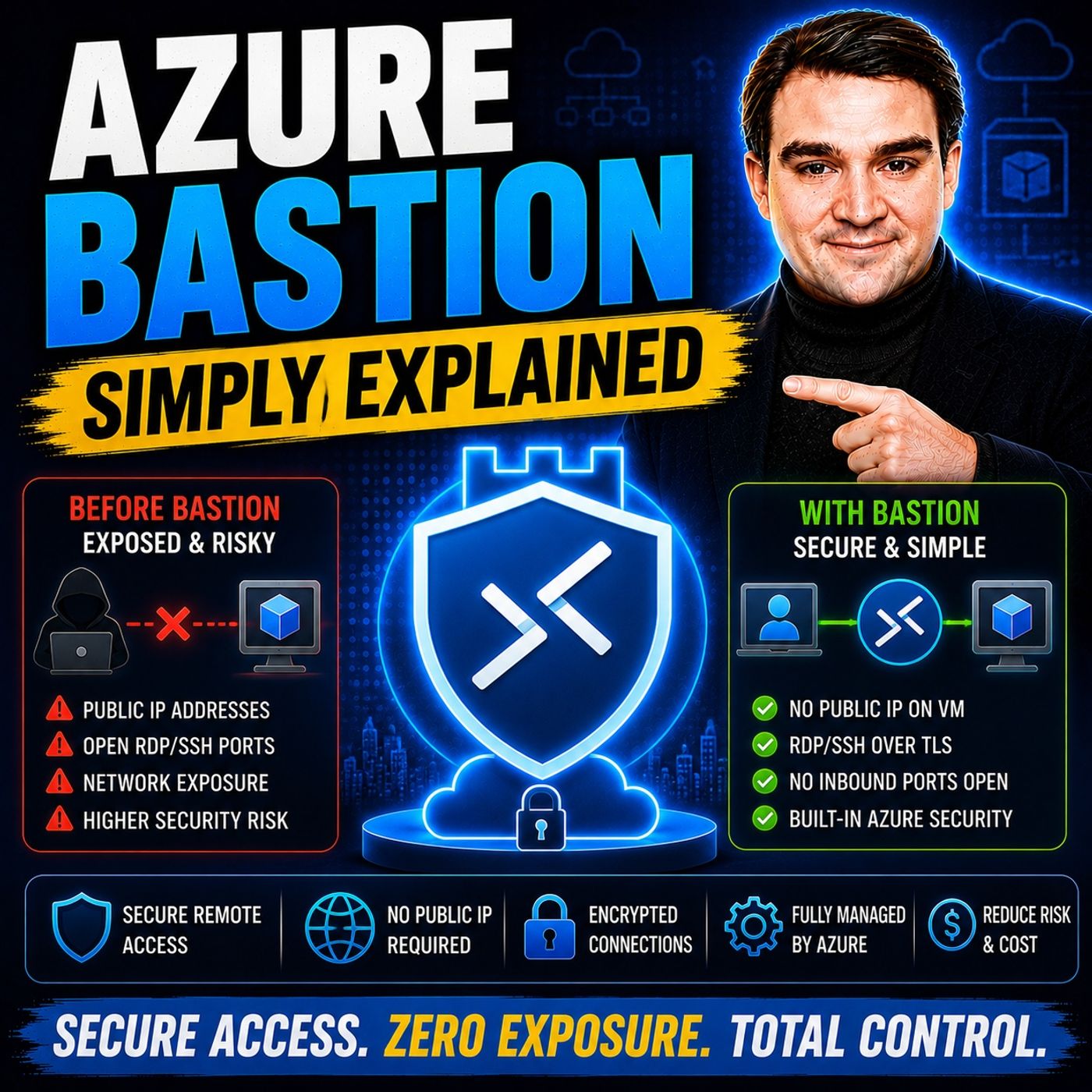
Azure Bastion - Simply Explained
Azure Bastion is Microsoft's managed remote access service that lets you securely connect to Azure virtual machines without exposing them to the public internet. Instead of opening RDP or SSH ports, Azure Bastion provides browser-based access through the Azure portal, significantly reducing the attack surface while improving security and simplifying remote administration. In this episode, you'll learn what Azure Bastion is, how it works, and why it's becoming a best practice for managing Azure virtual machines. The discussion explains how Bastion enables secure RDP and SSH connections, integrates with virtual networks, and eliminates the need for public IP addresses on your servers. You'll also discover how it supports Zero Trust security principles and strengthens your overall Azure environment. The episode explores practical scenarios such as securely managing production servers, supporting hybrid environments, enabling remote administration for IT teams, and protecting critic…
Guest: Mirko Peters