

Data Governance Power Platform Microsoft Security Cloud Architecture AI in Microsoft 365 Dynamics 365 Insights Developer Practices Microsoft 365 Podcast – Teams, SharePoint, Office Apps & Productivity Microsoft Strategy & Partner Marketing Guest Episodes Simply Explained Workshops on Microsoft Tech for free
July 15, 2026
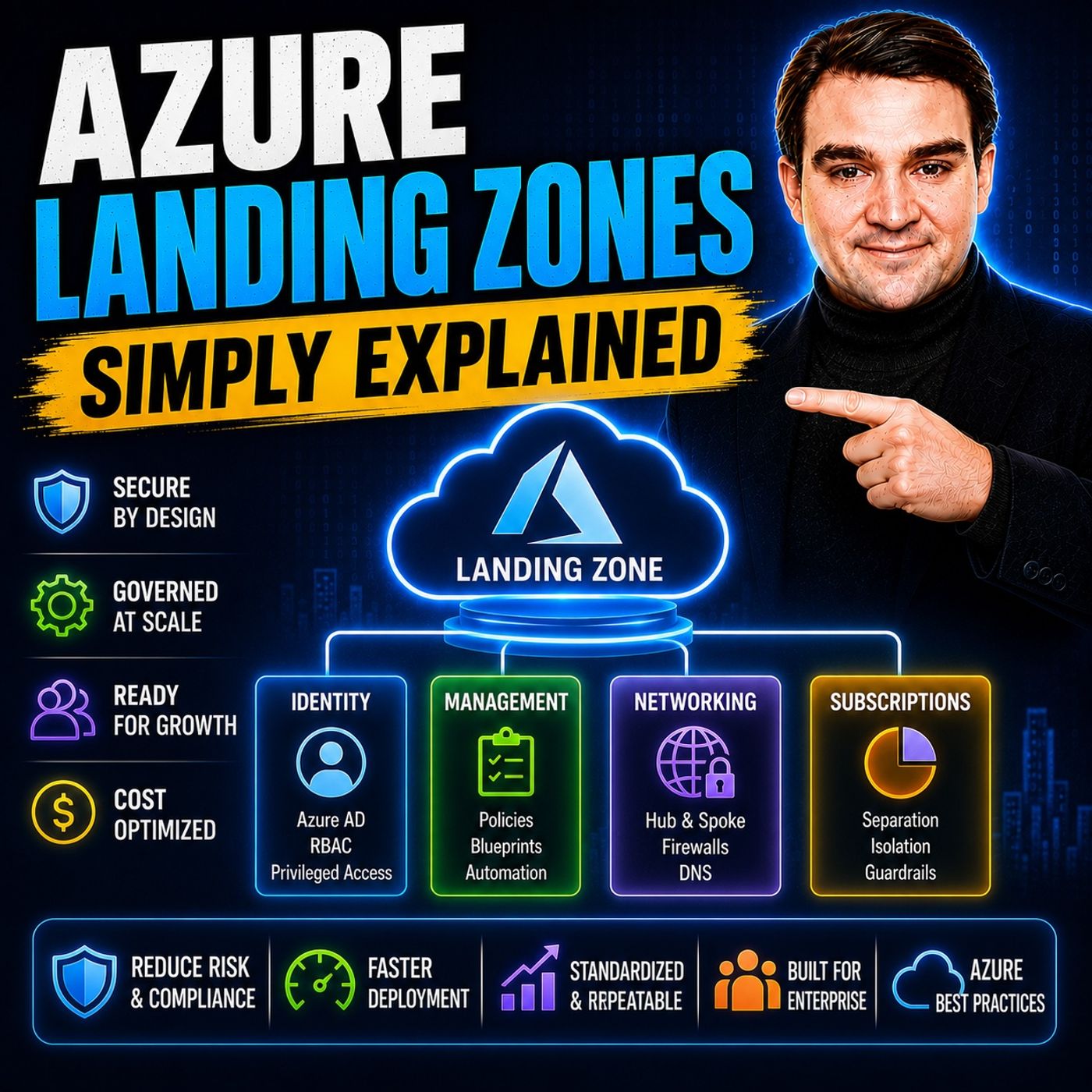
Azure Landing Zones - Simply Explained
Azure Landing Zones provide the secure, scalable, and governed foundation that organizations need before deploying workloads in Microsoft Azure. Rather than simply creating subscriptions and resources, a Landing Zone establishes the core architecture—including identity, networking, security, governance, management, and compliance—so every new workload starts from a consistent and enterprise-ready baseline. Think of it as preparing the ground before building a house: without a solid foundation, everything built on top becomes harder to manage and secure. In this episode, you'll learn what Azure Landing Zones are, why they're essential for cloud adoption, and how they help organizations avoid costly redesigns as their Azure environments grow. The discussion explains the core building blocks, including management groups, subscriptions, resource organization, identity, networking, Azure Policy, Role-Based Access Control (RBAC), monitoring, and security baselines. You'll also discover h…
Guest: Mirko Peters
July 15, 2026
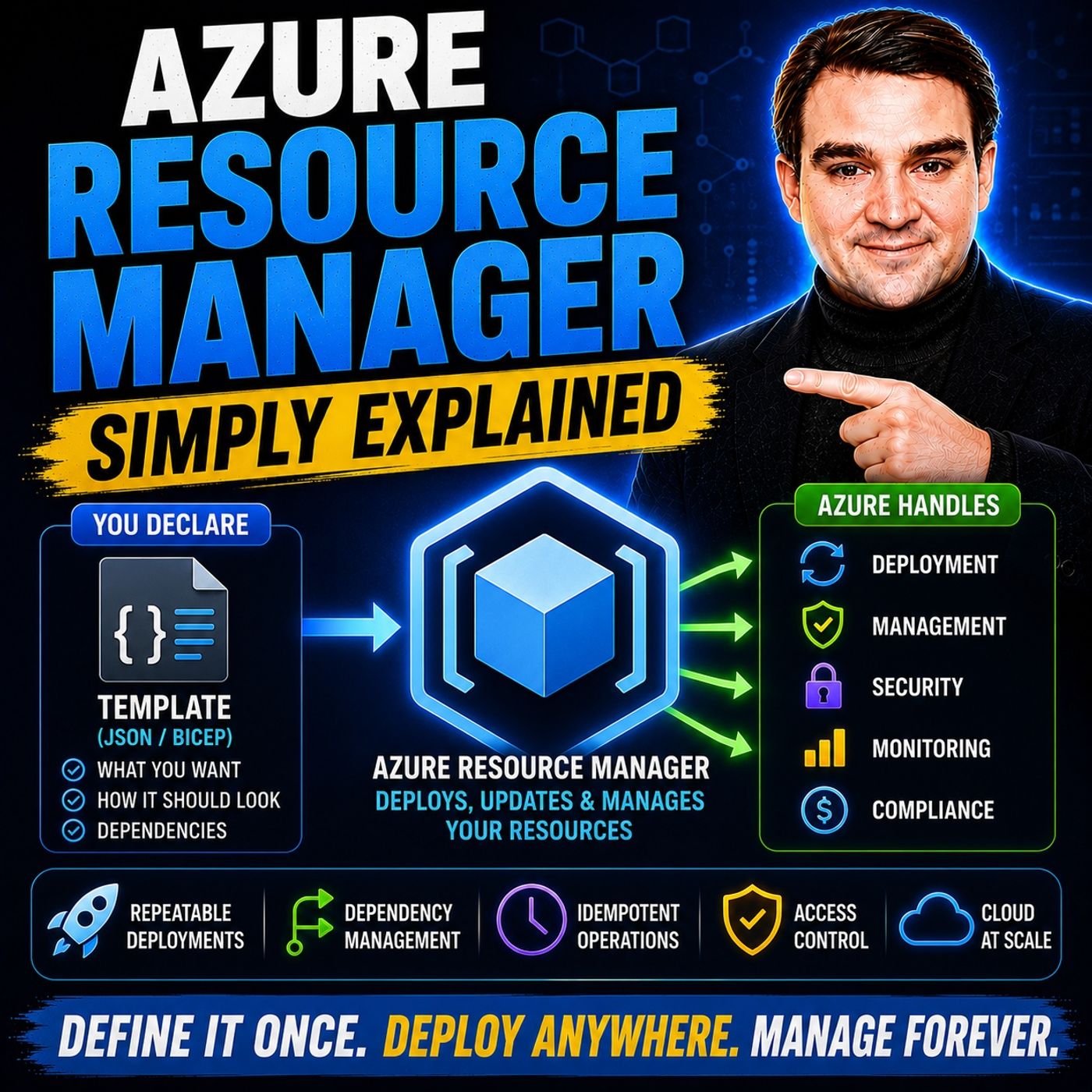
Azure Resource Manager - Simply Explained
Azure Resource Manager (ARM) is the management layer that sits behind every Azure deployment, providing a consistent way to create, organize, secure, and manage cloud resources. Whether you deploy virtual machines, storage accounts, databases, or networking components, every request passes through Azure Resource Manager. Rather than configuring resources manually, ARM enables organizations to deploy entire environments consistently using Infrastructure as Code, templates, and automation. In this episode, you'll learn what Azure Resource Manager is, how it works, and why it's the foundation of every Azure environment. The discussion explains key concepts including subscriptions, resource groups, resource providers, management groups, tags, locks, and role-based access control (RBAC). You'll also discover how Azure Resource Manager provides a centralized control plane that ensures consistent deployments, governance, and security across all Azure services. The episode explores prac…
Guest: Mirko Peters
July 15, 2026
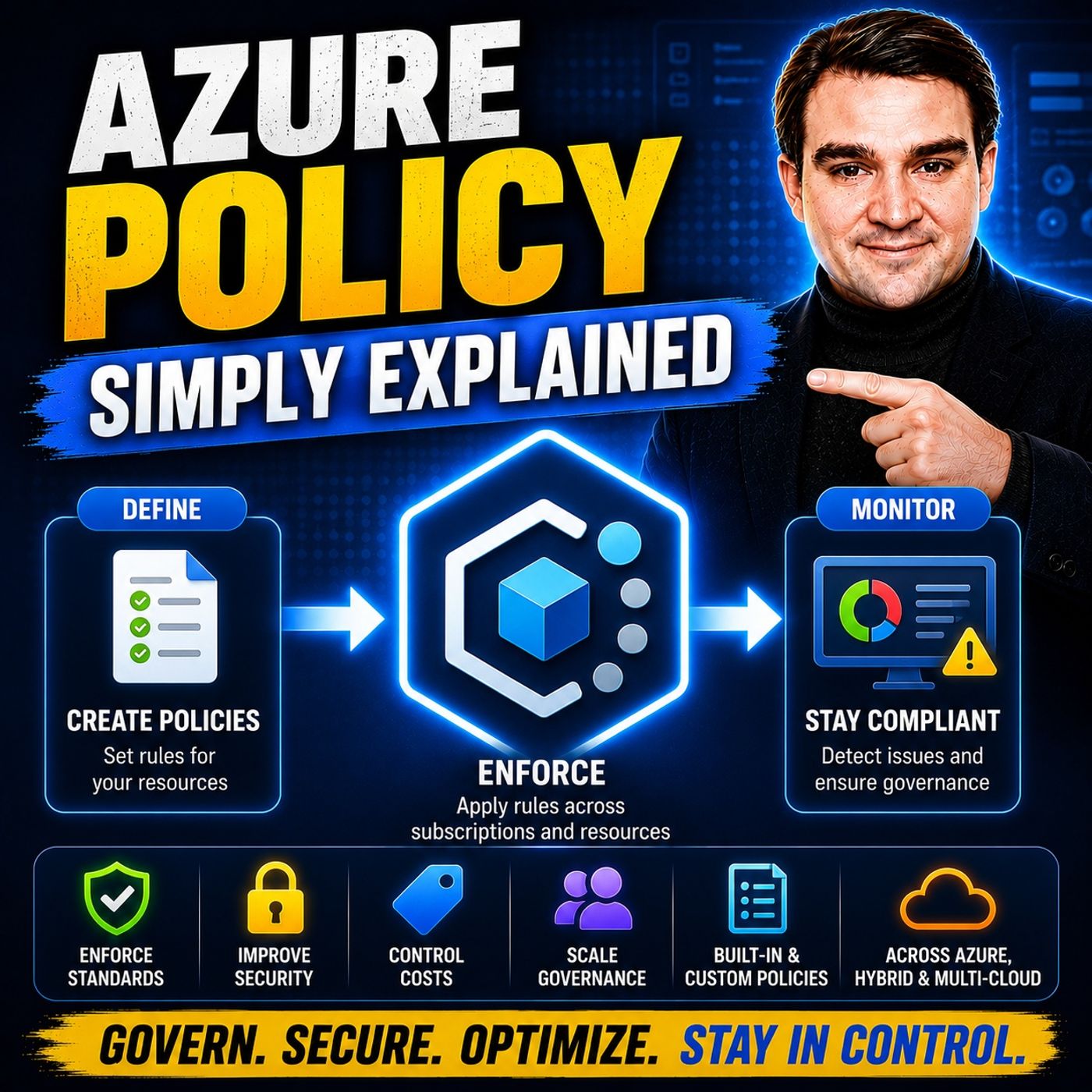
Azure Policy - Simply Explained
Azure Policy is Microsoft's governance and compliance service for Azure, helping organizations enforce standards, prevent misconfigurations, and keep cloud environments secure at scale. Instead of relying on administrators to manually follow best practices, Azure Policy automatically evaluates resources against defined rules and can deny, audit, modify, or automatically remediate deployments that don't meet organizational requirements. In this episode, you'll learn what Azure Policy is, how it works, and why governance should be built into your Azure environment from day one. The discussion explains the core concepts of policy definitions, assignments, initiatives, scopes, exemptions, and compliance reporting, showing how they work together to enforce consistent standards across subscriptions, resource groups, and management groups. You'll also discover the difference between Azure Policy, Azure RBAC, and Azure Blueprints, helping you understand when each service should be used. …
Guest: Mirko Peters
July 15, 2026
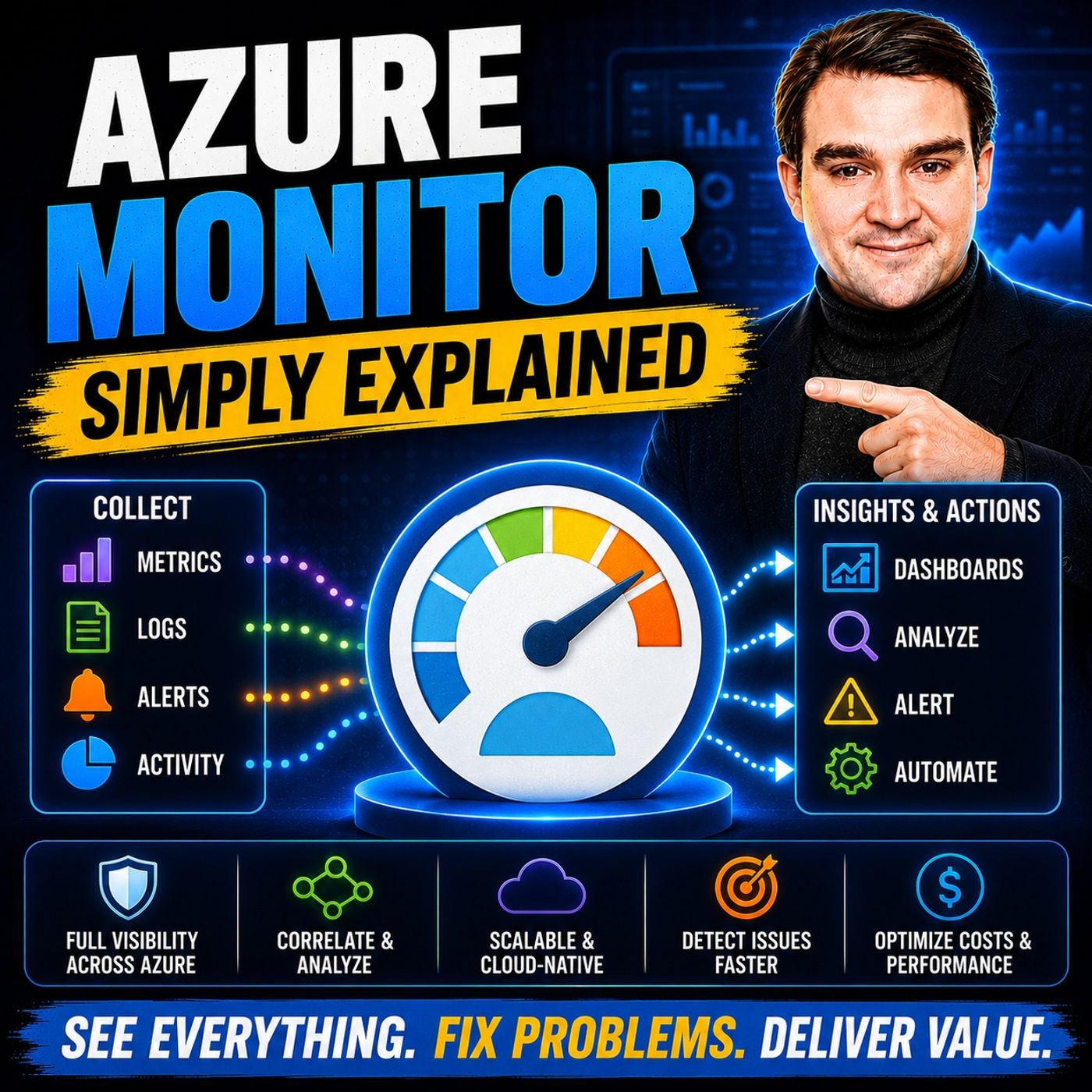
Azure Monitor — Simply Explained
Azure Monitor is Microsoft's comprehensive monitoring and observability platform that helps organizations understand the health, performance, and availability of their cloud and on-premises environments. Instead of manually checking servers, applications, and services, Azure Monitor continuously collects metrics, logs, traces, and events, giving IT teams real-time visibility into everything running across their infrastructure. In this episode, you'll learn what Azure Monitor is, how it works, and why monitoring is essential for building reliable cloud solutions. The discussion explains the core components of Azure Monitor, including Metrics, Log Analytics, Application Insights, Alerts, Workbooks, and Dashboards, showing how they work together to detect issues before users are affected. You'll also discover how Azure Monitor integrates with virtually every Azure service to provide centralized monitoring and actionable insights. The episode explores practical scenarios such as mon…
Guest: Mirko Peters
July 15, 2026
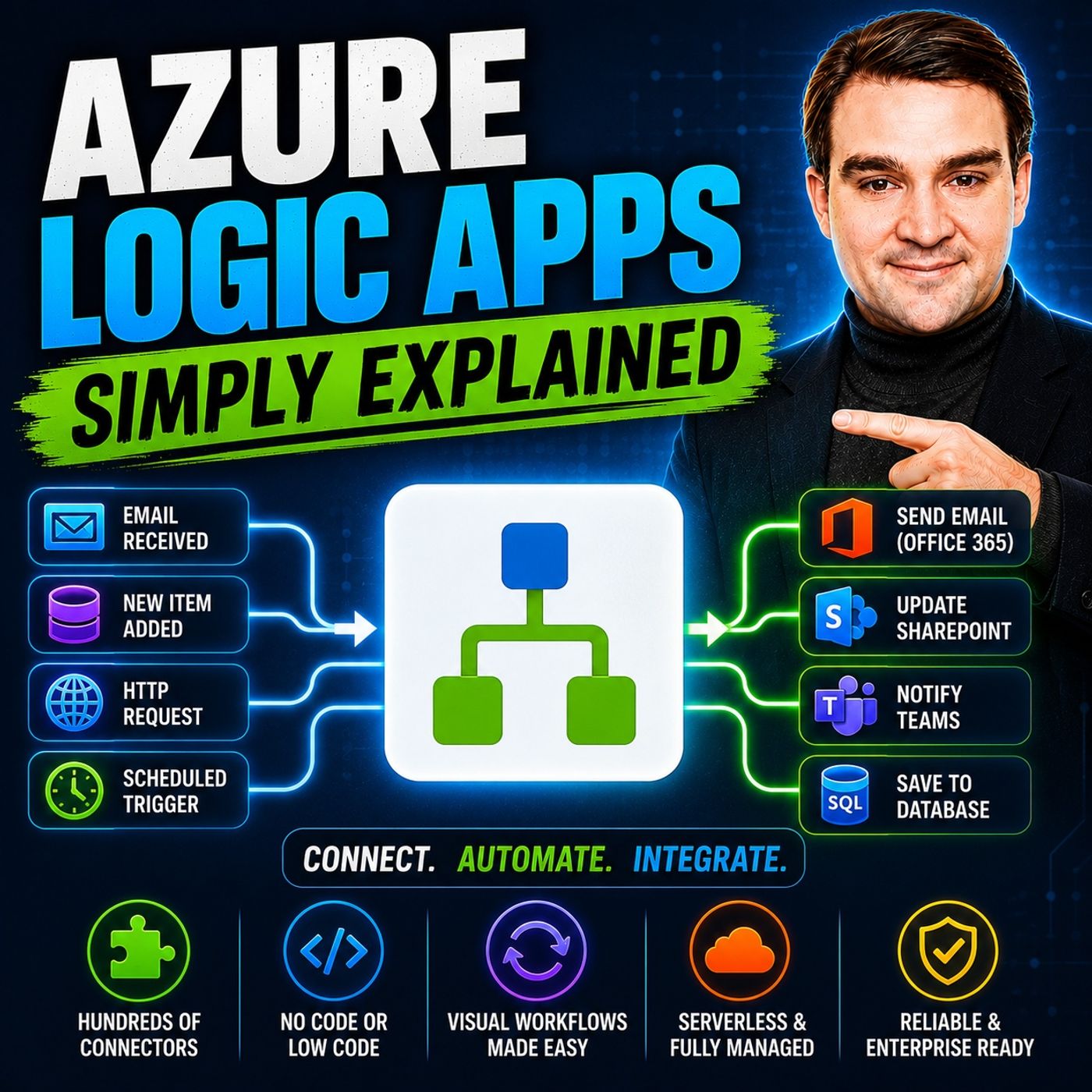
Azure Logic Apps - Simply Explained
Azure Logic Apps is Microsoft's cloud-native workflow automation platform that helps organizations connect applications, services, and data without writing large amounts of code. Instead of building complex integrations from scratch, you create visual workflows that automatically respond to events, execute business processes, and move information between cloud services, on-premises systems, and third-party applications. In this episode, you'll learn what Azure Logic Apps is, how it works, and why it's one of the most powerful automation services in Microsoft Azure. The discussion explains the core building blocks of a workflow, including triggers, actions, connectors, conditions, loops, and approvals, while showing how they work together to automate repetitive business tasks. You'll also discover the difference between Azure Logic Apps, Power Automate, and Azure Functions, helping you choose the right tool for different automation scenarios. The episode explores practical use ca…
Guest: Mirko Peters
July 15, 2026
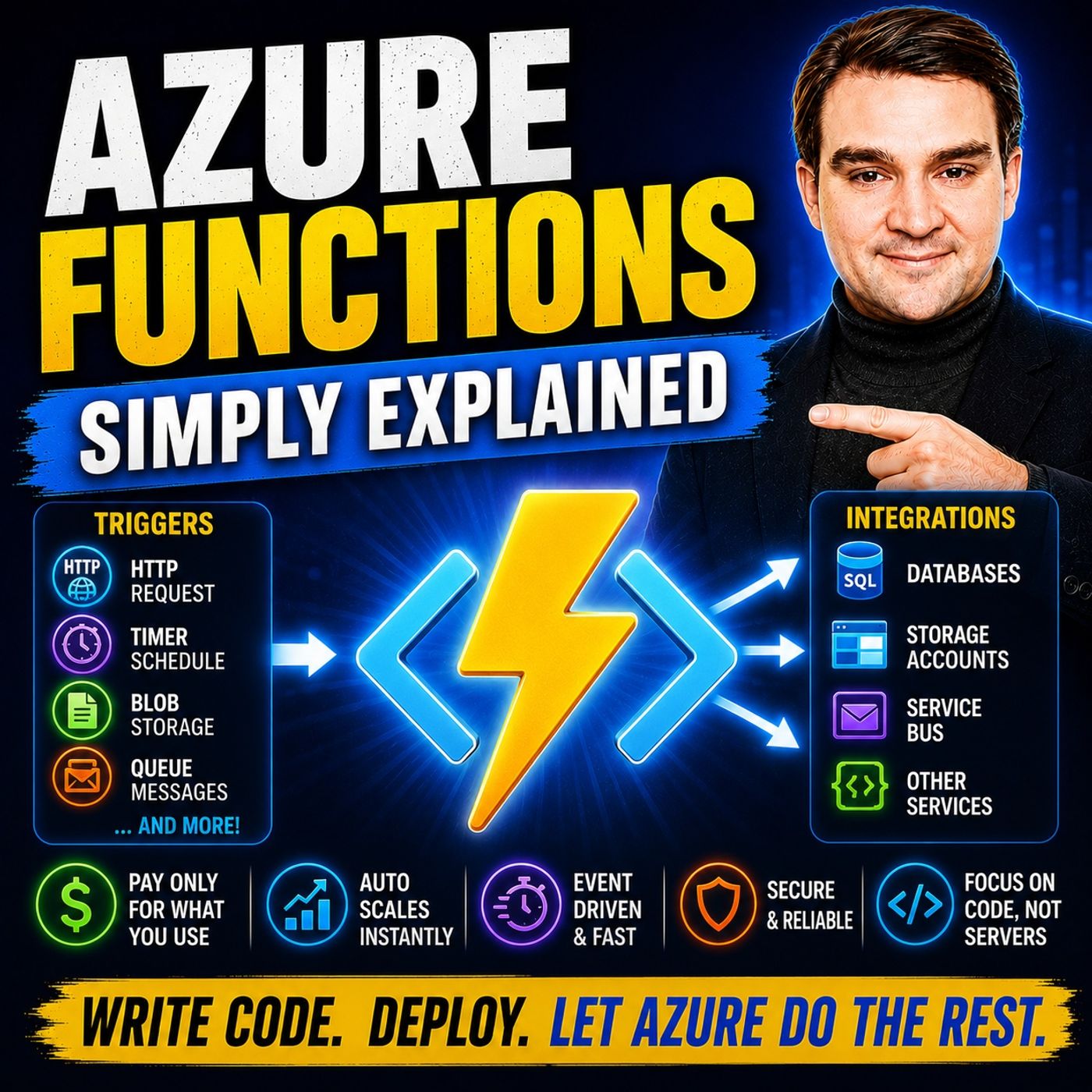
Azure Functions - Simply Explained
Azure Functions are Microsoft's serverless compute service, allowing developers to run code without managing servers or infrastructure. Instead of deploying and maintaining virtual machines, you simply write small pieces of code—called functions—that execute automatically whenever a specific event occurs. Whether a file is uploaded to Azure Storage, an HTTP request is received, a timer triggers, or a message arrives in Azure Service Bus, Azure Functions responds instantly and only consumes resources while your code is running. In this episode, you'll learn what serverless computing really means, how Azure Functions fit into modern cloud architectures, and why they're a key building block for event-driven applications. The discussion covers common triggers and bindings, explains the different hosting plans, and shows how automatic scaling allows applications to handle anything from a few requests per day to millions of executions without manual intervention. The episode also expl…
Guest: Mirko Peters
July 15, 2026
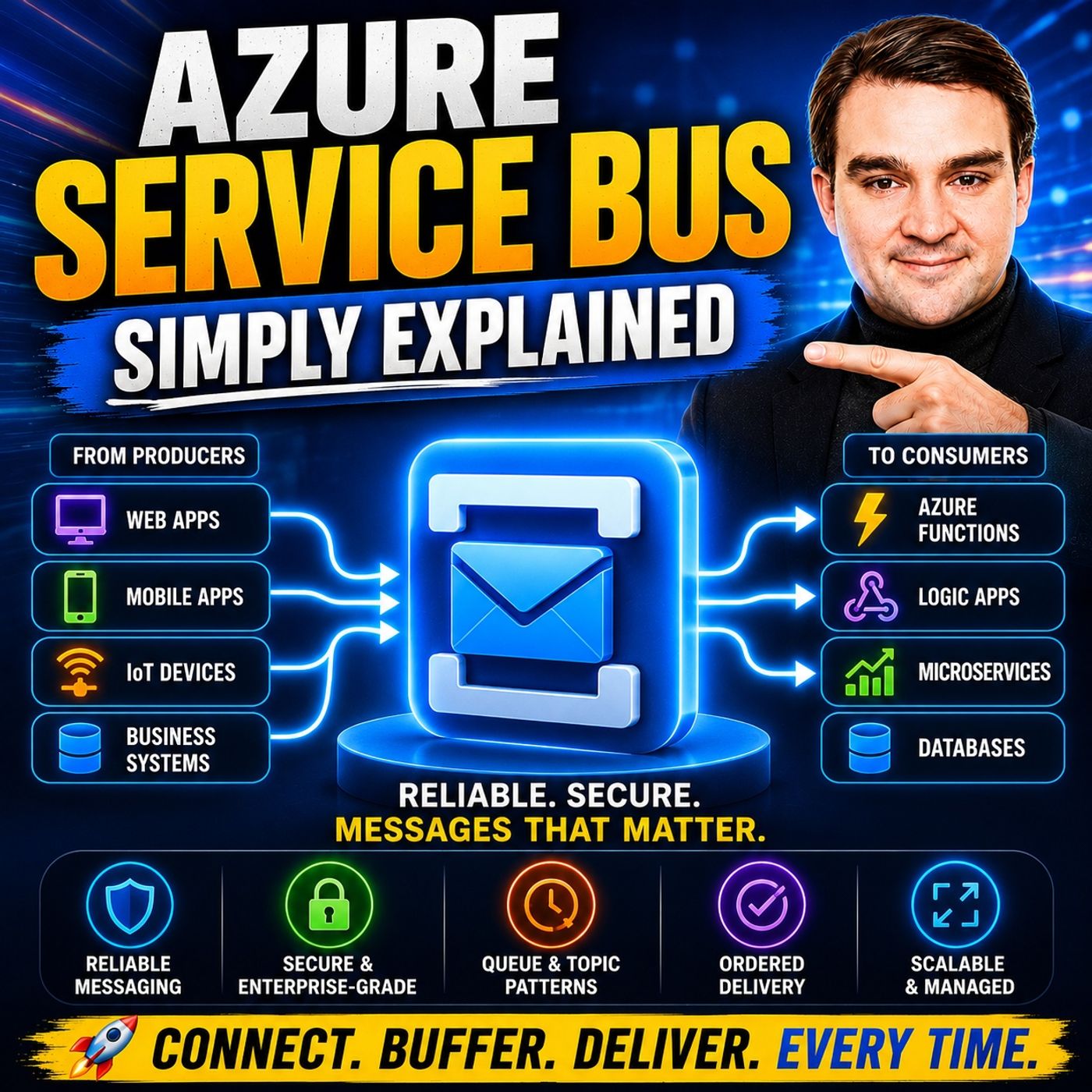
Azure Service Bus - Simply Explained
Azure Service Bus is Microsoft's enterprise messaging service for building reliable, secure, and loosely coupled applications. In this episode, we explain what Azure Service Bus is, how it works, and why it's a key component of modern cloud architectures. Whether you're connecting applications, integrating business systems, or building resilient microservices, Azure Service Bus ensures messages are delivered reliably—even when systems are temporarily unavailable. You'll learn the core concepts behind queues, topics, subscriptions, and message brokers, as well as features like dead-letter queues, duplicate detection, scheduled messages, sessions, and transactions. We also explore how Azure Service Bus integrates with Azure Functions, Logic Apps, Power Platform, and other Azure services to enable asynchronous communication and scalable enterprise solutions. Along the way, we compare Azure Service Bus with Event Grid and Event Hubs so you'll understand when each messaging service is t…
Guest: Mirko Peters
July 15, 2026
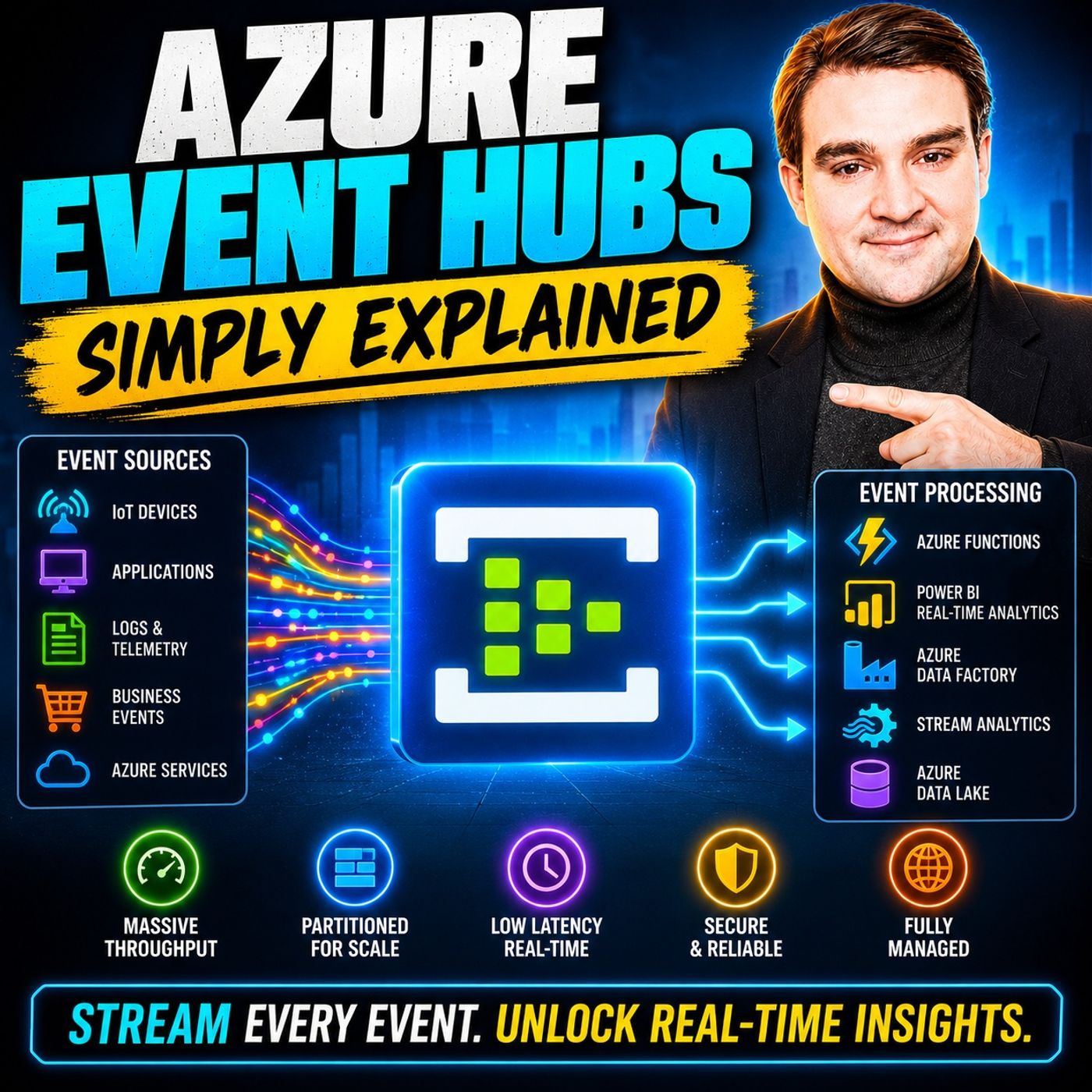
Azure Event Hubs - Simply Explained
Azure Event Hubs is Microsoft's high-throughput event streaming platform, built to ingest and process millions of events per second with low latency. In this episode, we explain what Azure Event Hubs is, how it works, and why it's a critical service for modern cloud-native applications, IoT solutions, real-time analytics, and large-scale data pipelines. Whether you're collecting telemetry from connected devices, application logs, or streaming business events, Event Hubs provides the scalable foundation to move data in real time. You'll learn the core concepts behind Event Hubs, including namespaces, partitions, consumer groups, offsets, and event retention. We also explore how Event Hubs integrates with Azure Functions, Azure Stream Analytics, Microsoft Fabric, Azure Data Explorer, Apache Kafka, and other analytics platforms to power real-time processing and insights. Along the way, we compare Azure Event Hubs with Event Grid and Service Bus so you'll understand when each messaging…
Guest: Mirko Peters

July 15, 2026
Event Grid - Simply Explained
Azure Event Grid is the backbone of event-driven applications in Microsoft Azure, enabling services to react instantly when something happens. In this episode, we explain what Azure Event Grid is, how it works, and why it's a key building block for modern cloud-native, serverless, and microservices architectures. Instead of constantly polling for changes, Event Grid delivers notifications in real time, making applications faster, more efficient, and easier to scale. You'll learn how publishers, topics, subscriptions, and event handlers work together to create loosely coupled systems. We also cover push versus pull delivery, event filtering, retries, and integrations with services like Azure Functions, Logic Apps, Event Hubs, Service Bus, Storage Accounts, and custom webhooks. Along the way, we compare Event Grid with Azure Service Bus and Event Hubs so you'll know when each messaging service is the right choice. Whether you're a developer, cloud architect, IT professional, or pr…
Guest: Mirko Peters
July 15, 2026
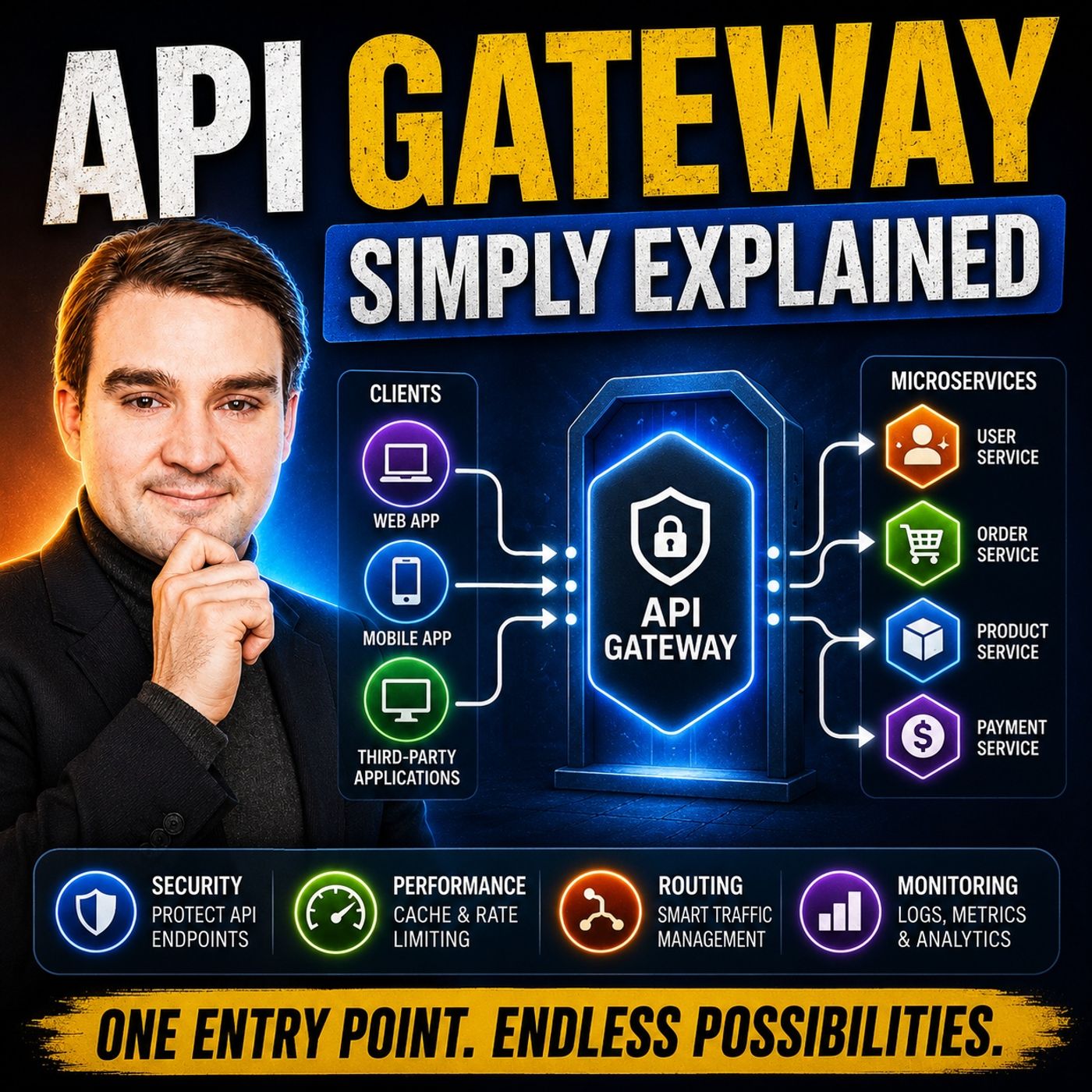
API Gateway - Simply Explained
An API Gateway is the front door to modern applications, acting as a single entry point for all API requests before they reach backend services. In this episode, we explain what an API Gateway is, why it's essential in cloud-native and microservices architectures, and how it improves security, scalability, and performance. Whether you're building APIs, integrating applications, or managing enterprise workloads, understanding the role of an API Gateway is a fundamental skill. You'll learn how API Gateways handle authentication, authorization, rate limiting, request routing, caching, logging, and monitoring while simplifying access to multiple backend services. We also compare API Gateways with reverse proxies and load balancers, explore common deployment patterns, and discuss how platforms like Azure API Management, Amazon API Gateway, and other enterprise solutions implement these capabilities. Whether you're an IT professional, developer, cloud architect, or simply curious abou…
Guest: Mirko Peters

July 15, 2026
The Partnership Mistakes That Cost Partners Millions
Quick answer: Microsoft partners often lose revenue through avoidable mistakes in positioning, co-sell execution, marketplace readiness, and account alignment. This episode identifies the commercial and operational gaps that undermine partner growth, then turns them into practical decisions for building a more durable Microsoft practice. Success in the Microsoft ecosystem isn't determined by winning individual deals—it's built through a repeatable partnership strategy. In this episode of m365.f...
July 15, 2026
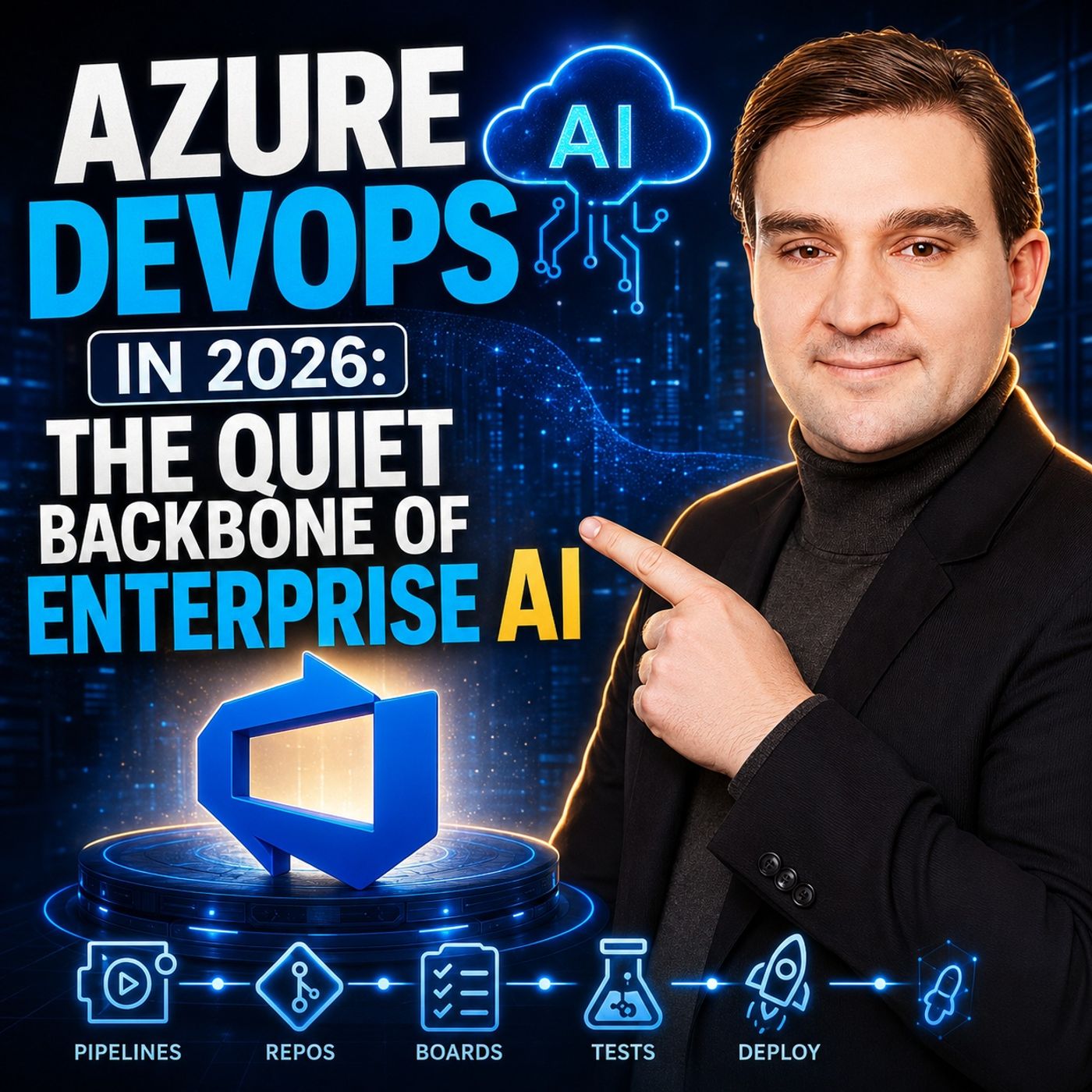
Azure DevOps in 2026: The Quiet Backbone of Enterprise AI
Quick answer: Azure DevOps gives enterprise teams a governed way to plan, build, test, and release software and infrastructure. This episode examines why disciplined source control, pipelines, security, and traceability remain essential when AI accelerates development and increases the speed of change. Everyone is talking about GitHub, Copilot, and AI-powered development, leading many to believe Azure DevOps is becoming obsolete. But inside Fortune 500 enterprises, a very different story is unf...
July 15, 2026
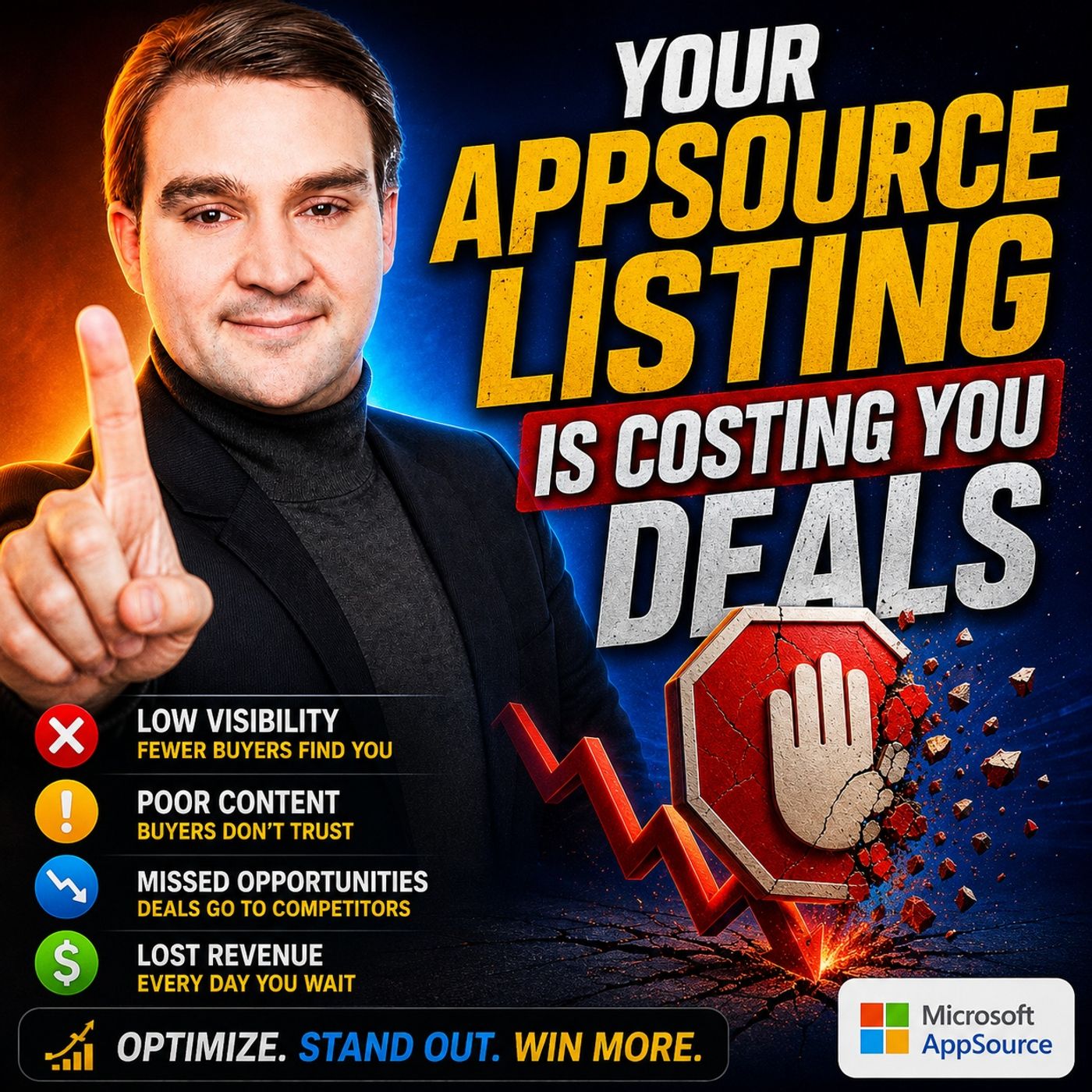
Your AppSource Listing Is Costing You Deals
Your Microsoft AppSource listing could be costing you far more than visibility—it could be costing you qualified leads, customer trust, and closed deals. In this episode, we uncover the most common mistakes Microsoft partners and ISVs make when creating their AppSource listings and explain why simply publishing your solution isn't enough to generate business. A poorly optimized listing can reduce discoverability, weaken credibility, and significantly impact conversion rates. You'll learn what makes a high-performing AppSource listing, from compelling titles and descriptions to screenshots, customer value messaging, SEO, and calls to action. We also discuss the importance of customer reviews, certifications, support information, and how buyers evaluate solutions before reaching out. Even small improvements can make the difference between being overlooked and becoming a trusted choice. Whether you're launching your first Microsoft solution or trying to improve an existing listing,…
Guest: Mirko Peters

July 15, 2026
The Hard Way to Get Listed on Microsoft Marketplace
Getting listed on the Microsoft Marketplace sounds straightforward—but the reality is far more challenging. In this episode, we explore what it really takes to publish solutions and services in Microsoft's commercial marketplace, from meeting technical requirements and passing certification to creating compelling offers that customers can actually find and buy. Many partners underestimate the complexity, only to discover that getting approved is just the beginning. You'll learn the differences between Azure Marketplace and Microsoft AppSource, when each platform is appropriate, and why marketplace success depends on much more than simply uploading a product. We also discuss common mistakes, marketplace eligibility, co-sell opportunities, private offers, transactable listings, and how Microsoft evaluates submissions. Whether you're an ISV, MSP, Microsoft partner, or software vendor looking to grow through Microsoft's ecosystem, this episode provides practical insights to help you…
Guest: Mirko Peters
July 15, 2026
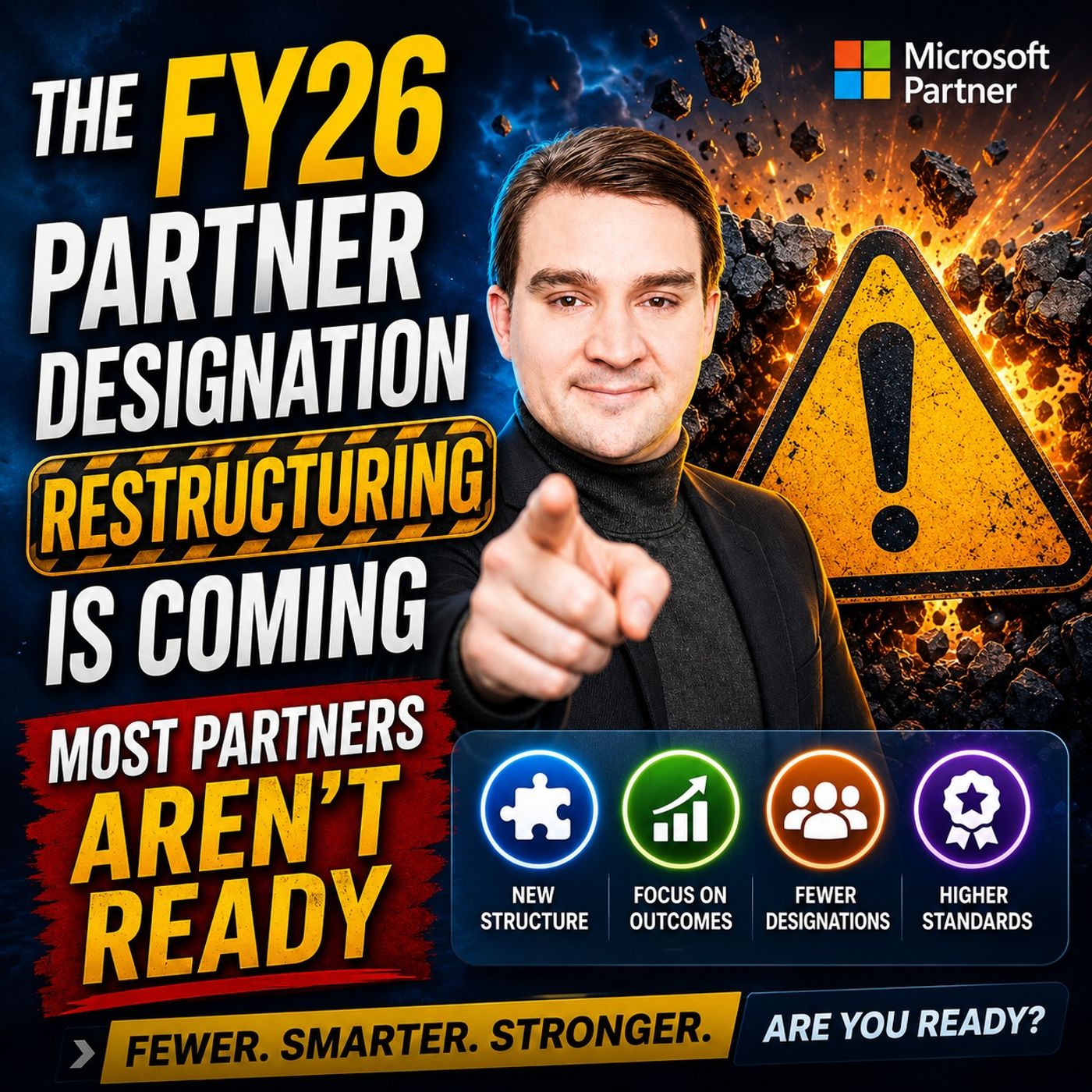
The FY26 Partner Designation Restructuring Is Coming — Most Partners Aren't Ready
The Microsoft AI Cloud Partner Program is undergoing its biggest transformation in years, and many partners are not prepared for what's coming. In this episode, we break down the FY26 Partner Designation restructuring, explaining why Microsoft is simplifying its partner ecosystem and what these changes mean for Solution Partners, MSPs, ISVs, and consulting organizations. You'll discover how the new designation model impacts competencies, incentives, customer trust, and competitive positioning. We also explore Microsoft's growing AI-first strategy, the role of specializations, and the practical actions partners should take now to protect their status and unlock new growth opportunities before the transition takes effect. Whether you're already a Microsoft partner or planning to become one, this episode provides a clear roadmap to navigate the FY26 changes with confidence. Learn what is changing, why it matters, and how to ensure your business stays competitive in Microsoft's rapi…
Guest: Mirko Peters
![Microsoft 365 Copilot Agents: Real Business Value with Steve Corey [MVP]](https://d3wo5wojvuv7l.cloudfront.net/t_rss_itunes_square_1400/images.spreaker.com/original/e0a2251092bb88f0a1285250caeb76b0.jpg "Microsoft 365 Copilot Agents: Real Business Value with Steve Corey [MVP]")
July 15, 2026
Microsoft 365 Copilot Agents: Real Business Value with Steve Corey [MVP]
Microsoft 365 Copilot Agents have the potential to transform the way organizations work—but only when they move beyond simple chat experiences and become deeply integrated into real business processes. In this episode of the M365 FM Podcast, Mirko Peters is joined by Microsoft MVP Steve Corey to explore how organizations can build AI agents that deliver measurable business value rather than simply generating impressive demonstrations. Together, they discuss why successful AI adoption depends on solving business problems, not just deploying new technology. You'll learn how Microsoft 365 Copilot Agents extend the capabilities of Microsoft Copilot by automating multi-step workflows, accessing enterprise knowledge, interacting with Microsoft 365 services, and supporting employees across their daily work. The conversation explains how organizations can combine Microsoft 365, Microsoft Graph, SharePoint, Teams, Power Platform, and Copilot Studio to build intelligent agents that understan…
Guests: Mirko Peters , Steve Corey
July 15, 2026
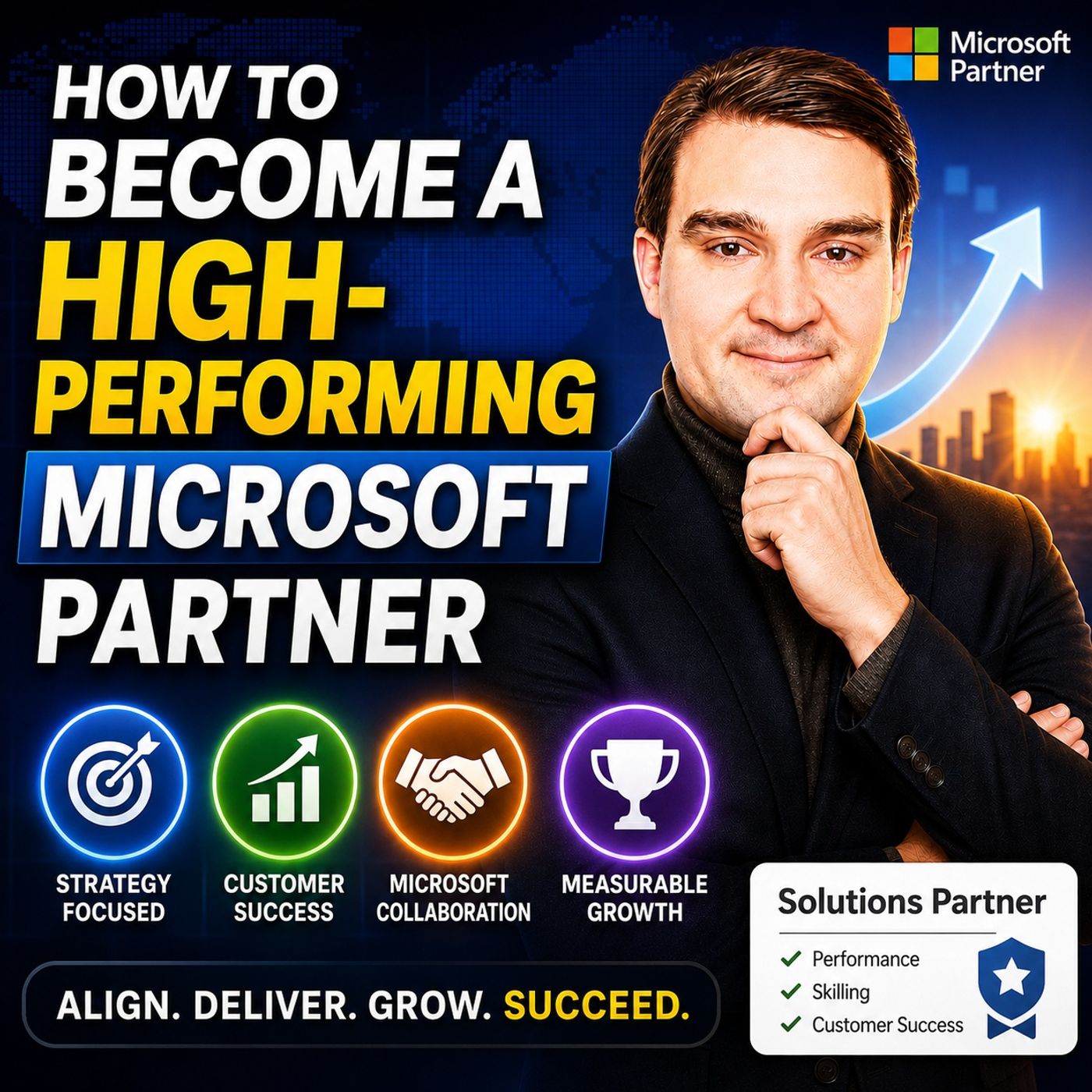
How to Become a High-Performing Microsoft Partner
Becoming a high-performing Microsoft partner requires much more than technical expertise—it demands a business strategy focused on customer success, specialization, recurring revenue, and continuous innovation. In this episode of Microsoft Knowledge Nuggets on M365 FM, Mirko Peters explains what separates the world's most successful Microsoft partners from the rest and provides a practical framework for building a profitable, scalable, and future-ready Microsoft business. You'll learn why high-performing partners focus on solving business problems instead of simply delivering technology projects. The episode explores how successful Microsoft partners develop repeatable service offerings, invest in certifications and technical skills, build deep expertise in Microsoft 365, Azure, Security, Business Applications, and AI, and align their business with Microsoft's strategic priorities. You'll also discover why measurable customer outcomes, long-term relationships, and managed services …
Guest: Mirko Peters

July 15, 2026
Microsoft Partner Journey: From Enrollment to Growth
The Microsoft Partner journey is about far more than registering as a reseller—it’s a structured path toward building a profitable, trusted, and strategic business within the Microsoft ecosystem. In this episode of Microsoft Knowledge Nuggets on M365 FM, Mirko Peters explains every stage of the Microsoft Partner Journey, from becoming a new partner to achieving advanced solution designations, specializations, and long-term business growth. You'll discover how partners create value by combining technical expertise, customer success, and recurring services rather than simply selling Microsoft licenses. The episode walks through the key milestones every Microsoft partner encounters, including joining the Microsoft AI Cloud Partner Program, building technical capabilities, earning certifications, publishing solutions, developing managed services, and aligning with Microsoft's strategic solution areas. You'll learn why competencies alone are no longer enough and how successful partners …
Guest: Mirko Peters
July 15, 2026
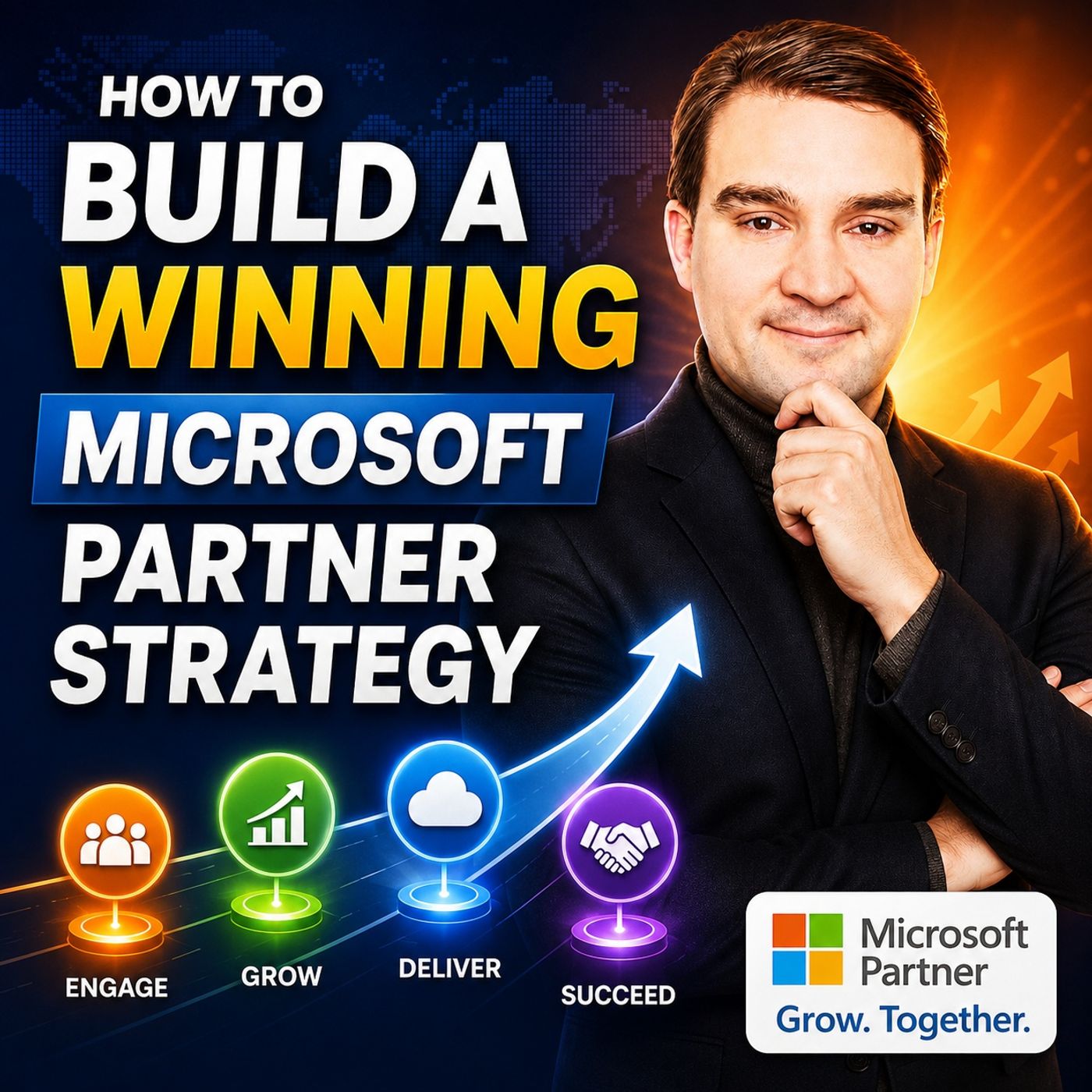
How to Build a Winning Microsoft Partner Strategy
Building a successful Microsoft partner business is no longer just about technical expertise—it’s about creating a strategy that aligns with Microsoft's priorities while delivering measurable customer outcomes. In this episode of Microsoft Knowledge Nuggets on M365 FM, Mirko Peters explains the key pillars of a winning Microsoft Partner strategy and how partners can position themselves for sustainable growth in the era of AI, cloud, and recurring services. The episode explores why partners must move beyond project-based work and build scalable, value-driven business models that differentiate them from the competition. You'll learn how to identify your ideal customer profile, choose the right Microsoft solution areas, develop high-value service offerings, and build a specialization strategy around Microsoft 365, Azure, Security, Business Applications, Data & AI, or Modern Work. The discussion also explains the importance of recurring managed services, customer success, partner incen…
Guest: Mirko Peters
July 15, 2026
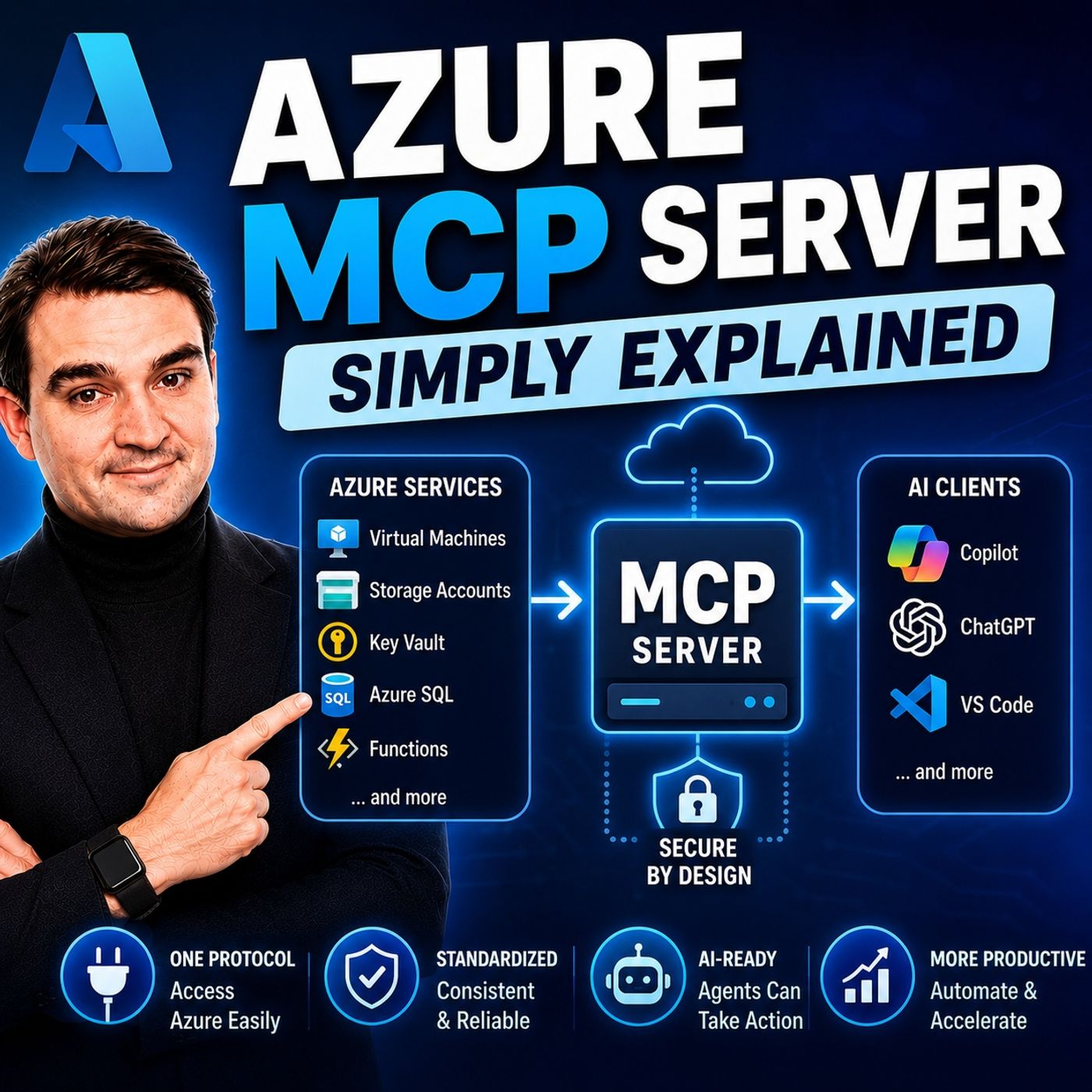
Azure MCP Server - Simply Explained
Azure MCP Server extends the power of artificial intelligence beyond chat by allowing AI assistants and agents to securely interact with Azure resources through the open Model Context Protocol (MCP). In this episode of Microsoft Knowledge Nuggets on M365 FM, Mirko Peters explains what the Azure MCP Server is, how it works, and why it represents a major step toward AI-driven cloud management and automation. You'll learn how Azure MCP Server acts as a bridge between AI models such as Microsoft Copilot, GitHub Copilot, and other MCP-compatible assistants and your Azure environment. Instead of manually navigating the Azure portal or writing complex Azure CLI and PowerShell commands, administrators can use natural language to query resources, deploy infrastructure, troubleshoot issues, review configurations, and automate cloud operations. The episode explains how MCP standardizes communication between AI agents and Azure services while maintaining enterprise-grade security, authenticati…
Guest: Mirko Peters
July 15, 2026
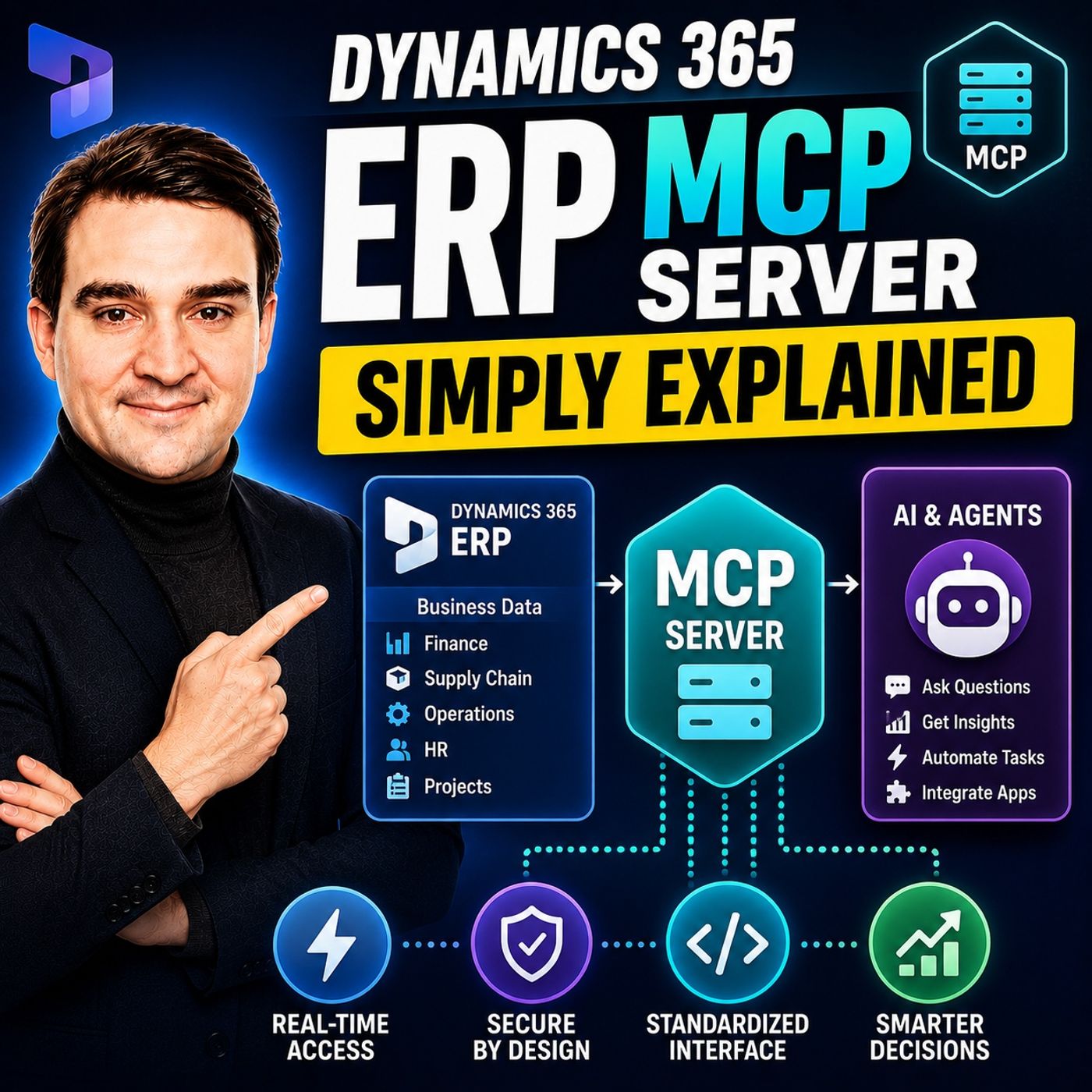
Dynamics 365 ERP MCP Server - Simply Explained
Dynamics 365 ERP MCP Server brings artificial intelligence directly into enterprise resource planning by allowing AI agents to securely understand, access, and execute business processes through the open Model Context Protocol (MCP). In this episode of Microsoft Knowledge Nuggets on M365 FM, Mirko Peters explains what the Dynamics 365 ERP MCP Server is, why Microsoft introduced it, and how it is transforming Dynamics 365 Finance and Supply Chain into an AI-ready ERP platform. You'll learn how MCP provides a standardized way for AI agents to interact with enterprise data and business logic without requiring custom APIs or complex integrations. Instead of manually navigating ERP screens, users can ask natural language questions, retrieve business insights, update records, automate workflows, and execute business operations through intelligent AI agents. The episode explains how MCP securely exposes Dynamics 365 capabilities while respecting existing permissions, governance, and audit…
Guest: Mirko Peters
July 15, 2026
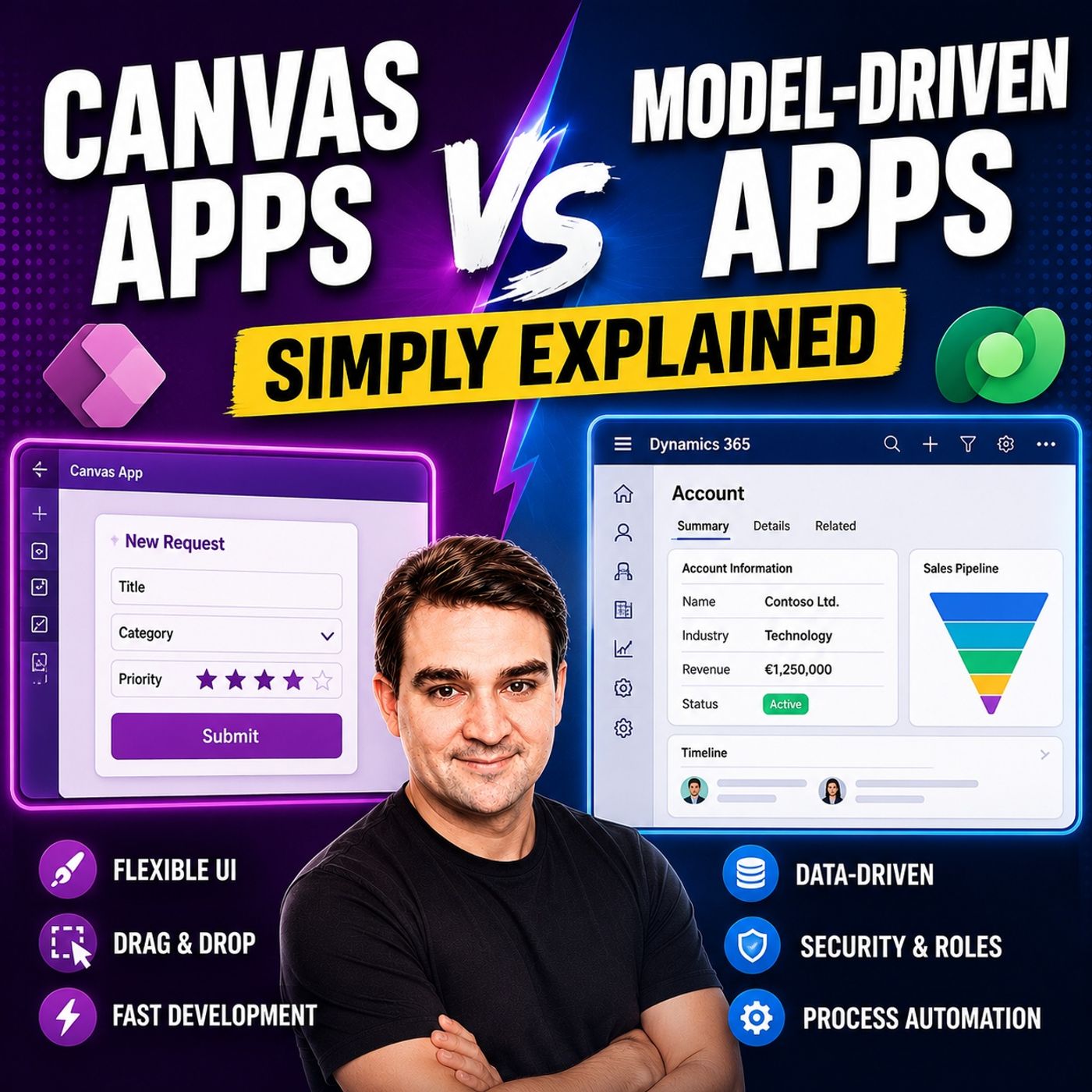
Canvas Apps vs Model-Driven Apps - Simply Explained
Canvas Apps and Model-Driven Apps are the two primary ways to build business applications with Microsoft Power Apps, but choosing the right one depends entirely on your business requirements. In this episode of Microsoft Knowledge Nuggets on M365 FM, Mirko Peters explains the differences between Canvas Apps and Model-Driven Apps in simple terms, helping IT professionals, citizen developers, and Microsoft partners understand when each approach delivers the greatest value. You'll discover why Canvas Apps follow a user interface first approach, giving makers complete control over the design, layout, and user experience while connecting to hundreds of different data sources. In contrast, Model-Driven Apps are built around Microsoft Dataverse, automatically generating responsive applications based on your data model, business rules, relationships, and processes. The episode explains the strengths, limitations, and ideal use cases for both application types. The discussion also explor…
Guest: Mirko Peters
July 14, 2026
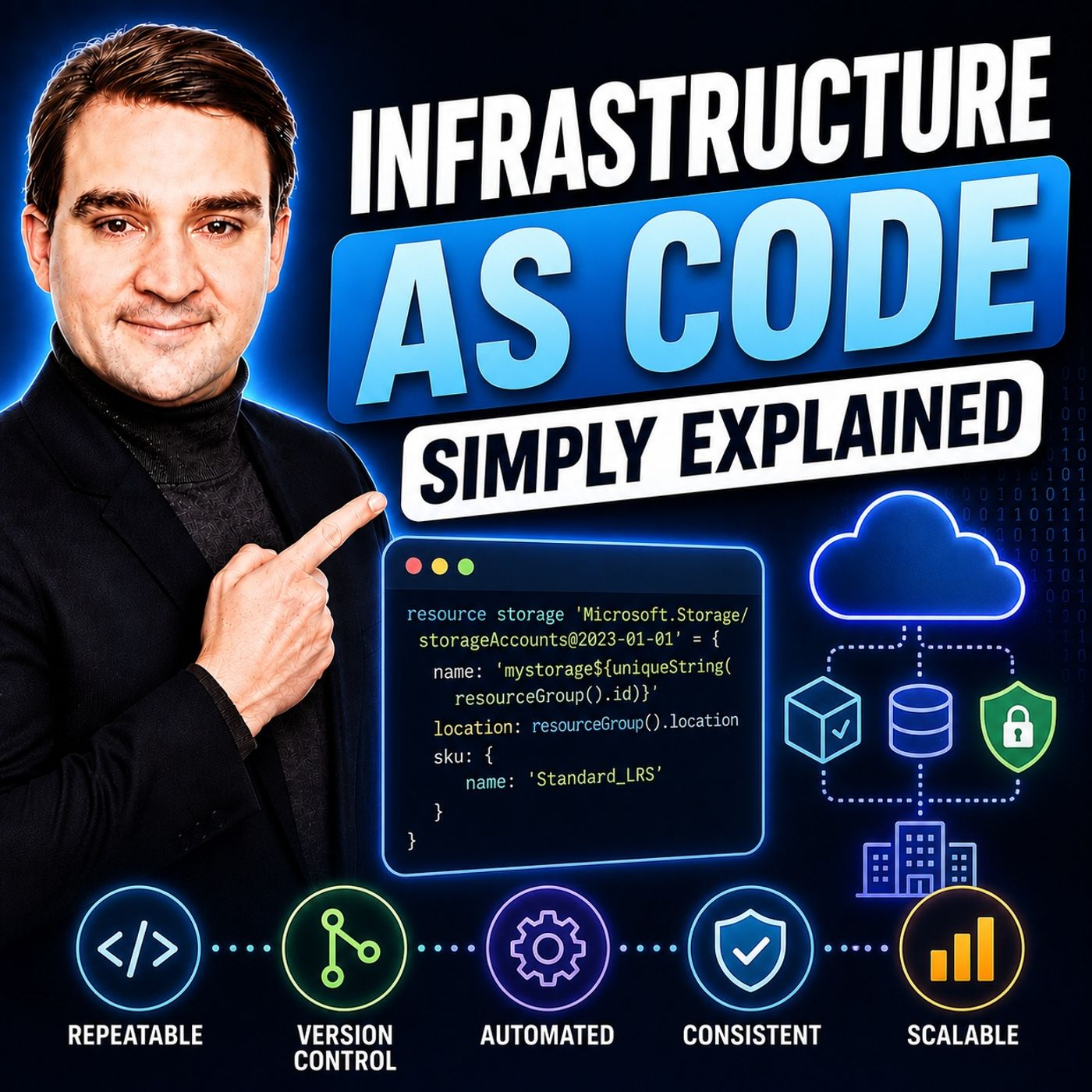
Infrastructure as Code - Simply Explained
Infrastructure as Code (IaC) is the practice of managing and deploying cloud infrastructure through code instead of manually configuring resources in a portal. In this episode of Microsoft Knowledge Nuggets on M365 FM, Mirko Peters explains Infrastructure as Code in plain English and shows why it has become a foundational practice for Azure, DevOps, cloud engineering, and modern IT operations. You'll learn how IaC enables organizations to define virtual machines, networks, storage accounts, databases, security settings, and entire cloud environments in reusable code. Rather than relying on manual "click operations," infrastructure can be deployed automatically, consistently, and repeatedly across development, testing, and production environments. The episode explores core concepts such as declarative versus imperative deployments, idempotency, version control, automation, and why treating infrastructure like application code improves reliability and reduces operational risk. The…
Guest: Mirko Peters
July 14, 2026
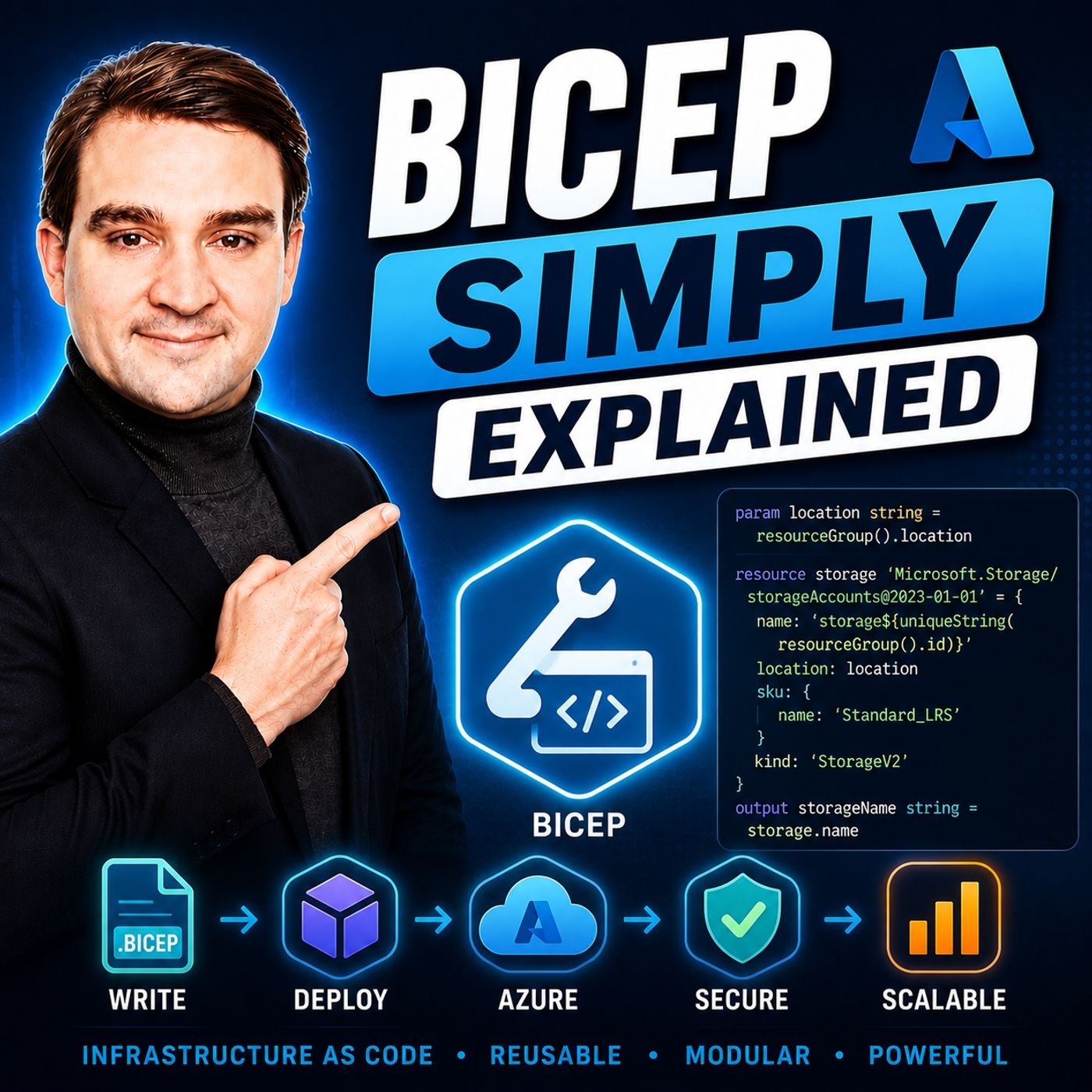
Bicep - Simply Explained
Azure Bicep is Microsoft's modern Infrastructure as Code (IaC) language for deploying and managing Azure resources using a clean, readable, and declarative syntax. In this episode of Microsoft Knowledge Nuggets on M365 FM, Mirko Peters explains why Azure Bicep has become Microsoft's recommended replacement for traditional ARM Templates and how it helps organizations build secure, scalable, and repeatable cloud environments with less complexity. You'll learn the core building blocks of every Azure Bicep project, including resources, parameters, variables, outputs, modules, conditions, loops, and symbolic names. The episode demonstrates how Bicep automatically handles resource dependencies, simplifies infrastructure deployments, and enables reusable modules that dramatically reduce duplicate code across Azure projects. Whether you're deploying virtual machines, networking, storage, databases, or complete enterprise landing zones, Bicep makes Azure automation easier to understand and …
Guests: Mirko Peters , Mirko