

 Apple Podcasts
 Spotify
 Youtube Music
 Spreaker
 Podchaser
 Amazon Music
 Microsoft Mesh - Simply Explained
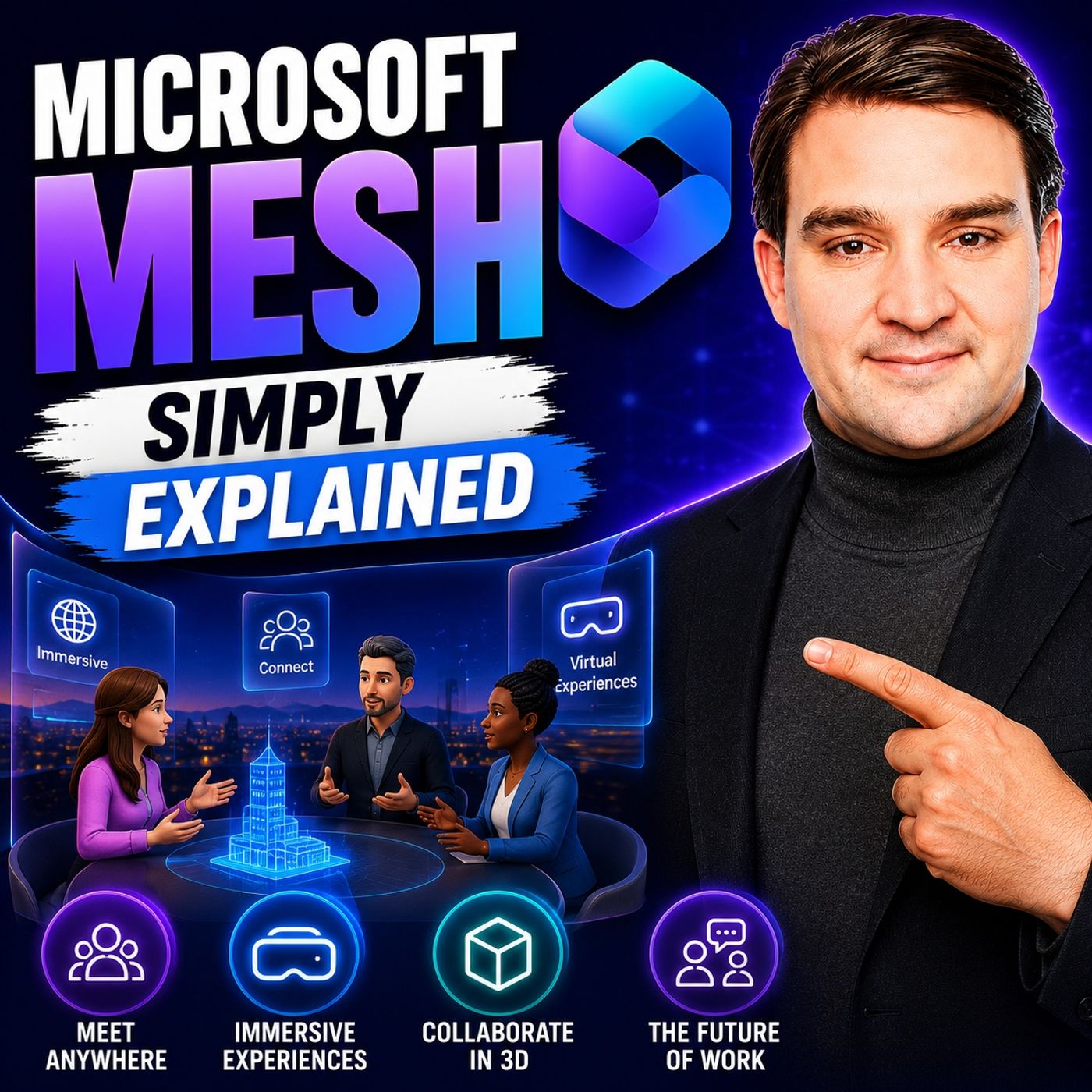
Quick answer: Microsoft Mesh is covered in this M365 FM episode with a practical focus on what it is, how it works, and the decisions that matter for architecture, adoption, security, governance, or day-to-day operations.
Welcome to another episode of Knowledge Nuggets with Mirko Peters. Today we're exploring Microsoft Mesh, one of the most talked-about—but also one of the most misunderstood—technologies in the Microsoft ecosystem. When Microsoft first announced Mesh, headlines were filled with words like metaverse, mixed reality, and virtual worlds. Many people assumed Microsoft was building a completely new digital universe where businesses would eventually spend their working days. While that vision generated enormous excitement, the product has evolved considerably since then. Today, Microsoft Mesh is no longer a standalone metaverse platform. Instead, it has become an integrated feature inside Microsoft Teams that allows colleagues to meet in immersive 3D environments using avatars, spatial audio, and shared virtual meeting spaces. In this episode, we'll separate marketing from reality. You'll learn what Microsoft Mesh actually is today, how it works inside Teams, why Microsoft changed its strategy, and when immersive meetings genuinely add value over a traditional video call.
WHAT IS MICROSOFT MESH?
At its core, Microsoft Mesh is a platform for creating shared three-dimensional collaboration experiences. Rather than replacing Microsoft Teams, it extends Teams by allowing participants to join immersive meeting spaces where everyone appears as customizable avatars instead of webcam videos. Instead of seeing colleagues arranged in a traditional gallery view, participants gather inside a virtual meeting room where they can move around naturally, choose where to sit, and interact with each other in a much more spatial way. The experience is designed to recreate some of the social cues that are often missing during traditional online meetings. One important misconception is that Mesh is not a persistent virtual world where people spend their entire working day. It isn't a digital office that remains active around the clock, nor is it a virtual reality game. Mesh sessions exist only while a meeting is taking place. Teams join the immersive space, collaborate together, and leave once the meeting has finished. Another advantage is accessibility. While Mesh supports virtual reality headsets such as Meta Quest and future support for Apple Vision Pro has been announced, most users simply participate using the standard Microsoft Teams application on their Windows or Mac computer. No expensive hardware is required to begin exploring immersive collaboration.
FROM METAVERSE VISION TO MICROSOFT TEAMS
Microsoft Mesh has undergone a significant transformation since its original announcement. When Microsoft introduced Mesh in 2021, the vision extended far beyond virtual meetings. Organizations were expected to build custom virtual campuses, immersive training environments, branded event spaces, and interactive digital experiences using development tools based on the Unity game engine. The platform promised an expansive metaverse experience for enterprise collaboration. Over time, however, Microsoft observed that most organizations didn't want to manage another collaboration platform alongside Microsoft Teams. Businesses were already deeply invested in Microsoft 365 and preferred immersive capabilities to become part of the applications employees already used every day. As a result, Microsoft gradually integrated Mesh directly into Microsoft Teams while retiring much of the standalone platform. Dedicated Mesh applications, development toolkits, and independent web experiences were discontinued, leaving Teams as the primary entry point for immersive collaboration. Although this transition reduced some advanced customization capabilities, it dramatically simplified adoption. Today, organizations can experience Mesh without deploying separate infrastructure or learning an entirely new collaboration platform.
HOW IMMERSIVE SPACES WORK
Using Microsoft Mesh is surprisingly straightforward because everything begins with a normal Microsoft Teams meeting. Participants simply schedule or join a regular Teams meeting and then select the Immersive Space option from within the meeting interface. Teams guides first-time users through creating a personal avatar by selecting hairstyles, clothing, facial features, and other appearance options before entering one of Microsoft's available virtual environments. Inside the immersive space, participants move around using familiar keyboard controls or by selecting seats directly within the room. Instead of remaining fixed in a gallery layout, people naturally gather in groups, move between conversations, and interact with the environment much like they would inside a physical meeting room. One particularly useful aspect is privacy. Because participants appear as avatars rather than live webcam feeds, they don't need to worry about their camera being enabled or their home office appearing on screen. Voice communication continues normally while the avatar represents each participant visually throughout the meeting.
THE POWER OF SPATIAL AUDIO
Perhaps the most impressive feature of Microsoft Mesh is spatial audio. In traditional video conferences, every voice sounds as though it comes from exactly the same location: directly through the speakers. Whether someone is presenting to the entire meeting or quietly speaking to one colleague, everyone hears every conversation equally. Mesh changes this completely. Audio behaves much more like it does in the real world. Voices become louder as avatars move closer together and quieter as they move farther apart. Turning toward another participant changes the perceived direction of their voice, creating a much stronger feeling of physical presence. This makes natural side conversations possible without requiring separate breakout rooms or private chat sessions. Two colleagues can simply move to another area of the virtual room, have a quick discussion, and then return to the main group. These subtle spatial cues reduce the artificial feeling often associated with traditional video meetings and help recreate the informal interactions that naturally occur in physical offices.
AVATARS MAKE REMOTE MEETINGS FEEL MORE HUMAN
Avatars are another key element that distinguishes Microsoft Mesh from standard online meetings. Rather than displaying static profile pictures or requiring webcams throughout an entire meeting, participants are represented by animated digital versions of themselves. These avatars respond to head movements and certain facial expressions, helping create a stronger sense of presence during conversations. Users personalize their avatars through Microsoft Teams by selecting hairstyles, clothing, accessories, and other visual characteristics. Although avatars aren't intended to be perfectly photorealistic, they provide enough personality to help participants recognize one another and maintain social engagement throughout meetings. Research has shown that feeling physically represented inside a shared virtual environment can increase attention and participation. People tend to focus more on discussions when they feel present inside the meeting rather than passively watching a collection of video windows. For organizations where webcams are often disabled, avatars provide a comfortable middle ground between complete anonymity and continuous video participation.
REAL-WORLD BUSINESS USE CASES
Microsoft Mesh delivers the greatest value when meetings require interaction rather than simply presenting information. One of the best-known examples comes from Accenture, which used immersive environments to support onboarding experiences for hundreds of thousands of new employees. Rather than attending traditional orientation sessions through video calls, participants explored virtual campuses, interacted with colleagues, and attended collaborative training sessions inside shared digital spaces. Mesh is also well suited for team-building events, brainstorming workshops, collaborative design reviews, training simulations, and product demonstrations. Because participants can move naturally around the environment and engage in smaller discussions, meetings often feel significantly more dynamic than conventional video conferences. Training scenarios represent another particularly strong use case. Whether teaching manufacturing safety procedures, customer service interactions, or medical simulations, immersive environments provide spatial context that standard presentation slides simply cannot replicate. The common theme across successful deployments is interaction. Mesh adds the most value when participants actively collaborate rather than simply watch presentations.
WHEN SHOULD YOU USE MICROSOFT MESH?
Despite its impressive capabilities, Microsoft Mesh isn't designed for every meeting. Simple one-to-one conversations, customer calls, webinars, and presentations generally work perfectly well using standard Microsoft Teams meetings. In these situations, immersive spaces often provide little additional benefit. However, Mesh becomes much more compelling for distributed teams that struggle to recreate natural collaboration while working remotely. Brainstorming sessions, design workshops, project kickoffs, innovation events, onboarding activities, and team-building exercises all benefit from the increased sense of presence provided by avatars and spatial audio. Current limitations remain. Immersive spaces support relatively small groups, organizations can no longer create fully customized virtual environments using Microsoft's retired development toolkit, and adoption is still relatively early across many businesses.
Become a supporter of this podcast: https://www.spreaker.com/podcast/m365-fm-modern-work-security-and-productivity-with-microsoft-365--6704921/support.
🎧 Listen to this episode
Want a practical explanation of Microsoft Mesh? This episode breaks down the topic in clear language and shows why it matters for Microsoft 365, Azure, Power Platform, security, AI, and modern work.
Listen to this episode if you want to:
- Understand the key concepts behind Microsoft Mesh
- See how it fits into the wider Microsoft technology ecosystem
- Learn where it can create practical value for your organization
You may also enjoy these related M365 FM episodes:
- High-Stakes Hybrid Events with Microsoft Teams and Mesh
- Use Microsoft Fabric Domains for Data Mesh Governance
Discover more practical Microsoft conversations on M365 FM.
Last reviewed: July 2026.
Who Should Listen
This episode is for Microsoft 365 administrators, architects, IT leaders, and practitioners who need a practical understanding of Microsoft Mesh before planning, implementing, or supporting it.
🎧 You Should Also Listen To
- High-Stakes Hybrid Events with Microsoft Teams and Mesh — Continue with a closely related M365 FM episode.
- Microsoft Loop Workspaces — Continue with a closely related M365 FM episode.
- Teams Telephony — Continue with a closely related M365 FM episode.
🚀 Want to be part of m365.fm?
Then stop just listening… and start showing up.
👉 Connect with me on LinkedIn and let’s make something happen:
- 🎙️ Be a podcast guest and share your story
- 🎧 Host your own episode (yes, seriously)
- 💡 Pitch topics the community actually wants to hear
- 🌍 Build your personal brand in the Microsoft 365 space
This isn’t just a podcast — it’s a platform for people who take action.
🔥 Most people wait. The best ones don’t.
👉 Connect with me on LinkedIn and send me a message:
"I want in"
Let’s build something awesome 👊
00:00:00,000 --> 00:00:04,320
Hello everyone and welcome to another episode of Microsoft Knowledge Nuggets here on M365.
2
00:00:04,320 --> 00:00:05,920
FM, I'm your host, Mirko Peters.
3
00:00:05,920 --> 00:00:10,240
Today's topic is one that almost everyone has heard of, but few people can actually explain.
4
00:00:10,240 --> 00:00:12,400
Microsoft Mesh, you've heard the buzzwords,
5
00:00:12,400 --> 00:00:15,280
metaverse, mixed reality, 3D meetings.
6
00:00:15,280 --> 00:00:17,160
But right now, what does Mesh actually do for you?
7
00:00:17,160 --> 00:00:18,040
Here's the short answer.
8
00:00:18,040 --> 00:00:22,120
It's a way to meet in 3D virtual spaces inside Microsoft Teams.
9
00:00:22,120 --> 00:00:26,320
Imagine stepping into a room where you and your colleagues show up as avatars.
10
00:00:26,320 --> 00:00:28,240
You can walk around, chat on the side,
11
00:00:28,240 --> 00:00:29,920
and still watch presentations together.
12
00:00:29,920 --> 00:00:31,600
It's not a game and it's not a toy.
13
00:00:31,600 --> 00:00:33,360
It's just a different way to hold a meeting.
14
00:00:33,360 --> 00:00:36,280
Now the tricky part, Mesh has gone through a major change.
15
00:00:36,280 --> 00:00:40,200
That standalone metaverse platform Microsoft originally announced, retired.
16
00:00:40,200 --> 00:00:42,680
What's left is a feature built right into Teams,
17
00:00:42,680 --> 00:00:46,160
simpler, more practical, and actually available to you today.
18
00:00:46,160 --> 00:00:49,240
By the end of this episode, you'll understand what Mesh is,
19
00:00:49,240 --> 00:00:51,520
how it works, why Microsoft changed course,
20
00:00:51,520 --> 00:00:55,120
and whether it's worth your time, grab your coffee, and let's dive in.
21
00:00:55,120 --> 00:00:57,520
So what exactly is Microsoft Mesh?
22
00:00:57,520 --> 00:00:59,320
Let's start with a simple definition.
23
00:00:59,320 --> 00:01:02,360
Microsoft Mesh is a platform for shared 3D experiences.
24
00:01:02,360 --> 00:01:03,760
Not a game, not a VR toy.
25
00:01:03,760 --> 00:01:07,680
It's a collaboration tool that adds a sense of physical presence to remote meetings.
26
00:01:07,680 --> 00:01:09,400
Compared to a regular video call,
27
00:01:09,400 --> 00:01:12,040
on a normal Teams call you see faces in little boxes.
28
00:01:12,040 --> 00:01:13,680
Everyone stares at the same grid.
29
00:01:13,680 --> 00:01:16,960
There's no sense of where anyone is in relation to you.
30
00:01:16,960 --> 00:01:19,880
In Mesh you see avatars sitting in a virtual room together.
31
00:01:19,880 --> 00:01:22,000
You can look around, you can move closer to someone.
32
00:01:22,000 --> 00:01:23,480
And here's the interesting part.
33
00:01:23,480 --> 00:01:26,520
They have voice changes depending on how far away they are.
34
00:01:26,520 --> 00:01:28,000
That's the core promise of Mesh.
35
00:01:28,000 --> 00:01:30,160
It makes remote interaction feel more natural.
36
00:01:30,160 --> 00:01:32,000
Your brain picks up on spatial cues.
37
00:01:32,000 --> 00:01:34,440
You know someone is over there or next to you.
38
00:01:34,440 --> 00:01:37,520
That sounds small, but it actually helps with engagement and memory.
39
00:01:37,520 --> 00:01:39,520
When you feel like you're in a room with people,
40
00:01:39,520 --> 00:01:40,960
you pay attention differently.
41
00:01:40,960 --> 00:01:42,720
Now let me clear up a common confusion.
42
00:01:42,720 --> 00:01:44,560
Mesh is not a virtual world you live in.
43
00:01:44,560 --> 00:01:47,160
It's a meeting space you enter for specific sessions.
44
00:01:47,160 --> 00:01:50,320
No persistent universe, no digital real estate to buy,
45
00:01:50,320 --> 00:01:52,360
no avatar walking around when you're not in a meeting.
46
00:01:52,360 --> 00:01:53,800
It's a room, not a planet.
47
00:01:53,800 --> 00:01:55,560
You join, you meet, you leave.
48
00:01:55,560 --> 00:01:58,720
The technology runs on your PC, Mac or VR headset.
49
00:01:58,720 --> 00:02:00,680
It supports MetaQuest headsets today,
50
00:02:00,680 --> 00:02:02,920
and Apple Vision Pro support has been announced.
51
00:02:02,920 --> 00:02:04,080
But here's the key point.
52
00:02:04,080 --> 00:02:06,240
You don't need special hardware for basic use.
53
00:02:06,240 --> 00:02:08,720
Just a webcam and the Teams app, that's it.
54
00:02:08,720 --> 00:02:10,240
But Mesh wasn't always as simple.
55
00:02:10,240 --> 00:02:12,600
Let's talk about the big pivot Microsoft made.
56
00:02:12,600 --> 00:02:15,520
And why it actually helped users like us.
57
00:02:15,520 --> 00:02:18,760
The big pivot from Metaverse platform to Teams feature.
58
00:02:18,760 --> 00:02:21,400
Back in 2021, Microsoft announced Mesh
59
00:02:21,400 --> 00:02:23,080
as this grand Metaverse platform,
60
00:02:23,080 --> 00:02:25,800
CEO Satyanadella called it the next frontier.
61
00:02:25,800 --> 00:02:27,400
They talked about standalone apps,
62
00:02:27,400 --> 00:02:29,720
custom worlds built with the Unity game engine,
63
00:02:29,720 --> 00:02:32,880
HoloLens support, and events for up to 330 people.
64
00:02:32,880 --> 00:02:34,120
It was a huge vision.
65
00:02:34,120 --> 00:02:36,640
But by 2024, Microsoft started rolling Mesh
66
00:02:36,640 --> 00:02:38,880
features into Teams instead of keeping it separate.
67
00:02:38,880 --> 00:02:41,760
By December 2025, the standalone platform was officially
68
00:02:41,760 --> 00:02:42,600
retired.
69
00:02:42,600 --> 00:02:46,040
The Mesh Toolkit, which let developers build custom 3D worlds,
70
00:02:46,040 --> 00:02:48,200
shut down in June 2025.
71
00:02:48,200 --> 00:02:50,560
The dedicated Mesh app for PC and MetaQuest?
72
00:02:50,560 --> 00:02:53,360
Gone, the Mesh Cloud.Microsoft website also gone.
73
00:02:53,360 --> 00:02:54,120
What happened?
74
00:02:54,120 --> 00:02:55,760
The reason is actually pretty simple.
75
00:02:55,760 --> 00:02:57,920
Companies didn't want another platform to manage,
76
00:02:57,920 --> 00:03:01,040
since they already have Teams and Microsoft 365.
77
00:03:01,040 --> 00:03:02,960
They didn't want to learn a whole new tool just
78
00:03:02,960 --> 00:03:03,920
for a 3D meeting.
79
00:03:03,920 --> 00:03:06,320
What they wanted was 3D collaboration inside the tools
80
00:03:06,320 --> 00:03:07,280
they already use.
81
00:03:07,280 --> 00:03:09,080
So Microsoft listened.
82
00:03:09,080 --> 00:03:10,760
The result is what we have today.
83
00:03:10,760 --> 00:03:12,320
Immersive spaces in Teams.
84
00:03:12,320 --> 00:03:14,080
It's a lighter, more accessible version of what
85
00:03:14,080 --> 00:03:15,400
Mesh was supposed to be.
86
00:03:15,400 --> 00:03:16,520
Think of it like this.
87
00:03:16,520 --> 00:03:18,560
Imagine someone building a brand new office building
88
00:03:18,560 --> 00:03:21,680
from scratch, then deciding to just add a nice conference room
89
00:03:21,680 --> 00:03:23,400
to the building where everyone already works.
90
00:03:23,400 --> 00:03:26,080
No separate building, no separate keycard, just one space
91
00:03:26,080 --> 00:03:27,560
that works with everything else.
92
00:03:27,560 --> 00:03:28,760
Now, there is a trade-off.
93
00:03:28,760 --> 00:03:31,080
With immersive spaces, you get fewer features.
94
00:03:31,080 --> 00:03:32,600
Meetings are limited to 16 people.
95
00:03:32,600 --> 00:03:33,360
No custom worlds.
96
00:03:33,360 --> 00:03:34,560
You can build yourself.
97
00:03:34,560 --> 00:03:36,600
And HoloLens support ends in 2027.
98
00:03:36,600 --> 00:03:38,360
But here's the thing is, it's far easier
99
00:03:38,360 --> 00:03:41,400
to adopt for most organizations that trade off is worth it.
100
00:03:41,400 --> 00:03:43,600
The goal isn't to create a virtual reality universe.
101
00:03:43,600 --> 00:03:47,080
The goal is to make your meetings more engaging and collaborative.
102
00:03:47,080 --> 00:03:48,120
You don't need a developer.
103
00:03:48,120 --> 00:03:49,600
You don't need a 3D artist.
104
00:03:49,600 --> 00:03:50,960
You just need a Teams meeting.
105
00:03:50,960 --> 00:03:52,200
So what does this mean for you?
106
00:03:52,200 --> 00:03:54,040
Let me show you exactly how to use it.
107
00:03:54,040 --> 00:03:56,440
How to join an immersive space in Teams.
108
00:03:56,440 --> 00:03:57,800
Here's the best part.
109
00:03:57,800 --> 00:04:00,400
You don't need to learn a new tool or install a separate app.
110
00:04:00,400 --> 00:04:02,200
You just need a regular Teams meeting.
111
00:04:02,200 --> 00:04:05,520
First, schedule a Teams meeting like you normally would.
112
00:04:05,520 --> 00:04:08,000
Nothing special, just a normal calendar invite.
113
00:04:08,000 --> 00:04:09,160
Once you join the meeting, you'll
114
00:04:09,160 --> 00:04:11,520
see the familiar Teams interface with your camera feed,
115
00:04:11,520 --> 00:04:13,680
the chat panel, and the participant list.
116
00:04:13,680 --> 00:04:16,280
Now look at the top of the screen and click the View button.
117
00:04:16,280 --> 00:04:19,080
You'll see an option that says immersive space 3D.
118
00:04:19,080 --> 00:04:20,280
Click it, and that's it.
119
00:04:20,280 --> 00:04:20,960
You're in.
120
00:04:20,960 --> 00:04:23,800
The first time you do this, Teams will ask you to pick an avatar.
121
00:04:23,800 --> 00:04:25,440
If you haven't set one up yet, the app
122
00:04:25,440 --> 00:04:27,880
will guide you through choosing a face shape, hairstyle,
123
00:04:27,880 --> 00:04:28,560
and clothing.
124
00:04:28,560 --> 00:04:29,760
It takes about two minutes.
125
00:04:29,760 --> 00:04:31,320
Then you'll pick a space environment.
126
00:04:31,320 --> 00:04:33,280
Microsoft gives you several options,
127
00:04:33,280 --> 00:04:36,200
an outdoor gathering space with mountains in the background,
128
00:04:36,200 --> 00:04:38,560
a Zen conference room with a calm atmosphere,
129
00:04:38,560 --> 00:04:40,320
or a classic boardroom setup.
130
00:04:40,320 --> 00:04:42,400
Pick whichever feels right for your meeting.
131
00:04:42,400 --> 00:04:44,320
The environment you choose sets the tone.
132
00:04:44,320 --> 00:04:46,960
So think about what kind of atmosphere you want.
133
00:04:46,960 --> 00:04:49,000
Now you're inside the immersive space.
134
00:04:49,000 --> 00:04:50,440
You see yourself as an avatar.
135
00:04:50,440 --> 00:04:53,160
You see your colleagues as avatars, and you can move around.
136
00:04:53,160 --> 00:04:54,480
The controls work like this.
137
00:04:54,480 --> 00:04:57,680
If you're on a PC, use the WASD keys to walk forward,
138
00:04:57,680 --> 00:04:58,960
left, back, and right.
139
00:04:58,960 --> 00:05:00,920
Left click and drag to look around the room.
140
00:05:00,920 --> 00:05:03,320
Press E to rotate, left, Q to rotate, right.
141
00:05:03,320 --> 00:05:04,200
Hold Shift to run.
142
00:05:04,200 --> 00:05:06,800
If you want to get somewhere fast, just click on any seat,
143
00:05:06,800 --> 00:05:08,560
and you'll teleport there instantly.
144
00:05:08,560 --> 00:05:10,120
It feels a lot like a video game,
145
00:05:10,120 --> 00:05:11,760
but don't let that intimidate you.
146
00:05:11,760 --> 00:05:13,080
The controls are simple, and you'll
147
00:05:13,080 --> 00:05:15,600
get the hang of them in about 30 seconds.
148
00:05:15,600 --> 00:05:17,800
Once you get used to moving around in 3D,
149
00:05:17,800 --> 00:05:20,640
you'll find it feels more natural than a flat grid of faces.
150
00:05:20,640 --> 00:05:21,840
Down at the bottom of the screen,
151
00:05:21,840 --> 00:05:23,400
you'll see your control panel.
152
00:05:23,400 --> 00:05:25,920
There are reaction buttons, so you can clap, smile,
153
00:05:25,920 --> 00:05:27,680
give a thumbs up, or send a heart.
154
00:05:27,680 --> 00:05:29,040
There's an environment settings button
155
00:05:29,040 --> 00:05:31,720
to switch to a different space theme, mid-meeting.
156
00:05:31,720 --> 00:05:34,440
There's a sitting overview that shows who's sitting where.
157
00:05:34,440 --> 00:05:36,080
And you can change your avatar on the fly
158
00:05:36,080 --> 00:05:38,560
if you want to switch outfits or appearance.
159
00:05:38,560 --> 00:05:40,560
Here's something important about privacy.
160
00:05:40,560 --> 00:05:42,920
When you join an immersive space, your camera stays
161
00:05:42,920 --> 00:05:45,840
off, your peers in avatar, so nobody sees your actual face
162
00:05:45,840 --> 00:05:47,320
or your messy background.
163
00:05:47,320 --> 00:05:49,760
Audio still works through your microphone and speakers,
164
00:05:49,760 --> 00:05:51,120
so you can talk normally.
165
00:05:51,120 --> 00:05:53,760
If some people on the call don't join the immersive space,
166
00:05:53,760 --> 00:05:55,840
they'll still see your avatar on their screen.
167
00:05:55,840 --> 00:05:58,160
They just won't be in the 3D room with you.
168
00:05:58,160 --> 00:06:01,160
Think of it as walking into a specially designed meeting room
169
00:06:01,160 --> 00:06:03,920
in your office building, where the walls are digital,
170
00:06:03,920 --> 00:06:06,680
but the experience of being together in a shared space
171
00:06:06,680 --> 00:06:07,640
is what matters.
172
00:06:07,640 --> 00:06:09,840
This setup is perfect for remote teams
173
00:06:09,840 --> 00:06:11,640
who want a stronger sense of presence
174
00:06:11,640 --> 00:06:14,040
without worrying about how their home office looks.
175
00:06:14,040 --> 00:06:15,720
Now let's talk about the killer feature
176
00:06:15,720 --> 00:06:17,520
that makes Mesh feel real.
177
00:06:17,520 --> 00:06:18,960
Spatial audio.
178
00:06:18,960 --> 00:06:21,320
Spatial audio, the secret source.
179
00:06:21,320 --> 00:06:23,680
Think about how you hear someone in a real room.
180
00:06:23,680 --> 00:06:26,720
If they're standing next to you, their voice is loud and clear.
181
00:06:26,720 --> 00:06:28,440
If they're across the room, it's quieter.
182
00:06:28,440 --> 00:06:31,080
If they're behind you, the sound comes from behind.
183
00:06:31,080 --> 00:06:33,320
Your brain uses these cues to figure out
184
00:06:33,320 --> 00:06:35,080
where people are and who's talking.
185
00:06:35,080 --> 00:06:36,200
Mesh does the same thing.
186
00:06:36,200 --> 00:06:38,200
It's called spatial audio, and honestly,
187
00:06:38,200 --> 00:06:40,680
it's what makes the whole experience feel real.
188
00:06:40,680 --> 00:06:42,440
Walk away from the group in your virtual space.
189
00:06:42,440 --> 00:06:45,200
Their voice is fade, walk closer, and they get louder.
190
00:06:45,200 --> 00:06:46,920
Turn your avatar to face someone,
191
00:06:46,920 --> 00:06:49,440
and their voice shifts to the direction you're looking.
192
00:06:49,440 --> 00:06:53,000
Simple idea, but it completely changes how a meeting feels.
193
00:06:53,000 --> 00:06:54,960
Side conversations become possible again.
194
00:06:54,960 --> 00:06:57,880
In a regular Teams call, if two people want to chat privately,
195
00:06:57,880 --> 00:06:59,200
they have to send a separate message
196
00:06:59,200 --> 00:07:00,720
or leave the meeting entirely.
197
00:07:00,720 --> 00:07:03,280
In an immersive space, they just step aside.
198
00:07:03,280 --> 00:07:05,320
Their avatars move a few feet away from the group
199
00:07:05,320 --> 00:07:06,760
and their audio moves with them.
200
00:07:06,760 --> 00:07:08,160
The main group doesn't hear them,
201
00:07:08,160 --> 00:07:09,760
and they don't hear the main session.
202
00:07:09,760 --> 00:07:11,440
Quick chat then walk back and rejoin
203
00:07:11,440 --> 00:07:13,960
that's something you just can't do on a standard video call.
204
00:07:13,960 --> 00:07:15,800
This solves a real problem in hybrid work.
205
00:07:15,800 --> 00:07:17,960
Remember the last time you were in an actual office?
206
00:07:17,960 --> 00:07:19,880
You could tap a colleague on the shoulder,
207
00:07:19,880 --> 00:07:22,680
pull someone aside for a quick word without interrupting everyone.
208
00:07:22,680 --> 00:07:25,000
Those moments are nearly gone on regular video calls.
209
00:07:25,000 --> 00:07:26,480
Spatial audio brings them back.
210
00:07:26,480 --> 00:07:28,320
It also cuts down on meeting fatigue.
211
00:07:28,320 --> 00:07:31,440
On a normal video call, you're locked into one speaker at a time.
212
00:07:31,440 --> 00:07:33,120
Everyone stares at whoever's talking.
213
00:07:33,120 --> 00:07:34,040
Exoresting.
214
00:07:34,040 --> 00:07:37,040
In an immersive space, natural social dynamics kick in.
215
00:07:37,040 --> 00:07:39,200
You look at who's talking, you turn to follow a speaker,
216
00:07:39,200 --> 00:07:41,440
you feel the room, your brain does what it evolved to do,
217
00:07:41,440 --> 00:07:43,320
and that makes the meeting way less tiring.
218
00:07:43,320 --> 00:07:44,840
You don't need a VR headset for this,
219
00:07:44,840 --> 00:07:46,640
a simple laptop with speakers works,
220
00:07:46,640 --> 00:07:48,440
but to really feel part of the space,
221
00:07:48,440 --> 00:07:50,560
you need an avatar that represents you.
222
00:07:50,560 --> 00:07:51,400
Avatars.
223
00:07:51,400 --> 00:07:52,560
Your digital self.
224
00:07:52,560 --> 00:07:54,800
Your avatar is your body in the mesh world.
225
00:07:54,800 --> 00:07:56,320
It's how other people see you.
226
00:07:56,320 --> 00:07:57,800
And it's surprisingly expressive.
227
00:07:57,800 --> 00:07:59,520
The avatar mimics your head movements,
228
00:07:59,520 --> 00:08:00,560
turn your head in real life,
229
00:08:00,560 --> 00:08:01,880
and the avatar turns its head.
230
00:08:01,880 --> 00:08:04,680
If you have a webcam, it might even smile when you smile.
231
00:08:04,680 --> 00:08:05,680
Not perfect.
232
00:08:05,680 --> 00:08:07,960
It won't catch every micro expression.
233
00:08:07,960 --> 00:08:09,960
But it's enough to make the interaction feel human.
234
00:08:09,960 --> 00:08:12,520
You customize your avatar in the Teams avatar app.
235
00:08:12,520 --> 00:08:13,960
Find it in the Teams app store,
236
00:08:13,960 --> 00:08:15,760
or through the immersive space setup.
237
00:08:15,760 --> 00:08:19,120
Pick your face shape, hairstyle, skin tone, clothing, accessories.
238
00:08:19,120 --> 00:08:21,720
You can go realistic or something more stylized.
239
00:08:21,720 --> 00:08:23,080
It doesn't need to be photorealistic.
240
00:08:23,080 --> 00:08:25,600
Think of it as a more expressive version of your profile picture,
241
00:08:25,600 --> 00:08:28,680
something that feels like you without being an exact copy.
242
00:08:28,680 --> 00:08:31,200
During a meeting, you can change your avatar instantly,
243
00:08:31,200 --> 00:08:34,040
swap from casual clothes to a suit for a presentation,
244
00:08:34,040 --> 00:08:36,200
or switch to a different look for a team social event.
245
00:08:36,200 --> 00:08:38,360
You can do it on the fly without leaving the meeting.
246
00:08:38,360 --> 00:08:39,640
Why does the avatar matter?
247
00:08:39,640 --> 00:08:41,760
Because it creates psychological presence.
248
00:08:41,760 --> 00:08:45,880
Having a body in a virtual space improves attention and recall.
249
00:08:45,880 --> 00:08:48,000
When you see yourself sitting in a room with other people,
250
00:08:48,000 --> 00:08:50,160
your brain treats the experience differently.
251
00:08:50,160 --> 00:08:51,840
You're less likely to multitask.
252
00:08:51,840 --> 00:08:53,640
You're more likely to remember what was said.
253
00:08:53,640 --> 00:08:55,080
You feel like you're actually there.
254
00:08:55,080 --> 00:08:58,560
So you're in an immersive space with avatars and spatial audio,
255
00:08:58,560 --> 00:08:59,880
great for a team meeting.
256
00:08:59,880 --> 00:09:01,080
But Mesh can do more,
257
00:09:01,080 --> 00:09:04,640
especially when organizations build custom environments.
258
00:09:04,640 --> 00:09:06,880
Custom environments, the developer angle.
259
00:09:06,880 --> 00:09:10,440
Before Microsoft retired it, Mesh had a whole different side to it.
260
00:09:10,440 --> 00:09:12,880
Organizations could build their own 3D worlds
261
00:09:12,880 --> 00:09:15,320
using something called the Mesh Toolkit for Unity.
262
00:09:15,320 --> 00:09:16,640
And some companies went all in.
263
00:09:16,640 --> 00:09:20,960
Take Accenture, they built a virtual campus called One Accenture Park
264
00:09:20,960 --> 00:09:24,320
and used it to onboard over 300,000 new hires.
265
00:09:24,320 --> 00:09:26,800
New employees could explore virtual campus areas,
266
00:09:26,800 --> 00:09:29,800
attend orientation sessions and network with colleagues,
267
00:09:29,800 --> 00:09:31,280
or without leaving their homes.
268
00:09:31,280 --> 00:09:32,720
Those custom worlds were rich.
269
00:09:32,720 --> 00:09:36,160
Product showcases where you could walk around a 3D model of a new car,
270
00:09:36,160 --> 00:09:38,960
training simulations for medical procedures or safety drills.
271
00:09:38,960 --> 00:09:40,800
Branded showrooms for sales events,
272
00:09:40,800 --> 00:09:43,600
they looked impressive and they served real business purposes.
273
00:09:43,600 --> 00:09:45,440
But they came with a cost to build them.
274
00:09:45,440 --> 00:09:46,880
You needed Unity developers.
275
00:09:46,880 --> 00:09:47,960
You needed 3D artists.
276
00:09:47,960 --> 00:09:50,160
You needed IT support to manage the deployment.
277
00:09:50,160 --> 00:09:51,600
It was a serious investment.
278
00:09:51,600 --> 00:09:53,120
That capability is now gone.
279
00:09:53,120 --> 00:09:56,360
The Mesh Toolkit officially retired in June 2025.
280
00:09:56,360 --> 00:09:57,960
No new custom worlds can be built,
281
00:09:57,960 --> 00:10:00,760
existing ones still work, but they won't get updates.
282
00:10:00,760 --> 00:10:03,320
If you were hoping to create a branded experience for a sales event
283
00:10:03,320 --> 00:10:06,480
or a training module, you're out of luck with the current version.
284
00:10:06,480 --> 00:10:09,360
What remains are the default environments Microsoft provides.
285
00:10:09,360 --> 00:10:11,440
You get a handful of pre-built spaces.
286
00:10:11,440 --> 00:10:14,000
The outdoor gathering, the Zen conference room, the boardroom,
287
00:10:14,000 --> 00:10:16,720
you can switch between them during a meeting with one click,
288
00:10:16,720 --> 00:10:18,080
but you can't create your own.
289
00:10:18,080 --> 00:10:20,440
That's a significant limitation for organizations
290
00:10:20,440 --> 00:10:21,920
that wanted something unique.
291
00:10:21,920 --> 00:10:25,080
Now, Microsoft has hinted at AI-powered environment generation
292
00:10:25,080 --> 00:10:26,040
in the future.
293
00:10:26,040 --> 00:10:28,680
The idea is that you might describe what you want
294
00:10:28,680 --> 00:10:31,080
and an AI builds the space for you.
295
00:10:31,080 --> 00:10:33,560
That's not here yet, but it's something to watch for.
296
00:10:33,560 --> 00:10:35,280
So who is actually using Mesh right now?
297
00:10:35,280 --> 00:10:37,160
Let's look at some real use cases.
298
00:10:37,160 --> 00:10:39,440
Real use cases when Mesh shines.
299
00:10:39,440 --> 00:10:42,240
Let's start with Accenture because they're the biggest example.
300
00:10:42,240 --> 00:10:45,440
They onboarded over 300,000 new hires in one Accenture Park.
301
00:10:45,440 --> 00:10:46,840
That's not a small pilot program.
302
00:10:46,840 --> 00:10:48,520
That's a massive real world deployment.
303
00:10:48,520 --> 00:10:51,200
New employees could walk through virtual campus areas,
304
00:10:51,200 --> 00:10:54,400
attend orientation talks and network with colleagues, all in 3D.
305
00:10:54,400 --> 00:10:56,880
And they did it at scale, then there's team building.
306
00:10:56,880 --> 00:11:00,240
Remote teams are using immersive spaces for informal gatherings.
307
00:11:00,240 --> 00:11:03,960
Virtual happy hours, holiday parties, brainstorming sessions.
308
00:11:03,960 --> 00:11:06,360
The spatial audio makes these feel less artificial
309
00:11:06,360 --> 00:11:07,800
than a standard video call.
310
00:11:07,800 --> 00:11:09,880
You can split off into smaller groups naturally.
311
00:11:09,880 --> 00:11:12,360
You can walk over to someone and start a conversation.
312
00:11:12,360 --> 00:11:14,880
It's closer to what happens in a real office break room.
313
00:11:14,880 --> 00:11:17,600
Product showcases are another strong use case.
314
00:11:17,600 --> 00:11:20,960
Imagine an automotive company that wants to show a new car model.
315
00:11:20,960 --> 00:11:23,360
Instead of showing slides, they build a 3D environment
316
00:11:23,360 --> 00:11:25,240
where attendees can walk around the car.
317
00:11:25,240 --> 00:11:27,080
Look at the interior, see the details,
318
00:11:27,080 --> 00:11:29,640
ask questions while standing next to the virtual vehicle.
319
00:11:29,640 --> 00:11:32,400
That kind of experience is much more engaging than a PowerPoint deck.
320
00:11:32,400 --> 00:11:34,880
Training and education is where mesh really shines.
321
00:11:34,880 --> 00:11:36,880
Medical simulations where multiple trainees
322
00:11:36,880 --> 00:11:38,720
are in the same 3D scenario,
323
00:11:38,720 --> 00:11:41,000
safety drills for manufacturing environments,
324
00:11:41,000 --> 00:11:43,480
soft skills practice for customer service teams.
325
00:11:43,480 --> 00:11:46,000
The key is that everyone is in the same space,
326
00:11:46,000 --> 00:11:47,320
interacting naturally.
327
00:11:47,320 --> 00:11:48,680
You're not watching a video.
328
00:11:48,680 --> 00:11:50,280
You're participating.
329
00:11:50,280 --> 00:11:52,560
Here's the insight that ties all of these together.
330
00:11:52,560 --> 00:11:54,840
The most successful use cases involve interaction,
331
00:11:54,840 --> 00:11:56,080
not passive watching.
332
00:11:56,080 --> 00:11:59,160
Mesh works best when people need to move, talk and collaborate.
333
00:11:59,160 --> 00:12:01,160
If you're just going to stare at slides,
334
00:12:01,160 --> 00:12:03,480
a regular team's call does the job.
335
00:12:03,480 --> 00:12:05,080
But if you need people to explore,
336
00:12:05,080 --> 00:12:07,320
discuss and work together in a spatial context,
337
00:12:07,320 --> 00:12:08,560
mesh adds real value.
338
00:12:08,560 --> 00:12:11,080
So with all these capabilities and the pivot to teams,
339
00:12:11,080 --> 00:12:12,680
what's the verdict for you?
340
00:12:12,680 --> 00:12:14,520
The verdict should you care.
341
00:12:14,520 --> 00:12:16,320
Let's be honest, mesh isn't for everyone.
342
00:12:16,320 --> 00:12:18,440
If you only do one-on-one calls or large webinars,
343
00:12:18,440 --> 00:12:19,440
you won't miss it.
344
00:12:19,440 --> 00:12:23,080
The regular team's experience handles those situations just fine.
345
00:12:23,080 --> 00:12:25,240
But for team collaboration and group dynamics,
346
00:12:25,240 --> 00:12:27,320
for that feeling of being together when you're not,
347
00:12:27,320 --> 00:12:28,920
that's where mesh earns its keep.
348
00:12:28,920 --> 00:12:30,120
Now, the limitations are real.
349
00:12:30,120 --> 00:12:32,720
You're capped at 16 people per immersive space.
350
00:12:32,720 --> 00:12:34,400
And there are no custom environments.
351
00:12:34,400 --> 00:12:35,920
You also need decent hardware.
352
00:12:35,920 --> 00:12:37,920
This won't run smoothly on that five-year-old laptop,
353
00:12:37,920 --> 00:12:39,760
your IT department hasn't replaced yet.
354
00:12:39,760 --> 00:12:42,960
It's still an early adoption among Microsoft 365 users,
355
00:12:42,960 --> 00:12:45,120
so don't expect every meeting to be in 3D.
356
00:12:45,120 --> 00:12:46,520
And most people haven't tried it.
357
00:12:46,520 --> 00:12:47,600
So who benefits most?
358
00:12:47,600 --> 00:12:50,200
Remote teams that struggle with connection and engagement,
359
00:12:50,200 --> 00:12:51,840
hybrid teams that want to recreate
360
00:12:51,840 --> 00:12:53,440
those informal water cooler moments
361
00:12:53,440 --> 00:12:56,000
that just don't happen on video calls and trainers
362
00:12:56,000 --> 00:12:58,600
and facilitators who need spatial context,
363
00:12:58,600 --> 00:13:01,200
where someone is in relation to something matters.
364
00:13:01,200 --> 00:13:03,680
If that sounds like your team, mesh is worth a look.
365
00:13:03,680 --> 00:13:04,640
Here's what's coming.
366
00:13:04,640 --> 00:13:07,720
Microsoft is investing in AI-driven features like AI guides,
367
00:13:07,720 --> 00:13:10,800
chatbots that can be anchored to specific locations in a space,
368
00:13:10,800 --> 00:13:12,920
walk up to a virtual exhibit and an AI assistant
369
00:13:12,920 --> 00:13:14,040
explains what you're looking at.
370
00:13:14,040 --> 00:13:16,720
They're also expanding VR headsets support to Apple Vision Pro
371
00:13:16,720 --> 00:13:19,160
and the platform will get richer, not cut back.
372
00:13:19,160 --> 00:13:19,880
My advice?
373
00:13:19,880 --> 00:13:21,680
Try it yourself and don't overthink it.
374
00:13:21,680 --> 00:13:23,640
Schedule a short test meeting with a colleague
375
00:13:23,640 --> 00:13:25,880
and see if the spatial audio and avatar presence
376
00:13:25,880 --> 00:13:26,680
makes a difference.
377
00:13:26,680 --> 00:13:28,040
It's just another view option in Teams.
378
00:13:28,040 --> 00:13:28,880
And if it doesn't work for you,
379
00:13:28,880 --> 00:13:30,640
you're back in a normal meeting in one click.
380
00:13:30,640 --> 00:13:31,480
No harm done.
381
00:13:31,480 --> 00:13:32,960
Let's wrap this up.
382
00:13:32,960 --> 00:13:34,280
So here's the knowledge nugget.
383
00:13:34,280 --> 00:13:36,760
Microsoft Mesh is not a mysterious metaverse.
384
00:13:36,760 --> 00:13:38,720
It's a simple way to bring your team together
385
00:13:38,720 --> 00:13:40,840
in a 3D space right from Teams,
386
00:13:40,840 --> 00:13:42,640
the pivot from standalone platform
387
00:13:42,640 --> 00:13:44,840
to integrated feature made it more accessible,
388
00:13:44,840 --> 00:13:45,880
if less ambitious.
389
00:13:45,880 --> 00:13:48,520
You can try it today with no extra cost or setup.
390
00:13:48,520 --> 00:13:50,360
Step into a virtual room, move around
391
00:13:50,360 --> 00:13:52,160
and have real-side conversations.
392
00:13:52,160 --> 00:13:54,560
It might change how you feel about remote meetings.
393
00:13:54,560 --> 00:13:56,800
If this helped, subscribe to Microsoft Knowledge Nuggets
394
00:13:56,800 --> 00:13:57,960
on M365.
395
00:13:57,960 --> 00:14:00,480
FM and share it with someone who's still confused about mesh.
396
00:14:00,480 --> 00:14:01,720
Got a use case I missed?
397
00:14:01,720 --> 00:14:03,080
Drop a comment below.

Founder of m365.fm, m365.show and m365con.net
Mirko Peters is a Microsoft 365 expert, content creator, and founder of m365.fm, a platform dedicated to sharing practical insights on modern workplace technologies. His work focuses on Microsoft 365 governance, security, collaboration, and real-world implementation strategies.
Through his podcast and written content, Mirko provides hands-on guidance for IT professionals, architects, and business leaders navigating the complexities of Microsoft 365. He is known for translating complex topics into clear, actionable advice, often highlighting common mistakes and overlooked risks in real-world environments.
With a strong emphasis on community contribution and knowledge sharing, Mirko is actively building a platform that connects experts, shares experiences, and helps organizations get the most out of their Microsoft 365 investments.


