How Microsoft Fabric IQ Grounds AI Agents With Business Ontology
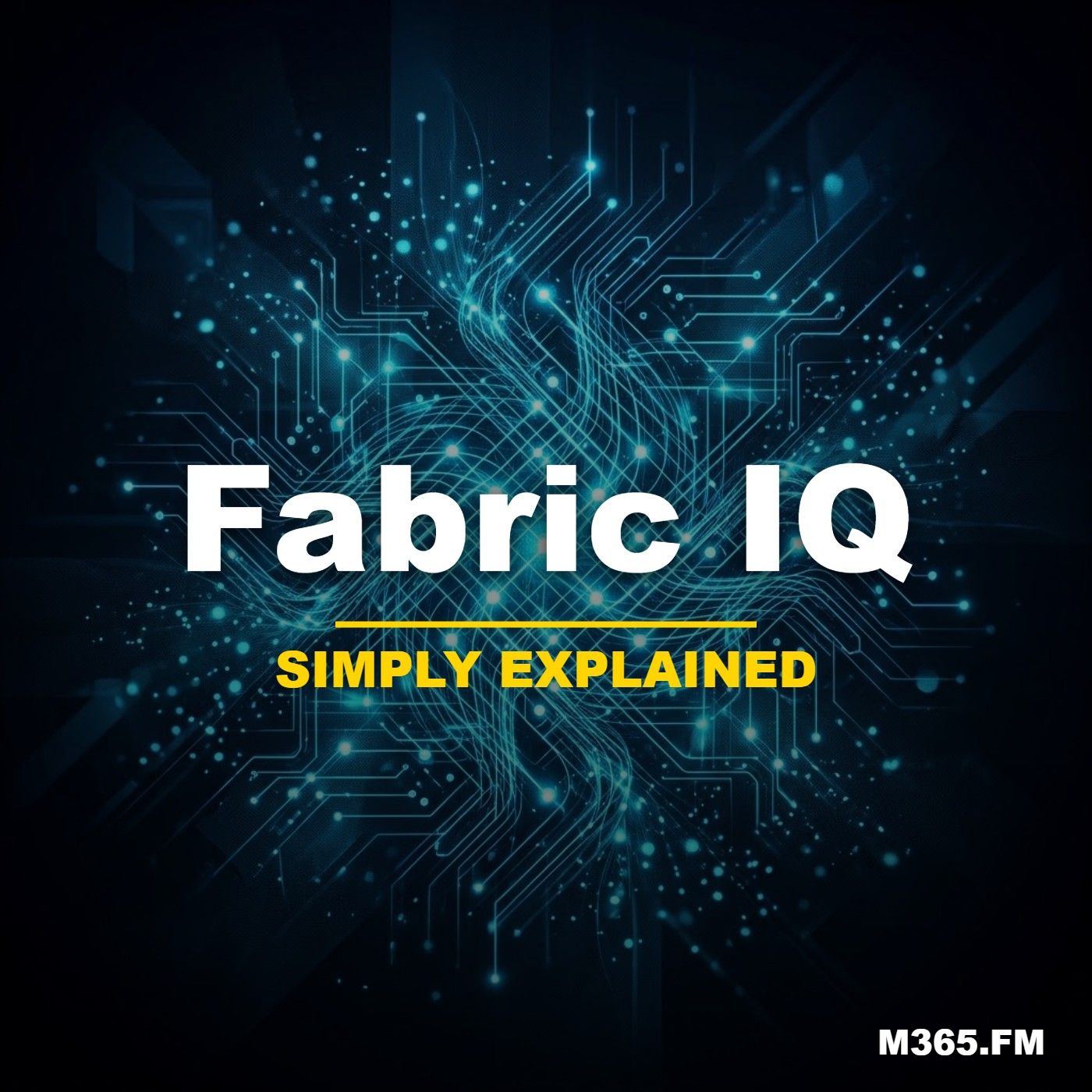
Microsoft Fabric IQ solves the persistent enterprise problem of data drift by applying a shared business ontology to semantic models. By establishing a single source of truth for organizational definitions, Fabric IQ grounds AI agents in accurate, contextualized data, preventing hallucinations and ensuring reliable automated workflows across departments.
Key Takeaways
- Data drift occurs when different departments define identical business entities using conflicting terminology and metrics.
- Fabric IQ introduces a shared ontology layer that maps out the semantic meaning and relationships between data assets.
- Semantic models provide the numerical foundation, while Fabric IQ provides the contextual relationship layer.
- Grounded AI agents require both raw data and ontological context to accurately answer complex business queries without hallucinating.
- Establishing clear boundaries helps data teams understand where data governance ends and AI automation begins.
Understanding Data Drift in Modern Enterprises
In almost every large organization, data silos inevitably lead to semantic fragmentation. Somewhere in your Microsoft Fabric workspace, the sales team and the customer success team are looking at the exact same human being, but calling them two completely different things. One system tracks them as an 'Account', the other as a 'Subscriber', and a third legacy database refers to them simply as a 'Client'. Your underlying data might be completely accurate and well-structured, but the meaning behind it has quietly drifted apart.
This semantic disconnect creates severe operational inefficiencies. When leadership asks for a unified view of customer lifetime value or total active users, data engineers spend dozens of hours reconciling definitions rather than building value. Traditional data governance tools attempt to solve this with flat dictionaries and endless documentation PDFs, but these static documents quickly become outdated and are rarely consulted by automated systems or developers in the flow of their work.
The real challenge of modern data architecture is not storage or compute—it is meaning. Without a programmatic way to enforce a unified business language across your analytics estate, every downstream application, dashboard, and automated process risks operating on flawed assumptions.
What Is Fabric IQ and How Does It Work?
Fabric IQ is designed to bridge this exact semantic gap by introducing an enterprise-grade ontology layer directly into the Microsoft Fabric ecosystem. Instead of forcing teams to manually harmonize disparate tables in every single report, Fabric IQ creates an overarching graph of your business domain. It defines what a customer actually is, how an order relates to a product, and what metrics constitute active engagement across the entire organization.
To understand its mechanics, it helps to look at how it builds upon existing architecture. While semantic models in Power BI organize data into tidy tables and measures optimized for querying, Fabric IQ layers a semantic web of relationships on top of them. It answers the 'why' and the 'how' behind the numbers, establishing rich contextual links that relational databases and traditional star schemas struggle to represent natively.
Ontology vs. Semantic Models: What Is the Difference?
A common point of confusion is how Fabric IQ interacts with traditional Power BI semantic models. A semantic model is fundamentally hierarchical and relational. It calculates totals, averages, and filters based on predefined keys. It is exceptional at crunching numbers, but it lacks the cognitive framework to understand nuanced business concepts.
An ontology, by contrast, focuses on entities, attributes, and relationships in a semantic graph format. Fabric IQ combines these two paradigms. It takes the heavy lifting done in your semantic models and wraps it in an ontological framework. This ensures that when a system references a metric, it understands not just the formula used to calculate it, but the business context, ownership, and upstream dependencies associated with it.
Grounding AI Agents and Copilots
The true power of implementing Fabric IQ becomes apparent when you deploy generative AI agents, Copilots, and automated low-code workflows across your Microsoft cloud environment. Large Language Models (LLMs) are notoriously prone to hallucinations when presented with ambiguous enterprise data. If an AI agent queries a workspace where 'Active Customer' has three different definitions, the agent is forced to guess, often resulting in plausible-sounding yet dangerously incorrect business insights.
By grounding AI agents with Fabric IQ, you provide them with an authoritative map of your organization's business logic. When a user asks an AI assistant to analyze regional revenue trends, the agent does not merely parse raw SQL tables. Instead, it traverses the Fabric IQ ontology, ensuring that it uses the precise, governance-approved definition of 'Revenue' and 'Region' agreed upon by the finance department.
Preventing Hallucinations Through Context
AI grounding is the practice of restricting an LLM's responses to a specific, verified knowledge base. Without a structured ontology, AI agents operating on massive data lakes can easily misinterpret foreign keys or mismatched naming conventions. Fabric IQ acts as the ultimate guardrail, translating natural language prompts into precise ontological queries that align with how your business actually operates.
This contextual awareness shifts AI from a novelty search tool into a reliable enterprise partner. It allows power users and decision-makers to trust the automated insights generated by Microsoft 365 Copilot and custom Azure AI solutions, knowing that the underlying data has been semantically cleansed and validated.
Where Fabric IQ Stops: Boundaries and Limitations
While Fabric IQ is a transformative addition to the Microsoft cloud, it is vital to understand its boundaries. Fabric IQ is not a magic wand that automatically cleans dirty data pipelines, fixes broken data ingestion jobs, or resolves deep-seated organizational politics regarding data ownership.
If your source data is fundamentally corrupt, incomplete, or violates basic data hygiene principles, an ontology layer cannot invent missing facts. Fabric IQ relies on human expertise to define the initial ontology and establish baseline business rules. Data governance remains an active, continuous discipline; Fabric IQ simply provides the technological framework to enforce those decisions at scale.
Conclusion and Next Steps
Data drift and semantic fragmentation are silent killers of enterprise productivity and AI initiatives. By deploying Fabric IQ, organizations can move past endless debates over conflicting definitions and build a unified business language that empowers both human workers and autonomous AI agents.
To dive deeper into how ontology layers, semantic models, and modern data architecture intersect within the Microsoft ecosystem, make sure to Listen to the full episode. Tune in to catch the complete, jargon-free breakdown and discover what Fabric IQ means for your day-to-day cloud strategy.
Frequently Asked Questions
What is Fabric IQ in Microsoft Fabric?
Fabric IQ is a semantic and ontological layer within Microsoft Fabric that helps organizations map out business definitions, relationships, and context, providing a unified source of truth across disparate data workspaces.
How does Fabric IQ differ from a standard Power BI semantic model?
While a semantic model focuses on tables, measures, and numerical calculations, Fabric IQ introduces a broader ontological graph that defines the contextual relationships and business meaning behind those data assets.
Why is an ontology necessary for AI agents?
AI agents require contextual grounding to prevent hallucinations. Without an ontology, LLMs may misinterpret ambiguous data definitions, whereas Fabric IQ provides a verified business framework for accurate automated reasoning.
Does Fabric IQ automatically fix dirty data in my warehouse?
No. Fabric IQ manages meaning and semantic relationships, not data quality at the ingestion level. You still need proper data engineering practices and governance to ensure source data is clean and accurate.