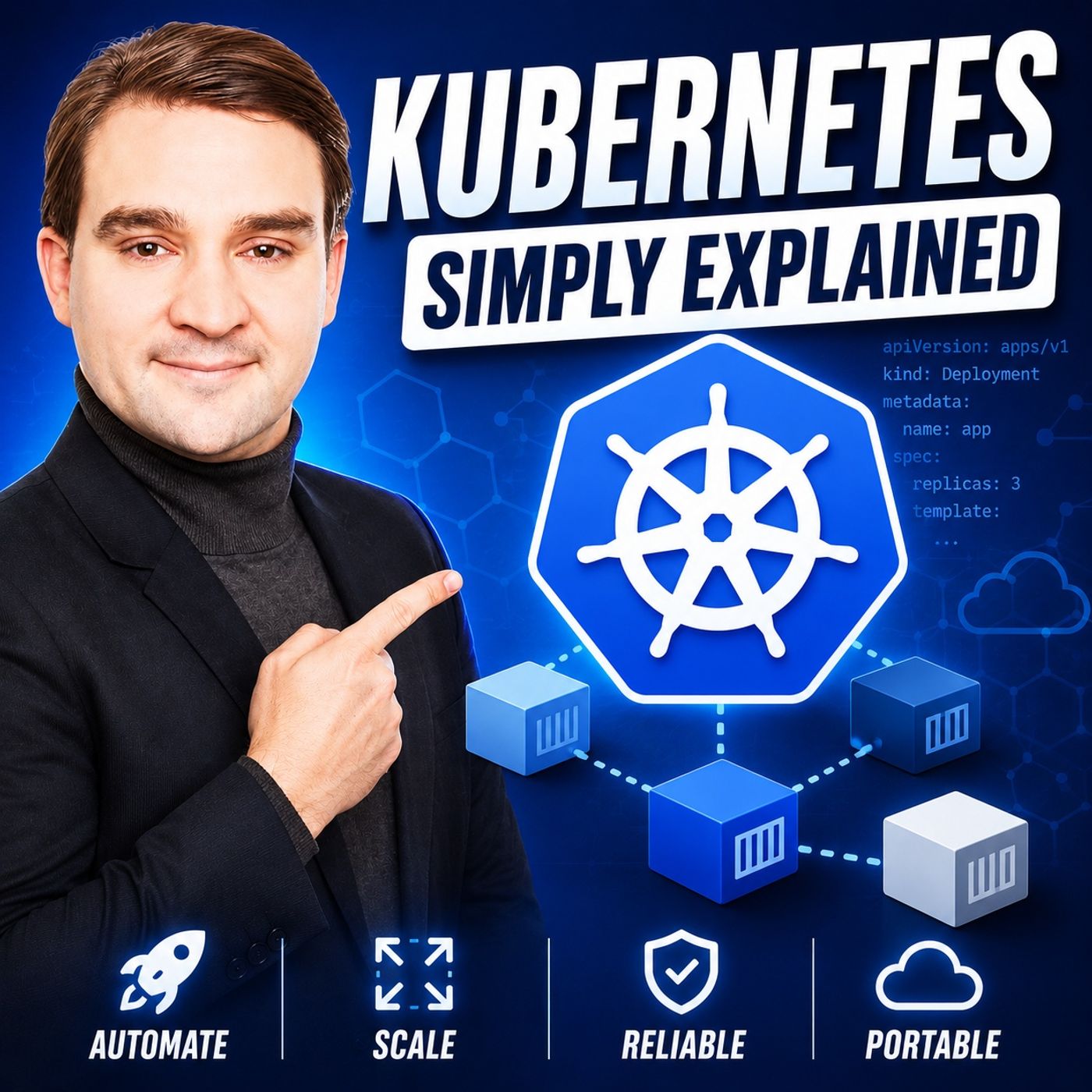
Demystifying Kubernetes: What It Is and Why 93% of Organizations Use It
Welcome back to the blog! If you have ever felt overwhelmed by the fast-paced world of cloud-native development, container orchestration, and modern IT infrastructure, you are definitely not alone. Technology moves at a breakneck speed, and keeping up with the latest industry standards can feel like a full-time job. Today, we are pulling back the curtain on one of the most transformative technologies of the decade. We are diving deep into container orchestration, exploring how automation changes everything, and breaking down why a staggering 93% of organizations rely on Kubernetes to run their modern workloads.
This article expands on the core themes of our latest podcast episode, Kubernetes - Simply Explained. Whether you are a seasoned cloud architect, a developer trying to ship code faster, or an IT leader evaluating your organization’s infrastructure strategy, this comprehensive guide will demystify the core concepts and show you why Kubernetes has become the undisputed backbone of modern application delivery.
Key Takeaways
- Kubernetes automates the deployment and management of containerized applications, making it easier to release updates frequently without breaking production environments.
- It provides consistent environments across development, testing, and production stages, reducing human error and vastly improving cross-team collaboration.
- Kubernetes enhances operational resilience through built-in self-healing capabilities, ensuring your applications remain continuously available even during underlying hardware or network failures.
- Using Kubernetes can significantly lower infrastructure costs by dynamically optimizing resource utilization based on real-time traffic and demand.
- It allows for multi-cloud flexibility, enabling your applications to run seamlessly across different public cloud providers and on-premises environments without vendor lock-in.
- It simplifies scaling operations, automatically adjusting compute resources to handle unexpected traffic spikes effectively and efficiently.
- Getting started with Kubernetes involves containerizing your applications, defining clear manifest files, and integrating reliable CI/CD pipelines.
- Engaging with hands-on projects, labs, and community resources can drastically accelerate your path to mastering Kubernetes and improving your overall application management skills.
Kubernetes Overview

Key Features
At its core, Kubernetes is an immensely powerful open-source platform designed specifically for managing containerized applications. It automates the deployment, scaling, and operation of application containers across clusters of hosts. By abstracting away the underlying infrastructure, Kubernetes simplifies the immense complexities of managing distributed applications in modern cloud environments.
In the expansive world of cloud computing, Kubernetes plays a vital and foundational role. It allows you to run your applications in a completely consistent environment, whether you are hosting them on-premises in your own data center or leveraging the massive scale of public clouds. This incredible flexibility means you can deploy your applications anywhere you choose, entirely avoiding vendor lock-in and optimizing resource allocation across your entire organization.
One of the absolute standout features of Kubernetes is its robust suite of automation capabilities. Here is a closer look at how it enhances your daily engineering workflow:
- Faster deployments: Automation completely removes the delays caused by tedious manual tasks, enabling rapid, continuous, and frequent releases.
- Consistent environments: Kubernetes ensures that the exact same deployment process and configuration are followed strictly across staging, testing, and production.
- Fewer errors: It drastically reduces the chance of human mistakes caused by manual configuration or step-by-step deployment procedures.
- Scalable operations: You can effortlessly handle complex deployments across multiple services and clusters without requiring extra manual intervention.
- Improved team collaboration: Shared, version-controlled pipelines increase overall visibility, transparency, and coordination among development and operations teams.
- Quick rollbacks: Automated tracking of deployments makes it remarkably easy to revert your system to a known good state whenever an issue arises.
Kubernetes also fully supports Infrastructure as Code (IaC) methodologies, allowing you to define, provision, and manage your entire infrastructure through declarative configuration files. This modern approach makes provisioning new Kubernetes clusters and necessary cloud resources entirely automated, repeatable, and transparent.
When it comes to scalability and high reliability, Kubernetes truly shines. Its modular architecture is crucial for maintaining continuous availability in demanding production environments. Consider these key operational advantages:
- Kubernetes provides supreme flexibility and diverse options for scaling your deployments effectively.
- It integrates natively with modern CI/CD processes to maximize overall operational efficiency.
- Automatic pod restarts and intelligent workload migration ensure that your applications remain highly available, even during unexpected node failures.
- Built-in health checks for nodes and pods help the system automatically detect and recover from issues without requiring manual administrative intervention.
- The Horizontal Pod Autoscaler (HPA) dynamically adjusts the number of active replicas based on real-time traffic demand, helping your applications gracefully handle sudden traffic spikes.
Why Kubernetes Matters
In today's hyper-competitive tech landscape, traditional deployment methods frequently struggle to keep up with user expectations. You might find yourself dealing with painfully long release cycles, fragile manual configurations, and a severe lack of flexibility. These persistent challenges inevitably lead to unexpected downtime, inflated cloud costs, and frustrated engineering teams. Fortunately, Kubernetes changes the game entirely.
Benefits of Using Kubernetes
Kubernetes delivers a wide array of profound benefits that can completely transform how your organization builds, deploys, and manages applications. Here are the primary advantages:
-
Accelerated Time-to-Market: With Kubernetes, you can fully automate your deployment pipelines. This means you can release software updates multiple times a day—mirroring industry leaders like Netflix, which routinely deploys over 1,000 changes daily. This velocity gives your business an undeniable competitive edge.
-
Improved Operational Resilience: Kubernetes features native self-healing capabilities. If a container crashes or becomes unresponsive, Kubernetes automatically restarts or replaces it, ensuring your applications stay online. Organizations implementing this have reported dramatic uptime improvements and massive reductions in incident response times.
-
Cost Optimization: Kubernetes drastically optimizes underlying resource utilization. By automatically scaling applications up and down based strictly on live demand, organizations can significantly reduce wasted infrastructure spend. For instance, global streaming giant Spotify managed to cut their infrastructure costs substantially after adopting Kubernetes.
-
Multi-Cloud Flexibility: Kubernetes allows you to run applications consistently across various cloud providers, such as Microsoft Azure, AWS, and Google Cloud. This architectural flexibility completely prevents vendor lock-in and smoothly supports hybrid cloud strategies, giving you ultimate control over your IT infrastructure.
To further illustrate these incredible benefits, examine the comparison table below:
| Benefit | Description | Measurable Impact |
|---|---|---|
| Accelerated Time-to-Market | Enables continuous deployment through automated pipelines, allowing multiple daily releases. | Industry leaders deploy over 1,000 code changes daily. |
| Improved Operational Resilience | Self-healing capabilities maintain application availability through automatic container restarts. | Substantial uptime improvements and accelerated incident response times. |
| Cost Optimization | Optimizes resource utilization and scales applications dynamically based on actual demand. | Major enterprises cut cloud infrastructure costs by up to 40%. |
| Multi-Cloud Flexibility | Consistent operations across diverse cloud providers, preventing vendor lock-in entirely. | Enables robust hybrid cloud and multi-cloud strategies. |
Kubernetes also greatly enhances service reliability when compared to legacy deployment solutions. It minimizes the risks associated with downtime and vastly simplifies complex rollbacks. Here is how different rollout strategies stack up against each other:
| Strategy | Downtime Risk | Rollback Complexity | Cost Impact | Best Use Cases |
|---|---|---|---|---|
| Recreate | High | Simple | Low | Internal apps, noncritical systems, scheduled maintenance windows |
| Rolling Update | Low | Moderate | Medium | Most web applications and APIs with backward-compatible changes |
| Blue/Green | Very Low | Very Simple | High | High-stakes enterprise releases, compliance-heavy environments |
| Canary | Very Low | Complex | Medium–High | Gradual, metric-driven rollouts designed to reduce blast radius |
| A/B Testing | Low | Complex | Medium–High | Product experiments directly tied to key business metrics |
| Shadow | None | Simple | High | Testing new versions with real user traffic before serving live responses |
By adopting Kubernetes, you can standardize environments across development, staging, and production. This critical standardization accelerates developer onboarding and minimizes frustrating debugging sessions. Furthermore, Kubernetes integrates seamlessly with modern DevSecOps practices, embedding enterprise-grade security directly into your delivery workflows from day one.
How Kubernetes Works

Kubernetes operates through a meticulously defined architecture consisting primarily of clusters and nodes. A Kubernetes cluster is a logical grouping of machines, known as nodes, that run containerized applications. Every single cluster contains a central control plane that manages the cluster's global state and a collection of worker nodes that actually host and execute the applications.
Control Plane Functionality
The control plane acts as the undisputed brain of your Kubernetes cluster. It continuously manages the entire system and ensures that everything runs according to your exact specifications. Here is a quick overview of its primary internal components:
| Component | Description |
|---|---|
| Control Plane | Hosts the essential core components used to manage the Kubernetes cluster. |
| Worker Nodes | Virtual machines or physical bare-metal servers that host pods running active containers. |
| API Server | Serves as the primary front end of the control plane, handling and processing all incoming requests. |
| Scheduler | Intelligently assigns newly created pods to optimal nodes based on resource requirements. |
| Controller Manager | Monitors and regulates the current state of the cluster, ensuring it matches the desired state. |
| etcd | A highly reliable, distributed key-value store that maintains all cluster data and configurations. |
| Cloud Controller Manager | Links the Kubernetes cluster with specific cloud provider APIs to manage cloud logic. |
The control plane communicates continuously with worker nodes using the kubelet, an essential agent running locally on each node. When you deploy applications, the control plane schedules the containers to run on the most suitable nodes. It perpetually checks the actual state of the system against your desired state configuration, making automatic corrections to ensure your applications run smoothly without manual oversight.
The Role of Pods in Application Management
Kubernetes pods are the smallest and most basic deployable computing units in the entire Kubernetes object model. Each pod can encapsulate one or more tightly coupled containers that share localized storage and networking resources. Pods play a fundamental role in scaling applications efficiently. For example, the Horizontal Pod Autoscaler (HPA) automatically adjusts the total number of running pods based on live CPU or memory usage. When user demand spikes, Kubernetes instantly spins up additional pods; when demand subsides, it scales them back down.
Here is how the primary scaling mechanisms function within the ecosystem:
| Scaling Method | Description |
|---|---|
| Horizontal Pod Autoscaler (HPA) | Automatically adjusts the number of pod replicas based on predefined CPU or memory thresholds. |
| Vertical Pod Autoscaler (VPA) | Dynamically adjusts the CPU and memory resource allocations for existing pods based on workload demands. |
| Cluster Autoscaler | Works in tandem with HPA and VPA to dynamically scale the underlying physical or virtual infrastructure. |
Orchestrating Operations
The control plane orchestrates operations by maintaining the exact desired state of the cluster at all times. It determines precisely where and when to scale containers based on incoming load. Kubernetes utilizes advanced schedulers to allocate workloads to appropriate nodes and controllers to ensure configurations match reality. This high level of orchestration frees engineering teams to focus entirely on building superior application features rather than wrestling with low-level infrastructure management.
Automated Deployments and Scaling
Kubernetes greatly simplifies deployments through comprehensive automation. Key features enabling this workflow include:
- CI/CD Pipelines: Automatically build, test, and deploy code changes directly to production clusters.
- Infrastructure as Code (IaC): Codifies the entire deployment process, allowing for completely reproducible environments.
- GitOps: Uses Git repositories as the single source of truth for managing cluster deployments and configurations.
With these powerful capabilities in place, you can ensure your applications are always current, highly secure, and operating at peak efficiency.
Kubernetes vs. Docker
When diving into the modern world of containerization, you will frequently hear discussions comparing Kubernetes and Docker. While both technologies play vital, interrelated roles in contemporary software development, they serve distinctly different purposes. Let's break down the differences clearly.
Understanding the Technologies
- Docker is primarily a platform for creating, packaging, and running individual containers. It bundles applications and all their runtime dependencies into a single isolated unit, making it simple to run across different machines.
- Kubernetes, on the other hand, is a container orchestration tool. It manages the automated deployment, networking, scaling, and lifecycle operation of thousands of those containers across vast clusters of machines.
In essence, Docker handles the "what" of containerization by packaging your app, while Kubernetes takes care of the "how" by managing those containers at scale in production.
When to Use Kubernetes Over Docker
You might wonder when it is necessary to adopt Kubernetes instead of relying solely on Docker. Here are common scenarios where Kubernetes becomes essential:
| Scenario | Description |
|---|---|
| Load Balancing | Kubernetes efficiently allocates resources and balances network loads, preventing server bottlenecks. |
| Authentication and Security | It simplifies handling security, role-based access control, and secrets management at scale. |
| Multi-platform Deployment | Kubernetes coordinates complex multi-platform and multi-cloud architectures effortlessly. |
If your application requires high availability, automatic horizontal scaling, or manages a complex microservices architecture, Kubernetes is the definitive choice. It excels at managing large-scale, distributed applications that traditional single-node tools cannot support effectively.
How They Work Together
Docker and Kubernetes complement each other harmoniously within modern DevOps workflows. Here is how they unite:
- Docker creates, packages, and runs containers at the individual application level.
- Kubernetes manages those containers at the infrastructure level, ensuring high-availability deployment, automated scaling, and maintenance across clusters.
- Together, they drastically simplify development processes, accelerate time-to-market, and optimize resource scaling in modern cloud environments.
By leveraging both technologies, you capture the unique strengths of each. Docker makes building and packaging your code frictionless, while Kubernetes ensures your services run resiliently in production.
Getting Started with Kubernetes
Getting started with Kubernetes can initially feel intimidating, but it does not have to be! Let's break the journey down into clear, manageable steps. First, you must understand the basic setup requirements for establishing a reliable Kubernetes cluster.
Basic Setup Requirements
To set up a production-grade Kubernetes environment, you need adequate hardware and software resources. Here is a quick reference table outlining typical infrastructure sizing:
| Component | Requirements |
|---|---|
| Stateless Nodes | High-performance SSD storage dedicated for operating systems and container image caching. |
| Shared Storage | Network File System (NFS), iSCSI, or SAN storage solutions for persistent data volumes. |
| Scale-Out Hardware | Robust multi-core processors with ample RAM to support multiple running pods. |
| Networking | Low-latency, high-bandwidth internal networking fabrics. |
For individual cluster nodes, baseline specifications generally start around:
- Master node: Minimum 2 GB RAM and 1.5 CPU cores to manage control plane processes.
- Worker node: Minimum 700 MB RAM and 0.5 CPU cores to host application workloads.
With these foundational requirements understood, you can begin planning your deployment strategy.
First Steps for Deployment
Now that your hardware or cloud environment is ready, let's look at the initial steps for deploying your first application using Kubernetes. Follow this structured roadmap:
- Containerize your application: Write a clean Dockerfile to package your application code and runtime dependencies. Build the image and push it to a secure container registry.
- Define Kubernetes manifests: Create declarative YAML configuration files defining Kubernetes objects such as Deployments, Services, and Ingress rules. Use tools like Helm charts or Kustomize to manage these configurations cleanly.
- Set up a CI/CD pipeline: Choose an automation platform and define a pipeline that handles automated building, automated testing, and automated cluster deployment.
- Store configuration in version control: Keep all infrastructure and deployment-related manifest files in a dedicated Git repository to enable complete transparency, auditing, and team collaboration.
Common Challenges
As you embark on your Kubernetes learning journey, you will inevitably encounter certain hurdles. Beginners frequently struggle with cluster security configurations and the inherent operational complexity of maintaining Kubernetes clusters over time. Misconfigurations can occasionally lead to security vulnerabilities or service downtime. To mitigate these risks, consider utilizing managed Kubernetes services like Azure Kubernetes Service (AKS) or investing in specialized team training.
Resources for Learning
If you are looking for exceptional resources to guide you along the way, explore these helpful educational links:
- What Is Kubernetes? Finally, a Simple Explanation!
- Kubernetes Tutorial: Deploy Your First App on Kubernetes Today
- Hands-on Labs for Practical Experience
With these steps and resources at your disposal, you are well on your way to mastering Kubernetes. Remember that practical, hands-on experimentation is the best teacher, so do not hesitate to build, test, and learn as you go!
Kubernetes represents a true paradigm shift in modern application management. It simplifies complex distributed architectures by using declarative configuration files and powerful automation for deployment, scaling, and rolling updates. This means your engineering teams can spend less time fighting fires and more time building exceptional software features that drive your business forward.
As you plan your organization's adoption of Kubernetes, keep these core best practices in mind:
- Implement rigorous organizational standards and automate governance policies for consistency.
- Plan your cluster network and security architecture carefully from day one for optimal performance.
- Integrate Kubernetes smoothly with your existing CI/CD infrastructure and developer workflows.
To deepen your expertise even further, explore advanced topics such as cloud observability, automated cluster management, and zero-trust security models. Engaging with practical, hands-on projects will solidify your skills and prepare you for enterprise-grade deployments. Embrace the incredible power of Kubernetes and watch your applications scale effortlessly!
FAQ
What is Kubernetes used for?
Kubernetes is primarily used to automate the deployment, scaling, and operational management of containerized applications across clusters of machines, ensuring high availability and efficient resource utilization.
Is Kubernetes difficult to learn?
While Kubernetes certainly has a notable learning curve due to its extensive feature set and architectural breadth, many resources simplify the process. With dedicated practice and hands-on experience, administrators and developers can achieve proficiency relatively quickly.
Can I run Kubernetes on my laptop?
Yes, absolutely! You can easily run a local, single-node Kubernetes cluster on your personal computer using lightweight developer tools like Minikube, Kind, or Docker Desktop. This setup is fantastic for local development and testing.
What are Pods in Kubernetes?
Pods are the smallest and most fundamental deployable units in Kubernetes. A pod encapsulates one or more containers that share localized storage, a unique network IP address, and shared specifications for how to run.
How does Kubernetes handle scaling?
Kubernetes handles scaling dynamically using features like the Horizontal Pod Autoscaler (HPA), which automatically adjusts the number of pod replicas based on live CPU utilization, memory thresholds, or custom metrics.
What is a Kubernetes Cluster?
A Kubernetes cluster is a collection of physical or virtual machines—referred to as nodes—controlled by a centralized control plane, working together to host and manage containerized applications reliably.
Can I use Kubernetes with any cloud provider?
Yes! Kubernetes is completely cloud-agnostic, meaning you can run it on major public cloud providers like Microsoft Azure, AWS, and Google Cloud, or self-host it on your own on-premises servers.
What is the difference between Kubernetes and Docker?
Docker is a platform used to build and run individual application containers, whereas Kubernetes is an orchestration engine designed to manage, scale, and network thousands of those containers across distributed clusters.
🎧 Listen to this episode
Want a practical, engaging explanation of Kubernetes? This episode breaks down the topic in clear, straightforward language and shows why container orchestration matters for Microsoft 365, Azure, modern cloud ecosystems, and security architectures.
Listen to this episode if you want to:
- Understand the core architectural concepts behind Kubernetes
- See how container orchestration fits into the wider Microsoft technology ecosystem
- Learn where Kubernetes can create tangible, practical value for your organization
You may also enjoy these related M365 FM episodes:
Discover more practical, expert-led Microsoft conversations over on M365 FM.
Last reviewed: July 2026.
Who Should Listen
This episode is tailored specifically for Microsoft administrators, cloud architects, software developers, security professionals, and forward-thinking business leaders who need a practical foundational understanding before making crucial infrastructure implementation or governance decisions.
🎧 You Should Also Listen To
- Infrastructure as Code — A closely related next step that adds useful context and practical depth to your automation journey.
- Azure Resource Manager — A closely related next step that adds useful context and practical depth.
- Azure DevOps — A closely related next step that adds useful context and practical depth to your deployment pipelines.

Founder of M365 Show, M365con.net & m365.fm
Mirko Peters is a Microsoft MVP, Microsoft 365 expert, content creator, and founder of m365.fm, a platform dedicated to sharing practical insights on modern workplace technologies. His work focuses on Microsoft 365 governance, security, collaboration, and real-world implementation strategies.
Through his podcast and written content, Mirko provides hands-on guidance for IT professionals, architects, and business leaders navigating the complexities of Microsoft 365. He is known for translating complex topics into clear, actionable advice, often highlighting common mistakes and overlooked risks in real-world environments.
With a strong emphasis on community contribution and knowledge sharing, Mirko is actively building a platform that connects experts, shares experiences, and helps organizations get the most out of their Microsoft 365 investments.