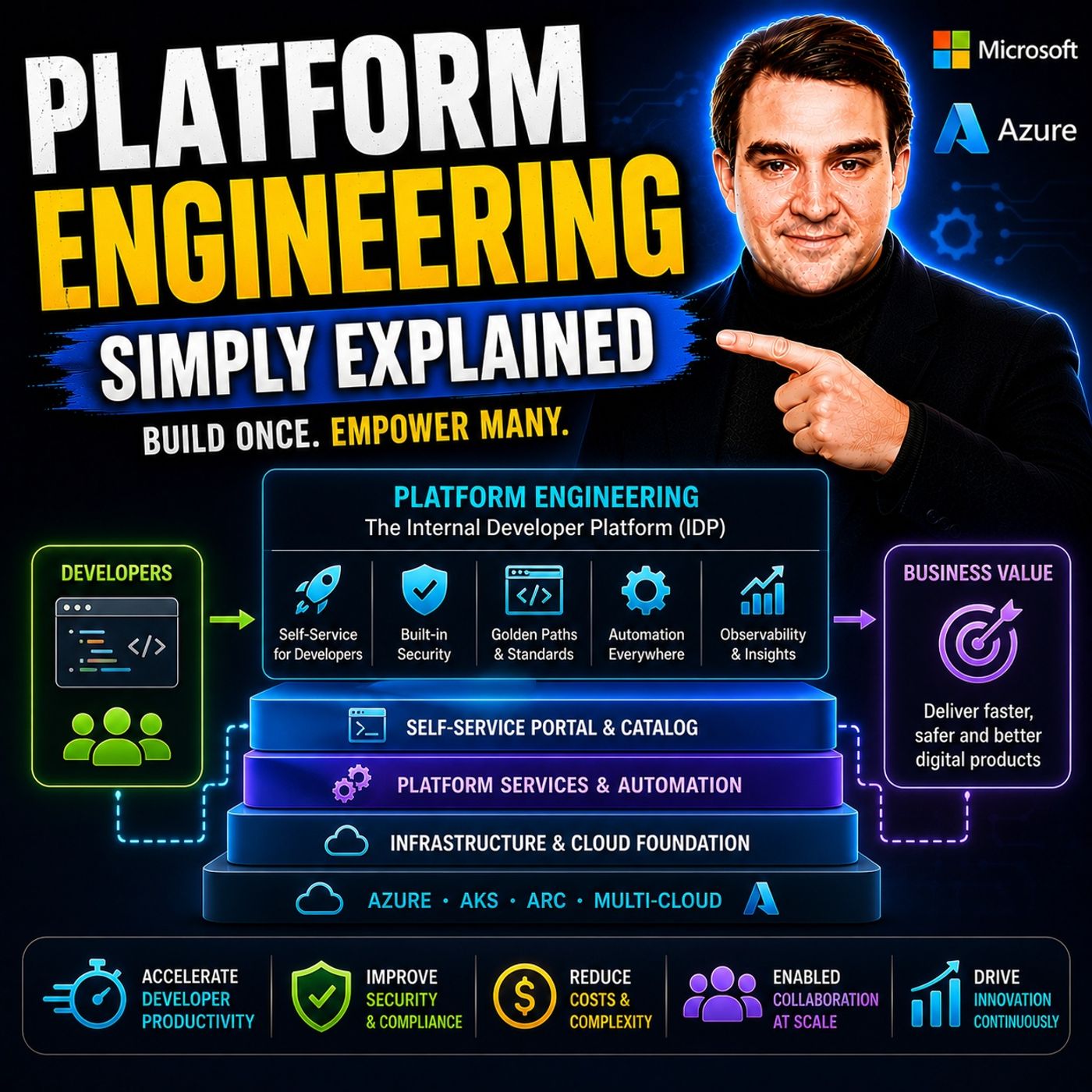
Demystifying Platform Engineering: The New Era of Software Development
Welcome back to the podcast companion blog! In today's post, we are diving deep into one of the most transformative trends sweeping through the technology sector: platform engineering. As organizations strive for unprecedented levels of efficiency, velocity, and reliability, standard operational models are being re-evaluated. Industry predictions estimate that a staggering 80% of software engineering organizations will adopt dedicated platform teams by 2026. But what does this mean for your development teams, and why is this shift happening right now? In this comprehensive breakdown, we will explore the foundational definitions, historical evolution, core principles, daily responsibilities, and ultimate business benefits of platform engineering. If you are looking to create a supportive, cohesive environment that accelerates delivery while eliminating developer burnout, you are in the right place. To hear our complete audio discussion on this topic, be sure to check out our related podcast episode, Platform Engineering - Simply Explained.
Definition of Platform Engineering

Platform engineering is all about creating a supportive environment for software development. It focuses on improving developer experiences, centralizing responsibilities, and providing self-service solutions. This approach has become crucial in modern software development as it helps teams work more efficiently and effectively.
Key Components
In today’s fast-paced tech world, platform engineering plays a vital role. It helps you streamline processes and reduce the cognitive load on developers. Here are some essential elements that make up platform engineering:
- Centralization: Platform engineering centralizes the responsibility for infrastructure and tools. This ensures consistency and scalability across your organization.
- Self-Service Solutions: You can perform common tasks independently, which reduces delays and enhances your overall experience.
- Standardized Tools: By using standardized tools, you minimize the risk of errors and improve security.
- Automation: Automating routine tasks allows you to focus on building features rather than managing infrastructure.
Leading technology companies emphasize the importance of platform engineering. They define it as a way to enhance developer productivity and accelerate product delivery. For instance, a cloud engineer from a Fortune 500 media company noted, "Platform engineering was adopted for increasing speed or velocity in delivering products." This highlights how centralized teams can eliminate the need for each team to manage infrastructure, ultimately boosting efficiency.
Internal Developer Platforms (IDPs) are a key aspect of platform engineering. They provide a self-service layer that abstracts complex infrastructure tasks. This means you can focus on building and releasing features more quickly. IDPs automate routine tasks, ensure consistency, and improve the overall developer experience, leading to increased productivity.
To sum it up, platform engineering is a strategic evolution of DevOps. It reduces duplication of effort by providing common frameworks and components. This approach not only enhances collaboration among teams but also aligns development efforts with business objectives. As Gartner predicts, by 2026, 80% of companies developing software will implement platform engineering. So, embracing this approach can significantly transform your software development process.
Evolution of Platform Engineering
From DevOps to Platform Engineering
The journey from DevOps to platform engineering has been quite fascinating. It all started with the rise of DevOps, which aimed to bridge the gap between development and operations. However, as software development grew more complex, teams began to realize that they needed a more specialized approach. Here are some key milestones in this evolution:
- 2018: Evan Bottcher introduced the concept of Internal Developer Platforms, emphasizing the need to treat platforms as products.
- 2019: The first platform engineering meetup took place in Berlin, marking a significant step in recognizing platform engineering as a distinct discipline.
- 2019: The publication of 'Team Topologies' by Matthew Skelton and Manuel Pais clarified the role of platform teams in enhancing collaboration between developers and operations.
- October 2022: Gartner identified platform engineering as a Top Strategic Technology Trend for 2023, highlighting its growing importance.
- June 2023: PlatformCon 2023 showcased the evolution of platform engineering, with discussions on best practices and significant attendance.
As you can see, the field has rapidly matured, and current trends reflect this growth. For instance, many organizations are now forming dedicated platform engineering teams to enhance productivity. Here’s a quick look at some of the most significant trends:
| Trend | Description |
|---|---|
| Rise in Popularity | Platform engineering has seen a significant increase in adoption over the last few years. |
| Self-Service Capabilities | Platforms are increasingly designed to allow teams to operate autonomously without external help. |
| Platforms as Products | There is a shift towards treating platforms as internal products to enhance user experience. |
| Developer Portals | Tools like Backstage and OpsLevel are being adopted to enhance discoverability and usability. |
| API-First Approach | Emphasis on building platforms with APIs as a core component for flexibility and integration. |
Transitioning from traditional DevOps to platform engineering isn’t without its challenges. You might face resistance to change, lack of communication, and even tool sprawl. Here are some common hurdles:
- Resistance to change
- Insufficient documentation
- Security concerns
- Need for cultural transformation
To overcome these challenges, start with experienced teams and drive cultural transformation. Highlighting immediate benefits can also help ease the transition.
Core Principles of Platform Engineering
Internal Developer Platforms
When diving into platform engineering, you’ll find several foundational principles guiding this approach. These principles help shape how teams operate and deliver software. Here are some key ideas to keep in mind:
- Clear mission and role: Establishing a clear purpose for your platform helps align teams and goals.
- Treat your platform as a product: This mindset encourages continuous improvement and user feedback.
- Focus on common problems: Addressing shared challenges can streamline processes and enhance collaboration.
- Glue is valuable: Recognizing the importance of integration between tools and teams fosters a cohesive environment.
- Don’t reinvent the wheel: Leveraging existing solutions saves time and resources.
By adhering to these principles, you can significantly boost developer productivity. Recent research shows that 83% of IT organizations have either fully implemented or are in the process of implementing platform engineering. This shift allows developers to spend more time coding, which is crucial since studies indicate they currently allocate only 12.5% to 30% of their time to this task. By establishing best practices and improving the developer experience, platform engineering enhances productivity.
So, what exactly is an internal developer platform? An internal developer platform (IDP) is a self-service layer that simplifies complex infrastructure tasks. It allows developers to manage their own environments and resources without relying on operations teams. This autonomy not only speeds up development but also fosters a sense of ownership among team members.
Here’s a quick look at some defining features of internal developer platforms:
| Feature | Description |
|---|---|
| Automation | Streamlines the software development process by reducing manual tasks and increasing efficiency. |
| Self-service capabilities | Empowers developers to manage their own environments and resources without needing to rely on operations teams, enhancing productivity. |
| Security | Ensures compliance and protects against vulnerabilities by integrating security measures throughout the deployment process. |
| Collaboration tools | Facilitates communication and teamwork among developers, improving the overall development workflow. |
| Infrastructure automation | Treats infrastructure as code, allowing for consistent and repeatable environments, which reduces the risk of production incidents. |
Internal developer platforms also support scalability in large enterprises. They integrate GitOps and platform engineering, improving security and configuration management. This integration helps you manage growth and complexity more effectively. A robust developer portal serves as a central hub for collaboration and self-service, which is crucial for managing rapid growth without compromising performance or user satisfaction.
Responsibilities of a Platform Engineer
As a platform engineer, you play a crucial role in ensuring that development teams can work efficiently and effectively. Your responsibilities encompass a wide range of tasks that help streamline processes and enhance developer productivity. Here’s a look at some of the key roles you might take on:
- Developing Internal Developer Platforms (IDPs): You create and maintain IDPs that simplify the development process.
- Setting Up CI/CD Pipelines: You optimize continuous integration and delivery pipelines to automate workflows.
- Creating APIs and Interfaces: You build new APIs, command-line interfaces (CLIs), and web applications that developers use to interact with the platform.
- Managing Testing Workflows: You oversee testing processes to ensure quality and reliability in software delivery.
- Monitoring Deployed Environments: You keep an eye on live systems to identify and resolve issues quickly.
- Writing Documentation: You document the tools and components you create, making it easier for others to understand and use them.
- Collaborating with Teams: You work closely with developers and operations teams to gather requirements and improve the platform.
In addition to these tasks, you may also be responsible for automating the DevOps lifecycle, provisioning infrastructure, and supporting teams using the platform. Your role is dynamic and requires a mix of technical and soft skills.
Required Skills and Competencies
To excel as a platform engineer, you need a solid foundation of technical skills. Here’s a breakdown of the essential competencies:
| Technical Skills | Description |
|---|---|
| Proficiency in Low-Level Coding Languages | Experience in languages like Python, Java, or C++ for scripting and debugging. |
| Cloud Computing Expertise | Familiarity with cloud platforms like AWS, Azure, or Google Cloud Platform. |
| Kubernetes and Container Orchestration | Skills in managing production clusters and using cloud-native tools. |
| Infrastructure as Code (IaC) | Experience with tools like Terraform for automating infrastructure management. |
Alongside technical skills, soft skills are equally important. Here are some key attributes you should possess:
- Project Management: You should be able to define project goals and allocate resources effectively.
- Attention to Detail: Strong attention to detail helps you understand complex technical requirements and ensures thorough testing.
By mastering these skills, you can significantly contribute to the efficiency of your organization and enhance the overall delivery of software. Your role as a platform engineer is vital in creating a seamless development experience, allowing teams to focus on what they do best—building great software.
Benefits of Platform Engineering

Streamlined Processes
When you adopt platform engineering, you unlock a world of advantages for your development teams. One of the most significant benefits is the ability to streamline processes. This means you can work faster and more efficiently, allowing your team to focus on what truly matters—building great software.
Here’s how platform engineering improves developer productivity:
- Internal Developer Platforms (IDPs) act like a 'vending machine' for developers. They provide pre-configured infrastructure components, which means you spend less time managing manual tasks.
- By automating and standardizing workflows, platform engineering accelerates development cycles. You can provision infrastructure and deploy applications quickly, which helps you go to market faster.
- IDPs enforce standardization, increasing productivity and improving key DevOps metrics such as mean time to recovery (MTTR) and change failure rate.
The impact of these streamlined processes is profound. According to recent studies, 77% of companies report improved time-to-market after implementing platform engineering. Additionally, 85% of organizations see positive revenue growth as a direct result of these changes.
Automation plays a crucial role in enhancing efficiency. Here’s how:
- Automation reduces manual toil, allowing you to focus on innovation instead of repetitive tasks.
- AI-driven solutions enhance resource management and improve reliability.
- Standardized, automated workflows improve consistency and reliability, reducing errors.
With self-service capabilities, you can move faster. You won’t have to wait for approvals or assistance from other teams, which minimizes delays and enhances the overall development process.
To illustrate the cost benefits, consider the following:
| Evidence Type | Statistic/Impact |
|---|---|
| Companies reporting improved time-to-market | 77% |
| Companies reporting positive revenue growth | 85% |
| Potential reduction in total cost of ownership (TCO) | Up to 9% (via auto-scaling) |
| Reduction in TCO from right-sizing instances | Up to 7% |
Best Practices for Adoption
Adopting platform engineering can significantly enhance your development processes. To ensure a smooth transition, consider these best practices:
- Secure Executive Buy-In: Start by getting support from leadership. This commitment helps create an organization-wide strategy for platform engineering.
- Assemble a Strong Team: Form a dedicated platform engineering team with a focus on customer needs and infrastructure expertise. This team will drive the initiative forward.
- Leverage Automation: Use automation and infrastructure as code to manage your platform effectively. This approach simplifies processes and enhances scalability.
- Document Reusable Services: Catalogue and document internal services and libraries. This practice facilitates seamless discovery and integration, making it easier for teams to leverage existing resources.
- Engage Regularly with Teams: Keep communication open. Regularly engage with development teams to identify duplicative solutions and tools. This helps streamline efforts and reduces redundancy.
- Maintain Transparency: Communicate changes and future plans to stakeholders. Transparency builds trust and encourages collaboration across teams.
- Emphasize User-Centric Design: Focus on creating a platform that balances standardization with flexibility. This approach enhances developer experiences and encourages adoption.
Continuous improvement is vital for the success of your platform engineering efforts. Here are some strategies to foster a culture of ongoing enhancement:
- Align with Business Goals: Ensure that your platform engineering initiatives align with organizational objectives. This alignment keeps your efforts relevant and impactful.
- Foster Feedback and Innovation: Create an environment where feedback is valued. Encourage developers to share their insights and ideas for improvement.
- Utilize Monitoring Tools: Implement monitoring tools and automated testing to adapt your platform to changing needs. This proactive approach helps you stay ahead of potential issues.
- Empower Developers: Provide developers with a robust platform that supports experimentation and innovation. This empowerment leads to a more engaged and productive team.
To measure the effectiveness of your platform engineering implementation, consider tracking key metrics. For example, during the initial phase, you might look at developer satisfaction and infrastructure provisioning time. As you progress, focus on platform adoption rates and automation success. This data will help you refine your approach and ensure that your platform evolves in alignment with your goals.
By following these best practices, you can create a scalable environment that enhances developer experiences and drives successful outcomes in your organization.
Platform engineering plays a crucial role in modern software development. It helps you reduce cognitive load by providing a standardized environment. This means you can focus on what truly matters—building great software. Here are some compelling reasons to consider adopting platform engineering principles:
- Reduces cognitive load on development teams.
- Facilitates the evolution of platforms through collaboration.
- Encourages simplicity to avoid unnecessary complexity.
Organizations like Uswitch and Adidas have already seen the benefits. They implemented custom platforms that enhance service delivery and allow teams to focus on high-value decisions.
By embracing platform engineering, you can improve collaboration among your teams. Well-built platforms provide tools that enhance teamwork, leading to better outcomes. Plus, the long-term benefits are clear:
| Benefit | Description |
|---|---|
| Improved Developer Satisfaction | A frictionless development experience leads to happier engineers, boosting morale and productivity. |
| Faster Time-to-Market | Automated infrastructure provisioning enables quick feature delivery. |
| Enhanced Software Quality | Standardized processes lead to fewer production issues and higher quality. |
In short, adopting platform engineering can transform your development process, making it more efficient and collaborative. So, why not take the leap and explore how it can benefit your organization?
FAQ
What is platform engineering?
Platform engineering focuses on creating a supportive environment for software development. It streamlines processes, enhances developer productivity, and provides self-service solutions.
How does platform engineering differ from DevOps?
While DevOps aims to bridge development and operations, platform engineering specializes in creating internal developer platforms that simplify infrastructure management and improve developer experiences.
What are Internal Developer Platforms (IDPs)?
IDPs are self-service layers that abstract complex infrastructure tasks. They allow developers to manage their environments independently, speeding up development and fostering ownership.
Why should my organization adopt platform engineering?
Adopting platform engineering can reduce cognitive load, enhance collaboration, and improve software delivery speed. It empowers teams to focus on building exceptional software.
What skills do platform engineers need?
Platform engineers should have expertise in cloud computing, coding languages, and infrastructure as code. Soft skills like project management and attention to detail are also essential.
How can I measure the success of platform engineering?
You can track metrics like developer satisfaction, infrastructure provisioning time, and platform adoption rates. These indicators help you assess the effectiveness of your platform engineering efforts.
What challenges might I face when implementing platform engineering?
Common challenges include resistance to change, insufficient documentation, and tool sprawl. Addressing these issues early can help ensure a smoother transition.
How can I foster a culture of continuous improvement in platform engineering?
Encourage feedback from developers, align initiatives with business goals, and utilize monitoring tools. This proactive approach helps you adapt your platform to changing needs.
🎧 Listen to this episode
Want a practical explanation of Platform Engineering? This episode breaks down the topic in clear language and shows why it matters for Microsoft 365, Azure, Power Platform, security, AI, and modern work.
Listen to this episode if you want to:
- Understand the key concepts behind Platform Engineering
- See how it fits into the wider Microsoft technology ecosystem
- Learn where it can create practical value for your organization
You may also enjoy these related M365 FM episodes:
- From AI Hype to AI Harness Engineering – Building AI That People Can Actually Trust with Alan Buscaglia [MVP] from Gentleman Programming
- Platform Engineering: The New Operating Model for Azure
- Enterprise AI Agent Engineering with Karthikeyan VK [MVP]
- Microsoft Fabric Exposes Data Engineering and Governance Gaps
- Stop Teams Phishing and Social Engineering in Microsoft 365
Discover more practical Microsoft conversations on M365 FM.

Microsoft MVP | Host of M365.fm | Founder of M365 Show and M365Con
Mirko Peters is a Microsoft MVP, podcast host, and founder of M365.fm, M365 Show, and M365Con. His work connects Microsoft practitioners through podcast interviews, livestreams, and community events.
At M365.fm, Mirko hosts conversations with Microsoft MVPs, product experts, architects, and community contributors. Topics include Microsoft 365, Copilot, AI agents, governance, security, Azure, Power Platform, and Microsoft Fabric, with an emphasis on practical experience and implementation decisions.
M365.fm is the podcast and learning platform. M365 Show brings experts together for livestreams, while M365Con provides an online conference setting for community learning.
Official website: Mirko Peters (https://www.mirkopeters.com/). Recognition: Mirko Peters — Microsoft MVP profile (https://mvp.microsoft.com/de-DE/mvp/profile/9b0ca797-db5a-493a-a845-8b9158046cf5). Connect on LinkedIn (https://www.linkedin.com/in/m365showpodcast/).