AI for Decision-Making: Best Practices, Risks and Governance
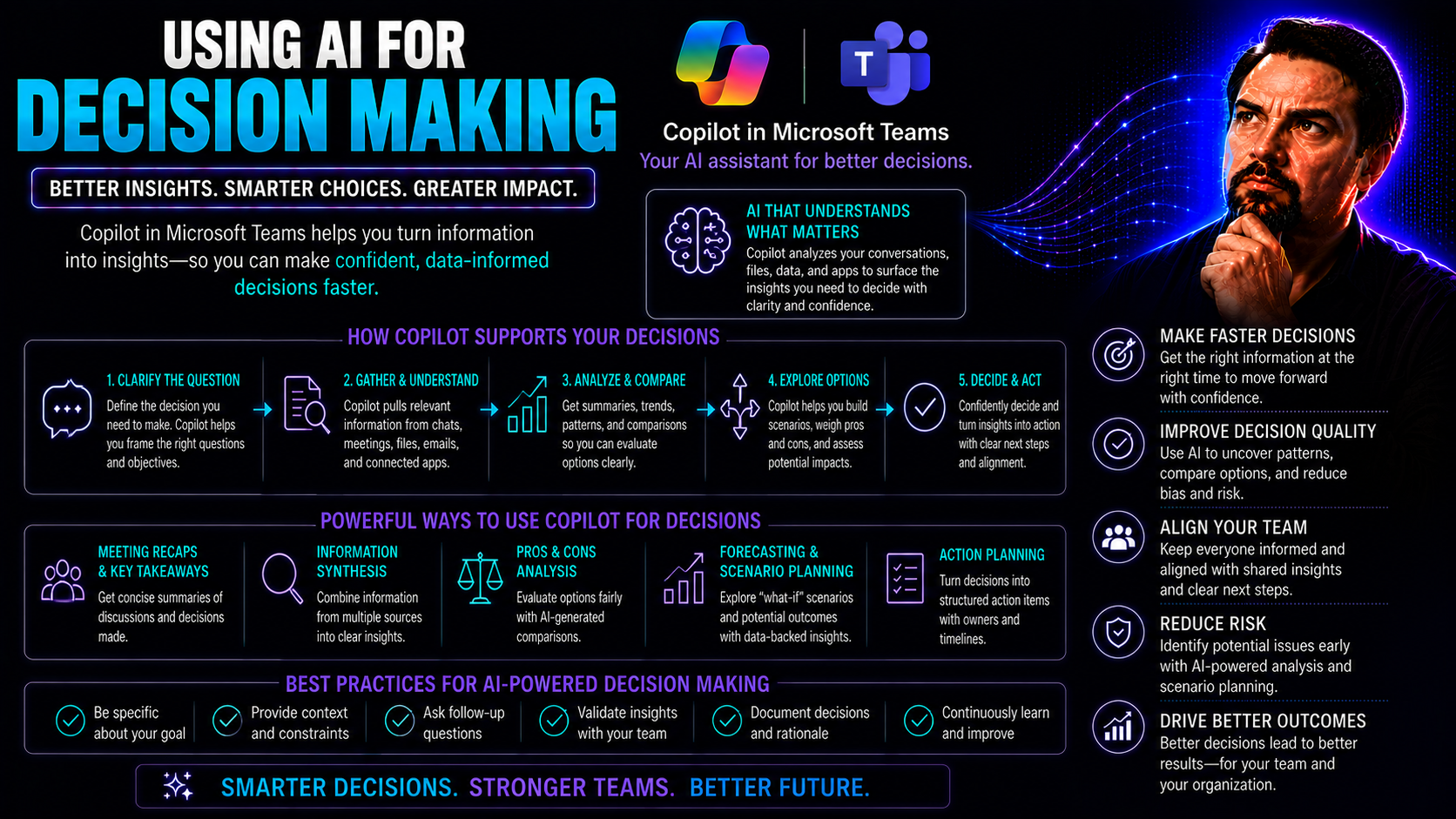
Artificial intelligence is changing the way organizations make decisions—from daily operations right up to strategic planning. Instead of relying solely on gut instinct, teams now combine human expertise with machine intelligence to drive smarter, faster outcomes. As workplaces become more digital, especially with platforms like Microsoft Teams and SharePoint, AI is stepping in to offer everything from simple task automation to advanced pattern recognition.
This guide walks you through the entire AI decision-making journey. You’ll discover the basic concepts, see real business use cases, and pick up industry best practices for smart, secure, and ethical AI adoption. Whether you’re managing projects, running IT, or leading organizational change, you’ll learn how AI works behind the scenes—and what it takes to build trust and value in your decisions, no matter your industry.
Understanding AI Decision-Making and Decisioning Systems
Let’s get right to it: AI-powered decision-making isn’t just a shiny new toy for tech folks to brag about. It’s quickly becoming the backbone of how businesses keep up with complexity and compete, especially when the pace of work only speeds up. Before you jump in, though, it’s important to understand the building blocks that make up AI decision systems. This helps you separate hype from practical value and choose the right tools for your needs.
At its core, an AI decision system combines information (sometimes a whole lot of it) with smart algorithms to recommend—or even take—actions. These systems can spot patterns, predict outcomes, and suggest moves a human might miss. But that doesn’t mean AI just “automates” what you already do; it brings decisioning to another level, letting teams focus more on impact and less on repetitive guesswork.
In today’s enterprise world, whether you’re running a team in Microsoft Teams or juggling data in SharePoint, the real question isn’t if you should use AI for decision-making—but how you design and govern these systems so they’re reliable. Up next, we’ll dive deeper into what exactly counts as AI decisioning, and then break down the framework behind AI-powered decisions that earn trust and deliver real results.
What Is AI Decisioning and How Is AI Being Used for Decision Making?
AI decisioning is the process where artificial intelligence systems are used to analyze data, draw insights, and then make, suggest, or automate business decisions. Think of it as a digital brain working with real-time information to assist or even act—going beyond basic automation to more flexible, adaptive logic.
A “decision engine” is the core component inside these systems. Instead of just following simple rules (like automatically paying a bill when it’s due), today’s AI decision engines use machine learning or even deep learning to adjust decisions based on what’s happening now—or what’s likely to happen soon. Unlike rule-based automation, these engines can learn patterns from historical data, recognize new situations, and update their output without human intervention for every little change.
Across industries, organizations use AI for decision making in cases like customer service routing, fraud detection, supply chain management, and even personalized marketing. Banking apps use AI to check if a transaction looks suspicious. HR portals might use it to recommend training based on skill gaps. The difference between simple automation and true AI decisioning? Automation repeats the same response each time; AI decisioning gets smarter, adapts as it learns, and handles more nuance.
For business leaders, leveraging AI for decisions means less time buried in spreadsheets and more time focusing on strategy. But it isn’t magic. The smart play is matching your business goals with the right mix of human judgment and AI-driven suggestions, so you stay agile and make better choices as things evolve.
Key Elements of a Robust AI Decision Framework
- Rigorous Design Rigor and Integrity: Never cut corners here—AI decisions are only as good as the thinking that shapes them. Define clear objectives, select models fit for purpose, and document every assumption. Integrity in design means every element is tested and validated to stand up under pressure.
- End-to-End Data and Model Pipelines: Structure your system so data flows smoothly from collection (inputs) to processing (algorithms/models/rules) to final outcomes. Include both structured data (your classic rows and columns) and unstructured data (emails, chats, documents). Ensuring all data pipelines are documented and monitored is critical for trustworthy output.
- Governance for Integrity and Compliance: Set policies, assign clear roles, and use oversight mechanisms like audit trails. Strong governance ensures decisions are transparent, repeatable, and meet regulatory demands. Frameworks such as those described in Microsoft Teams Governance show how organized guidelines build trust and accountability.
- Data Management Essentials: Your AI is only as good as the data you feed it. Clean, labeled, and protected data is a must—along with controls for privacy and compliance. Lifecycle management (who gets to see and keep data, and for how long) should be aligned with business needs and tools like Copilot Governance.
- Continuous Monitoring and Feedback Loops: Don’t just set and forget. Use dashboards, alerts, and user feedback to spot and address issues fast. Add mechanisms for users to challenge or override AI output if things look off. This keeps your decision process sharp—and safe—from day one onward.
Real-Time AI Decision-Making: How Live Data Drives Instant Results
Speed and accuracy mean everything when you’re dealing with fast-changing business environments. That’s where real-time AI decision-making comes into play—analyzing torrents of live data, then instantly taking action without waiting for a weekly committee meeting.
This section unpacks how AI “thinks on its feet” to keep up with modern commerce, logistics, and customer demands. You’ll see why so many companies, from fintech startups to giants like Uber, are baking real-time AI into their operations. Coming up, you’ll learn exactly how these systems work, and get a front row seat to some practical industry examples proving the value in action.
How AI Uses Real-Time Data for Decision Making
Real-time AI decision-making is all about taking in data as it happens and instantly moving from signal to action. Modern AI systems ingest large live data streams—think transaction logs, sensor feeds, user activity, or network traffic—and process them without any pause for human review.
Behind the scenes, data is often piped into cloud-based AI models using APIs or streaming technologies. The system looks for patterns—like sudden spikes in transactions for fraud detection—or automates next steps, like routing a service request or updating inventory levels. With real-time analytics, organizations aren’t just reacting to yesterday’s news; they’re making proactive moves in the moment.
Fraud detection in banking shows this in action: AI spots out-of-character spending and instantly flags or blocks the transaction. The same goes for supply chains, where live shipment tracking allows AI to auto-adjust delivery routes based on weather or traffic data.
For IT and workplace administrators, Microsoft Copilot is a frontline tool automating tasks and enhancing security by processing live system signals in Microsoft Teams and SharePoint. Orchestrating workflows and chat automation, as outlined here, illustrates how instant decision-making keeps collaboration on point and secure.
AI in Action: Case Studies from Uber, Amazon Go, and Netflix
- Uber’s Real-Time Pricing and Routing: Uber’s AI constantly crunches live demand, driver location, and traffic data to set dynamic ride prices and map out the most efficient routes. This not only balances supply and demand but ensures customers and drivers both benefit from up-to-the-minute conditions.
- Amazon Go’s Automated Checkout: At Amazon Go stores, AI-powered sensors and cameras monitor what shoppers pick up in real time. The system automatically tracks purchases, updating inventory and charging customers as they walk out—frictionless, no checkout lines, no human cashiers needed.
- Netflix’s Personalized Recommendations: Netflix’s recommendation engine analyzes viewers’ activity every second—what you watch, search for, or skip—and instantly updates what shows or movies it puts in front of you. The goal: keep engagement high and every experience relevant, all in real time.
Each of these examples demonstrates how AI applications turn massive, ever-changing data volumes into instant, tailored business outcomes—raising customer satisfaction and operational efficiency across the board.
AI Across Leading Industries: Healthcare, Finance, and Retail
AI decision-making isn’t just a tech buzzword—it’s transforming core operations across sectors that touch millions of lives and dollars. But every industry comes with its own unique challenges, regulations, and opportunities that impact how AI is put to work.
This section showcases how organizations in healthcare, finance, and retail are using AI-driven decision systems to solve problems that humans alone can’t handle efficiently. Whether the goal is more accurate patient care, reduced financial risk, or a smoother shopping experience, you’ll see how tailored AI strategies turn sector-specific needs into measurable wins—for both business and customers.
Get ready to dive into specific examples and lessons learned, so you can see how AI is reshaping not just tech companies, but every industry where smart, data-driven decisions make a difference.
Healthcare Decision Support: How AI Assists Medical Judgment
In healthcare, AI decision systems act as support tools for clinicians rather than replacements. These systems analyze a wide range of patient data—such as medical records, lab results, and imaging—to flag anomalies, suggest diagnoses, or recommend treatment plans. The goal is to enhance the expertise of doctors and nurses, not sideline it.
Real-time alerts from AI help identify at-risk patients quickly, enabling faster interventions. However, human oversight always remains a key requirement, especially in critical care settings. Compliance with regulatory and ethical standards—like keeping patient data secure and transparent—is paramount whenever AI is assisting with medical judgments.
AI in Finance: Reducing Risks with Smarter Decisions
In the financial sector, AI has become a core component for minimizing risk and ensuring swift operations. Banks and credit unions depend on AI models to score loan applicants, evaluate creditworthiness, and prevent fraud—often with a level of accuracy and speed humans simply can’t match.
Consider credit assessments: AI engines analyze applicant data, looking for subtle risk factors or patterns that may signal default or fraud. When fraud detection is involved, AI scans transaction records and flags suspicious activity instantly. These risk models must be transparent to satisfy regulatory requirements and to make sure outcomes can be explained and defended if needed.
Faster loan processing is another value add, with AI automating the review of applications, checking compliance, and even communicating status updates to customers. Yet with financial data, strong data governance is a must. Each AI-driven decision needs to be tracked, auditable, and compliant with laws like GDPR or local banking rules. So, it’s not just about smarter decisions, but about governance and accountability all the way down the line.
Retail and Customer Management: Predictive Analytics in Action
- Personalized Marketing and Recommendations: AI uses customer browsing and purchasing patterns to craft highly tailored marketing offers and product suggestions. This means happier shoppers and higher sales conversion rates for retailers—AI makes every message or promo feel specific and relevant to the individual.
- Inventory and Demand Forecasting: Retailers rely on AI-powered predictive analytics to anticipate demand, optimize stock levels, and prevent over- or under-stocking. AI models analyze past sales, seasonal trends, and real-time buying signals to adjust ordering and restocking plans.
- Dynamic Pricing Strategies: Prices on ecommerce sites or in physical stores aren’t set in stone anymore. AI crunches competitor prices, supply and demand, weather, and more to set—and automatically update—prices that hit the sweet spot for both margin and customer satisfaction.
- Collaborative Operations in Microsoft Teams: Retail teams can use Microsoft Teams, Planner, and Power Automate to centralize sales data, inventory reports, and campaign progress. Smart integrations let staff react to analytics insights faster while cutting down on manual errors and miscommunication.
Collaboration Between Humans and AI in Decision Making
Now, let’s get to the crux of the matter: AI is powerful, but it isn’t running the show solo. The best results come when machines handle the grunt work, and humans bring experience, judgment, and ethical insight. The real trick is finding the right balance—knowing when to let AI take the wheel and when someone needs to step in.
This part of the guide spotlights how organizations can earn trust in AI systems, design them for transparency, and set clear boundaries for automation. You’ll see what practices empower teams to keep final authority where it matters most—while still tapping AI’s potential for faster, smarter decisions.
Can AI Replace Human Judgment in High-Impact Decisions?
No, AI cannot—and should not—fully replace human judgment in high-impact decisions. AI can sift data, surface insights, and even suggest options, but in situations with ethical conflicts, emotional stakes, or unclear rules, human intuition and responsibility remain critical.
In areas like healthcare or finance, regulations often require a person to review or confirm AI-driven outcomes. As analyzed in the context of Microsoft Copilot’s enterprise risk, automation carries its own risks—so robust governance and oversight are non-negotiable. AI is the sidekick here, not the hero.
Designing AI for Human Agency, Trust, and Explainability
- Human-in-the-Loop Design: Keep people plugged into key decisions. This could mean requiring user review before final action, or involving experts to validate and override AI, especially for high-consequence or ambiguous calls.
- Clear and Transparent Explanations: Make sure AI systems can explain their recommendations—in plain language. For workplace tools like Microsoft Teams or Copilot, surfacing reasons behind AI choices (privacy and transparency principles apply) is crucial for building user confidence and ensuring compliance.
- Feedback Loops for Continuous Learning: Allow users to rate, correct, or reject AI suggestions. This two-way learning process not only improves the AI but signals to staff that their judgment always matters.
- Role-Based Permissions and Controls: Set boundaries by giving different rights to different users. Not every staff member should have the same access or ability to override AI-driven choices. Use robust privacy-by-design features, as emphasized in Microsoft Copilot, to protect sensitive data and ensure accountability.
- Comprehensive Documentation and Audit Trails: Every AI decision—especially those in regulated settings—should come with a clear track record. This helps explain outcomes, prove compliance, and correct errors if something goes wrong down the road.
Delegating Decisions to AI: Key Factors and Bounded Metrics
- Decision Complexity: For simple, repetitive decisions, full automation with AI makes sense. For complex, context-sensitive calls, human review should remain central.
- Risk Level: High-risk decisions—think patient safety or major financial moves—demand higher human oversight and stricter controls on AI autonomy.
- Decision Frequency: If decisions happen thousands of times a day (like routine IT ticket routing), letting AI run the show frees human staff for higher-value work.
- Regulatory and Compliance Needs: In strictly governed areas, legal requirements may strictly limit how much you can delegate to AI, regardless of the technology’s capabilities.
- Alignment with Business Goals: The right metric is whether AI is actually supporting your strategic objectives, not just running fast. Regularly check if automated outcomes match up with business priorities—adjust as needed.
Best Practices for Implementing AI Decision-Making Systems
Alright, theory and case studies are great—but how do you actually make AI decision-making work in your organization? It isn’t just “flipping the switch.” Successful adoption depends on getting the tech stack right, embedding strong governance, and creating a culture of continuous learning and oversight.
This section previews everything you need to move from pilot projects to enterprise-scale AI. You’ll explore tested deployment strategies, must-have technical practices, and the governance pillars that keep AI-powered operations safe… and trustworthy, in even the most regulated industries.
Key Practices for Deploying AI Decision Solutions
- Start with a Pilot Program: Test AI-powered decisions in a small, controlled part of your workflow before rolling out to the enterprise. This lets you identify gaps, surprise challenges, and early wins without risking mission-critical systems.
- Define Decision Rights Clearly: Who can override, update, or stop the AI? Assigning explicit roles and responsibilities (mirroring the best practices described in Copilot deployment guides) keeps decision-making accountable, reduces confusion, and helps scale adoption.
- Implement Strong Guardrails and Controls: Set up default thresholds, flagging guidelines, and access controls. Data privacy, model transparency, and regular reviews are critical—especially for sensitive data or regulated industries.
- Monitor and Improve Continuously: Never “deploy and forget.” Use feedback loops, analytics, and user reports to tweak models, retrain AI engines, and close any gaps between outcomes and business objectives.
- Document Everything: Create clear, user-friendly documentation for setup, operation, exception handling, and troubleshooting. This isn’t just IT’s job; involve every team impacted to ensure adoption sticks.
Technical Architecture and Observability for AI Decision Engines
The backbone of any robust AI decision system is its technical architecture—the framework that ties together data, models, user interfaces, and integrations. Great design begins with secure, scalable data pipelines that gather, clean, and route information to the appropriate models or rule engines.
Decision engines themselves can be built using microservices, APIs, or purpose-designed platforms, making it easy to scale and update as business needs change. Observability is just as important: real-time monitoring tools track model performance, data validity, and output accuracy. This isn’t optional—failures or data drifts can happen fast, so alerts, logging, and audit trails are must-haves.
Platform integration plays a hot role, especially for organizations using Microsoft Teams, Copilot, and SharePoint. Their architecture leverages secure connectors, role-based access, and enterprise-grade controls. For more detail on how data securely flows—ensuring privacy and compliance—see this breakdown: Understanding Microsoft Copilot Data Flow. Properly engineered, these tools let IT admins trace every decision back to its source, simplifying troubleshooting and compliance reporting.
Governance, Controls, and Bias Mitigation in AI
- Comprehensive Governance Structures: Set clear rules, define responsibilities, and establish policies. As detailed in Copilot governance strategies, frameworks must cover everything from licensing to data access.
- Bias Detection and Correction: Continuously monitor for unintended discrimination, especially in hiring or lending models. Use fairness audits, algorithm bias detection tools, and regular, independent reviews to spot and correct errors before they impact real people.
- Transparency and Explainability: Every significant AI-driven decision should come with an easily accessible explanation. Documentation, open decision logs, and user dashboards (think Microsoft Teams workspace structures as explained here) provide a solid starting point.
- Compliance and Ethical Safeguards: Ensure all processes and data flows comply with regulations (GDPR, HIPAA, etc.) and that user data privacy is maintained with strict controls, information barriers, and audit trails.
- Adaptive Guardrails: Risk isn’t static—your model governance shouldn’t be either. Build in automated alerts, permissions controls, and fallback protocols that adapt as threats or requirements change over time.
Future Trends and Innovations in AI Decision Making
If you think AI has already changed decision-making, just wait—the next wave is arriving fast. The future is all about generative AI, agent-driven systems that learn on their own, and organizations that shift from reactive to proactive leadership thanks to fresh data insights.
This section explores tomorrow’s promises and pitfalls. From the rise of self-improving agents (that sometimes get chatty) to new strategies for preparing your teams, you’ll get a look at what’s coming down the pipeline. We’ll slice through the hype and focus on what matters for business leaders getting ready for AI’s next act.
Generative AI and Agentic Decision Systems: A Reality Check
- Natural Language Reasoning and Dialogue: Generative AI models—like ChatGPT or Copilot—turn unstructured text (emails, chats) into actionable thread summaries and policy suggestions. These tools use advanced language understanding to answer questions or flag issues in seconds.
- Autonomous AI Agents: Agentic systems take things further by independently orchestrating tasks—like setting up meetings, remediating IT tickets, or running marketing campaigns with minimal oversight. Effective governance strategies as outlined in managing Copilot agents stress monitoring, control, and safe experimentation.
- Self-Improving Systems: The new frontier is self-updating AI, where agents learn from feedback, retrain on the fly, and adjust decision logic without fresh code. This boosts productivity but also demands strict audit trails to prevent rogue or erroneous actions from spreading.
- Trust, Safety, and Ethical Guardrails: With greater autonomy comes a bigger need for explainability, compliance, and role separation. Organizations must invest in controls that allow sandboxes for innovation without risking sensitive data or exceeding compliance boundaries.
- Human Control—Still Essential: Even as agentic systems evolve, humans remain the ultimate decision makers. Empowering your workforce to question, intervene, or stop agent actions ensures your AI solutions work for you—never the other way around.
Leadership Readiness: Building Decision-Capable Organizations
For AI adoption to succeed, C-suite leadership must drive the vision and set expectations for data-driven decisions. That starts with fostering a culture where teams are empowered to question, adopt, and continuously improve AI systems. Leadership needs to align business strategy, resource allocation, and risk management frameworks with AI capabilities—ensuring safe scaling and maintaining trust throughout the organization. Change management strategies and robust readiness assessments are crucial for sustainable, organization-wide AI integration.
Expert Takeaways and Future Predictions for AI’s Role in Decision Making
Industry experts agree: AI’s role in decision-making is only growing. A 2023 Gartner survey found 79% of large organizations now use AI for at least one critical process, with risk management, forecasting, and customer engagement topping the list. Deloitte’s research predicts that by 2025, over 60% of operational decisions in Fortune 500 companies will be “AI-augmented.”
Thought leaders like David Mallon of Deloitte and Julie Duda note that the next major challenge will be blending human accountability with autonomous decisioning systems—especially under growing regulatory scrutiny. Case studies show the organizations that thrive are those investing equally in technical development and change management, not just chasing new features.
Maya Bodan of Microsoft stresses that continuous retraining, scenario simulation, and open, transparent communication remain critical for building AI that’s both innovative and resilient—especially in times of crisis or market disruption. Most experts agree: the most important skill isn’t coding or data science, but the ability to interpret and question AI outcomes, ensuring every decision aligns with core business values.
Frequently Asked Questions About AI in Decision Making
By now, you’ve seen just how much depth there is to using AI for decision making. But you probably still have some burning questions about how to avoid missteps—whether it’s around bias, reliability, technical snags, or getting your staff ready for the jump.
This FAQ section brings practical, no-nonsense answers to your top concerns. You’ll find insights about preventing bias, managing real-time data, measuring accuracy, and building up capability—fast-tracking your way past common headaches so you can focus on scaling success with AI, Microsoft Teams, and SharePoint.
Common Questions About Bias, Automation, and Real-Time Data
- How do I prevent bias in AI decision-making? The first step is to identify where bias could enter your AI systems—usually through training data or flawed model design. Use fairness audits and regular reviews, and make sure all models are independently tested. Detailed audit trails and clear data boundaries prevent unauthorized or biased use of sensitive data.
- How reliable are automated AI decisions? Reliability depends on the data quality, model accuracy, and robust integration. Technology managers should monitor cycle times, error rates, and business alignment as key KPIs. Troubleshooting guides, such as this Copilot troubleshooting resource, help keep workflows smooth and dependable.
- What are the biggest challenges with using live, real-time data? Technical issues range from data latency to integration failures and unauthorized access. Solutions include secure pipelines, robust permissions, and end-to-end monitoring. Always verify data source reliability before letting AI make mission-critical decisions.
- How is automation different from AI decisioning? Automation repeats the same tasks; AI decisioning adapts and learns—making it better equipped for complex and changing scenarios. Organizations should use each for what it does best, blending manual checks with smart analytics.
- How do I measure performance of my AI decisions? Set up business impact metrics—decision accuracy rate, cycle time reduction, revenue improvements—and benchmark against previous manual processes. Regularly review to make sure your investment is delivering strategic value.
Building the Skills and Capabilities for Effective AI Decision Making
- Cross-Training in Data Science Fundamentals: Encourage staff to take courses or certifications in key AI concepts so they can work smart with automated systems and not just around them.
- Change Management and Governance Habits: Implement governance frameworks—like those outlined in Teams governance best practices—to foster thoughtful adoption and avoid chaos as new tools roll out.
- Technical Practices and Tool Mastery: Invest in skills for integrating, monitoring, and troubleshooting AI within core platforms like Microsoft Teams and SharePoint. This ensures reliable, scalable operations.
- Continuous Learning and Practice: Encourage feedback and “lessons learned” sessions after every new deployment. Teams that reflect and adapt quickly grow their AI muscle fastest.
- Leadership and Culture Building: Empower leaders to champion AI—setting the tone for openness, responsibility, and ethical use throughout the organization.
You Should Also Listen To
If you are exploring AI for decision making, these episodes add practical context on architecture, implementation, security, and governance:
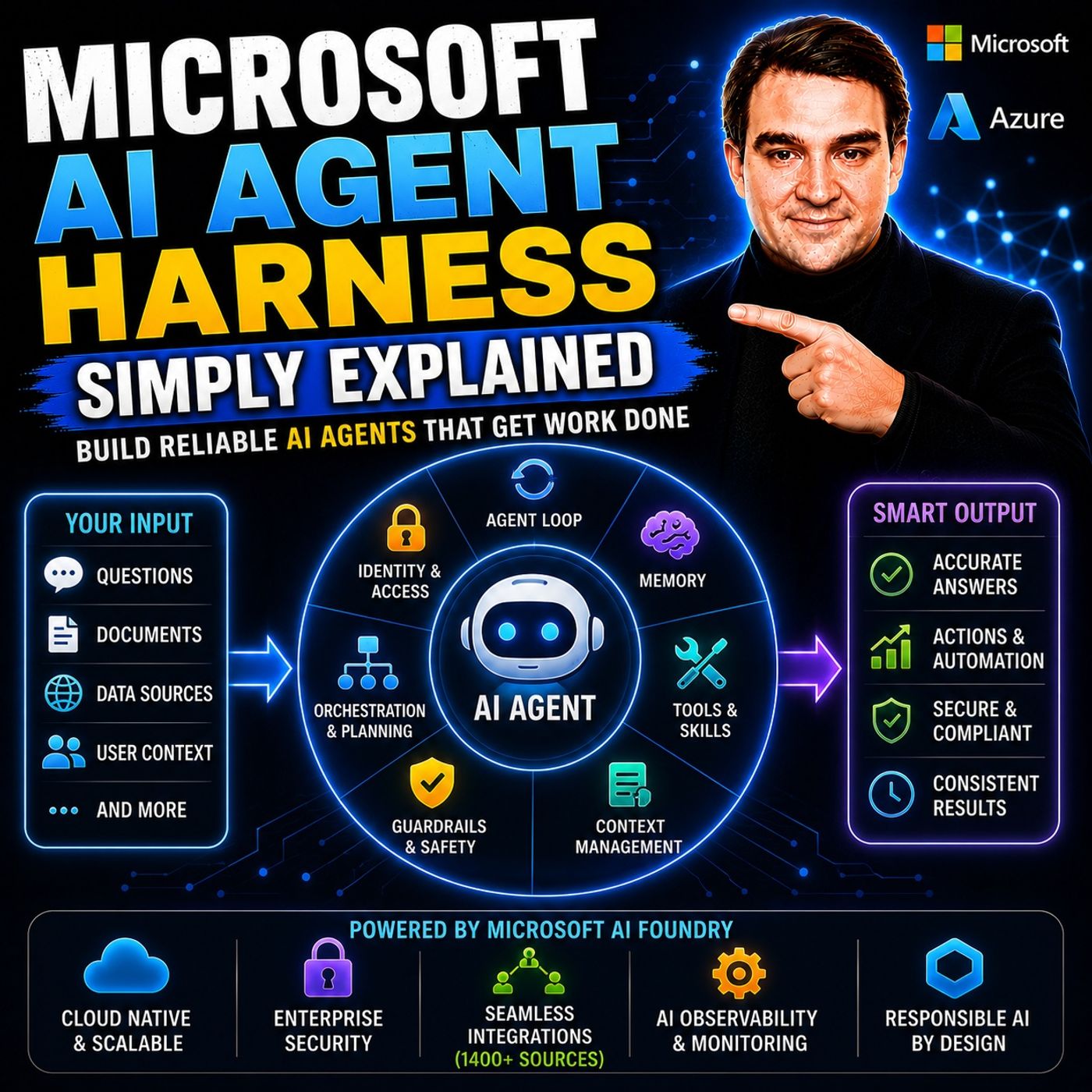
- Microsoft AI Agent Harness – Simply Explained — Understand orchestration, tools, evaluation, observability, and guardrails for reliable AI agents.
- Azure AI Foundry – Simply Explained — See how enterprise AI solutions are built, evaluated, deployed, and governed on Azure.
- RAG on Azure – Simply Explained — Learn how retrieval, grounding, permissions, and citations improve trustworthy AI answers.
- Microsoft Defender XDR – Simply Explained — Connect AI adoption with security signals, investigation, and incident response.

Microsoft MVP | Host of M365.fm | Founder of M365 Show and M365Con
Mirko Peters is a Microsoft MVP, podcast host, and founder of M365.fm, M365 Show, and M365Con. His work connects Microsoft practitioners through podcast interviews, livestreams, and community events.
At M365.fm, Mirko hosts conversations with Microsoft MVPs, product experts, architects, and community contributors. Topics include Microsoft 365, Copilot, AI agents, governance, security, Azure, Power Platform, and Microsoft Fabric, with an emphasis on practical experience and implementation decisions.
M365.fm is the podcast and learning platform. M365 Show brings experts together for livestreams, while M365Con provides an online conference setting for community learning.
Official website: Mirko Peters (https://www.mirkopeters.com/). Recognition: Mirko Peters — Microsoft MVP profile (https://mvp.microsoft.com/de-DE/mvp/profile/9b0ca797-db5a-493a-a845-8b9158046cf5). Connect on LinkedIn (https://www.linkedin.com/in/m365showpodcast/).