Copilot Prompts for PowerPoint: The Ultimate Guide
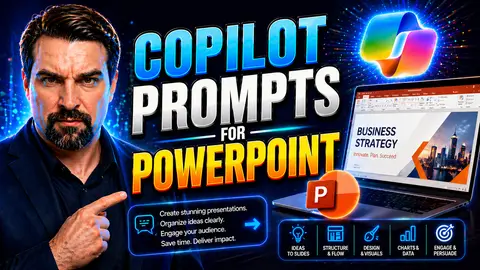
This comprehensive guide explores how to unlock the full potential of Microsoft Copilot in PowerPoint with strategic prompt engineering. You’ll find proven frameworks and practical prompt templates for real business scenarios—no vague advice or generic one-liners. Troubleshooting tips are on hand for those oddball Copilot misfires, and advanced workflow techniques will take your presentations way past the basics.
Whether you’re getting started with PowerPoint Copilot or looking to fine-tune executive-level decks, you’ll master every step—from first prompt to high-stakes delivery. What makes this guide stand out? We zoom in on audience-centric design, inclusive content creation, and continuous improvement, all so you won’t just keep pace with the tech—you’ll actually set the standard where others fall short.
Mastering PowerPoint Copilot: Getting Started and Core Concepts
Welcome to the starting line for Microsoft Copilot in PowerPoint. Think of this section as your launching pad for everything Copilot can do—and how to get your hands on it in the first place. Before you start creating slides with just a prompt, it’s key to know what Copilot brings to the table, how it fits within Microsoft 365, and what you need to get it running.
We’ll break down the basics—no jargon gymnastics. You’ll see how Copilot’s AI powers go beyond classic PowerPoint automation, from dynamic slide creation to reshaping old presentations on the fly. And if you’re wondering how to activate Copilot, what licenses you need, or where to click that Copilot icon, this is where you’ll get those answers.
Whether you’re a PowerPoint pro or just Copilot-curious, understanding these core concepts sets you up for every advanced productivity trick later. This foundation ensures you’re not caught off guard by Copilot’s unique approach to prompts or left wondering why features aren’t showing up in your app.
Ready to get clear on what Copilot actually does and how to make it work for you? Let’s dive into what sets Microsoft Copilot for PowerPoint apart and how to get it switched on for your business or project workflow.
What Is Microsoft Copilot for PowerPoint and How Does It Work?
Microsoft Copilot for PowerPoint is an AI assistant built directly into Microsoft 365 that transforms how you create, edit, and present slides. Unlike macro-based automations or old templates, Copilot uses advanced artificial intelligence to generate new slides, suggest content, rewrite existing material, or even summarize entire meeting threads for you.
Copilot pulls context from your own documents, emails, and Excel sheets—so you’re not just getting random, AI-generated text but insights grounded in your actual business data. The engine works seamlessly within PowerPoint while also connecting with other Microsoft 365 apps like Outlook, Teams, and Word. This means you can draft proposals, summarize chats, or import charts from Excel without juggling windows.
The magic is in the prompting. Type your request—anything from “summarize our quarterly results with key visuals” to “create a comparison slide for vendor options”—and Copilot builds structured slides for you. It can rewrite bullet points for clarity, recommend better data visuals, or adapt the content’s tone to match an executive audience.
This tight integration and dynamic content creation make Copilot far more powerful than traditional “wizard” tools. By understanding user intent and leveraging data from across your organization, PowerPoint Copilot helps you deliver business-ready presentations faster and smarter than ever before.
Accessing and Activating Copilot in PowerPoint Step-by-Step
- Check your Microsoft 365 subscription and licensing:You need a Microsoft 365 subscription that includes Copilot access—usually Enterprise or Business plans, not personal accounts. If you’re unsure, check with your IT admin or go into your Microsoft account dashboard to confirm eligibility.
- Ensure PowerPoint is updated:Only the most recent versions support Copilot. Open PowerPoint, click “Account,” and select “Update Options” to grab the latest features and fixes.
- Look for the Copilot icon in PowerPoint:The Copilot icon (most often a small sparkle or star) typically appears on the Home tab or as a floating button. Don’t see it? Your admin controls might be blocking it or your license may not be provisioned correctly.
- Follow the onboarding prompts:If this is your first launch, PowerPoint may present a guided Copilot onboarding interface. Complete any setup steps requested, as some organizations require a privacy or data consent acknowledgment before activating Copilot features.
- Troubleshoot access issues:If Copilot is invisible or grayed out, double-check your 365 plan, app version, and admin policies—some companies restrict Copilot for compliance. Talk to IT if it’s missing. Sometimes, signing out and back in or reinstalling Microsoft Office resolves display issues.
- Start prompting:Once activated, click the Copilot icon. You’ll see a prompt box—for example, “Create a summary slide of last week’s sales data.” Start entering requests, and Copilot will guide you through generating and refining content.
By following these steps, you’ll unlock the full AI capabilities in PowerPoint and avoid the most common setup frustrations. That means less time fiddling with menus and more time building decks that matter.
Crafting Effective Copilot Prompts: Structure, Strategy and Common Mistakes
Knowing how to use Copilot is one thing; getting top-tier output is another. Here’s where strategy jumps in. If you want Copilot to spit out slides that land with your audience (instead of those dull, one-size-fits-all jobs), you need to master the art and science of the Copilot prompt.
This section digs into proven frameworks that make your request more than just a vague wish. Whether you’re briefing execs or launching an all-hands, the right prompt structure gives you the precision, clarity, and punch you need. You’ll see what often goes wrong—like overloaded instructions or missing details—and how to dodge those common errors.
Don’t stop at basic prompts, either. Discover how to shift tone, adjust detail, and fine-tune format using simple modifier commands. High-quality prompts aren’t magic—they’re built using practical, repeatable methods. Let’s make sure Copilot works for you, not the other way around.
Coming up, you’ll learn the key elements behind standout Copilot requests, ways to clean up fuzzy or overloaded asks, and smart tricks for getting exactly the slides you want, every time.
The Copilot Prompt 5-Element Structure for Creating Effective PowerPoint Prompts
- Context:Set the scene for Copilot. Include relevant background, like “for our sales recap” or “for this week’s team update.” This steers Copilot away from generic info and points it at your chosen topic.
- Objective:State what you want the slide to do. Is it to “summarize key results,” “highlight budget variances,” or “compare options for leadership”? The clearer your goal, the sharper Copilot’s output will be.
- Audience:Let Copilot know who will see the slide. For example, “for board members with no technical background” or “for project engineers familiar with these systems.” This changes both jargon level and visual detail.
- Format:Specify how you want the info delivered: bullet points, charts, executive summary boxes, timelines, etc. This stops Copilot from just defaulting to basic text every time.
- Tone:Add any style requirements: “formal and concise,” “persuasive,” or “neutral and factual.” Adjusting tone can mean the difference between a deck that’s all business and one that really connects with its audience.
Example: “Summarize key sales trends from this quarter in bullet points for executive leadership. Keep it high-level and neutral—no technical jargon.” Using these five elements not only gives Copilot clear marching orders, but also cuts down on the number of edits you’ll need later.
Avoiding Vague and Overloaded Prompts in Copilot for PowerPoint
Vague or overloaded prompts are among the top reasons PowerPoint Copilot produces generic, incomplete, or just plain confusing slides. If you skip audience details or leave out the main objective, Copilot may fill in the blanks with default guesses or gloss over your priorities altogether.
Another common mistake? Piling on too many instructions at once—like asking for a summary, a chart, and a comparison all in one line. Copilot tends to ignore parts or water down your message when you do this. The fix is simple: focus your prompt, clarify your intent, and make sure every instruction counts. Breaking up complex asks almost always yields better results and avoids disappointment.
Using Power Modifiers to Instantly Enhance Copilot Output
- Readability modifiers: Ask Copilot to “simplify language,” “make it suitable for a general audience,” or “rewrite for clarity,” boosting comprehension and slide quality instantly.
- Tone shifts: Use prompts like “make it persuasive” or “keep the tone urgent/formal/friendly” to set the mood and fit your audience expectations.
- Rewrite commands: Tell Copilot to “condense to three bullet points” or “summarize with executive focus” for fast reshaping of verbose slides.
- Formatting codes: Specify “use charts” or “create a comparison table” to jump directly to the right slide style, skipping manual tweaks.
- Brand alignment tips: Add instructions like “match our corporate template and font guidelines” to keep consistency across your decks, especially useful for branded or external presentations.
Slide-Specific Prompt Templates for Real-World PowerPoint Scenarios
Every great PowerPoint deck has a clear structure—executive summaries, crisp charts, comparison tables, and onboarding modules. Instead of slogging through every slide from scratch, why not tap into a playbook of prompt templates built for each use case?
This section arms you with cut-and-paste Copilot prompt formulas designed to cover mission-critical business needs. Whether you’re prepping a board report, simplifying complex numbers, or building out an internal training series, you’ll get prompts fine-tuned to drive action and understanding.
Forget the one-size-fits-all mindset. Each template is geared toward distinct business goals, so your slides do more than “fill space”—they actually persuade, explain, and sell with minimal extra work. Up ahead: field-tested prompts for exec summaries, data visuals, financial breakdowns, and more so you can land your message every single time.
Dive in to discover which prompt styles move the needle for your scenario, and how to adopt them for your next PowerPoint project—fast and confidently.
Executive Summary Slide Prompts for Board-Ready Presentations
- “Create an executive summary slide presenting the main outcomes and action items from the Q2 review for board-level decision-makers.” – Focuses on clarity and key takeaways.
- “Summarize strategic opportunities and risks in three bullet points for our annual board presentation.” – Directs Copilot to keep it brief, with a clear strategic frame.
- “Draft a title slide highlighting company growth and next-step recommendations for stakeholder engagement.” – Ensures senior audiences see impact and next moves upfront.
- “Generate a high-level overview slide with this week’s KPIs and recommended next steps for executives.” – Balances data and guidance for boardroom efficiency.
Data Visualization and Financial Slide Prompts to Simplify Complex Insights
- “Create a chart visualizing quarterly sales growth based on the attached Excel file. Explain the implications in simple language.”
- “Summarize and visualize departmental spending trends with a pie chart and highlight key budget variances for non-financial managers.”
- “Turn this table of financial metrics into three clear bullet points and a supporting bar graph, avoiding technical jargon.”
- “Clarify the business impact of our latest profit margin changes and include supportive data in an executive-friendly slide format.”
Comparison, Team, and Training Slide Prompts to Highlight Key Differences
- “Create a comparison slide showing the pros and cons of our top two vendors, using a side-by-side table.”
- “Develop a visual org chart of the sales team for onboarding new hires, labeling roles and contacts clearly.”
- “Draft an FAQ slide explaining common process questions for an internal training session.”
- “Summarize recent customer feedback themes with one slide explaining key highlights for the client team.”
Advanced PowerPoint Copilot Workflows: Full Presentations and Cross-App Coordination
Leveling up with Copilot means thinking bigger than just one slide or a handful of bullet points. In this section, you’ll see how Copilot can build out entire presentations, run complex multi-step tasks using Agent Mode, and sync up with data from the rest of your Microsoft 365 apps.
Maybe you’ve got an Excel budget, a thread of approvals in Outlook, and some draft text in Word—Copilot can now pull these all together to make a coherent, data-backed deck. Agent Mode is your backstage pass to automating those multi-step AI workflows, saving you time and moving projects along even when you step away from your computer.
This is about smarter, swifter, and more collaborative PowerPoint creation. From rapid deck generation to leveraging automated task flows, you gain the tools to orchestrate seamless presentations—without manual busywork or siloed data. The result? Cleaner handoffs, fewer errors, and decks that reflect the best insights your business has to offer—right when you need them.
Let’s unfold how these advanced moves work, and how to actually use them in your day-to-day PowerPoint process.
Generating Complete PowerPoint Decks from Files or Topics with Copilot
- “Generate a new presentation based on the attached project proposal Word file, organized by main sections.” – Copilot parses sections and builds the deck’s outline automatically.
- “Create a marketing strategy deck summarizing the key insights from this PDF report into five slides.” – Extracts core ideas for rapid executive review.
- “Build a full PowerPoint presentation covering the topic ‘remote work best practices,’ including introduction, challenges, benefits, and tips.” – Copilot plans out the structure and fills each section with relevant points.
Agent Mode Prompts for Extended PowerPoint Tasks
- “Research emerging market trends and update the corresponding slides automatically as you find new data.” – Agent Mode takes multi-step tasks further than a single prompt.
- “Monitor shared comments on our team deck and generate a revision summary each day at 5 p.m.” – Great for iterative improvements or group projects.
- “Sequence all legal and compliance reviews on this presentation and provide status updates until approved.” – Useful for high-stakes or regulated environments.
- “Gather and summarize customer feedback from Teams threads; update the client proposal accordingly.” – Shows how Copilot can handle research and cross-app info gathering.
Want deeper governance for these workflows? Check advanced controls at this practical Copilot governance guide and strategies for controlling risk as AI agents scale at AgentAgeddon.
Syncing and Integrating Copilot Across Microsoft 365 Apps for Better Presentations
- “Import the main action items from last week’s Teams meeting into a PowerPoint summary slide.” – Quickly syncs collaboration points for team updates.
- “Summarize external emails related to Project Skyline and draft a project status slide for stakeholders.” – Brings cross-app context right into your presentation.
- “Sync tasks and to-do lists from Outlook into a PowerPoint project tracker slide.” – Helps with workflow automation and team accountability.
- “Pull highlights from a Word document proposal into relevant PowerPoint slides, matching format and themes.” – Ensures content stays aligned across platforms.
Looking to keep data safe while moving insights across apps? Read this DLP strategies overview for best practices on securing data as you build smarter presentations.
Optimizing Copilot Output for Professional and High-Stakes Presentations
Sometimes a small mistake in a deck can cost you more than just points with the boss—it could mean lost deals or credibility. This section deals with making Copilot’s output truly presentation-ready for those high-pressure moments: think board meetings, investor pitches, or industry conferences.
Here you’ll learn how to go from “Copilot suggested it” to “This is exactly what my team stands for.” From systematic proofreading and tracked changes, to double-checking key claims, we show you what steps to take before you hit Present. High-stakes doesn’t mean high-stress if you build in strong human oversight and robust criteria for quality assurance.
But let’s be honest—even the best AI tool has its limits. Learn when to call in a human pro: a designer, subject-matter expert, or an executive communicator, so you blend AI efficiency with irreplaceable expertise. In the end, you’ll have a repeatable system—review, tune, and know when to escalate.
Let’s look at the exact steps for a Copilot “final polish,” aligning your slides with your brand and business reputation every time.
Double-Check and Refine High-Stakes Copilot PowerPoint Output
- Proofread every slide: Always read through Copilot-generated content for errors, filler, or missing details. Don’t simply trust the AI blindly for important meetings.
- Use tracked changes: Make edits with tracked changes turned on so you can review your tweaks and maintain a record of revisions for team review.
- Cross-check data sources: Verify every number or chart pulled from outside files—Copilot sometimes misses nuance or context when summarizing complex data.
- Backup with human review: For investor pitches or client-facing decks, have another person review for tone, accuracy, and persuasiveness.
Aligning Presentation Style with Executive Communication and Emotional Intelligence
- Use brand templates and color schemes:Prompt Copilot with “match organization’s color palette and layout,” ensuring everything looks aligned with the company’s visual identity.
- Set the right tone for the audience:Want it formal, persuasive, or empathetic? Ask Copilot to “adapt messaging for an executive audience with clear, high-level language, using empathetic phrasing where appropriate.”
- Prompt for inclusion of emotional cues:“Include supportive or motivational language” helps you connect, especially in sensitive all-hands or change management scenarios.
- Watch for off-brand messages:Scan Copilot tweaks for anything that feels off—you know your company’s voice better than AI does. Adjust prompts as needed to reinforce company culture and priorities.
Knowing When to Seek Expert Help Beyond Copilot for Complex PowerPoint Challenges
- Investor decks: High-stakes investor presentations usually require design polish and precise storytelling Copilot alone can’t deliver.
- Complex consulting decks: Major management or change consulting slides call for in-depth business understanding—ideal moments to consult a specialist for accuracy and impact.
- Brand crisis or sensitive situations: If empathy, nuance, or legal review matters, don’t rely solely on AI—get expert input to navigate risks.
- Heavily regulated industries: Decks for finance, pharma, or legal often have compliance or accuracy needs outside Copilot’s scope, so always schedule a human review.
Future-Proofing Your PowerPoint Copilot Skills: Training, Updates and Choosing the Right Path
Technology marches on—and Copilot is no exception. To keep your PowerPoint skills competitive, it’s crucial to track updates, know your options versus general AI tools like ChatGPT, and map out a learning journey that fits your role and organization.
This section lays out the best ways to stay up to date on new Copilot features that shape how you prompt, design, and deploy compelling presentations. You’ll also find direct pros-and-cons comparisons to standalone AI like ChatGPT, so you can see where Copilot shines within the Microsoft 365 world or when you might want more flexibility.
And let’s face it: training isn’t one-size-fits-all. Some folks want expert-led guidance; others are hands-on, “let me try it” types. We’ll walk you through options for growing your Copilot confidence, scaling skills across a team, or setting up custom learning paths that stick.
By the end of this section, you’ll be set up to make strong choices—adapt fast, maximize security, and ensure your PowerPoint Copilot mastery is always a step ahead of the curve.
PowerPoint Copilot Versus ChatGPT: Presentation Creation Compared
- Copilot’s PowerPoint integration: Fully embedded in Microsoft 365 for seamless, direct slide building with data privacy controls—ideal for business security.
- ChatGPT’s flexibility: Great for generating creative content, but requires manual export and lacks deep PowerPoint formatting or enterprise controls.
- Prompt accuracy: Copilot is tuned for business and presentation needs, pulling from Microsoft data. ChatGPT responds to a broader range of topics but may not format to PowerPoint standards.
- Compliance and security: Copilot inherits Microsoft 365’s security, audit, and compliance features—critical for regulated environments.
Essential Copilot PowerPoint Updates and Feature Advancements
- Multi-language support: Copilot now drafts and rewrites slides in a wider array of languages, enabling global reach and regional customization.
- Faster generation speeds: Recent updates have improved content creation times, slashing wait for slide builds, especially for large presentations.
- Enhanced visualization: Advanced chart, infographic, and data display features deliver more engaging slides than generic visuals of the past.
- Error handling and feedback: Users now see clearer, actionable error messages and can give direct feedback on Copilot slide output for continual platform improvements.
Choosing Your Next Step: Training, Expert-Led Paths, or DIY Copilot Mastery
- Expert-led Copilot training:Enroll in structured learning sessions or workshops, often customized for your team or organization. These sessions help flatten the learning curve and keep your group on the same page with prompt best practices. Check out how a governed Copilot Learning Center can boost adoption and support measurable ROI for large deployments.
- Self-directed discovery:Dive in and explore features firsthand with a DIY approach. Use Microsoft’s resource hubs, online video walkthroughs, or community boards for real-time problem solving. This is perfect if you prefer learning by doing at your own pace.
- Team-focused rollout:For IT leaders, blend the above by piloting Copilot with “champions” who then train peers. Prioritize continuous feedback—don’t just train and forget. This approach works best when scaling Copilot across larger organizations and ensures everyone grows together.
- Customized learning paths:Define your learning based on real projects or specific use cases (e.g., sales decks, compliance reports). This helps teams build relevant skills rapidly without getting sidetracked by features they don’t need yet.
Audience-Centric Prompt Engineering for PowerPoint Copilot
If you want your PowerPoint slides to land, knowing your audience isn’t just “nice to have”—it’s a must. That’s why audience-centric prompt engineering is the secret weapon Copilot pros rely on. Instead of treating every group or meeting like it’s the same, you adapt Copilot’s instructions based on who’s listening, their background, and what they’re supposed to do next.
This section introduces a whole new level of prompt customization. The idea is: your senior executives, technical teams, clients, and blended audiences all need something different from your slides. By learning to craft prompts that take their expertise, goals, and emotional triggers into account, your presentations become sharper, more resonant, and much harder to ignore.
We’ll pave the way for actionable examples—how to adjust detail, style, and calls to action for each audience type. Plus, you get the tools to align message complexity and tone with what truly matters, making every deck feel tailored—never tossed off.
Ready to move past cookie-cutter slides and into audience impact that gets results? Let’s break down exactly how to do it, step by step.
Customizing Copilot Prompts by Audience Type with Real-World Examples
- Executive audiences:For C-level or board members, prompts like “Summarize major growth drivers and top risks in three bullet points, no technical jargon, business tone.” This surfaces strategic essentials and avoids unnecessary technical depth.
- Technical teams:“Detail the implementation plan using technical language, with diagrams and domain-specific terms, for the IT department audience.” This lets Copilot include acronyms, process charts, and code snippets as needed.
- Clients and external stakeholders:“Draft a proposal overview slide, highlighting value, benefits, and outcomes in positive, persuasive language—keep details simple for non-experts.” This clarifies deliverables and emphasizes trust.
- Mixed or general audiences:“Explain the new process with a visual workflow plus plain-language notes, so both technical and business employees understand.” This helps bridge knowledge gaps and ensures no one’s left behind.
- Internal training and onboarding:“Generate a training slide covering common FAQs using conversational tone, clear bullet points, and visual aids.” This approach increases retention among new hires.
Optimizing Emotional Tone and Cognitive Load in PowerPoint Copilot Prompts
- To simplify: “Explain this topic using plain, everyday language and limit each point to one short sentence.” Forces Copilot to keep concepts digestible.
- To persuade: “Write persuasively, using urgent language and clear calls to action for leadership approval.” This builds momentum and clarity of message.
- To deliver details efficiently: “Provide a concise summary with key technical details highlighted for quick scanning.”
- For high-formality: “Use a formal tone and structured bullet points suitable for executive stakeholders.”
- To lower stress (urgent but supportive): “Convey urgency with empathy, reassuring the team about next steps and available support.”
Ethical and Inclusive Prompt Design for Copilot-Generated Presentations
You can trust a PowerPoint deck—or you can wonder if it’s unintentionally putting the wrong message out there. Ethical and inclusive prompt engineering is about making sure Copilot doesn’t slip up with bias or leave out anyone in the story your slides tell.
This section breaks down two pillars: minimizing bias and maximizing accessibility. Whether you’re worried about unintended stereotypes, uneven representation, or compliance with legal standards, it’s critical to think through these lenses before and while prompting Copilot. We’ll cover strategies for rooting out bias in your prompt inputs and Copilot’s suggestions using simple checklists and example rewrites.
On the accessibility front, modern slides need to work for everyone—including those using screen readers or needing high contrast or alt text. You’ll get actionable tips for prompting Copilot to generate inclusive decks that meet WCAG and organizational standards.
For additional governance and compliance, look at this guide on keeping Copilot secure and compliant, which explores enforcement and monitoring strategies to ensure presentations and data stay safe as you create inclusive content.
Detecting and Mitigating Bias in PowerPoint Copilot Prompt Inputs
- Review for gender or cultural bias: Scan prompts for phrases that unintentionally reinforce stereotypes (e.g., “our IT guy” vs. “our IT team”). Adjust to be neutral and inclusive.
- Clarify cognitive assumptions: Avoid directions that assume prior knowledge or specific learning styles. Say “explain for all experience levels” or “make examples diverse.”
- Audit for fair representation: Instruct Copilot to “use imagery and examples representing various backgrounds and perspectives.” This leads to more equitable visuals and scenarios.
- Use checklists: After drafting your prompt, review with a checklist: Is it gender-neutral? Does it acknowledge a diversity of experiences and views?
Accessibility-First Prompt Strategies for PowerPoint Copilot
- Alt text: Tell Copilot, “Add descriptive alt text to all visuals for screen readers.”
- High-contrast visuals: “Use high-contrast color schemes for charts and slides, optimizing for low-vision attendees.”
- Readable fonts: “Select large, sans-serif fonts for clarity and easy reading, following accessibility standards.”
- Screen-reader layout: “Structure slides in a reading order compatible with assistive technology.”
For tracking and auditing these compliance moves at scale, dig into Microsoft Purview Audit tips—helpful for risk detection, accessibility verification, and reporting in regulated environments.
Measuring and Improving PowerPoint Copilot Prompt Effectiveness
If you want Copilot to become your secret weapon, you need to know which prompts actually deliver results—and where you need to tweak. This section goes beyond static prompt lists by teaching you how to measure the real-world impact of your Copilot slides and then use that feedback to up your prompt game in a continuous learning cycle.
You’ll explore ways to track KPIs and engagement metrics, so you can make the case for prompt improvements (and not just guess what your boss or audience liked). But it doesn’t stop there: we’ll walk you through smart iterative workflows for prompt refinement. You collect data, make targeted prompt changes, and watch as Copilot’s output gets sharper every round.
Whether you’re presenting to one team or a whole division, this approach means your decks aren’t just “delivered”—they’re constantly evolving to become clearer, more engaging, and better at driving decisions over time.
Time to treat Copilot as a dynamic partner, not a static tool. Let’s turn your next presentation into the start of a feedback-powered success streak.
KPIs and Metrics to Evaluate Copilot-Generated Slide Impact
- Clarity: Ask stakeholders: “Was the main message immediately clear?” Gather feedback after presentations to score Copilot’s communication quality.
- Engagement: Track attendance, follow-up questions, or interaction during and after presenting Copilot-created slides.
- Retention: Survey or quiz audiences after meetings to check if key points were remembered.
- Conversion rates: For pitch decks, watch for resulting actions—like project approvals or sales conversions—linked back to your Copilot-driven materials.
Iterative Prompt Optimization Using Real Results in PowerPoint Copilot
- Review audience feedback:Collect specific comments after each meeting—were slides clear, too detailed, too high-level? This guides your next set of prompt tweaks.
- Revise prompts for clarity:Adjust prompts that led to confusion or off-topic slides (e.g., “be more direct,” “simplify language,” or “add more visuals for impact”).
- Test changes in smaller meetings:Try revised prompts with a subset of your audience first to see if clarity or engagement improves before rolling out big changes.
- Analyze meeting outcomes:Link presentation results (like decisions or next steps) back to prompt effectiveness—did more focused prompts drive better results?
- Repeat and document best performers:Make high-performing prompts your new templates, and periodically review results to ignite ongoing learning for you and your team. Over time, Copilot becomes a smarter partner, not just a fancy slide machine.

Microsoft MVP | Host of M365.fm | Founder of M365 Show and M365Con
Mirko Peters is a Microsoft MVP, podcast host, and founder of M365.fm, M365 Show, and M365Con. His work connects Microsoft practitioners through podcast interviews, livestreams, and community events.
At M365.fm, Mirko hosts conversations with Microsoft MVPs, product experts, architects, and community contributors. Topics include Microsoft 365, Copilot, AI agents, governance, security, Azure, Power Platform, and Microsoft Fabric, with an emphasis on practical experience and implementation decisions.
M365.fm is the podcast and learning platform. M365 Show brings experts together for livestreams, while M365Con provides an online conference setting for community learning.
Official website: Mirko Peters (https://www.mirkopeters.com/). Recognition: Mirko Peters — Microsoft MVP profile (https://mvp.microsoft.com/de-DE/mvp/profile/9b0ca797-db5a-493a-a845-8b9158046cf5). Connect on LinkedIn (https://www.linkedin.com/in/m365showpodcast/).




