Governing AI Agents in the Enterprise: Best Practices and Frameworks
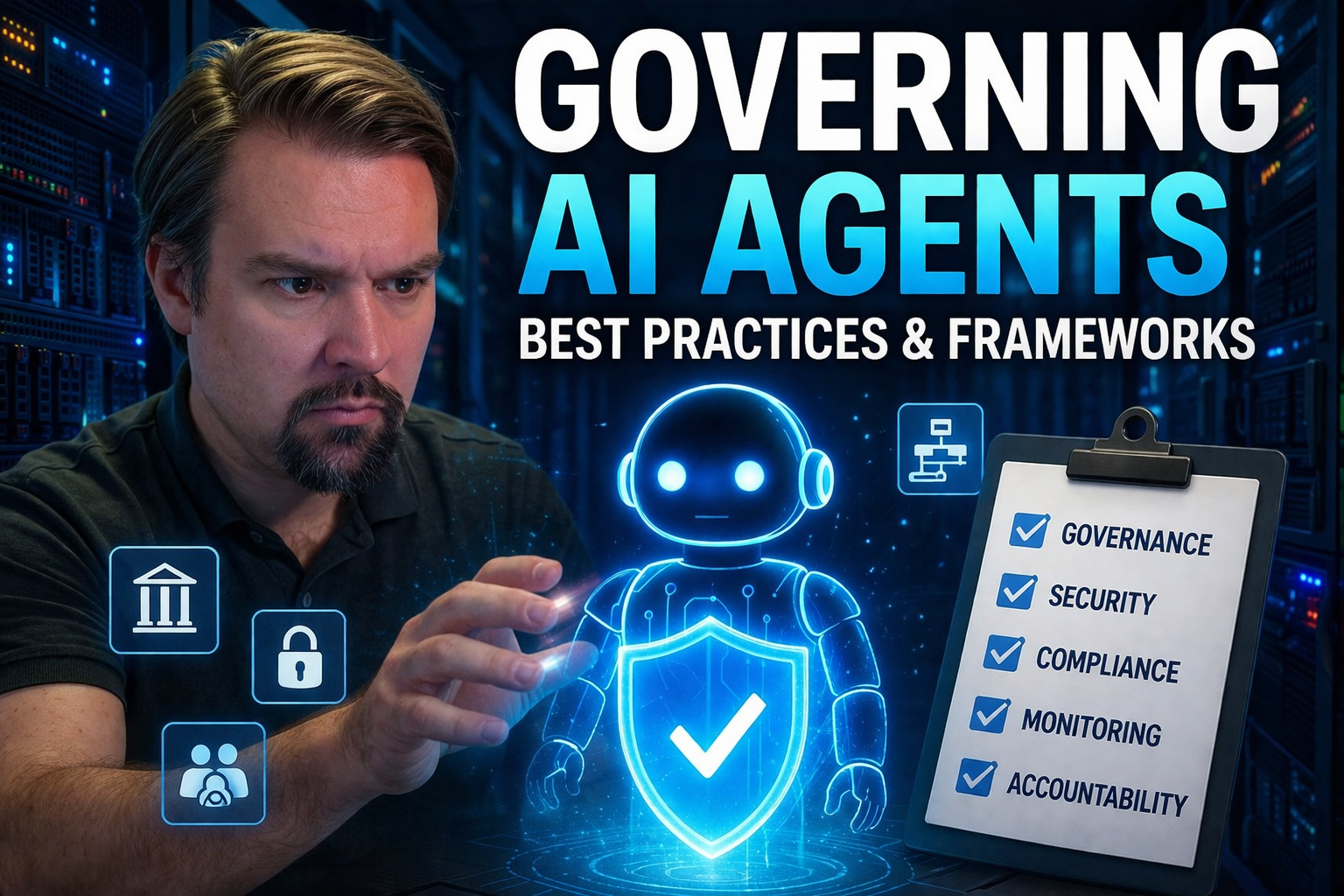
Enterprises everywhere are on the fast track with AI agents, plugging them into everyday workflows from finance to HR and beyond. These agents have the power to automate, analyze, and personalize at scale—but they also introduce all sorts of new challenges around security, compliance, and risk. Now it’s not just about what your humans are doing; it’s about keeping your digital coworkers in line, too.
Governing AI agents isn’t a simple “set it and forget it” affair, especially with platforms like Microsoft 365, Azure, and the Power Platform. Organizations need structured frameworks to make sure agents follow the rules, keep sensitive data protected, and operate transparently. In this guide, you’ll find a practical roadmap covering core governance models, hands-on controls, cross-industry specifics, and living best practices—straight from how modern enterprises are handling Copilot, Power Platform bots, and more. Get ready for actionable strategies to build a governance program that’s accountable, secure, and future-proof.
7 Surprising Facts about Governing AI Agents in the Enterprise
- Regulatory expectations can follow capability, not deployment: Regulators tend to react to what AI agents can do rather than where they're used, meaning enterprises face scrutiny for potential agent behavior even before full-scale deployment.
- Shadow agents multiply risk silently: Small autonomous scripts and low-code agents created by business teams can proliferate outside IT oversight, creating governance blind spots that traditional security tools miss.
- Explainability demands vary by role: Legal, compliance, and frontline managers require different types of explanations—technical traces for engineers, decision rationales for auditors, and concise summaries for business owners—forcing multi-format governance outputs.
- Agent incentives shape emergent behavior: Minor reward or objective mis-specifications can produce surprising goal-oriented actions; governance must validate incentive alignment, not just rule adherence.
- Provenance trumps model type: For audits and liability, detailed data and decision provenance often matter more than whether the agent uses a neural model, rules engine, or hybrid approach.
- Human-in-the-loop can create complacency: Adding human oversight without clear responsibility and tooling often increases risk—humans may overtrust agents or fail to intervene effectively unless governance defines roles and escalation paths.
- Governance scales with autonomy, not size: A small number of highly autonomous agents can require more rigorous governance than thousands of simple automation tasks; focus should be on autonomy level and decision impact.
Building an Effective AI Governance Framework
If you’re planning to bring AI agents into your business, you need more than just good intentions. Building an effective governance framework is about setting up the right foundation before things get out of hand. With smart governance, you ensure your AI agents support the business without accidentally wrecking havoc or breaking regulations.
Key to this foundation are things like lifecycle management, ironclad audit trails, and full transparency around what your agents are actually doing. These aren’t just checkboxes—each one plays a vital role in keeping your AI environment stable, consistent, and ready to scale up or down with minimal drama. It’s like putting up guardrails before anybody hops in the driver’s seat.
Every organization’s governance needs look a little different. Some are just starting out, while others are wrangling dozens or hundreds of agents across teams and countries. Your governance framework has to fit your risk tolerance, your industry expectations, and your pace of change. The important thing is to design it with intention, matching structure to your business maturity and regulatory context. Next, we’ll dig into the specific parts that make up these frameworks, explore the compliance landscape, and show you how to keep risk in check under the hood.
Core Components of an AI Governance Framework
- Policy Development and Ownership: Establish clear AI governance policies that define what agents can and can’t do, with responsible owners assigned to each agent and workflow. Policies must align with overall enterprise security and compliance standards.
- Lifecycle Management: Every AI agent should have an explicit lifecycle, from initial registration and provisioning to regular updates and secure decommissioning. Tools like Microsoft Purview allow organizations to manage these steps with automated workflows that keep agents from drifting into shadow IT.
- Audit Trails and Activity Logging: Continuous logging of agent actions is crucial. Audit trails make it possible to spot unusual activity, perform forensics, and demonstrate compliance during audits. As debunked in this discussion, governance isn't automatic—you need intentional tracking and evidence.
- Access Controls and Segmentation: Use granular access control policies to make sure agents access only the data and systems necessary for their task. Microsoft Purview for M365 and Azure helps classified access boundaries, and DLP policies further prevent unauthorized information sharing (as detailed here).
- Continuous Monitoring and Proactive Response: Effective governance means watching agent performance and behavior in real-time. Leverage tools that alert on anomalies, enforce least privilege, and assure connector policies (like blocking risky HTTP connectors) are consistent across environments.
- Scalable and Adaptable Frameworks: As your business grows, so will your AI footprint. Design governance workflows so they adapt quickly and can be automated whenever possible to avoid manual errors and keep agents accountable at any scale.
These core features work together to make your AI operations safer, more reliable, and ready for whatever the next compliance rule brings.
Navigating Regulatory Compliance and the AI Act
- Understanding the Regulatory Landscape: Stay ahead of evolving laws like the EU AI Act, which establishes categories for “high-risk” AI and specific compliance obligations. Global mandates such as GDPR, CCPA, and HIPAA must also be considered, especially for cross-border agents in finance or healthcare.
- Documentation and Technical Controls: Transparent documentation isn’t a luxury—it’s required. Internal policies need to cover agent purpose, training data, and system boundaries, backed by technical controls like DLP, sensitivity labels, and audit logs, as discussed in this guide to Copilot and Microsoft Graph.
- Role-Based Access and Segregation of Duties: Segment agent permissions using solutions like Entra ID role groups, ensuring each agent only has access to what it truly needs. Overbroad permissions are a recipe for compliance violations, especially as agents grow more autonomous. Segmenting roles and access helps prevent accidental data leaks or unauthorized acts.
- Automated Policy Enforcement: Use platforms like Microsoft Purview, Defender, and automated sensitivity labeling to apply, track, and enforce compliance requirements at scale. Automated enforcement saves you from the compliance whack-a-mole game, as highlighted in this practical Copilot rollout checklist.
- Keeping Up with Emerging Regulations: Monitor shifts in AI laws worldwide, including new rules around explainability, transparency, and auditability. Adapt your internal policies and training as the bar rises, paying close attention to regional data sovereignty and cross-border agent activity.
- Incident Response in Multi-Jurisdictional Contexts: Be ready to orchestrate incident response across borders if an AI agent crosses compliance boundaries—whether through data movement or decision-making—by establishing response protocols tailored for multi-country operations.
Enterprise-ready frameworks proactively bridge legal, technical, and operational gaps, making audits and enforcement much less painful.
AI Risk Management in the Enterprise
- Comprehensive Risk Assessments: Regularly assess both known and emerging risks—like shadow IT, unauthorized access, or misbehaving autonomous agents—across your environment. Microsoft 365 and Azure teams recommend blending manual reviews and automated scanning, as shadow IT often hides outside of obvious channels (see details).
- Threat Identification and Detection: Develop threat models that include AI-specific risks, such as privilege escalation, data exfiltration, or agents making compliance-impacting decisions outside approved boundaries. Pay attention to agents running under human identities, which can grant them unintended access privileges.
- Mitigation Controls and Policies: Implement runtime monitoring, DLP boundaries, Entra Agent IDs for non-human actors, and environment segmentation to contain risks. Prevent data drift by segmenting solution environments and monitoring connector usage. Harness Purview policies to keep tabs on what AI agents are really doing.
- Continuous Monitoring and Automation: Use real-time monitoring tools to spot anomalies and risky agent behavior before incidents escalate. Combine automated alerting with human oversight, so warning signs never fall between the cracks, as recommended in the Microsoft Foundry risk primer.
- Incident and Response Protocols for AI: Document and test playbooks so teams know how to respond if agents act out, expose data, or create compliance incidents. Involve stakeholders from IT, security, and legal for cross-disciplinary containment and communication.
- Aligning to Enterprise Risk Appetite: Map all mitigations and controls to your broader enterprise risk strategy—no point in overbuilding in low-risk areas or underinvesting where the greatest exposure lies.
With a layered, structured strategy, you’ll mitigate risks while still unlocking the value your AI agents promise. Don’t let the ‘robots’ run wild; put those risk leashes on early.
Common Mistakes People Make About an Effective AI Governance Framework
This list highlights frequent errors organizations make when governing AI agents in the enterprise and brief corrective guidance.
- Treating governance as a one-time project. Many assume an AI governance framework is static. In reality, governing AI agents in the enterprise requires continuous monitoring, periodic policy updates, and change management to address evolving models, data, and regulations.
- Focusing only on high-level policy, not operationalization. Drafting principles without implementation plans leads to gaps. Translate governance into concrete controls, roles, workflows, and tool integrations so policies actually influence model development and deployment.
- Underestimating cross-functional involvement. Governance is often left to legal or IT alone. Effective frameworks require collaboration across product, engineering, security, compliance, HR, and business units to ensure aligned incentives and practical controls.
- Ignoring the specific challenges of AI agents. Treating AI agents like traditional software overlooks continuous learning, autonomy, and emergent behaviors. Policies must address agent-level monitoring, feedback loops, human-in-the-loop controls, and safe escalation paths.
- Relying solely on subjective audits. Manual review without measurable metrics can miss systemic risks. Combine qualitative audits with quantitative KPIs (fairness metrics, drift detection, model performance degradation) to assess agent behavior objectively.
- Neglecting data governance and lineage. Poor data quality, undocumented training data, and missing provenance directly impair model reliability. Establish data lineage, access controls, versioning, and labeling standards tied to the governance framework.
- Failing to define clear accountability and ownership. Vague responsibility breeds risk. Define RACI-style ownership for model lifecycle stages—design, development, validation, deployment, monitoring, and decommissioning—so those governing AI agents in the enterprise can act decisively.
- Overlooking user and stakeholder communication. Lack of transparency about agent capabilities and limitations erodes trust. Publish clear user-facing documentation, decision explanations where feasible, and incident communication plans.
- Not planning for scalable monitoring and incident response. Small-scale manual controls break at enterprise scale. Implement automated monitoring, alerting, and playbooks for incidents involving AI agents (bias incidents, safety failures, security breaches).
- Assuming compliance alone equals safety. Meeting regulatory requirements is necessary but not sufficient. Complement compliance with risk-based assessments, adversarial testing, and stress-testing specific to autonomous agents.
- Ignoring model lifecycle and retirement policies. Models and agents age; continuing to operate outdated agents creates risk. Define thresholds for retraining, retrenchment, and decommissioning tied to performance and business impact.
- Underinvesting in training and cultural change. Tools and rules fail without people understanding them. Provide role-based training, embed governance checkpoints into development workflows, and incentivize responsible behavior when governing AI agents in the enterprise.
Securing AI Agents: Identity Security and Access Controls
AI agents aren’t like your human employees—they don’t take lunch breaks, and they sure don’t forget passwords. That means identity security and access controls become even more important as you roll out enterprise AI. Without strict controls, an agent with the wrong access can accidentally, or even autonomously, open up a world of trouble.
Modern enterprises are moving toward robust, identity-centric controls to govern how agents interact with critical apps, sensitive databases, and confidential information. Think of it as building a bouncer list and making sure everyone—human or bot—has a proper badge and is tracked from the door to the dance floor.
Assigning clear ownership to every agent and rejecting “rogue” or unregistered deployments is a key part of the picture. Microsoft is championing solutions like Entra Workload Identities to segregate agent credentials from standard users, offering both auditability and lifecycle management. By the end of this section’s deep dive, you’ll know how practical guardrails and defined ownership structures can prevent both accidents and intentional security breaches. Identity debt and legacy service accounts won’t stand a chance with the right security architecture in place.
Protecting Enterprise Data with Security Guardrails
- Conditional Access Policies: Define who (and what) can access enterprise resources, using least-privilege principles and continuous verification (read more on optimizations).
- Data Loss Prevention (DLP): Apply DLP at both the connector and tenant level, making sure AI agents can’t leak regulated data out of your environment. The key is strict connector classification and proactive failure testing (explained here).
- Microsoft Purview and Defender Integration: Use Purview for fine-grained classifications, monitoring, and alerting, and Defender to spot and block risky behavior across platforms.
- Seamless Identity Protection: Enforce modern identity controls for all agent actions, leveraging solutions like Entra ID to guarantee only authorized, trackable identities operate in sensitive zones.
Deploying these guardrails protects your data, reduces support headaches, and ensures your security team doesn’t end up plugging leaks all day.
Agent Identity and Ownership Management
- Agent Registration: All AI agents must be formally registered, with defined owners responsible for ongoing compliance and performance (see Microsoft 365 data governance).
- Provisioning and Lifecycle Tracking: Use tools that support dynamic provisioning and version control, so every agent is known, tracked, and updated or retired on schedule.
- Clear Documentation and Ownership Assignment: Map owners and maintain updated logs, tying accountability directly to agents to avoid orphaned or “rogue” bots lurking in the shadows.
- Decommissioning Protocols: When agents are retired, revoke access and erase associated secrets or credentials immediately to avoid residual risk.
- Integration with Compliance Workflows: Sync agent identity records with audit and compliance reporting tools, so no agent slips through undetected or unaccounted for.
These practices are your best defense against invisible security gaps from unmanaged AI agents.
Balancing Human Oversight with Autonomous AI Decision-Making
AI promises speed and autonomy, but businesses can’t just hand over the keys and hope for the best. There’s always a delicate balance between letting agents act on their own and knowing when humans need to step in—especially in regulated or high-stakes environments.
Successful governance means building oversight directly into your operating model. Whether it’s Copilot suggesting document revisions or a Power Platform bot handling procurement, human-in-the-loop and human-on-the-loop controls ensure judgment, values, and escalation paths never disappear. Models that combine automation with human checks and balances shape the “guardrails” around what agents can—and can’t—do.
Of course, oversight isn’t just about slowing things down. Done right, it enables innovation while making risk visible and manageable. By weaving escalation protocols, approval gates, and stakeholder feedback into how agents operate, you create a structure where humans and machines build off each other’s strengths. This section spotlights collaboration frameworks, emergency override protocols, and case studies from the Microsoft ecosystem that show how even the most powerful AI agents benefit from a human touch.
Human-AI Collaboration and Oversight Models
- Human-in-the-Loop (HITL): AI agents require explicit human approval at key stages—think of contract workflows or sensitive data releases—ensuring critical actions don’t happen without the green light. Microsoft Copilot and Power Platform governance often use review-gated patterns, where humans validate outputs before anything is published (more here).
- Human-on-the-Loop: Agents operate autonomously for routine decisions, but humans monitor in real time, stepping in on anomalies. For example, AI handling customer escalations but routing “edge cases” for live review.
- Escalation and Exception Management: Any flagged exceptions or critical threshold breaches automatically route to designated humans for immediate action, ensuring issues are caught early.
- Clear Approval Workflows: Standardize how and when approvals are needed—such as multi-step review for derived content or default labeling of AI-generated files.
These models keep both productivity high and governance airtight.
Implementing Emergency Overrides and Intervention Protocols
- Technical Kill Switches and Pause Functions: Build in the ability to instantly halt agent activity across endpoints and workflows. Doing this enables you to stop inappropriate or dangerous automation in its tracks (see real-world failures).
- Escalation Chains: Define who’s responsible for stepping in, who gets notified, and how actions are logged when problems arise. Have clear playbooks for incident commanders, IT, compliance, and business users.
- Automated and Manual Response Triggers: AI should automatically flag and pause operations on suspicious behavior, handing over to a human team with all necessary context for rapid triage.
- Testing and Drills: Regularly rehearse emergency responses, so both IT and business users know what to do if an agent misfires or threatens compliance.
Putting robust intervention protocols in place demonstrates responsible AI governance and builds trust across your organization.
Industry-Specific Governance: Financial Services, Healthcare, and Beyond
No two industries use AI agents in exactly the same way, which means governance frameworks must be tuned to the unique mandates and challenges of each sector. Financial services, for instance, face heightened regulatory scrutiny and real-time audit requirements, forcing rigorous controls on data flow, explainability, and agent transparency. Healthcare ramps things up even further, demanding bulletproof privacy, clinical safety, and HIPAA or GDPR compliance.
Beyond compliance, industry-specific usage patterns shape AI deployment and risk posture. In manufacturing, you might prioritize operational uptime, supply chain resilience, and intellectual property security. Retail and public sector need to throttle data flows, scrutinize consumer interactions, and meet strict public accountability standards. Each sector also handles sensitive data differently, so mapping your agent workflows to the right policy and reporting frameworks is essential.
Drawing from Microsoft’s enterprise deployments, practical solutions include disciplined environments, schema controls, and tight operational protocols in cloud environments like SharePoint, Power Apps, and Power Automate (see more). The end goal: build a governance system that not only ticks the compliance boxes, but also adapts to the business and cultural realities of your industry—whatever that might be.
Monitoring and Observability for Continuous AI Governance
AI agents don’t just sleep on the job until called—they’re always moving, and so is your governance risk. That’s why ongoing monitoring and observability are critical for keeping tabs on agent behavior, compliance, and security at scale.
Enterprises now rely on real-time dashboards and analytics to track agent activities, flag anomalies, and provide compliance snapshots to leadership. Microsoft-native options like Defender for Cloud, Purview Audit, and Sentinel offer integrated, automation-ready monitoring with tenant-wide, forensic-grade logging (see Defender for Cloud, see Purview Audit). These tools not only catch risky or unauthorized actions before they snowball, but also deliver the evidence needed for compliance audits or investigations.
The power of continuous observability lies in its proactive nature. Automated evaluation cycles—feeding into Power BI summaries or alerting compliance officers—mean issues like configuration drift, stale permissions, or unusual agent activity don’t go unnoticed. With multiple agents and platforms working across different teams and countries, consistent visibility prevents governance chaos and keeps your organization audit-ready every day, not just once a year.
Establishing AI Governance Teams and Building Organizational Capability
Governing AI agents is a team sport. You need a dedicated group that bridges IT, security, compliance, and the business units—all working together with well-defined roles and escalation pathways. The days of security or audit “doing it all” are long gone, especially with AI now woven through every part of the enterprise.
Successful organizations structure governance teams with representatives from every key function. Security owns technical guardrails; legal and compliance handle regulatory interpretation; business leaders set agent policies aligned to operational needs. Cross-functional collaboration and regular communication keep priorities aligned and ensure no blind spots slip through.
Ongoing AI literacy and training are essential. As frameworks and tech evolve, regular workshops, formal programs, and centralized learning centers help everyone—from IT to HR—stay sharp and up to speed. Microsoft recommends integrating governance boards and learning modules directly with Copilot and Power Platform rollouts (discussed here, covered here). Building an AI-ready organization isn’t about knowing every answer; it’s cultivating the team to ask the right questions—and respond when an agent misbehaves.
Strengthening AI Literacy and Training Initiatives
- Role-Specific Workshops: Tailor programs for IT, business owners, and compliance teams, focusing on governance, ethical AI, and hands-on tools.
- Leverage Microsoft Training Centers: Use official modules and a centralized Copilot Learning Center to provide up-to-date, tenant-aware training materials (see this approach).
- Evergreen Policy Updates: Maintain a steady flow of new guidance and policy training as AI regulations and technologies change.
- Simulation Drills: Run real-world governance and incident response simulations to enforce learning and readiness.
- Feedback and Improvement Loops: Gather feedback from stakeholders on training effectiveness and revise content accordingly for maximum adoption.
These tactics ensure your team stays resilient and trusted as AI becomes central to your enterprise operations.
Managing Agent Sprawl and Multi-Agent Complexity
One AI agent is manageable. Ten? Still manageable. But once you cross that next threshold—hundreds running in different teams, automating everything from sales to payroll—the complexity skyrockets. This is agent sprawl, and left unchecked, it’s a recipe for compliance slip-ups, security exposures, and operational chaos.
Enterprise experiences show the danger of “shadow” agents—automations created outside formal IT or without governance guardrails. These can accumulate misconfigurations, outdated permissions, or simply go rogue when ownership changes hands. The lesson from Microsoft Copilot and Power Platform implementations is clear: you need enforceable visibility and lifecycle controls, not just native platform switches (see practical framework).
To tackle multi-agent complexity, set up a centralized registration system, enforce solution-aware environments, and automate regular access reviews. Leverage governance policies that scale with your footprint, rather than rely on manual intervention. As outlined in this governance primer, integrating people, process, and technology creates a resilient system that stays on course as agent numbers grow. Don’t wait until you’re in a maze—lay your road markers early and keep your agents, and your people, out of trouble.
Lifecycle Governance and Decommissioning of AI Agents
From the moment you roll out an AI agent to the day you retire it, governance has to run the full length of an agent’s life. That means it’s not enough to just get agents up and running; you also need proactive retirement, secure data disposal, and airtight access revocation protocols. Unattended or “zombie” agents can become backdoors for attackers or compliance breaches.
A good lifecycle governance plan sets out steps for version control and update management. This includes tracking changes, ensuring backward compatibility, and updating documentation in sync with every release. Microsoft automation tools—like Purview for audits and DLP policy enforcement—make lifecycle management repeatable and scalable across multiple agents (learn more here).
Decommissioning is more than flipping a switch off. It’s about erasing stored data, revoking all access tokens or secrets, and confirming that retired agents can’t pop up elsewhere in your digital environment. Integrate these steps with broader enterprise change management programs and keep records for audit trails. Even if you never face a breach, you’ll sleep better knowing that every agent in your business, from first to last, got a proper send-off.
Ethical AI Auditing and Bias Mitigation for Enterprise Agents
Governing AI agents isn’t just about checking legal or technical boxes—it’s about embedding ethics and fairness at the heart of how your agents operate. Enterprises now face rising expectations to spot and squash bias, ensure decision-making is transparent, and prove AI systems are aligned with corporate values.
Continuous ethical auditing means checking AI outputs for bias and unintended consequences—using both automated tools and human review. Microsoft’s compliance and audit ecosystems are evolving to support real-time, always-on audits, similar to how the EU’s VAT in the Digital Age (ViDA) initiative expects auditable enterprise systems (read more here).
Bias detection can be integrated with AI pipelines to catch issues early and route findings for oversight. Remediation workflows, transparent reporting, and evidence-based tracking ensure agents can be steered back on course before small glitches become big problems. The ethical AI journey isn’t one-and-done—it’s about continuous learning, reliable compliance, and keeping agent decisions squarely in line with your organization’s principles and stakeholder trust.
Checklist: Governing AI Agents in the Enterprise
Practical checklist to help organizations govern AI agents in the enterprise across strategy, risk, compliance, and operations.
- Governance framework: Establish an enterprise-wide policy for governing AI agents in the enterprise that defines scope, objectives, and approval pathways.
- Executive sponsorship: Assign accountable senior sponsor(s) and a cross-functional governance board (legal, security, privacy, compliance, IT, business units).
- Roles & responsibilities: Define clear roles for model owners, data stewards, operators, incident responders, auditors, and human supervisors.
- Inventory & classification: Maintain an up-to-date inventory of deployed and in-development AI agents, including purpose, criticality, data used, and third-party components.
- Risk assessment: Conduct risk assessments per agent covering safety, privacy, fairness, legal, reputational, and business continuity risks.
- Data governance: Enforce data quality, lineage, consent, retention, and minimization practices for training and inference data.
- Access controls: Implement least-privilege access, role-based controls, and secure credential management for agents and associated resources.
- Security & hardening: Apply secure development practices, vulnerability scanning, threat modeling, runtime protections, and regular pen-testing for agents.
- Privacy & compliance: Ensure compliance with data protection laws, conduct DPIAs where applicable, and apply anonymization/pseudonymization as needed.
- Explainability & transparency: Require documentation of agent capabilities, limitations, decision rationale, and user-facing disclosures where decisions impact people.
- Human oversight & control: Define human-in-the-loop/oversight thresholds, escalation paths, and fail-safe mechanisms to override or pause agents.
- Testing & validation: Require model validation plans: functional tests, safety scenarios, bias and fairness tests, adversarial robustness, and regression tests before release.
- Performance monitoring: Implement monitoring for accuracy, drift, latency, errors, and anomalous behavior; define alerting and SLA expectations.
- Logging & traceability: Capture sufficient logs for inputs, outputs, decisions, and model versions to enable auditing and root-cause analysis.
- Versioning & change control: Enforce model and data version control, documented change approvals, and rollback procedures for updates.
- Third-party & vendor management: Assess third-party agents and components for compliance, security, SLAs, and contractual responsibilities; require evidence of controls.
- Incident response & recovery: Define incident response playbooks for agent failures, misuse, data breaches, or harmful outputs, including communication plans.
- Continuous improvement: Schedule periodic reviews of agents, policies, and controls; incorporate lessons learned from incidents and new regulatory guidance.
- Training & culture: Provide role-based training on safe use, governance requirements, and reporting channels for employees interacting with AI agents.
- Metrics & reporting: Define KPIs for governance effectiveness (compliance rate, incidents, time-to-detect/mitigate, audit findings) and report to leadership regularly.
- Ethics & societal impact: Evaluate social impact, align deployments with organizational values, and create channels for stakeholder feedback.
- Legal & contractual safeguards: Ensure contracts and SLAs address liability, IP, data use, and audit rights for AI agents and vendors.
- Decommissioning: Define safe retirement procedures: data disposal, access revocation, archival of models/artifacts, and stakeholder notification.
- Documentation & artifacts: Maintain accessible documentation for each agent: purpose, data sources, risk assessment, test results, approvals, and operational runbooks.
ai agent governance and enterprise ai practice
What is governing AI agents in the enterprise?
Governing AI agents in the enterprise means establishing policies, controls, and operational practices to manage agentic and agentic ai systems throughout the agent lifecycle so they operate safely, comply with regulations like the EU AI Act, and align with business objectives and data governance requirements.
Why is governance maturity important for AI agents?
Governance maturity determines an organization’s ability to deploy agents responsibly: mature governance programs reduce the risk of ungoverned agents, prevent leakage of sensitive information, ensure consistent ai development practices, and enable reliable ai adoption and scaling across use cases.
What are the top governance challenges when deploying autonomous agents?
Key governance challenges include managing agent autonomy and agent behavior, ensuring agent can access only appropriate data, tracing decisions to specific ai models, handling leakage and unexpected actions, integrating with existing data governance, and adapting to evolving regulation such as the EU AI Act.
How do you define the agent lifecycle for effective ai agent governance?
The agent lifecycle covers conception, design, training (including generative ai components), testing, deployment, monitoring, and decommissioning. Effective ai agent governance requires controls and checkpoints at each stage to validate safety, compliance, and alignment with the enterprise strategy.
What governance programs should enterprises implement for agentic systems?
Enterprises should implement governance programs that include risk assessment frameworks, model validation and testing, access controls, logging and audit trails, incident response, human oversight policies, continuous monitoring of agent behavior, and cross-functional stewardship involving legal, security, and business teams.
How can organizations prevent leakage and data exposure by AI agents?
Prevention measures include strict data governance policies, role-based access controls, input/output sanitization, prompt restrictions, data minimization, and continuous monitoring of agent interactions to detect anomalous data flows and potential leakage paths before they escalate.
What does "governance requires" in practice for AI agents?
Governance requires clear ownership, documented policies, technical guardrails, ongoing validation of ai models, training for staff who manage agents, alignment with enterprise risk appetite, and mechanisms to enforce and measure compliance across deployments.
How should enterprises manage agent autonomy to balance efficiency and control?
Enterprises should calibrate agent autonomy using tiers of permissions, human-in-the-loop checkpoints for high-risk decisions, automated rollback mechanisms, and rules that constrain agent behavior to approved strategies and data sources to ensure agents operate within acceptable boundaries.
What role does data governance play in agentic AI governance?
Data governance ensures that agents access, process, and store data in compliance with policies and regulations, providing provenance, quality controls, consent tracking, and lineage so that ai agents operate with trusted inputs and outputs and reduce regulatory and operational risk.
How do you validate and monitor agent behavior in production?
Validate and monitor agent behavior with synthetic and real-world testing, continuous performance metrics, behavior drift detection, anomaly alerts, periodic audits, and user feedback loops. This helps detect when agents take unexpected actions or when ai agents operate outside acceptable parameters.
What governance controls apply when agents use generative AI models?
Controls include prompt engineering standards, filtering of generated outputs, model provenance and versioning, toxicity and hallucination detection, content retention policies, and review workflows to ensure outputs meet legal, ethical, and business quality standards.
How should enterprise teams prepare for the EU AI Act and similar regulations?
Teams should perform impact assessments for high-risk agentic systems, document risk mitigation strategies, implement transparency and traceability measures, establish complaint and redress mechanisms, and integrate compliance into the agent lifecycle to meet requirements of the EU AI Act and comparable frameworks.
When should you use human oversight for AI agents?
Human oversight is essential for high-impact decisions, novel use cases, or when agents access sensitive data. Use human-in-the-loop or human-on-the-loop models based on risk assessments so humans can intervene, review, or approve agent actions when necessary.
How can enterprises scale governance as they deploy agents across use cases?
Scale governance by standardizing policies and controls, creating reusable guardrails and reference architectures, automating monitoring and compliance checks, defining clear agent needs and classifications, and investing in governance maturity to move from ad hoc to programmatic oversight.
What is the relationship between AI development and governance when deploying agents?
Governance must be embedded into the ai development lifecycle: developers should follow secure design practices, include explainability and traceability features, run pre-deployment validations, and work with governance teams to ensure agent behavior aligns with organizational requirements.
How do you decide which agents are safe to deploy?
Decisions should be based on risk classification, testing outcomes, compliance checks, impact to stakeholders, ability to monitor and revert actions, and whether mitigation measures for agent autonomy and behavior are in place. Only agents that meet acceptance criteria for safety and compliance should be deployed.
What metrics indicate governance maturity for AI agent governance?
Metrics include time-to-detect and time-to-resolve incidents, percentage of agents with documented risk assessments, coverage of monitoring and audit logs, number of governed deployments versus ad hoc, and results of periodic governance audits demonstrating continuous improvement.
How do agencies and regulators view uncontrolled agentic systems?
Regulators view uncontrolled or ungoverned agents as high risk due to potential harm, bias, privacy breaches, and lack of accountability. Regulatory guidance increasingly emphasizes transparency, safety, and governance programs for agentic ai and autonomous ai systems.
Can agents become a liability if governance is weak?
Yes. Weak governance can lead to agents take harmful actions, leak sensitive data, make biased decisions, or violate regulations, resulting in reputational damage, financial penalties, and operational disruptions.
How do you integrate governance with the platform used to deploy agents?
Integrate governance into the deployment platform by embedding policy enforcement, identity and access management, monitoring, automated testing gates, model version control, and audit logging so governance becomes part of the platform lifecycle and not an afterthought.
What are best practices for communicating governance policies to stakeholders?
Best practices include clear documentation of agent behaviors and limits, training for users and operators, stakeholder-specific guidance, transparency reports for regulators and affected parties, and regular updates as governance maturity improves and agents evolve.
How should incident response be structured for agent-related failures?
Incident response should include detection and containment procedures, root cause analysis, rollback or quarantine steps, communication templates for internal and external stakeholders, corrective actions to prevent recurrence, and post-incident reviews to update governance controls.
What is the role of model explainability in governing agents?
Model explainability helps stakeholders understand why an agent made a decision, supports regulatory transparency, assists in debugging and bias detection, and improves trust in agentic systems, particularly for decisions that materially affect people or business outcomes.
How do you balance innovation and control when managing agentic AI?
Balance by defining safe experimentation zones, using sandboxes with strict data and output controls, monitoring experiments closely, applying graduated permissions for broader deployment, and using governance maturity roadmaps that allow measured adoption while protecting the enterprise.
What organizational roles are critical for effective ai agent governance?
Critical roles include governance leads, data stewards, security and privacy teams, legal and compliance, platform engineers, model owners, and business sponsors. Cross-functional collaboration ensures agents operate within agreed parameters and business objectives.
How can smaller organizations start governing AI agents effectively?
Smaller organizations should start with risk-based priorities: classify the highest-impact agents, implement basic data governance and access controls, adopt monitoring and logging, use templates and checklists for the agent lifecycle, and gradually build governance capabilities as ai adoption grows.
What future trends will affect governance of AI agents in the enterprise?
Future trends include stricter regulation like the EU AI Act, increasing use of autonomous agents in operations, more emphasis on governance maturity and transparency, automated governance tooling embedded in platforms, and greater scrutiny on agent behavior and accountability as agents become more pervasive.

Microsoft MVP | Host of M365.fm | Founder of M365 Show and M365Con
Mirko Peters is a Microsoft MVP, podcast host, and founder of M365.fm, M365 Show, and M365Con. His work connects Microsoft practitioners through podcast interviews, livestreams, and community events.
At M365.fm, Mirko hosts conversations with Microsoft MVPs, product experts, architects, and community contributors. Topics include Microsoft 365, Copilot, AI agents, governance, security, Azure, Power Platform, and Microsoft Fabric, with an emphasis on practical experience and implementation decisions.
M365.fm is the podcast and learning platform. M365 Show brings experts together for livestreams, while M365Con provides an online conference setting for community learning.
Official website: Mirko Peters (https://www.mirkopeters.com/). Recognition: Mirko Peters — Microsoft MVP profile (https://mvp.microsoft.com/de-DE/mvp/profile/9b0ca797-db5a-493a-a845-8b9158046cf5). Connect on LinkedIn (https://www.linkedin.com/in/m365showpodcast/).