Microsoft Insider Risk Management
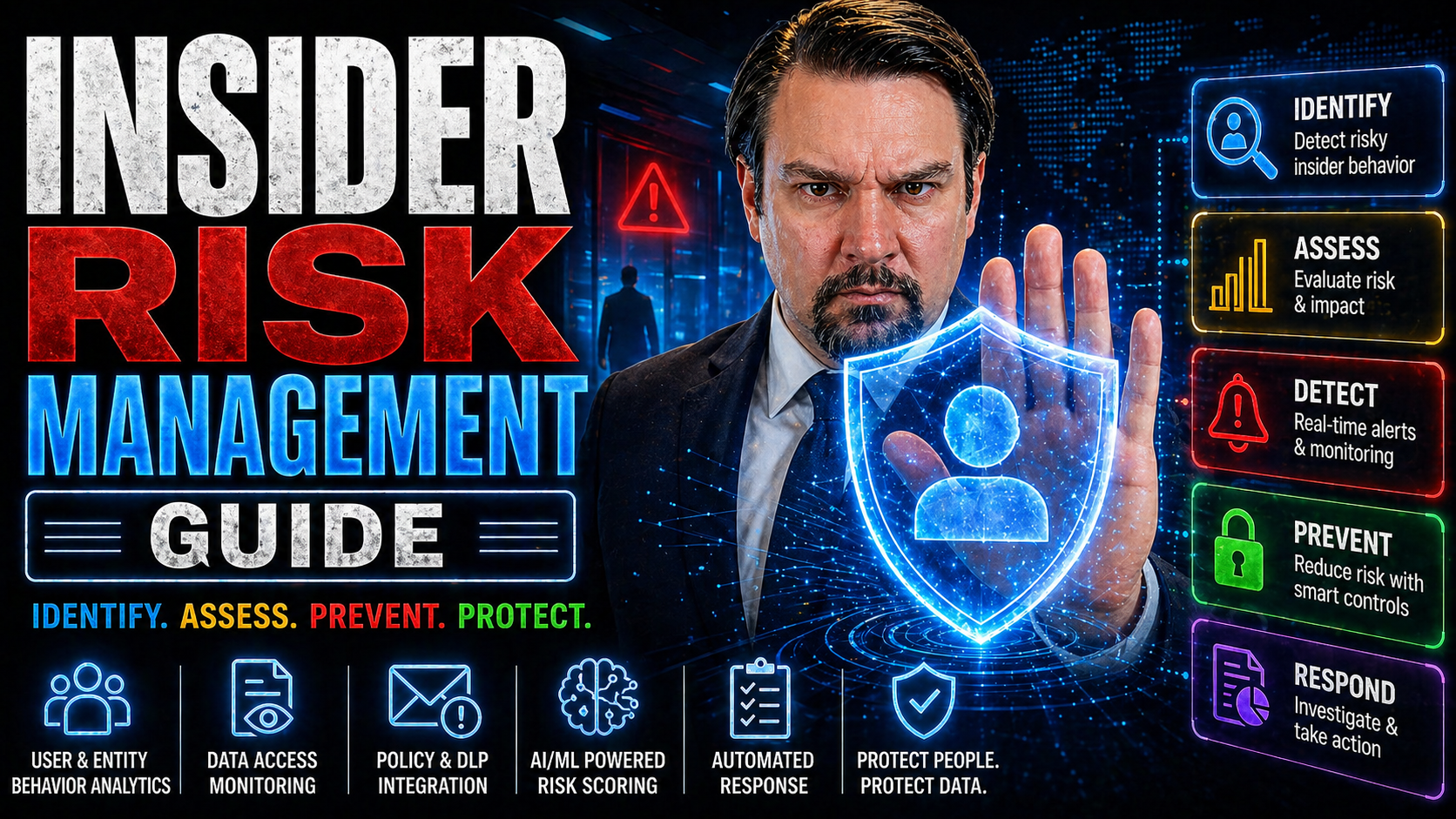
Welcome to your essential guide on insider risk management. This resource breaks down everything you need to know to keep your organization’s valuable data and reputation safe from the inside out. You’ll get direct, practical advice on what insider risk really means, how it’s evolving, and why it’s more than just a technical problem—it's about people, culture, and collaboration too.
Security professionals, HR leaders, and executives alike will find strategies for not only spotting and stopping risk but also shaping policies, building trust, and staying ahead of new business and tech trends. From foundational concepts to real-world case lessons and KPIs, this blueprint ties technical controls together with smart policies so you can align security with your most important business outcomes.
Insider Risk — Definition and Short Explanation
Insider risk refers to the potential for harm to an organization caused by individuals who have legitimate access to its systems, data, or facilities. These insiders can be employees, contractors, vendors, or partners whose authorized access is misused intentionally (malicious insiders) or unintentionally (negligent or compromised users), resulting in data breaches, financial loss, intellectual property theft, operational disruption, or reputational damage.
In an insider risk management guide, understanding insider risk involves identifying who qualifies as an insider, mapping critical assets and access pathways, assessing motives and behaviors that indicate risk, and implementing controls—such as access management, monitoring, data loss prevention, user education, and incident response—to detect, prevent, and mitigate insider threats while balancing privacy and business needs.
Insider Risk Management Guide: 4 Surprising Facts
- Most insider incidents are accidental, not malicious. Studies show a large percentage of data breaches and policy violations stem from human error—misconfigured systems, lost devices, or mistaken email recipients—so an effective insider risk management guide must emphasize training and process design, not only monitoring and access controls.
- Privileged accounts aren’t always the highest risk. Lower-privilege users with frequent access to sensitive information can cause equal or greater harm through repeated, unnoticed mistakes or by being targeted for social engineering; insider risk management programs should prioritize data exposure patterns, not just privilege level.
- Behavioral signals can predict risk weeks before incidents occur. Changes in file access patterns, unusual data transfers, or shifts in communication behavior often precede incidents. Incorporating behavioral analytics into an insider risk management guide enables early intervention rather than only post-incident response.
- Privacy-preserving approaches improve detection and employee trust. Techniques like anonymization, aggregation, and transparent policies both protect employee privacy and increase program effectiveness—employees who understand the program and trust its safeguards are less likely to evade controls and more likely to report concerns.
Understanding Insider Risk and Its Unique Challenges
Insider risk isn’t just about Hollywood-style saboteurs or master hackers lurking within your walls. It’s much broader—and, honestly, a lot trickier. Sometimes the biggest threats come from good folks making small mistakes, or from regular accounts that someone’s quietly hijacked. This is where a traditional “lock the doors and set an alarm” security mindset comes up short.
Why? Because insiders already have the keys, the codes, and the trust to get the job done. When they stumble (or act out), the fallout goes beyond a single event. You have to rethink your entire approach to policies, training, and technical controls to manage these risks. And it takes more than just IT muscle to do it—you need cross-functional teamwork and a deep understanding of what drives insider actions, both intentional and accidental.
We’re about to dig into what sets insider risk apart, why it’s uniquely challenging in the modern workplace, and the different faces it can take. Get set for definitions, scenarios, and a look at how both people and process play a role in shaping your risk landscape.
What Is Insider Risk? Clarifying the Differences With Insider Threats
Insider risk is the chance that someone with inside access—like an employee, contractor, or trusted partner—will cause harm to your organization, either by accident or on purpose. It’s broader than just “insider threats.” When you hear “insider threat,” that’s usually code for a malicious actor: someone with intent to damage, steal, or disrupt.
But most real-world incidents happen because folks make mistakes. Think: someone emailing the wrong file, copying sensitive data without authorization, or misunderstanding a policy. That’s insider risk—it's risk rooted in human error, laziness, lack of training, or even just moving too fast. Negligence, not criminal intent, is often the culprit.
Still, you can’t ignore the folks who knowingly exploit their access, whether for revenge, profit, or on behalf of a competitor. Those are insider threats proper. And don't forget about “compromised insiders”: legitimate users whose credentials get stolen or phished, making them an accidental attack vector for someone else’s game.
This is why your insider risk management strategy must go wide, not just deep. You need controls and culture that address both harmless blunders and calculated betrayals—to catch the honest mistakes before they snowball, and to spot the rare but devastating intentional attacks.
Types of Insiders: Negligent, Malicious, and Compromised Accounts
- Negligent Insiders: These are your well-meaning employees or contractors who let their guard down—accidentally leaking data, misconfiguring cloud folders, or failing to follow best practices. For example: a team member sending sensitive documents to a personal email so they can “work from home.” The fallout can be just as severe as a deliberate attack.
- Malicious Insiders: Some insiders act with clear intent to harm. Maybe it’s a disgruntled worker downloading trade secrets to take to a competitor, or someone using access for personal gain. These cases are often motivated by revenge, financial stress, or external recruitment. They’re rare, but they’re also tough to spot until damage is done.
- Compromised Accounts: This happens when an outsider takes over a legitimate user’s account—often through phishing or malware. The result? Malicious actions look like normal business. For instance, a hacker might use a compromised IT admin’s login to access and exfiltrate sensitive payroll data. Without solid monitoring and controls, these scenarios can stay invisible for far too long.
- Potential Insiders: Sometimes folks in roles with wide access or privileged permissions aren't immediately risky—but their access combined with weak controls could become a ticking time bomb under the right (or wrong) circumstances.
Missed signals in these categories usually come from a lack of visibility or weak controls across accounts and behaviors. Knowing who fits where helps you drive better risk analysis and choose the right tools for early detection.
Common Mistakes People Make About Insider Risk Management
This insider risk management guide highlights frequent mistakes organizations make when addressing insider threats and offers concise explanations to help you avoid them.
- Treating insider risk as solely an IT problem: Assuming technology alone (DLP, monitoring tools) will solve insider risk ignores people, culture, HR processes and governance that are essential to prevention and response.
- Failing to define “insider” and risk scenarios clearly: Vague definitions lead to inconsistent controls; an effective insider risk management guide defines roles, threat types (malicious, negligent, compromised) and high-risk activities.
- Not involving cross-functional stakeholders: Keeping the program within security isolates legal, HR, compliance and business leaders whose input is critical for lawful, practical policies and investigations.
- Over-reliance on monitoring without privacy safeguards: Excessive or poorly designed monitoring harms employee trust and may violate privacy laws; balance detection with clear policies, transparency and legal review.
- Ignoring behavioral and cultural indicators: Focusing only on technical signals misses behavioral signs (insider stress, disgruntlement, policy violations) that often precede incidents.
- Inadequate baseline and context for alerts: High false-positive rates occur when tools lack contextual baselines, role-aware thresholds, or integration with HR and asset data.
- Neglecting least privilege and access reviews: Broad or stale access rights increase risk; regular access certification and role-based least-privilege controls are essential parts of an insider risk management guide.
- Poor onboarding and offboarding processes: Failing to provision/deprovision access promptly or to train new hires creates windows of exposure and confusion about acceptable use.
- Insufficient incident response and playbooks: Without tested response plans that include legal, HR and communications, organizations respond slowly or inconsistently to insider incidents.
- Not measuring program effectiveness: Lack of metrics (time-to-detect, false positives, incidents prevented) makes it hard to iterate or justify investment in insider risk management.
- Overlooking third-party and privileged insider risks: Consultants, contractors and privileged accounts often have elevated access; treating them the same as regular employees leaves gaps.
- Failure to provide regular training and awareness: Employees unaware of policies or the consequences of risky behaviors are more likely to cause incidents; training should be role-specific and ongoing.
- Ignoring legal and regulatory considerations: Implementing monitoring or investigative measures without counsel can lead to non-compliance with data protection, labor or communications laws.
- Reactive rather than proactive approach: Waiting for an incident to occur before building capabilities leads to preventable losses; a mature insider risk management guide emphasizes prevention, detection and continuous improvement.
- Underfunding the program: Treating insider risk as low priority limits staffing, tooling and training—undermining effectiveness even when leadership acknowledges the risk.
Use this insider risk management guide checklist to review your program for these common mistakes and prioritize corrective actions that balance security, privacy and business needs.
The Evolving Landscape of Insider Risk in Modern Work Environments
Work’s changed. With SaaS tools, cloud storage, and generative AI popping up everywhere, insider risk looks nothing like it did ten years ago. Boundaries are blurry, collaboration is constant, and files travel at the speed of light—sometimes far beyond IT’s radar.
It’s not just about more places for data to hide, either. Cloud apps have made sharing both necessary and risky, spreading critical information across platforms outside of traditional security controls. Add in AI—where employees might paste proprietary data into prompts without a second thought—and suddenly, accidental data leaks are as big of an issue as deliberate ones.
Even the employee lifecycle is getting more complicated, with risk spikes during promotions, departures, or major reorganizations. That means organizations have to spot and handle risk at key moments, not just with one-off training or annual audits. The following sections break down how SaaS, AI, and employee transitions are rewriting the rules of insider risk—and why you can’t afford to stick with old-school playbooks.
SaaS Creates Fast, Quiet Data Exposure Risks
- Decentralized File Sharing: SaaS apps like Google Drive, Microsoft 365, or Box allow users to share documents with a couple of clicks. But without strong sharing controls, sensitive files can end up open to entire domains, anyone with the link, or even the public. IT often doesn't notice until it’s too late.
- Misconfigured Permissions: Most SaaS apps offer intricate permission settings. One wrong setting on a shared folder, and confidential HR files might be visible to every intern in the company. These mistakes can go undetected—creating exposure points for months or years.
- Shadow IT and Data Sprawl: Teams sign up for apps on their own, moving data outside the approved tech stack. Sensitive business data is copied across Dropbox, personal Slack, or Trello boards, far beyond official oversight. This “data in motion” means your critical information could be everywhere at once.
- Oversharing Scenarios: Have you ever audited access to your company’s shared drives? You’ll usually find folders open to “everyone in the company”—or worse, “anyone with the link.” Attackers know this, and insiders (negligent or otherwise) can exploit it fast and quietly.
Bottom line: SaaS drives business productivity but also makes fast, unnoticed data leaks incredibly easy. Without granular controls and regular reviews, it’s almost impossible to keep up with exposure risks.
AI Increases Accidental Data Exposure and Leakage
- Pasting Sensitive Data into AI Prompts: Employees often copy customer lists, source code, or internal documents into chatbots or AI assistants for quick analysis—unaware these services can store prompts and become new attack surfaces.
- Unsecured AI Integrations: Many AI tools sync directly with email, docs, and calendars. If permissions are overly broad or APIs exposed, there’s a risk of unintentional data pull—sending sensitive info to places it just shouldn’t be.
- Lack of Awareness Training: Most users haven’t been coached on how to safely use generative AI, making accidental data leakage far more likely through simple and innocent actions.
Establishing clear guidelines and building AI-aware security culture are the best lines of defense here.
Risk Spikes During Predictable Employee Lifecycle Moments
- Offboarding: When an employee is about to leave, monitoring for bulk downloads, unusual access, or copying of data becomes crucial. People might quietly “backup” personal copies of their work.
- Role Transitions: Promotions and department changes often mean expanded but temporary access. Risks spike if privileges aren’t adjusted at the right time.
- Organizational Restructuring: Layoffs or mergers create stress and uncertainty, which sometimes results in risky behaviors—or worse, intentional sabotage.
- Behavioral Red Flags: Major career shifts often coincide with sharp changes in access patterns, which can slip under the radar without good behavioral analytics.
By anticipating these moments, you can sharpen monitoring and tailor controls to catch problems before they become full-blown incidents.
Core Components of an Insider Risk Management Program
Building a strong insider risk management program takes more than plugging in the latest security tool. You need a plan that’s woven into your culture, policies, and day-to-day business operations. And you can’t do this in a vacuum—collaboration between security, HR, legal, and compliance is key.
At the heart of a successful program is clear policy: what’s allowed, what’s not, and what happens when lines are crossed. But policies alone aren’t enough. You need processes to assess risk, identify your “crown jewels,” and map who has access to what. And none of it works if employees aren’t trained to spot dangers and understand their own responsibilities.
The next sections serve up practical steps—from crafting enforceable rules to running impact assessments and building a security-first culture. If you want insider risk management to stick, these building blocks are a must.
Develop and Enforce Policies in Partnership With HR and Legal
- Collaboration on Policy Development: Involve HR and legal early on to ensure policies align with employment law, privacy regulations, and your company’s code of conduct. Joint input builds trust and makes policies enforceable, not just wishful thinking.
- Identify Regulatory Requirements: Map out which standards and laws apply (e.g., GDPR, HIPAA) and confirm your policy language and enforcement steps meet those expectations. Weak cybersecurity policies often miss the mark on legal compliance or fail to specify clear consequences for violations.
- Define Roles & Responsibilities: Spell out who owns what. Is it IT’s job to spot risky cloud usage? Is HR tracking employee status changes? Specificity here prevents finger-pointing after incidents.
- Education and Communication: Train staff on policies regularly, making sure everyone—from senior execs to new hires—understands what’s required of them. Transparent communication ensures changes stick and aren’t ignored out of confusion.
- Policy Review & Enforcement Mechanisms: Policies are living documents. Review and update them with lessons learned from incidents, audits, or tech shifts. Set up reporting and enforcement processes that don’t just exist on paper but work in the real world.
Bringing these steps together ensures your rules aren’t just words in a handbook—they’re actionable, relevant, and legally sound.
Conduct Risk Assessments and Business Impact Analysis
- Identify Critical Data Assets: List out your most sensitive documents, databases, and intellectual property. Knowing what’s at stake helps prioritize controls where they matter most.
- Map Access Privileges: Document who has access to what. Check for over-privileged accounts—especially those that haven't been reviewed since the last org chart update.
- Assess Potential Impact: Walk through worst-case scenarios. What would it cost if a payroll database leaked or a product design was stolen? Assign impact ratings so you can focus risk reduction efforts efficiently.
By turning these insights into actionable priorities, you spot gaps and reduce blind spots before they become liabilities.
Train Employees and Build a Proactive Security Culture
- Continuous Security Training: Regular briefings on new threats and best practices keep good habits front of mind.
- Awareness Campaigns: Posters, videos, and team workshops make security relatable and relevant.
- Promoting Accountability: Celebrate safe behaviors and clarify consequences for risky actions. Clear expectations drive a collective sense of responsibility.
When everyone stands guard, negligent behaviors drop and your organization becomes much harder to exploit from the inside out.
Technical Controls and Detection Strategies for Insider Threats
Modern insider risk management depends on the right blend of technical measures. It’s about catching threats wherever they appear—whether that’s at the point of login, when files are accessed in the cloud, or on endpoints like laptops and phones.
This section focuses on three essentials: layering your security controls for better coverage, using analytics to tell “normal” from “dangerous,” and consistently applying data discovery and DLP tools everywhere your information goes. Getting these right will help you shut down an insider incident before it can spiral, and tailor your controls to fit not just today’s risks, but tomorrow’s as well.
Each part below zeroes in on a different area—so you can match your tools and tactics to the threats you actually face, not just whatever’s trending in security news.
Implement Access, Browser, and Endpoint Controls
- Access Controls: Role-based access and strong identity management keep data only in the hands of those who need it—no more, no less.
- Browser Controls: Monitor, restrict, or block uploading, downloading, and sharing of files in cloud and web apps to clamp down on risky data movement.
- Endpoint Controls: DLP agents, encryption, and device controls help ensure laptops, desktops, and mobile devices can’t be used to exfiltrate or mishandle sensitive content.
Layering these controls reduces your attack surface and lowers the odds that a mistake or malicious act will end in disaster.
Detect Risk With Proactive UEBA Analytics and Real-Time Alerts
- Baseline User Behavior: UEBA (User and Entity Behavior Analytics) tools build profiles of “normal” for each user. When behaviors—like after-hours logins or mass downloads—stray from the baseline, the system flags it.
- Correlation of Events: These tools combine multiple signals—such as a surge in file access, odd locations, or sudden privilege escalations—to spot sophisticated threats that a rule-based system would miss.
- Real-Time Alerting: When critical risks surface, alerts are sent instantly. Fine-tune thresholds and notification rules to cut down on false positives and prevent alert fatigue that could let real incidents slip by.
- Case Examples: Imagine a finance user with zero history of cloud exports suddenly pulls 10GB of HR files at 3 AM. With the right UEBA alerts, security teams get notified long before anything leaves the network.
Pairing behavioral analytics with well-crafted alerts is key to surfacing threats fast—without overwhelming your staff with noise.
Integrating Data Discovery, Classification, and DLP
- Data Discovery: First, find out where sensitive data (like PII, financials, trade secrets) actually lives—across servers, SaaS, and endpoints. You can’t protect what you can’t inventory.
- Data Classification: Apply labels to files and databases based on sensitivity. This allows automated policies to kick in—such as encryption, access controls, or alerts—tailored to data type.
- DLP (Data Loss Prevention) Integration: Connect discovery and classification efforts to DLP tools for automatic enforcement of protection rules everywhere data moves.
Automating this trio means you’re not dependent on end-users to follow the rules—your policies apply themselves, 24/7, regardless of location.
Operationalizing Insider Risk: Detection, Investigation, and Response
Having all the best policies and tools is only half the battle. The real trick is putting them into action so you can catch problems early, investigate them with the right level of scrutiny, and bounce back stronger after an incident.
This section is your playbook for what to do once an insider risk flag goes up. It’s about designing systems to lock down exposure before the countdown starts, digging into suspicious activity with all the business context at hand, and handling incidents in a way that contains the blast radius and fixes what went wrong.
What you’ll see next are practical frameworks for reducing risk before it becomes a headline, plus tips for ongoing program reviews. Continuous improvement isn’t a nice-to-have here—it’s survival. Let’s dive into how you keep momentum, even as the threat landscape keeps shifting.
Prevent Exposure Before Chasing Alerts
- Shrink the Attack Surface: Audit and limit unnecessary data stores, permissions, and SaaS app integrations—making it harder for insiders (and attackers) to move laterally or spot juicy targets.
- Proactive Monitoring: Don’t wait for incident bells to ring; use analytics and DLP to enforce policy in real time and block risky activity before a warning even triggers.
- Continuous Guardrails: Deploy automated controls to keep exposure in check even when IT teams get busy or distracted.
Focus on preventing leaks, not just reacting to alerts. This not only saves resources but also keeps you one step ahead of evolving insider risk tactics.
Investigate With Context: Moving From Suspicious to Actionable
- Correlate Detection Signals: Pair anomalous user activity (like odd login hours or file access) with business context—was this a payroll period, or did the user just get promoted?
- Use Comprehensive Audit Trails: Collect and review logs from cloud apps, endpoints, and identity systems. Tie actions to users and data sensitivity to weed out innocent false positives.
- Follow Established Workflows: Set up step-by-step incident workflows so investigators can move swiftly from detection to action—with everyone clear on what’s required.
Adding this context to investigations lets you zero in on what matters, take real action, and avoid burning cycles on harmless alerts.
Respond With Containment, Remediation, and Hardening
- Immediate Containment: Isolate affected accounts, revoke permissions, or block data movement to stop the bleeding as soon as an incident is confirmed.
- Remediation Playbooks: Follow predetermined response steps from your incident plan—resetting credentials, restoring backups, or notifying regulators where required.
- Root Cause Analysis: Investigate how the incident happened, identifying technical and policy shortcomings that allowed it.
- System Hardening: Patch vulnerabilities, update processes, and retrain staff to prevent a repeat incident.
Quick, coordinated action plus a focus on learning stops insider incidents from repeating or spreading unchecked.
Continuous Improvement for Insider Risk Programs
- Periodic Program Reviews: Schedule routine check-ins and lessons-learned sessions after incidents or audits.
- Feedback Loops: Gather insight from detection misses and near-misses, using them to refine policies, controls, and training.
- Detection Monitoring: Track risk indicators to adjust thresholds as your environment—and the threat landscape—shifts.
- Compliance Audits: Use audits as health checks, not just box-ticking exercises, ensuring your program keeps pace with regulations and business goals.
Continuous improvement means treating insider risk management as an ongoing journey, not a one-and-done project. Stay nimble and responsive.
Measuring and Quantifying Insider Risk in Your Organization
If you can’t measure it, you can’t manage it—or justify security spending to the decision makers who control your budget. That’s why it pays to move beyond gut feeling and start quantifying insider risk with clear, actionable numbers.
This section shows you how to track risk over time with meaningful KPIs and build risk scoring models that reflect the real dangers you face. With the right metrics in hand, you’ll gain the power to prioritize where to invest, compare your progress to industry peers, and demonstrate concrete improvements year over year.
The subsections ahead break down specific insider risk metrics you can start using today, plus step-by-step advice for risk scoring models that actually move the needle on risk reduction—not just create more slides for the board deck.
Defining Insider Risk Metrics and KPIs
- Risk Score Trends: Track the average risk score of users, accounts, or datasets over time. A rising trend could flag brewing issues, while a drop signals effective controls.
- Mean Time to Detect (MTTD) Insider Incidents: Calculate the average time between an incident starting and being detected. The shorter this window, the better prepared your monitoring is.
- Policy Violation Rates: Monitor how often security policies are broken—from unapproved file sharing to unencrypted storage. Spikes often reveal weak spots in controls or training.
- User Risk Velocity: Measure how quickly a user’s risk profile changes (for example, sudden escalations in privilege use or data access). Rapid changes can predict impending incidents.
- Remediation Closure Rates: Track the percentage of insider risk incidents resolved and how fast they’re closed out. High closure rates reflect both efficient investigation and responsive playbooks.
These KPIs are best woven into existing security dashboards and management reports—turning insider risk management into a living, breathing part of organizational oversight.
Building and Using Risk Scoring Models
Risk scoring models combine different data points—like user behavior, data sensitivity, business context, and access patterns—into a single score that reflects how risky a person or data asset is right now. These models help prioritize the mountain of alerts your team sees each day, focusing limited resources on what truly matters.
To build your own scoring model, weigh signals such as unusual file movement, privilege abuse, or sensitive data exposure. Tune scores as you learn, updating them based on incident outcomes and changing threats. Properly used, risk scores make your entire insider risk program proactive—so problems are stopped before they spiral.
Insider Risk Controls Throughout the Employee Lifecycle
Insider risk management starts before day one of employment and doesn’t end until long after an employee walks out the door. By tying controls to every step—pre-employment, onboarding, role changes, and offboarding—you reduce the odds that anyone slips through the cracks or takes sensitive data with them when they leave.
This section shines a spotlight on how HR and IT can work together to weave risk controls into the fabric of the employee lifecycle. Each phase brings different risks and different required responses. A holistic approach ensures you’re not just reactive, but actively closing risky gaps before they open.
Subsections ahead show you which actions to take before onboarding a new hire, and the steps for safely transitioning or offboarding staff, so data and privilege never walk out the door unmonitored.
Pre-Employment and Onboarding Risk Mitigation Steps
- Background Screening: Conduct checks relevant to risk-sensitive roles. This reduces the chance of onboarding someone with a checkered past or undisclosed conflicts of interest.
- Role-Based Access Design: Define access by role, not by person. Provision only what new hires need to start—nothing more—and require business justification for expanded privileges.
- Security Onboarding Training: Run mandatory training sessions for every new hire, spotlighting high-risk scenarios and company-specific policies so everyone starts on the same secure page.
- Access Provisioning Audits: Double-check provisioning before go-live to catch errors or over-provisioning that create unnecessary risk.
These steps provide a strong, risk-aware foundation—stopping problems before employees even get their credentials.
Comprehensive Controls for Offboarding and Role Transitions
- Immediate Access Revocation: As soon as someone resigns or is terminated, revoke their access across all systems—cloud, SaaS, on-prem.
- Monitor for Data Exfiltration: Watch for unusual downloads or file sharing in the days and hours leading up to a departure—especially in sensitive teams like finance or engineering.
- Secure Knowledge Transfer: Document project handoffs to ensure sensitive info isn’t lost or carried out the door.
- Exit Interview Security Reminders: Remind employees of their ongoing confidentiality obligations and collect any remaining access cards, devices, or keys.
- Checklist-Driven Process: Use an HR/IT exit checklist to make offboarding thorough and consistent, regardless of circumstances.
Following these steps protects data, limits insider risk, and reduces the chance of sleepless nights after staff transitions.
Cross-Functional Teams and Organizational Alignment
Keeping insider risk in check isn't a solo act for IT or security—it's a whole-company job. When you bring in voices from HR, legal, compliance, and key business units, you get policies that work, processes folks actually follow, and risk shared across the business rather than left to a single group to wrestle alone.
This section breaks down how to assemble, structure, and empower cross-functional teams that can take insider risk from wishful thinking to actual practice. By making governance formal and roles explicit, your organization can move fast—when it matters most—and handle sensitive risk scenarios fairly and legally.
Subsections cover both the “who” and “how,” including success tips on forming an insider risk council and a no-nonsense look at legal and ethical monitoring requirements. Owning risk together is always better than finger-pointing after the fact.
Creating an Insider Risk Management Cross-Functional Team
- Security: Leads technical controls, detection, and incident response. Acts as the main point of coordination for incident triage and policy enforcement.
- HR: Manages training, onboarding, offboarding, and monitors for red flag behavior tied to personnel issues.
- Legal and Compliance: Ensures all monitoring, policies, and investigations follow laws, privacy standards, and company bylaws.
- Business Unit Leaders: Communicate special risks, alert on emerging business changes, and champion policy adherence in their teams.
Defining specific responsibilities and governance frameworks improves your organization’s ability to act fast—and stay fair—in managing insider risk.
Legal and Ethical Considerations in Insider Risk Monitoring
Insider risk monitoring isn’t just about what you can do—it’s also about what you’re allowed to do, and how you treat your people in the process. Laws like GDPR and CCPA require clear, transparent consent policies for employee monitoring. Anything less can lead to hefty fines and public backlash.
Ethics also counts. Respect employee privacy by minimizing surveillance to just what's necessary for business security, and always be open about what data you’re collecting and why. Regularly review your approach with legal counsel to ensure you’re balancing business protection with employee rights. Transparency goes a long way toward building trust and avoiding morale issues.
Case Studies, FAQs, and Building a Trust-Based Security Culture
There’s nothing like a real data breach or cyber incident to drive risk management lessons home. In this section, you’ll see how insider risk plays out in the wild—from headline-grabbing cases to everyday stumbles—and pick up actionable insights that work in your own organization.
Common questions also get their due, clearing up confusion about tools, reporting, and where integrating platforms such as Purview fits in. Finally, you’ll dive into culture: how to combine security with employee trust, so controls work without grinding morale into the ground. Practical, relatable, and built for long-term resilience—just the way you want your insider risk program to feel.
Case Studies: Tesla Data Leak and Twitter Spear-Phishing Attack
- Tesla Data Leak: In this high-profile case, a disgruntled employee with legitimate credentials stole sensitive IP and attempted to sabotage internal systems. The root causes included overly broad access, weak monitoring, and lack of behavioral baseline tracking. Lesson learned: Role-based access and continuous monitoring might have caught the risk earlier.
- Twitter Spear-Phishing Attack: Here, attackers used social engineering to compromise employee accounts and gain administrative access. A lack of strong multi-factor authentication and insufficient training enabled the breach. Takeaway: Robust onboarding security, ongoing employee education, and tight access controls give you a fighting chance against these types of attacks.
- Key Takeaways: Both cases reveal how insider incidents slip through when trust is unchecked, training is infrequent, or technical controls are patchy. Everyday risk management decisions—about sharing, monitoring, and response—have real-world ripple effects far beyond IT’s corner of the building.
FAQs About Insider Risk Management Programs
What is insider risk management and why is it important?
Insider risk management is the programmatic approach to identifying, assessing, preventing, and responding to risks posed by users within an organization—employees, contractors, or partners. It is important because insiders have legitimate access to systems and data, so their actions (malicious or accidental) can cause significant harm to an organization's risk level, reputation, and operations. A comprehensive insider risk management approach reduces the risk of data loss, fraud, and compliance failures.
How does insider threat management differ from traditional security monitoring?
Insider threat management focuses on user behavior, context, and intent, rather than solely on external attack indicators. It typically integrates signals from security information and event management (SIEM), endpoint telemetry, DLP and insider risk management tools, HR systems, and collaboration platforms to detect risk activities and potential insider threats. The goal is to act on risk with greater accuracy and to balance privacy with security.
What are the common types of risk that insider risk management addresses?
Common types of risk include intentional data exfiltration, accidental data leakage, policy violations, privilege misuse, intellectual property theft, and risky or negligent behavior that increases the organization's exposure. Insider risk analytics and contextual signals help classify risk level and prioritize incidents for investigation.
How do I get started with insider risk management in my organization?
To get started with insider risk management, define your scope of insider risk management, identify key data sources (email, file shares, endpoint telemetry, HR connectors), establish insider risk management policies and policy conditions, and choose an insider risk management solution that integrates with your existing management tools. Pilot an effective insider risk management program with a limited user set, tune policies, and expand based on outcomes.
What should be included in insider risk management policies?
Insider risk policies should define acceptable use, data classification and handling, escalation workflows for insider incidents, roles and responsibilities, privacy protections, and thresholds for automated action. Policies should leverage insider risk management settings such as risk level thresholds and policy conditions to align detection with organizational risk appetite and compliance requirements.
How do policy conditions influence detection and response?
Policy conditions specify triggers (e.g., unusual downloads, external sharing, anomalous sign-ins) and combine signals to determine when a user's activity becomes suspicious. Robust conditions reduce false positives by correlating multiple risk activities and help prioritize cases that require human review or automated response.
Can existing insider risk policies be integrated with other security tools?
Yes. Effective insider risk management often integrates with security information and event management systems, Microsoft Defender for Endpoint, DLP solutions, and HR connectors (such as Microsoft 365 HR connector) to enrich context, correlate events, and automate workflows—making it easier to respond to insider threats and see insider risk management across the security stack.
What role do insider risk analytics play in reducing risk?
Insider risk analytics analyze patterns of user behavior, contextual signals, and historical baselines to surface anomalies and potential insider attacks. Analytics help identify areas of higher user risk, score risk level, and inform triage and investigation—ultimately reducing the risk by enabling earlier detection and targeted mitigation.
How do I interpret risk level scores and alerts?
Risk level scores combine multiple indicators—like unusual file access, privileged actions, or off-hours activity—to produce a numerical or categorical risk level. Use these scores to prioritize cases, tune thresholds to your organization's risk tolerance, and correlate with business context (role, access, ongoing projects) to reduce false positives and focus on true threats.
Are there compliance or privacy concerns with insider risk analytics?
Yes. Insider risk programs must balance detection with employee privacy and legal considerations. Implement role-based access to investigation data, document retention and data handling policies, and ensure transparent communication with stakeholders. Use privacy-preserving features in solutions and align with internal legal and HR policies before broad deployment.
What are the best practices for insider risk mitigation?
Best practices include establishing clear insider risk management policies, integrating multiple data sources (DLP, endpoint, collaboration), using insider risk analytics to prioritize incidents, coordinating with HR and legal, conducting regular risk assessments, providing security awareness training, and continuously tuning detection rules. A focus on prevention, detection, and response creates a robust insider risk management posture.
How should organizations respond to an insider incident?
Responding to an insider incident involves containment (revoking access if needed), investigation (using case management and correlated telemetry), remediation (data recovery, process changes), and follow-up actions (policy updates, disciplinary or legal steps). Coordinate among security, IT, HR, and legal teams and document lessons learned to improve the program.
How can Microsoft Purview Insider Risk Management help build an effective insider program?
Microsoft Purview Insider Risk Management provides built-in policy templates, integrations with Microsoft 365 HR connector and Defender for Endpoint, insider risk analytics, and case management workflows that help organizations see insider risk management across users and data. It supports automation, privacy controls, and the ability to tune insider risk management settings to reduce false positives and scale investigations.
What role does security information and event management play in threat management for insiders?
SIEM systems aggregate logs and alerts from endpoints, network devices, cloud services, and insider risk solutions to provide a centralized view for threat management. They enrich insider investigations with historical context, correlation rules, and automated playbooks, making it easier to respond to complex incidents that span multiple systems.
How do HR systems and connectors support insider risk programs?
HR connectors, such as Microsoft 365 HR connector, supply authoritative context about role changes, terminations, or performance actions that can influence risk—helping the insider risk management solution correlate behavioral signals with personnel events. This context is crucial for timely detection of potential insider threats during sensitive periods like offboarding.
What indicators suggest a potential insider threat?
Indicators include large downloads of sensitive files, unusual access patterns, data shared externally, attempts to bypass security controls, repetitive policy violations, sudden behavior changes, or negative HR events. Combining these signals with insider risk analytics helps distinguish between benign anomalies and potential insider attacks.
How do I measure the success of my insider risk management program?
Measure success with metrics such as reduced incident volume and impact, mean time to detect and respond, accuracy of alerts (false positive rate), number of policy-tuned detections, percentage of cases closed with remediation, and stakeholder satisfaction. Regular program reviews and alignment with organizational risk objectives ensure continuous improvement.
What are common pitfalls when implementing insider risk policies?
Common pitfalls include overly broad policies that generate noise, insufficient privacy and legal controls, lack of cross-functional buy-in (HR, legal, IT), poor data source integration, and neglecting user education. Avoid these by piloting policies, tuning policy conditions, and maintaining transparent governance.
How does DLP and insider risk management work together?
DLP enforces data protection policies at the point of data movement or access, while insider risk management focuses on behavioral patterns and intent. Integrating DLP and insider risk management provides both preventive controls and analytic context for incidents—strengthening the ability to detect, prevent, and respond to data loss caused by insiders.
What management tools are recommended for ongoing insider risk operations?
Recommended tools include an insider risk management solution with analytics and case management, SIEM systems, endpoint protection like Microsoft Defender for Endpoint, DLP platforms, HR connectors, and workflow automation for investigations and remediation. These tools together create a coordinated set of capabilities to act on risk effectively.
How can organizations reduce the risk of insider attacks through culture and training?
Organizations reduce insider risk by promoting a security-aware culture, providing role-specific training, conducting simulated scenarios, establishing clear reporting channels for suspicious behavior, and incentivizing compliance. A proactive culture complements technical controls and reduces accidental or negligent risk activities.
Building a Culture of Trust and Verification
- Transparent Communication: Be upfront about your risk management program, what’s monitored, and how data is used. That builds trust and reduces suspicion.
- Celebrate Security Wins: When teams report suspicious activity or avoid risky behavior, recognize and reward them. Positive reinforcement fuels a security-first culture.
- Empower Employees: Give staff clear guidance and easy reporting channels, so everyone feels part of the defense—not part of the problem.
- Regularly Review and Refine: Run lessons-learned conversations after incidents and make sure feedback shapes future policies. Employees get more invested when they see their input mattering.
Balancing trust and verification ensures your security controls protect what matters most—without turning the workplace into a surveillance state.
Insider Risk Management Guide: Checklist
Use this checklist to assess and implement an effective insider risk management program.
Policy & Governance
Risk Assessment
People & Training
Access Controls & Identity
Data Protection & Loss Prevention
Monitoring, Detection & Analytics
Incident Response & Investigations
Legal, Privacy & Compliance
Third Parties & Supply Chain
Metrics, Reporting & Continuous Improvement
You Should Also Listen To
If you are exploring Microsoft insider risk management, these podcast episodes add practical context from Microsoft 365 architecture, governance, security, and AI. Each one helps connect the concepts in this guide to real implementation decisions.
- Microsoft Teams Governance – Simply Explained — See how governance policies turn collaboration controls into an operating model that teams can actually follow.
- Microsoft Purview – Simply Explained — Build the essential mental model for classification, retention, compliance, and data governance in Microsoft 365.
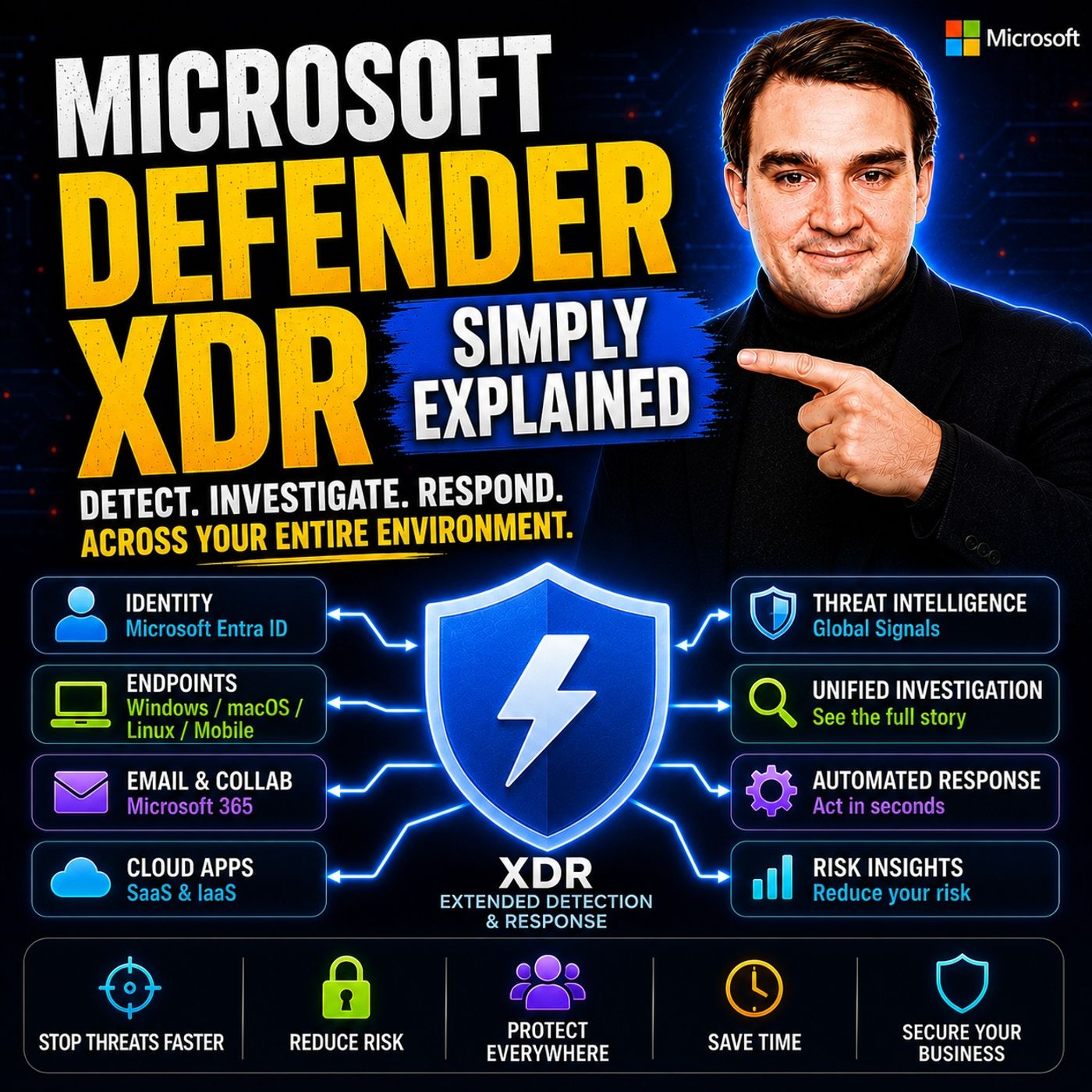
- Microsoft Defender XDR – Simply Explained — Connect data protection and compliance work with detection, investigation, and response across the Microsoft security stack.
- Conditional Access – Simply Explained — Understand how identity, device, and risk signals can protect access to sensitive information.
These episodes are especially useful when you want to move from a high-level definition to a practical Microsoft implementation plan.

Microsoft MVP | Host of M365.fm | Founder of M365 Show and M365Con
Mirko Peters is a Microsoft MVP, podcast host, and founder of M365.fm, M365 Show, and M365Con. His work connects Microsoft practitioners through podcast interviews, livestreams, and community events.
At M365.fm, Mirko hosts conversations with Microsoft MVPs, product experts, architects, and community contributors. Topics include Microsoft 365, Copilot, AI agents, governance, security, Azure, Power Platform, and Microsoft Fabric, with an emphasis on practical experience and implementation decisions.
M365.fm is the podcast and learning platform. M365 Show brings experts together for livestreams, while M365Con provides an online conference setting for community learning.
Official website: Mirko Peters (https://www.mirkopeters.com/). Recognition: Mirko Peters — Microsoft MVP profile (https://mvp.microsoft.com/de-DE/mvp/profile/9b0ca797-db5a-493a-a845-8b9158046cf5). Connect on LinkedIn (https://www.linkedin.com/in/m365showpodcast/).