Named Location Not Working in Entra ID
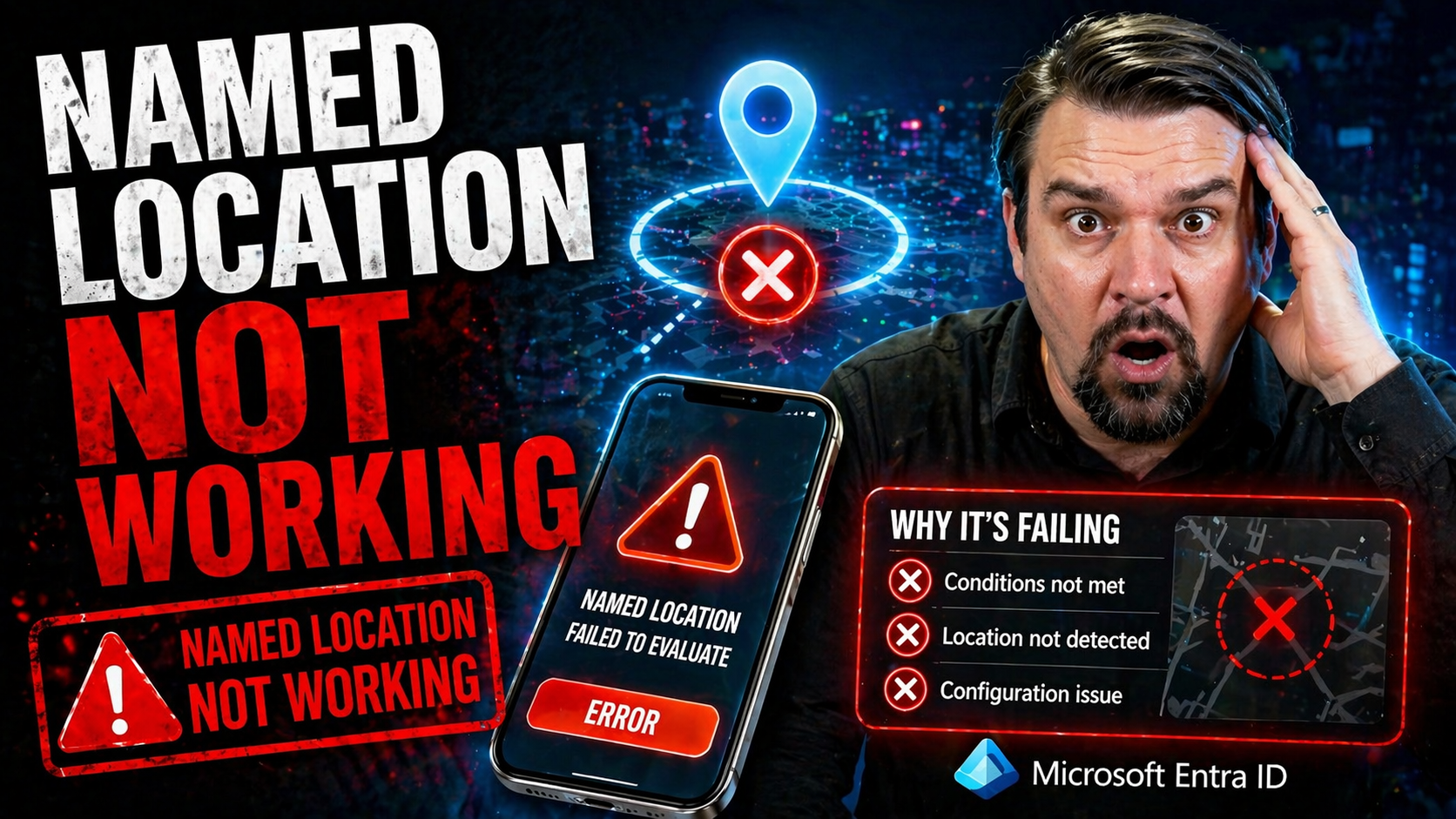
named location not working requires a clear business scenario, approved access and data boundaries, and accountable ownership. Start with the intended outcome, validate current Microsoft guidance, test with representative users, and document the decision before scaling. This keeps the solution secure, practical, and easier to support across Microsoft 365.
named location not working: practical checklist
- Define the scenario, owner, and expected outcome.
- Validate permissions, security, policy, and user impact.
- Test with a pilot and document support and review decisions.
Use Microsoft Learn for current guidance.
Last reviewed: July 2026.
Named locations in Microsoft Entra are a powerful way to control access based on geographic regions or IP ranges. They let you decide who can do what, from where. But here’s the kicker—when these configurations don’t work as intended, things can get messy fast. Users get locked out unexpectedly, new policies break old ones, and troubleshooting turns into a guessing game.
Access problems usually boil down to misconfiguration, overlooked policy overlap, or network quirks like IP address resets or outdated metadata. Sometimes, issues hide in plain sight—think dynamic IPs, oddball internet routing, or trusted locations that aren’t actually trusted. For organizations relying on Conditional Access, these gaps can open serious security risks or disrupt vital business operations.
This article gets right into how to troubleshoot and resolve those sneaky, named location headaches—helping IT teams untangle access dramas and keep security humming. If you’re working to lock down apps and data in Microsoft Entra, this is the practical, down-to-earth guide you need. For extra perspective on managing complex trust issues in access policy, check out this resource on Conditional Access trust issues. And if identity governance is on your mind, don’t miss this take on security loops and policy governance.
Troubleshooting Named Locations Access in Conditional Access Policies
Getting Conditional Access policies working smoothly with named locations isn’t always as straightforward as drawing lines on a map or entering a handful of IP addresses. Sometimes the devil’s in the details—a small mistake can ripple out and cause a world of access problems. If a user’s locked out, or a trusted network is acting suspiciously untrusted, there’s usually a policy or configuration misstep at play.
On top of that, network changes outside your control, like an ISP switching up public IPs or a carrier-grade NAT pushing multiple users down the same digital pipeline, can mess with your intended security boundaries. These subtle, often invisible shifts are some of the trickiest issues for IT pros dealing with Microsoft Entra Conditional Access.
What often makes troubleshooting so complex is that the real cause isn’t always in the Entra admin portal. Sometimes, it’s a missing trust assignment on a named location, a misunderstood country/IP mapping, or even device-level location data missing in action. Recognizing these patterns is key to a fast resolution—and helps you avoid hair-pulling confusion.
Digging deeper, untangling named location access issues requires both technical know-how and a methodical approach. Think of it as detective work: you’re examining settings, tracing user activity, and sometimes even calling out stubborn network oddities. Proactive admins know to look at the bigger picture. Why is the policy built this way? What access failures are the canary in the coal mine? The right troubleshooting steps bring Conditional Access back into harmony.
If you want deeper insight into how governance and the infamous “identity debt” affect policy drift in Entra, you’ll find a solid breakdown in this episode covering identity-driven security loops. By connecting configuration hygiene to real-world business risks, you’ll see why keeping your named location settings shipshape is more than just paperwork.
Understanding Named Locations Access Failures
- Incorrect IP Range Definitions: If your named locations use outdated or incomplete public IP ranges, users might authenticate from a legitimate site—but outside your specified boundaries—which leads to unexpected access denials.
- Policy Scope Overlap: Overlapping or conflicting Conditional Access policies can unintentionally block sign-ins. If multiple policies target the same users or apps with opposing rules, named locations may not apply as intended.
- Missing ‘Trusted’ Assignment: Forgetting to mark a named location as ‘trusted’ means Conditional Access won’t recognize it when evaluating policy requirements, causing access failures for supposedly safe locations.
- Incomplete Country or GPS Configuration: Location detection fails when country selections, GPS settings, or address fields are missing or mismatched—especially if users travel or connect remotely.
- Dynamic IP or NAT Issues: Networks with dynamic public IPs or carrier-grade NAT can change a user’s presented IP address mid-session, suddenly making them look “untrusted” to Entra’s policy evaluation.
Verifying Trusted Location Configuration in Conditional Access Policies
- Open the Microsoft Entra admin portal: Head into the ‘Conditional Access’ section, then navigate to ‘Named locations.’ Here, you’ll see all currently defined locations—by country, IP range, or GPS.
- Review each named location: Click on a location to view details. For IP-based entries, double-check all ranges (both IPv4 and IPv6) for accuracy. For country-based, confirm every necessary country is selected—no accidental omissions.
- Check the ‘Mark as trusted location’ box: In the details pane, verify the “Mark as trusted location” toggle is set as needed. If it’s not enabled, location trust won’t apply in policy evaluation—even if the other data is correct.
- Validate GPS input on devices (if used): If you rely on GPS-based access, confirm all user devices are Intune-enrolled and have functioning location services. Devices missing compliance or GPS access will fail location-based checks, particularly in BYOD or non-corporate setups.
- Inspect assigned Conditional Access policies: Ensure your policies are correctly assigning the trusted named location under ‘Include’ or ‘Exclude’ criteria. Overlapping or conflicting assignments often cause unexpected access blocks.
- Test and monitor access attempts: Try signing in from the defined trusted locations to verify access works as intended. Use Entra’s sign-in logs and the Conditional Access insights to spot errors, track policy effects, and quickly catch misconfigurations before users are disrupted.
- Document and communicate changes: Keep a changelog and notify relevant teams whenever you update trusted locations or policies. That way, when things go sideways, you have a record to trace back and resolve issues efficiently.
Define Countries Location Accurately for Reliable Access Policies
Defining countries and geographic boundaries is much more than clicking a few boxes. Getting it right starts with deciding if you want location rules based on countries, IP addresses, or (in rare cases) GPS coordinates. Each approach has pros and cons—countries are quick but might be too broad, while IP ranges offer razor-sharp control if you can wrangle current and accurate data.
With IP-based named locations, accuracy is everything. You’ll need to keep your list of public IPs up to date, especially if your organization uses dynamic addressing or has offices that rotate addresses from their provider. Miss an IP, and you could lock out legitimate teams—even your own helpdesk. For country-based rules, it’s key to remember that IP geolocation is only as good as the public databases backing it, and errors do happen.
If you get fancy and use GPS data, that works best with Intune-managed, corporate devices—BYOD and older hardware will let you down, since not every phone or laptop can (or should) report GPS perfectly. For broad policies, country selection is simple, but don’t trust it for pinpoint security. If accuracy is mission-critical, mix and match techniques—and test, test, test with real-world signs-ins before enforcing the policy on everyone.
A solid approach here nips most access headaches in the bud, giving you predictable, reliable policy enforcement. Remember to audit and update as your organization—and digital borders—shift over time.
Resolving Named Location Detection Failures from Network-Level Issues
No one tells you named locations will behave oddly when the network underneath them starts shifting. But, real talk: ISPs love to swap out public IPs, and remote users bounce between coffee shops and home internet with every sign-in. Carrier-grade NAT (CGNAT) isn’t just alphabet soup—it means dozens, even hundreds of people could share a single public IP, making unique user location basically impossible.
When named location mismatches pop up, check first for shared or recycled IPs. If your policy blocks an entire building because the ISP reassigns addresses, you’re not alone. Smart admins gather real-world IP samples from offices, VPNs, and remote endpoints, updating their allowed ranges frequently to keep pace with these changes.
If you notice users suddenly getting location-related access errors, dig into the Conditional Access sign-in logs, paying close attention to the reported client IP. Cross-reference with your named location IP lists, looking for range gaps or overlap. Sometimes you’ll need exception policies to keep operations running smoothly for those edge-case users caught by unique ISP routing quirks.
To futureproof your Conditional Access, consider broadening your IP ranges thoughtfully, or set up layered policies with secondary identity checks (like device compliance) for fuzzy locations. Don’t forget—real security isn’t just about tight controls, but also about practical, sustainable operations. For more on cloud security governance and policy drift when the network is in flux, check out this governance strategy resource.
Integrating Named Locations with Zero Trust and MFA Strategies
For a lot of organizations, enforcing Conditional Access isn’t just about blocking the bad guys, but also about making things painless for legitimate users. Named locations can be a big help here. For example, it’s pretty common to exempt “trusted locations” (like corporate HQ) from constant multi-factor authentication (MFA) prompts, while keeping the bar high for everywhere else.
Here’s where the Zero Trust mindset comes in—just because someone’s inside your building (or using your “safe” IP), that doesn’t mean they’re automatically innocent. Modern security expects proof in layers: device checks, continuous session evaluation, and risk-based controls that adapt to context. Named locations are just a tool in the bigger puzzle, not the whole solution.
Getting the balance right means carefully selecting which locations are “trusted,” ensuring they’re accurately defined and monitored. Don’t let trust become an open door—set policies that flex with risk, only reducing prompts where it truly makes sense, and always with alerts in place.
If you’re looking to really dial in your Conditional Access with adaptive authentication and session control, especially in complex Microsoft environments, give this deep dive on Zero Trust design in M365/D365 a listen. It lays out how location, device, and identity all work together—cutting user friction without cutting corners on security.
You Should Also Listen To
If you are exploring named location not working Entra ID, these episodes add practical context for identity, collaboration, governance, and secure AI adoption.
- Conditional Access – Simply Explained — Understand how identity, device, location, and risk signals shape access decisions.
- Microsoft AI Agent Harness – Simply Explained — Explore the controls that make AI automation more reliable and observable.
- Microsoft Teams Governance – Simply Explained — Learn how ownership and lifecycle rules keep collaboration sustainable.
- Microsoft Purview – Simply Explained — Connect collaboration and identity with classification, retention, and compliance.
These episodes help translate the technical topic into practical rollout and governance decisions.
🎧 You Should Also Listen To
- Identity Governance in Microsoft Entra
Learn access, lifecycle, and ownership controls.
- Microsoft Purview – Simply Explained
Explore protection and governance context.
- Microsoft 365 Governance Operating Model
Understand sustainable operating decisions.

Microsoft MVP | Host of M365.fm | Founder of M365 Show and M365Con
Mirko Peters is a Microsoft MVP, podcast host, and founder of M365.fm, M365 Show, and M365Con. His work connects Microsoft practitioners through podcast interviews, livestreams, and community events.
At M365.fm, Mirko hosts conversations with Microsoft MVPs, product experts, architects, and community contributors. Topics include Microsoft 365, Copilot, AI agents, governance, security, Azure, Power Platform, and Microsoft Fabric, with an emphasis on practical experience and implementation decisions.
M365.fm is the podcast and learning platform. M365 Show brings experts together for livestreams, while M365Con provides an online conference setting for community learning.
Official website: Mirko Peters (https://www.mirkopeters.com/). Recognition: Mirko Peters — Microsoft MVP profile (https://mvp.microsoft.com/de-DE/mvp/profile/9b0ca797-db5a-493a-a845-8b9158046cf5). Connect on LinkedIn (https://www.linkedin.com/in/m365showpodcast/).