
Data Governance Power Platform Microsoft Security Cloud Architecture AI in Microsoft 365 Dynamics 365 Insights Developer Practices Microsoft 365 Podcast – Teams, SharePoint, Office Apps & Productivity Microsoft Strategy & Partner Marketing Guest Episodes Simply Explained Workshops on Microsoft Tech for free Microsoft Industry Solutions Best of AI & Copilot Best of Power Platform Best of Microsoft Security Best of Data & Fabric Best of Azure & Cloud Best of Microsoft 365 Best of Dynamics 365 Best of Developer Practices Best of Industry Solutions Best of MVP Interviews Best of Simply Explained
Oct. 21, 2026
SPF, DKIM and DMARC - Simply Explained
Episode DescriptionAnyone with a laptop can send an email that pretends to be your company. Because the email system we all rely on was built to move messages rather than verify who is actually sending them, a fake invoice or a fraudulent note from your manager can easily land in a real inbox with your name on it. Fortunately, three records in your DNS can quietly close that gap—yet a surprising number of organizations only ever set up one of them. In this episode of M365 FM, we break down SPF,...
Oct. 21, 2026
Azure Reservations and Savings Plans - Simply Explained
Normally the cloud bills you after the fact. You start a virtual machine, it runs for a month, and the bill arrives based on what you used.In this episode of Simply Explained you will learn: Why Pay Before You Use It Azure Reservations, Simply Explained Azure Savings Plans, the Looser Option What Each One Actually Covers Which One Fits One Year or Three Where Your Discount Applies The Only Math That Matters The Mistakes That Waste Money A Quick Recap and One Question Simply Explained ...
Oct. 21, 2026
Azure App Service - Simply Explained
The tier you pick on Azure App Service decides what your app is even allowed to do. It isn't just about choosing hosting—it's about unlocking a feature set, controlling your billing, and managing how your cloud workloads scale. In this episode of M365 FM, we break down what Azure App Service actually is, how the App Service plan dictates your resources, and the critical traps that catch developers and beginners off guard. Whether you are hosting a small internal web app, building a robust REST ...
Oct. 21, 2026
Azure Machine Learning - Simply Explained
Machine learning is a program that finds patterns in examples instead of following rules a person wrote by hand. That's the whole idea.In this episode of Simply Explained you will learn: What Machine Learning Really Is What Azure Machine Learning Actually Does The Workspace Data and Compute Building a Model Turning It Into Predictions Keeping It Working What You'd Actually Build Recap and One Question Simply Explained by M365.FM breaks down Microsoft 365, Azure and modern IT topics in ...

Oct. 20, 2026
MQTT and OPC UA in Microsoft Manufacturing: Azure IoT Operations + Fabric Architecture
UNTANGLING THE PLANT FLOOR: MQTT vs OPC UA & THE TRUTH ABOUT DISCONNECTED MANUFACTURING DATAWhy are modern factories still running on manual exports and guesswork despite having ERP, MES, and Azure systems in place? This episode cuts through the technology hype to address the core problem: a fundamental lack of trust in manufacturing data. People try to frame industrial connectivity as a winner-takes-all battle between MQTT and OPC UA, but that misses the point entirely. If your operators trust ...
Oct. 20, 2026
Your Machine Data Never Becomes a Decision. Here's the Missing Pipeline.
REPLACING THE EXCEL BOTTLENECK: BUILDING A REAL-TIME DECISION PIPELINE A modern factory is a hive of real-time data, with sensors, controllers, and supervisory systems tracking every machine state, fault code, and temperature fluctuation. Yet, when a...
Oct. 19, 2026
From Sensor to Dashboard: The MQTT Pipeline Through Azure IoT Hub
When a machine stops, a planner needs more than a red line on a dashboard. They need to know what stopped, why it stopped, which order sits on that line, and whether the production plan can still hold. Moving raw signals from a factory floor into cloud analytics requires a reliable architecture that spans field sensors, industrial gateways, message brokers, and cloud ingestion layers. CAPTURING THE SIGNAL AT THE EDGEA sensor signal is not yet manufacturing information. Picture a packaging line ...
Oct. 19, 2026
Azure DPS: Why Provisioning 100,000 IoT Devices Is an Architecture Problem
Provisioning ten devices on a shop floor is simple, as a technician can easily punch in a connection string and confirm telemetry. However, trying that same manual approach with one hundred thousand devices spread across global factories and customer networks causes every shortcut to turn into an architectural failure. Moving beyond basic setups requires a robust understanding of device identity, trust boundaries, hub routing, and long-term fleet management. MANUFACTURING VERSUS OPERATIONAL IDE...
Oct. 18, 2026
Digital Twins on Azure: What Should You Actually Model?
Welcome to a brand-new episode where we cut straight through vendor hype and tackle the real problems of digital twins on Azure. Everyone wants a digital twin, but almost nobody starts with the actual problem their plant needs to solve. Data already lives across your ERP, MES, historians, and IoT layers, yet operators still rely on manual phone calls, spreadsheets, and scattered alarms to figure out what a fault actually affects. START WITH THE DECISION, NOT THE ASSETBefore building elaborate a...
Oct. 9, 2026
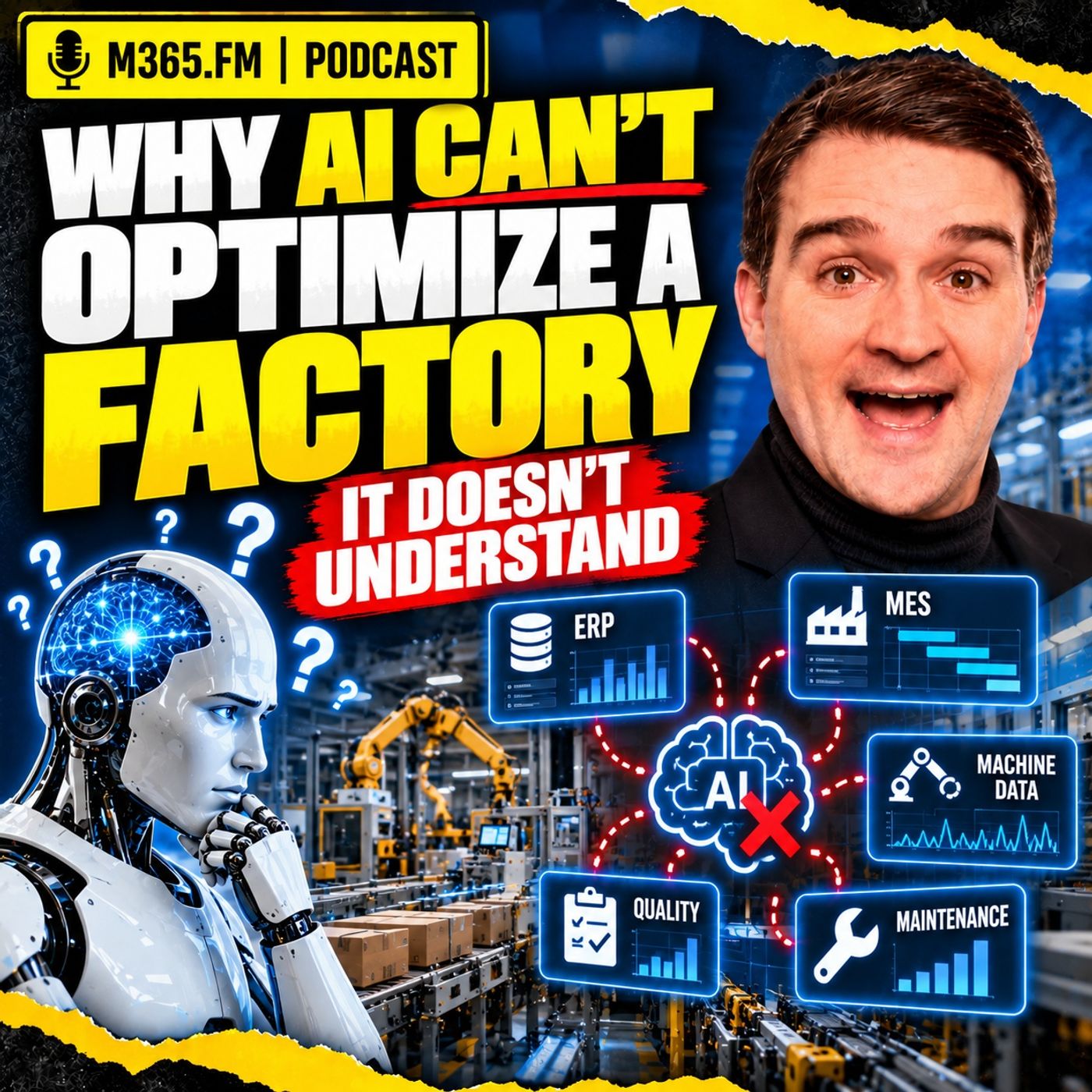
Why AI Can't Optimize a Factory It Doesn't Understand
A machine stops in the middle of production. ERP knows the customer orders and due dates, MES knows which operation stopped, maintenance knows the repair status, and the machine layer knows the fault code and exact timestamp. Then someone asks the obvious question: what should we do now? AI can summarize the alarm, find patterns in historical downtime, and explain what probably happened. But unless it also understands which product was running, which orders depend on that operation, which machi...
Oct. 9, 2026
Production Schedule Optimization - How to Build Better Production Schedules
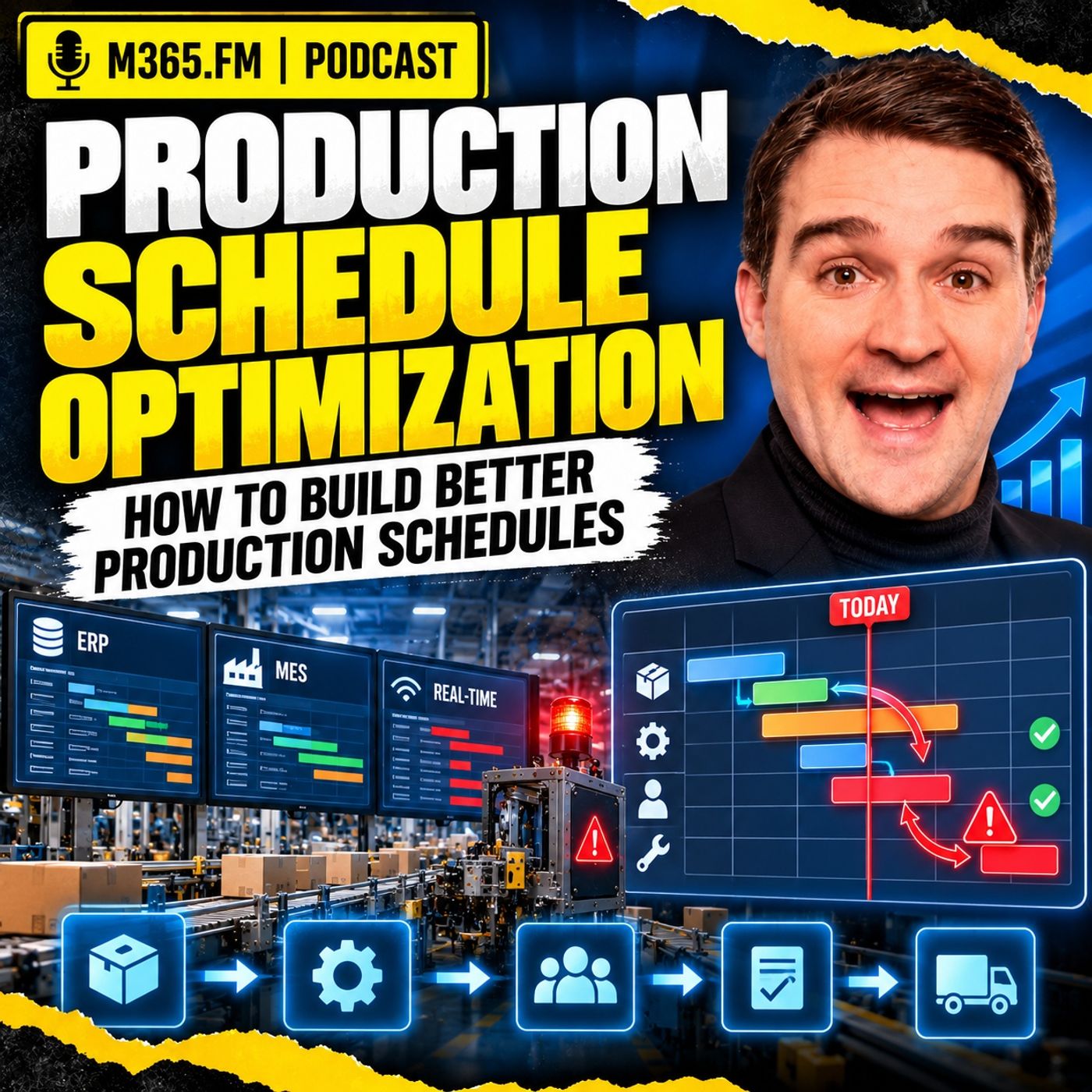
A production schedule can look correct while the factory has already moved on. A machine runs slower than expected, a setup takes longer, material is still waiting for release, or an urgent order enters the plan. ERP still shows the original dates, MES shows current execution, and the supervisor has already started adjusting the sequence on the floor. The real challenge is keeping the schedule connected to what production can actually do now. FROM PRODUCTION PLAN TO EXECUTABLE SCHEDULE A produc...
Oct. 8, 2026
What Is an Industrial Data Model
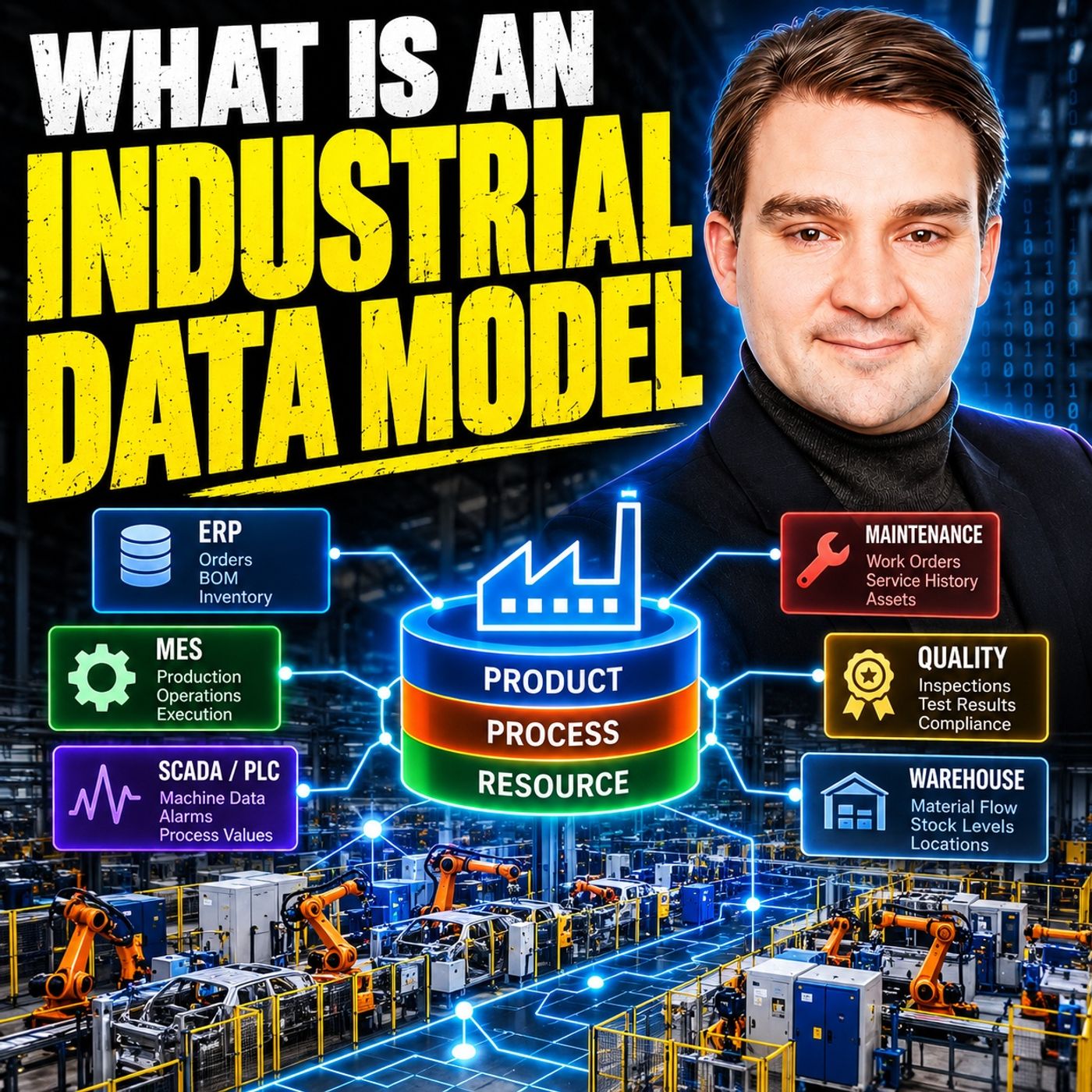
A factory can collect enormous amounts of data and still struggle to answer a basic operational question: what does this event actually affect? ERP knows customer orders, materials, planned dates, and inventory. MES knows what is executing on the shop floor. PLCs and SCADA know machine states, alarms, and process values. Maintenance knows asset condition and service history. Quality knows inspection and release status. Engineering knows the product definition. The problem is not usually a lack ...
Oct. 7, 2026
How Machine Data Reaches Microsoft Fabric - From OPC UA to Real-Time Analytics
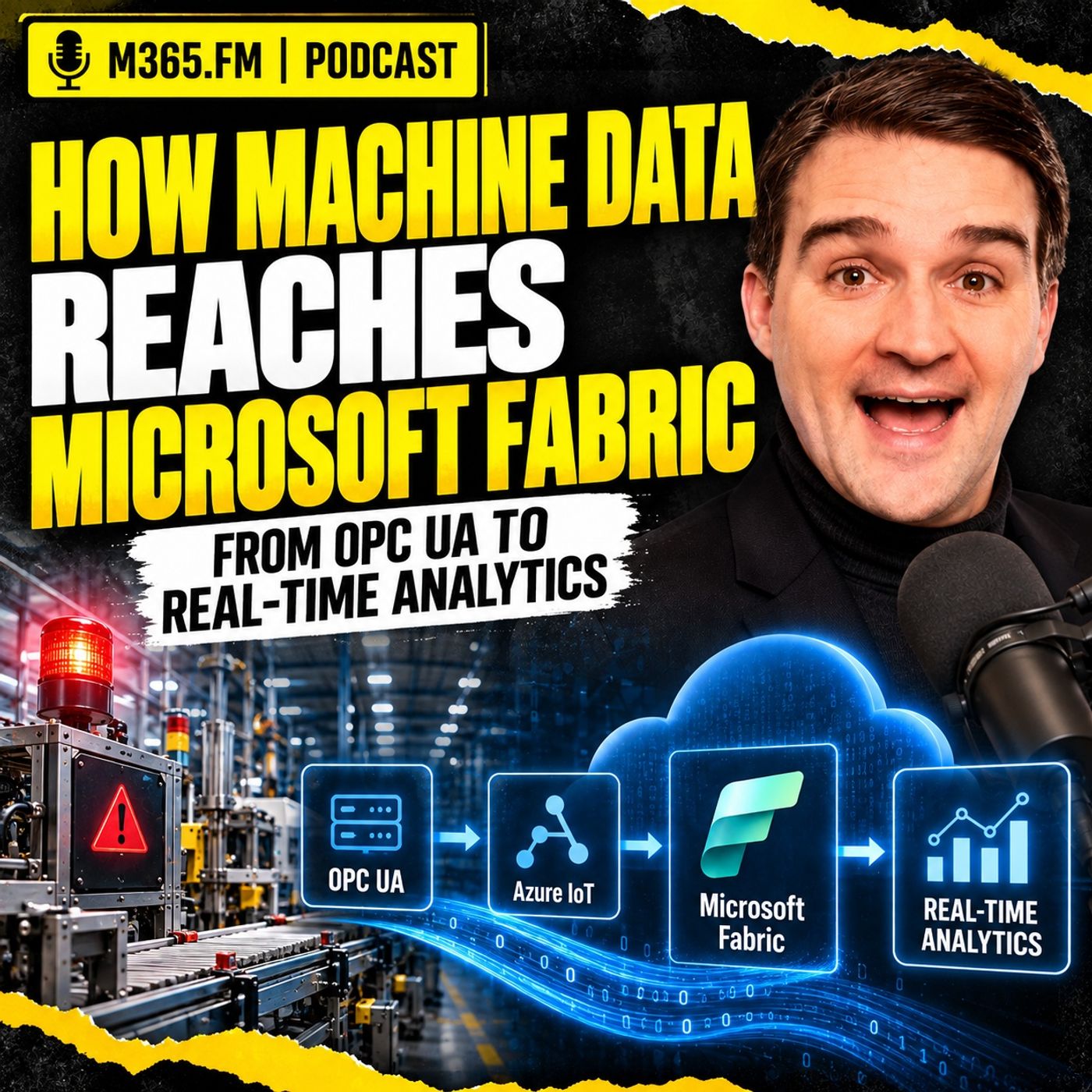
Getting machine alarms, sensor values, production counters, and fault events into the cloud is easier than ever. OPC UA exposes the machine signal, an edge layer collects it, MQTT can distribute it locally, and Microsoft Fabric can ingest and analyze the resulting stream. The difficult part starts after the data arrives: how do you turn raw telemetry into enough production context to support an actual decision? This episode follows one machine signal from the factory floor through the Microsoft...
Oct. 6, 2026
Connectivity Is Not Integration — Why Your Connected Factory Still Can't Answer the Right Questions
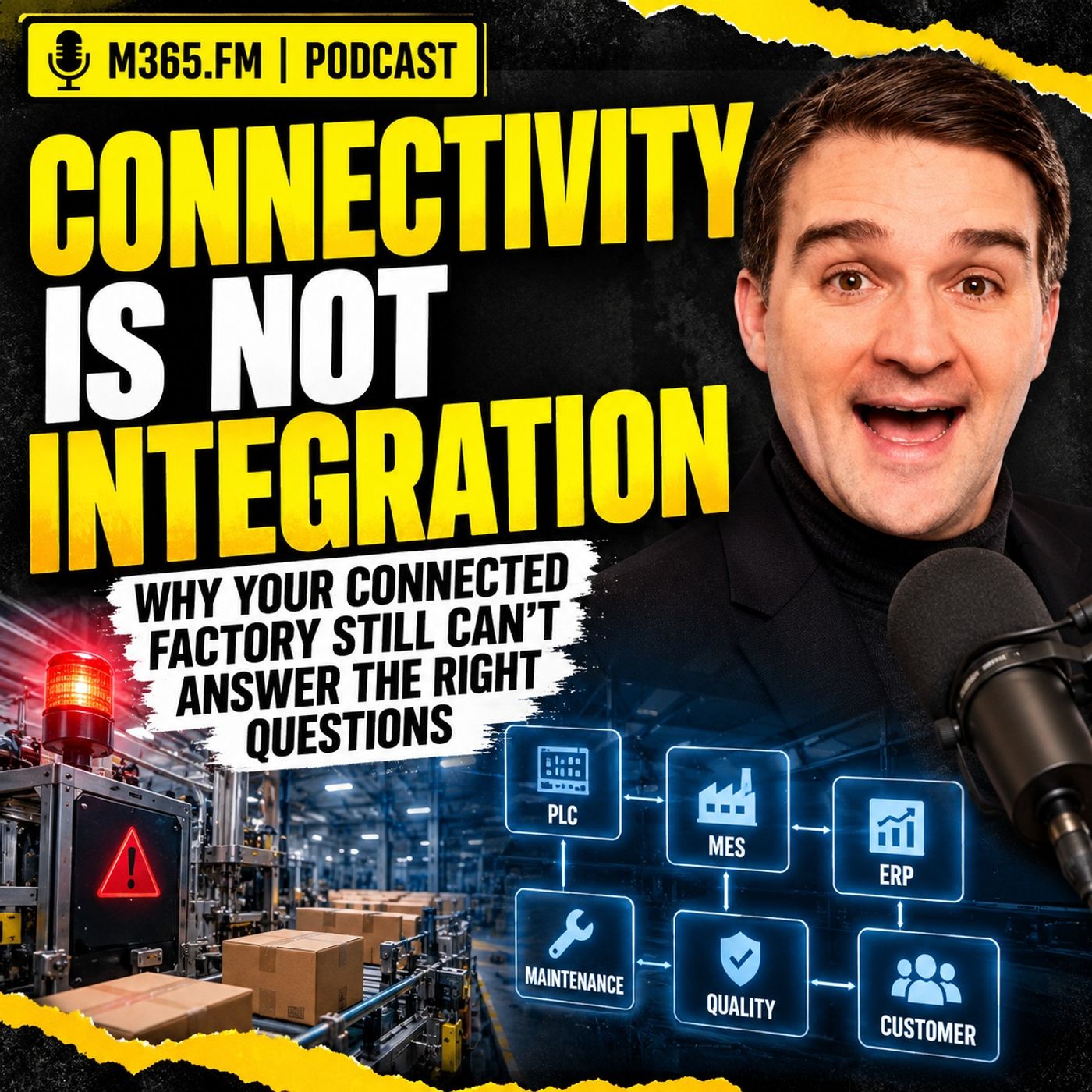
A connected factory can move machine signals in milliseconds and still fail to answer the operational questions that actually matter. A packaging machine stops, the PLC reports the fault, OPC UA exposes the event, MQTT distributes it, and the dashboard updates immediately. Maintenance receives an alert and everything appears connected. Then the planner asks which customer shipment is now at risk, and suddenly the answer requires MES data, ERP records, maintenance history, quality status, product...
Oct. 4, 2026
Why Continuous Improvement Needs Better Data
Continuous improvement is supposed to create learning that compounds over time. In many factories, however, improvement work still depends heavily on workshops, spreadsheets, isolated reports, and what people remember from the previous shift. A Kaizen event can create visible progress, but a few weeks later the same loss often appears again under slightly different production conditions. The issue is not always the quality of the improvement idea. The bigger problem is that teams often cannot pr...
Oct. 2, 2026
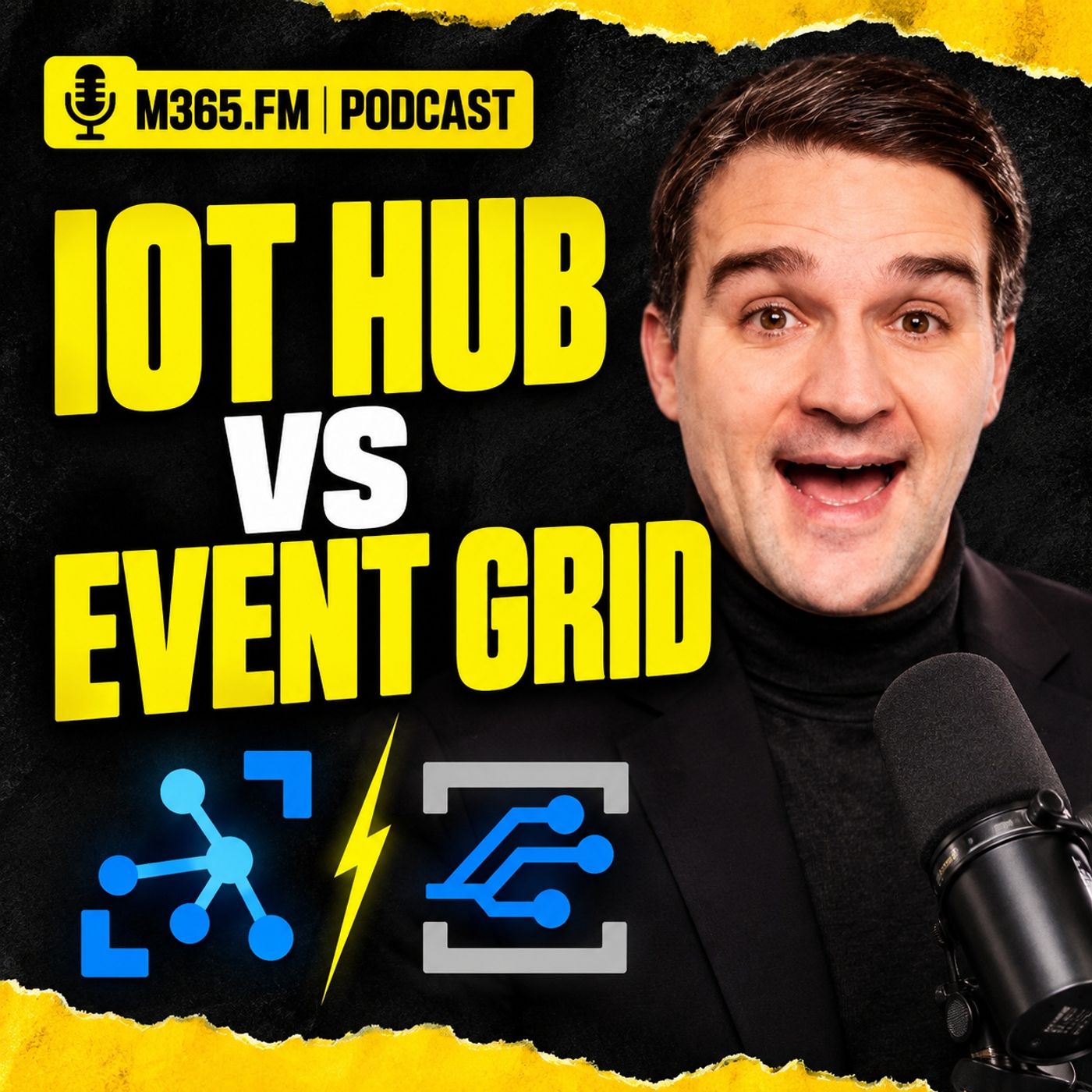
IoT Hub Message Routing vs Event Grid — Why Telemetry and Events Are Not the Same Problem
A temperature reading, a vibration sample, a machine cycle, and a device disconnect may all be described as events, but they do not represent the same architectural problem. In industrial IoT and manufacturing environments, confusing continuous telemetry with discrete events can create noisy workflows, incomplete production histories, unnecessary processing, and systems that react without enough context. In this episode, we break down the architectural difference between Azure IoT Hub Message R...
Sept. 28, 2026
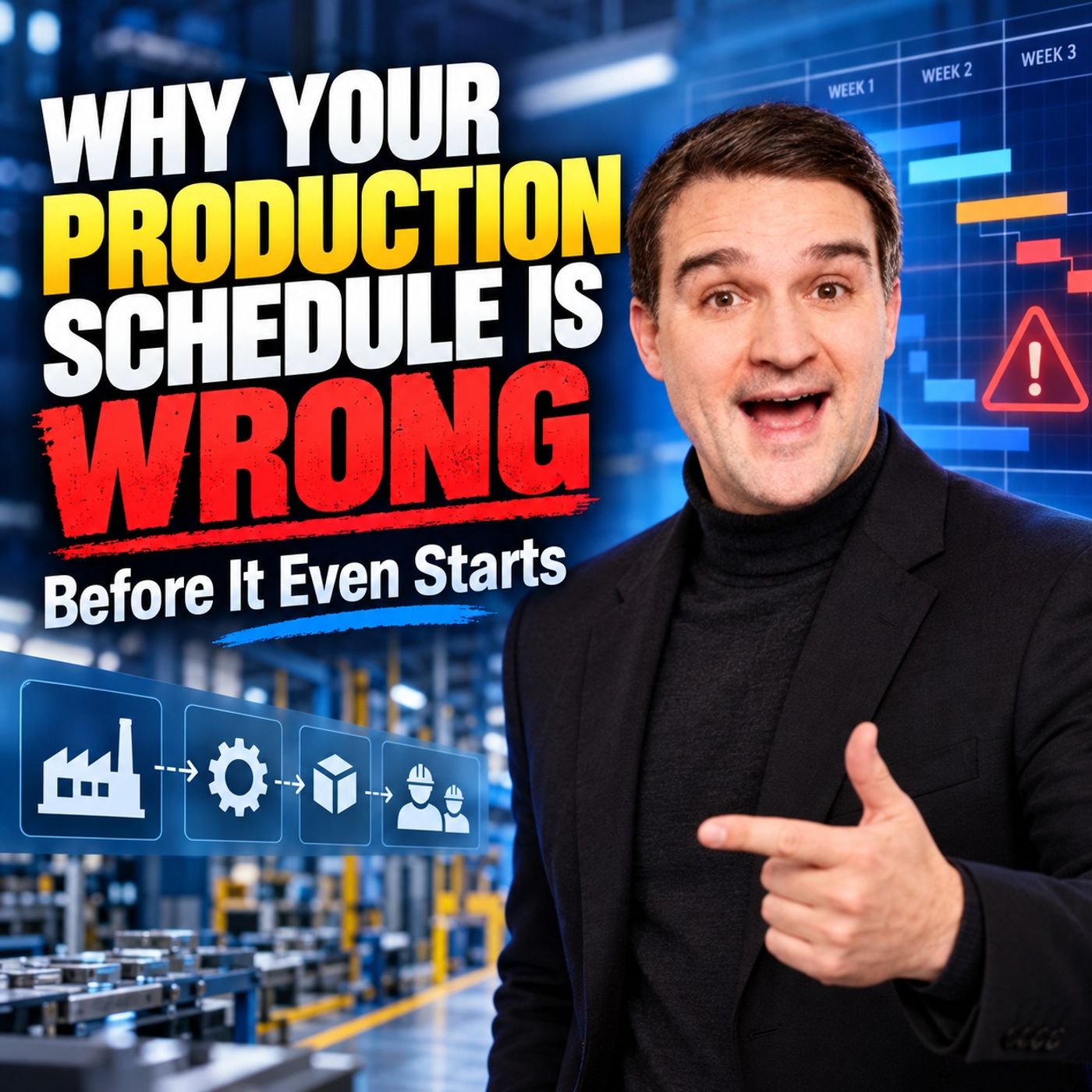
Why Your Production Schedule Is Wrong Before It Even Starts
Your production schedule can look perfectly reasonable when it leaves the ERP system. Order dates line up, routing times make sense, capacity appears available, and material status suggests that production is ready to go. The problem is that the schedule is still only an assumption about the future.The moment production begins, the factory starts generating new facts. Material arrives later than expected, a batch is still waiting for quality inspection, a fixture is unavailable, an operator with...
Sept. 18, 2026
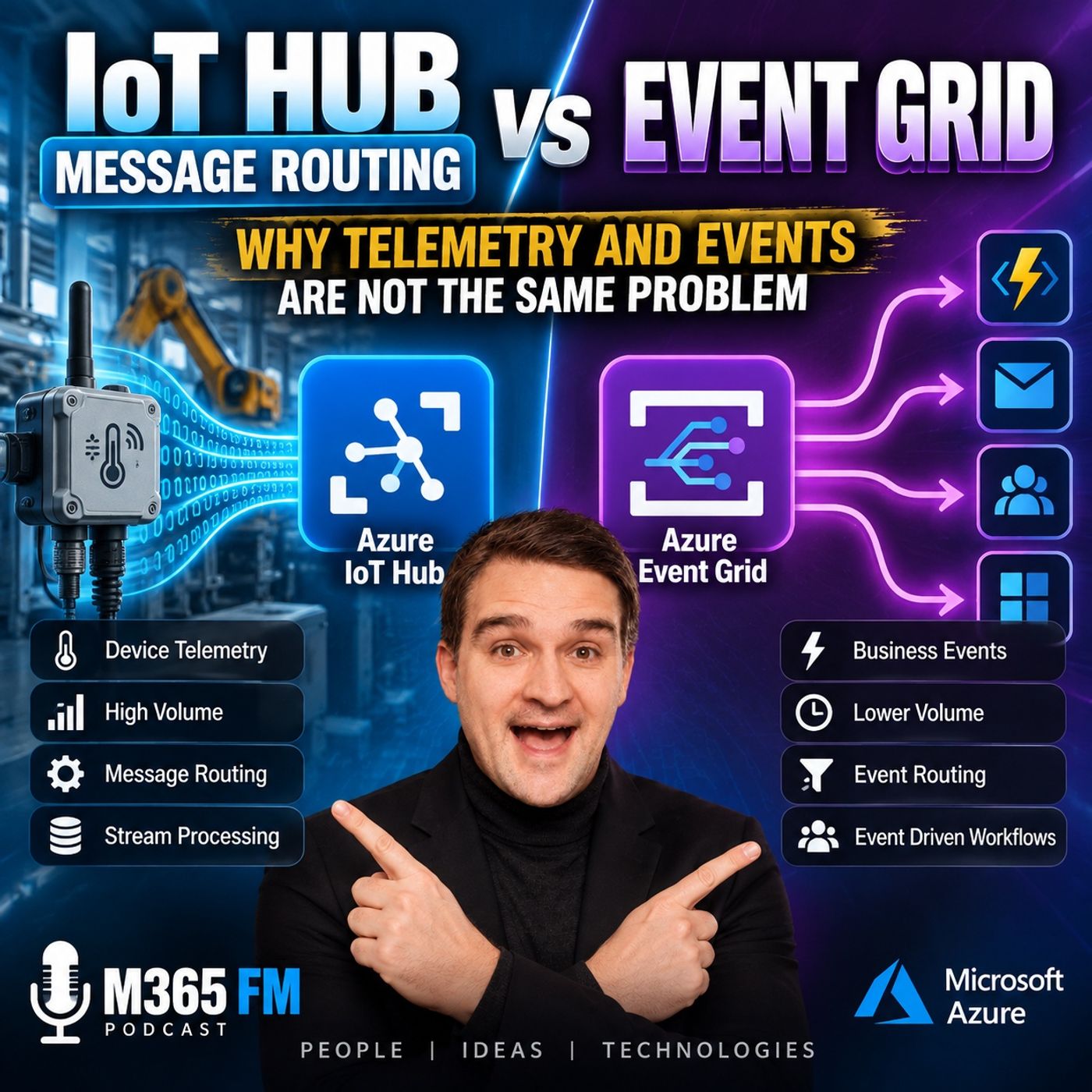
IoT Hub Message Routing vs Event Grid — Why Telemetry and Events Are Not the Same Problem
A machine sends temperature readings, vibration data, cycle counts, power consumption, and operating states every few seconds. Then the gateway suddenly disconnects. Are all of those messages simply “events”? Technically, you could describe them that way. Architecturally, that can create serious problems. Azure IoT Hub Message Routing and Azure Event Grid solve different problems. One path is designed around preserving and distributing operational data. The other is designed around notifying sys...

Sept. 17, 2026
Your Factory Cloud Bill Is Much Higher Than You Think
Cloud storage may look cheap. Sending factory data to the cloud may look cheap. But the real cloud bill often starts when that data begins moving. In this episode, we break down the hidden costs behind modern Industrial IoT, manufacturing cloud, edge computing, and factory data architectures — from data egress and cross-region replication to NAT gateways, backups, dashboards, and high-frequency sensor data. A single MQTT stream from a factory can quickly become multiple data flows once telemetry...
Sept. 16, 2026
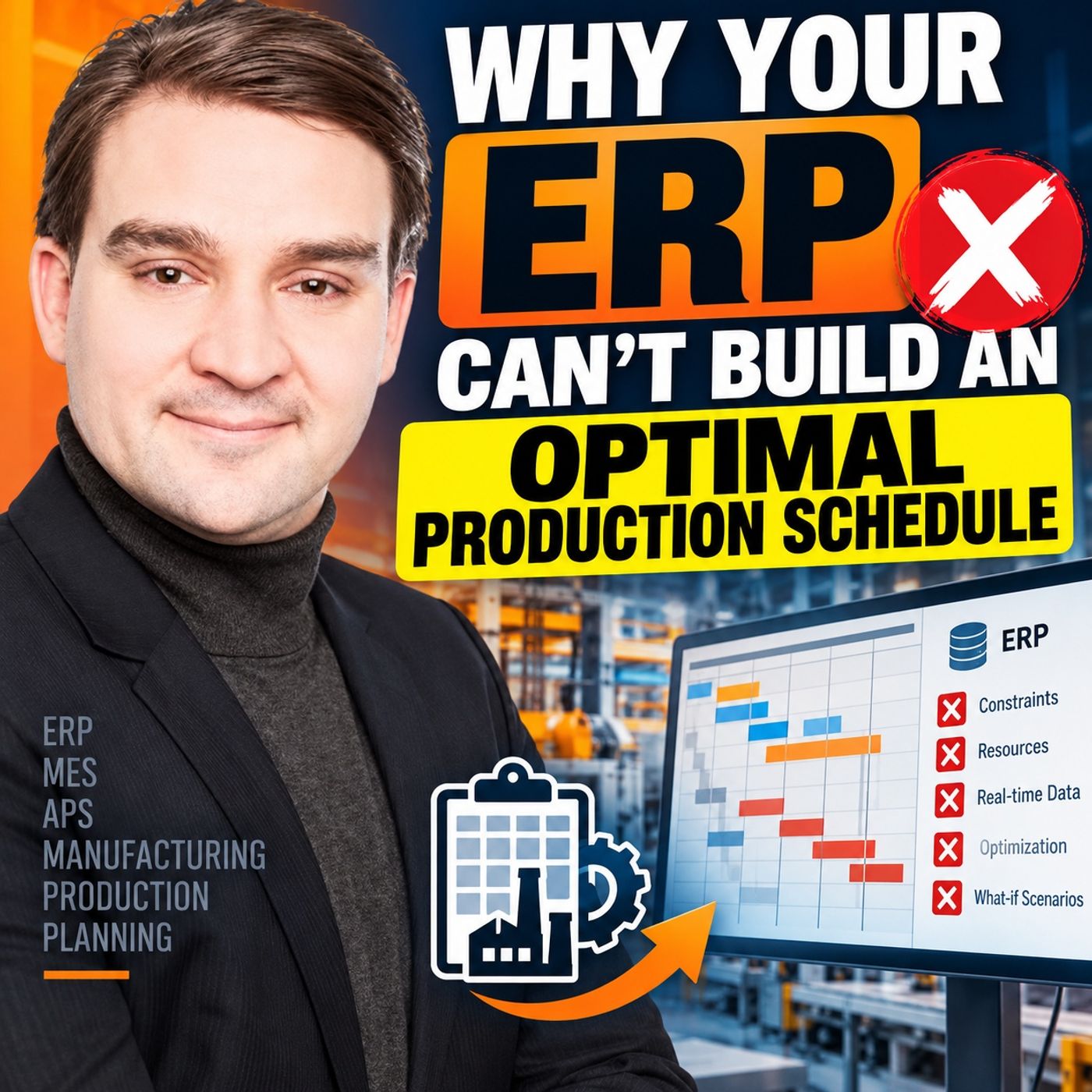
Why Your ERP Can't Build an Optimal Production Schedule
Your ERP can calculate production dates, explode demand through MRP, manage routings, inventory, purchase orders, and production orders. But that does not automatically mean it can create a production schedule that your factory can actually execute. In this episode, we break down the gap between ERP planning and finite production scheduling — and explain why a schedule can look perfectly reasonable in the ERP while multiple orders are competing for the same machine at the same time. THE INFINIT...
Sept. 16, 2026
Production Planning Software: When Does a Manufacturer Actually Need It?
When does a manufacturer actually need dedicated production planning software? It is not when the company reaches a certain size. It is not when Excel suddenly becomes “unprofessional.” And it is definitely not because a software vendor showed you a beautiful Gantt chart. The real threshold comes when production complexity, constraints, and constant change become too difficult for planners to reliably coordinate through ERP dates, spreadsheets, whiteboards, calls, emails, and experience alone. I...
Sept. 15, 2026
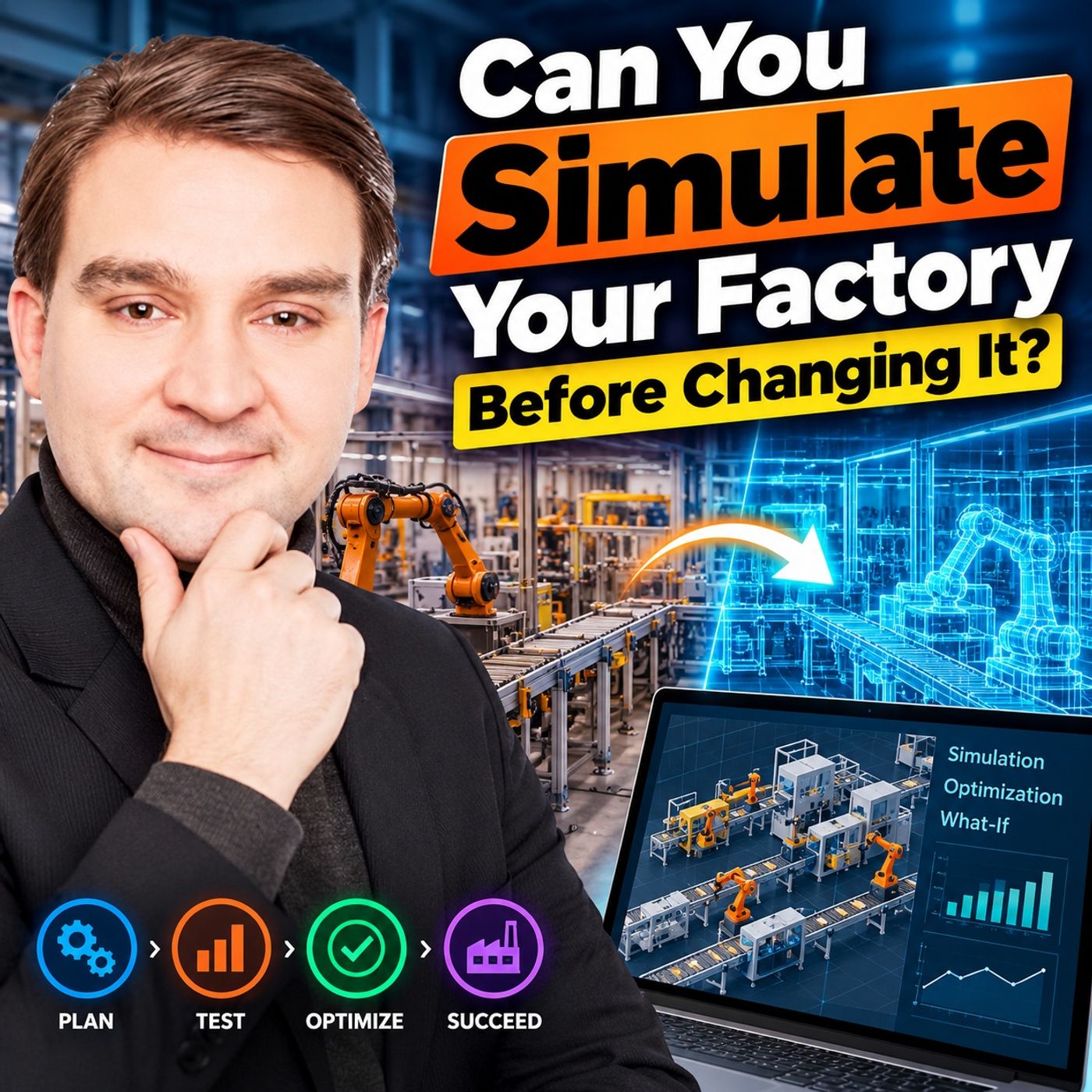
Can You Simulate Your Factory Before Changing It?
What happens when you change a factory before you know how the rest of the production system will react? Adding a shift, buying a new machine, reducing buffers, changing staffing, or accepting a different product mix can look like obvious solutions. But factories are interconnected systems. Improving capacity at one resource can simply move the bottleneck somewhere else. In this episode, we explore factory simulation, production planning, Digital Twins, finite capacity, bottleneck management, an...
Sept. 15, 2026
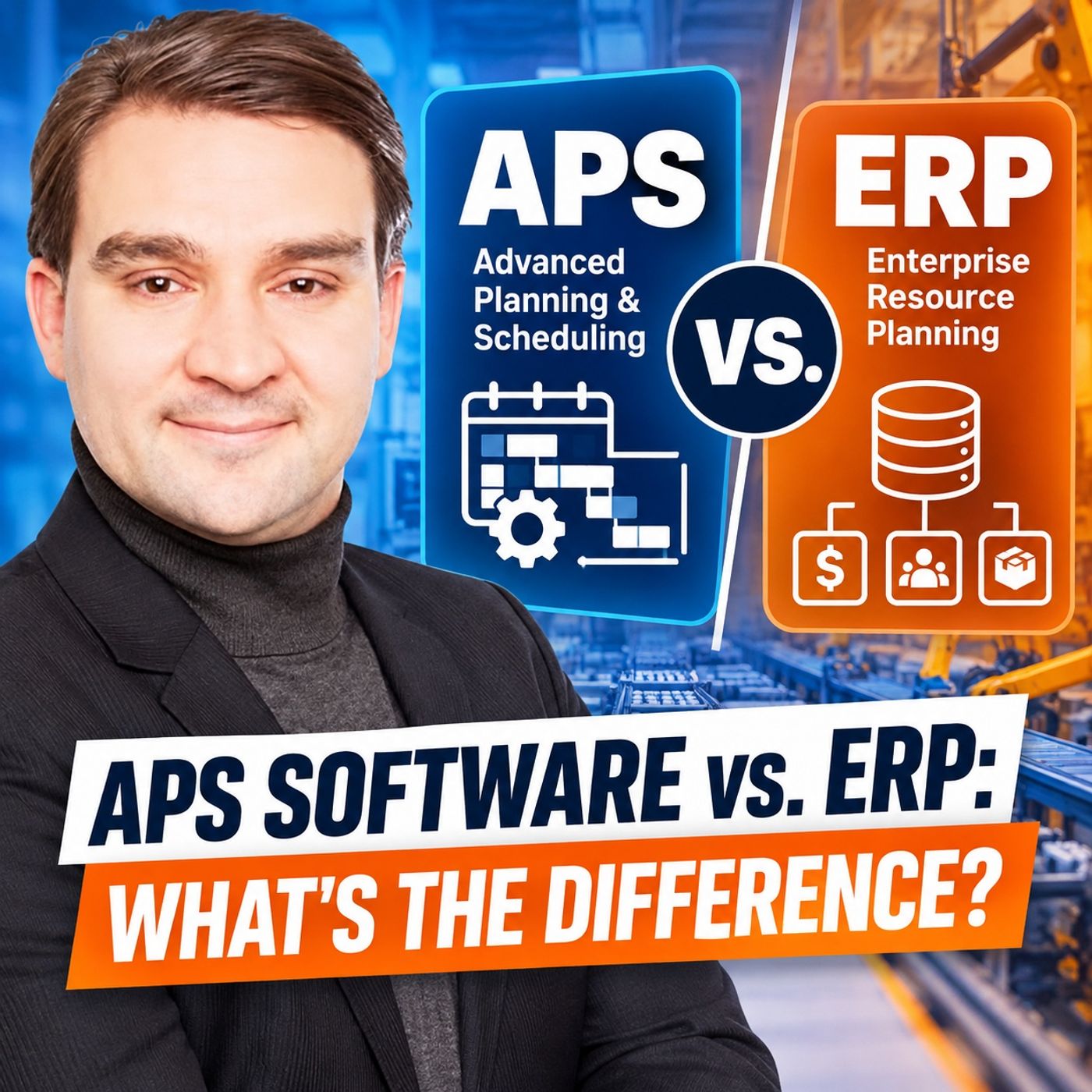
APS Software vs. ERP: What's the Difference?
Manufacturers often rely on ERP systems to manage orders, materials, inventory, purchasing, production orders, and financial transactions. But when a machine goes down, an urgent customer order arrives, or a critical operator is unavailable, a different question suddenly matters: Can the production plan actually run? That is where APS — Advanced Planning and Scheduling — differs fundamentally from ERP. ERP records and governs the business transaction. APS tests whether production can execute the...
Sept. 15, 2026
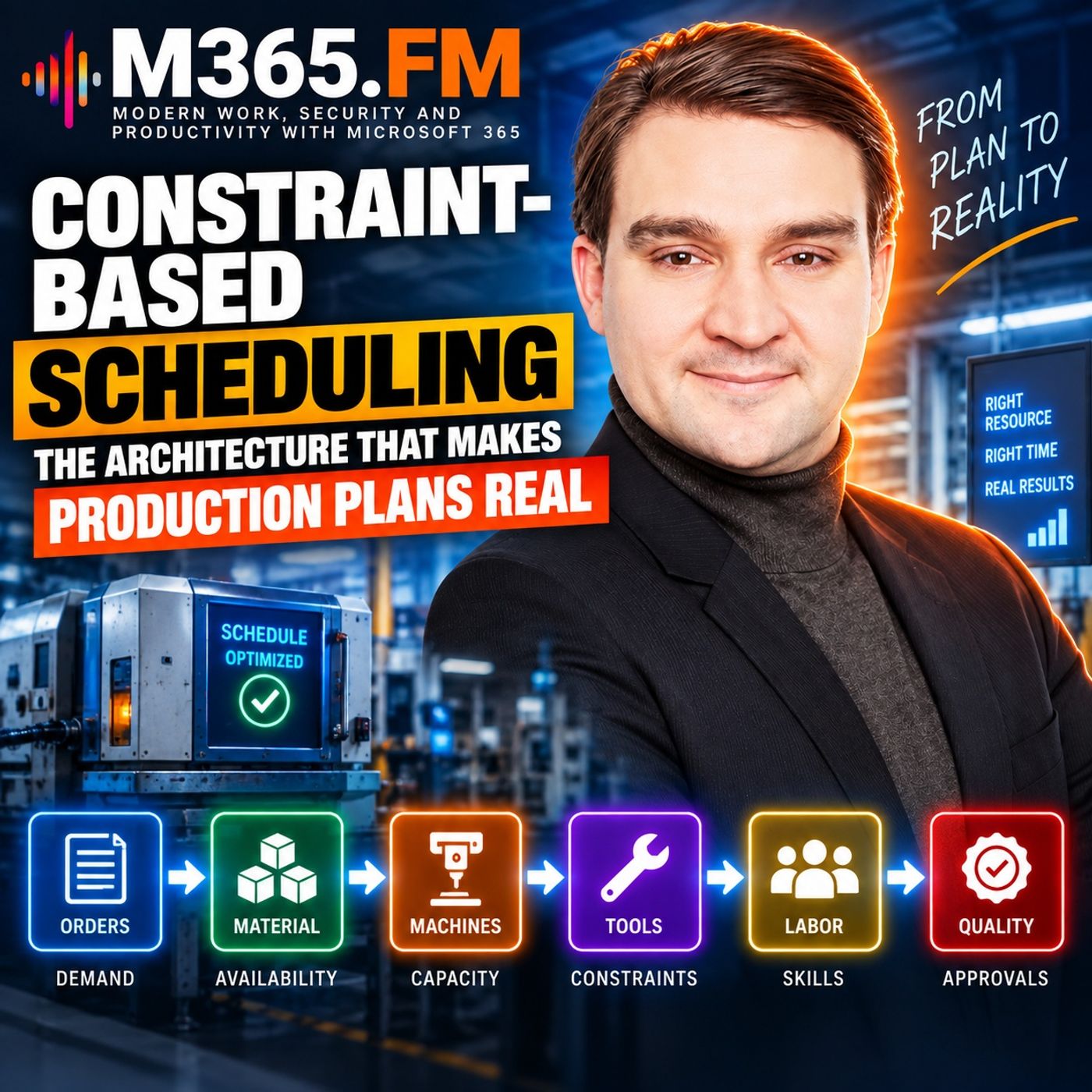
Constraint-Based Scheduling: The Architecture That Makes Production Plans Real
Your ERP says the customer order ships on Friday. The work order is released. The routing looks correct. Capacity appears available. Everything looks fine in the planning report. Then Monday morning arrives. A critical five-axis machining center goes down. One order is already in production. Another is waiting for material. A third could theoretically move to another machine — but only if the shared fixture is available, the correct program is approved, and a qualified operator is working that s...