


 Apple Podcasts
 Spotify
 Youtube Music
 Spreaker
 Podchaser
 Amazon Music
 Global Secure Access - Simply Explained
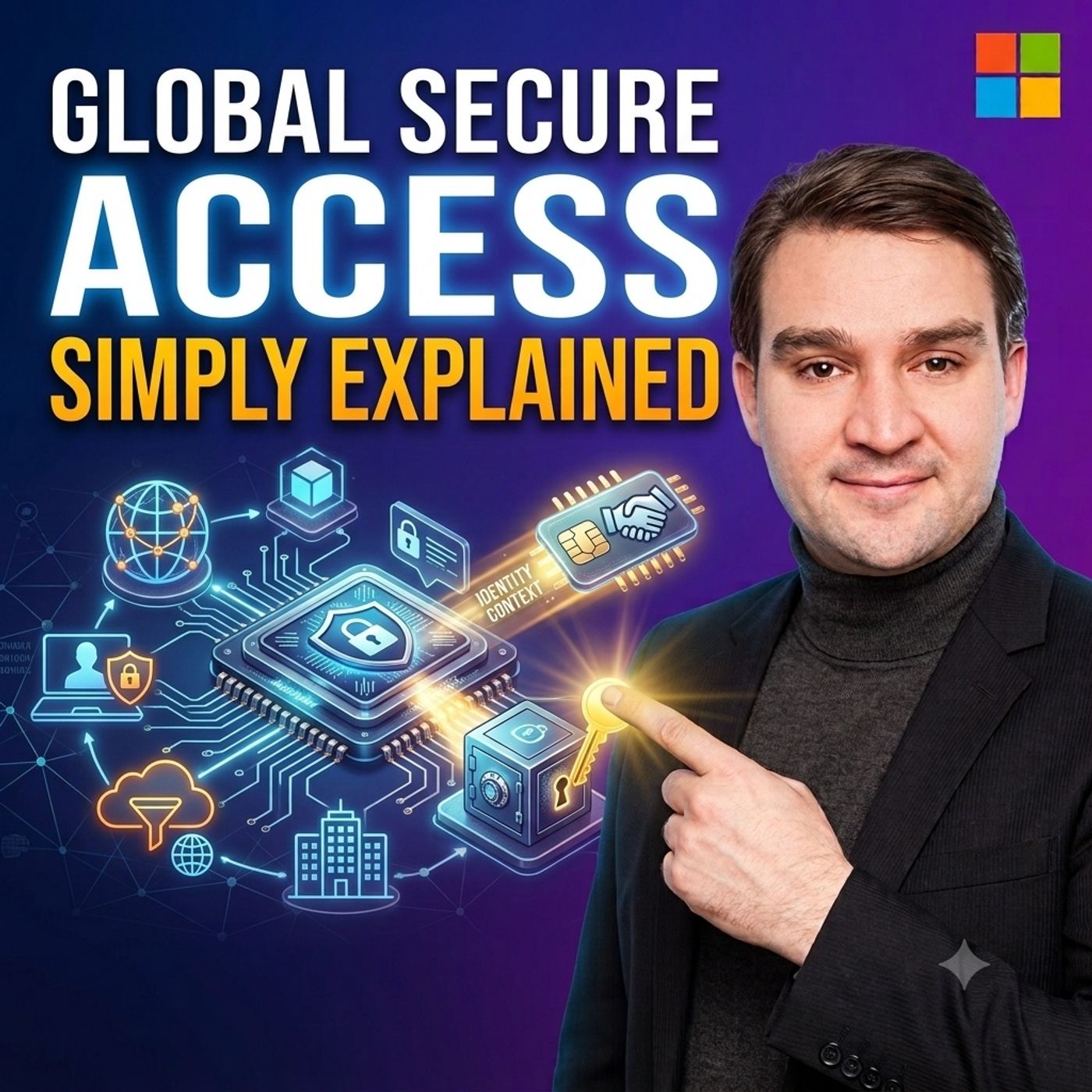
The way people work has fundamentally changed. Employees now access business applications from home offices, airports, customer sites, coffee shops, and mobile devices instead of sitting inside a corporate network. Traditional VPNs were designed for an era when applications lived inside company data centers and network boundaries provided the primary layer of security. In this Microsoft Knowledge Nuggets episode, Mirko Peters explains Microsoft Entra Global Secure Access (GSA) in plain English, showing how Microsoft replaces broad network connectivity with identity-driven Zero Trust access that grants users access only to the specific applications and services they need.
UNDERSTANDING MICROSOFT ENTRA GLOBAL SECURE ACCESS
Microsoft Entra Global Secure Access is Microsoft's cloud-delivered Security Service Edge (SSE) platform that secures access to both private enterprise applications and public internet resources. Instead of assuming that anyone connected to the company network should be trusted, Global Secure Access evaluates every connection using Microsoft Entra ID, Conditional Access, device compliance, user identity, application context, and real-time security signals. This Zero Trust approach continuously validates every request, helping organizations reduce lateral movement, simplify remote access, and strengthen security across hybrid work environments.
MICROSOFT ENTRA PRIVATE ACCESS: THE MODERN VPN REPLACEMENT
Microsoft Entra Private Access introduces Zero Trust Network Access (ZTNA) for internal business applications without exposing entire corporate networks. Rather than connecting users to broad network segments, Private Access creates secure, identity-based connections directly to specific applications, file shares, remote desktops, databases, and on-premises services. The episode explains how Private Access connectors securely bridge internal resources to Microsoft Entra without requiring public exposure while allowing organizations to replace complex VPN infrastructures with application-centric access policies. Contractors, remote workers, consultants, and hybrid employees receive only the permissions required for their assigned business tasks, dramatically reducing unnecessary network exposure.
MICROSOFT ENTRA INTERNET ACCESS AND SECURE WEB PROTECTION
Enterprise security extends beyond private applications to the public internet. Microsoft Entra Internet Access functions as a cloud-based Secure Web Gateway (SWG), applying organizational security policies before users access websites, SaaS applications, AI services, and cloud platforms. The discussion explores URL filtering, SaaS visibility, AI governance, Microsoft Purview integration, TLS inspection, file protection, and cloud application discovery. Organizations gain greater visibility into internet usage while protecting sensitive business information from unauthorized uploads, malicious websites, shadow IT, and emerging AI services that may introduce compliance or data protection risks.
ZERO TRUST IDENTITY, CONDITIONAL ACCESS, AND CONTINUOUS VERIFICATION
Identity sits at the center of every access decision. Microsoft Entra ID verifies user identity while Conditional Access evaluates additional factors such as device compliance, Microsoft Intune management, Microsoft Defender security signals, multifactor authentication, user risk, session risk, and organizational policies. Instead of granting permanent trust after a VPN connection is established, Global Secure Access continuously evaluates whether users should maintain access based on changing conditions throughout their session. This adaptive security model allows organizations to respond immediately when devices become non-compliant, accounts show suspicious behavior, or security risks increase.
BUILDING A MODERN ZERO TRUST ACCESS STRATEGY
Microsoft Entra Global Secure Access represents a fundamental shift from network-centric security toward identity-first access control. By combining Microsoft Entra Private Access, Microsoft Entra Internet Access, Conditional Access, Microsoft Intune, Microsoft Defender, Microsoft Purview, Zero Trust principles, and Security Service Edge architecture, organizations can secure both private applications and internet traffic through a unified cloud platform. Businesses beginning their Zero Trust journey should start with a focused pilot involving a single user group and business application before gradually expanding secure identity-based access across the enterprise. The result is a simpler, more scalable, and significantly more secure approach to modern hybrid work.
Become a supporter of this podcast: https://www.spreaker.com/podcast/m365-fm-modern-work-security-and-productivity-with-microsoft-365--6704921/support.
🚀 Want to be part of m365.fm?
Then stop just listening… and start showing up.
👉 Connect with me on LinkedIn and let’s make something happen:
- 🎙️ Be a podcast guest and share your story
- 🎧 Host your own episode (yes, seriously)
- 💡 Pitch topics the community actually wants to hear
- 🌍 Build your personal brand in the Microsoft 365 space
This isn’t just a podcast — it’s a platform for people who take action.
🔥 Most people wait. The best ones don’t.
👉 Connect with me on LinkedIn and send me a message:
"I want in"
Let’s build something awesome 👊
00:00:00,000 --> 00:00:03,400
Imagine you're sitting in a coffee shop with your work laptop needing one thing,
2
00:00:03,400 --> 00:00:07,100
an internal finance app that only works from inside the company network.
3
00:00:07,100 --> 00:00:09,900
So you start the old VPN, wait for it to connect,
4
00:00:09,900 --> 00:00:12,900
and then you're effectively through the front door of the company building.
5
00:00:12,900 --> 00:00:14,500
That probably sounds normal, right?
6
00:00:14,500 --> 00:00:16,000
But think about what just happened.
7
00:00:16,000 --> 00:00:20,500
You needed one room, yet the VPN gives your device a root into a much larger part of the building,
8
00:00:20,500 --> 00:00:23,100
like asking reception for access to one meeting room,
9
00:00:23,100 --> 00:00:25,600
then getting a master key for most of the floor.
10
00:00:25,600 --> 00:00:28,500
That old way made sense when nearly everyone worked in one office,
11
00:00:28,500 --> 00:00:32,500
company apps lived in one data center, and the network itself felt like a safe place.
12
00:00:32,500 --> 00:00:34,500
But work doesn't look like that anymore.
13
00:00:34,500 --> 00:00:37,900
People work from home, airports, customer sites, and coffee shops.
14
00:00:37,900 --> 00:00:40,500
Some company apps still sit in an office or data center,
15
00:00:40,500 --> 00:00:43,100
while other tools live in the cloud, and every browser,
16
00:00:43,100 --> 00:00:47,600
Sass app, file sharing site, and AI tool creates another route where company data could leave.
17
00:00:47,600 --> 00:00:50,700
So what exactly is Microsoft, Entra, global, secure access?
18
00:00:50,700 --> 00:00:52,100
Is it just a new VPN?
19
00:00:52,100 --> 00:00:54,300
No, it's a different way to think about access.
20
00:00:54,300 --> 00:00:56,800
Global secure access, often shortened to GSA,
21
00:00:56,800 --> 00:01:00,200
helps the company give you a checked pass to the exact place you need to reach,
22
00:01:00,200 --> 00:01:04,400
instead of treating a VPN connection like permission to enter a broad part of the network.
23
00:01:04,400 --> 00:01:09,400
By the end of this knowledge nugget, you'll understand why the old VPN models struggles with modern work,
24
00:01:09,400 --> 00:01:12,200
how identity moves to the center of the decision,
25
00:01:12,200 --> 00:01:14,400
and how Microsoft entra private access,
26
00:01:14,400 --> 00:01:17,400
and Microsoft entra internet access fit together.
27
00:01:17,400 --> 00:01:19,000
We'll start with the old model first,
28
00:01:19,000 --> 00:01:23,200
because the new model makes far more sense once you see the problem it tries to fix.
29
00:01:23,200 --> 00:01:26,000
Why traditional VPNs no longer fit?
30
00:01:26,000 --> 00:01:28,200
A traditional VPN has a simple job.
31
00:01:28,200 --> 00:01:33,000
It creates an encrypted tunnel from your remote device back into the company network.
32
00:01:33,000 --> 00:01:36,200
Picture an employee working from home who needs to open a file share,
33
00:01:36,200 --> 00:01:37,600
connect to a remote desktop,
34
00:01:37,600 --> 00:01:41,200
or use an internal finance app that isn't available on the public internet.
35
00:01:41,200 --> 00:01:44,200
The VPN gives that employee a protected route back to the company
36
00:01:44,200 --> 00:01:46,200
for years that solved a real problem.
37
00:01:46,200 --> 00:01:49,200
Your traffic crossed the internet inside an encrypted tunnel
38
00:01:49,200 --> 00:01:52,800
and the company could treat your laptop more like it was sitting in the office.
39
00:01:52,800 --> 00:01:54,400
But here's where the trouble starts.
40
00:01:54,400 --> 00:01:58,000
After the tunnel connects, a VPN usually connects you to a network area,
41
00:01:58,000 --> 00:02:00,000
not necessarily to a single named app.
42
00:02:00,000 --> 00:02:03,000
That different sounds small, but it changes everything.
43
00:02:03,000 --> 00:02:06,200
Imagine you work in a large office building and need to book one meeting room.
44
00:02:06,200 --> 00:02:07,800
You show your badge at the front desk,
45
00:02:07,800 --> 00:02:09,800
and instead of receiving a pass for that room,
46
00:02:09,800 --> 00:02:12,000
you get a master key for an entire office floor.
47
00:02:12,000 --> 00:02:13,600
You may only intend to use one room,
48
00:02:13,600 --> 00:02:17,200
but still more doors are now visible and reachable than your job requires.
49
00:02:17,200 --> 00:02:19,800
A traditional VPN works the same way.
50
00:02:19,800 --> 00:02:21,800
A person who needs one file share,
51
00:02:21,800 --> 00:02:25,000
or one internal web app may receive access to a network segment
52
00:02:25,000 --> 00:02:26,600
where many other systems sit.
53
00:02:26,600 --> 00:02:30,000
Companies can limit that access with network rules, firewall rules,
54
00:02:30,000 --> 00:02:31,600
and separate VPN groups,
55
00:02:31,600 --> 00:02:34,600
but those controls become hard to manage as the number of users, apps,
56
00:02:34,600 --> 00:02:37,200
contractors, locations, and exceptions grows.
57
00:02:37,200 --> 00:02:40,000
And if a sign-in goes wrong or a device becomes compromised,
58
00:02:40,000 --> 00:02:41,800
broad access creates a bigger problem.
59
00:02:41,800 --> 00:02:45,000
An attacker who gains control of a connected device may see more systems
60
00:02:45,000 --> 00:02:48,400
than they should and more visible systems mean more places to try next.
61
00:02:48,400 --> 00:02:50,400
That's what people mean by lateral movement.
62
00:02:50,400 --> 00:02:53,200
Moving from one system to another after getting an initial way in.
63
00:02:53,200 --> 00:02:57,200
Now, the issue isn't that every VPN automatically gives access to everything.
64
00:02:57,200 --> 00:02:59,200
Well-managed VPNs can restrict access.
65
00:02:59,200 --> 00:03:02,200
The real issue is that the VPN model starts with the network,
66
00:03:02,200 --> 00:03:05,200
often asking, "has this person connected to the right network?"
67
00:03:05,200 --> 00:03:08,600
Then it uses network routes and rules to decide what happens next.
68
00:03:08,600 --> 00:03:10,600
Modern work needs a more focused question.
69
00:03:10,600 --> 00:03:12,600
Another problem is the route your traffic takes.
70
00:03:12,600 --> 00:03:15,000
Suppose you're at home and opening a cloud service.
71
00:03:15,000 --> 00:03:17,200
With a traditional full-tunnel VPN setup,
72
00:03:17,200 --> 00:03:19,200
your internet traffic might travel from your home
73
00:03:19,200 --> 00:03:22,000
to the company VPN gateway, then out to the cloud service,
74
00:03:22,000 --> 00:03:25,000
even when that service doesn't sit anywhere near the company office.
75
00:03:25,000 --> 00:03:27,200
It's like driving across town to pick up a package,
76
00:03:27,200 --> 00:03:30,400
then returning to the same area where you started before taking it home,
77
00:03:30,400 --> 00:03:32,000
and that extra trip adds delay
78
00:03:32,000 --> 00:03:35,000
and puts more pressure on the company's central VPN equipment.
79
00:03:35,000 --> 00:03:37,400
This became especially clear when remote work became normal.
80
00:03:37,400 --> 00:03:42,400
VPN systems were often designed for a smaller number of people working away from the office at the same time.
81
00:03:42,400 --> 00:03:45,800
So when large parts of a workforce needed remote access every day,
82
00:03:45,800 --> 00:03:50,600
companies had to deal with more connections, more traffic, and more support issues.
83
00:03:50,600 --> 00:03:52,200
Users felt that too.
84
00:03:52,200 --> 00:03:53,400
They had to remember to connect.
85
00:03:53,400 --> 00:03:55,600
They could lose the connection when moving between networks
86
00:03:55,600 --> 00:03:57,000
and when something didn't work.
87
00:03:57,000 --> 00:03:59,600
It wasn't always clear whether the issue involved the laptop,
88
00:03:59,600 --> 00:04:04,000
the home internet connection, the VPN, the company network, or the app itself.
89
00:04:04,000 --> 00:04:06,200
The old VPN checks you at the front gate,
90
00:04:06,200 --> 00:04:08,200
then may trust the connection too broadly.
91
00:04:08,200 --> 00:04:10,600
Modern access keeps asking more useful questions.
92
00:04:10,600 --> 00:04:11,600
Who are you?
93
00:04:11,600 --> 00:04:13,000
What device are you using?
94
00:04:13,000 --> 00:04:14,000
What are you trying to reach?
95
00:04:14,000 --> 00:04:16,800
And should you still be allowed to reach it right now?
96
00:04:16,800 --> 00:04:19,000
The core idea, identity at the center.
97
00:04:19,000 --> 00:04:22,200
So what takes the place of that old network first way of thinking?
98
00:04:22,200 --> 00:04:25,200
Microsoft Entra Global Secure Access, GSA for short,
99
00:04:25,200 --> 00:04:28,200
is Microsoft's cloud-based service that secures access
100
00:04:28,200 --> 00:04:31,000
to both private company resources and the public internet.
101
00:04:31,000 --> 00:04:33,000
That name sounds heavy, so let's make it plain.
102
00:04:33,000 --> 00:04:36,600
GSA is the security layer that decides whether you can reach a company app,
103
00:04:36,600 --> 00:04:38,200
a website, or a cloud service.
104
00:04:38,200 --> 00:04:41,200
It makes that call based on who you are, the device you use,
105
00:04:41,200 --> 00:04:43,200
and the rules your organization sets.
106
00:04:43,200 --> 00:04:45,200
GSA works with two types of destinations,
107
00:04:45,200 --> 00:04:48,400
private ones like an internal app that still lives in a company data center.
108
00:04:48,400 --> 00:04:52,200
And public ones like SaaS services, websites, and AI tools on the internet.
109
00:04:52,200 --> 00:04:55,200
It handles both, but it doesn't treat them as one big blob.
110
00:04:55,200 --> 00:04:57,400
It looks at the specific route you're asking for.
111
00:04:57,400 --> 00:05:01,000
You might also hear the term security service edge, or SSE.
112
00:05:01,000 --> 00:05:03,200
Sounds complicated, but the idea is simple.
113
00:05:03,200 --> 00:05:06,400
In the old setup, most security checking lived at company headquarters.
114
00:05:06,400 --> 00:05:09,400
Your traffic had to travel all the way back to that central location,
115
00:05:09,400 --> 00:05:11,800
so the company could inspect it and apply its rules.
116
00:05:11,800 --> 00:05:16,400
With SSE, those checks move into a cloud service that sits closer to users and cloud services.
117
00:05:16,400 --> 00:05:19,800
Think of it like moving a security desk from one distant office building
118
00:05:19,800 --> 00:05:23,000
to well-placed stations that can handle access wherever people work.
119
00:05:23,000 --> 00:05:25,000
The security rules still belong to the company,
120
00:05:25,000 --> 00:05:28,800
but where those rules are applied no longer depends only on a central office network.
121
00:05:28,800 --> 00:05:31,600
That matters because work now happens in more places,
122
00:05:31,600 --> 00:05:34,000
and company tools live in more places too.
123
00:05:34,000 --> 00:05:37,200
Underneath GSA is an approach called zero trust.
124
00:05:37,200 --> 00:05:39,200
Zero trust doesn't mean trusting nobody forever.
125
00:05:39,200 --> 00:05:44,000
It means a connection doesn't earn broad permission, just because it comes from a familiar network,
126
00:05:44,000 --> 00:05:46,400
a company location, or an encrypted tunnel.
127
00:05:46,400 --> 00:05:47,800
Every request needs context.
128
00:05:47,800 --> 00:05:51,200
The system checks your identity, your device, where policy requires it,
129
00:05:51,200 --> 00:05:52,800
and the destination you're requesting.
130
00:05:52,800 --> 00:05:54,600
This is where Microsoft Enter ID comes in.
131
00:05:54,600 --> 00:05:58,200
Think of Enter ID as the reception desk for your company's digital building.
132
00:05:58,200 --> 00:06:02,200
When you sign in, it checks your identity and knows which groups or roles that account belongs to.
133
00:06:02,200 --> 00:06:05,400
Then conditional access applies the company's access rules.
134
00:06:05,400 --> 00:06:08,000
Conditional access is the rule book at that reception desk.
135
00:06:08,000 --> 00:06:11,000
It can decide that a certain app needs more proof before you enter.
136
00:06:11,000 --> 00:06:14,600
It can require multi-factor authentication, often called MFA,
137
00:06:14,600 --> 00:06:17,400
or it can require that you use a company-managed device
138
00:06:17,400 --> 00:06:19,400
that meets the organization's security rules.
139
00:06:19,400 --> 00:06:22,600
Imagine someone in finance opening a sensitive internal finance app.
140
00:06:22,600 --> 00:06:25,800
They may already have signed into their laptop earlier that day.
141
00:06:25,800 --> 00:06:29,600
Even so, the finance app can trigger another check because the app is sensitive
142
00:06:29,600 --> 00:06:32,200
and the company wants stronger proof at that moment.
143
00:06:32,200 --> 00:06:34,800
The person receives an MFA prompt, completes it,
144
00:06:34,800 --> 00:06:37,200
and then gets access to that specific app.
145
00:06:37,200 --> 00:06:39,400
The decision follows the app and the situation.
146
00:06:39,400 --> 00:06:42,400
It isn't only tied to where the person happens to be sitting.
147
00:06:42,400 --> 00:06:44,000
That decision can change too.
148
00:06:44,000 --> 00:06:47,200
Suppose a security signal suggests the account may be at risk
149
00:06:47,200 --> 00:06:49,600
or the device no longer meets the company's rules.
150
00:06:49,600 --> 00:06:52,000
Enter can require the person to sign in again,
151
00:06:52,000 --> 00:06:54,400
ask for stronger proof, or stop access.
152
00:06:54,400 --> 00:06:57,200
The company doesn't have to wait for an old-style remote connection
153
00:06:57,200 --> 00:06:59,000
to end before it responds.
154
00:06:59,000 --> 00:07:01,800
This is the practical meaning of least privilege access.
155
00:07:01,800 --> 00:07:04,600
You get access to the app or destination you need for your job.
156
00:07:04,600 --> 00:07:07,400
You don't automatically get access to everything sitting behind it.
157
00:07:07,400 --> 00:07:08,800
For that to happen on a managed device,
158
00:07:08,800 --> 00:07:11,400
GSA uses the Global Secure Access client.
159
00:07:11,400 --> 00:07:14,400
Think of the client as a secure courier on your laptop.
160
00:07:14,400 --> 00:07:16,400
When you open something covered by GSA,
161
00:07:16,400 --> 00:07:19,000
the client sends that selected traffic through the service
162
00:07:19,000 --> 00:07:21,600
so Entra can apply the right checks behind the scenes.
163
00:07:21,600 --> 00:07:25,000
You usually don't need to decide which route to take the rules to that work.
164
00:07:25,000 --> 00:07:27,800
With that foundation in place, let's look at the first building block,
165
00:07:27,800 --> 00:07:30,600
the part that handles access to private company apps.
166
00:07:30,600 --> 00:07:33,400
Entra private access, the modern VPN replacement.
167
00:07:33,400 --> 00:07:36,200
The first building block is Microsoft Entra private access.
168
00:07:36,200 --> 00:07:39,200
This is Microsoft's Zero Trust Network Access Service.
169
00:07:39,200 --> 00:07:40,800
Often shortened to ZTNA.
170
00:07:40,800 --> 00:07:42,600
That name is long, but the job is simple.
171
00:07:42,600 --> 00:07:46,200
Private access gives you secure access to a specific company app or service
172
00:07:46,200 --> 00:07:49,000
without giving you broad access across the company network.
173
00:07:49,000 --> 00:07:52,000
Think about the kinds of tools that still sit behind company walls.
174
00:07:52,000 --> 00:07:54,000
It might be an on-premises file share.
175
00:07:54,000 --> 00:07:56,000
It could be a remote desktop system,
176
00:07:56,000 --> 00:07:58,000
used to reach a work computer or server.
177
00:07:58,000 --> 00:08:02,000
Maybe it's an internal web app for expenses, stock control or customer records.
178
00:08:02,000 --> 00:08:05,600
It could also be a business app connected to a database or a workload
179
00:08:05,600 --> 00:08:08,600
running in another cloud that the public internet can't reach.
180
00:08:08,600 --> 00:08:09,800
These are private resources.
181
00:08:09,800 --> 00:08:12,800
They aren't meant for anyone on the internet to open in a browser.
182
00:08:12,800 --> 00:08:15,800
In the old approach, you would often connect to the VPN first,
183
00:08:15,800 --> 00:08:19,200
then use the network routes available to find the resource you needed.
184
00:08:19,200 --> 00:08:20,800
Private access flips that around.
185
00:08:20,800 --> 00:08:22,800
You define the app or service a person needs.
186
00:08:22,800 --> 00:08:25,200
Then you give that person a controlled path to that app.
187
00:08:25,200 --> 00:08:27,200
Nothing else needs to come along for the ride.
188
00:08:27,200 --> 00:08:29,400
Imagine a service door inside the company building.
189
00:08:29,400 --> 00:08:31,400
It doesn't open the whole building to the street.
190
00:08:31,400 --> 00:08:34,200
Instead, it connects one approved room to a guarded route for people
191
00:08:34,200 --> 00:08:35,600
who have permission to enter.
192
00:08:35,600 --> 00:08:38,400
That service door is similar to a private access connector.
193
00:08:38,400 --> 00:08:41,800
A connector runs inside the company network close to the private apps
194
00:08:41,800 --> 00:08:45,400
and creates an outbound connection to the global secure access service.
195
00:08:45,400 --> 00:08:47,000
The connector reaches out from inside.
196
00:08:47,000 --> 00:08:50,200
That matters because the company doesn't need to put a public front door
197
00:08:50,200 --> 00:08:53,800
directly in front of the private app, just so remote users can reach it.
198
00:08:53,800 --> 00:08:57,200
Instead, the approved traffic follows the controlled route through the connector
199
00:08:57,200 --> 00:08:58,600
to the specific app.
200
00:08:58,600 --> 00:09:00,000
Let's use a contractor as an example.
201
00:09:00,000 --> 00:09:04,400
A contractor joins a project for six months and needs access to one internal project tool.
202
00:09:04,400 --> 00:09:08,000
With a broad VPN setup, somebody might add that contractor to a VPN group
203
00:09:08,000 --> 00:09:09,600
that reaches a section of the network.
204
00:09:09,600 --> 00:09:13,600
That group may work, but it can also carry more access than the contractor actually needs.
205
00:09:13,600 --> 00:09:17,600
With private access, the contractor can receive access to that one project tool.
206
00:09:17,600 --> 00:09:20,400
Not the nearby file server, not another internal website,
207
00:09:20,400 --> 00:09:23,200
not a set of systems that happen to sit on the same network.
208
00:09:23,200 --> 00:09:25,800
Just a project tool under the company's sign-in rules.
209
00:09:25,800 --> 00:09:27,800
Those rules can be different for different apps.
210
00:09:27,800 --> 00:09:29,800
Enter ID checks who the contractor is.
211
00:09:29,800 --> 00:09:33,200
Conditional access can require MFA before access to the project tool.
212
00:09:33,200 --> 00:09:36,400
The company can require a managed device, depending on its policy,
213
00:09:36,400 --> 00:09:40,600
and can also use device condition and risk signals when deciding whether access should continue.
214
00:09:40,600 --> 00:09:44,000
So the access decision is not just, is the contractor connected?
215
00:09:44,000 --> 00:09:47,600
It becomes, is this the right contractor on an accepted device
216
00:09:47,600 --> 00:09:50,600
asking for the approved app under the current conditions?
217
00:09:50,600 --> 00:09:52,600
That is much closer to how people actually work.
218
00:09:52,600 --> 00:09:54,200
You don't need access to a network.
219
00:09:54,200 --> 00:09:56,400
You need access to a tool that helps you do a job.
220
00:09:56,400 --> 00:10:00,600
For the company that can mean fewer large VPN groups and fewer hard-to-explain exceptions,
221
00:10:00,600 --> 00:10:03,000
it also creates a clearer answer when someone asks,
222
00:10:03,000 --> 00:10:05,000
"Who can reach this private resource?"
223
00:10:05,000 --> 00:10:08,000
The answer can be a named group of users and a named app,
224
00:10:08,000 --> 00:10:10,000
rather than a complicated set of network paths.
225
00:10:10,000 --> 00:10:12,800
There's another useful detail for people working inside an office.
226
00:10:12,800 --> 00:10:15,800
Sometimes you sit on the same local network as the private app you need,
227
00:10:15,800 --> 00:10:18,600
sending all of that app traffic out to the cloud and back again
228
00:10:18,600 --> 00:10:20,200
would create an unnecessary trip.
229
00:10:20,200 --> 00:10:24,000
Private access includes intelligent local access for supported situations.
230
00:10:24,000 --> 00:10:26,600
It can keep the local app traffic on the local network,
231
00:10:26,600 --> 00:10:29,200
while the identity check still goes to Microsoft Entra.
232
00:10:29,200 --> 00:10:31,200
You get the local route where it makes sense,
233
00:10:31,200 --> 00:10:33,800
while the access decision still follows the company's rules.
234
00:10:33,800 --> 00:10:37,200
Private access can modernize many VPN scenarios, but it isn't magic.
235
00:10:37,200 --> 00:10:39,200
A company still needs to understand its apps,
236
00:10:39,200 --> 00:10:41,400
the protocols those apps use, who needs access,
237
00:10:41,400 --> 00:10:42,800
which devices are involved,
238
00:10:42,800 --> 00:10:45,200
and what existing network needs must remain.
239
00:10:45,200 --> 00:10:46,200
That planning matters,
240
00:10:46,200 --> 00:10:49,400
because moving from broad network access to specific app access
241
00:10:49,400 --> 00:10:52,400
means being clear about what each person actually needs.
242
00:10:52,400 --> 00:10:56,000
Private access protects the company tools hidden behind the office walls,
243
00:10:56,000 --> 00:10:59,000
but employees also spend much of the day on websites,
244
00:10:59,000 --> 00:11:02,000
SaaS tools, cloud storage, and AI services.
245
00:11:02,000 --> 00:11:03,800
The second building block watches traffic,
246
00:11:03,800 --> 00:11:06,000
leaving the building for the public internet.
247
00:11:06,000 --> 00:11:08,400
Entra internet access, the secure web gateway,
248
00:11:08,400 --> 00:11:12,600
so the other half of global secure access is Microsoft Entra Internet access,
249
00:11:12,600 --> 00:11:14,800
the secure web gateway side of the service.
250
00:11:14,800 --> 00:11:16,400
Most people call it SBIRG.
251
00:11:16,400 --> 00:11:19,600
Private access handles company resources behind private walls,
252
00:11:19,600 --> 00:11:23,200
while internet access handles traffic going out to the public internet.
253
00:11:23,200 --> 00:11:25,000
In plain English, it's a cloud service
254
00:11:25,000 --> 00:11:28,400
that applies company security rules before users reach websites,
255
00:11:28,400 --> 00:11:30,600
SaaS apps, and other public destinations.
256
00:11:30,600 --> 00:11:31,600
Why does that matter?
257
00:11:31,600 --> 00:11:34,600
Because work doesn't happen in just one browser tab anymore.
258
00:11:34,600 --> 00:11:36,200
You might use a web browser for research.
259
00:11:36,200 --> 00:11:38,600
A desktop app could connect to a cloud service.
260
00:11:38,600 --> 00:11:40,400
Someone might open personal web mail,
261
00:11:40,400 --> 00:11:42,400
upload a document to cloud storage,
262
00:11:42,400 --> 00:11:44,800
or ask an AI tool to summarize a file.
263
00:11:44,800 --> 00:11:47,000
Each action creates a route out of the company,
264
00:11:47,000 --> 00:11:49,000
and some routes lead to harmful websites,
265
00:11:49,000 --> 00:11:51,200
while others can cause data to leave by mistake.
266
00:11:51,200 --> 00:11:52,600
Think of internet access,
267
00:11:52,600 --> 00:11:55,600
like a security checkpoint at the exit of an office building.
268
00:11:55,600 --> 00:11:58,000
People can still leave and send packages where they need to go,
269
00:11:58,000 --> 00:11:59,200
but before a package leaves,
270
00:11:59,200 --> 00:12:00,800
the checkpoint checks the destination
271
00:12:00,800 --> 00:12:02,200
and applies the company's rules.
272
00:12:02,200 --> 00:12:04,200
Is this destination known to be harmful?
273
00:12:04,200 --> 00:12:05,800
Is this service allowed for this group?
274
00:12:05,800 --> 00:12:07,400
Is this package allowed to leave at all?
275
00:12:07,400 --> 00:12:10,000
Here's the thing, that check follows the user.
276
00:12:10,000 --> 00:12:12,400
Someone working from home gets the same web rules
277
00:12:12,400 --> 00:12:14,600
as someone in a branch office or at a company desk.
278
00:12:14,600 --> 00:12:17,800
If the organization blocks a harmful website category,
279
00:12:17,800 --> 00:12:21,000
that rule doesn't disappear just because the employee is on home Wi-Fi.
280
00:12:21,000 --> 00:12:23,600
The same idea applies to SAS apps and AI services.
281
00:12:23,600 --> 00:12:26,600
A company might discover that employees use cloud tools
282
00:12:26,600 --> 00:12:28,000
nobody formally approved.
283
00:12:28,000 --> 00:12:30,000
That doesn't always mean they did something wrong.
284
00:12:30,000 --> 00:12:32,600
Often they were just trying to get work done faster.
285
00:12:32,600 --> 00:12:35,000
Still, the company needs to know which tools are in use
286
00:12:35,000 --> 00:12:37,000
before it can make a sensible choice.
287
00:12:37,000 --> 00:12:39,000
Internet access provides that visibility.
288
00:12:39,000 --> 00:12:41,800
The company can see an unapproved cloud app or AI tool
289
00:12:41,800 --> 00:12:42,800
showing up in traffic,
290
00:12:42,800 --> 00:12:44,200
then decide what to do next.
291
00:12:44,200 --> 00:12:45,600
It might allow the service,
292
00:12:45,600 --> 00:12:47,200
limit what users can do there,
293
00:12:47,200 --> 00:12:50,000
or block it because it doesn't meet security or data rules.
294
00:12:50,000 --> 00:12:52,200
That's a much more useful conversation than simply
295
00:12:52,200 --> 00:12:54,200
hoping people only use approved tools.
296
00:12:54,200 --> 00:12:55,400
Let's make this more real.
297
00:12:55,400 --> 00:12:57,400
Imagine an employee has a planning document
298
00:12:57,400 --> 00:12:59,200
and wants an AI tool to summarize it.
299
00:12:59,200 --> 00:13:01,000
They drag the file into an AI app,
300
00:13:01,000 --> 00:13:02,400
the company hasn't approved.
301
00:13:02,400 --> 00:13:04,800
If the organization uses network file filtering
302
00:13:04,800 --> 00:13:06,000
with Microsoft PerView,
303
00:13:06,000 --> 00:13:09,000
it can scan supported file types under the company's policy.
304
00:13:09,000 --> 00:13:10,800
If that planning document matches a rule,
305
00:13:10,800 --> 00:13:13,800
the upload gets blocked before the file reaches the AI service.
306
00:13:13,800 --> 00:13:15,600
The employee sees the upload failed
307
00:13:15,600 --> 00:13:18,400
and behind the scenes the company has stopped a document
308
00:13:18,400 --> 00:13:20,200
from leaving through an unapproved route.
309
00:13:20,200 --> 00:13:22,800
That isn't about blocking every new tool by default.
310
00:13:22,800 --> 00:13:24,800
It's about giving the organization a way to decide
311
00:13:24,800 --> 00:13:26,200
which data can go where.
312
00:13:26,200 --> 00:13:28,200
The rules can also change based on context.
313
00:13:28,200 --> 00:13:29,800
The same website or cloud service
314
00:13:29,800 --> 00:13:32,200
might be allowed for one group and blocked for another.
315
00:13:32,200 --> 00:13:34,600
A company managed device may receive more access
316
00:13:34,600 --> 00:13:36,000
than an unknown device,
317
00:13:36,000 --> 00:13:37,800
and a user account with a risk signal
318
00:13:37,800 --> 00:13:39,600
may face stricter rules than normal.
319
00:13:39,600 --> 00:13:41,800
That's possible because Internet access works with
320
00:13:41,800 --> 00:13:44,600
Android controls instead of treating all web traffic as identical.
321
00:13:44,600 --> 00:13:46,400
There's one technical idea worth knowing here,
322
00:13:46,400 --> 00:13:47,600
TLS inspection.
323
00:13:47,600 --> 00:13:49,200
Most web traffic is encrypted,
324
00:13:49,200 --> 00:13:50,400
and that's normally a good thing
325
00:13:50,400 --> 00:13:51,800
because it protects information
326
00:13:51,800 --> 00:13:53,200
while traveling across the Internet.
327
00:13:53,200 --> 00:13:55,200
But encryption also means a security service
328
00:13:55,200 --> 00:13:56,400
can't read the contents
329
00:13:56,400 --> 00:13:58,200
unless the organization chooses to inspect
330
00:13:58,200 --> 00:13:59,800
that traffic under its policy.
331
00:13:59,800 --> 00:14:01,400
Think of a sealed delivery box.
332
00:14:01,400 --> 00:14:03,000
You can see the address on the outside,
333
00:14:03,000 --> 00:14:05,400
but you can't check what's inside without opening it.
334
00:14:05,400 --> 00:14:06,400
TLS inspection,
335
00:14:06,400 --> 00:14:09,000
lets the organization inspect selected encrypted traffic
336
00:14:09,000 --> 00:14:11,800
so content-based checks like file filtering can happen.
337
00:14:11,800 --> 00:14:13,400
The organization then sends the traffic
338
00:14:13,400 --> 00:14:15,200
on its way if the policy allows it.
339
00:14:15,200 --> 00:14:16,600
This needs careful thought.
340
00:14:16,600 --> 00:14:19,600
The organization chooses which traffic goes through global secure access
341
00:14:19,600 --> 00:14:21,400
and how much inspection it applies,
342
00:14:21,400 --> 00:14:23,600
and those choices should match clear internal policy,
343
00:14:23,600 --> 00:14:26,600
employee expectations, and local legal requirements.
344
00:14:26,600 --> 00:14:29,600
Internet access handles the public website of the picture
345
00:14:29,600 --> 00:14:32,600
and private access handles access to private company apps.
346
00:14:32,600 --> 00:14:34,600
They can sound like two separate products,
347
00:14:34,600 --> 00:14:36,800
but the bigger idea appears when both routes
348
00:14:36,800 --> 00:14:39,200
use the same identity and policy engine.
349
00:14:39,200 --> 00:14:41,600
How the pieces work as one system.
350
00:14:41,600 --> 00:14:43,600
This is where the full picture clicks.
351
00:14:43,600 --> 00:14:45,800
Global secure access isn't one giant tunnel
352
00:14:45,800 --> 00:14:47,600
that takes all your traffic to one place.
353
00:14:47,600 --> 00:14:48,800
It's a set of guarded routes.
354
00:14:48,800 --> 00:14:51,200
Each route has a destination, a set of rules,
355
00:14:51,200 --> 00:14:53,800
and a decision about whether you should be allowed through.
356
00:14:53,800 --> 00:14:56,600
Imagine the same employee starting work on a managed laptop.
357
00:14:56,600 --> 00:14:58,800
They sign in once using their work account.
358
00:14:58,800 --> 00:15:00,800
First, they open an internal finance app
359
00:15:00,800 --> 00:15:02,400
that request goes through private access
360
00:15:02,400 --> 00:15:05,000
because the app lives inside the company's private environment.
361
00:15:05,000 --> 00:15:07,200
Later, they open a SaaS service in a browser
362
00:15:07,200 --> 00:15:08,600
and visit an AI tool.
363
00:15:08,600 --> 00:15:10,400
Those requests go through Internet access
364
00:15:10,400 --> 00:15:12,600
because the destination sit on the public Internet.
365
00:15:12,600 --> 00:15:15,400
From the employee's view, they open the tools they need.
366
00:15:15,400 --> 00:15:17,600
Behind the scenes, the traffic takes different routes
367
00:15:17,600 --> 00:15:19,800
because the destinations need different protection.
368
00:15:19,800 --> 00:15:22,400
One shared reception desk handles the identity side.
369
00:15:22,400 --> 00:15:24,000
Entra ID knows who signed in.
370
00:15:24,000 --> 00:15:26,400
Conditional access applies the company's rules.
371
00:15:26,400 --> 00:15:28,800
Global secure access then sends the traffic
372
00:15:28,800 --> 00:15:30,000
down the right-guarded route,
373
00:15:30,000 --> 00:15:32,800
whether that means a private app or an Internet destination.
374
00:15:32,800 --> 00:15:34,200
The decision doesn't start with,
375
00:15:34,200 --> 00:15:35,600
"Are you on the company network?"
376
00:15:35,600 --> 00:15:37,200
It starts with better information.
377
00:15:37,200 --> 00:15:38,200
Who is the user?
378
00:15:38,200 --> 00:15:40,400
Is the device in an accepted condition?
379
00:15:40,400 --> 00:15:42,000
Which destination are they requesting?
380
00:15:42,000 --> 00:15:44,000
Has anything changed that makes the request more risky?
381
00:15:44,000 --> 00:15:45,800
That matters after access begins too.
382
00:15:45,800 --> 00:15:47,800
Supposed the security system detects a risk
383
00:15:47,800 --> 00:15:48,800
with an employee's account.
384
00:15:48,800 --> 00:15:51,000
Maybe the sign in activity changes in a way
385
00:15:51,000 --> 00:15:52,000
that needs attention.
386
00:15:52,000 --> 00:15:53,600
Or the device reports a problem.
387
00:15:53,600 --> 00:15:55,800
Entra can react while the person is working.
388
00:15:55,800 --> 00:15:57,400
It may ask for another sign in check,
389
00:15:57,400 --> 00:15:58,800
"Require a stronger proof"
390
00:15:58,800 --> 00:16:01,000
or stop the route to the protected destination
391
00:16:01,000 --> 00:16:02,000
near real time.
392
00:16:02,000 --> 00:16:04,800
Other Microsoft tools contribute useful signals here.
393
00:16:04,800 --> 00:16:07,800
Intune reports whether the device meets the company's device rules.
394
00:16:07,800 --> 00:16:10,800
Defender reports, threats found on the device or account.
395
00:16:10,800 --> 00:16:12,800
Pervue helps protect sensitive files
396
00:16:12,800 --> 00:16:15,200
when users try to move them to cloud destinations.
397
00:16:15,200 --> 00:16:18,200
None of these tools work as separate islands in this scenario.
398
00:16:18,200 --> 00:16:20,600
They feed information into the access decision.
399
00:16:20,600 --> 00:16:23,800
The older model builds one trusted tunnel into the network
400
00:16:23,800 --> 00:16:25,600
and tries to control everything from there.
401
00:16:25,600 --> 00:16:27,600
The newer model creates controlled paths
402
00:16:27,600 --> 00:16:30,600
to each approved destination using identity and context
403
00:16:30,600 --> 00:16:32,000
to decide what happens along the way.
404
00:16:32,000 --> 00:16:33,400
With the full system in view,
405
00:16:33,400 --> 00:16:36,000
don't try to replace every connection at once.
406
00:16:36,000 --> 00:16:37,800
Start with just one VPN use case.
407
00:16:37,800 --> 00:16:40,200
Pick one user group, one private app,
408
00:16:40,200 --> 00:16:41,800
and one clear business need.
409
00:16:41,800 --> 00:16:43,400
Then ask three plain English questions
410
00:16:43,400 --> 00:16:46,600
who needs this app, what exact app or service do they need,
411
00:16:46,600 --> 00:16:48,600
and what sign-in or device checks should apply
412
00:16:48,600 --> 00:16:50,000
before they get access.
413
00:16:50,000 --> 00:16:53,400
A focused private access pilot is your practical first step.
414
00:16:53,400 --> 00:16:56,200
After that, look at Internet Access for Web, SAS, and AI traffic.
415
00:16:56,200 --> 00:16:59,200
Bring your identity, network, device, and data protection teams
416
00:16:59,200 --> 00:17:00,400
into the conversation early
417
00:17:00,400 --> 00:17:03,400
because each team owns part of the access decision.
418
00:17:03,400 --> 00:17:05,600
Remember, access should follow the work
419
00:17:05,600 --> 00:17:07,000
not the network.
420
00:17:07,000 --> 00:17:09,200
Global secure access replaces broad tunnels
421
00:17:09,200 --> 00:17:10,400
with controlled routes.
422
00:17:10,400 --> 00:17:13,200
Start with one app, then subscribe to M365,
423
00:17:13,200 --> 00:17:15,800
EdFam, and share this with someone starting their journey.
424
00:17:15,800 --> 00:17:18,800
I'm Mirko Peters, and this has been another knowledge nugget.




