Microsoft Copilot Performance Issues

Quick Answer: Microsoft Copilot performance issues usually come from service health, network conditions, licensing or policy configuration, and the context available to Copilot. Start by checking Microsoft 365 service health, reproducing the issue with a clear prompt, confirming entitlement and permissions, then collecting the exact workload, time, and error details for support.
If you’ve ever felt let down by Microsoft Copilot, you’re in the right place. This guide lays out exactly why Copilot sometimes falls short, what you can do about it, and where Microsoft’s heading with improvements. We’ll unpack tough technical causes, human habits, prompt writing, and policy issues that can drag performance down across the enterprise.
Expect straight talk about real-world Copilot frustrations and practical ways to maximize its value. You’ll get the tools to fine-tune your prompts, shore up your organization’s readiness, and keep Copilot humming along. Whether you run IT for a large team or just want Copilot to work better at your desk, you’ll leave ready to fix issues—fast and for good.
Root Causes of Copilot Performance Issues
When Copilot doesn’t deliver like you hoped, it’s rarely just “bad luck.” The roots of underperformance are more often tangled up in a mix of technical limitations and the way people interact with Copilot day-to-day. Some issues tiptoe in from uninformed assumptions about how much Copilot can actually do, while others sneak through via loose prompt structures or poor organizational habits. In the enterprise world, even the strongest AI can get tripped up if your background data or access policies aren’t tight.
This section is your jumping-off point for understanding why Copilot may not meet expectations off the bat. Pinpointing these foundational causes is the key to lasting improvement—after all, you can’t fix what you haven’t named. We’ll walk through how common misunderstandings, weak prompt-writing, and overlooked data governance policies work together to cause frustration. Each coming section breaks down these ideas, so you’ll know exactly where to focus your energy to recover lost productivity and build a path forward that sticks.
Misunderstanding Copilot’s Scope Leads to Performance Frustration
A frequent stumbling block is mismatched expectations about what Copilot can and can’t do. People often expect Copilot to act like a mind-reader—capable of understanding context from thin air, making elaborate business decisions, or delivering “magic” insights without much direction. This isn’t how Copilot actually works. It’s a powerful AI assistant, but it relies on clear input and can only operate inside the limits set by Microsoft’s design and your organization’s data permissions.
By getting real about Copilot’s true abilities, you set yourself up for success and save time troubleshooting so-called “problems” that are really feature boundaries. Knowing what Copilot is built for—and what it isn’t—is the first step to using it effectively and keeping frustration low throughout your team.
Weak Prompting Practices Result in Poor Copilot Outputs
Ask Copilot a fuzzy or overloaded question, and you’ll get back a fuzzy or irrelevant answer. This is the number one culprit behind most Copilot disappointment—what you put in dictates what you get out. Many users simply type a short, vague request and hope for the best, but that leaves Copilot searching for clues that aren’t there. The AI isn’t guessing your intent; it’s just trying to connect the dots from the words you give it.
Vague prompts create a chain reaction—Copilot’s responses feel “off,” users lose confidence, and frustration builds. Missing key details like “who is this for?” or “what data should I focus on?” force Copilot to fill the blanks, which rarely goes well. Unclear goals and scope, combined with missing background information, lead straight to confusion and rework—something nobody has time for.
The good news: prompt quality is totally within your control. Specific instructions, clear context, and well-structured requests make Copilot dramatically more reliable. Even slight changes—like naming your desired format or audience—can turn a dud response into actionable output. Getting prompt-writing right isn’t just a technical detail; it’s the foundation for real productivity with any AI assistant.
Data Governance Weaknesses Undercut Microsoft Graph Signals
Strong data quality and governance are essential for Copilot to surface relevant, accurate insights. When access controls are weak or data is siloed, Copilot can’t reliably fetch or summarize the right information. Broken Microsoft Graph signals—like outdated group permissions, too-broad rights, or missing sensitivity labels—can cause Copilot to either miss important data or pull in things it shouldn’t.
For actionable guidance on securing Copilot in your environment, including best practices for Microsoft Graph permissions, DLP, and sensitivity labels, explore further at this advanced governance guide and this comprehensive compliance walkthrough. Sharpening up your governance game is key to unlocking Copilot’s full value while keeping your risks low.
Five-Part Prompt Framework for Reliable Copilot Outputs
To get the best from Copilot, it’s not enough to just ask it something and hope for the best. Reliable, high-quality responses come from smart prompting habits—a process, not a guessing game. That’s where the five-part prompt framework steps in: define your task, share background context, set boundaries for length and format, clarify the right tone or style, and clearly state your output preferences.
This structure creates a predictable partnership with Copilot. It takes your requests from “open mic night” to “well-rehearsed play,” where everyone knows their lines and roles. For organizations scaling Copilot across teams, having a method like this builds confidence and consistency. The next sections will unpack each part in actionable detail—giving you and your fellow users a blueprint for crafting prompts that work, every time.
Define the Task and Supply Context to Avoid Missing Information
- State the main objective clearly. Always tell Copilot exactly what you want it to do, whether that’s “summarize this document,” “draft an email to a client,” or “analyze last quarter’s sales data.” This puts everyone on the same page right from the jump.
- Provide essential background details. Give Copilot the who, what, and why—mention the audience, relevant deadlines, or any must-haves that affect results. Missing this info makes Copilot’s job harder and the answers less useful.
- Remove ambiguity. If you notice places where your own coworkers might ask “what exactly do you mean?”—add clarification for Copilot too. The more context, the less it has to guess, and the sharper your output will be.
Set Constraints, Clarify Tone, and Define Output Format for Predictable Results
- Specify output length. If you want a reply in a single paragraph, bullet list, or a full page, say so upfront. For example: “Summarize this in three bullet points for executives.”
- Define format and structure. Make it clear whether you need a report, table, email draft, or meeting agenda. Copilot can adapt output if you set expectations (“Organize this as a timeline by date”).
- Clarify intended audience. Tell Copilot who will read the output—technical staff, management, customers, etc.—so it can match complexity and tone appropriately.
- Set desired tone or style. For more formal requests, add “use a professional, concise tone” or “write in persuasive, friendly language.”
- List must-have requirements. If there’s anything critical—word limits, mandatory data points, inclusion of names or references—be specific to cut down on rework. Example: “Include only the top three risks and how to mitigate them.”
By consistently guiding Copilot with this level of detail, you sharply reduce unhelpful surprises and get results that match your needs the first time.
Diagnosing and Repairing Weak Copilot Prompts
No shame if your first Copilot prompt comes back a little sideways—it happens to the best. The secret isn’t to give up but to learn how to catch and fix weak prompts so you get stronger results next round. Think of prompt optimization as tuning an instrument: a few small tweaks can turn off-key into pitch-perfect.
This section walks you through the practical tools to spot common prompt problems and shape better ones. You’ll learn how to diagnose muddled instructions, overloads of detail, or missing pieces that make Copilot stumble. We’ll also show real-world before-and-after fixes—so you can see exactly how a prompt rewrite nudges output from “so-so” to “spot on.” The goal is simple: empower you and your team to get it right, faster, and with less guesswork each time.
How to Identify and Repair Weak Copilot Prompts
- Look for unclear or overly broad questions. If Copilot seems confused, your request might be too vague: “Tell me about last week.” Instead, specify: “Summarize the five key decisions from last week’s project meeting.”
- Check for missing context. If a prompt leaves out details like document names, team roles, or deadlines, Copilot can’t tailor the answer properly. Always provide the “who,” “what,” and “when.”
- Avoid overloaded or multi-part requests. Asking for three things at once leads to jumbled answers: “Write a summary, action plan, and timeline.” Break these into separate prompts, or clearly define each part.
- Test output for predictability. If Copilot returns wildly different answers to the same prompt at different times, revise with more structure. Add format, audience, or specific examples to guide it.
- Repair weak prompts with targeted tweaks. Once you spot an issue, fix by adding missing info, clarifying scope, or narrowing the request. Rerun and compare the improvement; save successful prompts for reuse.
Before-and-After Prompt Optimization Examples for Copilot
- Before: “Give me a report on sales.”
- After: “Summarize Q2 sales performance, highlighting top three products by revenue, in a bullet list for the executive team.”
- Result: Output shifts from generic data dump to targeted, actionable insight—with improved clarity and usefulness.
- Before: “Draft an email to our client.”
- After: “Draft a brief, friendly email to Acme Corp updating them on project milestones and confirming the June 15th timeline.”
- Result: Copilot delivers more relevant details, proper tone, and aligns exactly with the business objective.
Optimizing Copilot Adoption and Performance Across the Enterprise
Rolling out Copilot to a whole organization isn’t just about flipping a switch. Success depends on more than technical setup—it’s about getting your people, processes, and culture ready for change. Miss these steps, and you’ll see lackluster adoption, low performance, or users defaulting back to old, manual ways.
This section digs into two big factors: preparing your infrastructure and workforce for Copilot, and improving overall “prompt fluency” so users get better results over time. Think readiness assessments, training, and sharing success stories—not just deploying software. Each subsections serves up practical checklists and ideas for helping your entire team climb the Copilot learning curve together.
Overlooking Organizational Readiness Slows Microsoft 365 Copilot Adoption
- Lack of infrastructure preparation. If your systems aren’t updated or compatible, Copilot may not run smoothly. Cloud license gaps, out-of-date devices, or slow networks all hold progress back.
- Inadequate user training. Launching Copilot without training leads to confusion, underuse, and more support tickets. A short onboarding or prompt-writing workshop goes a long way.
- Unmanaged expectations. Employees need to know Copilot’s limits, strengths, and where to get help. Otherwise, you’ll see disappointment and skepticism that stalls adoption.
- Bridging the gap. Address readiness by running pilot groups, documenting lessons, and setting clear Copilot goals before scaling organization-wide.
Building Organizational Prompt Fluency for Incremental Performance Gains
- Repetition builds muscle memory. Encourage users to create, test, and refine prompts regularly. Like learning an instrument, frequent practice leads to more instinctive and effective prompting.
- Create and share prompt libraries. Centralize examples of what works—by role, task, or use case. Having a library gives new users a head start and helps everyone avoid reinventing the wheel.
- Institutionalize continuous improvement. Promote habits of feedback and small tweaks. Invite teams to submit their best prompts and review outcomes as learning exercises.
- Make prompt fluency part of onboarding. Include prompt-writing best practices in new hire training and ongoing skill refreshers for existing staff, so Copilot usage matures with the organization.
- Leverage peer-to-peer coaching. Peer discussion of real-world Copilot output helps uncover hidden best practices. Building a community of power users multiplies incremental gains over time.
Technical Requirements for Optimal Copilot Performance
Even the sharpest prompting habits are wasted if Copilot struggles due to technical limits. The basics matter—a lot. If your operating system or device is outdated, or if network bottlenecks slow things down, Copilot just can’t deliver at its best. For IT admins and developers alike, nailing these requirements is step one to keeping frustration out of the picture.
This section offers clear checklists for supported operating systems, required updates, and configuration tips. Developers will also find strategies for tuning their IDEs and managing plugins to keep Copilot running smoothly. Don’t overlook these nuts-and-bolts steps; they’re often the fastest fix for unexplained Copilot slowdowns or outright failures.
System, Network, and Configuration Checklist for Copilot
- Device compatibility. Make sure all user devices run supported operating systems—think Windows 11, fully patched and updated for Copilot access.
- Network requirements. Verify stable, high-speed internet connections with low latency. Avoid heavily firewalled or proxy-congested setups that can delay Copilot responses.
- Update management. Enforce regular device and browser updates to ensure the latest feature sets and security fixes are present.
- Security and access controls. Apply solid authentication settings and inclusive Conditional Access policies to reduce login errors and support predictable Copilot usage.
- Monitor for gaps. Use dashboards and automated alerts to catch compliance slips, token trust issues, or patch gaps that could impact Copilot’s function or security.
How Developers Can Optimize Their IDEs and Systems for Copilot
- Tune IDE settings. Disable or manage conflicting extensions and plugins to eliminate performance clashes with Copilot.
- Manage cache and temporary files. Regularly clear IDE and system cache to keep Copilot’s suggestion engine fresh and responsive.
- Optimize project organization. Structure code repositories logically and avoid unnecessary bloat, which helps Copilot parse and suggest code more accurately.
- Stay updated. Use the latest supported versions of IDEs and Copilot plugins; outdated software may cause bugs or laggy response times.
- Monitor performance. Watch for slowdowns and adjust settings as needed, asking IT for help if Copilot’s output changes after an extension or system update.
Microsoft’s Response to Copilot Performance Critiques
No surprise here—Copilot hasn’t dodged its share of user complaints and criticism. Industry analysts and enterprise users alike have sounded off about inconsistent results and the learning curve around AI-powered workflows. But Microsoft isn’t just watching from the sidelines. The company has been actively listening and evolving its strategy, investing heavily in infrastructure, usability, and responsible AI principles.
This section sets the scene for understanding both the gripes and the fixes in the pipeline. You’ll see what issues get most attention in the field and how Microsoft is prioritizing stability, cloud performance, and feedback-based improvements. Whether you’re skeptical about AI adoption or optimistic for what’s next, this is your window into the ongoing dialogue—and why things are likely to keep getting better.
Why User Frustration and Industry Critiques Persist
Copilot’s growing pains aren’t lost on its largest users. Many organizations report internal friction: users expect Copilot to be smarter or more seamless, while IT teams face pressure to roll out AI tools faster than they can tune the experience. Common complaints include unpredictable outputs, cross-app inconsistencies, and a steeper learning curve than anticipated.
Industry analysts echo these concerns, questioning whether Copilot’s value outweighs the challenges of adoption and training. Transparent feedback cycles and practical support are needed so customers don’t end up feeling abandoned or lost in transition.
Microsoft's Path Forward: Focusing on Cloud, Human-Centered Improvements
Microsoft’s current direction is laser-focused on addressing feedback and improving Copilot’s reliability, integration, and user experience. The company is beefing up its cloud infrastructure to handle AI workloads at scale, rolling out steady updates, and previewing usability tweaks that put people first.
Strategically, Microsoft is pushing for responsible AI by tightening control over data privacy, compliance, and partner ecosystem support. Official communications promise regular enhancements, clearer documentation, and support for organizations navigating the human side of AI adoption.
Step-by-Step Guide to Restoring and Maintaining Copilot Performance
At this point, you’ve seen what can go wrong—and why. Now it’s time to bring together those lessons into an actionable, step-by-step playbook for diagnosing, fixing, and keeping Copilot in peak shape. Whether you’re tackling prompt optimization, technical environment cleanup, or training bottlenecks, this section is about real solutions for real teams.
IT staff and business users alike will find a holistic checklist that flags common failure points and shows how to patch them—from improving individual prompts to locking in advanced governance strategies. For continued learning and deep dives into complex deployments, links to expert guides and governance best practices are included so you keep momentum even as Microsoft’s ecosystem evolves.
Full-Stack Copilot Optimization Plan: From Prompts to Enterprise Readiness
- Audit and repair prompts at the source. Review typical user prompts for common weak spots—lack of clarity, context, or structure—and train users with examples to close these gaps.
- Establish technical baselines. Ensure all Copilot users are on supported operating systems, with regular updates and strong Conditional Access policies in place.
- Strengthen data governance. Apply least-privilege Microsoft Graph permissions, implement strict DLP and Purview Data Security Policies, and audit access regularly to reduce data exposure and irrelevant recommendations.
- Systematically train and support users. Build a central prompt library and deliver prompt-writing workshops. For deeper, tenant-specific training, consider a governed, centralized Copilot Learning Center (see detailed discussion here).
- Monitor and review organizational readiness. Use readiness assessments, role-based access control audits, and staged adoption plans to ensure smooth scale-ups, as outlined in this governance policy guide.
- Continuously improve with feedback loops. Integrate real-time performance monitoring tools to track Copilot’s reliability and spot issues before they escalate. Revisit governance and user training quarterly for ongoing adaptability.
Final Recommendations and Where to Get Expert Copilot Help
- Keep prompts specific, contextual, and structured to drive the best Copilot performance.
- Regularly audit system and data governance—small gaps add up fast.
- Invest in user training, sharing updated prompt best practices across teams.
- For advanced topics or complex deployments, explore the in-depth guides on our blog.
- Consider arranging a professional consultation for guided, tenant-specific Copilot optimization and governance support.
Why Copilot Performance Varies Based on User, Role, and Behavior
The last piece of the Copilot puzzle is the human element—because not everyone’s experience will be identical, even inside the same workplace. Beyond the technical setup or policies, individual job roles, security permissions, and everyday user habits play a massive part in shaping Copilot’s effectiveness and reliability. Two people on the same team might get very different output, depending on what they’re allowed to see and how they request it.
This section shines a light on the user-specific reasons behind Copilot’s inconsistency. By understanding how roles, licenses, permissions, and even things like session timing impact Copilot, you can spot performance hiccups faster and tailor your troubleshooting approach. The subsections ahead provide practical breakdowns for diagnosing these issues and empowering every person to get more from Copilot—regardless of their department or workflow style.
How User Roles and Permissions Impact Copilot Functionality
- Role-based feature access. Different job titles or functions come with distinct levels of Copilot access. For example, a developer may have access to code suggestions, while a sales rep might only get CRM data insights.
- Permission and licensing controls. Licensing tiers and assigned permissions limit what information Copilot can retrieve. Users with lower access may see less relevant or incomplete outputs compared to admins or power users.
- Security and compliance settings. Stronger security policies can restrict Copilot’s ability to pull in certain documents or data sources, directly affecting performance for some users.
- Consistency across environments. Inconsistent permission assignments across Microsoft 365 groups or roles can explain why Copilot “works fine” for one user but not another.
Behavioral Factors That Influence Copilot Performance Over Time
- Session frequency. Power users who interact with Copilot continuously may experience slower responses due to temporary server throttling or cached session artifacts.
- Prompt timing. Results can fluctuate based on time of day, system load, or how recently a prompt was submitted.
- Prompt reuse habits. Repeatedly submitting identical or barely modified prompts may deliver diminishing returns, as Copilot’s context assumptions get “stuck.”
- Length of dialog. The longer the interaction session, the more “context drift” can creep in, leading to less usable output over time.
Copilot Performance Issues: Key Statistics and Facts
| Metric | Finding | Source |
|---|---|---|
| Copilot adoption rate | Over 70% of Fortune 500 companies using Microsoft 365 Copilot | Microsoft, 2025 |
| Prompt quality impact | Well-structured prompts improve output quality by up to 60% | Microsoft Copilot Research |
| Latency issues | Peak-hour usage can increase response times by 2-4x | Azure Performance Reports |
| Data freshness lag | SharePoint indexing can lag up to 24 hours for new content | Microsoft Docs |
| License tier gap | Copilot for Microsoft 365 requires E3/E5 licenses; limits functionality for lower tiers | Microsoft Licensing Guide |
Quick Reference: Common Copilot Performance Problems and Fixes
| Problem | Likely Cause | Recommended Fix |
|---|---|---|
| Vague or unhelpful responses | Poor prompt structure | Use the Goal-Context-Format-Constraints prompt framework |
| Outdated information returned | Data indexing lag or stale SharePoint content | Trigger reindex via SharePoint Admin Center |
| Slow response times | Peak server load or region-based latency | Schedule heavy tasks during off-peak hours |
| Copilot ignores certain files | Permission restrictions or sensitivity labels | Review DLP policies and sharing settings |
| Inconsistent results across users | Different role licenses or org-level policies | Standardize Copilot settings in M365 Admin Center |
| Context drift in long sessions | Session token limits exceeded | Start a new Copilot session for separate tasks |
Copilot Performance: Self-Hosted vs. Cloud-Managed vs. Third-Party AI Tools
| Factor | Microsoft 365 Copilot | Azure OpenAI (Custom) | Third-Party AI (e.g., ChatGPT) |
|---|---|---|---|
| Data grounding | Full Microsoft Graph integration | Custom data connectors required | No enterprise data access |
| Compliance | Built-in M365 compliance boundary | Configurable | Limited enterprise controls |
| Performance tuning | Limited (admin-level only) | Full control | No control |
| Licensing cost | $30/user/month add-on | Usage-based | Subscription or usage-based |
| Context window | Optimized for M365 workflows | Up to 128k tokens (GPT-4o) | Varies by model |
Frequently Asked Questions: Copilot Performance Issues
Why is Microsoft Copilot giving me outdated answers?
Copilot pulls data from the Microsoft Graph, which indexes SharePoint, Teams, and OneDrive content. If content was recently added or modified, it may not appear in responses for up to 24 hours due to indexing delays. Trigger a manual reindex via SharePoint Admin Center to speed this up.
Why does Copilot perform differently for different users in the same organization?
Performance varies based on user role, license tier, assigned permissions, and sensitivity labels on documents. A user with lower permissions will receive less contextually rich responses since Copilot respects access controls through the Microsoft Graph.
How can I make Copilot responses more accurate and relevant?
Use structured prompts with a clear goal, relevant context, desired output format, and specific constraints. Avoid vague prompts like “summarize this”—instead, specify what you want summarized, for whom, and in what format.
Does Microsoft 365 Copilot slow down during peak hours?
Yes. Azure infrastructure handles Copilot workloads, and response times can increase during business peak hours, especially for tenants on shared capacity. Enterprise customers on reserved capacity tiers experience more consistent performance.
What is “context drift” and how do I avoid it?
Context drift occurs when a Copilot session accumulates too much dialog history, causing it to mix up or lose track of the original request. To avoid this, start fresh sessions for unrelated tasks and keep prompts concise and scoped.
Can Copilot performance issues be caused by DLP policies?
Yes. Data Loss Prevention (DLP) policies can block Copilot from accessing or returning content from protected documents, even if the user technically has view access. Review your DLP rules in Microsoft Purview to ensure they are not overly restrictive for AI workflows.
Related Resources on Copilot Optimization
- Mastering Copilot Prompts for SharePoint: Complete Guide — Practical prompt engineering strategies for SharePoint workflows.
- Copilot Hallucination Risks Explained — Understand why Copilot makes things up and how to reduce errors.
- Copilot Security Logging and Audit Trails — Ensure compliance and visibility for all Copilot activity.
- Copilot Environment Validation Steps — Validate your M365 environment before scaling Copilot deployments.
Final Thoughts: Building a High-Performance Copilot Environment
Copilot performance issues are rarely caused by a single factor. In most enterprise environments, they stem from a combination of weak prompts, permission gaps, indexing delays, and infrastructure constraints. The good news is that each of these is diagnosable and fixable with the right approach.
Organizations that invest in prompt literacy, governance frameworks, and proactive monitoring see dramatically better outcomes with Microsoft 365 Copilot. Start by auditing your current environment using the Microsoft Copilot Dashboard in Teams Admin Center, then work through the checklist above to close the gaps.
For in-depth episodes on Copilot optimization, governance, and real-world enterprise deployment, explore the M365 Show podcast—the go-to resource for Microsoft 365 professionals.
You Should Also Listen To
If you are exploring Microsoft Copilot performance issues, these episodes add practical context for secure Microsoft 365 adoption, data protection, governance, and AI risk management.
- Microsoft Purview – Simply Explained — See how classification, retention, compliance, and protection fit into one Microsoft data-governance model.
- Microsoft Defender XDR – Simply Explained — Connect data-protection controls with detection, investigation, and response.
- Conditional Access – Simply Explained — Understand how identity and risk signals add context to access decisions.
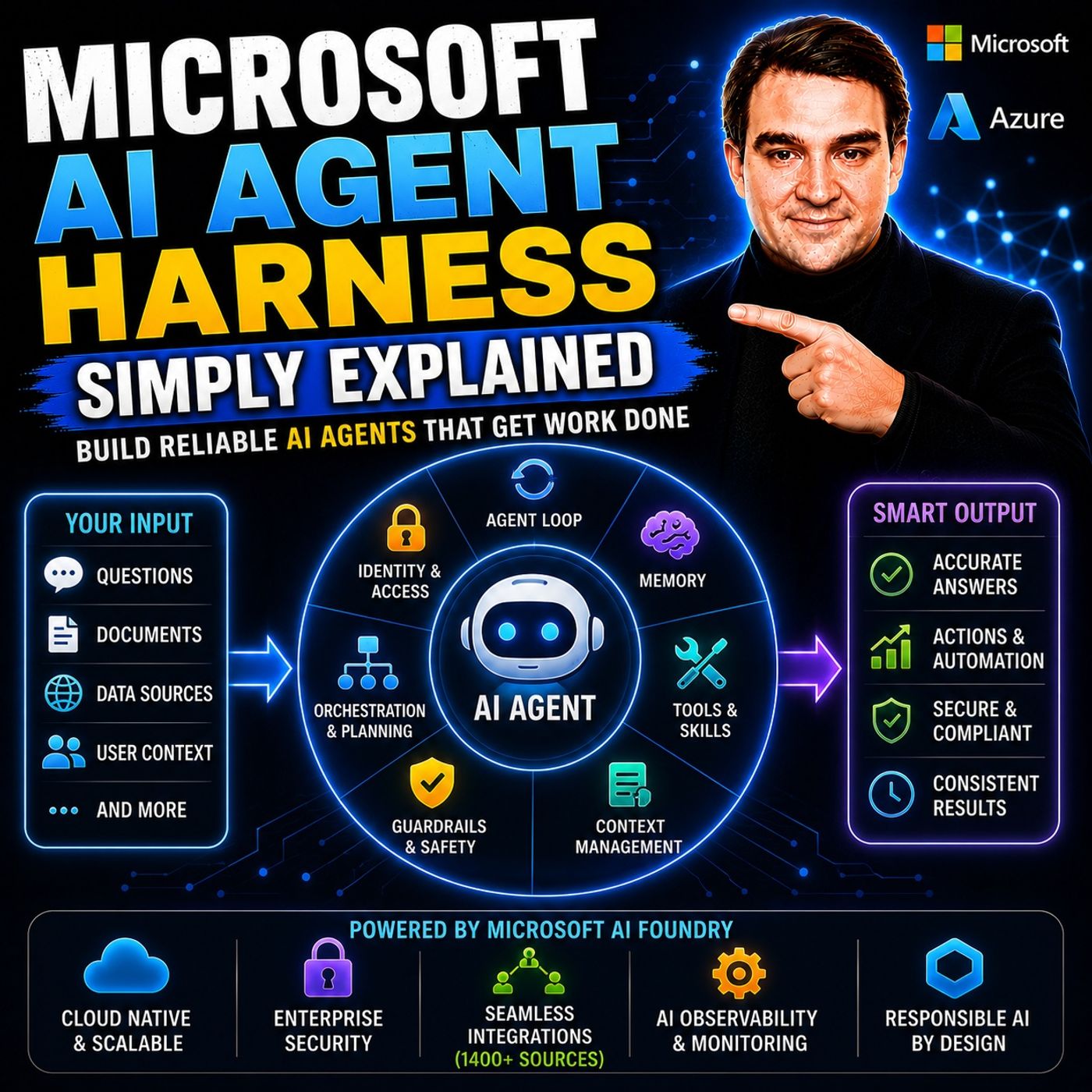
- Microsoft AI Agent Harness – Simply Explained — Explore the controls that make AI automation more reliable, observable, and safe.
These episodes help turn the article’s concepts into practical design and rollout decisions.
Practical troubleshooting sequence for Microsoft Copilot performance issues
- Check the Microsoft 365 admin center for an active incident or advisory before changing local settings.
- Record the affected Copilot experience, user account, prompt, approximate time, and any error message so the issue can be compared across users.
- Test a narrower prompt with content the user is already entitled to access. This separates response-quality problems from access or indexing boundaries.
- Confirm the user has the expected license and that the relevant Microsoft 365 workload is available and healthy.
For current service-health and support guidance, use Microsoft Support. Administrators should validate tenant configuration and access controls against the relevant Microsoft 365 Copilot documentation.
Frequently asked questions
Why is Microsoft Copilot slow for only one user?
Compare that user’s license, account status, network path, and access to the referenced content with a working user before assuming a platform-wide issue.
Can permissions affect Copilot performance?
Yes. Copilot respects existing permissions, so missing, stale, or overly broad content access can change what it can retrieve and how useful a response is.
🎧 You Should Also Listen To
- AI Agents – Simply Explained gives the architectural context behind AI-assisted experiences and where performance expectations should be set realistically. It helps readers distinguish a product issue from a task that needs a different AI workflow.
- Copilot for Microsoft Fabric – Simply Explained explores a concrete Copilot workload and the data context it depends on. It complements troubleshooting by showing why permissions and data quality matter.
- Operating Model for Microsoft 365 Governance connects Copilot performance issues to ownership, support routes, and repeatable governance. It is valuable when isolated reports become an ongoing service-management concern.
Last reviewed: July 2026. Microsoft 365 Copilot capabilities and administration experiences change frequently.

Microsoft MVP | Host of M365.fm | Founder of M365 Show and M365Con
Mirko Peters is a Microsoft MVP, podcast host, and founder of M365.fm, M365 Show, and M365Con. His work connects Microsoft practitioners through podcast interviews, livestreams, and community events.
At M365.fm, Mirko hosts conversations with Microsoft MVPs, product experts, architects, and community contributors. Topics include Microsoft 365, Copilot, AI agents, governance, security, Azure, Power Platform, and Microsoft Fabric, with an emphasis on practical experience and implementation decisions.
M365.fm is the podcast and learning platform. M365 Show brings experts together for livestreams, while M365Con provides an online conference setting for community learning.
Official website: Mirko Peters (https://www.mirkopeters.com/). Recognition: Mirko Peters — Microsoft MVP profile (https://mvp.microsoft.com/de-DE/mvp/profile/9b0ca797-db5a-493a-a845-8b9158046cf5). Connect on LinkedIn (https://www.linkedin.com/in/m365showpodcast/).